

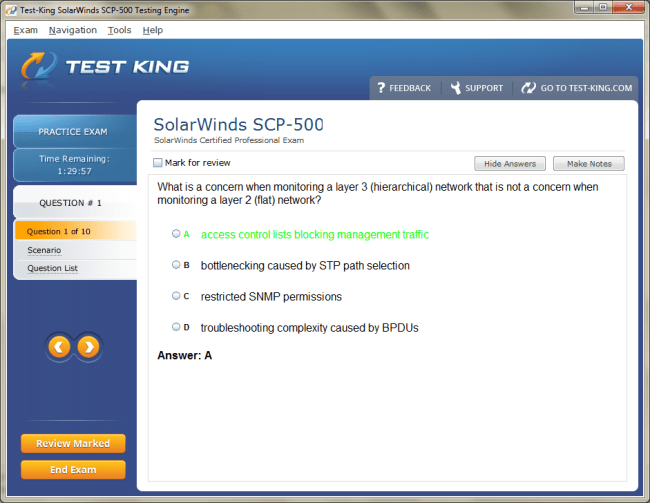
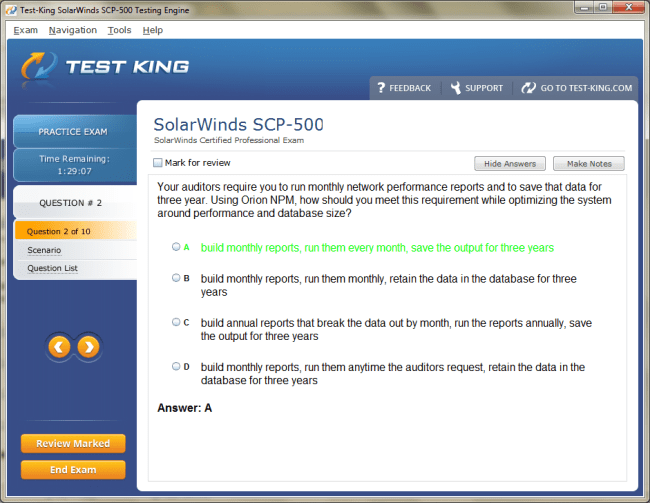
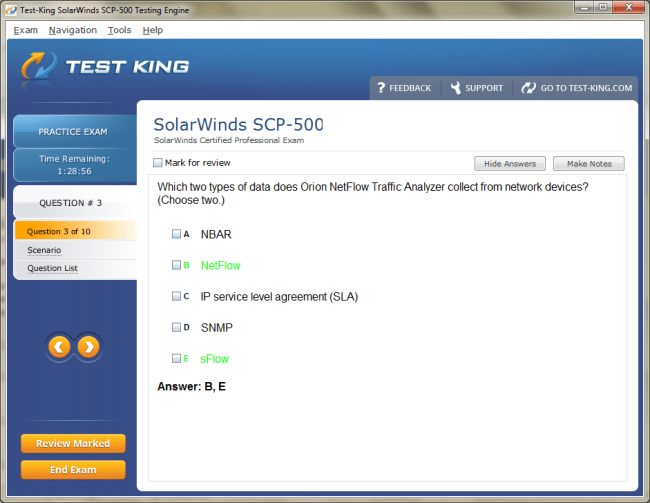
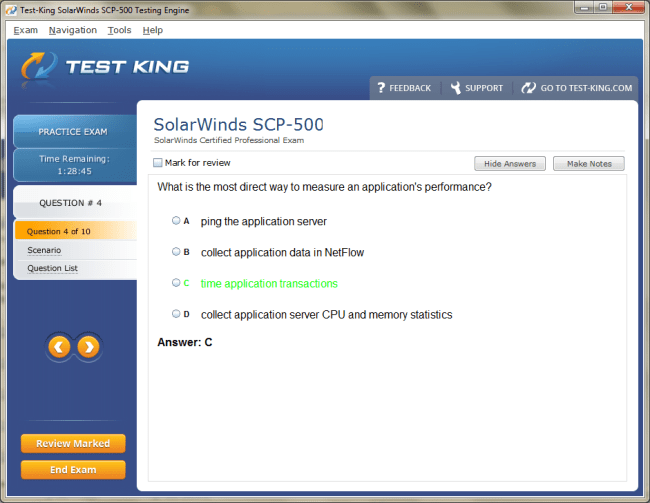
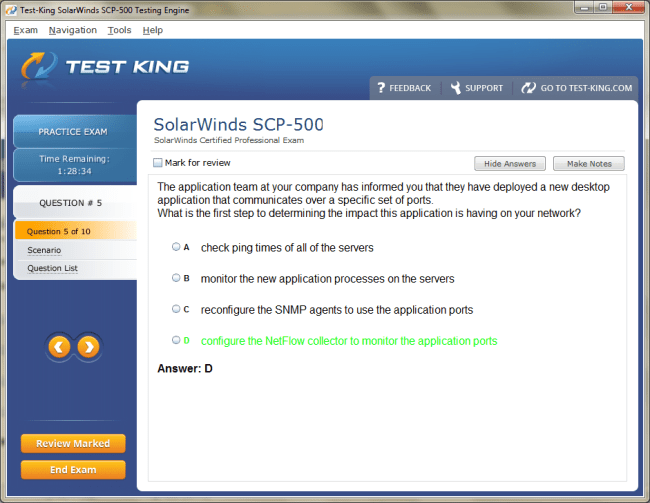
SCP-500 Exam Product Screenshots
Frequently Asked Questions
How can I get the products after purchase?
All products are available for download immediately from your Member's Area. Once you have made the payment, you will be transferred to Member's Area where you can login and download the products you have purchased to your computer.
How long can I use my product? Will it be valid forever?
Test-King products have a validity of 90 days from the date of purchase. This means that any updates to the products, including but not limited to new questions, or updates and changes by our editing team, will be automatically downloaded on to computer to make sure that you get latest exam prep materials during those 90 days.
Can I renew my product if when it's expired?
Yes, when the 90 days of your product validity are over, you have the option of renewing your expired products with a 30% discount. This can be done in your Member's Area.
Please note that you will not be able to use the product after it has expired if you don't renew it.
How often are the questions updated?
We always try to provide the latest pool of questions, Updates in the questions depend on the changes in actual pool of questions by different vendors. As soon as we know about the change in the exam question pool we try our best to update the products as fast as possible.
How many computers I can download Test-King software on?
You can download the Test-King products on the maximum number of 2 (two) computers or devices. If you need to use the software on more than two machines, you can purchase this option separately. Please email support@test-king.com if you need to use more than 5 (five) computers.
What is a PDF Version?
PDF Version is a pdf document of Questions & Answers product. The document file has standart .pdf format, which can be easily read by any pdf reader application like Adobe Acrobat Reader, Foxit Reader, OpenOffice, Google Docs and many others.
Can I purchase PDF Version without the Testing Engine?
PDF Version cannot be purchased separately. It is only available as an add-on to main Question & Answer Testing Engine product.
What operating systems are supported by your Testing Engine software?
Our testing engine is supported by Windows. Andriod and IOS software is currently under development.
Top SolarWinds Exams
Comprehensive Guide to the SCP-500 Exam: What Aspiring SolarWinds Professionals Need to Know
The SolarWinds Certified Professional exam, often referred to by its code SCP-500, stands as a definitive milestone for IT professionals seeking to demonstrate expertise in managing, monitoring, and optimizing network infrastructure through SolarWinds tools. Aspiring candidates are drawn to this certification for its capacity to validate both technical aptitude and practical problem-solving skills in dynamic network environments. The examination evaluates knowledge that spans from basic system monitoring to advanced performance tuning, alert management, and automation within SolarWinds platforms, offering a comprehensive measure of a professional's readiness to maintain complex network ecosystems.
Understanding the SCP-500 Exam and Its Importance
The relevance of the SCP-500 exam lies not only in its recognition within the IT industry but also in the tangible impact it has on a professional’s career trajectory. Network administrators, systems engineers, and IT operations managers find that holding this certification elevates their credibility, enhances their skill set, and opens doors to more specialized responsibilities within enterprise environments. Organizations increasingly rely on certified professionals to ensure that their IT infrastructure remains resilient, efficient, and secure, making the SCP-500 a critical credential for those aspiring to leadership roles in network management and operations.
The exam’s structure reflects the multifaceted nature of modern network management. It encompasses domains that require candidates to understand monitoring concepts, performance metrics, system alerts, and automated remediation strategies. Each question is crafted to test not only theoretical knowledge but also practical application, challenging candidates to demonstrate proficiency in real-world scenarios. This practical orientation ensures that certified individuals are equipped to handle the complex and evolving demands of enterprise network operations, positioning them as invaluable assets to their organizations.
Core Competencies Assessed by the Exam
The SCP-500 assessment revolves around several core competencies that define the skill set of an accomplished SolarWinds professional. One of the primary areas is network performance monitoring, where candidates must comprehend how to leverage SolarWinds tools to track critical metrics, identify anomalies, and anticipate potential issues. Mastery in this domain enables professionals to optimize system performance, prevent downtime, and ensure seamless connectivity across diverse network infrastructures.
Another pivotal competency is troubleshooting and issue resolution. The exam evaluates a candidate's ability to interpret alert notifications, diagnose root causes, and implement corrective measures efficiently. Professionals who excel in this area exhibit a combination of analytical reasoning and technical agility, capable of navigating complex network topologies and resolving issues before they escalate into operational disruptions. This skill is particularly crucial in environments where downtime can result in significant operational or financial repercussions.
Automation and alert management constitute another vital focus. Candidates are expected to understand how to configure automated responses, streamline repetitive tasks, and customize alerts to reflect organizational priorities. By employing these capabilities, certified professionals can enhance operational efficiency, reduce manual intervention, and ensure that network monitoring aligns with strategic objectives. This facet of the exam underscores the growing importance of automation in contemporary IT operations, highlighting the necessity of integrating intelligent systems to maintain optimal performance.
Security and compliance form an additional layer of competency. Although the SCP-500 is not solely a security-focused certification, it requires awareness of how SolarWinds tools can support security monitoring, compliance reporting, and risk mitigation. Candidates must demonstrate understanding of how network data can be utilized to detect anomalies, support audits, and ensure adherence to organizational policies and regulatory standards. This knowledge equips professionals to safeguard critical infrastructure while maintaining operational transparency and accountability.
Target Audience and Career Advantages
The SCP-500 certification is tailored for individuals who are actively engaged in network administration, IT operations, or systems management. Candidates typically possess foundational knowledge of networking principles, server management, and system monitoring. While prior experience with SolarWinds platforms enhances preparation, the exam is designed to accommodate professionals who are willing to invest in structured learning and practical practice to achieve mastery.
Achieving certification delivers a multitude of career advantages. Certified professionals often experience accelerated career growth, with opportunities to assume roles that involve strategic decision-making, performance optimization, and enterprise-wide network oversight. Organizations view the credential as a mark of competence and reliability, which can lead to increased responsibility, higher compensation, and recognition within professional communities. Furthermore, the certification serves as a tangible demonstration of commitment to continuous professional development, reflecting a proactive approach to staying current with technological advancements.
Beyond individual career growth, SCP-500 certification contributes to organizational resilience. Enterprises that employ certified professionals benefit from reduced system downtime, improved network performance, and enhanced incident response capabilities. Certified individuals can implement best practices, configure sophisticated monitoring setups, and troubleshoot issues with confidence, thereby reinforcing the stability and efficiency of IT infrastructure. This symbiotic relationship between personal skill development and organizational benefit underscores the strategic value of the SCP-500 credential.
Key Knowledge Areas and Skills
Candidates preparing for the SCP-500 exam must acquire a comprehensive understanding of several interrelated knowledge areas. Network monitoring forms the backbone, requiring familiarity with performance metrics, thresholds, and the interpretation of data visualizations. Professionals must be adept at discerning patterns, detecting irregularities, and using monitoring dashboards to maintain real-time awareness of network health.
Performance optimization is another critical area. It involves identifying bottlenecks, evaluating system efficiency, and implementing improvements that enhance operational throughput. Mastery of this domain enables professionals to not only maintain existing infrastructure but also anticipate future demands, ensuring scalable and sustainable network performance.
Troubleshooting skills are central to the exam’s practical orientation. Candidates must understand how to isolate issues, analyze log files, and apply corrective measures that restore functionality swiftly. This process demands both systematic methodology and adaptive thinking, as network issues often manifest in unpredictable ways.
Automation and alerting proficiency rounds out the technical skill set. Professionals must know how to configure alert thresholds, schedule automated tasks, and deploy intelligent responses to recurring issues. Effective use of these tools reduces human error, conserves resources, and ensures that critical events receive immediate attention. In essence, this competency allows network operations to become more proactive and less reactive, aligning with contemporary IT management philosophies.
Knowledge of SolarWinds product integration is equally vital. The SCP-500 exam emphasizes the importance of leveraging multiple SolarWinds modules cohesively. Candidates must understand how network performance monitor, server and application monitor, configuration management tools, and reporting modules interact to provide a holistic view of IT infrastructure. This integrated approach enables professionals to extract actionable insights, optimize workflows, and maintain comprehensive oversight of complex systems.
Preparation Strategies
Effective preparation for the SCP-500 exam involves a balance of theoretical study and hands-on practice. Candidates are encouraged to immerse themselves in SolarWinds platforms, exploring dashboards, alerts, and configuration options in practical scenarios. Simulated environments allow professionals to experiment with network topologies, apply troubleshooting methodologies, and test automated processes without the risks associated with live networks.
Structured learning resources, such as official study guides, technical documentation, and online tutorials, provide foundational knowledge and reinforce key concepts. However, practical application remains paramount, as the SCP-500 exam emphasizes real-world proficiency. Candidates are advised to replicate enterprise scenarios, analyze performance data, and practice responding to alerts as part of their preparation regimen.
Time management and systematic review also play critical roles. Establishing a study schedule that covers each knowledge area thoroughly, while allocating sufficient time for practice, enhances retention and confidence. Periodic self-assessment through mock exams or practice questions helps candidates identify weaknesses and reinforce understanding. This iterative approach ensures that preparation is comprehensive, targeted, and aligned with the exam’s expectations.
Core SolarWinds Platforms and Their Functionality
The SolarWinds ecosystem represents a suite of tools meticulously designed to facilitate comprehensive monitoring, management, and optimization of IT networks and systems. Professionals preparing for the SCP-500 exam must acquire intimate knowledge of these platforms, understanding both their theoretical underpinnings and practical applications. Network Performance Monitor is often the central focus, as it provides extensive visibility into network devices, traffic flows, and performance metrics. This tool empowers administrators to detect anomalies before they escalate into operational disruptions, offering intuitive dashboards, real-time alerts, and robust reporting mechanisms. Its relevance extends beyond mere monitoring, as it also enables proactive planning and capacity management, ensuring that infrastructure can accommodate evolving organizational demands.
Server and Application Monitor complements the network-focused tools by providing visibility into server health, application performance, and critical processes. Candidates must grasp how this platform integrates with existing infrastructure to track CPU utilization, memory consumption, disk performance, and application response times. The ability to correlate server metrics with network conditions is essential, as it allows professionals to diagnose issues holistically, rather than in isolated silos. By mastering this tool, candidates demonstrate competence in maintaining both the backend and frontend aspects of IT operations, which is a critical expectation of the SCP-500 exam.
Configuration management is another integral aspect of SolarWinds functionality. This capability enables IT teams to maintain consistent device configurations, implement change management protocols, and ensure compliance across diverse environments. Exam candidates should understand how configuration backup, automated policy enforcement, and version control contribute to reducing operational risk and minimizing downtime. These practices also facilitate faster recovery from unexpected failures, highlighting the intersection between preventive management and operational resilience.
Integrated Monitoring and Automation
The SCP-500 exam places considerable emphasis on the ability to integrate multiple SolarWinds modules into cohesive monitoring and management strategies. Candidates must be adept at configuring interconnections between network performance, server monitoring, and configuration tools to create a unified view of the IT environment. Such integration allows for more nuanced insights, as correlations can be drawn between network latency, application behavior, and device configurations. By understanding these relationships, certified professionals can implement targeted interventions, optimize resource allocation, and maintain overall system stability.
Automation plays a pivotal role in this integrated approach. Professionals are expected to leverage SolarWinds automation capabilities to streamline routine tasks, reduce manual intervention, and ensure consistent policy enforcement. Automated alerts, threshold-based actions, and scheduled maintenance procedures enhance operational efficiency while minimizing human error. Mastery of these features requires not only technical understanding but also strategic thinking, as candidates must anticipate how automated actions will impact broader system performance and service delivery.
Alert management constitutes a closely related competency. Exam candidates must demonstrate proficiency in configuring alert thresholds, prioritizing notifications, and fine-tuning alert policies to reflect organizational priorities. The ability to filter noise, distinguish critical events, and respond rapidly to emerging issues distinguishes highly skilled professionals from their peers. This focus on intelligent alerting aligns with the exam’s objective of assessing practical operational acumen rather than mere theoretical knowledge.
Data Visualization and Reporting
A crucial dimension of the SolarWinds suite is its capacity for data visualization and reporting. Candidates preparing for the SCP-500 exam must understand how to utilize dashboards, charts, and performance maps to convey complex information effectively. Visualization tools enable professionals to identify trends, detect irregularities, and communicate findings to stakeholders with clarity. By mastering these capabilities, certified individuals demonstrate not only technical expertise but also the ability to translate operational data into actionable insights.
Reporting extends beyond simple metrics presentation. Professionals are expected to generate detailed performance reports, historical analyses, and compliance documentation. These outputs support strategic planning, audit readiness, and performance reviews. The SCP-500 exam evaluates a candidate’s ability to configure report templates, schedule automated report generation, and interpret data for decision-making purposes. This emphasis underscores the growing importance of data-driven management in contemporary IT operations.
Real-World Application of SolarWinds Tools
Understanding theoretical concepts is insufficient without practical application, and the SCP-500 exam prioritizes experiential knowledge. Candidates are often required to envision real-world scenarios where SolarWinds tools are deployed to address complex challenges. For instance, network congestion caused by unexpected traffic spikes necessitates the use of performance monitoring dashboards to identify bottlenecks, while server degradation may require correlating application metrics with hardware performance to isolate root causes. These scenarios illustrate the interconnected nature of IT infrastructure and the necessity for integrated problem-solving approaches.
Automation and proactive monitoring also have tangible impacts in operational settings. A professional who configures alerts for recurring issues can prevent service interruptions, optimize resource usage, and ensure consistent system availability. Similarly, automating configuration management tasks mitigates the risk of human error, accelerates deployment processes, and strengthens compliance adherence. By internalizing these practices, candidates demonstrate readiness to translate SolarWinds knowledge into meaningful operational outcomes.
Advanced Features and Emerging Capabilities
Beyond foundational functionalities, SolarWinds platforms include advanced features that distinguish proficient users. Customizable dashboards, for example, allow professionals to tailor information displays to specific operational priorities, presenting only the most pertinent metrics and alerts. Similarly, workflow automation enables complex sequences of actions to be executed without manual intervention, which is particularly valuable in large-scale or high-complexity environments.
Exam candidates must also appreciate the role of emerging technologies within the SolarWinds ecosystem. Integration with cloud environments, support for hybrid infrastructure, and the utilization of predictive analytics are increasingly relevant in modern network management. Professionals who can navigate these advancements demonstrate adaptability and foresight, attributes highly prized in the SCP-500 exam and the broader IT industry.
Security considerations, while not the sole focus of the certification, are embedded within advanced tool usage. Candidates should understand how SolarWinds monitoring can support vulnerability detection, compliance verification, and incident investigation. The ability to use monitoring and reporting functionalities to reinforce security posture adds depth to a professional’s expertise and reflects the integrated nature of network performance, operational efficiency, and organizational risk management.
Preparation and Hands-On Experience
Practical experience is indispensable for mastering SolarWinds platforms. Candidates preparing for the SCP-500 exam benefit from setting up lab environments that replicate enterprise networks, allowing experimentation with dashboards, alerts, configurations, and automated tasks. These hands-on exercises cultivate problem-solving skills, reinforce theoretical knowledge, and enhance familiarity with real-world operational scenarios. Professionals who engage in deliberate practice with SolarWinds tools develop the intuition required to diagnose issues quickly, optimize performance, and implement robust monitoring strategies.
Structured learning resources complement experiential training. Official documentation, technical guides, online tutorials, and training modules provide the conceptual framework necessary to understand the tools’ functionality. When combined with practical application, these resources ensure that candidates approach the SCP-500 exam with both competence and confidence. Iterative practice, reflection on problem-solving approaches, and exposure to varied operational scenarios are key strategies for mastering the breadth and depth of knowledge assessed by the exam.
Monitoring and Performance Analysis Concepts
The SCP-500 exam rigorously evaluates a candidate’s ability to understand and apply monitoring and performance analysis within complex IT environments. Aspiring SolarWinds professionals must be proficient in interpreting real-time data, recognizing patterns of network behavior, and anticipating potential system bottlenecks. Monitoring extends beyond simply observing metrics; it involves discerning subtle anomalies that could indicate impending failures or suboptimal performance. Professionals are expected to analyze data from multiple sources, correlate performance indicators across devices and servers, and make informed decisions that ensure operational continuity.
Understanding thresholds and baselines is essential to effective monitoring. Candidates must grasp how to establish expected performance levels, identify deviations, and adjust alert mechanisms accordingly. SolarWinds tools provide rich visualization capabilities, which allow administrators to track trends over time and proactively address emerging issues. Mastery of these concepts enables candidates to maintain optimal network efficiency, minimize downtime, and align monitoring practices with organizational objectives. Proficiency in performance analysis also encompasses recognizing traffic patterns, evaluating bandwidth utilization, and identifying devices that contribute disproportionately to network load.
Troubleshooting and Root Cause Resolution
A pivotal component of the SCP-500 knowledge domain is troubleshooting. Candidates must demonstrate the ability to isolate problems, investigate causes, and implement corrective measures with precision. Troubleshooting requires a systematic approach, combining analytical reasoning with technical expertise. Professionals must consider multiple variables, including device configurations, server workloads, network topology, and application behavior, to pinpoint the origin of a performance issue or system anomaly.
Real-world scenarios often present intertwined issues that require nuanced investigation. For instance, a latency spike could stem from misconfigured network devices, application inefficiencies, or server performance constraints. Candidates are expected to apply logical reasoning to dissect such situations, using SolarWinds tools to gather evidence, analyze trends, and implement solutions. This capability ensures that certified professionals can restore system functionality rapidly and prevent recurrent problems, reflecting the practical orientation of the SCP-500 exam.
Proficiency in root cause resolution also extends to documenting findings, communicating results to stakeholders, and recommending preventive measures. Professionals who excel in this area not only resolve immediate issues but also contribute to long-term operational improvements, enhancing system resilience and reliability. By integrating monitoring data with troubleshooting strategies, candidates demonstrate the practical competence required to manage dynamic IT infrastructures effectively.
Alerting and Automated Responses
Effective alert management constitutes another critical domain within the SCP-500 exam. Candidates are evaluated on their ability to configure alerts that distinguish between critical events and routine occurrences. Proper alerting ensures that administrators are notified promptly of significant incidents without being overwhelmed by extraneous notifications. SolarWinds tools allow for customizable thresholds, enabling professionals to align alerts with organizational priorities and operational objectives.
Automation enhances alert management by enabling predefined responses to common events. Candidates must understand how to configure automated actions, such as restarting services, executing scripts, or generating detailed reports when specific conditions are met. By leveraging automation, professionals can reduce manual intervention, prevent human error, and ensure consistent operational procedures. This competency emphasizes the importance of efficiency and proactive management in modern network operations, aligning with the SCP-500 exam’s emphasis on practical skill application.
Alerting also involves interpreting notifications in context. Candidates must be able to analyze the severity, source, and potential impact of alerts, making informed decisions about response priorities. Professionals who master this domain can respond rapidly to incidents, minimize operational disruption, and maintain service continuity, reflecting the core objectives of SolarWinds monitoring and management practices.
Security, Compliance, and Risk Awareness
While the SCP-500 exam primarily focuses on monitoring and performance, security awareness is an essential complementary competency. Candidates must understand how SolarWinds tools contribute to identifying anomalies, supporting compliance, and mitigating risk. Monitoring network traffic, system logs, and application behavior allows professionals to detect irregular patterns that may indicate security breaches or policy violations.
Compliance considerations require candidates to be familiar with regulatory frameworks and organizational policies. Professionals are expected to generate reports, track changes, and maintain audit-ready documentation using SolarWinds platforms. These practices ensure transparency, facilitate accountability, and support governance objectives. By integrating security awareness into monitoring routines, certified professionals strengthen the organization’s resilience against internal and external threats.
Risk assessment is closely linked to security and compliance. Candidates must evaluate potential vulnerabilities, assess the impact of system changes, and implement preventive measures to mitigate operational risks. This proactive approach not only safeguards infrastructure but also reinforces strategic decision-making, enabling organizations to maintain performance and reliability under varying conditions.
Application Performance and System Optimization
Beyond network monitoring, the SCP-500 exam assesses candidates’ proficiency in evaluating application performance and optimizing system resources. Professionals must understand how server workloads, application response times, and resource utilization interact to influence overall system efficiency. SolarWinds tools provide insights into application behavior, allowing administrators to detect slowdowns, resource contention, and inefficiencies.
Optimization involves configuring servers, tuning applications, and adjusting network parameters to maximize throughput and minimize latency. Candidates must demonstrate the ability to interpret performance metrics, correlate data across multiple components, and implement changes that enhance operational effectiveness. This competency requires both analytical acumen and hands-on familiarity with the tools, as real-world optimization often involves iterative testing, monitoring, and adjustment.
Understanding the relationship between network, server, and application performance is crucial. A delay in application response may result from network congestion, insufficient server resources, or inefficient code. By examining these interconnected elements, candidates can develop holistic solutions that address root causes rather than superficial symptoms. This integrated perspective is central to the SCP-500 exam’s focus on practical problem-solving and operational excellence.
Reporting, Analysis, and Decision Support
The SCP-500 exam places significant emphasis on the ability to transform monitoring data into actionable insights. Candidates must be adept at generating reports that summarize performance trends, highlight anomalies, and provide decision support for operational management. Reporting involves selecting relevant metrics, interpreting complex datasets, and presenting findings in a format that stakeholders can understand and act upon.
Analysis extends beyond reporting; it encompasses the evaluation of historical data, identification of recurring patterns, and forecasting of potential issues. Professionals who master this domain can anticipate performance degradation, allocate resources proactively, and develop strategies that optimize infrastructure utilization. SolarWinds tools provide the necessary capabilities to aggregate, visualize, and analyze data, enabling certified professionals to derive meaningful conclusions that drive operational improvements.
Decision support also involves communicating findings effectively. Candidates must be able to explain technical observations to both technical and non-technical stakeholders, ensuring that recommendations are understood and implemented. This competency demonstrates the intersection of technical expertise, analytical reasoning, and professional communication, reflecting the multidimensional skill set assessed by the SCP-500 exam.
Hands-On Practice and Real-World Scenarios
Preparation for the SCP-500 exam demands practical engagement with SolarWinds tools. Candidates benefit from constructing simulated network environments that replicate enterprise conditions, allowing exploration of monitoring dashboards, alert configurations, and system metrics. This experiential approach develops intuitive understanding of tool functionalities, reinforces theoretical concepts, and builds confidence in applying knowledge to real-world challenges.
Engaging with real-world scenarios enables candidates to encounter diverse issues, such as intermittent network latency, server resource contention, and application performance degradation. By navigating these challenges within controlled environments, professionals cultivate problem-solving strategies, refine troubleshooting techniques, and learn to implement automation for recurring events. This hands-on experience aligns with the practical focus of the SCP-500 exam and ensures readiness for operational demands in live enterprise networks.
Crafting a Study Schedule and Structured Learning Approach
Preparing for the SCP-500 exam demands a disciplined and structured approach that balances theoretical understanding with practical application. Candidates are advised to begin by creating a detailed study schedule that allocates sufficient time to each domain covered by the exam. A well-structured schedule allows professionals to systematically address all knowledge areas, revisit challenging concepts, and reinforce practical skills through consistent practice. Establishing a routine also cultivates mental discipline, reducing stress and enhancing retention of complex information.
Structured learning involves a combination of official documentation, technical manuals, and comprehensive tutorials on SolarWinds platforms. Candidates benefit from exploring each tool in depth, from Network Performance Monitor and Server and Application Monitor to configuration management and reporting modules. Engaging with these resources ensures that foundational concepts are understood and integrated into practical workflows. Professionals should aim to translate theoretical knowledge into operational scenarios, applying what they have learned in simulated environments or lab setups to reinforce retention and build confidence.
Practical Hands-On Experience and Simulated Environments
A crucial component of effective preparation is hands-on experience. Candidates should establish test environments that replicate enterprise networks, allowing experimentation with dashboards, alerts, and system configurations without risk to production systems. Simulated practice provides opportunities to explore network topologies, troubleshoot performance anomalies, and configure automated responses in realistic scenarios. By repeatedly engaging with these simulations, professionals develop an intuitive understanding of tool functionalities and problem-solving strategies that are essential for success on the SCP-500 exam.
Hands-on practice also enables candidates to encounter a variety of challenges, including network congestion, server performance degradation, and application inefficiencies. Navigating these scenarios enhances analytical reasoning and reinforces the ability to correlate data from multiple sources. Professionals who invest time in practical exercises are better prepared to interpret real-world situations during the exam, demonstrating proficiency in both monitoring and performance optimization.
Utilizing Learning Resources and Reference Materials
In addition to practical experience, candidates benefit from utilizing comprehensive reference materials. Official study guides, product documentation, and online tutorials provide a structured pathway for understanding core concepts and platform functionalities. These resources often include detailed explanations of alert management, performance metrics, and automation strategies, offering insights that extend beyond basic knowledge. Candidates should integrate these materials into their study schedule, revisiting complex topics regularly to ensure thorough comprehension.
Supplementing formal documentation with community forums, technical blogs, and peer discussions can also enhance preparation. Engaging with professional communities allows candidates to explore alternative approaches to problem-solving, gain insights into common challenges, and learn from the experiences of certified professionals. This collaborative dimension enriches understanding and encourages a holistic perspective on network monitoring, troubleshooting, and optimization.
Practice Techniques and Mock Exam Approaches
Assessment readiness is significantly enhanced by the use of practice techniques and mock exams. Candidates should simulate exam conditions, attempting timed assessments that mirror the structure and content of the SCP-500 exam. This approach not only familiarizes professionals with question types and time management challenges but also identifies areas requiring further study. Reviewing answers, analyzing mistakes, and understanding the rationale behind correct responses fosters deeper comprehension and strengthens retention.
In addition to full-scale mock exams, targeted practice exercises focusing on specific knowledge areas are valuable. For instance, exercises centered on alert configuration, network performance analysis, or server optimization allow candidates to reinforce competencies in a controlled manner. Repeated engagement with these exercises builds confidence and ensures that both theoretical knowledge and practical application are thoroughly mastered before attempting the exam.
Managing Time and Avoiding Common Pitfalls
Effective time management is essential for both preparation and exam performance. Candidates should allocate study periods judiciously, balancing in-depth exploration of complex topics with regular review of foundational concepts. Avoiding prolonged focus on a single area prevents fatigue and ensures comprehensive coverage of all domains. Periodic self-assessment enables professionals to adjust their study plan dynamically, dedicating additional attention to areas where performance is weaker.
Common pitfalls during preparation include neglecting practical exercises, relying solely on theoretical study, and underestimating the exam’s emphasis on applied knowledge. Candidates are advised to maintain a balanced approach, integrating hands-on practice with conceptual study to develop a holistic understanding. Consistency, discipline, and reflective review help mitigate these risks, fostering confidence and competence for exam day.
Psychological Preparation and Confidence Building
Equally important to technical preparation is psychological readiness. Candidates must cultivate a mindset of confidence and resilience, recognizing that the SCP-500 exam evaluates both knowledge and practical problem-solving skills. Techniques such as mental rehearsal, visualization of successful exam performance, and stress management strategies contribute to a composed and focused approach. Professionals who maintain calm under pressure are better equipped to interpret questions accurately, apply learned strategies, and manage time effectively during the exam.
Confidence also derives from familiarity with the tools and concepts. Regular practice, repeated exposure to simulated challenges, and iterative review of study materials reinforce understanding and build self-assurance. Candidates who approach preparation with deliberate intent, structured methodology, and practical engagement are well-positioned to succeed in demonstrating their proficiency and mastery of SolarWinds platforms.
Integrating Knowledge Across Domains
A final component of effective preparation is the integration of knowledge across multiple domains. The SCP-500 exam assesses a candidate’s ability to correlate network monitoring, server management, performance optimization, alerting, and reporting within cohesive operational scenarios. Professionals should practice synthesizing information from diverse sources, applying insights to complex problems, and implementing solutions that consider both immediate and long-term implications. This integrative approach reflects the multidimensional nature of network management and ensures readiness for the practical challenges presented by the exam.
Candidates are encouraged to adopt a reflective practice, reviewing past exercises and analyzing outcomes to identify patterns, refine strategies, and enhance decision-making capabilities. By cultivating a holistic understanding and operational fluency, professionals demonstrate the capacity to leverage SolarWinds tools effectively, ensuring that preparation extends beyond rote learning into comprehensive mastery of network management principles.
Understanding the SCP-500 Exam Format and Question Types
The SCP-500 exam challenges candidates to demonstrate both theoretical knowledge and practical proficiency with SolarWinds platforms. Understanding the structure of the exam is essential to navigate its demands effectively. The evaluation encompasses multiple question types, including scenario-based queries, analytical exercises, and practical problem-solving tasks. Candidates are expected to apply their knowledge to interpret monitoring data, troubleshoot network issues, and configure alerts or automation workflows in simulated operational contexts.
Scenario-based questions test the ability to analyze real-world situations. For example, a sudden spike in network latency may be presented with accompanying dashboard metrics, requiring candidates to determine the root cause and suggest corrective measures. Analytical exercises involve interpreting data trends, performance graphs, and logs to identify irregularities, while practical problem-solving tasks assess the candidate’s ability to configure tools and apply solutions efficiently. Familiarity with these formats ensures that professionals can allocate time appropriately, focus on critical details, and respond with precision during the exam.
Time Management Strategies During the Exam
Effective time management is crucial to completing the SCP-500 exam successfully. Candidates must balance speed with accuracy, ensuring that each question receives adequate attention without consuming disproportionate time. Prioritizing questions based on familiarity and complexity allows for efficient progression through the exam. Scenario-based questions, while often more time-intensive, require careful consideration to provide comprehensive solutions, whereas straightforward knowledge queries may be addressed more rapidly.
Practicing under timed conditions during preparation is instrumental in developing a sense of pacing. Simulated exams or mock assessments help candidates gauge the amount of time required for various question types, identify areas where deliberation may be necessary, and build endurance for sustained concentration. By mastering time allocation, candidates can maintain composure, reduce anxiety, and optimize overall performance during the evaluation.
Approaching Scenario-Based Questions
Scenario-based questions often constitute a significant portion of the SCP-500 exam. Candidates must analyze complex situations, interpret SolarWinds dashboards, and propose actionable solutions. Success in these questions requires a methodical approach: first understanding the context, then identifying key metrics or anomalies, and finally applying appropriate tools or configurations to address the issue.
For instance, an enterprise network may exhibit intermittent packet loss across several nodes. Candidates must examine performance monitors, correlate server and application metrics, and determine whether the issue originates from network congestion, server overload, or misconfigured devices. Effective responses demonstrate not only technical knowledge but also analytical reasoning and operational judgment. Practicing multiple scenarios enhances familiarity with such exercises, equipping candidates to respond confidently and accurately during the exam.
Maintaining Accuracy and Attention to Detail
Precision is a critical factor in SCP-500 success. Candidates must carefully interpret performance metrics, log files, and configuration details to avoid errors in diagnosis or implementation. Small oversights, such as misreading an alert threshold or overlooking a specific device metric, can lead to incorrect conclusions. Attention to detail ensures that solutions are accurate, comprehensive, and aligned with best practices.
Developing meticulous habits during preparation, such as double-checking configurations, reviewing data trends, and validating assumptions, reinforces accuracy. Candidates who cultivate this discipline are better equipped to tackle complex questions, mitigate mistakes, and demonstrate mastery of both monitoring principles and practical problem-solving.
Leveraging Practical Knowledge During the Exam
The SCP-500 exam emphasizes applied knowledge, requiring candidates to translate theoretical understanding into operational actions. Professionals who have engaged extensively with SolarWinds tools during preparation can draw on hands-on experience to interpret metrics, configure alerts, and troubleshoot issues efficiently. Practical familiarity reduces reliance on rote memorization and allows for adaptive problem-solving in dynamic scenarios.
For example, a candidate familiar with Network Performance Monitor can rapidly identify unusual traffic patterns, correlate them with server performance data, and recommend remedial steps. Similarly, proficiency with Server and Application Monitor enables accurate assessment of application response times and resource utilization. Leveraging this practical expertise during the exam enhances confidence, accelerates decision-making, and increases the likelihood of successful outcomes.
Stress Management and Focus Techniques
Exam day often presents psychological challenges, including pressure, anxiety, and fatigue. Candidates must employ strategies to maintain focus and composure throughout the evaluation. Techniques such as controlled breathing, mental rehearsal, and brief mindfulness exercises can alleviate stress, improve concentration, and sustain performance over the duration of the exam.
Additionally, maintaining a positive mindset and visualizing successful outcomes can bolster confidence and reduce cognitive interference. Candidates who cultivate mental resilience are better equipped to navigate challenging questions, manage time effectively, and respond thoughtfully to complex scenarios. Psychological preparation complements technical readiness, ensuring that knowledge and skill are applied optimally under examination conditions.
Handling Unexpected Scenarios
The SCP-500 exam may present scenarios that differ from standard preparation exercises, requiring adaptive thinking and problem-solving. Candidates should approach unexpected situations methodically: analyze available data, identify potential causes, and implement logical solutions based on principles of network monitoring, performance optimization, and automation. Flexibility and critical reasoning are essential, as real-world network issues rarely adhere to predictable patterns.
Encountering novel scenarios during the exam should be viewed as an opportunity to demonstrate applied competence. Professionals who draw on a deep understanding of SolarWinds tools, combined with experience from practice environments, can navigate unanticipated challenges successfully. This adaptive approach reflects the practical and dynamic orientation of the SCP-500 assessment, emphasizing readiness for real-world operational demands.
Optimizing Exam Day Performance
Maximizing performance on exam day requires a holistic approach that combines technical preparation, time management, psychological readiness, and practical experience. Candidates should arrive with familiarity of the testing environment, a clear understanding of exam rules, and confidence in their preparation strategy. Prioritizing difficult questions, maintaining focus, and leveraging hands-on knowledge enable efficient navigation through the evaluation.
Preparation should also encompass logistical considerations, such as ensuring adequate rest, nutrition, and hydration. Physical well-being influences cognitive performance, attention to detail, and stress resilience. Candidates who integrate both mental and physical readiness into their preparation strategy position themselves to demonstrate proficiency comprehensively, translating study efforts into successful exam execution.
Leveraging SCP-500 Certification for Career Advancement
The SolarWinds Certified Professional credential opens doors to a multitude of career opportunities in network administration, IT operations, and systems management. Professionals who achieve this certification are recognized for their ability to monitor, troubleshoot, and optimize complex IT infrastructures using SolarWinds tools. The SCP-500 certification validates both theoretical knowledge and practical expertise, making certified individuals highly sought after in industries where network performance, uptime, and operational efficiency are paramount.
Career advancement following certification is often characterized by increased responsibility, enhanced visibility within organizations, and the opportunity to manage enterprise-wide IT operations. Certified professionals may transition from foundational roles to positions such as senior network administrator, systems engineer, IT operations manager, or infrastructure specialist. The credential demonstrates a commitment to professional growth, a mastery of network monitoring principles, and the capacity to implement effective solutions in dynamic operational environments. Organizations value these attributes, often rewarding certified individuals with promotions, leadership opportunities, and recognition in strategic IT initiatives.
Roles and Industries Valuing SCP-500 Expertise
The SCP-500 certification is applicable across diverse sectors, including finance, healthcare, telecommunications, government, and technology services. Industries that rely on high availability and robust performance of network and application infrastructure particularly benefit from professionals who can leverage SolarWinds tools for proactive monitoring and problem resolution. Certified individuals are equipped to support operational continuity, optimize resource utilization, and respond efficiently to performance issues, enhancing organizational resilience.
Within enterprises, roles such as network administrator, systems analyst, IT operations manager, and infrastructure coordinator are common career destinations for SCP-500 professionals. Each role involves the application of monitoring insights, troubleshooting capabilities, and automation skills to maintain operational efficiency. Professionals in these positions not only manage day-to-day IT functions but also contribute to strategic decision-making, process improvement, and long-term infrastructure planning. This blend of technical and strategic responsibilities underscores the value of the certification in shaping a versatile and capable IT workforce.
Continuous Learning and Skill Expansion
Achieving the SCP-500 credential is a milestone in a professional’s journey, but continuous learning remains essential to maintain relevance in an evolving technological landscape. Certified individuals are encouraged to deepen their expertise in advanced monitoring techniques, emerging automation solutions, and predictive analytics. Staying current with updates to SolarWinds platforms, exploring integration with cloud and hybrid environments, and understanding new operational methodologies enhances both competence and employability.
Continuous skill expansion may involve mastering advanced network analytics, exploring application performance tuning methodologies, or learning complementary tools that enhance monitoring and operational efficiency. Professionals who invest in lifelong learning develop adaptability, maintain technical proficiency, and position themselves for leadership roles in IT operations. The SCP-500 credential serves as a foundation upon which further expertise can be built, creating opportunities for specialization and advanced career trajectories.
Future Trends in Network and Systems Management
The IT landscape is continually evolving, with emerging trends that impact network management, monitoring, and operational strategies. SCP-500 professionals are expected to understand and anticipate these trends to maintain relevance and effectiveness. Areas of particular significance include automation, artificial intelligence-driven monitoring, predictive analytics, hybrid cloud integration, and security-enhanced operational workflows. Mastery of these emerging capabilities ensures that certified individuals can navigate the complexities of modern infrastructure and deliver proactive, data-driven solutions.
Automation and AI integration are transforming traditional monitoring approaches, enabling systems to detect anomalies, predict potential failures, and initiate corrective actions without human intervention. SCP-500 certified professionals who embrace these technologies enhance operational efficiency, reduce downtime, and position their organizations at the forefront of IT management innovation. Similarly, predictive analytics allows for proactive resource allocation, performance optimization, and strategic capacity planning, further elevating the value of certified expertise in enterprise environments.
Strategic Impact of SCP-500 Certification
Beyond individual career growth, the SCP-500 credential has a tangible impact on organizational performance. Certified professionals contribute to operational excellence by ensuring that networks, servers, and applications are monitored effectively, issues are resolved promptly, and resources are optimized systematically. Their expertise supports the implementation of best practices, enhances risk management, and strengthens compliance adherence. Organizations benefit from reduced downtime, improved service quality, and enhanced operational resilience, demonstrating the strategic value of investing in certified personnel.
Professionals who hold SCP-500 certification often become integral to decision-making processes regarding infrastructure design, system upgrades, and technology adoption. Their insights inform strategic planning, resource allocation, and operational optimization. This influence underscores the dual role of the certification: it empowers individuals to advance their careers while simultaneously driving organizational performance and resilience.
Practical Steps for Maximizing Post-Certification Opportunities
Certified professionals can maximize the benefits of the SCP-500 credential by pursuing opportunities that align with both their technical expertise and career aspirations. Engaging in cross-functional projects, mentoring junior staff, participating in professional communities, and contributing to organizational process improvements enhances visibility, influence, and career growth. Seeking roles that require strategic problem-solving, advanced monitoring proficiency, and system optimization allows certified individuals to leverage their knowledge fully and demonstrate the practical value of their expertise.
Networking with other certified professionals, attending industry conferences, and staying informed about emerging technologies also enrich professional development. By combining technical proficiency with strategic engagement, SCP-500 professionals can position themselves as indispensable contributors to organizational success and long-term IT innovation.
Enhancing Career Prospects Through Complementary Skills
While SCP-500 certification validates expertise with SolarWinds tools, integrating complementary skills amplifies career prospects. Knowledge of cloud computing, cybersecurity principles, database management, and IT service management frameworks enhances a professional’s ability to address complex challenges and implement holistic solutions. Candidates who blend SolarWinds expertise with cross-domain skills demonstrate versatility, adaptability, and readiness to assume leadership roles in multifaceted IT environments.
Furthermore, soft skills such as communication, project management, and stakeholder engagement enable professionals to convey technical insights effectively, influence decisions, and drive collaboration across departments. The combination of technical certification and strategic competencies creates a compelling profile for career advancement, positioning individuals for high-impact roles within their organizations and across the IT industry.
Conclusion
The SCP-500 certification represents a transformative milestone for IT professionals, validating their proficiency in monitoring, troubleshooting, and optimizing enterprise networks using SolarWinds platforms. Beyond the immediate credential, the certification opens doors to career advancement, enhanced professional credibility, and strategic influence within organizations. Certified individuals are equipped to navigate complex operational environments, apply practical solutions, and contribute to organizational resilience and efficiency.
Continuous learning, engagement with emerging technologies, and the development of complementary skills ensure that SCP-500 professionals remain at the forefront of network and systems management. By leveraging the credential strategically, individuals can expand their career horizons, assume leadership responsibilities, and make a lasting impact on the organizations they serve. The SCP-500 certification thus embodies both professional mastery and the capacity to drive operational excellence in dynamic, evolving IT landscapes.