

Exam Code: NSE7_SDW-6.4
Exam Name: Fortinet NSE 7 - SD-WAN 6.4
Certification Provider: Fortinet
Corresponding Certification: NSE7
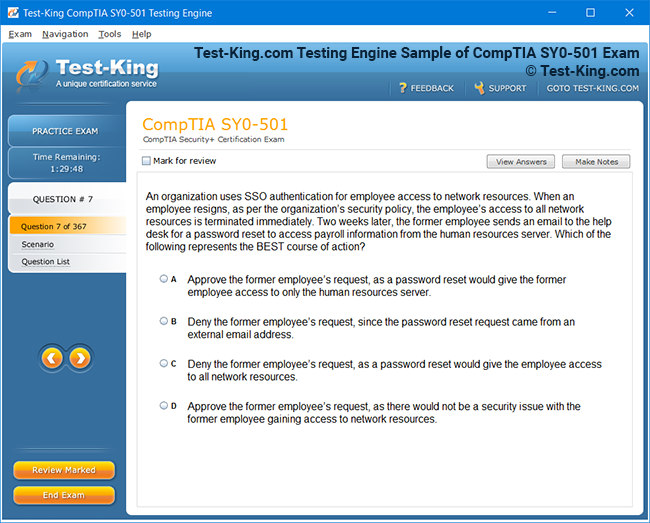
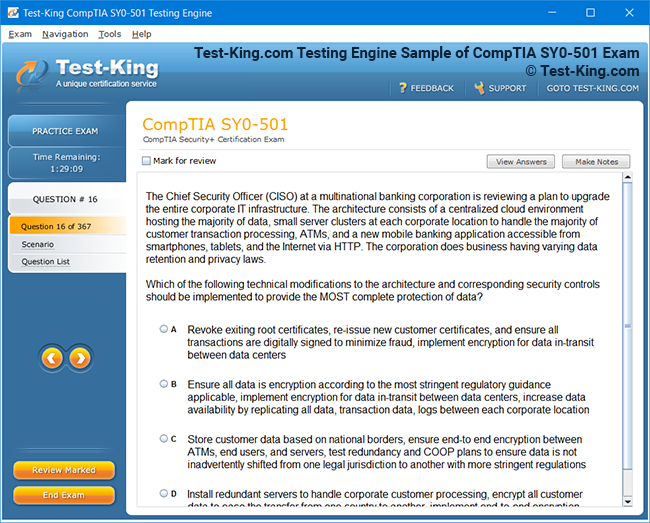
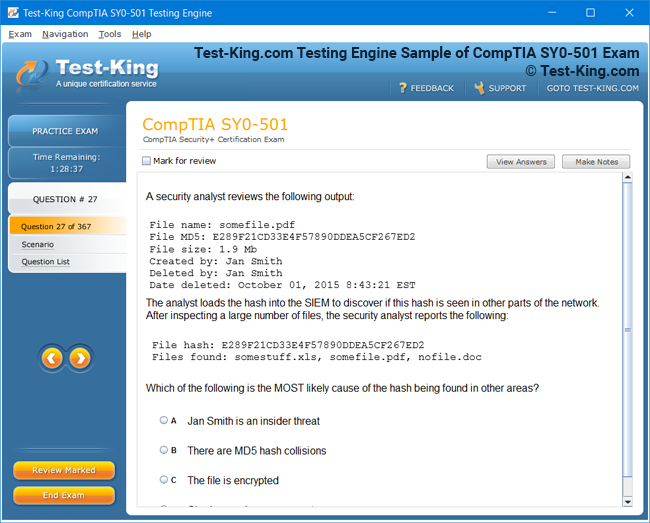
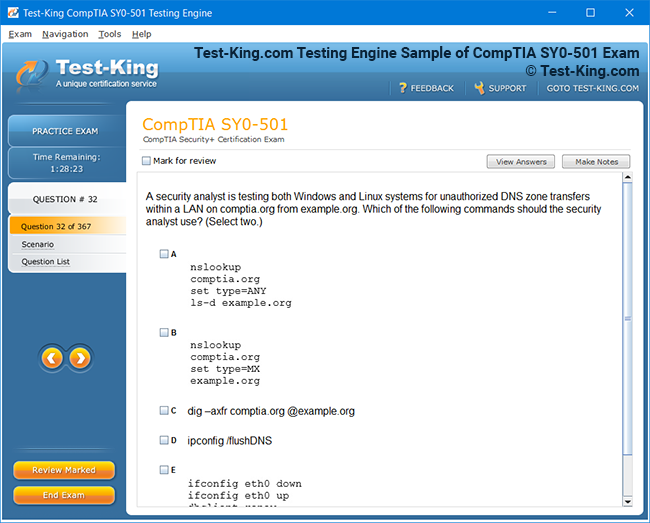
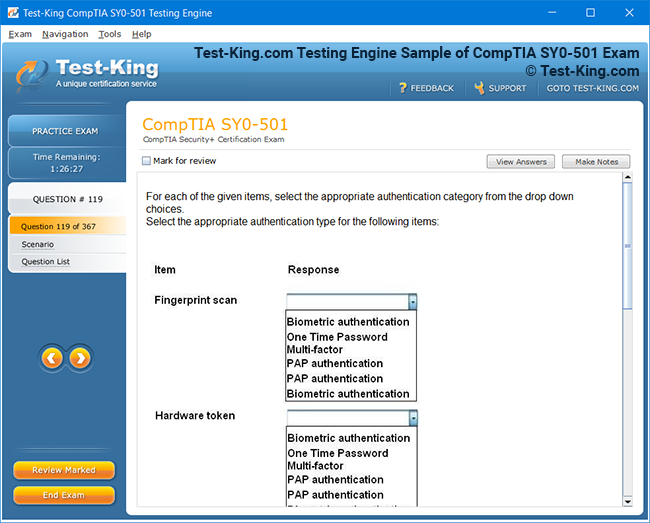
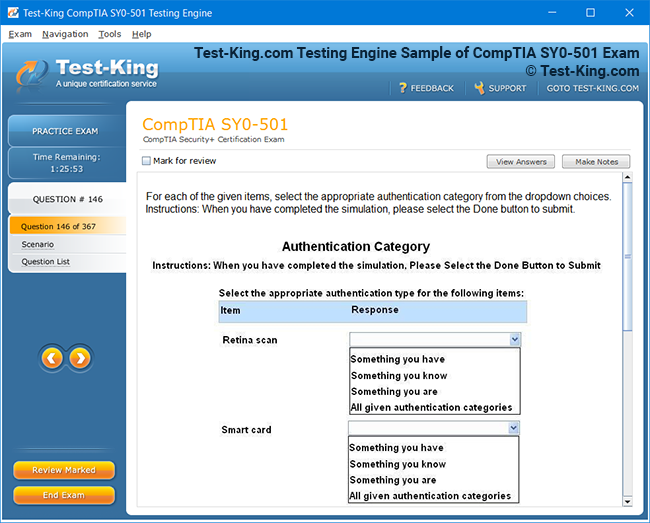
Product Screenshots
Frequently Asked Questions
How can I get the products after purchase?
All products are available for download immediately from your Member's Area. Once you have made the payment, you will be transferred to Member's Area where you can login and download the products you have purchased to your computer.
How long can I use my product? Will it be valid forever?
Test-King products have a validity of 90 days from the date of purchase. This means that any updates to the products, including but not limited to new questions, or updates and changes by our editing team, will be automatically downloaded on to computer to make sure that you get latest exam prep materials during those 90 days.
Can I renew my product if when it's expired?
Yes, when the 90 days of your product validity are over, you have the option of renewing your expired products with a 30% discount. This can be done in your Member's Area.
Please note that you will not be able to use the product after it has expired if you don't renew it.
How often are the questions updated?
We always try to provide the latest pool of questions, Updates in the questions depend on the changes in actual pool of questions by different vendors. As soon as we know about the change in the exam question pool we try our best to update the products as fast as possible.
How many computers I can download Test-King software on?
You can download the Test-King products on the maximum number of 2 (two) computers or devices. If you need to use the software on more than two machines, you can purchase this option separately. Please email support@test-king.com if you need to use more than 5 (five) computers.
What is a PDF Version?
PDF Version is a pdf document of Questions & Answers product. The document file has standart .pdf format, which can be easily read by any pdf reader application like Adobe Acrobat Reader, Foxit Reader, OpenOffice, Google Docs and many others.
Can I purchase PDF Version without the Testing Engine?
PDF Version cannot be purchased separately. It is only available as an add-on to main Question & Answer Testing Engine product.
What operating systems are supported by your Testing Engine software?
Our testing engine is supported by Windows. Andriod and IOS software is currently under development.
Top Fortinet Exams
- NSE4_FGT_AD-7.6 - Fortinet NSE 4 - FortiOS 7.6 Administrator
- NSE7_FSN_AR-7.6 - Fortinet NSE 7 - Secure Networking 7.6 Architect
- NSE5_FSW_AD-7.6 - Fortinet NSE 5 - FortiSwitch 7.6 Administrator
- FCP_FGT_AD-7.6 - FCP - FortiGate 7.6 Administrator
- FCP_FMG_AD-7.6 - Fortinet NSE 5 - FortiManager 7.6 Administrator
- FCP_FAZ_AN-7.6 - Fortinet NSE 5 - FortiAnalyzer 7.6 Analyst
- NSE5_SSE_AD-7.6 - Fortinet NSE 5 - FortiSASE and SD-WAN 7.6 Core Administrator
- NSE7_SSE_AR-26 - Fortinet NSE 7 - FortiSASE 26 Architect
- FCP_FCT_AD-7.4 - Fortinet NSE 6 - FortiClient EMS 7.4 Administrator
- NSE6_FSM_AN-7.4 - Fortinet NSE 6 - FortiSIEM 7.4 Analyst
- FCSS_EFW_AD-7.6 - NSE 7 - Enterprise Firewall 7.6 Administrator
- NSE5_FWB_AD-8.0 - Fortinet NSE 5 - FortiWeb 8.0 Administrator
- NSE7_SOC_AR-7.6 - Fortinet NSE 7 - Security Operations 7.6 Architect
- NSE6_OTS_AR-7.6 - Fortinet NSE 6 - OT Security 7.6 Architect
- NSE6_SDW_AD-7.6 - Fortinet NSE 6 - SD-WAN 7.6 Enterprise Administrator
- FCSS_SDW_AR-7.6 - FCSS - SD-WAN 7.6 Architect
- NSE5_FNC_AD-7.6 - Fortinet NSE 5 - FortiNAC-F 7.6 Administrator
- NSE6_EDR_AD-7.0 - Fortinet NSE 6 - FortiEDR 7.0 Administrator
- NSE4_FGT-7.0 - Fortinet NSE 4 - FortiOS 7.0
- FCSS_CDS_AR-7.6 - FCSS - Public Cloud Security 7.6 Architect
- NSE6_FNC_AD-7.6 - Fortinet NSE 6 - FortiNAC-F 7.6 Administrator
- NSE8_812 - Fortinet NSE 8 Written Exam
- FCP_FGT_AD-7.4 - FCP - FortiGate 7.4 Administrator
- FCSS_SASE_AD-25 - FCSS - FortiSASE 25 Administrator
- NSE6_FNC-8.5 - Fortinet NSE 6 - FortiNAC 8.5
- FCSS_NST_SE-7.6 - Fortinet NSE 6 - Network Security 7.6 Support Engineer
- NSE6_FML-7.2 - Fortinet NSE 6 - FortiMail 7.2
- FCP_FAZ_AD-7.4 - FCP - FortiAnalyzer 7.4 Administrator
- FCP_FMG_AD-7.4 - FCP - FortiManager 7.4 Administrator
- NSE7_SSE_AD-25 - Fortinet NSE 7 - FortiSASE 25 Enterprise Administrator
- FCP_FWF_AD-7.4 - FCP - Secure Wireless LAN 7.4 Administrator
- FCSS_LED_AR-7.6 - Fortinet NSE 6 - LAN Edge 7.6 Architect
Exam Preparation Strategies for Fortinet NSE7_SDW-6.4
Preparing for the NSE7_SDW-6.4 examination requires a meticulous approach that combines theoretical comprehension with practical expertise. Fortinet’s SD-WAN technology represents a sophisticated convergence of network security and connectivity optimization, demanding candidates to grasp both the overarching concepts and the intricate configuration details. The foundation of an effective study regimen begins with understanding the architecture of Fortinet SD-WAN, which is designed to enhance application performance, optimize bandwidth utilization, and maintain security integrity across multiple network paths. Familiarity with the FortiGate platform and its integration with SD-WAN functionalities allows candidates to conceptualize the interdependencies between virtual WAN overlays, dynamic path selection, and application steering, which are core components evaluated in the NSE 7 exam.
Mastering the Fortinet SD-WAN Landscape
In order to cultivate a robust comprehension of the material, aspiring candidates should immerse themselves in the Fortinet documentation, technical whitepapers, and configuration guides. Fortinet’s official resources provide exhaustive insights into SD-WAN features, including WAN path monitoring, performance SLA configurations, link load balancing, and failover mechanisms. These documents serve not only as study material but also as reference manuals for troubleshooting and scenario-based exercises. Candidates are encouraged to develop a structured reading schedule, allocating time to both the operational aspects of FortiGate devices and the strategic implications of SD-WAN deployments in enterprise environments.
Hands-on experience is indispensable when preparing for the examination. Setting up a lab environment, either through virtualized FortiGate instances or physical appliances, allows candidates to experiment with SD-WAN policies, configure multiple WAN links, and observe real-time application traffic steering. By simulating network conditions such as latency fluctuations, packet loss, and link failures, candidates can test the efficacy of SD-WAN rules and understand how Fortinet devices respond under different scenarios. This practical exposure not only reinforces theoretical knowledge but also sharpens problem-solving skills, which are crucial when tackling scenario-based questions in the NSE 7 examination.
Time management and strategic planning form another pillar of exam preparation. Candidates should break down the entire syllabus into manageable segments, assigning specific periods to review core concepts, practice configurations, and assess comprehension through mock exercises. Utilizing practice exams can provide insight into question patterns, common pitfalls, and areas that require additional focus. These simulated assessments also build familiarity with the pacing required to complete the actual examination efficiently, reducing anxiety and enhancing confidence.
A nuanced understanding of routing protocols and network topologies is also vital. Fortinet SD-WAN interacts closely with dynamic routing protocols such as BGP and OSPF, and candidates are expected to comprehend route redistribution, path selection, and failover mechanisms in detail. Knowledge of how SD-WAN overlays coexist with traditional routing architectures enables candidates to troubleshoot complex network behaviors, a skill that is frequently tested in scenario-based questions. Additionally, understanding how security policies, firewall rules, and VPN configurations integrate with SD-WAN ensures that candidates can design secure and resilient network solutions.
Focusing on application performance and monitoring is essential for exam readiness. Fortinet SD-WAN incorporates application-level monitoring to prioritize critical traffic and maintain quality of service. Candidates must be adept at configuring performance SLAs, interpreting application visibility data, and implementing dynamic path selection policies that align with business requirements. Familiarity with monitoring tools, log analysis, and reporting features allows candidates to diagnose performance issues and demonstrate proficiency in optimizing WAN utilization, which is a recurring theme in the NSE 7 assessment.
Building a conceptual framework that links SD-WAN functionalities to real-world business objectives can enhance retention and understanding. Candidates should consider how Fortinet SD-WAN solutions can reduce operational costs, improve user experience, and enhance security posture. By correlating technical configurations with strategic outcomes, candidates can approach exam questions with analytical reasoning rather than rote memorization. This approach encourages a deeper engagement with the material and allows candidates to anticipate the intent behind scenario-based questions, which often test applied knowledge rather than theoretical recall.
Collaborative learning and peer discussions can supplement individual study. Engaging with online forums, study groups, or professional communities exposes candidates to diverse perspectives and practical insights. Peers may share configuration tips, troubleshooting strategies, or exam experiences that illuminate nuances not immediately apparent in official documentation. This interactive approach reinforces knowledge through explanation and debate, enhancing both retention and confidence. Candidates should seek to contribute actively to discussions, as teaching concepts to others solidifies their own understanding.
Leveraging multimedia learning resources can also augment preparation. Video tutorials, webinars, and recorded labs provide dynamic demonstrations of SD-WAN configuration, troubleshooting, and best practices. Observing experts navigate complex scenarios can clarify abstract concepts and illustrate efficient techniques for managing FortiGate devices. Candidates can combine these visual resources with textual study to create a multi-dimensional learning strategy that accommodates different cognitive styles, thereby increasing the depth and durability of knowledge.
In addition to technical mastery, candidates must cultivate test-taking acumen. Understanding the structure of the NSE7_SDW-6.4 exam, including question formats, scenario-based assessments, and the weighting of different topics, helps in prioritizing study efforts. Candidates should practice interpreting complex network diagrams, identifying misconfigurations, and proposing remediation strategies within time constraints. This exercise enhances analytical thinking and ensures preparedness for questions that simulate real-world network challenges.
Attention to minute configuration details can differentiate proficient candidates. Fortinet SD-WAN offers extensive options for policy configuration, including link cost settings, SLA thresholds, and dynamic path selection criteria. Candidates should pay careful attention to these parameters, understand their impact on traffic flow, and practice implementing configurations in the lab environment. Mastery of these subtleties enables candidates to answer nuanced exam questions confidently, demonstrating both practical and theoretical expertise.
Integrating revision strategies into the preparation plan is crucial for long-term retention. Candidates should schedule periodic reviews of previously studied material, focusing on complex topics such as VPN integration, routing redistribution, and application-based steering. Repeated exposure through revision sessions consolidates memory and reinforces connections between concepts. Utilizing mind maps, flowcharts, or scenario-based summaries can further enhance recall and understanding, allowing candidates to navigate intricate exam questions with ease.
Developing troubleshooting proficiency is another critical aspect of preparation. Candidates should anticipate common network issues such as asymmetric routing, packet drops, or application misclassification, and practice diagnosing these problems in the lab environment. Understanding the sequence of diagnostic steps, leveraging Fortinet logging capabilities, and applying methodical problem-solving techniques build confidence and equip candidates to tackle scenario-driven exam questions effectively.
Balancing technical preparation with cognitive and psychological readiness is essential. Maintaining a consistent study schedule, incorporating adequate rest, and employing stress management techniques ensure sustained focus and peak cognitive performance during study sessions and on exam day. Candidates should also practice time allocation strategies, ensuring they can read, analyze, and answer each question thoughtfully without feeling rushed. This disciplined approach promotes both accuracy and efficiency, crucial factors in achieving a high score.
Finally, candidates should adopt a reflective learning mindset. After completing practice exercises or mock exams, reviewing mistakes and analyzing reasoning enhances insight into knowledge gaps and areas for improvement. Reflective practice encourages continuous refinement of understanding and problem-solving strategies, resulting in a deeper mastery of Fortinet SD-WAN concepts and a heightened ability to respond adeptly to complex scenarios in the NSE 7 examination.
Strengthening Skills and Knowledge for Fortinet SD-WAN Mastery
Preparing for the NSE7_SDW-6.4 examination necessitates a profound understanding of Fortinet’s advanced network technologies, paired with deliberate practice and analytical thinking. Fortinet SD-WAN is designed to optimize application performance, enhance bandwidth efficiency, and maintain robust security across multiple network links. Success in the examination hinges upon grasping the integration between SD-WAN overlays, dynamic path selection, and security policies within FortiGate devices. Candidates are encouraged to approach their study regimen as a structured journey, balancing theoretical learning, hands-on experimentation, and strategic revision to cultivate a thorough command over SD-WAN concepts and configurations.
A comprehensive approach begins with reviewing Fortinet’s official documentation and technical guides, which provide in-depth coverage of SD-WAN deployment, link monitoring, application steering, and policy configuration. Candidates should examine the operational and strategic implications of SD-WAN in enterprise environments, including how dynamic path selection reduces latency and packet loss while maintaining high availability. Understanding these interrelationships strengthens the ability to tackle scenario-based questions, which often assess applied knowledge rather than simple factual recall.
Hands-on practice is essential to reinforce conceptual understanding. Candidates should deploy virtual FortiGate instances or utilize lab environments to simulate real-world SD-WAN scenarios. Configuring multiple WAN links, setting performance thresholds, and observing traffic steering behavior under conditions of latency variation or link failure builds practical expertise. Experimenting with configuration parameters such as SLA thresholds, cost values, and link prioritization enables candidates to comprehend the nuanced effects of SD-WAN policies on network performance. These exercises also facilitate mastery of troubleshooting procedures, a recurring requirement in the NSE 7 assessment.
Candidates should cultivate an analytical mindset to approach complex networking challenges. Understanding how Fortinet SD-WAN interacts with dynamic routing protocols, including BGP and OSPF, is fundamental. Concepts such as route redistribution, path selection preferences, and the impact of link metrics on traffic flows require detailed comprehension. Developing the ability to diagnose routing anomalies and implement effective remediation strategies strengthens both problem-solving capability and exam readiness. Awareness of how firewall policies, VPN tunnels, and SD-WAN overlays coexist and interact ensures a holistic grasp of the Fortinet ecosystem.
Application performance monitoring is a critical area of focus for exam preparation. Fortinet SD-WAN provides visibility into application behavior, allowing candidates to implement SLA-based prioritization and optimize network efficiency. Understanding how to configure performance SLAs, analyze application metrics, and implement adaptive path selection policies is essential. Candidates should explore tools and logs within FortiGate devices that highlight application performance trends, identify anomalies, and guide traffic steering decisions. Practical exposure to these monitoring techniques reinforces comprehension and supports scenario-based problem-solving during the examination.
Developing a structured study plan enhances retention and ensures comprehensive coverage of the syllabus. Candidates should allocate time to review configuration guides, practice hands-on labs, and undertake mock exercises. Periodic self-assessment allows identification of weak areas, ensuring targeted revision. Using practice questions and simulated network scenarios helps candidates become familiar with question formats, analytical expectations, and timing strategies. This combination of structured learning, repetition, and practical engagement fosters both confidence and competence.
Fortinet SD-WAN configuration involves multiple layers of decision-making, requiring careful attention to detail. Candidates must understand how metrics such as link cost, jitter, latency, and packet loss influence dynamic path selection. Configuring multiple active and backup WAN links, implementing link load balancing, and designing failover strategies are fundamental skills that should be practiced extensively. Familiarity with policy precedence, route redistribution, and SLA configuration enables candidates to anticipate potential issues and resolve them proactively. This meticulous approach ensures candidates are well-prepared for both theoretical and scenario-driven examination questions.
In addition to technical proficiency, cognitive strategies are vital for effective preparation. Candidates should practice reading complex network diagrams, analyzing traffic flows, and identifying configuration anomalies. Scenario-based questions often require integrating multiple concepts, such as combining SD-WAN overlays with VPN encryption, firewall policies, and routing considerations. Developing the ability to dissect such scenarios, prioritize diagnostic steps, and apply methodical reasoning enhances both speed and accuracy during the examination. Candidates should also focus on time management, ensuring they can navigate intricate questions without compromising comprehension.
Reflective learning complements hands-on practice and theoretical study. After completing lab exercises or practice questions, candidates should review outcomes, identify mistakes, and analyze the reasoning behind correct solutions. This iterative process strengthens understanding and highlights patterns in SD-WAN behavior under different conditions. Reflective practice encourages adaptive thinking, enabling candidates to apply concepts creatively in novel situations, which is particularly valuable for scenario-based questions that emulate real-world enterprise networks.
Collaborative study and engagement with professional communities can further enhance preparation. Online forums, study groups, and discussion platforms provide opportunities to share insights, troubleshoot configurations, and exchange practical tips. Exposure to diverse problem-solving approaches broadens understanding and highlights alternative methods for addressing network challenges. Candidates should actively participate in discussions, explain concepts to peers, and assimilate feedback, as teaching others reinforces mastery and boosts retention.
Multimedia resources, including video tutorials, webinars, and recorded demonstrations, provide dynamic and visual learning opportunities. Observing Fortinet experts configure SD-WAN devices, implement monitoring strategies, and troubleshoot complex scenarios complements textual study and hands-on labs. Visual learning can clarify abstract concepts, illustrate configuration best practices, and provide alternative perspectives on problem-solving. Integrating multimedia resources into the study plan accommodates diverse learning styles and strengthens overall comprehension.
Candidates must also prioritize security considerations alongside SD-WAN functionality. Fortinet SD-WAN integrates closely with security policies, firewall rules, and VPN configurations. Understanding how traffic steering, application prioritization, and WAN optimization interact with encryption, access control, and intrusion prevention is critical. Practicing secure configuration techniques and simulating potential attack scenarios in the lab environment reinforces both security awareness and practical competence, ensuring candidates can address security-related questions with confidence.
Stress management and cognitive readiness are important for optimal exam performance. Maintaining a consistent study schedule, balancing intense study sessions with rest, and employing techniques such as visualization and mindfulness enhances focus and retention. Candidates should also simulate exam conditions during practice exercises, managing time allocation, and ensuring accurate, thoughtful responses under pressure. This preparation cultivates resilience and confidence, allowing candidates to approach the examination with a composed and analytical mindset.
Continuous reinforcement of knowledge through repeated revision is essential. Candidates should revisit previously studied concepts, particularly those involving complex configurations, routing interactions, and performance optimization. Using summaries, mind maps, or scenario-based notes helps consolidate memory and create connections between disparate topics. This layered approach ensures that knowledge remains accessible and easily applied during the examination, particularly when facing integrated scenario questions that test comprehension of multiple concepts simultaneously.
Developing troubleshooting acumen remains a cornerstone of preparation. Candidates should anticipate common operational issues, such as asymmetric routing, packet drops, or misclassified application traffic. Systematic practice in identifying root causes, applying diagnostic tools, and implementing corrective measures cultivates a practical, hands-on skill set. Mastery of troubleshooting steps enables candidates to respond efficiently to scenario-driven questions and demonstrates a deep understanding of Fortinet SD-WAN behavior under diverse network conditions.
Finally, maintaining a holistic perspective on Fortinet SD-WAN’s role within enterprise networking strengthens analytical reasoning. Candidates should appreciate how SD-WAN contributes to operational efficiency, business continuity, and enhanced user experience. Linking technical configurations with strategic objectives reinforces conceptual understanding and provides context for scenario-based questions. This integrated approach encourages critical thinking, enabling candidates to navigate complex problems and provide well-reasoned solutions aligned with business requirements.
Enhancing Competency and Practical Expertise for Fortinet SD-WAN
Mastering the Fortinet NSE7_SDW-6.4 examination requires a harmonious blend of theoretical knowledge, practical application, and strategic reasoning. Fortinet’s SD-WAN technology is engineered to ensure efficient connectivity, optimize bandwidth allocation, and uphold stringent security measures across multi-link networks. Candidates must not only understand the architecture of SD-WAN overlays and the dynamic path selection process but also the intricate relationship between application performance, link reliability, and enterprise security policies. Developing a disciplined approach to study, coupled with hands-on experimentation, fosters the level of competency necessary to navigate the complexity of the examination.
Fortinet documentation and technical manuals serve as the cornerstone for conceptual understanding. These resources provide detailed explanations on WAN path monitoring, traffic shaping, SLA configuration, and link failover strategies. Delving into these materials allows candidates to comprehend how Fortinet SD-WAN enhances network resilience and performance. Engaging with advanced guides enables a deep appreciation of both operational mechanisms and strategic applications, cultivating the ability to answer scenario-based questions that simulate real-world enterprise environments.
Practical engagement is essential for reinforcing theoretical concepts. Candidates should establish lab environments using virtual FortiGate appliances or physical devices, experimenting with multi-link configurations, policy routing, and performance SLAs. Simulating network conditions such as latency spikes, jitter, and link failures enables observation of SD-WAN behavior in real time. These exercises develop critical troubleshooting skills and provide insight into how traffic is dynamically routed based on pre-configured thresholds, ensuring candidates are prepared for scenario-driven exam questions.
A robust understanding of dynamic routing protocols underpins exam readiness. Fortinet SD-WAN integrates seamlessly with protocols such as BGP and OSPF, requiring candidates to comprehend route redistribution, path prioritization, and failover mechanisms. Recognizing how routing decisions interact with SD-WAN overlays equips candidates with the analytical framework to address complex questions involving network anomalies. Additionally, understanding firewall rules, VPN policies, and security integration within the SD-WAN framework is vital for achieving holistic comprehension of Fortinet’s network solutions.
Application performance monitoring is a central focus area for the NSE 7 examination. Fortinet SD-WAN provides real-time visibility into application flows, enabling prioritization of critical traffic and adherence to SLA requirements. Candidates should practice configuring performance SLAs, interpreting application visibility data, and implementing dynamic path selection policies. This hands-on experience strengthens understanding of how traffic management strategies maintain optimal network efficiency while ensuring security and reliability. Engaging with FortiGate logging, analytics, and reporting capabilities enhances proficiency in monitoring and troubleshooting complex scenarios.
Structured study schedules amplify retention and comprehension. Candidates are encouraged to segment their preparation into dedicated intervals for theoretical review, practical labs, and self-assessment exercises. Mock tests and scenario-based questions help identify areas requiring further focus and provide insight into the exam’s difficulty level and pattern. Iterative practice reinforces both the technical and analytical aspects of the SD-WAN framework, preparing candidates to approach the examination with confidence and precision.
Attention to configuration intricacies distinguishes proficient candidates. Fortinet SD-WAN allows fine-tuned control over parameters such as link cost, jitter, latency thresholds, and path selection rules. Candidates must practice implementing multi-link strategies, load balancing, and failover policies, understanding how each adjustment impacts traffic behavior. This nuanced knowledge ensures readiness for examination questions that evaluate both conceptual understanding and practical configuration skills.
Analytical reasoning is paramount when interpreting complex network scenarios. Scenario-based questions often require evaluating multiple layers of configurations, such as integrating VPNs, firewall rules, and SD-WAN overlays. Candidates must develop the ability to dissect these scenarios, prioritize diagnostic steps, and apply methodical reasoning to propose effective solutions. Practicing with diverse network topologies and simulated anomalies cultivates problem-solving agility and enhances confidence when navigating intricate questions.
Reflective learning fosters continuous improvement. After completing practical labs or mock exercises, candidates should review outcomes, identify mistakes, and assess alternative approaches. This reflective process consolidates knowledge, highlights patterns in network behavior, and sharpens troubleshooting strategies. By consistently analyzing performance and outcomes, candidates develop adaptive thinking skills, essential for responding to unforeseen challenges presented in the examination.
Collaborative learning provides supplementary insights and perspectives. Engaging with online forums, professional communities, and study groups exposes candidates to real-world scenarios and problem-solving approaches that may not be covered in official documentation. Discussing configuration strategies, troubleshooting techniques, and exam experiences with peers reinforces understanding and introduces candidates to alternative methodologies for addressing SD-WAN challenges. Active participation in collaborative environments enhances retention and deepens comprehension.
Multimedia learning resources offer dynamic reinforcement of complex concepts. Video tutorials, webinars, and recorded lab demonstrations allow candidates to observe advanced configuration practices, troubleshooting methods, and application performance monitoring in action. Visual learning complements textual study and hands-on practice, helping clarify abstract concepts and presenting practical strategies for addressing network challenges. Integrating multimedia resources into the preparation regimen accommodates different learning preferences and enhances mastery of SD-WAN principles.
Security considerations are integral to Fortinet SD-WAN expertise. Candidates must understand how SD-WAN configurations interact with firewall policies, VPN encryption, and intrusion prevention systems. Practicing secure implementation strategies, testing link failover under security constraints, and analyzing policy effects on traffic flow ensures candidates can answer security-related questions effectively. This knowledge reinforces the integration of performance optimization and security, a critical aspect of the NSE 7 examination.
Cognitive readiness and stress management influence exam performance. Maintaining a balanced study schedule, incorporating sufficient rest, and utilizing stress-reduction techniques such as visualization or mindfulness enhances focus and retention. Simulating timed exam conditions during practice tests allows candidates to develop pacing strategies and ensures they can answer complex questions accurately within allocated timeframes. Preparing psychologically alongside technical skills promotes confidence and composure during the examination.
Reinforcement through repetition solidifies knowledge. Regular review of previously studied material, particularly intricate configurations involving routing, SLAs, and application steering, ensures retention and enhances application skills. Mind maps, scenario-based summaries, and reflective notes can consolidate understanding and highlight interconnections between network elements. This approach strengthens recall and enables candidates to address multifaceted questions that require comprehension of multiple concepts simultaneously.
Developing advanced troubleshooting capability is essential. Candidates should anticipate common operational challenges, such as asymmetric routing, packet loss, misrouted traffic, or SLA violations. Practicing systematic diagnostic procedures, leveraging FortiGate logging and analytics, and implementing corrective measures equips candidates with a practical problem-solving toolkit. Mastery of troubleshooting strategies ensures readiness for scenario-based questions and demonstrates deep comprehension of SD-WAN operational dynamics.
Maintaining a holistic perspective on Fortinet SD-WAN’s role within enterprise networks enhances analytical reasoning. Candidates should understand how SD-WAN supports operational efficiency, cost optimization, business continuity, and improved user experience. Linking technical configurations to organizational objectives strengthens conceptual understanding and prepares candidates to respond effectively to applied questions. This integrated viewpoint ensures candidates can navigate complex scenarios, providing solutions that align with both technical requirements and strategic goals.
Finally, candidates should embrace a continuous improvement mindset. Reflecting on practice exercises, analyzing mistakes, and incorporating lessons learned into subsequent study cycles enhances understanding and skill development. This iterative approach promotes mastery of Fortinet SD-WAN concepts, develops adaptive thinking, and equips candidates to excel in the NSE7_SDW-6.4 examination. Through diligent preparation, hands-on practice, and strategic reflection, candidates cultivate the expertise necessary to manage complex network environments confidently.
Developing Advanced Expertise and Exam Readiness for Fortinet SD-WAN
Achieving proficiency in Fortinet NSE7_SDW-6.4 requires an integrated approach that combines conceptual mastery, practical experimentation, and strategic thinking. Fortinet SD-WAN technology is designed to optimize network performance, ensure high availability, and maintain robust security across diverse WAN connections. Candidates must comprehend the interplay between dynamic path selection, application steering, and security enforcement within FortiGate devices. Effective preparation necessitates balancing theoretical study with hands-on practice to develop the analytical and technical skills demanded by the examination.
A fundamental aspect of preparation involves immersing oneself in Fortinet’s technical documentation and configuration guides. These resources provide detailed insights into SD-WAN architecture, including how link monitoring, SLA implementation, and policy routing contribute to efficient traffic management. Understanding these mechanisms allows candidates to approach scenario-based questions with analytical reasoning, recognizing the effects of different configuration choices on network performance and reliability. Delving into advanced topics such as overlay networks, redundant link failover, and application-level visibility equips candidates with the depth of knowledge required for exam success.
Hands-on practice is indispensable for reinforcing theoretical comprehension. Candidates should establish lab environments using virtual FortiGate appliances or physical devices, creating multiple WAN links to simulate enterprise networks. Configuring performance SLAs, dynamic path selection rules, and application steering policies allows candidates to observe real-time effects on traffic flow, latency, and packet loss. Experimenting with different network conditions cultivates troubleshooting acumen, enabling candidates to diagnose and remediate issues efficiently, which is critical for scenario-based examination questions.
A sophisticated understanding of routing protocols and network topologies is essential. Fortinet SD-WAN integrates with dynamic routing protocols such as BGP and OSPF, and candidates must understand route redistribution, link cost metrics, and path selection preferences. Grasping how these protocols interact with SD-WAN overlays helps candidates troubleshoot complex routing behaviors and make informed decisions during network optimization exercises. Additionally, awareness of firewall rules, VPN configurations, and security policies ensures a comprehensive grasp of how Fortinet SD-WAN maintains both performance and security integrity.
Monitoring application performance and ensuring traffic optimization are central to exam readiness. Fortinet SD-WAN provides real-time insights into application flows, enabling prioritization of critical traffic based on business objectives. Candidates should practice configuring SLA-based routing, interpreting analytics data, and implementing adaptive path selection strategies. Familiarity with logging and reporting tools within FortiGate devices enhances the ability to identify anomalies, troubleshoot performance issues, and optimize WAN utilization effectively. This skillset is frequently assessed in scenario-driven exam questions.
Structured study schedules and iterative revision enhance knowledge retention. Candidates should divide their preparation into focused intervals for theoretical review, practical configuration exercises, and self-assessment. Repeated exposure to core concepts reinforces understanding, while practice exams help candidates identify knowledge gaps and improve problem-solving efficiency. Developing a methodical study regimen ensures comprehensive coverage of SD-WAN topics and builds confidence in tackling complex scenario-based questions.
Attention to configuration minutiae is crucial for mastery. Fortinet SD-WAN allows granular control over parameters such as link cost, jitter, latency thresholds, and performance metrics. Candidates should practice implementing multi-link strategies, failover mechanisms, and load balancing policies to understand the effects of each parameter on traffic flow. Mastery of these configuration subtleties equips candidates to answer nuanced questions that require both technical knowledge and applied reasoning, demonstrating expertise in Fortinet SD-WAN operations.
Analytical reasoning skills are vital for navigating complex network scenarios. Scenario-based questions often involve evaluating interactions between multiple network elements, including SD-WAN overlays, VPN tunnels, and firewall policies. Candidates must develop the ability to deconstruct these scenarios, identify potential issues, and apply structured problem-solving methodologies. Practicing with diverse network topologies and emulated failures fosters adaptive thinking and prepares candidates to address unpredictable challenges effectively.
Reflective learning complements hands-on experience. Candidates should review outcomes from lab exercises, analyze misconfigurations, and evaluate alternative approaches to problem resolution. Reflecting on successes and mistakes consolidates understanding, reinforces troubleshooting strategies, and builds confidence in applying knowledge under exam conditions. This iterative approach cultivates the ability to respond creatively to complex, scenario-driven questions while maintaining adherence to Fortinet best practices.
Collaborative engagement with peers and professional communities enhances preparation. Participating in online forums, discussion groups, and networking communities exposes candidates to practical insights, diverse problem-solving approaches, and shared experiences from certified professionals. Explaining concepts to peers and exchanging configuration strategies reinforces understanding and introduces alternative perspectives, which is particularly valuable for understanding advanced SD-WAN behaviors in enterprise environments.
Utilizing multimedia resources, including video demonstrations, webinars, and virtual labs, enriches the learning process. Observing experts configure, troubleshoot, and monitor Fortinet SD-WAN provides visual reinforcement of theoretical knowledge and highlights efficient strategies for complex configurations. Combining multimedia learning with textual study and hands-on practice ensures multi-faceted understanding and accommodates varied cognitive styles, enhancing retention and application of SD-WAN principles.
Security remains a paramount consideration in SD-WAN deployment. Candidates must understand how traffic steering, application prioritization, and link failover interact with firewall rules, VPN encryption, and intrusion prevention mechanisms. Practicing secure SD-WAN configurations, analyzing security logs, and simulating potential threat scenarios ensures candidates can integrate performance optimization with robust security practices, a critical competency assessed in the examination.
Cognitive readiness and psychological preparation significantly impact exam performance. Candidates should maintain a disciplined study schedule, incorporate regular rest intervals, and employ stress-management techniques such as visualization or mindfulness. Simulating timed exam conditions during practice tests allows candidates to develop pacing strategies, ensuring they can address complex questions accurately and efficiently. Preparing the mind alongside technical skills fosters composure, focus, and confidence during the examination.
Continuous reinforcement of knowledge through repetition is essential. Candidates should periodically review previously studied configurations, routing strategies, and application performance monitoring techniques. Summaries, mind maps, and scenario-based notes can consolidate knowledge and highlight connections between concepts. This layered reinforcement ensures that critical information is readily accessible, facilitating accurate responses to questions that require comprehension of multiple interconnected topics.
Developing advanced troubleshooting capabilities is fundamental. Candidates should anticipate common operational challenges, including asymmetric routing, SLA violations, misrouted traffic, or link congestion. Systematic practice in diagnosing root causes, leveraging FortiGate analytics, and applying corrective measures builds practical problem-solving expertise. Proficiency in troubleshooting reinforces theoretical understanding and ensures candidates can approach scenario-based questions with confidence and precision.
Maintaining a holistic view of Fortinet SD-WAN within enterprise networking contexts enhances strategic reasoning. Candidates should understand how SD-WAN contributes to operational efficiency, business continuity, cost optimization, and improved end-user experience. Linking technical configurations to organizational objectives fosters a deep appreciation of applied network design and equips candidates to respond effectively to complex, scenario-driven exam questions. This perspective emphasizes both technical expertise and alignment with business imperatives.
Finally, embracing an iterative and adaptive learning approach ensures continuous improvement. Reflecting on practice exercises, identifying errors, and integrating lessons learned into subsequent preparation cycles strengthens understanding and skill development. This approach cultivates mastery of Fortinet SD-WAN concepts, enhances adaptive problem-solving abilities, and prepares candidates to perform confidently in the NSE7_SDW-6.4 examination. Through disciplined study, hands-on experimentation, and strategic reflection, candidates develop the expertise required to manage complex SD-WAN environments effectively.
Advancing Technical Mastery and Exam Readiness for Fortinet SD-WAN
Excelling in Fortinet NSE7_SDW-6.4 requires an integrated methodology that balances theoretical insight, hands-on practice, and analytical reasoning. Fortinet’s SD-WAN technology is meticulously designed to optimize traffic flow, enhance application performance, and sustain enterprise-grade security across multiple WAN links. Candidates must understand the dynamic interplay between path selection, application steering, and security enforcement within FortiGate devices. Effective preparation demands cultivating technical proficiency, troubleshooting skills, and strategic thinking to handle the intricacies of both the SD-WAN architecture and the examination format.
Immersing oneself in Fortinet’s official documentation, technical whitepapers, and configuration manuals forms the foundation of comprehension. These materials detail the operational mechanics of SD-WAN, including WAN path monitoring, SLA configuration, dynamic path selection, and failover mechanisms. Candidates benefit from studying deployment scenarios, understanding how traffic steering decisions affect application performance, and appreciating the strategic implications of multi-link optimization. Advanced topics, such as overlay networks, redundant path management, and application-level visibility, provide the depth of knowledge required for scenario-based questions and practical problem-solving in enterprise networks.
Hands-on experimentation is crucial to reinforce theoretical understanding. Candidates should establish virtual labs or utilize physical FortiGate devices to configure multi-link environments, implement performance SLAs, and create adaptive path selection policies. Observing real-time traffic behavior under conditions such as latency variation, packet loss, or link failure helps solidify comprehension of SD-WAN behavior. Practicing troubleshooting techniques, including identifying misconfigurations and rectifying SLA violations, develops practical expertise, ensuring candidates can handle scenario-based examination questions with confidence.
Understanding dynamic routing protocols and their integration with SD-WAN is essential. Fortinet SD-WAN operates in conjunction with BGP and OSPF, requiring knowledge of route redistribution, path metrics, and failover mechanisms. Candidates must recognize how these protocols interact with overlay networks, enabling efficient traffic management and minimizing downtime. Additionally, familiarity with firewall rules, VPN configurations, and intrusion prevention ensures candidates can design solutions that maintain both high performance and security integrity.
Application performance optimization forms a core component of preparation. Fortinet SD-WAN allows prioritization of critical traffic, application-based routing, and SLA enforcement. Candidates should practice configuring performance thresholds, analyzing application behavior, and applying adaptive routing strategies. Leveraging FortiGate monitoring tools, logging, and analytics strengthens the ability to detect anomalies, optimize WAN utilization, and maintain service quality. Mastery of these concepts is often assessed through scenario-driven examination questions that simulate enterprise network environments.
Structured study schedules and iterative review improve retention and comprehension. Candidates should allocate dedicated intervals for theoretical learning, practical exercises, and self-assessment. Repeated exposure to core concepts enhances understanding, while practice examinations help identify weaknesses and improve problem-solving speed. A systematic study approach ensures coverage of all relevant topics, builds confidence, and prepares candidates to handle complex scenario-based questions effectively.
Attention to configuration intricacies distinguishes proficient candidates. Fortinet SD-WAN allows granular control over parameters such as link cost, jitter, latency thresholds, and path selection criteria. Candidates should practice multi-link deployment strategies, failover policies, and load balancing configurations to understand how each parameter affects network performance. Mastery of these subtleties equips candidates to answer detailed questions requiring both conceptual understanding and applied configuration expertise.
Analytical reasoning is pivotal when dealing with complex network scenarios. Scenario-based questions often require evaluating interactions between multiple elements, including VPNs, firewall rules, and SD-WAN overlays. Candidates must develop the ability to deconstruct scenarios, identify potential issues, and apply methodical troubleshooting techniques. Exposure to diverse network topologies and failure conditions fosters adaptive thinking, enabling candidates to respond effectively to unanticipated challenges during the examination.
Reflective learning reinforces both theoretical and practical comprehension. Candidates should review outcomes from lab exercises, analyze errors, and assess alternative approaches. Reflection consolidates knowledge, enhances troubleshooting strategies, and promotes confidence in applying concepts to scenario-based questions. Iterative practice enables candidates to identify patterns, strengthen problem-solving skills, and improve their capacity to apply SD-WAN principles to complex configurations.
Collaboration with peers and engagement in professional communities enrich preparation. Discussion forums, study groups, and networking communities provide opportunities to exchange insights, troubleshoot configurations, and learn from the experiences of certified professionals. Explaining concepts to others, sharing strategies, and analyzing alternative approaches reinforces understanding and introduces new perspectives, particularly valuable for tackling advanced SD-WAN scenarios in enterprise environments.
Multimedia learning resources augment textual study and hands-on practice. Video tutorials, webinars, and recorded demonstrations offer visual reinforcement of complex SD-WAN concepts, illustrating efficient configuration practices, monitoring strategies, and troubleshooting methodologies. Observing experts in action clarifies abstract concepts and highlights practical approaches to resolving network challenges. Integrating multimedia learning ensures a multi-dimensional understanding of Fortinet SD-WAN and accommodates varied cognitive styles.
Security remains a critical component of SD-WAN expertise. Candidates must understand how traffic steering, SLA enforcement, and link failover interact with firewall rules, VPN encryption, and intrusion prevention mechanisms. Practicing secure SD-WAN configurations, simulating potential security breaches, and analyzing policy effects on traffic flow reinforce the integration of performance optimization with robust security practices. This knowledge ensures candidates can address security-related examination questions effectively.
Cognitive readiness and psychological preparation enhance exam performance. Maintaining a consistent study schedule, balancing rigorous study sessions with rest, and applying stress-reduction techniques such as mindfulness or visualization improves focus and retention. Simulating timed practice exams allows candidates to develop pacing strategies, ensuring accurate and thorough responses under examination conditions. Preparing mentally alongside technical skills cultivates composure and confidence during the assessment.
Continuous reinforcement through iterative revision consolidates understanding. Candidates should revisit previously studied topics, including routing strategies, SLA configurations, and application steering techniques. Using scenario-based notes, mind maps, and reflective summaries helps integrate knowledge and highlight connections between interrelated concepts. This approach ensures candidates can efficiently recall critical information and tackle complex, multifaceted questions with clarity.
Advanced troubleshooting skills are integral to success. Candidates should anticipate common operational challenges such as asymmetric routing, misrouted traffic, SLA violations, or link congestion. Practicing systematic diagnosis, using FortiGate analytics, and implementing corrective measures enhances problem-solving capabilities. Mastery of troubleshooting techniques ensures candidates are equipped to manage scenario-based questions that test real-world application of SD-WAN knowledge.
Maintaining a holistic understanding of Fortinet SD-WAN within enterprise networks strengthens strategic insight. Candidates should consider how SD-WAN improves operational efficiency, supports business continuity, reduces costs, and enhances end-user experience. Linking technical configurations with organizational objectives develops an applied understanding of network design and prepares candidates to respond effectively to integrated scenario-based questions. This perspective combines technical mastery with strategic reasoning.
Finally, adopting an iterative, adaptive learning approach ensures continuous improvement. Reflecting on practice exercises, analyzing errors, and integrating lessons into subsequent study cycles enhances understanding and skill development. This method cultivates deep expertise in Fortinet SD-WAN, improves adaptive problem-solving, and prepares candidates to navigate the challenges of the NSE7_SDW-6.4 examination. Through structured study, hands-on practice, and strategic reflection, candidates develop the competence necessary to manage complex SD-WAN environments effectively.
Mastering Expertise and Achieving Certification Success in Fortinet SD-WAN
Achieving mastery in Fortinet NSE7_SDW-6.4 demands a cohesive approach that combines theoretical knowledge, practical experimentation, analytical reasoning, and strategic planning. Fortinet’s SD-WAN technology is engineered to optimize network performance, enhance application delivery, and maintain enterprise-grade security across multiple WAN connections. Candidates must develop a comprehensive understanding of dynamic path selection, application steering, and security integration within FortiGate devices. Effective preparation requires integrating conceptual comprehension with hands-on configuration practice, continuous review, and troubleshooting proficiency to address complex, real-world network scenarios.
Immersion in Fortinet’s technical documentation, configuration guides, and advanced deployment manuals forms the backbone of exam readiness. These resources provide detailed insights into WAN path monitoring, SLA management, policy routing, link prioritization, and failover strategies. Candidates must internalize the mechanisms of SD-WAN overlays, understanding how traffic steering and dynamic path selection influence application performance and network reliability. Engaging with advanced materials, including application visibility, redundant path management, and overlay network optimization, equips candidates with the depth of knowledge required to solve scenario-based examination questions effectively.
Hands-on experimentation is an indispensable component of preparation. Candidates should establish lab environments using virtual FortiGate instances or physical appliances, configuring multiple WAN links, creating adaptive routing policies, and implementing performance SLAs. Simulating conditions such as latency spikes, jitter, link congestion, and packet loss allows candidates to observe real-time traffic behavior and understand SD-WAN decision-making processes. Practicing troubleshooting scenarios, including SLA violations and misrouted traffic, develops practical expertise and analytical skills, both of which are essential for handling scenario-driven exam questions confidently.
A thorough understanding of dynamic routing protocols and their integration with SD-WAN is critical. Fortinet SD-WAN interacts with BGP and OSPF, requiring candidates to understand route redistribution, path metrics, link cost evaluation, and failover mechanisms. Recognizing how routing protocols influence traffic flow and interact with SD-WAN overlays enables candidates to troubleshoot complex network behaviors efficiently. Additionally, knowledge of firewall policies, VPN tunnels, and intrusion prevention mechanisms ensures candidates can design secure and optimized network solutions that comply with enterprise requirements.
Application performance monitoring and traffic optimization are key to exam preparation. Fortinet SD-WAN provides real-time visibility into application flows, enabling prioritization of critical traffic and enforcement of performance thresholds. Candidates should practice configuring SLA-based routing, analyzing application performance data, and applying adaptive path selection strategies. Leveraging FortiGate logging, analytics, and reporting tools allows candidates to detect anomalies, optimize WAN utilization, and maintain high-quality service levels. These competencies are frequently tested in scenario-based examination questions that reflect enterprise network challenges.
Structured study schedules and continuous revision strengthen retention and conceptual mastery. Candidates should allocate dedicated periods for theoretical study, hands-on lab practice, and self-assessment exercises. Repeated engagement with core concepts, coupled with practice exams, facilitates identification of knowledge gaps and enhances problem-solving efficiency. This methodical approach ensures comprehensive coverage of SD-WAN topics, builds confidence, and equips candidates to handle integrated, scenario-based questions effectively.
Attention to configuration precision differentiates proficient candidates. Fortinet SD-WAN allows granular control over metrics such as link cost, jitter, latency thresholds, and dynamic path selection rules. Candidates should practice multi-link deployment strategies, load balancing, and failover configurations to understand how these parameters affect traffic flow and application performance. Mastery of these details enables candidates to respond accurately to nuanced questions requiring both conceptual insight and applied configuration skills.
Analytical reasoning is essential for addressing complex network scenarios. Scenario-based questions often involve evaluating interactions between multiple network elements, including VPN tunnels, firewall rules, and SD-WAN overlays. Candidates must develop the ability to dissect these scenarios, identify potential issues, and apply methodical problem-solving techniques. Exposure to diverse topologies and simulated failures enhances adaptive thinking, enabling candidates to tackle unforeseen challenges during the examination with confidence and accuracy.
Reflective learning consolidates both theoretical and practical understanding. After completing labs or practice exercises, candidates should analyze outcomes, assess alternative approaches, and reflect on mistakes. This reflective practice strengthens troubleshooting skills, improves decision-making, and reinforces retention of complex SD-WAN concepts. Iterative reflection fosters adaptive problem-solving abilities, enabling candidates to apply knowledge creatively to novel scenarios in the examination environment.
Collaboration with peers and professional communities further enhances preparation. Discussion forums, study groups, and professional networking platforms provide opportunities to exchange insights, troubleshoot configurations, and share practical experiences. Explaining concepts to others, discussing alternative approaches, and analyzing peer strategies reinforces understanding and introduces perspectives that may not be encountered in official documentation. Collaborative learning fosters a deeper comprehension of SD-WAN principles and prepares candidates for applied scenario questions.
Multimedia resources, including video demonstrations, webinars, and recorded labs, offer dynamic reinforcement of concepts. Observing experts configure, monitor, and troubleshoot Fortinet SD-WAN provides visual context that complements textual study and hands-on experimentation. Multimedia learning clarifies abstract concepts, illustrates practical problem-solving methods, and offers efficient strategies for managing complex configurations. Integrating these resources ensures multi-dimensional understanding and accommodates diverse learning styles.
Security considerations remain a central aspect of SD-WAN mastery. Candidates must understand how traffic prioritization, path selection, and SLA enforcement interact with firewall policies, VPN encryption, and intrusion prevention systems. Practicing secure SD-WAN deployments, analyzing traffic under security constraints, and simulating potential threat scenarios enhances the integration of performance optimization and security compliance. This competency is vital for addressing security-oriented questions in the examination.
Cognitive preparedness and stress management play a crucial role in exam performance. Maintaining a consistent study schedule, balancing intensive preparation with rest, and employing relaxation techniques such as visualization or mindfulness improves focus and information retention. Simulating timed practice exams allows candidates to develop pacing strategies and ensures accuracy under pressure. Preparing psychologically in conjunction with technical preparation enhances confidence, composure, and exam readiness.
Continuous reinforcement through repeated review consolidates understanding. Candidates should revisit previously studied topics, including routing mechanisms, SLA management, application steering, and troubleshooting procedures. Summaries, mind maps, and scenario-based notes can integrate knowledge, highlight interconnections, and support memory retention. Layered review ensures that critical concepts are readily accessible, enabling candidates to respond effectively to complex questions requiring comprehension of multiple interconnected elements.
Advanced troubleshooting skills are indispensable for success. Candidates should anticipate common operational challenges, such as asymmetric routing, misrouted traffic, link congestion, or SLA violations. Systematic diagnostic practice, combined with the use of FortiGate logging and analytics, develops a practical problem-solving toolkit. Mastery of troubleshooting procedures enables candidates to address scenario-driven questions with efficiency, demonstrating both conceptual understanding and applied expertise in Fortinet SD-WAN.
Maintaining a holistic understanding of SD-WAN’s impact within enterprise networks strengthens strategic reasoning. Candidates should recognize how SD-WAN improves operational efficiency, enhances business continuity, reduces operational costs, and supports optimal user experience. Linking technical configurations to organizational goals fosters applied comprehension and equips candidates to answer scenario-based questions that require integration of performance, security, and operational considerations. This strategic perspective complements technical expertise.
Finally, adopting an iterative and adaptive learning approach ensures continuous improvement. Candidates should reflect on practice exercises, analyze mistakes, and incorporate lessons into subsequent study cycles. This iterative process strengthens understanding, enhances problem-solving agility, and develops mastery of Fortinet SD-WAN principles. Through disciplined study, hands-on experimentation, collaborative learning, multimedia engagement, and reflective practice, candidates are equipped to achieve certification success and confidently manage complex SD-WAN environments.
Conclusion
Preparation for Fortinet NSE7_SDW-6.4 demands dedication, strategic planning, and multifaceted engagement with both theory and practice. Mastery arises from the combination of comprehensive study, hands-on experimentation, scenario-based problem-solving, and iterative reflection. Candidates who embrace structured learning schedules, utilize official resources, engage with peers, apply multimedia tools, and continuously reinforce knowledge develop the expertise required to excel in the examination. Beyond passing the certification, this preparation cultivates the skills necessary to implement, manage, and optimize Fortinet SD-WAN in enterprise environments, delivering enhanced network performance, reliability, and security. A disciplined, holistic, and adaptive approach ensures both certification achievement and long-term professional competence in advanced SD-WAN technologies.