
Exam Code: PSE-Prisma Cloud
Exam Name: Palo Alto Networks System Engineer Professional - Prisma Cloud
Certification Provider: Palo Alto Networks
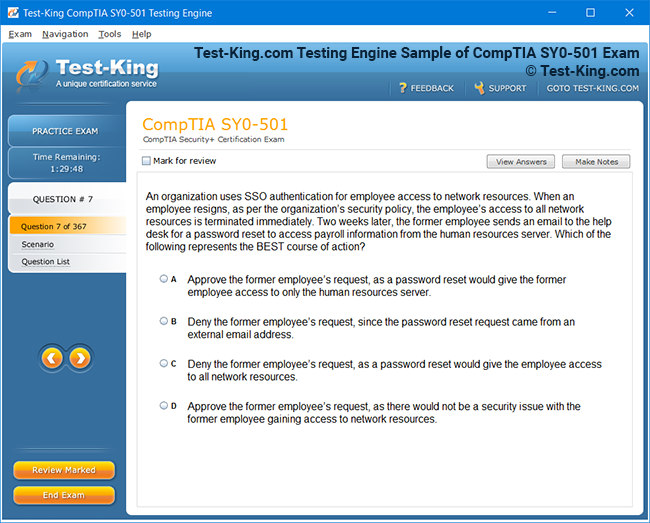
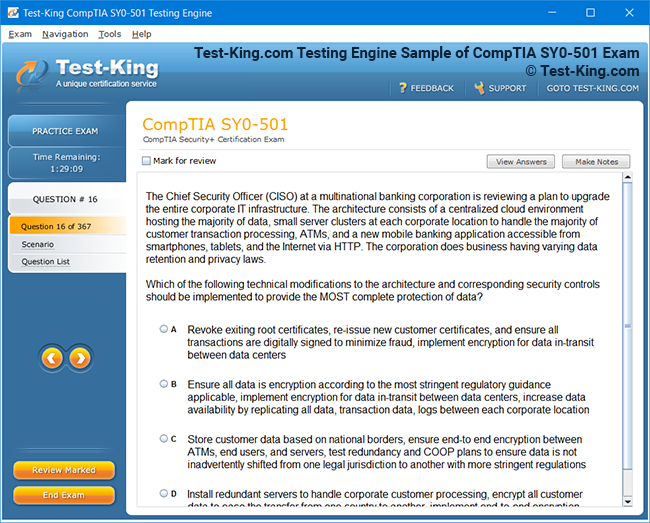
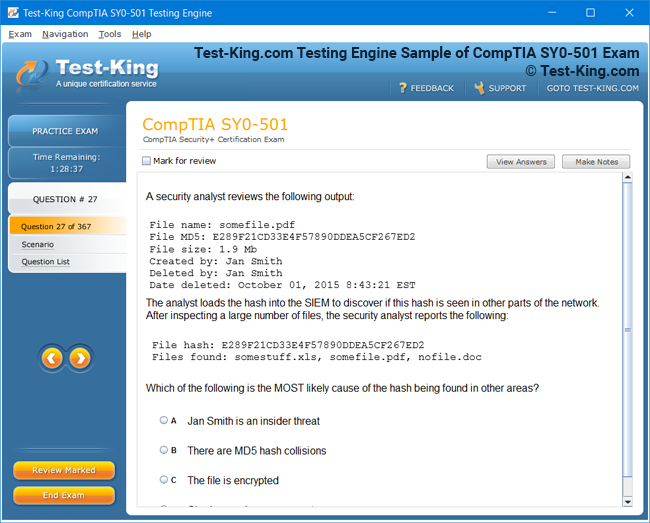
Product Screenshots
Frequently Asked Questions
How can I get the products after purchase?
All products are available for download immediately from your Member's Area. Once you have made the payment, you will be transferred to Member's Area where you can login and download the products you have purchased to your computer.
How long can I use my product? Will it be valid forever?
Test-King products have a validity of 90 days from the date of purchase. This means that any updates to the products, including but not limited to new questions, or updates and changes by our editing team, will be automatically downloaded on to computer to make sure that you get latest exam prep materials during those 90 days.
Can I renew my product if when it's expired?
Yes, when the 90 days of your product validity are over, you have the option of renewing your expired products with a 30% discount. This can be done in your Member's Area.
Please note that you will not be able to use the product after it has expired if you don't renew it.
How often are the questions updated?
We always try to provide the latest pool of questions, Updates in the questions depend on the changes in actual pool of questions by different vendors. As soon as we know about the change in the exam question pool we try our best to update the products as fast as possible.
How many computers I can download Test-King software on?
You can download the Test-King products on the maximum number of 2 (two) computers or devices. If you need to use the software on more than two machines, you can purchase this option separately. Please email support@test-king.com if you need to use more than 5 (five) computers.
What is a PDF Version?
PDF Version is a pdf document of Questions & Answers product. The document file has standart .pdf format, which can be easily read by any pdf reader application like Adobe Acrobat Reader, Foxit Reader, OpenOffice, Google Docs and many others.
Can I purchase PDF Version without the Testing Engine?
PDF Version cannot be purchased separately. It is only available as an add-on to main Question & Answer Testing Engine product.
What operating systems are supported by your Testing Engine software?
Our testing engine is supported by Windows. Andriod and IOS software is currently under development.
Top Palo Alto Networks Exams
- NetSec-Pro - Palo Alto Networks Certified Network Security Professional
- NGFW-Engineer - Palo Alto Networks Certified Next-Generation Firewall Engineer
- SecOps-Pro - Palo Alto Networks Security Operations Professional
- XSIAM-Engineer - Palo Alto Networks XSIAM Engineer
- SSE-Engineer - Palo Alto Networks Security Service Edge Engineer
- NetSec-Architect - Palo Alto Networks Network Security Architect
- NetSec-Analyst - Palo Alto Networks Certified Network Security Analyst
- XDR-Engineer - Palo Alto Networks XDR Engineer
- XSIAM-Analyst - Palo Alto Networks Certified XSIAM Analyst
- CloudSec-Pro - Palo Alto Networks Cloud Security Professional
- XSOAR-Engineer - Palo Alto Networks XSOAR Engineer
- SD-WAN-Engineer - Palo Alto Networks SD-WAN Engineer
- PCCP - Palo Alto Networks Cybersecurity Practitioner
- PCNSE - Palo Alto Networks Certified Network Security Engineer
- PCNSA - Palo Alto Networks Certified Network Security Administrator
- Apprentice - Palo Alto Networks Cybersecurity Apprentice
- PSE-SASE - Palo Alto Networks System Engineer Professional - SASE
- PSE-Prisma Cloud - Palo Alto Networks System Engineer Professional - Prisma Cloud
- NetSec-Generalist - Palo Alto Networks - Network Security Generalist
How to Strategically Prepare for the PSE-Prisma Cloud Exam
Preparing for the Palo Alto Networks System Engineer Professional - Prisma Cloud exam requires a nuanced comprehension of both the conceptual framework of cloud security and the operational intricacies of Prisma Cloud. Unlike generic certifications, this exam delves into the practical application of security controls across cloud-native architectures, emphasizing real-world scenarios where a system engineer must evaluate, configure, and monitor cloud environments. It is paramount for aspirants to cultivate a mindset that transcends rote memorization; understanding the logic behind configurations, policies, and integrations will significantly enhance performance.
Understanding the Exam Landscape
A strategic preparation plan begins with familiarizing oneself with the architectural components of Prisma Cloud. Candidates should explore the platform’s approach to visibility, compliance, threat detection, and risk mitigation across various cloud service providers. The exam does not merely test theoretical knowledge but emphasizes the ability to translate that understanding into actionable security measures. Concepts such as cloud workload protection, container security, serverless functions, and network segmentation are recurrent themes that demand a holistic comprehension.
Crafting a Structured Study Approach
Adopting a structured approach to study is essential for mastering the breadth of topics covered by the PSE-Prisma Cloud exam. Initiating preparation with a thorough review of the official exam blueprint provides clarity on the weightage of different domains. This blueprint illuminates the areas where depth of knowledge is critical, such as security policies, vulnerability management, identity and access controls, and logging and monitoring. Allocating study time according to the significance of each domain allows for optimized retention and application.
Hands-on practice is indispensable. Setting up a lab environment, whether in a sandbox cloud account or a dedicated virtual environment, allows candidates to experiment with policies, alerts, and dashboards. Engaging in practical exercises, such as configuring runtime protection for containers or orchestrating compliance scans across multi-cloud infrastructures, instills the procedural familiarity that written materials alone cannot provide. This tactile engagement reinforces theoretical constructs, ensuring that candidates can not only recognize correct configurations but also implement them efficiently under exam conditions.
Mastering Core Security Features
A profound understanding of Prisma Cloud’s core security features is the linchpin of effective preparation. Candidates must scrutinize the platform’s capability to safeguard workloads, data, and applications throughout the cloud lifecycle. The exam often evaluates knowledge of host, container, and serverless security, including runtime defense mechanisms, vulnerability assessments, and compliance audits. Familiarity with the nuances of role-based access control, network segmentation, and encryption protocols is critical, as these mechanisms are central to mitigating risks and maintaining regulatory compliance.
Equally important is mastering the alerting and monitoring functionalities within Prisma Cloud. Exam questions frequently assess the candidate’s ability to configure and interpret alerts, evaluate risk scores, and respond to potential threats. Understanding the interplay between automated alerts, dashboards, and policy recommendations enables system engineers to make informed decisions swiftly. Practicing these tasks in a simulated environment cultivates the procedural confidence necessary for the exam, allowing candidates to approach complex scenarios methodically.
Leveraging Scenario-Based Learning
Scenario-based learning is particularly effective for this exam because it mirrors the real-world challenges that system engineers encounter. Candidates should engage with case studies illustrating cloud security breaches, misconfigurations, and compliance failures. Analyzing these situations encourages the development of critical thinking skills, enabling candidates to anticipate potential vulnerabilities and implement preemptive measures. This method reinforces knowledge of policy creation, access management, and threat mitigation in a manner that rote study cannot achieve.
For instance, envision a multi-cloud deployment where an organization’s containerized applications face a potential misconfiguration in network policies. By simulating this scenario, the candidate can practice identifying the misconfigurations, applying appropriate rules, and validating that remediation efforts align with compliance mandates. Exercises like these bridge the gap between theoretical understanding and practical proficiency, which is the hallmark of a competent Prisma Cloud system engineer.
Enhancing Retention with Repetitive Review
Repetition and iterative review are invaluable strategies for internalizing the complex information encompassed by the exam. Candidates should create a cyclical study routine that revisits critical concepts at regular intervals, reinforcing retention and enhancing recall under timed exam conditions. Utilizing a combination of written notes, flashcards, and mind maps aids in consolidating intricate topics such as vulnerability severity scoring, cloud-native security frameworks, and audit report interpretation.
In addition, engaging with peer discussion groups or online forums can provide alternative perspectives on challenging topics. Exchanging insights on policy enforcement, alert optimization, and incident response cultivates a deeper understanding and often highlights subtleties that solitary study may overlook. These collaborative interactions enhance cognitive agility, preparing candidates to tackle scenario-based questions with confidence and precision.
Optimizing Exam-Taking Strategies
Understanding the structure and format of the exam is as critical as mastering its content. The PSE-Prisma Cloud exam evaluates both conceptual knowledge and practical application, often presenting questions framed around multi-step scenarios. Effective exam strategies include reading each question carefully, identifying key elements, and methodically eliminating implausible options. Time management is crucial; candidates should allocate sufficient time to dissect complex questions without compromising the ability to answer straightforward items efficiently.
Another valuable tactic is to approach scenario questions with a process-oriented mindset. Rather than focusing solely on the outcome, candidates should consider the procedural steps required to achieve secure and compliant cloud environments. This approach aligns closely with real-world responsibilities and ensures that answers reflect pragmatic system engineering practices. Practicing with sample questions and simulated exams can reinforce this mindset, making it more intuitive on the day of assessment.
Addressing Knowledge Gaps Proactively
Identifying and addressing gaps in knowledge early in the preparation process prevents last-minute cramming and reduces exam anxiety. Candidates should periodically assess their proficiency across all major domains, noting areas where comprehension or application is weak. Targeted review sessions, complemented by practical exercises, help solidify understanding in these areas. For instance, if alert configuration or compliance monitoring presents challenges, additional practice in these domains can transform weaknesses into strengths.
It is equally important to maintain an adaptable study plan. As candidates progress, new insights or changes in cloud technology practices may emerge, requiring adjustments to the preparation approach. Remaining flexible allows aspirants to incorporate updated information without disrupting the overall study trajectory, ensuring readiness for both the content and the dynamic nature of cloud security scenarios.
Integrating Real-World Insights
Integrating insights from real-world cloud security operations enriches preparation and enhances the ability to reason through complex scenarios. Candidates should explore case studies from industry publications, whitepapers, and cybersecurity reports to understand the evolving threat landscape. Observing how organizations implement Prisma Cloud controls, manage alerts, and remediate incidents provides invaluable context for exam questions that simulate practical challenges.
Furthermore, reflecting on lessons learned from operational deployments can inform decision-making processes. Understanding the rationale behind security policy prioritization, risk assessment methodologies, and incident response procedures helps candidates approach exam questions with a professional and analytical mindset. This experiential learning complements theoretical study, fostering a well-rounded grasp of cloud security practices essential for system engineers.
Deepening Technical Understanding and Practical Proficiency
Success in the Palo Alto Networks System Engineer Professional - Prisma Cloud exam requires not only familiarity with the platform but also the ability to translate knowledge into operational expertise. While foundational study offers an introduction to cloud security principles, a deeper exploration of technical intricacies is essential for mastering complex scenarios presented in the exam. Candidates should focus on understanding the lifecycle of cloud workloads, including the orchestration, deployment, monitoring, and securing of containers, virtual machines, and serverless functions. A thorough grasp of these components allows system engineers to implement precise controls and respond effectively to emergent security threats.
Hands-on exercises are indispensable for achieving this level of proficiency. Establishing a personal lab environment or leveraging sandboxed cloud accounts provides the opportunity to configure policies, monitor alerts, and assess compliance across multi-cloud architectures. Repeatedly engaging with scenarios that involve policy creation, runtime protection, or vulnerability remediation cultivates procedural familiarity, ensuring that theoretical concepts translate seamlessly into actionable strategies. For instance, implementing automated compliance scans across multiple cloud regions can illuminate subtle differences in configuration behavior, enhancing the candidate’s ability to navigate nuanced exam questions.
Understanding Cloud-Native Security Mechanisms
A nuanced comprehension of cloud-native security mechanisms is central to exam preparation. Prisma Cloud offers multiple layers of protection for workloads and applications, including host security, container security, and serverless defense. Candidates must appreciate how these layers interrelate, such as the integration of vulnerability scanning with runtime monitoring or the enforcement of role-based access controls across dynamic environments. Exam questions often evaluate the ability to identify and remediate misconfigurations, requiring not only recognition of security features but also strategic application in realistic contexts.
Network security within cloud environments presents another critical area of focus. Candidates should investigate how segmentation, micro-perimeters, and secure communication protocols mitigate risks and enforce compliance. Understanding how Prisma Cloud integrates with cloud-native firewalls, identity services, and logging tools allows candidates to design architectures that balance security and operational efficiency. Practical exercises that simulate breaches or misconfigurations in these areas help reinforce conceptual knowledge and cultivate analytical decision-making.
Scenario-Based Problem Solving
Scenario-based problem solving is highly effective for bridging the gap between theoretical knowledge and practical application. Candidates can benefit from exploring hypothetical incidents, such as container misconfigurations leading to potential data exposure or incomplete compliance checks across multi-cloud deployments. By walking through these situations, candidates learn to evaluate risk, implement corrective actions, and validate the effectiveness of their measures. This method encourages a mindset aligned with real-world responsibilities and reinforces the procedural knowledge required to respond swiftly to emerging security threats.
For example, consider a scenario where serverless functions in multiple cloud regions exhibit inconsistent access permissions. Practicing the identification of these discrepancies and correcting the configuration fosters critical thinking and operational acuity. This approach not only strengthens exam readiness but also develops the ability to anticipate vulnerabilities before they escalate, a skill highly valued in professional cloud security practice.
Mastering Compliance and Risk Management
Exam preparation necessitates a sophisticated understanding of compliance frameworks and risk management strategies. Candidates should explore how Prisma Cloud assists organizations in meeting regulatory obligations, such as ensuring adherence to data protection policies, industry standards, and organizational guidelines. This involves interpreting compliance dashboards, prioritizing remediation tasks, and understanding the implications of noncompliance. Knowledge of how to integrate automated scans, alerts, and audit reports into daily operations enhances both exam performance and practical effectiveness.
Risk management also encompasses the evaluation of vulnerabilities within the cloud environment. Candidates should practice assessing severity, determining potential impact, and implementing appropriate mitigation strategies. Engaging with practice exercises that require risk prioritization fosters the analytical judgment necessary for addressing multi-faceted security challenges. Through iterative study, candidates internalize the decision-making process that underpins both the exam and real-world cloud security operations.
Developing Analytical Proficiency with Alerts and Dashboards
A core component of Prisma Cloud is its ability to monitor, alert, and provide insight into security events across cloud workloads. Candidates must develop analytical proficiency in interpreting these alerts and leveraging dashboards for proactive defense. Questions in the exam often test the ability to respond to threats by analyzing alerts, identifying patterns, and applying appropriate policies. Understanding the interplay between automated detection mechanisms and human intervention is crucial, as effective response relies on both timely identification and strategic action.
Practicing with the platform’s dashboards allows candidates to explore advanced functionalities, such as correlating alert types, assessing risk scores, and customizing notification workflows. This practical engagement not only builds confidence but also ensures that candidates can navigate complex scenarios efficiently. Regular exposure to these tools enables aspirants to make data-driven decisions, aligning their exam responses with real-world professional standards.
Optimizing Study Techniques and Retention
Strategic preparation extends beyond knowledge acquisition; it requires optimizing study techniques to ensure long-term retention and recall under exam conditions. Candidates should employ cyclical review methods, revisiting challenging topics multiple times to reinforce understanding. Utilizing mind maps, summary notes, and scenario reflections aids in consolidating information and highlights interconnections between concepts such as policy enforcement, vulnerability remediation, and compliance assessment.
Collaborative learning can also enhance retention. Engaging in discussions with peers, mentors, or online study groups provides exposure to diverse perspectives and insights. Sharing experiences regarding cloud security challenges, policy optimization, and threat mitigation encourages critical thinking and problem-solving skills. This interactive approach enriches comprehension and equips candidates with the intellectual agility needed to navigate complex exam questions with precision.
Preparing for Exam Dynamics
Familiarity with the exam format and question dynamics is another critical factor in successful preparation. The PSE-Prisma Cloud exam often presents multi-layered scenarios that require candidates to synthesize information, evaluate options, and select appropriate responses. Developing a systematic approach to tackle these questions helps maintain composure and ensures that candidates can reason through intricate situations efficiently. Time management is vital; candidates should practice pacing themselves to allocate sufficient focus to both scenario-based and straightforward questions.
An effective strategy is to approach scenario questions with a process-oriented mindset. Rather than concentrating solely on the end solution, candidates should analyze the procedural steps necessary to secure and optimize cloud environments. This aligns with real-world practices and enhances the ability to identify the most appropriate response in exam scenarios. Repeated engagement with simulated questions hones decision-making skills and strengthens confidence in navigating the nuanced landscape of cloud security.
Identifying and Addressing Knowledge Gaps
Proactive identification of knowledge gaps is essential to ensure comprehensive exam readiness. Candidates should regularly assess their mastery of key domains, such as workload protection, access controls, compliance management, and threat detection. Recognizing areas of weakness early allows for focused review and prevents last-minute cramming, which can undermine confidence and performance.
Tailored practice exercises targeting these gaps reinforce understanding and build procedural fluency. For example, if managing container security configurations poses a challenge, dedicating time to hands-on exercises that involve vulnerability scanning, runtime monitoring, and alert response can transform weaknesses into competencies. This methodical approach fosters both theoretical mastery and operational agility, preparing candidates for the practical challenges embedded within the exam.
Advanced Strategies for Exam Mastery
Preparing for the Palo Alto Networks System Engineer Professional - Prisma Cloud exam requires more than foundational knowledge; it demands advanced strategies that bridge theory and practical application. Candidates must cultivate a comprehensive understanding of cloud-native security practices while simultaneously developing the ability to troubleshoot complex configurations across multi-cloud environments. Exam scenarios often simulate challenges that a system engineer may encounter in real-world deployments, necessitating analytical reasoning, procedural fluency, and adaptive thinking.
Focusing on the orchestration and lifecycle of cloud workloads, candidates should explore how containers, virtual machines, and serverless functions interact within diverse cloud ecosystems. Understanding the intricacies of these interactions, such as resource allocation, network communication, and policy enforcement, equips candidates to identify potential vulnerabilities and implement mitigation strategies. Practical engagement with these elements, through sandbox environments or virtual labs, enhances procedural knowledge and reinforces the conceptual understanding necessary to approach scenario-based questions confidently.
Navigating Policy Management and Access Controls
A deep comprehension of policy management is central to exam preparation. Prisma Cloud enables the configuration of security policies that govern access, compliance, and threat mitigation across the cloud infrastructure. Candidates must understand the hierarchy and prioritization of policies, the implications of misconfigurations, and the processes for validating enforcement. Questions frequently assess the ability to evaluate the effectiveness of policies in mitigating risk while maintaining operational efficiency.
Access controls are another focal point, particularly the implementation of role-based permissions and identity management. Candidates should study how to configure granular access for users, groups, and services, ensuring that security is maintained without hindering productivity. Practical exercises involving policy simulation and role assignments provide insight into potential pitfalls and allow candidates to develop a proactive approach to governance. This hands-on experience solidifies understanding and equips candidates with the practical skills necessary for exam scenarios.
Troubleshooting Cloud Security Incidents
The exam often evaluates the candidate’s ability to identify, analyze, and remediate security incidents. Developing proficiency in troubleshooting is therefore essential. Candidates should practice diagnosing alerts, assessing logs, and interpreting risk scores to pinpoint root causes of potential vulnerabilities. Engaging with realistic incident simulations, such as unauthorized access attempts or configuration drift, fosters the ability to respond efficiently and methodically.
Understanding the sequence of investigative steps is crucial. For instance, when an alert indicates a vulnerability in a containerized application, a candidate must identify the affected resource, assess the impact, implement mitigation measures, and verify compliance with organizational standards. This structured approach mirrors professional responsibilities and ensures that responses in the exam reflect both strategic insight and operational precision.
Enhancing Knowledge Retention through Iterative Practice
Iterative practice is a powerful tool for embedding complex concepts into long-term memory. Candidates should engage in repeated cycles of hands-on exercises, review of policies, and scenario-based problem solving to reinforce understanding. Employing techniques such as mind mapping or narrative recollection helps consolidate knowledge of cloud-native security mechanisms, workload protection strategies, and compliance frameworks.
Additionally, revisiting challenging domains periodically ensures that retention remains robust under exam conditions. For example, if a candidate finds network segmentation or vulnerability prioritization difficult, repeated exposure to related exercises solidifies comprehension. Integrating review cycles into the preparation plan enhances cognitive agility, enabling candidates to apply knowledge fluidly across diverse scenarios.
Leveraging Monitoring and Alerting Capabilities
Prisma Cloud’s monitoring and alerting capabilities are central to maintaining secure cloud environments and are frequently tested in the exam. Candidates must understand how to configure alerts for abnormal activity, correlate events across workloads, and interpret dashboard insights to make informed decisions. Familiarity with the platform’s notification and reporting mechanisms allows candidates to prioritize responses, escalate critical incidents, and validate mitigation strategies.
Practical exercises should focus on scenarios such as identifying misconfigured firewall rules, detecting anomalous login attempts, or tracking compliance deviations. By simulating these challenges, candidates develop the analytical proficiency required to interpret data quickly and implement corrective measures. This integration of observation, analysis, and action mirrors real-world responsibilities and reinforces the ability to navigate scenario-based exam questions with confidence.
Integrating Risk Assessment Practices
Risk assessment forms a foundational pillar in the preparation process. Candidates must develop the capability to evaluate vulnerabilities, determine potential impact, and prioritize remediation efforts. Understanding the interdependencies between cloud resources, security policies, and operational procedures allows for comprehensive risk management. Questions may present complex configurations with multiple layers of potential exposure, requiring candidates to identify and address risks effectively.
Practicing risk assessment involves examining hypothetical deployments, evaluating policy coverage, and simulating threat scenarios. For example, a candidate may assess a container cluster with partially enforced network policies, determining the likelihood and potential impact of exploitation. Engaging in such exercises cultivates strategic thinking and equips candidates with the judgment needed to approach exam scenarios with both thoroughness and precision.
Developing Proficiency in Compliance Interpretation
Compliance interpretation is a recurrent theme in the exam. Candidates must understand how Prisma Cloud assists organizations in adhering to regulatory requirements and internal standards. This involves reviewing compliance dashboards, interpreting automated reports, and prioritizing remediation tasks according to severity and organizational impact. The ability to connect compliance findings with operational measures demonstrates practical expertise and is frequently assessed through scenario-based questions.
Hands-on exercises in compliance interpretation can include analyzing audit results, identifying deviations, and configuring policies to rectify noncompliant resources. By engaging with these activities, candidates develop an intuitive understanding of regulatory expectations and learn to integrate automated tools with strategic governance practices. This approach enhances both exam performance and real-world operational competence.
Optimizing Study Techniques for Cognitive Agility
Candidates should employ study techniques that enhance cognitive agility and facilitate rapid problem-solving during the exam. Techniques such as scenario simulation, reflective journaling, and peer discussion foster analytical thinking and conceptual flexibility. Regular exposure to complex scenarios and critical evaluation of potential solutions enhances the ability to synthesize information under time constraints, a skill that is indispensable for success in the exam.
In addition, candidates should periodically self-assess using practice questions and simulated scenarios. This enables identification of persistent gaps, adjustment of study focus, and reinforcement of procedural knowledge. By integrating active learning methods with iterative practice, candidates cultivate both confidence and proficiency, preparing themselves for the multifaceted challenges presented by the exam.
Elevating Exam Readiness with Practical and Analytical Mastery
Achieving excellence in the Palo Alto Networks System Engineer Professional - Prisma Cloud exam demands a synthesis of conceptual understanding, practical proficiency, and analytical dexterity. Candidates must advance beyond foundational knowledge to develop the ability to navigate complex cloud security landscapes and implement solutions that align with real-world operational requirements. The exam frequently simulates intricate scenarios, requiring a combination of problem-solving acuity, procedural insight, and strategic judgment.
A pivotal aspect of preparation involves mastering the orchestration of cloud workloads across containerized, virtual, and serverless environments. Candidates must understand how these workloads interact within multi-cloud deployments, including resource dependencies, policy enforcement, and network configurations. Engaging with hands-on exercises that replicate such environments enables aspirants to practice implementing security measures, identifying misconfigurations, and validating remediation efforts. This experiential approach reinforces theoretical knowledge while cultivating operational confidence.
Strengthening Policy Configuration and Enforcement Skills
A sophisticated grasp of policy configuration is essential for the exam. Prisma Cloud policies govern security, compliance, and access control across dynamic cloud ecosystems. Candidates must comprehend the structure and precedence of policies, the implications of misconfigurations, and the procedural steps necessary for validation. Scenario-based questions often assess the candidate’s capacity to evaluate policy effectiveness, implement adjustments, and ensure alignment with organizational standards.
Access management is intricately linked to policy enforcement. Understanding role-based access control, identity federation, and permission hierarchies allows candidates to ensure that only authorized entities can interact with sensitive workloads. Practical exercises, such as simulating unauthorized access attempts and correcting misassigned roles, cultivate both technical proficiency and strategic insight. This dual approach prepares candidates to respond confidently to complex exam scenarios that test both policy knowledge and operational application.
Enhancing Incident Response and Troubleshooting Capabilities
Troubleshooting and incident response form a critical component of preparation. Candidates should practice identifying anomalies, assessing logs, and interpreting risk indicators to pinpoint vulnerabilities. Engaging in realistic incident simulations, including misconfigured containers, network exposure, or compromised serverless functions, develops a structured problem-solving methodology. Understanding the investigative process—from detection to remediation—mirrors the responsibilities of a professional system engineer.
Exam scenarios often require multi-step reasoning, where a candidate must evaluate the impact of a vulnerability, select appropriate mitigation measures, and confirm that the resolution aligns with compliance standards. Repeated exposure to such exercises enhances the ability to approach complex situations systematically, ensuring that procedural knowledge and critical thinking are applied in tandem. This experiential proficiency directly translates to both exam success and practical operational competence.
Advancing Knowledge of Threat Detection and Risk Mitigation
Prisma Cloud’s threat detection mechanisms and risk mitigation strategies are central to both exam content and professional practice. Candidates must develop the capacity to interpret alerts, evaluate risk severity, and implement countermeasures that minimize exposure while preserving operational efficiency. Scenario-based exercises involving threat simulations or policy violations provide an opportunity to refine analytical judgment and procedural execution.
Integrating threat intelligence with operational monitoring enhances readiness. Candidates should study how to correlate alerts, identify patterns, and prioritize response actions. Exercises that require evaluating the risk landscape of multi-cloud workloads cultivate strategic thinking, ensuring that candidates are able to anticipate potential vulnerabilities and respond proactively. This dual focus on detection and mitigation strengthens both exam performance and real-world decision-making capabilities.
Developing Mastery in Compliance Assessment and Reporting
Compliance assessment is a recurring theme in the exam, requiring candidates to interpret results, prioritize remediation, and integrate automated reporting into daily operations. Understanding how Prisma Cloud facilitates adherence to regulatory frameworks and organizational policies enables candidates to navigate compliance scenarios with precision. Practical exercises should involve analyzing audit findings, identifying gaps, and implementing corrective measures that maintain alignment with standards.
Candidates should also focus on translating compliance results into actionable insights. By evaluating the implications of deviations and understanding the interplay between policy enforcement and operational impact, aspirants cultivate a nuanced comprehension of governance. This approach reinforces strategic thinking and procedural acumen, both of which are essential for success in scenario-driven exam questions.
Optimizing Learning Techniques for Cognitive Retention
Maximizing retention and cognitive agility is vital for navigating the complexity of the PSE-Prisma Cloud exam. Candidates should adopt iterative review methods, revisiting challenging domains through hands-on exercises, reflective practice, and analytical evaluation of scenarios. Tools such as mind mapping, scenario journaling, and comparative analysis of configurations enhance memory retention and facilitate rapid recall during timed assessments.
Collaborative engagement further enriches preparation. Interacting with peers, mentors, or online study communities provides diverse perspectives and reinforces understanding through discussion of real-world implementations, policy optimization, and threat mitigation strategies. This intellectual exchange encourages critical evaluation and reinforces the ability to synthesize knowledge under pressure, ensuring candidates can approach complex exam questions with clarity and confidence.
Integrating Advanced Scenario Simulations
Scenario simulations represent an advanced strategy for exam readiness. Candidates should create hypothetical yet realistic cloud security challenges, including misconfigured network policies, inconsistent role assignments, or incomplete compliance coverage across multiple environments. Working through these simulations develops procedural fluency and cultivates an anticipatory mindset, enabling candidates to predict vulnerabilities and implement preemptive measures.
By repeatedly engaging with complex scenarios, candidates strengthen both analytical reasoning and operational proficiency. For instance, resolving a container security misconfiguration may require assessing multiple interdependent resources, validating policy enforcement, and confirming compliance alignment. Exercises of this nature foster a comprehensive understanding of cloud security operations, preparing candidates to navigate the multifaceted challenges presented in the exam with precision and confidence.
Preparing for Dynamic Exam Challenges
The PSE-Prisma Cloud exam frequently incorporates multi-layered scenarios that demand the integration of conceptual knowledge, practical skills, and analytical reasoning. Candidates should adopt strategies that emphasize procedural thinking, systematic evaluation, and strategic prioritization. Practicing with simulated questions and timed exercises reinforces familiarity with exam dynamics and enhances the ability to respond efficiently to intricate situations.
Time management remains crucial. Candidates must allocate attention to both detailed scenario analysis and straightforward conceptual questions, ensuring comprehensive coverage without compromising accuracy. By combining structured study routines, hands-on practice, and scenario-based problem solving, candidates cultivate the cognitive dexterity required to excel in both exam challenges and professional cloud security responsibilities.
Advanced Preparation Techniques and Operational Mastery
Excelling in the Palo Alto Networks System Engineer Professional - Prisma Cloud exam demands not only theoretical understanding but also operational expertise and analytical sophistication. Candidates must develop the ability to navigate complex cloud architectures, troubleshoot advanced configurations, and implement solutions that adhere to security and compliance requirements. Exam scenarios frequently simulate intricate challenges, requiring systematic problem-solving, strategic prioritization, and adaptive thinking.
Understanding the orchestration of cloud workloads is fundamental to this preparation. Candidates should examine how containers, virtual machines, and serverless functions interact within multi-cloud environments, including considerations of resource allocation, policy enforcement, and network communication. Hands-on practice with these workloads, such as configuring runtime protection for containers or monitoring serverless functions, enables candidates to apply theoretical concepts in realistic contexts. Repetition of these exercises consolidates knowledge and builds confidence for scenario-based exam questions.
Strengthening Policy Management and Access Control Proficiency
A nuanced comprehension of policy management is essential for mastery. Prisma Cloud allows for the configuration of security policies that govern compliance, access, and threat mitigation across dynamic cloud infrastructures. Candidates must understand the hierarchy and precedence of policies, the consequences of misconfigurations, and methods to validate enforcement. Exam questions frequently challenge candidates to assess policy efficacy, implement modifications, and ensure alignment with organizational standards.
Access management is integral to policy enforcement. Candidates should study role-based access controls, identity federation, and permission hierarchies to secure sensitive workloads without hindering operational efficiency. Practicing with exercises that simulate unauthorized access attempts, misassigned roles, or privilege escalations helps candidates anticipate vulnerabilities and respond appropriately. This combination of technical mastery and strategic insight ensures preparedness for complex exam scenarios.
Developing Troubleshooting and Incident Response Skills
Troubleshooting is a critical component of exam readiness. Candidates must practice identifying anomalies, analyzing logs, and interpreting risk indicators to detect vulnerabilities. Engaging with incident simulations, such as misconfigured container networks, exposed serverless functions, or policy deviations, cultivates systematic problem-solving skills. A structured approach—assessing the alert, identifying affected resources, implementing mitigation, and verifying compliance—mirrors professional responsibilities and enhances performance in scenario-based questions.
Scenario exercises should encourage multi-step reasoning. For example, a candidate may need to resolve a network misconfiguration affecting several workloads, prioritize remediation steps, and confirm that the implemented measures maintain compliance standards. Repetition of such exercises strengthens both procedural memory and analytical judgment, reinforcing the ability to respond effectively to nuanced exam challenges.
Enhancing Threat Detection and Risk Evaluation
Threat detection and risk assessment are central to both exam content and real-world application. Candidates must understand how Prisma Cloud identifies potential vulnerabilities, assesses their severity, and prioritizes response actions. Practical exercises, such as evaluating alerts for anomalous activity or simulating potential breaches, foster analytical reasoning and operational proficiency. Understanding the interplay between automated detection and manual intervention is critical for both exam performance and professional competency.
Integrating threat intelligence and proactive risk evaluation strengthens exam readiness. Candidates should practice analyzing patterns across multi-cloud workloads, prioritizing risks based on potential impact, and implementing strategic mitigation measures. Engaging with complex threat scenarios enhances the ability to anticipate vulnerabilities, make informed decisions, and demonstrate a process-oriented mindset essential for system engineering.
Mastering Compliance Auditing and Reporting
Compliance is a recurring theme in the exam. Candidates must be adept at interpreting audit findings, prioritizing remediation actions, and integrating automated reporting into operational workflows. Prisma Cloud facilitates adherence to regulatory frameworks and organizational standards, and candidates should study how to leverage these capabilities effectively. Exercises that involve analyzing compliance deviations, implementing corrective actions, and validating policy enforcement strengthen both conceptual and practical understanding.
Understanding the implications of noncompliance and linking audit findings to operational adjustments allows candidates to approach exam questions with a strategic perspective. Practical experience with compliance dashboards, alerts, and automated reports ensures familiarity with the tools and processes used in professional environments, enhancing the ability to address complex scenarios accurately and efficiently.
Optimizing Study Techniques for Analytical Agility
Effective preparation requires techniques that foster cognitive agility and rapid problem-solving. Candidates should utilize iterative review methods, reflective practice, and scenario simulations to strengthen retention of complex topics. Mind mapping, comparative analysis, and journaling of real-world scenarios aid in consolidating knowledge of policy enforcement, workload protection, compliance evaluation, and threat mitigation. Repeated engagement with these strategies ensures that information can be recalled swiftly and applied effectively under timed exam conditions.
Collaborative learning further enriches preparation. Discussing cloud security challenges, policy optimization, and threat response with peers or mentors provides alternative perspectives and reinforces understanding. Sharing insights on operational experiences fosters critical evaluation skills and enhances the ability to synthesize knowledge under pressure, preparing candidates to navigate multifaceted exam questions with clarity and precision.
Advanced Scenario-Based Exercises
Engaging in scenario-based exercises is essential for developing operational competence. Candidates should simulate complex situations such as misconfigured multi-cloud networks, inconsistent role assignments, or incomplete compliance coverage. These exercises develop procedural fluency, analytical reasoning, and anticipatory thinking. For instance, resolving a vulnerability in a container cluster may require evaluating multiple interdependent resources, adjusting policies, and validating compliance, reinforcing a comprehensive understanding of cloud security operations.
Repeated engagement with such simulations strengthens confidence and proficiency, ensuring that candidates can approach exam scenarios strategically and efficiently. By integrating scenario-based learning with iterative review and hands-on practice, aspirants cultivate the critical skills necessary to succeed in both the exam and real-world system engineering roles.
Mastery Strategies for Comprehensive Exam Readiness
Achieving mastery in the Palo Alto Networks System Engineer Professional - Prisma Cloud exam requires a synthesis of conceptual understanding, operational expertise, and strategic foresight. Candidates must develop the capacity to navigate complex cloud architectures, troubleshoot advanced configurations, and implement robust security measures that align with compliance frameworks. The exam frequently presents multi-layered scenarios that demand procedural rigor, analytical reasoning, and adaptive decision-making, reflecting the real-world challenges faced by system engineers.
Understanding the orchestration and lifecycle of cloud workloads is central to this mastery. Candidates should examine interactions between containers, virtual machines, and serverless functions within multi-cloud environments, considering resource dependencies, network communications, and policy enforcement. Engaging with hands-on exercises such as configuring runtime protections, monitoring alerts, and remediating vulnerabilities cultivates operational proficiency. These practical experiences transform abstract concepts into actionable skills, ensuring candidates approach scenario-based questions with confidence and precision.
Refining Policy Configuration and Governance Skills
Policy configuration and governance form the backbone of cloud security management in Prisma Cloud. Candidates must understand the structure, precedence, and interdependencies of policies, along with the implications of misconfigurations. Exam scenarios frequently test the ability to evaluate policy effectiveness, implement adjustments, and ensure compliance alignment. By practicing the creation and refinement of security policies in simulated environments, candidates internalize the procedural knowledge needed to respond adeptly to dynamic scenarios.
Access controls are intimately linked to effective policy management. Candidates should focus on role-based access configuration, identity federation, and hierarchical permissions to ensure workloads remain secure while operational efficiency is maintained. Practical exercises, such as simulating unauthorized access attempts or correcting privilege misassignments, help candidates anticipate potential risks and respond strategically. This integration of technical skill and governance insight ensures preparedness for complex exam questions.
Enhancing Incident Response and Troubleshooting Proficiency
Incident response and troubleshooting are critical components of mastery. Candidates should practice identifying anomalies, analyzing logs, and interpreting risk indicators to detect vulnerabilities efficiently. Engaging with realistic incident simulations—such as misconfigured network rules, compromised serverless functions, or container security violations—builds a systematic approach to problem-solving. Evaluating the alert, diagnosing the affected resources, implementing mitigation, and verifying compliance mirrors professional operational workflows.
Scenario exercises that require multi-step reasoning further strengthen analytical judgment. For instance, resolving a network misconfiguration affecting multiple workloads necessitates assessing interdependencies, prioritizing remediation, and confirming alignment with compliance mandates. Repeated engagement with these exercises enhances procedural memory, operational intuition, and the ability to respond confidently to nuanced exam challenges.
Mastering Threat Detection, Risk Evaluation, and Remediation
Candidates must develop expertise in threat detection and risk evaluation to excel in both the exam and professional practice. Prisma Cloud provides comprehensive mechanisms for identifying vulnerabilities, assessing risk severity, and prioritizing remediation measures. Hands-on practice with simulated threats—such as anomalous access patterns or policy deviations—fosters analytical reasoning and operational acumen.
Integrating threat intelligence with proactive risk management strengthens strategic decision-making. Candidates should examine patterns across multi-cloud workloads, evaluate the impact of potential vulnerabilities, and implement mitigation strategies. Exercises that challenge the candidate to anticipate risks, execute corrective actions, and validate effectiveness cultivate a holistic understanding of cloud security operations, essential for mastery-level performance.
Deepening Compliance and Audit Management Skills
Compliance management is a prominent focus in exam scenarios. Candidates must interpret audit findings, prioritize remediation tasks, and integrate automated reporting into operational workflows. Prisma Cloud’s dashboards and reporting mechanisms facilitate adherence to regulatory and organizational standards. Exercises involving the analysis of audit deviations, policy adjustments, and verification of corrective measures reinforce both conceptual and practical knowledge.
Understanding the ramifications of noncompliance and linking audit findings to operational adjustments equips candidates with a strategic perspective. Practicing these procedures ensures familiarity with tools and methodologies used in professional environments, enhancing the ability to address complex exam scenarios accurately and efficiently.
Optimizing Study Techniques for Retention and Cognitive Agility
Mastery-level preparation requires study techniques that reinforce retention and promote cognitive agility. Candidates should employ iterative review cycles, reflective practice, scenario-based exercises, and mind mapping to strengthen understanding of workload protection, policy enforcement, threat mitigation, and compliance management. Regular engagement with these strategies ensures rapid recall of complex information during timed assessments.
Collaborative learning also enhances mastery. Discussing operational experiences, threat mitigation strategies, and policy optimization with peers or mentors exposes candidates to diverse perspectives and reinforces understanding. Intellectual exchange encourages critical evaluation, promotes problem-solving agility, and equips candidates to synthesize knowledge effectively under exam conditions.
Advanced Scenario-Based Exercises
Scenario-based exercises are critical for developing mastery. Candidates should simulate complex cloud security challenges such as network misconfigurations, misassigned access roles, and partial compliance coverage. Working through these exercises enhances procedural fluency, analytical reasoning, and anticipatory thinking. For example, remediating a vulnerability within a multi-cloud container deployment may require assessing interdependent resources, refining policies, and validating adherence to compliance standards.
Repeated engagement with complex scenarios strengthens confidence and operational proficiency. Integrating scenario-based learning with iterative review and hands-on exercises ensures that candidates can approach exam challenges strategically, respond to multifaceted questions efficiently, and perform at a professional level.
Conclusion
Strategic preparation for the PSE-Prisma Cloud exam requires an integrated approach that combines conceptual knowledge, practical application, and analytical acumen. Candidates who master workload orchestration, policy configuration, access control, incident response, threat detection, risk evaluation, and compliance management are well-positioned to navigate complex exam scenarios successfully. Iterative practice, scenario-based exercises, and collaborative learning enhance retention, reinforce operational proficiency, and cultivate the cognitive agility necessary for professional excellence. By adopting these advanced preparation strategies, candidates not only increase their likelihood of exam success but also develop the practical expertise required for effective cloud security management in real-world environments.