

Exam Code: ACE001
Exam Name: Alfresco Certified Engineer
Certification Provider: Alfresco
Corresponding Certification: Alfresco Certified Engineer
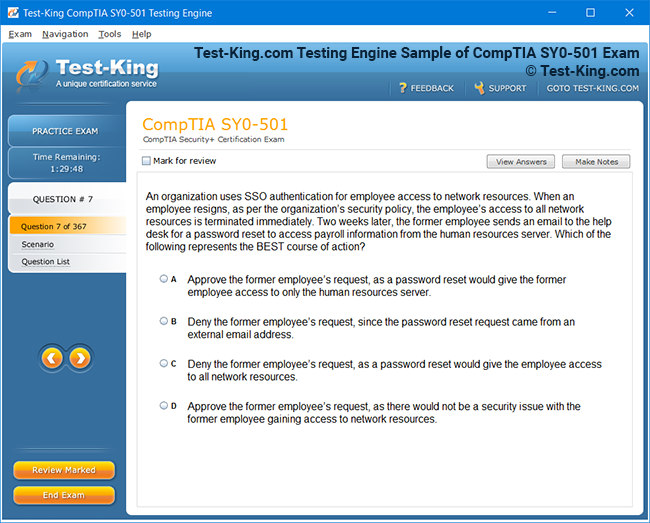
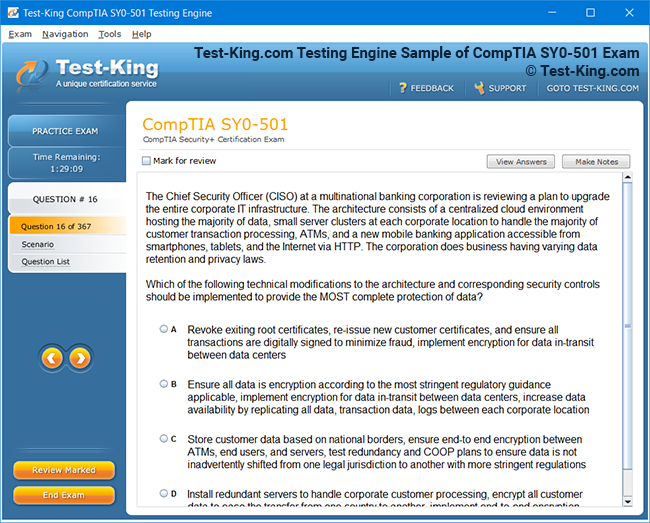
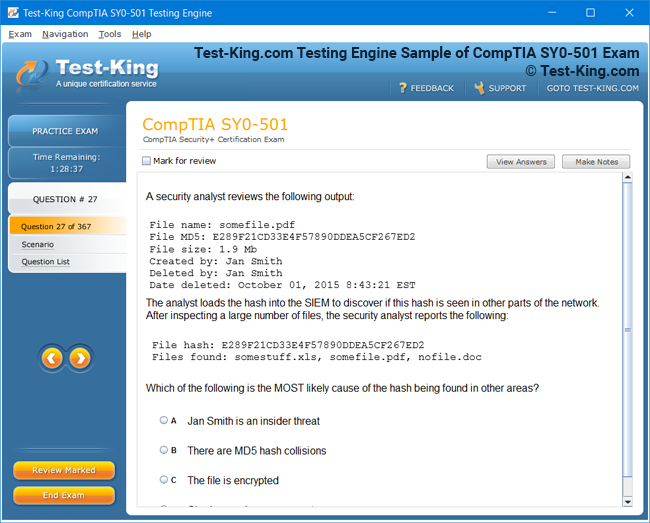
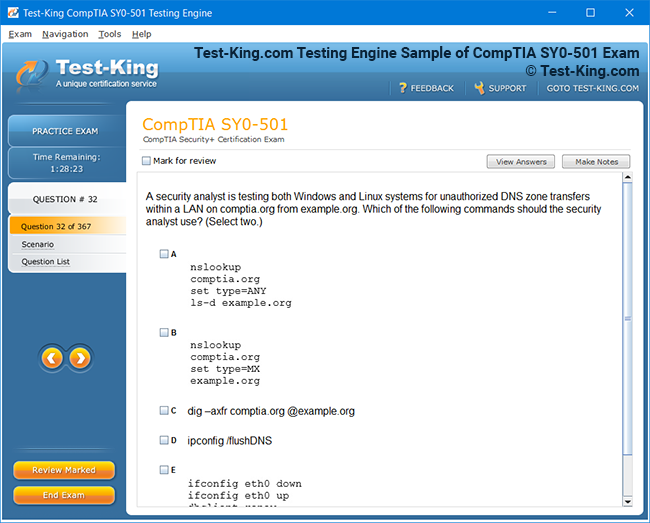
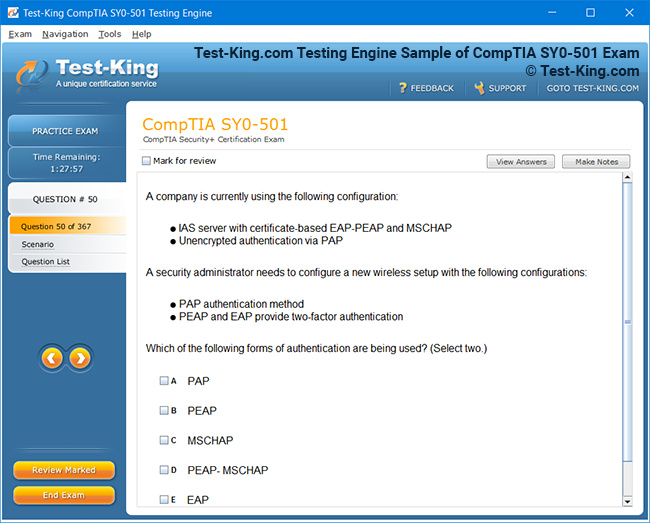
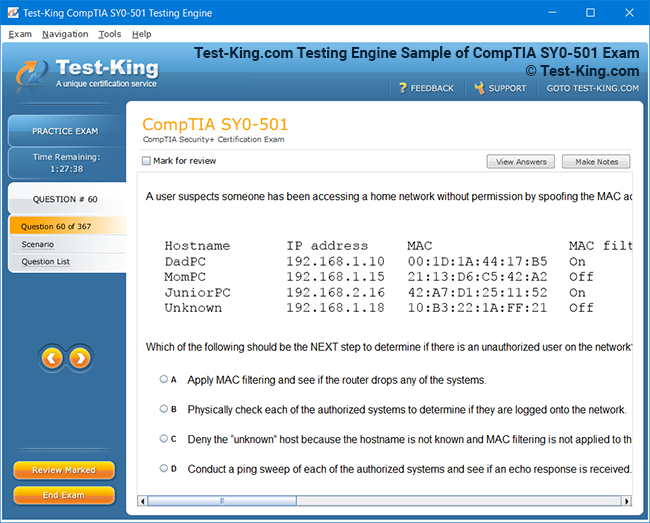
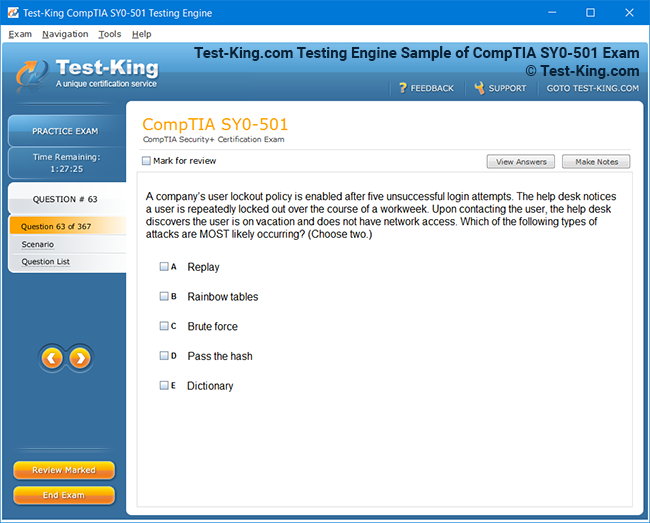
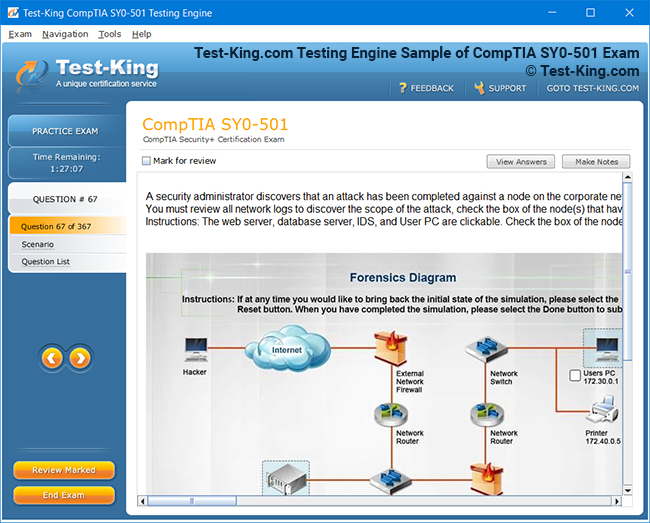
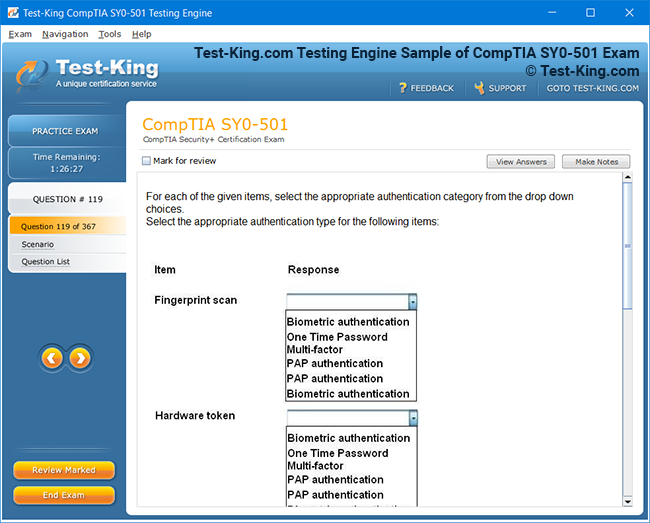
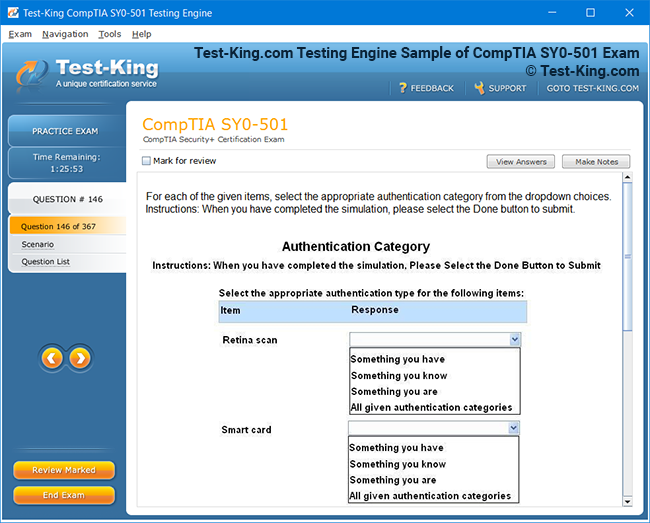
Product Screenshots
Frequently Asked Questions
How can I get the products after purchase?
All products are available for download immediately from your Member's Area. Once you have made the payment, you will be transferred to Member's Area where you can login and download the products you have purchased to your computer.
How long can I use my product? Will it be valid forever?
Test-King products have a validity of 90 days from the date of purchase. This means that any updates to the products, including but not limited to new questions, or updates and changes by our editing team, will be automatically downloaded on to computer to make sure that you get latest exam prep materials during those 90 days.
Can I renew my product if when it's expired?
Yes, when the 90 days of your product validity are over, you have the option of renewing your expired products with a 30% discount. This can be done in your Member's Area.
Please note that you will not be able to use the product after it has expired if you don't renew it.
How often are the questions updated?
We always try to provide the latest pool of questions, Updates in the questions depend on the changes in actual pool of questions by different vendors. As soon as we know about the change in the exam question pool we try our best to update the products as fast as possible.
How many computers I can download Test-King software on?
You can download the Test-King products on the maximum number of 2 (two) computers or devices. If you need to use the software on more than two machines, you can purchase this option separately. Please email support@test-king.com if you need to use more than 5 (five) computers.
What is a PDF Version?
PDF Version is a pdf document of Questions & Answers product. The document file has standart .pdf format, which can be easily read by any pdf reader application like Adobe Acrobat Reader, Foxit Reader, OpenOffice, Google Docs and many others.
Can I purchase PDF Version without the Testing Engine?
PDF Version cannot be purchased separately. It is only available as an add-on to main Question & Answer Testing Engine product.
What operating systems are supported by your Testing Engine software?
Our testing engine is supported by Windows. Andriod and IOS software is currently under development.
Key Skills Tested in the ACE001 Exam
The Alfresco Certified Engineer exam evaluates candidates on their ability to comprehend the multifaceted architecture of the Alfresco content management platform. A deep understanding of its core components, including repository services, content modeling, workflow engines, and the underlying database structures, is indispensable. Candidates are expected to navigate through the repository hierarchy, recognizing the roles of nodes, properties, and associations, while also understanding the nuances of versioning, aspects, and content types. The intricacies of repository configuration, including the handling of content stores, indexing mechanisms, and security models, are central to successful exam performance.
Understanding Alfresco Platform Architecture
A thorough grasp of Alfresco's modular design is critical, particularly how subsystems interact to ensure transactional integrity and performance optimization. The exam tests the ability to discern how content services communicate with external applications via RESTful APIs, Web Scripts, and CMIS interfaces. Practical knowledge of the way Alfresco orchestrates caching strategies, transaction management, and repository clustering is essential. Candidates must also appreciate how repository configuration affects scalability, concurrency, and fault tolerance, allowing them to troubleshoot complex scenarios that may arise in enterprise deployments.
Content Modeling and Metadata Management
Another pivotal skill assessed is the ability to design and implement sophisticated content models. Candidates are expected to demonstrate expertise in defining custom content types, aspects, and properties to meet business requirements. Understanding the distinction between mandatory and optional properties, as well as the appropriate use of constraints and default values, ensures content integrity and consistency across large repositories. Exam questions often focus on scenarios where content structures must be extended or modified without compromising existing data, emphasizing the importance of backward compatibility and effective version control.
Metadata management is intertwined with content modeling, as candidates must be adept at implementing classification schemes and controlled vocabularies. The ability to define and manage hierarchical folder structures, tag content efficiently, and apply facets for advanced search capabilities is crucial. Examiners assess whether candidates can design metadata schemas that optimize retrieval performance and support advanced query mechanisms, balancing the trade-offs between normalization and denormalization in repository design.
Workflow Configuration and Process Automation
The ACE001 exam places considerable emphasis on workflow configuration and the automation of business processes within Alfresco. Candidates must exhibit proficiency in defining and deploying workflow models using the Activiti or Flowable engines integrated into Alfresco. This includes designing process definitions, configuring tasks, setting up event listeners, and ensuring appropriate notifications for participants. Understanding the life cycle of a workflow instance, the mechanisms for escalation and delegation, and the techniques for error handling are all part of the competencies being evaluated.
Practical scenarios in the exam may involve creating complex approval chains, orchestrating multi-step document routing, and configuring automated triggers based on content events. Candidates are expected to navigate the subtle nuances of conditional flows, timers, and parallel processing, ensuring that processes align with organizational policies and compliance requirements. Proficiency in process automation not only demonstrates technical acumen but also highlights the ability to streamline operations and reduce manual intervention, a core value proposition of Alfresco.
Security and Access Control
Alfresco’s robust security model is another area heavily tested in the ACE001 exam. Candidates must understand the hierarchical permissions structure, including the use of roles, groups, and individual user access. The distinction between repository-level permissions and content-specific access control lists is fundamental. Questions often probe the candidate’s ability to configure fine-grained security policies that safeguard sensitive information while maintaining usability for end users.
Beyond basic permissions, the exam assesses knowledge of authentication mechanisms, including LDAP integration, single sign-on solutions, and custom authentication subsystems. Candidates should also be familiar with securing web scripts, ensuring that API endpoints adhere to role-based access policies, and preventing unauthorized content manipulation. The ability to implement auditing and logging mechanisms for compliance monitoring reflects a deeper mastery of Alfresco’s security landscape, demonstrating readiness to manage enterprise-grade deployments.
Search and Indexing Strategies
Effective search and indexing capabilities form a cornerstone of Alfresco proficiency. The ACE001 exam evaluates candidates’ understanding of indexing engines, including Solr and Alfresco’s embedded search services. Candidates must demonstrate the ability to configure full-text indexing, faceted search, and relevance scoring to enhance content discoverability. Practical questions may involve optimizing search performance, handling large-scale repositories, and troubleshooting index inconsistencies.
Advanced topics include custom analyzers, tokenization strategies, and query formulation to address complex retrieval requirements. Candidates are expected to design search solutions that balance precision and recall, enabling end users to locate content efficiently while minimizing system overhead. An understanding of caching, replication, and the interplay between search and repository storage is essential for ensuring that large enterprise deployments perform reliably under heavy query loads.
Integration and Extensibility
The final major skill assessed revolves around integration and extensibility of Alfresco solutions. Candidates must be able to leverage APIs, Web Scripts, and custom modules to extend platform functionality in alignment with business needs. The exam evaluates knowledge of integrating Alfresco with enterprise systems such as ERP, CRM, and document imaging solutions, highlighting the importance of interoperability in modern organizations.
Candidates should also understand the lifecycle of module deployment, version compatibility, and the impact of customizations on upgrade paths. Practical knowledge of hooks, behaviors, and policies for triggering automated actions demonstrates an ability to tailor Alfresco to unique organizational workflows. The exam may include scenario-based questions requiring candidates to design solutions that are scalable, maintainable, and resilient, reflecting real-world engineering challenges.
Customizing Alfresco Repositories
The ACE001 exam evaluates a candidate’s ability to customize Alfresco repositories for enterprise-grade deployments. A comprehensive understanding of repository configuration is required, including strategies to optimize content storage, indexing mechanisms, and caching strategies for enhanced performance. Candidates must demonstrate the capability to adapt repository structures to accommodate complex business requirements without compromising transactional integrity. The examination may include scenarios where content stores must be segregated or combined, demanding a nuanced approach to balancing storage efficiency with accessibility. Mastery of repository-level configurations ensures that organizations can scale content management operations while maintaining consistent system behavior.
Candidates are expected to configure repository nodes, define aspects, and manage content types to streamline document lifecycle management. This involves not only creating new types and aspects but also extending existing ones without introducing conflicts or inconsistencies. Proper management of versioning policies, retention rules, and automated content archiving procedures showcases a sophisticated level of repository administration. The exam assesses whether candidates can design repository schemas that are both maintainable and adaptable to evolving organizational requirements.
Implementing Advanced Workflow Solutions
Proficiency in workflow and process automation is essential for successful certification. Candidates are tested on their ability to design and implement workflows that accommodate multi-step business processes, conditional branching, and parallel task execution. Practical knowledge includes creating task assignments, configuring notifications, and integrating workflow instances with external systems through automated triggers. Understanding the internal workings of Alfresco’s workflow engine, including process execution, transaction management, and error handling, allows candidates to implement resilient and efficient automation solutions.
Exam scenarios often require candidates to construct workflows that adhere to compliance standards while optimizing operational efficiency. This involves leveraging timers, event listeners, and escalation mechanisms to maintain accountability and ensure timely task completion. Candidates should be adept at troubleshooting workflow anomalies, identifying bottlenecks, and adjusting process definitions to improve throughput. Demonstrating this level of expertise reflects the ability to align Alfresco automation capabilities with strategic organizational objectives.
Enhancing Security and Compliance
Security and regulatory compliance remain integral to Alfresco proficiency. Candidates must understand the intricate interplay between repository-level permissions, content-specific access control, and authentication mechanisms. The exam evaluates knowledge of implementing robust role-based security models that protect sensitive information while allowing seamless collaboration. This includes configuring user groups, managing inheritance of permissions, and applying conditional access policies to specific nodes or document collections.
Advanced security concepts include integrating Alfresco with enterprise authentication solutions such as LDAP, single sign-on systems, and custom identity providers. Candidates are also expected to implement auditing procedures and monitoring tools to track content access and modification history. This knowledge ensures that organizations can maintain regulatory compliance, detect anomalies, and mitigate potential security risks effectively. Candidates demonstrating this expertise reveal a strong capability to safeguard enterprise content in highly regulated environments.
Optimizing Search and Indexing
Search optimization is another critical skill assessed in the ACE001 exam. Candidates must demonstrate proficiency in configuring Alfresco search services to handle large volumes of content while maintaining rapid response times. This includes configuring Solr indexing, managing custom analyzers, and designing search schemas that improve result relevance. The examination may present scenarios requiring candidates to enhance faceted search, implement content filters, and fine-tune tokenization strategies for complex queries.
Understanding the relationship between content storage, metadata, and indexing is crucial for optimizing retrieval performance. Candidates are expected to configure search caches, manage replication strategies, and monitor index consistency to ensure high availability. Additionally, the ability to design search solutions that accommodate evolving business requirements, including multilingual repositories and hierarchical content structures, demonstrates advanced competency. Practical application of these strategies reflects a candidate’s readiness to manage enterprise-scale content retrieval efficiently.
Integration with Enterprise Systems
The ability to integrate Alfresco with other enterprise platforms is heavily examined. Candidates should be adept at leveraging RESTful APIs, Web Scripts, and CMIS interfaces to extend functionality and facilitate seamless data exchange with systems such as ERP, CRM, and document imaging platforms. Exam scenarios may require designing integrations that automate content ingestion, synchronize metadata, and trigger workflow events based on external system interactions.
A comprehensive understanding of integration lifecycle management is essential, including deployment strategies, module version compatibility, and system upgrade considerations. Candidates are expected to implement hooks, behaviors, and policies to automate actions triggered by content events, demonstrating the ability to tailor Alfresco to organizational workflows. Mastery of integration techniques ensures that Alfresco serves as a central hub for enterprise content while supporting interoperability with a diverse array of business applications.
Performance Tuning and Troubleshooting
Performance tuning is a vital aspect of the ACE001 exam. Candidates must be able to identify potential bottlenecks within the repository, workflow engines, and search indices. Knowledge of caching mechanisms, database optimization, and server configuration allows for significant improvements in system responsiveness and reliability. The exam may present scenarios in which candidates need to diagnose slow query performance, failed workflow executions, or repository locking issues, requiring analytical skills and methodical problem-solving.
Troubleshooting extends beyond technical fixes; it also encompasses understanding the interdependencies between Alfresco modules, external integrations, and infrastructure components. Candidates are expected to recommend corrective measures that enhance performance without compromising data integrity or security. This skill set reflects a professional ability to maintain a high-performing content management system in dynamic enterprise environments, where downtime or slow processing can have substantial operational impacts.
Advanced Metadata and Classification Techniques
Advanced metadata management forms a crucial component of Alfresco proficiency. Candidates must be able to define intricate content types, manage hierarchical taxonomies, and implement classification schemes that facilitate rapid content discovery. The examination tests the ability to handle controlled vocabularies, custom properties, and compound indexing strategies. Practical scenarios may involve designing metadata structures that support enterprise search, workflow automation, and compliance reporting simultaneously.
Candidates are expected to leverage facets, tags, and metadata-driven rules to streamline content organization and retrieval. The integration of metadata with search optimization and workflow processes demonstrates a sophisticated understanding of Alfresco’s content management ecosystem. Effective application of these techniques ensures that enterprise content remains accessible, organized, and aligned with operational objectives, reflecting advanced engineering capability.
Real-World Scenario Management
The ACE001 exam often presents real-world scenarios requiring candidates to apply multiple skill sets simultaneously. These scenarios may involve complex workflows, intricate repository structures, or multi-system integrations. Candidates are expected to analyze requirements, propose scalable solutions, and implement configurations that balance performance, security, and maintainability. This integrated approach ensures that certified engineers can manage Alfresco environments effectively, anticipate potential issues, and optimize systems for enterprise-scale operations.
Practical examination tasks may require candidates to troubleshoot cross-module issues, such as workflow errors triggered by misconfigured metadata, search delays caused by indexing bottlenecks, or access control conflicts impacting content visibility. Successfully navigating these scenarios demonstrates a holistic mastery of Alfresco’s capabilities and confirms readiness to deploy, manage, and extend the platform in professional environments.
Deep Repository Management and Optimization
The ACE001 exam places significant emphasis on a candidate’s ability to master repository management and optimization techniques. Candidates are expected to demonstrate an intricate understanding of Alfresco’s repository structure, including nodes, properties, associations, and aspects. The repository is the nucleus of the content management platform, and the ability to configure, extend, and optimize it under various enterprise constraints is critical. Candidates must exhibit proficiency in defining custom content types and aspects while ensuring backward compatibility and minimal disruption to existing workflows.
In-depth repository management requires familiarity with versioning, content retention policies, and node auditing. Candidates are expected to balance performance with maintainability, implementing storage strategies that allow the repository to scale gracefully under high-volume operations. Efficient use of indexing mechanisms and cache strategies ensures rapid content retrieval and minimal latency, even under complex query loads. The exam may include scenarios requiring the optimization of content stores, replication strategies, and multi-instance repository configurations, challenging candidates to demonstrate analytical and strategic thinking in real-world contexts.
Advanced Workflow Design and Orchestration
Workflow design is another pivotal skill assessed in the ACE001 examination. Candidates must demonstrate the capability to construct intricate workflow definitions that reflect complex organizational processes. This includes understanding the lifecycle of a workflow instance, configuring task assignments, and managing event-driven triggers that automate content movement through various stages. Advanced workflow orchestration involves conditional flows, parallel task execution, timers, and escalation mechanisms that ensure accountability and efficiency.
Candidates are expected to integrate workflows with external systems, automate repetitive processes, and configure error-handling mechanisms that maintain system stability. Practical scenarios often require designing multi-step approval chains, implementing content-driven triggers, and aligning workflow execution with compliance requirements. Mastery of workflow orchestration reflects not only technical prowess but also the ability to improve operational efficiency, streamline document lifecycle management, and reduce manual intervention in enterprise environments.
Fine-Tuning Search and Indexing Capabilities
Search and indexing are core competencies tested for ACE001 candidates. Effective search strategies rely on a sophisticated understanding of indexing engines, full-text search configuration, and metadata utilization. Candidates are expected to configure Solr or embedded search services to optimize performance, relevance, and accuracy. Scenarios may include designing custom analyzers, handling multilingual repositories, and configuring faceted search to meet the complex retrieval needs of large enterprises.
Optimization extends beyond indexing; it involves caching strategies, replication, and query performance tuning. Candidates must demonstrate proficiency in balancing indexing overhead with retrieval speed, ensuring that search operations remain robust under heavy loads. The exam may also evaluate the ability to troubleshoot indexing failures, optimize search schemas, and enhance relevance scoring to improve user experience. The successful implementation of these skills guarantees that content discovery remains intuitive, fast, and reliable across vast repositories.
Security Implementation and Access Control Mastery
Alfresco’s security model is a critical domain assessed during the ACE001 exam. Candidates are required to implement role-based security structures, manage groups and user roles, and enforce fine-grained permissions at the content level. Understanding the hierarchical nature of repository permissions and the interplay between content-specific access controls and global repository policies is essential. Candidates must configure conditional access, inheritance rules, and audit logging to ensure secure and compliant operations.
Advanced security management also involves integration with enterprise authentication mechanisms such as LDAP and single sign-on systems. Candidates should be able to secure web scripts, API endpoints, and workflow interactions according to organizational policies. Exam scenarios may require configuring security measures that protect sensitive documents, enforce regulatory compliance, and maintain system integrity under complex access requirements. Mastery of security implementation ensures that candidates can safeguard enterprise content while enabling efficient collaboration.
Integrating Alfresco with Enterprise Ecosystems
Integration with broader enterprise systems is another skill rigorously evaluated. Candidates must be able to design and implement integrations with ERP, CRM, and other business platforms through RESTful APIs, Web Scripts, and CMIS interfaces. Effective integration enables seamless content synchronization, automated process triggers, and interoperability between disparate systems. The examination may include tasks that challenge candidates to design integrations that maintain data integrity, support scalability, and ensure long-term maintainability.
Understanding the lifecycle of Alfresco modules and customizations is crucial for successful integration. Candidates must account for module versioning, deployment strategies, and potential conflicts with core functionality. Additionally, implementing hooks, behaviors, and policies that trigger automated responses to repository events reflects a nuanced understanding of platform extensibility. These integrations exemplify how Alfresco serves as a central content hub, supporting diverse enterprise workflows while providing adaptability to evolving business requirements.
Performance Analysis and Troubleshooting Techniques
Proficiency in performance analysis and troubleshooting is a key differentiator for candidates pursuing ACE001 certification. Alfresco environments often operate at large scales, and candidates must be able to identify and resolve bottlenecks across repository services, workflow engines, and search indices. Understanding caching mechanisms, database tuning, and server configurations allows candidates to optimize system responsiveness while maintaining data integrity.
Troubleshooting exercises in the exam may present scenarios such as slow query execution, failed workflow processes, or repository locking conflicts. Candidates are expected to methodically diagnose the root causes, implement corrective measures, and validate improvements without disrupting ongoing operations. This skill set demonstrates a professional capability to sustain high-performing Alfresco deployments in enterprise contexts where efficiency, reliability, and scalability are paramount.
Advanced Metadata Strategy and Content Classification
Effective metadata management and content classification are evaluated to determine a candidate’s ability to optimize content discovery and governance. Candidates must design intricate metadata schemas, apply controlled vocabularies, and implement hierarchical taxonomies that support complex organizational workflows. Exam scenarios may require creating metadata-driven rules for automatic content categorization, enhancing searchability, and enabling workflow automation based on content attributes.
Candidates are also expected to balance metadata granularity with system performance, ensuring that highly detailed schemas do not impede retrieval or indexing processes. Integration of metadata strategies with search optimization, workflow orchestration, and compliance monitoring reflects a sophisticated understanding of Alfresco’s capabilities. Candidates demonstrating proficiency in this domain can maintain an organized, searchable, and secure content repository that aligns with enterprise requirements.
Handling Complex Real-World Deployments
The ACE001 exam often challenges candidates with real-world deployment scenarios that require the simultaneous application of multiple skills. Tasks may involve configuring repositories, implementing complex workflows, integrating external systems, securing content, optimizing search, and managing metadata—all within a unified environment. Candidates are evaluated on their ability to analyze requirements, design sustainable solutions, and troubleshoot issues that arise during deployment.
These scenarios test problem-solving skills, strategic thinking, and adaptability, emphasizing the importance of anticipating operational challenges. Candidates must demonstrate the ability to implement scalable solutions, maintain system integrity, and ensure that processes remain efficient and compliant under dynamic conditions. Mastery of these competencies reflects readiness to manage Alfresco deployments in large, complex organizations with diverse content management needs.
Mastering Repository Configuration and Customization
Candidates pursuing the ACE001 certification are evaluated on their ability to configure and customize Alfresco repositories for enterprise-level operations. A nuanced understanding of repository architecture, node structures, and content storage strategies is essential. Candidates must demonstrate proficiency in defining custom content types, aspects, and properties to align with organizational requirements. Configuring content stores, managing indexing mechanisms, and optimizing cache utilization ensures that the repository performs efficiently under high-volume transactions.
Customization extends to implementing versioning strategies, retention policies, and automated archiving rules that maintain content integrity. Exam scenarios may present challenges involving complex folder hierarchies, multiple repositories, or integration with external storage solutions. Candidates are expected to identify the optimal approach for extending repository structures without compromising stability or backward compatibility. Mastery of these skills enables engineers to maintain repositories that are both scalable and adaptable to evolving business needs.
Advanced Workflow Implementation and Optimization
The examination rigorously tests candidates’ abilities in designing and implementing advanced workflows. Candidates are required to create multi-step processes that incorporate conditional branching, parallel execution, and escalation mechanisms. A deep understanding of Alfresco’s workflow engine is crucial, including process life cycles, task assignments, event-driven triggers, and error-handling strategies. Effective workflow implementation streamlines document lifecycles, enhances operational efficiency, and reduces manual intervention in complex enterprise environments.
Practical examination scenarios may involve orchestrating approval chains, automating document routing, or integrating workflows with external enterprise systems. Candidates must demonstrate the ability to troubleshoot workflow anomalies, identify bottlenecks, and adjust process definitions to improve throughput. Implementing notifications, timers, and event listeners as part of workflow orchestration ensures that content moves seamlessly through organizational procedures while maintaining accountability and compliance.
Security Management and Access Control
Alfresco’s robust security framework is a critical area of proficiency for ACE001 candidates. Candidates are expected to implement fine-grained access controls, define roles and groups, and configure permissions at both repository and content levels. Understanding the hierarchical nature of repository permissions, inheritance rules, and conditional access policies is essential. Exam questions often explore scenarios involving complex permission structures, requiring candidates to balance security and accessibility for diverse user groups.
Integration with enterprise authentication systems such as LDAP, single sign-on, or custom identity providers is another key skill. Candidates should be able to secure web scripts, API endpoints, and workflow actions according to organizational policies. Monitoring and auditing content access ensures compliance with regulatory standards and enhances governance. Mastery of security management reflects an ability to maintain a secure, compliant, and user-friendly content management environment within Alfresco.
Optimizing Search and Indexing Mechanisms
Efficient search and indexing strategies are vital for managing large-scale repositories. Candidates must demonstrate expertise in configuring Alfresco search services, including Solr or embedded search engines, to ensure rapid and relevant content retrieval. This includes designing search schemas, configuring tokenization strategies, and optimizing relevance scoring to meet enterprise search requirements. Practical examination tasks may involve implementing faceted search, custom analyzers, and metadata-driven search optimizations.
Performance tuning for search services requires balancing indexing overhead with retrieval speed. Candidates must configure caching, replication, and indexing schedules to ensure high availability and minimal latency. Advanced scenarios may include managing multilingual repositories or integrating complex metadata structures to improve search precision. Demonstrating these capabilities ensures that end users can access content efficiently, even in repositories containing large volumes of documents and diverse content types.
Integration with Enterprise Applications
ACE001 candidates are assessed on their ability to integrate Alfresco with other enterprise systems using RESTful APIs, Web Scripts, and CMIS interfaces. Effective integration allows seamless synchronization of content, automated triggers for workflows, and interoperability with platforms such as ERP, CRM, and document imaging systems. Exam scenarios may challenge candidates to design integrations that maintain data integrity, support scalability, and adhere to organizational standards for maintainability.
Candidates must understand module lifecycle management, version compatibility, and deployment strategies. Implementing hooks, behaviors, and policies to automate actions based on content events is an advanced skill tested during the examination. Proficiency in integration demonstrates a candidate’s ability to extend Alfresco functionality beyond core capabilities, positioning it as a central hub for enterprise content management while maintaining reliability and performance across connected systems.
Performance Tuning and Troubleshooting
Performance optimization and troubleshooting are essential competencies for ACE001 candidates. Alfresco environments require careful tuning of repository configurations, workflow engines, and search indices to maintain responsiveness under high-load conditions. Candidates must identify bottlenecks, optimize database performance, and implement caching strategies to ensure efficient operation. The examination may include scenarios involving slow query responses, workflow execution failures, or repository contention issues, requiring methodical analysis and remediation.
Candidates are expected to develop troubleshooting strategies that account for interdependencies between repository modules, workflow processes, and external integrations. Implementing corrective actions without disrupting ongoing operations demonstrates professional-level proficiency. Mastery of performance tuning and troubleshooting enables candidates to maintain high-performing Alfresco deployments capable of supporting complex enterprise operations consistently and reliably.
Metadata Strategy and Content Classification
Advanced metadata management is a critical area of skill assessed in the ACE001 exam. Candidates must design comprehensive metadata schemas, implement hierarchical taxonomies, and manage controlled vocabularies that facilitate content classification and retrieval. Exam scenarios may involve creating rules that automate content tagging, enhance searchability, and support workflow processes based on metadata attributes.
Candidates are expected to balance metadata granularity with system performance, ensuring that extensive schemas do not negatively impact indexing or retrieval efficiency. Integrating metadata strategies with search optimization, workflow automation, and compliance monitoring demonstrates advanced proficiency. Effective metadata management ensures that content remains organized, discoverable, and aligned with enterprise governance standards.
Managing Complex Enterprise Deployments
Real-world deployment management is another key competency evaluated during the ACE001 examination. Candidates must demonstrate the ability to configure repositories, implement sophisticated workflows, secure content, optimize search, and manage metadata within integrated enterprise environments. Scenarios may involve simultaneous application of multiple skills to solve complex operational challenges, requiring candidates to balance performance, security, and maintainability.
Candidates are expected to analyze requirements, design scalable solutions, and troubleshoot deployment issues while maintaining system stability. Mastery of these skills ensures that candidates can handle dynamic enterprise content management scenarios, anticipate operational challenges, and implement strategies that support long-term system efficiency and organizational objectives.
Advanced Repository Customization and Management
Candidates aiming for the ACE001 certification are expected to demonstrate mastery over advanced repository customization and management techniques. The Alfresco repository serves as the foundation for content storage and retrieval, and an engineer must be adept at configuring content stores, indexing mechanisms, and node structures to optimize system performance. Designing custom content types, aspects, and properties tailored to organizational workflows is a critical skill. Candidates must also maintain backward compatibility and ensure minimal disruption to existing processes when extending repository functionalities.
Proficiency in versioning strategies, retention policies, and auditing mechanisms ensures content integrity and compliance with enterprise regulations. Scenarios in the examination may require restructuring repositories, managing large-scale storage clusters, and implementing automated archiving solutions that preserve historical data while optimizing current performance. Effective repository management reflects an engineer’s ability to balance maintainability, scalability, and accessibility, preparing them to handle complex enterprise environments efficiently.
Orchestrating Complex Workflows
Workflow orchestration remains a pivotal domain in ACE001 evaluation. Candidates are required to design, implement, and optimize multi-step workflows that incorporate conditional logic, parallel processing, and escalation mechanisms. Understanding Alfresco’s workflow engine, including process execution, task assignment, and event-driven triggers, enables candidates to automate business processes seamlessly. Error-handling strategies and logging are equally important, ensuring that workflows execute reliably even under unforeseen conditions.
Examination scenarios may involve constructing approval chains, automating content routing, or integrating workflows with external systems. Candidates must troubleshoot workflow inefficiencies, identify bottlenecks, and reconfigure processes to enhance performance and compliance. Implementing notifications, timers, and event listeners is essential for maintaining accountability and ensuring timely task completion. Mastery in workflow orchestration demonstrates the ability to streamline document lifecycles and reduce operational overhead in enterprise environments.
Security Administration and Governance
The security model within Alfresco is a core focus of the ACE001 exam. Candidates must implement comprehensive access controls, define user roles and groups, and manage permissions at both the repository and content levels. Understanding hierarchical permission inheritance, conditional access rules, and auditing practices is essential for protecting sensitive enterprise data. Exam scenarios often present complex security requirements that challenge candidates to balance accessibility and compliance.
Integration with enterprise authentication systems such as LDAP, single sign-on, or custom identity providers is critical. Candidates must secure web scripts, API endpoints, and workflow actions according to organizational policies. Auditing and monitoring content access ensure regulatory compliance, while proactive security configurations prevent unauthorized access and mitigate risks. Mastery in security administration reflects the ability to maintain a robust, secure, and user-friendly content management ecosystem.
Optimizing Search and Indexing Processes
Search and indexing capabilities are integral to Alfresco proficiency. Candidates are evaluated on their ability to configure Solr or embedded search services, implement faceted search, and optimize full-text search strategies. Understanding tokenization, analyzers, and relevance scoring is essential for delivering precise and efficient search results. Examination scenarios may involve managing large-scale repositories, multilingual content, or intricate metadata-driven searches.
Performance tuning for search services requires balancing indexing efficiency with query responsiveness. Candidates must configure replication, caching, and indexing schedules to ensure high availability and minimal latency. Advanced search optimization enables end users to retrieve content accurately and rapidly, even in repositories containing vast quantities of diverse content. Mastery of these skills ensures that enterprise information remains accessible and actionable, enhancing operational efficiency and decision-making.
Integration with Enterprise Ecosystems
ACE001 candidates are expected to demonstrate proficiency in integrating Alfresco with enterprise systems through RESTful APIs, Web Scripts, and CMIS interfaces. Effective integration facilitates content synchronization, workflow triggers, and interoperability with ERP, CRM, and other business platforms. Examination scenarios may present challenges requiring candidates to design robust integration solutions that maintain data integrity, scalability, and operational reliability.
Candidates must also account for module versioning, deployment strategies, and potential conflicts with core functionality. Implementing hooks, behaviors, and automated policies based on repository events is critical for extending Alfresco capabilities while preserving system stability. Expertise in integration allows engineers to position Alfresco as a central content hub, capable of supporting complex business workflows across diverse enterprise environments.
Performance Analysis and Troubleshooting
Performance tuning and troubleshooting are essential competencies for ACE001 candidates. Large-scale Alfresco deployments demand careful optimization of repositories, workflow engines, and search indices to ensure responsive operation. Candidates must identify and remediate bottlenecks, optimize database interactions, and fine-tune caching strategies. Exam scenarios may involve diagnosing slow queries, resolving workflow execution errors, or mitigating repository locking conflicts.
Troubleshooting requires a holistic understanding of interdependencies between repository modules, workflows, search services, and integrations. Candidates must implement corrective actions without disrupting ongoing operations, demonstrating analytical rigor and methodical problem-solving. Mastery of performance optimization ensures that enterprise Alfresco deployments remain reliable, scalable, and capable of supporting mission-critical operations efficiently.
Metadata Management and Content Classification
Advanced metadata and content classification skills are a vital aspect of ACE001 assessment. Candidates must design complex metadata schemas, define controlled vocabularies, and implement hierarchical taxonomies that support organizational workflows. Exam scenarios may require candidates to automate content tagging, implement metadata-driven workflows, and enhance search precision through sophisticated classification strategies.
Balancing metadata granularity with system performance is critical, as overly detailed schemas can affect indexing and retrieval efficiency. Integrating metadata with search optimization, workflow orchestration, and compliance monitoring demonstrates advanced competency. Effective metadata management ensures that enterprise content is organized, discoverable, and aligned with governance standards, enabling rapid decision-making and streamlined operational processes.
Managing Real-World Enterprise Deployments
The ACE001 examination challenges candidates with real-world enterprise deployment scenarios requiring simultaneous application of multiple skills. Candidates are evaluated on their ability to configure repositories, orchestrate complex workflows, secure content, optimize search, manage metadata, and integrate external systems within a cohesive environment.
Successful deployment management involves analyzing operational requirements, designing scalable solutions, and troubleshooting complex issues while maintaining system stability. Candidates must anticipate potential challenges, implement proactive measures, and ensure that Alfresco environments remain efficient, secure, and compliant. Mastery in handling complex deployments reflects readiness to manage large-scale enterprise content management solutions effectively, demonstrating both technical proficiency and strategic problem-solving abilities.
Mastering Repository Architecture and Configuration
The ACE001 certification evaluates a candidate’s expertise in managing and optimizing Alfresco repositories for enterprise use. Mastery of repository architecture is fundamental, encompassing nodes, properties, associations, and aspects that define the structure and behavior of stored content. Candidates are expected to implement custom content types, aspects, and properties tailored to organizational workflows, ensuring both flexibility and backward compatibility. Configuring content stores, indexing mechanisms, and cache strategies allows repositories to scale efficiently while maintaining high performance under concurrent access and heavy workloads.
Advanced repository configuration includes defining versioning policies, retention strategies, and auditing mechanisms that ensure compliance with regulatory requirements. Candidates must understand the interplay between repository nodes and external integrations, enabling seamless content management across interconnected enterprise systems. Examination scenarios often challenge candidates to design repositories that balance performance, maintainability, and adaptability, reflecting real-world demands for resilient content management infrastructure.
Designing Complex Workflows
Workflow orchestration is a critical skill assessed in the ACE001 exam. Candidates are expected to design, implement, and optimize multi-step workflows that incorporate conditional logic, parallel execution, escalation mechanisms, and event-driven triggers. A deep understanding of the Alfresco workflow engine, including task assignments, process execution, and error-handling protocols, allows candidates to automate business processes with precision. Advanced workflows streamline document lifecycles, reduce manual intervention, and enhance operational efficiency.
Examination scenarios often involve constructing multi-stage approval chains, integrating workflows with external systems, and configuring automated notifications and timers. Candidates must troubleshoot workflow inefficiencies, optimize process throughput, and ensure compliance with organizational policies. Mastery of workflow orchestration demonstrates a candidate’s capability to align content management processes with strategic enterprise objectives while maintaining reliability and accountability.
Security and Access Control Expertise
Security management is an essential competency evaluated for ACE001 certification. Candidates are required to implement robust access control models, define user roles and groups, and configure permissions at both repository and content levels. Understanding hierarchical permissions, conditional access policies, and inheritance rules is critical for safeguarding sensitive content. Examination scenarios may include complex access configurations requiring candidates to balance usability with compliance and data protection.
Integration with enterprise authentication systems such as LDAP, single sign-on, or custom identity providers is vital for seamless security management. Candidates must secure web scripts, API endpoints, and workflow actions according to organizational policies while monitoring and auditing content access to ensure compliance. Advanced security implementation enables candidates to maintain a secure, compliant, and efficient content management environment, supporting collaboration without compromising confidentiality or regulatory adherence.
Optimizing Search and Indexing
Search and indexing capabilities are central to Alfresco proficiency. Candidates must demonstrate expertise in configuring search services, including Solr and embedded search engines, to optimize full-text search, faceted search, and metadata-driven queries. Effective search strategies require understanding tokenization, custom analyzers, relevance scoring, and performance tuning. Examination scenarios may involve managing large-scale repositories, multilingual content, and complex search schemas to meet enterprise information retrieval needs.
Performance optimization involves balancing indexing processes with query response times, configuring caching, replication, and index consistency measures. Candidates are expected to troubleshoot search delays, implement improvements in search relevance, and ensure high availability under heavy loads. Mastery of search and indexing ensures that content is discoverable, accessible, and actionable, enhancing productivity and decision-making across enterprise operations.
Integration with Enterprise Systems
Integration skills are crucial for candidates seeking ACE001 certification. Effective integration involves connecting Alfresco to enterprise platforms such as ERP, CRM, and document management systems using RESTful APIs, Web Scripts, and CMIS interfaces. Candidates are expected to design integrations that support seamless content synchronization, workflow automation, and system interoperability while maintaining data integrity and scalability.
Understanding the module lifecycle, version compatibility, and deployment strategies is critical for successful integration. Candidates may implement hooks, behaviors, and policies to trigger automated actions based on repository events, extending Alfresco’s capabilities while preserving system stability. Mastery of integration techniques demonstrates the ability to transform Alfresco into a central content hub that supports diverse enterprise workflows efficiently and reliably.
Performance Tuning and Troubleshooting
Performance analysis and troubleshooting form a key domain in ACE001 assessment. Candidates are required to optimize repository configurations, workflow engines, and search indices to ensure responsive operation in enterprise deployments. Identifying bottlenecks, optimizing database queries, fine-tuning cache utilization, and balancing server resources are essential tasks. Examination scenarios may present challenges such as slow queries, workflow failures, or repository locking issues, requiring methodical analysis and remediation.
Candidates must also understand interdependencies between Alfresco modules, workflows, search mechanisms, and integrations. Implementing corrective actions without disrupting ongoing operations demonstrates advanced problem-solving and analytical skills. Proficiency in performance tuning ensures that large-scale Alfresco deployments maintain operational efficiency, scalability, and reliability under demanding enterprise workloads.
Advanced Metadata and Content Classification
Metadata management and content classification are vital competencies tested for ACE001 candidates. Candidates are expected to design detailed metadata schemas, define hierarchical taxonomies, and implement controlled vocabularies that enhance content organization, searchability, and governance. Examination scenarios may involve creating automated metadata rules, implementing classification strategies, and integrating metadata with workflow automation and search optimization.
Balancing metadata granularity with system performance is crucial, as overly complex schemas can impact indexing and retrieval efficiency. Candidates must demonstrate the ability to design metadata structures that support compliance, improve operational workflows, and enable rapid access to enterprise content. Mastery in metadata management ensures that content repositories remain organized, discoverable, and aligned with strategic business objectives.
Handling Complex Enterprise Deployments
Candidates are often evaluated on their ability to manage complex enterprise deployments involving multiple simultaneous challenges. These may include configuring repositories, designing workflows, securing content, optimizing search, managing metadata, and integrating with external systems. Effective deployment management requires analyzing operational requirements, designing scalable solutions, and troubleshooting complex issues while maintaining system stability.
Real-world scenarios test candidates’ ability to anticipate challenges, implement proactive strategies, and ensure that Alfresco environments remain efficient, secure, and compliant. Mastery in handling enterprise deployments demonstrates readiness to manage large-scale content management solutions, reflecting both technical expertise and strategic operational insight.
Conclusion
The ACE001 certification requires mastery of a broad array of technical and practical skills. Candidates must demonstrate expertise in repository configuration, workflow orchestration, security implementation, search optimization, metadata management, integration, and performance tuning. Each competency is designed to ensure that certified engineers can manage, extend, and optimize Alfresco environments in complex enterprise contexts. By achieving certification, professionals affirm their capability to design scalable, secure, and efficient content management solutions, integrating advanced practices to meet organizational objectives while ensuring compliance, discoverability, and operational resilience.