

Exam Code: E_S4CPE_2023
Exam Name: SAP Certified Specialist - SAP S/4HANA Cloud, private edition implementation with SAP Activate
Certification Provider: SAP
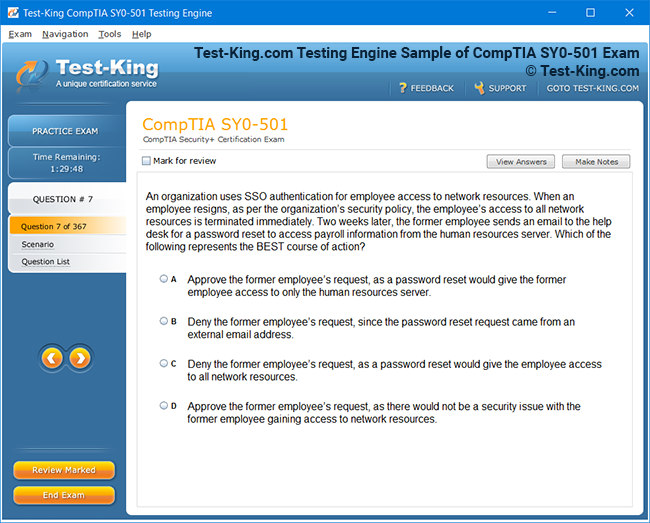
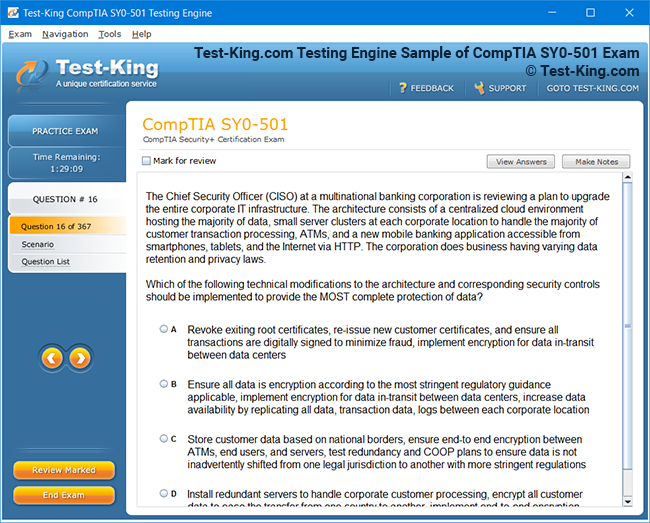
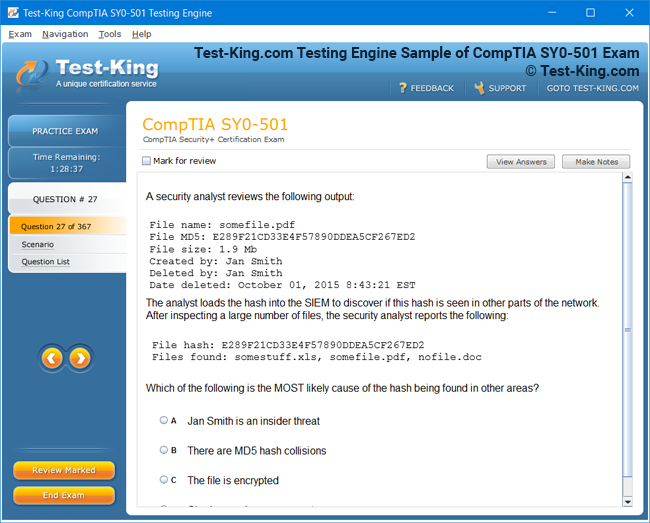
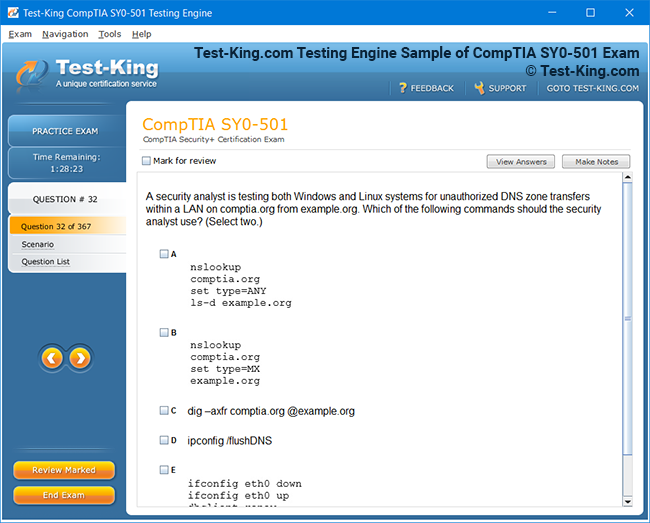
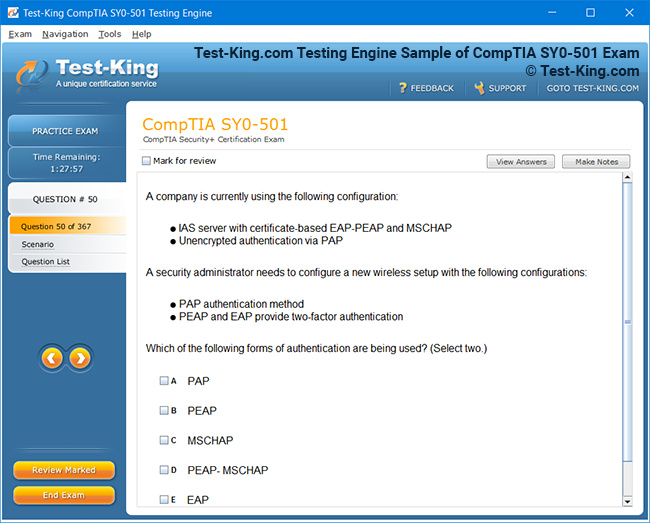
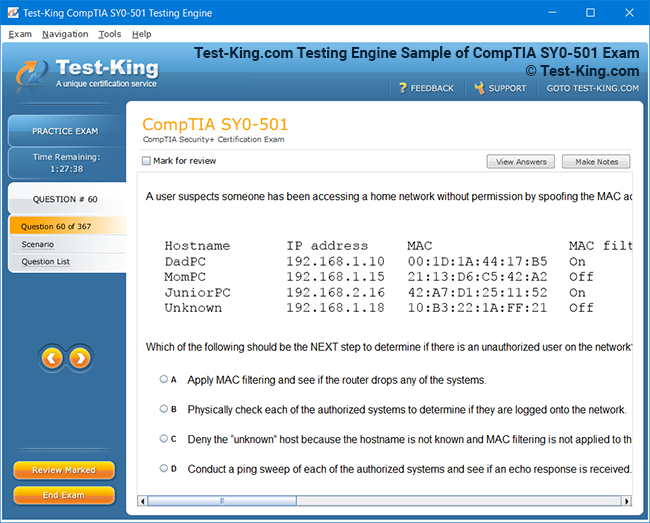
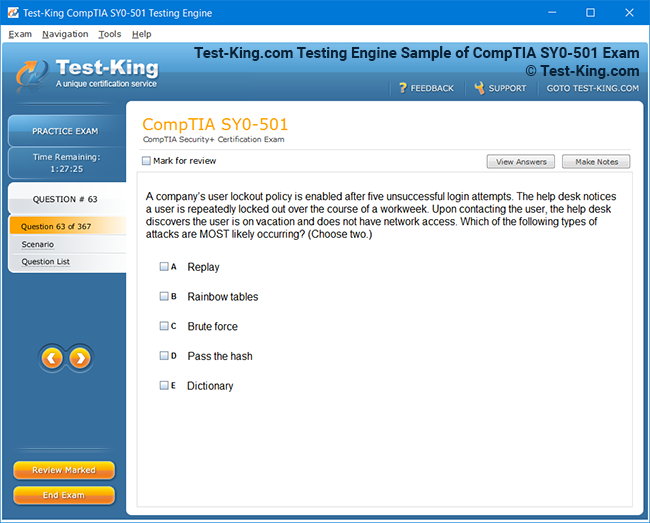
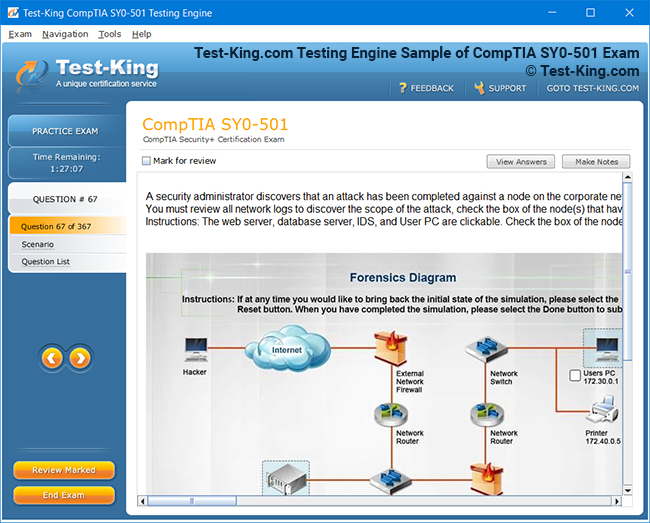
Product Screenshots
Frequently Asked Questions
How can I get the products after purchase?
All products are available for download immediately from your Member's Area. Once you have made the payment, you will be transferred to Member's Area where you can login and download the products you have purchased to your computer.
How long can I use my product? Will it be valid forever?
Test-King products have a validity of 90 days from the date of purchase. This means that any updates to the products, including but not limited to new questions, or updates and changes by our editing team, will be automatically downloaded on to computer to make sure that you get latest exam prep materials during those 90 days.
Can I renew my product if when it's expired?
Yes, when the 90 days of your product validity are over, you have the option of renewing your expired products with a 30% discount. This can be done in your Member's Area.
Please note that you will not be able to use the product after it has expired if you don't renew it.
How often are the questions updated?
We always try to provide the latest pool of questions, Updates in the questions depend on the changes in actual pool of questions by different vendors. As soon as we know about the change in the exam question pool we try our best to update the products as fast as possible.
How many computers I can download Test-King software on?
You can download the Test-King products on the maximum number of 2 (two) computers or devices. If you need to use the software on more than two machines, you can purchase this option separately. Please email support@test-king.com if you need to use more than 5 (five) computers.
What is a PDF Version?
PDF Version is a pdf document of Questions & Answers product. The document file has standart .pdf format, which can be easily read by any pdf reader application like Adobe Acrobat Reader, Foxit Reader, OpenOffice, Google Docs and many others.
Can I purchase PDF Version without the Testing Engine?
PDF Version cannot be purchased separately. It is only available as an add-on to main Question & Answer Testing Engine product.
What operating systems are supported by your Testing Engine software?
Our testing engine is supported by Windows. Andriod and IOS software is currently under development.
Top SAP Exams
E_S4CPE_2023 : Hands-On Skills Required for the SAP Certified Specialist Exam
The SAP S/4HANA Cloud private edition has emerged as a transformative force in enterprise resource management, offering organizations a sophisticated, yet highly adaptable, platform for digital business operations. Unlike traditional on-premise solutions, the cloud private edition provides the agility to tailor business processes to specific organizational requirements while maintaining the robustness and scalability inherent in SAP’s architecture. Candidates aiming for the SAP Certified Specialist credential must develop an intimate familiarity with the nuances of this environment, appreciating not only the structural design of the system but also the procedural intricacies that govern successful implementation.
Understanding the Landscape of SAP S/4HANA Cloud Private Edition
The architecture of SAP S/4HANA Cloud private edition is characterized by its in-memory database, which facilitates real-time analytics and transactional processing without latency constraints. This capability enables business leaders to make informed decisions, leveraging instantaneous insights derived from comprehensive data streams. For a certification aspirant, it is imperative to gain hands-on exposure to data models, user interface configurations, and integration touchpoints. Mastery of these components ensures that the specialist can navigate complex scenarios where operational efficiency hinges upon seamless data orchestration.
Navigating SAP Activate Methodology in Practical Implementation
A profound understanding of SAP Activate is indispensable for achieving competence in SAP S/4HANA Cloud private edition deployment. SAP Activate is not merely a theoretical framework; it is a pragmatic guide that encapsulates best practices, accelerators, and project governance strategies essential for successful cloud implementations. For an aspirant, engaging with SAP Activate means internalizing its principles to the extent that they can anticipate project requirements, configure systems proactively, and mitigate implementation risks with agility.
The methodology emphasizes guided configuration, which directs the specialist through a sequence of activities that progressively build the system landscape. This involves identifying business scenarios, mapping standard processes, and tailoring them to the client’s operational needs. Hands-on skills in guided configuration include the ability to adjust financial ledgers, optimize supply chain processes, and harmonize procurement cycles. Such competencies are assessed indirectly in the certification, where exam scenarios often mirror real-world dilemmas requiring candidates to apply SAP Activate principles practically rather than recite theoretical constructs.
Functional Competence Across Core Modules
Acquiring proficiency in the functional modules of SAP S/4HANA Cloud private edition is central to hands-on mastery. Financial management demands that the candidate understand ledger configuration, accounts reconciliation, and financial reporting processes, all within a framework that supports automated compliance monitoring. In procurement, the specialist must navigate the procure-to-pay cycle, ensuring purchase requisitions, supplier engagements, and invoice processing align with enterprise policies while leveraging automation features. The sales module requires competence in managing order-to-cash workflows, from quotation management to invoicing, with a keen eye on process efficiency and data integrity.
Manufacturing and supply chain modules necessitate familiarity with production planning, inventory management, and logistics execution. Candidates must be able to simulate production schedules, monitor inventory levels, and coordinate distribution channels in a manner that minimizes bottlenecks. Developing these skills in a practical, sandboxed environment equips aspirants with the dexterity to resolve complex operational challenges, an ability that translates directly into the examination’s scenario-based assessments.
Technical Acumen and Integration Proficiency
Beyond functional expertise, the SAP Certified Specialist aspirant must cultivate technical proficiency. The private edition environment often involves integration with external systems, necessitating familiarity with API orchestration, data migration tools, and security protocols. Candidates are expected to comprehend the nuances of connecting disparate applications, ensuring consistent data flows, and maintaining compliance with organizational and regulatory standards.
Data migration is particularly critical; understanding how to extract, transform, and load legacy system data into the SAP S/4HANA Cloud environment is a skill that differentiates a capable specialist from a theoretical practitioner. Similarly, security configuration, including user authorizations, role assignments, and access monitoring, is essential for safeguarding sensitive business information. The exam assesses these capabilities indirectly, evaluating the candidate’s ability to envision, implement, and troubleshoot technical solutions under time-constrained scenarios.
Real-World Application and Scenario-Based Exercises
Hands-on skills are most effectively honed through engagement with real-world scenarios. Simulation exercises that replicate complex business processes, unforeseen disruptions, and multi-module dependencies help candidates internalize system behavior and solution pathways. For instance, a scenario may present discrepancies in inventory levels affecting procurement and production planning. A specialist’s ability to navigate the system to reconcile data, adjust process flows, and communicate corrective actions is indicative of practical competence.
The use of sandbox environments or training tenants allows candidates to experiment with guided configuration, observe the impact of changes, and refine workflows without risk to live operations. This experiential learning solidifies understanding of SAP Activate methodology, functional processes, and technical integration, creating a holistic skillset tailored to the multifaceted challenges of cloud-based enterprise management.
Continuous Learning and Knowledge Retention
Proficiency in SAP S/4HANA Cloud private edition is not static; it requires continual practice and exposure to evolving features. Regular engagement with new updates, enhancement packages, and industry-specific accelerators ensures that the specialist remains conversant with cutting-edge functionalities. Additionally, participation in community forums, knowledge-sharing sessions, and simulation exercises fosters a culture of perpetual learning, critical for both exam success and professional efficacy.
Retention of knowledge is enhanced by contextualizing theoretical concepts within practical applications. For example, understanding financial reporting is deepened when coupled with exercises that simulate intercompany reconciliations, automated tax calculations, and variance analyses. This approach transforms rote memorization into applied expertise, a vital distinction for a hands-on examination format that prioritizes problem-solving capabilities over recitation of facts.
Bridging the Gap Between Theory and Practice
The essence of the SAP Certified Specialist exam lies in the bridge between conceptual knowledge and applied expertise. Candidates must not only recall SAP Activate principles, functional configurations, and technical protocols but also demonstrate their ability to apply them under realistic constraints. This involves critical thinking, analytical reasoning, and a nuanced understanding of the interconnectedness of business processes within the cloud environment.
Exercises that mimic live business disruptions, module interdependencies, and data inconsistencies cultivate adaptive skills. For example, resolving a discrepancy between a sales order and inventory availability requires an understanding of both sales and production modules, the ability to navigate system configurations, and the application of guided configuration adjustments. Mastery in such exercises ensures that the specialist can operate with dexterity and confidence in both the exam and professional contexts.
Enhancing Efficiency Through Practical Techniques
Efficiency in navigating SAP S/4HANA Cloud private edition is a skill unto itself. Specialists must learn shortcuts, monitoring tools, and process optimization techniques that accelerate configuration and operational tasks. For instance, leveraging pre-configured templates, activating business rules frameworks, and utilizing process automation can dramatically reduce manual effort while improving accuracy. Developing this level of familiarity requires repeated practice, attention to system feedback, and an inquisitive approach to exploring hidden functionalities.
A candidate who has internalized these techniques not only performs better in exam scenarios but also gains a competitive advantage in professional implementations. The ability to anticipate system behavior, preempt errors, and streamline processes reflects the depth of hands-on competency demanded by the certification.
Grasping the Essence of SAP Activate
SAP Activate is the cornerstone of successful SAP S/4HANA Cloud private edition implementation. It is not merely a framework but an orchestration of structured guidance, preconfigured templates, and best practice blueprints designed to accelerate the deployment journey. Candidates seeking certification must internalize the methodology’s core tenets to navigate real-world projects with confidence. The methodology blends innovation with rigor, allowing specialists to reconcile the needs of dynamic business landscapes with the system’s inherent capabilities. Understanding SAP Activate requires immersion in its sequence of guided activities, each tailored to cultivate functional and technical proficiency while fostering a pragmatic mindset.
The methodology is underpinned by the principle of adaptability. Unlike static procedures, it allows specialists to tailor workflows, adjust configurations, and optimize system landscapes in response to specific organizational exigencies. This adaptability is pivotal for those preparing for the SAP Certified Specialist exam, where scenario-based assessments often simulate complex, multifaceted implementation challenges. Mastery involves perceiving the methodology as a living guide that evolves with each business requirement, requiring both analytical acuity and hands-on experimentation.
Practical Application of Guided Configuration
Guided configuration within SAP Activate is the practical conduit through which theory translates into applied skill. This process involves navigating prebuilt templates, aligning business requirements with system settings, and validating solutions in controlled environments. For aspirants, engaging with guided configuration hones their ability to replicate real-world processes accurately, from finance and procurement to manufacturing and sales.
Hands-on exercises often require specialists to customize ledgers, automate procurement cycles, and reconcile sales processes while maintaining data consistency. These exercises cultivate an intuitive understanding of system interdependencies, enabling candidates to predict outcomes of configuration adjustments before they are deployed. The SAP Certified Specialist examination evaluates not only knowledge of these procedures but also the capacity to apply them fluidly under time constraints, reflecting the dynamic conditions encountered in live projects.
Navigating Business Process Adaptation
Business process adaptation is a pivotal competency for the specialist. The methodology encourages mapping standard business scenarios to client-specific requirements, identifying gaps, and implementing modifications that preserve system integrity while enhancing efficiency. Candidates must learn to conduct process harmonization exercises, align cross-functional workflows, and incorporate organizational policies into system settings.
Practical exercises may involve simulating an end-to-end order-to-cash cycle, where discrepancies in inventory, sales orders, or financial postings must be identified and rectified. Such simulations teach aspirants to approach challenges methodically, balancing technical precision with strategic foresight. By internalizing these practices, specialists develop an adaptive mindset that seamlessly integrates SAP Activate methodology with the operational realities of diverse enterprises.
Real-World Scenario Simulations
Immersing oneself in scenario-based exercises is crucial for cementing mastery of SAP Activate. Simulations replicate the intricate interplay of modules, business rules, and configuration parameters, allowing specialists to experiment without risk to live operations. For instance, a scenario may present a discrepancy between production scheduling and procurement timelines, requiring adjustments across multiple modules to restore harmony.
These exercises refine problem-solving abilities, improve decision-making under pressure, and develop a nuanced understanding of system interdependencies. They also enhance familiarity with error logs, monitoring tools, and corrective measures, all of which are indispensable for both exam preparation and professional competence. Through repeated engagement with realistic challenges, aspirants cultivate dexterity that transforms theoretical knowledge into actionable expertise.
Leveraging Accelerators and Prebuilt Content
SAP Activate provides accelerators, prebuilt configurations, and templates designed to streamline implementation. Mastery of these resources is essential for specialists who must efficiently deploy solutions in complex environments. Candidates benefit from learning how to adapt accelerators to unique organizational contexts, modifying templates without compromising process integrity.
Practical exercises include configuring financial closing procedures, aligning procurement requisitions, and establishing automated workflows using prebuilt frameworks. These activities reinforce procedural knowledge while developing an intuitive sense of system behavior, a capability highly prized in the SAP Certified Specialist evaluation. The ability to optimize these accelerators for bespoke requirements distinguishes highly skilled candidates from those with only theoretical understanding.
Ensuring Data Integrity and Validation
A critical aspect of SAP Activate methodology involves data integrity and validation. During implementation, specialists must ensure that migrated or configured data aligns with business rules and reporting requirements. Hands-on skills include reconciling ledger balances, verifying inventory movements, and confirming transactional accuracy across integrated modules.
Validation exercises often simulate historical data migration or system upgrades, challenging aspirants to identify anomalies, apply corrections, and document resolutions. Developing proficiency in these tasks ensures that candidates can confidently maintain data fidelity, an expectation embedded in both exam scenarios and professional implementations. The ability to foresee potential discrepancies and proactively address them demonstrates the practical acumen required of a certified specialist.
Monitoring and Continuous Improvement
Monitoring system performance and driving continuous improvement are intrinsic to SAP Activate. Specialists must be adept at using analytical tools, performance dashboards, and exception management protocols to ensure that implemented solutions meet organizational expectations. Hands-on exercises may involve tracking workflow bottlenecks, assessing system utilization, and implementing incremental adjustments to optimize operations.
The methodology encourages iterative learning, where insights from monitoring are fed back into process refinements. For exam candidates, developing this mindset enhances the ability to navigate scenario-based challenges that simulate operational disruptions or evolving business requirements. The emphasis on continuous improvement ensures that a specialist remains agile, proactive, and equipped to handle complex, real-world implementations.
Integrating Functional and Technical Competencies
SAP Activate methodology bridges functional and technical domains, requiring specialists to integrate their knowledge across modules, configuration settings, and data flows. Candidates must understand how adjustments in finance impact procurement, how manufacturing schedules influence inventory management, and how system integrations affect overall operational harmony.
Hands-on practice emphasizes cross-functional simulations, where specialists configure multiple modules simultaneously, resolve interdependencies, and validate outcomes. These exercises cultivate holistic problem-solving skills, analytical reasoning, and an anticipatory approach to system behavior. The ability to synthesize knowledge across functional and technical realms is a defining characteristic of a SAP Certified Specialist, underpinning success both in examinations and practical deployments.
Adapting to Complex Organizational Structures
Organizations often present intricate structures, with multiple business units, legal entities, and reporting requirements. SAP Activate methodology equips specialists to manage these complexities through hierarchical configuration, role-based access, and multi-layered process mapping. Candidates must practice adapting system settings to reflect organizational hierarchies, intercompany transactions, and consolidated reporting structures.
Simulations involving complex enterprise scenarios challenge aspirants to configure interlinked modules, troubleshoot inconsistencies, and optimize cross-unit workflows. These exercises develop a sophisticated understanding of how SAP S/4HANA Cloud private edition supports scalable operations, preparing candidates for both the practical demands of the certification and the intricacies of real-world projects.
Navigating Financial Management in Cloud Environments
Financial management within SAP S/4HANA Cloud private edition is multifaceted, encompassing ledger configuration, accounts reconciliation, and real-time reporting. For aspirants aiming for the SAP Certified Specialist credential, acquiring hands-on proficiency in these areas is indispensable. The system’s in-memory capabilities allow transactions and analytics to occur simultaneously, providing unprecedented speed and accuracy. Candidates must understand how to configure general ledgers, define chart of accounts, and automate recurring postings while ensuring compliance with regulatory standards.
Practical exercises often include simulating intercompany transactions, evaluating period-end closings, and reconciling subsidiary ledgers with central accounts. Mastery of these exercises cultivates analytical acumen, enabling specialists to identify discrepancies and implement corrective measures swiftly. In addition, understanding the integration between financial modules and procurement, sales, or asset management is critical, as financial data frequently underpins operational decision-making and organizational strategy.
Streamlining Procurement and Supply Chain Processes
Procurement and supply chain management are central to effective enterprise operations within the SAP S/4HANA Cloud environment. Candidates must gain practical experience in the procure-to-pay lifecycle, which encompasses requisition creation, supplier management, purchase order processing, and invoice reconciliation. Configuring approval workflows, defining sourcing strategies, and establishing supplier evaluation criteria are essential hands-on tasks that solidify functional competency.
Supply chain management requires familiarity with inventory control, demand planning, and logistics execution. Aspirants should engage in exercises that simulate procurement disruptions, stock discrepancies, and order fulfillment challenges, developing the agility to resolve real-world scenarios. The integration of supply chain processes with production planning and finance highlights the interdependent nature of modules, reinforcing the necessity for specialists to adopt a holistic understanding rather than isolated functional knowledge.
Mastering Sales and Customer Relationship Operations
The sales module within SAP S/4HANA Cloud private edition emphasizes the order-to-cash process, which involves quotation management, sales order processing, delivery scheduling, and invoicing. Certification candidates must acquire hands-on skills to configure sales document types, pricing procedures, and credit management settings. Engaging with practical exercises, such as reconciling delivery discrepancies or adjusting invoice postings, develops the precision and speed required for both exam scenarios and professional application.
Customer relationship management is intertwined with sales operations, requiring specialists to navigate complex pricing agreements, contract management, and service order execution. Understanding how sales data flows into finance and production modules enables aspirants to anticipate operational impacts, resolve conflicts efficiently, and maintain seamless reporting accuracy. Scenario-based simulations enhance problem-solving abilities, equipping candidates to handle deviations in real-time business operations.
Production Planning and Manufacturing Execution
Production planning and manufacturing processes within SAP S/4HANA Cloud private edition demand functional expertise and analytical reasoning. Candidates must understand how to create production orders, manage material requirements, and monitor shop floor operations. Hands-on exercises include simulating production schedules, evaluating resource availability, and reconciling planned versus actual outputs. Such activities build the capacity to align manufacturing processes with organizational objectives while optimizing system utilization.
Integration with procurement and inventory modules is critical, as raw material availability, stock movements, and demand forecasts directly influence production efficiency. Aspirants must engage in exercises that involve adjusting production plans, resolving capacity conflicts, and coordinating with logistics to ensure timely delivery. Mastery of these scenarios demonstrates both technical dexterity and operational foresight, traits that are rigorously assessed in the certification.
Enhancing Reporting and Analytics Capabilities
SAP S/4HANA Cloud private edition provides advanced reporting and analytics features that enable real-time insights into operational and financial performance. Certification aspirants must develop practical competence in configuring standard and custom reports, leveraging key performance indicators, and performing ad hoc data analysis. Exercises often involve generating financial statements, evaluating procurement efficiency, or monitoring production metrics, cultivating the ability to interpret complex data streams and derive actionable insights.
Understanding the embedded analytics tools, predictive algorithms, and dashboards allows specialists to visualize trends, identify anomalies, and support strategic decision-making. Practical engagement with these tools ensures that candidates are not only capable of operating the system efficiently but also adept at translating data into meaningful business outcomes, a competency critical for both the examination and workplace implementation.
Integration of Cross-Functional Processes
A key attribute of SAP S/4HANA Cloud private edition is its seamless integration of functional modules. Candidates must understand how finance, procurement, sales, manufacturing, and supply chain processes interact, influencing one another in real-time. Hands-on exercises should focus on end-to-end scenarios, such as processing a customer order that triggers inventory adjustments, procurement requests, production scheduling, and financial postings.
Engaging with integrated scenarios enhances problem-solving skills, as specialists must anticipate system reactions, resolve interdependencies, and maintain data integrity. The ability to navigate these interconnected workflows is essential for exam success and professional implementation, reflecting the multifaceted nature of real-world business operations.
Configuration of Master Data and Business Rules
Master data management forms the foundation for accurate functional processes in SAP S/4HANA Cloud private edition. Certification candidates must gain proficiency in configuring customer, vendor, material, and financial master records. Hands-on exercises involve validating data consistency, ensuring compliance with organizational rules, and linking master records across relevant modules.
In addition, configuring business rules, such as approval hierarchies, automated alerts, and workflow conditions, is critical for operational efficiency. Candidates must simulate real-world scenarios where business rules dictate process flow, assessing their ability to anticipate exceptions, implement corrective actions, and maintain process integrity. This practice reinforces both functional knowledge and analytical capability, preparing aspirants for scenario-driven exam questions.
Scenario-Based Problem Solving and Troubleshooting
Practical exercises that simulate disruptions or anomalies in functional processes are invaluable for developing hands-on expertise. Candidates might encounter scenarios such as stock shortages affecting production, mismatched invoices impacting financial reports, or delayed deliveries influencing sales performance. Navigating these challenges requires analytical reasoning, familiarity with module interactions, and proficiency in guided configuration adjustments.
Repeated engagement with troubleshooting exercises ensures that specialists develop an anticipatory mindset, identifying potential issues before they escalate and applying systematic solutions efficiently. This skill set is highly prized in the SAP Certified Specialist examination, which emphasizes applied competence and the ability to respond effectively to dynamic business situations.
Enhancing Operational Efficiency Through Automation
Automation features in SAP S/4HANA Cloud private edition are central to operational efficiency. Certification candidates should become adept at configuring automated workflows, process approvals, and notification triggers across functional modules. Hands-on exercises include automating invoice approvals, triggering procurement requisitions, or streamlining order fulfillment processes.
Mastery of automation not only reduces manual intervention but also ensures consistency, compliance, and timely execution of processes. Familiarity with these features enables specialists to optimize workflows, enhance productivity, and demonstrate applied knowledge in exam scenarios, reflecting the practical demands of contemporary enterprise environments.
Continuous Practice and Knowledge Reinforcement
Functional proficiency is reinforced through continuous practice in sandbox environments and simulation exercises. Candidates benefit from experimenting with different process scenarios, testing configurations, and observing system responses. This iterative approach deepens understanding, strengthens problem-solving skills, and develops confidence in navigating complex workflows.
By integrating functional exercises with real-world scenarios, aspirants cultivate an enduring mastery that extends beyond the exam. The combination of analytical reasoning, practical engagement, and familiarity with SAP S/4HANA Cloud private edition’s multifaceted functionalities ensures that specialists can perform effectively in both assessment and professional implementation contexts.
Understanding the Technical Architecture of SAP S/4HANA Cloud
SAP S/4HANA Cloud private edition is built upon an advanced in-memory computing architecture that enables high-speed transactional processing and real-time analytics. The technical design incorporates multi-layered database structures, optimized data models, and pre-integrated business logic to support complex enterprise operations. Candidates preparing for the SAP Certified Specialist credential must develop a nuanced understanding of these architectural features to navigate technical challenges during implementation effectively. Familiarity with system landscapes, tenant configurations, and cloud deployment models allows specialists to anticipate potential bottlenecks and optimize resource utilization.
Technical proficiency includes understanding how different modules interconnect through a unified data model, ensuring that changes in one area ripple accurately throughout the system. Practical exercises involve exploring system monitoring tools, analyzing data flow, and troubleshooting discrepancies between expected and actual outcomes. Such activities cultivate the critical thinking required to resolve technical challenges while preserving system integrity, a competency essential for both the exam and professional practice.
Mastering Data Migration Techniques
Data migration is a cornerstone of SAP S/4HANA Cloud private edition implementation, requiring meticulous planning and execution. Candidates must acquire hands-on skills in extracting legacy data, transforming it to meet current system requirements, and loading it into the cloud environment while ensuring consistency and accuracy. Migration tasks often include reconciling historical financial records, mapping supplier and customer master data, and verifying transactional integrity across modules.
Practical exercises in data migration involve simulating full-scale transfers, identifying anomalies, and applying corrective measures. Specialists must understand the nuances of mapping fields between disparate systems, handling complex hierarchies, and ensuring referential integrity. The ability to perform these tasks proficiently demonstrates technical mastery and problem-solving acumen, reflecting the practical expectations of the SAP Certified Specialist examination.
Integration with External Systems and Applications
Integration expertise is critical for candidates aiming to deploy SAP S/4HANA Cloud private edition successfully. Organizations often rely on multiple software solutions that must operate in concert, necessitating proficiency in connecting SAP modules with third-party applications. Candidates should practice configuring APIs, middleware, and data exchange protocols to ensure seamless interoperability.
Hands-on exercises include linking procurement systems to supplier platforms, integrating customer relationship tools with sales modules, and synchronizing production planning systems with inventory management. These exercises teach specialists to anticipate integration challenges, troubleshoot errors, and implement solutions that maintain operational continuity. Understanding the technical requirements for secure and efficient system communication is indispensable for both certification and real-world deployment.
Security Configuration and Access Management
Security is a pivotal aspect of cloud implementations. Candidates must be proficient in configuring user authorizations, roles, and access privileges to safeguard sensitive data while maintaining operational flexibility. Practical exercises include defining role hierarchies, assigning user permissions, and implementing segregation of duties to prevent unauthorized access or conflicts of interest.
Understanding security protocols involves monitoring login activity, detecting anomalies, and ensuring compliance with regulatory standards. Candidates must simulate real-world scenarios where access breaches or misconfigurations could impact financial, procurement, or production processes. Hands-on practice develops vigilance, attention to detail, and the ability to preemptively address security vulnerabilities, skills that are highly valued in the SAP Certified Specialist assessment.
Troubleshooting Technical Challenges
Technical troubleshooting is a critical skill for SAP S/4HANA Cloud specialists. Candidates must be adept at identifying root causes of system errors, performance bottlenecks, or integration failures. Practical exercises involve analyzing logs, tracing data flow inconsistencies, and applying corrective configurations.
Scenario-based simulations may present challenges such as delayed transaction postings, misaligned data between modules, or failed batch jobs. Candidates are expected to diagnose issues efficiently, implement solutions, and validate outcomes to ensure the system functions as intended. These exercises develop analytical reasoning, methodical problem-solving, and an anticipatory approach to technical issues, all of which are essential for exam success and professional competence.
Performance Monitoring and Optimization
Ensuring optimal system performance is a key aspect of technical expertise. Specialists must monitor system health, transaction throughput, and resource utilization to maintain efficiency. Practical exercises include configuring alerts for performance deviations, analyzing workload distribution, and optimizing batch processing routines.
Candidates should also engage in exercises that simulate peak transaction loads, testing system responsiveness and resilience. By practicing performance tuning, specialists develop the ability to identify potential inefficiencies, implement optimizations, and prevent disruptions. These capabilities are directly relevant to the certification assessment, which evaluates the candidate’s ability to maintain a high-functioning and reliable system environment.
Customization and Extension Management
SAP S/4HANA Cloud private edition allows for selective customization and extension of standard processes to meet unique business requirements. Candidates must develop proficiency in configuring custom fields, adjusting workflow rules, and deploying extensions without compromising system stability. Practical exercises involve simulating business-specific adaptations, validating their impact across modules, and ensuring alignment with organizational objectives.
Extension management requires understanding the balance between standardization and flexibility. Specialists must be able to assess when customizations add value and when they introduce unnecessary complexity. Engaging with hands-on exercises cultivates judgment, analytical thinking, and practical insight, which are essential for both the exam and professional deployments.
Ensuring Data Integrity Across Integrated Modules
Data integrity is a recurring technical challenge in cloud environments. Candidates must develop skills to maintain consistent and accurate data across interrelated modules. Hands-on exercises involve reconciling discrepancies between finance, procurement, sales, and production systems, verifying master data consistency, and implementing automated validation routines.
Simulated scenarios may present issues such as duplicated records, mismatched postings, or misaligned inventory levels. Candidates learn to identify and correct anomalies systematically, ensuring reliable data for decision-making and operational execution. This practical focus on integrity and validation underpins technical mastery and prepares aspirants for the dynamic challenges encountered during certification assessments.
Advanced Troubleshooting of Integration Flows
Integration flows often involve complex interdependencies between SAP S/4HANA Cloud modules and external systems. Candidates must acquire expertise in mapping data transformations, monitoring API calls, and diagnosing failed transactions. Hands-on exercises simulate real-world scenarios where errors propagate across multiple systems, challenging specialists to trace root causes and implement effective corrections.
These exercises cultivate deep technical understanding, precision, and resilience. Candidates learn to anticipate potential points of failure, design contingency measures, and validate corrections across interconnected processes. Mastery of these competencies reflects the applied knowledge expected of SAP Certified Specialists, demonstrating readiness for both exam challenges and real-world implementations.
Continuous Learning and Technical Adaptability
Technical proficiency in SAP S/4HANA Cloud private edition is enhanced through continuous exposure to system updates, new features, and evolving integration patterns. Candidates should regularly practice with updated sandbox environments, simulate complex integration scenarios, and explore advanced configuration options. This iterative learning strengthens both technical agility and conceptual understanding.
By integrating technical exercises with scenario-based problem-solving, specialists develop a holistic understanding of system architecture, module interactions, and operational dependencies. This continuous engagement ensures that candidates are equipped to handle evolving technical requirements, maintain system reliability, and excel in both the SAP Certified Specialist examination and professional practice.
Immersing in Scenario-Based Exercises
For aspirants pursuing the SAP Certified Specialist credential, practical experience through scenario-based exercises is pivotal. SAP S/4HANA Cloud private edition provides a dynamic environment where functional, technical, and integration tasks intersect, demanding a sophisticated blend of analytical reasoning and operational dexterity. Candidates must engage in simulations that replicate real-world business disruptions, from inventory discrepancies to intercompany transaction errors, cultivating the ability to navigate complex systems effectively.
Scenario exercises are structured to challenge both conceptual understanding and hands-on competence. For instance, a simulated mismatch between procurement orders and supplier deliveries may require adjustments across multiple modules, including finance, logistics, and production planning. Resolving these discrepancies reinforces the specialist’s capacity to anticipate interdependencies, apply corrective configurations, and maintain seamless operational flow. Continuous engagement with such scenarios strengthens problem-solving agility and prepares candidates for the multifaceted challenges presented in the certification examination.
Handling Financial and Procurement Anomalies
Practical exposure to financial and procurement anomalies is essential for mastering SAP S/4HANA Cloud private edition. Candidates must learn to reconcile ledger inconsistencies, manage intercompany billing conflicts, and correct invoice discrepancies while preserving data integrity. Hands-on exercises include simulating delayed vendor payments, misposted purchase orders, or incorrect financial postings, requiring specialists to trace root causes and implement corrective measures.
In the procurement domain, aspirants encounter challenges such as supplier shortages, delayed shipments, or mismatched goods receipts. Effective problem-solving involves coordinating with production, inventory, and finance modules to resolve bottlenecks, update transactional records, and ensure compliance with organizational policies. Mastery of these scenarios reinforces the importance of cross-functional knowledge and equips specialists to handle both examination simulations and real-world operational crises.
Managing Sales and Customer Service Challenges
Sales and customer service scenarios in SAP S/4HANA Cloud private edition often involve fluctuating demand, delayed order fulfillment, and billing inconsistencies. Candidates must develop hands-on expertise in resolving issues such as backorders, credit management conflicts, and inaccurate delivery schedules. Practical exercises include analyzing sales orders, reconciling customer accounts, and adjusting system configurations to reflect operational realities.
Customer service scenarios may present challenges like service order delays, warranty disputes, or support ticket escalations. Specialists must apply problem-solving methodologies to align service workflows, ensure timely resolution, and maintain accurate documentation. Engaging with these exercises enhances situational awareness, analytical reasoning, and proficiency in leveraging system tools to maintain operational harmony.
Optimizing Production and Manufacturing Processes
Production planning and manufacturing execution scenarios simulate real-world challenges in resource allocation, material availability, and scheduling conflicts. Candidates must gain proficiency in adjusting production orders, managing capacity constraints, and reconciling discrepancies between planned and actual outputs. Hands-on exercises may involve simulating machine downtime, stock shortages, or urgent order requests, requiring swift analysis and corrective action.
Integration with procurement, inventory, and sales modules ensures that production adjustments ripple accurately across the organization. Specialists learn to anticipate dependencies, modify workflows, and validate outcomes through iterative exercises. Mastery of these scenarios enhances practical decision-making skills and strengthens the ability to maintain efficient manufacturing operations under dynamic conditions.
Advanced Integration Problem-Solving
Integration challenges are a core component of SAP S/4HANA Cloud private edition implementations. Candidates must navigate data flows between multiple modules and external systems, addressing issues such as failed batch jobs, API communication errors, or inconsistent data updates. Hands-on exercises involve tracing transaction pathways, diagnosing anomalies, and implementing corrective adjustments to restore system integrity.
Advanced integration simulations may present complex scenarios, such as synchronizing inventory movements with financial postings while coordinating supplier interactions and production schedules. Specialists develop the analytical acuity to foresee potential errors, implement preemptive measures, and validate resolution effectiveness. These exercises cultivate resilience, meticulousness, and applied expertise, reinforcing the practical competencies demanded by the SAP Certified Specialist examination.
Resolving Data Discrepancies and Validation Errors
Data discrepancies are a frequent challenge in real-world SAP S/4HANA Cloud environments. Candidates must gain practical skills in identifying, analyzing, and resolving inconsistencies across master data, transactional records, and integrated modules. Hands-on exercises include reconciling customer accounts, vendor records, inventory levels, and production schedules to ensure complete alignment.
Validation tasks may simulate incorrect postings, missing transactions, or duplicate entries, requiring specialists to methodically trace sources of error, apply corrective measures, and document resolutions. Mastery of these exercises fosters analytical reasoning, attention to detail, and an anticipatory approach to system anomalies, skills that are vital for both exam performance and professional competence.
Scenario Planning for Exceptional Events
Exceptional events, such as unexpected demand surges, supply chain disruptions, or regulatory changes, require specialists to adapt system configurations and workflows dynamically. Candidates must practice scenario planning to assess operational impact, simulate corrective actions, and maintain process continuity. Hands-on exercises involve configuring automated alerts, adjusting approval workflows, and implementing contingency procedures to mitigate risk.
Scenario planning enhances strategic foresight, operational agility, and the ability to manage complex interdependencies across functional modules. Specialists learn to balance immediate resolution with long-term process optimization, ensuring that business objectives are met even under challenging circumstances. This skill set is directly applicable to SAP Certified Specialist examinations, which often evaluate the candidate’s capacity to handle multi-faceted, real-world situations.
Utilizing System Monitoring and Analytical Tools
Effective problem-solving requires the use of system monitoring and analytical tools within SAP S/4HANA Cloud private edition. Candidates must gain hands-on experience in tracking process flows, analyzing performance metrics, and identifying anomalies. Practical exercises include monitoring batch jobs, evaluating workflow efficiency, and leveraging dashboards to gain actionable insights into operational health.
Analytical exercises cultivate the ability to correlate data across modules, detect trends, and implement optimizations proactively. Specialists develop a systematic approach to monitoring that enables timely interventions, enhances operational performance, and supports strategic decision-making. Mastery of these tools is critical for scenario-based exercises and reflects the applied knowledge expected in the certification assessment.
Coordinating Cross-Functional Problem-Solving
Complex scenarios often involve interdependencies across finance, procurement, sales, production, and supply chain modules. Candidates must develop proficiency in coordinating cross-functional solutions, understanding how actions in one area affect others, and implementing comprehensive resolutions. Hands-on exercises include aligning procurement adjustments with production schedules, synchronizing financial postings with inventory updates, and managing sales order disruptions collaboratively.
Engaging in cross-functional problem-solving strengthens analytical acumen, decision-making efficiency, and system navigation skills. Specialists learn to prioritize interventions, anticipate cascading effects, and validate results across the organizational landscape. This approach mirrors real-world operational complexity and prepares candidates for both the practical demands of SAP S/4HANA Cloud private edition and the certification examination.
Enhancing Decision-Making with Simulated Scenarios
Simulated scenarios foster advanced decision-making by challenging candidates to apply knowledge under pressure. Exercises include managing inventory shortfalls, resolving financial discrepancies, addressing production delays, and coordinating supplier communications. Specialists must evaluate multiple variables, forecast outcomes, and implement the most effective solutions while maintaining compliance with business rules and policies.
Repeated engagement with such simulations develops adaptive thinking, operational foresight, and strategic agility. Candidates refine their ability to interpret system feedback, anticipate consequences, and make informed choices quickly. This experiential learning consolidates hands-on skills and ensures that specialists are capable of responding effectively to dynamic business environments, both in the SAP Certified Specialist examination and professional practice.
Developing Effective Exam Strategies
Achieving success in the SAP Certified Specialist examination requires more than theoretical knowledge; it demands strategic preparation and practical familiarity with SAP S/4HANA Cloud private edition. Candidates must cultivate a methodical approach, prioritizing understanding of functional, technical, and integration competencies while balancing time management and scenario analysis. Strategic preparation begins with mapping the exam structure, familiarizing oneself with the types of scenario-based questions, and identifying areas requiring intensive hands-on practice.
Engaging in guided configuration exercises, cross-module simulations, and system troubleshooting enhances the candidate’s ability to respond efficiently during the assessment. Specialists must practice under timed conditions, simulating the examination environment to improve decision-making speed, accuracy, and confidence. Iterative exercises that combine functional and technical scenarios develop a holistic understanding of business processes and system behavior, enabling candidates to approach each question with both analytical and operational insight.
Leveraging Hands-On Practice for Mastery
Hands-on engagement with SAP S/4HANA Cloud private edition is indispensable for mastering the skills required for the certification. Candidates must interact with sandbox environments, executing realistic business scenarios that replicate financial, procurement, sales, production, and supply chain processes. Practical exercises include reconciling ledgers, managing intercompany transactions, resolving inventory discrepancies, adjusting production schedules, and troubleshooting integration issues.
By repetitively practicing these tasks, aspirants internalize system behaviors, understand interdependencies, and develop operational dexterity. Experiential learning ensures that knowledge transcends rote memorization, cultivating applied expertise essential for scenario-based questions. Additionally, practicing under diverse scenarios encourages anticipatory problem-solving, allowing specialists to foresee potential challenges and implement effective resolutions in both the examination and professional settings.
Optimizing Functional and Technical Competencies
A successful candidate integrates functional knowledge with technical acumen to achieve comprehensive mastery. Functional expertise involves configuring financial systems, streamlining procurement and sales workflows, managing production processes, and optimizing supply chain operations. Technical competence encompasses data migration, system integration, user authorization, security configuration, and troubleshooting anomalies across interconnected modules.
Specialists should focus on exercises that blend these competencies, such as reconciling financial postings affected by production adjustments or integrating supplier data with procurement workflows. Cross-functional scenarios enhance cognitive agility, requiring candidates to navigate complex workflows while maintaining data integrity and operational efficiency. Mastery of both dimensions ensures that the candidate can approach the examination with confidence and handle multifaceted challenges in real-world implementations.
Harnessing SAP Activate Methodology in Practice
SAP Activate methodology is pivotal for effective implementation and certification preparation. Candidates must understand guided configuration, best practices, and project governance principles to apply them effectively in simulated and real-world scenarios. Practical exercises involve mapping business requirements to preconfigured templates, adapting workflows to organizational policies, and validating end-to-end processes across modules.
By repeatedly practicing SAP Activate activities, candidates cultivate process awareness, anticipate interdependencies, and develop procedural efficiency. Scenario-based exercises, such as resolving procurement delays or reconciling inventory anomalies using guided configuration, reinforce practical understanding. Integrating methodology knowledge with hands-on exercises ensures that specialists can deploy solutions accurately and confidently, both during the exam and in professional projects.
Emphasizing Scenario-Based Problem Solving
Scenario-based problem-solving remains a cornerstone of practical learning for SAP S/4HANA Cloud private edition. Candidates must navigate complex simulations that integrate finance, procurement, sales, production, and supply chain modules, replicating the interdependencies observed in real-world operations. Hands-on exercises include reconciling multi-module discrepancies, managing urgent production orders, correcting invoice anomalies, and resolving integration failures.
Repeated engagement with scenario-based exercises strengthens analytical reasoning, operational foresight, and adaptive thinking. Candidates learn to evaluate multiple variables, anticipate system behavior, and implement corrective actions efficiently. This approach not only prepares aspirants for examination scenarios but also equips them to manage dynamic business environments, ensuring they can apply their knowledge in practical and high-pressure contexts.
Integrating Continuous Learning and Knowledge Reinforcement
Proficiency in SAP S/4HANA Cloud private edition is enhanced through continuous learning and knowledge reinforcement. Candidates should engage with updated system features, enhancement packages, and evolving business scenarios to maintain and expand their expertise. Hands-on practice in sandbox environments, coupled with engagement in community forums, knowledge-sharing sessions, and official SAP resources, ensures ongoing skill development.
Continuous learning reinforces both functional and technical competencies, allowing candidates to internalize complex workflows, optimize configuration procedures, and maintain operational efficiency. By revisiting challenging scenarios, experimenting with advanced configurations, and analyzing system feedback, specialists cultivate long-term retention of knowledge and applied skills essential for examination and professional practice.
Enhancing Efficiency Through Practical Techniques
Efficiency is a critical skill for both the exam and real-world implementation. Candidates should learn shortcuts, process automation techniques, and monitoring tools to optimize operational workflows. Practical exercises include automating invoice approvals, streamlining procurement requisitions, triggering production adjustments, and configuring notifications for system anomalies.
Developing operational efficiency enhances confidence and performance, allowing candidates to navigate scenario-based exercises with precision and speed. Mastery of these techniques ensures that specialists can deliver accurate solutions under pressure, reflecting the practical expectations of SAP S/4HANA Cloud private edition and the certification evaluation.
Balancing Analytical Thinking and Decision-Making
Effective decision-making in SAP S/4HANA Cloud private edition relies on analytical thinking, data interpretation, and scenario foresight. Candidates must practice evaluating multiple inputs, anticipating outcomes, and selecting optimal solutions in dynamic situations. Exercises may involve addressing inventory shortages, financial discrepancies, production bottlenecks, or integration failures, requiring a balance of analytical precision and operational judgment.
Through repeated engagement with multifaceted scenarios, specialists develop the capacity to process complex information rapidly, anticipate consequences, and implement corrective measures effectively. This skill set is critical for examination success, ensuring candidates can respond confidently to unpredictable scenarios and maintain process continuity in professional settings.
Adapting to Evolving System Features
SAP S/4HANA Cloud private edition is a continually evolving environment, with frequent updates, new functionalities, and enhanced integration capabilities. Candidates must cultivate adaptability, practicing with updated system versions and exploring new modules, configuration options, and analytical tools. Hands-on experimentation with enhancements ensures familiarity with emerging capabilities, reduces learning curves, and strengthens confidence in dynamic environments.
Adapting to evolving features also reinforces continuous learning, encouraging specialists to maintain proficiency, anticipate system behavior, and leverage new tools to optimize workflows. This proactive approach ensures that aspirants remain agile, responsive, and competent, both for the certification examination and in professional practice.
Leveraging Community and Collaborative Learning
Engaging with SAP communities, forums, and collaborative learning platforms enhances knowledge acquisition and practical competence. Candidates benefit from sharing experiences, exploring real-world challenges, and learning from peers and experts. Participation in knowledge-sharing sessions, webinars, and discussion groups exposes aspirants to diverse scenarios, innovative solutions, and best practices in SAP S/4HANA Cloud private edition.
Collaborative learning reinforces understanding, develops problem-solving capabilities, and fosters a mindset of continuous improvement. Candidates can apply insights gained from peers to simulate advanced scenarios, refine configuration techniques, and anticipate challenges, ensuring a comprehensive and practical skillset that supports both examination success and professional implementation.
Conclusion
Mastering SAP S/4HANA Cloud private edition for the SAP Certified Specialist examination requires a blend of strategic preparation, hands-on practice, and continuous learning. Candidates must integrate functional expertise, technical competence, and scenario-based problem-solving to navigate complex business processes and module interdependencies. Engaging deeply with guided configuration, SAP Activate methodology, and real-world simulations cultivates operational dexterity, analytical reasoning, and adaptive thinking.
By emphasizing continuous practice, exploring evolving system features, and leveraging collaborative learning, specialists build enduring proficiency, ensuring both examination success and professional excellence. The integration of strategic preparation, practical engagement, and knowledge reinforcement transforms theoretical understanding into applied mastery, empowering candidates to thrive in dynamic enterprise environments and excel as certified experts in SAP S/4HANA Cloud private edition.