

Exam Code: 4A0-N02
Exam Name: Nuage Networks Virtualized Network Services (VNS) Fundamentals
Certification Provider: Nuage Networks
Corresponding Certification: NNV
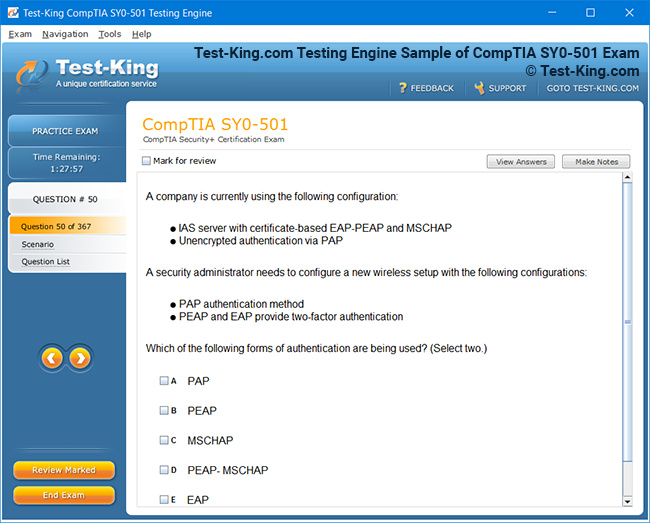
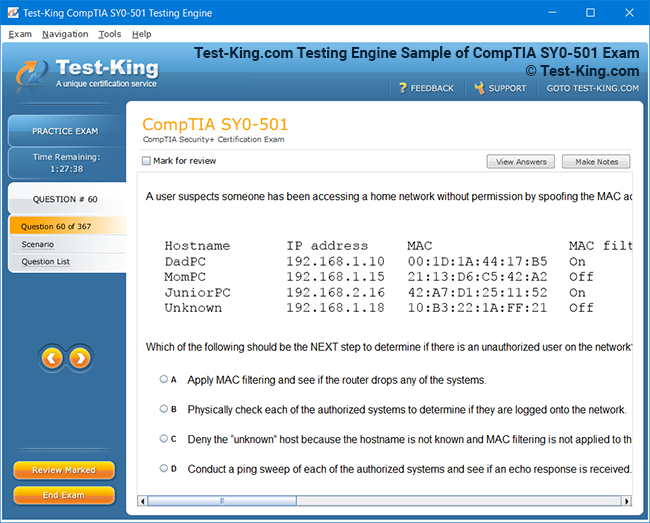
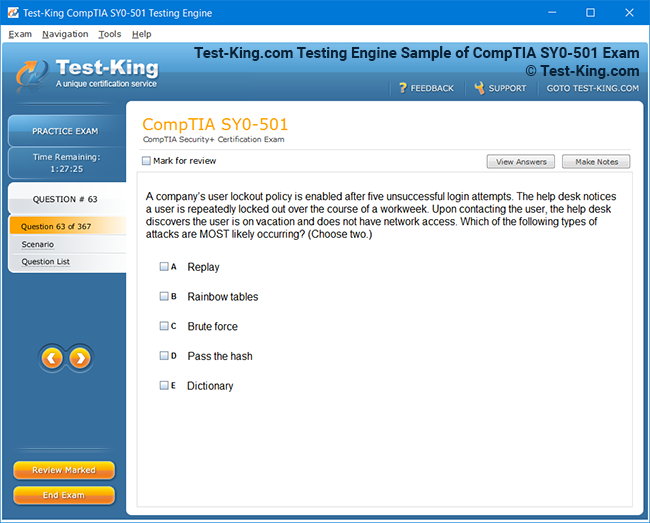
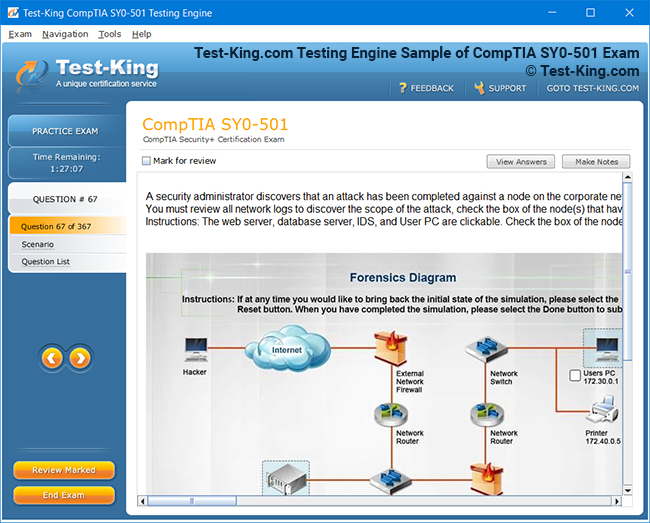
Product Screenshots
Frequently Asked Questions
How can I get the products after purchase?
All products are available for download immediately from your Member's Area. Once you have made the payment, you will be transferred to Member's Area where you can login and download the products you have purchased to your computer.
How long can I use my product? Will it be valid forever?
Test-King products have a validity of 90 days from the date of purchase. This means that any updates to the products, including but not limited to new questions, or updates and changes by our editing team, will be automatically downloaded on to computer to make sure that you get latest exam prep materials during those 90 days.
Can I renew my product if when it's expired?
Yes, when the 90 days of your product validity are over, you have the option of renewing your expired products with a 30% discount. This can be done in your Member's Area.
Please note that you will not be able to use the product after it has expired if you don't renew it.
How often are the questions updated?
We always try to provide the latest pool of questions, Updates in the questions depend on the changes in actual pool of questions by different vendors. As soon as we know about the change in the exam question pool we try our best to update the products as fast as possible.
How many computers I can download Test-King software on?
You can download the Test-King products on the maximum number of 2 (two) computers or devices. If you need to use the software on more than two machines, you can purchase this option separately. Please email support@test-king.com if you need to use more than 5 (five) computers.
What is a PDF Version?
PDF Version is a pdf document of Questions & Answers product. The document file has standart .pdf format, which can be easily read by any pdf reader application like Adobe Acrobat Reader, Foxit Reader, OpenOffice, Google Docs and many others.
Can I purchase PDF Version without the Testing Engine?
PDF Version cannot be purchased separately. It is only available as an add-on to main Question & Answer Testing Engine product.
What operating systems are supported by your Testing Engine software?
Our testing engine is supported by Windows. Andriod and IOS software is currently under development.
Common Challenges and Solutions for the Nuage Networks 4A0-N02 Exam
The Nuage Networks Virtualized Network Services Fundamentals exam, designated as 4A0-N02, is a nuanced and intricate assessment designed to measure an individual’s comprehension of virtualized networking concepts, practical deployment strategies, and underlying operational frameworks. For many candidates, the initial encounter with the exam material can evoke a sense of trepidation due to the sheer breadth of concepts encompassing software-defined networking principles, policy management, and orchestration of virtualized network services. The first formidable challenge lies in the abstract nature of virtualized network architectures, which differ markedly from traditional networking paradigms. While conventional networks rely heavily on physical hardware configurations and manual connectivity oversight, the VNS framework emphasizes automated, policy-driven management, introducing a layer of abstraction that can confound learners who are accustomed to tangible networking devices.
Understanding the Nuage Networks VNS Fundamentals and Exam Obstacles
A recurrent difficulty encountered by aspirants is the synthesis of theoretical knowledge with practical application. The exam frequently probes understanding of intricate scenarios where multiple virtualized elements interact simultaneously. Candidates may grasp the theoretical underpinnings of a concept, such as overlay and underlay network dynamics or VNS policy constructs, but falter when required to analyze real-world deployment scenarios where these concepts converge. For instance, configuring network segmentation to achieve both isolation and connectivity, while adhering to organizational policies, demands a cognitive agility that blends memorized knowledge with analytical reasoning. The ambiguity embedded within exam questions can exacerbate this difficulty, compelling candidates to distinguish between superficially similar options and identify the most operationally sound solution.
Time management constitutes another subtle but pervasive challenge. The 4A0-N02 exam is not merely an evaluation of rote knowledge; it demands rapid yet judicious analysis of scenario-based queries. Many candidates underestimate the cognitive load required to navigate complex diagrams, policy constructs, and procedural descriptions within the allotted timeframe. This often results in rushed answers that, while partially correct, fail to capture the nuanced expectations of the examiners. To mitigate this, it is imperative to cultivate a methodical approach that balances speed with precision, emphasizing a hierarchical evaluation of information, identifying critical cues, and systematically eliminating less likely choices.
A further obstacle emerges from the evolving nature of the Nuage Networks platform itself. As virtualized network services continuously advance, subtle updates in orchestration methodologies, security protocols, or management interfaces may introduce discrepancies between study materials and current exam requirements. Candidates relying exclusively on outdated resources can find themselves ill-prepared for contemporary scenarios that require familiarity with recent enhancements or best practices. This necessitates a disciplined approach to study, including engagement with official documentation, release notes, and community forums, thereby ensuring that one’s understanding remains contemporaneous and robust.
The integration of multiple protocols within the VNS framework presents an additional layer of complexity. Understanding how Layer 2 and Layer 3 mechanisms interact with overlay networks, how routing decisions influence policy enforcement, and how automated orchestration tools reconcile disparate elements, requires a holistic perspective that transcends isolated memorization. Misinterpretation of these interactions can lead to erroneous assumptions about network behavior, particularly in multi-tenant environments where policy conflicts may produce unexpected outcomes. Candidates often grapple with visualizing these dynamic interactions, a challenge compounded by the absence of tangible equipment to manipulate during preparation.
Another salient challenge revolves around the conceptualization of security paradigms within virtualized networks. The 4A0-N02 exam places emphasis on policy-driven security mechanisms, including micro-segmentation, firewall rule automation, and tenant isolation. While traditional network security may be anchored in physical boundaries and manual access control lists, virtualized networks require a more abstract comprehension of intent-based policies and automated enforcement mechanisms. Candidates may struggle to reconcile these new concepts with previous experience, leading to potential misapplication in scenario-based questions that assess the interplay of connectivity, segmentation, and compliance considerations.
Moreover, the articulation of solutions in a conceptual framework rather than a procedural checklist can perplex aspirants. The exam often evaluates candidates’ ability to reason through hypothetical deployment dilemmas, requiring the identification of optimal solutions that adhere to policy, scalability, and operational efficiency criteria. This necessitates not only technical knowledge but also an aptitude for strategic thinking and problem decomposition. Many individuals inadvertently focus on granular configuration steps without appreciating the overarching objectives, which can result in answers that are technically correct but operationally suboptimal.
Retention of voluminous terminology and nuanced definitions poses yet another challenge. The VNS Fundamentals encompass a lexicon that includes terms such as policy group, VRS (Virtualized Routing and Switching), overlay domain, and service chain. Candidates must internalize these definitions and comprehend their contextual applications, a task that demands iterative reinforcement through reading, practice scenarios, and mnemonic techniques. Failure to anchor these terms in practical understanding can hinder the ability to accurately interpret exam questions, particularly those that employ subtle variations in phrasing to probe depth of knowledge.
Practical exercises and simulated environments represent a critical tool for overcoming these obstacles. Engaging with lab scenarios allows candidates to witness the real-time effects of policy application, network orchestration, and automated routing decisions. For example, experimenting with creating multiple virtual networks, assigning policies, and observing traffic flow elucidates principles that remain abstract in theoretical study. Such experiential learning fortifies memory retention, reinforces conceptual comprehension, and develops an intuitive grasp of cause-and-effect relationships that is invaluable during scenario-based questioning.
Stress management and cognitive endurance are frequently underestimated challenges. The density of the 4A0-N02 exam, combined with its emphasis on analysis and synthesis, can precipitate mental fatigue. Candidates who enter the exam without strategies to sustain focus and manage cognitive load may find themselves second-guessing answers or overlooking key details. Techniques such as systematic pacing, mental rehearsal of complex processes, and strategic pauses to evaluate information critically, contribute significantly to maintaining clarity of thought throughout the examination.
Understanding error patterns and common misconceptions is another dimension that candidates often overlook. Misinterpretation of overlay and underlay interactions, incorrect assumptions about policy precedence, or confusion between orchestration components are recurring pitfalls. Developing a catalog of such recurrent errors, and deliberately confronting them through targeted practice, enhances diagnostic skills and reduces the likelihood of repeated mistakes. This reflective practice cultivates not only knowledge retention but also the metacognitive awareness necessary to navigate complex exam questions with discernment.
Finally, integrating all these strategies requires a holistic and iterative study regimen. It is insufficient to rely solely on rote memorization or isolated practice exercises; candidates must interweave theoretical knowledge, hands-on experimentation, time management, and cognitive strategies to construct a resilient framework for success. By acknowledging the inherent challenges of the Nuage Networks VNS Fundamentals exam, and systematically addressing them through multifaceted preparation, candidates can transform initial apprehension into confidence and operational proficiency, thereby positioning themselves for success in a demanding and highly specialized certification environment.
Navigating Complex Concepts and Practical Scenarios in VNS Fundamentals
The 4A0-N02 examination, centered on Nuage Networks Virtualized Network Services Fundamentals, often confronts candidates with a spectrum of conceptual intricacies and practical dilemmas that test both their theoretical comprehension and analytical agility. A recurring obstacle lies in the multilayered architecture of virtualized networks, where overlay and underlay constructs intertwine to deliver seamless connectivity. Candidates frequently encounter questions that simulate real-world scenarios involving multiple tenants, diverse policies, and interdependent virtual routing and switching components. This complexity necessitates an understanding that transcends rote memorization, compelling aspirants to develop a cognitive framework capable of anticipating network behavior under dynamic conditions.
A common source of confusion is the interpretation of policy enforcement within virtualized environments. While the terminology may appear straightforward, the underlying operational mechanics are subtle. Policies in VNS are not merely static instructions; they function as intent-driven directives that govern traffic flow, segmentation, and security across virtualized overlays. Many candidates struggle to discern the hierarchy and precedence of these policies, leading to miscalculations in scenario-based questions. To address this, it is essential to cultivate an intuitive grasp of how intent translates into automated configuration and how conflicts between policies are reconciled by the orchestration system.
Visualization of network topologies poses another intricate challenge. Unlike traditional networks, where physical devices provide tangible reference points, virtualized networks require mental modeling of abstract constructs such as virtual routing domains, service chains, and logical interfaces. The capacity to mentally simulate traffic flows and predict the outcomes of policy application is crucial for successfully navigating scenario-based questions. Candidates often benefit from repeatedly mapping virtual overlays to physical underlays, even through mental exercises, as this reinforces an understanding of interdependencies and highlights potential bottlenecks or policy violations.
Understanding the interaction of multiple protocols within the VNS environment is another area where candidates often encounter difficulties. Nuage Networks employs a combination of standard networking protocols alongside proprietary orchestration mechanisms, necessitating a dual comprehension of conventional behavior and platform-specific adaptations. For instance, grasping how routing protocols influence automated service chaining or how address resolution interacts with policy enforcement requires a meticulous and methodical study approach. Ignoring the nuances of these interactions can result in assumptions that undermine the accuracy of scenario analyses, particularly in multi-tenant deployments where isolation and connectivity must coexist harmoniously.
Time management and prioritization remain pivotal challenges. The 4A0-N02 exam is deliberately structured to assess not only knowledge but also the candidate’s ability to apply concepts efficiently under time constraints. Complex questions may present extended scenarios that require candidates to evaluate multiple interrelated factors before arriving at a solution. A disciplined approach, which involves scanning for critical information, identifying relationships between components, and systematically ruling out implausible choices, enhances the probability of selecting correct answers without succumbing to cognitive overload.
Another frequently underestimated challenge is the assimilation of frequent updates and platform evolutions. Nuage Networks continuously advances its virtualized network offerings, introducing enhancements to orchestration capabilities, policy granularity, and management interfaces. Candidates who rely solely on dated materials risk encountering discrepancies between their study resources and the actual exam content. To mitigate this, an ongoing engagement with official release notes, technical bulletins, and community insights is invaluable. Familiarity with recent changes not only enriches understanding but also reduces uncertainty when confronting contemporary scenario-based questions.
Security-related scenarios constitute a distinctive challenge within the examination. Unlike conventional networks where perimeter security dominates, virtualized networks necessitate a nuanced comprehension of micro-segmentation, intent-based policy enforcement, and automated compliance verification. Candidates must envision how policies propagate through overlays, how traffic between tenants is governed, and how orchestrated services maintain isolation without impeding connectivity. Misinterpretation of these dynamics can result in incorrect answers, particularly in questions requiring the identification of potential vulnerabilities or optimal policy configurations.
Practical exercises and experiential learning are essential for bridging the gap between theory and application. Engaging with lab simulations of virtualized networks allows candidates to witness firsthand the ramifications of policy deployment, overlay configuration, and automated routing decisions. By creating multiple virtual networks, assigning diverse policies, and observing traffic interactions, aspirants can internalize complex concepts that might remain abstract through textual study alone. This tactile reinforcement fosters not only memory retention but also an intuitive understanding of how various components influence each other in live environments.
Error recognition and reflective analysis constitute another vital approach to overcoming obstacles. Common misconceptions, such as misjudging the precedence of overlapping policies or underestimating the implications of tenant isolation, can be systematically addressed by cataloging past mistakes and analyzing their underlying causes. This process of deliberate reflection enhances both conceptual clarity and problem-solving skills, allowing candidates to approach unfamiliar scenarios with a structured methodology. Additionally, recognizing patterns in question phrasing and scenario construction enables candidates to anticipate potential pitfalls and avoid cognitive biases.
Cognitive endurance is an often-overlooked component of exam readiness. The density and complexity of the 4A0-N02 exam necessitate sustained focus and mental agility. Candidates may find themselves fatigued mid-exam, leading to rushed judgments or overlooked details. Strategies such as segmenting mental workloads, pacing analysis of extended scenarios, and rehearsing complex operations mentally can bolster endurance. Developing these cognitive muscles prior to the exam ensures that mental acuity remains high throughout, reducing the likelihood of errors born from fatigue or distraction.
Another obstacle involves the integration of multiple functional domains into cohesive solutions. Questions frequently demand simultaneous consideration of routing, security, orchestration, and policy compliance, requiring candidates to synthesize knowledge from disparate areas. The challenge is not merely understanding each domain in isolation but appreciating their interactions and dependencies. For example, a change in virtual routing can affect policy enforcement or tenant isolation, and understanding these ripple effects is critical for accurate scenario analysis. Approaching questions with a systems-thinking mindset, rather than a compartmentalized perspective, can substantially improve performance.
Retention of specialized terminology remains an ongoing challenge. The VNS Fundamentals domain encompasses a lexicon of nuanced terms such as virtual routing and switching, overlay segmentation, service chaining, and intent-based policies. Candidates must internalize these definitions in both theoretical and applied contexts, ensuring that comprehension extends beyond memorization to practical utility. Techniques such as iterative review, conceptual mapping, and verbal rehearsal help anchor this vocabulary in memory, enabling precise interpretation of scenario-based questions.
In addition to technical preparation, candidates benefit from cultivating adaptability and problem decomposition skills. The exam often presents unconventional scenarios that require flexible thinking and the ability to break down complex problems into manageable sub-problems. Candidates who attempt to apply rigid formulaic approaches may struggle, whereas those who can dissect scenarios methodically, identify critical variables, and reason through cause-and-effect relationships tend to excel. This adaptive mindset is invaluable in navigating the nuanced challenges embedded in the Nuage Networks VNS Fundamentals assessment.
The interrelationship between theory and orchestration practice is particularly salient. Candidates must grasp not only how network services are theoretically structured but also how they manifest through automated orchestration tools. Understanding how policies are translated into actionable configurations, how overlays are provisioned dynamically, and how routing decisions are orchestrated in real-time equips candidates with the insight necessary to tackle complex scenario-based queries. Without this integrative comprehension, answers may reflect partial knowledge that fails to satisfy the operational expectations of the exam.
Finally, building confidence through repetitive, context-rich practice solidifies both knowledge and exam readiness. By engaging with hypothetical scenarios, evaluating possible solutions, and refining analytical strategies, candidates develop a resilient framework capable of addressing the full gamut of challenges posed by the 4A0-N02 exam. This iterative approach not only strengthens technical competence but also nurtures cognitive endurance, adaptability, and reflective thinking—qualities essential for achieving mastery in the Nuage Networks VNS Fundamentals domain.
Mastering Policy Integration and Dynamic Network Behavior in VNS Fundamentals
The Nuage Networks 4A0-N02 exam, centered on Virtualized Network Services Fundamentals, presents candidates with an array of challenges that test their ability to synthesize conceptual knowledge with practical execution. A recurring difficulty arises from the intricate nature of policy integration within virtualized networks, which demands a precise understanding of how intent-based directives orchestrate traffic, enforce security, and maintain service continuity. Unlike traditional networks where policies are often manually configured and statically enforced, VNS policies operate within an automated framework that dynamically applies rules across multiple overlays and tenants. Candidates often grapple with understanding the cascading effects of a single policy change and its implications for both connectivity and compliance within complex deployment scenarios.
One of the prominent hurdles involves grasping the interplay between overlay networks and the underlying physical infrastructure. Virtualized network services abstract many traditional networking functions, creating an environment where virtual routing domains, service chains, and logical interfaces operate independently of physical constraints. However, these virtual layers are not entirely decoupled from the underlying hardware; routing, switching, and policy enforcement are ultimately anchored in physical devices. Misjudging this relationship can result in conceptual misunderstandings, particularly when scenarios demand prediction of traffic flows or troubleshooting of policy conflicts. Candidates who cultivate a mental model that harmonizes virtual overlays with physical underlays can better navigate the nuanced questions posed by the exam.
Time management presents another subtle but critical challenge. The 4A0-N02 exam often includes lengthy scenario-based questions that require careful analysis of multiple interdependent variables. Candidates who attempt to address these questions linearly without prioritizing key information may expend excessive time on less critical elements, leaving insufficient opportunity to resolve more complex queries. Developing a structured approach to scenario analysis—such as identifying critical endpoints, evaluating policy precedence, and assessing routing implications—can significantly enhance efficiency while reducing the likelihood of oversight.
Understanding multi-tenant environments is another formidable challenge. Virtualized networks frequently accommodate multiple tenants with distinct policies, traffic patterns, and security requirements. Candidates must appreciate how isolation is achieved while maintaining controlled interconnectivity where necessary. For example, a tenant-specific policy may prevent direct communication between segments, yet overarching service requirements could necessitate controlled interaction through service chains or policy exceptions. Misinterpretation of these interactions can result in incorrect answers, particularly when questions explore the balance between isolation, performance, and policy adherence.
The orchestration of service chains introduces additional complexity. Service chains involve sequential application of network services—such as firewalls, load balancers, and intrusion detection systems—across virtualized paths. Candidates often encounter questions requiring analysis of how these services interact with policy enforcement and routing mechanisms. Understanding the precise order of operations, potential bottlenecks, and policy conflicts within a service chain is essential for accurate scenario evaluation. Practicing with hypothetical service chain configurations and predicting their operational outcomes can help candidates internalize these dynamic interactions.
Security enforcement within virtualized networks represents a unique and nuanced challenge. Candidates must internalize how micro-segmentation, policy inheritance, and intent-driven rules function in concert to protect traffic while supporting operational flexibility. Unlike traditional perimeter-based security models, VNS frameworks apply security at the level of individual endpoints, overlays, or tenants, requiring candidates to think abstractly about isolation, trust zones, and compliance monitoring. Scenario-based questions often probe the candidate’s ability to identify potential vulnerabilities, evaluate the effectiveness of policy placement, and recommend operationally sound adjustments that maintain both security and connectivity.
Retention and application of specialized terminology also play a crucial role. The VNS domain employs precise language, including terms such as virtual routing and switching, overlay domain, policy group, and intent-based directives. Candidates must not only memorize definitions but also comprehend their functional context, recognizing how these elements interact during network orchestration. Misunderstanding terminology can lead to flawed reasoning when confronted with nuanced scenario questions, where subtle differences in phrasing may alter the expected solution.
Cognitive integration of multiple protocols presents another layer of challenge. Virtualized networks utilize conventional protocols such as BGP and OSPF alongside proprietary orchestration mechanisms. Candidates must reconcile standard protocol behaviors with platform-specific adaptations, understanding how routing, overlay communication, and automated policy enforcement coexist. Scenario-based questions often test the ability to anticipate protocol interactions, detect potential conflicts, and implement corrective measures without violating policy or compromising performance.
Practical simulation exercises are indispensable for bridging theoretical knowledge and applied understanding. Engaging with lab environments allows candidates to visualize traffic patterns, apply policies, and observe the operational consequences of configuration changes in real-time. For instance, configuring multiple virtual networks, assigning policies, and monitoring traffic flow can reinforce comprehension of concepts that remain abstract in textual study alone. Repeated exposure to simulated network behaviors cultivates intuition and accelerates the internalization of complex interrelationships between virtual elements.
Error recognition and metacognitive awareness are critical for reducing repeated mistakes. Common pitfalls, such as misjudging policy precedence, underestimating service chain dependencies, or misinterpreting overlay behavior, can be systematically addressed by cataloging errors and analyzing their underlying causes. This reflective practice enhances reasoning capabilities, enabling candidates to approach future questions with greater precision and discernment. Recognizing patterns in scenario construction and identifying cues embedded in question phrasing further reduces cognitive traps and enhances exam performance.
Managing cognitive load is a frequently underestimated aspect of preparation. The density of information in complex scenario-based questions can overwhelm candidates, leading to rushed judgments or overlooked details. Strategies such as segmenting tasks, visualizing network behavior mentally, and rehearsing analytical processes can sustain focus and clarity. This approach enhances both efficiency and accuracy, ensuring that candidates can navigate extended scenarios without succumbing to mental fatigue or decision errors.
Integration of theoretical knowledge with orchestration practice remains central to overcoming challenges. Candidates must understand not only conceptual constructs but also how these constructs are executed through automated tools. This includes grasping how policies are translated into actionable configurations, how overlays are dynamically provisioned, and how routing decisions interact with automated enforcement. A robust understanding of these operational principles enables candidates to respond accurately to scenario-based questions that require synthesis of multiple domains simultaneously.
Adaptability and analytical flexibility are invaluable in tackling unconventional scenarios. The exam frequently presents novel situations that do not align neatly with memorized procedures. Candidates who employ rigid formulaic approaches may struggle, whereas those capable of dissecting problems into manageable sub-components, identifying critical variables, and reasoning through potential outcomes tend to excel. Developing these skills through iterative practice and reflection ensures preparedness for the exam’s diverse and nuanced challenges.
Finally, cultivating confidence through immersive and repetitive practice solidifies comprehension and operational agility. Engaging with hypothetical scenarios, evaluating multiple solution paths, and refining analytical strategies fosters resilience and adaptability. This iterative approach not only enhances technical proficiency but also strengthens mental endurance and critical thinking skills, both of which are essential for success in the demanding environment of the Nuage Networks VNS Fundamentals exam.
Enhancing Analytical Skills and Scenario-Based Problem Solving in VNS Fundamentals
The Nuage Networks 4A0-N02 examination, centered on Virtualized Network Services Fundamentals, presents candidates with multifaceted challenges that extend beyond theoretical understanding into practical and analytical proficiency. One of the foremost obstacles involves the application of policy management across complex virtual environments. Policies in VNS are dynamic, intent-driven, and operationally orchestrated, which requires candidates to comprehend not only their definitions but also the cascading effects of each directive on multiple tenants and overlays. The ability to anticipate how changes in policy influence traffic flow, security posture, and compliance adherence is crucial for accurately responding to scenario-based questions. Many candidates initially struggle to conceptualize these interactions, particularly when policies appear to conflict or when multiple layers of orchestration interact simultaneously.
Another substantial challenge lies in mastering overlay and underlay interdependencies. In virtualized network architectures, overlays abstract logical connectivity from physical infrastructure, yet their operation remains inherently dependent on the physical layer for performance and reliability. Candidates often find themselves perplexed by scenarios where logical and physical network behaviors converge, such as troubleshooting a connectivity issue that appears in the overlay but originates in the underlay. Developing mental models that accurately map virtual constructs onto the underlying hardware is essential for navigating complex exam questions, as misalignment in conceptual understanding can lead to flawed reasoning and incorrect conclusions.
Time allocation during the examination is a frequently underestimated obstacle. The exam often presents elaborate scenarios that require consideration of multiple interrelated variables, including routing, policy enforcement, security, and orchestration outcomes. Candidates who approach these questions linearly without prioritizing key information may expend valuable time analyzing minor details, thereby compromising their ability to fully address more intricate aspects of the scenario. Employing a methodical strategy, such as quickly identifying the critical endpoints, evaluating policy precedence, and assessing routing implications, enables candidates to optimize their response time while maintaining accuracy and thoroughness.
Understanding multi-tenant isolation and controlled interconnectivity is another domain that challenges candidates. In virtualized environments, multiple tenants coexist, each with distinct policies, traffic flows, and security boundaries. Candidates must comprehend how isolation is enforced, while simultaneously recognizing scenarios where controlled communication between tenants is necessary for operational requirements. Questions often test this delicate balance, requiring an understanding of service chain placement, policy exceptions, and overlay segmentation to ensure both security and functionality. Failure to appreciate these nuances may result in answers that violate operational constraints or misrepresent connectivity expectations.
Service chaining introduces an additional layer of complexity. Virtualized networks often employ sequential application of network services, such as firewalls, load balancers, and intrusion prevention systems, along designated paths. Candidates must be able to reason through how these services interact with one another and how their placement affects policy enforcement, routing, and traffic flow. Practical exercises involving simulated service chain configurations can aid in understanding operational outcomes and reinforcing the relationships between sequential network services and overarching policies. This hands-on familiarity bridges the gap between conceptual knowledge and exam preparedness.
Security considerations in virtualized networks remain a significant challenge. Unlike traditional perimeter-based security models, VNS frameworks require micro-segmentation and automated policy enforcement at granular levels. Candidates must envision the propagation of policies, understand traffic isolation between endpoints, and evaluate the effectiveness of security configurations. Scenario-based questions often probe the ability to identify potential vulnerabilities, recommend policy adjustments, and maintain a balance between connectivity, compliance, and operational efficiency. Misjudgment in this area can lead to incorrect assumptions about the security posture of virtualized environments.
Retention and application of specialized terminology is another essential competency. Terms such as virtual routing and switching, overlay domain, policy group, and intent-driven directives pervade the exam and require precise comprehension. Candidates must internalize not only the definitions but also the practical implications of these terms within operational contexts. Misunderstanding even a single term can compromise reasoning in scenario-based questions, particularly when subtle variations in phrasing are employed to test depth of understanding. Iterative review, concept mapping, and verbal rehearsal are effective strategies to anchor this terminology in memory.
Integration of multiple protocols further complicates the exam landscape. Virtualized networks employ standard protocols, such as BGP and OSPF, alongside proprietary orchestration mechanisms. Candidates must understand how conventional protocol behavior interacts with platform-specific automation, including routing decisions, overlay communication, and policy enforcement. Scenario-based questions often require anticipation of protocol interactions, detection of conflicts, and implementation of corrective measures without violating policy or impairing performance. A robust comprehension of these interdependencies is critical for accurate and operationally sound responses.
Experiential learning and simulation exercises are invaluable for consolidating knowledge. Hands-on practice allows candidates to observe the operational consequences of policy application, overlay configuration, and service chaining in real time. Engaging with lab environments, configuring multiple virtual networks, and monitoring traffic flows reinforce theoretical principles while fostering intuitive understanding. Repeated exposure to practical scenarios enhances retention, develops troubleshooting skills, and cultivates the analytical agility necessary to navigate complex exam questions confidently.
Error recognition and reflective analysis provide additional avenues for improvement. Common pitfalls, such as misunderstanding policy precedence, misinterpreting overlay behavior, or overlooking service chain dependencies, can be mitigated by cataloging mistakes and analyzing their root causes. This metacognitive approach strengthens reasoning capabilities and enhances problem-solving efficiency. Additionally, recognizing patterns in question design and identifying cues embedded within scenario descriptions allow candidates to anticipate challenges and reduce the likelihood of cognitive traps.
Managing cognitive load and sustaining focus is another critical challenge. The density of information in scenario-based questions can overwhelm even well-prepared candidates, leading to rushed decisions or overlooked details. Employing strategies such as mental segmentation, visualization of network behavior, and systematic analysis of interdependent variables helps maintain clarity under pressure. Developing these cognitive strategies prior to the examination ensures sustained attention and accuracy, particularly when navigating extended and multifaceted scenarios.
The integration of theoretical constructs with orchestration practice remains central to success. Candidates must not only understand virtualized network concepts but also how these concepts are executed through automated orchestration. This encompasses comprehension of policy translation into actionable configurations, dynamic provisioning of overlays, and real-time orchestration of routing decisions. A solid grasp of these operational principles equips candidates to address scenario-based questions that require synthesis across multiple domains simultaneously.
Adaptability and analytical flexibility are essential traits for confronting unconventional scenarios. The exam frequently presents situations that do not conform neatly to memorized procedures. Candidates who rigidly adhere to procedural approaches may struggle, whereas those capable of decomposing problems, identifying critical variables, and reasoning through potential outcomes demonstrate superior performance. Iterative practice in diverse scenarios fosters these skills, enhancing both confidence and problem-solving agility.
Confidence and competence are reinforced through repetitive, context-rich practice. Engaging with hypothetical scenarios, evaluating alternative solution paths, and refining analytical strategies cultivates resilience, adaptability, and operational acumen. This iterative approach enhances technical proficiency, strengthens cognitive endurance, and nurtures critical thinking skills, all of which are indispensable for navigating the demanding and nuanced challenges of the Nuage Networks 4A0-N02 examination.
Optimizing Strategy and Technical Acumen for VNS Fundamentals
The Nuage Networks 4A0-N02 exam, focused on Virtualized Network Services Fundamentals, tests not only knowledge but the capacity to apply intricate concepts within dynamic virtualized network environments. One primary challenge lies in synthesizing the multiple domains of knowledge into coherent problem-solving strategies. Candidates often struggle to interweave understanding of virtual routing and switching, overlay and underlay interactions, policy enforcement, and orchestration methodologies. Each of these components is significant individually, yet their operational interplay dictates network behavior. Misalignment in conceptualization or failure to consider interdependencies can result in flawed analyses, particularly in scenario-based questions that require integrated solutions rather than isolated knowledge recall.
A frequent obstacle is the comprehension of overlay and underlay interrelations. Overlays create logical constructs that abstract network paths from physical infrastructure, providing flexibility and scalability. However, the performance, resilience, and stability of these overlays are ultimately contingent on the underlying physical network. Candidates may find themselves challenged when scenarios require reasoning about failures or congestion in physical components that manifest as anomalies in virtual overlays. Building mental models that link virtual constructs to physical behaviors enhances the ability to predict traffic flows and policy outcomes accurately.
Effective management of policies across virtualized environments constitutes another hurdle. Policies are not static rules but intent-driven mechanisms that automatically enforce security, segmentation, and service continuity. Candidates often find it difficult to anticipate how one policy modification can ripple through overlays, impacting tenant isolation, service chaining, and routing dynamics. Scenario-based questions may require recognition of policy conflicts, precedence resolution, and appropriate adjustment without violating operational parameters. Developing an intuitive understanding of policy propagation, inheritance, and orchestration behavior is essential for correctly addressing these challenges.
Time pressure adds complexity to these cognitive demands. The exam frequently presents intricate, multi-variable scenarios that require candidates to evaluate multiple facets concurrently, including routing, security enforcement, and service orchestration. Without structured approaches to prioritize critical elements, candidates may spend excessive time on less impactful aspects, leading to incomplete or partially incorrect responses. Adopting a systematic framework, such as assessing endpoints, reviewing policy hierarchies, and analyzing routing implications first, optimizes efficiency while preserving analytical accuracy.
Navigating multi-tenant isolation and controlled connectivity is another significant challenge. Virtualized environments often host multiple tenants, each with unique policies and traffic requirements. Candidates must grasp how strict isolation is maintained while ensuring that controlled communication occurs where operationally necessary. Scenarios may present subtle distinctions between policy enforcement, service chain dependencies, and overlay segmentation that determine whether connectivity is permitted or blocked. Misinterpretation of these interactions can result in answers that compromise security or misrepresent the intended network behavior.
Service chaining intricacies present additional obstacles. In virtualized networks, traffic may traverse multiple sequential services such as firewalls, load balancers, and inspection tools, requiring candidates to understand both the order of service application and its operational implications. Questions often demand assessment of how policy enforcement interacts with service chain sequences, as well as identifying potential bottlenecks or conflicts. Practical simulation exercises that recreate service chain scenarios can provide hands-on insights, reinforcing conceptual understanding and strengthening the ability to reason about complex operational flows.
Security paradigms in VNS frameworks often challenge candidates accustomed to traditional network models. Micro-segmentation, intent-based enforcement, and dynamic compliance monitoring require a shift from static perimeter security thinking to an abstract, automated security mindset. Candidates must visualize how policies are applied across overlays, how traffic between tenants is controlled, and how automated systems respond to anomalies. Scenario-based questions commonly probe the candidate’s ability to identify vulnerabilities, evaluate policy effectiveness, and recommend adjustments that maintain operational integrity without sacrificing connectivity or performance.
Retention of specialized terminology is another essential aspect of exam preparation. Terms such as overlay domain, virtual routing and switching, policy group, and intent-based directives are pervasive throughout the exam. Candidates must not only memorize definitions but also internalize contextual applications, recognizing how these elements interact dynamically. Misunderstanding terminology can distort reasoning when interpreting complex scenario-based questions, where subtle differences in phrasing may indicate significantly different outcomes.
Protocol integration further complicates exam readiness. Virtualized networks utilize conventional protocols like BGP and OSPF alongside proprietary orchestration mechanisms. Candidates must reconcile expected protocol behavior with platform-specific adaptations to anticipate routing decisions, overlay communications, and policy enforcement outcomes. Questions may require evaluating interactions between multiple protocols, identifying conflicts, and recommending corrective actions without violating operational guidelines or causing performance degradation. Mastery of these interactions ensures precise, operationally sound responses.
Practical exercises remain indispensable for bridging theory and application. Laboratory simulations provide candidates with the opportunity to observe real-time behavior of virtualized networks, including policy propagation, service chaining, and overlay routing. Engaging with these exercises strengthens conceptual comprehension, reinforces intuitive understanding, and allows observation of cause-and-effect relationships that are difficult to internalize from theoretical study alone. Iterative practice also fosters troubleshooting skills, enabling candidates to respond accurately to complex scenarios.
Error recognition and reflective practice constitute an additional strategy for overcoming challenges. Common mistakes, such as misjudging policy precedence, misunderstanding overlay behavior, or overlooking service chain dependencies, can be mitigated by analyzing their root causes. Maintaining a catalog of errors and reviewing reasoning processes cultivates metacognitive awareness, enhancing both problem-solving efficiency and accuracy. Recognizing patterns in question construction and subtle cues embedded in scenarios further aids in anticipating challenges and avoiding cognitive traps.
Managing cognitive load is crucial during the exam. The density and intricacy of scenario-based questions can overwhelm even well-prepared candidates, potentially leading to rushed decisions or oversight of critical details. Employing strategies such as segmenting complex problems into manageable parts, visualizing network behavior, and rehearsing analysis processes mentally can improve focus and clarity. Strengthening these cognitive skills prior to the exam ensures sustained mental acuity and minimizes errors caused by fatigue or distraction.
The integration of conceptual knowledge with orchestration practice is essential for success. Candidates must understand how theoretical constructs, such as policy enforcement, routing, and overlay provisioning, manifest operationally within automated systems. This includes recognizing how policies are translated into actionable configurations, how overlays are dynamically instantiated, and how routing decisions interact with automation frameworks. A deep understanding of these processes enables accurate responses to scenario-based questions requiring synthesis across multiple functional areas.
Adaptability and analytical flexibility remain key attributes for navigating unconventional scenarios. The exam often presents novel situations that do not align neatly with standard procedures or memorized methods. Candidates who approach problems with a rigid mindset may falter, whereas those capable of dissecting complex problems, identifying critical variables, and reasoning through potential outcomes exhibit superior performance. Iterative practice, reflective review, and exposure to diverse scenarios cultivate these essential skills, enhancing both confidence and exam readiness.
Finally, confidence and technical acuity are strengthened through repeated scenario practice. Engaging with hypothetical networks, evaluating multiple solution strategies, and refining reasoning processes solidify understanding and operational competence. This iterative approach nurtures resilience, analytical agility, and cognitive endurance, all of which are vital for navigating the intricate and demanding challenges presented by the Nuage Networks 4A0-N02 examination.
Refining Problem-Solving Skills and Operational Insight in VNS Fundamentals
The Nuage Networks 4A0-N02 examination, focused on Virtualized Network Services Fundamentals, often presents a formidable challenge due to the depth and breadth of knowledge required, coupled with the necessity to apply concepts in complex, scenario-driven contexts. One of the most persistent difficulties for candidates lies in comprehending the layered architecture of virtualized networks, particularly the dynamic interaction between overlays and underlays. While overlays abstract logical connectivity from physical infrastructure, their operational efficacy remains inherently linked to the underlying physical network. Candidates often encounter scenarios where an apparent overlay misconfiguration is actually rooted in an underlay issue, and resolving such questions demands a mental model capable of reconciling these interdependencies with precision.
Policy integration represents another prominent challenge within the VNS framework. Policies are not merely static directives but are intent-driven mechanisms that automatically enforce connectivity, segmentation, and security. Understanding how a single policy adjustment propagates through multiple tenants, overlays, and service chains is crucial. Candidates may struggle when confronted with questions requiring recognition of policy conflicts, prioritization of enforcement, and operationally sound adjustments. Developing an intuitive comprehension of how policies interact, inherit attributes, and respond to orchestration frameworks significantly enhances the ability to navigate complex exam scenarios.
Multi-tenant environments introduce further complexity. Virtualized networks frequently host multiple tenants, each with unique traffic requirements and policy boundaries. Candidates must grasp how strict isolation is maintained while simultaneously enabling controlled connectivity for operational necessities. Exam scenarios often test the subtle interplay between policy enforcement, tenant isolation, and service chain placement, requiring candidates to evaluate how different components coexist without violating security or operational standards. Misinterpretation of these dynamics can result in answers that compromise isolation, misrepresent network behavior, or fail to meet specified requirements.
Service chaining also contributes to the intricate landscape of the 4A0-N02 exam. Traffic may traverse a sequence of services such as firewalls, load balancers, and inspection tools, and candidates are required to assess how the order and configuration of these services influence routing, policy enforcement, and network performance. Scenario-based questions often present multiple service chains simultaneously, necessitating an understanding of dependencies, potential conflicts, and operational outcomes. Engaging with practical simulations that emulate service chain behavior helps candidates internalize these relationships, enhancing their ability to reason through complex questions with confidence.
Security management within VNS frameworks is another area where candidates often encounter difficulty. Unlike traditional networks dominated by perimeter security, virtualized networks require granular enforcement through micro-segmentation, intent-based policies, and automated compliance mechanisms. Candidates must anticipate how policies propagate across overlays, how isolation is enforced between tenants, and how automated systems respond to policy conflicts or anomalies. Misjudgments in security conceptualization can result in incorrect assumptions regarding vulnerability, enforcement efficacy, or policy application, particularly in multi-tenant scenarios with overlapping requirements.
Retention of specialized terminology is essential for exam success. Terms such as overlay domain, virtual routing and switching, policy group, and intent-driven directives are pervasive throughout the assessment. Candidates must not only memorize definitions but also comprehend their operational context and interrelations. Scenario-based questions often rely on subtle distinctions in terminology to assess understanding, and misinterpretation of a single term can cascade into flawed analysis. Repeated exposure, conceptual mapping, and mental rehearsal are effective strategies to ensure that terminology is internalized and applied accurately.
The integration of multiple networking protocols further challenges candidates. Virtualized networks employ conventional protocols like BGP and OSPF alongside proprietary orchestration mechanisms. Candidates must understand how these protocols interact, how routing decisions are made in real-time, and how policy enforcement influences protocol behavior. Scenario-based questions frequently require anticipating interactions between different protocols, identifying potential conflicts, and proposing corrective actions without undermining performance or violating policies. Mastery of these interactions enhances operational reasoning and reduces the likelihood of errors stemming from incomplete understanding.
Time management remains a critical factor in exam performance. The 4A0-N02 exam includes complex, multi-variable scenarios that require candidates to evaluate interdependent factors simultaneously. Without a systematic approach, candidates may become ensnared in minor details, compromising their ability to fully resolve more challenging aspects. Developing a structured method, such as assessing critical endpoints first, reviewing policy hierarchies, and analyzing routing and orchestration implications systematically, enables candidates to optimize efficiency and accuracy under time constraints.
Practical experience and simulation exercises are indispensable tools for overcoming these challenges. Hands-on engagement with virtualized network environments allows candidates to visualize the real-time effects of policy enforcement, service chaining, overlay routing, and multi-tenant isolation. Configuring multiple virtual networks, observing traffic flows, and analyzing operational outcomes reinforces theoretical knowledge while cultivating problem-solving intuition. This approach ensures that candidates are not merely memorizing concepts but are capable of applying them effectively under dynamic conditions.
Error recognition and reflective analysis further enhance exam preparedness. Common pitfalls include misjudging policy precedence, underestimating overlay-underlay dependencies, and overlooking service chain interactions. Cataloging these errors, analyzing their root causes, and deliberately confronting them in practice scenarios fosters metacognitive awareness. Candidates develop the ability to anticipate potential pitfalls, recognize subtle cues in scenario descriptions, and adjust their reasoning processes to mitigate cognitive traps. This reflective practice strengthens both accuracy and confidence during the examination.
Cognitive endurance is an often-overlooked dimension of exam success. The density and intricacy of scenario-based questions demand sustained focus and analytical agility. Fatigue or loss of concentration can lead to rushed decisions, overlooked details, or misinterpretation of complex scenarios. Strategies such as mental segmentation of tasks, visualization of network interactions, and rehearsal of analytical procedures bolster endurance, enabling candidates to maintain clarity throughout the exam duration. Strengthening these cognitive faculties in advance ensures resilience when confronted with extended, high-complexity questions.
Integrating conceptual knowledge with operational execution is pivotal. Candidates must understand not only the theory of virtualized networks but also how these principles manifest through automated orchestration and policy-driven management. This includes translating high-level directives into actionable configurations, provisioning overlays dynamically, and understanding the interplay of routing, policy, and service chaining. A thorough grasp of these operational mechanics allows candidates to reason through complex, multi-variable scenarios effectively, demonstrating both technical competence and applied insight.
Adaptability and analytical flexibility remain crucial for addressing unconventional or unfamiliar scenarios. The exam often presents problems that deviate from standard configurations or previously studied patterns. Candidates who rigidly adhere to formulaic approaches may falter, while those capable of deconstructing complex problems, identifying critical variables, and reasoning through possible outcomes exhibit superior performance. Iterative practice with diverse scenarios fosters these capabilities, ensuring readiness for novel and nuanced challenges within the examination environment.
Confidence is reinforced through immersive and repetitive practice. Engaging with a wide range of hypothetical scenarios, evaluating alternative solution paths, and refining reasoning strategies cultivates operational acumen, resilience, and cognitive agility. Repetition consolidates theoretical knowledge, strengthens mental models, and enhances the ability to apply concepts under pressure. This iterative process prepares candidates to navigate the complexities of the Nuage Networks VNS Fundamentals exam with precision, adaptability, and self-assurance.
Finally, successful candidates recognize the importance of continuous reflection and strategic adaptation. By reviewing performance, analyzing errors, and refining approaches to complex questions, they cultivate a disciplined, methodical, and proactive mindset. This mindset is essential not only for passing the 4A0-N02 examination but also for excelling in practical deployments of virtualized network services, where operational insight, analytical reasoning, and adaptability are paramount.
Conclusion
In the Nuage Networks 4A0-N02 examination is a comprehensive test of both technical knowledge and applied reasoning within virtualized network environments. Candidates encounter challenges ranging from overlay-underlay interactions, multi-tenant policy management, and service chaining complexities to protocol integration, time management, and cognitive endurance. By engaging with hands-on simulations, refining analytical strategies, practicing scenario-based problem solving, and cultivating reflective and adaptive thinking, candidates can transform potential obstacles into opportunities for mastery. The synthesis of theoretical understanding with practical operational insight is the key to not only achieving certification but also excelling in the dynamic landscape of virtualized network services. Preparation that emphasizes integration, adaptability, and sustained focus equips candidates to meet the rigorous demands of the examination with confidence and competence.