

Exam Code: 9L0-420
Exam Name: MIB v10.10
Certification Provider: Apple
Corresponding Certification: Mac OS X
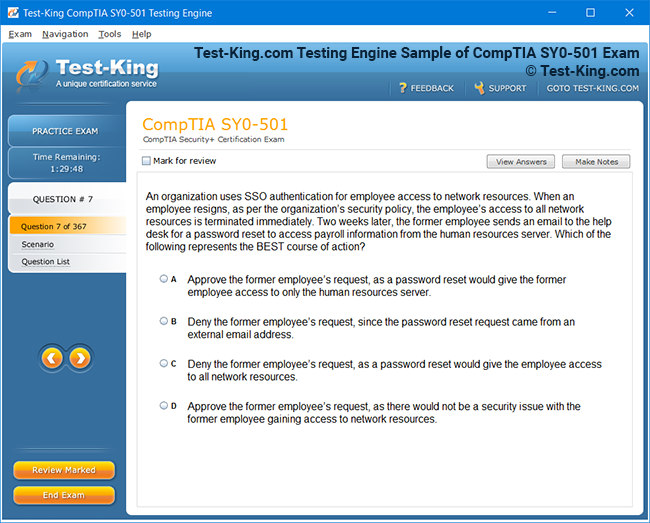
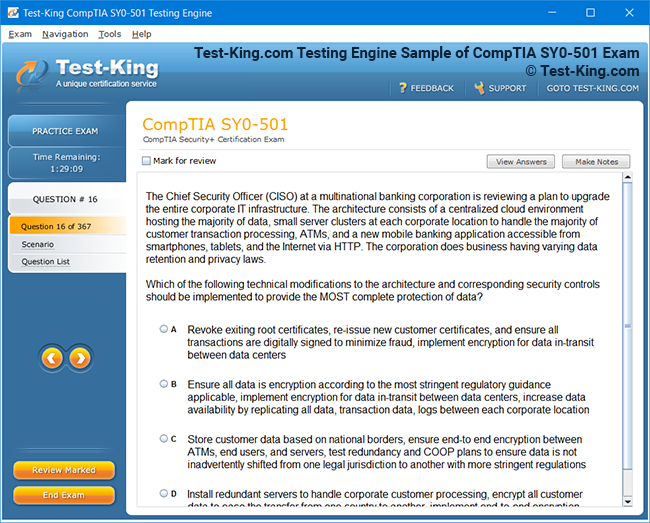
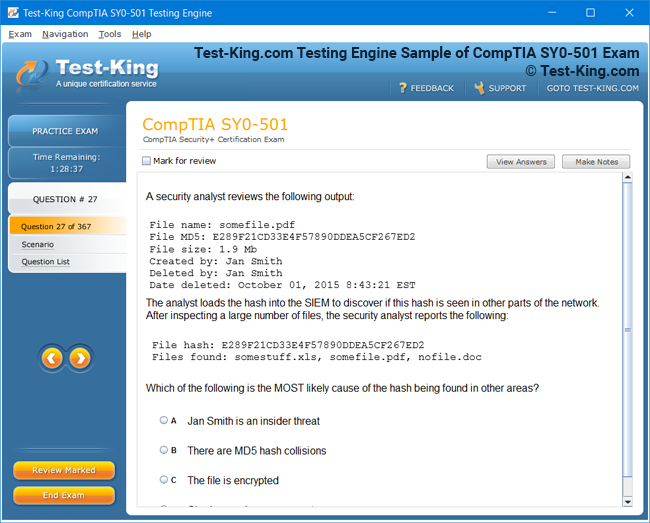
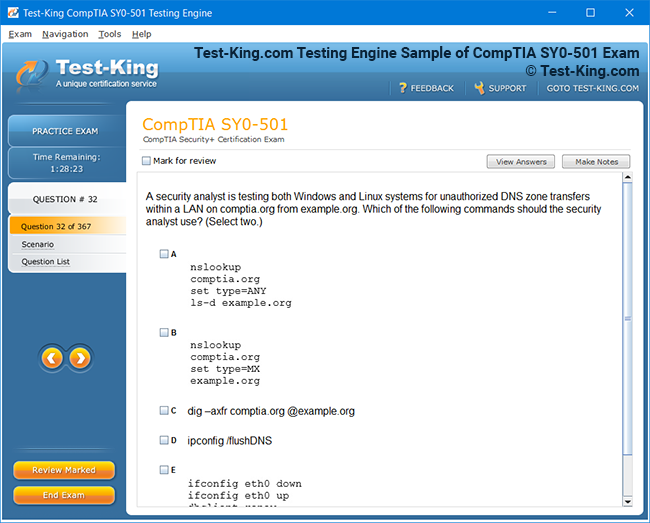
Product Screenshots
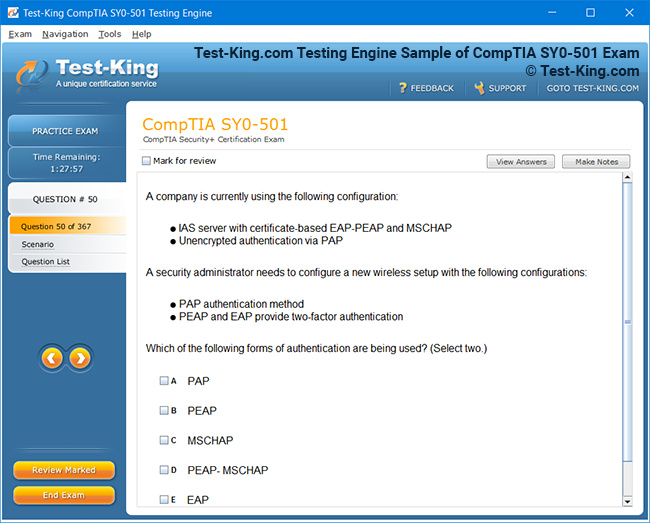
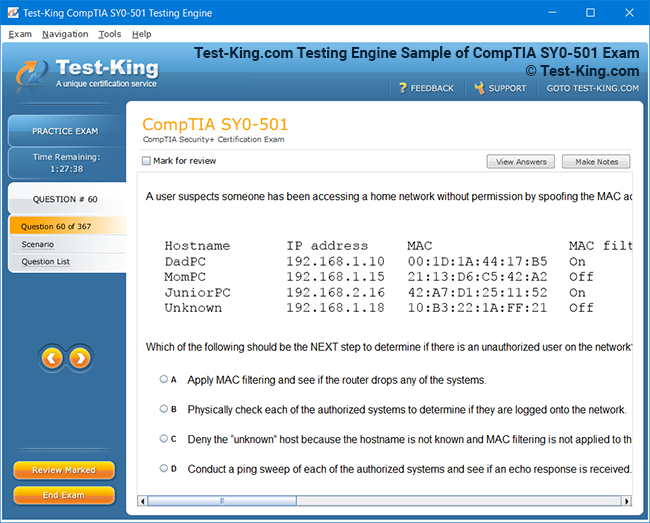
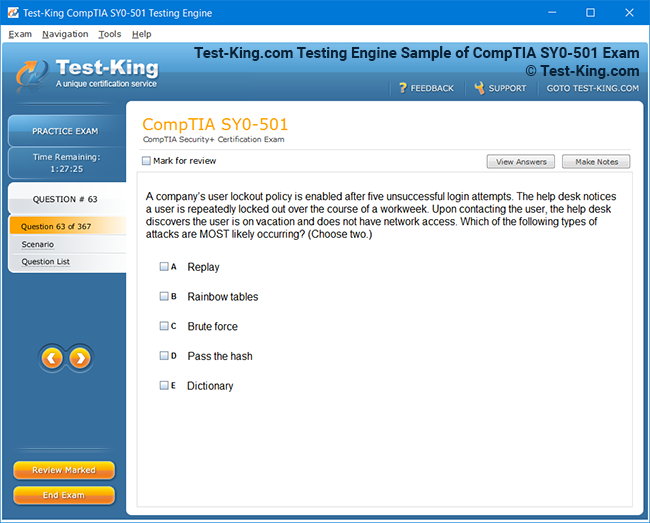
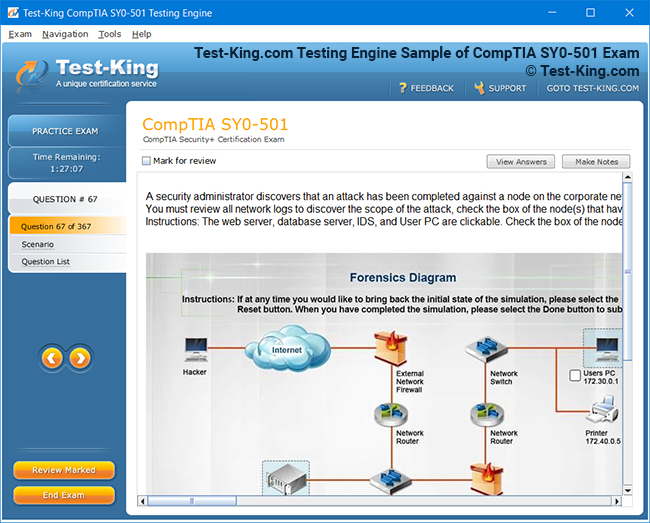
Frequently Asked Questions
How can I get the products after purchase?
All products are available for download immediately from your Member's Area. Once you have made the payment, you will be transferred to Member's Area where you can login and download the products you have purchased to your computer.
How long can I use my product? Will it be valid forever?
Test-King products have a validity of 90 days from the date of purchase. This means that any updates to the products, including but not limited to new questions, or updates and changes by our editing team, will be automatically downloaded on to computer to make sure that you get latest exam prep materials during those 90 days.
Can I renew my product if when it's expired?
Yes, when the 90 days of your product validity are over, you have the option of renewing your expired products with a 30% discount. This can be done in your Member's Area.
Please note that you will not be able to use the product after it has expired if you don't renew it.
How often are the questions updated?
We always try to provide the latest pool of questions, Updates in the questions depend on the changes in actual pool of questions by different vendors. As soon as we know about the change in the exam question pool we try our best to update the products as fast as possible.
How many computers I can download Test-King software on?
You can download the Test-King products on the maximum number of 2 (two) computers or devices. If you need to use the software on more than two machines, you can purchase this option separately. Please email support@test-king.com if you need to use more than 5 (five) computers.
What is a PDF Version?
PDF Version is a pdf document of Questions & Answers product. The document file has standart .pdf format, which can be easily read by any pdf reader application like Adobe Acrobat Reader, Foxit Reader, OpenOffice, Google Docs and many others.
Can I purchase PDF Version without the Testing Engine?
PDF Version cannot be purchased separately. It is only available as an add-on to main Question & Answer Testing Engine product.
What operating systems are supported by your Testing Engine software?
Our testing engine is supported by Windows. Andriod and IOS software is currently under development.
Top Apple Exams
Essential Skills Tested in the 9L0-420 MIB v10.10 Exam: What Every Candidate Should Know
The Apple 9L0-420 MIB v10.10 certification represents an advanced benchmark in professional expertise for individuals seeking mastery in Mac integration and deployment. This credential examines the candidate’s proficiency in troubleshooting, maintaining, and configuring Apple devices within diverse technological ecosystems. Success in this evaluation requires not only technical fluency but also a deep understanding of system interoperability, hardware behavior, and the nuanced protocols that underpin Apple’s infrastructure.
Mastering Core Competencies for the Apple MIB v10.10 Certification
Candidates preparing for this rigorous examination must first immerse themselves in the architecture of macOS, an operating system celebrated for its resilience and adaptability. The ability to comprehend system components and their interactions is central to problem-solving within Apple’s ecosystem. macOS integrates seamlessly with iOS, iPadOS, and cloud services, and the certification assesses one’s command over such connectivity. Mastery involves comprehending kernel functions, launch processes, and user-level management, enabling technicians to diagnose irregularities that might emerge during system operation.
The 9L0-420 exam evaluates a technician’s capability to manage Apple hardware at both a granular and holistic level. A candidate must discern distinctions between logic board variations, memory configurations, and power subsystem behavior. Troubleshooting hardware failures requires not only diagnostic reasoning but also an intuitive grasp of how electrical components communicate within a circuit. A professional aspiring for this certification must possess the dexterity to identify a malfunctioning power supply, an unresponsive display adapter, or a disrupted storage interface. Each issue demands both scientific analysis and creative interpretation, qualities indispensable in high-level service environments.
Apple’s MIB v10.10 framework emphasizes the synergy between hardware and software. A core domain examined in the assessment involves system imaging, where candidates must demonstrate their ability to configure and deploy operating systems across multiple Mac units in institutional environments. This requires an understanding of disk partitioning, file system hierarchies, and deployment automation through Apple’s management tools. Practical knowledge of disk formatting, data migration, and recovery utilities ensures a technician’s capacity to deliver seamless performance during device rollouts or restorations.
Network integration is another cornerstone of the certification, assessing proficiency in configuring Macs within heterogeneous network infrastructures. Candidates are expected to manage Wi-Fi authentication, Ethernet setups, VPN access, and proxy configurations. Beyond basic connectivity, the exam challenges examinees to resolve complex communication issues between macOS and other operating systems. This may include synchronizing directory services, configuring network printers, and maintaining stable AirPrint and AirPlay connections. A meticulous grasp of TCP/IP fundamentals, DNS resolution, and security certificates fortifies a technician’s ability to maintain network harmony across Apple and non-Apple systems alike.
In addition to hardware and networking, the Apple 9L0-420 MIB v10.10 exam measures the candidate’s competence in system security—a crucial component of modern computing. Apple’s architecture prioritizes privacy and resilience, integrating encryption and sandboxing mechanisms to safeguard data. Candidates must demonstrate familiarity with FileVault encryption, secure boot configurations, and the deployment of device management profiles that uphold enterprise-grade security. Understanding Gatekeeper policies, application signing, and permission structures is vital in ensuring system integrity and user protection. The exam expects individuals to illustrate a nuanced understanding of both preventative security measures and forensic recovery procedures when data compromise occurs.
Another domain of focus encompasses diagnostic and troubleshooting methodologies. The ability to isolate the root cause of technical anomalies forms the backbone of Apple’s service philosophy. Candidates must employ structured reasoning to evaluate both hardware malfunctions and software inconsistencies. This entails interpreting system logs, monitoring kernel panics, and analyzing crash reports. Candidates are also evaluated on their ability to utilize Apple’s built-in diagnostic utilities to verify component functionality. A measured approach, combining logical deduction with empirical testing, is indispensable for resolving user issues efficiently and precisely.
Equally vital is the understanding of Apple’s software environment and its evolution. macOS versioning introduces continuous changes that affect compatibility and functionality. An expert preparing for the 9L0-420 exam must be conversant with system updates, patch management, and software restoration techniques. The ability to revert to previous macOS builds, preserve user data, and mitigate update failures underscores the adaptability expected from a certified professional. Comprehending differences between Intel-based and Apple silicon architectures adds further depth to this requirement, as the transition between these platforms demands a refined understanding of boot processes and compatibility layers.
Beyond technical prowess, the certification also assesses customer-facing skills and service ethics. Apple’s ecosystem thrives on trust and precision, and a certified technician must exemplify both. Candidates are expected to understand diagnostic communication—translating complex technical findings into comprehensible explanations for end users. The ability to empathize with customers, convey confidence, and maintain discretion reflects Apple’s global reputation for excellence. This balance of technical and interpersonal dexterity forms one of the most distinctive hallmarks of successful candidates.
Moreover, the certification evaluates candidates’ fluency in utilizing Apple’s proprietary service tools. Familiarity with Apple Service Toolkit, system imaging environments, and repair tracking software ensures efficient workflow management during device servicing. Understanding warranty and repair eligibility processes, serial number verification, and hardware component replacement guidelines is indispensable. The candidate must also adhere to Apple’s standardized service protocols, emphasizing safety and precision during disassembly and reassembly procedures. Such practices safeguard both technician integrity and device longevity.
A significant part of the examination revolves around software deployment in enterprise ecosystems. Technicians are often responsible for managing large-scale rollouts where dozens or hundreds of Mac units must be configured simultaneously. This demands a sophisticated grasp of Apple Remote Desktop and Mobile Device Management platforms. Candidates must demonstrate their ability to automate installations, enforce policies, and ensure consistent system configurations across multiple endpoints. They should also be prepared to address conflicts arising from user profile management or application compatibility during such deployments.
Furthermore, knowledge of data synchronization and backup mechanisms remains critical. Apple’s integrated ecosystem encourages continuous data flow between devices, and a competent technician must ensure this process remains uninterrupted. The certification measures a candidate’s ability to configure iCloud services, manage synchronization settings, and resolve issues related to Apple ID authentication or data corruption. Understanding the intricacies of Time Machine backups, including encryption, scheduling, and recovery, forms part of this evaluative domain. The capacity to restore user environments without compromising data integrity exemplifies professional mastery.
Another essential component involves managing system performance and resource allocation. Candidates must identify and optimize performance bottlenecks that affect system efficiency. This includes monitoring CPU load, memory consumption, and storage throughput. Understanding the role of Activity Monitor and system logs in identifying errant processes enhances a technician’s ability to provide reliable solutions. The exam also evaluates familiarity with energy-saving mechanisms and thermal management systems, ensuring devices operate within optimal parameters even under demanding workloads.
The evaluation extends to peripheral device management as well. Candidates must demonstrate the ability to integrate and troubleshoot various accessories—ranging from printers and scanners to Bluetooth peripherals and display adapters. This requires comprehension of driver installation processes, device pairing protocols, and peripheral firmware updates. Troubleshooting device recognition issues or performance irregularities demands a systematic and inventive mindset, one that balances technical expertise with methodical patience.
Software licensing and user account management also form an integral element of the MIB v10.10 assessment. Technicians must demonstrate proficiency in managing Apple ID configurations, App Store purchases, and license transfers. They must also comprehend user privilege hierarchies and file permission structures, ensuring that security policies align with user accessibility. Managing keychains, authentication tokens, and password resets requires discretion and attention to detail, particularly in environments handling sensitive data.
System recovery and disaster management constitute another critical dimension of the exam. A successful candidate must be capable of restoring macOS installations after corruption, hardware failure, or unauthorized access. This includes proficiency in Recovery Mode utilities, disk verification, and data reconstruction. The ability to assess whether a clean installation or incremental repair is more suitable reflects technical discernment. Additionally, knowledge of boot sequence diagnostics and external drive imaging enhances resilience in unexpected failure scenarios.
Apple’s MIB v10.10 certification also appraises familiarity with cross-platform integration. In an era where macOS coexists with Windows and Linux environments, candidates must demonstrate interoperability awareness. This encompasses configuring file sharing, establishing printer access across different operating systems, and managing common data exchange formats. Mastery of these capabilities ensures fluid communication within diverse IT infrastructures, reaffirming the candidate’s capacity to support hybrid workplaces.
Furthermore, environmental awareness and ethical repair practices underpin Apple’s sustainability philosophy. Candidates are encouraged to understand proper component recycling, battery disposal, and responsible repair methodologies. Awareness of Apple’s environmental initiatives, such as energy-efficient component selection and repair part traceability, enriches professional credibility. This sensitivity to sustainability not only enhances brand alignment but also reflects conscientious professionalism in the technology service domain.
The evaluation also explores automation and scripting within macOS, though not through programming exercises but through conceptual understanding. Candidates must recognize how automation utilities streamline repetitive workflows, such as system updates, software installations, and log management. Familiarity with Automator functions and command-line execution enhances adaptability within professional environments, though the exam prioritizes theoretical comprehension rather than direct script creation.
Lastly, the 9L0-420 MIB v10.10 exam underscores the importance of continuous learning. Apple’s technology evolves rapidly, requiring technicians to stay attuned to firmware updates, emerging service tools, and evolving integration frameworks. The certification thus measures not only what the candidate knows at the time of testing but also their potential for adaptability and sustained growth in a dynamic technical landscape. A well-prepared individual demonstrates curiosity, discipline, and an analytical temperament—qualities that transcend the examination itself and define long-term excellence within Apple’s service ecosystem.
This certification stands as a symbol of advanced technical acumen, embodying the confluence of analytical reasoning, hardware proficiency, and service empathy. The Apple MIB v10.10 exam is not merely an evaluation of memorized information but a reflection of one’s ability to internalize and apply complex concepts with precision and foresight. It rewards those who perceive beyond the surface of troubleshooting—those who understand that technology, when mastered with intellect and integrity, becomes a bridge between innovation and human experience.
In-Depth Technical Proficiencies for macOS Integration and System Diagnostics
The Apple 9L0-420 MIB v10.10 certification delves far beyond rudimentary troubleshooting. It assesses the candidate’s deep-seated understanding of Apple’s sophisticated technology ecosystem, focusing on the synchronization of hardware and software elements that sustain the seamless operation of macOS devices. To master this certification, one must not only comprehend theoretical frameworks but also cultivate refined diagnostic instincts and procedural precision. Every aspect of this evaluation is intended to measure how well a professional can handle real-world complexities within Apple’s technical landscape—whether in enterprise deployment, individual service repair, or intricate data recovery.
A primary domain examined in the MIB v10.10 exam involves the comprehension of macOS system architecture. The certification demands an articulate awareness of how the operating system manages processes, allocates memory, and safeguards user data. Candidates must possess clarity about kernel-space and user-space interactions, system daemons, and launch services. Understanding how macOS handles inter-process communication, device management, and application sandboxing equips professionals to anticipate and neutralize performance anomalies. It is essential to discern how resource contention, corrupted caches, or conflicting extensions can impair stability, and how these factors can be meticulously diagnosed through analytical observation and procedural methodology.
Beyond system architecture, the certification accentuates proficiency in hardware diagnostics. Apple devices exhibit a distinct structural harmony that integrates logic boards, power management circuitry, and peripheral control. A candidate’s expertise is evaluated through their ability to interpret hardware symptoms, such as startup tones, LED indicators, and error reports, to pinpoint malfunction origins. Familiarity with system management controllers, thermal regulation components, and voltage distribution pathways is indispensable. Moreover, candidates must demonstrate the capacity to evaluate hardware interactions without relying on immediate replacement tactics—showing that they comprehend the logic behind Apple’s modular engineering. This examination rewards understanding over rote procedure, expecting the candidate to reason through each symptom with forensic precision.
Equally significant is mastery in storage configuration and management. The MIB v10.10 exam scrutinizes the candidate’s fluency with macOS storage protocols, from the legacy HFS+ structure to the modern APFS format. Understanding how data containers, snapshots, and encryption layers interact is crucial when addressing system slowdowns or data accessibility issues. Candidates are assessed on their capacity to reformat drives, recover corrupted partitions, and manage multi-volume configurations without jeopardizing user information. The subtleties of managing encrypted disks, synchronizing Time Machine backups, and resolving permission conflicts all form part of this intricate domain. Precision, patience, and strategic thinking are fundamental to mastering this area of the assessment.
Another critical competency revolves around network integration and configuration. macOS operates within diverse network environments, and the ability to configure these connections seamlessly is vital. The 9L0-420 exam requires technicians to exhibit competence in establishing Wi-Fi networks, static IP configurations, VPN tunnels, and network shares. More importantly, it examines one’s proficiency in diagnosing connectivity failures. Whether caused by incorrect DHCP settings, authentication errors, or DNS misconfigurations, the candidate must demonstrate composure and logical reasoning in tracing and resolving the fault. Network diagnostics within macOS involve the use of built-in utilities that reveal signal quality, routing paths, and latency metrics. Candidates are expected to understand how these indicators correspond to physical or configuration-based disruptions.
Security remains a foundational pillar of the Apple MIB v10.10 certification. The candidate’s understanding of Apple’s multilayered defense mechanisms is evaluated rigorously. macOS integrates several protective systems—FileVault encryption, Gatekeeper validation, sandbox restrictions, and System Integrity Protection—all of which work cohesively to safeguard user data and maintain software purity. Candidates must display a deep familiarity with how these layers interact, ensuring that unauthorized software or malicious agents cannot compromise system integrity. They must also demonstrate how to enforce security policies across multiple devices in enterprise environments. This includes managing certificates, profile installations, and secure remote authentication. The examination ensures that a candidate can maintain an equilibrium between system accessibility and uncompromised defense, a balance that defines Apple’s holistic approach to user safety.
A nuanced portion of the exam examines diagnostic logic and structured troubleshooting. Apple’s technical ethos emphasizes understanding the “why” before applying a “how.” Thus, the exam expects candidates to adopt a systematic reasoning pattern when confronted with unknown issues. This involves identifying whether the problem lies in the hardware, software, or network layer before proceeding to potential remedies. Candidates are tested on their ability to analyze logs, discern error patterns, and correlate events to system anomalies. Understanding the chronology of macOS startup processes or shutdown irregularities enables accurate fault isolation. The diagnostic approach expected in the MIB v10.10 assessment mirrors the intellectual rigor of a scientific investigation—each observation informs a hypothesis, and each action seeks empirical validation.
Customer interaction forms another indispensable dimension of the certification. Technical mastery alone cannot uphold Apple’s service excellence. A certified professional must demonstrate eloquence in communication, empathy in service, and discretion in handling client information. The exam emphasizes how effectively a technician can translate complex diagnostic findings into language comprehensible to non-technical users. This involves not just articulation but also temperament—maintaining patience, professionalism, and optimism even under high-pressure situations. A technician’s demeanor influences customer confidence, and Apple considers this interpersonal competence as vital as hardware acumen. Thus, candidates must be adept at explaining repair procedures, estimating service timelines, and preserving user privacy with unwavering consistency.
Software management and deployment stand at the core of macOS administration. The MIB v10.10 certification evaluates one’s proficiency in system imaging, automated installations, and version control. In institutional setups, technicians may be required to deploy macOS across numerous devices simultaneously, maintaining uniformity in configuration. Candidates must demonstrate their understanding of imaging principles, user profile standardization, and system update management. This area also encompasses the restoration of devices to baseline configurations, reinstallation of macOS following corruption, and migration of user data across machines. The capacity to handle these tasks while minimizing downtime and maintaining data sanctity is an indicator of true technical expertise.
Peripheral management forms another testing domain within the 9L0-420 exam. Apple’s ecosystem is enriched with devices that extend functionality—printers, external displays, scanners, and Bluetooth peripherals—all of which rely on stable integration. Candidates must exhibit the ability to configure and troubleshoot these accessories. This includes identifying driver mismatches, resolving pairing conflicts, and ensuring firmware compatibility. The ability to interpret system behavior when peripherals fail to communicate effectively with macOS requires both intuition and procedural insight. A refined understanding of USB and Thunderbolt communication pathways, display port negotiation, and wireless interference ensures the candidate can sustain hardware harmony across diverse setups.
Power management and energy optimization also carry notable weight in the certification. Technicians are evaluated on their awareness of how macOS handles power distribution across components. Candidates must know how to assess power states, battery health, and thermal regulation within Apple devices. The capacity to troubleshoot unexpected shutdowns, sleep mode failures, or battery calibration inconsistencies demands an understanding of both electronic design and software control mechanisms. The candidate must also comprehend the symbiotic role of firmware and system-level power protocols that ensure efficiency and longevity. This knowledge is essential not only for hardware preservation but also for maintaining system reliability under varying operational loads.
Data synchronization and backup management are core elements of Apple’s user ecosystem. The MIB v10.10 exam tests proficiency in managing iCloud synchronization, Apple ID configurations, and local backup strategies. Candidates must demonstrate familiarity with data continuity features—Handoff, Universal Clipboard, and Continuity Camera—and the underlying connectivity that enables them. Troubleshooting synchronization discrepancies, duplicate data issues, or failed backups requires a balanced grasp of cloud architecture and local storage behavior. The ability to secure user data during transfers, manage encryption protocols, and perform seamless recovery during migration underscores the advanced responsibilities of a certified professional.
Equally vital is the mastery of macOS performance optimization. Apple devices are engineered for fluidity and responsiveness, but prolonged use, software bloat, or background processes can deteriorate system efficiency. The 9L0-420 exam assesses the candidate’s skill in diagnosing sluggish performance through monitoring tools and empirical analysis. Identifying rogue processes, memory leaks, or excessive background services demands familiarity with macOS diagnostic utilities. Candidates must also understand how to manage startup items, purge caches, and maintain disk integrity. The ability to distinguish between hardware-induced latency and software inefficiency defines a technician’s depth of comprehension.
Another pivotal competency revolves around firmware and boot management. Apple’s firmware functions as the bridge between hardware and operating system initialization. Candidates must exhibit understanding of boot sequence protocols, recovery utilities, and startup security configurations. They must be able to interpret startup failures and resolve them through firmware restoration or NVRAM management. Additionally, proficiency in configuring secure boot and handling firmware password protection reflects readiness for enterprise-grade servicing. Awareness of distinctions between Intel-based firmware and Apple silicon’s unified architecture ensures the technician remains versatile across different generations of hardware.
The certification also investigates proficiency in enterprise deployment frameworks. As Apple devices gain prominence in corporate and educational environments, technicians must manage device enrollment, configuration, and compliance policies through Mobile Device Management platforms. Candidates must comprehend how to enforce security settings, automate application installations, and manage remote updates. This involves understanding provisioning profiles, authentication certificates, and remote command execution within macOS. The candidate’s ability to manage devices at scale demonstrates their strategic and technical maturity, qualities indispensable for institutional service environments.
System recovery mechanisms constitute a cornerstone of macOS administration. The 9L0-420 exam expects candidates to handle critical scenarios such as startup corruption, file system damage, or inaccessible user environments. Mastery over macOS Recovery utilities, disk verification, and internet-based reinstallation procedures is vital. Candidates must also be adept at determining when to perform clean installations versus targeted repairs. The ability to restore systems without compromising existing data illustrates a balanced blend of caution and competence. The technician’s judgment in these situations often defines the difference between data preservation and irreversible loss.
The Apple MIB v10.10 certification equally values the candidate’s adaptability to evolving technological paradigms. Apple’s shift toward integrated chip architecture and proprietary silicon demands that professionals understand the implications of these changes on performance, repair, and compatibility. This includes grasping the unified memory architecture, security enclave behavior, and thermal optimization specific to Apple’s silicon. A technician must be capable of identifying hardware compatibility concerns, update prerequisites, and system migration nuances between different chip architectures. Continuous adaptation to these transformations signifies readiness for modern service challenges.
Attention to procedural accuracy is a silent yet profound component of the assessment. Apple places immense emphasis on the precision of disassembly and reassembly processes. Candidates must respect component fragility, static sensitivity, and cable routing standards. Missteps during physical service can lead to catastrophic device damage, hence understanding torque thresholds, adhesive removal techniques, and connector integrity is vital. These practices embody the meticulous discipline that distinguishes certified Apple technicians from general repair practitioners.
Finally, the exam evaluates situational reasoning—how a candidate responds when encountering ambiguous or compounded issues. The ability to remain composed, methodical, and inquisitive under uncertainty demonstrates genuine mastery. Candidates must synthesize all domains—hardware understanding, software logic, and network awareness—to reach a resolution. This convergence of knowledge underscores Apple’s philosophy: technical excellence must coexist with intellectual clarity. The Apple 9L0-420 MIB v10.10 certification, through its exhaustive assessment of these capabilities, transforms competent technicians into holistic professionals—individuals capable of maintaining the elegance, reliability, and integrity that define Apple’s technological universe.
Advanced Diagnostic, Integration, and Deployment Mastery for Apple Professionals
The Apple 9L0-420 MIB v10.10 certification stands as a comprehensive evaluation of an individual’s command over Apple’s macOS environment and its intricate hardware systems. To excel in this credential, one must demonstrate exceptional competence in diagnosing hardware irregularities, configuring network frameworks, managing system integrations, and maintaining operational consistency across diverse Apple environments. The essence of this assessment lies not merely in technical recall but in the ability to synthesize knowledge into logical, actionable insights that resolve real-world complexities. This evaluative process examines the fusion of intelligence, intuition, and procedural discipline—qualities that define Apple-certified professionals who navigate the dynamic landscape of technology with both rigor and finesse.
At the core of this certification lies mastery over macOS fundamentals, the bedrock upon which all other skills are constructed. Candidates are expected to demonstrate an intricate understanding of how macOS governs its system architecture, manages memory allocation, orchestrates processes, and interfaces with hardware subsystems. This requires fluency in recognizing system hierarchies—kernel, user environment, and process control layers—and understanding how they communicate seamlessly. The examination measures one’s aptitude in diagnosing issues that arise when these interactions falter, such as startup delays, corrupted processes, or resource mismanagement. Familiarity with macOS startup routines, launch agents, and the nuanced behavior of background services enhances a candidate’s capability to identify anomalies that could destabilize system performance.
The ability to diagnose and interpret system behavior with precision forms the foundation of Apple’s technical philosophy. Within the scope of the MIB v10.10 assessment, candidates must demonstrate a methodical approach to fault detection. This includes interpreting error logs, analyzing crash reports, and tracing dependencies that contribute to system instability. Rather than relying on superficial remedies, candidates are expected to exhibit analytical patience—dissecting problems layer by layer until the origin of the issue is exposed. The diagnostic reasoning demanded by the exam mirrors that of scientific inquiry, where hypotheses are tested against empirical observation. This practice ensures that candidates possess not only mechanical aptitude but intellectual curiosity, an indispensable attribute in Apple’s service ecosystem.
Hardware expertise forms another principal pillar of this evaluation. The Apple ecosystem relies on precision-engineered components, each optimized for performance and efficiency. Candidates must understand the functional anatomy of Apple hardware—logic boards, display assemblies, storage interfaces, and thermal management units. The exam challenges technicians to diagnose malfunctioning components without guesswork, requiring discernment between symptoms originating from software conflicts and those resulting from hardware degradation. Recognizing the interplay between voltage regulation, sensor calibration, and device stability reveals the sophistication expected of Apple-certified professionals. Moreover, the examination gauges familiarity with the unique modular design philosophy that defines Apple hardware, including non-user-serviceable elements that require specialized handling and diagnostic protocol adherence.
A domain of growing importance in the Apple MIB v10.10 evaluation involves storage and file system mastery. Candidates must be proficient in handling Apple’s file system formats, particularly APFS, and understand its structure in relation to snapshots, containers, and encryption. Troubleshooting disk errors, managing fragmented data, and ensuring seamless system restoration all fall within the required competencies. Understanding how Time Machine interacts with APFS volumes, how data redundancy is maintained, and how secure erasure is implemented through hardware encryption mechanisms is vital. A technician’s acumen in these areas reflects their grasp of both data integrity and digital preservation—qualities that distinguish seasoned Apple service professionals from novice practitioners.
Network configuration and optimization remain central to the assessment, testing the candidate’s dexterity in establishing and maintaining stable macOS network environments. The ability to configure static IP assignments, manage VPN tunnels, authenticate with directory services, and troubleshoot routing conflicts requires deep insight into both macOS and general networking principles. Apple devices frequently coexist in heterogeneous infrastructures where seamless interaction with Windows and Linux systems is expected. The certification evaluates how well the candidate can maintain cross-platform compatibility without compromising Apple’s distinctive operational security. Proficiency in Wi-Fi diagnostics, DNS configuration, and proxy management ensures that the candidate can preserve uninterrupted communication across a multifaceted digital ecosystem.
Equally essential is mastery of Apple’s security architecture. The MIB v10.10 exam scrutinizes one’s understanding of Apple’s layered approach to protection—FileVault, Gatekeeper, and System Integrity Protection—all working in unison to uphold user data confidentiality and system purity. Candidates must illustrate the ability to configure and manage these systems in both personal and enterprise environments. This involves not only enabling encryption or access control but also recognizing how security mechanisms interact with system updates, application installation, and remote management frameworks. Understanding certificate-based authentication, secure boot processes, and sandbox limitations defines the sophisticated equilibrium between accessibility and protection that Apple’s ecosystem demands.
Another fundamental aspect of the certification revolves around system deployment and automation. Apple environments often span numerous devices requiring identical configurations and synchronized functionality. The MIB v10.10 exam evaluates one’s ability to create, deploy, and maintain uniform system images. Candidates must comprehend the intricacies of imaging processes, user profile migrations, and post-deployment validation. Enterprise deployment requires balancing automation with oversight—ensuring that every system adheres to configuration standards while retaining the flexibility to accommodate individual user requirements. Knowledge of macOS provisioning workflows and device enrollment strategies demonstrates preparedness for enterprise-scale responsibilities.
Within this certification’s structure, emphasis is also placed on the management of system updates and application lifecycles. Apple’s continuous evolution demands that technicians stay abreast of software compatibility shifts, patch cycles, and firmware advancements. Candidates must display proficiency in diagnosing update failures, recovering from incomplete installations, and ensuring that user data remains intact throughout these operations. An advanced understanding of dependency resolution, disk verification before update execution, and post-update validation procedures is indispensable. A certified professional must ensure that every upgrade not only enhances performance but also preserves stability—a delicate equilibrium achievable only through meticulous attention to procedural integrity.
Peripheral device management forms another intricate layer of expertise tested within the MIB v10.10 certification. Apple devices often rely on extensive connectivity with accessories—external drives, audio interfaces, displays, and input peripherals. Candidates must be able to configure, calibrate, and troubleshoot these components, ensuring flawless interoperability. This entails understanding driver installations, firmware synchronization, and wireless communication protocols such as Bluetooth and AirPlay. A misconfigured peripheral can introduce latency, instability, or data loss, making this knowledge vital. Candidates are also assessed on their ability to address peripheral power distribution, recognizing how specific connection types affect system performance and thermal regulation.
In the realm of diagnostics, power and thermal management remain essential topics. Apple’s devices employ advanced energy regulation systems designed to maximize performance efficiency. Candidates must demonstrate an understanding of battery calibration, sleep mode management, and energy-saving algorithms. The ability to interpret battery cycle data, identify power anomalies, and manage component-level thermal thresholds forms an indispensable part of the assessment. Knowledge of cooling systems, fan speed regulation, and ambient temperature effects on device stability adds depth to the candidate’s technical profile. This domain requires not only mechanical awareness but also predictive reasoning—anticipating performance deviations before they manifest as failures.
The MIB v10.10 exam also tests data management and continuity strategies, particularly within the context of Apple’s iCloud and synchronization systems. Candidates must demonstrate fluency in configuring synchronization parameters, resolving authentication conflicts, and maintaining secure access to Apple services. This requires understanding the nuances of account verification, multi-factor authentication, and encryption mechanisms that protect data in transit and at rest. Troubleshooting discrepancies between devices—whether in message synchronization, file sharing, or contact propagation—demands a comprehensive grasp of Apple’s ecosystem logic. Technicians must be able to reconcile differences between local caches and cloud-stored data without jeopardizing user information.
A dimension that underscores Apple’s commitment to service excellence is communication and user engagement. The certification measures a technician’s aptitude in articulating technical findings to clients in an intelligible, composed manner. This involves transforming diagnostic complexity into clear, actionable guidance that reassures the user. Beyond technical execution, service delivery embodies empathy, patience, and integrity. Apple-trained professionals are expected to foster confidence by demonstrating both technical mastery and emotional intelligence. The ability to manage expectations, deliver transparent assessments, and protect user privacy enhances a technician’s credibility and reflects Apple’s brand ethos.
System recovery and disaster management proficiency remain indispensable to the MIB v10.10 qualification. Candidates must handle critical situations—such as disk corruption, failed updates, or inaccessible systems—with composure and methodological clarity. Understanding macOS Recovery utilities, data restoration hierarchies, and external boot techniques enables seamless rehabilitation of compromised systems. Furthermore, distinguishing between hardware failure and software corruption is essential for making informed recovery decisions. Professionals must exhibit the capacity to preserve essential user data even under dire system malfunction, emphasizing foresight and procedural adherence.
In an enterprise context, mobile device management and deployment consistency constitute major evaluation areas. Candidates are expected to manage multiple Apple devices within institutional infrastructures while maintaining compliance and security. This includes configuring management profiles, enforcing access control, and automating policy distribution through Apple’s proprietary management ecosystems. A candidate must also demonstrate competence in handling user identity management, ensuring that devices remain properly authenticated within directory systems. The complexity of enterprise-grade management lies in balancing autonomy with oversight—maintaining operational fluidity without compromising standardization.
Performance optimization stands as a critical domain that blends both hardware and software insights. Candidates are evaluated on their ability to diagnose sluggish performance, analyze process distribution, and mitigate excessive resource consumption. The exam requires familiarity with macOS monitoring tools, process hierarchies, and memory utilization metrics. Candidates must discern between transient slowdowns and systemic inefficiencies, implementing solutions that enhance long-term system fluidity. Understanding the correlation between storage fragmentation, background indexing, and processor throttling demonstrates the intellectual depth expected in this certification.
Equally profound is the assessment of cross-platform integration. Apple devices frequently interact with non-Apple infrastructures, and the ability to sustain harmony across these environments reflects adaptability. Candidates must understand shared file systems, network print protocols, and cross-platform authentication schemes. The certification measures how well an individual can facilitate collaboration between macOS, Windows, and Linux systems without compromising data flow or security. This cross-domain competency underpins Apple’s philosophy of technological inclusivity—devices functioning cohesively in a diverse ecosystem.
The MIB v10.10 certification also examines candidates’ awareness of firmware architecture and device evolution. With the advent of Apple silicon, professionals must grasp unified memory architecture, system-on-chip integration, and advanced boot management protocols. The exam assesses one’s ability to interpret system startup behavior, manage firmware locks, and troubleshoot recovery issues specific to Apple’s proprietary chips. Understanding these technological transitions is essential for future-proof technical mastery, as Apple continues refining its hardware and software synergy.
Beyond the mechanical and procedural elements, the certification values ethical and environmental consciousness. Apple technicians are expected to demonstrate awareness of sustainable repair practices—component recycling, battery disposal compliance, and energy-efficient maintenance. Understanding Apple’s environmental commitments and adhering to eco-conscious service methodologies form a subtle yet vital dimension of professionalism. This awareness not only enhances Apple’s corporate vision but also reinforces the technician’s integrity within a socially responsible technological paradigm.
Lastly, adaptability defines the enduring essence of Apple certification. The 9L0-420 MIB v10.10 exam is a testament to continuous evolution, requiring candidates to embody resilience in the face of constant innovation. A successful Apple professional does not simply memorize protocols; they interpret, anticipate, and evolve alongside technological transformation. The certification thus identifies those who blend mechanical skill with analytical grace, who approach every challenge with curiosity, and who preserve Apple’s ethos of excellence through precision, intellect, and unwavering dedication.
Comprehensive Competencies in Mac Deployment, Security, and Advanced Troubleshooting
The Apple 9L0-420 MIB v10.10 certification delineates an elevated standard for technicians seeking mastery in Apple device management and macOS systems. It evaluates a candidate’s capacity to integrate hardware proficiency, software acuity, and diagnostic precision in ways that mirror real-world operational demands. Achieving this credential necessitates not merely technical knowledge but a cultivated capacity for analytical reasoning, systematic troubleshooting, and informed decision-making within complex technological environments. Candidates must exhibit a confluence of cognitive dexterity and procedural expertise to navigate the multifaceted domains encompassed in this examination.
At the heart of this certification lies an extensive understanding of macOS architecture and its operational nuances. Candidates are required to articulate the interactions between kernel-level processes, system daemons, and user-space applications. Comprehending launch services, background processes, and inter-process communication is essential for diagnosing system instability or performance bottlenecks. The examination tests the candidate’s ability to correlate symptoms to underlying architectural behaviors, such as mismanaged memory allocation, corrupted caches, or abnormal process hierarchies. Mastery of these concepts allows the technician to anticipate potential system conflicts and implement preventative or corrective interventions with precision.
Hardware diagnostics remain a foundational competency evaluated by the MIB v10.10 examination. Apple devices are constructed with meticulous attention to integration, and candidates must demonstrate insight into component interactions that dictate device functionality. Understanding the interplay of logic boards, power management circuitry, thermal controls, and peripheral interfaces is critical. Technicians are assessed on their ability to identify anomalies such as irregular power distribution, display irregularities, or storage latency, and to determine whether these issues originate from hardware, firmware, or software. This analytical depth ensures that certified professionals can troubleshoot without relying on trial-and-error methods, maintaining Apple’s ethos of accuracy and efficiency.
A significant domain within the certification pertains to storage systems and file management. Candidates are expected to demonstrate fluency with Apple’s APFS file system, including its container structures, snapshots, and encryption methodologies. The exam evaluates the ability to diagnose file corruption, restore damaged partitions, and perform secure erasure of sensitive data. Proficiency in Time Machine backups, disk verification, and permission restoration is also assessed, reflecting the need for precision in both preventative maintenance and remedial interventions. The capacity to maintain data integrity during system restoration or user migration exemplifies a technician’s advanced skill set.
Network configuration and integration constitute another critical area of evaluation. Candidates must establish stable and secure connectivity across diverse networking environments, including enterprise-grade infrastructures. Proficiency in configuring Wi-Fi networks, static IP assignments, VPN protocols, and directory-based authentication is essential. Additionally, the exam assesses one’s ability to troubleshoot complex connectivity issues that may arise due to DHCP conflicts, DNS misconfigurations, or proxy interference. Technicians must also demonstrate the ability to maintain interoperability with non-Apple systems while preserving the integrity and security of the macOS environment.
Security expertise is paramount in the MIB v10.10 examination. Candidates are evaluated on their understanding of Apple’s layered security framework, encompassing FileVault encryption, Gatekeeper verification, System Integrity Protection, and secure boot protocols. The examination emphasizes not only the ability to configure these systems but also to analyze how they interact to prevent unauthorized access or malware intrusion. Candidates must exhibit knowledge in managing certificates, enforcing access control policies, and securing enterprise-managed devices. Understanding the interdependence of these security layers ensures that technicians can maintain robust protection while allowing for functional flexibility in operational environments.
System deployment and automation are pivotal areas of competency. The certification measures proficiency in creating and implementing standardized system images across multiple devices, automating configurations, and ensuring consistency in enterprise or educational deployments. Candidates are expected to understand macOS provisioning, post-deployment validation, and profile management to guarantee seamless integration. Additionally, they must be capable of restoring devices to baseline configurations and managing updates without disrupting user data. This requires a balance of automation efficiency with meticulous attention to system stability and performance metrics.
Diagnostic methodology forms a critical aspect of the examination. Apple’s service philosophy emphasizes structured problem-solving, where technicians must systematically identify the root cause of irregularities before implementing solutions. Candidates are expected to interpret system logs, analyze crash reports, and assess component behavior to develop evidence-based remediation strategies. This diagnostic acumen requires combining theoretical knowledge with practical observation, cultivating an investigative mindset that anticipates failure patterns and resolves them with foresight. Candidates must also distinguish between transient anomalies and systemic faults, applying interventions that maximize both accuracy and efficiency.
Peripheral and accessory management is another domain explored in the certification. Apple devices are frequently supplemented with external displays, audio interfaces, printers, and storage peripherals. Candidates must configure these devices, troubleshoot connectivity and driver issues, and ensure firmware compatibility. The ability to manage USB, Thunderbolt, and Bluetooth interfaces is evaluated, alongside an understanding of power delivery and device recognition behaviors. This skill ensures comprehensive system functionality and the seamless integration of auxiliary hardware within a macOS environment.
Power management and performance optimization are intricately linked within the scope of the examination. Candidates must demonstrate knowledge of battery calibration, sleep mode configuration, and energy-efficient operations. Diagnosing unexpected shutdowns, battery degradation, and thermal anomalies requires comprehension of both hardware and software interactions. Technicians are expected to utilize macOS monitoring tools to track performance metrics, memory usage, and processor loads, implementing interventions that enhance overall system stability. Understanding the correlation between background processes, resource consumption, and device responsiveness reflects the advanced diagnostic proficiency sought by Apple.
Data continuity and backup management are emphasized as critical professional competencies. Candidates must exhibit mastery in iCloud synchronization, Apple ID authentication, and local backup strategies. The exam assesses the ability to resolve synchronization errors, manage multi-device environments, and safeguard data integrity during transitions or restorations. Understanding the intricacies of Time Machine scheduling, incremental backups, and encryption protocols is essential for preventing data loss and ensuring continuity of user environments. This proficiency underscores a technician’s ability to protect and maintain critical digital assets effectively.
Software management, including updates and compatibility, is another fundamental area evaluated. Candidates must understand macOS versioning, patch application, and software lifecycle management. The examination assesses one’s ability to troubleshoot update failures, restore systems following incomplete installations, and maintain compatibility across varying hardware generations. Expertise in these processes ensures system reliability, protects against data corruption, and aligns with organizational operational continuity. Mastery in software management reflects a technician’s capacity to anticipate and mitigate risks associated with system maintenance.
Enterprise deployment skills further underscore the advanced capabilities tested by the certification. Candidates must manage multiple devices using Mobile Device Management solutions, enforce security policies, and maintain configuration consistency across the organizational infrastructure. Knowledge of provisioning profiles, policy enforcement, and remote configuration ensures that devices adhere to standardized operational criteria while maintaining user accessibility. The examination evaluates the ability to scale technical solutions efficiently without compromising security, stability, or performance.
System recovery and disaster mitigation form another critical focus. Candidates are expected to restore systems compromised by disk failure, corrupted updates, or inaccessible files. Mastery over macOS Recovery, external boot procedures, and data reconstruction strategies is essential. The exam evaluates judgment in determining whether to perform targeted repairs, full reinstalls, or data migration, emphasizing preservation of user data and system integrity. This domain exemplifies the application of technical judgment and procedural discipline under high-stakes conditions.
Advanced troubleshooting, particularly in hybrid computing environments, is also assessed. Candidates must resolve issues that arise when macOS interacts with Windows or Linux systems, ensuring cross-platform functionality without data loss or operational conflict. This requires understanding of shared file systems, network protocols, and directory service synchronization. Competence in these areas ensures seamless workflow integration, highlighting a technician’s adaptability and technical versatility.
Firmware and device evolution knowledge is another crucial aspect of the exam. Candidates must comprehend the differences between Intel-based and Apple silicon architectures, understanding how unified memory, secure enclaves, and system-on-chip integration influence performance, diagnostics, and recovery procedures. Proficiency in firmware management, secure boot protocols, and startup diagnostics is essential to maintaining operational continuity across diverse hardware generations. This knowledge positions technicians to anticipate challenges arising from technological transitions and implement appropriate solutions.
Professional conduct, customer engagement, and ethical service practices are intrinsic to the certification. Candidates are evaluated on their ability to convey technical findings clearly, provide accurate guidance, and maintain user confidentiality. Empathy, patience, and professionalism are considered as critical as technical mastery, reflecting Apple’s holistic approach to service excellence. Technicians must foster trust while navigating complex technical scenarios, ensuring both user satisfaction and operational reliability.
Environmental awareness and sustainability practices are subtly integrated into professional expectations. Candidates should demonstrate comprehension of responsible component disposal, battery recycling, and energy-efficient maintenance. Apple’s environmental initiatives, combined with ethical service procedures, underscore a technician’s responsibility to preserve both device integrity and ecological stewardship. Awareness of these practices enhances professional credibility and aligns with broader corporate responsibility mandates.
Automation and workflow efficiency are also evaluated within the exam. Candidates must understand macOS utilities that streamline repetitive processes, including system updates, data management, and monitoring tasks. While direct scripting is not emphasized, comprehension of how automation tools optimize operational efficiency reflects strategic technical acumen. Knowledge in this domain allows professionals to maintain consistency, reduce errors, and manage large-scale deployment tasks effectively.
Finally, continuous learning and adaptability are core principles underlying the MIB v10.10 certification. Apple’s technology ecosystem evolves rapidly, requiring technicians to stay abreast of new tools, firmware updates, and integration frameworks. Candidates are assessed not only on current knowledge but also on their capacity for ongoing adaptation and proactive skill enhancement. Those who demonstrate intellectual curiosity, methodological precision, and foresight embody the professional excellence that Apple seeks to cultivate through this rigorous certification.
Expert Proficiency in macOS Management, Security, and Device Integration
The Apple 9L0-420 MIB v10.10 certification embodies an advanced evaluation of a technician’s capability to manage, troubleshoot, and optimize Apple devices within complex technological environments. This credential assesses not only foundational knowledge but also an individual’s capacity to apply analytical reasoning, systematic troubleshooting, and strategic problem-solving in diverse operational contexts. Achieving this certification demonstrates mastery over the convergence of hardware, software, networking, and security principles, requiring the candidate to synthesize knowledge with precision and foresight.
A central focus of the certification revolves around macOS system architecture and its operational mechanisms. Candidates are expected to possess a detailed understanding of how the operating system manages processes, memory allocation, and inter-process communication. Proficiency in launch services, system daemons, and user-space applications is critical for diagnosing performance irregularities or system instability. The exam evaluates the ability to trace symptoms to architectural causes, including kernel faults, corrupted caches, and conflicting extensions. This comprehensive understanding enables professionals to implement preventive measures and corrective solutions that sustain optimal system performance while maintaining data integrity.
Hardware diagnostics remain a pivotal area of assessment. Apple devices are meticulously engineered, and candidates must demonstrate the ability to interpret hardware behavior with nuanced insight. Understanding the function and interrelation of logic boards, thermal regulation systems, storage interfaces, and power management components is essential. The examination assesses the capacity to distinguish between hardware malfunctions and software-induced anomalies, ensuring accurate problem identification. Candidates are also expected to manage delicate components with care, respecting static sensitivity, torque thresholds, and adhesive constraints. This precision reflects Apple’s commitment to both safety and performance in device servicing.
Storage and file system expertise is another critical domain. Candidates must demonstrate mastery of APFS and its container structures, including snapshots, encryption, and volume management. The exam evaluates the ability to address corrupted partitions, optimize disk performance, and implement secure erasure of sensitive data. Proficiency in Time Machine backups, restoration processes, and file permission management is necessary to maintain data continuity and prevent inadvertent loss. A technician’s capability to navigate complex storage environments demonstrates both technical skill and strategic foresight, allowing for effective system recovery and performance optimization.
Network configuration and integration are thoroughly tested within the certification. Candidates must demonstrate proficiency in establishing and maintaining stable connections across heterogeneous networks. This includes Wi-Fi configuration, static IP management, VPN setup, and directory authentication. Troubleshooting complex connectivity issues requires understanding the nuances of TCP/IP protocols, DNS resolution, and proxy configuration. Candidates must also ensure interoperability with non-Apple systems while preserving macOS security and stability. Mastery of network diagnostics enables technicians to identify and remediate issues related to bandwidth, latency, and device accessibility, ensuring seamless communication across enterprise and personal networks.
Security knowledge is a cornerstone of the MIB v10.10 examination. Candidates are assessed on their understanding of Apple’s multi-layered protection mechanisms, including FileVault encryption, Gatekeeper verification, System Integrity Protection, and secure boot processes. The certification evaluates the ability to configure these systems, manage authentication certificates, and enforce access control policies in both personal and enterprise environments. Candidates must also comprehend the interaction of these security layers with software updates, peripheral integration, and network connectivity. Ensuring comprehensive protection while maintaining functionality requires meticulous planning and informed decision-making, reflecting the holistic approach Apple expects from certified professionals.
System deployment and configuration management are integral competencies within the certification. Candidates must demonstrate proficiency in imaging macOS systems, automating installations, and standardizing configurations across multiple devices. This includes user profile management, post-deployment validation, and version control. Enterprise deployments demand consistency, efficiency, and adaptability, with attention to both automated processes and situational exceptions. The ability to restore devices to baseline configurations while preserving critical data highlights the advanced procedural and analytical skills required for effective device management.
Diagnostic methodology is emphasized throughout the exam, focusing on logical reasoning and evidence-based problem-solving. Candidates are expected to interpret system logs, analyze error patterns, and trace anomalies to their origins. This requires discerning between transient issues and systemic faults, integrating knowledge from hardware, software, and network layers to devise accurate solutions. The examination rewards a methodical approach, emphasizing that successful resolution is achieved through structured investigation rather than impulsive action. This analytical rigor forms the foundation of professional excellence in Apple’s service ecosystem.
Peripheral device integration and troubleshooting represent another domain of assessment. Candidates must configure and maintain seamless communication with external displays, printers, audio devices, and storage peripherals. This involves resolving driver incompatibilities, firmware mismatches, and connectivity conflicts across USB, Thunderbolt, and wireless interfaces. Understanding the influence of peripheral devices on system performance, energy consumption, and thermal regulation is essential. Candidates are expected to ensure functionality while preserving macOS stability and data integrity, reflecting a comprehensive understanding of device ecosystems.
Power management and system performance optimization are critical competencies evaluated by the certification. Candidates must understand battery health monitoring, sleep mode management, and thermal regulation principles. Diagnosing unexpected shutdowns, battery degradation, or performance bottlenecks requires knowledge of both hardware and software interdependencies. Technicians are expected to utilize monitoring tools to track memory usage, processor load, and system responsiveness, implementing solutions that maintain operational efficiency. Mastery in this domain demonstrates an ability to balance energy conservation with performance optimization, ensuring reliable device operation under varying workloads.
Data continuity and backup proficiency are essential for safeguarding user environments. Candidates must exhibit expertise in configuring iCloud synchronization, managing Apple ID authentication, and ensuring local backup strategies are effective. The exam evaluates the ability to resolve synchronization conflicts, maintain multi-device data consistency, and secure information during recovery operations. Knowledge of Time Machine, incremental backup strategies, and encryption protocols is critical for mitigating data loss and preserving workflow integrity. Technicians must balance data availability with system security, demonstrating strategic acumen in managing information continuity.
Software management, including update deployment and version compatibility, is a focal point of the assessment. Candidates are expected to handle macOS updates, patch application, and software restoration procedures with precision. The certification evaluates the ability to troubleshoot incomplete installations, restore affected systems, and maintain compatibility across devices and software versions. Understanding dependency management, disk verification, and update sequencing ensures that system upgrades enhance functionality without compromising stability. Mastery of software lifecycle management reflects a technician’s preparedness to maintain macOS environments in dynamic operational contexts.
Enterprise device management is also rigorously examined. Candidates must demonstrate proficiency in administering multiple Apple devices using Mobile Device Management tools. This includes enforcing security policies, managing provisioning profiles, automating configuration deployments, and ensuring compliance across organizational infrastructures. Technicians are expected to resolve conflicts in user profiles, software distribution, and device authentication while maintaining operational consistency. Mastery in enterprise deployment requires both strategic oversight and technical precision, reflecting the complex demands of managing Apple devices at scale.
System recovery and disaster mitigation constitute another critical competency. Candidates must restore systems compromised by hardware failure, software corruption, or failed updates. Proficiency in macOS Recovery, external boot options, and data restoration techniques is essential. The exam assesses judgment in selecting appropriate repair strategies, balancing full reinstallations with targeted interventions to protect data integrity. Technicians must demonstrate the capacity to recover functional environments efficiently while minimizing disruption to user workflows. This skill highlights the importance of foresight, procedural discipline, and analytical acumen.
Cross-platform integration skills are evaluated to ensure that Apple devices function effectively within diverse computing environments. Candidates must manage interactions with Windows and Linux systems, ensuring compatibility in file sharing, network communication, and peripheral accessibility. The ability to troubleshoot interoperability challenges, resolve authentication discrepancies, and maintain consistent system performance underscores the versatility expected of certified Apple professionals. This domain reflects the practical realities of contemporary technological ecosystems, where hybrid operations are commonplace.
Firmware understanding and hardware evolution are central to maintaining Apple device proficiency. Candidates must comprehend distinctions between Intel-based architectures and Apple silicon, including unified memory architecture, system-on-chip integration, and secure enclave behavior. Knowledge of firmware management, boot protocols, and update processes is critical for diagnosing and resolving system startup and operational issues. Technicians are expected to anticipate the implications of hardware evolution on software performance, diagnostics, and recovery procedures, ensuring seamless adaptation to technological transitions.
Professional communication, ethical service practices, and client engagement are integral to Apple certification. Candidates are evaluated on their ability to convey technical findings clearly, maintain discretion, and provide guidance with patience and empathy. Effective communication enhances user trust and facilitates operational success, complementing technical expertise. Ethical adherence to repair protocols, data confidentiality, and organizational standards ensures alignment with Apple’s service ethos. These qualities, when combined with technical mastery, define the holistic competency of a certified professional.
Environmental awareness and sustainability practices are woven into the professional expectations of the certification. Candidates should demonstrate knowledge of proper component disposal, battery recycling, and energy-efficient maintenance. Adherence to Apple’s environmental initiatives, combined with ethical servicing practices, reinforces professional credibility and corporate responsibility. This awareness reflects a commitment to ecological stewardship while maintaining device integrity, enhancing the technician’s role as both a technical and conscientious professional.
Automation and workflow optimization are also assessed. Candidates must understand macOS utilities that streamline system updates, monitoring, and data management processes. While direct scripting is not emphasized, comprehension of automation tools enables technicians to maintain operational efficiency, reduce error rates, and enhance consistency across deployments. Mastery in workflow optimization ensures that technicians can handle repetitive or large-scale tasks with accuracy and timeliness, reinforcing both procedural and strategic expertise.
Continuous learning and adaptability underpin the long-term value of the MIB v10.10 certification. Apple’s rapidly evolving ecosystem requires technicians to remain current with firmware developments, software tools, and integration frameworks. Candidates are expected to demonstrate intellectual curiosity, methodological rigor, and the ability to anticipate emerging challenges. Proficiency in integrating new technologies, optimizing workflows, and maintaining security and performance reflects the adaptive mindset that defines sustained professional excellence.
The Apple 9L0-420 MIB v10.10 certification is designed to cultivate comprehensive mastery, encompassing system architecture, hardware diagnostics, network management, security implementation, and enterprise-scale deployment. Candidates who achieve this credential exhibit a convergence of technical knowledge, analytical reasoning, and operational discipline. The examination challenges professionals to demonstrate not only what they know but how effectively they can apply their expertise, ensuring that Apple-certified technicians maintain the high standards of performance, reliability, and professionalism that are synonymous with the brand.
Advanced Mastery in macOS Systems, Diagnostics, Security, and Enterprise Management
The Apple 9L0-420 MIB v10.10 certification represents the pinnacle of technical proficiency for professionals who aim to excel in macOS management, device integration, and enterprise deployment. This credential assesses a candidate’s ability to harmonize hardware expertise, software mastery, and diagnostic acumen to maintain the performance, reliability, and security of Apple devices. The examination emphasizes not only technical knowledge but also the capacity for analytical reasoning, systematic troubleshooting, and strategic problem-solving in intricate and dynamic technological environments. Candidates must exhibit a synthesis of intellectual rigor, procedural precision, and operational foresight to achieve success in this credential.
A fundamental domain of the certification involves comprehensive understanding of macOS architecture. Candidates are required to demonstrate intricate knowledge of how kernel operations, system daemons, and user-space processes interact to maintain system stability and performance. Mastery of launch services, process management, and inter-process communication is essential for diagnosing performance bottlenecks or operational anomalies. The exam tests the ability to trace observable symptoms to architectural causes, whether they originate from memory mismanagement, corrupted caches, or conflicting extensions. This level of expertise ensures that a technician can preemptively identify potential issues and implement solutions that preserve data integrity and system fluidity.
Hardware diagnostics constitute a critical component of the MIB v10.10 evaluation. Apple devices are engineered with a meticulous balance of components, including logic boards, power distribution networks, thermal management systems, and peripheral interfaces. Candidates must possess the skill to analyze system behavior, differentiate between hardware failures and software-induced anomalies, and execute corrective measures without compromising other components. Precision in handling sensitive elements, respecting static precautions, torque specifications, and connector integrity, reflects the disciplined methodology expected of certified professionals. The ability to anticipate hardware conflicts, recognize subtle degradation, and implement preventive maintenance is a defining element of advanced technical competence.
Storage and file system management forms another essential domain. Candidates must exhibit deep knowledge of APFS architecture, including container structures, snapshots, encryption, and volume optimization. The exam evaluates proficiency in troubleshooting corrupted partitions, performing secure data erasure, restoring critical files, and managing Time Machine backups. Understanding file system hierarchies, permission management, and disk verification ensures that data integrity is preserved while system performance is optimized. A technician’s adeptness in these areas reflects a balance of strategic foresight and technical precision necessary for maintaining complex computing environments.
Network configuration and optimization remain central to the certification. Candidates must demonstrate the ability to establish stable connectivity across diverse networks, configure Wi-Fi and wired systems, manage VPNs, and implement directory-based authentication. Troubleshooting network failures involves understanding protocol hierarchies, IP addressing, DNS resolution, and proxy configurations. Furthermore, candidates must ensure compatibility between macOS and non-Apple systems without compromising security or operational stability. Proficiency in network diagnostics, signal analysis, and connectivity verification enables technicians to maintain seamless communication across multifaceted environments, reflecting both technical versatility and situational awareness.
Security expertise is extensively assessed in the MIB v10.10 certification. Candidates are required to demonstrate mastery of Apple’s multi-layered protection ecosystem, including FileVault encryption, Gatekeeper verification, System Integrity Protection, and secure boot protocols. The exam evaluates the ability to enforce security policies, manage certificates, and integrate security measures within enterprise and personal device contexts. Candidates must also comprehend interactions between security layers, software updates, and peripheral integration. Ensuring comprehensive protection while maintaining functional access illustrates the advanced reasoning expected of certified professionals. Understanding risk mitigation strategies, encryption protocols, and authentication mechanisms is crucial for sustaining device and data integrity.
System deployment and management form a critical domain. Candidates must demonstrate proficiency in imaging macOS systems, automating installations, standardizing configurations, and managing user profiles across multiple devices. Enterprise-scale deployment requires ensuring consistency, operational efficiency, and adaptability. Restoration of devices to baseline configurations without data loss, management of updates, and deployment verification are essential competencies. Mastery in this area ensures that a technician can orchestrate large-scale operational consistency while maintaining the flexibility to accommodate unique user requirements.
Diagnostic methodology is fundamental to Apple’s service philosophy and is rigorously evaluated in the certification. Candidates are expected to interpret system logs, analyze error patterns, and trace anomalies to their source. The exam emphasizes the application of structured reasoning to differentiate transient issues from systemic faults, integrating knowledge across hardware, software, and network domains. Analytical rigor, empirical observation, and evidence-based resolution distinguish certified professionals capable of delivering precise and reliable solutions. A disciplined approach to troubleshooting ensures minimal system disruption and maximizes long-term device reliability.
Peripheral integration and troubleshooting also form a significant evaluation domain. Candidates must configure and maintain connectivity with external devices, including displays, printers, audio interfaces, and storage solutions. Understanding driver management, firmware compatibility, and interface protocols such as USB, Thunderbolt, and Bluetooth is essential. Candidates must anticipate and resolve conflicts, ensure data integrity, and maintain system stability when integrating auxiliary devices. This proficiency ensures seamless operation across the macOS ecosystem and reflects a technician’s holistic understanding of device interconnectivity.
Power management and performance optimization are critical areas of assessment. Candidates must comprehend battery calibration, energy conservation mechanisms, sleep mode behavior, and thermal regulation. Diagnosing unexpected shutdowns, performance throttling, or battery degradation requires an understanding of both hardware and software interactions. Monitoring tools for memory usage, CPU load, and system responsiveness are essential for proactive management. Candidates must implement interventions that balance performance with energy efficiency, ensuring reliable operation under variable workloads. This domain emphasizes both technical skill and analytical foresight in maintaining optimal device functionality.
Data continuity and backup strategies are integral to maintaining user environments. Candidates must demonstrate proficiency in configuring iCloud synchronization, managing Apple ID authentication, and ensuring local backup integrity. Troubleshooting synchronization errors, maintaining data consistency across multiple devices, and performing secure recovery operations are assessed. Mastery of Time Machine, incremental backups, and encryption protocols is necessary to safeguard critical information. Technicians must balance data accessibility with security, highlighting their strategic and operational acumen in managing information continuity.
Software management, including updates and compatibility, is a key competency. Candidates must navigate macOS updates, software patches, and restoration processes, ensuring functional integrity across devices. Troubleshooting incomplete installations, managing dependencies, and validating update success are essential skills. Proficiency in software lifecycle management preserves system stability and ensures operational continuity. Candidates must anticipate potential conflicts, mitigate risks associated with updates, and implement solutions that enhance system performance while protecting data.
Enterprise device management remains a prominent evaluation area. Candidates are expected to manage multiple Apple devices using Mobile Device Management platforms, enforce organizational security policies, and maintain deployment consistency. Skills in provisioning profiles, policy enforcement, and remote configuration are tested. Technicians must manage conflicts in user profiles, application distribution, and device authentication while maintaining operational consistency. Mastery in enterprise management reflects both strategic oversight and technical precision, ensuring large-scale deployments function reliably and securely.
System recovery and disaster response are emphasized as critical skills. Candidates must restore devices affected by hardware failures, software corruption, or incomplete updates. Proficiency with macOS Recovery, external boot options, and data restoration strategies is essential. The exam evaluates judgment in choosing appropriate repair methods, balancing full reinstalls with targeted interventions to preserve data integrity. Candidates must demonstrate the ability to recover functional systems efficiently, minimizing disruption to workflows and user activities.
Cross-platform integration expertise is also evaluated. Candidates must ensure Apple devices operate effectively alongside Windows and Linux systems. Managing shared file systems, authentication protocols, and network interoperability is essential. Troubleshooting cross-platform challenges and maintaining system performance reflect a technician’s adaptability and technical versatility. This competency underscores the practical reality of hybrid computing environments, where Apple devices coexist with diverse technological infrastructures.
Firmware understanding and hardware evolution knowledge are crucial. Candidates must differentiate between Intel-based architectures and Apple silicon, understanding unified memory, secure enclaves, and system-on-chip integration. Proficiency in firmware management, boot protocols, and update procedures ensures effective diagnostics and system recovery. Technicians must anticipate the implications of hardware evolution on performance, security, and operational workflows, ensuring seamless adaptation to technological transitions.
Professional communication, ethical practice, and client interaction are fundamental competencies. Candidates must articulate technical findings clearly, provide guidance with patience and empathy, and maintain user confidentiality. Effective communication fosters trust, reinforces service credibility, and complements technical expertise. Ethical adherence to repair protocols, data protection, and organizational standards underscores professionalism, aligning technical practice with Apple’s service ethos.
Environmental stewardship and sustainability practices are integrated into professional expectations. Candidates should demonstrate awareness of responsible component disposal, battery recycling, and energy-efficient maintenance. Aligning technical practice with environmental responsibility enhances credibility and supports Apple’s sustainability initiatives, reflecting conscientious professionalism.
Automation and workflow optimization are essential for operational efficiency. Candidates must understand macOS utilities that streamline repetitive processes, system monitoring, and update deployment. While direct scripting is not emphasized, mastery of automation tools enables consistency, reduces errors, and ensures scalability in device management. Technicians must implement workflow strategies that enhance procedural efficiency and minimize downtime.
Continuous learning and adaptability underpin sustained proficiency in Apple environments. Candidates are expected to remain current with firmware, software, and deployment tools. Intellectual curiosity, methodological rigor, and the ability to integrate emerging technologies reflect ongoing professional growth. Certified professionals demonstrate the capacity to evolve alongside Apple’s ecosystem, maintaining relevance and expertise in a dynamic technological landscape.
The Apple 9L0-420 MIB v10.10 certification integrates system architecture mastery, hardware diagnostics, network configuration, security implementation, and enterprise deployment. Candidates who achieve this credential embody technical precision, analytical reasoning, and operational excellence. This certification prepares professionals to navigate complex challenges, maintain the integrity and performance of Apple devices, and deliver service that aligns with the highest standards of reliability, efficiency, and user satisfaction.
Conclusion
Achieving the 9L0-420 MIB v10.10 certification signifies a professional’s capability to manage Apple devices with exceptional proficiency across multiple domains, including macOS system architecture, hardware diagnostics, storage management, network configuration, security enforcement, and enterprise deployment. Candidates demonstrate the ability to analyze complex issues, implement precise solutions, and maintain operational continuity in dynamic environments. The certification validates not only technical knowledge but also strategic thinking, ethical practice, and adaptability to evolving technologies. Professionals who earn this credential embody Apple’s ethos of excellence, ensuring devices operate reliably, securely, and efficiently while delivering superior user experiences. This qualification distinguishes technicians as holistic experts, capable of addressing intricate challenges with foresight, precision, and professionalism.