

Exam Code: P_BTPA_2408
Exam Name: SAP Certified Professional - Solution Architect - SAP BTP
Certification Provider: SAP
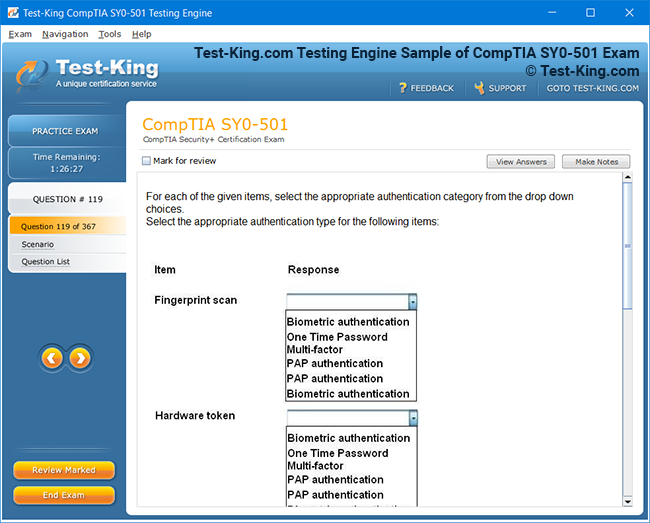
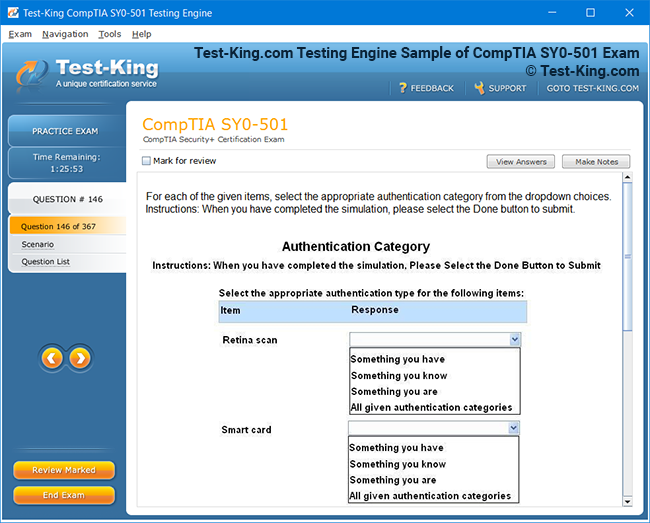
Product Screenshots
Frequently Asked Questions
How can I get the products after purchase?
All products are available for download immediately from your Member's Area. Once you have made the payment, you will be transferred to Member's Area where you can login and download the products you have purchased to your computer.
How long can I use my product? Will it be valid forever?
Test-King products have a validity of 90 days from the date of purchase. This means that any updates to the products, including but not limited to new questions, or updates and changes by our editing team, will be automatically downloaded on to computer to make sure that you get latest exam prep materials during those 90 days.
Can I renew my product if when it's expired?
Yes, when the 90 days of your product validity are over, you have the option of renewing your expired products with a 30% discount. This can be done in your Member's Area.
Please note that you will not be able to use the product after it has expired if you don't renew it.
How often are the questions updated?
We always try to provide the latest pool of questions, Updates in the questions depend on the changes in actual pool of questions by different vendors. As soon as we know about the change in the exam question pool we try our best to update the products as fast as possible.
How many computers I can download Test-King software on?
You can download the Test-King products on the maximum number of 2 (two) computers or devices. If you need to use the software on more than two machines, you can purchase this option separately. Please email support@test-king.com if you need to use more than 5 (five) computers.
What is a PDF Version?
PDF Version is a pdf document of Questions & Answers product. The document file has standart .pdf format, which can be easily read by any pdf reader application like Adobe Acrobat Reader, Foxit Reader, OpenOffice, Google Docs and many others.
Can I purchase PDF Version without the Testing Engine?
PDF Version cannot be purchased separately. It is only available as an add-on to main Question & Answer Testing Engine product.
What operating systems are supported by your Testing Engine software?
Our testing engine is supported by Windows. Andriod and IOS software is currently under development.
Top SAP Exams
P_BTPA_2408: Top Strategies to Pass the SAP Certified Professional – Solution Architect Exam
The SAP Certified Professional – Solution Architect Exam, identified by the code P_BTPA_2408, represents a pinnacle of achievement for individuals seeking to validate their expertise in SAP Business Technology Platform. This examination is not merely a test of memorization; it requires profound comprehension of cloud-based enterprise solutions, architectural principles, and integration strategies that define modern digital landscapes. The credential signifies the candidate's ability to design, implement, and optimize solutions across the SAP ecosystem, positioning them as a pivotal figure in enterprise technology transformation.
Understanding the SAP Certified Professional – Solution Architect Exam
The role of a solution architect within SAP BTP extends beyond technical proficiency. Professionals must possess the sagacity to align business objectives with technological capabilities, ensuring solutions are both scalable and resilient. A solution architect must navigate a labyrinth of requirements, from data management and security considerations to deployment strategies and integration of multiple cloud services. The exam evaluates both conceptual understanding and practical aptitude, challenging aspirants to demonstrate how they would architect solutions that are robust, sustainable, and efficient in a real-world enterprise environment.
Candidates often enter the preparation process with the misconception that familiarity with SAP modules alone guarantees success. While knowledge of modules is beneficial, the examination emphasizes architectural thinking, solution design, and the ability to synthesize disparate elements into a coherent system. This requires a mindset oriented toward problem-solving, critical analysis, and anticipation of potential challenges in deployment scenarios. The exam includes scenario-based questions that test the candidate's capacity to apply principles of enterprise architecture in dynamic business contexts, requiring both analytical rigor and practical insight.
The examination blueprint covers a broad spectrum of topics, including cloud integration, extensibility options, multitenancy considerations, security frameworks, data orchestration, and user experience design. Each knowledge domain contributes to a holistic understanding of SAP BTP, enabling architects to design solutions that meet both immediate operational requirements and long-term strategic objectives. Mastery of these areas demands a disciplined study approach that combines conceptual learning with hands-on experience. Candidates benefit from experimenting with platform services, exploring integration patterns, and evaluating best practices in real-time scenarios.
Preparing for the SAP solution architect exam involves a meticulous balance of theoretical study and experiential learning. Candidates are advised to immerse themselves in SAP documentation, white papers, and product roadmaps to gain insights into platform capabilities and evolution. Understanding the rationale behind architectural decisions and the interplay between various SAP components cultivates a cognitive framework that is crucial for tackling scenario-driven questions. Equally important is participation in community forums and discussion groups where complex problems are debated, offering perspectives that textbooks alone cannot provide.
Time management and structured study plans play a critical role in preparation. Given the extensive breadth of the exam content, aspirants must prioritize high-yield topics and allocate sufficient time for iterative review. Scenario analysis, a frequent component of the examination, requires careful attention to detail and the ability to evaluate multiple solution pathways. Practicing these scenarios under simulated conditions enhances decision-making speed and accuracy, which are essential skills during the timed assessment.
Exam readiness also entails developing an aptitude for recognizing patterns within questions and understanding the nuances that distinguish correct answers from distractors. Questions often embed subtle distinctions between architectural principles, integration techniques, or service configurations, testing both depth and precision of knowledge. An effective strategy is to dissect sample questions, analyze underlying concepts, and formulate reasoned justifications for each answer. This analytical approach strengthens the candidate's ability to navigate complex problems with confidence and clarity.
In addition to conceptual and practical preparation, psychological readiness is a key factor. Candidates must cultivate resilience, concentration, and the ability to manage stress, as the exam environment can be challenging. Techniques such as mindfulness, regular practice, and systematic review of weak areas contribute to a composed mindset that supports optimal performance. Mental fortitude enables candidates to approach difficult questions with equanimity, reducing the likelihood of errors induced by haste or anxiety.
Understanding the integration of cloud services is central to the solution architect role. SAP BTP encompasses diverse services ranging from database management and analytics to artificial intelligence and workflow orchestration. A solution architect must discern the optimal combination of services to fulfill business requirements while considering constraints such as latency, security, and cost. Mastery of these integrations ensures that designed solutions are not only functional but also efficient and maintainable over time. The examination assesses this capability by presenting scenarios that mimic real-world enterprise challenges.
Security and compliance are integral elements of SAP solution architecture. Architects must understand authentication protocols, authorization mechanisms, and data protection policies. The exam tests the candidate's ability to implement secure solutions, manage access controls, and comply with regulatory standards. Knowledge of encryption techniques, identity management, and audit logging is essential for designing systems that uphold data integrity and mitigate risk.
Extensibility and customization are additional domains that warrant attention. SAP BTP allows for tailoring applications and services to meet unique organizational needs. A solution architect must identify when to leverage standard services versus custom extensions, balancing flexibility with maintainability. The examination evaluates the candidate's judgment in these decisions, emphasizing the importance of adhering to architectural best practices while accommodating specific business scenarios.
Data management and orchestration form another critical component of the examination. Architects must ensure seamless data flow between heterogeneous systems, maintain data consistency, and optimize performance. The ability to design scalable data pipelines, integrate real-time analytics, and implement monitoring mechanisms is crucial. Candidates are encouraged to explore case studies that illustrate complex data landscapes, gaining insights into practical strategies for efficient data orchestration.
User experience design, although sometimes overlooked, is an essential consideration in solution architecture. Solutions must be intuitive, accessible, and aligned with user expectations. Architects must understand interface design principles, workflow optimization, and service responsiveness. Exam scenarios frequently include considerations of end-user interaction, requiring candidates to propose solutions that enhance usability while maintaining architectural integrity.
Finally, continuous learning and engagement with evolving SAP technologies are indispensable for both exam preparation and professional growth. SAP BTP is a dynamic platform, with frequent updates, new services, and shifting best practices. Successful candidates cultivate a habit of ongoing exploration, staying informed about advancements in cloud architecture, integration patterns, and enterprise software trends. This intellectual curiosity not only facilitates exam success but also positions solution architects as invaluable contributors to organizational innovation.
The journey to becoming a certified SAP solution architect is rigorous, demanding a blend of cognitive agility, technical acumen, and strategic insight. Candidates who approach the P_BTPA_2408 examination with a disciplined study regimen, experiential learning, and mindful preparation cultivate the competencies necessary to excel. By internalizing architectural principles, mastering SAP BTP services, and applying knowledge in realistic scenarios, aspirants develop the confidence and proficiency to navigate complex enterprise landscapes and achieve certification success.
Exploring the SAP Certified Professional – Solution Architect Exam Content
The SAP Certified Professional – Solution Architect Exam, known by the code P_BTPA_2408, evaluates the depth and breadth of knowledge required to design and implement solutions on the SAP Business Technology Platform. Candidates undertaking this examination must possess a profound understanding of enterprise architecture, cloud integration, and extensibility, along with an ability to translate complex business requirements into coherent technological solutions. The examination is designed to test both conceptual clarity and practical application, demanding that aspirants demonstrate strategic thinking and an analytical mindset while navigating multifaceted scenarios.
A comprehensive understanding of the exam content requires familiarity with the intricate interplay of various SAP BTP services. Candidates are expected to master integration patterns, deployment architectures, and the optimal use of platform services to deliver scalable, secure, and sustainable solutions. The exam emphasizes real-world applicability, often presenting situations that require a blend of creativity, technical insight, and adherence to best practices. Aspiring solution architects must not only recall theoretical knowledge but also apply it judiciously in simulated enterprise environments.
The examination syllabus spans multiple domains that collectively define the role of a solution architect. Cloud integration forms a central component, requiring a nuanced understanding of data orchestration, connectivity options, and inter-service communication. Candidates must discern when to employ standard integration flows versus custom implementations, balancing efficiency with maintainability. The examination frequently presents scenarios that simulate enterprise workflows, testing the candidate’s ability to architect seamless data and process integrations across heterogeneous systems.
Security is another critical knowledge area, encompassing authentication protocols, authorization mechanisms, and data privacy considerations. Solution architects are expected to ensure that designed systems uphold regulatory compliance while providing robust protection against vulnerabilities. The exam assesses candidates’ capacity to implement secure access management, apply encryption standards, and maintain auditability within SAP BTP solutions. Mastery of these concepts ensures that solutions are not only functional but also resilient against emerging cybersecurity threats.
Extensibility and customization are central to the architect’s toolkit. SAP BTP provides a versatile environment that allows the augmentation of standard services to meet unique business needs. Candidates must evaluate the trade-offs between leveraging existing platform capabilities and developing bespoke extensions, ensuring that architectural decisions promote scalability and long-term maintainability. The examination often includes scenario-based questions that require candidates to justify their choice of standard services or custom developments, reflecting the critical thinking expected of a professional architect.
Data management constitutes a pivotal aspect of the syllabus. Solution architects must design systems that facilitate seamless data flow, maintain consistency, and support analytical processing. Candidates are expected to understand the principles of data modeling, real-time data processing, and data governance. The examination challenges aspirants to propose strategies for orchestrating complex datasets, ensuring that insights can be derived efficiently while maintaining integrity and compliance across enterprise systems.
User experience and workflow optimization are also integral to the architect’s responsibilities. Solutions must be intuitive, responsive, and aligned with organizational processes. Candidates are expected to design user interfaces that enhance productivity and minimize friction, while simultaneously adhering to architectural principles. Scenario questions often evaluate the architect’s capacity to integrate usability considerations with technical constraints, requiring a holistic approach that harmonizes design with functionality.
An understanding of multitenancy and deployment architecture is indispensable. Solution architects must determine how applications and services are deployed across shared environments while ensuring isolation, performance, and scalability. The examination evaluates knowledge of deployment strategies, tenant management, and resource allocation. Candidates are encouraged to explore real-world examples where multitenant architectures optimize resource utilization without compromising service quality or security.
Analytical and strategic thinking is repeatedly tested throughout the exam. Candidates must interpret complex requirements, identify potential bottlenecks, and recommend solutions that balance cost, performance, and maintainability. The examination presents scenarios where multiple approaches are feasible, compelling candidates to weigh trade-offs and articulate reasoned solutions. This emphasis on decision-making reflects the realities of enterprise architecture, where optimal outcomes are achieved through informed judgment rather than rigid adherence to prescriptive formulas.
Integration of emerging technologies within SAP BTP is increasingly relevant. Candidates are expected to understand how artificial intelligence, machine learning, and advanced analytics can be embedded within business processes. The examination assesses the architect’s ability to leverage these technologies to create intelligent, adaptive, and efficient solutions. Candidates benefit from exploring case studies that illustrate practical applications of emerging technologies, understanding both their potential and limitations in enterprise contexts.
Monitoring and observability are essential competencies tested in the examination. Solution architects must ensure that systems are trackable, measurable, and maintainable. Candidates should be familiar with tools for performance monitoring, error detection, and operational diagnostics within SAP BTP. Scenario-based questions often require architects to propose strategies for proactive monitoring, ensuring that systems remain reliable and issues are addressed before they escalate into critical failures.
The examination content also includes governance and compliance considerations. Architects must design solutions that adhere to organizational policies, industry standards, and legal regulations. Candidates should understand frameworks for process control, data stewardship, and auditability. The exam tests the ability to integrate governance into the architecture without hindering innovation or operational efficiency, reflecting the balance required in real-world enterprise environments.
Preparing for the SAP solution architect examination requires not only familiarity with these knowledge areas but also practical experience in implementing SAP BTP solutions. Hands-on engagement with platform services, experimentation with integration patterns, and exploration of extensibility options are crucial for internalizing concepts. Candidates who immerse themselves in realistic scenarios, simulating deployment and operational challenges, develop the intuition necessary to excel in the examination’s scenario-based questions.
Time management and structured study plans are crucial given the expansive syllabus. Candidates must prioritize domains based on their complexity and relevance, dedicating additional attention to areas that carry greater weight in the examination. Iterative study, reinforced by practical exercises and scenario analyses, enhances retention and prepares aspirants to approach the examination with confidence. Engaging in group discussions and peer review further deepens understanding, exposing candidates to diverse perspectives on complex architectural problems.
Scenario-based learning is particularly effective for mastering the exam content. Candidates can practice by conceptualizing enterprise architectures, evaluating integration strategies, and anticipating operational challenges. This approach fosters the ability to think critically, anticipate potential issues, and devise solutions that are both practical and strategically sound. By simulating decision-making in dynamic business contexts, aspirants develop the cognitive agility and analytical acumen that the examination seeks to measure.
In addition to scenario practice, reviewing official SAP documentation, white papers, and product roadmaps enhances understanding of platform capabilities and best practices. Candidates who familiarize themselves with the evolution of SAP BTP services gain insights into design rationales and implementation patterns, which are often mirrored in exam questions. Engagement with SAP communities, forums, and knowledge-sharing platforms supplements formal study, offering real-world perspectives that enrich the candidate’s preparation.
The examination also assesses the candidate’s ability to synthesize complex information and present solutions coherently. Clear articulation of architectural decisions, justification of design choices, and consideration of alternative approaches are critical skills. Candidates benefit from practicing written or verbal explanations of their solutions, even in the absence of formal coding or configuration exercises, as this reinforces clarity of thought and logical reasoning.
Architects must also cultivate awareness of performance optimization within SAP BTP environments. The exam may present scenarios requiring candidates to improve system responsiveness, optimize resource usage, or enhance scalability. Understanding architectural patterns that support performance efficiency, coupled with the ability to evaluate trade-offs, prepares candidates to navigate these questions effectively. Practical exercises in benchmarking, load analysis, and process optimization are valuable in reinforcing these competencies.
Lastly, understanding the role of the solution architect in driving organizational transformation is fundamental. Beyond technical expertise, architects serve as visionaries who bridge business objectives with technological solutions. The examination evaluates the candidate’s capacity to anticipate enterprise needs, design forward-looking architectures, and enable innovation through SAP BTP. Preparing with this perspective ensures that candidates approach the exam not merely as a test of knowledge but as a demonstration of strategic insight, technical mastery, and professional maturity.
Mastering the SAP Certified Professional – Solution Architect Exam
Preparation for the SAP Certified Professional – Solution Architect Exam, identified by the code P_BTPA_2408, demands more than cursory reading or memorization of platform features. Success hinges on cultivating a strategic and immersive approach to learning that combines cognitive comprehension, experiential application, and analytical reasoning. The examination evaluates the candidate’s ability to design, implement, and optimize SAP Business Technology Platform solutions across diverse enterprise contexts, requiring a synthesis of technical knowledge, architectural insight, and scenario-based problem solving.
A critical element in effective preparation is the development of a structured study regimen. Given the breadth of the syllabus, candidates must prioritize areas based on their relative weight, complexity, and practical applicability. Cloud integration, security architecture, data orchestration, and extensibility occupy central positions in the examination. Allocating adequate time to deeply explore these domains ensures a solid foundation while leaving room for iterative review of supplementary topics such as workflow optimization, user experience, and emerging technology integration. Candidates who meticulously schedule their preparation cultivate both confidence and competence.
Experiential learning is indispensable in preparing for the examination. Theoretical knowledge must be reinforced with hands-on engagement, allowing candidates to internalize concepts through practical application. Experimentation with SAP BTP services, creation of sample architectures, and exploration of integration patterns facilitate an intuitive understanding of platform capabilities. By simulating real-world scenarios, aspirants develop the cognitive dexterity necessary to navigate complex questions, anticipate potential challenges, and formulate robust solutions under examination conditions.
Scenario analysis is particularly effective for honing decision-making skills. Many questions in the examination present multiple viable approaches to a problem, necessitating discernment and analytical reasoning. Candidates benefit from practicing with illustrative business cases, evaluating trade-offs between architectural options, and articulating justification for their choices. This iterative process strengthens the ability to weigh factors such as performance, scalability, cost, and maintainability, fostering the kind of critical thinking that distinguishes proficient solution architects from those with superficial knowledge.
Time management emerges as a decisive factor during both preparation and examination. Candidates must balance in-depth exploration of complex topics with periodic revision to reinforce retention. Breaking down the syllabus into manageable study units, supplemented by regular self-assessment, enhances cognitive consolidation. Additionally, practicing timed mock scenarios sharpens the ability to respond efficiently under pressure, improving both speed and accuracy when confronted with intricate scenario-based questions during the actual exam.
Leveraging official SAP resources is essential for gaining accurate and comprehensive knowledge. Documentation, white papers, and product roadmaps offer insights into platform capabilities, integration techniques, and architectural best practices. Studying these materials familiarizes candidates with the rationale behind design decisions, the operational nuances of services, and the optimal application of standard versus custom solutions. Supplementing formal resources with community discussions, forums, and peer knowledge-sharing introduces diverse perspectives, enriching understanding and exposing aspirants to subtleties that may be reflected in examination questions.
Analytical note-taking enhances comprehension and facilitates later review. Candidates are encouraged to synthesize information, mapping conceptual relationships between integration patterns, extensibility options, and security frameworks. Developing visual or mental models of enterprise architectures aids in internalizing complex interdependencies, allowing architects to swiftly identify appropriate solutions when presented with intricate problem statements. This method not only reinforces memory retention but also sharpens the ability to articulate reasoning in a coherent manner.
Understanding security and governance frameworks is a pivotal component of preparation. Solution architects are expected to design systems that comply with regulatory requirements, maintain data integrity, and safeguard against unauthorized access. Candidates should focus on identity management protocols, authorization mechanisms, encryption techniques, and audit procedures. Studying these elements in depth equips aspirants to respond accurately to scenario-based questions that evaluate both theoretical understanding and practical application in securing SAP BTP solutions.
Data orchestration and performance optimization are equally critical for examination success. Candidates must master principles of data modeling, real-time data processing, and system monitoring. Practicing the design of scalable data pipelines, implementing performance benchmarks, and exploring error detection strategies cultivate the analytical acuity necessary to propose efficient and resilient solutions. Scenario-based exercises emphasizing data flow and performance considerations help candidates internalize these principles and anticipate operational challenges in enterprise environments.
Extensibility and customization require careful study. SAP BTP enables tailoring of applications to meet unique business needs, and architects must discern when to employ standard services versus custom enhancements. Preparing for questions that probe these decision-making processes involves understanding trade-offs between flexibility, maintainability, and long-term sustainability. Candidates who explore case studies of platform extensibility gain insights into practical implications, enriching their capacity to recommend solutions aligned with architectural best practices.
Developing a keen awareness of multitenancy, deployment strategies, and scalability considerations is fundamental. The examination often presents scenarios where candidates must allocate resources efficiently, maintain tenant isolation, and ensure service performance. Hands-on exploration of deployment configurations, resource management strategies, and tenant administration facilitates an intuitive understanding of these complex topics. This preparation ensures that candidates can propose architectures that balance operational efficiency with user experience and security requirements.
Cognitive agility is reinforced through the iterative practice of scenario-based problem solving. Candidates should simulate examination conditions, analyze complex situations, and formulate reasoned solutions under time constraints. This disciplined approach cultivates resilience, enhances decision-making speed, and reduces the risk of errors induced by stress or cognitive overload. Exposure to a wide array of scenarios enables candidates to anticipate potential pitfalls and adopt strategies for managing ambiguities inherent in real-world enterprise architecture challenges.
Engaging with emerging technologies such as artificial intelligence, machine learning, and advanced analytics within SAP BTP contexts enriches preparation. Architects must understand how these capabilities can be embedded to enhance automation, intelligence, and adaptive functionality. Studying real-world implementations and hypothetical scenarios enables candidates to appreciate both the potential benefits and limitations of these technologies, preparing them to integrate innovation while maintaining architectural integrity.
Psychological preparedness complements technical mastery. The examination environment demands concentration, composure, and resilience. Candidates should cultivate habits that mitigate anxiety, enhance focus, and sustain cognitive performance during prolonged engagement. Techniques such as mindfulness, structured review cycles, and practice under realistic conditions contribute to maintaining equilibrium and ensuring consistent performance across all examination domains. A prepared mind navigates complex questions with clarity, confidence, and analytical precision.
Collaboration and discussion with peers further reinforces understanding. Engaging in knowledge exchange, debating architectural alternatives, and evaluating different perspectives exposes candidates to diverse approaches. This interaction not only consolidates existing knowledge but also nurtures the ability to think critically, articulate reasoning, and evaluate alternative solutions. Such collaborative preparation mirrors real-world professional practices, cultivating both technical competence and professional acumen.
Regular self-assessment is essential to identify knowledge gaps and reinforce weak areas. Candidates should review mock questions, analyze errors, and refine strategies to improve both understanding and performance. By systematically evaluating progress, aspirants ensure that their preparation remains focused, efficient, and aligned with the examination requirements. Repetition and iterative reinforcement strengthen long-term retention, enhancing the ability to recall and apply knowledge under examination conditions.
Conclusion
Finally, integrating all aspects of preparation—conceptual study, experiential learning, scenario analysis, psychological readiness, and collaborative engagement—creates a cohesive strategy that maximizes the likelihood of success. Candidates who internalize architectural principles, explore platform capabilities in practice, and cultivate critical reasoning skills develop the cognitive dexterity necessary to navigate the SAP Certified Professional – Solution Architect Exam with competence and confidence. This holistic approach ensures mastery of both theoretical knowledge and practical application, equipping aspirants to address the multifaceted challenges inherent in designing and implementing solutions on SAP BTP.