

Exam Code: SVC-16A
Exam Name: Apple Service Fundamentals
Certification Provider: Apple
Corresponding Certification: ACMT 2016
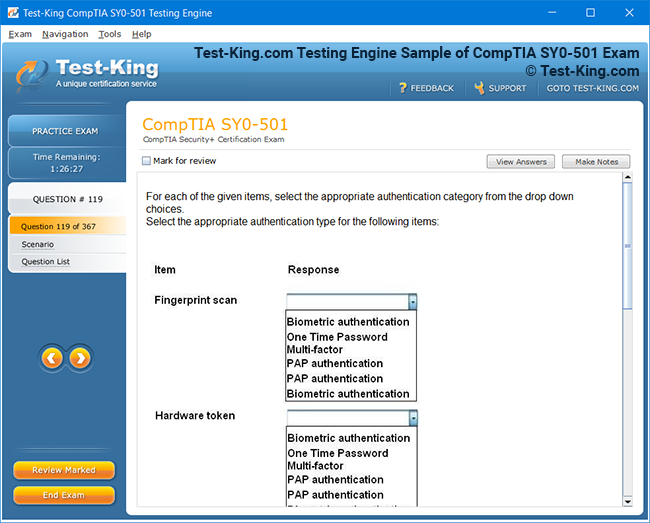
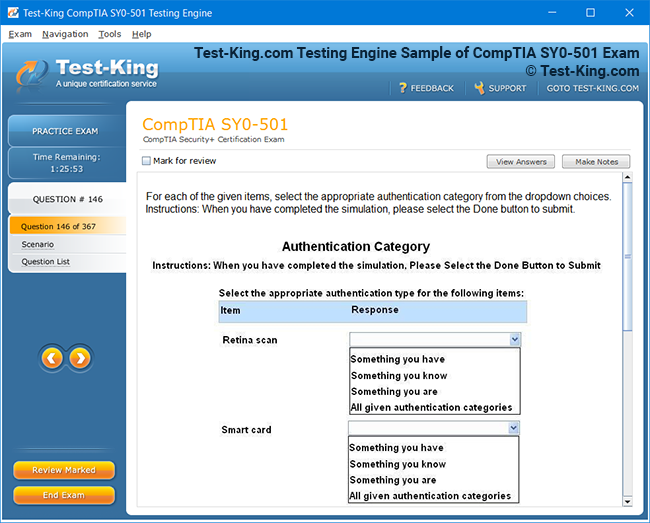
Product Screenshots
Frequently Asked Questions
How can I get the products after purchase?
All products are available for download immediately from your Member's Area. Once you have made the payment, you will be transferred to Member's Area where you can login and download the products you have purchased to your computer.
How long can I use my product? Will it be valid forever?
Test-King products have a validity of 90 days from the date of purchase. This means that any updates to the products, including but not limited to new questions, or updates and changes by our editing team, will be automatically downloaded on to computer to make sure that you get latest exam prep materials during those 90 days.
Can I renew my product if when it's expired?
Yes, when the 90 days of your product validity are over, you have the option of renewing your expired products with a 30% discount. This can be done in your Member's Area.
Please note that you will not be able to use the product after it has expired if you don't renew it.
How often are the questions updated?
We always try to provide the latest pool of questions, Updates in the questions depend on the changes in actual pool of questions by different vendors. As soon as we know about the change in the exam question pool we try our best to update the products as fast as possible.
How many computers I can download Test-King software on?
You can download the Test-King products on the maximum number of 2 (two) computers or devices. If you need to use the software on more than two machines, you can purchase this option separately. Please email support@test-king.com if you need to use more than 5 (five) computers.
What is a PDF Version?
PDF Version is a pdf document of Questions & Answers product. The document file has standart .pdf format, which can be easily read by any pdf reader application like Adobe Acrobat Reader, Foxit Reader, OpenOffice, Google Docs and many others.
Can I purchase PDF Version without the Testing Engine?
PDF Version cannot be purchased separately. It is only available as an add-on to main Question & Answer Testing Engine product.
What operating systems are supported by your Testing Engine software?
Our testing engine is supported by Windows. Andriod and IOS software is currently under development.
Top Apple Exams
SVC-16A: Common Challenges and How to Overcome Them in the Apple Service Fundamentals Exam
The Apple Service Fundamentals exam, designated as SVC-16A, represents a crucial milestone for anyone aspiring to establish themselves as a certified Apple technician. The examination is meticulously designed to evaluate a candidate’s proficiency in Apple’s ecosystem, covering both hardware and software intricacies. Many aspirants encounter hurdles not because of lack of technical knowledge but due to insufficient familiarity with the exam structure and the unique problem-solving approach Apple emphasizes. Unlike conventional exams that rely solely on rote memorization, SVC-16A demands comprehension of troubleshooting processes, analytical thinking, and the ability to apply knowledge in real-world scenarios. The aspirant must internalize not only procedural steps but also the rationale behind them, which often becomes the differentiator between average performance and mastery.
Understanding the Apple Service Fundamentals Exam
One common challenge is the overwhelming breadth of topics. Apple products, from MacBooks and iMacs to iPhones and iPads, involve different architectures, connectors, and software interfaces. Each device has nuanced repair protocols, and the exam questions frequently intertwine these subtleties, requiring candidates to discern the exact pathway for diagnosis or service. To mitigate this, it is essential to approach study in a modular manner, breaking down devices by their family groups while cross-referencing common issues. Creating mental maps of device architectures, failure points, and recovery options can help transform abstract information into structured knowledge, reducing cognitive overload.
Another subtle difficulty lies in understanding Apple’s service philosophy. Apple emphasizes user-centric solutions, prioritizing data integrity, device longevity, and minimal invasiveness in repairs. Candidates often underestimate the importance of adhering to these principles in scenario-based questions. For instance, when presented with a malfunctioning device, the exam does not merely ask for a replacement of the faulty part but challenges the candidate to choose the solution that balances efficiency, cost-effectiveness, and user impact. Mastering this approach necessitates exposure to practical examples, either through hands-on lab experience or guided simulations, allowing the principles to become intuitive rather than purely theoretical.
Time Management and Exam Strategy
Time management emerges as a formidable challenge during SVC-16A. The exam is constructed not only to test knowledge but also the ability to apply it under temporal constraints. Many aspirants struggle with spending disproportionate time on complex questions while leaving simpler ones unanswered. To overcome this, it is prudent to employ a triage strategy: initially addressing questions that are immediately recognizable, marking more intricate scenarios for subsequent review. Practicing timed mock exams fosters a rhythm that harmonizes speed with accuracy, and repeated exposure gradually cultivates an internal sense of pacing.
A related difficulty involves stress management under examination conditions. The intricate questions, often laced with traps designed to test comprehension depth, can induce anxiety, which in turn impairs memory recall and logical reasoning. Techniques such as deliberate breathing, mental visualization of repair workflows, and structured relaxation exercises can help maintain cognitive clarity. Additionally, preparing with a variety of question formats, including case studies and situational prompts, reduces the shock factor, rendering the actual exam less intimidating.
Technical Knowledge Depth
A fundamental hurdle is the depth of technical knowledge required. Apple’s ecosystem is both vast and constantly evolving, with frequent updates to operating systems, hardware models, and service procedures. Candidates often find themselves inadequately prepared if relying solely on outdated materials or superficial study methods. A recommended approach is to integrate multiple learning modalities: consulting official Apple training guides, observing repair demonstrations, participating in forums with seasoned technicians, and performing hands-on practice. Engaging in this multi-pronged method ensures both breadth and depth, fostering the ability to tackle complex diagnostic questions with confidence.
Certain topics, such as battery replacement protocols, logic board diagnostics, or iOS system recovery procedures, demand more than cursory familiarity. They require candidates to understand underlying principles such as electrical current flow, component interdependencies, and software restoration hierarchies. A failure to grasp these fundamentals often results in errors during scenario-based questions, where superficial knowledge cannot suffice. In contrast, cultivating a microscopic understanding of device internals and Apple’s proprietary methodologies enables precise and swift identification of optimal solutions.
Interpreting Scenario-Based Questions
Many candidates underestimate the complexity of scenario-based questions, which are designed to simulate real-world service situations. These questions test not only technical acumen but also judgment, prioritization, and adherence to Apple’s service ethos. For instance, an inquiry might describe a device exhibiting intermittent performance issues alongside minor hardware damage. The correct answer requires evaluating multiple repair options, considering data preservation, potential long-term reliability, and user inconvenience. Aspirants who approach these questions with a purely procedural mindset often falter. To navigate such challenges, it is valuable to develop decision matrices that weigh factors such as cost, time, and user impact, internalizing the reasoning process rather than memorizing isolated steps.
Another subtle obstacle arises from the wording of questions. Apple frequently employs nuanced language to differentiate between superficially similar choices. Terms like “intermittent,” “non-invasive,” or “factory settings” carry significant implications for the correct approach. Misinterpreting these subtleties can lead to incorrect answers despite otherwise strong technical knowledge. Practicing critical reading and dissecting sample questions word by word allows candidates to recognize these cues, fostering a meticulous analytical approach.
Hands-On Experience and Practical Application
A recurrent challenge is the lack of hands-on experience. Even candidates with extensive theoretical knowledge may stumble when confronted with questions that mimic real-world repair scenarios. Apple Service Fundamentals emphasizes understanding physical repair workflows, connector types, software troubleshooting sequences, and device diagnostics. Engaging in practical exercises, whether in training labs or through simulated repair kits, significantly enhances comprehension and retention. This experiential learning reinforces memory pathways, making it easier to recall procedures under exam conditions.
Additionally, exposure to uncommon repair situations, such as logic board corrosion or water damage mitigation, equips candidates with adaptive problem-solving skills. These rare occurrences are often used in exams to test analytical thinking beyond routine troubleshooting. Developing a repertoire of adaptive strategies ensures that aspirants can navigate atypical scenarios without succumbing to uncertainty, transforming potential weaknesses into strengths.
Avoiding Common Pitfalls
Several recurring pitfalls impede success in SVC-16A. Over-reliance on memorization without conceptual understanding is a primary obstacle, as is neglecting the interrelationship between hardware and software. Candidates sometimes focus exclusively on one domain, only to be challenged by questions that require integrated knowledge. Developing a holistic understanding of device ecosystems, firmware dependencies, and Apple service protocols is essential to surmount this challenge.
Another subtle pitfall is underestimating minor details. Apple places significant emphasis on seemingly trivial aspects, such as connector orientation, screw types, or the order of software restoration steps. Overlooking these nuances can result in incorrect answers in otherwise straightforward scenarios. Cultivating a meticulous attention to detail and incorporating repeated, deliberate practice of procedural steps fosters accuracy and confidence.
Building Confidence and Exam Readiness
Finally, building confidence is paramount. The Apple Service Fundamentals exam not only measures knowledge but also the aspirant’s ability to synthesize information and make judicious decisions. Regular practice, exposure to a diversity of questions, and reinforcement of conceptual understanding collectively contribute to a sense of preparedness. Confidence reduces hesitation, sharpens judgment, and enables candidates to approach complex scenarios with composure. Techniques such as visualization of repair workflows, self-testing, and group study sessions further solidify readiness, providing both technical assurance and psychological resilience.
Mastering Device Diagnostics and Troubleshooting
One of the foremost challenges in the Apple Service Fundamentals exam is achieving mastery over device diagnostics and troubleshooting. Apple’s ecosystem is intricate, with hardware and software components intricately interwoven. For example, a seemingly minor software anomaly may stem from a deep-seated hardware defect or a misalignment in firmware. Candidates often struggle to pinpoint the root cause, especially when faced with symptoms that could originate from multiple sources. To address this challenge, it is vital to cultivate a methodical approach to problem-solving. This involves systematically isolating potential causes, leveraging diagnostic tools, and meticulously recording observations. Developing a mental schema that links observable symptoms with probable causes enhances efficiency and accuracy, turning complex scenarios into manageable sequences.
Understanding error codes and system alerts is another subtle challenge. Apple devices are replete with diagnostic indicators that often appear cryptic to untrained eyes. Recognizing the significance of these signals, whether they pertain to kernel panics, battery calibration issues, or iCloud synchronization failures, requires familiarity and practice. Regular exposure to real-world devices, combined with careful study of service manuals, allows aspirants to internalize these alerts and respond with confidence. Over time, decoding these signals becomes intuitive, enabling candidates to navigate scenario-based questions with agility and precision.
Software Recovery and System Integrity
Software recovery is a domain that consistently challenges candidates. Apple devices rely on a delicate balance between firmware, operating systems, and user data. Missteps in restoring system integrity can exacerbate problems rather than resolve them. Many examinees falter when asked to determine the optimal recovery method for a device with corrupted system files or a failed update. The key is to understand recovery hierarchies, backup protocols, and restoration sequences. Candidates must learn to assess the situation, choose the least invasive yet effective method, and anticipate potential pitfalls during the restoration process. Familiarity with tools such as Apple Configurator, DFU mode, and recovery utilities is indispensable for navigating these tasks effectively.
Data preservation is intertwined with software recovery and represents a nuanced challenge. Apple emphasizes solutions that safeguard user information, even when performing extensive repairs. Questions in the exam often present scenarios where candidates must choose between aggressive repair techniques and methods that prioritize data integrity. Developing a mindset that balances expedience with caution is essential. Practicing simulated recoveries and reviewing case studies of past repairs cultivates this balance, enabling examinees to approach even ambiguous scenarios with a structured and informed methodology.
Understanding Hardware Interdependencies
Another significant obstacle is grasping the interdependencies between different hardware components. Apple devices are designed with tightly integrated systems where a fault in one module can cascade into others. For instance, a malfunctioning battery may affect thermal regulation, which in turn could trigger performance throttling or system instability. Candidates often underestimate these relationships, focusing on isolated symptoms rather than systemic implications. Building an understanding of how each component interacts within the broader architecture enhances diagnostic accuracy and informs prudent service choices.
Additionally, rare or uncommon hardware failures pose unique challenges. Instances such as logic board microfractures, liquid-induced corrosion, or anomalous sensor behavior require both deep technical knowledge and inventive problem-solving. While these issues may appear infrequently, the exam frequently incorporates them to test an aspirant’s adaptability. Hands-on experience, guided repair simulations, and exposure to technical bulletins are crucial for developing the agility to navigate such unusual scenarios. Over time, these experiences foster an intuitive grasp of device behavior that extends beyond theoretical knowledge.
Effective Use of Service Resources
A less conspicuous yet impactful challenge involves the effective utilization of service resources. Apple provides a wealth of documentation, technical notes, and online troubleshooting guides, but candidates often fail to leverage these resources efficiently during study and in the exam context. It is not enough to memorize content; understanding how to quickly retrieve relevant information and apply it appropriately is critical. Developing strategies for navigating official service manuals, repair guides, and support forums enhances both speed and confidence during examinations. This skill is particularly useful for scenario-based questions where multiple pathways exist, and selecting the most appropriate one demands both knowledge and discernment.
Familiarity with service tools and diagnostic applications is another aspect of resource utilization. Candidates must not only know the theoretical applications of tools such as Apple Service Toolkit, calibration instruments, and software utilities, but also the subtle nuances of their operation. For example, interpreting diagnostic logs or running targeted tests requires both understanding and procedural finesse. Consistent practice with these resources ensures that candidates can integrate their theoretical knowledge with practical application, enhancing their ability to tackle complex scenarios under exam conditions.
Navigating Connectivity and Peripheral Challenges
Connectivity and peripheral issues constitute another layer of complexity. Apple devices operate within an interconnected ecosystem, where peripherals, accessories, and network configurations influence performance. Problems such as inconsistent Wi-Fi connectivity, peripheral recognition failures, or synchronization glitches often appear in exam questions as practical scenarios. Candidates must be adept at diagnosing whether the source is software misconfiguration, hardware malfunction, or environmental interference. Understanding Apple’s networking protocols, accessory standards, and diagnostic methodologies equips aspirants to address these challenges with precision.
Moreover, troubleshooting peripheral devices demands attention to detail and familiarity with subtle variations across models. For example, distinguishing between a malfunctioning cable, port defect, or device firmware issue requires both analytical reasoning and hands-on practice. Building experience through methodical testing and exposure to diverse hardware configurations ensures that candidates can navigate these complexities without hesitation. This skill is particularly valuable in exam scenarios that simulate real-world environments, where multiple variables must be considered simultaneously.
Prioritization and Decision-Making
A recurring difficulty lies in prioritization and decision-making under pressure. Apple emphasizes solutions that optimize efficiency while minimizing risk to the user and device. In the exam, candidates often face multiple potential approaches to a problem, each with distinct advantages and drawbacks. The challenge is to evaluate these options swiftly, weighing factors such as data integrity, repair complexity, cost, and long-term reliability. Developing this evaluative skill requires both conceptual understanding and practical experience, enabling candidates to choose pathways that reflect Apple’s service philosophy.
Scenario-based questions frequently test the ability to make nuanced decisions. For example, a device may present both hardware and software anomalies simultaneously, requiring a staged approach to repair. Candidates who attempt to address all issues at once without proper analysis often encounter errors or inefficiencies. Practicing decision-making through hypothetical scenarios, coupled with reflective review of outcomes, cultivates an ability to prioritize intelligently. Over time, this strategic mindset becomes instinctive, allowing candidates to navigate even intricate scenarios with clarity and assurance.
Maintaining Attention to Detail
Attention to detail represents another subtle but crucial challenge. Apple devices often contain minute components and intricate connectors, where minor errors can cascade into significant malfunctions. Similarly, software recovery and configuration processes involve multiple sequential steps that demand precision. Neglecting small details, such as connector orientation, screw type, or calibration sequences, can result in incorrect answers in scenario-based questions. Cultivating meticulous habits during both study and hands-on practice reinforces accuracy and enhances overall performance. Developing observational acuity, documenting procedures, and reviewing steps systematically ensures that aspirants internalize these details and execute tasks flawlessly.
Moreover, scenario-based questions may include distractors designed to test focus and discernment. Recognizing which information is critical and which is extraneous requires both experience and analytical skill. Regular practice in interpreting complex scenarios and separating essential data from peripheral details sharpens cognitive processing, reducing errors and enhancing confidence during the exam.
Integrating Knowledge Across Domains
A final challenge involves integrating knowledge across multiple domains. Success in the Apple Service Fundamentals exam depends not merely on proficiency in isolated areas but on the ability to synthesize hardware, software, diagnostic, and procedural knowledge into cohesive solutions. Candidates who compartmentalize learning may excel in individual topics yet falter when confronted with questions that require multidimensional reasoning. Developing integrative thinking skills is essential, enabling aspirants to approach problems holistically, anticipate interdependencies, and apply comprehensive strategies that reflect the interconnected nature of Apple devices.
Exposure to multifaceted repair scenarios, cross-referencing documentation, and practicing synthetic problem-solving fosters this integrative capability. Over time, candidates develop a fluid understanding that allows them to transition seamlessly between domains, anticipate complications, and formulate solutions that are both technically sound and aligned with Apple’s service ethos. This holistic approach transforms potential weaknesses into strengths, empowering candidates to navigate even the most challenging exam questions with confidence and precision.
Navigating Complex Hardware Configurations
One of the predominant challenges in the Apple Service Fundamentals exam is navigating complex hardware configurations. Apple devices are meticulously engineered with a compact integration of components, which often renders troubleshooting multifaceted. Candidates frequently encounter scenarios in which a minor defect, such as a misaligned connector or a partially corroded contact, manifests as multiple systemic symptoms. Identifying the primary fault requires a methodical approach, beginning with visual inspection, advancing through logical testing sequences, and finally verifying outcomes against expected performance metrics. Familiarity with device schematics, coupled with hands-on practice, cultivates an intuitive understanding of component interrelationships and failure patterns, which is crucial for efficient problem-solving.
A subtle complication arises from the differentiation of devices within the same product family. For example, successive generations of MacBook Pro models may appear superficially similar, yet harbor distinct logic board architectures, thermal management systems, and connector placements. Candidates must learn to discern these nuances, understanding that even small variations can dictate divergent repair strategies. Developing a mental catalog of device-specific idiosyncrasies enables aspirants to rapidly identify relevant procedures and avoid common pitfalls associated with assumptions based on prior models.
Mastery of Software Troubleshooting
Software troubleshooting represents another formidable hurdle. Apple’s ecosystem blends tightly coupled hardware and software, meaning that seemingly erratic behavior often has roots in both domains. Candidates are challenged to distinguish between issues arising from operating system anomalies, firmware discrepancies, corrupted configuration files, or peripheral interactions. Success demands a structured approach: isolating software variables, performing controlled tests, and applying systematic restoration procedures. Tools such as Apple Configurator and system diagnostics are instrumental, but mastery entails more than familiarity; it requires understanding the principles behind each procedure and anticipating the downstream effects of interventions.
An additional challenge within software troubleshooting is managing software updates and migrations. Candidates must recognize that improper update sequences or incomplete restorations can exacerbate device instability. Practicing simulated update scenarios, examining error logs, and reviewing Apple technical bulletins enhances preparedness. Over time, candidates internalize the logic of system dependencies, allowing them to address complex software problems with both precision and confidence.
Diagnostic Reasoning and Analytical Skills
A critical challenge in the exam is diagnostic reasoning, which demands analytical skills extending beyond rote memorization. Candidates must evaluate symptoms, consider probable causes, and decide on interventions that align with Apple’s service philosophy. For instance, an intermittent performance issue may stem from a thermal sensor fault, degraded battery, or software conflict. The correct approach requires weighing evidence, considering device history, and predicting potential outcomes. Developing this capability involves repeated exposure to diverse scenarios, reflective analysis of decision outcomes, and practice in methodical reasoning. With consistent application, diagnostic reasoning becomes instinctive, reducing hesitation and improving accuracy.
Scenario-based questions often test the candidate’s ability to integrate observational data with procedural knowledge. Subtle cues, such as variations in device startup behavior, minor screen flickers, or transient connectivity interruptions, carry significant diagnostic weight. Candidates must cultivate attentiveness, learning to interpret these indicators within the broader context of device functionality. This skill, refined through hands-on experience and thoughtful analysis, is invaluable for achieving high performance in the exam.
Hardware and Software Interdependence
Understanding the interdependence of hardware and software is a nuanced challenge that many candidates underestimate. Apple devices operate as unified systems in which a hardware fault can manifest as software irregularities and vice versa. For example, a degraded battery may cause unexpected shutdowns or thermal throttling, while a corrupted firmware update may render peripheral components unresponsive. Candidates must adopt a holistic mindset, assessing both domains simultaneously and recognizing the cascade effects of isolated issues. Familiarity with Apple’s repair workflows, diagnostic tools, and system architecture underpins this integrated approach, enabling candidates to identify root causes and apply effective solutions efficiently.
Moreover, rare interdependency anomalies often appear in exam questions to gauge adaptability. Candidates may encounter devices exhibiting simultaneous hardware and software failures that mimic common symptoms yet require distinctive remedial action. Exposure to these uncommon scenarios through practical exercises and simulated repairs equips aspirants with the flexibility to address atypical situations with confidence and precision.
Efficient Use of Service Resources
An often-overlooked challenge lies in the efficient use of service resources. Apple provides a wealth of technical documentation, diagnostic guides, and online tools, yet candidates may struggle to navigate these resources effectively under exam conditions. Success requires not only knowledge but also the ability to quickly retrieve relevant information and apply it appropriately. Developing proficiency in consulting official repair manuals, leveraging diagnostic software, and interpreting technical bulletins enhances decision-making speed and accuracy. This competency is particularly valuable in scenario-based questions where multiple solutions are possible, and selecting the most appropriate pathway requires discernment and familiarity with authoritative resources.
Practical familiarity with tools such as Apple Service Toolkit and peripheral diagnostic devices is integral to success. Candidates must understand not only the operational steps but also the rationale behind each test and its implications for subsequent procedures. Repeated engagement with these tools fosters confidence and ensures that theoretical knowledge is reinforced through practical application.
Prioritizing Repairs and Solutions
Another subtle challenge is prioritizing repairs and solutions. Apple emphasizes interventions that optimize device longevity, user satisfaction, and operational efficiency. Exam scenarios often present candidates with multiple repair options, each with distinct implications for cost, time, and system integrity. Success requires evaluating these variables rapidly and choosing solutions aligned with Apple’s service philosophy. Developing this evaluative skill involves reflective practice with hypothetical scenarios, careful analysis of repair outcomes, and internalization of service principles. Over time, candidates develop an instinctive ability to prioritize interventions effectively, reducing errors and enhancing performance.
Scenario-based questions may require staged repair strategies, addressing software and hardware anomalies sequentially. Candidates who attempt to resolve all issues simultaneously without methodical assessment risk errors or inefficiencies. Practicing this structured approach through simulated repairs cultivates clarity of thought and precision in execution, key factors in achieving high scores.
Attention to Detail and Precision
Attention to detail is a recurring challenge that can determine success or failure. Apple devices are composed of minute, intricate components, where minor oversights, such as incorrect screw placement or misaligned connectors, can compromise functionality. Similarly, procedural steps in software restoration, calibration, and diagnostics demand meticulous execution. Neglecting these subtleties can lead to incorrect answers in scenario-based questions, even when broader technical knowledge is sound. Cultivating meticulous habits through hands-on practice, careful observation, and systematic review reinforces accuracy and fosters confidence under exam conditions.
Candidates must also develop the ability to filter critical information from extraneous details. Exam questions frequently include distractors designed to test focus and discernment. Learning to identify which elements are pivotal and which are peripheral enhances efficiency and reduces cognitive overload. This skill, refined through consistent practice and analytical reflection, is crucial for navigating complex scenarios with precision.
Integrating Multidisciplinary Knowledge
Integrating knowledge across multiple domains is another nuanced challenge. The exam assesses not only hardware and software proficiency but also the ability to synthesize diagnostic reasoning, procedural knowledge, and service principles into cohesive solutions. Candidates who compartmentalize their learning may struggle when confronted with questions requiring multidimensional thinking. Developing this integrative capacity involves cross-referencing documentation, practicing synthetic problem-solving, and exposing oneself to diverse repair scenarios. Over time, candidates cultivate fluidity in transitioning between domains, anticipating interdependencies, and formulating solutions that are both technically sound and aligned with Apple’s ethos of service excellence.
Exposure to complex scenarios, reflective analysis of repair strategies, and deliberate practice in decision-making enhance the ability to integrate knowledge seamlessly. This capability transforms potential weaknesses into strengths, allowing candidates to approach even the most challenging questions with confidence, efficiency, and accuracy.
Adapting to Emerging Technologies
Apple’s ecosystem evolves rapidly, introducing new hardware architectures, firmware updates, and diagnostic methodologies. Staying current with these changes presents a continual challenge. Candidates must engage with technical updates, product announcements, and evolving service protocols to maintain proficiency. Failure to adapt can result in knowledge gaps, particularly in scenario-based questions that incorporate the latest device models or system enhancements. Regular engagement with training materials, technical bulletins, and peer discussions fosters adaptability and ensures that aspirants remain equipped to address contemporary challenges in the exam.
Furthermore, emerging technologies often introduce subtle nuances that require refined diagnostic reasoning and procedural adjustments. For example, the advent of new chip architectures or enhanced sensor arrays may alter standard repair workflows. Candidates who integrate these innovations into their study and practice routines develop a proactive mindset, capable of navigating both current and future exam challenges with competence and confidence.
Overcoming Diagnostic Ambiguity
One of the most pervasive challenges in the Apple Service Fundamentals exam is overcoming diagnostic ambiguity. Apple devices are engineered with intricate interdependencies, and a single symptom can have multiple plausible origins. For instance, a device exhibiting intermittent screen flickers might be affected by a display connector issue, a graphics processing anomaly, or software-related glitches. Candidates often struggle to determine the root cause efficiently, especially when initial observations provide conflicting clues. Developing a systematic diagnostic methodology is crucial. This involves observing device behavior, isolating potential causes, and applying elimination techniques to narrow down the problem. Hands-on experience, coupled with structured practice, enhances the ability to navigate ambiguous scenarios with confidence and precision.
An often overlooked aspect of diagnostic ambiguity is the interpretation of system alerts and error codes. Apple devices provide a wealth of diagnostic information, yet the subtlety of these indicators can challenge even experienced candidates. Understanding the implications of error logs, kernel messages, or system notifications requires both theoretical knowledge and practical familiarity. Regularly reviewing Apple’s technical documentation and practicing interpretation of varied diagnostic outputs strengthens analytical reasoning and reduces the likelihood of misdiagnosis.
Mastery of Firmware and System Restoration
Firmware and system restoration represent another intricate challenge. Apple devices rely on tightly integrated firmware layers to manage hardware-software interactions, and any corruption or misconfiguration can lead to cascading failures. Candidates must understand the hierarchy of restoration options, ranging from simple software resets to complete system reinstallation using Apple Configurator. A methodical approach is essential: assessing the extent of corruption, determining the least invasive recovery method, and verifying system stability post-restoration. Familiarity with recovery sequences and best practices ensures that aspirants can address complex scenarios without inadvertently causing additional issues.
Data preservation is inherently linked to system restoration and presents a nuanced challenge. The exam frequently tests candidates’ ability to select restoration techniques that maintain user data while resolving system faults. This requires understanding backup protocols, iCloud synchronization processes, and the implications of various recovery strategies. Practicing these methods on real devices or simulated environments fosters a balance between procedural accuracy and practical judgment, enabling candidates to navigate challenging questions effectively.
Managing Hardware Intricacies
Understanding hardware intricacies is a fundamental aspect of success in the Apple Service Fundamentals exam. Apple devices integrate miniature components in highly compact layouts, where minor deviations can significantly impact functionality. Candidates frequently encounter devices with subtle mechanical or electrical faults that manifest as complex systemic symptoms. Developing proficiency in identifying these issues requires meticulous attention to detail, a comprehensive understanding of component interdependencies, and hands-on experience with a range of devices. Observing, testing, and documenting repair procedures reinforces knowledge and cultivates an intuitive grasp of device behavior.
A particularly challenging area is the differentiation of similar hardware faults. For example, power-related malfunctions could originate from battery degradation, logic board anomalies, or power management circuitry. Candidates must analyze observable evidence, consider device history, and employ diagnostic tools strategically to identify the underlying cause. Repeated exposure to diverse hardware scenarios, coupled with careful reflection on outcomes, develops the precision necessary to navigate complex questions in the exam.
Strategic Use of Diagnostic Tools
Effective utilization of diagnostic tools constitutes another challenge. Apple provides an array of specialized instruments, from the Apple Service Toolkit to peripheral analyzers, each designed to facilitate accurate assessment of device functionality. Candidates must not only understand operational procedures but also interpret results in the context of broader device behavior. Misinterpretation of diagnostic outputs can lead to erroneous conclusions, undermining performance in scenario-based questions. Practicing with these tools, reviewing common diagnostic patterns, and understanding their limitations enhances both speed and reliability in problem-solving.
Furthermore, diagnostic tools often require integration with software analysis, such as examining log files or executing firmware validation procedures. Candidates must synthesize information from multiple sources to develop a comprehensive understanding of the issue. Familiarity with these integrated workflows fosters analytical agility, allowing aspirants to navigate multi-layered challenges effectively and confidently.
Adapting to Multidimensional Problems
A recurring difficulty in the exam involves addressing multidimensional problems. Apple devices frequently exhibit symptoms that span hardware, software, connectivity, and peripheral domains simultaneously. Candidates must develop the ability to assess all contributing factors, prioritize interventions, and implement solutions that align with Apple’s service philosophy. For instance, a device displaying unexpected shutdowns may require investigation of the battery, thermal sensors, operating system stability, and connected peripherals. Developing a structured approach to multidimensional problem-solving ensures that candidates can dissect complex scenarios into manageable components and apply appropriate solutions systematically.
Scenario-based questions often include interdependent anomalies designed to test holistic understanding. Candidates who approach these questions with a compartmentalized mindset risk overlooking critical interactions between system components. Regular exposure to integrated repair exercises and reflective practice in evaluating outcomes enhances the ability to anticipate cascading effects and apply corrective measures effectively.
Maintaining Precision in Procedural Tasks
Precision in procedural tasks is a subtle yet critical challenge. Apple devices often contain intricate connectors, miniature screws, and delicate components where minor errors can have significant consequences. Similarly, procedural steps in firmware restoration, calibration, and system configuration demand exact execution. Candidates must develop habits that reinforce accuracy, such as documenting repair sequences, verifying connections, and cross-referencing procedures with official guidelines. Attention to procedural detail reduces the likelihood of errors in scenario-based questions and enhances overall confidence.
Exam questions may include distractors or subtle variations in procedural steps, requiring candidates to discern essential actions from non-critical details. Developing this level of discernment involves repeated practice, careful observation, and reflective review of outcomes. Over time, aspirants cultivate a meticulous approach that balances speed with precision, enabling effective navigation of complex tasks.
Prioritizing Interventions and Repair Strategies
Prioritizing interventions represents another challenge that impacts both efficiency and accuracy. Apple emphasizes solutions that optimize device longevity, user satisfaction, and operational reliability. Exam scenarios frequently present multiple corrective options, each with implications for cost, duration, and systemic impact. Candidates must evaluate these options rapidly, integrating technical knowledge with practical judgment to select the optimal approach. Practicing prioritization through simulated repair exercises and reflective analysis of decision outcomes fosters the ability to make informed choices under pressure.
Multistage repair scenarios are particularly challenging, as they require candidates to address issues in a logical sequence to avoid exacerbating problems. For example, addressing software corruption before resolving underlying hardware faults can lead to incomplete recovery or repeated failures. Developing an understanding of dependency hierarchies and repair sequencing ensures that candidates approach interventions with a structured methodology, enhancing accuracy and efficiency.
Synthesizing Knowledge Across Domains
Success in the Apple Service Fundamentals exam demands the ability to synthesize knowledge across multiple domains. Hardware, software, diagnostics, procedural steps, and service principles must be integrated to form cohesive solutions. Candidates who study these areas in isolation may excel in individual topics but falter when faced with multidimensional scenarios. Developing this integrative capability involves cross-referencing documentation, practicing comprehensive problem-solving exercises, and analyzing complex case studies. Over time, candidates cultivate a fluid understanding that allows seamless transitions between domains, anticipation of interdependencies, and formulation of robust, informed solutions.
Exposure to challenging repair scenarios, iterative practice, and reflective evaluation of outcomes enhance integrative thinking skills. Candidates who develop this capacity gain the confidence and competence to navigate intricate scenarios efficiently, ensuring high performance in the exam.
Adapting to Technological Evolution
Apple’s rapid technological evolution introduces an ongoing challenge. New device architectures, firmware enhancements, and diagnostic methodologies continually emerge, requiring candidates to remain current with evolving standards. Failure to adapt may result in knowledge gaps, particularly in scenario-based questions involving the latest devices or procedures. Engaging with updated technical materials, product announcements, and peer discussions fosters adaptability and ensures preparedness. Candidates who integrate emerging technologies into their study routines develop proactive problem-solving skills, enabling them to address contemporary challenges with confidence.
Technological evolution also demands flexibility in procedural application. New components, enhanced sensors, or modified workflows may necessitate adjustments to established repair strategies. Candidates who cultivate adaptability and incorporate emerging knowledge into their practice develop resilience, allowing them to approach even unfamiliar scenarios with analytical rigor and precision.
Advanced Troubleshooting Techniques
One of the most formidable challenges in the Apple Service Fundamentals exam is mastering advanced troubleshooting techniques. Apple devices are engineered with intricate interdependencies where a single malfunction can cascade into multiple symptoms. Candidates often confront scenarios in which initial observations appear misleading or contradictory. Developing a structured methodology is essential. This involves systematically isolating potential causes, employing diagnostic tools judiciously, and validating results against expected behavior. Hands-on experience and deliberate practice cultivate an intuitive understanding of component interrelations, enabling aspirants to dissect even the most perplexing problems with precision and confidence.
Interpreting subtle diagnostic indicators presents an additional challenge. Apple devices provide detailed system alerts, logs, and error messages, yet their significance can be opaque without prior experience. For example, a seemingly minor thermal warning may indicate broader logic board instability or power regulation issues. Regular engagement with Apple technical documentation, coupled with simulated repair exercises, helps candidates internalize these signals. Over time, interpreting complex diagnostic data becomes second nature, facilitating efficient problem resolution under exam conditions.
Managing Firmware and System Dependencies
Firmware and system dependencies represent a nuanced challenge. Apple devices rely on layered software architectures to coordinate hardware and operating system interactions, and missteps in restoration procedures can have cascading consequences. Candidates must understand recovery hierarchies, backup protocols, and the nuances of firmware reinstallation. Choosing the most appropriate recovery strategy requires a balance of technical knowledge and practical judgment. Practicing these procedures in controlled environments reinforces the logic behind each step and enhances the ability to troubleshoot system anomalies effectively.
Data integrity is an integral aspect of system management. Apple emphasizes repair approaches that safeguard user information while resolving device faults. In exam scenarios, candidates may face decisions between aggressive system restoration and methods that prioritize data preservation. Understanding the implications of each option and selecting the optimal path requires a comprehensive grasp of system architecture, backup strategies, and restoration sequences. Repeated practice with these scenarios fosters a balance of speed, accuracy, and caution, preparing candidates for high-stakes decision-making.
Interpreting Complex Hardware Failures
Complex hardware failures pose a significant challenge. Apple devices integrate miniature components within compact frameworks, where minor deviations can produce multifaceted issues. For instance, power management anomalies may originate from battery degradation, logic board defects, or sensor misconfigurations. Candidates must develop the skill to analyze symptoms holistically, consider all plausible causes, and apply targeted interventions. Familiarity with device schematics, coupled with extensive hands-on practice, fosters an ability to anticipate cascading effects and execute repairs with precision.
Differentiating between similar hardware malfunctions is an additional challenge. Devices may exhibit overlapping symptoms, such as random shutdowns or peripheral unresponsiveness, which could arise from disparate underlying causes. Developing a methodical diagnostic approach—observing behavior, running targeted tests, and validating outcomes—is essential. This disciplined practice cultivates analytical acuity and minimizes errors, particularly in scenario-based questions that test both knowledge and reasoning.
Utilizing Diagnostic Tools Effectively
The effective use of diagnostic tools is another subtle yet critical challenge. Apple provides specialized instruments designed to evaluate device functionality, including analyzers, service toolkits, and peripheral testing applications. Candidates must understand not only the operational procedures but also the interpretation of results within a broader context. Misreading diagnostic outputs can lead to flawed conclusions and decreased performance in exam scenarios. Consistent practice with these tools, coupled with review of standard diagnostic patterns, enhances both efficiency and reliability in problem-solving.
Integration of software and hardware diagnostics adds another layer of complexity. Exam questions may require interpreting system logs, firmware validation results, and peripheral performance metrics simultaneously. Developing the ability to synthesize information from multiple sources allows candidates to address multifaceted problems confidently. Exposure to real-world troubleshooting, simulation exercises, and reflective analysis strengthens this competency, ensuring preparedness for the exam’s most challenging scenarios.
Addressing Multidimensional Device Anomalies
Apple devices frequently exhibit multidimensional anomalies, where hardware, software, connectivity, and peripheral issues intersect. Candidates must cultivate the ability to assess all contributing factors, prioritize interventions, and implement solutions that adhere to Apple’s service philosophy. For example, a device experiencing unexpected shutdowns may involve battery irregularities, thermal sensor faults, firmware corruption, and peripheral conflicts. Developing a structured approach to analyze and resolve these anomalies is essential for effective problem-solving under examination conditions.
Scenario-based questions often simulate cascading failures, requiring candidates to think holistically and consider interdependent effects. Those who compartmentalize their analysis may overlook critical interactions, resulting in incomplete or incorrect solutions. Practicing integrated repair exercises, evaluating outcomes, and reflecting on systemic interconnections foster an adaptive mindset capable of navigating complex scenarios efficiently.
Precision in Procedural Execution
Maintaining precision in procedural tasks is a recurrent challenge. Apple devices contain intricate components, delicate connectors, and tightly integrated modules that demand meticulous handling. Similarly, firmware restoration, calibration, and system configuration require sequential execution without deviation. Candidates must cultivate habits that reinforce accuracy, including documentation, verification, and cross-referencing with official guidelines. Attention to procedural detail enhances performance in scenario-based questions and builds confidence in applying knowledge effectively.
Subtle variations in procedural requirements are often tested in exam scenarios. Candidates may encounter questions designed to gauge awareness of nuanced steps, such as specific connector orientations, calibration sequences, or firmware update procedures. Developing observational acuity, reflective practice, and deliberate repetition ensures that aspirants internalize these subtleties and execute tasks with accuracy under time constraints.
Prioritizing Repairs and Decision-Making
Effective prioritization and decision-making constitute another challenge. Apple emphasizes repair strategies that optimize device longevity, operational reliability, and user satisfaction. Exam questions often present multiple remedial options, each with implications for cost, time, and system stability. Candidates must evaluate these options rapidly, integrating technical knowledge, practical judgment, and Apple’s service principles to select the most appropriate course. Practicing prioritization through simulated repair scenarios and reflective analysis of outcomes cultivates this evaluative skill, enhancing efficiency and accuracy under exam conditions.
Staged repair strategies are frequently assessed, requiring candidates to address issues in a logical sequence. Attempting to resolve all anomalies simultaneously can lead to compounded errors or incomplete solutions. Understanding dependency hierarchies, assessing cascading effects, and sequencing interventions appropriately ensures that candidates navigate complex repairs methodically, achieving optimal results.
Integrating Multidisciplinary Knowledge
Success in the Apple Service Fundamentals exam demands the ability to integrate knowledge across hardware, software, diagnostics, procedural workflows, and service philosophy. Candidates who study these areas in isolation may excel in individual topics but falter when confronted with multidimensional scenarios. Developing integrative thinking involves cross-referencing documentation, practicing comprehensive problem-solving exercises, and analyzing complex case studies. Over time, candidates cultivate a fluid understanding that allows seamless transitions between domains, anticipates interdependencies, and formulates informed, robust solutions.
Exposure to multifaceted repair challenges, iterative practice, and reflective evaluation fosters the ability to synthesize knowledge efficiently. Candidates who cultivate this integrative capacity gain the competence and confidence to tackle intricate exam scenarios, applying both technical mastery and analytical reasoning to achieve optimal outcomes.
Adapting to Emerging Apple Technologies
Apple’s rapid technological evolution introduces continuous challenges. New device architectures, firmware enhancements, and diagnostic methodologies require candidates to stay current with emerging standards. Failure to adapt can result in knowledge gaps, particularly in scenario-based questions involving recent devices or procedures. Engaging with updated technical materials, product announcements, and professional discussions fosters adaptability and ensures preparedness. Candidates who integrate emerging technologies into their study routines develop proactive problem-solving skills, enabling them to address novel scenarios with confidence.
Technological evolution also demands flexibility in applying procedural knowledge. New components, enhanced sensors, or modified workflows may require adjustments to standard repair strategies. Candidates who cultivate adaptability and integrate emerging knowledge into practice develop resilience, allowing them to approach unfamiliar challenges with analytical rigor, creativity, and precision.
Enhancing Diagnostic Precision
One of the most demanding challenges in the Apple Service Fundamentals exam is enhancing diagnostic precision. Apple devices are sophisticated systems where minor anomalies can produce multifaceted symptoms, often misleading even experienced technicians. Candidates frequently encounter scenarios where surface-level observations are insufficient to identify the root cause. Developing a systematic diagnostic approach is critical. This includes conducting thorough inspections, applying sequential testing protocols, and carefully correlating observable behaviors with potential causes. Repeated practice with diverse devices cultivates a nuanced understanding of component interrelations, enabling aspirants to distinguish between primary and secondary issues with clarity and efficiency.
Interpreting diagnostic indicators accurately is another subtle challenge. Apple devices generate a plethora of alerts, logs, and error codes that can appear enigmatic without prior experience. A thermal warning, for example, may suggest power regulation issues, sensor malfunctions, or even logic board instability. Familiarity with these cues through regular exposure to technical documentation, hands-on simulations, and reflective review allows candidates to make informed judgments. Over time, this experience transforms raw data into actionable insights, fostering confidence and precision in problem-solving.
Mastery of Firmware and System Recovery
Firmware and system recovery presents another formidable challenge. Apple devices rely on layered software architectures that govern hardware interactions, and corruption or misconfiguration can lead to cascading malfunctions. Candidates must grasp the hierarchy of recovery methods, from simple resets to complete firmware reinstalls, and understand the implications of each choice. Selecting the least invasive yet effective approach requires balancing technical knowledge with practical judgment. Practicing these procedures in controlled settings strengthens comprehension and enhances readiness for scenario-based questions that test analytical reasoning.
Safeguarding user data is intricately tied to system recovery and poses a nuanced challenge. The exam often evaluates candidates’ ability to restore devices while preserving information. Understanding backup protocols, iCloud synchronization, and the consequences of different restoration strategies enables candidates to make decisions that align with Apple’s philosophy of data integrity. Repeated practice, simulated recovery exercises, and reflective analysis cultivate the ability to perform restorations efficiently without compromising information security.
Addressing Hardware Complexity
Hardware complexity is another significant obstacle. Apple devices integrate miniature components within compact frameworks, where minor defects can produce widespread system anomalies. Candidates often struggle to identify faults that manifest across multiple subsystems, such as power irregularities that affect thermal management or sensor performance. Developing proficiency requires meticulous observation, systematic testing, and hands-on engagement with diverse hardware configurations. Over time, these practices enhance the ability to anticipate interactions between components and execute repairs with precision.
Differentiating similar hardware failures adds another layer of difficulty. For example, a device experiencing random shutdowns could be affected by battery degradation, logic board irregularities, or sensor miscalibration. Analyzing behavior, performing targeted diagnostics, and validating outcomes are essential to isolate the primary cause. Consistent practice with a range of failure scenarios cultivates analytical rigor and builds the confidence necessary to tackle complex questions in the exam environment.
Strategic Utilization of Diagnostic Tools
Effective use of diagnostic tools is a nuanced challenge in the exam. Apple provides specialized instruments, including analyzers, service toolkits, and peripheral testing applications, to facilitate precise evaluation of device functionality. Candidates must understand not only operational procedures but also how to interpret results within the broader system context. Misinterpretation can lead to incorrect conclusions and reduced performance in scenario-based assessments. Regular practice with these tools, combined with review of common diagnostic patterns, strengthens both speed and reliability in problem-solving.
Integrating hardware and software diagnostics presents additional complexity. Candidates may need to analyze system logs, firmware status, and peripheral responses simultaneously to formulate accurate solutions. Developing the ability to synthesize information from multiple diagnostic channels ensures that aspirants can resolve multidimensional issues effectively. Exposure to real-world troubleshooting scenarios and iterative reflection on outcomes enhances analytical agility and prepares candidates for complex exam challenges.
Managing Multidimensional Device Anomalies
Apple devices often exhibit multidimensional anomalies where hardware, software, connectivity, and peripheral issues intersect. Candidates must cultivate the ability to evaluate all contributing factors, prioritize interventions, and implement solutions that adhere to Apple’s service principles. For instance, unexpected shutdowns may involve battery irregularities, thermal sensor faults, software corruption, and peripheral conflicts simultaneously. Employing a structured approach to dissect and address these anomalies is essential for accurate and efficient problem-solving.
Exam scenarios frequently simulate cascading failures to test holistic understanding. Candidates who analyze issues in isolation may overlook critical interdependencies, resulting in incomplete or flawed solutions. Engaging in integrated repair exercises, evaluating multiple outcomes, and reflecting on systemic interactions cultivate the ability to navigate complex scenarios confidently and accurately.
Procedural Accuracy and Attention to Detail
Maintaining procedural accuracy is a recurring challenge in Apple device repair. The intricate assembly of components, delicate connectors, and precise calibration requirements demand meticulous execution. Similarly, system restoration, firmware updates, and configuration tasks necessitate adherence to sequential procedures without deviation. Candidates must develop habits that reinforce accuracy, such as documenting each step, verifying connections, and cross-referencing official guidelines. Attention to procedural detail reduces errors and enhances performance in scenario-based questions.
Exam questions often incorporate subtle variations in procedural requirements to assess attentiveness. Awareness of connector orientation, screw placement, calibration sequences, and update protocols can determine success. Repeated practice, observation, and reflective evaluation foster the precision required to navigate these nuanced tasks efficiently.
Prioritization and Decision-Making
Effective prioritization and decision-making is a critical skill. Apple emphasizes repair strategies that optimize device longevity, operational reliability, and user experience. Exam scenarios may present multiple remedial options, each with implications for cost, time, and systemic stability. Candidates must evaluate these alternatives quickly, integrating technical knowledge, practical judgment, and Apple’s service philosophy to select the most appropriate approach. Practicing prioritization through simulated repairs and reflective analysis of outcomes cultivates the evaluative skills necessary for high-stakes decision-making.
Understanding the sequence of repairs is particularly important when addressing multistage issues. Attempting to resolve all anomalies simultaneously can exacerbate problems or leave underlying issues unresolved. Recognizing dependencies, assessing cascading effects, and sequencing interventions strategically ensures efficient and effective resolution.
Integrating Knowledge Across Domains
Success in the Apple Service Fundamentals exam requires integrating knowledge across hardware, software, diagnostics, procedural workflows, and service philosophy. Candidates who study these domains separately may excel in individual topics but falter when confronted with multidimensional questions. Developing integrative thinking involves synthesizing information from documentation, practical experience, and scenario analysis. Over time, candidates gain the ability to transition seamlessly between domains, anticipate interdependencies, and formulate comprehensive, informed solutions.
Exposure to complex repair challenges and reflective practice enhances integrative capabilities. Aspirants who cultivate this skill can navigate intricate exam scenarios with confidence, applying both technical expertise and analytical reasoning to achieve optimal outcomes.
Adapting to Technological Evolution
Apple’s rapid technological innovation presents continuous challenges. New device architectures, firmware updates, and diagnostic methodologies require candidates to remain current with emerging standards. Failure to adapt may result in gaps in knowledge, particularly in scenario-based questions involving the latest devices or procedures. Engaging with updated technical materials, product releases, and professional discussions fosters adaptability and ensures readiness. Candidates who integrate emerging technologies into their practice develop proactive problem-solving skills, enabling them to address novel scenarios with confidence and precision.
Technological evolution also necessitates flexibility in procedural application. New components, enhanced sensors, and modified workflows may require adjustments to standard repair strategies. Developing adaptability and incorporating emerging knowledge into practice cultivates resilience, allowing candidates to navigate unfamiliar challenges with analytical rigor and creativity.
Cultivating Confidence and Exam Readiness
A recurring challenge for candidates is building confidence alongside competence. Technical mastery alone is insufficient if anxiety or indecision impairs performance under exam conditions. Confidence is developed through repeated practice, exposure to diverse scenarios, and reinforcement of conceptual understanding. Visualization techniques, structured rehearsal of repair workflows, and reflective review of mistakes strengthen both technical and psychological readiness. Confident candidates are better able to synthesize information, prioritize effectively, and approach complex questions with clarity and composure.
Engagement with peer discussions, hands-on labs, and simulation exercises further reinforces readiness. Candidates who cultivate confidence alongside technical skill are more resilient under pressure, enabling consistent performance across the full spectrum of exam challenges.
Conclusion
The Apple Service Fundamentals exam presents a range of intricate challenges, spanning diagnostic ambiguity, hardware and software complexity, procedural precision, multidimensional problem-solving, and technological evolution. Overcoming these challenges requires a systematic approach, integrating hands-on practice, analytical reasoning, procedural accuracy, and continual adaptation to emerging devices and workflows. Mastery of diagnostic tools, attention to detail, and the ability to prioritize interventions strategically are essential for success. By cultivating integrative thinking, maintaining meticulous standards, and reinforcing confidence through deliberate practice, candidates can navigate complex scenarios effectively, demonstrating both technical expertise and alignment with Apple’s service philosophy. The combination of theoretical understanding, practical skill, and adaptive problem-solving forms the foundation for achieving proficiency in the Apple Service Fundamentals exam, ensuring readiness to excel in both the assessment and real-world service environments.