Exam Code: 050-V60X
Exam Name: CSE RSA Data Loss Prevention 6.0
Certification Provider: RSA
Corresponding Certification: RSA
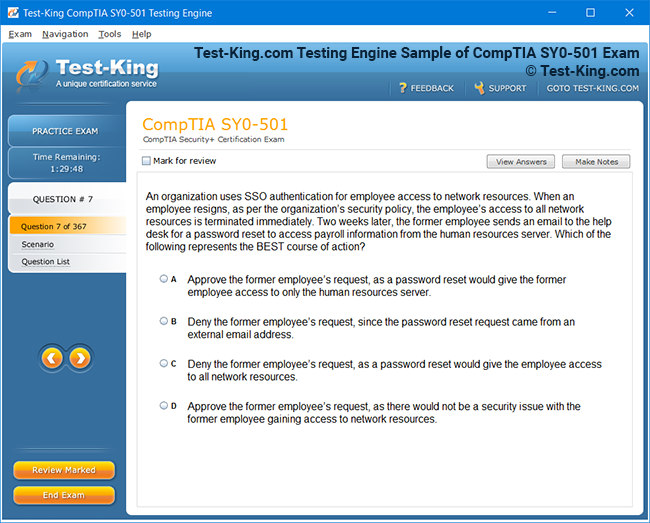
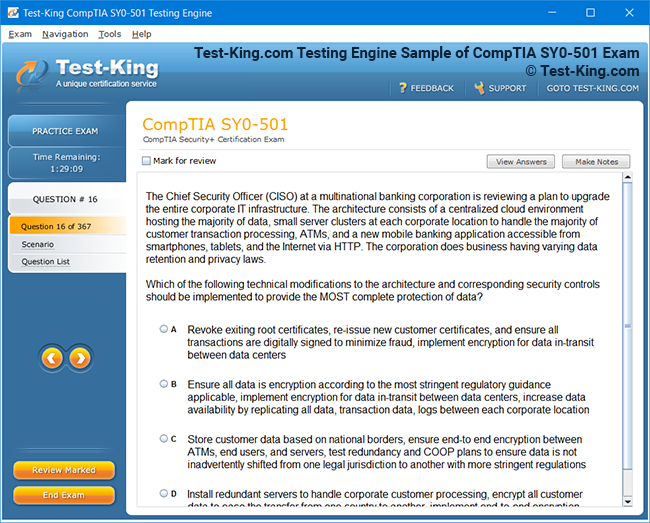
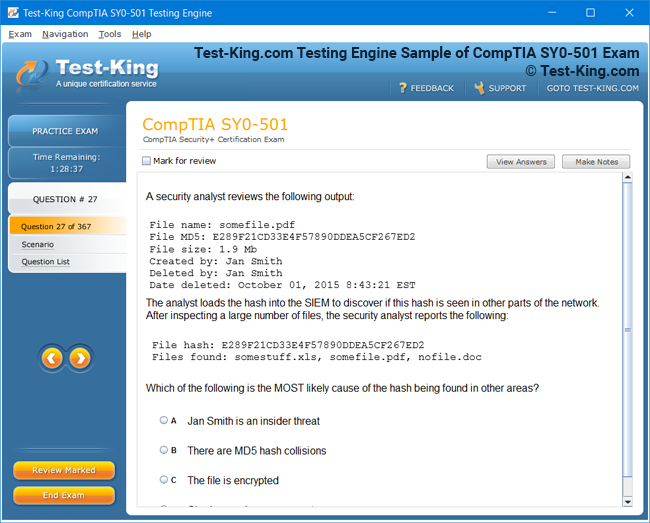
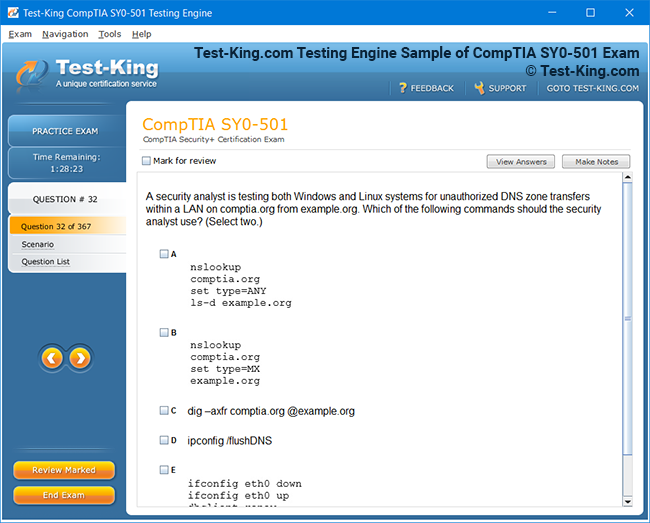
Product Screenshots
Frequently Asked Questions
How can I get the products after purchase?
All products are available for download immediately from your Member's Area. Once you have made the payment, you will be transferred to Member's Area where you can login and download the products you have purchased to your computer.
How long can I use my product? Will it be valid forever?
Test-King products have a validity of 90 days from the date of purchase. This means that any updates to the products, including but not limited to new questions, or updates and changes by our editing team, will be automatically downloaded on to computer to make sure that you get latest exam prep materials during those 90 days.
Can I renew my product if when it's expired?
Yes, when the 90 days of your product validity are over, you have the option of renewing your expired products with a 30% discount. This can be done in your Member's Area.
Please note that you will not be able to use the product after it has expired if you don't renew it.
How often are the questions updated?
We always try to provide the latest pool of questions, Updates in the questions depend on the changes in actual pool of questions by different vendors. As soon as we know about the change in the exam question pool we try our best to update the products as fast as possible.
How many computers I can download Test-King software on?
You can download the Test-King products on the maximum number of 2 (two) computers or devices. If you need to use the software on more than two machines, you can purchase this option separately. Please email support@test-king.com if you need to use more than 5 (five) computers.
What is a PDF Version?
PDF Version is a pdf document of Questions & Answers product. The document file has standart .pdf format, which can be easily read by any pdf reader application like Adobe Acrobat Reader, Foxit Reader, OpenOffice, Google Docs and many others.
Can I purchase PDF Version without the Testing Engine?
PDF Version cannot be purchased separately. It is only available as an add-on to main Question & Answer Testing Engine product.
What operating systems are supported by your Testing Engine software?
Our testing engine is supported by Windows. Andriod and IOS software is currently under development.
Key Concepts and Best Practices for Passing the RSA DLP 6.0 Exam (050-V60X)
The RSA Data Loss Prevention 6.0 platform is a sophisticated solution designed to safeguard sensitive information from inadvertent or malicious exposure. It is integral for organizations that require meticulous control over confidential data such as intellectual property, personally identifiable information, and financial records. To successfully navigate the 050-V60X examination, candidates must immerse themselves in the fundamental components of RSA DLP 6.0 and develop a nuanced understanding of its operational architecture and core functionalities.
Understanding the Fundamentals of RSA Data Loss Prevention 6.0
At the heart of the RSA DLP 6.0 solution is its capability to discover, monitor, and protect sensitive data across multiple environments. This encompasses endpoints, networks, and storage systems, each with distinct mechanisms for data identification and mitigation. The system employs content analysis, contextual inspection, and policy enforcement to ensure that data security protocols are applied consistently. A comprehensive grasp of these mechanisms is indispensable for anyone seeking to demonstrate proficiency in the RSA DLP certification.
Components and Architecture of RSA DLP 6.0
RSA DLP 6.0 is composed of several interdependent components, each contributing to the overarching goal of data protection. The foundational architecture includes the management console, policy servers, enforcement points, and reporting modules. The management console provides centralized control, enabling administrators to configure policies, manage endpoints, and review incidents. Policy servers operate as the cognitive engine, interpreting and enforcing rules across distributed environments. Enforcement points, which can reside on endpoints or network gateways, are tasked with intercepting data flows that contravene established policies. Reporting modules offer comprehensive analytics, allowing organizations to visualize trends, assess compliance, and refine their protective measures.
The architecture of RSA DLP is designed to be both modular and scalable. Organizations with intricate data infrastructures can deploy additional policy servers or enforcement points to accommodate growth or evolving compliance requirements. Understanding the interplay between these components is critical for the 050-V60X examination, as candidates must demonstrate not only familiarity with individual modules but also the ability to articulate their integration and operational synergy.
Policy Management and Configuration
An essential aspect of mastering RSA DLP 6.0 is comprehending the intricacies of policy management. Policies constitute the framework through which data protection rules are articulated and enforced. Crafting effective policies requires an understanding of organizational risk tolerance, regulatory mandates, and data classification schemes. Policies in RSA DLP 6.0 are highly granular, allowing administrators to define conditions based on file types, user behavior, data sensitivity, and transmission channels.
For instance, a policy may prevent the unauthorized transmission of social security numbers through email while permitting internal sharing of encrypted files. The system’s rule engine evaluates content and contextual metadata to determine policy applicability, a process that requires a combination of analytical acumen and operational awareness. Regular review and fine-tuning of policies are necessary to account for evolving threats and changes in business processes. Candidates preparing for the exam must be adept at interpreting policy logic, understanding exception handling, and implementing corrective actions when violations occur.
Data Discovery and Classification
A critical function within RSA DLP 6.0 is the discovery and classification of sensitive data. The platform employs sophisticated content inspection algorithms that analyze textual, binary, and structured data to identify information of interest. Discovery operations can be scheduled or executed on-demand, scanning endpoints, file shares, databases, and cloud storage repositories. Accurate classification is paramount because it underpins subsequent policy enforcement and reporting.
RSA DLP 6.0 allows for the creation of custom data identifiers, enabling organizations to recognize proprietary information or context-specific sensitive data. For example, an organization may configure the system to detect product blueprints or client account numbers using unique patterns or keywords. The ability to configure, test, and validate these identifiers is an essential skill for the 050-V60X examination, reflecting an understanding of both technical implementation and risk mitigation strategies.
Incident Response and Risk Mitigation
When a policy violation occurs, RSA DLP 6.0 generates an incident, capturing detailed information about the event, including user actions, data content, and transmission vectors. Effective incident management involves triaging these events, determining the severity of the risk, and applying remedial actions. Remediation can range from alerting administrators to quarantining or encrypting data, depending on the severity and type of violation.
Candidates must be conversant with incident workflows, escalation procedures, and reporting mechanisms. A deep understanding of risk prioritization and mitigation strategies enables administrators to minimize potential data breaches and demonstrate proactive security governance. Moreover, knowledge of audit trails and forensic capabilities ensures that organizations can comply with regulatory requirements and internal policies, an area of frequent emphasis in the examination.
Reporting and Analytics
RSA DLP 6.0 offers a robust reporting and analytics framework that translates raw data into actionable insights. Reports provide visibility into policy violations, data trends, and user behavior, enabling organizations to refine security strategies. Advanced analytics can uncover subtle patterns, such as repeated attempts to exfiltrate sensitive information or anomalous usage behaviors indicative of insider threats. Candidates preparing for the exam must understand how to generate and interpret these reports, create dashboards, and utilize metrics to drive informed decision-making.
Reporting is not merely a retrospective function; it serves as a proactive tool for risk management. By analyzing trends, organizations can anticipate potential vulnerabilities, adjust policies preemptively, and strengthen compliance postures. Mastery of this domain reflects both technical competence and strategic foresight, essential qualities for RSA DLP certification holders.
Best Practices for Exam Preparation and Practical Implementation
Preparation for the 050-V60X examination requires a dual approach: theoretical mastery and hands-on familiarity. Candidates should immerse themselves in the platform’s interface, configuration options, and policy creation processes. Engaging in simulated environments or lab exercises reinforces learning and builds confidence in applying concepts to real-world scenarios. In addition, reviewing case studies, incident management examples, and compliance frameworks provides context for technical knowledge, facilitating holistic understanding.
Among the best practices is the systematic study of policy logic, data classification methodologies, and incident workflows. Regularly testing custom identifiers and analyzing their effectiveness ensures candidates grasp nuanced operational details. Furthermore, exploring reporting and analytics capabilities enhances comprehension of risk assessment and compliance management, which are integral components of the examination. Cultivating a mindset of meticulous observation and methodical troubleshooting helps candidates anticipate potential pitfalls and develop resilient problem-solving strategies.
Advanced Considerations and Emerging Trends
While the RSA DLP 6.0 platform embodies a mature and stable framework, staying informed about emerging threats and evolving best practices is indispensable for long-term competence. Innovations in encryption, cloud integration, and machine learning-assisted data identification are increasingly relevant to contemporary data protection strategies. Candidates are encouraged to explore these advancements, not merely as academic knowledge but as practical enhancements to policy efficacy and incident management. Awareness of these trends demonstrates both adaptability and forward-thinking, traits highly valued in professional practice and certification contexts.
By synthesizing foundational knowledge, practical skills, and emerging insights, candidates can approach the 050-V60X examination with a robust, comprehensive perspective. Understanding the interplay between discovery, policy enforcement, incident response, and reporting is central to demonstrating expertise in RSA Data Loss Prevention 6.0. The ability to apply this knowledge in a nuanced and precise manner distinguishes successful candidates from those who rely solely on rote memorization.
Advanced Policy Implementation and Fine-Tuning Strategies
Mastering the RSA Data Loss Prevention 6.0 environment requires not only understanding its architecture but also developing the ability to implement, optimize, and refine complex policies. Policies are the backbone of data protection within the platform, translating organizational objectives into actionable directives that regulate data movement and prevent unauthorized disclosure. Crafting effective policies necessitates a meticulous consideration of both technical and procedural elements, including data classification, user behavior, transmission pathways, and contextual relevance.
Administrators must evaluate the risk associated with each type of sensitive information and design policies that balance security with operational flexibility. For example, an organization may implement stringent restrictions on financial records while permitting more lenient sharing of internal communications. Fine-tuning policies also involves iterative testing and validation, ensuring that the rules correctly identify sensitive content without generating excessive false positives. Knowledge of conditional logic, content matching techniques, and exception handling is essential for candidates preparing for the 050-V60X examination.
Data Identification and Content Analysis Techniques
A fundamental capability of RSA DLP 6.0 is the precise identification of sensitive data. The platform leverages multiple techniques for content inspection, including pattern matching, dictionary analysis, fingerprinting, and contextual evaluation. Pattern matching identifies predefined sequences of characters or numbers, useful for credit card numbers, social security numbers, or proprietary codes. Dictionary analysis involves cross-referencing content against lists of sensitive keywords, while fingerprinting enables recognition of unique data artifacts such as intellectual property documents. Contextual evaluation examines the surrounding information to determine the relevance and sensitivity of the content.
Understanding these techniques is critical for configuring policies and ensuring accurate detection. Candidates must be able to differentiate between situations where a basic pattern match suffices versus when complex contextual analysis is necessary. Misconfiguration can lead to missed violations or operational inefficiencies, both of which are examined indirectly through practical scenarios in the 050-V60X exam. Moreover, the ability to develop custom identifiers to detect organization-specific sensitive information is a skill that demonstrates a high level of proficiency.
Endpoint Enforcement and Data Monitoring
Endpoints represent one of the most vulnerable areas for data leakage, encompassing laptops, desktops, mobile devices, and remote connections. RSA DLP 6.0 enforces policies at these endpoints through installed agents that monitor file transfers, clipboard activities, printing actions, and external media usage. These agents operate unobtrusively, capturing events and enforcing preconfigured rules without significantly impacting user productivity.
Candidates preparing for the exam must understand the deployment architecture of endpoint agents, including installation, communication with policy servers, and reporting mechanisms. Familiarity with encryption, data masking, and quarantine procedures is also necessary to ensure that sensitive information is protected during transit or storage. Endpoint monitoring extends beyond reactive measures, allowing administrators to proactively identify behavioral patterns that indicate potential insider threats. Recognizing anomalies such as frequent attempts to move large volumes of sensitive files or repeated access to restricted directories is crucial for effective risk mitigation.
Network Protection and Data Transmission Controls
Beyond endpoints, RSA DLP 6.0 secures sensitive information as it traverses the network. Network enforcement points can intercept data flows via email, web traffic, file transfers, or cloud services. Policies applied at this level prevent unauthorized exfiltration while maintaining normal business operations. Techniques such as content inspection, contextual analysis, and protocol awareness enable accurate detection and mitigation of policy violations.
Candidates should be conversant with the configuration of network enforcement, understanding how rules apply to different transmission channels and how incidents are recorded and escalated. Familiarity with encryption protocols, transport methods, and gateway integration ensures that policies are effective across diverse communication pathways. Knowledge of these mechanisms enables administrators to maintain compliance with regulatory requirements and protect sensitive data without disrupting operational continuity.
Incident Analysis and Risk Assessment
Incident management is a cornerstone of RSA DLP 6.0 operations, encompassing the detection, analysis, and remediation of policy violations. When an incident is triggered, detailed information is captured, including user identity, data content, method of transmission, and contextual metadata. Effective analysis involves categorizing incidents based on severity, assessing potential impact, and determining appropriate remediation actions.
Candidates should understand the nuances of incident prioritization and the use of risk scoring to guide responses. For instance, an attempt to email sensitive customer data outside the organization may necessitate immediate quarantine and escalation, whereas a less critical policy breach might only require administrative notification. Comprehensive knowledge of investigative workflows, event correlation, and escalation procedures is vital for exam preparation, as it demonstrates both operational competence and strategic judgment in safeguarding sensitive information.
Reporting, Metrics, and Continuous Improvement
RSA DLP 6.0 provides extensive reporting capabilities that transform raw incident data into actionable insights. Administrators can generate reports detailing policy violations, user activity, compliance trends, and risk exposure. These reports serve not only as historical records but also as instruments for continuous improvement, guiding policy refinement and highlighting areas of vulnerability.
Advanced analytics can identify subtle patterns, such as repeated attempts to circumvent policy controls or systemic weaknesses in data handling practices. Candidates must understand how to interpret these metrics, create custom dashboards, and leverage insights to optimize protective measures. The ability to correlate trends, anticipate emerging risks, and implement proactive safeguards reflects a sophisticated understanding of data security operations, aligning with the competencies assessed in the 050-V60X exam.
Integration with Regulatory and Compliance Frameworks
RSA DLP 6.0 is designed to support organizations in meeting diverse regulatory requirements, including GDPR, HIPAA, PCI DSS, and other industry-specific mandates. Candidates should be familiar with how the platform facilitates compliance through policy enforcement, audit trails, and reporting functions. By aligning policies with regulatory requirements, administrators ensure that sensitive data is protected in accordance with legal obligations, reducing the likelihood of financial penalties, reputational damage, and operational disruptions.
Understanding compliance integration also involves recognizing the interplay between technical controls and organizational policies. For example, a company may implement data retention schedules, encryption standards, and access controls that complement RSA DLP 6.0 enforcement mechanisms. Demonstrating proficiency in mapping technical capabilities to regulatory requirements is a critical skill for the examination.
Practical Application Scenarios
Real-world scenarios illustrate the importance of holistic knowledge and practical application of RSA DLP 6.0. Candidates may encounter case studies involving accidental data exposure, insider threats, or compliance audits. For example, a scenario may involve an employee attempting to send sensitive financial information via an unsecured email channel. In such instances, the system’s content analysis identifies the sensitive elements, triggers an incident, and enforces the configured policy to block transmission while notifying the security team.
Another scenario could involve detecting anomalous access patterns to intellectual property repositories, where repeated access attempts outside of normal operational hours indicate potential insider malfeasance. Candidates must understand how to configure policies, monitor incidents, and interpret analytics to respond appropriately. This practical acumen, combined with theoretical knowledge, is crucial for excelling in the 050-V60X examination.
Continuous Learning and Skill Enhancement
The landscape of data protection is continually evolving, and mastering RSA DLP 6.0 requires ongoing learning and adaptation. Candidates are encouraged to engage in hands-on exercises, explore advanced configurations, and remain informed about emerging threats, technologies, and regulatory changes. Proficiency in troubleshooting, performance tuning, and policy optimization further strengthens expertise and ensures that administrators can maintain robust defenses against complex data loss scenarios.
By cultivating a comprehensive understanding of policy implementation, data identification, endpoint and network enforcement, incident management, reporting, compliance integration, and practical application, candidates develop a resilient skillset that is indispensable for both exam success and professional practice. Mastery of these domains reflects a holistic command of RSA DLP 6.0 capabilities and an ability to navigate intricate data protection challenges with precision and foresight.
Deployment Strategies and System Architecture Optimization
Achieving proficiency in RSA Data Loss Prevention 6.0 necessitates an intricate understanding of deployment methodologies and the optimization of its architecture. The platform is inherently modular, designed to scale across diverse enterprise environments while maintaining comprehensive oversight of sensitive data. Deployment strategies must balance system performance, operational efficiency, and data protection mandates. Candidates preparing for the 050-V60X examination must internalize the implications of deployment choices, including centralized, distributed, and hybrid architectures, each with distinct advantages and considerations.
A centralized deployment consolidates policy servers and management consoles, streamlining administrative oversight and ensuring uniform enforcement across the enterprise. However, network latency and single points of failure must be addressed to preserve reliability. Distributed deployments allocate policy servers and enforcement points across multiple geographic locations, enhancing performance and redundancy but requiring careful coordination to maintain consistency. Hybrid architectures offer flexibility, combining centralized policy management with distributed enforcement to optimize scalability while retaining governance control. Understanding these architectural paradigms, their operational ramifications, and their impact on incident response is essential for examination readiness.
Policy Design and Granularity
The efficacy of RSA DLP 6.0 is intrinsically tied to the precision of policy design. Policies govern the identification, monitoring, and prevention of sensitive data dissemination across endpoints, networks, and storage repositories. Effective policies are neither overly permissive nor excessively restrictive, achieving equilibrium between security objectives and business continuity. Candidates must cultivate an understanding of granular controls, including rule conditions, exceptions, user context, and data attributes.
Granular policies enable targeted enforcement, such as restricting the transfer of financial reports to unauthorized recipients while permitting controlled internal circulation. Rule hierarchies allow administrators to prioritize critical policies, ensuring that high-risk data is addressed with heightened scrutiny. Exception handling mechanisms accommodate legitimate business scenarios without compromising security objectives, illustrating the balance between rigidity and operational pragmatism. Mastery of these nuanced policy constructs is vital for success in the 050-V60X examination.
Sensitive Data Discovery and Classification
RSA DLP 6.0 employs a multifaceted approach to discover and classify sensitive information across an organization's ecosystem. Discovery methodologies include endpoint scanning, network traffic analysis, and repository inspection. Each method leverages advanced content inspection algorithms, contextual metadata evaluation, and pattern recognition techniques to identify data of interest. Candidates must comprehend the mechanics of these processes, including the configuration of scanning schedules, selection of target repositories, and application of filtering criteria to optimize detection efficacy.
Classification is an equally critical component, translating discovery results into actionable security categories. Predefined classifications such as personally identifiable information, intellectual property, and financial data can be augmented with custom categories tailored to organizational needs. For instance, proprietary research documents or client-specific contractual data may require bespoke identifiers. Proper classification informs policy application, incident prioritization, and compliance reporting, underscoring the interconnectedness of discovery, classification, and enforcement mechanisms within the RSA DLP ecosystem.
Endpoint Protection and Behavioral Analysis
Endpoints represent a significant vector for data loss, encompassing user devices, portable storage media, and remote connections. RSA DLP 6.0 deploys endpoint agents to monitor user activity, enforce policies, and detect anomalous behavior indicative of potential breaches. These agents observe file operations, data transfers, printing, and clipboard activity, capturing detailed event logs that facilitate subsequent analysis.
Behavioral analysis enhances endpoint protection by identifying deviations from established usage patterns. For example, repeated attempts to access restricted files outside of normal working hours or unusual transfer activity may indicate insider threats. Candidates must understand the configuration of endpoint agents, the integration of behavioral monitoring with policy enforcement, and the mechanisms for alerting and remediation. This knowledge demonstrates an ability to manage both reactive and proactive security measures, a critical competency evaluated in the 050-V60X examination.
Network Enforcement and Data Exfiltration Prevention
RSA DLP 6.0 extends its protective capabilities to network traffic, intercepting sensitive data as it traverses email, web services, file transfer protocols, and cloud applications. Network enforcement points operate in conjunction with policy servers to identify potential violations, applying content inspection and contextual evaluation to determine the relevance of observed data flows.
Understanding network enforcement requires familiarity with protocol awareness, traffic interception methods, and the configuration of enforcement rules. For instance, encrypted transmissions may necessitate decryption for inspection, while certain protocols require specialized handling to maintain operational continuity. Candidates should also comprehend the integration of network enforcement with endpoint policies, ensuring consistent application of data protection measures across the enterprise. Effective deployment and monitoring at the network layer are pivotal for preventing unauthorized exfiltration and ensuring regulatory compliance.
Incident Management and Remediation
When policy violations occur, RSA DLP 6.0 generates incidents, capturing detailed contextual information including user identity, affected data, method of transmission, and temporal metadata. Efficient incident management entails categorization, risk assessment, and the execution of appropriate remediation measures. Candidates must understand the procedures for triaging incidents, applying automated or manual corrective actions, and documenting responses for audit and compliance purposes.
Remediation strategies vary based on the severity and nature of the incident. High-risk exposures, such as attempts to send sensitive financial information to external recipients, may trigger immediate quarantine or encryption, coupled with notification to administrators. Lower-risk events may involve monitoring or alerting without active intervention, balancing operational continuity with risk mitigation. A comprehensive grasp of incident response workflows, escalation procedures, and reporting obligations is essential for demonstrating competence in RSA DLP operations.
Reporting, Analytics, and Proactive Risk Management
Reporting and analytics constitute a critical element of RSA DLP 6.0, transforming collected incident data into actionable intelligence. Reports detail policy violations, user behavior, data trends, and compliance metrics, enabling administrators to refine policies and proactively address vulnerabilities. Advanced analytics can identify subtle patterns, including repeated attempts to circumvent controls or anomalous behavior indicative of emerging threats.
Candidates preparing for the 050-V60X examination must understand how to generate reports, create custom dashboards, and interpret analytics to inform decision-making. Proactive risk management relies on the ability to synthesize these insights, anticipate potential vulnerabilities, and implement measures to mitigate exposure. The integration of historical data, trend analysis, and real-time monitoring fosters an adaptive security posture that evolves with organizational needs and threat landscapes.
Integration with Compliance and Regulatory Requirements
RSA DLP 6.0 is designed to facilitate compliance with a range of regulatory frameworks, including GDPR, HIPAA, PCI DSS, and sector-specific mandates. Understanding the interplay between technical controls and regulatory obligations is critical for ensuring that sensitive data is protected in accordance with legal standards. Candidates should be familiar with how policies, classification schemes, incident documentation, and reporting features collectively support compliance objectives.
Effective integration requires translating regulatory language into enforceable controls within the platform. For example, GDPR mandates data minimization and breach notification, which can be operationalized through policy rules, incident workflows, and automated alerts. Mastery of compliance integration demonstrates the ability to align technical proficiency with organizational governance, a skill that reflects both practical and strategic aptitude.
Real-World Implementation Scenarios
Practical scenarios illustrate the application of RSA DLP 6.0 in organizational contexts. Consider a situation in which an employee attempts to transfer proprietary product designs to a personal cloud account. Endpoint agents detect the sensitive content, evaluate it against applicable policies, and generate an incident that triggers quarantine and administrative notification. Similarly, anomalous network activity, such as unauthorized downloads of customer records, can be intercepted and analyzed to prevent data exfiltration.
These scenarios highlight the necessity of combining policy knowledge, technical configuration, and analytical acumen. Candidates must understand how to configure identifiers, design effective policies, deploy enforcement points, and interpret incident data to respond appropriately. Real-world application underscores the interdependence of discovery, enforcement, incident management, reporting, and compliance, reflecting the holistic competence required for the 050-V60X examination.
Advanced Optimization and Continuous Learning
Proficiency in RSA DLP 6.0 extends beyond initial deployment and policy configuration. Continuous optimization involves evaluating system performance, refining policies, and incorporating emerging best practices. Candidates should explore advanced configuration options, conduct performance tuning, and analyze metrics to enhance efficiency and efficacy.
Staying abreast of new threats, technological advancements, and regulatory changes ensures sustained competence and organizational resilience. Candidates are encouraged to engage in hands-on exercises, simulated scenarios, and knowledge-sharing forums to reinforce learning and cultivate a nuanced understanding of the platform. This ongoing skill development equips administrators to anticipate challenges, adapt strategies, and maintain robust data protection capabilities.
Advanced Threat Detection and Proactive Data Protection
RSA Data Loss Prevention 6.0 is a sophisticated platform that equips organizations with the capability to anticipate, identify, and mitigate threats to sensitive information. Mastery of the system requires an understanding of not only reactive measures but also proactive threat detection strategies. Threat detection in RSA DLP 6.0 involves analyzing both content and context to discern potential risks, including inadvertent exposure, malicious intent, or procedural noncompliance. Candidates preparing for the 050-V60X examination must appreciate the interplay between data discovery, policy enforcement, incident analysis, and behavioral analytics.
Proactive data protection begins with identifying high-risk datasets and understanding the operational pathways through which information flows. The system employs advanced content inspection algorithms, contextual evaluation, and pattern recognition to detect sensitive information before it leaves authorized domains. By leveraging these capabilities, administrators can implement preemptive controls, reducing the likelihood of breaches and strengthening overall security posture. The integration of predictive analytics with policy enforcement exemplifies the platform’s capacity for anticipatory defense, an area of growing importance in contemporary data security frameworks.
Endpoint and Device Security Considerations
Endpoints and connected devices are critical focal points in the prevention of data loss. RSA DLP 6.0 deploys agents on desktops, laptops, portable storage devices, and mobile endpoints to monitor and enforce policies in real time. These agents capture comprehensive activity logs, including file transfers, printing events, clipboard usage, and data movement across external media. Candidates must understand the nuances of agent deployment, communication protocols with policy servers, and the integration of behavioral monitoring to detect anomalies indicative of potential security breaches.
Behavioral analysis on endpoints allows administrators to identify patterns that deviate from normal usage. For example, repeated attempts to access confidential project files outside business hours or excessive copying of restricted documents may suggest insider threats. The ability to configure alerts, automate responses, and correlate endpoint activities with network monitoring events enhances the platform’s effectiveness and demonstrates operational acumen, which is evaluated in the examination.
Network Data Loss Prevention and Policy Enforcement
Protecting data in motion is a fundamental aspect of RSA DLP 6.0 operations. Network enforcement points inspect data as it traverses email systems, web applications, file transfer protocols, and cloud services. These enforcement points apply policies in real time, utilizing content analysis, contextual evaluation, and protocol awareness to prevent unauthorized dissemination. Candidates must understand the mechanisms for intercepting and analyzing network traffic, including encrypted communications, and the integration of network enforcement with endpoint and storage policies.
Network enforcement is further enhanced by granular policy application, which can differentiate between internal communications, authorized business transfers, and external transmissions. For example, policies may permit the sharing of sensitive research within approved departments while blocking attempts to transmit the same information to external cloud storage services. Understanding the intricacies of network monitoring, policy prioritization, and incident correlation is essential for demonstrating proficiency in RSA DLP 6.0.
Data Discovery and Classification Methodologies
Data discovery and classification are foundational to effective data protection. RSA DLP 6.0 offers advanced techniques for identifying sensitive information across endpoints, repositories, and cloud environments. Discovery mechanisms include scheduled and on-demand scans, content inspection algorithms, and metadata analysis, which collectively ensure comprehensive coverage. Candidates must grasp the configuration of scanning parameters, selection of target locations, and utilization of filtering criteria to maximize detection accuracy.
Classification translates discovery results into actionable categories, guiding policy enforcement and incident management. Predefined categories, such as personally identifiable information, intellectual property, and financial records, can be extended with custom classifications to address organization-specific requirements. For instance, proprietary product designs or client-specific contractual data may necessitate bespoke identifiers. Understanding the relationship between discovery, classification, and policy application is critical for the 050-V60X examination and for ensuring effective protection of sensitive information.
Incident Handling and Remediation Workflows
Effective incident management within RSA DLP 6.0 requires a comprehensive approach that encompasses detection, analysis, remediation, and documentation. When a policy violation occurs, the system captures contextual information, including user identity, data content, transmission method, and temporal metadata. Candidates must be familiar with workflows for prioritizing incidents, evaluating potential impact, and executing appropriate remediation actions.
Remediation strategies vary depending on the severity of the incident. High-risk breaches, such as attempts to transmit sensitive financial data externally, may necessitate immediate quarantine, encryption, and administrative notification. Lower-risk events, such as minor policy deviations, may only require monitoring or alerts. Understanding these workflows and the decision-making processes behind them is crucial for exam preparation, illustrating both technical competence and strategic judgment in mitigating risks.
Reporting, Metrics, and Analytical Insights
Reporting and analytics are essential tools in managing data protection initiatives. RSA DLP 6.0 provides a comprehensive reporting framework that transforms raw incident data into actionable insights. Reports encompass policy violations, user behavior, compliance trends, and risk assessments. Candidates must understand how to generate reports, configure dashboards, and interpret metrics to optimize policy performance and anticipate potential vulnerabilities.
Advanced analytics can identify subtle patterns, such as repeated attempts to bypass controls or anomalous behavior indicative of emerging threats. Leveraging these insights allows administrators to implement proactive measures, refine policy logic, and strengthen overall security posture. Understanding the role of reporting and analytics in continuous improvement is a key competency assessed in the 050-V60X examination.
Compliance Alignment and Regulatory Integration
RSA DLP 6.0 facilitates alignment with various regulatory frameworks, including GDPR, HIPAA, PCI DSS, and sector-specific mandates. Candidates must comprehend how policies, classification schemes, incident documentation, and reporting functions collectively support compliance objectives. Effective integration requires translating regulatory requirements into enforceable technical controls within the platform.
For example, GDPR mandates data minimization, consent management, and breach notification, which can be operationalized through targeted policy rules, automated alerts, and audit logging. Understanding the interplay between regulatory obligations and technical implementation ensures that sensitive data is protected in accordance with legal standards. This capability reflects both technical proficiency and governance awareness, crucial for success in the 050-V60X examination.
Real-World Application and Scenario Analysis
Practical application scenarios illustrate the holistic capabilities of RSA DLP 6.0. For instance, an employee attempting to upload proprietary client data to a personal cloud storage account triggers content analysis, policy evaluation, and incident creation. The system may block the transfer, quarantine the file, and alert administrators, demonstrating the coordination between detection, enforcement, and remediation mechanisms.
Other scenarios involve detecting anomalous behavior indicative of insider threats or accidental exposure of sensitive documents. Candidates must understand how to configure identifiers, deploy enforcement points, and interpret incident data to respond effectively. These examples emphasize the interconnectedness of discovery, enforcement, incident handling, reporting, and compliance, highlighting the practical acumen required for the examination.
Optimization, Performance Tuning, and Continuous Learning
Proficiency in RSA DLP 6.0 extends beyond initial deployment and policy configuration. Continuous optimization involves evaluating system performance, refining policies, and integrating emerging best practices. Candidates should explore advanced configuration options, conduct performance tuning, and analyze metrics to enhance both efficacy and efficiency.
Staying informed about emerging threats, new technologies, and regulatory changes ensures sustained competence. Engaging in hands-on exercises, simulated scenarios, and professional forums reinforces knowledge and cultivates a nuanced understanding of the platform. This ongoing learning process equips administrators to anticipate challenges, adapt strategies, and maintain robust data protection capabilities, reflecting a sophisticated command of RSA DLP 6.0 operational principles.
Holistic Data Protection and Policy Optimization Strategies
RSA Data Loss Prevention 6.0 provides organizations with a robust framework to safeguard sensitive information across endpoints, networks, and storage repositories. A profound understanding of policy design, data discovery, enforcement mechanisms, and incident management is crucial for candidates preparing for the 050-V60X examination. Holistic data protection begins with recognizing the intricate interplay between content, context, and operational workflows, ensuring that sensitive data is both identified accurately and protected proactively.
Policy optimization is central to effective data loss prevention. Policies should be crafted with a balance of rigor and flexibility, taking into account organizational risk tolerance, regulatory obligations, and operational continuity. Granular policies enable targeted enforcement, addressing critical data types such as intellectual property, financial records, and personally identifiable information without impeding legitimate business activities. Candidates must be able to design, test, and refine policies to minimize false positives while maximizing detection accuracy, reflecting a sophisticated understanding of both technical and procedural dimensions.
Data Discovery Techniques and Classification Precision
A key pillar of RSA DLP 6.0 is its ability to discover and classify sensitive data across diverse environments. The platform employs multiple detection methodologies, including content inspection algorithms, contextual metadata analysis, pattern recognition, and fingerprinting. Scheduled and on-demand scans can be applied to endpoints, repositories, and cloud storage, ensuring comprehensive coverage.
Classification transforms discovery outcomes into actionable categories, guiding subsequent policy enforcement. Predefined classifications such as personally identifiable information, proprietary designs, and financial documentation can be augmented with custom categories to address organization-specific needs. Candidates should understand the configuration and validation of custom identifiers, ensuring that unique data artifacts are consistently recognized and protected. Mastery of discovery and classification is essential for demonstrating competence in RSA DLP 6.0 operations.
Endpoint Monitoring and Behavioral Analytics
Endpoints are often the most vulnerable points for potential data leakage. RSA DLP 6.0 deploys agents to monitor desktops, laptops, portable storage devices, and remote connections, capturing activities such as file operations, printing, clipboard usage, and external media interactions. Behavioral analytics further enhance security by detecting anomalous patterns indicative of insider threats or inadvertent mishandling of sensitive data.
Candidates must comprehend the deployment architecture of endpoint agents, their communication with policy servers, and integration with broader monitoring strategies. Examples of anomalous behavior include frequent attempts to access restricted files, unauthorized transfers outside normal operational hours, or repeated use of unapproved cloud storage services. Understanding these behaviors and implementing appropriate automated or manual responses is a critical competency for the 050-V60X examination.
Network Enforcement and Data Exfiltration Prevention
RSA DLP 6.0 extends its protection to network traffic, intercepting sensitive information transmitted via email, web applications, file transfer protocols, and cloud platforms. Network enforcement points analyze content and contextual attributes, enforcing policies to prevent unauthorized disclosure while maintaining operational efficiency.
Candidates must understand the intricacies of configuring network enforcement, including handling encrypted communications, protocol-specific considerations, and integration with endpoint and storage policies. For example, a policy might block the external transmission of confidential client records while allowing internal departmental sharing. Proficiency in correlating network events with endpoint and repository activities is essential for comprehensive risk mitigation and aligns with the competencies evaluated in the examination.
Incident Management and Risk Mitigation
Effective incident management is vital to the operational success of RSA DLP 6.0. When a policy violation occurs, detailed contextual information is captured, including user identity, data type, transmission method, and timestamps. This information enables administrators to assess risk, categorize incidents, and determine appropriate remediation actions.
Remediation strategies vary depending on incident severity. High-risk events, such as attempts to exfiltrate sensitive financial data, may necessitate immediate quarantine, encryption, and administrative notification. Lower-risk incidents may involve monitoring or alerting without direct intervention. Candidates must understand workflows for triaging incidents, applying automated and manual controls, and documenting responses to ensure compliance and operational integrity.
Reporting, Analytics, and Continuous Improvement
RSA DLP 6.0 provides a robust reporting framework that transforms incident data into actionable insights. Reports and dashboards offer visibility into policy violations, user behavior, compliance trends, and risk assessments. Advanced analytics can identify subtle patterns, such as repeated attempts to bypass controls or anomalous access behaviors indicative of emerging threats.
Candidates preparing for the 050-V60X examination should understand how to generate, interpret, and leverage reports to refine policies, enhance detection capabilities, and anticipate potential vulnerabilities. Proactive use of analytics enables continuous improvement, aligning security measures with evolving organizational requirements and threat landscapes.
Compliance Integration and Regulatory Alignment
RSA DLP 6.0 facilitates compliance with diverse regulatory frameworks including GDPR, HIPAA, PCI DSS, and industry-specific mandates. Understanding the relationship between technical enforcement controls and regulatory obligations is crucial for ensuring legal adherence and organizational governance.
Candidates must recognize how policies, classification schemas, incident documentation, and reporting collectively support compliance objectives. For instance, GDPR mandates data minimization, consent management, and breach notification, all of which can be operationalized through targeted policy rules and automated alerts. Mastery of regulatory alignment demonstrates the ability to integrate technical proficiency with organizational governance, a critical aspect of the 050-V60X examination.
Practical Application Scenarios
Real-world scenarios illustrate the holistic capabilities of RSA DLP 6.0. Consider a situation in which an employee attempts to upload proprietary client designs to an unauthorized cloud service. The system’s content inspection detects sensitive elements, applies the configured policy, generates an incident, and enforces remediation by blocking the transfer and notifying administrators.
Another scenario might involve anomalous access to financial records outside standard operational hours, indicating potential insider risk. By analyzing incident data, correlating events, and applying policy adjustments, administrators mitigate exposure and enhance operational security. Candidates must be able to apply theoretical knowledge in practical contexts, reflecting the real-world utility of RSA DLP 6.0.
Optimization, Performance Tuning, and Advanced Strategies
Proficiency in RSA DLP 6.0 extends beyond deployment and policy creation to include optimization, performance tuning, and advanced operational strategies. Candidates should explore fine-tuning policies, evaluating system performance, and integrating emerging best practices to maintain efficiency and effectiveness.
Advanced strategies include predictive threat modeling, continuous behavioral analytics, and proactive identification of high-risk data pathways. By anticipating potential vulnerabilities and implementing preemptive controls, administrators maintain a resilient security posture. Mastery of these strategies reflects both technical acumen and strategic foresight, critical attributes for successful examination outcomes.
Conclusion
Mastering RSA Data Loss Prevention 6.0 requires a comprehensive understanding of policy design, data discovery, endpoint and network enforcement, incident management, reporting, and compliance integration. Candidates preparing for the 050-V60X examination must develop a nuanced comprehension of both theoretical principles and practical application scenarios.
Holistic proficiency involves crafting precise and effective policies, configuring custom identifiers for sensitive data, deploying and monitoring enforcement points, analyzing incidents, and leveraging analytics for continuous improvement. Awareness of regulatory alignment, performance optimization, and proactive threat mitigation further enhances operational expertise. By synthesizing these competencies, candidates are equipped to navigate complex data protection challenges with precision and foresight, ensuring both examination success and real-world efficacy in safeguarding organizational information.