

Exam Code: 050-v40-ENVCSE02
Exam Name: RSA enVision Certified Systems Engineer 4.0 2
Certification Provider: RSA
Corresponding Certification: RSA
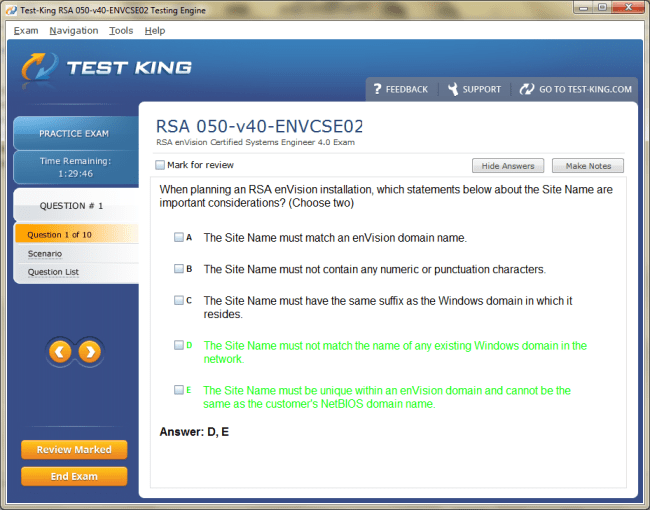
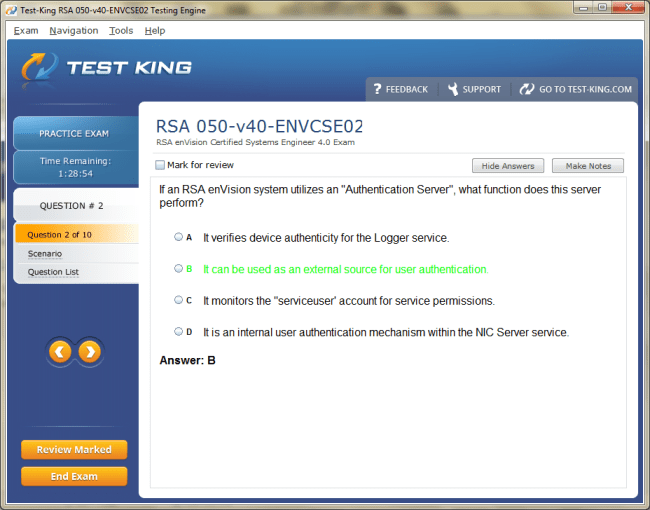
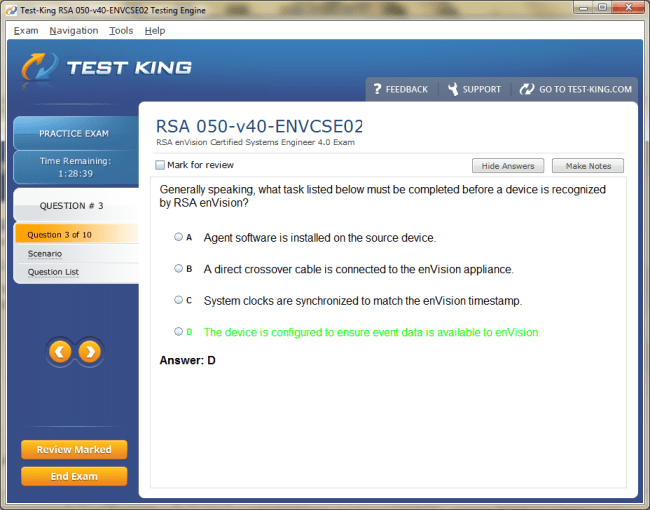
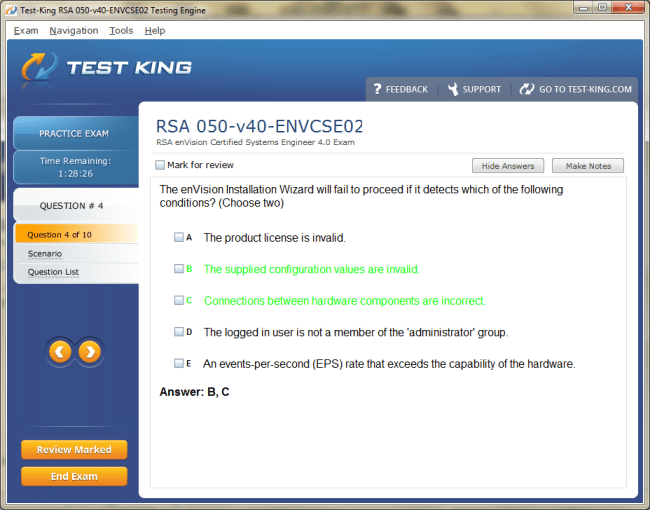
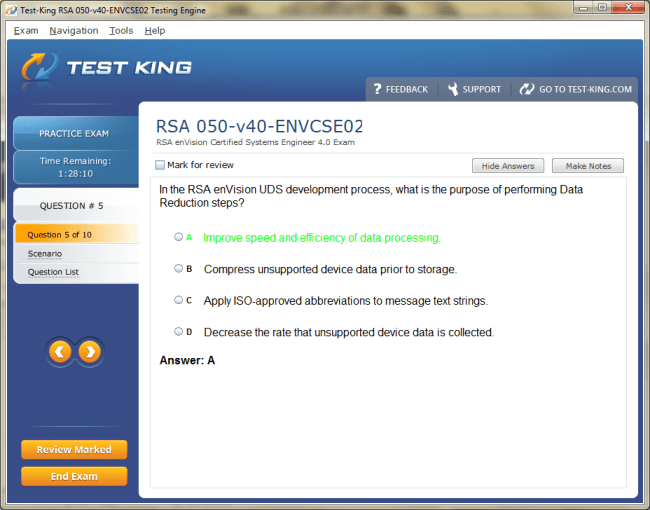
050-v40-ENVCSE02 Exam Product Screenshots
Frequently Asked Questions
How can I get the products after purchase?
All products are available for download immediately from your Member's Area. Once you have made the payment, you will be transferred to Member's Area where you can login and download the products you have purchased to your computer.
How long can I use my product? Will it be valid forever?
Test-King products have a validity of 90 days from the date of purchase. This means that any updates to the products, including but not limited to new questions, or updates and changes by our editing team, will be automatically downloaded on to computer to make sure that you get latest exam prep materials during those 90 days.
Can I renew my product if when it's expired?
Yes, when the 90 days of your product validity are over, you have the option of renewing your expired products with a 30% discount. This can be done in your Member's Area.
Please note that you will not be able to use the product after it has expired if you don't renew it.
How often are the questions updated?
We always try to provide the latest pool of questions, Updates in the questions depend on the changes in actual pool of questions by different vendors. As soon as we know about the change in the exam question pool we try our best to update the products as fast as possible.
How many computers I can download Test-King software on?
You can download the Test-King products on the maximum number of 2 (two) computers or devices. If you need to use the software on more than two machines, you can purchase this option separately. Please email support@test-king.com if you need to use more than 5 (five) computers.
What is a PDF Version?
PDF Version is a pdf document of Questions & Answers product. The document file has standart .pdf format, which can be easily read by any pdf reader application like Adobe Acrobat Reader, Foxit Reader, OpenOffice, Google Docs and many others.
Can I purchase PDF Version without the Testing Engine?
PDF Version cannot be purchased separately. It is only available as an add-on to main Question & Answer Testing Engine product.
What operating systems are supported by your Testing Engine software?
Our testing engine is supported by Windows. Andriod and IOS software is currently under development.
Understanding the RSA 050-v40-ENVCSE02 Exam Landscape
In the rapidly evolving domain of cybersecurity, organizations face an ever-increasing array of threats, ranging from sophisticated malware to complex insider attacks. RSA has long been recognized as a vanguard in the field of information security, offering solutions that encompass threat detection, risk management, and compliance assurance. The RSA enVision platform, in particular, has established itself as a robust system designed to aggregate, normalize, and analyze voluminous security event data, allowing enterprises to proactively manage potential vulnerabilities. The 050-v40-ENVCSE02 certification for the RSA enVision Certified Systems Engineer 4.0 validates a professional’s ability to architect, deploy, and maintain this sophisticated platform while ensuring that it aligns with organizational security strategies.
Introduction to RSA and its Cybersecurity Ecosystem
The significance of such certification extends beyond mere technical acumen. It symbolizes a comprehensive understanding of enterprise-scale security operations, event correlation, and incident response workflows. Professionals undertaking this certification are expected to navigate through intricate system configurations, interpret complex data correlations, and implement policies that safeguard critical infrastructure. In an era where data breaches can have catastrophic ramifications, mastery of such tools has become a linchpin for security resilience.
Evolution of RSA enVision Certified Systems Engineer Certification
The RSA enVision Certified Systems Engineer credential has undergone continuous evolution, mirroring advancements in cybersecurity practices and enterprise requirements. Earlier versions primarily focused on foundational system installation and configuration, with limited emphasis on sophisticated data analysis and real-time event management. With the advent of version 4.0, the certification has expanded its ambit to cover advanced modules of event correlation, performance optimization, and integration with other security appliances.
The transformation from earlier iterations to version 4.0 underscores a shift from basic operational competence to strategic system engineering. It encapsulates the capacity to synthesize complex datasets, apply contextual intelligence to security events, and deploy solutions that preemptively mitigate threats. Consequently, candidates preparing for the 050-v40-ENVCSE02 examination are not merely expected to know commands and configurations; they must demonstrate analytical acumen, foresight in deployment strategies, and the ability to align system capabilities with organizational security objectives.
Importance of RSA enVision 4.0 in Modern Enterprise Security
Modern enterprises are inundated with an unprecedented volume of digital activity, producing logs and telemetry from servers, network devices, endpoints, and cloud platforms. The challenge lies not in the collection of these data streams but in their interpretation and utilization. RSA enVision 4.0 addresses this challenge by providing an integrated platform that consolidates logs, normalizes disparate data formats, and applies correlation rules to identify anomalies that may indicate a security incident.
The 4.0 version has introduced enhancements that elevate both scalability and analytical precision. Features such as real-time event processing, adaptive correlation engines, and customizable dashboards empower system engineers to detect patterns that could otherwise remain obscured within massive datasets. The importance of the certification stems from its role in validating that a professional can leverage these capabilities effectively, ensuring that organizational resources are safeguarded and compliance mandates are fulfilled.
Target Audience for RSA 050-v40-ENVCSE02 Certification
The certification is specifically designed for professionals operating in cybersecurity operations, system engineering, and IT risk management. Ideal candidates typically have experience managing security event management systems, understanding network topologies, and implementing enterprise-wide security controls. While foundational knowledge in networking, operating systems, and database management is beneficial, the emphasis is on practical application, system integration, and problem-solving in dynamic environments.
Organizations also benefit from having certified engineers on staff, as they bring expertise in streamlining incident detection, enhancing response times, and ensuring continuity of critical operations. The certification signals to employers that the professional possesses not only theoretical knowledge but also practical skills that directly contribute to organizational resilience against cyber threats.
Key Skills and Knowledge Areas Tested
Preparation for the 050-v40-ENVCSE02 examination requires a mastery of multiple technical domains. Candidates must be proficient in system installation, configuration, and maintenance of the enVision platform. They are expected to understand the underlying architecture, including how data collectors interface with networked devices, how events are normalized and categorized, and how correlation rules operate to highlight potential security incidents.
Additional knowledge areas include database management, performance tuning, and report generation. Candidates are often evaluated on their ability to troubleshoot system anomalies, integrate enVision with other security information and event management (SIEM) tools, and implement advanced features such as policy-based alerting and real-time dashboards. Familiarity with industry best practices and compliance frameworks enhances a candidate’s ability to apply learned concepts in practical enterprise scenarios.
Benefits of Certification for Professionals and Organizations
For professionals, achieving the RSA enVision Certified Systems Engineer 4.0 credential represents a formal acknowledgment of technical competence and analytical prowess. It can accelerate career progression, open opportunities in security architecture and operations leadership, and differentiate candidates in a highly competitive field. Beyond individual gains, certified professionals contribute directly to organizational security posture by optimizing system deployment, improving incident detection accuracy, and reducing operational risk.
For organizations, the presence of certified engineers ensures that security tools are implemented according to vendor-recommended guidelines, best practices are adhered to, and system performance is maximized. This translates into faster incident response, enhanced regulatory compliance, and a more resilient security infrastructure capable of withstanding sophisticated cyber threats.
Career Paths Enhanced by RSA Certifications
Professionals who attain the RSA 050-v40-ENVCSE02 credential often pursue advanced roles in security operations centers, risk and compliance management, and enterprise system engineering. The certification supports transitions into managerial and strategic positions, including roles such as cybersecurity architect, SIEM engineer, and incident response coordinator. It also provides a foundation for further specialization in areas such as threat intelligence, forensics, and cloud security integration.
The credential is recognized globally, making it relevant for professionals seeking opportunities in multinational enterprises or consulting roles. Its value lies not only in the technical expertise it signifies but also in the demonstrated commitment to continuous learning and professional excellence in a domain characterized by rapid technological evolution.
Industry Recognition and Long-Term Value
RSA certifications enjoy considerable esteem across the cybersecurity landscape. Employers regard these credentials as indicators of both knowledge depth and practical capability. Holding the 050-v40-ENVCSE02 certification often provides leverage in salary negotiations, project leadership opportunities, and professional credibility in complex technical discussions. The long-term value is further accentuated by RSA’s continual updates to the certification program, ensuring that credential holders remain relevant amidst evolving threats and emerging technologies.
Investing time and effort into achieving this certification equips professionals with skills that transcend a single job role. The ability to implement and maintain an advanced event management system, interpret large datasets with precision, and optimize system performance is applicable across industries, from finance and healthcare to critical infrastructure and government organizations.
Bridging Technical Expertise with Strategic Insight
What sets the RSA enVision Certified Systems Engineer credential apart is the emphasis on both technical mastery and strategic application. Candidates are trained to not merely follow procedures but to understand the rationale behind system configurations, the implications of design choices, and the interplay between various system modules. This dual focus ensures that certified professionals can make informed decisions that enhance organizational security, improve operational efficiency, and mitigate potential risks.
The examination evaluates this capacity through scenario-based questions, practical system interactions, and conceptual problem-solving exercises. By bridging technical expertise with strategic insight, professionals demonstrate an elevated level of competence, positioning themselves as indispensable assets in cybersecurity-focused enterprises.
Understanding the Examination Structure
The RSA 050-v40-ENVCSE02 examination is meticulously designed to evaluate a candidate’s comprehensive understanding of the enVision platform, spanning from fundamental architecture to complex system integrations. Unlike assessments that rely solely on rote memorization, this examination emphasizes practical proficiency, analytical reasoning, and the capacity to navigate real-world scenarios. The examination typically consists of a sequence of multiple-choice, scenario-based, and simulation-oriented questions that challenge candidates to demonstrate both conceptual understanding and applied skill.
The duration of the exam allows candidates sufficient time to engage with intricate problem statements, interpret system outputs, and evaluate the effectiveness of different deployment strategies. Each question is designed to simulate potential operational dilemmas encountered in enterprise environments, ensuring that the certification reflects not only theoretical knowledge but also tangible competence in managing and optimizing security infrastructures.
Types of Questions and Difficulty Levels
Candidates preparing for the RSA 050-v40-ENVCSE02 examination will encounter questions that vary in complexity, ranging from straightforward configuration inquiries to sophisticated troubleshooting scenarios. Multiple-choice questions often require a nuanced understanding of system modules, data flow, and event correlation mechanisms. Scenario-based questions place the candidate in hypothetical operational situations, prompting them to analyze log data, interpret alerts, or recommend optimal configuration adjustments.
Simulation-oriented tasks demand hands-on interaction with the enVision platform, replicating real-world administration, integration, and performance tuning activities. These exercises are structured to assess the candidate’s ability to translate theoretical concepts into actionable solutions, whether it involves adjusting event correlation parameters, configuring policy rules, or optimizing system resources for enhanced analytical efficiency.
The difficulty of the examination is intentionally calibrated to distinguish candidates who possess both breadth and depth of knowledge. It evaluates technical acumen, decision-making capabilities, and situational judgment, all of which are critical for professionals entrusted with securing complex digital environments.
Distribution of Domains and Core Competencies
The examination encompasses several domains, each representing a crucial facet of RSA enVision system engineering. Core competencies include system installation and configuration, integration with enterprise networks, performance monitoring, and event correlation management. Candidates are expected to exhibit proficiency in navigating system interfaces, applying configuration best practices, and implementing scalable solutions suitable for enterprise environments of varying complexity.
Additional domains assess expertise in troubleshooting operational anomalies, database optimization, and the generation of insightful reports that inform decision-making. The evaluation also includes the ability to implement advanced policies and rules that enhance threat detection while minimizing false positives. Each domain is weighted according to its relevance to practical operations, ensuring that candidates possess the skills necessary to maintain optimal system performance and security effectiveness.
Key Areas of Conceptual Focus
Several recurring themes form the conceptual backbone of the RSA 050-v40-ENVCSE02 examination. Understanding system architecture is paramount, including how data collectors interact with diverse network devices, how events are ingested and normalized, and how correlation engines synthesize multiple data streams to identify security anomalies. Candidates must also comprehend the principles of log management, data retention policies, and report generation strategies that support compliance and operational decision-making.
Performance optimization is another central theme, requiring knowledge of resource allocation, indexing strategies, and database maintenance practices that ensure consistent system responsiveness. Additionally, the examination emphasizes integration techniques, evaluating the candidate’s capacity to link enVision with complementary security information and event management systems, threat intelligence feeds, and monitoring appliances to create a cohesive security ecosystem.
Duration, Scoring, and Evaluation Criteria
The examination is timed, providing candidates with a structured environment to demonstrate their capabilities while simulating the time-sensitive nature of real-world operational scenarios. Scoring is based on accuracy, comprehension, and the candidate’s ability to select the most effective solution among multiple plausible options. Correctly addressing scenario-based and simulation questions carries significant weight, reflecting the importance of applied skill in system management and incident response.
Evaluation criteria extend beyond mere correctness of answers to include the rationale behind decisions, adherence to best practices, and the consideration of long-term operational impact. This multidimensional assessment approach ensures that certified professionals are not only knowledgeable but also capable of deploying and managing enVision systems with strategic foresight and operational prudence.
Approaching Analytical and Technical Reasoning
A significant component of the RSA 050-v40-ENVCSE02 examination involves analytical reasoning, which challenges candidates to synthesize complex information, identify anomalies, and propose effective solutions. Questions often present log excerpts, performance metrics, or correlation outputs, requiring candidates to interpret data accurately and prioritize response strategies. The ability to discern subtle patterns, anticipate potential system conflicts, and apply preventive measures reflects a candidate’s readiness to handle enterprise-level security operations.
Technical reasoning is intertwined with conceptual knowledge, demanding familiarity with the platform’s architecture, operational parameters, and integration capabilities. Candidates must demonstrate proficiency in configuring event collection, defining correlation rules, and implementing policy-based alerts while maintaining system stability and performance. This dual emphasis on analytical and technical skill ensures that certification holders are adept at both understanding complex systems and applying that understanding in practical contexts.
Common Misconceptions and Exam Realities
Many candidates approach the RSA 050-v40-ENVCSE02 examination with assumptions about its content and difficulty that do not align with reality. A common misconception is that memorizing configuration procedures or focusing solely on command-level knowledge suffices for success. In truth, the examination evaluates comprehension, reasoning, and applied skill. Candidates must navigate scenario-driven questions, interpret real-time system behavior, and make decisions that balance efficiency, security, and organizational impact.
Another frequent misunderstanding involves the perceived difficulty of simulation questions. While these exercises can appear intimidating, they are designed to reflect the practical tasks system engineers encounter daily. Familiarity with enVision’s interface, workflow logic, and troubleshooting methodologies enables candidates to approach these questions confidently, demonstrating competence rather than rote recall.
Real-World Applications Reflected in the Exam
The structure and content of the examination are closely aligned with real-world operational demands. Questions simulate tasks that certified professionals encounter in enterprise environments, such as integrating new log sources, optimizing system performance under high data volumes, and responding to complex security incidents. By mirroring practical challenges, the examination ensures that candidates emerge with skills directly transferable to professional roles, enhancing organizational security resilience.
For example, candidates might be asked to analyze the output from multiple event collectors, identify misconfigurations that could lead to missed detections, and implement corrective actions. Another scenario could involve designing correlation rules to minimize false positives while capturing critical threat indicators, requiring both technical precision and strategic foresight. These exercises reinforce the importance of understanding both the system’s functional components and the broader security ecosystem in which it operates.
Emphasizing Strategic System Engineering
Beyond operational competence, the RSA 050-v40-ENVCSE02 examination underscores the significance of strategic thinking in system engineering. Candidates are evaluated on their ability to plan deployment architectures, forecast system behavior under varied workloads, and align enVision capabilities with enterprise security objectives. This strategic lens ensures that certification holders are equipped to contribute not only as system administrators but also as architects who enhance the efficiency, reliability, and intelligence of organizational security operations.
By integrating scenario-based problem solving with conceptual assessment, the examination encourages candidates to anticipate potential challenges, consider long-term implications of design decisions, and apply creative solutions to complex operational problems. This approach cultivates professionals who are versatile, adaptive, and capable of navigating the intricate demands of modern cybersecurity landscapes.
Preparing for the Complexity of Exam Content
The breadth and depth of the RSA 050-v40-ENVCSE02 content necessitate a preparation strategy that encompasses both knowledge acquisition and practical experience. Candidates benefit from a holistic approach that includes reviewing architectural principles, exploring system workflows, conducting hands-on exercises, and analyzing case studies reflective of enterprise deployments. Emphasis on scenario interpretation, correlation logic, and policy implementation enables candidates to internalize the types of reasoning expected during the examination.
A methodical approach to preparation involves progressively mastering fundamental concepts, advancing to complex integrations, and practicing real-world troubleshooting. This ensures that candidates are not merely memorizing facts but cultivating the analytical agility and technical dexterity required to perform under exam conditions and, ultimately, in professional practice.
Integration and Troubleshooting Skills Evaluation
Integration with diverse network environments and troubleshooting system anomalies are prominent aspects of the examination. Candidates may be asked to simulate the incorporation of new devices, validate event collection processes, or rectify performance bottlenecks. Each task tests the ability to interpret system behavior accurately, identify root causes of issues, and implement effective resolutions without disrupting ongoing operations.
Such evaluation reflects real-world expectations, where system engineers must ensure continuous monitoring, maintain high availability, and respond rapidly to emergent threats. The examination’s focus on integration and troubleshooting underscores the critical role of adaptive problem-solving, meticulous attention to detail, and proactive management in enterprise security operations.
Understanding RSA enVision Architecture
RSA enVision is a sophisticated platform meticulously designed to handle the complexities of enterprise security event management. At its core, it functions as a centralized hub for collecting, analyzing, and correlating security data from diverse sources. The architecture emphasizes scalability, efficiency, and accuracy in detecting potential threats, providing organizations with actionable insights to preempt security incidents. The system is composed of multiple interconnected modules, each performing a distinct function yet operating cohesively to ensure seamless data flow and operational reliability.
The fundamental principle behind enVision’s architecture is data normalization. Logs and events are captured from disparate sources, including firewalls, intrusion detection systems, servers, and endpoints, and transformed into a standardized format. This normalization ensures that data can be analyzed consistently, reducing ambiguities and facilitating accurate correlation. Additionally, the architecture supports high throughput, accommodating large volumes of event data without compromising performance or response time.
Core Modules and Their Functionality
The enVision platform comprises several core modules that collectively empower security engineers to maintain comprehensive situational awareness. The data collection module serves as the initial point of ingress, interfacing with various network devices and systems. It ensures that logs are captured in near real-time, with minimal latency, and transmitted to the processing engine. This module is designed to handle heterogeneous data formats and protocols, providing flexibility for organizations with complex network topologies.
The event management module represents the analytical heart of the system. Here, raw data undergoes normalization, enrichment, and correlation. Events are categorized based on severity, source, and contextual relevance, allowing engineers to prioritize responses efficiently. The correlation engine applies pre-defined and adaptive rules to detect patterns indicative of malicious activity, unusual behaviors, or compliance deviations. By analyzing interrelated events across multiple sources, the system can identify subtle anomalies that might otherwise go unnoticed.
Reporting and visualization modules provide critical support for decision-making and regulatory compliance. Dashboards present a consolidated view of security posture, highlighting critical incidents, trends, and performance metrics. Advanced reporting tools enable the generation of custom reports for management, auditors, and incident response teams, facilitating transparency and informed decision-making. These modules are designed to transform complex datasets into digestible insights, supporting both operational and strategic functions.
System Configuration and Policy Enforcement
Effective utilization of RSA enVision necessitates precise system configuration and rigorous policy enforcement. Configuration involves defining data collection parameters, correlation rules, alert thresholds, and report templates. Each configuration choice influences system behavior, highlighting the importance of thoughtful planning and domain knowledge. Engineers must consider factors such as network architecture, data volumes, performance constraints, and organizational priorities when configuring the system.
Policy enforcement ensures that security practices align with organizational objectives and regulatory requirements. Policies govern how events are prioritized, escalated, and remediated, establishing consistent operational standards. By implementing robust policies, engineers can automate responses to specific incidents, reducing human error and ensuring that critical threats are addressed promptly. The interplay between configuration and policy enforcement creates a controlled environment that enhances both efficiency and security effectiveness.
Integration with Network Devices and Log Sources
RSA enVision’s efficacy is heavily dependent on its ability to integrate seamlessly with an array of network devices and log sources. Integration involves establishing secure communication channels, defining data formats, and implementing protocols to ensure accurate event transmission. Network devices such as routers, switches, and firewalls generate logs that reflect traffic patterns, connection attempts, and policy violations. By integrating these logs, enVision can construct a comprehensive view of network activity, enabling early detection of suspicious behavior.
Endpoint and server logs provide additional layers of insight, capturing user activity, application events, and system errors. By correlating events from multiple sources, engineers can identify patterns that may indicate coordinated attacks or insider threats. Integration also extends to third-party security tools, threat intelligence feeds, and cloud services, allowing the platform to function as a centralized nexus for enterprise-wide security intelligence. This holistic approach ensures that no critical event is overlooked, enhancing overall situational awareness.
Security Data Normalization and Event Correlation
Data normalization and event correlation are pivotal components of the enVision system, underpinning its analytical capabilities. Normalization converts raw log data into a consistent structure, facilitating comparison and analysis across different sources. This process resolves discrepancies in terminology, format, and syntax, allowing the correlation engine to detect relationships that may signify a security incident.
Correlation involves examining interrelated events to identify meaningful patterns or anomalies. The enVision platform employs both static rules and adaptive algorithms to link seemingly disparate events, revealing potential threats that might elude conventional monitoring. For example, multiple failed login attempts from geographically disparate locations may be correlated to indicate a coordinated intrusion attempt. By analyzing temporal, contextual, and relational aspects of events, the system provides actionable intelligence that informs proactive responses.
Performance Optimization and Scalability
Performance optimization is integral to ensuring that the enVision platform can process large volumes of data efficiently. Engineers must monitor system resource utilization, optimize indexing strategies, and implement database maintenance practices to maintain responsiveness. The architecture is designed for horizontal scalability, allowing additional processing nodes to be added as data volumes increase. This scalability ensures that the system can accommodate organizational growth, expanding networks, and evolving threat landscapes without degradation in performance.
Load balancing mechanisms distribute event processing across multiple nodes, preventing bottlenecks and enhancing fault tolerance. Additionally, advanced caching and indexing strategies enable rapid retrieval of historical event data, supporting timely incident analysis and reporting. Engineers are tasked with continually assessing system performance, adjusting configurations, and implementing optimization strategies to maintain high levels of operational efficiency.
Troubleshooting Common enVision Issues
Despite meticulous configuration and planning, system anomalies and operational challenges may arise. Common issues include delays in event collection, misconfigurations in correlation rules, and performance degradation due to high data volumes. Engineers must possess diagnostic skills to identify root causes, whether related to network latency, database inefficiencies, or integration errors. A systematic approach to troubleshooting, combined with knowledge of system logs, metrics, and performance indicators, allows for rapid identification and resolution of issues.
Proactive monitoring and preventive maintenance are essential for minimizing disruptions. Routine audits of system configurations, correlation rules, and data flows help detect potential bottlenecks or inconsistencies before they impact operational effectiveness. Engineers are also responsible for applying patches, updates, and optimizations that enhance system stability and reliability.
Real-World Deployment Examples
RSA enVision is deployed across various industries, including finance, healthcare, government, and critical infrastructure. Each deployment reflects unique operational requirements and regulatory constraints. In a financial institution, for example, the platform may be used to monitor transaction anomalies, detect unauthorized access attempts, and ensure compliance with stringent data privacy regulations. Dashboards and alerts provide actionable intelligence to security operations centers, enabling rapid mitigation of potential breaches.
In healthcare organizations, enVision helps safeguard sensitive patient data by correlating events from electronic health records, access logs, and network devices. The system’s ability to detect unauthorized access or unusual patterns ensures compliance with data protection mandates while maintaining operational continuity. Across all sectors, the platform’s modularity, scalability, and integration capabilities allow it to adapt to diverse operational environments, providing comprehensive security coverage.
Strategic Significance for Enterprise Security
The architecture and components of RSA enVision are not merely technical constructs; they represent strategic assets that empower organizations to anticipate, detect, and respond to security threats effectively. By centralizing data collection, normalizing events, and applying correlation logic, the platform transforms raw information into actionable intelligence. Engineers who master the system’s architecture and modules contribute significantly to organizational resilience, enabling proactive security management and informed decision-making.
Understanding the interplay between system components, policies, and integration points equips professionals with the insight necessary to optimize security operations. The knowledge gained through mastering RSA enVision enhances operational efficiency, reduces response times, and fortifies the enterprise against both conventional and sophisticated cyber threats.
Developing a Structured Preparation Roadmap
Achieving success in the RSA 050-v40-ENVCSE02 examination demands a methodical and disciplined approach. Candidates benefit from creating a structured preparation roadmap that encompasses both conceptual understanding and hands-on experience with the enVision platform. The roadmap should begin with familiarization of system architecture, module functionalities, and core operational principles before progressing to integration, policy enforcement, and advanced troubleshooting techniques. Allocating sufficient time for each domain, revisiting challenging concepts, and evaluating progress periodically ensures a balanced and thorough preparation.
An effective roadmap incorporates iterative learning cycles, wherein foundational knowledge is applied to practical scenarios, analyzed for gaps, and reinforced through repetition. This cyclical approach not only enhances retention but also cultivates the analytical skills required to interpret complex events and resolve operational challenges during the examination. By blending theoretical study with applied exercises, candidates position themselves to tackle both conceptual and scenario-based questions with confidence and precision.
Recommended Study Materials and Resources
Selecting the right study materials is crucial for comprehensive preparation. Official RSA documentation, including platform guides, configuration manuals, and architectural whitepapers, provides authoritative insight into system operations and best practices. Candidates should complement these resources with instructional videos, webinars, and community forums that offer practical demonstrations and expert advice. These materials illuminate nuanced features, common pitfalls, and optimization strategies that may not be immediately evident from textual guides alone.
In addition to vendor-provided documentation, third-party study guides and practice exercises can reinforce understanding of key concepts and expose candidates to diverse question formats. Engaging with a variety of learning resources fosters adaptability, enabling candidates to approach unfamiliar scenarios and complex system interactions with confidence. Emphasis on authentic materials that mirror real-world operations ensures that preparation remains relevant and practically applicable.
Hands-On Learning and Practical Application
Practical experience with the enVision platform is indispensable for exam readiness. Candidates should seek opportunities to perform installations, configure data collectors, define correlation rules, and generate reports within a controlled lab environment. These exercises allow for experimentation with system settings, policy implementations, and performance tuning, reinforcing conceptual knowledge through tangible application. Practical exposure also aids in internalizing procedural workflows, understanding error messages, and troubleshooting operational anomalies, all of which are crucial for scenario-based exam questions.
Simulating real-world operational challenges within a lab environment cultivates analytical thinking, problem-solving agility, and the ability to prioritize responses based on event severity. By repeatedly navigating system interfaces, testing configurations, and analyzing outputs, candidates develop an intuitive understanding of platform behavior, enabling rapid and accurate decision-making during examination conditions.
Time Management and Topic Prioritization
Effective preparation for the RSA 050-v40-ENVCSE02 examination requires meticulous time management. Candidates should allocate study hours according to the complexity and weighting of each domain, ensuring that challenging topics receive sufficient focus without neglecting fundamental concepts. Breaking down study sessions into focused intervals with specific objectives promotes retention, reduces cognitive fatigue, and maintains consistent momentum.
Topic prioritization is guided by the examination’s emphasis on system architecture, event correlation, integration, and troubleshooting. Foundational modules should be mastered first to provide a solid base for understanding advanced configurations and scenario-based exercises. Revisiting complex concepts periodically and integrating them with practical exercises enhances comprehension, facilitates long-term retention, and builds the confidence necessary to navigate the examination with clarity.
Utilizing Practice Exams Effectively
Practice examinations are invaluable tools for reinforcing knowledge, assessing readiness, and familiarizing candidates with the examination format. Engaging with practice questions allows candidates to identify knowledge gaps, refine problem-solving strategies, and gauge time management skills under simulated test conditions. Scenario-based questions in practice exams mirror operational challenges, requiring candidates to interpret logs, evaluate system behavior, and propose corrective actions, thereby strengthening applied proficiency.
Analyzing incorrect responses is as crucial as attempting questions themselves. Understanding the rationale behind errors, revisiting associated concepts, and applying corrected approaches ensures continuous improvement. Repeated engagement with practice exams fosters resilience, sharpens analytical skills, and cultivates the ability to approach novel scenarios with logical reasoning and informed judgment.
Techniques for Retaining Complex Knowledge
The breadth and depth of content in the RSA 050-v40-ENVCSE02 examination necessitate advanced memorization and retention techniques. Conceptual mapping, wherein interrelated topics are visualized as connected nodes, facilitates understanding of system architecture, event flow, and correlation logic. Mindful repetition, spaced learning, and periodic self-assessment reinforce memory and promote long-term retention, ensuring that critical knowledge remains accessible under examination conditions.
Active engagement strategies, such as teaching concepts to peers, simulating troubleshooting exercises, and articulating procedural steps verbally, deepen comprehension and consolidate learning. Incorporating rare or nuanced vocabulary encountered in official documentation into regular study discourse further strengthens familiarity with technical terminology and fosters precision in analysis and communication.
Overcoming Common Preparation Challenges
Candidates often encounter challenges such as information overload, difficulty grasping complex configurations, and apprehension regarding scenario-based questions. Addressing these obstacles requires a combination of structured study, practical application, and reflective learning. Breaking down intricate processes into manageable steps, focusing on one module at a time, and progressively integrating concepts reduces cognitive strain and promotes mastery.
Engaging with study groups or online forums can provide alternative perspectives, practical tips, and clarification of ambiguous topics. Peer discussions often illuminate subtle nuances, expose common pitfalls, and reinforce understanding through collaborative learning. Additionally, cultivating a mindset of curiosity, persistence, and adaptive thinking equips candidates to navigate unfamiliar or challenging scenarios confidently, both during preparation and within the examination environment.
Integrating Conceptual and Practical Knowledge
Success in the RSA 050-v40-ENVCSE02 examination is predicated upon the seamless integration of conceptual understanding with practical skill. Conceptual knowledge provides the framework for interpreting system behavior, understanding event flows, and anticipating operational challenges. Practical application reinforces these concepts, translating theory into actionable proficiency in configuration, policy implementation, and troubleshooting.
Candidates are encouraged to alternate between conceptual review and hands-on exercises, ensuring that theoretical understanding is validated through tangible application. For instance, studying correlation logic in documentation should be immediately followed by configuring and testing corresponding rules in a lab environment. This iterative process solidifies comprehension, enhances analytical agility, and ensures preparedness for both knowledge-based and scenario-driven examination questions.
Leveraging Expert Insights and Professional Guidance
Insights from professionals who have successfully navigated the RSA 050-v40-ENVCSE02 examination provide invaluable guidance. Experienced engineers often share strategies for prioritizing topics, interpreting scenario questions, and approaching simulation tasks efficiently. Mentorship, webinars, and community discussions offer nuanced perspectives that extend beyond official documentation, illuminating common pitfalls, best practices, and practical heuristics.
Integrating expert guidance into preparation routines enhances strategic thinking, optimizes study efficiency, and fosters a realistic understanding of examination expectations. Candidates gain exposure to varied problem-solving approaches, learn to anticipate complex scenarios, and develop a mindset attuned to operational precision and adaptive reasoning.
Maintaining Consistency and Focus During Preparation
Sustained effort, disciplined routines, and consistent focus are essential for thorough preparation. Creating a structured study schedule, setting achievable milestones, and monitoring progress instills accountability and ensures balanced coverage of all examination domains. Mindfulness practices, regular breaks, and techniques to mitigate cognitive fatigue contribute to sustained attention, mental clarity, and optimal retention.
Consistency also involves revisiting previously studied material to reinforce knowledge, connecting conceptual understanding with practical exercises, and progressively increasing exposure to complex scenario-based tasks. This systematic approach cultivates confidence, enhances analytical acuity, and prepares candidates to approach the examination with composure and strategic insight.
Adapting Preparation to Individual Learning Styles
Every candidate possesses unique cognitive patterns, learning preferences, and problem-solving approaches. Tailoring preparation strategies to individual learning styles enhances comprehension, retention, and engagement. Visual learners may benefit from schematic diagrams of system architecture and correlation workflows, while auditory learners might find value in discussions, webinars, or verbal articulation of procedural steps. Kinesthetic learners gain the most from hands-on lab exercises, experimentation with configurations, and practical scenario simulations.
Recognizing individual strengths and weaknesses allows candidates to allocate effort more efficiently, optimize study techniques, and address gaps proactively. By harmonizing study strategies with personal learning modalities, candidates maximize the effectiveness of preparation, ensuring comprehensive coverage of both conceptual and practical domains.
Nature of Practical and Scenario-Based Questions
The RSA 050-v40-ENVCSE02 examination evaluates not only theoretical knowledge but also the ability to apply concepts to practical, real-world situations. Scenario-based questions simulate operational environments, requiring candidates to navigate complex configurations, analyze event data, and propose effective solutions. These exercises are designed to test decision-making abilities, technical proficiency, and analytical reasoning, reflecting the daily responsibilities of a certified enVision systems engineer. Rather than relying on rote memorization, candidates are assessed on their capacity to interpret system behavior, troubleshoot anomalies, and implement solutions that optimize both security and operational performance.
Practical questions often involve interpreting logs, configuring correlation rules, and responding to alerts in a controlled environment. Candidates may encounter simulations where multiple issues occur simultaneously, challenging their ability to prioritize responses, identify root causes, and apply corrective actions efficiently. These scenarios foster critical thinking and reinforce the interconnectedness of the platform’s modules, policies, and integrations.
Approaching Configuration and Troubleshooting Scenarios
Effective preparation for scenario-based questions necessitates a deep understanding of configuration principles and troubleshooting methodologies. Candidates must be adept at defining data collection parameters, setting up event correlations, and configuring alerts and reporting mechanisms. Mastery of these tasks ensures that the enVision platform functions optimally, providing accurate and actionable intelligence. Troubleshooting scenarios require engineers to analyze system outputs, identify discrepancies, and implement solutions that restore functionality without compromising security monitoring.
Approaching scenarios methodically enhances accuracy and efficiency. By breaking down problems into smaller components, candidates can isolate causes, evaluate potential solutions, and implement corrective actions systematically. This structured approach reduces errors, improves response time, and demonstrates proficiency in both conceptual understanding and applied skill.
Analytical Thinking and Situational Problem-Solving
Scenario-based questions demand a high level of analytical thinking. Candidates are required to synthesize information from multiple sources, detect patterns, and predict potential outcomes based on observed behaviors. Situational problem-solving involves weighing alternative solutions, considering long-term operational impacts, and selecting the most effective course of action. The examination emphasizes the importance of reasoning through complex systems, identifying subtle anomalies, and applying best practices to mitigate risks.
Analytical thinking extends beyond technical competence, encompassing strategic foresight and judgment. For example, a scenario might involve multiple correlated events that indicate a potential insider threat. The candidate must interpret the data, determine the significance of each event, and implement measures that neutralize the risk while maintaining system integrity. Such exercises cultivate decision-making skills essential for enterprise-level security management.
Interpreting Logs and Reports During the Exam
A critical aspect of scenario-based questions involves analyzing system logs and reports. Candidates must recognize normal versus anomalous activity, interpret timestamps, event types, and correlation outputs, and identify trends indicative of potential security incidents. Mastery of log analysis enables engineers to detect threats promptly, verify system performance, and ensure that security policies are enforced effectively.
Reports generated by the enVision platform provide insights into system health, compliance adherence, and event trends. Candidates are expected to extract relevant information, correlate it with operational objectives, and propose actions based on the data. This skill is crucial not only for the examination but also for professional practice, as timely and accurate interpretation of logs informs proactive and strategic security responses.
Case Study Examples in Descriptive Context
Realistic case studies provide valuable practice for understanding scenario-based question structures. For instance, an enterprise might experience repeated authentication failures from geographically dispersed locations. In this scenario, candidates would need to configure event correlations to detect patterns, analyze logs to determine potential security breaches, and implement policy changes or alerts to mitigate risk. Another example could involve system performance degradation during peak event processing times. The candidate must identify bottlenecks, adjust indexing or resource allocation, and ensure that the system continues to operate efficiently.
Descriptive analysis of these cases encourages candidates to consider multiple variables simultaneously, integrate technical knowledge with operational priorities, and anticipate cascading effects of their decisions. This approach reinforces both practical skill and strategic thinking.
Best Practices for Testing Environments
Establishing a controlled testing environment is essential for honing practical skills. Candidates should simulate enterprise deployments, including integration of diverse network devices, log sources, and security tools. Within this environment, they can practice configuring collectors, setting correlation rules, generating reports, and troubleshooting anomalies without risk to production systems. A well-structured lab environment enables repeated experimentation, reinforcing concepts, and building confidence.
Testing environments also provide opportunities to simulate high-volume event processing, multiple concurrent incidents, and complex policy enforcement. These exercises prepare candidates for the multi-faceted challenges of scenario-based questions, promoting adaptability, resilience, and technical agility.
Strategies for Answering Under Time Constraints
The RSA 050-v40-ENVCSE02 examination is timed, requiring candidates to balance thorough analysis with efficient execution. Effective time management strategies include prioritizing high-impact questions, quickly identifying the scope of scenarios, and applying structured problem-solving approaches. Familiarity with platform workflows and common troubleshooting techniques allows candidates to respond decisively, reducing the likelihood of errors caused by rushed judgment or misinterpretation.
Developing mental checklists for typical scenario types can enhance speed and accuracy. For instance, when presented with multiple correlated events, candidates might first evaluate severity, then identify potential root causes, and finally implement the corrective action. This systematic method ensures comprehensive coverage while conserving valuable examination time.
Validating Understanding Through Practice Exercises
Continuous practice solidifies comprehension of practical concepts and reinforces analytical skills. Candidates should engage with exercises that replicate examination conditions, including log analysis, policy implementation, and scenario simulations. Iterative practice encourages familiarity with diverse question types, hones problem-solving techniques, and enhances confidence in navigating complex system interactions.
Reviewing performance after practice exercises is crucial. Candidates can identify recurring mistakes, refine strategies, and target areas requiring additional focus. This iterative process of practice, reflection, and adjustment cultivates proficiency and ensures preparedness for both theoretical and practical components of the examination.
Leveraging System Documentation and Reference Materials
In-depth knowledge of RSA enVision documentation enhances the ability to navigate scenario-based questions effectively. Understanding configuration guides, architectural references, and policy manuals allows candidates to apply procedures accurately, troubleshoot efficiently, and make informed decisions. Reference materials provide clarity on system behaviors, potential error messages, and best practice guidelines, serving as invaluable tools for both preparation and applied problem-solving.
Candidates should internalize key concepts from documentation rather than relying solely on memorization. By contextualizing procedural knowledge within real-world scenarios, engineers develop the ability to adapt strategies to novel situations, a critical competency for scenario-based examination questions.
Integrating Conceptual Knowledge with Practical Application
Scenario-based questions require seamless integration of conceptual understanding with hands-on expertise. Candidates must recognize the relationships between system modules, data flows, correlation mechanisms, and policy enforcement, and translate this understanding into actionable steps. This integration ensures that responses are accurate, effective, and aligned with operational objectives.
Practicing the simultaneous application of theory and practical skills prepares candidates to handle complex examination scenarios confidently. By synthesizing knowledge across multiple domains, engineers demonstrate proficiency, analytical acuity, and operational competence.
Conclusion
Mastering practical skills and scenario-based questions is fundamental to achieving success in the RSA 050-v40-ENVCSE02 examination. Candidates who cultivate analytical thinking, hands-on proficiency, and strategic problem-solving are better equipped to navigate the intricate scenarios presented in the exam. Through consistent practice, immersive testing environments, and effective utilization of documentation and resources, professionals develop the confidence and skill required to respond accurately and efficiently under examination conditions. By integrating conceptual understanding with applied expertise, candidates not only enhance their chances of certification success but also prepare themselves for impactful roles as RSA enVision certified systems engineers, capable of safeguarding complex enterprise environments with precision and foresight.