

Exam Code: 1D0-425
Exam Name: CIW E-Commerce Designer
Certification Provider: CIW
Corresponding Certification: Master CIW Designer
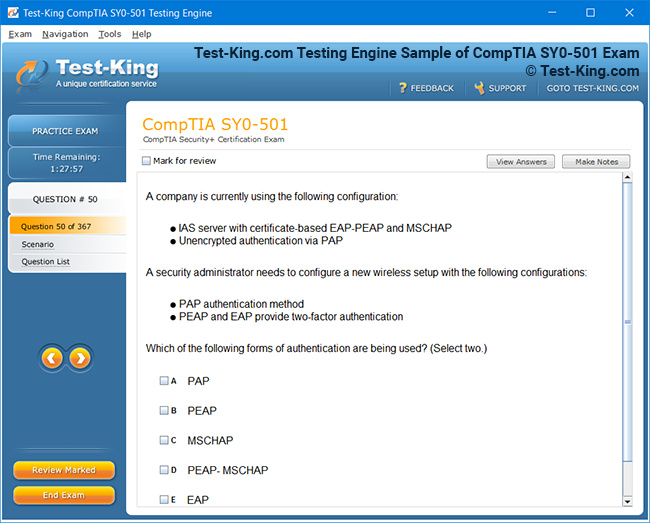
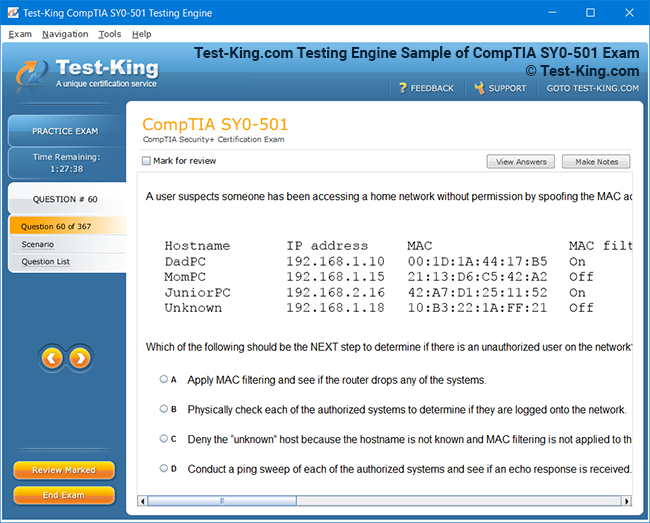
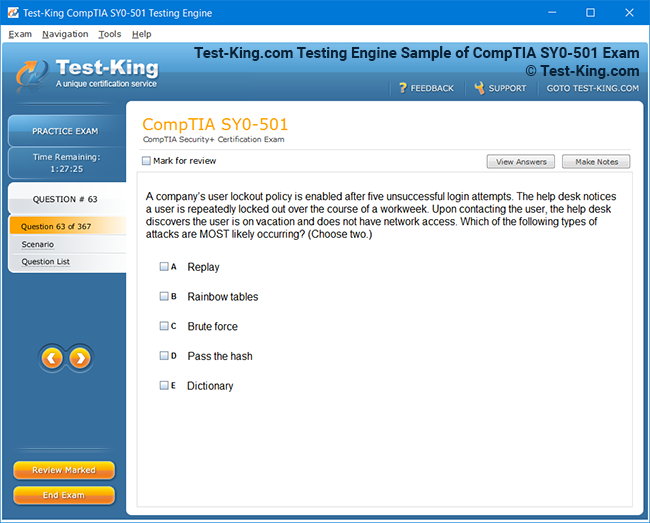
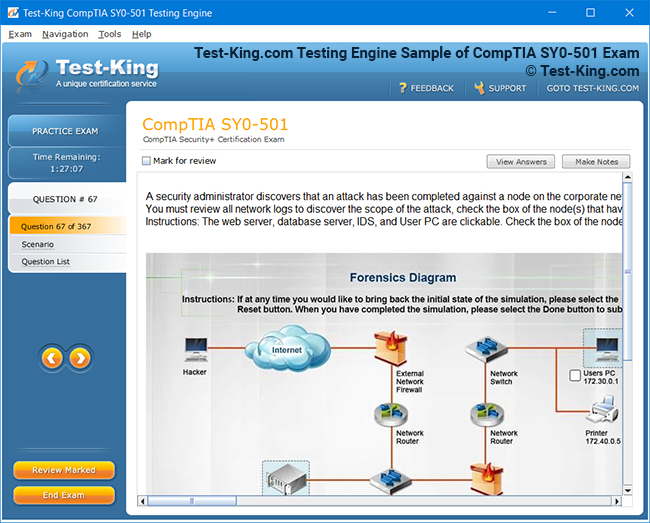
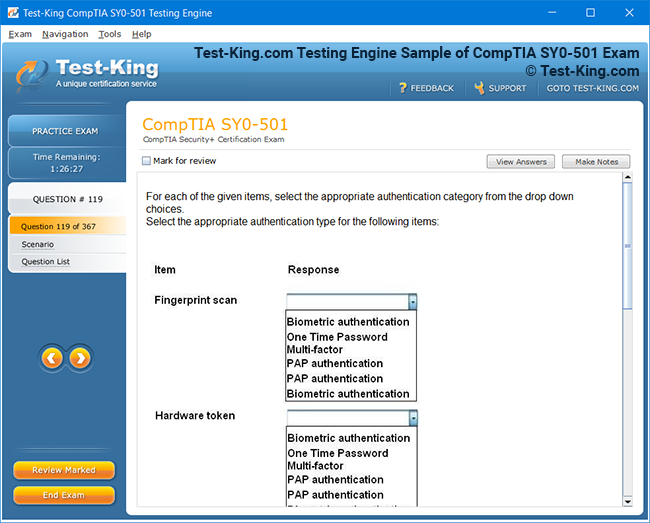
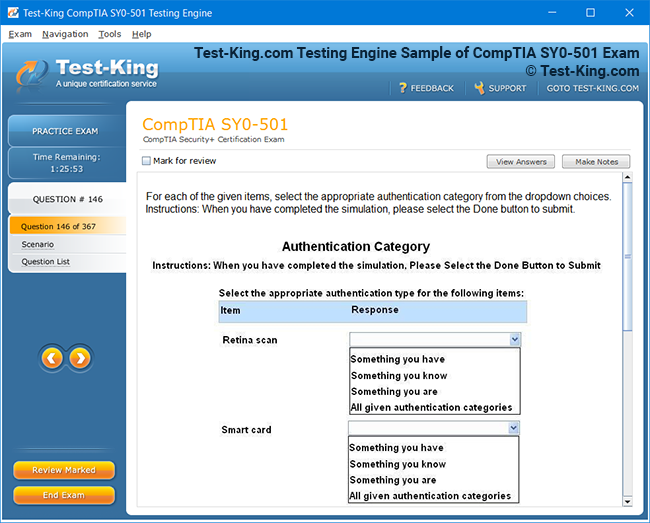
Product Screenshots
Frequently Asked Questions
How can I get the products after purchase?
All products are available for download immediately from your Member's Area. Once you have made the payment, you will be transferred to Member's Area where you can login and download the products you have purchased to your computer.
How long can I use my product? Will it be valid forever?
Test-King products have a validity of 90 days from the date of purchase. This means that any updates to the products, including but not limited to new questions, or updates and changes by our editing team, will be automatically downloaded on to computer to make sure that you get latest exam prep materials during those 90 days.
Can I renew my product if when it's expired?
Yes, when the 90 days of your product validity are over, you have the option of renewing your expired products with a 30% discount. This can be done in your Member's Area.
Please note that you will not be able to use the product after it has expired if you don't renew it.
How often are the questions updated?
We always try to provide the latest pool of questions, Updates in the questions depend on the changes in actual pool of questions by different vendors. As soon as we know about the change in the exam question pool we try our best to update the products as fast as possible.
How many computers I can download Test-King software on?
You can download the Test-King products on the maximum number of 2 (two) computers or devices. If you need to use the software on more than two machines, you can purchase this option separately. Please email support@test-king.com if you need to use more than 5 (five) computers.
What is a PDF Version?
PDF Version is a pdf document of Questions & Answers product. The document file has standart .pdf format, which can be easily read by any pdf reader application like Adobe Acrobat Reader, Foxit Reader, OpenOffice, Google Docs and many others.
Can I purchase PDF Version without the Testing Engine?
PDF Version cannot be purchased separately. It is only available as an add-on to main Question & Answer Testing Engine product.
What operating systems are supported by your Testing Engine software?
Our testing engine is supported by Windows. Andriod and IOS software is currently under development.
Top CIW Exams
1D0-425 : Tips and Tricks for Effective Preparation for the CIW E-Commerce Designer Exam
The CIW E-Commerce Designer Exam, designated by the code 1D0-425, is a pivotal assessment for those seeking to demonstrate their expertise in designing, developing, and managing e-commerce websites. Candidates preparing for this exam must possess a profound understanding of various e-commerce concepts, ranging from web design fundamentals to transaction management, and from search engine optimization strategies to integrating secure payment solutions. Achieving certification validates one’s capability to craft digital marketplaces that are not only functional but also intuitive for users and aligned with business objectives.
Understanding the Exam and Its Importance
Preparation for this exam is not merely about memorizing definitions or recalling technical terms; it necessitates a strategic approach that balances conceptual understanding with practical application. Exam takers should develop an intrinsic grasp of how each module of the curriculum interrelates. For example, understanding the principles of web page layout and visual hierarchy enhances the effectiveness of incorporating shopping cart functionalities and payment gateways. Similarly, knowledge of client-side and server-side technologies ensures that the e-commerce solutions are optimized for both performance and security.
A common oversight among aspirants is underestimating the breadth of topics covered in the 1D0-425 exam. The exam evaluates skills in designing user interfaces, creating effective site architecture, and implementing dynamic content management strategies. Additionally, it probes the candidate’s ability to integrate multimedia content that enhances user engagement while maintaining site responsiveness. Recognizing these expectations early in the preparation phase allows for a more structured study approach, preventing last-minute cramming and enabling a deeper understanding of practical applications.
Organizing Your Study Plan
Effective preparation begins with meticulous planning. A well-structured study plan considers the time available before the exam, identifies key topics requiring concentrated focus, and allocates time for practical exercises. Candidates are advised to divide their preparation into thematic modules, ensuring that each aspect of e-commerce design, from user interface aesthetics to backend functionality, receives adequate attention.
One approach involves beginning with the foundational concepts of e-commerce design. Understanding the historical evolution of online marketplaces, the nuances of consumer behavior, and the technological frameworks supporting digital commerce provides a contextual backbone for all subsequent study. Early familiarity with these elements enhances comprehension when delving into more intricate subjects such as secure transaction protocols, search engine optimization, and mobile e-commerce integration.
Once foundational knowledge is solidified, the focus should shift to practical application. Designing mock e-commerce websites, experimenting with various content management systems, and configuring shopping cart modules provide experiential learning that reinforces theoretical understanding. Engaging in these activities cultivates problem-solving skills, allowing candidates to troubleshoot issues such as slow page load times, broken links, or inefficient navigation structures—common challenges encountered in real-world e-commerce environments.
Leveraging Study Resources
The wealth of available study materials for the CIW E-Commerce Designer Exam can be overwhelming. Candidates should prioritize resources that provide comprehensive coverage of the exam objectives while offering hands-on exercises. Recommended materials include official CIW study guides, industry-recognized textbooks on web design and e-commerce development, online tutorials, and interactive practice exams. Each resource contributes uniquely to knowledge acquisition: study guides consolidate key concepts, textbooks provide in-depth explanations, tutorials demonstrate practical implementation, and practice exams help evaluate preparedness.
A nuanced approach involves integrating multiple resource types. For instance, after reading a chapter on secure payment integration, one might explore video tutorials illustrating how to configure SSL certificates and implement secure checkout forms. Following this, creating a sample online store applying these methods cements understanding through experiential repetition. Such iterative learning fosters retention of knowledge far more effectively than passive reading or memorization.
Candidates should also explore forums and communities where professionals share experiences and discuss challenges faced in real-world e-commerce projects. Exposure to case studies or discussions about common pitfalls in web design can illuminate subtleties that are often overlooked in traditional study materials. Understanding these nuances not only aids exam preparation but also equips aspirants with insights that enhance their professional competency post-certification.
Practice and Application
Active practice is a cornerstone of successful exam preparation. The CIW E-Commerce Designer Exam emphasizes both conceptual comprehension and applied proficiency. Candidates should engage in exercises that replicate real-world scenarios, such as creating wireframes, implementing dynamic content, integrating shopping carts, and configuring secure payment options. These tasks promote familiarity with the technical skills assessed in the exam and cultivate a problem-solving mindset that is crucial for tackling scenario-based questions.
Developing proficiency in client-side scripting languages, understanding the nuances of responsive design, and mastering navigation and layout strategies are critical areas to focus on during practice sessions. Candidates should consider creating multiple versions of sample websites, experimenting with different layouts, navigation structures, and multimedia integrations to observe how changes affect user experience. Documenting these exercises and analyzing their effectiveness builds an intuitive understanding of web design principles that transcends rote learning.
Simulated exams serve as another effective tool, enabling candidates to gauge their readiness and identify weak areas. It is beneficial to time these practice sessions to reflect the actual exam conditions, which helps build mental endurance and sharpens decision-making under pressure. Reviewing incorrect responses and understanding the rationale behind the correct answers enhances comprehension and reduces the likelihood of repeating mistakes.
Mastering Key Topics
Certain topics warrant focused attention due to their recurrent presence in the exam and their fundamental role in e-commerce design. User experience design, for instance, encompasses accessibility considerations, intuitive navigation, visual hierarchy, and content clarity. Candidates should study how these elements influence user behavior and how to optimize them to enhance engagement and conversion rates. Similarly, understanding the technical aspects of website performance, including page load optimization, image compression, and caching strategies, is critical for designing efficient e-commerce platforms.
Security is another domain of paramount importance. Candidates must familiarize themselves with protocols for securing online transactions, protecting user data, and preventing unauthorized access. Knowledge of encryption techniques, secure socket layers, and authentication processes forms the backbone of trustworthy e-commerce environments. Additionally, understanding compliance requirements, such as privacy regulations and industry-specific standards, ensures that designed platforms are legally and ethically sound.
Search engine optimization, or SEO, is indispensable for attracting traffic to e-commerce sites. Exam takers should comprehend keyword strategies, meta tag implementation, content optimization, and site structure alignment with search engine algorithms. Integrating SEO techniques effectively ensures that designed platforms are discoverable, competitive, and capable of sustaining long-term engagement.
Enhancing Retention Through Techniques
Retention of information is enhanced through active engagement and diverse learning techniques. Mind mapping complex topics, creating visual aids for content structures, and narrating technical processes aloud are methods that reinforce memory. Revisiting previously studied topics periodically prevents knowledge attrition and ensures that understanding remains comprehensive across all domains.
A less conventional technique involves teaching concepts to peers or simulating a training session. Explaining how to configure a secure payment gateway or optimize website navigation forces candidates to organize their knowledge coherently and identify gaps in understanding. Engaging in discussions with fellow learners or professionals cultivates analytical thinking, allowing candidates to approach exam questions with clarity and confidence.
Incorporating periodic review sessions, interspersed with hands-on practice, strengthens the connection between theoretical knowledge and practical skills. Candidates may also maintain a personal journal of insights, challenges faced during exercises, and solutions implemented. This reflective practice not only improves retention but also provides a repository of techniques and strategies that can be referenced as the exam date approaches.
Psychological Preparation and Exam Mindset
Equally important as knowledge acquisition is cultivating the appropriate mindset for the exam. Anxiety and stress can impair recall and decision-making. Candidates should develop routines that balance study with relaxation, ensure sufficient sleep, and engage in physical activity to enhance cognitive function. Visualization techniques, such as mentally rehearsing the exam experience or imagining successful completion of challenging questions, can bolster confidence.
Time management during the exam is another critical factor. Candidates must practice pacing to ensure that all questions are addressed adequately without undue pressure. Developing a strategy to tackle scenario-based questions first, while leaving straightforward questions for later, can optimize performance. Understanding the distribution of question types and weighting allows for informed prioritization, reducing the risk of incomplete responses.
Engaging in self-assessment and reflecting on progress builds resilience. Recognizing incremental improvements fosters motivation and diminishes the likelihood of burnout. Candidates who approach preparation with curiosity and problem-solving enthusiasm often outperform those who rely solely on memorization, as the former develop a deeper, more adaptable comprehension of the subject matter.
Deepening Conceptual Knowledge
Achieving mastery in the CIW E-Commerce Designer Exam requires delving beyond surface-level understanding of e-commerce principles. Candidates must explore the intricate interplay between design aesthetics, user experience, and functionality. Understanding the theoretical underpinnings of website architecture and how they translate into practical implementation forms the foundation for both effective study and real-world application. For instance, examining the cognitive patterns of online shoppers reveals why intuitive navigation and clear call-to-action elements significantly impact conversion rates. Such insights provide an analytical lens through which candidates can approach design challenges and anticipate the rationale behind exam questions.
Studying e-commerce platforms from a holistic perspective enables candidates to recognize patterns and standard practices across the industry. Observing how leading online retailers structure product categories, implement dynamic content, and integrate multimedia enhances comprehension of best practices. These observations not only inform design decisions but also illuminate the rationale behind technical requirements, such as load time optimization, mobile responsiveness, and secure checkout processes. Understanding the “why” behind these elements is crucial, as the exam often tests application and reasoning rather than rote memorization.
Strategic Study Techniques
Organized and diversified study methods amplify retention and comprehension. Candidates are encouraged to employ techniques that integrate reading, observation, and practice. Visual mapping of complex concepts, such as linking user interface elements to backend processing workflows, creates a cognitive framework that enhances memory and aids in problem-solving during the exam. Additionally, alternating between theoretical study and practical exercises allows for reinforcement of concepts through immediate application.
A method frequently overlooked is the use of scenario-based exercises. By simulating real-world problems, such as designing a promotional landing page or troubleshooting a shopping cart error, candidates cultivate adaptive thinking. These exercises illuminate potential pitfalls in design and implementation, fostering an ability to anticipate challenges in the exam. Scenario-based practice develops intuition about how different elements interact, providing a cognitive advantage that purely theoretical study cannot replicate.
Practical Application and Experimentation
Hands-on engagement with e-commerce tools is indispensable. Candidates should immerse themselves in the creation of digital storefronts, experimenting with layout, content, and interactive elements. Constructing mock websites using various design templates and content management systems allows for experiential learning that reinforces theoretical knowledge. Incorporating multimedia, configuring navigation structures, and implementing search functionality all contribute to a comprehensive skill set that the exam evaluates.
Testing different design configurations provides insight into how layout, typography, and color schemes influence user engagement. Observing user behavior, even through simulated testing, reinforces understanding of effective e-commerce strategies. Experimentation also cultivates troubleshooting skills, as candidates encounter issues such as slow page loading, misaligned content, or navigation inconsistencies. Addressing these problems strengthens both technical proficiency and problem-solving acumen.
Mastery of User Experience Principles
A core component of the exam revolves around user experience design. Candidates must appreciate how usability, accessibility, and visual hierarchy influence user behavior. Effective navigation, concise content, and coherent visual flow create an environment where users can engage seamlessly with digital platforms. Understanding accessibility requirements ensures that e-commerce websites cater to a diverse audience, enhancing both usability and compliance with regulations.
Analyzing case studies of successful e-commerce platforms provides practical insights into design strategies that optimize user interaction. Candidates should focus on elements such as intuitive menu structures, the strategic placement of call-to-action buttons, and the alignment of visual elements with brand identity. Developing sensitivity to these details enables candidates to construct designs that are not only visually appealing but also functional and user-centric.
Technical Proficiency and Integration
The exam assesses familiarity with technical elements crucial to e-commerce functionality. Knowledge of client-side and server-side technologies, database interactions, and content management systems forms the foundation for integrating dynamic content and transaction management. Candidates must understand how different technologies collaborate to ensure seamless operation, from product listing updates to real-time inventory tracking.
Security protocols constitute a critical area of focus. Candidates should comprehend encryption methods, authentication processes, and strategies for safeguarding user data. Integrating secure payment gateways, understanding digital certificates, and implementing secure form handling are practical applications of these principles. Awareness of compliance standards, such as data protection regulations, ensures that solutions are not only functional but also legally and ethically sound.
Optimizing Search and Performance
Search engine visibility and site performance are pivotal for e-commerce success and are emphasized in the exam. Candidates should explore how content structure, keyword implementation, and metadata influence search engine indexing. Understanding techniques for optimizing page load speed, compressing media files, and reducing server requests ensures that websites provide a smooth user experience while adhering to best practices in performance optimization.
Analyzing the interplay between technical optimization and user engagement provides a strategic advantage. For instance, a well-structured product page not only enhances search engine ranking but also guides users efficiently through purchasing processes. Exam questions often evaluate the ability to recognize these correlations, requiring candidates to think analytically about both design and operational efficiency.
Continuous Review and Reflection
Sustained retention demands ongoing review and reflective study practices. Candidates should regularly revisit complex topics, refine practical exercises, and evaluate progress. Keeping a journal of insights, errors encountered during practice, and solutions devised serves as a personal repository of knowledge. This reflective approach encourages critical thinking, allowing candidates to internalize patterns and strategies rather than relying on superficial memorization.
Collaborative study can further enhance comprehension. Engaging in discussions with peers, sharing experiences, and analyzing case studies collectively fosters a deeper understanding of e-commerce principles. Explaining concepts to others, such as illustrating secure checkout implementation or navigation optimization, reinforces mastery and reveals gaps in understanding that may require additional focus.
Psychological Readiness and Focus
Mental preparation is as vital as technical competence. Maintaining a balanced routine that incorporates focused study, relaxation, and adequate rest improves cognitive function and retention. Stress management techniques, such as mindfulness, visualization, or controlled breathing, equip candidates to approach the exam with clarity and composure. Visualizing the application of skills during the exam, such as designing a user-centric product page or troubleshooting a technical error, strengthens confidence and readiness.
Developing an effective time management strategy during study and examination ensures that all tasks receive appropriate attention. Candidates should practice pacing to navigate scenario-based questions efficiently while leaving time for straightforward knowledge checks. Cultivating adaptability, resilience, and analytical thinking allows candidates to respond to challenging questions strategically, leveraging both preparation and practical intuition.
Integrating Knowledge for Exam Success
The culmination of study, practice, and reflection is the ability to synthesize knowledge into practical solutions. Candidates must approach the exam with the understanding that each question may test multiple competencies simultaneously, such as combining design principles with security protocols or integrating multimedia elements while ensuring performance efficiency. The capacity to interconnect conceptual knowledge with practical application distinguishes highly successful candidates from those who rely on rote memorization alone.
Immersive preparation, characterized by active experimentation, reflective learning, and continuous engagement with real-world e-commerce scenarios, equips candidates to tackle the CIW E-Commerce Designer Exam with confidence. Understanding how design, functionality, user behavior, security, and optimization interrelate creates a holistic framework for both answering questions and demonstrating professional competence.
Enhancing Analytical and Practical Skills
Success in the CIW E-Commerce Designer Exam requires not only comprehension of theoretical concepts but also the ability to apply them analytically. Candidates must cultivate a mindset that views every design decision through both a user-centric and functional lens. For instance, while creating a product listing page, one must balance aesthetics, content clarity, and technical performance to maximize engagement. Understanding how these elements converge prepares candidates to answer questions that assess problem-solving abilities and applied knowledge rather than rote memorization.
Engaging in complex exercises such as configuring interactive navigation menus or integrating dynamic product catalogs fosters a deeper understanding of e-commerce architecture. These exercises encourage candidates to anticipate potential challenges and explore multiple approaches to resolve them. For example, implementing a search filter requires consideration of database queries, user interface intuitiveness, and load times, all of which reflect the multifaceted nature of real-world e-commerce design. This experiential approach develops a proficiency that extends beyond memorizing features or technical specifications.
Developing Expertise in User Interaction
A core aspect of e-commerce design revolves around user interaction and engagement. Candidates should study how different interface elements affect user behavior, considering factors like visual hierarchy, button placement, and information flow. Understanding accessibility principles, such as appropriate contrast ratios, readable typography, and screen reader compatibility, ensures that websites are inclusive while maintaining aesthetic coherence. Observing behavioral patterns of online shoppers allows candidates to anticipate navigational preferences and optimize pathways for conversion.
Interactive exercises, including creating mock landing pages, implementing call-to-action prompts, and analyzing simulated user data, reinforce these concepts. By experimenting with different layouts and interactive features, candidates learn how small adjustments can substantially impact usability. This hands-on practice mirrors the scenario-based questions encountered in the exam, which often require candidates to evaluate hypothetical website designs and recommend enhancements that improve user experience and functionality simultaneously.
Integrating Multimedia and Dynamic Content
The ability to integrate multimedia elements effectively is a distinguishing skill for e-commerce designers. Candidates should explore how images, videos, and animations influence engagement while ensuring that performance and load speed are not compromised. Strategic incorporation of multimedia enhances product visibility, educates users, and encourages interaction, but requires careful consideration of technical constraints, including file size optimization and responsive adaptation across devices.
Creating prototype pages with varying multimedia content allows candidates to observe the impact of each element on page performance and user experience. For instance, embedding product demonstration videos improves comprehension but may increase load times if not optimized properly. Understanding these trade-offs equips candidates to make informed design choices and demonstrates a practical comprehension that is crucial for exam success. Additionally, integrating dynamic content such as personalized product recommendations or interactive promotional banners emphasizes the relevance of adaptive and data-driven design approaches.
Technical Mastery of E-Commerce Systems
Proficiency in the underlying technologies supporting e-commerce platforms is vital for candidates. Knowledge of content management systems, client-side scripting, server-side processing, and database interactions forms the foundation of effective design and implementation. Understanding how these systems communicate allows candidates to troubleshoot issues, optimize workflows, and create cohesive, functional platforms.
Security remains an indispensable component of technical mastery. Candidates must grasp methods for encrypting sensitive information, implementing secure authentication protocols, and ensuring safe payment transactions. Applying these techniques within mock environments reinforces comprehension of how security measures protect both users and businesses. Exam questions frequently probe candidates’ ability to integrate secure systems seamlessly without compromising usability or performance, underscoring the importance of balanced technical competence.
Optimizing Website Performance and Searchability
Performance optimization and search engine visibility are essential for e-commerce success and are tested extensively in the CIW E-Commerce Designer Exam. Candidates should explore techniques for accelerating page load, compressing media, minimizing server requests, and ensuring cross-device responsiveness. Optimized performance enhances user satisfaction and reduces bounce rates, which are critical indicators of a site’s efficacy.
Search engine optimization strategies, including keyword alignment, metadata structuring, content hierarchy, and URL configuration, are equally vital. Understanding how these components interact with algorithms and influence ranking provides candidates with insight into creating discoverable and competitive platforms. Applying these principles to sample projects, such as designing an SEO-friendly product catalog, allows candidates to experience the interplay between technical optimization and user-centric design.
Scenario-Based Problem Solving
Scenario-based exercises simulate the types of challenges candidates may face during the exam. These scenarios often involve evaluating an existing e-commerce page and proposing modifications to enhance usability, security, or performance. For example, a question might present a mock checkout page with multiple usability issues, requiring candidates to identify and rectify navigation bottlenecks, improve data validation, and ensure secure payment integration.
Engaging with these exercises develops analytical skills and reinforces practical application. Candidates learn to dissect problems systematically, consider multiple solutions, and justify design choices based on user behavior and technical constraints. Repeated exposure to such scenarios builds confidence and adaptability, allowing candidates to approach the exam with a strategic mindset that balances creativity, efficiency, and compliance with industry standards.
Reinforcing Knowledge Through Reflection
Reflective practice enhances retention and deepens understanding. Candidates should maintain records of exercises, noting design decisions, encountered challenges, and implemented solutions. Revisiting these records periodically reinforces memory and provides a reference framework for addressing similar problems in the exam. Analytical journaling also promotes critical thinking, allowing candidates to evaluate the effectiveness of strategies and refine approaches for improved outcomes.
Collaborative study further enhances reflection. Engaging with peers to discuss challenges, share solutions, and critique design decisions encourages the development of diverse perspectives. This dialogue helps candidates identify overlooked considerations, expand problem-solving strategies, and cultivate a professional mindset that aligns with industry expectations. Teaching or explaining concepts to others consolidates understanding, revealing subtleties in both design principles and technical integration that are essential for comprehensive exam readiness.
Psychological Preparation and Exam Strategy
Mental fortitude is a crucial component of preparation. Maintaining a structured routine that balances study, relaxation, and physical activity improves focus and cognitive performance. Techniques such as visualization, controlled breathing, and mindfulness cultivate resilience, enabling candidates to approach the exam with clarity and composure. Mentally rehearsing practical applications, such as configuring a secure checkout or optimizing a landing page layout, strengthens confidence and reduces anxiety.
Time management during the exam is critical. Candidates should practice pacing, allocating time according to question complexity and distribution. Developing a strategy to prioritize scenario-based questions or multifaceted problems allows for more effective resource utilization and reduces the likelihood of leaving questions incomplete. Cultivating adaptability and analytical thinking ensures that candidates can respond to unforeseen challenges with rational and well-informed solutions, reflecting both preparation and applied intuition.
Integrating Learning for Cohesive Application
The culmination of preparation lies in the integration of theoretical knowledge, practical skills, and analytical reasoning. Candidates must approach each exam question with the awareness that multiple competencies may be tested simultaneously, such as combining design aesthetics with performance optimization or aligning security protocols with user experience. The ability to synthesize these elements into coherent, functional solutions is indicative of mastery and distinguishes highly proficient candidates.
Immersive engagement, consistent practice, and reflective learning equip candidates to approach the CIW E-Commerce Designer Exam with competence and assurance. By cultivating an understanding of user behavior, multimedia integration, technical infrastructure, security, optimization, and scenario-based problem solving, candidates develop a holistic perspective that ensures both exam readiness and professional aptitude in e-commerce design.
Mastering Design Principles and Layout Strategies
A crucial element for success in the CIW E-Commerce Designer Exam is an intimate understanding of design principles and layout strategies. Candidates must appreciate how visual hierarchy, color theory, typography, and spacing affect user perception and interaction. The arrangement of elements on a webpage, from navigation menus to product displays, influences both usability and conversion rates. Recognizing the subtleties of design decisions allows candidates to craft e-commerce platforms that are both aesthetically pleasing and functionally robust.
Engaging in exercises that involve redesigning sample web pages fosters analytical thinking and aesthetic intuition. Experimenting with diverse layout configurations, contrasting visual patterns, and text alignment helps candidates identify the most effective strategies for presenting content. By observing how different elements influence attention and engagement, aspirants develop the capacity to design interfaces that enhance user comprehension and interaction while maintaining a coherent brand identity.
Understanding the Dynamics of User Behavior
The CIW E-Commerce Designer Exam assesses not only technical and creative skills but also the understanding of consumer behavior in digital environments. Candidates should explore how users navigate websites, interact with content, and make purchasing decisions. Insights into user intent, browsing patterns, and decision triggers provide a framework for designing intuitive, efficient, and engaging e-commerce experiences.
Practical exercises, such as mapping user journeys and analyzing mock transaction flows, allow candidates to anticipate friction points and optimize pathways for engagement. Recognizing the impact of visual cues, call-to-action placement, and content clarity enables designers to create seamless interactions that guide users toward desired outcomes. This analytical approach to user behavior forms the foundation for scenario-based questions that evaluate problem-solving skills within realistic e-commerce contexts.
Integrating Multimedia and Interactive Features
Multimedia integration remains a pivotal competency for e-commerce designers. Candidates should examine how images, videos, animations, and interactive elements contribute to user engagement without compromising website performance. Strategic use of multimedia enhances product visibility, communicates complex information efficiently, and stimulates user interest. However, these elements must be balanced with considerations for load speed, responsiveness, and accessibility to ensure optimal user experience.
Hands-on experimentation, such as embedding product demonstration videos, interactive slideshows, and hover effects, equips candidates to anticipate real-world challenges. Understanding how multimedia interacts with various devices, screen sizes, and browsers fosters adaptability and technical insight. The ability to implement engaging yet efficient multimedia features is often reflected in exam questions that test the candidate’s ability to balance creativity with practical constraints.
Technical Proficiency and Backend Integration
Technical knowledge forms the backbone of effective e-commerce design. Candidates must comprehend client-side and server-side interactions, content management systems, and database connectivity. These technical foundations enable the creation of dynamic websites that can manage product inventories, process transactions securely, and adapt to user interactions. A deep understanding of these systems ensures candidates can troubleshoot functional issues and optimize overall performance.
Security protocols are an integral aspect of backend integration. Candidates should familiarize themselves with encryption techniques, secure authentication methods, and safe transaction processing. Implementing these measures within practical exercises reinforces understanding of how secure infrastructure underpins user trust and compliance with regulatory standards. Scenario-based questions often combine these technical considerations with design challenges, requiring candidates to develop solutions that are both secure and user-friendly.
Enhancing Searchability and Performance
Website performance and search engine optimization are essential for effective e-commerce design. Candidates should explore strategies for accelerating page load, compressing media, minimizing server requests, and ensuring cross-device responsiveness. A high-performing site reduces bounce rates, enhances engagement, and supports seamless user experiences.
Search engine visibility relies on content structuring, keyword utilization, metadata optimization, and URL configuration. Candidates should understand how these techniques influence indexing and ranking, and how to implement them without compromising design or usability. Applying SEO strategies to sample projects, such as creating an optimized product catalog or promotional landing page, allows candidates to experience the intersection of technical and creative decision-making, a critical aspect of the exam.
Scenario-Based Exercises and Problem Solving
Scenario-based practice is indispensable for cultivating analytical thinking and applied skills. Candidates may encounter hypothetical situations, such as identifying flaws in a checkout process, suggesting enhancements to navigation, or optimizing multimedia integration. These exercises simulate the type of questions that test both technical knowledge and practical application.
Engaging with these exercises encourages systematic problem-solving, allowing candidates to evaluate multiple solutions, anticipate user needs, and justify design choices. Documenting the process, noting challenges, and reflecting on implemented solutions reinforces learning and provides a resource for continued improvement. Regular exposure to complex scenarios sharpens intuition and prepares candidates for unexpected challenges during the actual exam.
Review Strategies and Knowledge Consolidation
Sustained retention of e-commerce principles requires deliberate review and consolidation. Candidates should revisit previously studied topics, refine practical exercises, and evaluate their progress. Maintaining a personal journal that records insights, design decisions, and solutions to practical problems fosters deeper understanding and creates a valuable reference for revision.
Collaborative learning enhances this process. Discussing challenges, sharing solutions, and evaluating different approaches with peers expands perspective and uncovers overlooked considerations. Teaching or explaining concepts to others reinforces mastery and reveals nuances that may otherwise remain unnoticed. This reflective approach integrates practical experience with conceptual understanding, enhancing both exam readiness and professional competence.
Psychological Preparation and Exam Approach
Mental readiness is as essential as technical and creative proficiency. Candidates should cultivate a balanced routine that includes focused study, rest, and physical activity to optimize cognitive function. Techniques such as visualization, controlled breathing, and mindfulness support stress management and improve concentration during preparation and the exam itself.
Strategic time management is crucial during the examination. Candidates should practice pacing, allocate appropriate attention to complex scenario-based questions, and ensure completion of simpler knowledge checks. Developing flexibility and analytical reasoning enables candidates to address multifaceted challenges with confidence and precision, reflecting both thorough preparation and adaptive problem-solving skills.
Integrating Skills for Comprehensive Application
Success in the CIW E-Commerce Designer Exam arises from the ability to integrate design principles, user behavior insights, multimedia integration, technical knowledge, performance optimization, and scenario-based problem solving. Candidates must approach questions with the understanding that multiple competencies may be tested simultaneously. Synthesizing these elements into coherent, functional solutions distinguishes proficient candidates and demonstrates professional readiness.
Immersive practice, reflective study, and analytical exercises equip candidates to navigate complex e-commerce design challenges with skill and confidence. By cultivating both conceptual understanding and applied proficiency, candidates develop a holistic perspective that ensures effective performance during the exam and prepares them for real-world e-commerce design responsibilities.
Refining User Interface Design Skills
For the CIW E-Commerce Designer Exam, candidates must develop a sophisticated understanding of user interface design. The interface serves as the bridge between the user and the underlying technology, and the effectiveness of this bridge determines the quality of interaction and engagement. Candidates should study how layout composition, typography choices, spacing, and color palettes influence the ease with which users navigate and interpret content. Attention to detail in arranging visual elements enhances clarity and guides user focus toward essential information or actionable items.
Practical exercises, such as creating mock product pages or redesigning existing layouts, provide insight into the impact of interface decisions on user behavior. Testing variations of navigation menus, content placement, and button designs allows candidates to observe how subtle adjustments affect usability and engagement. This hands-on experimentation is crucial for understanding the relationship between aesthetic appeal and functional efficiency, which is often evaluated in scenario-based exam questions.
Understanding Consumer Psychology
A critical component of e-commerce design is the comprehension of consumer psychology. Candidates should explore cognitive patterns that influence decision-making, such as attention span, preference for visual cues, and responsiveness to persuasive elements like testimonials or limited-time offers. Recognizing the motivations and behaviors of online shoppers enables designers to create intuitive pathways that facilitate seamless purchasing experiences.
Mapping user journeys and analyzing potential friction points equips candidates to optimize interaction flow. For example, simplifying checkout steps, highlighting security features, and providing clear product descriptions can significantly enhance user trust and conversion rates. The exam frequently tests the ability to apply such behavioral insights to design challenges, requiring candidates to integrate psychological principles with technical and creative solutions.
Implementing Dynamic and Interactive Content
Dynamic content is an integral aspect of modern e-commerce platforms. Candidates should understand how to implement interactive elements that enhance user engagement, such as personalized product recommendations, hover effects, and real-time updates on stock availability. These features improve user experience but require careful balancing with technical considerations, including server performance and responsive design.
Engaging in exercises that involve integrating dynamic content helps candidates develop both creativity and technical acumen. For instance, configuring an interactive product gallery involves understanding scripting, content management system capabilities, and user interaction patterns. This dual focus on aesthetics and functionality is reflective of the types of questions posed in the CIW E-Commerce Designer Exam, which assess the ability to design engaging yet efficient solutions.
Mastering E-Commerce System Architecture
Technical proficiency is foundational for the exam, particularly regarding e-commerce system architecture. Candidates should explore how client-side scripting, server-side processing, and database management converge to create functional online marketplaces. Understanding these interactions allows candidates to anticipate and resolve issues related to site performance, data integrity, and user interaction.
Security remains a central concern in system design. Candidates must comprehend encryption methods, secure authentication protocols, and safe transaction processing. Incorporating these measures ensures that user data is protected and that the platform adheres to industry standards. Practical exercises, such as setting up a simulated checkout process with security features, reinforce understanding of how technical and functional requirements intersect.
Optimizing Website Performance and Responsiveness
Website performance significantly affects user experience and is a focus area in both preparation and examination. Candidates should study strategies for reducing page load times, compressing images, minimizing server requests, and ensuring compatibility across devices and browsers. A responsive design not only improves usability but also contributes to search engine visibility, making it a crucial consideration for both technical and strategic aspects of e-commerce.
Applying optimization techniques in practical exercises allows candidates to observe the impact of changes on user engagement and system efficiency. For example, adjusting image compression while maintaining visual clarity or reorganizing page elements for faster rendering fosters an understanding of performance optimization as a holistic practice. These competencies are often tested through scenario-based questions, requiring candidates to balance multiple performance factors in their solutions.
Search Engine Optimization and Content Structuring
Search engine optimization is essential for enhancing the visibility and discoverability of e-commerce platforms. Candidates should examine how keywords, metadata, content hierarchy, and URL structuring contribute to search engine ranking. Integrating SEO practices with design and content decisions ensures that websites remain competitive and accessible to target audiences.
Practical exercises, such as creating SEO-friendly product pages or promotional landing pages, reinforce the application of these principles. Candidates must consider how content placement, keyword density, and internal linking strategies affect both user experience and search engine performance. The ability to harmonize technical SEO requirements with design aesthetics reflects the type of applied knowledge tested in the CIW E-Commerce Designer Exam.
Scenario-Based Problem Solving
Scenario-based problem solving is central to exam preparation. Candidates often encounter questions that require evaluating an existing e-commerce setup, identifying deficiencies, and proposing improvements. For instance, a scenario may present a website with inefficient navigation, slow loading pages, or unsecured payment processes, prompting candidates to recommend modifications that enhance usability, performance, and security.
Engaging with these exercises develops analytical skills and adaptability. Candidates learn to consider multiple factors simultaneously, such as design coherence, technical efficiency, and user experience. Documenting the problem-solving process and reflecting on implemented solutions reinforces learning and provides a framework for approaching complex exam questions with confidence and clarity.
Review Practices and Knowledge Consolidation
Sustained retention of e-commerce concepts requires systematic review and reflection. Candidates should revisit previously studied topics, refine practical exercises, and evaluate performance through self-assessment. Maintaining a journal that documents design decisions, challenges encountered, and strategies for resolution fosters deeper understanding and creates a repository for review.
Collaborative learning further enhances consolidation. Discussing exercises with peers, sharing insights, and evaluating diverse approaches promotes critical thinking and uncovers nuances that may otherwise remain unnoticed. Teaching or explaining concepts to others strengthens comprehension and reinforces practical application skills, ensuring that candidates are well-prepared for questions requiring integration of multiple competencies.
Psychological Preparation and Exam Strategy
Mental preparedness is as important as technical proficiency. Candidates should cultivate a balanced routine that includes focused study, rest, and activities that enhance cognitive function. Stress management techniques, such as mindfulness, visualization, and controlled breathing, support concentration and resilience during both preparation and the exam itself.
Effective time management during the examination is critical. Candidates should practice pacing, allocate attention according to question complexity, and ensure completion of simpler knowledge checks. Developing adaptability, analytical reasoning, and a calm approach enables candidates to respond effectively to challenging questions, combining preparation with practical intuition.
Integrating Knowledge for Comprehensive Mastery
Ultimately, the CIW E-Commerce Designer Exam evaluates the integration of multiple competencies. Candidates must synthesize design principles, consumer psychology insights, dynamic content strategies, technical system knowledge, performance optimization, and scenario-based problem-solving skills. The ability to approach questions holistically and apply interdisciplinary knowledge distinguishes highly proficient candidates.
Immersive practice, reflective study, and analytical engagement cultivate a cohesive understanding of e-commerce design. By combining theoretical knowledge with applied skills and strategic reasoning, candidates develop a framework for approaching the exam with confidence, ensuring readiness to meet both practical and analytical challenges inherent in e-commerce design.
Advanced Techniques for Exam Readiness
Achieving proficiency in the CIW E-Commerce Designer Exam requires not only mastery of foundational skills but also advanced techniques that enhance comprehension, retention, and practical application. Candidates should focus on refining their ability to integrate design principles, technical systems, and user-centric strategies in ways that mirror real-world e-commerce challenges. Understanding the interdependence of visual design, multimedia, dynamic content, and system functionality creates a holistic framework for approaching complex problems. For example, implementing a product catalog that balances appealing visuals, intuitive navigation, and secure transaction pathways demonstrates both technical knowledge and design insight, reflecting the depth of understanding expected in the examination.
Practical exercises are indispensable for developing these competencies. Candidates should construct mock websites incorporating multiple elements simultaneously, such as interactive product displays, secure checkout processes, optimized load speeds, and responsive layouts. Each element requires attention to detail and an understanding of how technical and aesthetic choices influence user behavior. These exercises cultivate problem-solving skills and enable candidates to anticipate potential challenges in real-world design, a capability that aligns closely with scenario-based questions encountered in the exam.
Refining Problem-Solving and Analytical Skills
Scenario-based questions are a significant component of the CIW E-Commerce Designer Exam, demanding both analytical reasoning and applied knowledge. Candidates should practice evaluating complex situations, such as identifying bottlenecks in navigation, optimizing page load times, or enhancing the security of transaction processes. Developing a systematic approach to problem solving—examining each element, considering alternative solutions, and prioritizing actions—ensures that responses are both comprehensive and practical.
Reflection on completed exercises enhances understanding of cause-and-effect relationships within e-commerce systems. For instance, redesigning a promotional landing page may reveal how color contrasts influence user engagement or how metadata optimization improves search engine visibility. Documenting these observations strengthens memory retention and provides a resource for revisiting strategies during final preparation. Repeated exposure to analytical exercises hones intuition and equips candidates with a flexible mindset to address the multidimensional questions presented in the exam.
Deepening User Experience Expertise
User experience remains central to successful e-commerce design. Candidates should examine the subtle ways interface elements affect navigation, accessibility, and engagement. Considerations such as intuitive menu structures, prominent call-to-action placement, and readable typography contribute to seamless interaction and encourage conversion. Accessibility factors, including screen reader compatibility, color contrast, and responsive design, ensure that platforms serve a diverse audience effectively.
Practical application of these principles involves iterative testing and refinement. Candidates can design sample pages, introduce variations in layout and content, and analyze how these changes impact usability. Understanding the relationship between user psychology and interface design provides candidates with the tools to predict and enhance user behavior, a skill that is frequently assessed in scenario-based exam questions.
Implementing Dynamic Content and Multimedia
The integration of dynamic content and multimedia elements is essential for engaging users while maintaining functional efficiency. Candidates should explore how animations, interactive product showcases, videos, and real-time updates enrich the shopping experience. Effective use of these elements requires balancing aesthetic appeal with technical performance, including considerations for load speed, cross-device compatibility, and system resource management.
Exercises that involve embedding videos, interactive galleries, and personalized recommendations provide practical insight into real-world challenges. Candidates learn to anticipate issues such as slow load times, inconsistent display across devices, and user disengagement, and to implement solutions that enhance both interactivity and performance. Mastery of dynamic content demonstrates the ability to synthesize design, technical, and user engagement principles, reflecting the multifaceted skills tested in the exam.
Technical Mastery and Secure System Integration
Proficiency in technical systems underpins effective e-commerce design. Candidates should deepen their understanding of content management systems, client-side and server-side scripting, and database interactions. These systems facilitate dynamic content, manage transactions, and ensure data integrity. Understanding the interplay between these components enables candidates to troubleshoot issues, optimize workflows, and create cohesive, functional e-commerce platforms.
Security is an integral consideration, encompassing encryption, secure authentication, and safe transaction processing. Candidates must implement these measures in practical exercises, reinforcing comprehension of how protective protocols integrate with usability and performance. Awareness of regulatory compliance, such as data protection standards, further ensures that solutions are both legally sound and professionally responsible. Scenario-based questions often require candidates to apply security measures without compromising design or functionality, highlighting the importance of a balanced technical skill set.
Optimizing Performance and Search Engine Visibility
Website performance optimization and search engine visibility are critical for effective e-commerce platforms. Candidates should study strategies for minimizing page load times, compressing multimedia files, reducing server requests, and ensuring responsive design. Optimized performance enhances user satisfaction, reduces bounce rates, and supports overall engagement, which is essential for both professional application and exam assessment.
Search engine optimization is equally vital, involving techniques such as keyword integration, content hierarchy, metadata structuring, and URL optimization. Candidates should practice creating SEO-friendly product pages and promotional content that harmonizes with design aesthetics and usability principles. Understanding the relationship between optimization, discoverability, and engagement equips candidates to address multifaceted exam questions requiring the integration of performance, design, and content considerations.
Continuous Review and Reflective Practice
Sustained retention of knowledge is achieved through consistent review and reflective study practices. Candidates should revisit previously studied concepts, refine practical exercises, and analyze their performance in simulated scenarios. Keeping a personal journal documenting observations, problem-solving strategies, and solutions to practical challenges fosters critical thinking and consolidates understanding.
Collaborative learning amplifies retention, allowing candidates to discuss strategies, critique designs, and explore alternative approaches with peers. Teaching or explaining concepts to others reinforces comprehension and reveals subtle nuances in design, technical integration, and user experience. Reflection ensures that knowledge is not only memorized but internalized and adaptable, preparing candidates for the multifaceted nature of exam questions.
Psychological Readiness and Exam Strategy
Mental preparation is fundamental to exam performance. Candidates should maintain a balanced routine combining focused study, relaxation, and activities that enhance cognitive function. Techniques such as visualization, mindfulness, and controlled breathing help manage stress and sharpen concentration. Mentally rehearsing practical applications, such as redesigning a checkout process or optimizing multimedia content, strengthens confidence and reduces anxiety.
Time management during the exam is essential. Candidates should practice pacing, allocating attention according to question complexity and distribution. Prioritizing scenario-based questions while ensuring completion of simpler knowledge checks enhances efficiency. Developing adaptability and analytical reasoning ensures that candidates can respond effectively to unexpected challenges, combining preparation with applied problem-solving.
Integrating Knowledge for Cohesive Performance
The culmination of preparation is the ability to integrate multiple competencies into cohesive solutions. Candidates must approach each question with awareness that it may simultaneously assess design principles, user behavior, multimedia integration, technical proficiency, performance optimization, and scenario-based problem solving. Synthesizing these elements into functional, efficient, and user-friendly solutions distinguishes highly proficient candidates.
Immersive practice, reflective learning, and strategic application cultivate a holistic understanding of e-commerce design. Candidates who internalize the interplay between aesthetics, functionality, security, and optimization are well-equipped to navigate the complex requirements of the CIW E-Commerce Designer Exam.
Conclusion
Effective preparation for the CIW E-Commerce Designer Exam transcends memorization, requiring a comprehensive approach that blends conceptual understanding, practical application, analytical reasoning, and psychological readiness. Candidates who focus on refining design principles, understanding user behavior, integrating dynamic content, mastering technical systems, optimizing performance, and engaging in reflective practice develop the skills necessary to succeed. By combining immersive practice with scenario-based problem solving and strategic exam preparation, aspirants cultivate both the confidence and capability to achieve certification and excel in the professional realm of e-commerce design. The integration of knowledge, technical expertise, and user-centric strategies forms the foundation for enduring success, both in the examination and in real-world application.