

Exam Code: 1D0-442
Exam Name: CIW Enterprise Specialist
Certification Provider: CIW
Corresponding Certification: Master CIW Enterprise Developer
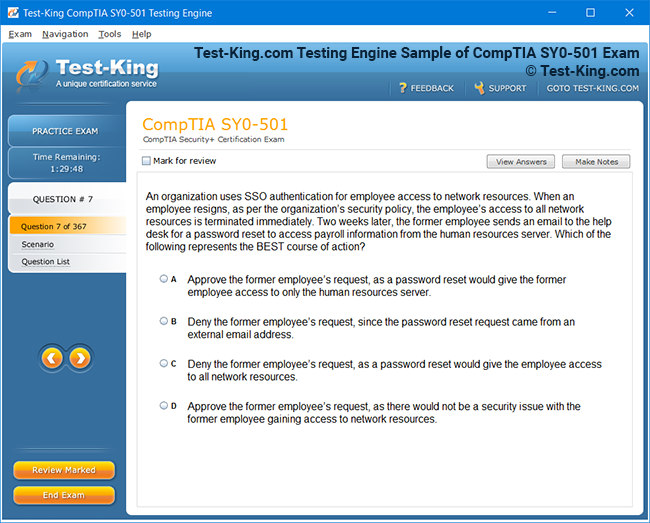
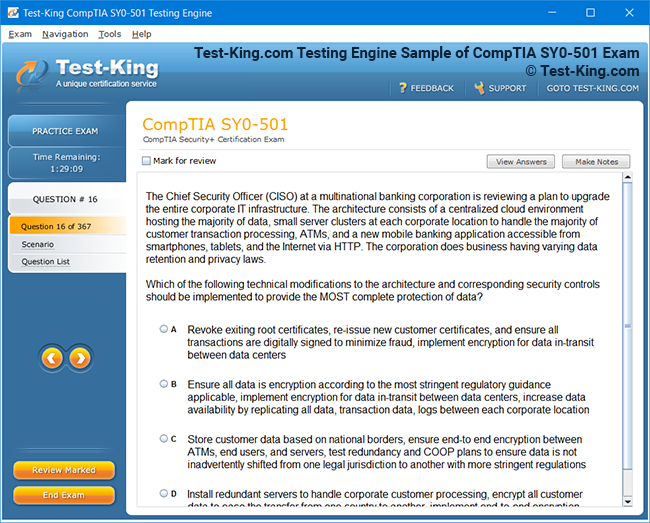
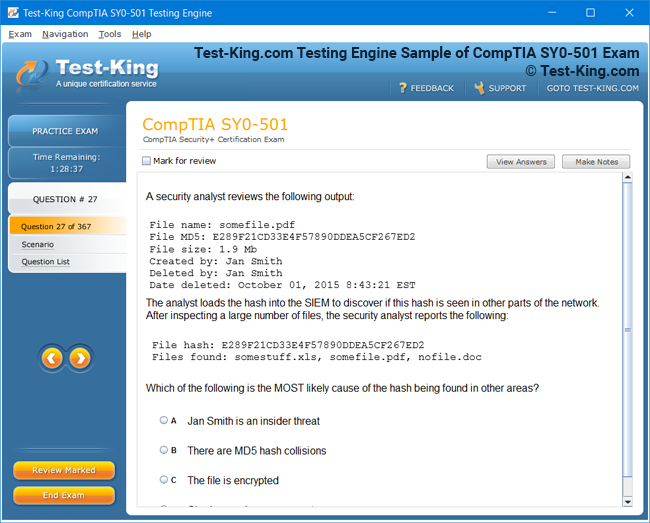
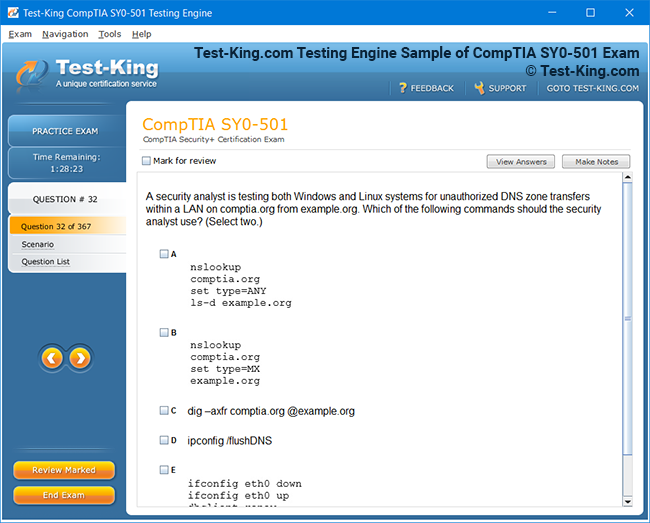
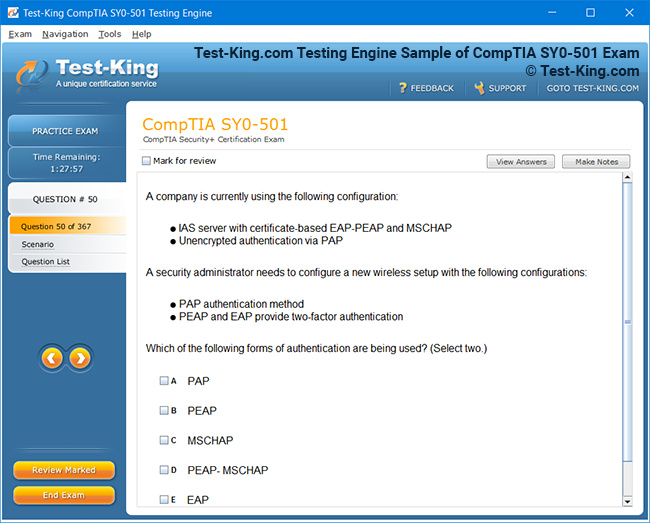
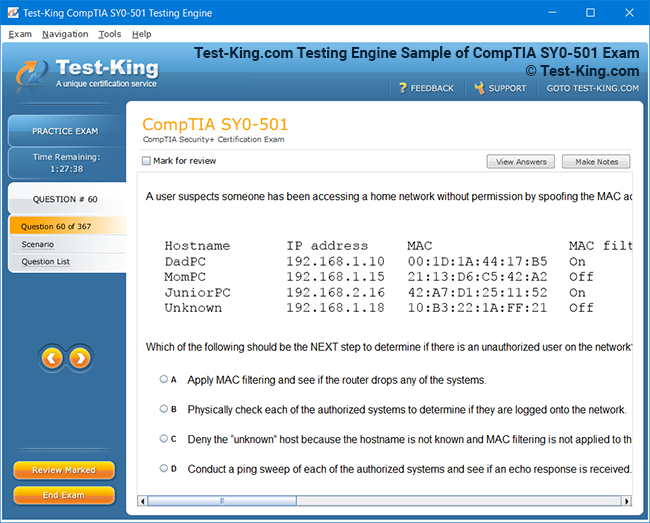
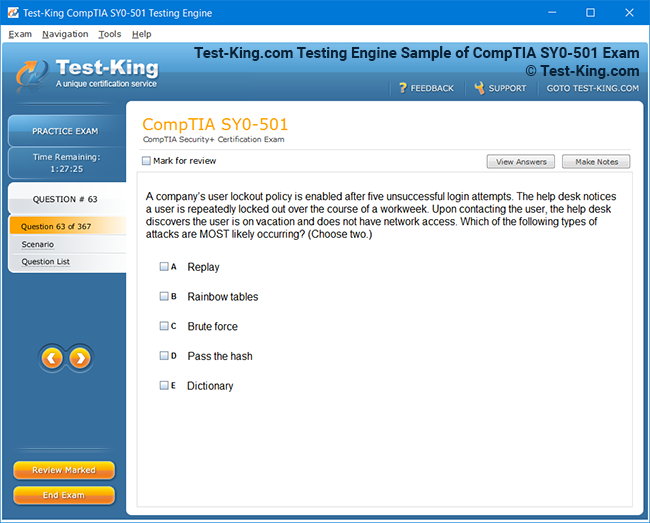
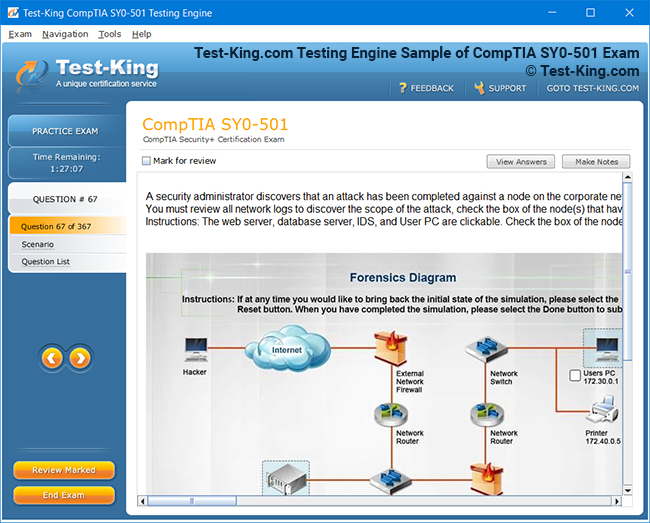
Product Screenshots
Frequently Asked Questions
How can I get the products after purchase?
All products are available for download immediately from your Member's Area. Once you have made the payment, you will be transferred to Member's Area where you can login and download the products you have purchased to your computer.
How long can I use my product? Will it be valid forever?
Test-King products have a validity of 90 days from the date of purchase. This means that any updates to the products, including but not limited to new questions, or updates and changes by our editing team, will be automatically downloaded on to computer to make sure that you get latest exam prep materials during those 90 days.
Can I renew my product if when it's expired?
Yes, when the 90 days of your product validity are over, you have the option of renewing your expired products with a 30% discount. This can be done in your Member's Area.
Please note that you will not be able to use the product after it has expired if you don't renew it.
How often are the questions updated?
We always try to provide the latest pool of questions, Updates in the questions depend on the changes in actual pool of questions by different vendors. As soon as we know about the change in the exam question pool we try our best to update the products as fast as possible.
How many computers I can download Test-King software on?
You can download the Test-King products on the maximum number of 2 (two) computers or devices. If you need to use the software on more than two machines, you can purchase this option separately. Please email support@test-king.com if you need to use more than 5 (five) computers.
What is a PDF Version?
PDF Version is a pdf document of Questions & Answers product. The document file has standart .pdf format, which can be easily read by any pdf reader application like Adobe Acrobat Reader, Foxit Reader, OpenOffice, Google Docs and many others.
Can I purchase PDF Version without the Testing Engine?
PDF Version cannot be purchased separately. It is only available as an add-on to main Question & Answer Testing Engine product.
What operating systems are supported by your Testing Engine software?
Our testing engine is supported by Windows. Andriod and IOS software is currently under development.
Top CIW Exams
1D0-442 : How to Prepare Effectively for the CIW Enterprise Specialist Exam
The CIW Enterprise Specialist exam, identified by the code 1D0-442, represents a pivotal milestone for IT professionals aiming to establish credibility in enterprise-level computing environments. This certification is designed for individuals who seek to validate their mastery of enterprise technologies, network management principles, and integrated solutions that facilitate organizational efficiency. Professionals who obtain this credential often find themselves positioned favorably in environments requiring the orchestration of multiple systems, the management of complex infrastructures, and the deployment of innovative enterprise solutions.
What the Exam Measures
The exam evaluates a candidate's comprehensive understanding of enterprise concepts, from network infrastructure and database administration to web technologies and cloud integration. Unlike entry-level certifications that focus on foundational skills, this examination challenges candidates to demonstrate applied knowledge, analytical reasoning, and problem-solving capabilities in scenarios reminiscent of real-world enterprise environments. The examination encompasses a spectrum of competencies, including configuring network services, assessing system security, implementing virtualization strategies, and managing enterprise applications effectively. Candidates must not only memorize theoretical concepts but also apply them pragmatically, simulating the decision-making processes of experienced enterprise specialists.
Exam Objectives and Domains
The examination objectives are meticulously delineated to ensure candidates possess the breadth and depth of knowledge necessary for enterprise administration. The first domain centers on enterprise infrastructure, encompassing the deployment and management of servers, storage solutions, and networking devices. Understanding the principles of redundancy, load balancing, and failover mechanisms is crucial, as enterprises rely on continuous uptime to maintain operational stability. The second domain addresses security management, covering access control, encryption protocols, and risk mitigation strategies. Candidates are expected to identify vulnerabilities, implement proactive defenses, and maintain compliance with regulatory frameworks, ensuring that enterprise data remains safeguarded from evolving cyber threats.
Another critical domain evaluates proficiency in database administration, emphasizing the creation, management, and optimization of relational databases. Candidates must be adept at structuring data efficiently, executing queries with precision, and ensuring data integrity through backups and recovery strategies. The integration of databases with enterprise applications and web services forms a substantial component of this domain, highlighting the interdependence of various systems within complex organizational structures. The final domain often focuses on enterprise solutions, including cloud computing, virtualization, and collaborative technologies. Mastery in these areas enables candidates to design scalable, resilient, and flexible infrastructures capable of adapting to dynamic business requirements.
Exam Format and Question Types
The 1D0-442 examination consists of multiple-choice questions designed to probe the depth of a candidate's understanding while testing analytical reasoning under time constraints. While the exam predominantly features scenario-based inquiries, candidates may encounter questions that require interpreting diagrams, analyzing system configurations, and proposing optimal solutions. This format encourages the application of knowledge rather than mere rote memorization, compelling candidates to synthesize information from multiple domains simultaneously. It is not uncommon for questions to intertwine network configuration with security considerations or database optimization with system scalability, reflecting the interconnected nature of enterprise environments.
Who Should Pursue This Certification
This certification is particularly beneficial for IT professionals aspiring to roles such as network administrators, system analysts, enterprise architects, and infrastructure managers. Individuals with prior experience in IT fundamentals or associate-level certifications can leverage this credential to elevate their career trajectory, demonstrating not only competence but also strategic insight into enterprise systems. Organizations increasingly seek personnel who possess the ability to navigate multifaceted technological landscapes, implement robust solutions, and anticipate potential challenges before they escalate. Achieving this certification signals to employers a readiness to handle intricate, mission-critical projects that underpin business operations.
The Value of CIW Certification in Professional Growth
Obtaining the CIW Enterprise Specialist credential confers tangible advantages in the professional sphere. Beyond augmenting a resume, it substantiates a candidate’s capability to orchestrate enterprise technologies, manage integrated solutions, and contribute to organizational efficiency. The certification also serves as a benchmark for peers and supervisors, establishing a professional identity aligned with industry standards and best practices. In a rapidly evolving technological landscape, possessing verified expertise allows professionals to remain competitive, secure higher-responsibility positions, and participate in strategic initiatives that drive innovation within their organizations.
Common Challenges and Preparation Considerations
Candidates frequently encounter challenges while preparing for this exam due to the breadth and depth of material covered. Concepts such as virtualization, database normalization, and enterprise security frameworks can appear daunting without practical exposure. Additionally, scenario-based questions may require candidates to extrapolate solutions from theoretical knowledge, demanding both analytical thinking and situational awareness. To mitigate these challenges, prospective examinees benefit from immersive learning experiences, such as hands-on practice, simulated environments, and collaborative study sessions. Understanding not only how technologies function but also why specific strategies are implemented in enterprise settings is essential for achieving high performance on the examination.
Integrating Knowledge with Practical Skills
Effective preparation involves bridging the gap between conceptual understanding and applied skills. Candidates should seek opportunities to engage with network configurations, enterprise software, and database management tasks in controlled or real-world environments. This experiential approach solidifies theoretical concepts, enhances problem-solving capabilities, and fosters an intuitive grasp of enterprise operations. Familiarity with case studies, real-world problem sets, and troubleshooting scenarios further refines a candidate’s ability to navigate complex technological landscapes, mirroring the analytical demands of the actual examination.
Resources and Study Techniques
Prospective candidates can optimize their preparation by leveraging a variety of study resources. Comprehensive textbooks, online tutorials, and practice exams form the foundation of knowledge acquisition. Incorporating multimedia resources, such as video demonstrations, interactive simulations, and guided exercises, reinforces learning through multiple modalities. Additionally, forming study groups or engaging in peer discussions can illuminate alternative perspectives, deepen understanding, and cultivate adaptive thinking. Effective time management, structured study schedules, and periodic self-assessments ensure consistent progress and minimize cognitive overload during preparation.
Psychological Readiness and Exam Mindset
Success in the CIW Enterprise Specialist exam extends beyond technical acumen; mental preparedness and strategic approach play pivotal roles. Candidates should cultivate focus, resilience, and confidence, recognizing that the examination evaluates both knowledge and reasoning under timed conditions. Familiarity with the exam format, repeated practice, and exposure to diverse question types alleviate anxiety and enhance cognitive agility. Maintaining balance through adequate rest, nutrition, and stress management contributes to optimal performance, allowing candidates to approach the examination with clarity and composure.
Future Implications of Certification
Achieving this credential can serve as a gateway to advanced professional opportunities, including leadership roles in enterprise IT, consulting positions, and specialized technical responsibilities. The knowledge and skills validated through the examination equip professionals to design, implement, and maintain systems that are robust, scalable, and secure. Moreover, the certification fosters a mindset oriented toward continuous learning and adaptation, essential traits in a field characterized by rapid technological evolution. As enterprises increasingly embrace cloud solutions, integrated systems, and data-driven decision-making, certified professionals are well-positioned to contribute meaningfully to organizational success and innovation.
Crafting a Personalized Study Plan
Preparing for the CIW Enterprise Specialist exam requires more than rote memorization; it demands a meticulous strategy that aligns with both cognitive capabilities and professional obligations. Developing a study plan begins with an honest assessment of current knowledge and skills. Candidates should evaluate their familiarity with enterprise networks, database management, security frameworks, virtualization technologies, and web application integration. This self-assessment helps identify gaps, allowing individuals to focus attention on areas requiring deeper understanding. Recognizing weaknesses early prevents time wastage on topics already mastered and ensures a balanced approach to comprehensive preparation.
Once gaps are identified, structuring a realistic timeline becomes paramount. A disciplined schedule allows for systematic coverage of all exam domains while maintaining mental resilience. This timeline should allocate sufficient time for both conceptual learning and hands-on practice. For instance, dedicating mornings to theoretical study and afternoons to applied exercises can reinforce comprehension and retention. Incorporating periodic reviews prevents the decay of previously learned material and fosters a cumulative understanding of interrelated concepts. Additionally, pacing oneself according to personal learning rhythms reduces cognitive fatigue and enhances long-term retention.
Prioritization of high-weight topics is another crucial aspect of an effective study plan. Certain domains, such as enterprise infrastructure configuration, database administration, and security implementation, often constitute a larger portion of the exam. Candidates should emphasize these areas while ensuring that secondary topics, including cloud-based solutions and collaborative technologies, are not neglected. This approach balances depth and breadth, preparing candidates to handle questions that integrate multiple competencies simultaneously. Integrating previous exam patterns and understanding the likely distribution of topics further refines prioritization, enabling candidates to allocate resources efficiently.
Active learning techniques play a pivotal role in reinforcing understanding. Passive reading or simple note-taking rarely suffices for an examination of this caliber. Techniques such as summarizing complex concepts in one’s own words, teaching principles to a peer, and constructing mind maps can solidify comprehension. Engaging in scenario-based exercises or problem-solving activities emulates the analytical nature of the actual exam, providing insight into how theoretical knowledge applies to practical situations. This strategy cultivates critical thinking, allowing candidates to approach unfamiliar questions with logic and adaptability.
Effective study also necessitates careful selection of resources. Official materials, textbooks, and comprehensive online tutorials provide foundational knowledge, while practice examinations and case studies offer insights into real-world application. Candidates may benefit from integrating multimedia resources such as video demonstrations, interactive simulations, and step-by-step walkthroughs of enterprise configurations. These tools cater to diverse learning preferences and reinforce retention through varied cognitive channels. Supplementary resources such as forums and professional networks can provide exposure to alternative strategies, elucidate complex topics, and foster collaborative problem-solving skills.
Managing study sessions to maximize cognitive absorption is equally important. Short, focused intervals interspersed with brief breaks optimize attention and prevent mental fatigue. This approach, often referred to as spaced repetition, enhances long-term retention by reinforcing neural pathways associated with newly acquired knowledge. Regular self-assessment through quizzes, flashcards, and mock scenarios identifies areas of persistent difficulty, allowing candidates to adjust their focus and refine understanding. Coupled with reflective evaluation, this method cultivates self-awareness regarding learning progress and efficiency.
Time management extends beyond study sessions to encompass the integration of preparation with professional and personal responsibilities. Candidates often juggle full-time employment, family obligations, and other commitments, necessitating a plan that harmonizes preparation with daily life. Allocating consistent periods for study, preferably when mental alertness is optimal, ensures productivity. Evening or early morning sessions may offer fewer distractions, while weekends can be dedicated to intensive review or practice exercises. Flexibility within the schedule accommodates unforeseen interruptions without derailing overall progress, fostering a sustainable preparation routine.
Incorporating practical exposure is essential for bridging the gap between theoretical knowledge and applied competence. Hands-on practice with network devices, enterprise applications, and database management systems deepens understanding and nurtures intuitive problem-solving abilities. Candidates may replicate scenarios encountered in enterprise environments, such as configuring network redundancy, implementing security protocols, or optimizing database performance. This experiential learning instills confidence and familiarizes candidates with workflows they may encounter during the exam, reducing anxiety and enhancing analytical agility.
Motivation and accountability are also significant components of an effective study plan. Setting tangible milestones, celebrating incremental achievements, and maintaining a visual progress tracker can reinforce commitment. Accountability partners or study groups provide encouragement, expose individuals to diverse problem-solving approaches, and cultivate collaborative reasoning skills. Engaging with peers fosters discussion of nuanced topics, stimulates critical thinking, and provides opportunities to articulate understanding clearly. This social dimension complements individual study, ensuring a more holistic preparation experience.
Adapting strategies based on periodic evaluation ensures continual improvement. Monitoring performance in practice exams, analyzing incorrect responses, and identifying recurring conceptual misunderstandings provide actionable feedback. Adjusting study methods to emphasize weak areas or exploring alternative learning tools enhances efficiency and fortifies overall preparedness. Candidates who adopt a reflective approach to preparation are more likely to internalize complex concepts and apply them effectively under examination conditions.
Psychological readiness underpins every aspect of preparation. Confidence, focus, and stress management contribute significantly to performance. Candidates may employ techniques such as visualization, meditation, or cognitive rehearsal to reinforce positive mindset and reduce exam-related anxiety. Understanding that errors in practice are opportunities for growth rather than setbacks fosters resilience. Approaching preparation with curiosity and intellectual engagement, rather than mere obligation, enhances motivation and facilitates deeper cognitive absorption of concepts.
Integrating theoretical knowledge with current industry practices strengthens relevance and comprehension. Engaging with contemporary case studies, enterprise publications, and emerging technology trends provides context for exam topics. Recognizing how database management, network configuration, and enterprise security evolve within practical environments enhances understanding and ensures that learning is both contemporary and applicable. This contextual awareness aids in navigating scenario-based questions that demand application of knowledge rather than simple recall.
Resourcefulness in study techniques enhances efficiency. Utilizing mnemonic devices, analogical reasoning, and conceptual grouping aids in retaining intricate details such as protocol hierarchies, database normalization rules, and security procedures. Creating mental models of enterprise networks or visualizing data flow between systems can simplify complex interactions, making them more memorable. This cognitive scaffolding transforms abstract principles into tangible, retrievable constructs, supporting rapid recall during examination scenarios.
Balancing rigor with adaptability ensures that preparation is effective yet sustainable. Candidates must avoid overexertion while maintaining a steady pace of learning. Periodic reviews, flexible scheduling, and selective prioritization prevent burnout and promote consistent progress. By embracing adaptive learning strategies, candidates can respond dynamically to evolving understanding, reinforcing weaker areas and consolidating strengths. The capacity to pivot based on self-evaluation is an essential component of a successful preparation approach.
Incorporating reflective journaling or note synthesis fosters meta-cognitive awareness. Recording insights, summarizing key takeaways, and annotating observations from practice exercises enhances comprehension and retention. This deliberate reflection reinforces connections between concepts, highlights patterns across multiple domains, and cultivates an analytical mindset. Candidates who engage in structured reflection often demonstrate superior problem-solving abilities and a deeper, integrative understanding of enterprise systems.
Finally, preparation extends beyond the confines of textbooks or tutorials. Exposure to simulated enterprise environments, engagement in IT projects, and interaction with mentors provides practical context and reinforces conceptual learning. Understanding how theoretical knowledge translates into operational decisions empowers candidates to anticipate challenges, evaluate alternatives, and implement optimal solutions. This holistic preparation, blending structured study, applied practice, and reflective analysis, equips candidates to approach the CIW Enterprise Specialist exam with confidence, competence, and strategic insight.
Mastering Enterprise Technologies and Tools
Proficiency in enterprise technologies and tools is the cornerstone of success in the CIW Enterprise Specialist exam. Candidates must cultivate both conceptual understanding and applied skills across a diverse range of systems that underpin organizational operations. Enterprise environments are inherently multifaceted, encompassing networking infrastructure, server administration, database management, virtualization, security protocols, and collaborative solutions. Achieving mastery in these domains requires an immersive approach that combines study, hands-on practice, and reflective analysis.
Understanding Enterprise Infrastructure
Enterprise infrastructure forms the backbone of any organizational IT environment. Candidates should become adept at comprehending server architectures, storage solutions, networking devices, and system integration methods. Knowledge of redundancy, load balancing, and failover mechanisms is essential, as enterprises rely on uninterrupted operations to maintain productivity and service quality. Familiarity with enterprise-class hardware and virtualization environments allows candidates to appreciate how multiple systems interconnect, how resources are allocated efficiently, and how performance bottlenecks are mitigated. A nuanced understanding of infrastructure ensures that solutions proposed in exam scenarios are both feasible and optimized for real-world deployment.
Networking and Communication Protocols
Networking represents the circulatory system of enterprise operations, connecting users, applications, and devices seamlessly. Candidates must understand protocols, routing, switching, IP addressing, and network topology to navigate complex configurations confidently. Concepts such as subnetting, VLAN segmentation, and secure remote access are vital for maintaining network integrity and performance. Additionally, understanding the interplay between wired and wireless technologies, load distribution, and latency management equips candidates with the ability to analyze network scenarios critically. Mastery of these topics enables effective problem-solving when confronted with multi-layered enterprise networking challenges.
Database Management and Optimization
Databases constitute the information repositories that drive enterprise decision-making. Candidates are expected to possess skills in designing, implementing, and maintaining relational databases. Knowledge of normalization principles, query optimization, indexing, and transaction management ensures data integrity and operational efficiency. Database security, backup strategies, and recovery procedures form another essential component, safeguarding against data loss or corruption. Integrating databases with enterprise applications and web services enhances functionality and responsiveness, reflecting the real-world demands of enterprise environments. Developing hands-on proficiency with database administration tools strengthens candidates’ confidence and analytical capabilities during examination scenarios.
Virtualization and Cloud Technologies
Virtualization and cloud technologies have revolutionized enterprise computing, enabling scalable, flexible, and resilient systems. Candidates must understand hypervisors, virtual machines, containers, and resource allocation strategies to leverage these technologies effectively. Cloud platforms, including public, private, and hybrid models, necessitate knowledge of deployment strategies, service models, and cost optimization techniques. Familiarity with virtual networks, storage provisioning, and disaster recovery planning ensures that candidates can propose solutions that balance performance, reliability, and cost. Mastery of these tools empowers professionals to adapt to evolving enterprise environments while providing scalable and secure solutions.
Security and Risk Management
Enterprise security is a critical domain that permeates all aspects of organizational IT operations. Candidates should be proficient in access control, encryption protocols, intrusion detection, and vulnerability assessment. Understanding the principles of risk management, regulatory compliance, and incident response ensures that enterprise systems remain protected against evolving threats. Candidates must be able to analyze potential risks, implement preventative measures, and respond effectively to breaches. This analytical approach equips individuals to design robust, secure infrastructures, a capability frequently tested through scenario-based questions in the CIW Enterprise Specialist exam.
Enterprise Applications and Integration
Modern enterprises rely on integrated applications for operational efficiency, data analysis, and decision-making. Candidates must understand the deployment, configuration, and maintenance of enterprise software, including content management systems, collaboration platforms, and customer relationship management tools. Integrating these applications with databases, networks, and cloud services requires analytical insight and technical competence. Candidates who develop practical skills in system integration, automation, and troubleshooting can approach exam questions with confidence, proposing solutions that are both technically sound and operationally viable.
Practical Strategies for Mastery
Achieving mastery requires more than theoretical study. Hands-on experience with networking devices, servers, virtualization software, and enterprise applications is crucial. Candidates should simulate real-world tasks, such as configuring secure networks, optimizing databases, or deploying virtual machines. Engaging with guided tutorials, interactive simulations, and case studies reinforces learning by providing context and application. Additionally, reflecting on these experiences enhances problem-solving abilities and fosters a deeper comprehension of underlying principles. Repetition, practice, and analytical reflection consolidate knowledge, preparing candidates to navigate complex, scenario-based questions effectively.
Problem-Solving in Enterprise Scenarios
The CIW Enterprise Specialist exam frequently presents multifaceted scenarios that require integration of multiple competencies. Candidates may encounter questions involving network optimization, database troubleshooting, and security implementation simultaneously. Developing a structured approach to problem-solving, such as analyzing the scenario, identifying constraints, and proposing optimal solutions, enhances efficiency and accuracy. Candidates should practice deconstructing complex problems into manageable components, evaluating potential outcomes, and justifying their decisions based on sound reasoning. This analytical rigor mirrors the challenges encountered in actual enterprise environments and fosters confidence in high-pressure situations.
Leveraging Resources and Tools
Numerous resources facilitate mastery of enterprise technologies. Official certification guides, comprehensive textbooks, online tutorials, and professional forums provide foundational knowledge and nuanced insights. Practical exercises, including virtual labs and simulated environments, reinforce theoretical understanding through experiential learning. Candidates may benefit from peer discussions, mentorship, and collaborative projects, which expose them to alternative approaches, emerging practices, and critical thinking opportunities. Strategically combining these resources maximizes learning efficiency, ensuring that candidates develop both knowledge and applied skills essential for the examination.
Cognitive Techniques for Retention
Integrating cognitive strategies enhances retention of complex enterprise concepts. Techniques such as mind mapping, analogical reasoning, and mnemonic devices support the memorization of protocols, system hierarchies, and procedural sequences. Visualizing data flows, system interdependencies, and network configurations transforms abstract concepts into concrete mental models, facilitating rapid recall. Active reflection, self-testing, and iterative review consolidate understanding while revealing areas requiring reinforcement. These cognitive practices equip candidates to retrieve information effectively, a skill essential for handling scenario-based questions under timed conditions.
Continuous Adaptation and Learning
The landscape of enterprise technology is dynamic, requiring candidates to remain adaptable and receptive to emerging innovations. Engaging with contemporary case studies, reviewing updates to cloud platforms, virtualization tools, and security standards ensures that knowledge remains current. Candidates who adopt an adaptive learning mindset can navigate unfamiliar questions, synthesize information across domains, and propose contextually appropriate solutions. Continuous learning not only enhances exam performance but also cultivates a professional disposition aligned with the evolving demands of enterprise IT environments.
Psychological Preparedness and Focus
Success in mastering enterprise technologies extends beyond technical expertise to include psychological readiness. Candidates must cultivate focus, resilience, and analytical poise to approach complex scenarios with clarity. Stress management techniques, including structured breaks, cognitive rehearsal, and mindfulness, support sustained concentration. Confidence derived from hands-on practice, repeated simulations, and iterative self-assessment reinforces performance under timed conditions. Psychological preparedness ensures that candidates can integrate knowledge fluidly, think critically, and respond strategically during the examination.
Integration of Knowledge and Practical Application
Ultimately, mastery entails integrating theoretical knowledge with practical application. Candidates should approach study as an iterative cycle of learning, application, reflection, and refinement. Engaging with enterprise scenarios, practicing configuration tasks, and simulating problem-solving exercises develops analytical acuity and technical proficiency. Candidates who internalize the interconnections between networking, databases, security, virtualization, and enterprise applications cultivate a holistic understanding. This integrative approach not only prepares candidates for the CIW Enterprise Specialist exam but also equips them to navigate real-world enterprise environments with competence and strategic insight.
Effective Study Resources and Techniques
Success in the CIW Enterprise Specialist exam hinges not only on understanding enterprise concepts but also on strategically leveraging study resources and techniques that enhance retention, comprehension, and application. Preparing for an examination of this caliber requires a multi-faceted approach, blending textual materials, practical exercises, and cognitive strategies that facilitate both analytical thinking and experiential learning. Candidates who invest time in identifying optimal resources and employing systematic techniques cultivate a deeper, more enduring mastery of enterprise systems, network management, and integrated solutions.
Identifying Essential Study Materials
A strong foundation begins with carefully selecting study materials that encompass the breadth of topics covered in the exam. Official certification guides provide structured content, delineating key domains such as enterprise infrastructure, security protocols, database management, virtualization, and collaborative technologies. Complementing these guides with comprehensive textbooks allows candidates to explore topics in greater depth, gaining nuanced insights into complex concepts. It is advantageous to integrate diverse resources, including specialized reference books and peer-reviewed publications, to cultivate a multi-dimensional understanding of enterprise operations and best practices.
Utilizing Online Learning Platforms
The proliferation of online learning platforms offers candidates flexible, accessible methods to reinforce knowledge. Interactive tutorials, guided walkthroughs, and video lectures provide visual and auditory engagement that enhances cognitive absorption. Virtual labs simulate real-world enterprise environments, allowing candidates to experiment with server configurations, network optimization, and database management without risk. These experiences not only reinforce theoretical understanding but also cultivate intuitive problem-solving skills. By repeatedly engaging with practical scenarios, candidates develop procedural memory and familiarity with tools and protocols frequently tested in examination settings.
Practice Examinations and Self-Assessment
Frequent practice with mock examinations and self-assessment exercises is essential for refining understanding and improving performance. Practice questions, when approached critically, reveal knowledge gaps and conceptual misunderstandings. Candidates can analyze patterns in incorrect responses, identify recurring difficulties, and adjust their focus accordingly. Time-bound practice examinations simulate the pressures of the actual test environment, honing time management skills, cognitive agility, and decision-making under constraints. Consistent self-assessment fosters analytical precision, enabling candidates to approach scenario-based questions with confidence and clarity.
Engaging with Case Studies
Case studies provide a contextual framework for understanding the application of enterprise technologies and tools. By examining real-world organizational scenarios, candidates learn how theoretical principles translate into practical solutions. Case studies illuminate strategies for network configuration, database integration, security implementation, and virtualization deployment. Evaluating these examples encourages critical thinking, prompting candidates to analyze the efficacy of various approaches, anticipate challenges, and synthesize solutions that balance operational efficiency, security, and scalability. Exposure to diverse cases equips candidates with the versatility required to tackle complex, multi-domain exam questions.
Collaborative Learning and Peer Interaction
Collaborative learning offers opportunities to articulate understanding, evaluate alternative approaches, and deepen comprehension through discussion. Study groups or professional forums provide a platform for exchanging insights, debating problem-solving strategies, and clarifying ambiguities. Peer interaction stimulates intellectual curiosity, reveals blind spots, and encourages analytical reasoning. Teaching or explaining concepts to others consolidates knowledge, reinforces retention, and cultivates the ability to communicate technical solutions clearly—a skill indirectly assessed through scenario interpretation and practical decision-making in the examination.
Cognitive Techniques for Knowledge Retention
Cognitive strategies enhance the capacity to retain and retrieve complex information efficiently. Techniques such as mind mapping, visual association, and mnemonic devices aid in memorizing network hierarchies, database structures, security protocols, and procedural sequences. Analogical reasoning allows candidates to relate unfamiliar concepts to known frameworks, simplifying comprehension of abstract principles. Periodic review and spaced repetition reinforce neural pathways, promoting long-term retention. By integrating cognitive methods with practical exercises, candidates create a robust internalized schema, facilitating swift recall and confident application under exam conditions.
Structured Study Schedules
An effective study schedule orchestrates the balance between concept acquisition, practical application, and reflective review. Allocating dedicated time blocks for each domain ensures comprehensive coverage while mitigating cognitive overload. Morning sessions can be devoted to theoretical exploration, afternoons to applied exercises, and evenings to reflection and consolidation. Flexibility within the schedule accommodates professional or personal obligations, ensuring continuity without compromising depth of learning. Incorporating short, focused intervals with intermittent breaks optimizes attention, prevents fatigue, and enhances cognitive efficiency.
Multimedia Integration and Interactive Tools
Incorporating multimedia resources into the study regimen enhances engagement and retention. Interactive diagrams, animated tutorials, and guided simulations provide dynamic visualizations of complex processes, from network data flows to virtual machine deployment. Engaging multiple senses during learning strengthens memory encoding and facilitates rapid retrieval. Tools such as virtual labs, simulation environments, and scenario-based exercises allow candidates to experiment, make adjustments, and observe outcomes, reinforcing both technical competence and analytical reasoning. This experiential learning bridges the gap between theoretical knowledge and real-world application.
Reflective Practice and Iterative Learning
Reflective practice encourages candidates to evaluate their learning strategies, identify patterns of misunderstanding, and refine techniques. Journaling insights from exercises, summarizing key principles, and annotating observations from practice scenarios foster meta-cognitive awareness. Iterative learning, whereby concepts are revisited in progressively complex contexts, consolidates understanding and strengthens problem-solving abilities. Candidates who engage in reflective cycles develop heightened analytical skills, adaptability, and the capacity to navigate multi-faceted questions with precision.
Prioritizing High-Impact Topics
Focusing on high-impact topics maximizes efficiency and ensures preparedness for domains with significant weighting in the exam. Enterprise infrastructure, database administration, security management, and virtualization constitute foundational pillars requiring concentrated attention. While secondary domains remain important, prioritizing material that forms the core of the examination allows candidates to achieve both depth and breadth in knowledge. Analyzing practice questions, exam outlines, and previous trends informs this prioritization, guiding study efforts toward areas most likely to influence performance outcomes.
Leveraging Mentorship and Expert Guidance
Mentorship from experienced professionals accelerates comprehension and practical insight. Mentors can provide clarifications on intricate topics, demonstrate advanced techniques, and offer strategic advice for approaching scenario-based questions. Guidance from experts familiar with enterprise environments enhances candidates’ awareness of real-world applications, operational nuances, and effective problem-solving methods. Engaging with mentors fosters critical thinking, exposes candidates to alternative perspectives, and cultivates professional maturity, complementing the structured study approach.
Integrating Technology with Study Methods
Modern technology provides tools for efficient knowledge management and active learning. Digital note-taking, spaced repetition software, and interactive flashcards support memory retention and facilitate quick review of complex topics. Candidates can leverage online forums, cloud-based simulations, and collaborative platforms to reinforce understanding and engage with diverse perspectives. Integrating technology into study routines streamlines information management, enhances engagement, and aligns preparation methods with contemporary enterprise practices.
Psychological and Cognitive Preparation
Exam readiness extends beyond knowledge acquisition to include mental resilience, focus, and strategic thinking. Stress management techniques, such as meditation, cognitive rehearsal, and structured breaks, maintain clarity and concentration during intensive study periods. Confidence emerges from consistent practice, iterative refinement, and mastery of practical exercises. Candidates who cultivate a disciplined yet adaptable mindset approach the examination with analytical acuity, composure, and efficiency, ensuring optimal performance when faced with complex, scenario-driven questions.
Synthesis of Resources and Techniques
The most effective preparation strategy synthesizes diverse resources and techniques into a cohesive, adaptive plan. Combining textbooks, official guides, online tutorials, virtual labs, practice exams, and mentorship fosters a multi-dimensional understanding. Integrating cognitive strategies, reflective practice, and multimedia engagement reinforces retention and comprehension. Iterative evaluation of progress, identification of weak areas, and adjustment of methods ensures continuous improvement. Candidates who orchestrate these elements develop both the technical proficiency and analytical confidence necessary to navigate the CIW Enterprise Specialist exam with precision.
Practice Strategies and Mock Exams
Effective preparation for the CIW Enterprise Specialist exam demands more than theoretical knowledge; it requires rigorous practice strategies and immersion in simulated examination environments. Mastering practical exercises and structured mock tests enables candidates to consolidate knowledge, develop problem-solving agility, and approach complex enterprise scenarios with confidence. Establishing a systematic practice regimen, coupled with reflective evaluation, ensures that candidates can anticipate challenges, manage time efficiently, and apply critical thinking under the constraints typical of the 1D0-442 examination.
Structuring a Consistent Practice Routine
Creating a disciplined and consistent practice routine is crucial for internalizing complex enterprise concepts. Candidates should allocate specific time intervals each day for targeted practice, ensuring steady progress across all domains. The practice schedule should interweave theoretical revision with applied exercises to foster both comprehension and technical proficiency. For instance, mornings can focus on hands-on tasks such as configuring network environments or optimizing database queries, while afternoons can be devoted to scenario analysis and troubleshooting simulations. Evening sessions may be used for reflective review, consolidating insights, and reinforcing areas of difficulty identified during practice exercises. A balanced, repetitive approach cultivates mastery and reduces the likelihood of cognitive fatigue.
Simulating Examination Conditions
Familiarity with the structure and timing of the CIW Enterprise Specialist exam is enhanced through simulation. Candidates benefit from replicating test conditions, including timed sessions, restricted resource access, and exposure to scenario-based questions. Mock examinations provide realistic assessments of readiness, highlighting strengths and revealing weaknesses that require further attention. This strategy trains candidates to allocate time efficiently, prioritize questions based on difficulty, and sustain focus over extended periods. Repeated exposure to exam-like conditions fosters cognitive resilience, analytical precision, and strategic decision-making, all of which are vital for navigating multifaceted enterprise scenarios.
Analyzing Practice Performance
Critical evaluation of practice performance is essential for identifying patterns of misunderstanding and refining strategies. Candidates should systematically review incorrect responses, assess the reasoning behind errors, and determine whether gaps are conceptual, procedural, or related to time management. Reflecting on these insights enables focused remediation, ensuring that study efforts address underlying deficiencies rather than superficial symptoms. Additionally, monitoring trends over successive mock exams provides a measure of progress, reinforces areas of improvement, and highlights topics requiring sustained attention. Analytical self-assessment transforms practice from mere repetition into a targeted, adaptive learning process.
Scenario-Based Problem Solving
The CIW Enterprise Specialist exam emphasizes scenario-based problem-solving, requiring candidates to integrate knowledge from multiple domains simultaneously. Practice exercises should mimic these conditions, presenting multifaceted challenges that combine network configuration, database administration, security management, and application integration. Approaching these scenarios involves careful analysis of constraints, evaluation of alternative solutions, and selection of optimal strategies. Candidates should develop a systematic methodology, breaking down complex problems into manageable components, assessing dependencies, and verifying outcomes. Regular engagement with scenario-based exercises enhances analytical agility and prepares candidates for the cognitive demands of the actual examination.
Time Management Techniques
Effective time management is a critical skill in achieving high performance. Candidates should practice pacing themselves during mock examinations, allocating time proportionally to question complexity and weight. Techniques such as triaging questions, flagging difficult items for later review, and adhering to time benchmarks prevent unproductive focus on individual problems. Developing an internal sense of timing, supported by repeated exposure to simulated exam conditions, allows candidates to approach questions methodically, maintain composure, and maximize scoring potential. Mastery of time management is particularly valuable for scenario-driven questions that require synthesis of multiple concepts under strict constraints.
Reinforcing Knowledge Through Repetition
Repetition consolidates knowledge and enhances retention of intricate enterprise concepts. Candidates should revisit previously practiced exercises, replicate simulations, and iterate solutions to internalize procedures and reinforce understanding. This iterative approach strengthens procedural memory, making complex sequences, configurations, and troubleshooting steps more intuitive. Revisiting scenarios from different angles encourages flexible thinking, enabling candidates to adapt solutions to novel challenges. Repetition, combined with reflective evaluation, transforms familiarity into fluency, ensuring that skills and knowledge can be applied reliably during the examination.
Incorporating Diverse Practice Resources
Utilizing a broad array of practice resources enriches preparation by exposing candidates to varied problem types and methodologies. Official certification guides, supplementary textbooks, online tutorials, and virtual laboratories provide a spectrum of challenges that reinforce theoretical and practical competence. Engaging with case studies, peer forums, and collaborative exercises introduces alternative perspectives, exposes candidates to unanticipated scenarios, and encourages adaptive thinking. This diversity enhances analytical versatility, ensuring that candidates are not limited to a single approach when confronted with complex examination questions.
Cognitive Strategies During Practice
Cognitive strategies enhance both learning efficiency and performance during mock exercises. Techniques such as active recall, self-questioning, and mental rehearsal improve retention and retrieval of enterprise concepts. Visualization aids, including mental diagrams of network topologies, database relationships, and system interdependencies, transform abstract concepts into tangible constructs. Analogical reasoning allows candidates to relate unfamiliar scenarios to known frameworks, facilitating problem-solving under pressure. Incorporating these cognitive methods during practice sessions fosters analytical acuity and prepares candidates to tackle multifaceted questions with precision.
Reflective Evaluation and Iterative Improvement
Reflective evaluation is a cornerstone of effective practice. Candidates should regularly analyze their performance, identify recurring errors, and adjust strategies accordingly. Maintaining a practice journal or log of observations allows for systematic review and tracking of progress over time. Iterative improvement involves revisiting exercises, applying refined methodologies, and integrating feedback to enhance both understanding and technique. This cycle of practice, reflection, and refinement transforms preparation into a dynamic, adaptive process, ensuring that knowledge and skills are continually reinforced and optimized.
Psychological Preparation Through Practice
Beyond technical competence, psychological readiness plays a pivotal role in performance. Mock examinations and practice exercises build familiarity with the cognitive demands of the CIW Enterprise Specialist exam, reducing anxiety and fostering confidence. Candidates develop resilience by encountering challenging scenarios repeatedly, learning to maintain focus, and managing stress effectively. Techniques such as controlled breathing, cognitive rehearsal, and mindfulness can be integrated into practice routines to enhance mental composure. Psychological preparation ensures that candidates can approach complex, scenario-driven questions with clarity, calmness, and analytical precision.
Integrating Practical and Theoretical Knowledge
Practice strategies are most effective when they integrate practical exercises with theoretical understanding. Hands-on activities such as configuring servers, optimizing databases, implementing security protocols, and simulating network failures reinforce conceptual principles and provide contextual grounding. Reflecting on these exercises, linking actions to underlying theory, and evaluating outcomes strengthens comprehension and enhances problem-solving skills. Candidates who harmonize practical and theoretical learning develop the analytical dexterity necessary to navigate the intricate scenarios frequently encountered in the CIW Enterprise Specialist exam.
Developing Adaptive Problem-Solving Skills
Adaptive problem-solving is cultivated through repeated exposure to varied scenarios, challenges, and question types. Candidates learn to approach unfamiliar problems methodically, analyze dependencies, assess potential outcomes, and select optimal solutions. Engaging with a wide spectrum of exercises, from standard configurations to complex integrations, nurtures flexibility in thought and reinforces critical reasoning. Adaptive skills enable candidates to apply foundational knowledge creatively, handle unexpected situations confidently, and synthesize multiple concepts effectively under examination constraints.
Maximizing Performance Through Feedback Loops
Feedback loops amplify the effectiveness of practice by providing insights into strengths, weaknesses, and areas requiring additional focus. Candidates should seek feedback from self-assessment tools, mentors, or peers to refine understanding and adjust strategies. Timely, specific, and actionable feedback ensures that errors are addressed promptly, reinforcing correct methodologies and consolidating knowledge. Iteratively incorporating feedback into practice sessions enhances performance, deepens comprehension, and builds the confidence necessary to excel in the CIW Enterprise Specialist exam.
Continuous Reinforcement and Long-Term Retention
Sustained engagement with practice exercises and mock examinations ensures long-term retention of enterprise concepts. Periodically revisiting previously studied topics, simulating examination conditions, and reinforcing analytical techniques maintain proficiency and cognitive sharpness. This continuous reinforcement bridges the gap between short-term memorization and enduring mastery, equipping candidates with the ability to recall, apply, and synthesize knowledge effectively during high-pressure examination scenarios. Long-term retention underpins both immediate success on the examination and enduring competence in professional enterprise environments.
Exam Day Strategy and Post-Exam Guidance
The culmination of preparation for the CIW Enterprise Specialist exam requires a deliberate strategy for exam day combined with guidance on post-exam actions to maximize both performance and professional growth. Success in the 1D0-442 examination is influenced not only by knowledge and technical skill but also by mental readiness, time management, and the ability to apply analytical reasoning under pressure. Implementing a structured approach for the day of the exam, followed by thoughtful post-exam reflection, ensures that candidates fully leverage the preparation invested over preceding weeks and months.
Pre-Exam Preparation
A well-executed exam day begins long before stepping into the testing environment. Candidates should ensure that sleep, nutrition, and hydration are optimized in the days leading up to the exam. Cognitive acuity is heightened by adequate rest, and maintaining a balanced diet supports sustained focus and mental resilience. Reviewing key concepts lightly rather than attempting exhaustive last-minute study mitigates anxiety and reinforces confidence. Creating a checklist of required materials, confirming examination location and timing, and mentally visualizing a smooth test-taking experience reduces stress and allows candidates to enter the examination with composure and clarity.
Mental Focus and Confidence
Mental preparation is as crucial as technical readiness. Candidates should cultivate confidence through repeated practice and visualization of successful problem-solving scenarios. Positive reinforcement, affirmations, and controlled breathing exercises help maintain a calm and focused state. Understanding that errors in practice are opportunities for growth, rather than reasons for discouragement, nurtures resilience. Approaching the exam with a mindset of intellectual curiosity rather than apprehension allows for adaptive thinking, facilitating logical analysis and systematic application of knowledge to complex scenarios.
Time Management During the Exam
Effective time management during the examination is essential to address all questions accurately. Candidates should allocate time proportionally based on the complexity of questions, prioritizing high-weight or familiar items while monitoring pacing. Triage strategies involve initially answering questions that are clear and straightforward, flagging more challenging items for subsequent review. Maintaining awareness of the remaining time, employing efficient reading strategies, and avoiding excessive fixation on single questions enhances overall performance. Practicing these techniques in mock exams develops an intuitive sense of pacing and strategic allocation of cognitive resources.
Approaching Scenario-Based Questions
Scenario-based questions often require integrating multiple competencies simultaneously, such as network configuration, database optimization, security implementation, and enterprise application deployment. Candidates should carefully analyze the context, identify constraints, evaluate alternative solutions, and select the most optimal approach. Breaking complex scenarios into manageable components enables systematic reasoning and prevents oversight of critical details. Drawing upon practical experience from simulations, lab exercises, and case studies facilitates intuitive application of theoretical knowledge, enabling candidates to navigate multi-layered problems with analytical precision.
Analytical Reasoning and Decision Making
Analytical reasoning is vital for selecting appropriate solutions in ambiguous or multi-faceted questions. Candidates should employ logical deduction, elimination of implausible options, and structured problem-solving techniques. Considering dependencies among enterprise systems, evaluating potential impacts, and anticipating unintended consequences enhance decision-making accuracy. Practicing these cognitive approaches during preparation ensures that candidates can process intricate information efficiently, maintain clarity under time constraints, and justify choices within scenario-based contexts.
Managing Stress and Cognitive Load
Stress management and regulation of cognitive load are key components of optimal performance. Candidates should recognize signs of mental fatigue, employ brief pauses for controlled breathing, and maintain composure during challenging questions. Techniques such as visualization, mindfulness, and focusing on the task rather than potential outcomes help sustain attention and analytical acuity. By maintaining an even-tempered approach throughout the examination, candidates can prevent errors stemming from anxiety, enhance concentration, and optimize the application of knowledge to diverse scenarios.
Post-Exam Reflection and Analysis
After completing the examination, thoughtful reflection provides insights into both performance and preparation strategies. Candidates should consider which question types were most challenging, which domains required more time, and how effectively time and cognitive resources were managed. This analysis, even if the outcome is favorable, identifies areas for reinforcement in future professional tasks or advanced certifications. Reflecting on exam experiences transforms immediate feedback into long-term learning, supporting continuous professional development and mastery of enterprise technologies.
Professional Application of Certification
Obtaining the CIW Enterprise Specialist credential offers tangible benefits beyond immediate validation of knowledge. Candidates gain recognition for their ability to manage enterprise infrastructure, implement security measures, optimize databases, and integrate complex applications effectively. This credential enhances career mobility, opening pathways to roles such as enterprise architect, network administrator, systems analyst, and infrastructure manager. Demonstrated competence fosters credibility, enables participation in high-impact projects, and positions professionals to influence strategic decision-making within organizations.
Leveraging Knowledge in Real-World Environments
The practical insights gained through preparation and examination extend into real-world enterprise environments. Certified professionals are equipped to design scalable systems, implement secure networks, and manage integrated enterprise solutions efficiently. Familiarity with scenario-based problem-solving translates into improved operational decision-making, risk mitigation, and strategic planning. By applying both theoretical and practical knowledge, professionals can contribute meaningfully to organizational success, ensuring that enterprise operations are resilient, efficient, and aligned with evolving business objectives.
Continuous Professional Development
Certification is a foundation, not a culmination. Candidates are encouraged to continue learning, exploring emerging technologies, and engaging with professional communities. Staying abreast of innovations in virtualization, cloud computing, database management, and security ensures that skills remain relevant and competitive. Engaging with advanced certifications, workshops, and peer networks fosters intellectual growth, deepens expertise, and cultivates the adaptive mindset necessary for sustained success in the dynamic landscape of enterprise IT.
Psychological Reinforcement After the Exam
Maintaining psychological equilibrium after completing the examination is important. Candidates should recognize accomplishments, irrespective of immediate results, and reflect on progress made through diligent preparation. Celebrating milestones reinforces motivation and supports the continuation of professional development. For candidates who may need to retake the exam, reflection provides clarity on areas requiring further focus, while for those who succeed, it strengthens confidence and readiness to apply acquired knowledge in practical contexts.
Strategic Career Planning Post-Certification
Post-certification, candidates can leverage credentials to pursue advanced roles, consultative opportunities, and strategic projects within enterprise environments. Planning career trajectories involves identifying positions that align with expertise, evaluating organizational needs, and seeking opportunities that challenge and expand skill sets. Certified professionals are well-positioned to contribute to innovation, drive efficiency, and implement integrated solutions that enhance operational performance. Strategic utilization of credentials ensures that preparation efforts translate into tangible professional advancement and influence within enterprise systems management.
Integration of Exam Experience into Professional Growth
The holistic experience of preparing for and completing the CIW Enterprise Specialist exam provides a framework for continuous professional excellence. Candidates learn to synthesize theoretical understanding with applied practice, manage cognitive demands under pressure, and approach complex systems analytically. These skills, cultivated during preparation and examination, enhance operational competence, decision-making, and adaptability in professional environments. By integrating lessons learned into everyday tasks, certified professionals reinforce mastery, cultivate leadership potential, and remain agile in the face of technological evolution.
Conclusion
Preparation for the CIW Enterprise Specialist exam extends beyond memorization, demanding strategic planning, practical engagement, cognitive discipline, and psychological readiness. Effective exam day strategies, including mental focus, time management, analytical reasoning, and scenario-based problem-solving, are crucial for navigating the complex challenges posed by the 1D0-442 examination. Post-exam reflection, professional application of knowledge, and continuous development consolidate the value of the certification, ensuring that candidates not only succeed on the exam but also leverage their expertise to achieve meaningful career advancement. Mastery of enterprise technologies, coupled with disciplined preparation and reflective practice, empowers professionals to contribute strategically, innovate effectively, and excel in the dynamic landscape of enterprise IT.