

Exam Code: 1D0-538
Exam Name: Object Oriented Analysis and Design Test (JCERT)
Certification Provider: CIW
Corresponding Certification: Master CIW Enterprise Developer
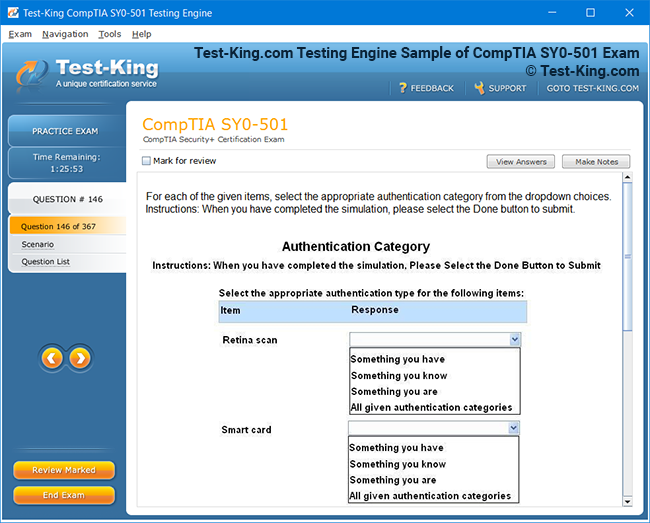
Product Screenshots

Frequently Asked Questions
How can I get the products after purchase?
All products are available for download immediately from your Member's Area. Once you have made the payment, you will be transferred to Member's Area where you can login and download the products you have purchased to your computer.
How long can I use my product? Will it be valid forever?
Test-King products have a validity of 90 days from the date of purchase. This means that any updates to the products, including but not limited to new questions, or updates and changes by our editing team, will be automatically downloaded on to computer to make sure that you get latest exam prep materials during those 90 days.
Can I renew my product if when it's expired?
Yes, when the 90 days of your product validity are over, you have the option of renewing your expired products with a 30% discount. This can be done in your Member's Area.
Please note that you will not be able to use the product after it has expired if you don't renew it.
How often are the questions updated?
We always try to provide the latest pool of questions, Updates in the questions depend on the changes in actual pool of questions by different vendors. As soon as we know about the change in the exam question pool we try our best to update the products as fast as possible.
How many computers I can download Test-King software on?
You can download the Test-King products on the maximum number of 2 (two) computers or devices. If you need to use the software on more than two machines, you can purchase this option separately. Please email support@test-king.com if you need to use more than 5 (five) computers.
What is a PDF Version?
PDF Version is a pdf document of Questions & Answers product. The document file has standart .pdf format, which can be easily read by any pdf reader application like Adobe Acrobat Reader, Foxit Reader, OpenOffice, Google Docs and many others.
Can I purchase PDF Version without the Testing Engine?
PDF Version cannot be purchased separately. It is only available as an add-on to main Question & Answer Testing Engine product.
What operating systems are supported by your Testing Engine software?
Our testing engine is supported by Windows. Andriod and IOS software is currently under development.
Top CIW Exams
Common Mistakes Candidates Make on the CIW 1D0-538 Exam and How to Avoid Them
Many candidates preparing for the CIW 1D0-538 Object Oriented Analysis and Design Test encounter difficulties that stem not from a lack of intelligence or technical ability, but from a fundamental misunderstanding of the exam objectives. This particular certification emphasizes not only theoretical knowledge but also the application of object-oriented analysis and design principles to practical scenarios. One of the most pervasive errors occurs when aspirants approach their study with a superficial grasp of the topics rather than engaging in a meticulous exegesis of the curriculum. The exam blueprint, which delineates the weightage of each topic, serves as a compass for effective preparation, yet it is frequently overlooked or misunderstood.
Misunderstanding Exam Objectives and Blueprint
Candidates often perceive the exam as a test of rote memorization, assuming that recalling definitions of terms such as encapsulation, inheritance, or polymorphism will suffice. However, the CIW 1D0-538 exam is designed to evaluate not only the recognition of concepts but also the ability to apply them in modeling, design, and analysis contexts. When candidates fail to study the objectives with precision, they inadvertently focus on less significant areas while neglecting crucial components that carry higher marks in scenario-based questions. This imbalance in preparation can lead to a myriad of avoidable mistakes. For instance, underestimating the importance of Unified Modeling Language diagrams, class relationships, or design patterns can result in the inability to answer complex questions that require synthesis of multiple concepts.
Another common pitfall is the misinterpretation of terminologies and subtle nuances within the exam objectives. Words like “abstraction” or “encapsulation” may appear straightforward, but their application in a design scenario requires deeper comprehension. Candidates who rely solely on dictionary definitions or superficial explanations may encounter situations where their understanding is insufficient to navigate exam questions effectively. The remedy lies in immersing oneself in practical exercises that demonstrate how these principles operate in real-world software design. This approach transforms abstract knowledge into actionable insight, a quality that the CIW exam rigorously evaluates.
Inadequate planning also contributes to misunderstandings of the exam blueprint. Many aspirants underestimate the breadth of material covered in the 1D0-538 certification, erroneously assuming that proficiency in a few core areas guarantees success. The exam encompasses topics such as requirements gathering, analysis techniques, object-oriented design methodologies, system modeling, and testing strategies. Candidates who fail to allocate study time according to the weight of each domain risk encountering unfamiliar scenarios during the test. It is not uncommon for individuals to excel in simpler questions on inheritance hierarchies or UML class diagrams, only to falter when confronted with integrated design scenarios that demand multi-layered reasoning.
Another subtle yet significant mistake involves neglecting the context in which exam objectives are framed. CIW’s object-oriented analysis and design test does not exist in isolation; it is designed to reflect practical skills applicable in professional environments. This means that memorization without context often leads to errors. For example, a candidate might accurately describe the concept of polymorphism in theory but struggle to identify its application when analyzing a software requirement involving dynamic method invocation. The ability to contextualize concepts is a distinguishing factor between aspirants who pass and those who fail. Candidates should actively seek exercises and study materials that replicate real-life software design challenges, thereby honing their capacity to interpret and implement concepts in variable contexts.
A further challenge arises from relying excessively on secondary or unverified study materials. While online tutorials, forums, and third-party guides can be valuable, they often present fragmented or simplified interpretations of complex topics. Aspirants who depend too heavily on such sources risk internalizing inaccuracies or incomplete explanations. This can be particularly detrimental when questions demand precision and a nuanced understanding of object-oriented analysis techniques, such as sequence diagrams, state diagrams, or interaction modeling. To mitigate this, candidates should prioritize authoritative sources, including CIW’s official documentation and validated study guides, ensuring that their preparation aligns accurately with the exam’s objectives.
Misalignment between personal study methods and the exam’s emphasis on practical application also undermines performance. Many candidates adopt a purely theoretical approach, reviewing definitions, reading summaries, or highlighting key terms. While this may foster familiarity with vocabulary, it often fails to cultivate the analytical skills necessary for scenario-based questions. For instance, a question may present a business requirement and ask for the identification of objects, relationships, and potential design patterns to satisfy the requirement. Without prior experience in mapping abstract concepts to concrete design solutions, aspirants may struggle, resulting in avoidable mistakes that stem from inadequate application practice.
Time allocation during preparation is another critical aspect where candidates falter. Over-investing in familiar areas while under-practicing less comfortable topics can create blind spots in knowledge. Many aspirants overestimate their ability to recall concepts during the exam, underestimating the cognitive load imposed by integrated scenario questions. Consequently, candidates may encounter unexpected difficulty with sections involving analysis of UML diagrams or the design of object-oriented solutions for complex business processes. Developing a structured study schedule that reflects the proportional weight of each domain within the CIW 1D0-538 exam is essential to address these vulnerabilities.
It is also worth noting that cognitive biases can exacerbate misunderstandings of exam objectives. Candidates often exhibit overconfidence in their perceived strengths, neglecting rigorous review of weaker areas. Confirmation bias can lead them to focus on material they already understand while ignoring gaps in their comprehension. Similarly, the Dunning-Kruger effect may cause less experienced aspirants to underestimate the depth of understanding required to excel. Awareness of these biases, coupled with deliberate and diversified study practices, can significantly reduce the likelihood of making mistakes rooted in misaligned preparation.
A further consideration is the underestimation of question complexity. Many exam items are not simple recall questions; they integrate multiple principles and require synthesis across various domains of object-oriented analysis and design. Aspirants who do not familiarize themselves with such integrative questions may misallocate their attention or misinterpret the requirements. For instance, identifying the correct application of inheritance while simultaneously mapping relationships across multiple classes and diagrams can challenge even well-prepared candidates. Deliberate practice with composite exercises, involving requirement analysis followed by object-oriented modeling, can enhance proficiency and mitigate errors.
Finally, a pervasive mistake involves inadequate reflection on previous practice exams and self-assessments. Candidates often complete practice tests but fail to analyze errors in depth, missing opportunities to understand underlying misconceptions. Every incorrect answer is a potential insight into gaps in knowledge, and careful review can transform mistakes into learning opportunities. By maintaining a log of errors, categorizing them according to topic or skill, and revisiting weak areas, aspirants can gradually align their preparation with the CIW 1D0-538 exam’s expectations. This approach fosters a nuanced understanding of objectives and reduces the probability of repeating the same mistakes during the actual test.
In summary, misunderstanding exam objectives and the blueprint of the CIW 1D0-538 test manifests in multiple ways: superficial study, misinterpretation of terminology, reliance on unverified materials, inadequate practice, cognitive biases, and insufficient reflection on practice exams. Addressing these pitfalls requires deliberate strategies: studying authoritative sources, practicing application-oriented exercises, allocating study time proportionally, and reflecting critically on errors. Engaging with the material deeply and contextually allows candidates to transform theoretical knowledge into practical expertise, an indispensable skill for success in object-oriented analysis and design assessments. Cultivating this discipline and analytical rigor not only enhances performance on the CIW exam but also establishes a strong foundation for professional competence in software design, systems modeling, and object-oriented analysis.
Neglecting Core Object-Oriented Concepts
A recurrent challenge faced by candidates preparing for the CIW 1D0-538 Object Oriented Analysis and Design Test is the tendency to undervalue foundational object-oriented concepts. These principles form the scaffolding upon which complex systems and design methodologies are constructed, yet many aspirants approach the exam with fragmented or superficial comprehension. A profound understanding of encapsulation, inheritance, polymorphism, and abstraction is not merely academic; it is a prerequisite for successfully navigating the multifaceted scenarios presented in the assessment. The inability to apply these principles practically often leads to mistakes that could have been easily avoided through deliberate study and contextual practice.
Encapsulation, for instance, is frequently reduced to a simplistic definition, describing it merely as the process of hiding data. While this is partially accurate, the true essence of encapsulation in object-oriented design lies in the intricate balance between data hiding and interface design. Candidates who fail to internalize this nuance may struggle with questions that require determining which attributes and methods should be exposed in a class, or how to safeguard internal states while enabling necessary interactions. Practicing with real-world examples, such as simulating a banking system where account balances are private and accessible only through specific methods, can reinforce the understanding of encapsulation beyond rote memorization.
Inheritance, another cornerstone of object-oriented methodology, is often misunderstood as a linear hierarchy or a mere mechanism for code reuse. Candidates frequently overlook the conceptual subtleties, such as the distinction between single and multiple inheritance, or the implications of method overriding versus method overloading. This superficial comprehension becomes especially problematic in scenario-based questions where multiple classes interact dynamically. For example, analyzing a transportation system where various vehicles inherit properties from a generic vehicle class, while introducing unique behaviors, requires not only recognition of inheritance but also a nuanced understanding of polymorphic behavior and its effects on system flexibility. Neglecting these intricacies can result in incomplete or incorrect design solutions.
Polymorphism is similarly a source of difficulty for many aspirants. Often described merely as the ability of an object to take multiple forms, this explanation fails to capture the practical implications in designing modular and maintainable systems. Candidates who focus solely on definitions may falter when required to determine how polymorphic methods should be implemented in complex interactions, or how dynamic binding influences object behavior in different contexts. Engaging with practical exercises, such as designing a class hierarchy for a content management system where objects respond differently to common method calls based on their type, can transform theoretical knowledge into applicable expertise. This approach also helps candidates anticipate subtle pitfalls in exam scenarios where multiple design patterns coexist.
Abstraction, another pivotal concept, is often conflated with generalization or simplification. While abstraction does involve reducing complexity by focusing on essential characteristics, it also requires the discernment to identify which details are pertinent to the problem at hand and which can be encapsulated or ignored. Many candidates fail to practice this discernment, leading to designs that are either overcomplicated or inadequately defined. Exercises that involve identifying key objects and relationships in business or software systems—such as analyzing a library management system or an online retail platform—can cultivate the analytical rigor needed to apply abstraction effectively.
A further obstacle arises from the interdependency of these core concepts. Encapsulation, inheritance, polymorphism, and abstraction are not isolated principles; they interweave to form cohesive object-oriented designs. Candidates who study them in isolation often fail to appreciate their symbiotic relationships, resulting in designs that are structurally unsound or logically inconsistent. For example, a failure to consider how encapsulation affects polymorphic behavior or how inheritance patterns influence abstraction can lead to misinterpretation of scenario-based questions. Deliberate exercises that simulate multi-layered designs help candidates internalize these interconnections, fostering a more holistic understanding of object-oriented principles.
Misconceptions also arise when candidates equate familiarity with mastery. Recognizing terms in study materials or practice questions does not guarantee the ability to apply them under exam conditions. For instance, a candidate may correctly identify that a class is abstract but may not understand when to use abstract methods versus concrete implementations in a real-world scenario. Such gaps often manifest in missteps during integrative questions, which require both conceptual comprehension and analytical foresight. To overcome this, aspirants should engage in problem-solving exercises that demand active application, encouraging the transition from passive recognition to active utilization.
Another common error involves the underestimation of design patterns and their relationship to core object-oriented concepts. Many candidates view patterns as optional or tangential, rather than as structured solutions to recurring problems in software design. Understanding how patterns such as factory, singleton, or observer interact with principles like encapsulation and polymorphism is critical. A candidate who neglects these interactions may propose solutions that are theoretically correct in isolation but fail to align with best practices or system requirements. Incorporating exercises that combine design patterns with fundamental concepts can reinforce both practical understanding and strategic thinking.
Cognitive overload during preparation can exacerbate these challenges. Candidates often attempt to assimilate a vast array of definitions, diagrams, and examples without sufficient iterative practice. This leads to superficial comprehension and the inability to synthesize concepts during the exam. Employing spaced repetition and reflective practice can mitigate this effect, allowing knowledge to consolidate and enabling candidates to navigate complex scenarios with agility. Regularly revisiting previously studied concepts and integrating them with new learning encourages a more profound, durable understanding, reducing errors caused by forgotten or misunderstood principles.
A frequent oversight is the lack of exposure to integrative exercises that replicate real-world applications of object-oriented analysis. Scenario-based questions on the CIW 1D0-538 exam often present multifaceted problems that require evaluating requirements, identifying relevant objects, establishing relationships, and proposing design solutions. Candidates who focus narrowly on isolated concepts may fail to recognize dependencies or interactions among components. Practical exercises, such as modeling an e-commerce platform, designing a healthcare management system, or simulating a transportation network, cultivate the analytical agility necessary to interpret and implement object-oriented designs accurately.
Furthermore, reliance on superficial study materials can reinforce misconceptions about core concepts. Many online guides or tutorials offer simplified explanations that omit subtle nuances or practical caveats. Candidates who depend on these resources may develop an incomplete understanding, leading to mistakes in both scenario interpretation and design rationale. Consulting authoritative materials, such as official CIW documentation and comprehensive textbooks, provides a more accurate representation of principles and ensures alignment with the expectations of the exam. Combining these with applied exercises bridges the gap between theoretical understanding and practical implementation.
Candidates also frequently underestimate the importance of reflective analysis. Reviewing past practice questions, not merely for correct answers but to understand the rationale behind solutions, deepens comprehension. This process illuminates common pitfalls, such as misinterpreting relationships, neglecting polymorphic behavior, or failing to abstract essential characteristics. By maintaining a log of recurring mistakes and systematically addressing them, aspirants can refine their understanding and reduce the likelihood of repeating errors under exam conditions.
Finally, a pervasive mistake involves neglecting the subtleties of scenario interpretation. Many candidates approach questions with rigid thinking, seeking a single correct answer rather than exploring alternative approaches that satisfy the requirements. Object-oriented analysis often permits multiple valid solutions, provided they adhere to principles of design integrity, maintainability, and scalability. Embracing flexible reasoning while grounded in core concepts enhances problem-solving skills and reduces errors caused by narrow or dogmatic thinking.
In essence, neglecting core object-oriented concepts undermines preparation for the CIW 1D0-538 exam. Common mistakes arise from superficial understanding, isolated study of principles, inadequate exposure to scenario-based exercises, and reliance on simplified materials. To circumvent these pitfalls, candidates should cultivate a nuanced comprehension of encapsulation, inheritance, polymorphism, and abstraction, practice their application in integrative exercises, reflect critically on past errors, and embrace flexible analytical reasoning. This approach not only bolsters performance on the exam but also instills a level of proficiency in object-oriented analysis and design that extends into professional practice, equipping candidates to navigate complex software development challenges with confidence and sophistication.
Overlooking UML and Diagram Interpretation Skills
A pervasive challenge for candidates undertaking the CIW 1D0-538 Object Oriented Analysis and Design Test is the underestimation of the importance of Unified Modeling Language diagrams and the ability to interpret them accurately. UML diagrams serve as the visual language of object-oriented analysis, translating abstract concepts into a structured graphical representation that elucidates relationships, interactions, and system behavior. Yet many aspirants approach this aspect of the exam with a superficial understanding, believing that memorizing symbols or recalling isolated examples will suffice. This misconception often results in errors when interpreting complex scenario-based questions or integrating multiple diagrams to formulate a coherent solution.
One of the most frequent pitfalls involves class diagrams, which are foundational to object-oriented design. Candidates often struggle to distinguish between attributes and methods, confuse relationships such as aggregation and composition, or misinterpret inheritance hierarchies. For instance, a class diagram representing a hospital management system may depict a Patient class associated with multiple Appointment objects, while a Doctor class inherits properties from a more generic Employee class. Without careful attention to the distinctions and interactions represented, candidates may incorrectly identify associations or fail to appreciate the implications of inheritance on method behavior. Developing the skill to read, analyze, and reason from class diagrams is essential, as misinterpretation can cascade into broader errors in system design.
Sequence diagrams present another common challenge. These diagrams illustrate how objects communicate over time, capturing the dynamic interactions necessary to achieve specific functionality. Many candidates encounter difficulty in tracking message flows, identifying the initiator of interactions, or understanding return values. For example, in an online retail system, a sequence diagram may show a Customer object invoking methods on a ShoppingCart object, which subsequently triggers inventory checks and payment processing. Candidates who neglect to trace these interactions carefully may misrepresent the flow of information or overlook critical dependencies, leading to flawed design solutions. Practicing with dynamic scenarios and annotating message sequences can cultivate a more intuitive grasp of sequence diagrams, reducing errors during the exam.
State diagrams are another frequently overlooked aspect of UML proficiency. These diagrams depict the lifecycle of objects and the transitions between states in response to events. Candidates often memorize state definitions without understanding the conditions or triggers that cause transitions, resulting in incomplete or inaccurate analysis. For instance, in a library system, a Book object may transition between states such as Available, CheckedOut, Reserved, or Overdue. Recognizing the triggers for each state change, the conditions that govern transitions, and potential exceptions is crucial for accurate interpretation. Exercises that simulate state changes and test hypothetical scenarios can reinforce understanding and reduce errors caused by superficial study.
Activity diagrams, while sometimes perceived as less critical, also contribute to mistakes when misinterpreted. These diagrams illustrate workflows and procedural steps within a system, highlighting decision points and concurrent activities. Candidates who fail to analyze the flow of activities thoroughly may miss dependencies or misunderstand parallel processes. For example, in a manufacturing system, an Activity diagram may depict simultaneous operations such as assembly, quality inspection, and packaging. Overlooking concurrency or misreading decision points can result in designs that fail to account for realistic operational constraints. Practicing activity diagram interpretation within simulated business scenarios can enhance the ability to reason about procedural logic and process interactions.
A subtle yet significant source of error arises from the integration of multiple UML diagrams. Candidates may become adept at interpreting individual diagrams but struggle when required to synthesize information from class, sequence, and activity diagrams to address a scenario comprehensively. For instance, designing a hotel reservation system may involve class diagrams for data structure, sequence diagrams for reservation flows, and activity diagrams for check-in and check-out processes. Misalignment between these diagrams or misinterpretation of interactions can compromise the integrity of the solution. Developing exercises that require mapping and cross-referencing diagrams strengthens cognitive flexibility and reduces mistakes in integrated analysis.
Candidates frequently make errors due to cognitive overload when confronted with complex diagrams. Attempting to absorb every detail without a systematic approach can result in confusion and misinterpretation. Effective strategies include identifying key objects, relationships, and interactions first, followed by progressively analyzing supplementary details. Utilizing a hierarchical approach—focusing on high-level structures before delving into minutiae—can prevent the loss of critical information in convoluted diagrams. Regular practice with increasingly sophisticated examples fosters proficiency and reinforces analytical rigor, reducing the likelihood of errors during the exam.
Another frequent mistake is neglecting the semantic nuances of UML notation. Symbols and lines are not mere illustrations but convey specific meanings, such as the distinction between dependency, association, and aggregation. Misinterpreting these relationships can distort understanding of object interactions or system dependencies. For instance, in a university management system, a Professor class may be associated with multiple Course objects, while a Department class aggregates Professors. Confusing these relationships can lead to flawed reasoning about object responsibilities, ownership, or data encapsulation. Deliberate attention to UML conventions and the practice of annotating diagrams with interpretive notes can mitigate these misunderstandings.
Time management during diagram analysis is another factor contributing to errors. Candidates often rush through diagrams, either due to overconfidence or underestimation of complexity, resulting in oversight of subtle interactions or constraints. For example, a sequence diagram may contain asynchronous messages or conditional branches that, if overlooked, alter the interpretation of object behavior. Developing a methodical approach—scanning for primary objects, identifying interactions, tracing sequences, and noting exceptions—ensures thorough comprehension and reduces mistakes associated with hasty evaluation. Regular timed practice sessions can help cultivate both speed and accuracy under exam conditions.
Reliance on memorized examples rather than conceptual understanding further exacerbates errors. Many candidates attempt to match exam scenarios with diagrams they have studied previously, expecting familiar patterns to recur. While pattern recognition can be helpful, excessive dependence on memorization limits adaptability when confronted with novel or composite scenarios. The CIW 1D0-538 exam frequently presents unique contexts requiring analytical reasoning and flexible application of UML principles. Practicing with a diverse array of diagrams and hypothetical problems fosters cognitive agility, enabling candidates to interpret unfamiliar diagrams accurately.
A subtle but significant source of mistakes arises from insufficient consideration of object lifecycles and interdependencies. Candidates may identify relationships and sequences but fail to account for object creation, deletion, or state transitions that impact interactions. For instance, in an e-learning platform, a Lesson object may only become active after a Module object reaches a specific state. Neglecting such dependencies can result in incomplete or incorrect system modeling. Engaging in exercises that simulate dynamic object behavior and testing hypothetical transitions strengthens understanding and reduces errors related to lifecycle oversight.
Another dimension where candidates falter is the integration of design principles with diagram interpretation. Understanding concepts such as encapsulation, abstraction, and polymorphism in isolation is insufficient; candidates must also recognize how these principles manifest within diagrams. For example, identifying which attributes should remain private in a class diagram or recognizing polymorphic interactions in a sequence diagram requires the synthesis of conceptual knowledge and visual analysis. Practicing this integration enhances comprehension, ensuring that candidates do not make superficial interpretations that overlook deeper design considerations.
Cognitive biases can also influence diagram interpretation. Confirmation bias may lead candidates to assume certain relationships or sequences based on expectations rather than evidence within the diagram. Similarly, overconfidence can result in skipping verification of interactions or transitions, leading to preventable mistakes. Awareness of these tendencies and adopting a deliberate, evidence-based approach to diagram analysis mitigates the impact of cognitive distortions, promoting accuracy and analytical rigor.
Frequent failure to review errors in diagram-based practice exercises is another contributor to mistakes. Candidates may complete multiple exercises but neglect to reflect on incorrect interpretations, missing opportunities to identify patterns of misunderstanding. Maintaining a detailed log of errors, noting the type of diagram, the nature of the misinterpretation, and the correct reasoning, allows for targeted remediation. This reflective practice cultivates metacognitive awareness and reinforces the ability to approach unfamiliar diagrams with confidence and precision.
Lastly, candidates often underestimate the complexity of scenario-based questions that integrate multiple diagram types. For instance, a comprehensive exam question may require analyzing a sequence diagram to understand interactions, cross-referencing a class diagram to identify attributes and relationships, and considering state transitions or activity flows to model system behavior accurately. Failure to approach such integrative questions systematically often results in partial or flawed answers. Practicing exercises that combine multiple UML representations encourages holistic reasoning, enhancing proficiency in translating visual information into effective object-oriented design solutions.
In summary, overlooking UML and diagram interpretation skills constitutes a major source of errors on the CIW 1D0-538 exam. Candidates frequently misinterpret class, sequence, state, and activity diagrams, struggle with integrated scenarios, succumb to cognitive overload, rely excessively on memorized examples, or fail to synthesize diagrams with core design principles. Addressing these challenges requires deliberate practice with a diverse array of diagrams, methodical analysis techniques, reflection on errors, and integration of object-oriented concepts with visual representations. Developing these competencies not only improves exam performance but also strengthens professional capability in analyzing, modeling, and designing complex software systems with clarity and precision.
Poor Time Management and Exam Strategy
A critical challenge confronting candidates preparing for the CIW 1D0-538 Object Oriented Analysis and Design Test is inadequate time management and the absence of a coherent exam strategy. While a strong grasp of object-oriented principles, UML diagrams, and design patterns is indispensable, these competencies can be rendered ineffective without strategic allocation of time during the assessment. Many aspirants succumb to either overconfidence or anxiety, leading to rushed decisions, misinterpretation of questions, or incomplete responses. Understanding how to approach the exam systematically is as important as mastering its content.
A prevalent error is underestimating the cognitive load of scenario-based questions. Unlike straightforward definitional questions, these items demand the integration of multiple concepts such as encapsulation, inheritance, polymorphism, and abstraction within a practical design context. For instance, a question may present a business requirement involving a complex inventory management system, requiring candidates to identify appropriate classes, relationships, and object interactions. Candidates who attempt to answer quickly without methodically breaking down the problem often overlook critical details, resulting in flawed analysis or incomplete solutions. Developing a mental framework for dissecting scenarios allows for systematic reasoning and reduces mistakes under time pressure.
Overcommitting to easier questions is another common mistake. Aspirants frequently allocate disproportionate time to questions they perceive as simpler or more familiar, inadvertently neglecting more complex items that carry significant weight. This misallocation can lead to unfinished sections or insufficient time to carefully analyze intricate scenarios. Implementing a strategic approach involves initial scanning of the entire exam, prioritizing questions based on complexity and point value, and allocating time in a manner that ensures balanced coverage. Practicing timed exercises with varying difficulty levels cultivates awareness of pacing, enabling candidates to maintain consistent performance across the entire test.
Conversely, some candidates spend excessive time on particularly challenging questions, attempting to perfect an answer at the expense of other items. While diligence is commendable, this approach can result in insufficient time for subsequent questions, creating avoidable errors. Developing strategies such as marking difficult questions for later review and returning to them after addressing simpler items ensures that all questions receive adequate attention. Practicing under simulated exam conditions with strict timing constraints fosters discipline and builds resilience, allowing candidates to respond methodically without succumbing to time-induced stress.
Another subtle but significant mistake is neglecting the examination of constraints embedded in scenario-based questions. Many aspirants focus solely on identifying objects, classes, or relationships, while overlooking limitations or conditions that govern the system. For example, a banking application may specify that certain transactions are only permissible for verified accounts, or that objects representing loans follow a specific lifecycle. Failure to incorporate these constraints into design reasoning can result in answers that are technically correct in abstraction but invalid in context. Developing a habit of thoroughly reading and interpreting all requirements before attempting a solution mitigates this risk and enhances accuracy.
Inadequate preparation for question interpretation also contributes to errors. Candidates sometimes approach questions with rigid preconceptions, expecting familiar patterns or recalling previously memorized examples. While pattern recognition can be helpful, excessive reliance on it may hinder analytical flexibility when confronted with novel or composite scenarios. The CIW 1D0-538 exam frequently presents integrated questions that combine UML diagrams, design patterns, and object-oriented principles. Developing mental agility to assess each scenario independently, rather than forcing it into a memorized template, allows for more precise and nuanced responses.
Cognitive fatigue during the exam is another critical factor that influences time management. Many candidates underestimate the mental energy required to process complex scenarios, leading to diminished focus and increased susceptibility to errors in later questions. Strategies such as brief mental pauses, systematic progression through question sections, and mindful pacing can reduce fatigue and maintain analytical clarity. Practicing endurance under timed conditions, gradually increasing the length and complexity of mock exams, helps build resilience and prevents decline in performance due to cognitive overload.
A frequent oversight involves failing to integrate time management strategies with diagram interpretation. Scenario-based questions often include class, sequence, or activity diagrams that require careful analysis. Candidates who attempt to answer without first tracing interactions, identifying key objects, or mapping sequences may misinterpret critical information. Establishing a structured approach to diagrams—initially scanning for primary components, then progressively analyzing relationships, interactions, and constraints—ensures comprehension while maintaining efficient use of time. Repeated practice with integrative exercises reinforces this methodology and reduces the likelihood of misreading or overlooking crucial elements.
Another common mistake is neglecting the review of completed questions. Candidates may finish a section and immediately proceed to the next, without verifying the correctness or completeness of prior answers. This is particularly risky in complex design scenarios where minor oversights, such as missing a relationship or mislabeling a class, can affect the validity of the entire solution. Allocating time at the end of the exam for systematic review allows for correction of such errors, often improving scores significantly. Practicing this habit during preparation instills discipline and enhances the ability to spot discrepancies under pressure.
Overconfidence in one’s knowledge can also skew exam strategy. Candidates who are well-prepared may assume they can answer questions quickly without carefully reading each requirement. This can lead to misinterpretation or skipping subtle conditions embedded in scenario prompts. Conversely, candidates who are underprepared may panic, rushing through questions and making avoidable mistakes. Both extremes underscore the importance of cultivating a balanced, mindful approach to time management. Practicing with reflective self-assessment enables candidates to calibrate pacing, identify personal tendencies, and adjust strategies to optimize performance.
The underestimation of the interplay between different question types is another contributor to errors. The CIW 1D0-538 exam often blends direct conceptual questions with scenario-based analysis. Candidates may excel in definitional items but struggle with applications that require synthesis. Misjudging the time required for integrative questions can lead to incomplete answers or skipped items. To address this, candidates should engage in practice exercises that mirror the structure of the exam, alternating between theoretical and applied questions, and tracking time spent on each. This not only enhances speed and efficiency but also ensures equitable attention to all components of the test.
Emotional and psychological factors also play a role in time management. Anxiety, self-doubt, or frustration can disrupt concentration and decision-making, causing candidates to rush, second-guess, or overlook essential details. Developing mental resilience through techniques such as visualization, controlled breathing, or brief mental resets helps maintain clarity and focus. Simulating exam conditions, including timed exercises and scenario-based problem-solving, allows candidates to acclimate to pressure, reducing susceptibility to stress-induced errors.
A subtle yet pervasive mistake involves failure to anticipate complexity when encountering integrated design questions. Candidates may assume that simpler problems within a scenario can be answered sequentially without considering their interdependencies. For example, designing a course registration system may involve class hierarchies, scheduling constraints, and activity flows that are interrelated. Treating these elements in isolation can lead to incomplete or contradictory answers. Developing a systematic approach—identifying interdependencies, prioritizing key components, and progressively constructing solutions—ensures coherence while optimizing time utilization.
Another contributing factor is insufficient familiarity with common exam patterns and question phrasing. Many candidates misinterpret the intent of prompts due to ambiguous wording or complex scenarios. Misreading a requirement or overlooking conditional statements can significantly affect the quality of the solution. Engaging in extensive practice with diverse question types, analyzing nuanced wording, and developing strategies to clarify ambiguities strengthens interpretive skills and reduces the likelihood of missteps under time constraints.
Finally, candidates often overlook the integration of strategic thinking with foundational knowledge. While technical understanding of object-oriented principles, UML diagrams, and design patterns is essential, strategic application ensures that this knowledge is employed efficiently and effectively. Approaching each question with a framework that balances speed, accuracy, and analytical depth fosters optimal performance. This approach involves initial assessment of question complexity, prioritization, systematic problem-solving, and review, all executed within a disciplined time management plan. Mastering this interplay between knowledge and strategy is a distinguishing factor for candidates who succeed in the CIW 1D0-538 exam.
In essence, poor time management and the absence of a coherent exam strategy contribute significantly to errors on the CIW 1D0-538 test. Candidates frequently misallocate time, overlook scenario constraints, misinterpret diagrams, succumb to cognitive fatigue, neglect review, and allow emotional factors to disrupt focus. Addressing these challenges requires deliberate practice with timed exercises, methodical strategies for complex scenarios, integration of technical knowledge with analytical planning, and cultivation of mental resilience. Developing these competencies enables candidates to navigate the exam efficiently, respond accurately under pressure, and demonstrate proficiency in object-oriented analysis and design.
Ignoring Practical Application and Scenario Questions
One of the most recurrent errors among candidates preparing for the CIW 1D0-538 Object Oriented Analysis and Design Test is the tendency to focus excessively on theoretical knowledge while disregarding the practical application of concepts. The exam is structured to evaluate not only understanding of object-oriented principles but also the ability to apply them effectively to real-world scenarios. Aspirants who rely solely on memorization of definitions, design patterns, or UML symbols often find themselves unprepared for scenario-based questions, where analytical reasoning and contextual awareness are paramount.
A significant challenge arises from the misinterpretation of scenario requirements. Many candidates read questions superficially, identifying keywords or familiar objects without fully analyzing the underlying problem. For instance, a scenario may describe an online retail platform requiring classes to manage products, orders, and customer accounts, while also specifying conditions such as inventory limits, payment validation, and user authentication. Candidates who fail to deconstruct the problem comprehensively may propose object relationships or class hierarchies that overlook critical interactions, resulting in incomplete or flawed solutions. Engaging in exercises that require meticulous analysis of scenario narratives develops the ability to extract essential information and anticipate implicit constraints.
The application of object-oriented principles is another area where mistakes frequently occur. Concepts such as encapsulation, inheritance, polymorphism, and abstraction are often studied in isolation, without consideration for their practical interplay. For example, designing a transportation management system may involve a Vehicle superclass with Car and Bus subclasses, each exhibiting polymorphic behavior while maintaining encapsulated attributes. Candidates who neglect to practice implementing these principles in context may correctly define them theoretically but fail to integrate them effectively within scenario solutions. Real-world exercises, where aspirants simulate system behavior, identify object interactions, and apply inheritance or polymorphism strategically, cultivate the analytical proficiency necessary for the exam.
Candidates also frequently underestimate the complexity of multi-layered scenarios. Many scenario-based questions incorporate multiple systems, subsystems, or workflows that interact dynamically. For instance, a healthcare management scenario may involve Patient objects, Appointment schedules, Billing systems, and Doctor availability, all interacting across a sequence of operations. Misunderstanding these interdependencies can result in oversights such as missing associations, incorrect method implementation, or improper state transitions. Practicing integrative exercises that reflect the complexity of such systems enables candidates to recognize dependencies, anticipate cascading effects, and design coherent solutions that satisfy all specified requirements.
Another common oversight involves neglecting UML diagram integration within scenario responses. Scenario-based questions often include or imply diagrams such as class, sequence, or activity representations, which are essential for accurately modeling system behavior. Candidates who do not systematically interpret these diagrams or fail to synthesize information across multiple representations may miss subtle but critical details. For example, a sequence diagram may illustrate method calls between objects, while an activity diagram highlights decision points and parallel processes. Failing to reconcile these diagrams can lead to flawed designs or incomplete analysis. Developing the habit of cross-referencing scenarios with diagrams reinforces analytical accuracy and reduces the likelihood of missteps.
Time management within scenario-based questions is also a critical factor. Many candidates spend excessive time attempting to perfect a single aspect of a scenario, such as defining a comprehensive class hierarchy, while neglecting other integral components, including interactions or constraints. Conversely, some candidates rush through scenarios, attempting to answer superficially without addressing nuanced requirements. Establishing a systematic approach—first analyzing the scenario, identifying key objects and relationships, then addressing interactions and constraints—ensures both thoroughness and efficiency. Practicing timed exercises that simulate real exam conditions cultivates this disciplined methodology, enhancing both accuracy and completion rates.
Insufficient familiarity with scenario diversity is another frequent source of error. Candidates often practice similar or simplified examples repeatedly, assuming that exam questions will conform to familiar patterns. While familiarity with certain scenarios can aid pattern recognition, excessive reliance on repetition limits adaptability when confronted with novel problems. The CIW 1D0-538 exam is designed to test analytical flexibility, presenting unique combinations of requirements, constraints, and interactions. Exposure to a wide spectrum of scenarios, spanning domains such as e-commerce, healthcare, education, and finance, prepares candidates to approach unfamiliar questions with confidence and precision.
Neglecting to consider constraints embedded in scenarios is a subtle but impactful mistake. Every scenario contains explicit or implicit conditions that govern object behavior, method execution, or system interactions. For example, a library management scenario may specify that only registered members can borrow books, or that certain actions trigger state transitions for objects such as Book or Loan. Candidates who overlook these constraints often produce designs that are theoretically sound but practically invalid. Carefully annotating scenarios, identifying constraints, and verifying compliance throughout the design process ensures that solutions align with all requirements and reduces errors during evaluation.
Another frequent error involves inadequate application of design patterns within scenario responses. Many candidates understand the concept of patterns in isolation but struggle to recognize when and how to apply them effectively. For instance, a scenario may be ideally addressed using a factory pattern to instantiate multiple product objects dynamically, or an observer pattern to manage notifications for state changes. Candidates who ignore these patterns may propose solutions that are cumbersome, less maintainable, or inconsistent with best practices. Integrating pattern application exercises into preparation strengthens the ability to select appropriate strategies for diverse scenarios, enhancing both efficiency and correctness.
Cognitive overload can exacerbate mistakes in scenario questions. When candidates attempt to assimilate all elements of a scenario simultaneously, including objects, relationships, interactions, constraints, and patterns, they may overlook critical components or misinterpret dependencies. Implementing a structured problem-solving strategy—breaking scenarios into manageable segments, analyzing each component systematically, and progressively synthesizing the solution—reduces cognitive burden and promotes accurate reasoning. Iterative practice of this methodology fosters fluency in navigating complex scenarios under exam conditions.
Inadequate reflection on practice scenarios further contributes to recurring errors. Many candidates complete exercises without analyzing why certain solutions are correct or why mistakes occurred. Reflective practice, involving critical examination of both successful and flawed attempts, illuminates misconceptions, identifies gaps in understanding, and reinforces conceptual integration. Maintaining a log of scenario exercises, noting errors, rationales, and alternative solutions, strengthens metacognitive awareness and prepares candidates to anticipate challenges in the actual exam.
Candidates also frequently underestimate the importance of object lifecycle analysis within scenarios. Understanding how objects are created, interact, transition between states, and are ultimately terminated is essential for accurate modeling. For example, in a course registration system, Student objects may be instantiated upon enrollment, interact with Course objects to register for classes, and trigger updates in Grade or Schedule objects. Neglecting these lifecycles can lead to incomplete designs, missed interactions, or logical inconsistencies. Practicing scenario exercises that explicitly track object lifecycles develops awareness of these dynamics and reduces errors stemming from oversight.
Flexibility in analytical reasoning is another distinguishing factor between successful and unsuccessful candidates. Rigidly adhering to memorized patterns or preconceived approaches limits the ability to adapt to complex or novel scenarios. Scenario questions often allow multiple valid solutions, provided they adhere to design principles, constraints, and requirements. Embracing flexible problem-solving strategies, grounded in core object-oriented concepts, enables candidates to evaluate alternatives, optimize designs, and provide robust solutions. Exercises that encourage exploration of multiple approaches to the same scenario cultivate this adaptability.
Emotional and psychological factors also impact performance in scenario-based questions. Anxiety, time pressure, or frustration can disrupt logical thinking, leading to oversight or misjudgment. Developing resilience through techniques such as deliberate practice, visualization of problem-solving processes, and stress-management strategies enhances focus and analytical clarity. Candidates who approach scenarios with calm, systematic reasoning are less prone to errors and more capable of synthesizing complex information effectively.
A pervasive yet often overlooked mistake is the failure to integrate scenario responses with previously studied theoretical knowledge. Candidates may correctly identify object-oriented principles but fail to apply them cohesively within a scenario, leading to designs that are disjointed or logically inconsistent. For example, recognizing polymorphism conceptually does not automatically translate into correctly implementing polymorphic behavior across interacting classes in a scenario. Practicing exercises that bridge theory and application ensures that knowledge is internalized, functional, and ready for practical deployment during the exam.
Finally, many candidates underestimate the cumulative effect of minor errors across multiple scenario elements. Missing a single relationship, mislabeling an attribute, or overlooking a constraint may seem insignificant in isolation but can compromise the integrity of the entire solution. Developing meticulous attention to detail, systematic verification processes, and iterative review strategies ensures that all components of a scenario are addressed accurately. Practicing this level of scrutiny during preparation fosters precision and confidence, enabling candidates to respond effectively to the comprehensive demands of the CIW 1D0-538 exam.
In essence, ignoring practical application and scenario questions is a major source of errors on the CIW 1D0-538 exam. Candidates frequently misinterpret scenarios, fail to integrate object-oriented principles effectively, overlook constraints, neglect diagram synthesis, experience cognitive overload, and do not reflect critically on practice exercises. Addressing these challenges requires deliberate engagement with diverse scenario exercises, methodical problem-solving strategies, integration of theoretical knowledge with practical application, and cultivation of analytical flexibility and resilience. Developing these competencies equips candidates to navigate complex scenarios with accuracy, efficiency, and confidence, ensuring proficiency in object-oriented analysis and design.
Inadequate Revision and Stress Management
A subtle yet profound obstacle that candidates encounter when preparing for the CIW 1D0-538 Object Oriented Analysis and Design Test is insufficient revision combined with ineffective stress management. Many aspirants invest significant time in initial learning, delving into object-oriented principles, UML diagrams, and design patterns, yet fail to consolidate that knowledge through structured review. This oversight often results in diminished retention, confusion during scenario-based questions, and an increased susceptibility to cognitive fatigue. The importance of methodical revision cannot be overstated, as the CIW exam assesses both conceptual understanding and the ability to apply knowledge under constrained conditions.
A prevalent error involves cramming rather than iterative revision. Candidates frequently attempt to memorize definitions, diagrams, and design patterns immediately before the exam, assuming that short-term retention will suffice. While this may produce temporary familiarity, it does not foster the deep comprehension required to analyze complex scenarios or synthesize information across multiple domains. For instance, a candidate may recall the definition of polymorphism but struggle to implement it in a scenario involving multiple interacting objects and inheritance hierarchies. Spaced repetition and cumulative review, which involve revisiting material at strategic intervals, significantly enhance retention and facilitate the ability to retrieve knowledge effectively during the exam.
Neglecting active engagement during revision is another common mistake. Passive reading or highlighting often gives candidates a false sense of mastery, masking gaps in understanding. Active strategies, such as summarizing concepts in one’s own words, explaining principles to peers, or mapping relationships between objects and classes, promote deeper comprehension and highlight areas of weakness. For example, revisiting abstraction and encapsulation by creating hypothetical class diagrams and simulating object interactions reinforces understanding far more effectively than passive memorization. Candidates who engage actively during review are better prepared to navigate integrative scenario questions.
Stress management, or rather the lack thereof, significantly affects performance. Many candidates experience heightened anxiety as the exam approaches, which impairs concentration, slows cognitive processing, and leads to careless mistakes. Anxiety can manifest as racing thoughts, fixation on minor details, or avoidance of challenging questions. Developing techniques to manage stress—such as mindfulness exercises, controlled breathing, or visualization of problem-solving processes—enables candidates to maintain focus and clarity. Practicing under simulated exam conditions with timed scenarios also acclimates aspirants to pressure, fostering resilience and reducing the likelihood of stress-induced errors.
Another subtle but impactful mistake is overemphasis on weaker areas at the expense of consolidating strengths. While it is crucial to address gaps in knowledge, excessive attention to unfamiliar topics can lead to neglect of areas where candidates are already competent. This imbalance may result in diminished confidence and slower problem-solving during the exam. A structured revision plan that balances reinforcement of strong concepts with remediation of weaker ones ensures comprehensive preparation. For example, revisiting previously mastered topics like inheritance hierarchies while also addressing challenging areas such as multi-layered sequence diagrams promotes both accuracy and efficiency.
Candidates also frequently overlook the value of reflective review. Simply repeating exercises or re-reading materials without analyzing mistakes does little to enhance proficiency. Reflective revision involves examining errors, understanding why misconceptions occurred, and strategizing to prevent recurrence. For instance, reviewing a scenario in which a candidate misapplied polymorphism or misinterpreted a class diagram can illuminate subtle misunderstandings and provide insights into more effective approaches. Maintaining a detailed log of practice questions, mistakes, and corrective measures fosters metacognitive awareness, which is instrumental in refining problem-solving strategies and reinforcing conceptual integration.
Time allocation during revision is another frequent error. Candidates may spend extensive hours on new content while neglecting to systematically revisit previously studied material. This imbalance can cause earlier knowledge to decay, undermining the ability to integrate concepts during the exam. Implementing a cyclical review schedule that revisits foundational principles, applied exercises, and scenario-based questions ensures that knowledge remains accessible and robust. For example, alternating between revising core object-oriented principles, practicing UML interpretation, and tackling complex scenario exercises maintains cognitive agility and readiness.
A common oversight involves underestimating the role of mental rehearsal and simulation. Engaging the mind in anticipatory problem-solving, visualizing UML diagrams, and mentally tracing object interactions can reinforce neural pathways associated with practical application. For instance, mentally simulating a library management system where objects transition between states, invoke methods, and interact across sequences can solidify understanding without the need for physical diagrams. This cognitive exercise enhances preparedness, especially for complex scenario questions, and reduces errors caused by uncertainty or cognitive overload during the actual exam.
Inadequate attention to the interplay between revision and stress management can also exacerbate errors. Candidates who attempt to review under heightened anxiety often experience diminished retention, confusion, and slower analytical processing. Integrating short breaks, maintaining hydration, engaging in light physical activity, and using relaxation techniques during study sessions improves cognitive efficiency. A calm, focused mind not only assimilates information more effectively but also navigates integrative scenario-based questions with enhanced precision and clarity.
Neglecting scenario-based review is another critical mistake. Many candidates focus heavily on theoretical principles while under-practicing the application of these concepts to realistic scenarios. The CIW 1D0-538 exam emphasizes practical application, requiring candidates to synthesize object-oriented principles, UML diagrams, and design patterns to construct coherent solutions. Exercises that simulate multi-faceted business systems, track object lifecycles, and integrate sequence and activity diagrams reinforce analytical flexibility and reduce errors caused by unfamiliar contexts. Candidates who overlook scenario-based revision often struggle to translate knowledge into actionable solutions under timed conditions.
Another subtle yet significant error is insufficient review of previous practice exam performance. Candidates may complete multiple mock tests without critically analyzing mistakes, missing opportunities to identify patterns of misunderstanding or recurring misconceptions. Evaluating incorrect answers, understanding the rationale behind correct responses, and integrating these insights into future practice cultivates metacognitive awareness, strengthens reasoning skills, and reduces the likelihood of repeating errors. A disciplined approach to reflective revision enhances both conceptual comprehension and application proficiency.
Cognitive biases also influence revision effectiveness. Overconfidence can lead candidates to gloss over areas that appear familiar but contain subtle nuances, while confirmation bias may cause selective attention to topics that reinforce pre-existing understanding. Awareness of these tendencies and deliberately challenging assumptions during revision ensures comprehensive coverage and prevents complacency. For example, revisiting polymorphism or encapsulation through diverse scenarios, rather than solely relying on familiar examples, fosters robust understanding and application capability.
A frequent oversight is underestimating the importance of stress simulation in exam preparation. Candidates often study in calm, controlled environments, but the real test imposes cognitive and temporal pressures that can impair decision-making. Simulating exam-like conditions, including timed exercises, complex scenarios, and multi-layered diagrams, builds resilience and habituates candidates to perform under pressure. Incorporating these simulations into revision allows aspirants to manage both content mastery and psychological readiness concurrently.
Another area of vulnerability is the neglect of cumulative review. Candidates may focus on isolated topics, revisiting object-oriented principles, UML diagrams, or design patterns independently, without integrating knowledge holistically. The CIW exam often presents questions that require synthesis of multiple domains, necessitating both conceptual depth and practical application. Structured cumulative review—cycling through interconnected topics, linking concepts, and reinforcing scenario-based understanding—enhances analytical coherence and reduces errors arising from fragmented knowledge.
Reflection on mental and physical preparedness is equally important. Fatigue, poor nutrition, or lack of rest can compromise cognitive function, even in well-prepared candidates. Incorporating lifestyle strategies, such as maintaining regular sleep patterns, balanced meals, and brief physical activity during study sessions, supports optimal brain function and enhances memory retention. Candidates who neglect these factors may experience lapses in concentration, slower processing of scenario details, or misinterpretation of complex diagrams, all of which can diminish performance.
Attention to detail during revision is another subtle factor influencing exam success. Minor oversights, such as misidentifying object relationships, misunderstanding method interactions, or overlooking constraints, can compound into larger errors during scenario analysis. Deliberate practice that emphasizes precision, systematic verification, and consistency in problem-solving strengthens attention to detail and reduces the likelihood of cascading mistakes. For instance, carefully annotating UML diagrams during review and cross-checking against scenario requirements reinforces accuracy and analytical thoroughness.
Finally, cultivating resilience and equanimity during preparation enhances both performance and confidence. Candidates who anticipate challenges, embrace errors as learning opportunities, and maintain a calm, methodical approach are better equipped to navigate complex scenarios. Developing a mindset that balances analytical rigor with adaptability ensures that candidates remain focused, resourceful, and confident under exam conditions. Techniques such as visualization, self-assessment, and reflective journaling contribute to this cognitive and emotional preparedness, allowing aspirants to integrate knowledge efficiently and respond effectively during the test.
In essence, inadequate revision and ineffective stress management constitute a major source of errors on the CIW 1D0-538 exam. Candidates frequently rely on superficial memorization, neglect scenario-based review, fail to reflect on practice mistakes, overlook cumulative integration of knowledge, and underestimate the impact of cognitive and emotional readiness. Addressing these challenges requires structured, active revision, deliberate scenario practice, reflective evaluation of errors, stress mitigation techniques, and cultivation of mental resilience. Integrating these strategies ensures mastery of both conceptual understanding and practical application, ultimately enhancing performance on the exam.
Conclusion
In success on the CIW 1D0-538 Object Oriented Analysis and Design Test depends not only on knowledge acquisition but also on strategic revision and effective stress management. Candidates who systematically consolidate understanding, actively engage with scenario-based exercises, reflect critically on errors, and cultivate mental and emotional resilience are far more likely to navigate complex questions accurately and efficiently. By integrating these practices, aspirants can transform preparation into confidence, proficiency, and measurable exam success, demonstrating mastery of object-oriented analysis and design principles while reinforcing their capacity for practical application in professional contexts.