Exam Code: 201 Commercial Banking Functional
Exam Name: 201 Commercial Banking Functional
Certification Provider: nCino
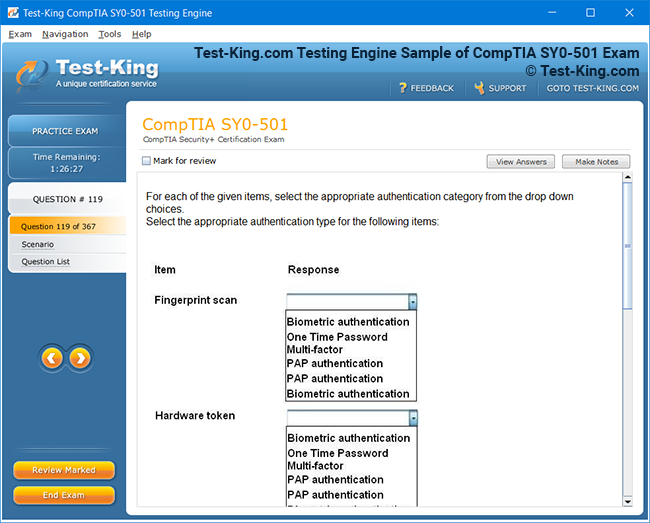
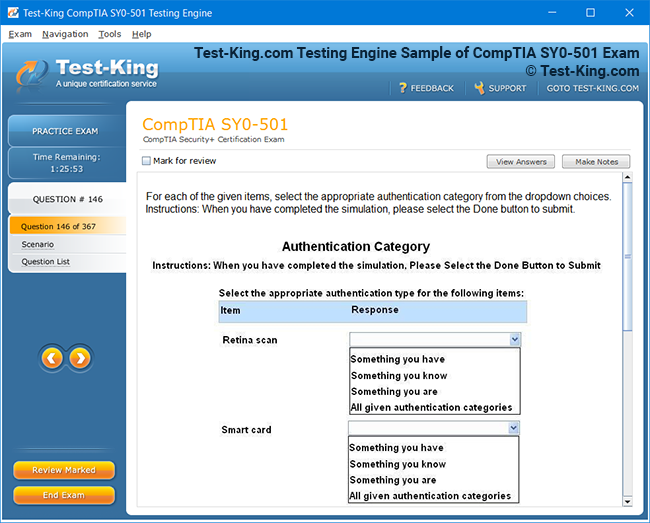
Product Screenshots
Frequently Asked Questions
How can I get the products after purchase?
All products are available for download immediately from your Member's Area. Once you have made the payment, you will be transferred to Member's Area where you can login and download the products you have purchased to your computer.
How long can I use my product? Will it be valid forever?
Test-King products have a validity of 90 days from the date of purchase. This means that any updates to the products, including but not limited to new questions, or updates and changes by our editing team, will be automatically downloaded on to computer to make sure that you get latest exam prep materials during those 90 days.
Can I renew my product if when it's expired?
Yes, when the 90 days of your product validity are over, you have the option of renewing your expired products with a 30% discount. This can be done in your Member's Area.
Please note that you will not be able to use the product after it has expired if you don't renew it.
How often are the questions updated?
We always try to provide the latest pool of questions, Updates in the questions depend on the changes in actual pool of questions by different vendors. As soon as we know about the change in the exam question pool we try our best to update the products as fast as possible.
How many computers I can download Test-King software on?
You can download the Test-King products on the maximum number of 2 (two) computers or devices. If you need to use the software on more than two machines, you can purchase this option separately. Please email support@test-king.com if you need to use more than 5 (five) computers.
What is a PDF Version?
PDF Version is a pdf document of Questions & Answers product. The document file has standart .pdf format, which can be easily read by any pdf reader application like Adobe Acrobat Reader, Foxit Reader, OpenOffice, Google Docs and many others.
Can I purchase PDF Version without the Testing Engine?
PDF Version cannot be purchased separately. It is only available as an add-on to main Question & Answer Testing Engine product.
What operating systems are supported by your Testing Engine software?
Our testing engine is supported by Windows. Andriod and IOS software is currently under development.
Essential Skills and Knowledge for Passing the 201 Commercial Banking Functional Exam
The journey to mastering the 201 Commercial Banking Functional exam requires not only a thorough comprehension of the procedural and operational aspects of commercial banking but also a nuanced understanding of the technology-driven platforms that support modern banking processes. Candidates who aspire to attain this certification must cultivate a blend of analytical acumen, functional knowledge, and practical familiarity with the nCino platform. The exam evaluates one's ability to navigate complex banking workflows, interpret commercial lending protocols, and apply functional solutions efficiently within a digital ecosystem.
Understanding the Core Competencies and Preparing Effectively
One of the critical areas of focus is understanding commercial loan origination and administration. Unlike retail banking, commercial banking involves multi-layered loan structures, intricate risk assessment protocols, and detailed documentation processes. Candidates must be adept at recognizing the lifecycle of a commercial loan, starting from client engagement and loan application through underwriting, approval, and eventual disbursement. In practical terms, this means knowing how to record client information accurately, validate financial statements, and understand covenant structures that govern the borrower-lender relationship. Mastery of these procedures is essential, as the exam often includes scenarios that test the ability to handle complex loan types, such as syndicated loans, term loans, and revolving credit facilities, within the nCino framework.
Equally important is the comprehension of account management and client relationship modules. Modern commercial banking emphasizes not only financial accuracy but also the maintenance of robust, client-centric workflows. Candidates are expected to understand how to configure account hierarchies, manage customer data efficiently, and ensure that communication records are accurately logged within the system. This knowledge extends to monitoring client portfolios, analyzing transactional trends, and identifying opportunities for cross-selling or up-selling banking products. Practical competence in these areas allows candidates to demonstrate proficiency in both operational execution and strategic client engagement.
Another dimension of preparation involves understanding compliance and regulatory requirements that underpin commercial banking operations. The 201 exam frequently evaluates awareness of anti-money laundering protocols, know-your-customer procedures, and other statutory requirements that are integral to banking operations. Candidates should be able to illustrate how compliance checks are embedded within the nCino system, ensuring that every transaction and client interaction adheres to both internal policies and external regulations. This includes familiarity with automated alerts, workflow approvals, and audit trails that enforce regulatory adherence. A candidate who grasps these nuances can confidently navigate questions related to risk management and regulatory oversight.
Functional knowledge of nCino’s workflow capabilities is paramount. Candidates should explore how the platform orchestrates tasks across different banking units, streamlining loan processing, credit approvals, and document management. This entails understanding how task queues are assigned, how notifications and escalations are handled, and how workflow customization can optimize efficiency. For instance, a candidate might be asked to describe the step-by-step journey of a loan application from initiation to final approval, including the checks performed at each stage. Proficiency in workflow navigation demonstrates a deeper functional understanding, which is critical for the exam.
Preparation strategies extend beyond theoretical understanding to practical simulation of tasks within the nCino environment. Engaging in hands-on exercises, such as creating mock client profiles, initiating sample loan applications, and configuring document templates, reinforces familiarity with the interface and reduces cognitive load during the exam. Practical exercises also enhance the ability to troubleshoot unexpected scenarios, such as workflow bottlenecks or missing documentation, which are frequently incorporated into scenario-based questions. This experiential approach bridges the gap between abstract knowledge and functional execution.
Analytical skills form another cornerstone of exam readiness. Candidates should be capable of interpreting financial metrics, assessing creditworthiness, and evaluating the risk profile of borrowers. For example, understanding ratios such as debt-to-equity, current ratio, and interest coverage provides insight into the financial stability of a client. Additionally, candidates must be adept at reconciling discrepancies in financial statements, analyzing trends in cash flows, and projecting potential repayment scenarios. The exam often integrates case studies requiring candidates to synthesize this analytical information and propose viable banking solutions, emphasizing the importance of both quantitative and qualitative evaluation.
Collaboration and communication skills, though sometimes understated, are integral to functional proficiency. The nCino platform facilitates coordination between loan officers, underwriters, compliance teams, and senior management. Candidates should understand how to document decisions, communicate status updates, and escalate issues appropriately within the system. Clear communication ensures that workflow transitions are seamless, reducing the likelihood of operational errors. The ability to articulate functional steps and rationale is often tested indirectly in scenario-based questions, making it essential for candidates to integrate communication practices into their preparation regimen.
Time management and prioritization are subtle yet critical competencies. The exam evaluates the ability to manage multiple tasks simultaneously, such as handling overlapping loan applications or monitoring multiple client accounts. Candidates must be able to discern which activities require immediate attention, how to sequence approvals efficiently, and how to maintain compliance without compromising turnaround times. Developing this competency involves practicing workflow simulations under timed conditions, which helps internalize the pace and decision-making required in real-world commercial banking scenarios.
In addition to core functional knowledge, candidates benefit from cultivating familiarity with reporting and analytics features of the nCino system. The ability to generate accurate reports, interpret dashboards, and analyze performance metrics demonstrates functional expertise and supports strategic decision-making. For example, understanding how to extract portfolio risk summaries, delinquency reports, or client engagement statistics can inform risk mitigation strategies and enhance operational efficiency. This analytical capability underscores a candidate’s holistic understanding of both the technical and managerial aspects of commercial banking functions.
Finally, an often-overlooked element of preparation is the cultivation of adaptive thinking and problem-solving skills. The 201 Commercial Banking Functional exam tests not only rote knowledge but also the ability to apply functional principles in novel scenarios. Candidates must be able to recognize patterns, anticipate workflow implications, and propose solutions that adhere to both operational standards and regulatory mandates. Developing this agility involves engaging with case studies, hypothetical scenarios, and reflective exercises that challenge the candidate to think critically about banking processes.
By integrating these competencies—comprehensive loan knowledge, client management, regulatory awareness, functional workflow proficiency, analytical skills, collaborative aptitude, time management, reporting capability, and adaptive problem-solving—candidates position themselves to excel in the 201 Commercial Banking Functional exam. Effective preparation is multifaceted, combining theoretical mastery with practical engagement and reflective practice, ultimately fostering a confident, capable, and versatile commercial banking professional.
Enhancing Functional Expertise and Mastery of nCino Capabilities
Achieving proficiency in the 201 Commercial Banking Functional exam requires a deep immersion into the operational and functional dimensions of commercial banking as orchestrated through the nCino platform. Candidates must cultivate an intricate understanding of the procedures, protocols, and workflows that govern contemporary banking operations while simultaneously developing an intuitive grasp of how technology enhances efficiency, accuracy, and compliance. This journey demands a synthesis of analytical thinking, practical application, and strategic insight, each of which plays a pivotal role in effective exam preparation.
A central component of expertise involves the lifecycle of commercial lending. Unlike simpler banking functions, commercial loans encompass multifaceted processes, including pre-screening client eligibility, detailed financial analysis, and the structuring of loans according to specific business needs. Candidates must familiarize themselves with how loan applications progress through stages of review, from initial submission to underwriting, approval, and eventual disbursement. This understanding includes awareness of collateral requirements, risk classifications, and covenant enforcement. Proficiency in documenting each stage ensures that the candidate can navigate scenario-based questions that replicate real-world complexities, demonstrating both procedural knowledge and functional dexterity.
Operational precision extends to the management of client information and account hierarchies. In commercial banking, every transaction and client interaction must be meticulously logged and tracked. Candidates are expected to comprehend the nuances of configuring customer accounts, establishing account relationships, and managing permissions to ensure secure and accurate data handling. Additionally, understanding how to generate and analyze client activity reports enhances one’s ability to anticipate potential risks or opportunities within a portfolio. By mastering these aspects, candidates demonstrate a capability that transcends rote memorization, illustrating both strategic insight and operational competence.
Regulatory knowledge forms an essential pillar of functional mastery. Commercial banking operates within a rigorous framework of compliance standards, including anti-money laundering protocols, know-your-customer obligations, and internal audit processes. Candidates should not only understand these requirements but also be able to explain how they are embedded within the nCino platform through automated workflows, alerts, and approval processes. Scenario questions often require candidates to simulate compliance checks, verify documentation, or identify gaps in regulatory adherence, emphasizing the importance of an integrated understanding of both banking operations and legal obligations. Functional expertise is validated when candidates can demonstrate the seamless incorporation of regulatory protocols into daily workflows.
An in-depth understanding of workflow orchestration is indispensable for functional competence. nCino’s platform is designed to streamline complex banking operations, ensuring that tasks, approvals, and documentation flow efficiently between teams. Candidates should familiarize themselves with how task assignments are generated, how escalations are managed, and how notifications maintain transparency across different departments. This knowledge enables them to anticipate bottlenecks, optimize process sequences, and ensure timely completions of critical functions. Mastery of workflow orchestration is frequently tested through scenario-based questions requiring candidates to outline step-by-step procedures for tasks such as loan approvals, document verification, or client onboarding.
Practical engagement with the platform enhances cognitive retention and functional fluency. Candidates benefit from simulating real-world activities, including creating client records, initiating loan applications, and configuring document templates. This hands-on approach fosters familiarity with interface nuances, reduces operational hesitation, and develops troubleshooting skills necessary to address unexpected scenarios. For example, encountering incomplete documentation, mismatched financial statements, or system-generated exceptions provides candidates with an experiential understanding that reinforces conceptual knowledge. Such exercises are critical for bridging the gap between theoretical comprehension and functional application, an essential skill for excelling in the exam.
Analytical reasoning is another dimension that candidates must cultivate. Commercial banking requires evaluating financial metrics, understanding trends, and assessing risk profiles of clients and portfolios. Candidates must interpret ratios, analyze cash flow patterns, and reconcile discrepancies within client financial statements. The exam often integrates case studies demanding that candidates synthesize this financial information and propose viable solutions or recommendations. This emphasis on analytical reasoning ensures that functional knowledge is complemented by the ability to make judicious, informed decisions that reflect both operational and strategic acumen.
Collaboration and documentation practices are subtle yet crucial elements of functional expertise. In the nCino ecosystem, coordination between loan officers, underwriters, compliance teams, and management is facilitated through detailed logging of tasks and decisions. Candidates must understand how to communicate effectively within the system, ensuring that approvals, rejections, and feedback are properly recorded. This aspect of functional proficiency demonstrates the candidate’s capacity to maintain clarity and accountability in complex operations, which is often assessed through scenario questions requiring the identification of process gaps or communication lapses.
Time management and prioritization are integral to managing overlapping banking functions. Commercial bankers frequently handle multiple applications, account reviews, and compliance checks simultaneously. Candidates must learn to sequence tasks efficiently, identify activities that require immediate attention, and maintain adherence to regulatory standards without compromising operational timelines. Practicing simulated workflows under time constraints prepares candidates to navigate exam questions that replicate real-world pressures, reinforcing both accuracy and efficiency.
Familiarity with reporting and analytics tools further strengthens functional capability. Candidates should understand how to generate meaningful reports, interpret dashboards, and leverage insights for portfolio management or risk assessment. This includes evaluating delinquency trends, client engagement metrics, and workflow efficiency indicators. Proficiency in reporting not only demonstrates operational knowledge but also indicates strategic understanding, as candidates can use analytical outputs to make informed recommendations for improving banking functions.
Finally, adaptive problem-solving is indispensable for functional mastery. The exam often challenges candidates to apply principles in novel scenarios, requiring ingenuity, foresight, and practical reasoning. Candidates must anticipate process implications, identify potential pitfalls, and propose solutions that align with operational standards and compliance requirements. Exercises in adaptive thinking include analyzing hypothetical disruptions in workflow, reconciling financial anomalies, and optimizing loan processing sequences. Developing this skill ensures that candidates are not merely recalling information but applying it judiciously to solve complex functional challenges.
By integrating expertise in commercial loan lifecycles, client account management, regulatory compliance, workflow orchestration, practical simulation, analytical reasoning, collaboration, time management, reporting, and adaptive problem-solving, candidates cultivate a robust foundation for success in the 201 Commercial Banking Functional exam. This holistic approach fosters operational proficiency, strategic insight, and technological literacy, empowering candidates to navigate complex banking processes confidently and competently.
Mastering Workflow, Compliance, and Analytical Proficiency in nCino
Excelling in the 201 Commercial Banking Functional exam necessitates an immersive understanding of the operational and analytical dimensions of commercial banking, particularly as they are executed through the nCino platform. Candidates are expected to demonstrate an integrated grasp of functional processes, regulatory adherence, and technological fluency that enables seamless management of complex banking operations. The ability to navigate intricate workflows, assess financial metrics critically, and apply compliance protocols effectively distinguishes proficient candidates and forms the cornerstone of successful exam performance.
A fundamental competency involves understanding the end-to-end commercial loan lifecycle. Candidates must grasp how a loan progresses from the initial client engagement to the final disbursement of funds, with careful attention to each procedural checkpoint. This encompasses client prequalification, financial assessment, risk classification, and the documentation of covenants that govern repayment obligations. Each step within the loan journey requires meticulous attention to detail and a functional understanding of nCino’s capabilities for recording, tracking, and validating loan-related data. Practical exercises in simulating these loan processes enhance familiarity with workflow nuances and reinforce operational dexterity.
Management of client information and account hierarchies is another critical dimension. Commercial banking demands precise configuration of accounts, accurate tracking of hierarchical relationships, and secure handling of sensitive client data. Candidates must understand how to establish account structures, assign roles and permissions, and maintain comprehensive records of interactions. Beyond mere operational competence, the ability to analyze account activity, monitor transactional patterns, and identify potential opportunities or risks reflects strategic insight into client management. Such proficiency is often evaluated through scenario questions requiring candidates to optimize account workflows or identify errors in client data management.
Regulatory and compliance knowledge is an essential aspect of functional mastery. The commercial banking environment is highly regulated, necessitating familiarity with anti-money laundering standards, know-your-customer protocols, and internal audit requirements. Candidates should understand how these regulations are embedded into the nCino platform, including automated alerts, workflow checkpoints, and audit trails. They must demonstrate the ability to ensure compliance without compromising operational efficiency. Scenario-based questions often challenge candidates to detect gaps in regulatory adherence or simulate compliance verification processes, emphasizing the importance of an integrated understanding of legal frameworks and operational execution.
Workflow orchestration constitutes a pivotal area of expertise. nCino is designed to streamline complex banking operations by coordinating tasks, approvals, and documentation across teams. Candidates should develop a thorough understanding of task allocation, escalation processes, and system notifications, ensuring smooth transitions between functional units. Mastery of workflow orchestration includes anticipating bottlenecks, sequencing processes for efficiency, and managing exceptions or interruptions. Exercises in workflow simulation enable candidates to internalize operational logic and prepare for scenario-based questions that assess functional problem-solving abilities.
Hands-on engagement with the platform reinforces theoretical knowledge and builds operational fluency. Creating client records, initiating mock loan applications, and configuring document templates simulate real-world banking activities. Such practical experience fosters familiarity with system navigation, enhances cognitive retention, and develops the capability to troubleshoot anomalies or incomplete data. Candidates who engage in experiential learning gain confidence in executing complex workflows and addressing unexpected scenarios, which is critical for achieving high performance in the exam.
Analytical reasoning is integral to commercial banking proficiency. Candidates must interpret financial statements, evaluate creditworthiness, and assess the risk profile of borrowers. This includes analyzing liquidity ratios, debt structures, interest coverage, and cash flow trends. The exam often presents case studies requiring candidates to synthesize analytical data and propose functional solutions aligned with operational standards. Mastery of these skills demonstrates not only numerical literacy but also the ability to integrate financial analysis into practical decision-making processes.
Collaboration and communication practices play a subtle yet essential role in functional proficiency. In nCino, the successful execution of tasks relies on clear documentation and coordinated communication across loan officers, underwriters, compliance teams, and management. Candidates must understand how to document decisions, provide status updates, and escalate issues appropriately within the system. This competency is tested through scenario-based questions where candidates must evaluate the efficiency and clarity of internal communication and suggest improvements to enhance workflow integrity.
Time management and prioritization are indispensable when handling concurrent banking operations. Candidates must learn to sequence multiple tasks, identify critical actions, and maintain compliance standards while optimizing efficiency. Simulated exercises involving overlapping workflows or multiple loan applications help candidates internalize the importance of prioritization and operational pacing. Such practice ensures that candidates are equipped to navigate scenarios requiring simultaneous attention to multiple functional elements without compromising accuracy or compliance.
Proficiency in reporting and analytics further enhances functional capabilities. Candidates should understand how to generate meaningful reports, interpret dashboard data, and leverage insights for decision-making. This includes tracking client portfolio performance, monitoring workflow efficiency, and identifying areas requiring intervention. The ability to translate analytical findings into actionable steps reflects a sophisticated understanding of both operational and strategic dimensions of commercial banking. Scenario-based questions often evaluate this competence by requiring candidates to analyze reporting data and recommend functional adjustments or risk mitigation strategies.
Adaptive problem-solving is a crucial skill in ensuring comprehensive functional mastery. Candidates are often presented with situations that require inventive solutions, including resolving workflow interruptions, addressing incomplete documentation, and reconciling discrepancies in financial data. Developing adaptive thinking enables candidates to anticipate process implications, identify potential operational risks, and propose effective solutions while maintaining compliance with regulatory standards. Experiential exercises, such as hypothetical case studies, foster this cognitive agility, preparing candidates to tackle complex scenarios confidently and efficiently.
By cultivating expertise in loan lifecycle management, client account administration, regulatory adherence, workflow orchestration, hands-on functional practice, analytical reasoning, collaboration, time management, reporting, and adaptive problem-solving, candidates strengthen their readiness for the 201 Commercial Banking Functional exam. This comprehensive approach integrates operational precision, technological proficiency, and strategic insight, equipping candidates to navigate the multifaceted challenges of commercial banking with confidence and competence.
Advancing Operational Proficiency and Strategic Understanding in nCino
Mastering the 201 Commercial Banking Functional exam demands a sophisticated grasp of operational workflows, regulatory requirements, and functional features of the nCino platform. Candidates are expected to navigate complex banking operations, integrate technological efficiencies, and demonstrate analytical acuity, all while maintaining compliance with commercial banking standards. Success in the exam is predicated upon a balanced understanding of procedural accuracy, strategic insight, and functional dexterity.
One of the foundational competencies involves the complete commercial loan lifecycle. Candidates must understand how a loan progresses from initial inquiry and application to underwriting, approval, and disbursement. This entails proficiency in evaluating borrower eligibility, analyzing financial statements, determining collateral sufficiency, and structuring loan agreements in line with commercial banking practices. Familiarity with covenant conditions, repayment schedules, and risk assessment criteria is essential, as these elements are frequently woven into scenario-based exam questions. Hands-on exercises simulating loan processing enhance understanding of procedural intricacies and operational dependencies, ensuring that candidates can manage complex workflows within nCino efficiently.
Accurate management of client data and account hierarchies is equally vital. Candidates need to understand the configuration of customer accounts, the establishment of account relationships, and the assignment of access permissions to maintain data integrity. This includes monitoring transactional activity, analyzing client behavior for potential risks, and identifying opportunities for cross-functional engagement. Such functional competence is assessed through scenarios that require candidates to optimize account setups, troubleshoot discrepancies, and ensure seamless integration of client data across different modules of the nCino system. The ability to synthesize account management with analytical insight demonstrates a high level of operational mastery.
Compliance awareness forms a central pillar of functional expertise. Commercial banking operations are governed by rigorous regulatory frameworks, including anti-money laundering regulations, know-your-customer standards, and internal audit protocols. Candidates must understand how these compliance requirements are integrated into nCino’s workflow through automated checks, alerts, and audit trails. Practical familiarity with monitoring compliance ensures candidates can navigate scenario questions where regulatory adherence is tested. Understanding the intersection of operational execution and statutory obligations allows candidates to illustrate not only procedural knowledge but also strategic foresight in mitigating risks.
Workflow orchestration is a core dimension of exam readiness. nCino’s platform streamlines multifaceted banking processes, enabling task assignments, escalations, and notifications to flow efficiently across teams. Candidates should be able to describe how a loan application progresses through various checkpoints, how approvals are routed, and how exceptions are managed. This knowledge allows candidates to anticipate bottlenecks, sequence processes effectively, and optimize task completion. Practical simulations of workflow orchestration cultivate the cognitive ability to manage complex operations under realistic conditions, preparing candidates for scenario-based challenges in the exam.
Hands-on practice within the nCino environment reinforces theoretical understanding. Creating client profiles, initiating sample loan applications, and configuring document templates offer candidates the opportunity to engage directly with functional processes. This experiential approach enhances cognitive retention, familiarizes candidates with interface subtleties, and hones problem-solving skills required to address anomalies or incomplete data. Exercises that mirror real-world banking situations provide practical insight into operational dependencies and prepare candidates to respond confidently to scenario-based exam questions.
Analytical capability is a defining feature of functional competence. Candidates must interpret financial statements, assess creditworthiness, and evaluate the risk profile of borrowers and portfolios. This includes examining liquidity ratios, debt structures, and projected cash flows, as well as reconciling discrepancies in financial documentation. The exam often presents case studies that demand the synthesis of analytical findings into actionable functional decisions. Mastery of analytical reasoning ensures candidates can not only process numerical data but also integrate it into operational workflows and risk mitigation strategies, reflecting comprehensive functional expertise.
Collaboration and documentation practices are crucial for maintaining workflow integrity. Effective communication between loan officers, underwriters, compliance personnel, and management ensures clarity, accountability, and operational accuracy. Candidates must be able to record decisions, communicate statuses, and escalate issues appropriately within the system. Scenario-based questions frequently assess a candidate’s ability to maintain clear documentation, optimize internal communication, and identify gaps that could hinder operational efficiency. Understanding the nuances of collaborative workflow management underscores the importance of both interpersonal and functional skills.
Time management and task prioritization are essential for handling overlapping operations. Commercial bankers often manage multiple loan applications, client accounts, and compliance checks concurrently. Candidates must develop the ability to sequence tasks, allocate attention to high-priority items, and maintain efficiency without compromising accuracy or regulatory adherence. Practicing workflow simulations under realistic time constraints familiarizes candidates with the pressures of real-world operations and reinforces strategic decision-making regarding task prioritization.
Proficiency in reporting and analytical dashboards enhances functional mastery. Candidates should understand how to generate meaningful reports, interpret performance metrics, and leverage insights for operational or strategic adjustments. This includes monitoring client portfolio trends, workflow efficiency, and delinquency indicators. Effective use of reporting tools enables candidates to identify areas requiring intervention, optimize processes, and provide actionable insights, demonstrating both operational competence and strategic foresight. Exam questions often require the interpretation of reporting outputs and the recommendation of functional improvements, highlighting the interdependence of analysis and execution.
Adaptive problem-solving is an indispensable skill for functional excellence. Candidates are frequently confronted with hypothetical scenarios requiring innovative and compliant solutions, including resolving workflow interruptions, correcting documentation errors, and addressing financial inconsistencies. Developing adaptive thinking allows candidates to anticipate potential disruptions, evaluate alternative courses of action, and implement solutions that align with operational and regulatory standards. Exercises in adaptive problem-solving, such as workflow simulations and case studies, cultivate the ability to apply functional knowledge in dynamic contexts, ensuring candidates are well-prepared for diverse exam challenges.
By integrating expertise in commercial loan management, client data administration, compliance, workflow orchestration, hands-on engagement, analytical reasoning, collaboration, time management, reporting, and adaptive problem-solving, candidates establish a robust foundation for success in the 201 Commercial Banking Functional exam. This comprehensive approach fosters operational precision, strategic insight, and technological literacy, equipping candidates to navigate the complexities of commercial banking with confidence and competence.
Deepening Functional Mastery and Exam Readiness in nCino
Achieving success in the 201 Commercial Banking Functional exam requires a nuanced understanding of commercial banking operations, functional workflows, and the technological capabilities of the nCino platform. Candidates are expected to demonstrate proficiency in managing complex banking processes, integrating compliance protocols, and applying analytical reasoning to practical scenarios. The exam evaluates the ability to combine operational accuracy with strategic insight, ensuring that candidates can navigate the multifaceted environment of commercial banking effectively.
A foundational aspect of functional expertise involves the lifecycle of commercial loans. Candidates must understand how loans progress from initial client inquiry and application to underwriting, approval, and eventual disbursement. This requires familiarity with pre-qualification procedures, assessment of borrower financials, risk evaluation, collateral requirements, and the structuring of loan agreements. Understanding covenant conditions, repayment schedules, and monitoring borrower obligations is critical. Scenario-based questions often test a candidate's ability to manage multiple loan types, such as revolving credit, term loans, and syndicated facilities, within the nCino platform, requiring a synthesis of procedural knowledge and functional execution.
Management of client accounts and hierarchies constitutes another essential competency. Commercial banking demands meticulous configuration of accounts, assignment of access permissions, and the accurate logging of client interactions. Candidates must be able to monitor account activity, detect irregularities, and analyze transactional patterns to identify potential opportunities or risks. Functional mastery also involves integrating client data with analytical processes, allowing for strategic portfolio oversight. Exam scenarios often require candidates to resolve discrepancies, optimize account setups, or apply corrective measures to maintain data integrity and operational efficiency.
Regulatory awareness is integral to functional readiness. Candidates must understand anti-money laundering protocols, know-your-customer obligations, and internal audit requirements, as well as how these are embedded within nCino workflows. Automated alerts, compliance checkpoints, and audit trails are critical components of operational integrity. Scenario-based questions may challenge candidates to simulate compliance checks, identify gaps in regulatory adherence, or adjust workflows to maintain statutory conformity. A clear grasp of these processes allows candidates to navigate complex exam questions with precision and confidence.
Workflow orchestration is a critical dimension of functional proficiency. nCino streamlines banking operations by coordinating tasks, notifications, and approvals across multiple teams. Candidates should understand how loan applications traverse different stages, how approvals are escalated, and how exceptions are addressed. Mastery of workflow orchestration includes anticipating bottlenecks, prioritizing tasks, and optimizing process sequences. Practical exercises, such as initiating sample loan applications and managing workflow queues, enhance familiarity with operational dependencies and system navigation, providing a solid foundation for exam readiness.
Hands-on experience with the nCino platform reinforces theoretical knowledge and develops practical skill. Creating client profiles, initiating mock loan applications, configuring document templates, and managing task queues provide candidates with exposure to real-world operational scenarios. Such practice improves cognitive retention, fosters familiarity with interface nuances, and builds problem-solving skills necessary to address incomplete or inconsistent data. Candidates who engage in hands-on simulations cultivate functional dexterity and confidence in managing complex banking operations.
Analytical reasoning is a vital skill for commercial banking proficiency. Candidates must evaluate financial statements, assess the creditworthiness of borrowers, and analyze the risk profile of portfolios. This includes interpreting liquidity ratios, debt structures, interest coverage, and cash flow patterns. The exam frequently incorporates case studies requiring candidates to synthesize analytical data and recommend operational solutions aligned with banking standards. Mastery of analytical reasoning demonstrates both numerical competence and the ability to integrate financial insights into functional decision-making.
Collaboration and documentation practices are crucial for effective workflow management. Coordination between loan officers, underwriters, compliance teams, and management ensures that decisions are accurately recorded and communicated. Candidates must understand how to document approvals, provide status updates, and escalate issues appropriately within the nCino environment. Scenario-based questions often assess a candidate’s ability to maintain clarity and accountability across collaborative processes, highlighting the importance of communication in ensuring operational integrity.
Time management and prioritization are indispensable in managing overlapping banking functions. Candidates must learn to sequence tasks efficiently, identify high-priority actions, and maintain compliance without sacrificing operational speed. Practicing simulated workflows under time constraints familiarizes candidates with the pressures of real-world banking operations and strengthens strategic decision-making. These exercises cultivate a mindset capable of balancing operational accuracy with efficiency in dynamic environments.
Proficiency in reporting and analytics enhances functional mastery. Candidates should understand how to generate meaningful reports, interpret performance metrics, and leverage insights for portfolio and operational optimization. This includes monitoring client behavior, workflow efficiency, and identifying delinquency trends or operational gaps. Functional expertise is demonstrated when candidates can translate reporting data into actionable recommendations for process improvements or risk mitigation strategies. Scenario-based questions frequently require such analytical application, emphasizing the integration of reporting capabilities with functional execution.
Adaptive problem-solving is an essential competency. Candidates are often presented with scenarios that require inventive solutions, such as resolving workflow disruptions, addressing incomplete documentation, or reconciling discrepancies in client financials. Developing adaptive thinking allows candidates to anticipate potential operational risks, evaluate alternative solutions, and implement corrective actions that maintain compliance with regulatory standards. Experiential exercises, including case studies and workflow simulations, foster the ability to apply functional knowledge dynamically, enhancing readiness for the exam.
By cultivating expertise in commercial loan management, client account administration, regulatory compliance, workflow orchestration, hands-on engagement, analytical reasoning, collaboration, time management, reporting, and adaptive problem-solving, candidates strengthen their preparation for the 201 Commercial Banking Functional exam. Integrating these competencies equips candidates to navigate complex operational scenarios, apply strategic insight, and execute functions with precision.
Conclusion
In comprehensive mastery of the functional, regulatory, analytical, and operational aspects of commercial banking, as embodied in the nCino platform, provides candidates with the tools necessary to excel in the exam. Strategic preparation, practical engagement, and the development of adaptive problem-solving capabilities collectively ensure not only success in the 201 Commercial Banking Functional exam but also readiness to perform effectively in real-world commercial banking operations.