

Exam Code: ACE-P-ALE1.04
Exam Name: Arista Linux Essentials Exam
Certification Provider: Arista
Corresponding Certification: Arista Linux Essentials
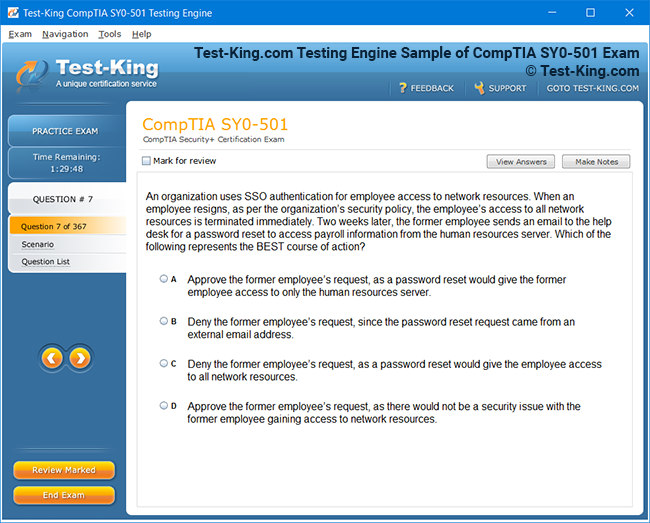
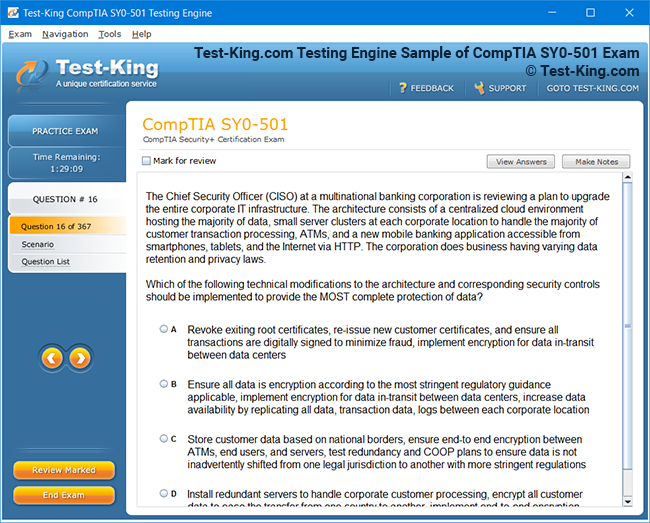
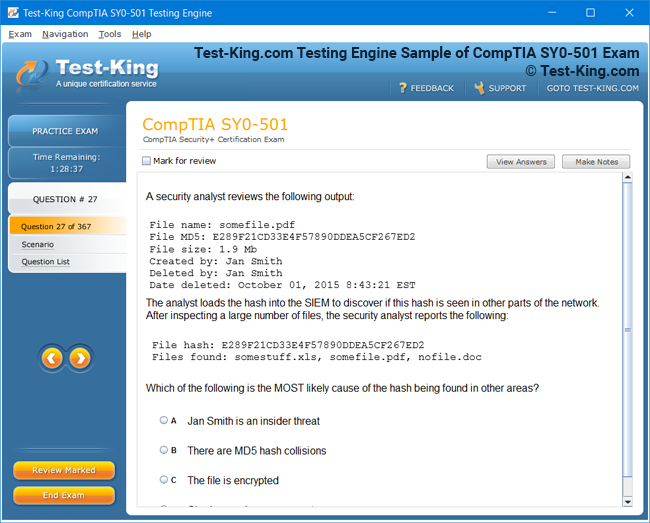
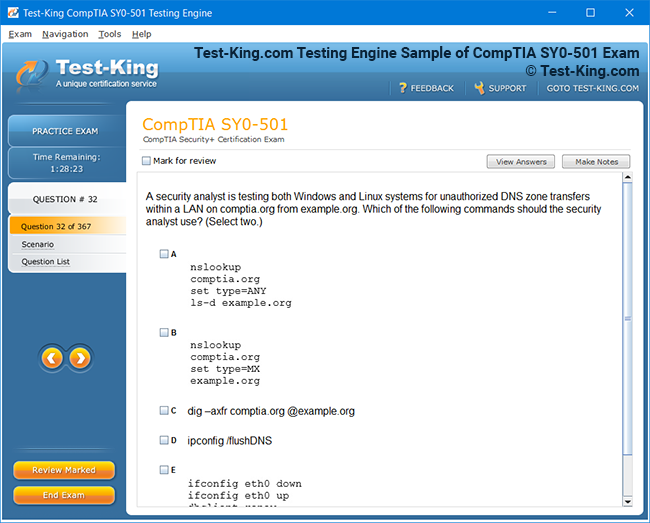
Product Screenshots
Frequently Asked Questions
How can I get the products after purchase?
All products are available for download immediately from your Member's Area. Once you have made the payment, you will be transferred to Member's Area where you can login and download the products you have purchased to your computer.
How long can I use my product? Will it be valid forever?
Test-King products have a validity of 90 days from the date of purchase. This means that any updates to the products, including but not limited to new questions, or updates and changes by our editing team, will be automatically downloaded on to computer to make sure that you get latest exam prep materials during those 90 days.
Can I renew my product if when it's expired?
Yes, when the 90 days of your product validity are over, you have the option of renewing your expired products with a 30% discount. This can be done in your Member's Area.
Please note that you will not be able to use the product after it has expired if you don't renew it.
How often are the questions updated?
We always try to provide the latest pool of questions, Updates in the questions depend on the changes in actual pool of questions by different vendors. As soon as we know about the change in the exam question pool we try our best to update the products as fast as possible.
How many computers I can download Test-King software on?
You can download the Test-King products on the maximum number of 2 (two) computers or devices. If you need to use the software on more than two machines, you can purchase this option separately. Please email support@test-king.com if you need to use more than 5 (five) computers.
What is a PDF Version?
PDF Version is a pdf document of Questions & Answers product. The document file has standart .pdf format, which can be easily read by any pdf reader application like Adobe Acrobat Reader, Foxit Reader, OpenOffice, Google Docs and many others.
Can I purchase PDF Version without the Testing Engine?
PDF Version cannot be purchased separately. It is only available as an add-on to main Question & Answer Testing Engine product.
What operating systems are supported by your Testing Engine software?
Our testing engine is supported by Windows. Andriod and IOS software is currently under development.
Comprehensive Guide to the Arista Linux Essentials Exam (ACE-P-ALE1.04)
The Arista Linux Essentials Exam, designated as ACE-P-ALE1.04, serves as a gateway for professionals who aspire to strengthen their grasp of Linux in networked environments. Linux has long been a cornerstone of modern computing and networking due to its stability, flexibility, and open-source nature. Mastering Linux commands, understanding system processes, and navigating its complex file structures are vital skills for those involved in network administration, cloud management, and data center operations. The certification evaluates not only theoretical knowledge but also practical competencies, reflecting real-world scenarios where Linux commands and configurations influence system performance and security. This credential signals to employers that the certified individual possesses foundational proficiency in Linux, which can be leveraged to manage servers, automate tasks, and maintain network integrity.
Understanding the Arista Linux Essentials Certification
Candidates for this certification typically include network engineers, systems administrators, and IT professionals who encounter Linux as a fundamental part of their operational responsibilities. A lucid understanding of Linux’s architecture, including its kernel, processes, user privileges, and file hierarchies, is essential to succeed in the exam. The certification also benefits newcomers who wish to establish a robust base in Linux, offering structured guidance through the complexities of operating systems, command-line interactions, and basic scripting. It equips learners with practical skills that can be applied immediately in professional contexts, fostering both efficiency and technical acumen.
Structure and Objective of the Exam
The ACE-P-ALE1.04 examination is structured to test both knowledge and applied capabilities. Unlike purely theoretical evaluations, this exam emphasizes real-world proficiency, requiring candidates to navigate Linux environments confidently, perform routine administration, and troubleshoot common issues. The examination typically comprises multiple-choice questions, scenario-based exercises, and command-line simulations. Questions are designed to mirror practical challenges, such as managing users and groups, configuring system services, and automating repetitive tasks through scripts. Candidates are expected to demonstrate a seamless understanding of Linux file permissions, process management, and package installations.
The objective of the certification extends beyond mere command memorization. It aims to cultivate an intuitive understanding of how Linux operates in networking ecosystems, how processes interact, and how configurations affect overall system stability. By evaluating knowledge across multiple domains, the exam ensures that certified individuals can implement, maintain, and troubleshoot Linux systems effectively. Passing the ACE-P-ALE1.04 exam signifies readiness to manage Linux-powered network infrastructures, emphasizing the integration of foundational skills with practical problem-solving abilities.
Core Linux Competencies Tested
The Arista Linux Essentials Exam focuses on several core competencies that form the backbone of effective system management. Candidates must navigate the Linux filesystem, understanding directories, symbolic links, and hierarchical structures that organize data and system configurations. Proficiency in Linux commands such as navigating directories, manipulating files, and searching through content is imperative. Additionally, managing users and groups requires an understanding of permissions, ownership, and access control mechanisms to ensure security and operational efficiency.
Package management constitutes another critical area of assessment. Candidates are expected to install, update, and remove software efficiently using package managers, ensuring system stability and compatibility. Basic shell scripting is also tested, with an emphasis on creating scripts that automate repetitive tasks, parse data, and perform system monitoring. Candidates may encounter questions requiring the development of small scripts to solve administrative challenges, demonstrating their ability to apply theoretical knowledge in practical contexts. This combination of command proficiency, process management, and scripting forms the foundation of the competencies measured by the exam.
Importance of Hands-On Experience
While theoretical knowledge is significant, hands-on experience is indispensable for achieving success in the ACE-P-ALE1.04 exam. The certification emphasizes tasks that mirror real-world administrative scenarios. Candidates are encouraged to practice file manipulation, user management, system monitoring, and basic network configuration in simulated environments or virtual machines. Such practice cultivates confidence and familiarity with command syntax, output interpretation, and troubleshooting methodologies. The ability to anticipate system behavior and implement corrective measures is a critical differentiator between merely knowing commands and mastering their application.
Virtual labs, online sandboxes, and home-based Linux installations serve as practical arenas where candidates can explore system functionalities safely. Repetitive practice allows learners to internalize complex concepts, such as process hierarchies, service dependencies, and log interpretation. Engaging with Linux in tangible ways enhances comprehension, promotes retention, and prepares candidates for scenario-based questions that assess analytical thinking alongside command-line fluency.
Career Relevance of the Certification
Obtaining the Arista Linux Essentials credential offers substantial advantages for professionals seeking to advance in IT and networking domains. Linux forms the foundation of many networking appliances, cloud platforms, and data center systems, making expertise in this operating system highly valuable. Certified individuals can perform administrative tasks efficiently, troubleshoot system issues, and implement automated solutions, thereby increasing operational reliability and reducing downtime. The certification also demonstrates commitment to professional growth and technical mastery, signaling to employers that the individual possesses a disciplined approach to learning and skill application.
Moreover, the certification opens pathways for further specialization in networking, cloud infrastructure, and advanced Linux administration. By establishing a robust foundation, candidates are positioned to pursue higher-level certifications and explore roles that require nuanced knowledge of system behavior, automation, and security protocols. Employers recognize the practical competencies gained through Arista’s Linux Essentials exam, which can translate into tangible improvements in network performance, system reliability, and operational efficiency.
Preparing for the Exam
Effective preparation for the ACE-P-ALE1.04 exam necessitates a structured approach combining theoretical study and practical exercises. Candidates should begin by familiarizing themselves with the exam objectives, understanding which Linux concepts are emphasized, and identifying areas requiring deeper focus. Study materials such as official documentation, reputable Linux guides, and online tutorials provide foundational knowledge, while practice labs offer experiential learning. Candidates should prioritize understanding command behavior, configuration files, service management, and user permissions through hands-on exercises.
Time management and consistency are crucial during preparation. Allocating dedicated intervals for command-line practice, script development, and scenario-based problem solving ensures balanced skill development. Repetition and reinforcement allow candidates to approach the exam with confidence, minimizing errors and optimizing response time. Additionally, reviewing previous questions or simulated exercises can expose candidates to typical patterns, enhancing familiarity with question styles and expected problem-solving approaches.
Exam-Day Strategies
Approaching the ACE-P-ALE1.04 exam requires both technical preparedness and strategic mindset. Candidates should ensure a thorough understanding of commands, file systems, scripting principles, and service management before attempting the exam. During the assessment, careful reading of scenarios, attention to detail, and systematic problem-solving are essential. Prioritizing questions that align with personal strengths can build momentum, while methodical analysis of complex scenarios ensures accurate application of knowledge.
Maintaining composure, managing time effectively, and avoiding haste in command entry are equally important. The exam evaluates both accuracy and proficiency, rewarding candidates who demonstrate a clear and precise approach to Linux administration. By combining technical expertise with strategic execution, candidates can navigate the assessment efficiently, reinforcing the value of preparation and hands-on experience.
Exam Format and Question Types
The Arista Linux Essentials Exam, identified as ACE-P-ALE1.04, is meticulously designed to evaluate both theoretical understanding and applied skills. Unlike purely knowledge-based assessments, this exam focuses on real-world competencies that reflect practical situations encountered by Linux professionals in networking and systems administration environments. Candidates face a combination of multiple-choice questions, scenario-based problem solving, and command-line simulations that demand a nuanced understanding of Linux functionality. The multiple-choice questions assess comprehension of core concepts, whereas scenario-driven questions gauge the ability to apply those concepts under realistic conditions, such as configuring services, managing permissions, and automating tasks through scripts.
Command-line simulations form a pivotal element of the exam, requiring candidates to interact directly with Linux systems. These exercises might involve navigating file systems, managing users and groups, performing software installations, or troubleshooting system errors. Unlike theoretical assessments, the simulations test not only knowledge but also proficiency in executing commands accurately and efficiently. Candidates must demonstrate both speed and precision, understanding the syntax and effects of each command while maintaining awareness of system implications. This combination of question types ensures that the exam is a true reflection of practical capabilities, preparing professionals to handle real operational challenges.
Duration and Scoring
The ACE-P-ALE1.04 examination is structured to accommodate a comprehensive evaluation within a fixed duration. Candidates are typically allotted a few hours to complete the assessment, requiring careful time management and strategic prioritization. While each question carries specific weight, the scoring system emphasizes accuracy, problem-solving abilities, and the correct application of Linux commands and procedures. Partial knowledge may not yield sufficient credit, particularly in scenario-based or simulation questions where precise execution is critical. This scoring methodology encourages candidates to cultivate a deep and functional understanding of Linux systems rather than relying solely on memorization.
Understanding the duration and scoring approach is crucial for effective preparation. Candidates must balance their attention between quick-response questions and more complex simulations, allocating time proportionately to maximize performance. By rehearsing in timed environments, learners can acclimate to the pace of the exam, refine their command execution skills, and develop strategies for handling unexpected challenges. Familiarity with the structure helps reduce exam-day anxiety and enhances the ability to respond with accuracy and confidence.
Domains and Objectives Evaluated
The exam evaluates a range of domains that constitute the essential skills for Linux proficiency. These include system navigation, user and group management, file permissions, package management, process handling, service configuration, and basic scripting. Each domain is assessed not only for theoretical understanding but also for the ability to perform tasks efficiently within a Linux environment. For instance, candidates may be required to modify user privileges, configure services to start automatically, or develop a simple script to automate routine operations. Such exercises test comprehension, procedural knowledge, and adaptability under practical constraints.
In addition to core administration skills, the exam assesses understanding of Linux’s hierarchical file system, including directories, symbolic links, and configuration files. Candidates must demonstrate the ability to traverse directories, locate files, and interpret configuration content accurately. This aspect of evaluation ensures that certified individuals can operate within Linux ecosystems confidently, executing tasks that affect system performance, security, and stability. The combination of practical exercises and knowledge-based questions reflects the multifaceted competencies expected of professionals in contemporary IT environments.
Emphasis on Practical Application
One of the defining features of the ACE-P-ALE1.04 exam is its emphasis on hands-on application. Candidates are expected to move beyond rote memorization of commands and concepts to the actual implementation of Linux operations. This practical orientation mirrors real-world scenarios, where administrators must configure services, troubleshoot errors, and ensure system reliability. By integrating simulations that mimic operational environments, the exam encourages candidates to internalize the relationship between commands, processes, and system outcomes. This approach cultivates a functional mastery that can be directly applied in networked and server-based infrastructures.
Practical application extends to scripting exercises, which evaluate the ability to automate repetitive tasks. Candidates might encounter tasks requiring the creation of scripts that perform file backups, monitor system processes, or manage user accounts. Such exercises assess logic, syntax accuracy, and operational efficiency, reinforcing the importance of integrating theory with practice. Proficiency in these areas reflects an ability to manage Linux systems with precision and confidence, essential qualities for professionals seeking to excel in network administration, cloud platforms, and data center management.
Common Challenges in the Exam
Candidates frequently encounter challenges related to command syntax, system hierarchies, and scenario interpretation. Navigating the Linux filesystem can be daunting for those unfamiliar with directory structures, symbolic links, and hidden configuration files. Misunderstanding file permissions or user privileges may lead to errors in simulations, highlighting the importance of meticulous attention to detail. Scenario-based questions often require a layered understanding of processes and services, demanding candidates to analyze multiple factors simultaneously before executing a solution.
Overcoming these challenges requires disciplined practice and analytical thinking. Familiarity with command-line operations, repeated interaction with virtual environments, and careful study of Linux behaviors under different configurations can mitigate common pitfalls. Recognizing typical errors, such as misassigning permissions, neglecting dependencies between services, or misinterpreting system messages, allows candidates to develop strategies for accurate and timely responses. Mastery in these areas enhances performance, ensuring readiness to address both straightforward and complex operational scenarios during the exam.
Preparation Techniques
Effective preparation for the ACE-P-ALE1.04 exam combines structured study, hands-on practice, and scenario simulation. Candidates are encouraged to begin with an exhaustive review of exam objectives, mapping out domains and identifying areas requiring focused attention. Reading comprehensive Linux guides, consulting official documentation, and exploring tutorials provide foundational knowledge, while virtual labs and command-line exercises facilitate experiential learning. Regular interaction with Linux systems, including user management, service configuration, and basic scripting, is indispensable for developing proficiency.
Time management and repetition are key to successful preparation. Allocating periods for command practice, script development, and problem-solving exercises ensures balanced skill acquisition. Simulating exam conditions, including timed exercises and scenario-based challenges, helps candidates acclimate to pressure while refining execution speed. Engaging with diverse scenarios cultivates adaptability, equipping learners to tackle both predictable and unforeseen challenges in the actual assessment. This holistic approach ensures that candidates not only understand Linux concepts but also can apply them effectively in practical situations.
Real-World Relevance
The competencies evaluated in the Arista Linux Essentials Exam are closely aligned with the requirements of contemporary IT and networking environments. Mastery of system navigation, user privileges, file management, and service configuration enables professionals to maintain secure and efficient infrastructures. Skills in scripting and automation reduce repetitive workload, enhance operational efficiency, and mitigate human error. By emphasizing practical application, the exam prepares candidates for challenges such as system troubleshooting, service optimization, and network administration.
Furthermore, the certification demonstrates a commitment to technical excellence and continuous learning. Employers recognize the practical skills validated by the ACE-P-ALE1.04 credential, appreciating candidates who can contribute immediately to operational reliability and system integrity. The exam’s focus on real-world application ensures that certified individuals are equipped to handle the dynamic demands of modern Linux-based systems, whether in enterprise networks, cloud deployments, or data center operations.
Exam-Day Considerations
Success in the ACE-P-ALE1.04 exam requires careful attention to strategy, mental preparation, and practical readiness. Candidates should familiarize themselves with the structure, anticipate the types of simulations, and ensure proficiency in essential commands. Approaching questions methodically, analyzing scenarios before executing commands, and verifying outputs helps minimize errors. Maintaining composure and managing time effectively allows candidates to navigate the exam efficiently, balancing speed with accuracy.
Preparation extends beyond technical skill, encompassing mindset and focus. Candidates who practice under realistic conditions, simulate troubleshooting tasks, and engage with diverse Linux scenarios develop confidence and adaptability. Exam-day readiness, therefore, is a combination of knowledge, practical experience, and strategic thinking, ensuring that candidates can respond accurately to complex questions and demonstrate mastery of Linux essentials in operational contexts.
File System Navigation and Management
A fundamental aspect of the Arista Linux Essentials Exam is understanding the Linux file system. Candidates are expected to navigate directories, identify files, and interpret hierarchical structures with precision. The Linux file system is organized in a tree-like structure, starting from the root directory and branching into various subdirectories, each with a specific purpose. For instance, configuration files are often housed in system directories, while user-generated data resides in home directories. Mastery of commands to traverse these directories, list contents, and search for specific files is essential for operational efficiency.
File manipulation extends beyond basic navigation. Candidates must be proficient in creating, copying, moving, and deleting files, as well as modifying permissions and ownership. Understanding symbolic links, hidden files, and mount points is crucial for maintaining system integrity. Scenario-based questions may present a situation where misplacement or improper modification of files could disrupt services, requiring candidates to demonstrate precise command usage and a clear understanding of file hierarchies. Such competencies reflect real-world administrative tasks where accuracy and methodical execution are paramount.
User and Group Management
Another core domain assessed in the examination is the management of users and groups. Linux is a multi-user operating system, and proper administration requires defining users, assigning appropriate privileges, and organizing them into groups for access control. Candidates are expected to create, modify, and remove users and groups, adjusting permissions to maintain security and operational functionality. The exam may simulate scenarios in which incorrect privilege assignments could compromise system integrity, testing both conceptual understanding and practical skill.
Understanding permissions is a nuanced task, encompassing read, write, and execute access for owners, groups, and others. Candidates must demonstrate knowledge of default permissions, special flags, and methods to alter access safely. Group management extends the capacity to organize users with shared responsibilities, simplifying administration and maintaining security protocols. Real-world applications include managing multiple administrators, providing temporary access for projects, or restricting access to sensitive files, all of which require a meticulous and structured approach.
Package Management and Software Installation
Proficiency in package management is another critical skill evaluated by the Arista Linux Essentials Exam. Candidates are expected to install, update, and remove software efficiently, ensuring system stability and compatibility. Linux distributions employ different package management systems, each with specific commands and syntax, and understanding these differences is crucial for seamless administration. Scenario-based exercises may require resolving dependency issues, performing upgrades, or verifying successful installation, emphasizing the need for practical command execution alongside theoretical knowledge.
Software maintenance extends to patch management and version control. Candidates may encounter situations requiring the identification of outdated packages, troubleshooting installation errors, or ensuring that software aligns with system requirements. Effective package management ensures that services run reliably, security vulnerabilities are minimized, and system performance remains optimal. This competency underscores the importance of combining procedural knowledge with operational awareness, reflecting the responsibilities of Linux administrators in enterprise environments.
Process Management and System Monitoring
The examination also evaluates candidates’ ability to manage system processes and monitor operational performance. Linux systems rely on numerous processes running concurrently, each contributing to system functionality. Candidates must identify running processes, interpret their status, and control their execution using appropriate commands. Tasks may include terminating unresponsive processes, adjusting process priorities, or ensuring that critical services operate without interruption. Understanding process hierarchies and parent-child relationships is fundamental to maintaining system stability.
Monitoring extends beyond process management, encompassing resource utilization, log inspection, and performance analysis. Candidates are expected to interpret system logs, detect anomalies, and respond proactively to potential issues. Scenario-based exercises may simulate high CPU usage, memory bottlenecks, or unexpected service failures, requiring candidates to apply diagnostic commands and corrective measures efficiently. Such competencies are vital in real-world environments where administrators must maintain optimal system performance and prevent disruptions.
Service Configuration and Management
Managing system services is another vital competency tested in the Arista Linux Essentials Exam. Candidates are required to start, stop, and configure services to operate automatically during system boot. Understanding service dependencies, run levels, and initialization mechanisms is essential for ensuring operational continuity. Scenario-based questions may present a service that fails to start due to configuration errors, requiring candidates to analyze logs, adjust settings, and restore functionality. This practical application mirrors tasks encountered in professional administration, where service availability directly impacts system reliability.
Service management also encompasses the integration of network services, security features, and system daemons. Candidates may be asked to configure web servers, enable SSH access, or adjust firewall settings, demonstrating both technical proficiency and awareness of operational security. Mastery in this domain signifies an ability to maintain critical services, anticipate potential conflicts, and implement solutions that uphold system integrity.
Basic Shell Scripting and Automation
The Arista Linux Essentials Exam places significant emphasis on basic shell scripting and task automation. Candidates must demonstrate the ability to create scripts that perform routine operations, manipulate files, manage users, and monitor processes. Scripting enhances efficiency, reduces manual errors, and allows administrators to handle repetitive tasks with minimal intervention. The exam may include exercises where candidates write a script to automate backups, parse log files, or generate system reports, reflecting real-world administrative practices.
Understanding control structures, variables, loops, and conditional statements is crucial for effective script development. Candidates must anticipate potential errors, validate input, and ensure scripts execute reliably under various conditions. The integration of scripting with other Linux skills, such as file management and process monitoring, demonstrates the ability to apply knowledge holistically, a competency highly valued in professional IT environments. Proficiency in automation not only streamlines daily tasks but also empowers administrators to maintain consistency and operational efficiency across complex systems.
Troubleshooting and Problem-Solving
Practical troubleshooting skills form a cornerstone of the competencies assessed in the exam. Candidates must identify and resolve issues related to files, processes, services, and user access. Scenario-based questions simulate real operational challenges, requiring candidates to analyze symptoms, interpret error messages, and apply corrective commands effectively. This domain emphasizes analytical thinking, systematic investigation, and the ability to adapt solutions to varying circumstances.
Troubleshooting also involves understanding system logs, monitoring alerts, and recognizing patterns that indicate underlying problems. Candidates may be required to restore corrupted files, correct misconfigured services, or resolve permission conflicts. Success in these exercises reflects the capacity to maintain system stability under pressure, a skill essential for Linux administrators in dynamic environments. The emphasis on problem-solving ensures that certified individuals can handle both routine maintenance and unexpected operational challenges with competence and composure.
Security Fundamentals
Security fundamentals are interwoven throughout the exam, reflecting the critical role of access control, file permissions, and service configuration in protecting Linux systems. Candidates must understand how to secure user accounts, enforce strong authentication, manage firewall settings, and restrict unauthorized access. Scenario-based exercises may involve configuring access rights, detecting unauthorized activity, or implementing protective measures, emphasizing the practical application of security principles.
Security in Linux administration also entails monitoring system integrity, managing updates, and maintaining awareness of vulnerabilities. Candidates are expected to anticipate potential risks, apply preventive measures, and respond to security incidents effectively. Mastery of these competencies demonstrates the ability to safeguard system resources, maintain operational reliability, and uphold organizational policies, aligning technical skills with professional responsibility.
Real-World Application of Core Concepts
The core Linux concepts evaluated in the Arista Linux Essentials Exam are directly applicable to professional environments. Navigating the file system, managing users and groups, installing software, controlling processes, configuring services, scripting tasks, troubleshooting problems, and implementing security measures are daily responsibilities for Linux administrators. By integrating theoretical knowledge with practical application, the exam ensures that certified candidates are equipped to perform essential tasks efficiently, maintain system stability, and contribute meaningfully to operational goals.
Candidates who internalize these competencies gain confidence in handling diverse Linux environments, from small-scale servers to complex enterprise networks. The emphasis on practical skill development mirrors the demands of real-world administration, where precision, adaptability, and problem-solving are essential. Mastery of these concepts not only facilitates successful exam performance but also lays a foundation for continued growth in Linux administration, networking, and IT operations.
Network Configuration and Connectivity
A significant aspect of the Arista Linux Essentials Exam is understanding network configuration and connectivity within Linux systems. Candidates are expected to configure network interfaces, manage IP addresses, and verify connectivity using standard commands. The examination may present scenarios where misconfigured network parameters impede system communication, requiring candidates to identify and rectify issues with precision. Understanding routing tables, interface states, and connection diagnostics is essential for ensuring operational functionality in both local and remote environments.
In addition to basic configuration, candidates must demonstrate the ability to troubleshoot network problems. Scenario-based questions often simulate conditions where services are inaccessible or interfaces are improperly assigned. Candidates are expected to interpret command outputs, detect anomalies, and implement corrective measures. Mastery of these skills reflects the real-world necessity for administrators to maintain uninterrupted connectivity, ensuring that services reliant on network communication operate reliably and efficiently.
System Services and Daemon Management
Managing system services and daemons forms a crucial part of advanced Linux administration. Candidates are required to start, stop, and enable services to operate automatically during system boot, ensuring the availability of essential functionalities. The exam may include scenarios where critical services fail to initiate due to configuration errors or dependencies, necessitating careful analysis and rectification. Understanding the interdependencies between services, their start-up sequences, and how they interact with system resources is vital for maintaining a stable environment.
Service management extends to monitoring active daemons, configuring background processes, and ensuring that essential services maintain operational continuity. Candidates may encounter exercises requiring adjustment of service parameters, enabling or disabling features, and verifying that processes execute as intended. This competency emphasizes the combination of technical knowledge and practical problem-solving, reflecting responsibilities encountered in enterprise and data center environments.
Log Management and Monitoring
The ability to interpret and manage system logs is another advanced skill tested in the examination. Candidates are expected to monitor log files, identify anomalies, and respond to issues proactively. Linux generates a multitude of logs for processes, services, security events, and system operations, and understanding their structure is essential for effective administration. Scenario-based questions may present unexpected behaviors, requiring candidates to analyze log entries, detect patterns, and implement corrective actions.
Monitoring extends beyond logs to include system performance indicators such as CPU usage, memory allocation, disk activity, and network throughput. Candidates must be proficient in employing commands that provide real-time insights into resource utilization, allowing for timely intervention when thresholds are exceeded. These skills are vital in ensuring operational efficiency, preventing bottlenecks, and maintaining the reliability of Linux-based systems in dynamic environments.
Process Control and Optimization
Advanced Linux skills include comprehensive process control and system optimization. Candidates are expected to identify resource-intensive processes, adjust priorities, and terminate unresponsive tasks. Understanding process hierarchies, parent-child relationships, and the impact of resource allocation on overall system performance is critical. Scenario-based exercises may simulate high system load, requiring candidates to redistribute resources, optimize execution, or resolve conflicts between competing processes.
Proficiency in process monitoring tools and commands allows administrators to make informed decisions, enhancing system stability and efficiency. Candidates may need to employ analytical thinking to interpret outputs, detect abnormal behavior, and implement corrective measures. This domain emphasizes practical problem-solving, reflecting the demands of maintaining operational excellence in professional Linux environments.
Security Enhancements and Access Control
Security is a fundamental aspect of advanced Linux administration, and the exam evaluates candidates’ understanding of protective measures. Candidates are expected to manage firewall configurations, enforce user authentication policies, and secure system resources through appropriate permissions. Scenario-based questions may involve mitigating unauthorized access, detecting vulnerabilities, or configuring access control mechanisms to prevent security breaches.
Advanced security skills also include monitoring for suspicious activity, implementing preventive measures, and maintaining system integrity under various operational conditions. Candidates must demonstrate the ability to apply security best practices while balancing usability and administrative efficiency. Mastery in this area ensures that certified individuals can safeguard critical systems and maintain compliance with organizational policies, reflecting professional standards in networked and data center environments.
Automation and Scripting for Operational Efficiency
Automation and scripting are vital components of advanced Linux competencies. Candidates are expected to develop scripts that streamline repetitive tasks, manage system configurations, and perform monitoring functions. Scenario-based exercises may require writing scripts that automate backups, monitor resource utilization, or generate reports from system logs. Proficiency in scripting reduces manual intervention, minimizes errors, and enhances operational efficiency.
Candidates must understand control structures, conditional logic, loops, and variables to develop scripts that execute reliably under diverse conditions. Integrating scripts with other Linux functionalities, such as file management, process control, and service configuration, demonstrates the ability to apply knowledge holistically. Automation is a critical skill for administrators, enabling them to maintain system consistency, respond proactively to operational challenges, and optimize resource usage.
Troubleshooting Complex Scenarios
The exam evaluates candidates’ ability to troubleshoot complex scenarios involving multiple interacting components. Issues may encompass network misconfigurations, service failures, process conflicts, or security anomalies. Candidates are expected to analyze symptoms, interpret system messages, and apply corrective commands systematically. Scenario-based exercises reflect real-world challenges where multiple factors influence system behavior simultaneously, requiring comprehensive understanding and analytical skills.
Advanced troubleshooting also involves preventive strategies, including monitoring for early signs of failure, validating configurations, and maintaining up-to-date system knowledge. Candidates who can anticipate potential issues, implement corrective measures, and restore functionality efficiently demonstrate a high level of operational competence. This skill set is indispensable for Linux administrators who manage critical infrastructures with minimal downtime and maximum reliability.
Practical Application in Enterprise Environments
The advanced skills evaluated in the Arista Linux Essentials Exam have direct applications in professional settings. Network configuration, process control, service management, log monitoring, security implementation, and automation are daily responsibilities for Linux administrators. By integrating these competencies, candidates can maintain system stability, enhance performance, and respond effectively to operational challenges. Scenario-based exercises in the exam mirror real-world situations, ensuring that certified individuals possess both theoretical understanding and practical proficiency.
Professionals who master these advanced competencies are equipped to manage complex Linux environments, from enterprise networks to data center infrastructures. The ability to configure, monitor, and troubleshoot systems efficiently reduces operational risk, enhances reliability, and contributes to overall organizational effectiveness. Mastery of advanced skills reflects readiness to handle demanding administrative tasks and supports continued growth in networking, cloud management, and Linux system administration.
Integrating Skills for Operational Excellence
Advanced Linux skills are most effective when integrated with core competencies, creating a cohesive operational capability. Navigating the file system, managing users, controlling processes, configuring services, monitoring logs, enforcing security, and automating tasks collectively ensure efficient system administration. Scenario-based questions in the exam test this integration, challenging candidates to apply multiple skills simultaneously to resolve complex operational problems.
This integrated approach cultivates a comprehensive understanding of system behavior, dependencies, and interrelations. Candidates who demonstrate proficiency across domains exhibit the analytical thinking, precision, and adaptability required for professional Linux administration. By mastering both foundational and advanced skills, individuals gain confidence in managing Linux systems, ensuring performance, security, and reliability in diverse operational environments.
Study Planning and Time Management
Effective preparation for the Arista Linux Essentials Exam requires meticulous planning and disciplined time management. Candidates should begin by reviewing the exam objectives thoroughly, identifying domains that demand deeper focus. Crafting a study schedule that balances theoretical understanding with hands-on practice is essential. Allocating time for file system navigation, process management, service configuration, network setup, scripting, and troubleshooting ensures comprehensive coverage. Consistency and repetition are crucial, as mastering Linux commands and system operations demands both intellectual understanding and practical experience.
Time management during preparation mirrors the demands of the actual exam. Candidates should practice under timed conditions, simulating the duration and pressure of the assessment. Prioritizing areas of personal weakness while maintaining proficiency in core competencies enhances readiness. Integrating short, focused study sessions with extended practice exercises promotes retention and builds confidence, fostering a methodical approach that aligns with the exam’s emphasis on applied skills and real-world problem-solving.
Utilizing Practical Environments
Hands-on experience is indispensable for success in the ACE-P-ALE1.04 exam. Candidates are encouraged to interact with virtual machines, Linux sandboxes, or home-based installations, exploring system functionalities in controlled environments. Navigating directories, managing users and groups, configuring services, installing packages, and automating tasks through scripts allows learners to internalize command syntax, system behavior, and error handling. Engaging with practical scenarios bridges the gap between theoretical knowledge and operational competence, reinforcing understanding through repeated application.
Simulation of real-world conditions, such as network misconfigurations, service failures, or process conflicts, cultivates problem-solving abilities. Candidates learn to diagnose issues, interpret command outputs, and implement corrective actions efficiently. This experiential learning is vital, as scenario-based exercises in the exam demand the ability to apply multiple skills simultaneously. Familiarity with practical environments nurtures intuition, ensuring candidates approach the exam with both confidence and competence.
Recommended Study Materials
A variety of study resources are beneficial for comprehensive preparation. Official Linux documentation, reputable guides, and tutorial repositories provide foundational knowledge, detailing command syntax, system structures, and administrative procedures. Practice exercises, lab manuals, and online tutorials offer hands-on opportunities to reinforce theoretical understanding. By integrating reading with interactive exercises, candidates cultivate both intellectual comprehension and practical dexterity, essential for executing commands accurately under exam conditions.
Utilizing diverse resources exposes candidates to multiple approaches, enhancing adaptability. Learning different command-line techniques, troubleshooting methods, and automation strategies broadens understanding, preparing candidates for the variety of scenarios encountered in the assessment. Resources that combine explanations with examples, exercises, and solutions enable iterative learning, where mistakes can be analyzed, corrected, and internalized for future application.
Scenario-Based Practice
Scenario-based practice is a cornerstone of exam readiness. Candidates benefit from exercises that mimic the challenges of Linux administration, such as configuring network interfaces, managing services, scripting routine operations, and diagnosing system anomalies. These practical exercises cultivate analytical thinking, precision, and adaptability. By encountering problems that require multiple skills, candidates develop the ability to integrate knowledge, anticipate potential issues, and implement solutions methodically.
Repeated exposure to scenario-based challenges enhances confidence and efficiency. Candidates learn to approach problems logically, verify outcomes, and adjust strategies based on system responses. This preparation mirrors the real-world demands of Linux administration, where multiple interacting components require careful management. Scenario-based practice ensures that candidates are not only familiar with commands but also capable of applying them in complex operational contexts.
Practice Exams and Self-Assessment
Engaging with practice exams is essential for evaluating readiness and identifying areas requiring further improvement. Mock assessments simulate the structure, duration, and complexity of the ACE-P-ALE1.04 exam, allowing candidates to measure performance against realistic standards. Reviewing errors, analyzing patterns, and reinforcing weak areas promotes targeted learning. Self-assessment cultivates awareness of strengths and weaknesses, guiding focused revision and skill refinement.
Practice exams also help candidates develop exam-day strategies, such as pacing, prioritizing questions, and managing time effectively. Familiarity with question formats, command-line simulations, and scenario complexity reduces anxiety and enhances confidence. By integrating practice assessments into preparation, candidates transition from theoretical study to practical competence, ensuring a holistic approach to exam readiness.
Overcoming Common Preparation Challenges
Candidates often face challenges such as command memorization, syntax errors, and scenario interpretation. Navigating the Linux filesystem, managing permissions, and configuring services may initially appear intricate. Scenario-based exercises can introduce multiple interacting factors, requiring careful analysis to resolve issues correctly. Overcoming these challenges demands disciplined practice, analytical thinking, and methodical execution.
Developing proficiency involves repeated engagement with commands, scripts, and system configurations. Candidates benefit from dissecting errors, understanding underlying causes, and reinforcing correct procedures. Exposure to a variety of scenarios enhances adaptability, preparing candidates to handle both predictable and unforeseen challenges. This iterative learning process transforms initial difficulties into mastery, cultivating confidence and operational competence.
Balancing Theory and Practical Knowledge
Successful preparation balances theoretical understanding with practical application. While comprehension of Linux concepts, architecture, and command logic is essential, hands-on execution solidifies learning. Candidates should integrate reading, tutorials, and documentation with interactive exercises, reinforcing knowledge through application. This dual approach ensures that concepts are internalized, errors are corrected, and practical skills are honed, aligning with the exam’s emphasis on applied competencies.
Balancing theory and practice also fosters problem-solving abilities. Candidates who understand the rationale behind commands, configurations, and system behavior can adapt to novel scenarios, troubleshoot effectively, and optimize operational performance. This holistic preparation enhances both exam performance and real-world administrative proficiency, ensuring that certified individuals can apply knowledge confidently and efficiently.
Maintaining Consistency and Focus
Consistency is paramount in preparing for the ACE-P-ALE1.04 exam. Candidates benefit from regular study sessions, iterative practice, and sustained engagement with Linux environments. Maintaining focus, setting achievable goals, and tracking progress reinforces motivation and ensures comprehensive coverage of exam objectives. Regular practice cultivates command fluency, procedural confidence, and analytical skills, reducing errors and enhancing response time during the assessment.
Mental discipline complements technical preparation. Candidates who maintain focus, organize study sessions strategically, and allocate time to both weak and strong areas develop a balanced skill set. The integration of consistent practice, structured revision, and scenario simulation creates a robust foundation, enabling candidates to approach the exam with readiness, confidence, and precision.
Leveraging Peer Learning and Community Resources
Engaging with study groups, forums, and community resources can enrich preparation. Candidates benefit from discussing concepts, sharing problem-solving strategies, and exploring diverse approaches to scenario-based exercises. Peer learning exposes candidates to alternative perspectives, deepens understanding, and fosters collaborative problem-solving skills. Interaction with experienced practitioners provides insights into practical challenges, shortcuts, and best practices, enhancing both theoretical and operational comprehension.
Community engagement also supports motivation and accountability. Candidates who participate in discussions, contribute solutions, and receive feedback cultivate confidence and resilience. Exposure to a broad range of experiences and scenarios expands adaptability, ensuring that candidates are prepared for the variety of challenges presented in the exam and in professional Linux administration environments.
Approaching the Exam with Confidence
Facing the Arista Linux Essentials Exam, ACE-P-ALE1.04, requires both technical readiness and strategic mindset. Candidates should approach the assessment with a clear understanding of the exam objectives, the types of questions, and the practical tasks they may encounter. Familiarity with Linux commands, file system navigation, user and group management, service configuration, and basic scripting builds confidence and reduces the likelihood of errors. Engaging in repeated hands-on practice ensures candidates can execute commands efficiently and interpret system responses accurately.
Mental preparation is equally crucial. Candidates should maintain focus, avoid last-minute cramming, and cultivate a mindset oriented toward problem-solving. Anticipating the structure of the exam, including scenario-based questions and command-line simulations, allows candidates to plan time allocation strategically. This preparation fosters calmness, clarity of thought, and precision in execution, enhancing the likelihood of performing effectively under exam conditions.
Time Management and Prioritization
Effective time management is a critical factor in achieving success on the ACE-P-ALE1.04 exam. Candidates should allocate time proportionately between multiple-choice questions, scenario-based exercises, and command-line simulations. Quick-response questions can build momentum and confidence, while complex scenarios may require careful analysis and step-by-step execution. Monitoring time spent on each question ensures that all tasks are completed without unnecessary haste or oversight.
Prioritization also involves recognizing strengths and weaknesses. Candidates may choose to address questions aligned with personal expertise first, then return to more challenging exercises. This strategic approach balances accuracy with efficiency, reduces stress, and optimizes performance. Practicing under timed conditions during preparation familiarizes candidates with pacing strategies, ensuring a smooth flow of problem-solving during the actual assessment.
Navigating Scenario-Based Questions
Scenario-based questions form a substantial portion of the exam, testing the application of multiple skills simultaneously. Candidates may encounter situations involving network misconfigurations, process conflicts, service failures, or security anomalies. These exercises require analytical thinking, precise command execution, and effective troubleshooting. Candidates must examine system outputs, interpret logs, and implement corrective measures with accuracy and efficiency.
Approaching scenario-based tasks methodically is vital. Breaking down complex problems into manageable components, verifying each step, and anticipating potential consequences of actions enhances reliability. Practicing diverse scenarios during preparation cultivates adaptability, allowing candidates to respond effectively to unexpected challenges. Mastery of scenario-based problem-solving reflects readiness to manage real-world Linux environments with professionalism and confidence.
Managing Stress and Maintaining Focus
Exam-day performance is influenced by mental composure and focus. Candidates should cultivate strategies to remain calm, such as deep breathing, brief mental pauses, and methodical task execution. Avoiding distraction, maintaining confidence in preparation, and focusing on one task at a time reduces the likelihood of errors. A composed mindset enables candidates to analyze situations clearly, execute commands accurately, and troubleshoot efficiently.
Preparation for stress management involves simulation of exam conditions, timed practice, and exposure to challenging scenarios. Candidates who experience pressure in controlled settings develop resilience, allowing them to maintain clarity and precision during the actual assessment. Managing stress effectively contributes to optimal performance, ensuring that knowledge and skills are applied without interference from anxiety or haste.
Leveraging Practical Skills on Exam Day
The ACE-P-ALE1.04 exam emphasizes the practical application of Linux skills. Candidates must demonstrate proficiency in navigating the file system, managing users and groups, configuring services, monitoring processes, implementing basic scripting, and troubleshooting system anomalies. The ability to integrate these skills ensures that solutions are accurate, efficient, and aligned with operational standards.
Exam-day success depends on the seamless execution of practical skills. Candidates should interpret instructions carefully, verify command syntax, anticipate system responses, and proceed methodically. Drawing upon hands-on practice, scenario simulations, and previous exercises enables confident problem-solving. Demonstrating applied competence reflects both preparation and mastery, aligning performance with the professional standards validated by the certification.
Career Advantages of the Certification
Achieving the Arista Linux Essentials credential offers significant career benefits. The certification signifies foundational proficiency in Linux administration, enhancing employability and credibility in networked and systems environments. Certified professionals can manage Linux-based systems, troubleshoot operational issues, configure services, implement automation, and ensure system security. These competencies are highly valued by employers, particularly in IT, cloud management, data centers, and enterprise networking.
The credential also opens pathways for career advancement. Individuals with Arista Linux Essentials certification are positioned to pursue specialized roles, engage in complex infrastructure projects, and explore higher-level certifications in Linux and networking. The practical skills validated by the exam provide a competitive edge, demonstrating readiness to contribute effectively to operational efficiency, system reliability, and organizational goals.
Continued Learning and Skill Enhancement
Certification is not an endpoint but a foundation for continued learning. Professionals are encouraged to deepen their understanding of Linux administration, explore advanced scripting, network optimization, security enhancement, and automation techniques. Engaging with professional communities, forums, and advanced training resources cultivates ongoing skill development, ensuring that knowledge remains current with evolving technologies.
Continuous learning reinforces the practical competencies validated by the ACE-P-ALE1.04 exam. By staying informed about new tools, best practices, and emerging challenges, certified individuals maintain relevance in a dynamic IT landscape. This proactive approach fosters both personal growth and professional impact, enhancing the ability to manage Linux environments effectively and respond to evolving operational demands.
Integrating Certification into Career Planning
Integrating the Arista Linux Essentials credential into career planning amplifies professional development. Candidates can leverage the certification to secure positions requiring Linux proficiency, negotiate improved roles and responsibilities, and demonstrate commitment to technical excellence. Employers value the combination of foundational knowledge, practical skills, and validated competence, all of which are reflected in the certification.
Certified professionals may explore diverse career trajectories, including network administration, cloud operations, system management, and cybersecurity. The credential provides a tangible measure of capability, signaling readiness to handle operational challenges, optimize system performance, and implement secure configurations. By aligning certification with career objectives, individuals create a roadmap for growth, advancement, and continued expertise in Linux administration.
Exam-Day Checklist
Preparation extends to practical logistics on exam day. Candidates should ensure familiarity with the exam platform, verify technical requirements, and gather necessary identification and documentation. Arriving with adequate time, maintaining mental focus, and reviewing key concepts lightly before the assessment enhances readiness. Practical readiness includes ensuring access to study notes, revisiting common commands, and mentally rehearsing scenario strategies.
A checklist approach fosters organization and reduces anxiety. Candidates who address both technical and psychological preparedness are better positioned to perform optimally. This strategy combines mastery of content with confidence, ensuring that practical skills, scenario problem-solving abilities, and theoretical knowledge are applied effectively during the assessment.
Conclusion
The Arista Linux Essentials Exam, ACE-P-ALE1.04, represents both a challenge and an opportunity for IT professionals seeking foundational proficiency in Linux administration. Approaching the exam with strategic preparation, hands-on practice, scenario-based problem-solving, and effective stress management ensures readiness and confidence. Mastery of file system navigation, user and group management, service configuration, network setup, process control, scripting, troubleshooting, and security implementation equips candidates to perform competently in practical scenarios.
Achieving the certification offers tangible career benefits, signaling technical proficiency, reliability, and commitment to continuous learning. Certified professionals are prepared to manage Linux-based systems, optimize operational performance, implement secure practices, and contribute meaningfully to organizational objectives. The credential also lays the groundwork for advanced certifications and professional growth, reinforcing a trajectory of ongoing expertise and technical excellence in Linux administration.