

Exam Code: CIMAPRO17-BA1-X1-ENG
Exam Name: BA1 - Fundamentals of Business Economics Question Tutorial
Certification Provider: CIMA
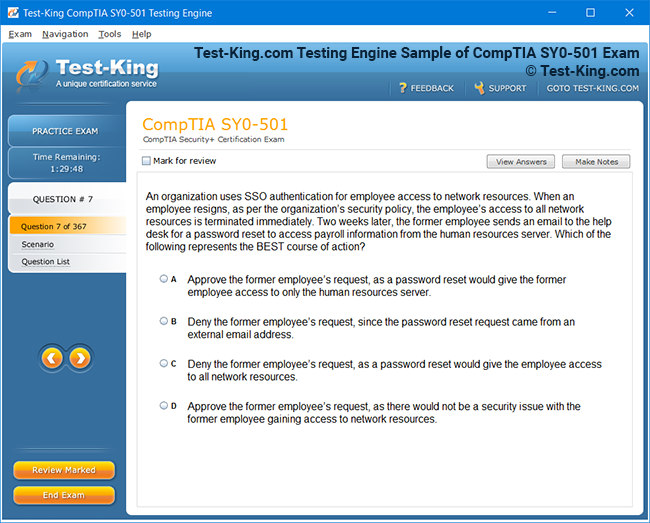
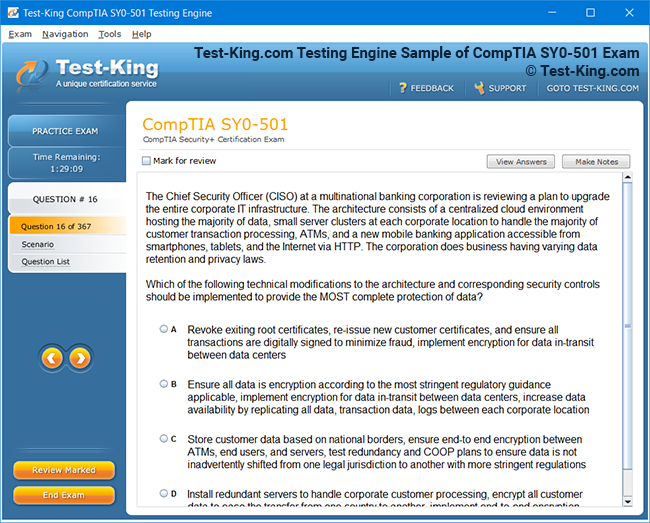
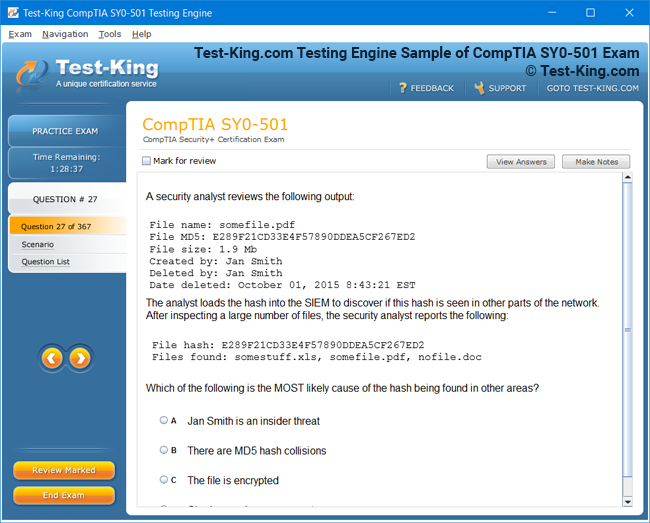
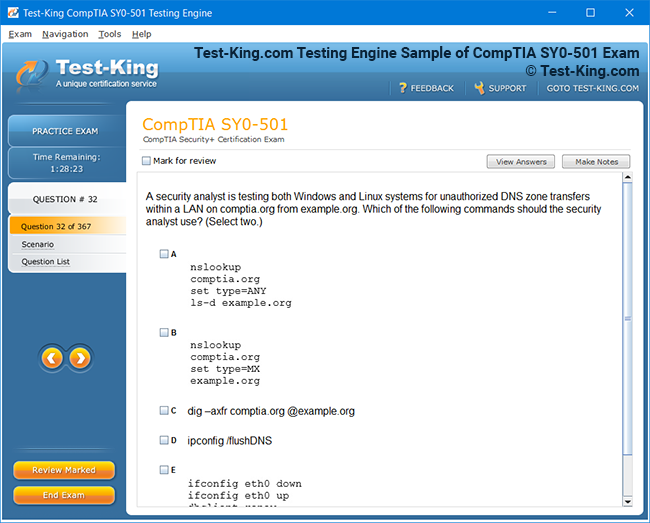
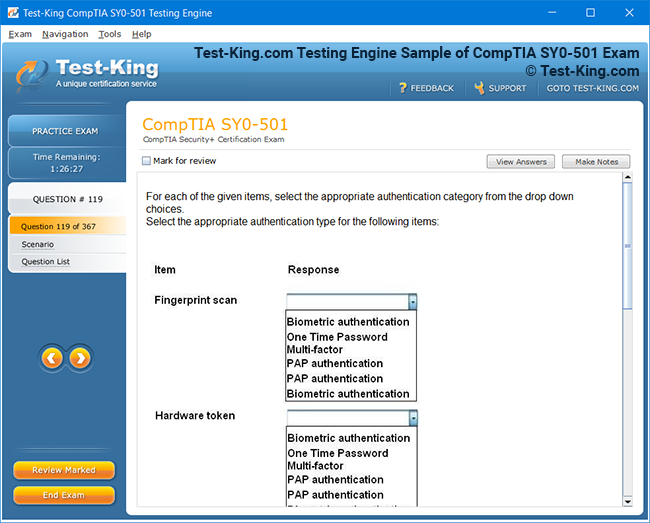
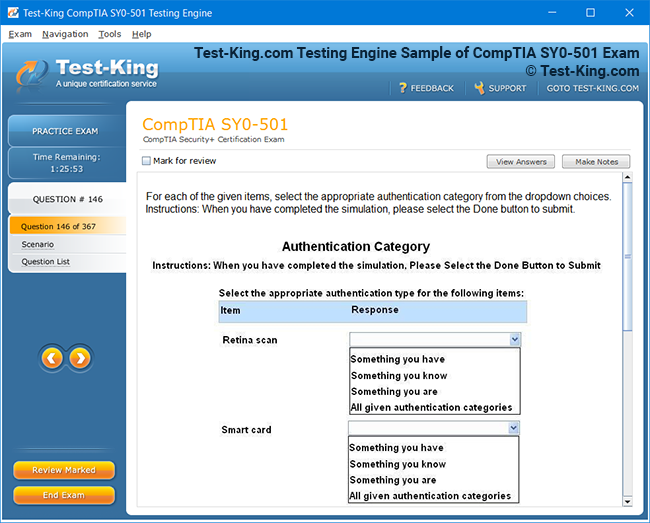
Product Screenshots
Frequently Asked Questions
How can I get the products after purchase?
All products are available for download immediately from your Member's Area. Once you have made the payment, you will be transferred to Member's Area where you can login and download the products you have purchased to your computer.
How long can I use my product? Will it be valid forever?
Test-King products have a validity of 90 days from the date of purchase. This means that any updates to the products, including but not limited to new questions, or updates and changes by our editing team, will be automatically downloaded on to computer to make sure that you get latest exam prep materials during those 90 days.
Can I renew my product if when it's expired?
Yes, when the 90 days of your product validity are over, you have the option of renewing your expired products with a 30% discount. This can be done in your Member's Area.
Please note that you will not be able to use the product after it has expired if you don't renew it.
How often are the questions updated?
We always try to provide the latest pool of questions, Updates in the questions depend on the changes in actual pool of questions by different vendors. As soon as we know about the change in the exam question pool we try our best to update the products as fast as possible.
How many computers I can download Test-King software on?
You can download the Test-King products on the maximum number of 2 (two) computers or devices. If you need to use the software on more than two machines, you can purchase this option separately. Please email support@test-king.com if you need to use more than 5 (five) computers.
What is a PDF Version?
PDF Version is a pdf document of Questions & Answers product. The document file has standart .pdf format, which can be easily read by any pdf reader application like Adobe Acrobat Reader, Foxit Reader, OpenOffice, Google Docs and many others.
Can I purchase PDF Version without the Testing Engine?
PDF Version cannot be purchased separately. It is only available as an add-on to main Question & Answer Testing Engine product.
What operating systems are supported by your Testing Engine software?
Our testing engine is supported by Windows. Andriod and IOS software is currently under development.
Understanding the CIMAPRO17-BA1-X1-ENG Exam: Structure, Syllabus, and Key Learning Areas
The CIMA BA1 Fundamentals of Business Economics examination is one of the initial stepping stones in the journey toward acquiring the CIMA professional qualification, which is globally acknowledged for its focus on management accounting and strategic decision-making in business. This examination is devised to equip aspiring professionals with a profound grasp of economic theory, financial environments, market dynamics, and how these influence business decisions within both local and global spheres. It introduces analytical thinking and connects abstract economic concepts to practical applications commonly encountered within enterprises. Many individuals pursuing careers in finance, accounting, consultancy, or corporate strategy find this evaluation immensely valuable because it instills a structured understanding of how economic forces govern organizational viability and sustainability.
The Foundation and Purpose of the CIMA BA1 Examination
The structure of this examination is crafted in a way that assesses not only theoretical comprehension but also the practical aptitude to interpret data, recognize economic patterns, and apply business economics to scenarios that mirror authentic corporate challenges. It examines knowledge of microeconomics and macroeconomics, demand and supply mechanics, market equilibrium, inflation, unemployment, national income, monetary systems, government interventions, and international trade. Each concept contributes to building an analytical and strategic mindset, enabling candidates to think beyond numerical calculations and uncover the deeper reasons behind market trends, consumer behavior, costs, revenues, and profitability. Unlike examinations overloaded with memorization, this evaluation demands logical reasoning and the ability to correlate theoretical constructs with real business events.
The assessment format generally encompasses multiple-choice questions, short calculations, and scenario-based queries. Candidates are expected to interpret graphical data, compute economic measures, identify relationships among variables, and evaluate business decisions under varying economic conditions. The exam is typically computer-based, providing real-time results and flexibility in scheduling. Time management is crucial, as there is a need to respond accurately while navigating through questions that require both quantitative aptitude and interpretative reasoning. The syllabus is divided in a manner that blends core economics, market influence, business behavior, financial systems, and regulatory frameworks.
Understanding the purpose of this evaluation involves recognizing that it is not merely about passing a test but about cultivating a mindset that perceives organizations as entities embedded within economic ecosystems. Every business, whether a resource manufacturer, a digital service provider, or an international conglomerate, operates within markets governed by demand and supply fluctuations, price movements, consumer preferences, regulatory constraints, and global forces. The examination prepares candidates to identify these dynamics, assess risks, anticipate changes, and propose decisions that enhance organizational resilience and competitiveness. It provides grounding in the language of economics and introduces terminology such as elasticity, opportunity cost, marginal utility, equilibrium price, fiscal deficit, exchange rates, and gross domestic product. These concepts become part of everyday vocabulary for professionals navigating managerial roles.
One of the profound aspects within this study is the exploration of how scarce resources are allocated efficiently to satisfy unlimited wants. This is the fundamental assumption in economics and the reason behind studying production possibility frontiers, opportunity cost, and economic choices. Candidates discover how households, firms, and governments make decisions based on constraints and incentives. While households aim to maximize utility, firms strive to maximize profits, and governments attempt to achieve social welfare and economic stability. The BA1 examination integrates these perspectives and elucidates how they interact in circular flow models within an economy.
The syllabus further encompasses demand theory, highlighting how quantity demanded varies with price changes, consumer income, tastes, expectations, and the availability of substitutes or complementary goods. Candidates analyze demand curves, shifts caused by non-price variables, and the law of diminishing marginal utility. On the supply side, they explore how firms decide output levels based on production costs, technology, input availability, and profitability expectations. The interaction of demand and supply yields equilibrium price, a vital concept that determines market functioning and how imbalances like surplus or shortage are resolved. Understanding elasticity, such as price elasticity of demand, income elasticity, and cross elasticity, allows candidates to evaluate how sensitive consumers are to price alterations and how businesses set pricing strategies to maximize revenues.
Another indispensable part of this study is cost and revenue analysis. Candidates become acquainted with fixed costs, variable costs, total costs, average costs, and marginal costs. They also explore concepts of total revenue, marginal revenue, and profit maximization where marginal cost equals marginal revenue. These foundations enable them to comprehend short-run and long-run production theories, economies and diseconomies of scale, and optimal output decisions. Market structures are also investigated in detail, including perfect competition, monopolistic competition, oligopoly, and monopoly. Each market structure exhibits unique characteristics concerning the number of sellers, control over pricing, nature of products, barriers to entry, and profit potentials. The examination requires candidates to differentiate these structures and assess how firms behave within each scenario.
Beyond microeconomics, the examination delves into macroeconomic phenomena. Macroeconomics broadens the view from individual markets to the whole economy, explaining how aggregate demand and aggregate supply determine national output and price levels. Candidates examine factors that influence aggregate demand such as consumption, investment, government spending, and net exports. They also study aggregate supply, which is affected by production capacity, labor supply, technological advancements, and costs of production. Inflation is studied as a persistent increase in the general price level, its causes such as demand-pull and cost-push factors, and its consequences for households, firms, and governments. Unemployment, another significant macroeconomic issue, is examined through types such as frictional, structural, and cyclical unemployment. These topics help candidates understand how economic stability or instability influences business performance.
Gross domestic product is a cardinal indicator of economic activity. Candidates learn how GDP measures the monetary value of all finished goods and services produced within a country’s borders in a given period. They differentiate between nominal and real GDP, understand GDP deflators, and recognize the limitations of GDP as a measure of social welfare and sustainability. National income accounting, which includes components like personal income, disposable income, and national income at factor cost, is also studied. This knowledge is instrumental for interpreting macroeconomic trends and making business decisions that align with economic cycles.
Fiscal policy and monetary policy are essential parts of the syllabus. Fiscal policy involves government decisions regarding taxation and public spending. Candidates evaluate how governments use fiscal tools to stimulate economic growth or reduce inflationary pressures. They also examine budget deficits, public debt, and the trade-off between government spending on public goods and the need to maintain financial discipline. Monetary policy, on the other hand, is administered by central banks that regulate money supply and interest rates to achieve price stability and economic growth. Candidates explore tools like open market operations, reserve requirements, and policy interest rates.
The role of financial institutions and markets is also emphasized. Banks, credit unions, insurance companies, and capital markets facilitate the movement of funds from savers to borrowers. Understanding how interest rates are determined, how exchange rates fluctuate in foreign exchange markets, and how commodities and securities are traded is indispensable in comprehending business economics. International trade introduces concepts of comparative advantage, balance of payments, exchange rate systems, tariffs, quotas, and trade agreements. Candidates realize how globalization interconnects economies and how external shocks, exchange rate volatility, and trade disputes can influence business operations.
Ethical considerations and corporate governance are subtly integrated within the syllabus. Businesses must operate within regulatory frameworks, follow legal mandates, and ensure transparent reporting. Candidates gain appreciation for how governments enact laws to protect consumers, maintain competition, and curb harmful externalities. Externalities, such as pollution or positive spillovers, are part of the economic discourse where market outcomes do not always reflect social welfare. Government interventions, through subsidies, taxes, regulations, or public goods provision, are studied to understand their effect on correcting market failures.
This examination also emphasizes the importance of data analysis and interpretation. Candidates engage with economic data, graphs, charts, and numerical indicators, converting them into meaningful insights. Instead of presenting tabular data, textual explanations describe numerical relationships and trends. For example, if a country’s inflation rises consistently, it indicates increasing prices and erosion of purchasing power, compelling businesses to adjust pricing strategies and wage negotiations. Similarly, if unemployment declines while GDP increases, it suggests economic expansion and improved productivity, offering opportunities for business growth and investment.
Strategic decision-making lies at the heart of this domain. Business economics enables professionals to evaluate internal and external environments, conduct SWOT analysis without explicitly segmenting it into tabular form, and identify strengths, weaknesses, opportunities, and threats in narrative form. Decision-making under uncertainty becomes more informed when economic indicators are monitored. When a firm contemplates expansion, acquisition, product diversification, or market entry, understanding economic cycles, consumer income levels, interest rate trends, and competitive forces becomes indispensable.
Preparing for this examination demands consistent study, understanding rather than memorization, practicing past questions, and enhancing numerical agility. Candidates must be prepared to solve problems related to break-even analysis, elasticity calculations, inflation adjustments, exchange rate conversions, and national income calculations. They should understand concepts deeply enough to articulate how government policies influence business climates, how international trade agreements influence export potential, and how inflation affects currency values and corporate profitability.
Revision techniques such as writing summaries in narrative form, narrating graphs verbally, and teaching concepts to peers can enhance retention. Mock tests sharpen time management and reveal areas needing improvement. Many aspirants utilize digital platforms to take practice tests that simulate actual exam pressure. Familiarity with the computer-based format, question navigation, timing, and review options is advantageous.
Although challenging, this examination serves as a gateway to more advanced CIMA evaluations that integrate management accounting, financial reporting, risk analysis, and strategic case studies. Mastery of business economics at this stage provides a solid foundation for comprehending cost management, budgeting, investment appraisal, performance evaluation, and strategic planning in subsequent evaluations.
Key Business Economics Foundations and Their Real-World Relevance
The CIMA BA1 examination integrates a vast spectrum of economic concepts that form the intellectual substratum of business decisions, financial reasoning, and strategic foresight. Understanding these foundations is indispensable for anyone preparing to navigate this qualification, as it amplifies analytical capacity and informs how organizations behave within diverse economic environments. Economic theory is not an abstract academic pursuit when studied through the lens of the CIMA syllabus; instead, it becomes a pragmatic tool that influences pricing strategies, resource allocation, forecasting, investment planning, and responses to policy interventions. Business economics becomes an interpretive instrument that allows professionals to decode how market forces operate, how risks emerge, and why entities adjust their tactics according to fluctuations in inflation, interest rates, or consumer sentiment.
The idea of scarcity lies at the heart of economic reasoning. Scarcity exists because human wants are boundless while resources are inherently finite. This predicament forces individuals, enterprises, and governments to make deliberate choices regarding production, consumption, and distribution. The CIMA BA1 examination emphasizes this elemental concept by encouraging candidates to appreciate opportunity cost, the value of the next best alternative foregone. Understanding opportunity cost helps future professionals make logical judgments when evaluating business investments or choosing between alternative uses of capital. Rather than relying purely on mathematical calculations, this concept introduces a nuanced understanding that every choice entails a sacrifice, and rational decision-making must account for what is relinquished.
One of the earliest concepts explored within the context of BA1 is the distinction between microeconomics and macroeconomics. Microeconomics concentrates on individual markets, consumer behavior, firm decisions, price determination, and market structures. It attempts to explain how households decide their consumption patterns or how businesses determine output and pricing. Macroeconomics, in contrast, examines the economy as a unified system encompassing national income, inflationary trends, unemployment, fiscal and monetary policies, international trade, and currency fluctuations. These two branches interlace frequently because collective micro-level actions often drive macro-level outcomes. Businesses cannot fully understand their operational landscape without recognizing how macroeconomic shifts influence costs, demand levels, investor confidence, and exchange rate movements.
The study of demand and supply is a quintessential pillar within economic theory and a core element of the examination. Demand represents the quantity of a product consumers are willing and able to purchase at different price levels within a certain period, while supply reflects the quantity producers are willing to offer at various prices. These forces interact to determine equilibrium price and quantity, a point where no excess demand or supply exists. Candidates must grasp how changes in non-price determinants cause shifts in demand and supply curves. For example, if consumer income increases, the demand for luxury goods often expands, whereas if production costs escalate due to rising wages or imported raw material expenses, supply may contract. In real markets, equilibrium is not static; it fluctuates as tastes evolve, technological innovations emerge, or geopolitical events restrict trade.
Elasticity enriches the analysis of demand and supply by measuring how responsive quantity demanded or supplied is to changes in price, income, or prices of related goods. Price elasticity of demand explains whether consumers will significantly reduce their purchases when prices rise or whether they will continue buying because the product is a necessity. Goods such as salt or essential medicines often exhibit inelastic demand, meaning quantity demanded does not change drastically with price variations. Luxury goods, non-essential gadgets, or products with many substitutes usually display elastic demand. Income elasticity of demand explores how demand changes with variations in consumer income, distinguishing between normal goods, inferior goods, and luxury goods. Cross elasticity examines the interdependent relationship between products, revealing whether they are substitutes or complements. Price elasticity of supply assesses how swiftly producers can adjust production volumes when prices fluctuate. Understanding elasticity allows businesses to create pricing strategies, forecast revenue responses, and sustain profitability even in volatile markets.
Cost and revenue structures are also pivotal within the realm of business economics. Firms face fixed costs that remain constant irrespective of output, such as rent or insurance, and variable costs that change with production volume, such as raw materials and direct labor. Together, they form total costs. Average cost is total cost divided by quantity, while marginal cost emerges as the additional cost incurred by producing one extra unit. Revenue is computed as price multiplied by quantity sold, with marginal revenue showing the extra revenue gained from selling one additional unit. The relationship between marginal cost and marginal revenue helps firms determine the level of output that maximizes profit. When marginal revenue equals marginal cost, profit is considered optimized. The CIMA BA1 examination often challenges individuals to evaluate these relationships in real business contexts, so familiarity with these ideas is fundamental.
Market structures further deepen understanding of how firms operate. Perfect competition portrays an idealized environment with numerous small firms, homogeneous products, and no barriers to entry. In this scenario, individual firms have no influence over price and must accept prevailing market rates. Monopolistic competition involves many firms with differentiated products and some level of pricing power. Oligopoly consists of a few dominant firms that may engage in tacit collusion or competitive rivalries. Monopoly arises when a single entity controls an entire market, either through unique resources, regulatory concessions, or technological superiority. Each market structure influences how businesses set prices, determine outputs, engage in innovation, and respond to competition. Candidates preparing for BA1 must understand these distinctions because market structure knowledge guides how companies strategize and how governments regulate industries to prevent exploitative practices.
Shifting from micro-level workings to broader aggregates, macroeconomic principles gain prominence. Aggregate demand represents the total demand for goods and services within an economy, comprising consumer spending, investment by firms, government expenditure, and net exports. Aggregate supply focuses on the total output producers are willing to supply at different price levels. When aggregate demand increases, it may lead to higher output and employment, but if the economy operates near full capacity, it can generate demand-pull inflation. Aggregate supply shifts may derive from changes in labor productivity, technological enhancements, cost of raw materials, or government policies that alter business incentives. Understanding these phenomena helps individuals predict how national economic conditions can influence business operations and strategic choices.
Inflation, a persistent increase in the general price level of goods and services, is another vital concept within business economics and a frequent topic in the BA1 examination. Inflation erodes purchasing power, affects cost of living, and influences wage negotiations. Firms must adapt to inflationary environments by adjusting pricing, managing input costs, and preserving profit margins. Inflation can stem from an increase in aggregate demand, known as demand-pull inflation, or escalating production costs, known as cost-push inflation. Hyperinflation, though rare, can devastate economic stability. Deflation, the opposite of inflation, refers to a consistent drop in prices and can be equally harmful because it discourages consumption and investment. Central banks employ monetary policy to regulate inflation by adjusting interest rates and controlling money supply.
Unemployment, another macroeconomic element, has wide-ranging implications for business economics. It represents the share of the labor force that is willing and able to work but cannot find employment. Types of unemployment include frictional, which occurs when workers transition between jobs; structural, caused by mismatches between skills and job requirements; and cyclical, which results from economic downturns reducing overall demand. High unemployment leads to lower consumer spending and subdued business revenues, while low unemployment may increase wage costs due to labor scarcity. The CIMA BA1 syllabus emphasizes understanding these dynamics because employment levels influence market conditions, consumer confidence, and governmental responses.
National income and its measurement through indicators such as gross domestic product provide insights into the economic health of a nation. GDP calculates the total monetary value of all finished goods and services produced within domestic borders over a specific period. It can be measured by production, income, or expenditure approaches. Nominal GDP measures output using current prices, while real GDP adjusts for inflation, reflecting actual growth in volume. The GDP deflator compares nominal and real GDP, illustrating price changes over time. Candidates must also recognize that GDP has limitations, as it does not account for informal economic activities, income distribution, environmental degradation, or quality of life. Nonetheless, GDP remains a significant barometer for policymakers, businesses, and investors while assessing economic performance.
Fiscal policy refers to decisions taken by governments concerning taxation and public spending to achieve economic objectives such as growth, stability, and equitable distribution of income. When an economy confronts recession, governments might increase public spending or reduce taxes to stimulate demand. Conversely, in times of high inflation, governments might curtail expenditure or raise taxes to reduce disposable income and curb consumption. Budget deficits emerge when expenditure exceeds revenue, while budget surpluses indicate the opposite. The size and sustainability of public debt influence investor confidence, interest rates, and future fiscal flexibility. The CIMA BA1 examination evaluates comprehension of these concepts because businesses must understand how fiscal measures shape consumer behavior, influence borrowing costs, and impact demand for goods and services.
Monetary policy, controlled by the central bank, regulates the money supply and interest rates. By increasing interest rates, borrowing becomes costlier, reducing consumer spending and dampening inflationary pressures. Conversely, reducing interest rates encourages borrowing and investment, possibly stimulating growth. Open market operations, reserve requirements, and discount rates are essential tools used by central banks. Businesses monitor monetary policy decisions to anticipate changes in financing costs, export competitiveness, and overall economic sentiment. Fluctuating interest rates can influence loan repayments, investment calculations, and long-term planning.
International trade allows countries to exchange goods and services, benefiting from comparative advantage—the ability to produce at a lower opportunity cost compared to others. This concept demonstrates why nations specialize in certain products and import others. Balance of payments records all transactions between residents of a country and the rest of the world, including trade, investment, and financial transfers. A deficit may indicate that imports exceed exports, while a surplus suggests that a nation exports more than it imports. Exchange rates dictate how currencies convert in foreign exchange markets, influencing international purchasing power. Appreciation makes imports cheaper and exports more expensive, while depreciation does the opposite. Governments may adopt fixed, floating, or managed exchange rate systems depending on their policies. Understanding international trade and currency fluctuations is paramount for businesses engaged in global operations, as it influences pricing, market entry strategies, and risk management.
Government intervention becomes necessary when market outcomes fail to deliver optimal social welfare. Market failure can occur due to externalities, public goods, monopolistic power, information asymmetry, or unequal income distribution. Negative externalities like pollution impose costs on third parties, while positive externalities like education provide benefits beyond private individuals. Public goods, such as street lighting or national defense, are non-excludable and non-rivalrous, causing private enterprises to avoid producing them due to inability to charge consumers directly. Governments address these issues through subsidies, taxes, regulations, and direct provision of services. The CIMA BA1 exam expects candidates to articulate why government policies exist and how they influence market systems and business strategies.
Financial systems play an indispensable role in economic functioning. Banks, stock exchanges, insurance companies, microfinance institutions, and shadow banking systems facilitate the flow of funds between savers and borrowers. Businesses rely on these institutions for capital financing, investment opportunities, risk mitigation, and liquidity management. Interest rates reflect the cost of borrowing and return on savings, influencing decisions regarding capital budgeting and portfolio allocation. Exchange rate movements in foreign exchange markets affect import costs, export revenues, and profitability. Understanding these financial mechanisms is crucial when evaluating investment proposals or analyzing business performance.
The CIMA BA1 examination also embeds ethical reasoning, environmental sustainability, and corporate governance considerations. While economics traditionally focuses on efficiency and profit maximization, real-world practice demands accountability, transparency, and ethical conduct. Firms must adhere to laws that protect consumers from unfair practices, ensure worker rights, and prevent exploitation of natural resources. Sustainability reporting, environmental stewardship, and social responsibility have become significant in global business discourse. These aspects are subtly interwoven into the syllabus, reminding candidates that economic decisions should not compromise future generations or societal equity.
Data interpretation is another indispensable component that extends across every topic in the examination. Candidates encounter numerical data, trends, indices, inflation rates, employment statistics, and other indicators that must be described effectively in verbal form. For instance, if inflation increases from three percent to five percent over two years, this suggests accelerating price pressures that could erode savings, increase cost of living, and prompt businesses to alter wage structures or adjust supply contracts. If unemployment decreases while GDP grows steadily, it implies improving economic conditions conducive to business expansion, investment in technology, and increased consumer confidence.
Understanding risk and uncertainty is vital for making sound decisions in unpredictable environments. While risk refers to situations where probabilities of outcomes are known or estimable, uncertainty concerns outcomes with unknown probabilities. Economic fluctuations caused by changes in commodity prices, technological disruptions, geopolitical instability, or natural disasters can affect business profits. Firms often use predictive analytics, scenario planning, and sensitivity analysis to evaluate potential risks. The BA1 content encourages a mindset that anticipates volatility and evaluates strategies that mitigate losses while maximizing gains.
Throughout preparation for this examination, students are advised to embrace an inquisitive mindset that goes beyond rote learning. Economic theories outlined in books must be connected with contemporary events such as fluctuating exchange rates, trade disputes between countries, shift in consumer behavior due to technological advancements, or central bank interest rate announcements. Observing these occurrences in global news helps create mental bridges between theory and practice, strengthening comprehension. Additionally, practicing numerical questions related to elasticity, cost calculations, inflation adjustments, and national income reinforces quantitative skills and enhances confidence.
Chronicling all these ideas under business economics showcases the interdisciplinary nature of the CIMA BA1 exam. It requires understanding psychology behind consumer choices, societal implications of government policies, mathematical reasoning in financial analysis, and philosophical contemplation on ethical decision-making. Candidates not only learn how economies function but also why certain institutions exist, what motivates consumer and producer behavior, and how nations interact in international markets. By internalizing these concepts, individuals become adept at evaluating complex business situations, interpreting economic signals, and developing strategies that promote sustainability, profitability, and resilience.
How External Economic Forces Shape Strategic Choices and Organizational Outcomes
The economic environment holds immense sway over business decisions, and this reality is deeply embedded in the concepts tested within the CIMA BA1 examination. Organizations do not operate in isolation, nor are their decisions crafted in a vacuum. They function within a fluctuating landscape composed of variables such as inflation, interest rates, exchange rate movements, consumer confidence, fiscal policies, technological transformation, demographic changes, and international trade relationships. Each external force can shape the financial health, operational strategies, and long-term resilience of a company, making it vital for professionals preparing for this assessment to internalize how economic conditions affect business behavior. Understanding these relationships cultivates strategic foresight and equips individuals with the intellectual rigor needed to evaluate risks, predict opportunities, and allocate resources effectively.
A business constantly analyzes demand trends before making decisions about production, pricing, expansion, or employment. Demand for goods and services depends on income levels, consumer preferences, taxation policies, inflation rates, and employment levels. If consumer incomes rise due to economic growth and low unemployment, businesses may observe higher demand and respond by increasing production, hiring additional workers, or exploring new markets. Conversely, when an economy experiences recession, job losses, and declining household incomes, demand wanes, prompting firms to reduce output, decrease inventory, postpone capital investments, and implement cost-containment strategies. The CIMA BA1 syllabus emphasizes understanding this correlation between macroeconomic conditions and microeconomic decisions. Candidates are expected to recognize that demand is not merely influenced by price but also by income elasticity, consumer confidence, and broader economic cycles.
The purchasing power of money declines when inflation rises. Inflation indicates the persistent increase in general price levels across the economy, reducing the real value of income and savings. For businesses, inflation affects production costs, particularly if raw materials, transportation, and wages become costlier. Companies may respond by raising prices to maintain profit margins, but this decision depends on the elasticity of demand. If demand for their products is elastic, significant price increases could substantially reduce sales volumes. On the other hand, if demand is inelastic, particularly for necessities or products with limited substitutes, businesses may successfully transfer higher costs to consumers without large drops in quantity demanded. Inflation also influences wage negotiations, interest rates, and financial planning. It compels firms to predict future costs and adjust contract terms, supplier agreements, and long-term budgets. The CIMA BA1 examination explores how inflation affects consumer spending, business profitability, and strategic adjustments to maintain economic equilibrium.
Interest rates represent another powerful economic variable that influences business decisions. They are determined by the monetary authority of a country, typically the central bank, which uses interest rates as a primary tool to regulate money supply and inflation. When interest rates increase, the cost of borrowing capital rises, discouraging businesses from taking loans to finance expansions, purchase machinery, or develop new products. High interest rates may compel firms to limit spending, delay projects, or seek alternative financing sources. Additionally, consumers facing higher interest rates are less likely to borrow for houses, cars, or durable goods, lowering demand for products and services. Conversely, when interest rates are reduced, borrowing becomes more affordable, stimulating investment and consumption. Businesses may leverage lower interest rates to fund acquisitions, upgrade technology, or expand capacity. The impact of interest rates is not limited to borrowing; it also affects exchange rates, investment yields, and investor behavior, all of which influence business decisions and economic outcomes.
Exchange rates dictate the value of one currency in relation to another. For firms engaged in international trade, exchange rate movements can dramatically alter profitability. When a domestic currency appreciates, imported goods and foreign raw materials become cheaper, reducing production expenses. However, exports become more expensive for foreign buyers, potentially reducing international sales. When the domestic currency depreciates, exports become relatively cheaper and more competitive abroad, but imported materials become more expensive, increasing costs for businesses reliant on foreign inputs. Multinational corporations navigate these fluctuations through hedging strategies, currency futures, and diversified operations across multiple countries. The relationship between exchange rates and business decisions is a central theme within the CIMA BA1 curriculum, prompting candidates to evaluate how currency volatility affects pricing, revenue projections, and financial reporting.
Government fiscal policy significantly influences the economic environment in which businesses operate. Fiscal policy encompasses government decisions regarding taxation, public expenditure, and borrowing. When governments increase public spending on infrastructure, education, and healthcare, it stimulates economic activity, raising employment, disposable income, and consumer demand. Businesses respond by expanding production, investing in capital goods, and hiring additional labor. However, increased government spending can also lead to higher public debt, potentially necessitating future tax increases or spending cuts. Tax policy directly impacts business profitability and consumer spending. If corporate taxes are high, companies may have lower net income, limiting reinvestment and discouraging entrepreneurial ventures. Lower taxes can boost profits and encourage investment, though they may reduce government revenue required for public services. For individuals, higher income taxes reduce disposable income, lowering demand for non-essential goods, while lower income taxes may stimulate spending and accelerate business growth. The BA1 examination encourages learners to assess how fiscal policy shapes aggregate demand, business sentiment, and investment decisions.
Monetary policy, administered by central banks, deals with controlling money supply and maintaining price stability. Tools such as open market operations, policy interest rates, and reserve requirements are used to regulate liquidity within financial systems. When central banks purchase government securities from financial institutions, they inject money into the economy, lowering interest rates and encouraging borrowing. Conversely, selling securities withdraws money, increasing interest rates and suppressing borrowing. Businesses must understand how these policy decisions affect credit availability, consumer behavior, exchange rates, and inflation. Monetary policy can also influence investor confidence and capital flows, affecting stock prices, bond yields, and foreign investments. Through the CIMA BA1 syllabus, candidates are encouraged to evaluate how monetary strategies affect business planning, cost of capital, and investment feasibility.
Unemployment levels are pivotal indicators of economic stability. High unemployment means many individuals lack income, reducing overall purchasing power and demand for goods and services. Businesses may experience declining sales, prompting them to curtail production, reduce workforce, or freeze investments. Low unemployment suggests a robust economy with higher consumer spending. However, if unemployment falls too low, businesses might struggle to recruit workers, forcing them to offer higher wages, which could increase production costs and potentially raise prices. Skilled labor shortages may also compel firms to invest in automation or training programs. The CIMA BA1 content prompts candidates to analyze how unemployment influences consumer behavior, wage dynamics, and business strategies in response to labor market conditions.
Consumer confidence reflects the optimism or pessimism individuals feel about the overall state of the economy and their financial future. If consumers believe their income stability is secure and the economy is growing, they are more willing to spend, borrow, and invest in assets such as housing. Businesses detect these changes through sales data, market research, and economic indicators and adapt by increasing production, launching innovative products, or expanding marketing efforts. Conversely, when consumer confidence falls due to economic uncertainty, political instability, or financial crises, spending decreases, leading firms to reduce inventory, scale back investments, and adopt conservative strategies to preserve liquidity. Understanding consumer confidence helps candidates preparing for BA1 to identify market trends and forecast demand fluctuations more accurately.
The business cycle illustrates the recurring pattern of economic growth, stagnation, recession, and recovery. Businesses closely monitor economic cycles because their strategies, profitability, and risk exposure vary significantly across different stages. During expansion, rising consumer demand, investment growth, and increasing employment create favorable conditions for businesses to flourish. During peak periods, inflationary pressures often grow stronger, and resource constraints may emerge. Economic contraction or recession results in falling output, declining employment, and reduced consumer confidence, compelling businesses to implement defensive strategies such as cost reduction, inventory control, and restructuring. Recovery marks gradual improvement in output, employment, and investment. Organizations that understand business cycles are better positioned to plan capital expenditures, manage cash flows, and make decisions that enhance resilience. The BA1 examination assesses how firms should prepare for and respond to different stages of the economic cycle.
International trade and globalization demonstrate how interconnected economies shape business decisions. Businesses engage in export and import activities to leverage comparative advantage, access larger markets, and diversify income streams. Trade liberalization, through agreements and reduced tariffs, enables easier movement of goods, services, and capital across borders. However, trade barriers, import quotas, and geopolitical tensions can restrict global commerce, affecting supply chains and profitability. Exchange rate volatility, trade surpluses or deficits, and political alliances influence international business strategies. Companies involved in global operations must understand logistical considerations, cultural factors, trade regulations, and currency risks. The CIMA BA1 syllabus emphasizes the critical importance of international trade, exchange rate systems, and external economic shocks, revealing how globalization affects pricing strategies, production decisions, and workforce mobility.
Technological evolution shapes the economic environment by transforming production methods, enhancing efficiency, and creating new consumer demands. Innovations in automation, artificial intelligence, and digital platforms allow businesses to reduce costs, increase productivity, and access global markets. For instance, e-commerce eliminates geographical constraints, enabling firms to reach international customers without establishing physical storefronts. However, technological change can disrupt traditional industries, displace workers, and necessitate new skills in the labor market. Companies must decide whether to invest in new technologies, retrain employees, or redesign operational models. Economic policies such as tax incentives for research and development, intellectual property laws, and educational reforms influence how rapidly firms and workers adapt to technological advancements. Understanding these dynamics gives BA1 candidates an enriched perspective on how innovation intersects with economic forces to drive business evolution.
Demographic changes also influence business decisions and economic structures. Ageing populations, urbanization, migration patterns, and shifting household compositions impact labor supply, consumer preferences, and government policies. An ageing population may increase demand for healthcare services, pension plans, and assisted living facilities while reducing labor supply and increasing public spending on social services. Urbanization leads to greater demand for housing, transportation, utilities, and consumer goods in cities. Migration can address labor shortages, enrich cultural diversity, and stimulate economic growth but may also create political and social disputes. Businesses must understand demographic trends to tailor marketing strategies, develop relevant products, and anticipate future challenges.
Understanding Competitive Dynamics, Pricing Behaviour, and Business Sustainability in Economic Contexts
The analysis of market structures is a cornerstone of business economics and occupies a significant place in the CIMA BA1 examination. Firms operate within a spectrum of competitive environments that determine their pricing strategies, production decisions, capacity for innovation, and long-term sustainability. The structure of the market affects how firms interact with competitors, respond to consumer demand, and anticipate changes in the broader economic environment. Candidates preparing for the examination must recognize that understanding market structures is not merely an academic exercise; it provides critical insight into organizational behavior, strategic planning, and decision-making under uncertainty.
Perfect competition represents an archetypal market in which numerous small firms produce homogeneous goods and no single firm can influence the prevailing market price. Firms are price takers, and profits tend toward a normal equilibrium in the long run as new entrants respond to short-term supernormal profits. In this environment, efficiency is paramount, as firms must minimize production costs while optimizing output to survive. Real-world examples of highly competitive markets may include agricultural commodities or basic raw materials where differentiation is minimal. Within such markets, businesses focus on operational efficiency, rapid responsiveness to market changes, and continual cost reduction. Understanding these dynamics is essential for BA1 candidates because it illustrates the link between market structure, pricing flexibility, and sustainable profitability.
Monopolistic competition introduces the element of product differentiation within markets that contain many firms. Each company attempts to establish brand identity, unique features, or service advantages that distinguish it from competitors. Pricing decisions are influenced not solely by market forces but also by perceived consumer value, brand loyalty, and marketing effectiveness. While firms retain some degree of pricing power, competition remains strong, constraining profit margins over time. In this context, businesses often allocate resources to research, development, and customer engagement strategies to maintain a competitive edge. The CIMA BA1 examination emphasizes how firms in monopolistic competition balance costs and revenues, adapt pricing to consumer preferences, and make strategic investments in advertising and innovation.
Oligopoly occurs when a small number of firms dominate a market, creating interdependent decision-making processes. Companies in oligopolistic markets may engage in tacit collusion, price leadership, or competitive rivalry depending on strategic considerations and regulatory oversight. The behavior of one firm significantly affects the outcomes of others, making anticipation of competitor actions crucial. Barriers to entry, such as high capital requirements, patents, or access to essential distribution networks, reinforce market control by dominant players. Pricing behavior in oligopolistic markets can vary widely: firms may maintain stable prices to avoid price wars or engage in strategic undercutting to capture market share. The examination explores how firms analyze market signals, assess competitive threats, and develop strategies that balance profitability with risk management. Real-world examples include the airline industry, telecommunications, and automotive manufacturing where few companies control significant portions of the market and must navigate complex competitive dynamics.
Monopoly represents the extreme end of market concentration, in which a single firm dominates a market, often due to exclusive control of resources, technological superiority, or regulatory protection. A monopolist possesses considerable pricing power, determining output levels and pricing strategies that maximize long-term profits. However, monopolistic power does not exist in isolation; it is constrained by potential regulatory intervention, public scrutiny, and consumer reactions. Governments may impose price controls, encourage competition, or introduce antitrust measures to prevent exploitation of market power. From an organizational perspective, monopolies often invest in research and development to sustain technological advantages, maintain customer loyalty, and create barriers for potential entrants. BA1 candidates study monopoly behavior to understand the interplay between market dominance, strategic pricing, and social welfare implications.
Pricing behavior within different market structures is a central theme of strategic economic decision-making. In competitive markets, prices are largely determined by supply and demand interactions, requiring firms to adopt cost-leadership strategies and operational efficiency to sustain profitability. In monopolistic or oligopolistic markets, pricing may reflect strategic considerations, including competitor responses, market segmentation, and long-term brand positioning. Elasticity of demand plays a crucial role in determining price adjustments, as it indicates how sensitive consumers are to changes in price levels. Firms must evaluate whether raising prices will erode demand significantly or if they can maintain revenue growth without alienating customers. Understanding these relationships equips BA1 candidates to analyze real-world pricing strategies and their implications for revenue optimization and market positioning.
Organizational performance is profoundly influenced by the underlying market structure in which a firm operates. In perfectly competitive markets, firms achieve efficiency through minimizing costs and optimizing production processes. Profit margins are typically modest, emphasizing volume, scale, and efficiency as drivers of success. In monopolistic competition, firms leverage differentiation strategies to enhance performance, focusing on brand loyalty, innovation, and niche market capture. Oligopolistic firms balance competitive pressures with strategic collaborations, market intelligence, and careful capacity planning to sustain performance. Monopoly firms can achieve higher margins, but they face scrutiny from regulators, reputational considerations, and ethical obligations. By linking market structure to organizational performance, BA1 candidates learn to evaluate operational strategies, investment priorities, and long-term sustainability within varying economic contexts.
Innovation and investment decisions are closely tied to competitive dynamics. Firms in markets with intense competition are incentivized to innovate to gain market share, reduce costs, and increase efficiency. Conversely, monopolistic entities may invest in research to maintain dominance, protect patents, and prevent potential competitors from eroding market control. The decision to invest capital in new technology, human resources, or supply chain improvements depends on anticipated returns, cost structures, and market demand. External economic forces such as interest rates, taxation policies, and consumer spending patterns also influence investment strategies. By analyzing how economic conditions interact with market structures, candidates for BA1 can better understand how firms prioritize resources, assess risks, and determine strategic directions.
Sustainability of business operations is increasingly linked to market understanding and external economic awareness. Firms must anticipate how macroeconomic conditions, including inflation, unemployment, and fiscal policy, affect cost structures, consumer behavior, and investment opportunities. Operational efficiency, innovation, and strategic pricing are essential to sustaining performance in the face of fluctuating market forces. In oligopolistic or monopolistic markets, long-term sustainability also depends on navigating regulatory environments, maintaining ethical standards, and responding to social and environmental expectations. The examination encourages candidates to explore the connection between economic literacy, competitive awareness, and organizational resilience, emphasizing that sustainable performance emerges from informed strategy rather than short-term tactical maneuvers.
Barriers to entry and exit play a critical role in shaping strategic behavior. High barriers such as capital intensity, access to essential technology, regulatory compliance, or brand loyalty reduce competitive threats and allow existing firms to maintain advantageous positions. Conversely, low barriers facilitate market fluidity, encourage innovation, and intensify price competition. Companies must evaluate the ease with which new competitors could enter the market, the potential impact on profitability, and the strategic measures necessary to retain market share. For instance, a monopolistic firm may continue investing in marketing, research, or exclusive distribution agreements to deter entry, while firms in competitive markets may focus on continuous improvement and cost leadership.
Market concentration affects both pricing strategies and strategic risk management. In concentrated markets, interdependence requires firms to anticipate competitor actions, align strategic goals with market expectations, and monitor regulatory oversight. Decisions concerning output, pricing, advertising, and mergers require careful analysis to balance competitive advantage with potential risks. In fragmented markets, firms must continuously analyze consumer preferences, monitor competitors, and optimize supply chains to maintain operational efficiency. Understanding the implications of concentration ratios, competitive intensity, and strategic positioning helps BA1 candidates connect economic theory to practical managerial decisions.
The interplay between market structures and external economic conditions further underscores strategic decision-making. Inflationary pressures, changing interest rates, shifts in consumer confidence, and evolving technological landscapes affect how firms operate within their respective markets. For example, an oligopolistic industry facing rising input costs may opt for collaborative solutions such as shared logistics or joint research initiatives to mitigate risk. Conversely, firms in competitive industries must focus on cost minimization, efficiency gains, and value addition to withstand economic pressures. The CIMA BA1 examination emphasizes understanding these dynamics, illustrating how organizational performance is contingent upon both internal strategies and external economic variables.
Firms must also evaluate demand variability and supply constraints when making strategic decisions. Fluctuating consumer preferences, seasonal demand patterns, and unforeseen economic shocks require businesses to adopt flexible strategies, maintain liquidity buffers, and develop responsive supply chains. Inventory management, production scheduling, and resource allocation are all influenced by anticipated market conditions. Strategic foresight, informed by economic understanding, enables firms to avoid overproduction, reduce waste, and maintain profitability during periods of uncertainty. Candidates preparing for the examination are expected to articulate these relationships, demonstrating an ability to synthesize market theory with practical decision-making.
Pricing strategies extend beyond immediate revenue concerns to influence brand positioning, customer perception, and long-term competitive advantage. Dynamic pricing, penetration pricing, price skimming, and value-based pricing are tools employed by firms to align strategy with market structure and consumer behavior. Elasticity, market power, competitive intensity, and cost structures dictate the feasibility and effectiveness of these strategies. For example, a firm in a monopolistic market may adopt premium pricing due to strong brand recognition, while a firm in a highly competitive market may implement penetration pricing to attract customers and expand market share. Understanding these nuances is essential for BA1 candidates to connect theoretical concepts with real-world business applications.
Human resource allocation and organizational structure are influenced by market dynamics and strategic imperatives. In competitive markets, firms emphasize efficiency, productivity, and adaptability. Monopolistic or oligopolistic firms may prioritize specialized skills, research expertise, and management capacity to maintain market dominance. Decisions regarding recruitment, training, performance evaluation, and workforce planning are guided by market expectations, technological advancement, and strategic goals. The examination encourages candidates to evaluate these linkages, demonstrating how market awareness informs operational and human resource decisions.
The sustainability of business operations increasingly incorporates social, ethical, and environmental considerations alongside traditional economic reasoning. Firms operate within societies that impose legal, ethical, and social expectations. Regulatory compliance, corporate social responsibility, and environmental stewardship influence strategic choices and long-term viability. Understanding how market structures shape resource allocation, pricing, and innovation, while simultaneously considering ethical obligations, prepares candidates to think holistically about organizational performance.
Investment, innovation, and risk management decisions are intertwined with market understanding. Companies must anticipate market behavior, regulatory responses, consumer preferences, and technological evolution. Strategic planning involves analyzing potential threats, identifying opportunities, allocating capital efficiently, and balancing short-term performance with long-term sustainability. The CIMA BA1 syllabus emphasizes that candidates develop the capability to integrate knowledge of market structures with external economic conditions, ensuring informed, resilient, and adaptive decision-making.
Market research, data interpretation, and scenario analysis are indispensable tools that bridge economic theory and practical strategy. Firms analyze consumer behavior, competitor performance, supply chain efficiency, and macroeconomic indicators to inform decisions. Scenario planning allows firms to evaluate potential economic shocks, policy changes, or competitive moves, creating contingency strategies that enhance resilience. For instance, anticipating currency depreciation, a multinational firm may hedge exposure, adjust pricing, or diversify sourcing to mitigate risk. The ability to connect market structures, economic understanding, and strategic response exemplifies the analytical depth expected of BA1 candidates.
In summary, understanding competitive dynamics, pricing behavior, and organizational performance within diverse market structures equips candidates with the insight required to make strategic decisions under economic uncertainty. The CIMA BA1 examination emphasizes the application of these concepts in real-world contexts, illustrating how firms navigate complex competitive landscapes, respond to external economic forces, and maintain long-term sustainability.
Enhancing Understanding, Practical Application, and Success in Business Economics
The CIMA BA1 examination presents a comprehensive evaluation of fundamental business economics concepts, requiring candidates to not only comprehend theoretical constructs but also apply them to practical, real-world scenarios. Preparing for this examination necessitates a combination of disciplined study, analytical reasoning, and strategic foresight. One of the foremost challenges encountered by aspirants is the integration of microeconomic and macroeconomic principles. Microeconomics focuses on individual markets, firm behavior, and pricing mechanisms, while macroeconomics examines the broader economy, including national income, inflation, unemployment, fiscal and monetary policy, and international trade dynamics. Candidates must be able to synthesize these layers of analysis, understanding how changes in the broader economic environment influence firm-level decisions and strategic planning.
Understanding the interplay between demand and supply is critical. Students often struggle to conceptualize the implications of shifts in demand and supply curves caused by non-price factors such as consumer preferences, technological innovations, or changes in taxation. For instance, an increase in consumer income may shift the demand curve for luxury goods outward, prompting firms to increase production and adjust pricing strategies. Similarly, an increase in production costs due to rising raw material prices or labor wages may shift the supply curve inward, affecting equilibrium price and quantity. The examination evaluates a candidate's ability to interpret such scenarios and analyze the resulting strategic implications for firms, including profitability, market share, and competitive positioning.
Elasticity remains another concept that requires meticulous attention. Price elasticity of demand measures how sensitive consumers are to changes in price, while income elasticity evaluates how demand responds to changes in consumer income. Cross elasticity examines the interdependence between related goods. Candidates must be adept at using these concepts to assess pricing strategies, predict consumer behavior, and understand revenue implications. For example, in markets with elastic demand, a price increase can significantly reduce sales, whereas in markets with inelastic demand, firms may increase prices without substantial loss of revenue. Understanding these nuances allows candidates to link economic theory to real-life decision-making, illustrating how firms navigate complex market conditions.
Cost and revenue analysis is another area that demands precise understanding. Firms encounter both fixed costs, which remain constant regardless of output, and variable costs, which fluctuate with production levels. Total costs, average costs, and marginal costs are fundamental to understanding production efficiency and profit optimization. Revenue analysis, including total revenue, average revenue, and marginal revenue, enables candidates to evaluate how pricing and output decisions affect profitability. The principle of profit maximization, where marginal cost equals marginal revenue, is central to strategic business decision-making. Real-world applications include determining optimal production levels, evaluating the impact of technological investments, and analyzing cost structures for long-term sustainability.
Market structures further complicate decision-making, as different competitive environments demand distinct strategies. Perfect competition requires firms to focus on operational efficiency and cost minimization due to the absence of pricing power. Monopolistic competition allows differentiation strategies, encouraging investment in branding, marketing, and innovation to sustain competitive advantage. Oligopolistic markets introduce strategic interdependence, where firms must anticipate competitor actions and balance cooperation and rivalry. Monopoly markets provide pricing power but come under regulatory scrutiny, necessitating careful management of production, pricing, and ethical considerations. Candidates must recognize how market structures influence strategic choices, revenue potential, and long-term sustainability.
Macroeconomic variables, including inflation, unemployment, national income, fiscal policy, and monetary policy, present another layer of complexity. Inflation erodes purchasing power and affects input costs, while unemployment influences consumer demand and labor market dynamics. Fiscal policy, through taxation and public spending, impacts disposable income and aggregate demand, affecting business revenue and investment decisions. Monetary policy, through interest rate adjustments and control of money supply, influences borrowing costs, investment planning, and currency fluctuations. Candidates are expected to analyze these macroeconomic factors and their cascading effects on business operations, strategic planning, and profitability.
International trade and globalization further complicate the landscape. Firms engaging in import and export activities must consider exchange rate fluctuations, trade agreements, tariffs, and geopolitical risks. Comparative advantage drives decisions about production specialization and sourcing strategies. Multinational enterprises face challenges in currency risk management, cross-border regulatory compliance, and cultural adaptation. Understanding these dynamics allows candidates to evaluate the strategic decisions required to remain competitive in an interconnected global economy.
Exam preparation strategies are essential to navigating these complexities effectively. Structured study schedules, focusing on both theory and practical application, provide the foundation for understanding. Candidates are encouraged to integrate real-world examples with academic concepts, observing how economic indicators, government policies, and market dynamics manifest in business decisions. Regular practice of numerical problems related to elasticity, cost and revenue analysis, national income calculations, and break-even analysis enhances quantitative skills and confidence. Scenario-based exercises develop analytical reasoning and the ability to synthesize multiple economic variables to make strategic recommendations.
Time management during preparation and examination is another critical factor. The examination assesses not only knowledge but also the ability to apply concepts efficiently under time constraints. Candidates must develop strategies to allocate time effectively across multiple-choice questions, short calculations, and scenario-based analyses. Practicing mock examinations simulating the actual test environment helps refine pacing, identify areas of weakness, and build resilience against exam pressure.
Developing a deep understanding of data interpretation is essential. Candidates must be able to describe trends, identify correlations, and draw insights from economic indicators without relying on tabular presentations. For example, a consistent rise in inflation over several quarters may necessitate adjustments in pricing, wage policies, and investment strategies. A decline in consumer confidence may prompt firms to delay expansion or reallocate resources. By narratively interpreting economic data, candidates demonstrate the ability to connect theory with practical decision-making.
Ethical considerations and sustainability are increasingly significant in business economics. Firms are expected to operate responsibly, considering environmental impacts, social obligations, and corporate governance. Candidates must understand how ethical practices intersect with economic decision-making, influencing brand reputation, regulatory compliance, and long-term viability. Strategic decisions must balance profit maximization with societal expectations, illustrating the multidimensional nature of business economics.
Technological advancement and innovation present both opportunities and challenges. Firms must evaluate the cost-benefit implications of adopting new technologies, enhancing operational efficiency, or developing new products. Technology affects labor requirements, production processes, supply chain management, and customer engagement strategies. Candidates are encouraged to analyze how technological trends influence market competitiveness, cost structures, and revenue potential.
Risk assessment and management are integral to business decision-making in dynamic economic environments. Firms face uncertainty arising from market volatility, policy changes, geopolitical events, and natural disruptions. Scenario planning, sensitivity analysis, and financial forecasting are tools used to anticipate risks and formulate strategies to mitigate potential adverse impacts. Candidates preparing for the examination must develop the capacity to identify risks, assess their significance, and recommend appropriate strategies that balance profitability with resilience.
Real-world application of economic concepts is critical to success. Candidates benefit from observing contemporary business cases, monitoring financial news, and analyzing policy announcements. Understanding how firms respond to inflation, interest rate changes, currency fluctuations, and shifts in consumer demand reinforces the connection between theoretical knowledge and practical decision-making. Integrating these observations with structured study allows candidates to develop analytical agility, enabling them to tackle scenario-based questions with precision.
Developing numerical proficiency is another pillar of effective preparation. Candidates must practice calculations related to demand and supply, elasticity, cost and revenue analysis, profit maximization, break-even points, and national income metrics. Mastery of these calculations enhances confidence and accuracy in examination performance. It also reinforces conceptual understanding, illustrating how quantitative analysis informs strategic business decisions in real-world contexts.
Strategic thinking and decision-making exercises are invaluable. Candidates should engage with case studies, simulate business decisions under varying economic scenarios, and evaluate alternative strategies. For instance, analyzing how a firm might respond to rising interest rates or inflation provides insight into investment planning, pricing adjustments, and resource allocation. Scenario-based practice strengthens the ability to synthesize multiple economic variables, a skill emphasized in the CIMA BA1 examination.
Time-efficient revision techniques include summarizing key concepts in narrative form, creating mental models of economic relationships, and teaching concepts to peers. Repetition of practice questions and timed exercises reinforces retention and improves analytical speed. Exposure to diverse problem types, including interpretive questions, numerical analysis, and scenario evaluations, ensures comprehensive preparedness.
Developing confidence in applying economic concepts under pressure is crucial. Candidates must cultivate the ability to interpret complex scenarios, identify relevant variables, and recommend actionable strategies. Regular practice, reflective learning, and engagement with real-world business examples strengthen analytical capabilities and ensure readiness for the multifaceted challenges of the examination.
Incorporating holistic understanding, candidates must recognize the interconnections between market structures, macroeconomic variables, fiscal and monetary policy, international trade, and technological trends. Success in the examination requires integrating knowledge across these domains, interpreting economic indicators narratively, and making informed recommendations for business strategy, resource allocation, and sustainability.
The CIMA BA1 examination, while challenging, provides an opportunity to develop analytical acumen, strategic thinking, and practical insight into business economics. By addressing challenges methodically, applying structured preparation strategies, and linking theoretical understanding with real-world observations, candidates enhance their capability to make informed business decisions and demonstrate proficiency in economic analysis.
Conclusion
In effective preparation for the CIMA BA1 examination combines disciplined study, analytical reasoning, and practical application. Candidates must synthesize microeconomic and macroeconomic concepts, interpret data narratively, understand market structures, evaluate strategic options, and anticipate the influence of external economic forces. Mastery of these competencies not only ensures examination success but also cultivates the strategic mindset required for real-world business decision-making, providing a solid foundation for future advancement in professional accounting, finance, and strategic management roles.