
Exam Code: CITM-001
Exam Name: Certified Information Technology Manager (CITM)
Certification Provider: GAQM
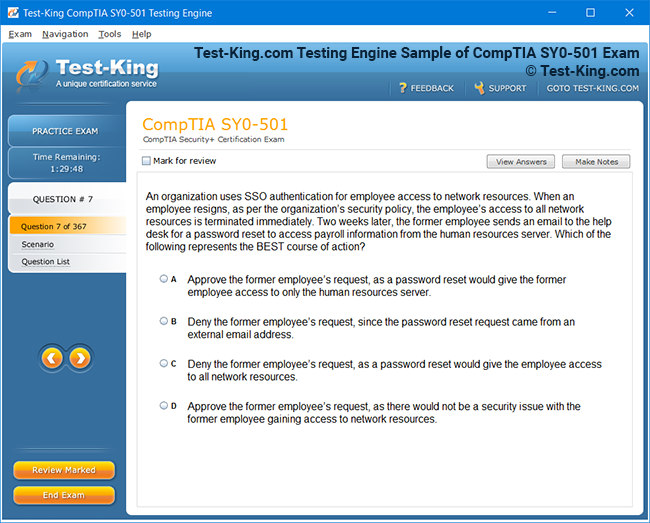
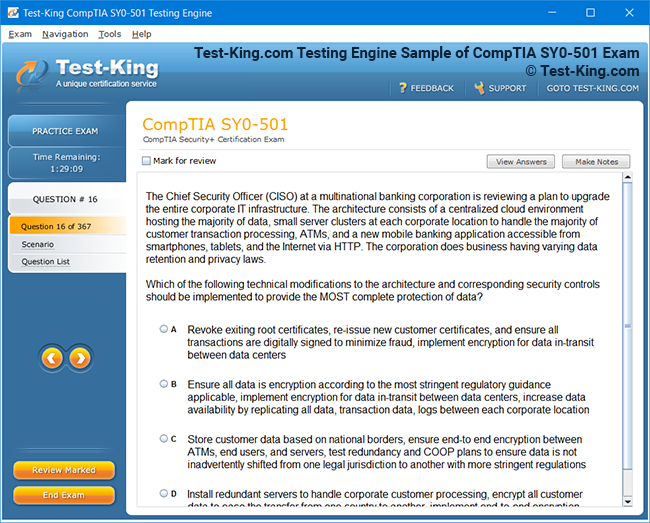
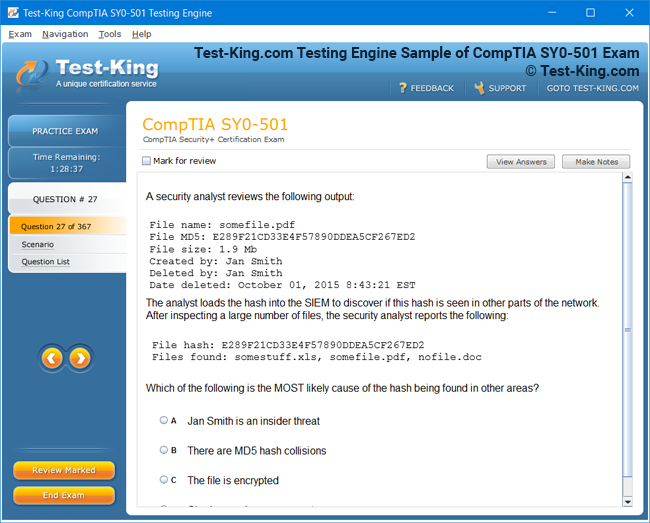
Product Screenshots
Frequently Asked Questions
How can I get the products after purchase?
All products are available for download immediately from your Member's Area. Once you have made the payment, you will be transferred to Member's Area where you can login and download the products you have purchased to your computer.
How long can I use my product? Will it be valid forever?
Test-King products have a validity of 90 days from the date of purchase. This means that any updates to the products, including but not limited to new questions, or updates and changes by our editing team, will be automatically downloaded on to computer to make sure that you get latest exam prep materials during those 90 days.
Can I renew my product if when it's expired?
Yes, when the 90 days of your product validity are over, you have the option of renewing your expired products with a 30% discount. This can be done in your Member's Area.
Please note that you will not be able to use the product after it has expired if you don't renew it.
How often are the questions updated?
We always try to provide the latest pool of questions, Updates in the questions depend on the changes in actual pool of questions by different vendors. As soon as we know about the change in the exam question pool we try our best to update the products as fast as possible.
How many computers I can download Test-King software on?
You can download the Test-King products on the maximum number of 2 (two) computers or devices. If you need to use the software on more than two machines, you can purchase this option separately. Please email support@test-king.com if you need to use more than 5 (five) computers.
What is a PDF Version?
PDF Version is a pdf document of Questions & Answers product. The document file has standart .pdf format, which can be easily read by any pdf reader application like Adobe Acrobat Reader, Foxit Reader, OpenOffice, Google Docs and many others.
Can I purchase PDF Version without the Testing Engine?
PDF Version cannot be purchased separately. It is only available as an add-on to main Question & Answer Testing Engine product.
What operating systems are supported by your Testing Engine software?
Our testing engine is supported by Windows. Andriod and IOS software is currently under development.
Top GAQM Exams
CITM-001 Exam Breakdown: Domains, Format, and Key Concepts Explained
The Certified Information Technology Manager exam, designated as CITM-001 by GAQM, has emerged as a pivotal credential for professionals seeking to solidify their expertise in information technology management. The certification not only validates managerial acumen in IT projects and processes but also signifies an individual’s capability to bridge the technical and administrative facets of technology within contemporary organizations. Unlike conventional IT certifications that may focus solely on technical proficiencies, the CITM-001 emphasizes strategic oversight, governance, and decision-making, making it an invaluable asset for professionals aspiring to lead IT teams or departments.
Understanding the Certified Information Technology Manager Certification
The scope of this credential encompasses a vast spectrum of knowledge areas, ranging from project governance and risk management to financial oversight and resource optimization. Candidates who pursue this certification are expected to have a nuanced understanding of IT frameworks, the interplay between technological solutions and business objectives, and the capacity to implement methodologies that enhance organizational efficiency. By undertaking the CITM-001 exam, aspirants demonstrate not only technical proficiency but also the cognitive dexterity required to manage complex systems, navigate organizational hierarchies, and align IT initiatives with corporate strategy.
The CITM-001 credential holds particular relevance in today’s dynamic technological environment, where enterprises are increasingly dependent on robust IT management to achieve scalability, agility, and operational resilience. Professionals who obtain this certification are often recognized for their ability to orchestrate cross-functional collaboration, optimize resource allocation, and employ analytical techniques to mitigate potential disruptions. This combination of strategic insight and technical competence positions certified individuals as invaluable contributors in environments ranging from multinational corporations to burgeoning startups.
Exam Structure and Format
The structure of the CITM-001 exam is designed to evaluate comprehensive knowledge and practical understanding of information technology management principles. The assessment is comprised of multiple-choice questions that span several domains, each targeting specific competencies expected of an adept IT manager. Candidates encounter scenarios that mirror real-world challenges, requiring analytical reasoning and the application of managerial principles to resolve complex issues. This format ensures that successful candidates possess not only theoretical knowledge but also the capacity to employ critical thinking in practical contexts.
The CITM-001 exam typically incorporates a combination of knowledge areas, including IT governance, project management, risk assessment, and resource allocation. Questions may present a case study of an organizational IT problem, asking candidates to identify optimal solutions, forecast potential obstacles, or devise contingency plans. In addition, the examination evaluates understanding of regulatory frameworks, compliance requirements, and industry standards, reflecting the increasingly regulatory-driven landscape of contemporary IT operations. Candidates are assessed on their ability to integrate policies and procedures into practical solutions, thereby demonstrating both strategic and operational competence.
The examination duration, though varying based on the testing environment, is structured to allow candidates adequate time to analyze scenarios, interpret questions, and select answers that reflect informed judgment. While speed is not the sole determinant of success, time management is critical, as many questions require multi-step reasoning and consideration of numerous variables. Preparing for the CITM-001 exam, therefore, entails not only mastering the content but also developing the ability to read situations holistically, identify pertinent details, and apply decision-making skills under time constraints.
Domains of the CITM-001 Exam
The CITM-001 exam encompasses a broad array of domains, each designed to evaluate essential aspects of information technology management. These domains collectively ensure that a candidate is well-versed in the strategic, operational, and financial dimensions of managing IT within an organization. The primary domains include IT governance and strategy, project and resource management, risk and compliance, financial management, and emerging technological trends.
The IT governance and strategy domain assesses a candidate’s capacity to define and implement policies, develop strategic roadmaps, and ensure alignment of IT objectives with overarching business goals. Candidates must demonstrate an understanding of frameworks such as COBIT and ITIL, emphasizing how structured governance contributes to operational efficiency and risk mitigation. This domain requires the ability to evaluate the effectiveness of IT initiatives, implement performance metrics, and establish accountability structures that facilitate organizational agility.
Project and resource management constitutes another critical domain, focusing on the planning, execution, and monitoring of IT projects. Aspirants must exhibit proficiency in resource allocation, timeline management, and quality assurance. The domain emphasizes the use of project management methodologies, such as Agile or PRINCE2, highlighting the necessity of adaptive planning and iterative execution. Additionally, candidates are evaluated on their capacity to manage human resources, optimize team productivity, and foster collaboration across diverse functional groups, ensuring the successful completion of IT initiatives within scope and budgetary constraints.
Risk and compliance evaluation is an indispensable aspect of the CITM-001 exam. This domain examines a candidate’s ability to identify potential threats, assess vulnerabilities, and implement risk mitigation strategies. Professionals are expected to navigate the complexities of regulatory compliance, data protection laws, and cybersecurity protocols, integrating these requirements into operational decision-making. Effective risk management requires anticipatory thinking, scenario planning, and an understanding of the interconnectedness of technical systems and organizational processes, ensuring resilience against unforeseen disruptions.
Financial management, another essential domain, evaluates knowledge of budgeting, cost control, and return on investment within the IT context. Candidates must demonstrate the ability to forecast expenditures, justify technological investments, and analyze financial performance metrics. This domain underscores the symbiosis between fiscal prudence and technological advancement, emphasizing that informed financial oversight is crucial for sustainable IT operations. Professionals who excel in this area contribute significantly to strategic planning, ensuring that IT investments are aligned with organizational priorities and deliver measurable value.
Emerging technological trends constitute the final domain, challenging candidates to remain abreast of innovations that influence IT management practices. This includes areas such as cloud computing, artificial intelligence, machine learning, and cybersecurity developments. Understanding these trends enables IT managers to anticipate industry shifts, recommend forward-looking strategies, and implement technologies that enhance competitive advantage. Candidates are assessed on their ability to integrate new technologies into existing infrastructures while balancing risks, costs, and organizational objectives.
Key Concepts and Knowledge Areas
The CITM-001 exam requires mastery of several core concepts that underpin effective IT management. Candidates must possess a deep understanding of strategic planning, organizational alignment, risk analysis, project lifecycle management, and resource optimization. These knowledge areas collectively contribute to the holistic capability of an IT manager to oversee complex technological ecosystems while ensuring efficiency, compliance, and sustainability.
Strategic planning involves the development of long-term objectives that align IT operations with business imperatives. Professionals must evaluate market trends, technological trajectories, and internal capabilities to formulate strategies that drive organizational growth. This requires analytical reasoning, foresight, and an ability to synthesize diverse information streams into coherent action plans. By mastering strategic planning, IT managers can anticipate challenges, prioritize initiatives, and allocate resources effectively.
Organizational alignment emphasizes the necessity of synchronizing IT objectives with overall corporate goals. Professionals must communicate effectively across departments, fostering collaboration between technical and non-technical stakeholders. This includes establishing governance structures, performance metrics, and reporting mechanisms that ensure transparency and accountability. A nuanced understanding of organizational dynamics enables IT managers to navigate complex hierarchies, influence decision-making, and cultivate a culture that values technological innovation.
Risk analysis and mitigation are central to IT management, as organizations face multifaceted threats ranging from cyber-attacks to operational disruptions. Professionals must evaluate potential vulnerabilities, implement proactive controls, and develop contingency plans that minimize exposure. This entails not only technical expertise but also analytical acuity and a comprehensive understanding of regulatory obligations. By integrating risk management into daily operations, IT managers safeguard organizational assets and maintain operational continuity.
Project lifecycle management encompasses the planning, execution, monitoring, and closure of IT projects. Professionals must apply methodologies that ensure timely delivery, quality outcomes, and stakeholder satisfaction. This requires proficiency in scheduling, resource allocation, quality assurance, and change management. A robust grasp of project lifecycle principles allows IT managers to navigate challenges, adjust plans dynamically, and achieve objectives within predefined constraints.
Resource optimization entails the efficient utilization of human, technological, and financial assets to maximize organizational value. Professionals must balance competing demands, prioritize tasks, and leverage tools that enhance productivity. This requires a combination of analytical rigor, interpersonal skills, and strategic foresight. Effective resource optimization contributes to cost savings, improved performance, and the ability to respond to emerging opportunities with agility and precision.
Preparing for the CITM-001 Exam
Preparation for the CITM-001 exam demands a multifaceted approach that combines theoretical study, practical application, and continuous revision. Candidates are encouraged to utilize official study guides, industry publications, and practice scenarios that mirror real-world IT management challenges. Understanding the interplay between governance, strategy, and operational execution is critical, as questions often test the candidate’s ability to apply concepts in complex situations rather than recall memorized facts.
Developing a structured study plan is essential for success. Candidates should allocate time to each domain, emphasizing areas of relative weakness while ensuring comprehensive coverage. Engaging in discussion forums, peer study groups, or mentorship programs can further enhance understanding, as collaborative learning often provides nuanced insights and practical perspectives. Practice questions and case studies are particularly beneficial, as they simulate the analytical and decision-making processes required during the exam.
In addition to content mastery, aspirants must cultivate cognitive strategies that facilitate effective reasoning under time constraints. This includes the ability to dissect questions, identify key elements, and evaluate alternatives systematically. Familiarity with the exam format, including the phrasing of questions and typical scenario constructions, enables candidates to approach each item with confidence and precision. Continuous review, reflection on practice exercises, and iterative refinement of understanding are all integral components of a successful preparation strategy.
In-Depth Exploration of CITM-001 Domains and Strategic Competencies
The Certified Information Technology Manager exam, recognized as CITM-001 by GAQM, serves as a benchmark for professionals who aspire to demonstrate their mastery of information technology management across multiple dimensions. The exam emphasizes strategic thinking, operational acuity, and the ability to harmonize technological capabilities with business objectives. The domains within this examination are meticulously designed to evaluate the breadth and depth of knowledge necessary to navigate complex IT environments. Understanding these domains in detail provides candidates with a robust framework for approaching scenarios, analyzing challenges, and implementing solutions that resonate with organizational priorities.
The IT governance and strategy domain is foundational for candidates preparing for CITM-001. It requires a profound understanding of organizational structures, policy formulation, and strategic alignment between IT functions and overarching corporate goals. Candidates are expected to assess the effectiveness of governance frameworks, including how decision-making processes influence performance metrics and accountability structures. Scenario-based questions often present intricate organizational challenges, such as integrating multiple IT systems post-merger, optimizing governance frameworks to enhance compliance, or designing strategic plans that account for fluctuating technological landscapes. Responding to these scenarios demands analytical acumen, the ability to synthesize disparate data streams, and foresight in anticipating potential disruptions or misalignments.
Project and resource management is another pivotal domain, encompassing planning, execution, and monitoring of IT initiatives. Candidates are required to understand the intricacies of project life cycles, including initiation, planning, execution, monitoring, and closure. A scenario might involve allocating limited resources across multiple projects while maintaining adherence to timelines and quality standards. Understanding risk-adjusted resource distribution, stakeholder engagement, and adaptive project methodologies is critical. Professionals must apply concepts such as milestone analysis, capacity planning, and workflow optimization to ensure project objectives are met efficiently. These skills are not only evaluative for the exam but are vital in real-world managerial contexts where project complexity is compounded by interdependent tasks and shifting priorities.
Risk assessment and compliance constitute a domain that demands both vigilance and judicious decision-making. Candidates are presented with situations that involve evaluating potential vulnerabilities within IT systems, assessing the impact of regulatory requirements, and proposing mitigation strategies that balance security, cost, and operational efficiency. For instance, a scenario may depict a cybersecurity threat affecting multiple business units, requiring the candidate to prioritize risk containment measures, communicate effectively with stakeholders, and ensure regulatory adherence. Proficiency in understanding the nuances of global compliance standards, data privacy legislation, and industry-specific regulations is essential. Successful navigation of this domain illustrates an ability to anticipate potential challenges and implement proactive controls that sustain organizational integrity.
Financial management within the CITM-001 exam extends beyond conventional budgeting and cost tracking. Candidates are evaluated on their ability to integrate financial insight with strategic IT planning, analyzing return on investment, cost-benefit trade-offs, and funding allocation for emerging technologies. A scenario could involve assessing whether to invest in cloud migration, considering long-term operational savings, capital expenditure, and potential risks. Understanding the interrelationship between fiscal stewardship and technological advancement is critical, as it ensures that decisions are informed, sustainable, and aligned with organizational strategy. Professionals who excel in this domain exhibit proficiency in forecasting, financial modeling, and evaluating investment viability in dynamic IT landscapes.
Emerging technological trends challenge candidates to remain perceptive of innovations that influence IT management practices. Topics such as artificial intelligence integration, machine learning deployment, cloud computing strategies, and next-generation cybersecurity measures form the core of this domain. Exam questions often present complex scenarios, such as evaluating the feasibility of implementing a new AI-driven workflow automation system across geographically dispersed teams or addressing the operational implications of adopting hybrid cloud infrastructure. Candidates must demonstrate the ability to balance technological adoption with risk management, cost constraints, and strategic objectives. Awareness of technological trajectories and the foresight to anticipate industry shifts equips IT managers with a competitive advantage and enhances organizational resilience.
The CITM-001 examination also places significant emphasis on practical application. For instance, candidates may encounter scenarios that require them to integrate multiple domains simultaneously. A question might involve proposing a strategic plan to enhance IT infrastructure efficiency while maintaining compliance with regulatory mandates, managing budget limitations, and incorporating emerging technology. Responding effectively requires not only knowledge of each domain but the ability to synthesize information, identify dependencies, and develop holistic solutions. This integrative approach underscores the multifaceted expectations of certified IT managers and reflects the complexities encountered in professional environments.
In terms of strategic competencies, candidates are encouraged to cultivate analytical reasoning, adaptive planning, and effective communication skills. Analytical reasoning is essential for dissecting scenarios, interpreting nuanced data, and forecasting outcomes. Adaptive planning allows professionals to respond dynamically to evolving challenges, adjust resource allocations, and modify project timelines based on real-time conditions. Effective communication ensures that technical insights are conveyed clearly to non-technical stakeholders, enabling informed decision-making and fostering collaboration across organizational levels. Mastery of these competencies not only facilitates exam success but also enhances practical managerial performance.
To exemplify these concepts, consider a scenario in which a multinational corporation faces the challenge of migrating its legacy IT systems to a cloud-based infrastructure. The candidate is required to propose a strategic plan encompassing governance policies, risk mitigation strategies, resource allocation, financial justification, and anticipated technological benefits. An effective response would evaluate regulatory implications across multiple jurisdictions, forecast cost savings versus capital expenditure, assess potential risks such as data breaches or service interruptions, and outline a phased implementation strategy with measurable milestones. The ability to structure such a response demonstrates proficiency across multiple domains and illustrates the integrative thinking demanded by the CITM-001 exam.
Another scenario might focus on project prioritization within constrained resource environments. Candidates could be asked to recommend which IT initiatives should proceed based on strategic alignment, potential return on investment, risk exposure, and stakeholder impact. This requires evaluating trade-offs, quantifying benefits, and articulating a rationale that is defensible from both managerial and technical perspectives. Scenarios of this nature reinforce the importance of balancing strategic insight with practical execution, a recurring theme throughout the CITM-001 examination framework.
Candidates are also frequently evaluated on their understanding of performance metrics and continuous improvement mechanisms. Questions may ask how to monitor IT project outcomes, assess process efficiency, or measure stakeholder satisfaction. Professionals are expected to recommend key performance indicators, implement reporting systems, and analyze results to inform iterative enhancements. This aspect emphasizes the dynamic nature of IT management, highlighting that certification is not merely about knowledge acquisition but also about the ability to apply principles for tangible organizational improvements.
The exam also tests knowledge of enterprise risk frameworks, including the identification of potential systemic threats and the development of proactive mitigation strategies. Candidates may encounter questions involving cybersecurity vulnerabilities, operational bottlenecks, or regulatory penalties. Addressing these scenarios requires comprehensive situational analysis, prioritization of actions, and integration of governance, compliance, and technical expertise. Mastery of these domains ensures that candidates can anticipate challenges and implement robust controls, fostering organizational resilience and operational continuity.
Furthermore, CITM-001 assesses familiarity with resource optimization in both human and technological contexts. Candidates might be asked to devise strategies to maximize productivity, allocate talent effectively, and ensure that technological assets are leveraged efficiently. Such scenarios demand both quantitative and qualitative assessment, evaluating how resources are deployed relative to strategic goals, workflow demands, and project priorities. Understanding these dynamics enables IT managers to achieve optimal performance, reduce redundancy, and enhance the overall value of IT initiatives within the organization.
Lastly, an emerging focus of the exam is the ethical and sustainable application of technology. Candidates may face questions that examine the societal, environmental, or ethical implications of IT decisions. For example, a scenario could involve recommending energy-efficient data centers or assessing the social impact of AI-driven automation. This dimension underscores the broader responsibility of IT managers to balance profitability and operational efficiency with ethical considerations and long-term sustainability.
Preparing for the CITM-001 exam requires immersion in these domains through practical exercises, case studies, and scenario-based reasoning. Candidates benefit from synthesizing knowledge from multiple domains, understanding interdependencies, and practicing responses to complex, multi-layered scenarios. Engaging with real-world examples enhances critical thinking, promotes adaptive problem-solving, and equips aspirants with the analytical and managerial skills necessary for both examination success and professional excellence.
Exam Preparation Strategies and Scenario-Based Practice
The Certified Information Technology Manager examination, CITM-001, requires more than rote memorization of concepts; it demands a fusion of analytical reasoning, managerial foresight, and practical application. Preparing for this certification entails understanding not only the breadth of IT management knowledge but also the intricate dynamics of decision-making in complex organizational environments. Aspirants are expected to engage with scenarios that simulate real-world IT challenges, requiring them to integrate principles of governance, risk management, resource allocation, and technological innovation. Developing a methodical preparation strategy enables candidates to navigate these scenarios with precision, ensuring comprehensive coverage of all domains and reinforcing the capacity for informed judgment.
Understanding the exam format is pivotal in structuring an effective study regimen. The CITM-001 evaluation consists of multiple-choice questions that often present situational dilemmas, case analyses, and problem-solving exercises. These questions assess candidates on their ability to synthesize information, evaluate alternatives, and propose solutions that balance technical feasibility, strategic alignment, and organizational constraints. Unlike purely technical examinations, the CITM-001 emphasizes the interconnection of managerial insight and IT acumen, requiring aspirants to approach each question holistically. Time management, analytical agility, and familiarity with common scenario frameworks are therefore essential elements of preparation.
A strategic approach to study involves categorizing content into domains while recognizing their interdependencies. For instance, a candidate might focus on IT governance and strategy by examining frameworks such as COBIT and ITIL, understanding how policy decisions influence operational efficiency, and evaluating performance metrics. Scenario-based practice within this domain might involve a hypothetical organization seeking to optimize its IT governance structure following a merger. Candidates are expected to recommend policies, identify accountability structures, and anticipate potential conflicts, demonstrating both strategic foresight and operational understanding.
Project and resource management requires aspirants to master techniques for planning, executing, and monitoring IT initiatives. Questions may present situations where multiple projects compete for limited resources, necessitating prioritization based on strategic value, risk exposure, and cost-effectiveness. Candidates must apply concepts such as milestone scheduling, resource leveling, and workload distribution while considering team dynamics and productivity optimization. By practicing scenarios that reflect real-world constraints, candidates develop an intuitive grasp of how to harmonize operational imperatives with managerial objectives, a skill that is central to CITM-001 success.
Risk assessment and compliance remain critical areas of focus, demanding the capacity to identify vulnerabilities, evaluate regulatory requirements, and devise mitigation strategies. Scenario questions often require candidates to consider multi-dimensional threats, including cybersecurity risks, operational disruptions, and non-compliance penalties. For example, a scenario may describe a data breach affecting sensitive customer information, prompting candidates to recommend containment measures, policy revisions, and communication strategies. Mastery in this domain reflects the ability to integrate technical knowledge, regulatory awareness, and strategic planning, enabling professionals to safeguard organizational assets effectively.
Financial management in the CITM-001 exam evaluates proficiency in budgeting, cost analysis, and investment assessment within IT contexts. Candidates may encounter scenarios that involve deciding whether to invest in infrastructure upgrades, cloud migration, or new software deployment. Effective responses necessitate calculating return on investment, evaluating cost-benefit trade-offs, and forecasting long-term financial implications. Understanding how to align financial decisions with strategic objectives and operational realities exemplifies the holistic perspective required of certified IT managers. Aspirants are encouraged to simulate these scenarios through case exercises, developing analytical rigor and financial acumen simultaneously.
Emerging technological trends require candidates to remain conversant with innovations that shape IT management practices. Areas such as artificial intelligence, cloud computing, machine learning, and advanced cybersecurity techniques frequently appear in scenario questions. For instance, a scenario may involve integrating an AI-driven automation tool within an existing IT infrastructure while managing associated risks, budgetary implications, and employee adoption challenges. Candidates must demonstrate the capacity to evaluate feasibility, anticipate potential disruptions, and propose implementation strategies that maximize organizational benefit. Staying abreast of these developments ensures that candidates not only succeed in the examination but are also equipped to drive technological progress within their organizations.
Scenario-based practice forms the backbone of effective CITM-001 preparation. One common approach involves simulating organizational challenges that span multiple domains. A scenario may depict a multinational corporation seeking to centralize its IT operations while reducing costs and improving service quality. Candidates are expected to propose a comprehensive plan, encompassing governance policies, risk mitigation strategies, financial considerations, and resource allocation. Effective responses synthesize knowledge across domains, demonstrating integrative thinking and the ability to translate conceptual understanding into actionable strategies.
Another example involves assessing project prioritization under constrained resources. Candidates might be asked to allocate limited IT personnel and budgets across competing initiatives, weighing strategic alignment, projected return on investment, and risk exposure. Scenarios of this nature test the ability to balance operational efficiency with long-term planning, reflecting the multifaceted responsibilities of IT managers. Practicing such questions enhances decision-making agility and reinforces the importance of considering both technical feasibility and organizational objectives.
Performance monitoring and continuous improvement also play a central role in preparation. Candidates may encounter questions that require designing key performance indicators, assessing project outcomes, or recommending process enhancements. For example, a scenario could involve evaluating the effectiveness of a recently implemented IT governance framework, identifying bottlenecks, and proposing corrective actions. Mastery of these skills ensures that candidates are capable of promoting efficiency, accountability, and innovation within their organizations.
Resource optimization is another recurrent theme in CITM-001 scenarios. Candidates are expected to demonstrate the ability to deploy human and technological resources effectively, reducing redundancy and maximizing output. A scenario may involve redistributing IT staff across multiple departments, optimizing server utilization, or balancing workloads to enhance productivity. Understanding how to analyze resource allocation patterns, anticipate operational bottlenecks, and implement efficient processes is central to both exam success and professional competency.
Ethical considerations and sustainability are increasingly integrated into the CITM-001 examination. Candidates might encounter scenarios that examine the social, environmental, or ethical implications of IT decisions. For instance, implementing energy-efficient data centers, adopting green IT practices, or ensuring equitable access to technological resources may form the basis of scenario questions. Evaluating these factors requires nuanced judgment, awareness of broader societal impacts, and an ability to reconcile organizational objectives with ethical imperatives. Demonstrating proficiency in this area reflects the holistic, forward-thinking mindset expected of certified IT managers.
Time management is an essential skill for the CITM-001 examination. Candidates must navigate complex questions that integrate multiple domains, often requiring multi-step reasoning and the evaluation of competing priorities. Practicing timed scenarios enables aspirants to refine their ability to analyze information efficiently, identify critical details, and formulate coherent responses within the constraints of the examination. This skill is particularly valuable when addressing scenario questions that present layered organizational challenges, ensuring that candidates can respond accurately under pressure.
Engaging with peer discussions, study groups, and professional networks can further enhance preparation. Collaborative learning exposes candidates to diverse perspectives, real-world experiences, and nuanced problem-solving approaches. Sharing scenario responses, debating strategic alternatives, and receiving constructive feedback helps deepen understanding and cultivate adaptive thinking. Candidates benefit from this interactive approach, as it mirrors the collaborative nature of IT management in professional settings.
Practice materials, including mock exams and case studies, provide a structured method for applying knowledge to realistic situations. Candidates can simulate exam conditions, measure performance, and identify areas requiring additional focus. Reviewing incorrect responses and analyzing alternative solutions reinforces conceptual understanding and strengthens critical thinking skills. By integrating practice exercises into a consistent preparation routine, candidates enhance both confidence and competence, positioning themselves for success in the CITM-001 examination.
In addition to domain-specific preparation, candidates should cultivate cognitive strategies that facilitate effective decision-making. These include analytical decomposition, scenario mapping, risk prioritization, and iterative evaluation of alternatives. Analytical decomposition involves breaking complex problems into manageable components, enabling candidates to assess each element systematically. Scenario mapping allows visualization of interdependencies and potential outcomes, supporting informed decision-making. Risk prioritization ensures that candidates address high-impact challenges first, while iterative evaluation reinforces adaptive thinking and continuous refinement of strategies.
By combining domain knowledge, scenario practice, collaborative learning, and cognitive strategy development, candidates can approach the CITM-001 examination with a comprehensive, well-rounded preparation methodology. Mastery of these approaches equips candidates to respond to complex, integrated scenarios, navigate multi-dimensional challenges, and demonstrate the analytical, managerial, and technological proficiency required for certification success.
Advanced Scenario Analysis and Integration of IT Management Domains
The Certified Information Technology Manager examination, CITM-001, evaluates the capacity of candidates to integrate technical knowledge with managerial insight in multifaceted organizational contexts. Unlike purely technical certifications, CITM-001 emphasizes a holistic understanding of IT governance, strategic planning, risk assessment, project execution, financial stewardship, and emerging technological trends. Aspirants must be adept at navigating scenarios that encompass multiple domains simultaneously, requiring analytical acumen, judicious decision-making, and a keen sense of organizational dynamics. Mastery of advanced scenario analysis is pivotal for achieving success, as candidates must demonstrate not only theoretical comprehension but also the practical dexterity to resolve complex IT challenges efficiently.
Scenario-based questions often present intricate organizational dilemmas that necessitate the synthesis of several domains. For instance, candidates may be required to recommend a strategy for integrating cloud-based infrastructure across multiple departments while adhering to compliance regulations and managing budgetary constraints. Responding to such scenarios demands the ability to evaluate financial implications, optimize resource allocation, assess risk exposure, and ensure alignment with strategic objectives. The integrative nature of these scenarios reinforces the need for candidates to approach questions holistically, considering the interplay between technology, processes, and governance frameworks.
IT governance and strategy remain central to advanced scenario analysis. Candidates are expected to evaluate organizational structures, propose governance models, and develop policies that enhance operational efficiency. A scenario might involve an organization undergoing a merger, requiring the alignment of disparate IT systems and processes. Candidates must assess compatibility issues, identify potential gaps in governance, and design policies that mitigate conflict while promoting synergy. Mastery of frameworks such as COBIT and ITIL facilitates informed decision-making, ensuring that strategic recommendations are grounded in best practices and industry standards.
Project and resource management scenarios challenge candidates to allocate limited personnel and technological assets effectively. A hypothetical situation could involve prioritizing multiple IT projects with overlapping timelines and constrained budgets. Candidates are expected to develop a phased approach, determine critical dependencies, and ensure that projects with the highest strategic value receive adequate attention. Understanding resource leveling, milestone scheduling, and workload distribution is essential. Advanced scenario analysis also requires candidates to anticipate unforeseen complications, such as personnel shortages or technical failures, and adjust project plans dynamically.
Risk assessment and compliance are frequently integrated into complex scenario questions. Candidates may be asked to design a risk management framework for a multinational corporation facing cybersecurity threats, regulatory audits, and operational vulnerabilities. Effective responses require the identification of potential risks, evaluation of their impact, and recommendation of mitigation strategies. Candidates must demonstrate proficiency in balancing security imperatives with operational efficiency, ensuring that compliance obligations are met without impeding technological advancement. Mastery of this domain illustrates the ability to navigate uncertainty and make decisions that safeguard organizational resilience.
Financial management within integrated scenarios tests the ability to align fiscal responsibility with strategic IT initiatives. Candidates might encounter a situation requiring evaluation of the cost-effectiveness of implementing new enterprise software, considering capital expenditure, projected savings, and potential risks. Effective analysis involves forecasting return on investment, assessing budgetary trade-offs, and presenting recommendations that support organizational objectives. This domain emphasizes the critical role of financial stewardship in IT management, highlighting that sustainable technological adoption requires careful fiscal planning.
Emerging technological trends are a recurrent theme in advanced scenario analysis. Candidates are expected to evaluate the feasibility, risks, and strategic benefits of integrating innovations such as artificial intelligence, machine learning, blockchain, and cloud computing into existing infrastructures. A scenario might involve recommending the deployment of an AI-driven analytics platform while mitigating potential security vulnerabilities and ensuring compliance with data protection regulations. Candidates must demonstrate the capacity to anticipate technological trajectories, weigh operational implications, and provide solutions that enhance competitive advantage.
Scenario-based examination questions often combine multiple knowledge areas to simulate real-world challenges. For example, a question could involve proposing a comprehensive IT strategy for a global enterprise, encompassing governance policies, risk mitigation, resource allocation, financial justification, and adoption of emerging technologies. Candidates are expected to present a cohesive plan that addresses interdependencies between domains, anticipates potential obstacles, and aligns with long-term organizational goals. This integrative approach underscores the multidimensional skill set required of certified IT managers and reflects the complex realities of contemporary IT environments.
Analytical reasoning is a cornerstone of advanced scenario analysis. Candidates must dissect problems, identify key variables, and evaluate the implications of different courses of action. A scenario might require prioritizing competing IT initiatives based on strategic impact, risk exposure, and resource availability. Effective analysis involves considering both immediate and long-term consequences, ensuring that recommendations optimize organizational outcomes. Developing this skill enables candidates to navigate intricate scenarios with clarity and precision, a critical attribute for CITM-001 success.
Adaptive planning is another essential competency. Candidates are expected to respond dynamically to changing conditions, adjust resource allocations, and revise project timelines based on emerging data. For instance, a scenario could describe a sudden regulatory change affecting ongoing IT projects, necessitating a recalibration of priorities and the implementation of corrective measures. Mastery of adaptive planning ensures that IT managers can maintain operational continuity, mitigate risks, and capitalize on opportunities despite uncertainty.
Effective communication is integral to scenario-based success. Candidates must articulate their recommendations clearly, translating technical insights into actionable guidance for non-technical stakeholders. A scenario may involve presenting a risk mitigation strategy to executives or explaining the financial rationale for a technological investment. Proficiency in conveying complex information succinctly and persuasively enhances the credibility of the candidate’s recommendations and facilitates organizational buy-in. This competency reinforces the importance of integrating analytical, managerial, and interpersonal skills in the CITM-001 examination.
Scenario-based preparation also emphasizes performance monitoring and continuous improvement. Candidates might be asked to propose metrics for assessing project outcomes, evaluating governance effectiveness, or measuring stakeholder satisfaction. A scenario could involve implementing a new IT governance framework and recommending performance indicators to ensure accountability, transparency, and operational efficiency. Mastery in this area demonstrates an understanding of iterative enhancement, highlighting the ability to refine processes, optimize outcomes, and foster organizational growth.
Resource optimization remains a focal point in advanced scenario questions. Candidates are expected to recommend strategies that maximize the efficiency of human, technological, and financial resources. A scenario might involve reallocating personnel across competing projects, optimizing server utilization, or deploying technological assets strategically to enhance productivity. Effective resource management requires analytical evaluation, prioritization, and foresight, ensuring that organizational objectives are achieved with minimal waste and maximum efficiency.
Ethical and sustainable considerations are increasingly relevant in CITM-001 scenarios. Candidates may be asked to evaluate the social, environmental, or ethical implications of IT decisions. For instance, a scenario could involve recommending sustainable cloud infrastructure solutions or assessing the societal impact of AI-driven automation. Evaluating these factors requires nuanced judgment, awareness of broader consequences, and the ability to balance operational objectives with ethical imperatives. Demonstrating proficiency in this dimension underscores the holistic perspective expected of certified IT managers.
Time management is critical when tackling integrated scenarios. Candidates must navigate complex questions that require multi-step reasoning, prioritization, and evaluation of competing alternatives. Practicing timed scenario exercises enables aspirants to develop the ability to analyze information efficiently, identify critical factors, and formulate coherent recommendations under exam conditions. Effective time management ensures that candidates can respond to intricate questions accurately while maintaining clarity and precision in their analysis.
Collaborative learning enhances preparation for complex scenario analysis. Engaging in study groups, professional forums, or mentorship programs exposes candidates to diverse perspectives, problem-solving approaches, and real-world experiences. Discussing scenario solutions, debating strategic alternatives, and receiving feedback cultivates adaptive thinking, deepens comprehension, and refines analytical skills. This collaborative approach mirrors the interactive nature of IT management in professional contexts, reinforcing the applicability of knowledge gained during preparation.
Practice exercises, including mock exams, case studies, and scenario simulations, provide structured opportunities to apply knowledge. Candidates can measure performance, identify areas of improvement, and refine decision-making strategies. Reviewing incorrect responses, analyzing alternative approaches, and reflecting on outcomes strengthen both conceptual understanding and practical judgment. Regular engagement with scenario-based exercises ensures that candidates develop the integrative skills required to address multifaceted IT management challenges successfully.
Cognitive strategies such as problem decomposition, scenario mapping, risk prioritization, and iterative evaluation further enhance scenario-based preparation. Problem decomposition involves breaking complex scenarios into manageable components, allowing candidates to analyze each element systematically. Scenario mapping helps visualize interdependencies and potential outcomes, facilitating informed decision-making. Risk prioritization ensures that high-impact challenges are addressed first, while iterative evaluation promotes adaptive thinking and continuous refinement of strategies. These cognitive techniques equip candidates with the tools necessary to navigate the sophisticated scenarios presented in the CITM-001 examination.
By combining domain knowledge, scenario-based practice, analytical reasoning, adaptive planning, effective communication, and cognitive strategy application, candidates develop a comprehensive preparation methodology. Mastery of these approaches enables aspirants to respond effectively to complex, multi-dimensional questions, demonstrating the integrated analytical, managerial, and technological expertise required for certification success.
Realistic Exam Simulations and Performance Evaluation Strategies
The Certified Information Technology Manager examination, CITM-001, challenges candidates to demonstrate both strategic insight and operational proficiency across a wide spectrum of IT management domains. Preparing effectively requires immersion in realistic exam simulations, an understanding of complex scenario dynamics, and the ability to evaluate performance critically. The examination is designed not merely to test knowledge but to assess the candidate’s capacity to integrate multiple competencies—governance, project management, risk mitigation, financial oversight, and emerging technology adoption—into cohesive decision-making frameworks. Mastery of realistic simulations and performance evaluation strategies equips aspirants with both the confidence and the analytical acumen needed to excel in the examination.
Realistic exam simulations mimic the intricacies of professional IT management environments, presenting scenarios that require multi-dimensional analysis and problem-solving. Candidates encounter situations involving resource allocation, project prioritization, regulatory compliance, and financial planning simultaneously. For instance, a scenario may describe a corporation seeking to migrate its data infrastructure to a hybrid cloud environment while adhering to global data privacy regulations. The candidate must evaluate costs, assess risk exposure, allocate human resources efficiently, and ensure alignment with strategic objectives. Engaging in such simulations develops the ability to synthesize diverse knowledge areas and apply them in practical contexts, reinforcing both comprehension and cognitive agility.
Evaluating performance during practice simulations is crucial for identifying strengths and areas requiring reinforcement. Candidates are encouraged to review their decisions critically, analyze the rationale behind alternative approaches, and measure outcomes against best practices and established IT management standards. This reflective process cultivates the capacity for nuanced reasoning, encourages adaptive learning, and helps internalize principles that govern successful IT management. Regular performance evaluation fosters iterative improvement, ensuring that aspirants are continually refining their analytical and managerial skills.
Scenario-based practice often emphasizes IT governance and strategy, as these domains form the foundation for effective decision-making. Candidates may be asked to design governance structures for an enterprise experiencing rapid technological expansion, ensuring accountability, operational efficiency, and alignment with business objectives. The evaluation focuses on the candidate’s ability to assess policy efficacy, implement performance metrics, and anticipate potential conflicts arising from organizational hierarchies. Practicing these scenarios enhances strategic foresight, sharpens judgment, and reinforces the application of governance principles in dynamic, real-world contexts.
Project and resource management simulations are integral to realistic preparation. Candidates frequently encounter scenarios in which multiple projects compete for limited personnel and technological assets. They must prioritize initiatives based on strategic value, risk exposure, and anticipated return on investment. Effective responses require mastery of project scheduling, milestone analysis, workload distribution, and resource optimization. By repeatedly engaging with these scenarios, candidates develop the dexterity to navigate complex operational landscapes, adjust plans dynamically, and ensure timely project completion while maintaining quality standards.
Risk assessment and compliance simulations challenge candidates to integrate analytical reasoning with regulatory understanding. For example, a scenario may depict a sudden cybersecurity breach affecting critical infrastructure. The candidate must identify vulnerabilities, propose containment strategies, evaluate compliance implications, and recommend policies to prevent recurrence. Performance evaluation in such scenarios emphasizes the ability to make informed decisions under uncertainty, balance competing priorities, and implement safeguards that protect organizational assets. Mastery of these competencies demonstrates the nuanced judgment required of certified IT managers and mirrors the demands of professional IT environments.
Financial management scenarios further reinforce the integrative nature of the CITM-001 examination. Candidates might be presented with a situation in which they must evaluate the financial viability of deploying a new enterprise software suite, considering capital expenditure, projected operational savings, and potential risks. Effective performance entails calculating return on investment, analyzing cost-benefit trade-offs, and aligning financial decisions with organizational strategy. Simulations in this domain cultivate the analytical rigor and fiscal discernment necessary for both exam success and practical IT leadership.
Emerging technological trends form a critical component of realistic exam simulations. Candidates may be tasked with evaluating the feasibility, risks, and strategic benefits of implementing artificial intelligence, machine learning, cloud computing, or blockchain solutions. A scenario could involve recommending the deployment of an AI-based workflow automation system while considering potential security vulnerabilities, adoption challenges, and budget constraints. Performance evaluation focuses on the candidate’s capacity to anticipate technological trajectories, assess operational implications, and formulate implementation strategies that maximize organizational benefit. Proficiency in this domain ensures that candidates are prepared to integrate innovative solutions into real-world IT management contexts.
Integrative scenarios frequently combine multiple domains, testing the candidate’s ability to apply knowledge cohesively. For instance, a scenario might involve proposing a comprehensive IT modernization strategy for a multinational corporation. The candidate must address governance structures, risk mitigation, resource allocation, financial justification, and adoption of emerging technologies. Success in these scenarios requires holistic reasoning, the ability to identify interdependencies between domains, and the capacity to balance short-term operational considerations with long-term strategic objectives. Engaging with such simulations cultivates the analytical and managerial acumen central to CITM-001 preparation.
Performance evaluation in scenario-based simulations emphasizes reflective analysis. Candidates are encouraged to review their responses critically, comparing them to alternative approaches and assessing potential improvements. This iterative process reinforces cognitive agility, strengthens problem-solving skills, and cultivates adaptive thinking. For example, after completing a simulation involving cloud migration, the candidate may identify that additional risk mitigation measures or more precise resource allocation would have enhanced the solution. Incorporating these insights into subsequent practice exercises promotes continuous improvement and mastery of the domains assessed by the examination.
Analytical reasoning is a recurring element in performance-focused simulations. Candidates must dissect scenarios, identify critical variables, evaluate potential outcomes, and select optimal solutions. For instance, a situation involving conflicting project priorities may require analysis of strategic value, resource limitations, risk exposure, and financial impact. Developing analytical reasoning ensures that candidates can approach complex scenarios methodically, make informed decisions, and anticipate the consequences of their choices. This skill is indispensable for both examination success and professional IT management.
Adaptive planning enhances the candidate’s ability to respond dynamically to evolving scenarios. A simulation may present sudden regulatory changes, technical failures, or budgetary constraints that necessitate immediate adjustment of project plans or resource allocations. Mastery of adaptive planning enables candidates to maintain operational continuity, minimize risk exposure, and capitalize on emergent opportunities. Practicing such dynamic scenarios ensures that aspirants develop resilience, foresight, and the ability to adjust strategies in real time.
Effective communication is another critical element evaluated through scenario simulations. Candidates must articulate complex strategies clearly, translating technical details into actionable recommendations for stakeholders. For example, a scenario might involve explaining the rationale for an IT investment to senior management, highlighting risk mitigation strategies, projected ROI, and operational benefits. Developing communication skills ensures that candidates can convey insights persuasively, facilitate collaboration, and secure organizational alignment. Proficiency in communication reflects the integrated managerial, analytical, and technical skills assessed by CITM-001.
Scenario simulations also emphasize performance monitoring and iterative improvement. Candidates might be tasked with designing key performance indicators to assess the effectiveness of an IT governance framework or monitoring project outcomes. Performance evaluation involves identifying strengths, weaknesses, and areas for refinement. For instance, a simulation might reveal that resource allocation was suboptimal, prompting adjustments to enhance efficiency in subsequent exercises. This iterative learning process ensures that candidates develop practical strategies for continuous improvement and operational excellence.
Resource optimization remains a focal point in realistic simulations. Candidates are expected to recommend strategies that maximize the efficiency of human, technological, and financial resources. A scenario may involve redistributing personnel across multiple projects, optimizing server utilization, or implementing technological solutions to streamline workflows. Evaluating performance in this context requires careful analysis of resource allocation patterns, identification of potential inefficiencies, and implementation of corrective measures. Mastery of resource optimization demonstrates the candidate’s ability to achieve organizational objectives with minimal waste and maximum effectiveness.
Ethical and sustainable considerations are increasingly integrated into scenario simulations. Candidates may encounter situations requiring evaluation of the social, environmental, or ethical implications of IT decisions. A scenario could involve adopting energy-efficient data centers, implementing green IT practices, or assessing the societal impact of automation technologies. Performance evaluation emphasizes the candidate’s ability to balance organizational objectives with ethical imperatives and sustainability considerations. Demonstrating competence in this area reflects the holistic perspective expected of certified IT managers and enhances the credibility of decision-making.
Time management is essential when engaging with realistic simulations. Candidates must navigate complex scenarios that require multi-step reasoning, prioritization, and evaluation of competing alternatives. Practicing timed simulations enables aspirants to analyze information efficiently, identify critical factors, and formulate coherent recommendations under pressure. Effective time management ensures that candidates can respond accurately and thoroughly to integrated scenarios, reflecting the demands of both the examination and professional IT environments.
Collaborative learning further enhances preparation for realistic simulations. Engaging with study groups, professional networks, and mentorship programs exposes candidates to diverse perspectives, problem-solving approaches, and practical insights. Discussing scenario solutions, debating alternative strategies, and receiving constructive feedback fosters adaptive thinking, deepens comprehension, and strengthens analytical skills. This interactive approach mirrors the collaborative nature of IT management in real-world settings, ensuring that candidates are prepared for both examination success and professional leadership.
Regular engagement with mock exams, scenario exercises, and performance evaluation activities consolidates preparation. Candidates can measure their progress, refine decision-making frameworks, and internalize principles that govern effective IT management. Reflective analysis, iterative practice, and integrative reasoning form the foundation of a robust preparation methodology, equipping aspirants with the knowledge, skills, and confidence required to excel in the CITM-001 examination.
Exam Day Strategies, Mental Preparation, and Performance Optimization
The Certified Information Technology Manager examination, CITM-001, represents a culmination of rigorous preparation, analytical reasoning, and mastery of multiple IT management domains. Candidates who reach the threshold of examination day must harness not only their conceptual knowledge but also their cognitive resilience, strategic focus, and decision-making acumen. The exam evaluates competencies in IT governance, project and resource management, risk and compliance, financial stewardship, and emerging technology application, all within an integrated and scenario-driven format. Success demands careful orchestration of preparation strategies, mental fortitude, and performance optimization techniques that enable candidates to navigate complex questions under time constraints.
Mental preparation is foundational for exam day performance. Candidates often face pressure induced by the high stakes of certification and the breadth of content covered by CITM-001. Techniques such as visualization, mindfulness, and cognitive rehearsal help reduce anxiety and enhance focus. Visualizing the exam environment, anticipating challenging scenarios, and mentally walking through the decision-making process fosters confidence and preparedness. Cognitive rehearsal allows candidates to simulate responses to potential questions, reinforcing analytical reasoning and promoting fluency in applying domain knowledge. By cultivating a calm and focused mindset, aspirants can engage with complex questions more effectively, reducing the likelihood of errors caused by stress or distraction.
Time management strategies are critical on examination day. CITM-001 questions often involve multi-layered scenarios requiring detailed analysis and the integration of multiple domains. Candidates must allocate sufficient time to dissect each question, identify key variables, evaluate alternatives, and formulate coherent responses. Practicing timed simulations during preparation familiarizes candidates with pacing, enabling them to balance speed with accuracy. Approaches such as prioritizing questions based on perceived difficulty, marking complex items for review, and maintaining a consistent rhythm throughout the exam contribute to optimal time utilization and improved overall performance.
Approaching scenario-based questions methodically enhances accuracy and decision-making. Candidates should begin by carefully reading each scenario, highlighting essential details, and identifying the primary objective. Understanding the context and constraints is crucial, as many questions require weighing competing priorities, balancing risk against reward, or aligning technical solutions with organizational strategy. After identifying the core challenge, candidates can apply relevant frameworks from IT governance, project management, risk assessment, and financial management. This structured methodology ensures that responses are comprehensive, logical, and reflective of real-world IT management practices.
Analytical reasoning is central to exam success. Candidates must evaluate the interplay between technological, operational, and managerial factors to arrive at optimal solutions. For example, a scenario might describe a multinational enterprise facing the dual challenge of migrating to cloud infrastructure while maintaining compliance with global data protection regulations. The candidate must analyze financial implications, assess risk exposure, optimize resource allocation, and ensure strategic alignment. Engaging with such questions requires the integration of multiple competencies, demonstrating the candidate’s ability to synthesize knowledge across domains and apply it in practical, outcome-focused ways.
Adaptive thinking is also essential during CITM-001. Scenarios often include evolving variables, unforeseen obstacles, or conflicting priorities. Candidates must be prepared to reassess assumptions, modify strategies, and implement contingency measures. For instance, a question may describe a sudden regulatory change affecting an ongoing IT project, requiring immediate recalibration of the project plan and allocation of additional resources. Developing adaptability ensures that candidates can respond effectively to dynamic situations, maintain operational continuity, and optimize results even under changing circumstances.
Effective communication and articulation of reasoning play a subtle but significant role in multiple-choice examinations such as CITM-001. Candidates benefit from mentally organizing their responses, ensuring that the rationale for their choices is consistent with organizational principles, best practices, and domain-specific knowledge. Scenarios often involve nuanced trade-offs, requiring the integration of financial, technological, and managerial considerations. Clear and logical reasoning helps avoid impulsive decisions and strengthens the candidate’s ability to select the most appropriate answer based on critical evaluation rather than superficial interpretation.
Familiarity with domain-specific frameworks enhances efficiency and confidence. In IT governance, candidates should understand the application of COBIT and ITIL principles to strategic and operational challenges. Project and resource management scenarios demand comprehension of methodologies such as Agile and PRINCE2, emphasizing iterative planning, milestone management, and resource optimization. Risk assessment requires knowledge of regulatory compliance standards, cybersecurity protocols, and contingency planning strategies. Financial management scenarios necessitate the ability to calculate return on investment, assess budgetary trade-offs, and justify expenditures in alignment with organizational objectives. Integrating these frameworks into decision-making facilitates structured, informed responses to complex questions.
Performance optimization extends to physical and cognitive readiness. Candidates should ensure adequate rest, proper nutrition, and mental clarity prior to examination day. Maintaining hydration, consuming balanced meals, and engaging in brief cognitive warm-up exercises can enhance concentration and reduce fatigue. Small practices such as reviewing key concepts in the hours before the exam, practicing focused breathing, and visualizing successful performance contribute to overall alertness and mental acuity. Preparing the body and mind in tandem with conceptual study supports sustained attention, improved reasoning, and greater resilience during the examination.
Scenario simulation remains an essential preparatory tool even on exam day. Candidates can mentally rehearse likely challenges, simulate decision-making processes, and anticipate interdependencies between domains. For example, envisioning the steps involved in managing a cross-functional IT initiative allows aspirants to anticipate potential risks, identify resource bottlenecks, and consider financial implications. This proactive engagement strengthens cognitive pathways, reinforces problem-solving patterns, and enhances the ability to respond intuitively to novel scenarios presented in the exam.
Resource prioritization strategies help manage multi-layered questions effectively. Candidates may encounter scenarios requiring the allocation of personnel, technological infrastructure, and financial resources across competing projects. Identifying critical tasks, assessing strategic value, and optimizing deployment ensures that responses reflect both efficiency and alignment with organizational objectives. Practicing resource prioritization in simulations reinforces decision-making under constraints, ensuring that candidates can approach similar scenarios in the examination with clarity and precision.
Ethical and sustainable considerations remain intertwined with high-level decision-making. Scenarios may involve evaluating the social, environmental, or moral consequences of IT decisions, such as recommending sustainable data center operations, assessing equitable access to technology, or implementing privacy-preserving systems. Candidates must demonstrate the ability to balance operational objectives with ethical imperatives, reflecting the broader responsibility of IT managers to ensure technology deployment benefits stakeholders and society at large. Addressing these aspects effectively contributes to comprehensive, contextually aware responses.
Reflective analysis post-examination is a critical skill for continuous improvement, particularly for candidates engaging in practice simulations leading up to the exam. Evaluating choices, considering alternative approaches, and identifying areas for enhancement strengthens cognitive agility and reinforces learning. By reflecting on decision-making processes, candidates develop insight into the nuances of scenario analysis, refine problem-solving strategies, and consolidate domain knowledge for future professional application.
Collaborative discussions prior to examination day can enhance preparedness by exposing candidates to diverse perspectives and problem-solving methodologies. Engaging in peer review, mentorship conversations, and professional networking provides insight into alternative approaches, clarifies ambiguities, and fosters adaptive thinking. Discussing realistic scenarios and solutions in a collaborative environment mirrors the interdisciplinary collaboration typical of professional IT management, enhancing both exam readiness and workplace competence.
Cognitive techniques such as decomposition, scenario mapping, risk prioritization, and iterative evaluation are particularly useful during exam preparation and on the day of the examination. Decomposition involves breaking complex scenarios into manageable components, allowing candidates to address each element methodically. Scenario mapping helps visualize interdependencies and potential outcomes, guiding structured analysis. Risk prioritization ensures high-impact challenges are addressed first, while iterative evaluation reinforces adaptive reasoning and continuous refinement of solutions. These strategies collectively enhance efficiency, accuracy, and confidence during the examination.
Ultimately, the combination of strategic preparation, realistic simulations, mental conditioning, and performance optimization forms the foundation of CITM-001 success. Candidates who approach the exam with a structured methodology, resilience under pressure, and integrated domain knowledge are well-positioned to excel. Mastery of IT governance, project management, risk assessment, financial planning, and emerging technology application, coupled with analytical reasoning, adaptive thinking, and ethical awareness, equips candidates with the competencies required to navigate complex organizational challenges both within the examination and in professional practice.
The Certified Information Technology Manager credential, validated through successful completion of CITM-001, symbolizes a candidate’s ability to operate at the intersection of technology and management with competence, foresight, and strategic insight. This examination evaluates not only technical proficiency but also the judgment, decision-making capacity, and operational dexterity necessary for effective IT leadership. By engaging in rigorous preparation, practicing realistic scenarios, optimizing cognitive performance, and applying structured problem-solving techniques, candidates demonstrate the integrated expertise essential for certification.
The culmination of preparation, mental conditioning, and scenario-based mastery on exam day empowers candidates to respond to questions with clarity, precision, and confidence. The CITM-001 examination rewards those who can synthesize knowledge across domains, anticipate challenges, and provide solutions that are strategically aligned, operationally feasible, and ethically sound. Achieving certification reflects not only a commitment to professional excellence but also the ability to contribute meaningfully to organizational growth, resilience, and technological advancement.
Conclusion
In the path to CITM-001 success encompasses thorough mastery of IT management domains, diligent scenario-based practice, strategic mental preparation, and disciplined performance optimization. Candidates who integrate these approaches develop the analytical acumen, operational foresight, and ethical perspective required to navigate complex questions, make informed decisions, and demonstrate proficiency in IT governance, project management, risk assessment, financial planning, and emerging technology adoption. Certification serves as a testament to the candidate’s capability to lead with insight, manage resources effectively, and contribute strategically to organizational objectives in a rapidly evolving technological landscape.