

Exam Code: CWM_LEVEL_1
Exam Name: Chartered Wealth Manager Level 1
Certification Provider: AAFM India
Corresponding Certification: CWM
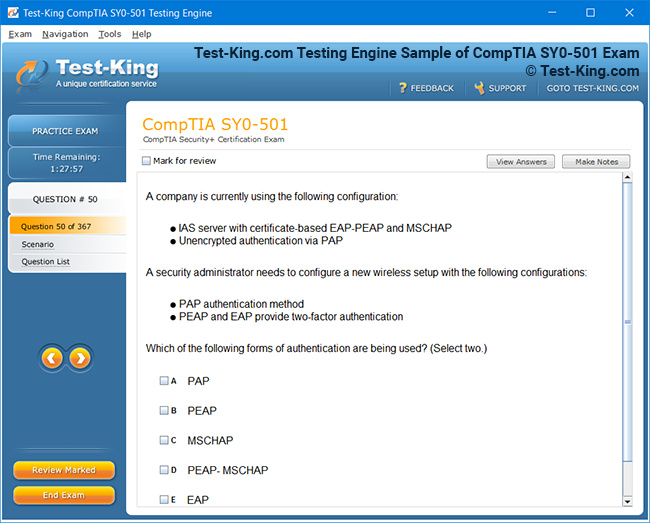
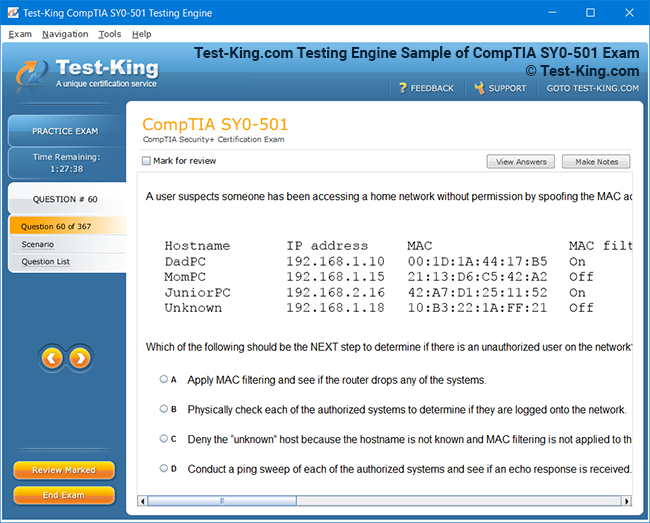
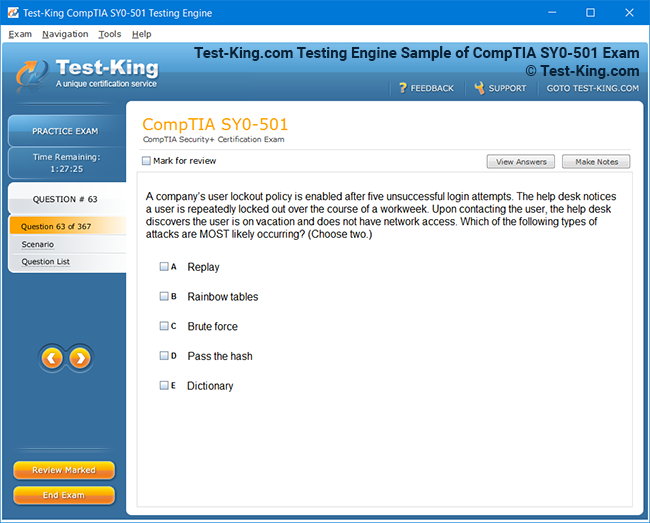
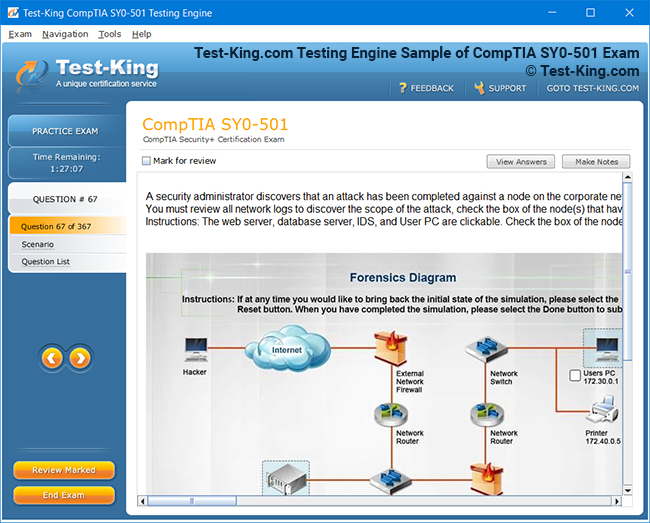
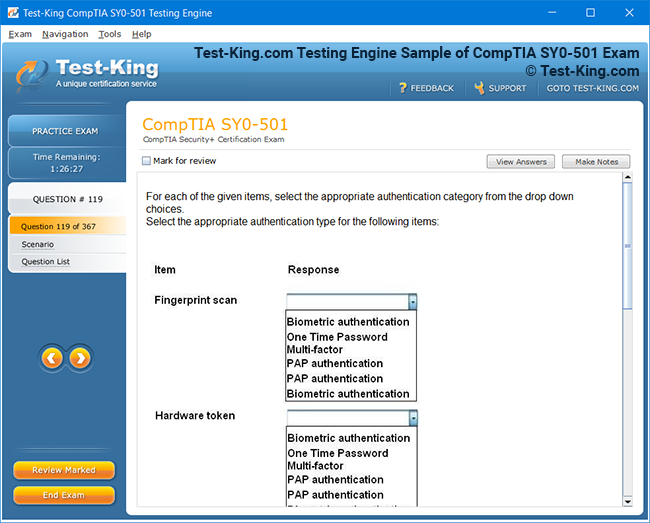
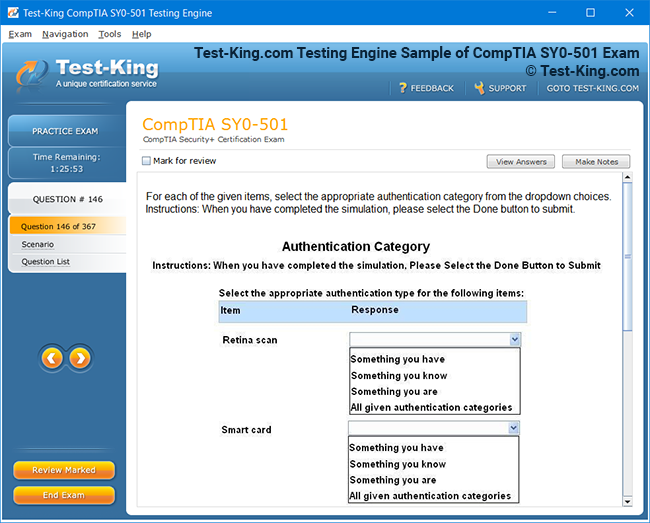
Product Screenshots
Frequently Asked Questions
How can I get the products after purchase?
All products are available for download immediately from your Member's Area. Once you have made the payment, you will be transferred to Member's Area where you can login and download the products you have purchased to your computer.
How long can I use my product? Will it be valid forever?
Test-King products have a validity of 90 days from the date of purchase. This means that any updates to the products, including but not limited to new questions, or updates and changes by our editing team, will be automatically downloaded on to computer to make sure that you get latest exam prep materials during those 90 days.
Can I renew my product if when it's expired?
Yes, when the 90 days of your product validity are over, you have the option of renewing your expired products with a 30% discount. This can be done in your Member's Area.
Please note that you will not be able to use the product after it has expired if you don't renew it.
How often are the questions updated?
We always try to provide the latest pool of questions, Updates in the questions depend on the changes in actual pool of questions by different vendors. As soon as we know about the change in the exam question pool we try our best to update the products as fast as possible.
How many computers I can download Test-King software on?
You can download the Test-King products on the maximum number of 2 (two) computers or devices. If you need to use the software on more than two machines, you can purchase this option separately. Please email support@test-king.com if you need to use more than 5 (five) computers.
What is a PDF Version?
PDF Version is a pdf document of Questions & Answers product. The document file has standart .pdf format, which can be easily read by any pdf reader application like Adobe Acrobat Reader, Foxit Reader, OpenOffice, Google Docs and many others.
Can I purchase PDF Version without the Testing Engine?
PDF Version cannot be purchased separately. It is only available as an add-on to main Question & Answer Testing Engine product.
What operating systems are supported by your Testing Engine software?
Our testing engine is supported by Windows. Andriod and IOS software is currently under development.
Key Concepts and Modules Covered in the CWM_LEVEL_1 Exam
The Chartered Wealth Manager Level 1 exam administered by AAFM India is a gateway for professionals aspiring to carve a niche in financial stewardship and holistic wealth advisory. It is meticulously designed to evaluate a candidate’s grasp on foundational concepts of wealth management, financial planning, and investment strategies. This exam is not merely an assessment of rote knowledge but an exploration of analytical reasoning, ethical acumen, and strategic foresight that is essential for managing diversified portfolios in contemporary financial ecosystems. Candidates are introduced to a plethora of concepts ranging from asset allocation, risk management, and behavioral finance to taxation and regulatory frameworks. The curriculum emphasizes practical applicability, ensuring that the aspirant can translate theoretical insights into actionable strategies for high-net-worth clients.
Wealth Management Fundamentals
At the core of the CWM_LEVEL_1 syllabus lies a comprehensive understanding of wealth management fundamentals. Wealth management transcends mere investment advice; it encompasses the orchestration of financial assets, estate planning, risk mitigation, and retirement strategies. Aspiring chartered wealth managers must develop proficiency in evaluating an individual’s financial situation through detailed risk profiling and goal assessment. They must also master the principles of portfolio diversification, understanding the subtle interplay between equities, fixed income instruments, alternative investments, and real assets. The examination expects candidates to discern not only the quantitative metrics such as expected returns, standard deviation, and beta but also qualitative dimensions like market sentiment and client behavioral tendencies. Knowledge of asset allocation theories such as the Modern Portfolio Theory, Capital Asset Pricing Model, and Efficient Frontier is pivotal for demonstrating strategic foresight in portfolio construction.
Investment Planning and Financial Instruments
A substantial portion of the examination delves into the spectrum of financial instruments and their strategic utilization. Candidates are expected to comprehend both traditional and exotic instruments, evaluating them for risk-adjusted performance. Equity instruments are analyzed for valuation metrics, growth potential, and market volatility, while debt instruments require an understanding of interest rate sensitivity, credit ratings, and duration management. Mutual funds, exchange-traded funds, and structured products are explored not only in their investment mechanics but also in their suitability for varied client profiles. Derivatives such as options, futures, and swaps are examined through the lens of hedging and speculation, requiring aspirants to integrate quantitative analysis with market intuition. The emphasis is on constructing a portfolio that is congruent with a client’s risk appetite, liquidity needs, and long-term objectives.
Risk Management and Behavioral Finance
Risk management is an indispensable facet of wealth management, and CWM_LEVEL_1 introduces candidates to both traditional and contemporary risk mitigation techniques. Understanding the taxonomy of financial risks—including market risk, credit risk, operational risk, and liquidity risk—is fundamental. The exam evaluates the candidate’s ability to quantify these risks, employing tools like Value at Risk, stress testing, and scenario analysis. Additionally, there is a growing recognition of behavioral finance as a critical determinant of investment outcomes. Candidates explore cognitive biases, emotional impulses, and decision-making heuristics that influence client behavior and market movements. By integrating these insights, a wealth manager can craft strategies that preempt irrational decision-making, enhance portfolio resilience, and ensure adherence to long-term financial objectives.
Regulatory Framework and Ethical Practices
An essential module of the CWM_LEVEL_1 exam focuses on the legal, regulatory, and ethical environment governing wealth management in India. Candidates are required to navigate the labyrinth of regulations imposed by entities such as the Securities and Exchange Board of India, Reserve Bank of India, and Insurance Regulatory and Development Authority. Knowledge of compliance norms, anti-money laundering measures, taxation policies, and reporting standards forms a critical part of the assessment. Ethical practice is emphasized not merely as a professional obligation but as a cornerstone of sustainable client relationships. Candidates are expected to demonstrate integrity, transparency, and fiduciary responsibility while providing financial counsel. Case-based questions often probe the aspirant’s ability to reconcile profitability with ethical stewardship, reflecting real-world dilemmas faced by wealth managers.
Taxation and Estate Planning
The examination rigorously evaluates concepts related to taxation, estate planning, and intergenerational wealth transfer. A nuanced understanding of income tax laws, capital gains provisions, and estate taxation allows wealth managers to optimize client portfolios efficiently. Candidates must also grasp the importance of trusts, wills, and philanthropic strategies in preserving and transferring wealth across generations. Estate planning requires a combination of legal acumen, financial foresight, and empathetic client engagement, as it involves sensitive decisions about asset allocation, succession, and legacy creation. Effective wealth management encompasses a delicate balance between maximizing financial returns and ensuring compliance with statutory frameworks while safeguarding the client’s familial and ethical priorities.
Retirement Planning and Financial Goals
Retirement planning is a crucial component of CWM_LEVEL_1, emphasizing long-term financial security for clients. Candidates learn to evaluate retirement needs based on projected expenses, inflation, lifestyle expectations, and existing assets. They explore diverse instruments such as pension funds, annuities, and government schemes, calibrating investment strategies to ensure adequate income streams post-retirement. The examination also emphasizes goal-based financial planning, where wealth managers are trained to align client aspirations—whether educational funding, property acquisition, or philanthropic endeavors—with appropriate investment vehicles. Strategic planning for retirement involves integrating risk management, taxation, and investment planning into a cohesive, forward-looking framework that adapts to evolving market conditions.
Advanced Investment Strategies
The Chartered Wealth Manager Level 1 exam encompasses a deep exploration of investment strategies that go beyond basic portfolio management. Candidates are expected to demonstrate an understanding of intricate mechanisms that drive wealth creation and capital preservation. Among these strategies, the principles of asset allocation are paramount, requiring candidates to evaluate the relative proportion of equities, bonds, real estate, and alternative investments in accordance with client objectives. Strategic allocation is complemented by tactical adjustments that respond to market conditions, interest rate fluctuations, and macroeconomic shifts. Beyond conventional investments, aspirants study derivative instruments such as options and futures, learning to employ them for hedging and risk optimization rather than mere speculation. This module demands both analytical rigor and market intuition, ensuring that a wealth manager can craft portfolios capable of weathering volatility while capitalizing on opportunity.
Fixed Income and Equity Analysis
In the domain of fixed income, candidates explore the nuances of government securities, corporate bonds, and hybrid instruments. A critical understanding of interest rate sensitivity, credit risk, and duration is essential, as these factors influence both yield expectations and portfolio stability. Wealth managers must be adept at analyzing credit ratings, assessing issuer reliability, and anticipating macroeconomic impacts on bond markets. Equities, on the other hand, require a different analytical lens. Aspirants study company fundamentals, valuation metrics, market trends, and sectoral dynamics. Ratio analysis, discounted cash flow models, and comparative benchmarking are tools that enable informed investment decisions. The examination evaluates the ability to synthesize quantitative data with qualitative insights, ensuring that wealth managers can recommend stocks that align with client risk appetites and long-term objectives.
Portfolio Management Techniques
Portfolio management forms a cornerstone of the Chartered Wealth Manager curriculum. Candidates are expected to master both modern and traditional approaches, understanding the subtle interplay between risk and return. Diversification remains a critical principle, with an emphasis on spreading investments across asset classes, geographies, and sectors to mitigate systemic and idiosyncratic risk. The concept of rebalancing is integral, requiring periodic adjustment of portfolio weights to maintain alignment with target allocations. Aspirants also explore performance evaluation metrics, including alpha, beta, Sharpe ratio, and tracking error, to measure efficiency and identify areas for optimization. Advanced portfolio theories, such as the Capital Market Line and the Efficient Frontier, provide a mathematical and conceptual framework for constructing portfolios that balance risk with expected return in a rational and disciplined manner.
Alternative Investments and Structured Products
The CWM_LEVEL_1 exam introduces candidates to alternative investment avenues that are increasingly vital for sophisticated wealth management. Hedge funds, private equity, real estate investment trusts, commodities, and infrastructure funds offer diversification benefits and potential for higher risk-adjusted returns. Candidates study their structure, liquidity considerations, and regulatory oversight, gaining the ability to match these instruments with client goals and risk tolerance. Structured products, which combine traditional securities with derivatives, are also analyzed for their payoff structures, embedded risks, and suitability in different market scenarios. Understanding these complex instruments requires a blend of financial acumen, scenario analysis, and creative problem-solving, equipping wealth managers to design portfolios that are both innovative and resilient.
Behavioral Aspects of Wealth Management
A critical yet often understated element of the exam involves the behavioral dimensions of investing. Candidates examine cognitive biases, emotional responses, and social influences that shape client decisions and market movements. Concepts such as loss aversion, overconfidence, herding behavior, and mental accounting are explored to understand how investors deviate from rational decision-making. Wealth managers must develop strategies to counteract these tendencies, ensuring that clients adhere to long-term financial plans and avoid impulsive actions. The curriculum emphasizes the integration of behavioral insights with quantitative analysis, highlighting that successful wealth management relies not solely on numbers but also on understanding human behavior and motivation.
Risk Assessment and Mitigation
In-depth knowledge of risk assessment techniques is essential for the CWM_LEVEL_1 examination. Candidates are trained to categorize risks into market, credit, operational, and liquidity types, and to employ appropriate mitigation strategies for each. Techniques such as diversification, hedging, insurance, and scenario planning are taught in a practical context, ensuring that candidates can formulate comprehensive risk management frameworks. Stress testing and value-at-risk calculations are introduced not merely as theoretical constructs but as actionable tools for predicting potential losses under adverse conditions. This module equips wealth managers to maintain portfolio integrity during market turbulence while preserving capital and safeguarding client interests.
Tax-Efficient Investment Planning
The exam also addresses the intricacies of tax-efficient investment planning, emphasizing strategies that maximize net returns while complying with regulatory mandates. Candidates learn to navigate income tax provisions, capital gains treatments, and exemptions relevant to various financial instruments. Wealth managers must assess the tax implications of investment choices and design portfolios that optimize after-tax returns. Instruments such as equity-linked savings schemes, tax-advantaged bonds, and structured investments are analyzed for their role in holistic financial planning. By integrating tax considerations into investment strategy, wealth managers enhance client wealth sustainably, reinforcing the importance of foresight and meticulous planning.
Retirement and Long-Term Financial Planning
Retirement planning is a pivotal component of the curriculum, encompassing the design of sustainable income streams for clients’ post-retirement life. Candidates learn to calculate projected expenses, account for inflation, and evaluate investment vehicles suitable for long-term wealth accumulation. Pension schemes, annuities, insurance products, and government retirement plans are explored for their role in constructing robust retirement portfolios. This module emphasizes the alignment of client goals with financial resources, ensuring that wealth managers can provide practical and personalized strategies for future financial security. Beyond retirement, aspirants study long-term goal planning, encompassing education funding, property acquisition, and philanthropic endeavors. The integration of these goals into a coherent financial roadmap demonstrates the aspirant’s ability to combine analytical precision with client-centric vision.
Ethical Considerations in Wealth Management
Ethical practice forms a central pillar of the Chartered Wealth Manager curriculum. Candidates are evaluated on their understanding of fiduciary responsibility, transparency, and integrity in client interactions. Ethical dilemmas are presented through case studies, requiring aspirants to balance profitability with client welfare and regulatory compliance. The examination assesses the ability to make principled decisions under complex circumstances, emphasizing that sustainable wealth management relies on trust and accountability. A strong ethical foundation ensures that wealth managers cultivate enduring client relationships, reinforce professional credibility, and contribute positively to the financial ecosystem.
Estate Planning and Legacy Management
Another critical module involves estate planning and legacy management, which requires a nuanced comprehension of legal, financial, and familial considerations. Candidates learn to design strategies for wealth transfer that minimize tax liabilities, ensure equitable distribution, and reflect client values. Wills, trusts, charitable foundations, and insurance instruments are analyzed for their efficacy in achieving estate planning objectives. Wealth managers must balance legal compliance, financial prudence, and client aspirations, offering solutions that are both technically sound and empathetically aligned with individual circumstances. This module underscores the importance of foresight, sensitivity, and holistic understanding in managing generational wealth.
Strategic Application of Financial Knowledge
Throughout the CWM_LEVEL_1 curriculum, emphasis is placed on the practical application of financial knowledge. Candidates are encouraged to synthesize insights from multiple modules, integrating investment planning, risk management, behavioral finance, taxation, and estate planning into coherent strategies. Case studies, scenario analyses, and problem-solving exercises simulate real-world decision-making, preparing aspirants to manage complex client portfolios with acumen and confidence. The exam fosters a mindset that balances analytical rigor, ethical responsibility, and innovative thinking, equipping wealth managers to navigate dynamic markets while addressing diverse client needs.
Principles of Financial Planning
The Chartered Wealth Manager Level 1 examination places significant emphasis on the principles of financial planning, which serve as the bedrock for effective wealth management. Candidates are expected to acquire a holistic understanding of financial life cycles, including income generation, asset accumulation, risk protection, and wealth preservation. Financial planning is more than numerical calculations; it entails discerning client priorities, long-term objectives, and risk appetite. Professionals learn to formulate strategies that incorporate liquidity management, debt management, investment diversification, and contingency planning. By integrating these elements, wealth managers can design comprehensive plans that not only optimize returns but also offer resilience against unforeseen economic and personal contingencies.
Asset Allocation and Portfolio Diversification
A core module of the curriculum revolves around asset allocation and portfolio diversification. Candidates study the allocation of resources across equities, fixed income securities, commodities, real estate, and alternative investments to achieve a balance between risk and return. The examination evaluates the ability to determine optimal portfolio weightings based on individual risk profiles, investment horizon, and macroeconomic conditions. Tactical asset allocation, which involves short-term adjustments based on market cycles, complements strategic allocation, providing flexibility in dynamic markets. Additionally, diversification across sectors, industries, and geographies is emphasized to minimize exposure to idiosyncratic risk. Aspirants must demonstrate proficiency in constructing portfolios that are robust, adaptive, and tailored to the nuanced needs of high-net-worth clients.
Investment Analysis and Valuation Techniques
Candidates are expected to master a spectrum of investment analysis and valuation techniques essential for informed decision-making. Equity valuation involves methods such as discounted cash flow analysis, dividend discount models, and relative valuation metrics, enabling the identification of undervalued or overvalued securities. Fixed income evaluation requires an understanding of yield curves, credit spreads, duration, and convexity to assess potential returns and sensitivity to interest rate changes. In addition, alternative assets and structured products are examined for their unique risk-return characteristics and potential for portfolio enhancement. Wealth managers are trained to synthesize quantitative analysis with qualitative factors, such as industry trends, competitive positioning, and regulatory shifts, ensuring that investment recommendations are both prudent and opportunistic.
Risk Management Strategies
Risk management is a fundamental aspect of wealth management, and the examination delves deeply into techniques for mitigating various types of risk. Candidates are introduced to market risk, credit risk, operational risk, and liquidity risk, and are expected to understand both their quantification and management. Techniques such as hedging through derivatives, portfolio diversification, insurance instruments, and contingency planning are studied in detail. Stress testing and scenario analysis provide aspirants with the tools to anticipate adverse conditions and evaluate potential losses, ensuring that portfolios remain resilient under volatility. The curriculum emphasizes a proactive approach, requiring wealth managers to identify vulnerabilities and implement protective measures before risks materialize.
Behavioral Finance and Client Psychology
The examination also incorporates behavioral finance, recognizing the profound impact of human psychology on financial decision-making. Candidates explore cognitive biases such as overconfidence, anchoring, herd behavior, and loss aversion, which can influence both investor behavior and market trends. Understanding these behavioral tendencies allows wealth managers to guide clients toward rational, long-term investment strategies and prevent impulsive or emotionally driven decisions. The curriculum encourages aspirants to integrate behavioral insights with analytical tools, fostering an approach to wealth management that is both empathetic and methodical.
Tax Planning and Regulatory Compliance
A comprehensive understanding of taxation and regulatory frameworks is imperative for effective wealth management. Candidates are required to grasp the implications of income tax, capital gains tax, estate duty, and other levies on investment decisions. Knowledge of tax-efficient investment vehicles, exemptions, and deductions allows wealth managers to optimize returns while remaining compliant with statutory obligations. Regulatory compliance, including adherence to securities laws, anti-money laundering provisions, and fiduciary responsibilities, is also emphasized. Aspirants are expected to demonstrate an ability to balance profit maximization with ethical practice, ensuring that client portfolios are structured within the ambit of prevailing legal and regulatory frameworks.
Retirement Planning and Financial Security
Retirement planning forms a crucial component of the Chartered Wealth Manager Level 1 syllabus, focusing on the creation of sustainable income streams for clients’ post-retirement life. Candidates learn to assess future expenses, inflation impact, lifestyle considerations, and longevity risk to design effective retirement strategies. Various instruments, such as annuities, pension plans, and government retirement schemes, are analyzed for their suitability in different client scenarios. The examination emphasizes the importance of goal-based financial planning, where wealth managers must align client aspirations with appropriate investment choices. This requires an integrated approach combining risk management, taxation, investment strategy, and long-term financial foresight.
Estate Planning and Legacy Strategy
The curriculum also addresses estate planning and legacy management, an area of growing importance for high-net-worth individuals. Candidates study wills, trusts, charitable foundations, and other instruments to facilitate the transfer of wealth in a tax-efficient and legally compliant manner. Wealth managers must understand the intricate balance between client wishes, regulatory constraints, and tax considerations, ensuring that wealth is preserved and distributed according to the client’s objectives. Estate planning also requires a sensitive approach to family dynamics and ethical considerations, highlighting the need for both analytical acumen and empathetic client engagement.
Alternative Investments and Emerging Opportunities
Alternative investments are increasingly integrated into portfolios for their diversification benefits and potential for higher risk-adjusted returns. Candidates explore hedge funds, private equity, real estate investment trusts, commodities, infrastructure funds, and other unconventional instruments. Each of these investments is analyzed for risk exposure, liquidity, performance metrics, and regulatory implications. The examination encourages aspirants to consider the role of alternative investments in enhancing portfolio resilience, mitigating market correlation, and achieving long-term client objectives. Understanding these opportunities requires creative thinking, scenario analysis, and the ability to match sophisticated instruments with client needs and tolerance for complexity.
Conclusion
A recurring theme in the Chartered Wealth Manager Level 1 exam is the application of strategic decision-making in financial management. Candidates are expected to integrate insights from various modules to make informed, client-focused decisions. This includes evaluating trade-offs between risk and return, aligning investments with client priorities, and adapting strategies to market evolution. Case studies and practical scenarios in the curriculum foster analytical thinking, problem-solving, and judgment under uncertainty. Aspirants are trained to anticipate challenges, assess potential outcomes, and implement solutions that balance prudence with opportunity, demonstrating the acumen required for professional wealth management.