

Exam Code: Hybrid Cloud Observability Network Monitoring
Exam Name: Hybrid Cloud Observability Network Monitoring
Certification Provider: SolarWinds
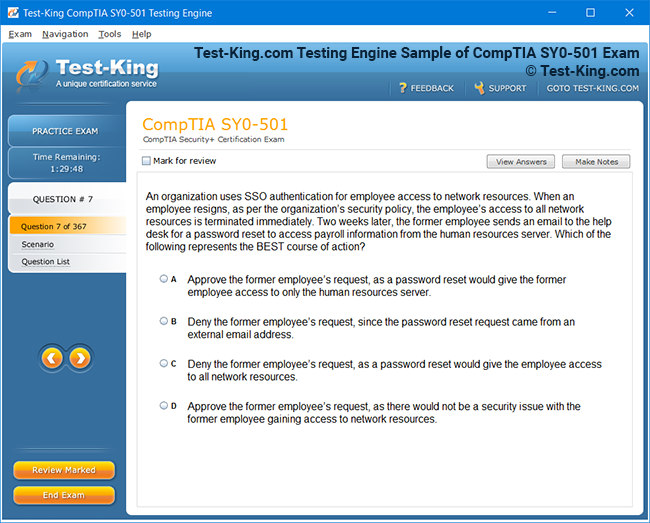
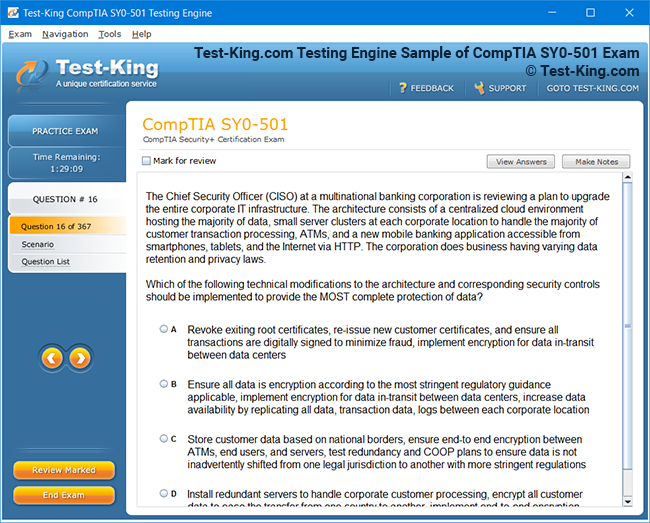
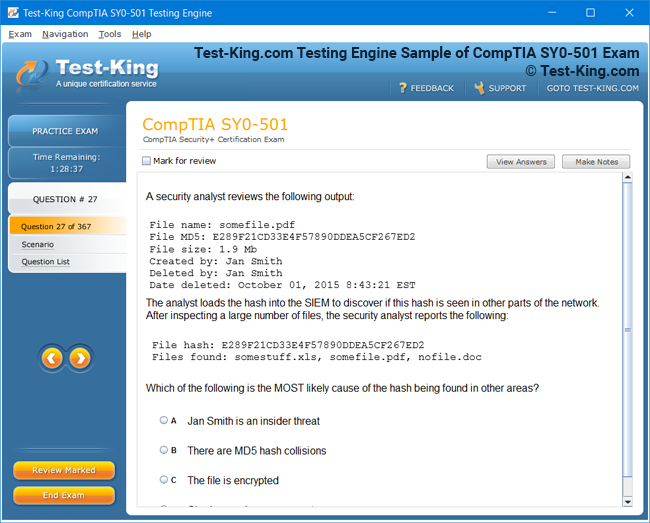
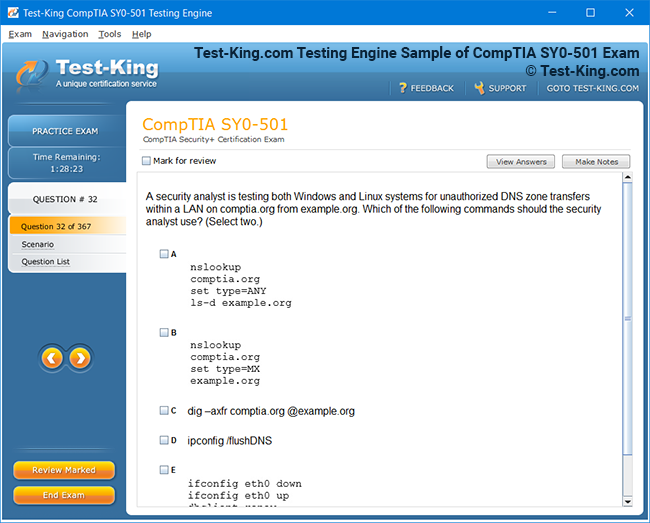
Product Screenshots
Frequently Asked Questions
How can I get the products after purchase?
All products are available for download immediately from your Member's Area. Once you have made the payment, you will be transferred to Member's Area where you can login and download the products you have purchased to your computer.
How long can I use my product? Will it be valid forever?
Test-King products have a validity of 90 days from the date of purchase. This means that any updates to the products, including but not limited to new questions, or updates and changes by our editing team, will be automatically downloaded on to computer to make sure that you get latest exam prep materials during those 90 days.
Can I renew my product if when it's expired?
Yes, when the 90 days of your product validity are over, you have the option of renewing your expired products with a 30% discount. This can be done in your Member's Area.
Please note that you will not be able to use the product after it has expired if you don't renew it.
How often are the questions updated?
We always try to provide the latest pool of questions, Updates in the questions depend on the changes in actual pool of questions by different vendors. As soon as we know about the change in the exam question pool we try our best to update the products as fast as possible.
How many computers I can download Test-King software on?
You can download the Test-King products on the maximum number of 2 (two) computers or devices. If you need to use the software on more than two machines, you can purchase this option separately. Please email support@test-king.com if you need to use more than 5 (five) computers.
What is a PDF Version?
PDF Version is a pdf document of Questions & Answers product. The document file has standart .pdf format, which can be easily read by any pdf reader application like Adobe Acrobat Reader, Foxit Reader, OpenOffice, Google Docs and many others.
Can I purchase PDF Version without the Testing Engine?
PDF Version cannot be purchased separately. It is only available as an add-on to main Question & Answer Testing Engine product.
What operating systems are supported by your Testing Engine software?
Our testing engine is supported by Windows. Andriod and IOS software is currently under development.
Top SolarWinds Exams
Exam Blueprint: What to Expect in the Hybrid Cloud Observability Network Monitoring Test
The SolarWinds Hybrid Cloud Observability Network Monitoring exam evaluates a candidate’s ability to manage and observe complex hybrid cloud environments. Candidates are expected to demonstrate proficiency in monitoring cloud resources, detecting performance anomalies, and troubleshooting network issues that span both on-premises infrastructure and cloud services. The exam also tests knowledge of integrating multiple monitoring tools, configuring alerts, and interpreting metrics to maintain optimal network performance. Aspirants need a profound understanding of hybrid cloud architectures, which encompass private clouds, public clouds, and on-premises systems interconnected to deliver seamless services. Mastery of these concepts allows network engineers to ensure high availability, mitigate latency issues, and anticipate potential disruptions.
Understanding the Scope of the Hybrid Cloud Observability Network Monitoring Exam
Understanding the blueprint of the exam is crucial. The test is structured to assess knowledge across several domains, such as network monitoring fundamentals, cloud service integration, performance analysis, and proactive maintenance. Candidates should be familiar with network protocols, data flow monitoring, and application performance metrics. They are also expected to comprehend how network traffic traverses various layers of hybrid infrastructures, including virtual networks, load balancers, and firewalls. Effective preparation entails not only understanding theoretical principles but also practical knowledge in configuring SolarWinds observability tools, setting thresholds, and analyzing logs. Exam takers often benefit from reviewing real-world case studies where hybrid cloud networks encounter performance bottlenecks and outages, and understanding how monitoring tools can preemptively alert administrators to potential issues.
Network Monitoring Fundamentals in Hybrid Cloud Environments
A core aspect of the exam revolves around the fundamentals of network monitoring in hybrid environments. Network monitoring involves continuous observation of traffic, bandwidth usage, latency, and packet loss to ensure that cloud and on-premises services function efficiently. Candidates are expected to know how to deploy probes and sensors across different network segments and virtualized environments. Understanding how to monitor microservices, APIs, and interdependent applications is essential because modern hybrid cloud architectures often rely on modular components. Each component must be observed independently while also assessing its impact on the overall system. The exam evaluates how well candidates can interpret performance metrics to identify anomalies before they escalate into critical failures.
Monitoring also requires knowledge of metrics aggregation and visualization. Candidates should be familiar with creating dashboards that reflect real-time system health, highlighting trends, and spotting irregularities. Alerts and notifications must be intelligently configured to prevent alert fatigue while ensuring critical events are immediately addressed. Understanding thresholds, baselines, and anomaly detection is a key area that the exam explores. Professionals must be capable of differentiating between normal fluctuations in network performance and signs of genuine system distress. Additionally, knowledge of distributed tracing techniques and their relevance to diagnosing latency issues in hybrid cloud systems is often tested.
Cloud Service Integration and Observability
Observability extends beyond monitoring; it involves correlating metrics, logs, and traces to gain actionable insights into hybrid cloud networks. Candidates should demonstrate familiarity with integrating various cloud services, including public cloud providers and private cloud platforms. Understanding how data flows between different environments and how services communicate over secure channels is critical. The exam assesses the ability to monitor cloud-native applications, including containerized workloads, orchestration frameworks, and serverless functions. Candidates need to grasp the principles of service-level indicators (SLIs) and service-level objectives (SLOs) and how they influence network monitoring strategies.
A candidate may be asked to interpret scenarios where a hybrid cloud environment experiences intermittent connectivity issues or resource saturation. It is essential to understand how monitoring tools can detect bottlenecks in virtual networks, cloud storage, and database services. Configuring dashboards to display critical metrics such as latency, throughput, error rates, and transaction volumes is part of the observability skillset evaluated. Exam takers must also be proficient in using analytics tools to generate reports that highlight trends and anomalies, facilitating informed decision-making for infrastructure management. Knowledge of automated remediation, where monitoring alerts trigger predefined actions, may also be covered in the test blueprint.
Performance Analysis and Troubleshooting
The exam emphasizes the ability to perform in-depth performance analysis. Candidates should understand the principles of root cause analysis, identifying whether issues originate from network hardware, cloud configurations, application inefficiencies, or security constraints. Exam scenarios often present hypothetical network slowdowns, packet loss, or service disruptions requiring candidates to recommend corrective measures. Professionals must be adept at reading logs, interpreting event correlations, and using diagnostic tools to pinpoint inefficiencies. The ability to map dependencies between services and components is critical to understanding how a single issue can cascade through a hybrid cloud network.
Troubleshooting hybrid cloud networks also involves evaluating latency sources, bandwidth consumption, and packet integrity. Candidates should be familiar with using monitoring tools to assess performance at multiple layers, from physical interfaces to application-level transactions. Knowledge of automated alerts, predictive analytics, and anomaly detection algorithms is crucial for preemptive problem resolution. Exam takers are expected to understand the impact of virtualization, container orchestration, and dynamic resource allocation on network performance, as these elements can complicate traditional monitoring approaches. In practice, candidates may be asked to describe strategies for mitigating high latency, balancing workloads, and ensuring continuous availability in complex hybrid architectures.
Proactive Maintenance and Optimization Strategies
Proactive maintenance is another domain heavily emphasized in the exam. Candidates need to exhibit competence in establishing monitoring policies that preempt potential failures. Understanding capacity planning, trend analysis, and resource optimization is fundamental to sustaining a resilient hybrid cloud network. The exam assesses the ability to schedule maintenance windows, perform system health checks, and implement upgrades without disrupting business continuity. Professionals must also comprehend how to leverage monitoring data to forecast network growth, identify underutilized resources, and optimize performance.
Optimization strategies include fine-tuning alerts, adjusting thresholds, and refining metrics collection to balance performance visibility with system overhead. Candidates should demonstrate familiarity with integrating monitoring insights into broader IT operations, aligning observability practices with business goals. Techniques such as predictive scaling, automated remediation, and anomaly-based alerts are frequently tested, highlighting the importance of proactive, rather than reactive, network management. Exam scenarios may also cover security considerations, ensuring that monitoring activities do not introduce vulnerabilities or violate compliance mandates.
Practical Knowledge and Hands-On Skills
The exam blueprint emphasizes practical knowledge alongside theoretical concepts. Candidates are expected to have hands-on experience configuring SolarWinds monitoring tools, setting up network probes, and creating dashboards that provide comprehensive visibility into hybrid cloud performance. Familiarity with real-time monitoring, historical trend analysis, and reporting functionalities is crucial. Candidates should also be adept at simulating network issues to validate alert configurations and testing monitoring coverage across diverse environments. Understanding best practices for tool deployment, configuration management, and alert tuning ensures that professionals can translate knowledge into effective operational strategies.
Hands-on skills also include the ability to integrate monitoring tools with incident management platforms, enabling streamlined workflows and faster response times. Candidates may encounter exam questions that test their understanding of automated scripts, API integrations, and custom reporting configurations. Being able to navigate complex hybrid infrastructures, identify potential single points of failure, and propose remediation plans reflects the practical expertise expected by SolarWinds. Real-world experience, combined with comprehensive knowledge of observability principles, provides the foundation for successfully passing the exam and applying skills in professional environments.
Case Scenarios and Application-Based Knowledge
The exam often presents candidates with case scenarios requiring applied knowledge. These scenarios simulate real-world challenges such as network congestion, resource contention, or partial service outages. Candidates must interpret monitoring data, correlate events, and propose actionable solutions. Exam questions might involve situations where multi-cloud workloads exhibit performance degradation or where on-premises systems must be seamlessly integrated with cloud monitoring solutions. Understanding how to prioritize alerts, assess business impact, and implement corrective measures is central to achieving high marks in these practical applications.
Case scenarios test analytical thinking and problem-solving skills, emphasizing how observability data can drive operational decisions. Candidates are evaluated on their ability to distinguish between symptomatic issues and root causes, employing structured methodologies to resolve complex hybrid cloud problems. Proficiency in reading performance metrics, identifying trends, and predicting potential failures is essential. Scenario-based questions also assess the candidate’s capacity to document findings, communicate technical issues clearly, and collaborate with other IT teams for resolution. This applied knowledge ensures that professionals are prepared for real operational challenges beyond the exam environment.
Advanced Network Monitoring and Traffic Analysis
Understanding traffic flows in hybrid cloud environments is crucial for effective observability and network monitoring. Candidates preparing for the exam are expected to demonstrate a deep comprehension of packet transmission, latency measurement, and bandwidth consumption across diverse infrastructures. Modern hybrid networks incorporate virtualized routers, software-defined networking, and cloud gateways, which require monitoring tools capable of discerning subtle anomalies. Exam takers should be familiar with the deployment of monitoring probes at strategic points within the network, capturing data on throughput, jitter, and error rates. This ensures that administrators can preempt performance degradation before it impacts critical applications.
Analyzing network traffic involves interpreting logs, visualizing data streams, and correlating metrics to identify patterns indicative of potential disruptions. Candidates must understand how to distinguish between normal network fluctuations and abnormal behavior that could signify a misconfiguration, congestion, or security threat. Knowledge of protocols such as TCP, UDP, and ICMP, as well as virtual private network configurations, is essential for comprehending how packets traverse hybrid cloud architectures. SolarWinds monitoring tools provide granular visibility into these flows, allowing professionals to detect packet loss, measure response times, and trace the path of critical transactions. The exam evaluates the ability to use these insights to maintain service reliability and optimize network performance.
Cloud Resource Monitoring and Observability Practices
Hybrid cloud environments combine private and public cloud infrastructures, creating complex systems that require comprehensive observability practices. Candidates should be adept at monitoring virtual machines, containers, cloud storage, and microservices while ensuring alignment with service-level objectives. Observability is not merely about detecting failures; it is about understanding the behavior of components under varying load conditions. The exam assesses the ability to correlate logs, metrics, and traces from multiple cloud platforms to gain a cohesive view of the system’s health. Professionals need to interpret patterns that suggest resource contention, configuration anomalies, or suboptimal load distribution.
Effective monitoring of cloud resources demands knowledge of automated alerting mechanisms, threshold tuning, and predictive analytics. Candidates should be able to configure dashboards that highlight critical metrics, enabling rapid identification of latency spikes, throughput degradation, and service interruptions. Exam scenarios often include troubleshooting performance bottlenecks in multi-cloud environments, where virtualized components interact dynamically. Understanding how to apply observability principles to container orchestration platforms, such as Kubernetes, or serverless architectures ensures that candidates can maintain consistent performance and availability across diverse workloads.
Alert Configuration and Event Correlation
A significant aspect of the exam involves configuring intelligent alerts and correlating events to reduce operational overhead while ensuring timely responses. Candidates must demonstrate the ability to establish meaningful thresholds that differentiate between routine fluctuations and true performance issues. Event correlation involves connecting disparate signals to identify root causes and prioritize responses based on business impact. Knowledge of historical trends, anomaly detection, and predictive behavior analysis is critical for configuring alerts that are both effective and actionable.
SolarWinds tools allow administrators to define complex alert conditions, integrating multiple metrics and thresholds to prevent false positives. The exam may present scenarios where repeated alerts indicate an underlying systemic issue, and candidates must describe how to adjust monitoring configurations to reduce noise while capturing critical events. Professionals are expected to understand the interplay between network latency, application performance, and cloud resource utilization, and how to leverage alert data to maintain service continuity. Applying these principles ensures that hybrid cloud environments remain resilient, responsive, and optimized for both performance and cost.
Performance Metrics Interpretation and Optimization
Exam candidates must demonstrate proficiency in interpreting performance metrics to identify inefficiencies and optimize network operations. Metrics such as throughput, latency, error rates, and resource utilization provide insight into system behavior and guide decision-making. Candidates are expected to distinguish between transient spikes and persistent performance degradation, applying analytical reasoning to determine corrective actions. Understanding the implications of virtualized environments, load balancers, and dynamic scaling on these metrics is essential for maintaining optimal hybrid cloud operations.
Optimization strategies often involve fine-tuning resource allocation, adjusting monitoring intervals, and analyzing historical trends to forecast future capacity requirements. The exam evaluates the ability to design dashboards that provide clear visualizations of critical performance indicators, enabling rapid assessment of network health. Candidates should also be familiar with methods for prioritizing optimization efforts based on business impact, ensuring that critical services receive the necessary attention and resources. Proficiency in these practices allows professionals to maintain high availability, prevent service degradation, and support continuous improvement initiatives within hybrid cloud networks.
Troubleshooting Complex Hybrid Cloud Scenarios
Hybrid cloud environments are inherently complex, combining on-premises infrastructure with public and private cloud resources. The exam often presents candidates with scenarios requiring the identification and resolution of issues that span multiple components. Candidates should be adept at root cause analysis, leveraging monitoring tools to trace anomalies through layers of network infrastructure, virtualized services, and cloud-hosted applications. Exam questions may simulate partial outages, intermittent latency, or resource saturation, challenging candidates to propose practical remediation strategies.
Troubleshooting requires a methodical approach, including log analysis, event correlation, and validation of configuration settings. Candidates must understand how changes in one component can propagate through the network, impacting dependent services. Familiarity with automated diagnostics, predictive analysis, and proactive monitoring practices is essential for resolving complex issues efficiently. Exam scenarios also test the ability to communicate findings clearly, document remediation steps, and implement solutions that maintain service continuity while minimizing business impact.
Security Considerations in Hybrid Cloud Monitoring
Monitoring hybrid cloud environments entails not only performance management but also security awareness. Candidates are expected to understand the implications of data access, encryption, and secure communication channels when configuring monitoring tools. Observability solutions must balance comprehensive visibility with compliance and privacy requirements, ensuring that sensitive information is protected. The exam evaluates knowledge of best practices for secure monitoring, including access control, authentication, and audit logging.
Security-focused observability involves detecting anomalies that may indicate malicious activity, such as unusual traffic patterns, unauthorized access attempts, or abnormal system behavior. Candidates must be able to integrate monitoring alerts with incident response procedures, enabling timely detection and mitigation of potential threats. Understanding how security considerations intersect with performance monitoring ensures that hybrid cloud networks remain both resilient and secure. Exam scenarios may require candidates to propose strategies that simultaneously optimize performance and maintain compliance with regulatory standards.
Integrating Observability with IT Operations
Effective observability is intertwined with broader IT operations management. Candidates are expected to demonstrate knowledge of how monitoring insights inform operational decisions, resource planning, and service delivery. Integrating observability with incident management systems, configuration management databases, and automated workflows enhances the efficiency of hybrid cloud network operations. The exam assesses the ability to leverage monitoring data to guide operational improvements, optimize resource allocation, and support proactive maintenance strategies.
Candidates should be adept at translating monitoring metrics into actionable intelligence that informs capacity planning, performance tuning, and cost optimization. They must understand how hybrid cloud observability aligns with business objectives, enabling IT teams to deliver reliable services while minimizing operational risks. Exam scenarios often simulate real-world operational challenges, requiring candidates to apply observability principles to enhance decision-making, streamline processes, and ensure service excellence.
Advanced Observability Techniques and Real-Time Insights
Candidates preparing for the Hybrid Cloud Observability Network Monitoring exam must possess a sophisticated understanding of observability frameworks and the ability to extract actionable insights from real-time data. Observability transcends simple monitoring by correlating metrics, logs, and traces to provide a holistic view of the hybrid cloud infrastructure. Exam takers are expected to demonstrate proficiency in deploying probes and agents across diverse environments, capturing data that encompasses on-premises systems, private clouds, and public cloud services. This integration ensures continuous visibility into application performance, network traffic, and resource utilization, which is vital for maintaining high availability and operational efficiency.
Real-time insights are critical in identifying anomalies before they escalate into significant disruptions. Candidates should be familiar with anomaly detection algorithms, predictive modeling, and statistical baselining to distinguish between normal operational fluctuations and true performance concerns. The exam often presents scenarios where subtle irregularities in latency, packet loss, or CPU utilization indicate emerging issues. Understanding how to configure dashboards, visualizations, and alert thresholds that surface these anomalies is essential. Professionals must also be able to interpret correlated data to determine root causes, predict potential outages, and recommend proactive adjustments to maintain service reliability.
Multi-Cloud Observability Challenges
Hybrid cloud environments introduce complexities that require advanced observability techniques. Candidates must understand the nuances of monitoring workloads across multiple cloud platforms, including differences in telemetry, APIs, and performance metrics. Exam scenarios frequently involve interpreting performance data from disparate systems and synthesizing a coherent picture of network health. Professionals are expected to evaluate interdependencies among services, identify potential bottlenecks, and anticipate performance degradation that arises from dynamic resource allocation, latency variance, or configuration inconsistencies.
Knowledge of microservices architectures, container orchestration, and serverless computing is critical, as these components behave differently under varying loads. The exam may include case studies where network congestion or resource contention occurs across multi-cloud deployments. Candidates should be able to explain how monitoring tools can collect metrics from each environment, correlate data streams, and provide a unified observability framework. Emphasis is placed on understanding how cloud-native services interact with on-premises infrastructure, and how these interactions influence overall system performance and reliability.
Proactive Alerting and Threshold Management
Intelligent alerting and threshold configuration are central to effective hybrid cloud network observability. Candidates are expected to demonstrate the ability to establish alerts that prioritize critical events while reducing noise from non-essential notifications. The exam evaluates the knowledge of setting dynamic thresholds based on historical performance patterns, statistical variance, and predictive analysis. Professionals must be capable of explaining how alert data can be correlated with underlying network conditions, system health, and application behavior to facilitate timely intervention.
Alerting strategies involve balancing sensitivity with specificity, ensuring that true issues are detected promptly while minimizing false positives. Candidates should understand the importance of escalation paths, automated notifications, and integration with incident management workflows. Exam scenarios may simulate intermittent connectivity issues, degraded throughput, or application errors, requiring candidates to describe how alert configurations would identify the root cause efficiently. Mastery of these techniques ensures that hybrid cloud environments maintain operational continuity and meet defined service-level objectives.
Resource Optimization and Capacity Planning
Effective hybrid cloud monitoring requires more than detecting issues; it involves optimizing resource usage and planning for future capacity needs. Candidates are expected to demonstrate proficiency in analyzing historical performance trends, understanding workload demands, and predicting potential resource shortages. Exam questions often present scenarios where system utilization spikes unexpectedly or sustained load increases threaten to degrade service quality. Professionals must be able to interpret metrics such as CPU usage, memory consumption, network throughput, and storage latency to make informed decisions about scaling, load balancing, or resource reallocation.
Capacity planning also includes evaluating the performance impact of virtualization, container orchestration, and cloud elasticity. Candidates should be familiar with strategies to prevent resource contention, over-provisioning, or underutilization. The exam assesses the ability to design dashboards and reports that provide actionable insights, enabling proactive adjustments to maintain performance consistency. Professionals must also understand the implications of growth trends and business demands, ensuring that hybrid cloud networks remain resilient, cost-effective, and aligned with organizational objectives.
Troubleshooting Complex Scenarios
Exam candidates are expected to exhibit advanced troubleshooting skills in complex hybrid cloud environments. These scenarios often involve multi-layered systems where performance issues may originate in virtual networks, cloud resources, application components, or integrated services. Candidates must demonstrate a structured approach to root cause analysis, leveraging monitoring data to trace anomalies through interconnected components. Understanding how network latency, service dependencies, and resource allocation influence performance is critical.
Troubleshooting requires proficiency in interpreting logs, event streams, and telemetry data to identify systemic issues. Candidates should be able to describe strategies for isolating the source of latency, packet loss, or service degradation while considering the broader network impact. The exam may include situations where hybrid cloud workloads exhibit intermittent failures, requiring candidates to propose practical remediation steps. Knowledge of automated diagnostic tools, predictive alerts, and incident response integration is essential for resolving complex network issues efficiently and minimizing business disruption.
Security and Compliance in Observability
Maintaining security and compliance is an integral aspect of hybrid cloud network observability. Candidates must understand how to implement monitoring solutions that protect sensitive data while providing comprehensive visibility into network and application performance. Exam scenarios often assess knowledge of secure communication channels, encrypted data streams, and access control mechanisms. Professionals are expected to demonstrate how observability tools can detect potential security threats, unusual access patterns, or anomalous network behavior.
Candidates should be able to explain the balance between performance monitoring and regulatory compliance, ensuring that monitoring activities do not introduce vulnerabilities or violate organizational policies. Understanding audit trails, logging standards, and incident reporting procedures is essential for demonstrating a holistic approach to security-conscious observability. The exam may also include situations where security incidents overlap with performance degradation, testing candidates’ ability to prioritize and remediate issues effectively without compromising system integrity or compliance requirements.
Integrating Observability with Operational Strategy
Hybrid cloud observability is most effective when aligned with broader IT operational strategies. Candidates are expected to understand how monitoring insights drive decision-making, resource allocation, and proactive maintenance initiatives. The exam evaluates the ability to integrate observability data with operational workflows, incident management platforms, and automation tools to streamline network management. Professionals must be capable of translating performance metrics into actionable intelligence that supports capacity planning, optimization, and service-level adherence.
Exam scenarios often require candidates to illustrate how monitoring data informs operational decisions, such as load balancing, workload prioritization, and scaling strategies. Understanding how observability practices align with organizational objectives ensures that hybrid cloud environments remain resilient, responsive, and efficient. Candidates should also be familiar with leveraging predictive analytics, anomaly detection, and automated remediation to enhance operational effectiveness and maintain service reliability across diverse hybrid cloud architectures.
Holistic Observability and Metrics Correlation
Candidates preparing for the Hybrid Cloud Observability Network Monitoring exam must develop a comprehensive understanding of holistic observability approaches. Observability extends beyond simple network monitoring by connecting metrics, logs, and traces to provide a panoramic view of hybrid cloud environments. Exam takers should demonstrate expertise in deploying agents and probes across on-premises infrastructure, private clouds, and public cloud platforms, ensuring continuous visibility into performance, latency, and resource utilization. Understanding how different system components interconnect and influence one another is essential for maintaining high availability, operational efficiency, and business continuity.
Metrics correlation is a central aspect of effective observability. Candidates must interpret real-time and historical data to detect subtle anomalies that may indicate underlying problems, such as resource contention, service misconfiguration, or network congestion. The exam evaluates the ability to use dashboards and visualizations to identify patterns, compare baseline metrics with current performance, and pinpoint potential issues before they escalate into service disruptions. Professionals should also be capable of distinguishing between transient fluctuations and persistent degradation, applying analytical reasoning to propose remedial actions and optimize system performance.
Monitoring Multi-Cloud Workloads
Hybrid cloud architectures often span multiple public cloud providers alongside private and on-premises resources, creating complex monitoring challenges. Candidates must understand how to collect telemetry from disparate systems and unify the data into a coherent observability framework. The exam assesses the ability to interpret performance metrics from multiple cloud platforms, correlating service health indicators across diverse environments. Professionals are expected to evaluate interdependencies among virtual networks, containers, applications, and serverless functions, identifying potential bottlenecks and ensuring seamless service delivery.
Candidates should also be familiar with container orchestration frameworks and their impact on network monitoring. Exam scenarios may present situations where workloads experience unexpected latency or degraded throughput due to dynamic resource allocation or orchestration policies. Understanding how to configure monitoring tools to capture critical metrics, generate actionable insights, and provide proactive alerts is essential. Professionals are expected to demonstrate practical knowledge of multi-cloud observability strategies, ensuring that hybrid environments remain resilient, efficient, and responsive to evolving operational demands.
Intelligent Alerting and Event Management
Intelligent alerting is a critical competency evaluated in the exam. Candidates must show proficiency in configuring alerts that prioritize significant events while minimizing false positives and alert fatigue. Event management requires correlating multiple metrics, logs, and system events to accurately identify root causes and enable timely intervention. The exam may include scenarios where recurring alerts indicate systemic issues, and candidates must describe strategies to adjust monitoring thresholds, enhance detection accuracy, and ensure operational efficiency.
Understanding dynamic thresholding, historical trend analysis, and predictive behavior modeling is essential for effective alerting. Candidates should be able to explain how alerts integrate with incident management workflows, supporting automated notifications, escalation paths, and documentation of findings. The ability to use observability insights to preemptively address performance degradation, capacity constraints, or service outages is critical for maintaining business continuity in hybrid cloud environments. Exam scenarios often test the candidate’s capability to apply these practices under conditions of high complexity and operational pressure.
Performance Analysis and Optimization
Performance analysis is a core focus of the exam, requiring candidates to interpret metrics and identify areas for optimization. Professionals should be adept at analyzing throughput, latency, error rates, and resource utilization across hybrid cloud infrastructures. Understanding the influence of virtualization, containerization, and orchestration on system performance is essential. Exam scenarios may present situations where application response times are suboptimal or network congestion is evident, and candidates must propose data-driven solutions to restore optimal performance.
Optimization involves fine-tuning resource allocation, adjusting monitoring intervals, and interpreting historical performance trends to forecast future capacity requirements. Candidates must demonstrate the ability to design dashboards that effectively communicate system health and highlight performance anomalies. Applying predictive analytics and anomaly detection techniques allows professionals to preemptively mitigate performance issues, ensuring that hybrid cloud workloads operate efficiently. The exam also evaluates the candidate’s capacity to prioritize optimization efforts based on business-critical applications and service-level objectives, balancing operational efficiency with cost-effectiveness.
Troubleshooting and Root Cause Analysis
Troubleshooting complex hybrid cloud environments is a significant area of examination. Candidates are expected to exhibit structured problem-solving skills, using monitoring data to trace issues through multiple layers of infrastructure and applications. Exam scenarios may involve intermittent connectivity, unexpected latency, or resource bottlenecks. Professionals must be capable of identifying the underlying cause of these problems, considering dependencies between virtualized networks, cloud services, and on-premises components.
Root cause analysis requires interpreting logs, telemetry, and performance metrics to pinpoint systemic issues accurately. Candidates should demonstrate familiarity with automated diagnostic tools, predictive alerts, and integrated incident response mechanisms. Understanding how configuration changes, orchestration policies, or resource allocation decisions affect performance is essential. The exam may challenge candidates to propose practical remediation strategies that restore service continuity, minimize business impact, and prevent recurrence of similar issues.
Security and Compliance Considerations
Observability in hybrid cloud environments encompasses not only performance monitoring but also security and compliance awareness. Candidates must demonstrate knowledge of secure monitoring practices, including encrypted communication, access controls, and audit logging. Exam questions often involve identifying anomalous activity, potential security breaches, or unauthorized access attempts. Professionals are expected to balance performance monitoring with regulatory and compliance requirements, ensuring that observability practices do not compromise sensitive data or violate organizational policies.
Security-focused observability also includes monitoring for unusual traffic patterns, performance anomalies that may indicate a cyber threat, and integration with incident response workflows. Candidates should be able to describe methods for detecting and mitigating security risks while maintaining network and application performance. The exam may simulate scenarios where security events overlap with performance issues, requiring candidates to prioritize remediation and implement corrective measures that maintain both security and operational efficiency.
Integrating Observability with Business Operations
Effective hybrid cloud observability supports broader business operations by providing actionable insights that drive decision-making and operational efficiency. Candidates are expected to demonstrate how monitoring data informs capacity planning, workload management, and proactive maintenance. Exam scenarios often require interpreting performance trends, predicting potential service disruptions, and recommending strategies that align IT operations with organizational goals.
Professionals should be adept at leveraging observability data to optimize resource utilization, enhance system reliability, and support strategic initiatives. Integrating monitoring insights with automated workflows, incident management, and operational dashboards ensures that hybrid cloud environments operate efficiently and respond effectively to changing business demands. Candidates must demonstrate a holistic understanding of how observability practices contribute to both operational excellence and business continuity.
Advanced Hybrid Cloud Observability Techniques and Practical Applications
Candidates preparing for the Hybrid Cloud Observability Network Monitoring exam must demonstrate an advanced understanding of hybrid cloud architectures and the observability techniques that maintain operational efficiency. The exam evaluates the ability to implement monitoring strategies across diverse environments, including public cloud platforms, private clouds, and on-premises systems. Candidates should be proficient in deploying monitoring probes, agents, and telemetry collectors, capturing performance metrics, resource utilization data, and network traffic patterns. This knowledge enables professionals to identify anomalies, optimize workflows, and ensure that critical applications remain responsive and highly available.
Practical application of observability involves correlating logs, metrics, and traces to gain a cohesive understanding of system health. Candidates are expected to interpret complex data streams and identify subtle performance issues that may arise from container orchestration, virtual networks, or dynamic workload allocation. The exam may present scenarios where a sudden spike in latency or throughput indicates an emerging issue, and candidates must describe how monitoring tools can detect these events, alert administrators, and provide actionable insights for remediation. Proficiency in configuring dashboards, visualizations, and predictive alerts is essential for effective performance management in hybrid cloud networks.
Multi-Layer Network Monitoring and Traffic Analysis
Understanding network traffic behavior is a critical competency for the exam. Candidates should be able to monitor traffic across multiple layers of hybrid cloud environments, including virtual switches, load balancers, cloud gateways, and application layers. Exam scenarios often involve identifying bottlenecks, latency fluctuations, or packet loss that could impact service delivery. Candidates must demonstrate the ability to deploy monitoring strategies that capture real-time data and historical trends, providing visibility into network performance and operational health.
Traffic analysis requires proficiency in interpreting network metrics such as throughput, jitter, error rates, and response times. Candidates should understand how packets traverse hybrid cloud architectures, including virtualized and physical network paths. The exam evaluates knowledge of troubleshooting techniques, allowing professionals to distinguish between network anomalies caused by hardware, configuration errors, or cloud service constraints. Leveraging monitoring tools to correlate events across network segments and application components ensures comprehensive visibility and timely detection of potential disruptions.
Intelligent Alerting and Predictive Maintenance
Candidates must exhibit expertise in intelligent alerting and predictive maintenance strategies. Effective alerting involves defining thresholds, monitoring trends, and correlating metrics to prioritize actionable events. The exam assesses the ability to configure alerts that reduce noise from non-critical events while ensuring that high-priority incidents are detected immediately. Candidates should also demonstrate knowledge of predictive analytics, using historical data to anticipate potential performance degradation, resource contention, or service outages before they occur.
Predictive maintenance is crucial for ensuring hybrid cloud network reliability. Candidates are expected to understand how monitoring data can inform proactive remediation strategies, including load balancing, resource scaling, and automated incident response. Exam scenarios may involve situations where persistent latency, high CPU utilization, or network congestion threatens application availability, requiring candidates to describe how monitoring tools can preemptively alert administrators and guide corrective actions. Mastery of these techniques enables professionals to maintain service continuity and optimize operational efficiency across complex hybrid infrastructures.
Performance Optimization and Capacity Forecasting
Optimizing performance and forecasting capacity needs are integral aspects of the exam. Candidates should be adept at analyzing historical metrics, identifying performance trends, and predicting future resource requirements. Exam questions often involve scenarios where system utilization surges unexpectedly, necessitating adjustments in resource allocation, virtual machine scaling, or cloud workload distribution. Professionals must demonstrate the ability to interpret CPU, memory, storage, and network metrics to ensure optimal system operation.
Capacity forecasting requires knowledge of dynamic scaling, container orchestration, and hybrid cloud elasticity. Candidates should be able to design monitoring dashboards that provide clear visibility into resource utilization, application performance, and potential bottlenecks. The exam evaluates the ability to prioritize optimization efforts based on business-critical workloads and service-level objectives. Candidates must also understand the interplay between performance optimization and cost efficiency, ensuring that hybrid cloud resources are used effectively without over-provisioning or underutilization.
Troubleshooting Complex Hybrid Cloud Environments
Troubleshooting is a major focus of the exam, particularly in complex hybrid cloud networks where performance issues may originate from multiple interdependent components. Candidates are expected to demonstrate a structured approach to root cause analysis, interpreting logs, metrics, and telemetry data to identify the source of latency, errors, or service disruptions. Exam scenarios may include intermittent connectivity, resource contention, or configuration conflicts that require analytical reasoning and practical knowledge to resolve.
Candidates should be proficient in using monitoring tools to trace issues across virtual networks, cloud resources, and application layers. They must understand how orchestration, automated scaling, and multi-cloud dependencies affect network behavior and how these factors influence performance anomalies. The exam may present real-world case studies where multiple subsystems interact dynamically, challenging candidates to propose remediation strategies that restore optimal service delivery and prevent recurrence of similar issues.
Security, Compliance, and Observability Integration
Security and compliance are integral to hybrid cloud observability. Candidates must understand how to implement monitoring strategies that protect sensitive data while providing comprehensive visibility into network and application performance. The exam evaluates knowledge of secure communication protocols, access control policies, audit logging, and compliance mandates. Professionals are expected to identify anomalous behavior indicative of security threats, unauthorized access attempts, or configuration vulnerabilities.
Integrating observability with security and operational workflows ensures that hybrid cloud networks remain resilient, secure, and compliant. Candidates should demonstrate the ability to correlate performance anomalies with potential security incidents, enabling timely response and mitigation. Exam scenarios may involve balancing operational efficiency with regulatory requirements, emphasizing the importance of holistic monitoring strategies that maintain both performance and compliance standards. Effective integration of observability, security, and operational processes is critical for sustaining high-performing hybrid cloud environments.
Real-World Applications and Scenario-Based Insights
The exam frequently presents candidates with practical scenarios that simulate real-world challenges in hybrid cloud observability. Candidates must demonstrate the ability to interpret complex monitoring data, identify performance bottlenecks, and recommend actionable solutions. Exam questions may involve multi-cloud deployments, containerized workloads, or dynamic resource allocation, requiring candidates to synthesize information across multiple systems to maintain service reliability.
Scenario-based evaluation emphasizes analytical thinking, problem-solving, and operational decision-making. Candidates should be able to communicate findings clearly, propose effective remediation strategies, and implement monitoring configurations that prevent recurrence of issues. Understanding how observability tools can enhance business operations, improve resource efficiency, and support strategic IT initiatives is essential for achieving high marks in the exam and applying knowledge effectively in professional settings.
Comprehensive Hybrid Cloud Observability Strategies and Professional Insights
Candidates preparing for the Hybrid Cloud Observability Network Monitoring exam must exhibit mastery over the comprehensive strategies required to maintain high-performing hybrid cloud environments. Observability extends beyond simple monitoring to encompass the holistic integration of metrics, logs, and traces, providing an overarching view of system health. The exam assesses the candidate’s proficiency in deploying agents and probes across on-premises systems, private cloud platforms, and public cloud services to gather performance data, latency measurements, and resource utilization metrics. Professionals must be capable of synthesizing these insights to preemptively identify potential issues, optimize network performance, and ensure that critical workloads remain responsive and highly available.
Effective observability in hybrid cloud networks demands the ability to correlate diverse data streams, detect subtle anomalies, and interpret operational trends. Candidates should demonstrate knowledge of containerized workloads, virtualized networks, and dynamic resource allocation. Exam scenarios may present situations where latency spikes, throughput fluctuations, or packet loss occur intermittently, requiring candidates to explain how monitoring tools can provide actionable insights, configure alert thresholds, and support automated remediation strategies. Mastery of these skills ensures that administrators can maintain system resilience, optimize resource usage, and prevent performance degradation before it affects end users.
Network Traffic Analysis and Multi-Layer Monitoring
Understanding traffic behavior across multiple network layers is essential for hybrid cloud observability. Candidates are expected to demonstrate proficiency in monitoring virtual networks, load balancers, cloud gateways, and application communication channels. The exam evaluates the ability to interpret metrics such as throughput, jitter, response time, and packet loss while correlating them with system health and operational objectives. Professionals must be able to identify bottlenecks, anticipate congestion, and optimize routing paths to maintain service quality.
Monitoring multi-layer traffic requires knowledge of protocol behavior, telemetry collection, and data visualization. Candidates should be able to distinguish between transient network fluctuations and persistent anomalies that may indicate systemic issues. Exam scenarios often involve troubleshooting performance degradation across on-premises infrastructure and cloud environments, requiring candidates to leverage dashboards and monitoring tools to provide real-time insights. Understanding how traffic patterns, orchestration frameworks, and resource allocation interact is critical for maintaining high-performing hybrid cloud networks.
Intelligent Alerting, Predictive Analytics, and Proactive Maintenance
Candidates must exhibit expertise in configuring intelligent alerts and leveraging predictive analytics to ensure operational continuity. Effective alerting involves prioritizing significant events while minimizing false positives, ensuring that high-priority incidents are detected and addressed promptly. Predictive analytics enable professionals to anticipate resource constraints, service disruptions, or performance bottlenecks before they impact critical workloads.
Proactive maintenance is integral to sustaining hybrid cloud network performance. Candidates are expected to describe strategies for load balancing, scaling, and optimizing resource allocation based on performance trends. Exam scenarios may include situations where recurring latency issues or sporadic throughput degradation occur, requiring candidates to explain how monitoring tools can preemptively detect and alert administrators. Mastery of proactive maintenance practices ensures that hybrid cloud environments remain resilient, efficient, and aligned with organizational objectives.
Performance Optimization, Capacity Planning, and Resource Management
Optimizing performance and forecasting capacity requirements are crucial competencies assessed in the exam. Candidates must demonstrate the ability to analyze historical metrics, identify performance trends, and predict future resource demands. Exam questions often present scenarios where workloads surge unexpectedly, necessitating adjustments in resource allocation, virtual machine scaling, or cloud service orchestration. Professionals must be able to interpret CPU, memory, storage, and network utilization data to make informed decisions that maintain optimal system performance.
Capacity planning involves understanding dynamic scaling, elasticity, and container orchestration. Candidates should be capable of designing monitoring dashboards that provide visibility into critical performance indicators and resource usage. Exam scenarios may require prioritizing optimization efforts based on business-critical workloads and service-level objectives. Candidates must also understand the balance between performance optimization and cost efficiency, ensuring that resources are utilized effectively without over-provisioning or underutilization.
Troubleshooting Complex Scenarios and Root Cause Analysis
Troubleshooting hybrid cloud networks requires a methodical approach to root cause analysis. Candidates are expected to leverage monitoring data to trace issues across interconnected components, including virtual networks, cloud services, and on-premises infrastructure. Exam scenarios may involve intermittent connectivity, resource contention, or application errors that necessitate careful analysis to identify underlying causes.
Candidates should be proficient in interpreting telemetry, logs, and event streams to detect systemic issues and propose remediation strategies. Understanding how orchestration policies, automated scaling, and multi-cloud dependencies affect network behavior is essential. Exam scenarios often simulate complex operational challenges, requiring candidates to recommend practical solutions that restore performance, prevent recurrence, and maintain continuity of critical services.
Security, Compliance, and Operational Integration
Hybrid cloud observability is incomplete without a focus on security and compliance. Candidates must demonstrate knowledge of secure monitoring practices, including encrypted communication channels, access control, audit logging, and regulatory compliance. The exam evaluates the ability to identify anomalous behavior that may indicate security threats, unauthorized access, or configuration vulnerabilities while maintaining overall system performance.
Integrating observability with operational workflows ensures that monitoring data informs decision-making, supports proactive maintenance, and enhances incident response. Candidates should demonstrate the ability to correlate performance metrics with security insights, enabling timely mitigation of risks without compromising service quality. Exam scenarios may require balancing operational efficiency, performance monitoring, and compliance obligations, emphasizing the importance of holistic observability practices in professional environments.
Scenario-Based Insights and Practical Applications
The exam frequently includes scenario-based questions that simulate real-world challenges in hybrid cloud observability. Candidates are expected to analyze complex monitoring data, identify performance bottlenecks, and recommend actionable solutions. Scenarios may involve multi-cloud workloads, dynamic resource allocation, container orchestration, or orchestration policy conflicts, requiring candidates to synthesize insights across multiple environments to maintain operational efficiency.
Scenario-based evaluation emphasizes analytical reasoning, problem-solving, and effective communication of technical findings. Candidates should demonstrate the ability to implement remediation strategies, optimize system performance, and maintain service continuity. Applying observability insights to improve operational efficiency, resource utilization, and business alignment is a critical skill assessed in the exam, ensuring professionals are equipped to handle real operational challenges.
Conclusion
Preparing for the Hybrid Cloud Observability Network Monitoring exam requires a comprehensive understanding of observability principles, practical monitoring skills, and strategic operational knowledge. Candidates must master multi-layer network monitoring, traffic analysis, intelligent alerting, predictive maintenance, and performance optimization. They are expected to troubleshoot complex hybrid cloud environments, integrate observability with security and compliance practices, and apply insights to real-world scenarios. Mastery of these competencies ensures that professionals can maintain resilient, efficient, and high-performing hybrid cloud networks, achieving both operational excellence and alignment with organizational objectives. Success in the exam reflects the candidate’s ability to translate technical knowledge into actionable strategies that enhance the performance, security, and reliability of modern hybrid cloud infrastructures.