

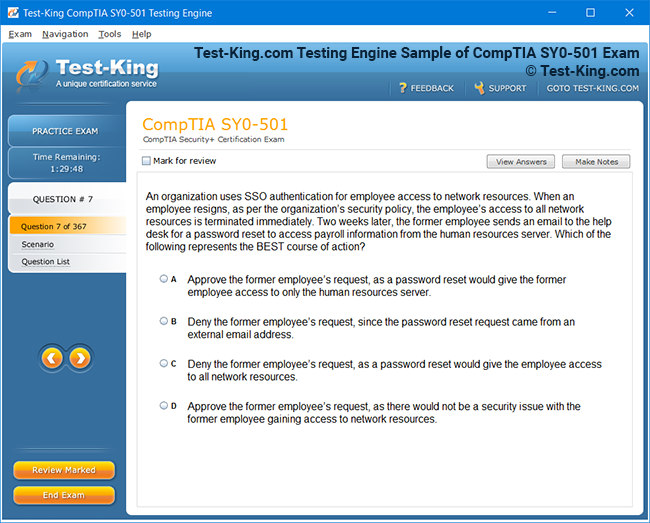
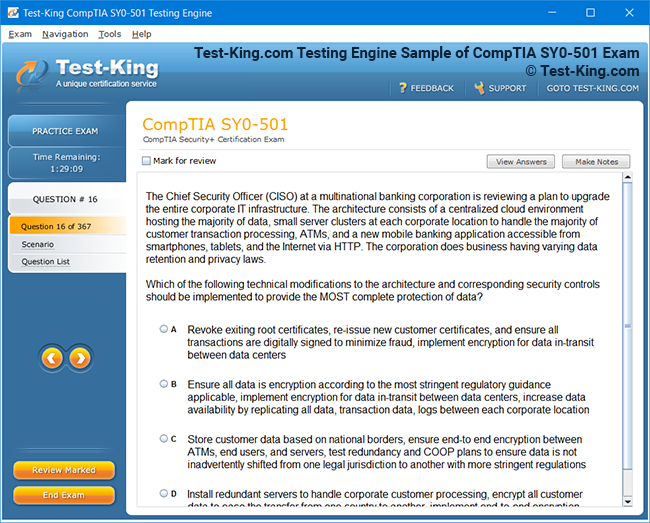
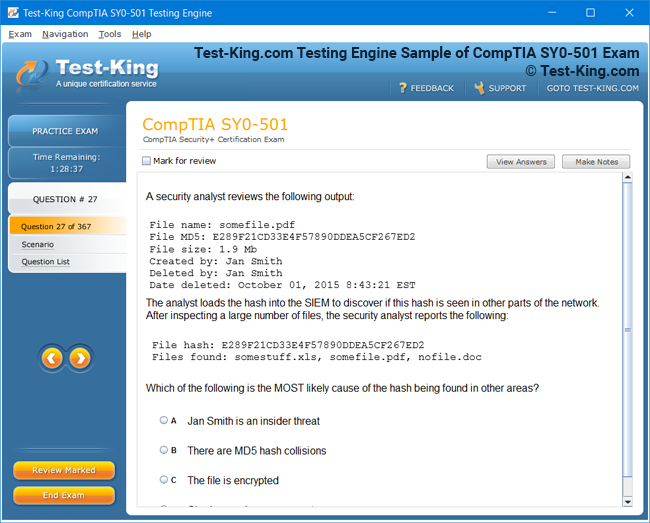
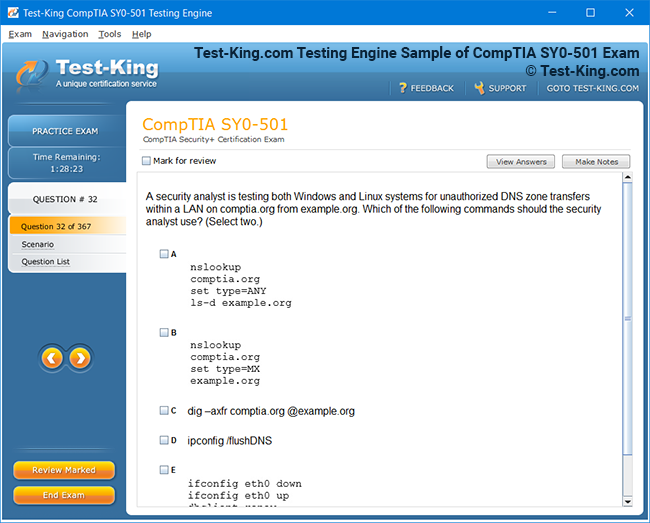
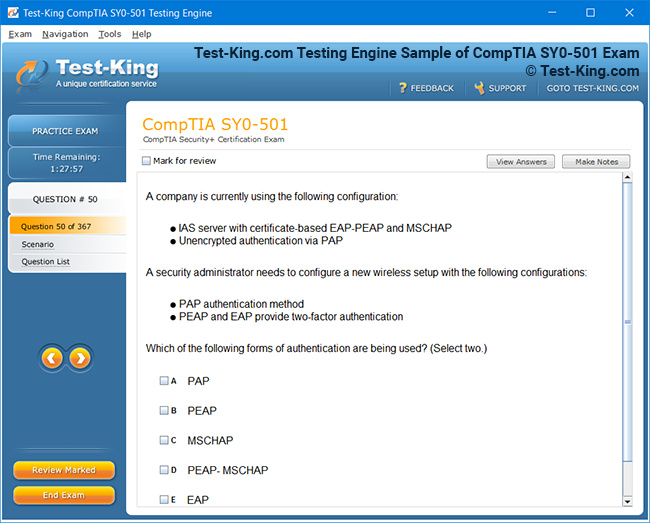
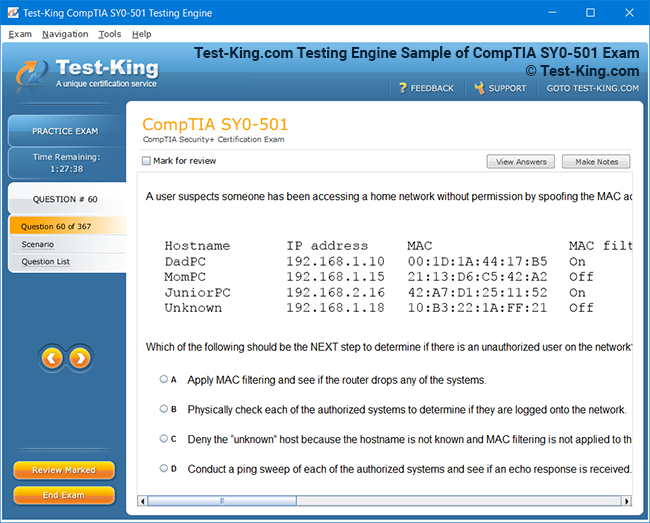
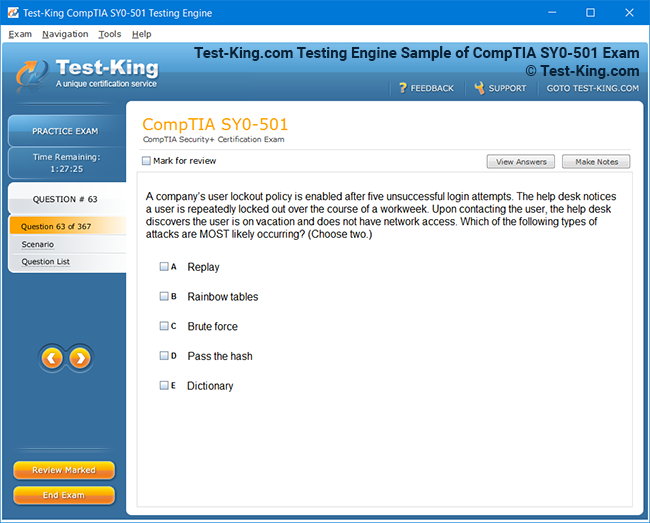
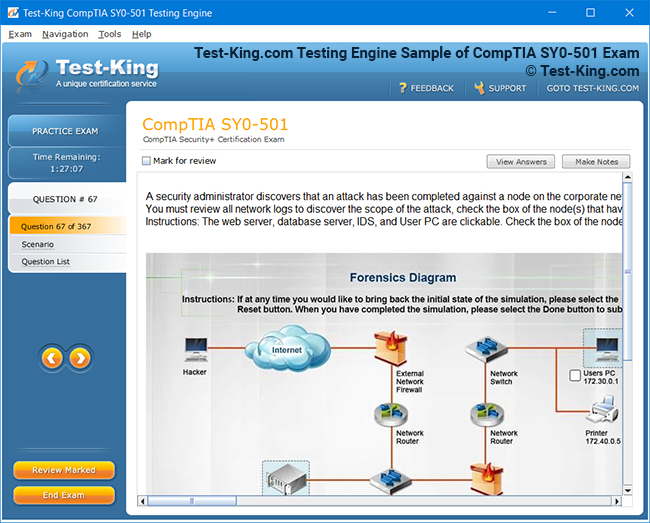
Product Screenshots
Frequently Asked Questions
How can I get the products after purchase?
All products are available for download immediately from your Member's Area. Once you have made the payment, you will be transferred to Member's Area where you can login and download the products you have purchased to your computer.
How long can I use my product? Will it be valid forever?
Test-King products have a validity of 90 days from the date of purchase. This means that any updates to the products, including but not limited to new questions, or updates and changes by our editing team, will be automatically downloaded on to computer to make sure that you get latest exam prep materials during those 90 days.
Can I renew my product if when it's expired?
Yes, when the 90 days of your product validity are over, you have the option of renewing your expired products with a 30% discount. This can be done in your Member's Area.
Please note that you will not be able to use the product after it has expired if you don't renew it.
How often are the questions updated?
We always try to provide the latest pool of questions, Updates in the questions depend on the changes in actual pool of questions by different vendors. As soon as we know about the change in the exam question pool we try our best to update the products as fast as possible.
How many computers I can download Test-King software on?
You can download the Test-King products on the maximum number of 2 (two) computers or devices. If you need to use the software on more than two machines, you can purchase this option separately. Please email support@test-king.com if you need to use more than 5 (five) computers.
What is a PDF Version?
PDF Version is a pdf document of Questions & Answers product. The document file has standart .pdf format, which can be easily read by any pdf reader application like Adobe Acrobat Reader, Foxit Reader, OpenOffice, Google Docs and many others.
Can I purchase PDF Version without the Testing Engine?
PDF Version cannot be purchased separately. It is only available as an add-on to main Question & Answer Testing Engine product.
What operating systems are supported by your Testing Engine software?
Our testing engine is supported by Windows. Andriod and IOS software is currently under development.
Top ISTQB Exams
- CTFL v4.0 - Certified Tester Foundation Level (CTFL) v4.0
- CT-AI - ISTQB Certified Tester - AI Testing
- CT-GenAI - Certified Tester Testing with Generative AI
- CTAL-TAE - Certified Tester Advanced Level Test Automation Engineering
- CTAL-TM - ISTQB - Certified Tester Advanced Level, Test Manager v3.0
- CTAL-TTA - Certified Tester Advanced Level Technical Test Analyst
- ATM - Advanced Test Manager
- CTAL-TAv4.0 - Certified Tester Advanced Level - Test Analyst v4.0
ISTQB - Agile Public Exam: Common Challenges Faced by Agile Testers and How to Overcome Them
Agile testing invites a dynamic and evolutionary approach to ensuring software quality, where change is not a disruptor but an anticipated part of progress. The agile tester functions within an environment that emphasizes collaborative improvement, adaptive planning, and continuous delivery of value. While this environment promotes flexibility and clarity, it also introduces intricate challenges that require both intellectual resilience and systematic skill. The journey of addressing these challenges is not simply technical; it requires cognitive agility, emotional balance, interpersonal understanding, and the ability to perceive quality as a shared responsibility embedded within the iterative development process.
A primary challenge arises from the fast-paced nature of agile development cycles. Agile iterations are short, focused bursts of work that produce tangible increments of a product. These increments must be tested thoroughly, yet testing cannot lag behind development or impede delivery. The agile tester must work in synchrony with developers, product owners, and other collaborators without waiting until the end to validate functionality. This means test planning and test execution must occur concurrently with development rather than being delayed to a final verification step. The tester must rapidly assimilate evolving requirements, user stories, and acceptance criteria. Because these elements can shift quickly based on stakeholder needs, the tester must cultivate clarity amidst motion and respond without hesitation.
Navigating Practical Realities in Agile Testing Environments
Another considerable challenge lies in communication across the scrum team. Agile testing depends on transparency, real-time sharing of insights, and collective accountability for outcomes. However, miscommunication can easily emerge when explanations are rushed or assumptions are unspoken. For example, a product owner may describe a feature with tacit expectations that are not explicitly conveyed in user stories. A tester might interpret requirements based on previous patterns, only to find that the intent has subtly changed. Addressing this challenge requires courage to ask questions early, even if the questions seem rudimentary. Clarification at the outset not only prevents defects but enriches shared understanding. The tester must learn to communicate with precision, sensitivity, and patience, especially in moments of ambiguity.
User stories and acceptance criteria serve as the guiding compass for agile testing. Yet these artifacts are often incomplete, vague, or interpreted differently by individuals. A tester must develop a perceptive ability to identify missing elements, undefined behaviors, and consequences that have not yet been articulated. When acceptance criteria are unclear, the tester does not merely test what is written but collaborates to refine what is meant. Through backlog refinement discussions, interactive planning conversations, and thoughtful questioning, the tester adapts requirements into executable and verifiable conditions. This skill demands a balance between assertiveness and cooperation, ensuring that refinement is a shared act rather than a corrective burden.
Exploratory testing is another vital element of agile testing practice. While scripted test cases have value in repeatability and regression scenarios, exploratory testing allows the tester to detect emergent issues that structured processes may overlook. Performing exploratory testing effectively involves immersing oneself in the evolving product, perceiving how components interact, and uncovering patterns of behavior that might indicate hidden anomalies. This requires intuition, curiosity, and a creative mindset. However, the challenge arises when time is constrained, or when stakeholders undervalue exploratory approaches compared to automation. The agile tester must articulate the strategic importance of exploratory inquiry, demonstrating how it uncovers risks that automated checks may miss.
The increasing emphasis on continuous integration and continuous delivery means that test automation has become indispensable in agile environments. Automated testing supports rapid regression verification and enables consistent quality across evolving builds. Yet implementing automation introduces its own complexities. The tester must decide which tests to automate, determine appropriate testing frameworks, consider system maintainability, and align automated checks with continuous integration pipelines. A common challenge appears when automation becomes overextended, poorly maintained, or developed without thoughtful prioritization. To overcome this, the tester must recognize automation as an investment in sustainability rather than a quick efficiency tool. Automation should be a deliberate effort directed at stable, repeatable, and high-value test cases. The tester collaborates with developers to script automation in a maintainable manner, ensuring that test suites evolve harmoniously with the codebase.
Another significant challenge relates to prioritization within limited time frames. In an agile environment, new functionality arrives frequently, and not every scenario can be tested exhaustively in each iteration. The agile tester must evaluate risk logically, identify the most critical functionalities that support user and business value, and focus on validating aspects where failure would have the most severe consequences. This prioritization requires a refined judgment that considers system architecture, user expectations, and potential defect impact. By approaching testing through risk-based thinking, the tester ensures that testing effort aligns with value rather than attempting to test everything at once.
Sometimes, agile testers encounter difficulty adapting when organizational culture has not fully embraced agile principles. For example, some teams may still operate with hierarchical communication, limited openness to feedback, or resistance to evolving workflows. In such contexts, the tester may feel trapped between agile expectations and traditional practices. Overcoming this requires gentle advocacy, exemplifying collaborative values, and steadily demonstrating the advantages of agility. Instead of forcing transformation, the tester supports gradual evolution through consistent demonstration of effectiveness. Trust grows when others observe that transparency, shared ownership, and adaptive thinking lead to better outcomes.
Collaboration with developers is a foundational requirement. However, testers may sometimes feel undervalued or misunderstood when developers view testing as a corrective checkpoint rather than a creative partner activity. The agile tester must actively engage in pairing sessions, code reviews related to testing, and shared debugging practices. When testers and developers collaborate rather than pass tasks back and forth, the product benefits from collective intellectual investment. The tester contributes a perspective centered on user experience, resilience, and consistency. Meanwhile, the developer offers architectural clarity and programming insight. Together, they create solutions that are both functional and robust.
Time pressure remains a constant companion in agile testing. Sprint deadlines, release schedules, and stakeholder expectations can generate stress. The tester must manage workload by maintaining accurate visibility of progress, risks, and challenges. Communicating status clearly and early is essential. If blockers arise, the tester does not wait passively but escalates or collaborates to resolve them. Managing emotional equilibrium is key; agility demands not only technical readiness but psychological endurance. A disciplined approach to work distribution, self-care, and professional dialogue ensures performance is sustainable.
One of the more subtle yet profound challenges arises when stakeholders frequently modify requirements. Agile embraces change, but unstructured change can become chaotic. The tester must help ensure that modifications remain purposeful, tracked, and verified. This involves participating actively in backlog discussions, tracking deviation from initial expectations, and safeguarding the integrity of completed functionality. When change is introduced responsibly, product evolution becomes fluid rather than turbulent.
Documentation within agile environments is often minimized, which can sometimes lead to confusion. Although heavy documentation contradicts agile values, the tester still needs to maintain reference materials to ensure clarity. Instead of producing long procedural documents, the tester maintains concise artifacts such as session notes, decision logs, and lightweight test charters. This ensures that knowledge remains accessible without imposing bureaucratic overhead.
Testing in agile environments also requires a refined understanding of product context. The tester must empathize with user personas, consider usability implications, and evaluate workflows for intuitive interaction. Quality transcends defect absence; it involves creating an experience that aligns with user expectations and supports effortless usage. By integrating empathy into testing practice, the tester supports the creation of software that resonates with human behavior instead of merely satisfying functional requirements.
Another challenge appears when integrating new tools or methodologies into existing workflows. The tester must adapt quickly, sometimes learning new test frameworks, automation platforms, or reporting dashboards. The capacity to learn rapidly under pressure becomes a distinguishing attribute of an effective agile tester. A mindset of continuous learning, open experimentation, and reflective thinking supports this adaptability.
Interpersonal dynamics within agile teams can also affect testing performance. Conflict may arise over priorities, estimates, or interpretations. The tester must approach such moments with respectful assertiveness, acknowledging diverse viewpoints while advocating for quality. Diplomacy becomes an essential skill, allowing the tester to navigate disputes without damaging collaborative relationships. Emotional intelligence enhances the capacity to engage thoughtfully and maintain cohesion even under stress.
Agile testers must also confront uncertainty. Requirements may not be finalized, the future direction of the product may evolve, and new complexities may emerge unexpectedly. The tester must remain comfortable in uncertainty, viewing it not as disorder but as natural creative flux. The capacity to adapt calmly allows the tester to stay productive even when clarity is incomplete.
Given the multidisciplinary nature of agile work, the tester sometimes operates at the intersection of business analysis, development, and quality assurance. This multifaceted environment requires proficiency in understanding workflows, system architecture, risk modeling, and human behavior. The tester achieves greater impact when embracing this multidimensional identity rather than confining themselves to narrow activities.
The continual journey of addressing these challenges enriches the tester’s contribution to the overall development ecosystem. The role evolves into a strategic, creative, and deeply collaborative discipline that reinforces product integrity and user satisfaction over time. By embracing communication, exploration, automation strategy, risk awareness, and emotional adaptability, the agile tester becomes an integral contributor to the shared endeavor of delivering meaningful and resilient software.
Deepening the Practical Understanding of Agile Quality Workflows
Agile testing continues to evolve as teams embrace collaborative development and continuous adaptation. The agile tester plays a distinct role in fostering shared responsibility for product quality. Yet the challenges encountered are not merely technical; they arise from communication patterns, shifting requirements, time constraints, evolving tool landscapes, and the complexities of human interaction. To navigate these realities, the agile tester must develop perceptive judgment, emotional nuance, coordination abilities, and clarity of purpose. Agile testing demands that quality is understood not as a final gate but as a continuous thread interlaced throughout the development cycle. The tester is therefore both a guardian of the user experience and a facilitator of team synergy.
One of the central challenges involves understanding requirements as they change or emerge gradually. In traditional development, requirements are documented extensively at the beginning, and the tester can rely on complete specifications. In agile environments, however, the product evolves incrementally, and requirements become more defined through dialogue and iteration. The agile tester must learn to operate effectively within evolving clarity. This means engaging actively in planning discussions, backlog refinement, and collaborative exchanges where user stories and acceptance criteria are shaped. The tester does not wait for documentation but contributes to it by asking targeted questions and illuminating ambiguities. By participating early, the tester helps prevent costly misinterpretations that would otherwise appear later as defects.
Communication forms the backbone of agile collaboration. Without ongoing conversation, misunderstandings proliferate and errors multiply. The agile tester must master communication that is succinct yet thorough, confident yet respectful. A frequent challenge emerges when testers hesitate to challenge unclear requirements or ask for elaboration, perhaps out of concern that such questions may be perceived as disruptive. Yet silence can lead to gaps in shared understanding. The tester must adopt a mindset where seeking clarity is understood as enhancing team efficiency rather than obstructing momentum. Communicating openly about concerns regarding quality, risk factors, and user expectations cultivates transparency. The tester helps nurture a team culture where questions are not only welcomed but recognized as necessary to progress.
Another challenge revolves around balancing speed with depth. Agile development cycles progress rapidly, and there is pressure to complete testing within short time frames. This can tempt testers to focus only on direct acceptance criteria and overlook broader system interactions, edge cases, or hidden dependencies. However, true quality depends on evaluating how individual components function within the larger architecture. The tester must learn to identify which scenarios require deeper exploration because they affect core functionality, user experience, or critical data integrity. Risk-based thinking becomes essential. Instead of testing everything equally, the tester prioritizes areas where failures could have meaningful impact. This approach enables effective testing even when time is limited.
Test automation stands as both a powerful resource and a complex undertaking. Automated tests support fast and repeatable validation, enabling continuous integration and continuous delivery pipelines to function effectively. Yet automation introduces challenges when tests are fragile, difficult to maintain, or poorly integrated into the development ecosystem. The agile tester must collaborate closely with developers to ensure automated tests reflect stable logic, accurate coverage, and sustainable design. Automation is not simply about writing scripts; it is about creating a structured testing ecosystem that evolves alongside the codebase. The tester learns to evaluate which scenarios are suitable for automation and which require human intuition through exploratory testing. The value of automation emerges when it releases human effort for deeper cognitive evaluation rather than attempting to replace it entirely.
Exploratory testing remains a vital tool in uncovering subtle defects and unexpected behaviors. While scripted tests validate defined functionality, exploratory testing reveals emergent insights that structured scripts may overlook. This testing style requires intellectual curiosity, playfulness, and perceptiveness. The agile tester observes how the system behaves in real usage conditions, watches for inconsistencies in workflow patterns, and senses opportunities for refinement. However, exploratory testing can be undervalued if stakeholders prioritize measurable test counts or automated execution metrics. The tester must articulate the strategic importance of exploratory testing by demonstrating how it uncovers potential risks earlier and contributes to a more holistic understanding of the product. This requires confidence in professional judgment and the ability to express insights clearly.
Collaboration with developers introduces both opportunities and challenges. In agile environments, testing is not a separate phase performed after development is complete; instead, testing and development progress in parallel. This demands close coordination between testers and developers, particularly during feature creation and code refinement. The tester contributes perspectives related to usability, reliability, and consistency, while the developer contributes technical insight regarding architecture and implementation. Differences in perspective can lead to productive synergy, but they can also generate tension if communication is incomplete. The tester must cultivate rapport, approach collaboration with mutual respect, and appreciate the developer’s expertise while sharing quality insights in a constructive manner. Strong collaboration ensures that defects are prevented early rather than detected late.
Another recurring challenge involves maintaining visibility of progress, risks, and quality status. Agile environments promote transparency, but transparency must be actively maintained. The tester contributes to visibility by reporting findings clearly, identifying trends in defects, and describing risks in a manner that supports decision-making. Rather than listing issues mechanically, the tester frames information in context: how likely is a defect to affect user behavior, where does the defect originate, and what impact will it have if unresolved? Presenting risks in narrative form supports prioritization and prevents misunderstandings. This communicative clarity fosters informed decisions rather than reactive responses.
Time pressure affects not only task execution but emotional well-being. Agile work can produce a sense of constant movement, where iterations flow into one another rapidly. The tester must manage workload realistically, avoid overextension, and communicate when testing time is insufficient to ensure responsible quality assessment. This requires the courage to articulate constraints honestly and collaborate with the team to adjust scope or expectations. Emotional composure, reflective thinking, and self-awareness become essential qualities. The agile tester learns to maintain balance, recognizing that sustainable performance depends on pacing and rest as much as intensity.
Testing in agile environments also requires business empathy. The tester must understand not only how a system functions but why it matters. This means identifying the needs of end users, recognizing what constitutes value in their experiences, and evaluating software not merely based on its correctness but on its relevance. A feature that is technically functional but difficult to navigate undermines user satisfaction. The tester must perceive user expectations and advocate for intuitive design. Quality expands beyond defect prevention to encompass usability, coherence, and clarity in interaction. The tester’s role becomes partly interpretive, translating user perspective into quality actions.
Cultural alignment influences the tester’s experience significantly. Agile principles encourage shared ownership, iterative improvement, and openness to change. However, not all organizations adopt these principles with equal depth. Some environments may retain hierarchical decision-making or siloed responsibilities that hinder collaborative testing. The tester may encounter resistance when attempting to engage in early requirement discussions or when advocating for continuous improvement. Addressing this requires patience, diplomacy, and demonstration of value. Cultural transformation occurs gradually as teams observe how collaborative practices improve outcomes. The tester contributes to cultural evolution through consistency and thoughtful communication rather than forceful persuasion.
The agile tester must also navigate the integration of new tools and technologies. Tool adoption can accelerate testing and streamline workflow, but it also introduces learning curves and transitional friction. The tester must adapt rapidly, developing proficiency in tools that support automation, reporting, environment management, and collaboration. The ability to learn efficiently becomes a distinguishing trait. Learning does not occur in isolation; the tester engages with peers, seeks shared insights, and embraces experimentation. Confidence in learning fosters confidence in execution.
Uncertainty remains a continuous presence. Agile testing involves working with stories that may evolve or shift direction based on stakeholder feedback. The tester must embrace uncertainty not as confusion but as creative possibility. This requires adaptability and the willingness to approach work with an open stance. The agile tester learns to interpret evolving requirements as part of the organic process of shaping a meaningful product. The capacity to remain centered amid change strengthens resilience and enhances effectiveness.
Interpersonal interactions shape the environment in which testing occurs. The tester works within a network of roles that include product owners, business stakeholders, designers, analysts, developers, and other testers. Each role carries distinctive needs and perspectives. The tester must engage with these perspectives thoughtfully, ensuring alignment without imposing rigid standards. Empathy, active listening, and perspective-taking enrich communication and create harmony within the development ecosystem. Through this relational approach, the tester reinforces trust and demonstrates commitment to shared success.
One of the deeper challenges lies in balancing precision with adaptability. The tester must be discerning and detail-oriented yet capable of shifting direction as new insights emerge. This balance requires steady mental presence and the capacity to let go of rigid assumptions. Agile testing is a fluid practice that involves responsive thinking. The tester cultivates awareness of when to analyze deeply and when to act swiftly based on available information.
The tester also contributes to knowledge continuity. Agile environments sometimes de-emphasize extensive documentation, which may risk knowledge loss when team members change. The tester maintains succinct, purposeful records that capture key insights, decisions, and patterns without burdening the workflow. This balance preserves clarity while supporting agility.
Quality assurance becomes not an isolated responsibility but a shared commitment across the team. The tester models this shared commitment by engaging in continuous improvement, reflective conversations, and collaborative refinement. Through practice, clarity, and patient reinforcement, the agile tester strengthens the team’s capacity to deliver software that is stable, intuitive, and resonant with user needs.
The agile tester’s work, therefore, is multifaceted. It requires intellectual rigor, interpersonal awareness, strategic thinking, resilience under time pressure, and an enduring curiosity about both systems and people. The challenges are indeed complex, but they are also opportunities for growth, innovation, and the cultivation of professional mastery.
Navigating the Complexities of Agile Testing
Agile testing has become an indispensable practice in modern software development, yet it presents a labyrinth of challenges that can perplex even seasoned testers. One of the most pervasive difficulties lies in adapting to the rapid pace of iterative development. Agile testers are often required to provide continuous feedback while features evolve at breakneck speed. This necessitates a profound understanding of both the domain and the technical intricacies, demanding not only technical proficiency but also a keen sense of prioritization and situational awareness. Without meticulous attention to detail, testers may find themselves reacting to issues rather than proactively preventing them, leading to potential bottlenecks and overlooked defects.
A common conundrum arises from ambiguous or incomplete user stories. In Agile frameworks, requirements are typically captured in user stories that describe the desired functionality from an end-user perspective. However, these narratives can sometimes lack the granularity needed for comprehensive testing. Testers must often interpret these stories, discerning potential edge cases and extrapolating scenarios that may not be explicitly documented. This interpretative task requires a blend of analytical acumen and creative foresight, ensuring that even subtle defects do not escape detection. To mitigate this challenge, testers frequently collaborate with product owners and developers, engaging in conversations that clarify intentions and uncover hidden assumptions.
Another formidable challenge is managing the delicate balance between speed and quality. Agile environments prize rapid delivery, yet testers must resist the temptation to shortcut critical validation processes. Integrating automated testing can be a potent antidote to this dilemma, allowing repetitive tests to be executed efficiently without compromising thoroughness. However, selecting the appropriate tools and designing resilient test scripts demands expertise and foresight. Automation is not a panacea; it requires constant refinement and alignment with evolving requirements. Testers must vigilantly monitor test coverage and ensure that automated suites remain relevant and effective, adapting to the shifting contours of the project landscape.
Communication hurdles further complicate the Agile tester's role. The dynamic interplay between cross-functional teams necessitates constant dialogue and synchronization. Misunderstandings can arise from differences in technical language, assumptions about system behavior, or varying interpretations of acceptance criteria. Effective testers cultivate strong interpersonal skills, fostering open channels of communication and actively participating in daily stand-ups, sprint planning, and retrospectives. By maintaining transparency and advocating for the quality perspective, testers help align the team toward shared objectives, minimizing the risk of misaligned priorities and overlooked defects.
Testers also contend with the challenge of limited documentation in Agile practices. Traditional testing methodologies often rely on extensive documentation to guide test design and execution, whereas Agile emphasizes working software over comprehensive documentation. This shift demands a more investigative approach, where testers must rely on exploratory testing techniques, domain expertise, and intuitive reasoning. Exploratory testing allows testers to uncover defects that may not be apparent through scripted tests, providing a more holistic assessment of the software's behavior. The ability to think critically, adapt swiftly, and anticipate potential issues becomes paramount in such contexts.
Additionally, integrating testing seamlessly into continuous integration and continuous deployment pipelines introduces technical complexities. Agile testers are expected to collaborate closely with developers to ensure that automated tests are executed as part of the build process, providing rapid feedback on code changes. This requires proficiency in scripting, familiarity with version control systems, and an understanding of build and deployment mechanisms. Testers must also grapple with flakiness in automated tests, which can erode confidence in the testing process if not meticulously managed. Maintaining robust and reliable test environments is crucial to avoid false positives and negatives that could mislead the development team.
A recurring challenge lies in testing non-functional requirements, such as performance, security, and usability, within the constraints of short iterations. These attributes are often complex to validate and may not be addressed adequately in brief sprints. Agile testers must innovate strategies to assess these dimensions efficiently, employing performance profiling tools, security scanning utilities, and heuristic evaluation methods. This requires not only technical skill but also the ability to contextualize results within the broader scope of the application's objectives. By integrating non-functional testing into the iterative cycle, testers help ensure that quality is not sacrificed for speed, maintaining a holistic view of software excellence.
The transient nature of Agile teams can exacerbate these challenges. Team members may change, priorities may shift, and project scope can expand or contract unexpectedly. Agile testers must cultivate resilience and adaptability, quickly assimilating new information and recalibrating their testing strategies. Knowledge sharing becomes vital, as insights gleaned from previous iterations can inform future testing efforts. Maintaining a living repository of test cases, lessons learned, and best practices allows the team to build upon collective experience, reducing the likelihood of repeated errors and enhancing overall efficiency.
Finally, the challenge of measuring and demonstrating quality in Agile contexts is nuanced and multifaceted. Traditional metrics such as defect counts or test coverage percentages may not fully capture the effectiveness of testing activities. Agile testers must explore alternative indicators, such as cycle time, customer satisfaction, and defect escape rates, to convey the impact of their work meaningfully. By presenting a comprehensive view of quality that encompasses both quantitative and qualitative aspects, testers can influence decision-making, advocate for necessary improvements, and reinforce the value of rigorous testing practices within the Agile paradigm.
Navigating these myriad challenges requires a blend of technical proficiency, strategic thinking, and interpersonal acumen. Agile testers who embrace continuous learning, leverage automation judiciously, communicate proactively, and maintain an investigative mindset are better positioned to overcome obstacles and deliver software that meets both functional and non-functional expectations. The journey demands persistence, creativity, and a commitment to excellence, but the rewards are significant: robust software, satisfied stakeholders, and a testing practice that evolves in tandem with the dynamic rhythm of Agile development.
Mastering the Intricacies of Agile Testing
Agile testing is an essential cornerstone in contemporary software development, yet it presents a host of nuanced challenges that demand dexterity and insight from testers. One prominent difficulty arises from the rapid cadence of iterative cycles. Testers are expected to provide timely feedback while features continuously evolve, which necessitates a blend of technical acumen, domain understanding, and anticipatory thinking. Without deliberate focus, testers may find themselves responding reactively to defects rather than preventing them, leading to inefficiencies and missed opportunities for early intervention. This dynamic environment underscores the importance of adaptability, meticulous observation, and a proactive approach to identifying potential pitfalls before they manifest in production.
Ambiguities in user stories frequently complicate testing efforts. Agile frameworks rely on concise narratives to communicate functionality, but these stories often omit crucial edge cases or implicit assumptions. Testers must exercise discernment, extrapolating potential scenarios that are not explicitly described. This requires both analytical rigor and imaginative foresight, as defects can emerge from interactions that were never explicitly planned. Active collaboration with product owners, developers, and stakeholders becomes indispensable, as frequent dialogue helps clarify intentions, unearth hidden assumptions, and ensure that testing aligns with the true requirements of the software.
Maintaining equilibrium between speed and quality is another recurring challenge. Agile emphasizes rapid delivery, but testers must resist the pressure to truncate thorough validation processes. Automation emerges as a vital strategy to reconcile these competing demands. Automated testing allows repetitive validations to be executed efficiently, freeing testers to focus on exploratory and complex scenarios. Nonetheless, successful automation necessitates careful planning, selection of appropriate tools, and maintenance of resilient test suites that evolve in tandem with the software. Testers must continually assess coverage and adjust scripts to ensure they remain relevant and effective in the context of iterative changes.
Communication barriers frequently emerge as an obstacle in collaborative environments. Cross-functional teams often operate with diverse technical backgrounds and varied interpretations of requirements. Misalignments can arise due to differences in terminology, assumptions about system behavior, or incomplete understanding of acceptance criteria. Testers who cultivate clear communication skills, engage actively in stand-ups and planning sessions, and foster transparency help mitigate these risks. By consistently advocating for quality perspectives and ensuring that insights are effectively shared, testers enable the team to navigate complexities with greater cohesion and reduce the likelihood of overlooked defects or misaligned priorities.
Limited documentation in Agile practices further challenges the tester’s role. Unlike traditional methods that rely on exhaustive manuals and specifications, Agile prioritizes working software over comprehensive documentation. Testers must adopt investigative and exploratory approaches, leveraging domain knowledge, intuition, and pattern recognition to uncover hidden issues. Exploratory testing techniques allow testers to examine the software in ways that scripted tests may not capture, revealing subtle defects and assessing overall system behavior. This approach demands creativity, critical thinking, and the ability to synthesize incomplete information into actionable insights.
The integration of testing into continuous integration and deployment workflows introduces additional complexities. Agile testers are expected to align closely with developers to ensure that automated tests run consistently as part of the build process. Proficiency in scripting, familiarity with version control, and understanding build pipelines are often prerequisites. Testers must address challenges such as flaky tests, environmental inconsistencies, and dependency issues that can compromise the reliability of feedback. A robust testing environment and vigilant monitoring are essential to maintain trust in automated results and to prevent false positives or negatives from undermining the development cycle.
Testing non-functional requirements, such as performance, security, and usability, presents another layer of difficulty. These aspects often require sophisticated evaluation techniques that are challenging to incorporate within short iterations. Agile testers must identify innovative strategies, utilizing profiling tools, security scanning utilities, and heuristic assessments to evaluate software robustness efficiently. Achieving this requires both technical expertise and contextual awareness to interpret results meaningfully and ensure that the software meets the holistic expectations of stakeholders. Integrating non-functional validation within the iterative cycle safeguards overall quality and reinforces the reliability of the system.
The transient and fluid nature of Agile teams further complicates testing efforts. Team composition, priorities, and project scope can change rapidly, demanding resilience and adaptability from testers. Rapid assimilation of new information, recalibration of strategies, and proactive knowledge sharing are critical to sustaining testing efficacy. Maintaining a repository of past test cases, lessons learned, and best practices helps the team build upon collective experience and reduces repeated errors. This living documentation becomes a vital resource for navigating uncertainties and preserving continuity in quality assurance despite evolving circumstances.
Another critical challenge lies in quantifying and demonstrating software quality in Agile contexts. Traditional metrics, such as defect counts, may not fully capture the scope of testing effectiveness. Testers must explore multidimensional indicators that reflect both the depth and breadth of validation activities. Metrics like cycle time, customer satisfaction, and defect escape rates provide a more comprehensive assessment of testing impact. Articulating these insights allows testers to influence decision-making, guide risk mitigation strategies, and emphasize the importance of quality advocacy within Agile frameworks.
Testers must also contend with evolving technical stacks and integration complexities. Modern applications often leverage microservices, cloud environments, and complex APIs, requiring testers to navigate diverse architectures and interdependencies. Evaluating such systems demands a sophisticated understanding of potential integration pitfalls, data consistency issues, and environmental constraints. Testers employ a combination of automated integration tests, simulation techniques, and exploratory validation to uncover subtle defects that could compromise system stability. Mastery of these approaches enhances the tester’s ability to deliver reliable, high-quality software despite the increasing intricacy of modern development landscapes.
Balancing exploratory and scripted testing approaches is an ongoing consideration. While scripted tests provide repeatable validation, exploratory testing uncovers unforeseen defects and evaluates user experience aspects. Agile testers must dynamically allocate time and resources between these approaches based on risk assessment, iteration velocity, and feature complexity. This adaptive testing strategy demands both analytical judgment and a keen awareness of the software’s evolving state, ensuring comprehensive coverage while maintaining efficiency.
Testers also encounter challenges related to regression testing within fast-moving Agile iterations. As features are frequently added, modified, or deprecated, regression tests must be continually updated and optimized. Maintaining an accurate and relevant regression suite requires foresight, rigorous review, and close collaboration with developers to identify areas of potential impact. Failure to do so can result in missed defects or redundant effort, undermining the integrity of the release process. By strategically prioritizing regression testing, testers safeguard against inadvertent disruptions while supporting the Agile imperative of rapid delivery.
Furthermore, stakeholder expectations and shifting priorities can introduce additional pressure. Agile testers must navigate competing demands, balance workload, and advocate for necessary testing time without impeding the overall velocity of the team. Effective testers cultivate negotiation and persuasion skills, articulating the rationale behind testing strategies and demonstrating how quality assurance contributes to project success. This alignment between technical evaluation and business objectives fosters mutual understanding and strengthens the role of testing as an integral component of software development rather than a peripheral activity.
Finally, fostering a culture of continuous improvement within Agile testing practices is paramount. Agile testers embrace retrospection, identify gaps in process or coverage, and implement iterative enhancements to testing strategies. Leveraging metrics, feedback loops, and collaborative insights, testers evolve their approaches to meet emerging challenges effectively. This commitment to perpetual refinement ensures that testing remains robust, relevant, and capable of supporting the accelerated demands of Agile development while maintaining the highest standards of software quality.
By mastering these multifaceted challenges, Agile testers not only uphold the integrity of software but also become catalysts for efficiency, innovation, and resilience within development teams. Their ability to anticipate issues, communicate effectively, and apply a combination of analytical and exploratory techniques enables them to navigate the intricate landscape of Agile projects and deliver outcomes that consistently align with stakeholder expectations.
Advancing Expertise in Agile Testing
Agile testing presents a compelling blend of challenges and opportunities, requiring testers to navigate a constantly evolving landscape with dexterity, foresight, and technical precision. One prominent obstacle is the accelerated tempo of iterative development. Agile methodologies demand that features are continuously developed, reviewed, and refined, creating a pressing need for testers to provide timely and accurate feedback. This velocity necessitates not only technical acumen but also strategic prioritization and anticipatory thinking. Testers must identify potential risks and hidden pitfalls before they manifest in production, balancing responsiveness with proactive problem-solving. Without careful attention, teams may find themselves mired in reactive cycles, addressing defects after they have already affected functionality or user experience.
A recurring challenge stems from the inherent ambiguity of user stories. In Agile, requirements are often communicated through succinct narratives that describe desired outcomes from an end-user perspective. These stories, while valuable for flexibility, frequently omit edge cases or nuanced expectations. Testers must exercise interpretive insight, extrapolating potential scenarios and uncovering latent defects that may not be explicitly outlined. Collaboration with product owners and developers is critical; open dialogues, clarifying questions, and iterative reviews help ensure that testing efforts align with the intended behavior of the software. This synergy enhances both the depth and relevance of testing, reducing the likelihood of defects escaping detection.
The tension between speed and quality remains a central concern. Agile teams prioritize rapid delivery, yet thorough testing cannot be compromised without risking software reliability. Automation offers a robust solution to this dilemma, allowing repetitive tests to run efficiently while freeing testers to focus on exploratory, complex, and high-risk scenarios. Effective automation requires careful tool selection, well-designed test scripts, and ongoing maintenance to ensure relevance as the software evolves. Testers must monitor the performance and coverage of automated suites, refining approaches to address new functionality and emergent risks. This continuous adaptation ensures that quality assurance keeps pace with development without impeding velocity.
Communication complexities further shape the tester’s experience. Agile teams comprise diverse roles with varying technical expertise, perspectives, and interpretations of requirements. Misunderstandings may arise from divergent assumptions, ambiguous language, or incomplete alignment on acceptance criteria. Skilled testers cultivate transparent communication, actively participating in stand-ups, planning sessions, and retrospectives. By articulating insights clearly and advocating for quality, testers foster team cohesion and alignment, minimizing risks associated with miscommunication and ensuring that potential defects are promptly addressed.
Limited documentation presents an additional challenge for testers accustomed to traditional methodologies. Agile emphasizes working software over exhaustive manuals, compelling testers to rely on exploratory techniques, domain knowledge, and deductive reasoning to assess software integrity. Exploratory testing is particularly valuable, as it enables testers to uncover subtle, unanticipated issues that scripted tests might overlook. This approach requires creativity, critical thinking, and a capacity to synthesize incomplete information into actionable insights. By embracing investigative testing practices, testers can evaluate software comprehensively despite the absence of detailed documentation.
The integration of testing within continuous integration and continuous deployment workflows introduces further intricacies. Testers must collaborate closely with developers to ensure that automated tests execute reliably as part of the build process, providing rapid feedback on code changes. This integration necessitates familiarity with version control, build pipelines, and scripting languages, as well as vigilance in addressing flaky tests, dependency conflicts, and environmental inconsistencies. Maintaining a robust testing environment is essential to preserve confidence in automated results and prevent misleading outcomes that could compromise the integrity of development cycles.
Non-functional testing, encompassing performance, security, and usability, represents yet another layer of complexity. These attributes are often challenging to validate within the constraints of brief iterations but remain critical for delivering high-quality software. Agile testers must adopt innovative strategies, leveraging performance profiling tools, security scanners, and heuristic evaluation techniques to assess these dimensions efficiently. Interpreting results in context, prioritizing risks, and integrating non-functional assessments into iterative workflows ensures that the software meets holistic quality standards, balancing functionality with resilience, safety, and user experience.
Team dynamics and organizational fluidity further influence testing practices. Agile teams are often subject to shifting priorities, evolving scope, and personnel changes. Testers must demonstrate adaptability, rapidly assimilating new information and recalibrating testing strategies as conditions change. Knowledge sharing, documentation of lessons learned, and maintenance of reusable test assets become crucial for sustaining continuity and efficiency. A living repository of test scenarios, insights, and best practices empowers teams to leverage prior experience, mitigating repeated errors and accelerating response to new challenges.
Measuring and demonstrating quality in Agile contexts requires a nuanced approach. Conventional metrics, such as defect counts, may not fully capture the effectiveness of testing activities. Testers must consider multidimensional indicators, including cycle time, customer satisfaction, defect escape rates, and risk coverage, to provide a comprehensive assessment of quality. Communicating these insights effectively enables testers to influence decision-making, guide prioritization, and advocate for improvements, reinforcing the strategic importance of testing within the Agile framework.
Complex technical environments, including microservices architectures, cloud deployments, and interconnected APIs, demand sophisticated testing strategies. Testers must navigate integration dependencies, data consistency challenges, and environmental variability to ensure reliable outcomes. Employing a combination of automated integration tests, exploratory validation, and simulation techniques allows testers to uncover subtle defects that may jeopardize system stability. This technical proficiency, combined with analytical reasoning, enhances the tester’s capacity to deliver robust, resilient software amidst increasing architectural complexity.
Balancing exploratory and scripted testing remains a critical consideration. While scripted tests provide repeatable validation, exploratory testing reveals defects that are unanticipated or user-centric in nature. Agile testers must dynamically allocate effort between these approaches, evaluating risk, iteration priorities, and feature complexity. This balance demands both judgment and flexibility, ensuring comprehensive test coverage while preserving iteration velocity.
Regression testing within Agile iterations also requires careful orchestration. Frequent updates to features, functionalities, and integrations necessitate continual revision and optimization of regression suites. Testers must strategically prioritize tests based on impact and risk, preventing redundant effort and maintaining test relevance. This disciplined approach mitigates the risk of introducing defects during iterative development and upholds the integrity of software releases.
Stakeholder expectations, often evolving and sometimes competing, add another layer of challenge. Agile testers must negotiate workload, advocate for adequate testing time, and demonstrate the value of quality assurance without hindering delivery momentum. Strong interpersonal skills, persuasive communication, and a clear articulation of risk mitigation strategies help testers align technical efforts with business objectives, reinforcing the centrality of testing in achieving project success.
Fostering a culture of continuous improvement is integral to Agile testing. Testers must embrace retrospection, identify process gaps, and iteratively refine their practices. Leveraging metrics, feedback loops, and collaborative insights ensures that testing strategies evolve alongside project needs, maintaining relevance, efficiency, and rigor. This commitment to perpetual enhancement allows teams to adapt proactively to challenges, mitigate risks effectively, and deliver software that meets both functional and non-functional expectations.
By confronting these multifaceted challenges with expertise, adaptability, and strategic insight, Agile testers reinforce the resilience and robustness of development efforts. Their role extends beyond defect detection, encompassing advocacy for quality, collaboration across diverse teams, and the continuous refinement of testing practices. This holistic approach empowers Agile testers to deliver software that aligns with stakeholder expectations, withstands rigorous demands, and sustains excellence in dynamic, iterative development environments.
Conclusion
Agile testing demands a unique confluence of technical skill, strategic foresight, and interpersonal acumen. Testers must navigate rapid iterations, ambiguous requirements, communication complexities, and intricate technical landscapes, all while balancing speed and quality. By leveraging automation, exploratory testing, non-functional validation, and continuous improvement practices, testers can surmount these challenges effectively. Their ability to anticipate risks, maintain robust testing environments, and communicate insights persuasively ensures that Agile development not only delivers functional software but also upholds the highest standards of quality, reliability, and user satisfaction.