

Exam Code: NSE5_FAZ-6.4
Exam Name: Fortinet NSE 5 - FortiAnalyzer 6.4
Certification Provider: Fortinet
Corresponding Certification: NSE5
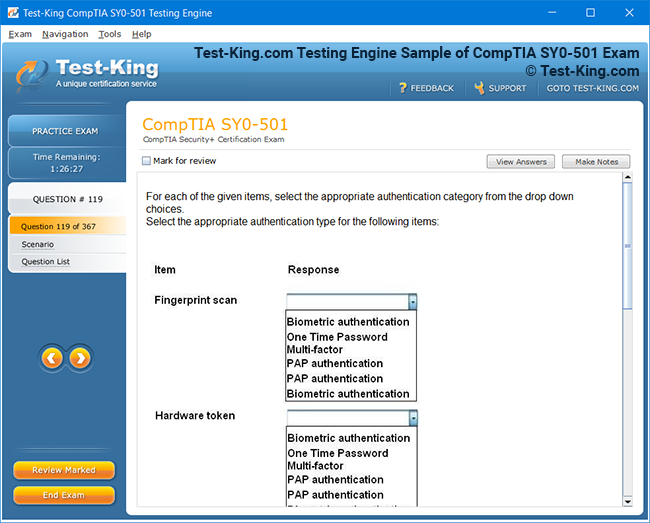
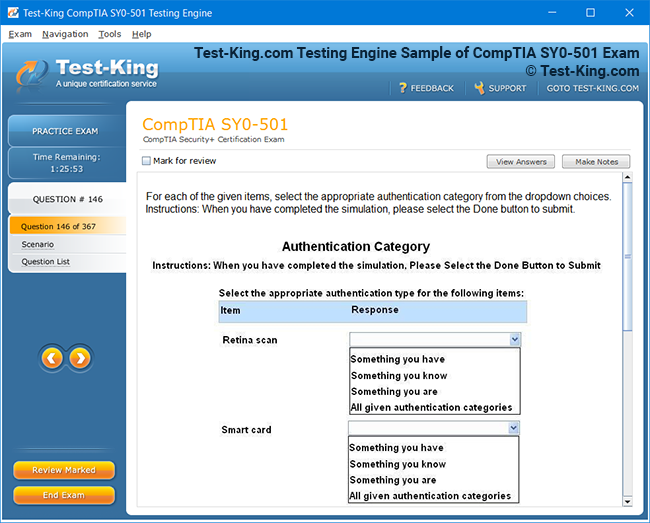
Product Screenshots
Frequently Asked Questions
How can I get the products after purchase?
All products are available for download immediately from your Member's Area. Once you have made the payment, you will be transferred to Member's Area where you can login and download the products you have purchased to your computer.
How long can I use my product? Will it be valid forever?
Test-King products have a validity of 90 days from the date of purchase. This means that any updates to the products, including but not limited to new questions, or updates and changes by our editing team, will be automatically downloaded on to computer to make sure that you get latest exam prep materials during those 90 days.
Can I renew my product if when it's expired?
Yes, when the 90 days of your product validity are over, you have the option of renewing your expired products with a 30% discount. This can be done in your Member's Area.
Please note that you will not be able to use the product after it has expired if you don't renew it.
How often are the questions updated?
We always try to provide the latest pool of questions, Updates in the questions depend on the changes in actual pool of questions by different vendors. As soon as we know about the change in the exam question pool we try our best to update the products as fast as possible.
How many computers I can download Test-King software on?
You can download the Test-King products on the maximum number of 2 (two) computers or devices. If you need to use the software on more than two machines, you can purchase this option separately. Please email support@test-king.com if you need to use more than 5 (five) computers.
What is a PDF Version?
PDF Version is a pdf document of Questions & Answers product. The document file has standart .pdf format, which can be easily read by any pdf reader application like Adobe Acrobat Reader, Foxit Reader, OpenOffice, Google Docs and many others.
Can I purchase PDF Version without the Testing Engine?
PDF Version cannot be purchased separately. It is only available as an add-on to main Question & Answer Testing Engine product.
What operating systems are supported by your Testing Engine software?
Our testing engine is supported by Windows. Andriod and IOS software is currently under development.
Top Fortinet Exams
- NSE4_FGT_AD-7.6 - Fortinet NSE 4 - FortiOS 7.6 Administrator
- NSE7_FSN_AR-7.6 - Fortinet NSE 7 - Secure Networking 7.6 Architect
- FCP_FGT_AD-7.6 - FCP - FortiGate 7.6 Administrator
- NSE5_FSW_AD-7.6 - Fortinet NSE 5 - FortiSwitch 7.6 Administrator
- FCP_FMG_AD-7.6 - Fortinet NSE 5 - FortiManager 7.6 Administrator
- FCP_FAZ_AN-7.6 - Fortinet NSE 5 - FortiAnalyzer 7.6 Analyst
- NSE5_SSE_AD-7.6 - Fortinet NSE 5 - FortiSASE and SD-WAN 7.6 Core Administrator
- NSE7_SSE_AR-26 - Fortinet NSE 7 - FortiSASE 26 Architect
- FCP_FCT_AD-7.4 - Fortinet NSE 6 - FortiClient EMS 7.4 Administrator
- FCSS_EFW_AD-7.6 - NSE 7 - Enterprise Firewall 7.6 Administrator
- NSE6_FSM_AN-7.4 - Fortinet NSE 6 - FortiSIEM 7.4 Analyst
- NSE7_SOC_AR-7.6 - Fortinet NSE 7 - Security Operations 7.6 Architect
- NSE6_OTS_AR-7.6 - Fortinet NSE 6 - OT Security 7.6 Architect
- NSE5_FWB_AD-8.0 - Fortinet NSE 5 - FortiWeb 8.0 Administrator
- FCSS_SDW_AR-7.6 - FCSS - SD-WAN 7.6 Architect
- NSE6_SDW_AD-7.6 - Fortinet NSE 6 - SD-WAN 7.6 Enterprise Administrator
- NSE5_FNC_AD-7.6 - Fortinet NSE 5 - FortiNAC-F 7.6 Administrator
- NSE6_EDR_AD-7.0 - Fortinet NSE 6 - FortiEDR 7.0 Administrator
- FCSS_CDS_AR-7.6 - FCSS - Public Cloud Security 7.6 Architect
- NSE7_SSE_AD-25 - Fortinet NSE 7 - FortiSASE 25 Enterprise Administrator
- FCSS_SASE_AD-25 - FCSS - FortiSASE 25 Administrator
- NSE4_FGT-7.0 - Fortinet NSE 4 - FortiOS 7.0
- FCP_FWF_AD-7.4 - FCP - Secure Wireless LAN 7.4 Administrator
- FCSS_LED_AR-7.6 - Fortinet NSE 6 - LAN Edge 7.6 Architect
- NSE6_FNC-8.5 - Fortinet NSE 6 - FortiNAC 8.5
- NSE6_FNC_AD-7.6 - Fortinet NSE 6 - FortiNAC-F 7.6 Administrator
- NSE8_812 - Fortinet NSE 8 Written Exam
- NSE6_FML-7.2 - Fortinet NSE 6 - FortiMail 7.2
- FCP_FGT_AD-7.4 - FCP - FortiGate 7.4 Administrator
- FCP_FAZ_AD-7.4 - FCP - FortiAnalyzer 7.4 Administrator
- FCP_FMG_AD-7.4 - FCP - FortiManager 7.4 Administrator
- FCP_FWB_AD-7.4 - FCP - FortiWeb 7.4 Administrator
- FCP_FML_AD-7.4 - FCP - FortiMail 7.4 Administrator
Top Challenges in the NSE5_FAZ-6.4 Exam and How to Overcome Them
The Fortinet NSE 5 - FortiAnalyzer 6.4 certification embodies a rigorous assessment of one’s ability to comprehend and manage the intricacies of Fortinet’s analytics and reporting platform. Many candidates find the examination demanding because it extends beyond simple conceptual understanding, requiring deep familiarity with the functional and operational essence of FortiAnalyzer. It measures proficiency in handling security fabric analytics, event correlation, log analysis, and the design of customized reports that optimize visibility within an organization’s infrastructure. Those preparing for this examination often confront certain persistent obstacles that, if approached strategically, can be transformed into valuable learning experiences.
Navigating Complexities in Fortinet NSE 5 - FortiAnalyzer 6.4
Among the most formidable areas of difficulty are log analysis, report generation, and system configuration. Each of these domains requires both theoretical insight and hands-on precision. The FortiAnalyzer environment is rich in data processing features and architectural depth, which can sometimes overwhelm candidates who underestimate the platform’s analytical scale. Understanding these challenges at their core helps candidates approach preparation with more clarity and confidence, bridging the gap between learning and application in real-world network security operations.
One of the foremost difficulties candidates encounter is mastering log analysis. The FortiAnalyzer platform is designed to collect, index, and analyze vast amounts of log data originating from diverse FortiGate and FortiClient devices. Candidates often struggle to interpret these logs effectively because the examination evaluates how well one can navigate through log categories, filters, and drill-down mechanisms. The art of log analysis in this environment is not just about reading records but discerning patterns that reveal network anomalies, policy violations, or potential intrusions. The challenge arises from the density and granularity of log information. Each log message can contain multiple data fields—source, destination, application, and action—that must be evaluated in the correct context. To overcome this complexity, learners must spend substantial time exploring how log views and filters operate within the interface, learning to isolate relevant information efficiently.
Equally vital is the ability to comprehend the correlation of events. In large-scale security deployments, logs by themselves may not provide a comprehensive narrative. FortiAnalyzer’s correlation engine synthesizes multiple data points to reveal broader attack sequences or recurring patterns. Candidates preparing for the exam must internalize the logic behind event correlation rules and their implementation. The task of creating, testing, and refining correlation rules can be demanding because it involves both logical structuring and contextual awareness. Understanding the relationship between triggers, filters, and actions is fundamental to analyzing how FortiAnalyzer detects and classifies threats. Those who devote time to practicing within a virtual lab environment develop intuitive skills that allow them to navigate these analytical challenges with greater fluency.
Report generation constitutes another significant obstacle. The FortiAnalyzer platform provides an extensive reporting framework capable of producing automated, scheduled, or ad hoc reports that reflect diverse aspects of network performance, security posture, and compliance. Many candidates underestimate the depth of customization this feature requires. The challenge lies in comprehending the interplay between datasets, charts, and templates. Designing an effective report involves not only selecting appropriate metrics but also structuring data so that it provides actionable insights rather than mere statistics. This aspect of the exam tests a candidate’s ability to translate raw data into comprehensible and visually coherent information.
To manage this difficulty, it is essential to practice the creation of multiple report templates, experimenting with different widgets and filters to understand their cumulative effect. By doing so, candidates can grasp how to fine-tune reports for various operational purposes such as threat trend analysis or bandwidth utilization tracking. Furthermore, understanding how to schedule reports for automated distribution ensures familiarity with FortiAnalyzer’s task management capabilities, a crucial skill for real-world deployment as well as examination success.
Another intricate domain of the FortiAnalyzer exam is system configuration. Candidates must demonstrate competence in configuring administrative settings, managing storage, and maintaining log retention policies. The complexity arises from the interdependencies among system components. For example, adjusting storage quotas can affect data indexing and archival performance, while configuring role-based access control can influence report visibility and user privileges. The exam assesses whether the candidate comprehends these relationships and can balance performance optimization with compliance requirements.
A particularly challenging element of configuration involves understanding the FortiAnalyzer device hierarchy and how it interacts with other Fortinet devices within the Security Fabric. Knowing how to register devices, manage communication between FortiGate units, and configure log forwarding policies requires a holistic grasp of network architecture. Many examinees find themselves perplexed by synchronization issues, device authorization errors, or misconfigured aggregation settings. Overcoming these difficulties requires repeated exposure to the administrative interface, deliberate exploration of configuration menus, and the development of a systematic troubleshooting approach.
Performance optimization presents another layer of complexity. The FortiAnalyzer system relies heavily on hardware resources and database efficiency. Candidates must be prepared to answer questions regarding performance tuning, including disk management, RAID configuration awareness, and database maintenance routines. The challenge lies in correlating performance parameters with operational outcomes. For instance, candidates must understand how reducing log database size through pruning or aggregation affects query speed and reporting precision. It is not sufficient to memorize configuration steps; understanding cause-and-effect relationships within the system architecture is essential.
Troubleshooting scenarios further test a candidate’s critical thinking and technical depth. The exam may present situations involving corrupted logs, failed device synchronization, or incomplete report generation. Candidates must identify the root cause using methodical reasoning, not guesswork. The intricacy of these tasks lies in the layered nature of FortiAnalyzer operations—issues may stem from network communication, authentication mismatches, or system performance degradation. Building troubleshooting proficiency requires studying how to interpret diagnostic messages, monitor system logs, and apply corrective configurations.
Many learners also find it difficult to manage time during the examination. The questions often demand detailed interpretation of technical scenarios, leaving little room for hesitation. To overcome this, one must cultivate familiarity with the FortiAnalyzer interface and underlying concepts through consistent hands-on practice. Simulated exercises and scenario-based learning can improve both speed and accuracy. By continuously working with configuration menus, device registration processes, and report generation tasks, candidates develop muscle memory that allows them to respond swiftly during the test.
Another frequent challenge is the conceptual overlap between FortiAnalyzer and other Fortinet products, particularly FortiManager. While both share interface similarities, their functional purposes differ significantly. FortiManager focuses on centralized management and policy configuration, whereas FortiAnalyzer specializes in analytics and event correlation. Many candidates mistakenly mix up commands, concepts, or workflows from one platform to the other. This confusion can lead to incorrect assumptions during the exam. To avoid this, candidates should clearly delineate the responsibilities of each product and focus on how FortiAnalyzer contributes uniquely to the visibility and reporting layers of the Security Fabric.
Understanding the operational architecture of FortiAnalyzer is another area that demands careful attention. The platform’s multi-tiered architecture, encompassing devices, logs, and analytics databases, can be daunting. Each element interacts within a complex hierarchy, and candidates must understand data flow from source devices to storage and visualization layers. Mastery of this architecture aids in understanding how to configure log forwarding, event correlation, and device grouping effectively. This foundational knowledge is also indispensable for interpreting scenario-based questions in the exam, where understanding the direction and processing of data often determines the correct answer.
An often-overlooked challenge lies in the comprehension of log retention and archival policies. Candidates must understand the nuances of keeping log data compliant with organizational and regulatory requirements while managing storage efficiently. Misinterpreting these parameters can result in incomplete data retention or storage overflow, both of which degrade analytical performance. Practicing the configuration of storage policies, reviewing retention thresholds, and managing disk quotas equips candidates to answer related questions with accuracy.
In addition to technical challenges, the psychological pressure associated with certification testing can also influence performance. Many candidates experience anxiety due to the broad scope of topics and the difficulty of practical simulation. The most effective strategy to mitigate this is to adopt a structured study rhythm that balances theory and practice. Dedicating consistent intervals for reading, lab testing, and self-assessment can transform anxiety into confidence.
To address the conceptual intricacies of log analysis, it is beneficial to approach the subject with a layered understanding. Begin by familiarizing yourself with basic log types—traffic, event, and security logs—before progressing to complex correlation techniques. Within FortiAnalyzer, recognizing how different logs interact allows candidates to build a narrative of network activity. Practicing queries, filters, and event drill-downs deepens comprehension. Additionally, understanding the logic of report templates builds upon this foundation, as most reports derive directly from the analyzed logs.
For report generation, one must internalize the idea that effective communication of data is a form of intelligence itself. A well-crafted report does not simply display numerical values; it tells a story about system performance, security posture, and user behavior. The ability to design reports that deliver clarity and strategic insight reflects an advanced grasp of analytical intelligence. Spending time customizing layouts, experimenting with chart types, and adjusting report scopes refines this skill.
In system configuration, the key to overcoming challenges lies in predictability and structure. Every configuration decision should be deliberate and traceable. Understanding the dependencies among settings ensures that adjustments do not create unforeseen disruptions. For example, modifying database settings or log forwarding parameters should be preceded by comprehension of how these affect overall performance. This type of disciplined configuration management reflects professional-level competency and is exactly what the NSE5_FAZ-6.4 exam seeks to evaluate.
Performance optimization and troubleshooting require an analytical mindset that goes beyond memorization. When system latency or data lag occurs, the candidate should instinctively consider hardware constraints, indexing processes, or log queue accumulation. Developing this analytical habit helps in responding accurately to exam scenarios. Engaging with the system under varying workloads provides firsthand experience of how performance tuning affects operational output.
Ultimately, mastery of FortiAnalyzer 6.4 for the NSE 5 exam hinges on synthesizing knowledge across multiple domains—technical, analytical, and procedural. It demands precision in interpreting system behavior, adaptability in responding to challenges, and meticulousness in configuration. By approaching preparation as a journey of exploration rather than mere memorization, candidates cultivate the type of nuanced understanding that distinguishes competent practitioners from true specialists.
Advanced Insights into Event Correlation and Performance Mastery in Fortinet NSE 5 - FortiAnalyzer 6.4
The Fortinet NSE 5 - FortiAnalyzer 6.4 certification represents an inflection point in the journey of a cybersecurity professional, as it tests both theoretical understanding and the dexterity to maneuver through the dynamic architecture of FortiAnalyzer. Those preparing for the examination soon discover that the greatest challenges lie not in memorizing terminologies or procedures, but in cultivating a profound, conceptual grasp of event correlation, system optimization, and diagnostic discernment. These competencies, when merged with practical intuition, reveal the essence of FortiAnalyzer’s analytical power.
Event correlation forms the backbone of the platform’s intelligence. It transforms disparate log entries into meaningful narratives that expose hidden threats, policy violations, and unusual patterns within an organization’s digital environment. However, for many candidates, understanding how correlation functions within FortiAnalyzer’s logic framework is no trivial endeavor. The complexity lies in the interplay between triggers, filters, and actions, each representing a cog in the machinery of automated detection. The system relies on predefined correlation rules, but true mastery emerges when one learns how to customize or refine these rules to mirror an organization’s unique security landscape.
A fundamental aspect of event correlation involves understanding how FortiAnalyzer processes log data across multiple devices. Logs from FortiGate firewalls, FortiMail gateways, and endpoint clients converge into a unified database, where the correlation engine scans them for patterns that signify suspicious activity. The challenge lies in recognizing that these patterns are not static. Network behavior evolves, threats mutate, and policies adapt, requiring the correlation logic to remain fluid. Many examinees find it difficult to discern how to adjust filters and thresholds to balance sensitivity and accuracy. Excessive sensitivity can generate false positives, overwhelming analysts with superfluous alerts, while overly rigid thresholds can conceal subtle, stealthy attacks.
To navigate this balance, it is crucial to approach correlation not as a mechanical function but as a dynamic reasoning process. Candidates should study how to design correlation rules that define specific event relationships. For instance, correlating repeated login failures followed by a successful access attempt from the same IP address may indicate a brute-force attack. Yet crafting such a rule requires familiarity with logical operators, field mappings, and event sequencing. Practicing these elements in a controlled environment is invaluable. By experimenting with diverse combinations of parameters, candidates gradually develop a sensory awareness of the platform’s behavioral rhythm.
In addition to the technical configuration, understanding the reporting implications of event correlation is equally critical. The FortiAnalyzer environment not only detects incidents but also contextualizes them within visual dashboards and reports. These analytical views are derived from correlated data, which means that inaccuracies in correlation logic can distort overall analytics. A candidate must grasp how event relationships translate into statistical representations, risk trends, and performance charts. It is through this symbiotic relationship between correlation and visualization that true situational awareness is achieved.
Performance optimization represents another formidable terrain that the examination probes deeply. The FortiAnalyzer system must handle immense volumes of log data, process queries rapidly, and maintain analytical consistency. Performance degradation not only undermines efficiency but also affects the reliability of alerts and reports. The exam frequently challenges candidates with scenarios that test their ability to identify and rectify performance bottlenecks. To master this, one must first understand the architecture of the system—the log databases, RAID configurations, indexing mechanisms, and system resources that sustain its operations.
Database optimization is one of the most demanding aspects of performance management. FortiAnalyzer relies heavily on structured log databases that expand continuously as more data flows in. When left unchecked, these databases can become cumbersome, leading to delayed queries and storage inefficiencies. Candidates must be prepared to answer questions related to database pruning, aggregation, and defragmentation. These processes are essential for maintaining responsiveness without sacrificing critical historical data. Understanding how these maintenance tasks affect query performance and system stability is key.
Disk management also plays an instrumental role in sustaining performance. The FortiAnalyzer environment often operates in complex storage configurations, utilizing partitions and arrays that must be managed with precision. The exam assesses whether candidates comprehend how disk health, space allocation, and redundancy mechanisms affect log retention and retrieval speeds. A subtle yet frequent source of difficulty lies in the relationship between data volume and indexing strategy. The indexing process allows rapid data retrieval but consumes system resources, and fine-tuning this balance requires technical intuition that only develops through repeated practice.
System configuration and optimization extend beyond database and disk management. Candidates must also understand how to configure system resources such as CPU scheduling, memory usage, and device communication intervals. These settings determine how efficiently FortiAnalyzer processes logs and generates reports. A misconfigured synchronization schedule can cause data delays, while poor allocation of resources can result in inconsistent analysis outputs. In real-world deployments, such inefficiencies may translate into missed alerts or inaccurate reporting, both of which can be catastrophic in high-stakes security operations.
Troubleshooting performance-related issues demands an analytical mindset that thrives on pattern recognition. Candidates are expected to identify whether a performance problem originates from hardware constraints, software misconfigurations, or network latency. This diagnostic skill goes beyond rote learning. It requires developing the ability to read between the lines of system logs, interpreting error messages and performance metrics with an investigator’s precision. For instance, recurring delays in report generation may stem from inadequate indexing, insufficient disk throughput, or overloaded query queues. Recognizing such correlations is both an art and a science.
The intricacies of device management and system integration also contribute to the challenges faced by candidates. FortiAnalyzer operates at the heart of the Fortinet Security Fabric, interacting seamlessly with FortiGate firewalls, FortiMail, and FortiClient systems. Misunderstanding these interactions can lead to confusion during the exam, particularly when it comes to device registration, authorization, and log forwarding. Candidates often underestimate the importance of synchronization protocols and certificate management. Understanding how devices authenticate with FortiAnalyzer and how communication channels are secured through SSL or IP-based trust relationships is crucial.
Device hierarchies and group management introduce further complexity. In large-scale deployments, FortiAnalyzer may be configured to handle data from dozens of devices spread across different geographies. This architecture requires efficient grouping, role-based permissions, and distribution logic. Exam questions may assess a candidate’s ability to interpret how data from multiple devices is consolidated, indexed, and visualized. An adept candidate must not only understand these processes conceptually but also be able to deduce troubleshooting steps when aggregation fails or when certain device logs appear inconsistent.
Report generation remains one of the most technically and creatively demanding elements of the FortiAnalyzer environment. While it may appear straightforward at first glance, creating meaningful and visually coherent reports requires a sophisticated understanding of data modeling. The platform allows candidates to combine multiple datasets, chart styles, and filter parameters to generate customized insights. The challenge lies in selecting the right metrics to include and ensuring that they reflect operational priorities accurately. Reports must communicate information with clarity and strategic relevance, whether they focus on bandwidth utilization, user activity, or threat detection trends.
A recurring source of difficulty during the exam is understanding how to schedule and automate reports. Candidates must know how to configure task schedulers, define distribution lists, and manage report retention policies. Misconfigured scheduling parameters can lead to delays or missed deliveries, undermining the consistency of information flow within an organization. Hence, familiarity with the scheduling engine and report queue management is vital.
Beyond the technicalities, the FortiAnalyzer 6.4 exam demands strategic comprehension of how data flows within the security ecosystem. The platform acts as both a data repository and a lens for interpretation, and this duality often challenges examinees who approach it narrowly. To succeed, one must think holistically, understanding how each configuration decision—whether related to storage, indexing, correlation, or reporting—affects the entire analytical chain. When a device sends logs, how those logs are stored, processed, correlated, and visualized reflects the integrity of the system as a whole.
Understanding policy and compliance integration represents another subtle but critical aspect of the exam. FortiAnalyzer is often deployed in environments governed by strict data retention and reporting requirements. Candidates must comprehend how to configure log storage and report templates that align with compliance frameworks. The difficulty arises in balancing legal obligations with performance efficiency. Over-retention of logs may violate storage constraints, while under-retention may breach regulatory mandates. Awareness of how to strike this balance through configurable retention policies, database rotation, and archival management demonstrates advanced competency.
Another recurring challenge revolves around interpreting the relationships between devices and virtual domains. FortiAnalyzer supports multiple administrative domains, allowing separate management of different network entities within the same physical device. Misunderstanding how domains affect log visibility, reporting, and device grouping can lead to confusion. The exam may test this by presenting scenarios in which a candidate must determine why certain reports or events do not appear under specific domains. The ability to troubleshoot such discrepancies depends on understanding the hierarchy of administrative scopes and the permissions assigned to each.
Resource prioritization within FortiAnalyzer requires a meticulous understanding of how different processes consume computational capacity. Candidates who can distinguish between resource-heavy operations—such as bulk data imports, large-scale report generation, or extensive correlation queries—and routine maintenance tasks possess an advantage. The skill lies in anticipating system strain and implementing proactive measures to sustain equilibrium. This can involve fine-tuning log retention, adjusting scheduled report frequencies, or redistributing processing loads across time intervals.
From a preparation standpoint, the most effective strategy to overcome these multifaceted challenges is immersion in hands-on practice. Conceptual reading provides theoretical clarity, but it is through direct interaction with the system that genuine comprehension blossoms. Candidates should simulate diverse scenarios, such as troubleshooting synchronization failures, optimizing database indexes, or crafting intricate correlation rules. Each repetition refines procedural memory, transforming abstract knowledge into instinctive understanding.
The cognitive dimension of exam preparation should not be underestimated. The NSE5_FAZ-6.4 examination requires rapid reasoning, where technical accuracy must merge with analytical interpretation. Time management becomes as important as content mastery. Candidates must learn to read questions with discernment, identifying which technical principle or system behavior is being assessed. Skimming over vital clues can lead to misjudgment, particularly in scenario-based queries that require multi-step reasoning. Practicing under timed conditions can sharpen reflexes and reduce hesitation.
Moreover, staying current with Fortinet’s evolving documentation and release notes ensures that candidates understand not only the 6.4 platform but also how it interfaces with subsequent updates. Many underestimate the subtle adjustments introduced in minor revisions, such as refined correlation algorithms, updated dashboards, or modified reporting widgets. Awareness of these evolutions reflects a maturity that the exam often seeks to measure.
Lastly, cultivating an investigative mindset is the ultimate antidote to examination difficulty. The FortiAnalyzer platform rewards curiosity. Every anomaly, every data spike, every error message holds meaning that can lead to insight. Candidates who approach their preparation with a spirit of exploration rather than rote memorization inevitably develop a more enduring mastery. The NSE5_FAZ-6.4 certification does not simply test one’s ability to recall facts—it examines how effectively one can synthesize information, diagnose patterns, and apply analytical reasoning in high-stakes scenarios.
Mastering Log Retention, Database Management, and Diagnostic Troubleshooting in Fortinet NSE 5 - FortiAnalyzer 6.4
The Fortinet NSE 5 - FortiAnalyzer 6.4 certification requires a sophisticated understanding of the FortiAnalyzer system’s data management framework, where log retention, database structuring, and diagnostic proficiency converge to form the foundation of network intelligence. Candidates pursuing this credential encounter multiple intellectual and technical hurdles, particularly when attempting to comprehend how logs are stored, indexed, archived, and retrieved with precision and consistency. Beyond theoretical comprehension, the examination demands an empirical command of how to maintain system efficiency while ensuring compliance and analytical reliability.
At the heart of FortiAnalyzer’s functionality lies log management. The platform serves as a centralized repository where logs from FortiGate firewalls, FortiMail servers, FortiClient systems, and other Fortinet devices converge. These logs encapsulate the lifeblood of the network—security events, system actions, traffic data, and user activity—all recorded in a structured format. However, managing this vast ocean of information presents one of the most formidable challenges for candidates. Understanding the lifecycle of a log—from its collection and indexing to its retention and eventual archival—is critical.
Log retention is not merely a storage concern; it represents a delicate equilibrium between compliance obligations and system performance. FortiAnalyzer allows administrators to define retention policies that determine how long logs are stored before being pruned or archived. The complexity arises from balancing the need for historical data analysis with the constraints of disk capacity and processing resources. Retaining too many logs can overwhelm storage and degrade query performance, while insufficient retention can lead to loss of critical forensic information. The examination tests whether candidates comprehend how to configure these policies intelligently. They must know how to define quotas, allocate space across devices or virtual domains, and understand how the system handles rollover when storage thresholds are met.
An often-overlooked intricacy in log retention lies in understanding how FortiAnalyzer distinguishes between different types of logs. Traffic logs, event logs, and security logs each carry unique data structures and analytical implications. The exam may challenge candidates to determine which log categories are most vital for specific reporting functions or correlation rules. Mastery of this topic demands clarity on the hierarchy and classification of logs within the FortiAnalyzer database. A candidate who understands how to filter and manage these categories effectively gains the ability to optimize performance without sacrificing analytical depth.
The database architecture of FortiAnalyzer adds another dimension to the challenge. Logs are not stored in simple linear files; they are indexed into databases that support fast query execution and correlation processing. The indexing system allows the platform to retrieve data efficiently when generating reports or visualizing patterns. However, this same indexing process can consume significant resources, requiring meticulous configuration. Candidates must understand how indexing intervals, compression mechanisms, and pruning strategies affect overall system responsiveness. The exam assesses whether one can balance speed and precision by fine-tuning these parameters without compromising data integrity.
Database optimization techniques, such as aggregation and summarization, are crucial concepts within the FortiAnalyzer framework. Aggregation consolidates repetitive or redundant log entries to reduce database size while retaining essential analytical value. Summarization transforms raw data into structured datasets that feed dashboards and reports. The challenge lies in determining when and how to apply these techniques. Over-aggregation may erase valuable forensic details, whereas under-aggregation can result in performance lag. Mastery of this balance requires not just rote learning but experiential insight drawn from practical interaction with the system.
Another subtle challenge candidates face involves understanding database maintenance routines. FortiAnalyzer provides various tools and schedules for maintaining data hygiene—tasks such as rebuilding indexes, optimizing tables, and removing orphaned entries. Neglecting these tasks can lead to fragmentation and query inefficiency. The examination often evaluates whether candidates grasp the significance of these maintenance routines, including when and why they must be executed. Understanding how to perform them safely without disrupting ongoing analysis is a mark of operational maturity that distinguishes advanced candidates from novices.
Diagnostic troubleshooting constitutes another critical area of difficulty. The ability to identify, interpret, and resolve issues within FortiAnalyzer’s multifaceted environment is a core competency assessed in the NSE5_FAZ-6.4 exam. Problems may arise at various levels—device connectivity, data ingestion, indexing, correlation, or reporting—and candidates must possess the analytical acumen to pinpoint the root cause efficiently. Troubleshooting within FortiAnalyzer requires more than memorizing error messages; it demands the ability to think diagnostically.
One of the most common troubleshooting scenarios involves failed log transmission from FortiGate or other devices. Candidates are expected to recognize whether the issue stems from network connectivity, authentication mismatches, or configuration inconsistencies. For example, a device may appear disconnected due to expired certificates or mismatched IP trust relationships. Understanding how to validate device registration, re-establish secure channels, and confirm log forwarding policies becomes essential. Another layer of complexity involves analyzing log collection delays, which may indicate congestion in communication channels or insufficient resources allocated to processing queues.
System performance issues are also central to diagnostic troubleshooting. When reports take too long to generate or event queries return incomplete results, candidates must investigate the underlying performance bottlenecks. These could stem from disk saturation, memory exhaustion, or inefficient indexing. Proficiency in interpreting system diagnostics, such as CPU utilization metrics, queue lengths, and disk I/O statistics, is necessary to make informed corrective actions. Knowing which parameters to adjust and when to apply system maintenance tasks demonstrates the kind of practical mastery the examination rewards.
Candidates also face challenges in troubleshooting event correlation anomalies. Sometimes, correlation rules fail to trigger as expected due to incorrect logical structures or missing data points. Recognizing whether the issue arises from rule misconfiguration, inadequate log data, or corrupted correlation definitions requires both theoretical clarity and practical skill. The examination may present situational questions that simulate such anomalies, demanding analytical reasoning to identify the probable fault. Developing an instinct for diagnosing correlation issues depends on a deep understanding of how the FortiAnalyzer correlation engine interprets rule syntax and event dependencies.
Another diagnostic domain examined is reporting inconsistency. Reports may generate incomplete datasets, inaccurate visualizations, or missing entries. In such cases, candidates must determine whether the problem originates from dataset misconfiguration, log retention gaps, or data indexing failures. Since FortiAnalyzer’s reporting framework depends heavily on the underlying database, even minor discrepancies in data storage can propagate into the reporting layer. Therefore, understanding the interdependencies between logs, databases, and reporting templates becomes indispensable.
The process of troubleshooting within FortiAnalyzer demands a methodical approach that prioritizes logical sequence over impulsive adjustments. The most successful candidates adopt a structured diagnostic model—identifying symptoms, isolating potential causes, testing hypotheses, and validating solutions. This disciplined mindset allows them to handle complex scenarios with composure and accuracy. The exam is designed to test not only one’s knowledge of individual features but also the ability to integrate them cohesively under pressure.
Performance optimization also interlinks with diagnostic troubleshooting in profound ways. Candidates who understand how to preemptively identify potential issues before they escalate demonstrate superior command over the system. Preventive diagnostics, such as monitoring database growth trends or analyzing system logs for early warnings, exemplify proactive management. These skills are not only useful for examination purposes but also form the cornerstone of professional competence in real-world environments.
Another layer of complexity lies in understanding backup and restore processes within FortiAnalyzer. Candidates must know how to preserve data integrity through consistent backup routines and how to restore configurations or databases in case of corruption or system failure. Backup policies intersect directly with log retention and database management. Misconfigured backup settings can lead to data loss, while excessive backup frequency can strain system performance. The exam may challenge candidates to identify optimal backup schedules and explain their impact on system availability and data consistency.
Security considerations add yet another dimension to the challenge. Since FortiAnalyzer serves as a centralized intelligence hub, it must handle sensitive log data securely. Candidates are expected to understand encryption mechanisms, access control configurations, and audit log management. Mismanagement of these elements can expose the system to unauthorized access or data leakage. The exam evaluates whether candidates can maintain security while performing maintenance or diagnostic operations. Knowledge of administrative roles, permission hierarchies, and secure log transfer methods becomes crucial.
In multi-tenant or distributed deployments, diagnostic troubleshooting grows even more intricate. FortiAnalyzer supports environments where multiple administrative domains coexist, each with its own data sets and reporting structures. Candidates must understand how to troubleshoot issues that affect specific domains without disrupting others. This requires familiarity with domain isolation principles, device assignment protocols, and quota management strategies. Questions in the exam often simulate real-world situations where administrators must diagnose partial failures or inconsistencies across multiple domains.
The interplay between system health and analytical accuracy also forms a subtle but critical aspect of the exam. For example, degraded disk performance or indexing errors may cause discrepancies in log counts, skewing statistical outputs. Candidates must understand how to reconcile such inconsistencies by recalibrating system processes, verifying data integrity, or reconstructing index databases. This level of technical acuity cannot be developed through reading alone; it requires sustained hands-on experimentation and critical observation.
To overcome the broad challenges of log retention, database optimization, and troubleshooting, candidates must cultivate both technical literacy and mental adaptability. Static knowledge cannot address dynamic operational conditions. FortiAnalyzer’s analytical fabric continuously evolves as it ingests new data, meaning that problem-solving skills must evolve in tandem. Developing this adaptability involves engaging with varied data sets, experimenting with diverse configurations, and documenting every outcome meticulously. Through repetition, candidates internalize cause-and-effect relationships within the system.
Additionally, a profound understanding of FortiAnalyzer’s architecture assists in decoding complex troubleshooting scenarios. Recognizing how data travels through collection, indexing, correlation, and reporting layers helps candidates anticipate where issues are most likely to arise. This architectural perspective transforms troubleshooting from reactive firefighting into predictive analysis. The exam’s design reflects this philosophy—it assesses not only one’s capacity to repair faults but also the foresight to prevent them.
The challenge of managing performance and retention under regulatory compliance pressures further complicates preparation. Many organizations using FortiAnalyzer must adhere to standards such as GDPR, HIPAA, or PCI-DSS, which define strict data retention and reporting obligations. Candidates who understand how to implement compliant retention policies without degrading system efficiency demonstrate both technical expertise and strategic judgment. Balancing legal conformity with performance sustainability requires nuanced understanding of how to schedule log rotation, define purge thresholds, and archive data securely.
A common difficulty arises when interpreting FortiAnalyzer diagnostic outputs. Logs, error codes, and performance statistics provide abundant information, yet deciphering their meaning requires analytical patience. Candidates must learn to interpret the implicit narrative these diagnostics convey. For example, repeated indexing failures may signify underlying disk corruption, while irregular report timestamps could hint at synchronization errors. The ability to read between the lines—to see beyond the immediate symptom—is what differentiates a competent candidate from a distinguished one.
In essence, success in the NSE5_FAZ-6.4 examination hinges upon merging comprehension with intuition. Log retention strategies must be understood not as isolated configurations but as expressions of system philosophy—balancing precision, compliance, and efficiency. Database management must be approached as an art of orchestration, where each optimization parameter contributes to overall harmony. Troubleshooting must become a disciplined intellectual pursuit grounded in observation, logic, and verification. The FortiAnalyzer 6.4 platform is an embodiment of analytical complexity, and mastery of its mechanisms requires immersion, curiosity, and unwavering diligence.
Advanced Troubleshooting, Log Retention Complexities, and Optimization Challenges
The Fortinet NSE 5 – FortiAnalyzer 6.4 certification is a benchmark for network professionals seeking to master the complexities of FortiAnalyzer environments. By its very nature, this exam demands a robust understanding of the system’s internal mechanisms, ranging from log retention and analytic optimization to troubleshooting and intricate deployment procedures. What distinguishes this qualification from more rudimentary certifications is the emphasis on deep configuration precision, event correlation, and the candidate’s ability to decipher real-world scenarios using FortiAnalyzer’s core features. However, many aspirants find themselves entangled in intricate conceptual gaps, facing challenges not because of lack of preparation, but because the exam expects an elevated cognitive grasp of interconnected systems and diagnostic foresight.
The first formidable obstacle often encountered is rooted in advanced troubleshooting. FortiAnalyzer 6.4 demands analytical acuity, not mere memorization of commands or GUI workflows. Candidates are expected to comprehend how logs traverse through the Fortinet Security Fabric, how devices synchronize, and how anomalies can be traced through retention and indexing. This requires acute knowledge of log forwarding configurations, collector-agent functionality, and device connectivity hierarchies. A common pitfall among examinees is their overreliance on surface-level definitions rather than delving into the nuanced interplay between log databases, archival strategies, and RAID-level redundancies. Troubleshooting within FortiAnalyzer involves more than isolating an error message; it requires reconstructing the event chain that precipitated it.
In practice, many candidates falter when asked to deduce why event logs fail to appear or why reports display incomplete data. Such discrepancies are seldom caused by one isolated misconfiguration; instead, they emerge from a confluence of log parsing failures, database corruption, or synchronization delays. One must have a panoramic perspective of how the Analyzer’s backend processes log data. The key is to interpret the system logs stored within the FortiAnalyzer itself, tracing them to the source FortiGate or other connected devices. Troubleshooting within the exam scenario might involve recognizing how log forwarding relies on the correct configuration of ADOMs, or how FortiAnalyzer partitions affect performance under heavy log ingestion.
A candidate who truly comprehends these mechanics goes beyond basic graphical interpretation and instead contemplates causality. For example, when device logs appear truncated, the issue could be traced back to improper quota allocation or a delay in indexing due to overloaded resources. The exam tends to test awareness of these dependencies in layered forms, requiring both intuitive recognition and applied logic. The challenge, therefore, is to condition the mind to think dynamically, viewing FortiAnalyzer not as a set of disjointed tools but as a cohesive architecture of log, database, and correlation intelligence.
Performance tuning presents another profound challenge for those pursuing this certification. Within a FortiAnalyzer environment, performance degradation may manifest subtly, often camouflaged by intermittent lags or inconsistent report generation times. These irregularities could arise from unoptimized database structures, outdated firmware versions, or inefficient device-group configurations. The exam expects an understanding of how to mitigate these inefficiencies by adjusting analytic priorities, pruning unused logs, and ensuring optimal use of disk quotas. Candidates should also recognize the profound role of indexing in performance; neglecting to manage indexing schedules could lead to cumulative system delays, ultimately compromising the responsiveness of the analytic interface.
Moreover, the management of storage and retention policies introduces an additional layer of complexity. Log retention is not a mere storage function—it defines the equilibrium between regulatory compliance, system performance, and analytic depth. FortiAnalyzer offers granular control over how long logs are kept, archived, and purged. In the NSE5_FAZ-6.4 exam, this control becomes a focal point for testing analytical discernment. Candidates are often required to identify misconfigurations that could lead to data loss or compliance violations. To master this area, one must internalize the principles of retention policy planning—determining which logs are vital for long-term preservation and which can be safely discarded without compromising security audits.
Those who approach this subject mechanically often overlook the subtleties of retention hierarchy. For instance, not all logs possess equal diagnostic weight. System event logs might require long-term storage for compliance, whereas temporary debug logs can be purged more frequently. Misjudging this hierarchy can lead to storage exhaustion or loss of valuable forensic evidence. This is where the candidate’s judgment becomes crucial. The exam challenges test-takers to apply policy-based thinking rather than procedural memorization. Understanding that retention is both a technical and administrative responsibility is key to overcoming this obstacle.
System optimization also intertwines deeply with the configuration of analytic features such as datasets and report generation. Many candidates underestimate how resource allocation affects the Analyzer’s capacity to handle large datasets, particularly when constructing custom queries or reports. The creation of complex datasets often strains processing resources if not properly indexed. Candidates should familiarize themselves with the concept of dataset optimization—simplifying queries, refining filters, and limiting unnecessary variables. During exam scenarios, performance-based questions may probe the candidate’s ability to pinpoint inefficient configurations or report bottlenecks that result from poorly constructed data models.
Another subtle challenge emerges from the intricacies of report generation and scheduling. FortiAnalyzer 6.4 introduces a variety of templated and custom reporting options, each offering flexibility but also complexity. Many candidates fail to appreciate that report generation is not merely about visualization—it is a process built upon structured datasets, dependencies, and time-based triggers. Errors in report output often stem from synchronization lags or dataset mismatches rather than simple misclicks. The exam tends to present scenarios where one must diagnose why scheduled reports failed or why datasets return incomplete data. Successful candidates will know that every report within FortiAnalyzer is contingent upon accurate dataset integrity and proper log aggregation timing.
Within these advanced scenarios, understanding the analytical framework becomes indispensable. FortiAnalyzer integrates correlation engines that process event patterns, detect anomalies, and generate incident-based insights. Troubles arise when candidates underestimate the computational sequence behind these engines. They must know how to fine-tune correlation rules, manage event handlers, and calibrate thresholds to balance alert accuracy against false positives. This requires comprehension of how FortiAnalyzer’s correlation logic synchronizes with FortiGate devices and how filtering misconfigurations can skew results. The challenge lies not just in identifying the symptom but in tracing the logic that led to it.
Another recurring difficulty lies in synchronizing FortiAnalyzer with other Fortinet components within the Security Fabric. Device registration, ADOM management, and synchronization must occur seamlessly for data accuracy. When devices are misaligned in configuration or version, event data can appear inconsistent or incomplete. Candidates must recognize how synchronization workflows function and how to diagnose situations where FortiAnalyzer cannot retrieve data from registered devices. Misconfigured administrative domains or mismatched version control often form the basis of these issues. Overcoming this requires understanding the orchestration hierarchy of the Security Fabric and the internal mechanics of device linking, including certificate validation, connection states, and permissions.
Candidates often struggle with the conceptual differentiation between real-time monitoring and historical analysis. FortiAnalyzer offers both perspectives—real-time monitoring via event views and historical insight through reports and archives. The exam tests one’s ability to identify which tool or feature is appropriate for a given operational scenario. Those who approach questions mechanically, without understanding the rationale behind each function, risk losing points. Successful candidates discern when to utilize log views for immediate diagnostics and when to rely on archived data for post-event analysis.
The domain of system maintenance and backup management introduces additional intricacies. FortiAnalyzer’s backup processes are integral to ensuring data integrity and disaster recovery. Candidates frequently encounter challenges in recognizing backup formats, scheduling frequencies, and restoration procedures. The certification tests not only one’s procedural understanding but also one’s ability to optimize backup intervals in accordance with log volume and organizational policy. For instance, backing up data too frequently may overload resources, while infrequent backups risk data gaps in the event of a failure. This balance requires analytical precision and foresight—attributes that the NSE5_FAZ-6.4 exam seeks to assess.
Beyond purely technical domains, another layer of complexity emerges in the comprehension of administrative controls and user management. Role-based access control within FortiAnalyzer is a crucial component, ensuring that users interact with the system according to predefined privileges. Misconfiguration in this domain can lead to unauthorized data access or operational inefficiencies. Candidates are tested on their ability to discern the correct access control model, interpret role privileges, and identify permission conflicts. The challenge lies in mastering not only the functional mechanics but also the conceptual understanding of least-privilege principles.
Furthermore, the realm of firmware compatibility and upgrade management forms a less-discussed but highly pertinent aspect of the certification. Many candidates underestimate the importance of maintaining alignment between FortiAnalyzer’s firmware version and those of connected Fortinet devices. Discrepancies can result in synchronization failures, incomplete logging, and incompatibility with new feature sets. The exam may introduce scenarios requiring candidates to identify version misalignments or plan upgrade sequences that minimize service interruption. Recognizing the interdependence between system stability and version compatibility is an advanced skill that differentiates seasoned professionals from novices.
One of the most intellectually challenging aspects of the exam lies in understanding event correlation logic. This function allows FortiAnalyzer to connect seemingly unrelated log entries and identify broader security patterns. Candidates must interpret the sequence and relational context of events, particularly how the Analyzer processes timestamps and event IDs to form a cohesive incident narrative. Misinterpretation of these correlations leads to analytical inaccuracies and diagnostic missteps. To excel, one must cultivate an investigative mindset, capable of seeing beyond individual events and recognizing behavioral trends within data streams.
A subtle but impactful challenge involves managing system resources during heavy analytic workloads. FortiAnalyzer relies on both hardware capacity and configuration optimization to sustain performance. Candidates must comprehend how CPU utilization, memory allocation, and disk I/O contribute to overall stability. When overloaded with logs, the system can exhibit lag or partial failure in analytic tasks. Recognizing and mitigating these resource strains—through log pruning, quota management, or re-indexing—is an art of balance. The exam expects candidates to think systemically, aligning configuration practices with performance sustainability.
Lastly, the psychological aspect of tackling this certification should not be underestimated. Candidates often succumb to the pressure of complex simulation-based questions or scenario-driven analyses that demand both technical and strategic thinking. The key to overcoming this lies in methodical reasoning—breaking down multi-layered problems into smaller diagnostic steps. Understanding FortiAnalyzer’s architecture holistically transforms this process from guesswork into logical deduction. Each question becomes a puzzle reflecting a real-world operational challenge rather than a theoretical abstraction.
In essence, the NSE5_FAZ-6.4 certification demands both intellectual rigor and experiential intuition. The recurring challenges—ranging from log retention intricacies to performance optimization and synchronization complexities—test one’s ability to synthesize knowledge into practical, scalable solutions. Overcoming them requires not just familiarity with FortiAnalyzer’s interface but a deeper cognitive alignment with its analytical philosophy. Those who internalize this synergy ultimately transcend rote learning and emerge as strategic architects of network intelligence.
In-Depth Mastery of FortiAnalyzer Architecture, Data Correlation Logic, and Advanced Analytical Precision
The Fortinet NSE5_FAZ-6.4 certification is recognized for its intricate technical depth and the demanding analytical mindset it requires from professionals. Candidates embarking on this qualification must possess not only a solid understanding of FortiAnalyzer’s graphical interface but also an innate comprehension of its architectural essence. The exam is designed to test the ability to perceive the analyzer as a dynamic and interconnected ecosystem where every subsystem, from log reception to dataset construction, contributes to a unified analytical intelligence. Understanding this interconnectedness forms the bedrock of mastery and serves as a decisive factor in overcoming the more complex hurdles of the exam.
A dominant challenge within the Fortinet NSE5_FAZ-6.4 context lies in the comprehension of FortiAnalyzer’s layered architecture. Candidates must internalize how the analyzer functions as an aggregation and correlation hub within the Fortinet Security Fabric. Its essence lies in collecting logs, parsing them into structured data, and transforming that information into actionable insights. The architecture revolves around log collectors, analyzers, and data storage nodes that coordinate seamlessly to deliver analytics and reports. This architectural coherence, however, becomes a stumbling block for many who fail to distinguish between the operational responsibilities of each component. When FortiAnalyzer operates in collector mode, it primarily focuses on log gathering and forwarding, while analyzer mode emphasizes data processing and visualization. Misunderstanding these operational distinctions leads to incorrect assumptions during configuration-based exam questions.
Equally intricate is the synchronization between FortiAnalyzer and other devices within the Security Fabric. FortiGate firewalls, FortiMail systems, and FortiWeb devices all transmit logs that the analyzer processes through a series of complex parsing and categorization routines. Candidates must understand how communication occurs through secure channels, using authentication certificates and encrypted transmission. Any lapse in this synchronization can lead to partial data visibility or inconsistency in analytics. The exam frequently evaluates the examinee’s ability to identify misaligned synchronization states, interpret connection statuses, and propose remediation methods grounded in practical knowledge of device linkage mechanisms.
Data correlation stands as one of the most intellectually taxing domains in this certification. The ability of FortiAnalyzer to interpret relationships among seemingly unrelated events is central to its analytical capability. Candidates often underestimate the computational sophistication that underpins correlation logic. The system identifies patterns, connects time-sequenced events, and generates comprehensive incident narratives that security teams can act upon. To navigate this aspect successfully, a candidate must comprehend the fundamental logic of how event correlation operates, including how filters, conditions, and rules determine the relevance and hierarchy of incidents.
Understanding event correlation within FortiAnalyzer 6.4 is akin to deciphering a linguistic structure. Each log entry represents a word, each event a sentence, and each correlated incident a full narrative. If any component within this narrative is misinterpreted, the analysis loses coherence. The exam challenges candidates to think synthetically, connecting data fragments into logical constructs. Often, questions will involve identifying the reason behind erroneous correlations or determining how thresholds and rule triggers can be fine-tuned to reduce false positives. To overcome this, it is imperative to conceptualize correlation not as a static rule-based function but as a dynamic, adaptive system requiring constant calibration.
Log parsing mechanisms form another domain that frequently confounds examinees. The parsing process converts raw, unstructured log data into formatted and categorized entries that FortiAnalyzer can interpret. Each device type within the Fortinet ecosystem produces logs in unique formats, requiring FortiAnalyzer to apply predefined or custom parsing templates. When parsing errors occur, logs may be truncated, misclassified, or excluded entirely from analysis. Candidates must know how to recognize these inconsistencies and troubleshoot them systematically. The exam evaluates one’s capacity to diagnose issues related to parsing templates, field mismatches, or missing device definitions.
Beyond data ingestion and correlation, another formidable challenge arises in managing the performance of FortiAnalyzer under varying workloads. As log volume increases, the system’s performance can degrade if resources such as CPU, memory, or disk I/O are not optimized. Candidates often encounter scenario-based questions in which they must identify root causes of sluggish performance or delayed analytics. Understanding the balance between storage allocation, log quota management, and indexing optimization becomes critical. FortiAnalyzer uses indexing to accelerate query processing, but over-indexing can consume excessive resources, leading to performance deterioration. The exam tests one’s discernment in adjusting indexing frequency, pruning unnecessary data, and managing database optimization processes effectively.
Performance tuning also encompasses the intelligent management of analytic datasets. Datasets represent structured collections of data derived from logs and form the basis for generating reports and charts. Many candidates struggle to understand how the construction and maintenance of these datasets affect both system performance and analytical precision. When datasets are too complex or include redundant fields, report generation can slow significantly. The ability to refine datasets by limiting variables, applying filters, and adjusting query parameters demonstrates an advanced understanding that distinguishes expert-level candidates.
Report generation and scheduling embody another layer of complexity in the FortiAnalyzer 6.4 landscape. Reports are not mere visual summaries; they are analytical constructs that depend on accurate datasets and reliable synchronization. Misalignment between datasets and log retention periods often leads to incomplete or erroneous report outputs. The exam challenges candidates to discern why a particular report might fail or display partial data. The root cause may lie in unsynchronized log intervals, corrupted datasets, or inappropriate time zone configurations. Understanding these subtleties demands analytical sharpness and meticulous reasoning.
Beyond system functionality, the management of log retention policies presents a nuanced challenge. Retention determines how long logs are stored before they are archived or purged. Improperly configured retention policies can lead to data loss, compliance violations, or performance degradation. The exam may require candidates to identify retention-related misconfigurations or recommend optimal policy adjustments. The key to mastering this area lies in understanding the interplay between compliance mandates, storage capacity, and analytic necessity. A proficient candidate can calculate the balance between retaining sufficient historical data for audits and conserving resources for real-time analytics.
In the realm of troubleshooting, FortiAnalyzer’s diagnostic tools often serve as the backbone for identifying operational anomalies. Candidates must be conversant with log viewer utilities, system event monitors, and performance dashboards that indicate the health of analytical subsystems. The exam may include scenarios requiring the identification of bottlenecks or connectivity breakdowns. Proficiency in interpreting diagnostic indicators such as delayed synchronization timestamps or event queue congestion is essential. To overcome these challenges, candidates must adopt a structured approach: identify the symptom, trace the anomaly’s origin, validate configuration coherence, and apply targeted remediation.
The exam also places emphasis on understanding administrative domains (ADOMs) and their management intricacies. ADOMs serve as logical partitions within FortiAnalyzer, enabling administrators to segregate data and configurations by organization or department. Mismanagement of ADOMs can lead to confusion in data visibility, incorrect reporting scopes, or access control violations. Candidates must know how to navigate ADOM hierarchies, merge or split domains, and allocate permissions without compromising analytic integrity. Exam scenarios often revolve around troubleshooting ADOM misconfigurations, such as devices appearing in incorrect domains or reports generating incomplete data due to domain segmentation issues.
User management and role-based access control further expand the complexity of administrative configuration. FortiAnalyzer allows fine-grained control over user privileges, ensuring that access aligns with organizational policies. Misconfigured roles can restrict access to vital analytic features or expose sensitive data to unauthorized users. Candidates must understand how to construct roles based on the principle of least privilege, assigning permissions according to operational necessity. The exam may present scenarios that require identifying security misconfigurations or suggesting corrective measures that balance usability with data protection.
Storage and archival configuration represent another intricate topic often tested. FortiAnalyzer archives logs for long-term storage, but the archival process must be planned with precision. If storage quotas are exhausted or archival paths misconfigured, logs may be lost or reporting functions impaired. Understanding how to plan, allocate, and manage storage ensures system continuity and reliability. The candidate must be able to reason through scenarios involving storage overload, disk quota violations, or archive restoration. Knowing when and how to purge obsolete logs without affecting analytical continuity requires methodical judgment.
Firmware compatibility and version alignment constitute yet another challenging area that candidates often underestimate. The synchronization between FortiAnalyzer and connected devices depends heavily on firmware consistency. When device and analyzer versions diverge, compatibility issues arise that affect logging fidelity and feature functionality. The exam expects candidates to recognize version mismatches and to propose proper upgrade or rollback procedures. This understanding involves not just version numbering but also awareness of deprecated features and the implications of firmware transitions on log structure and analytic behavior.
An equally demanding challenge arises in understanding how FortiAnalyzer integrates with automation and external system APIs. Modern enterprise environments often leverage APIs to extract analytics from FortiAnalyzer for integration into broader SIEM ecosystems. The exam assesses one’s awareness of how FortiAnalyzer facilitates automation, how authentication occurs, and how data is formatted for export. While not deeply code-centric, this requires comprehension of conceptual workflows and security implications associated with automated data exchange.
In the domain of security event management, candidates encounter challenges related to the interpretation of incident alerts and their prioritization. FortiAnalyzer’s incident handling mechanisms classify and rank alerts based on severity, frequency, and correlation weight. The ability to distinguish genuine threats from false positives requires experience and critical reasoning. The exam evaluates how effectively one can interpret correlation graphs, assess event context, and identify underlying attack vectors. This involves an understanding of how FortiAnalyzer aggregates threat intelligence and applies it to incoming data streams.
Backup management and disaster recovery planning also play pivotal roles in the certification’s scope. Backups ensure the continuity of analytical operations in case of data loss or system failure. Candidates must comprehend backup scheduling, encryption, and restoration procedures. Exam questions may involve scenarios where backups fail or restore operations result in data inconsistencies. The key to overcoming such questions lies in recognizing the dependencies between backup frequency, storage allocation, and operational impact.
An additional conceptual challenge lies in grasping the holistic nature of analytics within FortiAnalyzer. The system does not operate as an isolated appliance but as an analytical nerve center connected to a vast network of security devices. Candidates must understand that every decision—whether related to configuration, performance tuning, or event correlation—has ripple effects across the ecosystem. The exam challenges test this holistic understanding by introducing multi-layered scenarios that demand both technical precision and strategic foresight.
Many aspirants underestimate the interpretive skills required to navigate FortiAnalyzer’s dashboards. These dashboards are designed to provide a visual synthesis of complex data, yet they can be misleading if not interpreted correctly. The exam may present graphical representations requiring the identification of anomalies or deviations in patterns. Success in this domain hinges on the ability to read visual data critically, correlating trends with system events and performance indicators.
Ultimately, the candidate’s ability to think analytically rather than mechanically defines their success in the NSE5_FAZ-6.4 certification. Each challenge, whether it involves architecture, performance tuning, or analytical precision, serves as a reflection of real-world operational scenarios. Those who cultivate an investigative mindset, capable of interlinking multiple variables into coherent insights, rise above the procedural complexity. The exam rewards those who not only know the correct configuration steps but who also understand the rationale behind them—how every action contributes to the integrity, agility, and resilience of the FortiAnalyzer environment.
Through disciplined study, consistent hands-on practice, and the cultivation of analytical mindfulness, these challenges transform from barriers into gateways of mastery. The Fortinet NSE5_FAZ-6.4 certification ultimately measures not only one’s technical competence but one’s ability to think like an architect of security intelligence—strategic, meticulous, and perpetually adaptive.
Strategic Proficiency, Log Intelligence, and System Reliability in Advanced FortiAnalyzer Environments
The Fortinet NSE5_FAZ-6.4 certification stands as a defining milestone for professionals aiming to demonstrate mastery over FortiAnalyzer’s advanced analytical infrastructure, data management frameworks, and diagnostic intricacies. It transcends simple memorization of user interface features, instead demanding a profound synthesis of conceptual understanding, analytical interpretation, and practical acumen. Candidates must be able to dissect the interplay between log intelligence, reporting architecture, system optimization, and synchronized device ecosystems. What makes this exam intellectually rigorous is its insistence on multidimensional reasoning—understanding not only how features function but why their configurations matter in the broader context of cybersecurity operations.
Among the most formidable challenges is the conceptual comprehension of FortiAnalyzer’s intelligence framework. At its essence, FortiAnalyzer operates as a centralized nervous system for data correlation across the Fortinet Security Fabric. Its analytical architecture relies on the seamless assimilation of log data, the conversion of unstructured records into structured datasets, and the generation of actionable insights that guide security posture decisions. The exam probes the candidate’s ability to interpret how each of these processes aligns with real-world network demands. Questions may present nuanced scenarios that require discerning the logic behind data flow anomalies, missed logs, or inconsistent analytic summaries. The test expects examinees to recognize causal interdependencies among various operational parameters rather than perceiving them as isolated phenomena.
A core intellectual challenge arises from the subtle dynamics of log intelligence. Logs within FortiAnalyzer are more than data—they are contextual artifacts representing the continuous dialogue between systems, applications, and security controls. Candidates must demonstrate fluency in how these logs are categorized, parsed, indexed, and stored. The most intricate tasks involve recognizing the reasons behind missing logs, mismatched categories, or delayed updates. These are not superficial malfunctions but reflective of deeper synchronization or database issues. The capacity to identify whether the anomaly originates from configuration discrepancies, device communication breakdowns, or indexing failures is central to success.
Equally crucial is the mastery of correlation logic—the foundation upon which FortiAnalyzer constructs its analytical narratives. Event correlation transforms raw log entries into meaningful security insights by identifying relational patterns among disparate events. Many candidates struggle with understanding how these correlations are formed, prioritized, and rendered into actionable incidents. FortiAnalyzer 6.4 allows the customization of correlation rules, thresholds, and filters, requiring professionals to think algorithmically. During examination, questions often embed subtle variations where event correlation depends on specific field values or temporal relationships. The key to overcoming these challenges lies in mastering the principles of logical progression—recognizing that every incident follows a contextual sequence governed by causality, time alignment, and data completeness.
Performance optimization emerges as another domain where candidates frequently encounter difficulties. FortiAnalyzer’s efficiency hinges upon meticulous balancing of computational resources. Excessive log volume, improper retention configuration, or inadequate indexing schedules can drastically impair system responsiveness. The exam assesses how candidates conceptualize and mitigate such scenarios. Performance management requires knowledge of database optimization, log quota control, and report scheduling balance. For instance, an overload in report generation could be symptomatic of dataset inefficiency or overextended analytic windows. To navigate these complexities, one must develop a nuanced awareness of system health indicators such as CPU utilization, disk throughput, and memory allocation.
The challenge of system reliability extends into the maintenance of data integrity during synchronization and archival operations. FortiAnalyzer serves as a historical repository of security events, and its ability to preserve log continuity underpins compliance, auditing, and forensic investigation. Candidates are often tested on scenarios where synchronization between FortiAnalyzer and FortiGate devices fails due to certificate mismatches, version incompatibilities, or administrative domain misconfigurations. Overcoming such challenges demands both a granular understanding of communication protocols and a strategic vision of how the Security Fabric interconnects its analytical components. The ability to diagnose synchronization failures requires logical deduction rather than rote recall, identifying the precise junction where data transmission or acknowledgment faltered.
The examination further explores the intricacies of retention and archival management. Retention policies in FortiAnalyzer 6.4 define the lifecycle of log data, determining how long information is retained, when it transitions to archival storage, and when it is purged. Improperly configured policies can either waste resources through excessive retention or create regulatory risks through premature deletion. The optimal configuration of retention parameters reflects both technical precision and strategic foresight. The exam’s design often embeds contextual clues requiring candidates to balance compliance requirements with performance optimization. Understanding how storage capacity, backup frequency, and retention policies coexist ensures operational sustainability and forensic readiness.
Another intricate area involves dataset management and report generation. Datasets form the analytical foundation upon which FortiAnalyzer builds reports, charts, and dashboards. These datasets, drawn from correlated logs, can be customized through filters and queries. The challenge arises in understanding how dataset complexity affects system performance and report accuracy. When datasets include redundant variables or unoptimized filters, they place undue strain on the system, leading to delayed report generation or incomplete visualizations. Candidates must recognize the importance of curating datasets to align with specific analytic objectives, ensuring efficient processing without sacrificing detail.
Report scheduling and automation, though seemingly procedural, embody deeper technical and analytical challenges. Each report generated by FortiAnalyzer depends on datasets, time-based triggers, and system resources. Misaligned schedules or inconsistent time zone configurations can produce errors that confuse even experienced users. The exam often integrates scenarios where scheduled reports fail or produce partial data, testing the candidate’s diagnostic reasoning. Proficiency requires comprehending the underlying dependencies between report execution timing, log availability, and system performance cycles.
A distinctive challenge within FortiAnalyzer environments pertains to the configuration of administrative domains, or ADOMs. ADOMs enable the segregation of administrative and analytic functions across multiple organizations or departments. Misconfigured ADOMs can result in restricted visibility, duplicated devices, or erroneous report scopes. Candidates must not only grasp the structural logic of ADOMs but also understand how they interact with log databases, user permissions, and datasets. The ability to identify and correct ADOM misalignments demonstrates an understanding of both governance and technical architecture.
User management and role-based access control introduce further intricacy. FortiAnalyzer’s security depends on the disciplined assignment of privileges to ensure that only authorized users access sensitive information. The exam assesses comprehension of how roles are structured, how permissions cascade across features, and how misconfigurations can lead to privilege escalation or operational inefficiencies. Candidates must reason through scenarios involving conflicting permissions or unauthorized data exposure, proposing configurations that uphold the principle of least privilege while maintaining administrative functionality.
FortiAnalyzer’s value is also deeply tied to its integration within a larger network of security intelligence systems. The exam may incorporate questions about integration with other Fortinet components or external security information and event management (SIEM) platforms. Understanding API-based communication, log export formats, and authentication methods is essential. While no practical coding knowledge is tested, conceptual familiarity with these integration workflows enables candidates to visualize the interoperability that defines modern network defense ecosystems.
System backups and disaster recovery form another cornerstone of FortiAnalyzer’s operational integrity. Backup management ensures that log data, configurations, and analytic results remain preserved against hardware failure or corruption. The exam tests one’s understanding of backup intervals, encryption considerations, and restoration dependencies. Inadequate backup planning can lead to irreversible data loss or extended system downtime. Successful candidates are those who comprehend how to synchronize backup schedules with system workload cycles, ensuring data continuity without overburdening resources.
An additional layer of complexity surfaces in the comprehension of firmware version management. Synchronization between FortiAnalyzer and other Fortinet devices relies on consistent firmware compatibility. Version discrepancies often introduce operational anomalies that manifest as incomplete data collection or feature mismatches. Candidates must understand upgrade sequencing and rollback contingencies. This requires not only procedural familiarity but also analytical foresight—recognizing that each version introduces new functionalities and occasionally deprecates older ones, influencing how logs are parsed and correlated.
Beyond these technical hurdles, the cognitive challenge of the exam lies in interpreting FortiAnalyzer’s analytical dashboards. These dashboards provide visual representations of network activity, event density, and threat trends. However, the value of these visuals depends on the candidate’s interpretive acumen. The exam may present visual datasets requiring the identification of anomalies or deviations. Success demands the ability to decode visual cues, correlate them with underlying data, and extract actionable interpretations. Analytical literacy—reading between the data lines—is as vital as technical competence.
Troubleshooting forms the unifying skill set that threads through all aspects of the NSE5_FAZ-6.4 certification. Candidates must demonstrate diagnostic fluency—recognizing symptoms, hypothesizing causes, and executing logical verification. Troubleshooting in FortiAnalyzer is seldom linear; it involves cross-referencing system logs, examining synchronization pathways, and validating configuration integrity. The exam rewards those who can construct an orderly mental model of cause and effect rather than relying on memorized solutions. This form of analytical reasoning mirrors the approach required in live operational environments where problems seldom conform to predictable patterns.
From an operational standpoint, one of the most underestimated yet critical areas is the management of system resources during high-demand analytic cycles. As networks grow and log volume multiplies, FortiAnalyzer’s efficiency depends on maintaining equilibrium between storage and computation. Candidates must be capable of adjusting configurations to preserve analytic responsiveness. Mismanagement can lead to delayed insights, resource exhaustion, or analytic inaccuracies. Recognizing and mitigating such resource strains is both a technical and strategic necessity, requiring long-term vision in configuration planning.
The psychological component of the NSE5_FAZ-6.4 exam also warrants recognition. Many candidates falter not due to lack of knowledge but because of cognitive fatigue and misaligned study focus. The certification assesses one’s ability to think integratively—connecting architecture, functionality, and diagnostic reasoning into cohesive responses. Success demands a disciplined approach to study, emphasizing understanding over rote memorization. Practicing with simulated environments, replicating real-world configurations, and troubleshooting live scenarios enhances the reflexive thinking required under exam pressure.
The final aspect that encapsulates the difficulty of this certification lies in understanding FortiAnalyzer’s role within the broader context of cybersecurity intelligence. It is not merely an analytics tool; it is an operational intelligence engine that supports threat detection, compliance, and performance management across the Fortinet ecosystem. Candidates must conceptualize how insights derived from FortiAnalyzer contribute to proactive defense mechanisms. This holistic awareness transforms their technical expertise into strategic foresight—a hallmark of true mastery.
Conclusion
The Fortinet NSE5_FAZ-6.4 certification represents more than technical proficiency; it embodies the fusion of analytical intellect, architectural comprehension, and adaptive troubleshooting. The challenges embedded within this qualification—spanning log intelligence, correlation logic, system optimization, and integration fidelity—reflect the multifaceted reality of managing modern security infrastructures. To triumph, one must cultivate an equilibrium between theoretical understanding and empirical reasoning, interpreting data not as static information but as living intelligence that evolves with network dynamics.
By embracing the complexities of FortiAnalyzer with patience, analytical rigor, and consistent practice, candidates transform challenges into catalysts for mastery. Mastery in this realm demands curiosity as much as discipline—the curiosity to explore why anomalies occur, and the discipline to trace them to resolution with methodical precision. Ultimately, success in the NSE5_FAZ-6.4 exam is not merely a testament to one’s technical capacity but a reflection of one’s ability to think like an architect of security insight, orchestrating data, logic, and system intelligence into a symphony of operational clarity.