

Exam Code: 250-586
Exam Name: Endpoint Security Complete Implementation - Technical Specialist
Certification Provider: Symantec
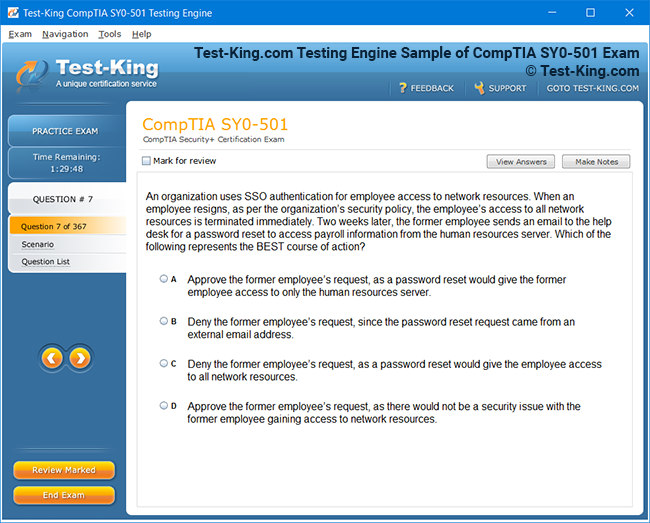
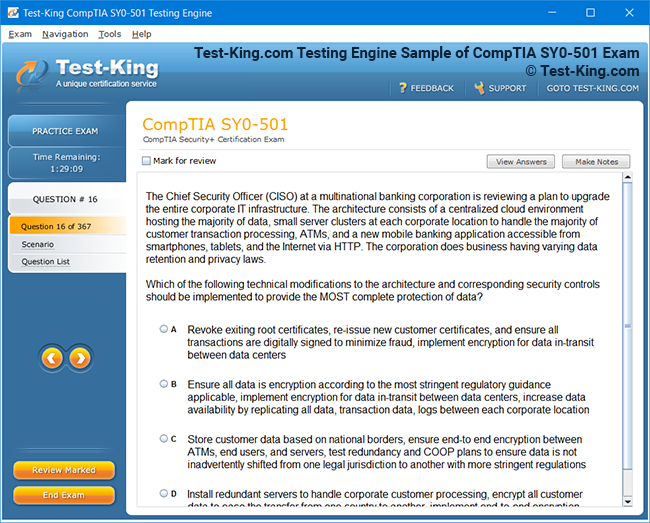
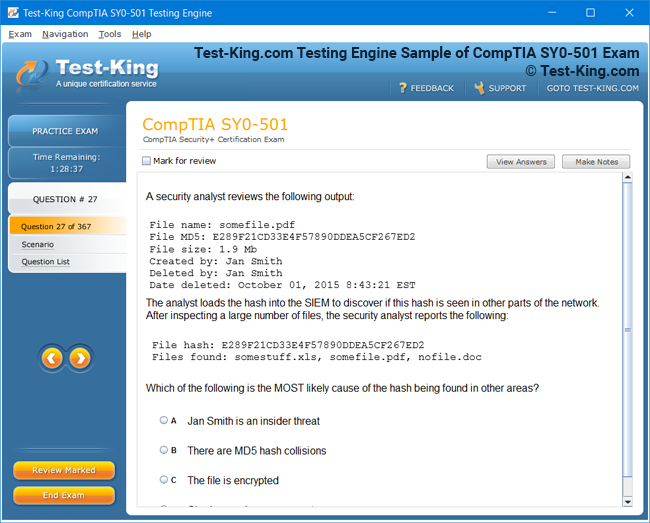
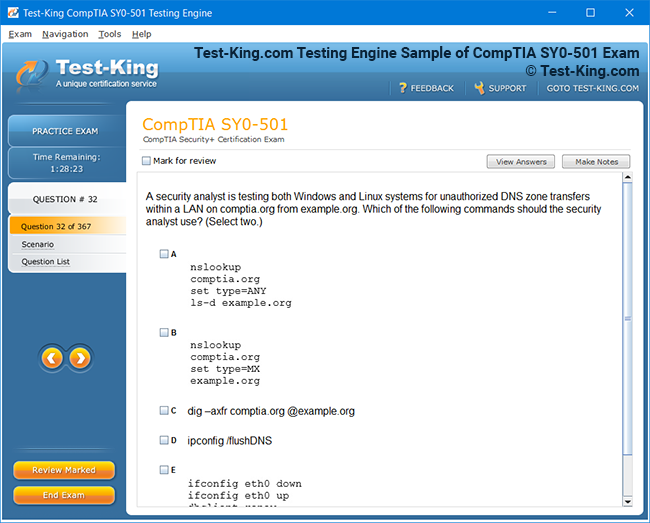
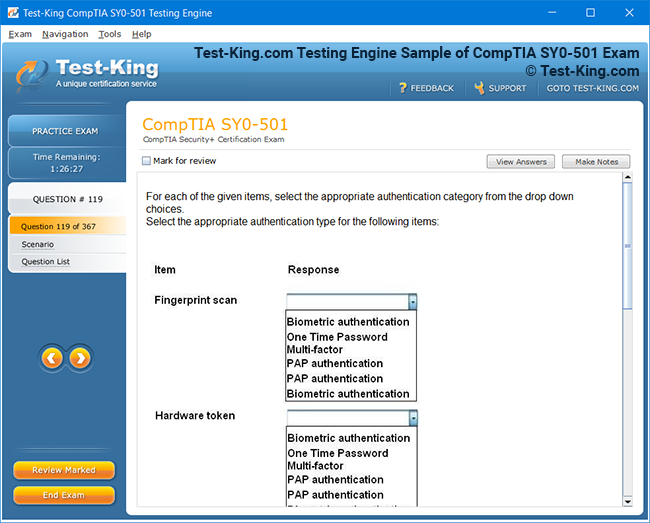
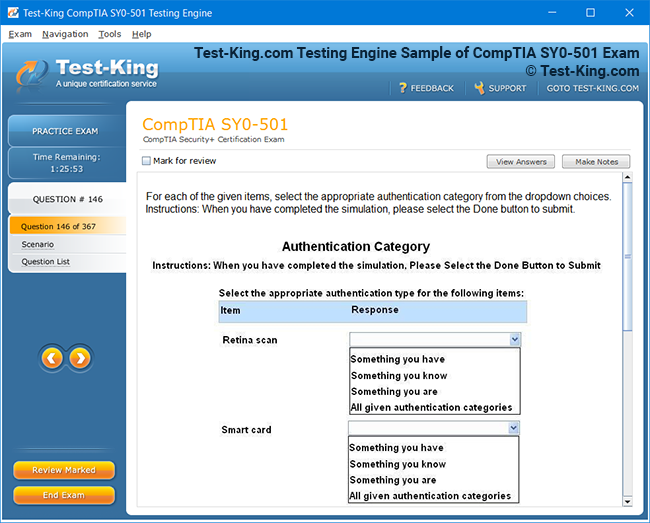
Product Screenshots
Frequently Asked Questions
How can I get the products after purchase?
All products are available for download immediately from your Member's Area. Once you have made the payment, you will be transferred to Member's Area where you can login and download the products you have purchased to your computer.
How long can I use my product? Will it be valid forever?
Test-King products have a validity of 90 days from the date of purchase. This means that any updates to the products, including but not limited to new questions, or updates and changes by our editing team, will be automatically downloaded on to computer to make sure that you get latest exam prep materials during those 90 days.
Can I renew my product if when it's expired?
Yes, when the 90 days of your product validity are over, you have the option of renewing your expired products with a 30% discount. This can be done in your Member's Area.
Please note that you will not be able to use the product after it has expired if you don't renew it.
How often are the questions updated?
We always try to provide the latest pool of questions, Updates in the questions depend on the changes in actual pool of questions by different vendors. As soon as we know about the change in the exam question pool we try our best to update the products as fast as possible.
How many computers I can download Test-King software on?
You can download the Test-King products on the maximum number of 2 (two) computers or devices. If you need to use the software on more than two machines, you can purchase this option separately. Please email support@test-king.com if you need to use more than 5 (five) computers.
What is a PDF Version?
PDF Version is a pdf document of Questions & Answers product. The document file has standart .pdf format, which can be easily read by any pdf reader application like Adobe Acrobat Reader, Foxit Reader, OpenOffice, Google Docs and many others.
Can I purchase PDF Version without the Testing Engine?
PDF Version cannot be purchased separately. It is only available as an add-on to main Question & Answer Testing Engine product.
What operating systems are supported by your Testing Engine software?
Our testing engine is supported by Windows. Andriod and IOS software is currently under development.
Top Symantec Exams
Key Concepts and Skills Required for Exam 250-586: Symantec Endpoint Security Complete Implementation - Technical Specialist
Endpoint security is an indispensable component in modern enterprise infrastructures, encompassing a labyrinthine network of devices, users, and applications. For any professional preparing for the 250-586 exam, a thorough understanding of the foundational principles is paramount. At its core, endpoint security involves the orchestration of technologies and policies to safeguard endpoints from malevolent actors, malware, and sophisticated cyber threats. Endpoints, ranging from desktop computers to mobile devices, are often the most vulnerable vectors in a network, making their protection a critical priority. Knowledge of intrusion detection methodologies, anomaly recognition, and heuristic threat identification forms the substratum of the required skills. Professionals must internalize concepts such as layered security, the principle of least privilege, and proactive threat remediation to effectively deploy comprehensive solutions.
Understanding the Foundations of Endpoint Security
Understanding the architecture of Symantec Endpoint Security provides aspirants with insight into the interconnectivity of various components. The architecture is inherently modular, allowing administrators to configure threat protection, intrusion prevention, firewall management, and device control seamlessly. Each module operates synergistically, ensuring that even in the event of a compromise in one vector, other mechanisms maintain defensive integrity. Candidates should familiarize themselves with the interaction between the client and management server, the role of the Symantec Endpoint Protection Manager, and the flow of security policies from centralized control to distributed endpoints. This knowledge is not merely theoretical but pivotal for practical deployment scenarios during the exam.
Deployment Strategies and Policy Configuration
Effective implementation of Symantec Endpoint Security necessitates a nuanced understanding of deployment strategies. Administrators are expected to tailor installations to heterogeneous environments, accommodating a mélange of operating systems, network topologies, and organizational requirements. A critical skill is the ability to configure policies that balance stringent security with operational flexibility. This entails defining access controls, managing firewall rules, and establishing exception policies without creating exploitable gaps.
A key area of expertise is the orchestration of security policies through hierarchical structures. Professionals should comprehend how to create policy groups, assign policies based on organizational units, and ensure that endpoint configurations reflect both global security objectives and localized requirements. Skill in defining exception handling protocols is equally important, as overly restrictive policies can impede workflow, whereas lax configurations may introduce vulnerabilities. Exam aspirants should be proficient in policy inheritance, versioning, and auditing to maintain compliance and facilitate troubleshooting.
Deployment strategies also encompass the selection of installation methods, whether push-based through centralized management or manual deployment on isolated devices. Each method has implications for network traffic, update propagation, and endpoint performance. Candidates must understand scenarios where remote push installation is advantageous and instances where manual installation mitigates risk. The ability to document deployment plans and verify adherence to organizational standards is a testament to both technical acumen and operational diligence.
Threat Prevention and Detection Mechanisms
Symantec Endpoint Security incorporates an array of threat prevention and detection mechanisms that candidates must master. Signature-based detection remains a fundamental approach, enabling the identification of known threats by comparing files and processes against a curated database. However, modern cyber threats often circumvent signature detection, necessitating advanced heuristic and behavioral analysis. Professionals must understand how to configure real-time monitoring, sandboxing, and machine learning-based threat assessment to capture previously unseen malware.
Intrusion prevention is another cornerstone concept. By analyzing network traffic and system behavior, intrusion prevention mechanisms identify anomalous activities and proactively block potential attacks. Knowledge of configuring IPS policies, including protocol-based inspection and attack signatures, is essential. Candidates should be able to differentiate between high-risk, medium-risk, and low-risk threats, applying response strategies appropriate to the organizational risk tolerance. Understanding false positives, tuning policies, and integrating endpoint alerts with centralized logging are all integral skills for exam readiness.
Endpoint resilience also relies on anti-exploit technology, which mitigates vulnerabilities in frequently targeted applications. Professionals must recognize how to implement application shielding, memory protection, and mitigation techniques against zero-day attacks. This includes awareness of common attack vectors such as buffer overflows, script-based exploits, and privilege escalation attempts. The ability to configure these defenses without impeding legitimate application functionality is a nuanced skill that underscores technical sophistication.
Update Management and System Maintenance
Maintaining endpoint security is an ongoing process that extends beyond initial deployment. Central to this is the management of updates, both for the endpoint protection software and for the operating systems themselves. Symantec Endpoint Security utilizes a streamlined update mechanism to ensure that virus definitions, IPS signatures, and application control policies remain current. Candidates must understand how to schedule updates, manage bandwidth considerations, and validate successful distribution across diverse endpoints.
Equally important is the concept of patch management, which involves identifying, testing, and deploying security patches to mitigate vulnerabilities. Professionals must be adept at integrating patch management with endpoint security, ensuring that updates do not conflict with existing policies or introduce operational disruptions. Routine maintenance tasks, such as monitoring system logs, evaluating endpoint health, and auditing policy compliance, require meticulous attention and a proactive mindset.
Administrators must also recognize the importance of rollback mechanisms. In cases where updates introduce instability or compatibility issues, the ability to revert endpoints to a stable state without compromising security is crucial. This includes understanding the versioning of definitions, software components, and policies, and maintaining documentation to track changes across the environment. The skill to orchestrate updates efficiently while minimizing downtime demonstrates both technical expertise and operational foresight.
Incident Response and Remediation Skills
A defining competency for any technical specialist is the ability to respond to and remediate security incidents. Endpoint security solutions are only as effective as the response strategies they enable. Candidates must be proficient in identifying compromised endpoints, analyzing attack vectors, and containing threats before they propagate. This includes familiarity with quarantine procedures, forensic data collection, and root cause analysis.
Symantec Endpoint Security provides tools to automate aspects of incident response, such as isolating infected devices from the network and initiating remedial actions. Professionals must understand how to configure these automation rules while ensuring that legitimate operations are not inadvertently disrupted. Additionally, they should be capable of interpreting alerts, prioritizing incidents based on severity, and collaborating with broader security operations teams to mitigate enterprise-wide risks.
Remediation often involves a combination of threat removal, system restoration, and policy adjustment. Candidates should know how to clean infected files, restore system integrity, and update policies to prevent recurrence. The skill to balance rapid response with thorough investigation is critical, as hasty remediation can leave residual vulnerabilities, whereas prolonged analysis may allow threats to escalate. Understanding post-incident reporting and documentation ensures compliance with organizational protocols and enhances preparedness for future challenges.
Monitoring, Reporting, and Analytics
Effective endpoint security requires continuous monitoring and insightful reporting. Symantec Endpoint Security provides a suite of analytical tools that allow administrators to visualize threats, evaluate policy efficacy, and anticipate emerging risks. Candidates should understand how to configure monitoring dashboards, interpret key metrics, and generate reports that inform strategic decisions.
Monitoring extends beyond individual endpoints to encompass network-wide activity patterns. Professionals must be able to correlate events, identify trends, and detect subtle indicators of compromise that may not trigger automated alerts. Analytical skills are essential for recognizing anomalous behaviors, understanding threat propagation, and recommending proactive measures to strengthen defenses.
Reporting is both a technical and organizational responsibility. Professionals must prepare reports for management, regulatory bodies, and security teams, conveying complex information in a comprehensible and actionable manner. This requires not only technical knowledge but also an aptitude for clear communication and structured presentation of data. Analytical insights derived from endpoint monitoring inform policy refinements, resource allocation, and strategic planning, solidifying the administrator’s role as both a technical and operational leader.
Mastering Client and Server Communication
A deep understanding of client-server communication forms a fundamental skill for any technical specialist preparing for the 250-586 exam. Symantec Endpoint Security relies on a sophisticated exchange of information between the management console and distributed endpoints, where each interaction must maintain integrity, confidentiality, and operational efficiency. Candidates should comprehend the mechanisms that govern policy distribution, status reporting, and event logging. The client software continuously communicates with the management server, transmitting detailed information about security events, system health, and configuration compliance. Administrators must be able to optimize these communications, reducing network congestion while ensuring timely propagation of policies and updates. Understanding the nuances of heartbeat intervals, synchronization processes, and failover handling ensures that endpoints remain compliant and responsive even in complex network topologies.
Knowledge of how endpoints negotiate security configurations with the central management server is also vital. For instance, when a new policy is published, clients must retrieve, parse, and implement the instructions while avoiding conflicts with existing configurations. Any misalignment can result in security gaps or operational disruptions. Professionals must grasp how to troubleshoot client-server interactions, analyze error logs, and verify successful policy enforcement. Skills in optimizing communication channels, such as adjusting bandwidth throttling and configuring proxy support, are essential for efficient large-scale deployments.
Device Control and Peripheral Security
Device control is a critical component of endpoint security, preventing unauthorized access to sensitive data through removable media and peripheral devices. Candidates must understand how to configure device control policies that regulate access to USB drives, external hard disks, and other connected hardware. Effective management balances security with user productivity, ensuring that legitimate operations are unhindered while mitigating risks associated with data exfiltration or malware introduction.
Endpoint protection solutions offer granular control, allowing administrators to specify permitted device classes, enforce encryption, and define access permissions based on user or group roles. Professionals should be able to implement policies that automatically detect new devices, log access events, and generate alerts for unauthorized activity. Understanding the implications of device control policies on operational workflows is crucial, as overly restrictive configurations can frustrate users and prompt attempts to circumvent controls. Knowledge of integrating device control with broader compliance mandates, such as data protection regulations, further enhances the administrator’s capability to maintain organizational security posture.
Firewall and Network Protection
Symantec Endpoint Security’s firewall capabilities provide robust defense against network-borne threats and unauthorized access. Candidates preparing for the 250-586 exam must grasp the configuration and management of host-based firewalls, including inbound and outbound traffic filtering, port management, and rule prioritization. Effective firewall management involves creating policies that reflect the organization’s security requirements while allowing legitimate communication to proceed without obstruction.
Administrators should be able to design hierarchical firewall policies that accommodate multiple departments or network zones. This includes defining global rules that protect all endpoints, as well as specialized policies tailored to specific users or devices. Skills in analyzing traffic logs, identifying anomalous patterns, and adjusting firewall rules are essential for maintaining resilience against sophisticated attacks. Knowledge of advanced features, such as intrusion prevention integration, application-specific rules, and dynamic response to detected threats, provides a deeper understanding of network protection mechanisms. Understanding how firewall policies interact with endpoint protection components ensures seamless integration and consistent enforcement across the enterprise.
Application Control and Whitelisting
Managing application control is another essential skill for exam aspirants. Symantec Endpoint Security allows administrators to restrict or permit application execution based on predefined criteria, safeguarding endpoints from malicious or unauthorized software. Professionals must understand how to implement whitelisting strategies, ensuring that only approved applications can run while preventing the execution of unknown or risky programs.
Application control policies require careful planning to avoid operational disruption. Candidates should be proficient in creating exception rules for critical applications, analyzing application behavior, and updating whitelists in response to organizational changes. Advanced skills include integrating application control with real-time threat intelligence feeds, which provide proactive protection against emerging threats. By enforcing strict application execution policies, administrators can mitigate risks associated with malware propagation, unauthorized software installation, and exploitation of vulnerable applications. This knowledge is critical for both exam success and practical deployment in enterprise environments.
Behavioral and Heuristic Threat Analysis
Behavioral analysis and heuristic detection form the backbone of modern endpoint protection strategies. Candidates must understand how Symantec Endpoint Security monitors processes, file behavior, and system interactions to identify potential threats that evade traditional signature-based detection. This includes recognizing patterns indicative of malware, ransomware, or unauthorized privilege escalation attempts.
Administrators should be able to configure heuristic detection thresholds, tune sensitivity levels, and interpret alerts generated by behavioral analysis engines. Skills in distinguishing between false positives and genuine threats are essential to maintaining operational efficiency and minimizing unnecessary remediation efforts. Advanced understanding involves correlating behavioral indicators across multiple endpoints, identifying coordinated attack patterns, and implementing proactive measures to mitigate risk. The ability to leverage heuristic and behavioral analysis in combination with signature-based methods ensures comprehensive protection and demonstrates a sophisticated grasp of modern security paradigms.
Centralized Reporting and Policy Auditing
Centralized reporting is critical for maintaining visibility into the security posture of an organization. Symantec Endpoint Security provides detailed reports on endpoint status, policy compliance, threat events, and remediation actions. Candidates must understand how to generate, interpret, and act upon these reports to inform strategic security decisions.
Policy auditing is closely linked to reporting, providing insight into whether endpoints adhere to defined security configurations. Administrators should be proficient in tracking policy changes, identifying non-compliant devices, and initiating corrective actions. This includes understanding how to leverage audit logs to investigate incidents, validate deployment success, and demonstrate regulatory compliance. Skills in customizing reports, filtering data for specific user groups or network segments, and correlating findings with operational objectives are essential for both exam readiness and practical application.
The ability to translate analytical insights into actionable strategies enhances an administrator’s capacity to maintain organizational security and proactively address vulnerabilities. Reporting and auditing are not merely procedural tasks but require interpretation, critical thinking, and a proactive mindset that anticipates emerging threats and operational challenges.
Endpoint Performance Optimization
Security measures should never excessively hinder system performance, making endpoint optimization an indispensable skill. Candidates must understand how to balance protection mechanisms with operational efficiency, ensuring that scanning, monitoring, and policy enforcement do not degrade user productivity.
Techniques include configuring scheduled scans during off-peak hours, managing real-time protection priorities, and optimizing resource allocation for antivirus and intrusion prevention modules. Professionals should also be aware of potential conflicts between security tools and other applications, implementing measures to mitigate performance impacts. Skills in monitoring endpoint health, analyzing resource usage, and fine-tuning protection settings are vital for maintaining both security and usability. This nuanced understanding reflects the advanced capabilities expected of a Symantec Endpoint Security technical specialist.
Integration with Threat Intelligence and Enterprise Systems
Modern endpoint security extends beyond isolated protection, requiring integration with threat intelligence feeds, network monitoring tools, and broader enterprise systems. Candidates should comprehend how Symantec Endpoint Security leverages external intelligence to enhance threat detection, provide contextual analysis, and enable automated response mechanisms.
Integration also involves collaboration with identity management, access control, and security information and event management platforms. Professionals must understand data exchange protocols, event correlation techniques, and automated workflow creation to ensure cohesive enterprise security. Skills in managing interoperability challenges, ensuring consistent policy enforcement across diverse systems, and optimizing integration workflows are critical for achieving comprehensive endpoint protection.
Endpoint Security Architecture and Component Interaction
A deep comprehension of the Symantec Endpoint Security architecture is essential for professionals preparing for the 250-586 exam. The architecture encompasses a constellation of interdependent components designed to provide multilayered protection against diverse threats. Candidates must understand the interplay between the management console, distributed endpoints, and communication servers, recognizing how policies, alerts, and updates traverse the ecosystem. Each component performs a specific function, from signature-based threat detection to behavioral analysis, while collectively forming a robust defensive matrix.
Endpoints operate as autonomous yet synchronized agents, continuously reporting system health, security events, and compliance status. The management console serves as the central hub, orchestrating policy enforcement, event correlation, and update dissemination. Candidates should be able to explain how endpoints retrieve and apply policies, manage local exceptions, and report deviations for centralized analysis. Knowledge of component interactions is crucial for identifying potential bottlenecks, ensuring seamless update propagation, and maintaining operational efficiency across large-scale deployments. Understanding failover mechanisms, load balancing, and redundancy strategies further fortifies the administrator’s capability to design resilient environments.
Security Policy Design and Enforcement
Crafting effective security policies is a cornerstone of endpoint protection. Professionals must understand how to create policies that reflect organizational risk tolerance while minimizing disruption to legitimate workflows. Symantec Endpoint Security allows administrators to define hierarchical policy structures, enabling global directives to coexist with localized exceptions tailored to specific departments or user groups.
Candidates should be skilled in configuring policies that govern antivirus scanning, intrusion prevention, firewall rules, application control, and device access. Each policy must be meticulously tested to prevent conflicts, gaps, or redundancy. Understanding policy precedence, inheritance, and versioning ensures that endpoints consistently implement the intended security posture. Professionals must also be adept at auditing policies, detecting misconfigurations, and adjusting settings based on evolving threats or operational requirements. Policy enforcement extends beyond initial deployment; ongoing monitoring, tuning, and validation are essential for sustaining protection against sophisticated attacks.
Malware Detection and Behavioral Analysis
Modern threats increasingly bypass signature-based detection, emphasizing the need for behavioral and heuristic analysis. Candidates must be proficient in configuring detection mechanisms that monitor file activity, process behavior, and system interactions to identify anomalous patterns indicative of malicious activity.
Behavioral analysis leverages algorithms to detect deviations from normal system operation, identifying potential ransomware, zero-day exploits, or unauthorized privilege escalation attempts. Administrators should be able to fine-tune detection thresholds, minimize false positives, and respond to alerts with appropriate remediation actions. Integrating behavioral insights with threat intelligence feeds enhances the ability to anticipate emerging attack vectors, providing a proactive rather than reactive defense posture. Understanding how to correlate behavioral data across multiple endpoints enables the identification of coordinated attacks and facilitates strategic decision-making in high-stakes enterprise environments.
Intrusion Prevention and Network Security
Intrusion prevention is a critical facet of endpoint security, focusing on thwarting malicious activity before it compromises systems. Candidates must understand how Symantec Endpoint Security analyzes network traffic, identifies suspicious patterns, and applies automated countermeasures.
Administrators should be capable of configuring intrusion prevention policies that inspect protocols, detect attack signatures, and block potential intrusions. Knowledge of prioritizing high-risk threats, managing false positives, and refining detection rules is essential. Effective intrusion prevention integrates seamlessly with endpoint firewalls, antivirus modules, and behavioral analysis engines to create a cohesive defense ecosystem. Understanding advanced techniques such as anomaly-based detection, reputation scoring, and heuristic network inspection allows professionals to counter sophisticated threats with precision and agility.
Network security also involves monitoring inter-endpoint communications, assessing vulnerability exposure, and implementing segmented policies to isolate compromised devices. Candidates should be able to design firewall rules that align with broader network security objectives while maintaining operational continuity for legitimate traffic. This holistic approach ensures that endpoints serve as both protected nodes and vigilant sentinels within the enterprise infrastructure.
Update Management and Threat Intelligence Integration
Maintaining an updated defense posture is paramount for endpoint protection. Symantec Endpoint Security relies on timely distribution of antivirus definitions, intrusion prevention signatures, and application control updates. Candidates must understand how to schedule updates, manage bandwidth, and verify successful deployment across heterogeneous endpoints.
Integration with threat intelligence feeds enhances the system’s ability to recognize emerging threats in real time. Professionals should be able to leverage intelligence data to enrich detection mechanisms, adjust policies dynamically, and prioritize remediation efforts. Understanding the synchronization between local updates, centralized management, and external intelligence sources ensures that endpoints remain resilient against evolving malware landscapes. Administrators must also be aware of update rollback procedures in case of failures or compatibility issues, maintaining both system stability and security integrity.
Incident Response and Forensic Analysis
Incident response is a defining skill for any technical specialist. Professionals must be adept at detecting, containing, and remediating security incidents, minimizing potential damage to the enterprise. Symantec Endpoint Security provides tools to isolate compromised devices, gather forensic evidence, and initiate automated remediation actions.
Candidates should understand how to interpret alerts, prioritize incidents, and implement corrective measures. Forensic analysis involves collecting detailed logs, examining system behavior, and reconstructing attack vectors to identify root causes. Professionals must also document findings to support compliance, regulatory reporting, and post-incident review. The ability to conduct thorough investigations while maintaining operational continuity underscores the advanced competencies expected of a technical specialist. Integration with automated response systems enables faster containment, while manual oversight ensures accuracy, precision, and accountability during critical incidents.
Endpoint Optimization and Performance Tuning
Security measures should enhance protection without impairing productivity. Professionals must understand how to optimize endpoint performance while maintaining comprehensive security coverage. Techniques include scheduling scans during periods of low activity, prioritizing critical processes, and fine-tuning real-time monitoring settings.
Administrators should monitor resource utilization, identify potential conflicts with applications, and adjust security parameters to prevent performance degradation. Understanding the balance between protective measures and system responsiveness is crucial, particularly in environments with high endpoint density or resource-intensive applications. Optimization also encompasses evaluating endpoint health, maintaining software integrity, and ensuring that updates and policies do not disrupt user operations. Skills in performance tuning reflect a sophisticated understanding of both technical and operational considerations in enterprise environments.
Reporting, Compliance, and Operational Visibility
Centralized reporting provides a comprehensive view of the enterprise security posture. Candidates must be able to generate reports that convey endpoint compliance, threat activity, and policy enforcement metrics. Professionals should interpret report data to identify vulnerabilities, detect trends, and inform strategic security decisions.
Compliance monitoring ensures adherence to internal policies and external regulations. Administrators should be adept at auditing endpoints, identifying non-compliant devices, and initiating corrective measures. Reports must be actionable, highlighting areas requiring attention and providing insights for risk mitigation. Operational visibility also includes correlating events across endpoints, network segments, and organizational units, enabling proactive threat management and informed decision-making. The ability to transform raw data into strategic insights demonstrates both technical proficiency and operational acumen.
Integration with Enterprise Ecosystems
Symantec Endpoint Security operates within a broader enterprise ecosystem, requiring seamless integration with identity management, security information and event management platforms, and network monitoring tools. Candidates should understand how to leverage these integrations to enhance detection, automate responses, and maintain a cohesive security posture.
Integration involves configuring data exchange, correlating alerts, and implementing automated workflows that respond to threats in real time. Administrators must navigate interoperability challenges, ensure consistent policy application, and optimize communication between disparate systems. Knowledge of integration best practices allows professionals to extend endpoint security capabilities, enrich intelligence insights, and streamline operational processes across the enterprise.
Advanced Threat Detection and Response Mechanisms
For a technical specialist preparing for the 250-586 exam, mastery of advanced threat detection and response mechanisms is indispensable. Symantec Endpoint Security encompasses an array of tools designed to identify, mitigate, and remediate threats before they compromise enterprise systems. Candidates must comprehend how real-time scanning, heuristic analysis, and behavioral monitoring operate synergistically to detect known and unknown malware. These mechanisms monitor file behavior, application execution, and system anomalies, triggering alerts or automated responses when deviations occur.
Administrators should be able to configure these detection engines to optimize accuracy while minimizing false positives. Behavioral analysis allows the system to recognize patterns indicative of ransomware, rootkits, or unauthorized privilege escalations. Heuristic algorithms assess new files and processes against criteria derived from prior threat intelligence, while sandboxing isolates suspicious applications for safe execution. Candidates must also understand the role of automated remediation actions, such as quarantining infected files, blocking unauthorized processes, and initiating system scans. Proficiency in configuring and tuning these systems ensures endpoints remain resilient against evolving threats.
Firewall Management and Network Defense
The firewall component of Symantec Endpoint Security serves as the frontline of network defense. Candidates must understand how to create and manage rules that control inbound and outbound traffic, enforce segmentation, and prevent lateral movement of threats. Firewall policies must be designed to reflect organizational requirements, allowing legitimate communications while blocking suspicious or malicious activities.
Administrators should be proficient in configuring hierarchical firewall structures, enabling global rules for baseline protection and local rules tailored to specific departments or user groups. Skills in monitoring traffic logs, identifying anomalies, and adjusting rules dynamically are essential. Network defense extends beyond static rules, incorporating intrusion prevention, protocol inspection, and integration with endpoint threat detection to create a cohesive security framework. Understanding the interplay between firewall policies and other security modules, such as antivirus scanning and behavioral monitoring, ensures a comprehensive approach to network protection.
Application Control and Whitelisting Techniques
Application control and whitelisting remain critical skills for endpoint security specialists. Symantec Endpoint Security allows administrators to restrict the execution of unauthorized software, thereby reducing the attack surface. Candidates must understand how to create whitelists, configure application blocking policies, and manage exceptions for critical programs.
Effective application control requires balancing security with usability. Administrators must monitor application behavior, update whitelists in response to organizational changes, and integrate application intelligence with behavioral and signature-based detection. The ability to anticipate potential risks associated with new applications, analyze installation patterns, and enforce policy compliance reflects a sophisticated understanding of endpoint protection. Integration of application control with centralized management ensures that policies are consistently applied across the enterprise, mitigating the risk of malware propagation through unauthorized software.
Endpoint Update and Patch Management
Maintaining endpoint integrity requires continuous update management and patch deployment. Candidates must understand how Symantec Endpoint Security distributes updates for virus definitions, intrusion prevention signatures, and application control rules. Scheduling updates to minimize operational impact, verifying successful deployment, and managing bandwidth consumption are essential administrative skills.
Patch management extends to operating systems and critical applications, ensuring that vulnerabilities are addressed promptly. Professionals should be capable of integrating endpoint protection with enterprise patching workflows, testing updates in controlled environments, and implementing rollback procedures when necessary. Understanding versioning, deployment sequences, and synchronization between endpoints and management servers ensures continuity and security integrity. Efficient update management is not only a technical requirement but a strategic practice that maintains resilience against emerging threats.
Incident Response and Forensic Investigations
Incident response is a defining competency for any technical specialist. Candidates must be able to detect, contain, and remediate security incidents while preserving evidence for forensic analysis. Symantec Endpoint Security provides tools to isolate compromised devices, gather system logs, and execute automated or manual remediation actions.
Administrators should understand how to interpret alerts, prioritize incidents based on severity, and implement corrective measures. Forensic investigations involve examining system behavior, reconstructing attack vectors, and identifying root causes. Professionals must document findings meticulously to support compliance, regulatory reporting, and internal audits. Skills in coordinating incident response with broader security operations, integrating intelligence feeds, and executing remediation protocols ensure that threats are neutralized while maintaining operational continuity. Understanding how to apply lessons learned from incidents to refine policies and detection mechanisms reinforces a proactive security posture.
Device Control and Peripheral Security
Controlling access to external devices is crucial to preventing data exfiltration and malware introduction. Symantec Endpoint Security enables administrators to manage permissions for USB drives, external storage devices, and other peripherals. Candidates must understand how to configure device control policies that permit authorized use while blocking potentially harmful interactions.
Device control policies require precision and foresight. Administrators must monitor device activity, maintain audit logs, and configure alerts for unauthorized access attempts. Integration with application control and endpoint monitoring ensures that device policies align with broader security objectives. Understanding the implications of device control on productivity and compliance, as well as strategies to mitigate circumvention attempts, is vital for maintaining organizational security integrity. Professionals should also be adept at tailoring policies to specific user groups, devices, and operational contexts to balance protection with functionality.
Behavioral and Heuristic Analysis for Threat Prevention
Behavioral and heuristic analysis extends the capability of endpoint security beyond traditional signature-based methods. Candidates must understand how Symantec Endpoint Security evaluates processes, file interactions, and system anomalies to detect novel threats. Behavioral analysis identifies deviations from normal operation patterns, while heuristic techniques assess potential risk based on historical and predictive models.
Administrators should be able to configure thresholds, fine-tune sensitivity, and respond to alerts generated by these engines. Correlating behavioral indicators across multiple endpoints allows for the identification of coordinated attacks and emerging threat trends. Integration with threat intelligence and network monitoring further enhances the accuracy of detection, enabling proactive interventions before attacks escalate. Mastery of behavioral and heuristic analysis represents an advanced skill set, reflecting both technical acumen and strategic foresight.
Monitoring, Reporting, and Compliance Management
Centralized monitoring and reporting provide administrators with a comprehensive view of enterprise security posture. Symantec Endpoint Security offers dashboards, alerting mechanisms, and detailed reports on endpoint status, policy compliance, and threat activity. Candidates must understand how to generate, interpret, and act upon these reports to ensure continuous protection.
Compliance management involves auditing endpoints for adherence to security policies, identifying deviations, and implementing corrective actions. Administrators should track policy changes, monitor user activity, and validate that updates and configurations are consistently applied. Reporting is both a technical and organizational function, requiring the ability to translate complex security data into actionable insights for management and regulatory stakeholders. Skills in correlating endpoint events, assessing trends, and implementing preventive measures enhance operational visibility and strengthen organizational resilience against cyber threats.
Integration with Enterprise Ecosystems
Endpoint security functions within a larger ecosystem of enterprise applications, identity management systems, and network monitoring tools. Candidates must understand how Symantec Endpoint Security integrates with these platforms to facilitate data sharing, automate responses, and maintain cohesive protection across the organization.
Integration encompasses configuring communication protocols, synchronizing policies, and correlating events across multiple systems. Administrators should address interoperability challenges, ensure consistent application of policies, and optimize workflows for automated threat response. Leveraging intelligence feeds, event management platforms, and identity services enhances detection capabilities and operational efficiency. Effective integration strengthens the enterprise’s overall security posture while allowing administrators to respond swiftly to emerging threats and maintain comprehensive visibility across endpoints.
Endpoint Configuration and Deployment Strategies
Mastering endpoint configuration is a pivotal skill for candidates preparing for the 250-586 exam. Symantec Endpoint Security requires administrators to tailor deployment strategies for diverse enterprise environments, balancing operational efficiency with robust protection. Endpoints, ranging from desktop systems to mobile devices, must be configured in accordance with organizational policies while accommodating heterogeneous network topologies.
Deployment involves determining the most effective method for installing client software, whether through remote push deployment from the management console or manual installation on isolated systems. Each method presents its own considerations regarding network bandwidth, update propagation, and endpoint performance. Administrators must also configure initial policies that govern antivirus scanning, firewall enforcement, intrusion prevention, and device control. Effective deployment strategies reduce configuration errors, ensure compliance from the outset, and facilitate streamlined update and monitoring processes.
Policy Management and Hierarchical Enforcement
Policy management is integral to endpoint security administration. Symantec Endpoint Security allows administrators to define hierarchical policies, where global directives coexist with local exceptions tailored to specific departments or organizational units. Candidates must understand how to create, assign, and manage these policies to maintain consistent enforcement across all endpoints.
Hierarchical policy structures enable flexibility, allowing different user groups to adhere to customized security settings without compromising the overall security posture. Administrators should be able to audit policies for conflicts, apply updates seamlessly, and track version changes to maintain operational integrity. Understanding the inheritance and precedence of policies ensures that endpoints receive correct configurations, and the ability to troubleshoot misapplications reflects advanced technical competence.
Real-Time Threat Monitoring and Detection
Continuous monitoring of endpoints is essential for timely detection of threats. Symantec Endpoint Security provides real-time scanning and behavioral monitoring to identify malicious activity before it can compromise systems. Candidates must be proficient in configuring these monitoring mechanisms to detect anomalies, unauthorized access, and suspicious processes.
Behavioral analysis plays a key role in identifying previously unknown threats by evaluating deviations from normal system activity. Heuristic engines further enhance detection by assessing the potential risk of files and applications based on predictive models. Administrators should know how to tune these systems to balance sensitivity and minimize false positives. Integrating threat intelligence feeds with real-time monitoring allows for proactive identification of emerging threats, providing a comprehensive and adaptive defense strategy.
Firewall and Network Policy Administration
Firewall management is a critical component of endpoint protection. Administrators must configure rules that regulate inbound and outbound network traffic, enforce segmentation, and prevent lateral movement of malicious actors. Symantec Endpoint Security enables hierarchical firewall policies, allowing for both global baselines and local exceptions to accommodate diverse operational needs.
Candidates should be able to monitor traffic patterns, identify suspicious activity, and adjust firewall rules to maintain effective protection. Integration with intrusion prevention modules enhances network defense, allowing the firewall to respond dynamically to threats. Administrators must also consider the interplay between firewall policies and other endpoint components, ensuring seamless protection without impeding legitimate communication or business operations.
Application Control and Execution Management
Controlling application execution is an essential skill for endpoint security professionals. Symantec Endpoint Security allows administrators to restrict unauthorized applications while permitting approved programs to operate without hindrance. Candidates must understand how to configure whitelists, manage exceptions, and update policies to reflect changes in organizational software usage.
Application control reduces the risk of malware propagation through unauthorized software installation or execution. Administrators should monitor application behavior, detect anomalies, and integrate application intelligence with behavioral and signature-based detection systems. Effective management of application control requires balancing security objectives with user productivity, ensuring that critical business processes remain uninterrupted while minimizing exposure to potential threats.
Endpoint Update and Patch Management
Keeping endpoints current is fundamental to maintaining security integrity. Symantec Endpoint Security distributes updates for antivirus definitions, intrusion prevention signatures, and application control rules. Candidates must understand how to schedule updates, verify successful deployment, and optimize bandwidth usage to avoid network congestion.
Patch management extends to operating systems and enterprise applications, ensuring that known vulnerabilities are mitigated promptly. Administrators should coordinate update schedules with operational requirements, test patches in controlled environments, and implement rollback procedures when necessary. Maintaining a consistent update cadence strengthens endpoint resilience and reduces the likelihood of compromise from unpatched vulnerabilities.
Incident Response and Remediation Protocols
Incident response is a core competency for any technical specialist. Candidates must be capable of detecting, isolating, and remediating security incidents while preserving forensic evidence for investigation. Symantec Endpoint Security offers tools for automated and manual remediation, including device quarantine, log collection, and system restoration.
Administrators should interpret alerts accurately, prioritize incidents based on severity, and implement corrective actions in a timely manner. Forensic investigations require analyzing system behavior, reconstructing attack vectors, and identifying root causes. Detailed documentation of incidents supports compliance, reporting, and continuous improvement in threat response strategies. Effective incident response not only mitigates immediate risks but also strengthens long-term security posture by informing policy refinements and preventive measures.
Device Control and Data Loss Prevention
Preventing unauthorized access to external devices is critical for safeguarding sensitive information. Symantec Endpoint Security enables administrators to manage access to USB drives, external storage devices, and other peripherals. Candidates must understand how to implement device control policies that allow legitimate use while blocking potentially harmful interactions.
Administrators should monitor device activity, maintain audit logs, and generate alerts for unauthorized access attempts. Device control policies must align with broader data protection objectives, integrating seamlessly with application control and endpoint monitoring. Balancing security with operational efficiency ensures that users remain productive while organizational data remains protected from exfiltration or malware introduction.
Behavioral and Heuristic Analysis
Behavioral and heuristic analysis extends the capability of endpoint protection by detecting threats that evade traditional signature-based methods. Symantec Endpoint Security evaluates processes, file interactions, and system anomalies to identify suspicious activity indicative of malware, ransomware, or unauthorized privilege escalation.
Candidates must configure thresholds, tune sensitivity levels, and respond to alerts generated by these engines. Correlating behavioral data across multiple endpoints allows for detection of coordinated attacks and early identification of emerging threats. Integration with threat intelligence feeds further enhances accuracy, enabling proactive threat mitigation. Mastery of these techniques represents advanced expertise in endpoint security administration and operational excellence.
Reporting, Compliance, and Operational Visibility
Centralized reporting provides administrators with critical insights into endpoint security posture. Symantec Endpoint Security offers dashboards, alerts, and detailed reports on policy compliance, threat activity, and remediation efforts. Candidates must understand how to generate and interpret reports to identify vulnerabilities, assess trends, and implement improvements.
Compliance management requires auditing endpoints for adherence to policies, detecting deviations, and taking corrective action. Administrators should track policy changes, monitor user activity, and verify that updates and configurations are consistently applied. Operational visibility is enhanced through the correlation of events across endpoints, network segments, and organizational units, enabling proactive risk management and informed decision-making. Effective reporting and compliance monitoring reflect both technical expertise and strategic operational foresight.
Integration with Enterprise Systems
Symantec Endpoint Security operates within a broader enterprise ecosystem, requiring integration with identity management, network monitoring, and security information platforms. Candidates should understand how to leverage these integrations to enhance detection capabilities, automate responses, and maintain a unified security posture across the organization.
Integration involves synchronizing policies, exchanging event data, and implementing automated workflows to respond rapidly to threats. Administrators must address interoperability challenges, ensure consistent enforcement, and optimize communication between systems. Leveraging intelligence feeds, event management platforms, and identity services enriches detection, streamlines operations, and reinforces the overall enterprise security strategy.
Endpoint Security Architecture and Operational Dynamics
Understanding the architecture and operational dynamics of Symantec Endpoint Security is a foundational skill for candidates preparing for the 250-586 exam. The architecture is composed of distributed clients, centralized management servers, and integrated security modules that collectively provide multilayered protection. Each endpoint communicates continuously with the management console, transmitting detailed information on system health, security events, and policy compliance. Administrators must comprehend these interactions to ensure that updates, policies, and alerts propagate efficiently across the enterprise.
Operational dynamics encompass real-time monitoring, behavioral analysis, intrusion prevention, and automated remediation. Each module operates synergistically, detecting threats, isolating compromised components, and enforcing security policies. Candidates should understand the flow of data between modules, the sequencing of policy application, and the synchronization mechanisms that maintain consistency across endpoints. This knowledge is essential for troubleshooting deployment issues, optimizing update distribution, and maintaining resilience against sophisticated cyber threats.
Policy Development and Enforcement Strategies
Crafting effective security policies is a critical skill for technical specialists. Symantec Endpoint Security allows administrators to define hierarchical policies that integrate global mandates with localized exceptions tailored to organizational units. Candidates must be proficient in creating, testing, and deploying policies that govern antivirus scanning, firewall enforcement, intrusion prevention, application control, and device access.
Policy enforcement requires careful attention to precedence, inheritance, and conflict resolution. Administrators should audit policies regularly, identify misconfigurations, and implement adjustments based on evolving threats or operational requirements. Effective policy management ensures that endpoints consistently implement the intended security posture while maintaining operational flexibility. Knowledge of policy versioning, auditing, and reporting provides a structured approach to maintaining compliance and operational efficiency.
Advanced Threat Detection and Behavioral Analysis
Threat detection in modern enterprise environments extends beyond signature-based methods, emphasizing behavioral and heuristic analysis. Symantec Endpoint Security monitors system activity, file behavior, and application execution to identify deviations from normal patterns. Candidates must understand how to configure behavioral thresholds, interpret alerts, and respond effectively to suspicious activity.
Heuristic engines evaluate potential threats based on predictive models and historical intelligence, enabling the detection of zero-day malware and unknown exploits. Administrators should correlate behavioral data across multiple endpoints to identify coordinated attacks and anticipate emerging threat vectors. Integrating threat intelligence feeds enhances the accuracy of detection, allowing for proactive remediation before attacks escalate. Mastery of behavioral and heuristic analysis reflects advanced operational competence and strategic foresight.
Intrusion Prevention and Firewall Management
Network defense is a cornerstone of endpoint security. Symantec Endpoint Security incorporates intrusion prevention and firewall management to safeguard endpoints from external and internal threats. Candidates must understand how to configure rules that inspect network traffic, detect suspicious activity, and prevent unauthorized access or lateral movement.
Firewall policies must be designed hierarchically, balancing global baselines with localized rules that accommodate departmental needs. Administrators should monitor traffic logs, identify anomalies, and adjust policies dynamically to maintain operational resilience. Integration with intrusion prevention modules allows for automated threat response, ensuring that malicious activities are blocked in real-time. Understanding the interplay between firewall configurations and other security mechanisms ensures a cohesive defense strategy that protects both individual endpoints and the broader enterprise network.
Application Control and Whitelisting Techniques
Controlling application execution reduces the risk of malware propagation and unauthorized software use. Symantec Endpoint Security allows administrators to create whitelists, define execution rules, and manage exceptions for critical applications. Candidates must be adept at configuring these controls while balancing operational efficiency and security.
Application monitoring involves analyzing installation patterns, detecting anomalies, and updating execution policies in response to organizational changes. Integration with behavioral and signature-based detection enhances protection against advanced threats. Administrators should anticipate potential risks posed by new applications and ensure consistent enforcement of whitelists across all endpoints. This approach minimizes the attack surface and maintains the integrity of enterprise systems.
Endpoint Update Management and Patch Coordination
Maintaining an updated defense posture is essential for effective endpoint security. Symantec Endpoint Security delivers updates for antivirus definitions, intrusion prevention signatures, and application control policies. Candidates must understand how to schedule updates, verify deployment success, and manage bandwidth to prevent operational disruption.
Patch management extends beyond the endpoint protection software to include operating systems and critical applications. Administrators should coordinate updates with operational schedules, test patches in controlled environments, and implement rollback procedures when necessary. Synchronization between endpoints and management servers ensures consistency, while timely updates mitigate vulnerabilities and reduce exposure to emerging threats. Effective update management demonstrates technical acumen and strategic operational planning.
Incident Response and Remediation Capabilities
Incident response is a defining competency for technical specialists. Symantec Endpoint Security provides tools to detect, isolate, and remediate security incidents. Candidates must be proficient in interpreting alerts, prioritizing incidents, and implementing corrective actions to contain threats effectively.
Remediation often involves quarantining infected files, terminating malicious processes, restoring system integrity, and updating policies to prevent recurrence. Forensic analysis enables administrators to reconstruct attack vectors, identify root causes, and document findings for compliance and regulatory reporting. Integration with automated response workflows enhances efficiency, while manual oversight ensures precision and accountability during complex incidents. Mastery of incident response skills reinforces both operational readiness and strategic threat management.
Device Control and Data Protection
Controlling access to external devices is a critical component of data protection. Symantec Endpoint Security enables administrators to manage permissions for USB drives, external storage, and peripheral devices. Candidates must configure policies that permit legitimate use while blocking potentially harmful interactions.
Monitoring device activity, maintaining audit logs, and generating alerts for unauthorized access are essential practices. Integration with application control and behavioral monitoring ensures that device policies align with broader security objectives. Administrators should balance security measures with user productivity, tailoring policies to specific groups and operational contexts to maintain enterprise efficiency while preventing data exfiltration or malware introduction.
Reporting, Compliance, and Operational Visibility
Centralized reporting provides comprehensive insight into endpoint security posture. Symantec Endpoint Security offers dashboards, alerting mechanisms, and detailed reports on policy compliance, threat events, and remediation actions. Candidates must generate, interpret, and act upon these reports to identify vulnerabilities and inform strategic decisions.
Compliance management ensures adherence to internal policies and external regulations. Administrators should audit endpoints, detect deviations, and implement corrective actions. Correlating events across endpoints, network segments, and organizational units enhances operational visibility and enables proactive risk management. Effective reporting and compliance monitoring demonstrate both technical proficiency and strategic oversight.
Integration with Enterprise Ecosystems
Symantec Endpoint Security functions within a broader enterprise ecosystem, requiring seamless integration with identity management, security information platforms, and network monitoring tools. Candidates should understand how to leverage these integrations to enhance detection capabilities, automate response actions, and maintain consistent protection across the enterprise.
Integration involves synchronizing policies, exchanging event data, and implementing automated workflows that respond dynamically to threats. Administrators must address interoperability challenges, ensure uniform enforcement, and optimize communication between systems. Leveraging intelligence feeds and event correlation platforms strengthens detection accuracy, operational efficiency, and strategic security planning.
Endpoint Performance Optimization
Ensuring that security measures do not hinder productivity is a key administrative skill. Symantec Endpoint Security allows administrators to configure real-time scanning, resource allocation, and scheduled maintenance to optimize endpoint performance. Candidates should understand how to monitor system health, identify conflicts, and fine-tune security modules to maintain operational efficiency.
Balancing protection with performance requires awareness of scanning schedules, process prioritization, and resource consumption. Administrators must optimize updates, policy enforcement, and monitoring without disrupting critical business operations. Effective performance optimization enhances user experience, maintains system responsiveness, and ensures that endpoints remain protected against evolving threats.
Conclusion
Advanced endpoint security management requires a comprehensive understanding of architecture, policy enforcement, threat detection, and operational integration. Mastery of Symantec Endpoint Security entails configuring hierarchical policies, monitoring behavioral anomalies, enforcing application control, managing updates, and responding to incidents with precision. Administrators must balance security with operational efficiency, integrate with enterprise systems, and maintain compliance while optimizing performance. Candidates preparing for the 250-586 exam benefit from developing expertise in these areas, ensuring they are equipped to implement, manage, and maintain resilient endpoint security environments that safeguard organizational assets against complex and evolving cyber threats.