

Exam Code: 4A0-102
Exam Name: Nokia Border Gateway Protocol
Certification Provider: Nokia
Corresponding Certification: Nokia SRA
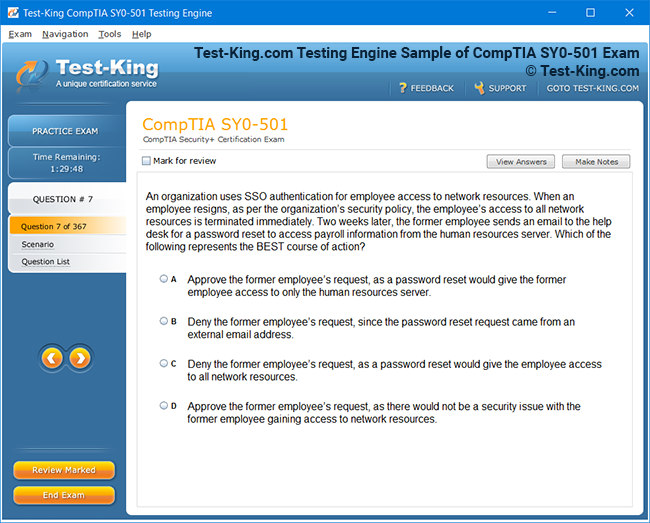
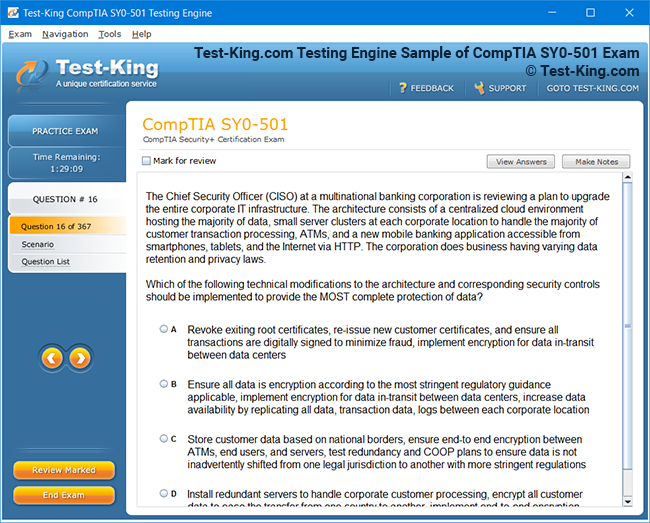
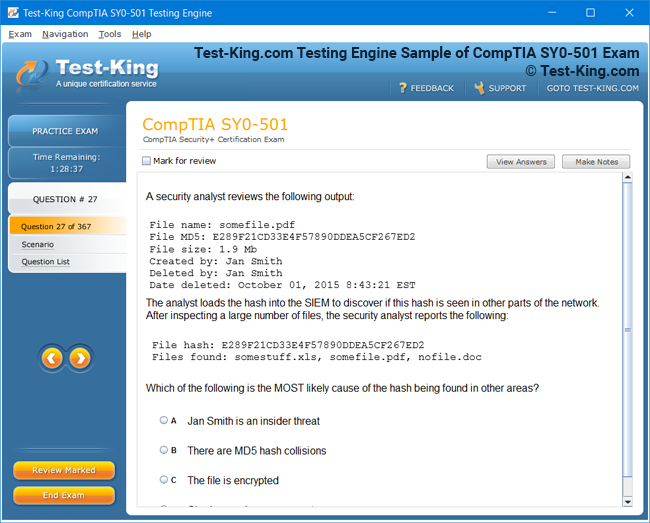
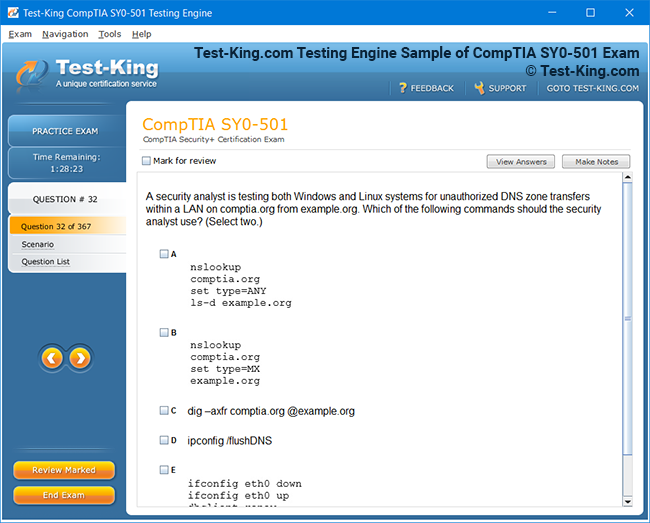
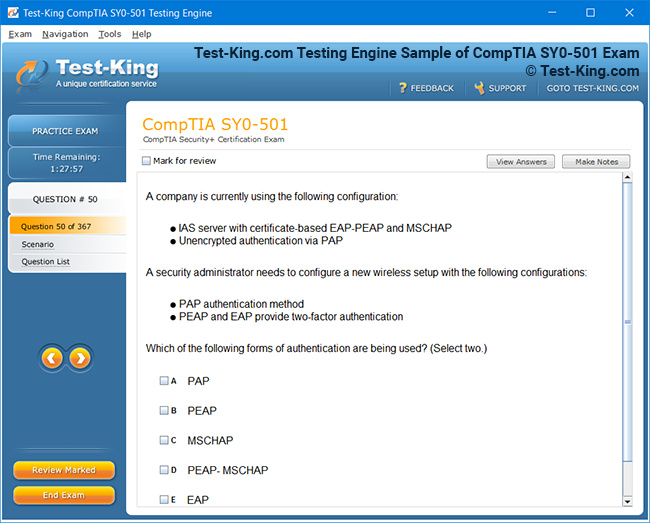
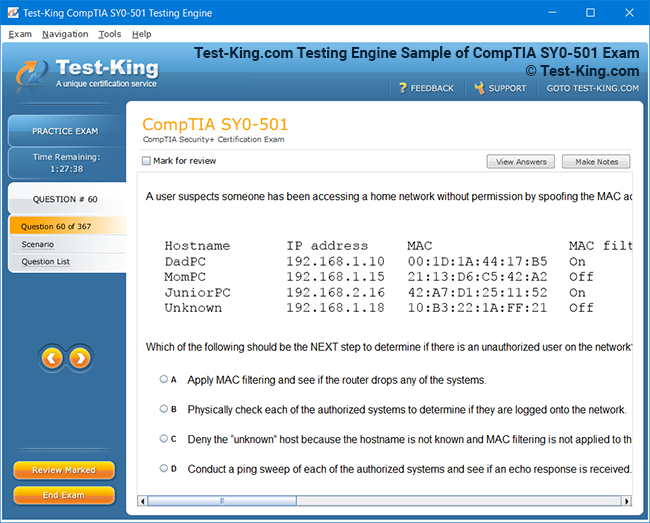
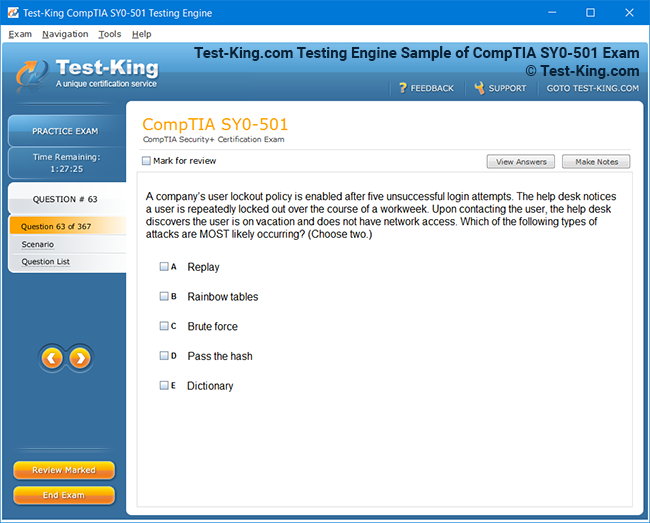
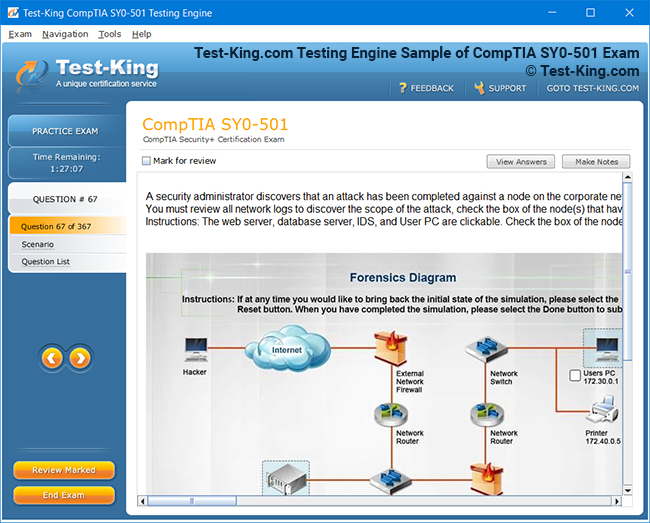
Product Screenshots
Frequently Asked Questions
How can I get the products after purchase?
All products are available for download immediately from your Member's Area. Once you have made the payment, you will be transferred to Member's Area where you can login and download the products you have purchased to your computer.
How long can I use my product? Will it be valid forever?
Test-King products have a validity of 90 days from the date of purchase. This means that any updates to the products, including but not limited to new questions, or updates and changes by our editing team, will be automatically downloaded on to computer to make sure that you get latest exam prep materials during those 90 days.
Can I renew my product if when it's expired?
Yes, when the 90 days of your product validity are over, you have the option of renewing your expired products with a 30% discount. This can be done in your Member's Area.
Please note that you will not be able to use the product after it has expired if you don't renew it.
How often are the questions updated?
We always try to provide the latest pool of questions, Updates in the questions depend on the changes in actual pool of questions by different vendors. As soon as we know about the change in the exam question pool we try our best to update the products as fast as possible.
How many computers I can download Test-King software on?
You can download the Test-King products on the maximum number of 2 (two) computers or devices. If you need to use the software on more than two machines, you can purchase this option separately. Please email support@test-king.com if you need to use more than 5 (five) computers.
What is a PDF Version?
PDF Version is a pdf document of Questions & Answers product. The document file has standart .pdf format, which can be easily read by any pdf reader application like Adobe Acrobat Reader, Foxit Reader, OpenOffice, Google Docs and many others.
Can I purchase PDF Version without the Testing Engine?
PDF Version cannot be purchased separately. It is only available as an add-on to main Question & Answer Testing Engine product.
What operating systems are supported by your Testing Engine software?
Our testing engine is supported by Windows. Andriod and IOS software is currently under development.
Top Nokia Exams
- 4A0-D01 - Nokia Data Center Fabric Fundamentals
- 4A0-100 - Nokia IP Networks and Services Fundamentals
- 4A0-C03 - Nokia NRS II Composite: IS-IS version
- 4A0-112 - Nokia IS-IS Routing Protocol
- 4A0-104 - Nokia Services Architecture
- 4A0-AI1 - Nokia NSP IP Network Automation Professional Composite Exam
- 4A0-205 - Nokia Optical Networking Fundamentals
- 4A0-115 - Nokia Ethernet Virtual Private Network Services
- 4A0-D03 - Nokia SR Linux EVPN and Data Center Interconnect
- 4A0-103 - Nokia Multiprotocol Label Switching
- 4A0-107 - Nokia Quality of Service
- 4A0-114 - Nokia Border Gateway Protocol Fundamentals for Services
- 4A0-116 - Nokia Segment Routing
Understanding BGP Concepts for Nokia Network Engineers: Exam 4A0-102 Overview
Border Gateway Protocol, commonly referred to as BGP, is an interdomain routing protocol that plays a pivotal role in the operation of large-scale networks. Unlike interior gateway protocols, BGP is designed to manage routing between autonomous systems, facilitating the exchange of routing information across the expansive topology of the internet. Nokia network engineers frequently encounter scenarios in which mastery of BGP is indispensable, particularly for the 4A0-102 certification exam. Understanding BGP requires a nuanced comprehension of its operational mechanics, route selection criteria, and implementation methodologies, all of which contribute to robust and efficient network design.
Introduction to Border Gateway Protocol in Nokia Networks
BGP operates on the principle of path vector routing, maintaining a table of network paths and selecting optimal routes based on a combination of policy, path attributes, and administrative preference. Unlike distance-vector protocols, which rely solely on hop count, or link-state protocols, which disseminate full topology information, BGP evaluates multiple factors, including path origin, next-hop accessibility, local preference, and path length. The ability to interpret these attributes correctly is critical for Nokia network engineers preparing for the 4A0-102 exam, as the questions often delve into both theoretical concepts and practical implementation scenarios.
BGP Operation and Establishing Neighbor Relationships
At the heart of BGP’s operation lies the concept of neighbor relationships, often referred to as BGP peers. Establishing a reliable connection between two BGP routers requires configuration of the neighbor’s address, autonomous system number, and optional attributes such as route dampening and timers. In Nokia networks, engineers must understand both external BGP (EBGP) sessions, which connect routers across different autonomous systems, and internal BGP (IBGP) sessions, which maintain route consistency within the same autonomous system.
The process of establishing a BGP session involves the exchange of open messages, followed by the negotiation of session parameters. Once the connection is established, routers exchange their respective routing tables, advertising reachable prefixes and associated attributes. This mechanism allows BGP to maintain a coherent view of network paths, enabling dynamic adaptation to topology changes or failures. It is important to note that BGP does not rely on traditional routing updates at fixed intervals; instead, updates are triggered only by changes in network state, making BGP highly scalable for large environments.
Attributes and Path Selection Criteria
BGP uses a complex set of attributes to determine the best path to a destination. Some of the primary attributes include AS path, origin type, next-hop address, local preference, multi-exit discriminator, and community tags. AS path records the sequence of autonomous systems traversed by a route, providing a mechanism for loop prevention. The origin attribute indicates whether the route was learned from an interior gateway protocol, an external source, or through an incomplete mechanism. Local preference allows administrators to prioritize certain routes within the autonomous system, while multi-exit discriminator values provide guidance to neighboring systems regarding preferred entry points. Community tags serve as a versatile tool for applying policies across multiple prefixes efficiently.
Understanding these attributes is essential for correctly interpreting route advertisements and for implementing routing policies in Nokia networks. Engineers preparing for the 4A0-102 exam must be able to explain how each attribute influences the selection process and how policy manipulation can optimize network traffic flow. The decision-making process involves sequential evaluation of attributes, beginning with the highest local preference, followed by AS path length, origin type, MED, eBGP over IBGP preference, and finally tie-breaking using router ID or other deterministic metrics. This layered decision process ensures that routing remains predictable, stable, and policy-compliant.
Route Advertisement and Filtering Techniques
Route advertisement in BGP is a controlled process, allowing network engineers to specify which prefixes are propagated to peers. Filtering techniques are essential to prevent the advertisement of undesired routes, reduce unnecessary traffic, and enhance security. Common approaches include prefix lists, route maps, and access control mechanisms. In Nokia networks, route filtering is particularly critical in EBGP environments where exposure to external networks can result in suboptimal routing or security vulnerabilities.
Route aggregation is another important concept, allowing multiple prefixes to be advertised as a single summarized route. This reduces the size of routing tables, conserves memory and processing resources, and enhances convergence performance. Conversely, careful deaggregation may be required to ensure that specific prefixes receive higher priority or reachability guarantees. Engineers must understand the balance between summarization and specificity to maintain optimal network performance.
BGP Convergence and Scalability Challenges
BGP convergence refers to the process by which routers reach a consistent view of network topology after a change, such as a link failure or policy update. Unlike interior gateway protocols, which typically converge rapidly due to frequent updates, BGP convergence can be prolonged due to the inherent complexity of interdomain routing and the cautious propagation of updates. In Nokia networks, engineers must account for timers, route flap damping, and other mechanisms that influence convergence speed. Understanding these dynamics is crucial for exam preparation, as questions often test the ability to predict network behavior under specific conditions.
Scalability is another critical concern for BGP deployment. Large networks may contain tens of thousands of prefixes and multiple redundant paths, requiring careful design to prevent performance degradation. Techniques such as route reflectors and confederations are used to reduce the number of required peerings in IBGP networks, minimizing the load on routers while maintaining route consistency. Nokia engineers must be able to describe the role of these mechanisms, including their advantages, limitations, and best practices.
Troubleshooting and Common Issues
BGP troubleshooting requires a methodical approach, as errors can manifest in diverse forms, including route oscillation, prefix leakage, suboptimal path selection, or session failures. Common causes include misconfigured neighbor parameters, incorrect route policies, AS path loops, and next-hop reachability problems. Engineers are often tested on their ability to identify the root cause of these issues, describe potential mitigation strategies, and implement corrective measures without disrupting production traffic.
In Nokia networks, diagnostic tools provide detailed insights into BGP behavior, including neighbor state, advertised routes, and path attributes. Familiarity with these tools is essential for the 4A0-102 exam, as questions may present hypothetical scenarios requiring analysis and remediation. Techniques such as careful log inspection, incremental policy changes, and verification of route propagation are standard practices in professional environments.
BGP Security Considerations
Security in BGP deployment is paramount, particularly when interfacing with external autonomous systems. Route hijacking, prefix spoofing, and session attacks are potential threats that can compromise network stability and confidentiality. Engineers must implement best practices such as prefix filtering, authentication of neighbor sessions using mechanisms like TCP MD5 signatures, and careful policy management to mitigate risks.
In Nokia environments, security extends to monitoring and auditing route advertisements, validating path attributes, and ensuring compliance with organizational and regulatory standards. For the exam, understanding these principles, alongside practical techniques for securing BGP sessions, is critical for demonstrating proficiency.
Real-World Applications and Advanced Concepts
Beyond foundational knowledge, the 4A0-102 exam explores advanced BGP concepts that reflect real-world network requirements. These include multiprotocol BGP for supporting different address families such as IPv6, VPN routing, and MPLS integration. Engineers must understand how BGP interacts with other protocols, the implications of route redistribution, and the subtleties of implementing policies across heterogeneous network environments.
Case studies often illustrate complex scenarios, such as traffic engineering, load balancing, and failover strategies using BGP attributes. Nokia network engineers benefit from hands-on experience, simulations, and scenario-based study to internalize these concepts. The ability to translate theoretical knowledge into practical problem-solving is a recurring theme in the 4A0-102 exam.
Advanced BGP Configuration and Policy Management in Nokia Networks
Border Gateway Protocol is a sophisticated tool for directing traffic across multiple autonomous systems, and mastering its configuration is essential for network engineers preparing for the Nokia 4A0-102 exam. Beyond the foundational understanding of route selection and neighbor establishment, advanced configuration techniques empower engineers to implement nuanced routing policies, optimize network performance, and maintain security across diverse topologies. Nokia networks, in particular, require precise control over route advertisement, path selection, and attribute manipulation to ensure predictable and resilient routing behavior.
In practical terms, BGP configuration begins with defining neighbor relationships, specifying the autonomous system for each peer, and configuring timers that influence session establishment and maintenance. However, real-world deployments extend beyond these rudimentary settings. Engineers must consider route filtering, route maps, prefix lists, and conditional advertisement to ensure that only intended routes propagate to external peers. For instance, route maps allow administrators to match specific prefixes, modify attributes such as local preference, or set community tags that inform downstream routers of policy intentions. This degree of control is particularly crucial in multi-homed networks, where different providers or partners may require distinct routing preferences and redundancy strategies.
Route redistribution is another area that demands careful attention. Integrating BGP with interior gateway protocols, such as OSPF or IS-IS, requires mapping route attributes accurately to prevent loops and ensure coherent path selection. In Nokia networks, engineers must consider route redistribution policies that define which prefixes are introduced into BGP and how their attributes are manipulated. Misconfiguration in this context can result in erratic routing behavior, suboptimal traffic flow, or even network outages. The 4A0-102 exam evaluates the ability to reason through such scenarios, emphasizing a blend of theoretical understanding and practical problem-solving.
Manipulating Path Attributes for Traffic Optimization
Traffic engineering using BGP attributes is a fundamental skill for Nokia network engineers. Attributes such as local preference, multi-exit discriminator, and AS path prepend can be leveraged to influence route selection in a controlled manner. Local preference, for example, is a critical tool for determining outbound traffic paths within an autonomous system. By assigning higher preference values to preferred routes, engineers can direct traffic to specific exit points, ensuring that resource utilization and latency objectives are met. Conversely, multi-exit discriminator values provide guidance to external peers about preferred ingress paths, allowing more granular control over traffic entering the network.
AS path prepending is a technique used to make certain routes less attractive by artificially inflating the number of autonomous systems a route appears to traverse. This is useful in multi-homed environments, where an engineer may wish to prioritize one provider over another without impacting internal routing decisions. Community tags extend these capabilities further by enabling group-based policy application, simplifying the administration of routing preferences across a multitude of prefixes. Understanding the interplay of these attributes and their cumulative effect on route selection is a core requirement for exam readiness, as practical questions often present hypothetical topologies and require predictive analysis.
BGP Route Reflection and Confederations
In large networks, scaling BGP is a significant challenge. Internal BGP sessions traditionally require a full mesh between all routers, which quickly becomes unmanageable as the network grows. Route reflectors address this issue by acting as central points that redistribute routes to other routers within the same autonomous system. This reduces the number of required peerings, maintains route consistency, and simplifies configuration. Engineers must understand the hierarchy and placement of route reflectors, the implications of reflection on attribute propagation, and potential pitfalls such as suboptimal path selection or route loops.
Confederations provide an alternative mechanism for scaling large autonomous systems by dividing them into smaller, logically independent sub-AS units. Each sub-AS maintains its own IBGP mesh while presenting a unified external AS to the broader internet. Confederations reduce complexity, preserve administrative flexibility, and mitigate scalability challenges. Understanding the design principles behind confederations and route reflectors, including how they influence path selection and policy enforcement, is an integral aspect of BGP mastery for Nokia engineers.
BGP Convergence and Stability Considerations
BGP convergence is influenced by multiple factors, including session timers, route flap damping, and the frequency of route updates. Unlike interior protocols, which converge rapidly through frequent updates, BGP employs a more deliberate approach to propagate changes, balancing stability with responsiveness. Convergence delays can lead to temporary routing inconsistencies, packet loss, or suboptimal path selection. Engineers must be adept at predicting convergence behavior under varying network conditions and implementing mechanisms to minimize disruption.
Route flap damping is one such mechanism designed to reduce the propagation of unstable prefixes. By penalizing routes that frequently appear and disappear, BGP limits unnecessary updates and enhances stability. However, excessive damping can result in valid prefixes being temporarily suppressed, requiring careful tuning. Exam scenarios often test the ability to evaluate such trade-offs and apply policies that optimize stability without compromising reachability.
Troubleshooting Common BGP Issues
Effective troubleshooting requires a structured approach and deep familiarity with BGP behavior. Common issues include neighbor session failures, routing loops, path oscillation, and incorrect attribute propagation. Session failures can arise from misconfigured neighbor addresses, mismatched autonomous system numbers, or TCP connectivity issues. Engineers must systematically verify each parameter, monitor session states, and interpret diagnostic messages to restore connectivity.
Routing loops often result from improper attribute manipulation, especially when implementing route redistribution or interacting with multiple autonomous systems. Understanding the role of AS path, origin, and next-hop attributes is crucial for identifying loop sources and implementing corrective measures. Path oscillation occurs when multiple routes are equally attractive and BGP alternates between them, creating instability. Addressing this issue may involve adjusting path attributes, implementing route maps, or introducing policy-based controls.
Attribute misconfiguration is another frequent cause of suboptimal routing. For example, incorrect local preference or MED values may result in traffic following longer paths, increasing latency or consuming unnecessary bandwidth. Engineers must be proficient in analyzing route advertisements, comparing attributes across peers, and applying corrections to align network behavior with design objectives.
BGP Security and Authentication
Security considerations in BGP deployment are critical, particularly in environments with multiple external peers. Unauthorized route advertisements, prefix hijacking, and session attacks can compromise network integrity. Engineers should implement authentication mechanisms, such as TCP MD5 or more modern alternatives, to ensure that only authorized peers can establish sessions.
Prefix filtering and route validation are additional layers of protection. Engineers must define policies that allow only intended prefixes to be advertised, preventing accidental propagation of sensitive or incorrect routes. Monitoring for anomalous updates and validating path attributes further strengthens security posture. In exam contexts, understanding these practices, along with the potential consequences of neglecting them, is essential for demonstrating comprehensive expertise.
Multiprotocol BGP and IPv6 Integration
Multiprotocol BGP extends traditional routing capabilities to support additional address families, including IPv6, VPNs, and multicast. Engineers must understand the operational differences between IPv4 and IPv6 BGP sessions, including route advertisement formats, attribute handling, and integration with existing infrastructure. IPv6 adoption introduces unique challenges, such as longer address representation, hierarchical aggregation, and compatibility with legacy routing policies.
BGP VPN integration is particularly relevant in enterprise and service provider environments. It enables the creation of isolated virtual networks across shared infrastructure, leveraging route targets and route distinguisher attributes to maintain separation while ensuring reachability. Engineers must understand the configuration nuances, potential pitfalls, and interaction with MPLS and other transport mechanisms.
Real-World Scenarios and Problem Solving
Practical understanding of BGP emerges through scenario-based learning. For example, in a multi-homed enterprise network, engineers may need to manipulate local preference and MED values to direct traffic through preferred ISPs while maintaining redundancy. Another scenario might involve redistributing routes from an interior protocol into BGP while preventing loops and ensuring consistent reachability.
Exam questions often present these scenarios, requiring engineers to analyze the topology, identify optimal paths, predict behavior under policy changes, and propose configuration adjustments. Mastery of these problem-solving skills relies on both theoretical knowledge and hands-on experience, particularly in Nokia network environments where proprietary tools and interfaces provide additional layers of control and visibility.
Practical BGP Deployment and Optimization in Nokia Networks
Border Gateway Protocol is an intricate protocol fundamental to large-scale network communication, and its implementation in Nokia networks demands precise understanding and strategic planning. Engineers preparing for the 4A0-102 exam must navigate both theoretical concepts and practical deployment scenarios, ensuring that networks are resilient, scalable, and optimized for traffic flow. Mastery of BGP requires attention to neighbor relationships, path selection, route advertisement, policy enforcement, and troubleshooting, all orchestrated to maintain predictable behavior across multiple autonomous systems.
Deploying BGP in Nokia environments begins with meticulous planning of autonomous system assignments, IP addressing, and session configuration. Establishing neighbor relationships involves specifying the remote address, AS number, session type, and optional parameters like timers, hold intervals, and authentication. For EBGP sessions, the focus is on interdomain connectivity, ensuring that routes advertised to external peers align with organizational policy and do not inadvertently propagate sensitive or suboptimal routes. In contrast, IBGP sessions maintain route consistency within a single autonomous system, requiring full-mesh configurations, route reflectors, or confederations to scale effectively.
Optimizing traffic flow involves a sophisticated understanding of BGP attributes. Local preference is critical for controlling outbound traffic, influencing which path is preferred when multiple routes to the same prefix exist. Engineers can assign higher local preference values to favored routes, directing traffic through optimal exit points while maintaining redundancy. Multi-exit discriminator values guide inbound traffic from external autonomous systems, allowing fine-tuned control over which ingress paths are preferred. AS path prepending can make certain routes less attractive by artificially elongating the AS path, providing additional leverage for traffic engineering. Community tags further enhance flexibility, enabling policies to be applied collectively to groups of prefixes for efficient management and consistent behavior across the network.
Route advertisement is carefully managed to prevent propagation of undesired prefixes and ensure network stability. Route maps and prefix lists allow granular control, specifying which routes are sent to which peers, and modifying attributes where necessary. Conditional advertisement enables routers to propagate certain prefixes only if specific conditions are met, providing adaptive control in dynamic environments. Route summarization is also employed to reduce the size of routing tables, aggregate multiple prefixes into single announcements, and optimize memory and processing resources. Conversely, selective deaggregation may be applied to ensure that critical prefixes receive higher priority or visibility across specific peers.
In large networks, scaling BGP requires additional architectural considerations. Route reflectors reduce the number of required IBGP peerings, redistributing routes while maintaining consistency. Their placement and hierarchy must be carefully planned to prevent loops and suboptimal path selection. Confederations subdivide large autonomous systems into smaller sub-AS units, reducing IBGP mesh complexity while maintaining the appearance of a single AS externally. These mechanisms are essential in Nokia networks, where high availability and predictability are paramount. Understanding the operational nuances of these approaches is critical for exam readiness.
BGP convergence and stability remain central concerns in practical deployments. Unlike interior gateway protocols that converge rapidly through frequent updates, BGP propagates updates cautiously to avoid instability. Convergence is influenced by timers, route flap damping, session state, and network topology. Route flap damping penalizes unstable prefixes that appear and disappear frequently, minimizing unnecessary update propagation. However, excessive damping can temporarily suppress legitimate routes, requiring careful tuning. Engineers must anticipate the effects of configuration changes, network failures, and policy updates on convergence behavior.
Troubleshooting in BGP involves diagnosing diverse issues, including neighbor session failures, attribute misconfigurations, routing loops, and path oscillation. Session failures may arise from incorrect neighbor IP addresses, mismatched autonomous system numbers, or connectivity issues. Engineers systematically verify session parameters, inspect logs, and observe session state to restore proper operation. Routing loops typically result from improper path attribute configuration or mismanaged redistribution between protocols. Understanding the interactions of AS path, origin, and next-hop attributes is crucial for identifying and resolving these loops. Path oscillation occurs when multiple routes are equally attractive, causing traffic to alternate unpredictably. Addressing oscillation may involve adjusting path attributes, implementing policy-based controls, or modifying timers to stabilize routing.
Security is an integral consideration for BGP deployment. Unauthorized route propagation, prefix hijacking, and session attacks can compromise network integrity. Engineers implement authentication mechanisms such as TCP MD5 to ensure that only authorized peers can establish sessions. Additional measures include prefix filtering, route validation, and careful policy enforcement to prevent undesired routes from being advertised or accepted. Monitoring for anomalous updates and validating path attributes further enhances security, ensuring compliance with organizational and regulatory standards.
Multiprotocol BGP extends the utility of the protocol beyond IPv4, supporting IPv6, VPN routes, and multicast. Engineers must understand the nuances of multiprotocol routing, including differences in route advertisement formats, attribute handling, and integration with existing infrastructure. IPv6 introduces longer addresses, hierarchical aggregation considerations, and compatibility challenges with existing routing policies. VPN routing relies on attributes such as route distinguishers and route targets to maintain isolation while ensuring connectivity, requiring careful policy planning and attribute management.
Real-world scenarios often test engineers’ ability to apply BGP concepts to complex topologies. In a multi-homed enterprise network, for instance, engineers may manipulate local preference and multi-exit discriminator values to direct traffic through preferred providers while maintaining redundancy. Redistribution from interior gateway protocols into BGP must prevent loops and ensure consistent reachability. Traffic engineering decisions might involve selective prefix advertisement, attribute modification, and community tagging to achieve desired performance and reliability outcomes. Exam questions commonly present these scenarios, requiring analysis, prediction, and configuration planning based on theoretical and practical knowledge.
Understanding the interactions between BGP and other protocols is essential. Route redistribution must account for differences in path selection logic, metric representation, and attribute mapping to prevent routing inconsistencies. Multiprotocol integration requires careful planning to avoid conflicts and ensure seamless operation across address families. Engineers must anticipate the effects of topology changes, policy adjustments, and interdomain interactions on both performance and stability.
Advanced BGP Monitoring, Diagnostics, and Optimization in Nokia Networks
Border Gateway Protocol is a linchpin of interdomain routing, and its operation in Nokia networks demands meticulous monitoring, proactive diagnostics, and continuous optimization. Engineers preparing for the 4A0-102 exam must not only grasp BGP’s theoretical underpinnings but also acquire the expertise to analyze network behavior, identify anomalies, and implement corrective measures that preserve stability, efficiency, and security. Practical mastery of BGP involves integrating knowledge of path attributes, session management, policy enforcement, and multiprotocol extensions while applying advanced troubleshooting techniques and predictive analysis.
Monitoring BGP sessions is the cornerstone of network observability. A session’s state provides immediate insight into neighbor connectivity, stability, and route propagation. Engineers must regularly verify that all expected neighbors are established, observe timers and hold intervals, and confirm that advertised and received routes match configuration intentions. Anomalies such as frequent session resets, unexpected withdrawals, or inconsistent route attributes can indicate underlying misconfigurations, network congestion, or transient link failures. In Nokia environments, specialized diagnostic tools allow in-depth inspection of session behavior, route propagation, and attribute changes, providing the granularity necessary for precise troubleshooting.
Route propagation verification is equally crucial. Engineers examine the consistency of advertised prefixes, ensuring that intended routes are visible to downstream peers and that undesired or sensitive prefixes are withheld. Verification includes analyzing path attributes such as local preference, AS path, origin, and next-hop information to confirm that policy rules are applied as intended. Community tags offer an additional dimension for controlling route visibility and behavior, enabling fine-grained governance across multiple peers. For exam readiness, understanding the interaction of these mechanisms, their operational consequences, and potential pitfalls is essential.
Path selection analysis is an indispensable aspect of BGP diagnostics. BGP evaluates multiple attributes to determine the optimal route to a destination, including local preference, AS path length, origin type, multi-exit discriminator, and eBGP versus iBGP preference. Engineers must interpret these attributes to predict route behavior, identify suboptimal paths, and implement adjustments that align with organizational traffic engineering goals. In complex networks, conflicts between attributes or incorrect policy application can result in traffic traversing unintended paths, increasing latency, reducing redundancy, or congesting specific links. Recognizing these conditions and remediating them through attribute manipulation, route filtering, or policy modification is a core skill for Nokia engineers.
Route flap analysis is another critical consideration. Frequent oscillations in route availability can destabilize routing tables and affect convergence times. Engineers leverage metrics such as flap frequency, dampening penalties, and suppression intervals to evaluate network behavior and implement corrective actions. Route flap damping suppresses excessively unstable prefixes, reducing unnecessary updates and improving overall stability. However, over-aggressive damping can temporarily prevent legitimate prefixes from being advertised, requiring careful calibration of thresholds and timers. Understanding these dynamics and applying them effectively is a recurring theme in 4A0-102 exam scenarios.
Multiprotocol BGP introduces additional monitoring and optimization challenges. IPv6 and VPN routes increase the complexity of route tables, necessitating verification of address-family-specific attributes, reachability, and policy compliance. Engineers must confirm that route distinguishers and route targets in VPN deployments are correctly applied, maintaining isolation while ensuring connectivity between endpoints. Similarly, IPv6 integration requires attention to extended prefixes, hierarchical aggregation, and compatibility with existing IPv4 policies. The ability to analyze multiprotocol routing behavior and resolve discrepancies is vital for both real-world operations and exam readiness.
Traffic engineering using BGP attributes is a cornerstone of network optimization. Local preference allows administrators to steer outbound traffic along preferred paths, influencing bandwidth utilization, latency, and redundancy. Multi-exit discriminator values guide inbound traffic from external peers, shaping ingress flows to meet operational objectives. AS path prepending can render certain routes less attractive, creating preferential paths without affecting internal routing decisions. Community tags enable collective application of policies to multiple prefixes, simplifying management in large-scale deployments. Engineers must be able to predict the impact of these adjustments on overall network behavior and implement them in a controlled, reversible manner.
Route aggregation and deaggregation strategies further enhance network efficiency. Summarization reduces the size of routing tables, conserving memory and processing resources, while deaggregation ensures that critical prefixes receive appropriate visibility and priority. Engineers must balance the benefits of aggregation with the need for granular control over important routes, particularly in environments with high availability requirements or complex interconnections. Exam scenarios frequently present trade-offs between summarization and specificity, requiring analytical skills to determine the most effective configuration approach.
Security monitoring is a critical aspect of BGP operation. Unauthorized route injection, prefix hijacking, or session tampering can severely disrupt network stability. Engineers employ authentication mechanisms such as TCP MD5 or equivalent safeguards to protect session integrity. Prefix filtering, route validation, and careful application of policy rules prevent the propagation of unintended routes. Monitoring for anomalous behavior, including unexpected path changes, withdrawal patterns, or suspicious attribute modifications, is essential to maintaining network reliability and preventing potential exploitation.
Troubleshooting methodologies emphasize structured analysis and systematic remediation. Neighbor session failures often result from incorrect IP addresses, mismatched autonomous system numbers, timer misconfigurations, or underlying connectivity issues. Engineers inspect configuration parameters, validate interface and IP reachability, and review session logs to restore stability. Routing loops can emerge from misconfigured path attributes, improper redistribution, or flawed policy application. Analyzing AS path sequences, origin information, and next-hop reachability allows engineers to pinpoint the source of loops and implement corrective measures. Path oscillation occurs when multiple routes of equal preference compete, creating instability; resolution may involve adjusting attributes, refining policy rules, or modifying timers to stabilize routing decisions.
Advanced diagnostic tools allow Nokia engineers to visualize route propagation, analyze traffic flows, and predict the consequences of policy changes. Scenario-based exercises, simulations, and lab environments help internalize the interactions of attributes, session states, and policy rules. Understanding the cumulative effects of these factors enables proactive adjustments, minimizing downtime and optimizing performance. Such skills are integral to 4A0-102 exam readiness, as questions frequently test predictive reasoning, problem-solving, and policy application under complex topologies.
Multiprotocol scenarios also demand careful attention to redundancy and failover strategies. In VPN networks, route distinguishers and route targets maintain isolation but require consistent policy enforcement across redundant links to prevent blackholing or suboptimal routing. Engineers must verify that failover paths are available, policies are mirrored across redundant infrastructure, and traffic engineering principles are preserved during link failure. Similarly, IPv6 networks require validation of hierarchical aggregation, prefix visibility, and policy consistency to ensure seamless operation alongside IPv4 infrastructure.
Community tags provide an additional layer of control and monitoring capability. By grouping prefixes with shared attributes, engineers can apply consistent policies, monitor propagation behavior, and track compliance across the network. This simplifies troubleshooting, enhances predictability, and facilitates auditing in both operational and exam contexts. Correct application of community-based policies allows engineers to manage large networks efficiently while maintaining control over route visibility and behavior.
BGP Policy Implementation, Route Control, and Advanced Strategies in Nokia Networks
Border Gateway Protocol is not only a routing mechanism but also a powerful instrument for implementing granular network policies and controlling traffic flow across multiple autonomous systems. In Nokia networks, the strategic application of BGP policies allows engineers to optimize routing, enhance redundancy, enforce security, and maintain predictable performance under varying conditions. The 4A0-102 exam evaluates both conceptual understanding and practical implementation of these strategies, emphasizing the ability to configure, monitor, and troubleshoot BGP in complex network topologies.
Policy implementation begins with careful planning of neighbor relationships, attribute preferences, and route advertisement criteria. Each neighbor can have distinct policies applied, including prefix filtering, attribute modification, and conditional advertisement, allowing the network to behave according to business and technical objectives. Prefix filtering ensures that only intended prefixes are propagated to peers, preventing accidental advertisement of sensitive or internal routes. Engineers must also consider inbound filtering, ensuring that external routes entering the network comply with organizational policies and operational expectations.
Path attribute manipulation is central to policy enforcement and traffic engineering. Local preference adjustments influence outbound traffic within the autonomous system, prioritizing preferred paths while maintaining alternative routes for redundancy. Multi-exit discriminator values influence inbound traffic from external peers, guiding external autonomous systems to preferred entry points. AS path prepending can make certain routes less attractive, directing traffic away from specific paths without altering internal routing logic. Community tags provide a scalable method for grouping prefixes and applying consistent policy modifications across multiple routes, simplifying management in extensive networks.
Conditional advertisement is another strategic tool. Routes can be advertised to certain peers only when specific conditions are met, such as the presence of a particular prefix or the establishment of a session. This allows adaptive routing behavior, enhancing flexibility and ensuring that the network responds dynamically to topology changes or operational requirements. Aggregation strategies further complement policy implementation, allowing multiple prefixes to be summarized into single announcements, conserving memory and processing resources while maintaining reachability. Conversely, selective deaggregation ensures critical prefixes receive appropriate visibility and prioritization.
Integration with interior gateway protocols adds another layer of complexity. Route redistribution introduces internal prefixes into BGP, requiring careful mapping of attributes to prevent loops, ensure consistent path selection, and maintain policy compliance. Misconfiguration during redistribution can result in unreachable prefixes, routing loops, or suboptimal traffic flow. Engineers must understand the interplay between protocols, attribute propagation, and policy enforcement to maintain stability and predictable performance.
Advanced route control mechanisms include the use of route reflectors and confederations to manage scalability within large networks. Route reflectors reduce IBGP mesh complexity by redistributing routes centrally, but their placement and configuration must be carefully planned to prevent suboptimal routing or loops. Confederations divide large autonomous systems into smaller sub-AS units, reducing the number of required peerings while presenting a unified AS externally. Both mechanisms are essential for managing extensive networks with multiple routers, ensuring that policy enforcement and traffic engineering objectives are met efficiently.
Convergence and stability remain critical considerations in policy implementation. BGP updates propagate cautiously to minimize instability, and mechanisms such as route flap damping are employed to suppress unstable prefixes. Engineers must understand the impact of these mechanisms on convergence time, ensuring that critical routes remain reachable while minimizing unnecessary updates. Overly aggressive damping can inadvertently suppress valid routes, requiring precise tuning to balance stability and reachability.
Monitoring and diagnostics play a pivotal role in verifying policy effectiveness. Engineers observe neighbor states, route propagation, and attribute application to ensure that policies are functioning as intended. Tools available in Nokia networks provide detailed insights into route behavior, session stability, and attribute changes. Observing patterns such as unexpected withdrawals, inconsistent attribute values, or abnormal route propagation allows engineers to identify and correct misconfigurations proactively.
Multiprotocol BGP introduces additional considerations. VPN routing relies on route distinguishers and route targets to maintain isolation while ensuring connectivity across shared infrastructure. IPv6 routes require verification of hierarchical aggregation, attribute consistency, and compatibility with existing policies. Engineers must ensure that multiprotocol policies align with overarching traffic engineering and security objectives, maintaining predictable behavior across all address families.
Troubleshooting advanced policy and routing issues requires a methodical approach. Neighbor session failures may result from incorrect IP addresses, mismatched autonomous system numbers, timer misconfigurations, or authentication issues. Routing loops emerge from inconsistent attribute application, mismanaged redistribution, or improper policy implementation. Path oscillation occurs when multiple routes are equally preferred, leading to instability. Attribute misconfigurations, including local preference, MED, AS path, and community values, can result in suboptimal traffic flow or policy violation. Engineers must systematically inspect session parameters, analyze path attributes, and review route propagation to identify and remediate these issues.
Security enforcement is intertwined with policy management. Unauthorized route injection, prefix hijacking, and session compromise can severely impact network stability. Engineers implement authentication mechanisms, prefix filtering, route validation, and community-based policies to prevent unauthorized behavior. Monitoring for anomalies, validating attribute consistency, and auditing route propagation are essential practices to maintain network integrity.
Real-world scenarios illustrate the application of advanced BGP policies. In a multi-homed enterprise, engineers may adjust local preference and multi-exit discriminator values to optimize inbound and outbound traffic while maintaining redundancy. Redistribution from interior protocols into BGP must ensure that loops are avoided and critical prefixes remain reachable. Conditional advertisement can be used to adapt routing dynamically based on network state or peer availability. Traffic engineering decisions may involve attribute adjustments, prefix summarization, or community tagging to achieve desired performance, resilience, and policy compliance.
Comprehensive Strategies, Real-World Scenarios, and Mastery in Nokia BGP Networks
Border Gateway Protocol is the linchpin of interdomain routing, orchestrating the exchange of routing information across autonomous systems while providing unprecedented flexibility for policy enforcement, traffic engineering, and network optimization. In Nokia networks, engineers preparing for the 4A0-102 exam must develop proficiency that encompasses both theoretical understanding and practical implementation, integrating neighbor management, path attribute manipulation, policy configuration, multiprotocol integration, and advanced troubleshooting techniques. Mastery of BGP ensures networks operate predictably, securely, and efficiently, even under complex topologies and dynamic conditions.
Real-world deployment begins with meticulous planning of autonomous system identifiers, neighbor relationships, and session parameters. Engineers configure both external BGP sessions to connect with other autonomous systems and internal BGP sessions to maintain consistency within a single autonomous system. Internal sessions often require either a full mesh, route reflectors, or confederations to scale efficiently. External sessions require careful verification of IP addressing, AS numbers, authentication, and timers to prevent session failures and ensure seamless connectivity. Proper session management forms the backbone of a stable network, allowing route propagation to occur reliably and predictably.
Path attributes provide the foundation for BGP decision-making and traffic optimization. Local preference is utilized to steer outbound traffic along preferred routes, aligning network behavior with organizational objectives and redundancy plans. Multi-exit discriminator values influence inbound traffic from external peers, ensuring preferred entry points are leveraged for operational efficiency. AS path prepending can make specific routes less attractive, enabling sophisticated traffic engineering without affecting internal path selection. Community tags offer additional flexibility, grouping prefixes for consistent policy application and simplified management. Engineers must understand the interplay of these attributes, their cumulative effects on routing decisions, and potential unintended consequences of misconfiguration.
Policy enforcement encompasses route advertisement control, filtering, conditional propagation, and attribute modification. Prefix filtering ensures that only intended routes are advertised or accepted, preventing inadvertent propagation of sensitive information. Conditional advertisement allows routes to be propagated based on defined conditions, such as peer session establishment or prefix availability, enabling adaptive and dynamic routing behavior. Aggregation and deaggregation strategies further complement policy control, with aggregation reducing routing table size and conserving resources, and selective deaggregation guaranteeing visibility for critical prefixes. These techniques ensure optimal performance, policy compliance, and scalability.
Integration with interior gateway protocols introduces additional complexity. Redistribution of routes from protocols such as OSPF or IS-IS into BGP must maintain attribute consistency, avoid loops, and preserve reachability. Engineers must evaluate how attributes map between protocols, predict potential interactions, and enforce policy rules that prevent erratic routing behavior. In multi-homed environments, careful design ensures that internal and external paths are coherent and aligned with traffic engineering objectives.
Convergence and stability remain paramount considerations. Unlike interior protocols, BGP updates propagate conservatively to maintain stability, and mechanisms such as route flap damping suppress unstable prefixes. Engineers must calibrate damping thresholds to prevent unnecessary suppression of valid routes while ensuring that transient fluctuations do not destabilize the network. Understanding the nuanced effects of convergence mechanisms allows for predictive troubleshooting and effective network planning.
Multiprotocol BGP extends routing capabilities to IPv6, VPNs, and multicast, introducing additional operational and policy challenges. IPv6 networks require attention to extended prefix representation, hierarchical aggregation, and alignment with existing IPv4 policies. VPNs rely on route distinguishers and route targets to maintain isolation while ensuring connectivity across shared infrastructure. Engineers must verify that these multiprotocol routes adhere to attribute and policy requirements, optimizing redundancy, security, and performance.
Troubleshooting is a structured, methodical process that addresses neighbor session failures, routing loops, path oscillation, attribute misconfigurations, and policy anomalies. Session failures may result from incorrect neighbor addresses, mismatched AS numbers, authentication issues, or underlying connectivity problems. Routing loops are frequently caused by inconsistent path attributes, flawed redistribution, or incorrect policy application. Path oscillation occurs when multiple paths are equally preferred, destabilizing routing behavior. Attribute misconfigurations, including local preference, MED, AS path, or community values, can lead to suboptimal traffic patterns. Engineers employ diagnostic tools to inspect session state, evaluate attribute propagation, and analyze route behavior, restoring stability efficiently.
Security remains integral to BGP mastery. Unauthorized route injection, prefix hijacking, and session attacks pose serious threats to network integrity. Engineers implement authentication mechanisms, enforce prefix filtering, validate route attributes, monitor for anomalies, and apply community-based controls to prevent unauthorized propagation. Proactive security monitoring and auditing ensure that networks remain resilient and compliant with operational and regulatory standards.
Real-world scenarios exemplify the complexity of BGP management. In multi-homed networks, engineers may adjust local preference and multi-exit discriminator values to optimize inbound and outbound traffic while maintaining redundancy. Redistribution from interior protocols into BGP must prevent loops and maintain reachability. Conditional advertisement ensures adaptive behavior in dynamic environments. Traffic engineering may involve aggregation, deaggregation, attribute manipulation, and community tagging to optimize network performance, enforce policies, and maintain resilience under various operational conditions.
Conclusion
Mastery of Border Gateway Protocol in Nokia networks requires a harmonious blend of theoretical understanding, practical deployment skills, and analytical problem-solving capabilities. Engineers must grasp the intricate relationships among path attributes, neighbor sessions, policy enforcement, route advertisement, convergence, and security, while remaining adept at troubleshooting and optimizing multiprotocol environments. Effective application of BGP principles allows networks to operate predictably, resiliently, and efficiently, even under the most complex scenarios. By internalizing advanced strategies, monitoring techniques, and traffic engineering practices, network engineers preparing for the 4A0-102 exam can ensure both exam success and professional competence in managing large-scale Nokia networks. Real-world scenarios, rigorous practice, and continuous refinement of configuration and diagnostic skills are essential to achieving true proficiency, making BGP not just a routing protocol but a strategic instrument for orchestrating robust, secure, and high-performing networks.