

Exam Code: 6211
Exam Name: Avaya Aura Contact Center Multimedia Implementation Exam
Certification Provider: Avaya
Corresponding Certification: ACIS-6209
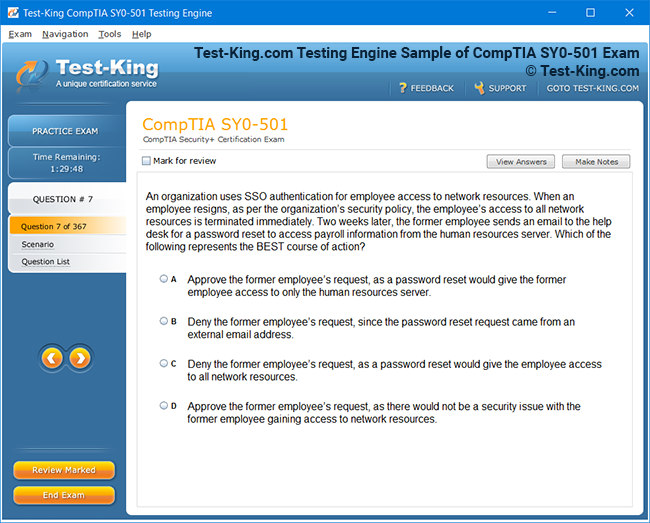
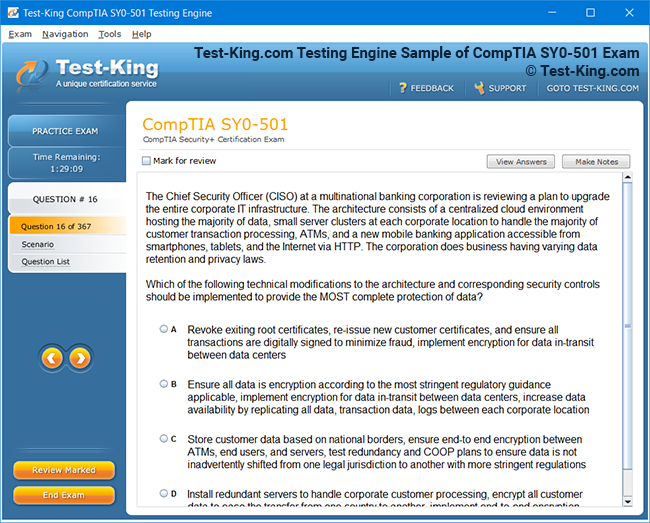
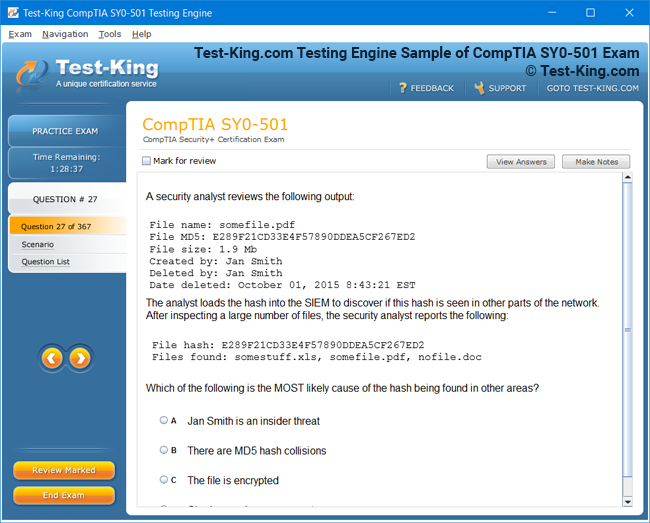
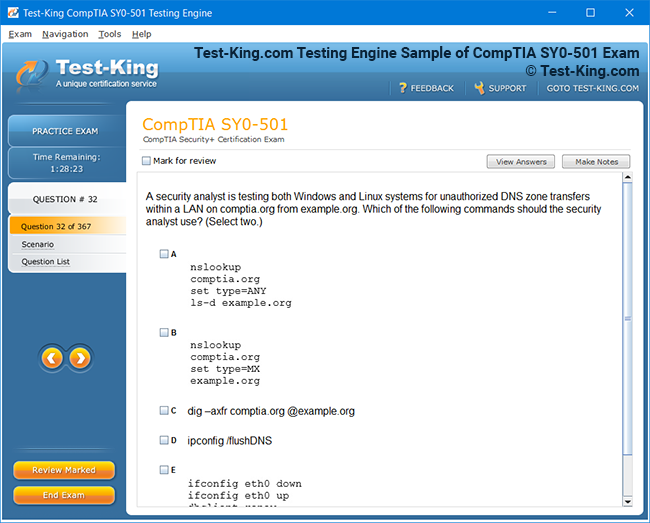
Product Screenshots
Frequently Asked Questions
How can I get the products after purchase?
All products are available for download immediately from your Member's Area. Once you have made the payment, you will be transferred to Member's Area where you can login and download the products you have purchased to your computer.
How long can I use my product? Will it be valid forever?
Test-King products have a validity of 90 days from the date of purchase. This means that any updates to the products, including but not limited to new questions, or updates and changes by our editing team, will be automatically downloaded on to computer to make sure that you get latest exam prep materials during those 90 days.
Can I renew my product if when it's expired?
Yes, when the 90 days of your product validity are over, you have the option of renewing your expired products with a 30% discount. This can be done in your Member's Area.
Please note that you will not be able to use the product after it has expired if you don't renew it.
How often are the questions updated?
We always try to provide the latest pool of questions, Updates in the questions depend on the changes in actual pool of questions by different vendors. As soon as we know about the change in the exam question pool we try our best to update the products as fast as possible.
How many computers I can download Test-King software on?
You can download the Test-King products on the maximum number of 2 (two) computers or devices. If you need to use the software on more than two machines, you can purchase this option separately. Please email support@test-king.com if you need to use more than 5 (five) computers.
What is a PDF Version?
PDF Version is a pdf document of Questions & Answers product. The document file has standart .pdf format, which can be easily read by any pdf reader application like Adobe Acrobat Reader, Foxit Reader, OpenOffice, Google Docs and many others.
Can I purchase PDF Version without the Testing Engine?
PDF Version cannot be purchased separately. It is only available as an add-on to main Question & Answer Testing Engine product.
What operating systems are supported by your Testing Engine software?
Our testing engine is supported by Windows. Andriod and IOS software is currently under development.
Understanding the Avaya Aura Contact Center Multimedia Implementation Exam (6211)
Avaya Aura Contact Center Multimedia Implementation Exam is often spoken about by professionals seeking to broaden their capabilities in managing and deploying sophisticated communication systems. Avaya has cultivated a reputation for creating solutions that enable organizations to connect with customers efficiently, yet the 6211 certification does not simply involve product knowledge. It revolves around the fusion of technological skills, best practices, and the capacity to design and configure systems that function seamlessly across voice, email, chat, social media, and other multimedia channels. A deeper understanding of this exam requires a journey through the evolving nature of customer service, the shifting expectations of enterprises, the role of contact center architecture, and the way an implementation specialist must transform abstract requirements into operational strategies. This exploration does not involve coding or complex tables, for the true essence of the exam stems from clear communication, configuration, and integration rather than raw programming.
When businesses shape their communication strategy, the influence of a contact center tends to be subtle yet consistently crucial. This exam sits at the intersection of technological expertise and customer experience, which is why so many professionals encounter it as they seek to transition from traditional telephony to digital-first operations. The Avas, or Avaya Aura system, acts as a central element in this transition, and the 6211 exam measures how well an individual can implement and maintain its numerous moving parts. The concept is not limited to installation but also includes administrative functions, flow creation, routing policies, network readiness, hardware components, and the handling of multimedia communications that exceed simple voice conversations. To become successful, a candidate must comprehend how to connect various communication channels to the contact center, configure agent desktops, utilize scripting, manage licensing, and maintain a stable environment across physical and virtual servers.
Because of our environment’s dependence on swift customer communication, skills in multimedia implementation are not merely a bonus but an essential piece of the modern puzzle. Many legacy systems once relied only on voice traffic, but now expectations have evolved to include email responsiveness, chat sessions, mobile applications, social media messaging, and the clever use of automation to improve response time. Instead of answering questions with a simple step-by-step procedure, the exam requests a holistic understanding of how technologies interact. This includes knowing how Session Manager, Communication Manager, and Avaya Aura Contact Center collaborate, why SIP protocols are necessary, how to manage contact routing strategies, and what it means to handle data in real-time as it moves between servers. If missteps occur, a large part of the exam revolves around diagnosing issues and proceeding with a methodical troubleshooting mindset, recognizing symptoms, and identifying the root of the problem rather than throwing random solutions.
This examination is not purely about recognition of terms; instead, it focuses on how one can configure and maintain these multimedia capabilities once the implementation process is underway. For example, the reason email integration matters is because contact centers often need to transform incoming messages into tasks for agents, categorize them, and manage them through service level agreements. When dealing with social media, it is not only about collecting a message but about routing it to the correct agent based on skills, language, and priority. The term multimedia in this context reflects a much broader responsibility than traditional voice response systems. This is why Avaya does not only offer software but also requires professionals to understand the environment, including network topology, firewalls, data traffic, and even coexisting systems like CRM or CMS tools.
The pursuit of this exam can initially appear daunting because the sheer number of concepts and the diversity of platforms involved require a comprehensive approach. Instead of merely describing features, one must portray the story of how a contact center transforms chaotic communication into structured and actionable data. Within the exam, candidates are often expected to explain or understand the flow of a call or message: from the moment a customer initiits directly, how it moves through components like SIP Server or Contact Center Manager Administration (CCMA), and how it ends up at an agent’s desktop or within an automation script. Such awareness must be shown through knowledge of configurations, permissions, service mapping, and scalability options.
Presenting the business perspective is crucial, as the exam also exists because companies need professionals who can handle real-world constraints like budgets, bandwidth, deployment timelines, and compatibility. A strong part of the responsibility is closely tied to following best practices for planning. Professionals need to know what to expect when upgrading components, how to avoid latency issues, how to ensure no single point of failure arises in the architecture, and how to deploy redundancy. These considerations are reflected in the exam objectives, where advanced planning and successful execution carry as much importance as the actual configuration. If one deploys an Avaya Aura Contact Center without proper strategy, the system may later become unstable, especially when multimedia traffic scales.
The 6211 certification helps in shaping careers because it marks a moment when a technician shifts from only fixing problems to becoming someone who shapes how communication systems behave. It is the difference between reacting to issues and designing a future-proof solution. The prestige of Avaya in the industry means that organizations often search for specialists that can modify routing flows, establish chat integrations, comply with regulations like GDPR or HIPAA, isolate problematic network segments, and configure the system for business continuity. The exam, therefore, covers not just the knowledge of how to deploy software but also how to maintain security, how to handle data, and how to collaborate with team members so the environment remains consistent.
Within the broader context of healthcare, retail, banking, insurance, or hospitality, the need for seamless communication rapidly becomes a defining factor. A patient who sends a message, a shopper who has a question, an insurance claim pending, all demand timely responses. This is where the insights tested in the exam become a practical tool. When this professional communicates with others, they must understand the language of servers, protocols, and system architecture as well as the language of business outcomes, customer satisfaction, and efficiency. The standard of communication has grown beyond simple voice calls. Now, the possibility of an email ticket, a social media complaint, or a chat window is part of everyday business. Once you start grasping the sheer scope of this, the real complexity of Avaya Aura Contact Center Multimedia Implementation Exam becomes clearer.
To prepare, many people seek traditional study materials such as official documentation, blueprints, and recommended practices. However, they quickly discover that preparation also includes real-world experience, practicing configuration steps, becoming aware of server requirements, and personally performing tasks like adding skillsets or mapping inbound routes. Rather than simply memorizing information, a deeper recognition of why certain policies exist is essential. For example, configuring skill-based routing is not just a feature—it directly affects metrics like average handling time, customer satisfaction, and agent workload. Similarly, failing to plan for network capacity could cause a severe bottleneck when multimedia traffic surges.
The actual nature of the examination also tends to include understanding of the environment in which the software is hosted, including server clustering, database management, resource allocation, and even backup strategies. If one chooses to run the system on virtualized servers, the exam expects knowledge of how this environment affects performance, latency, and disaster recovery. Another part of the process is recognizing why SIP trunking matters, how voice and message data travel, and how different protocols ensure communication between the Avaya systems and other components. Topics like Media Server, contact center scripting, and how Screen Pop works during incoming interactions are also considered.
Every function from call routing to email queuing, from screen sharing to agent login, causes a ripple effect on performance and resource distribution. That is why, when looking at this exam, it becomes clear that understanding how pieces fit together must be complemented by an awareness of troubleshooting. You are expected to be able to isolate issues, perhaps by testing network latency, confirming that the configuration is correct within the Manager Console, or looking for misconfigured DNS entries. Rather than only dealing with telephone lines, the 6211 exam broadens the landscape by involving digital channels. If a customer sends a complaint on social media, how does this information become visible to the right agent and how is it classified and stored? These are questions that emerge when one studies multimedia implementation.
As the transition to more sophisticated customer service grows, Avaya Aura platform includes tools for workforce management, analytics, and reports. These tools help organizations understand how many agents are needed, how long customers must wait, and what kind of volume is expected at different times. The reason these topics show up in the exam is because implementation professionals must be aware of the entire ecosystem, not just a single feature. The task may involve ensuring that the integration between the contact center and other software like CMS is properly configured to produce accurate historical data for planning and optimization. Again, this is not about writing code but about ensuring that the proper configuration supports the business objectives.
One can observe the influence of this exam on professional development because once certified, the individual becomes more visible to employers needing specific knowledge. The responsibility of managing customer interactions across voice, email, chat, and social media becomes more valuable as companies face reputational risk. The exam itself becomes a gateway to more responsibilities, which may include designing a new office setup, migrating from an old platform, or ensuring the system stays online during peak traffic. Many professionals also discover that once they start studying for this exam, they develop a better understanding of communication protocols, teamwork, and how different departments need to collaborate for the system to succeed.
This journey includes understanding how licensing works. The exam expects familiarity with what types of licenses are required for different communication channels and features. Planning includes ensuring that the number of agents matches the number of licenses purchased. If requirements are not properly calculated, an organization may suffer from sudden system limitations. When the exam expects you to deal with pricing or resource considerations, it is not about actual money but about strategy, foresight, and scalability. Likewise, awareness of system upgrades becomes important—knowing which steps to take when installing patches, how to reduce downtime, and how to protect data during transition.
Because digital communication subjects professionals to challenges like cybersecurity and privacy, the 6211 exam indirectly touches upon these themes. When systems rely on protocols and servers, they can become vulnerable to improper configuration or unsecured connections. While the exam may not involve in-depth encryption topics, it expects a mindset that understands the importance of safeguarding against data breaches and preserving customer confidentiality. This often requires teamwork, where the Avaya professional collaborures with IT security specialists to ensure the system is both functional and safe.
Businesses also rely on the expertise within this exam for shaping the customer journey. From the moment of initial contact, the system either guides the customer seamlessly or creates frustration if errors occur. Understanding why call routing is needed, why automated responses are configured a certain way, and how data is stored becomes an important aspect of this exam. You must think about customer satisfaction, reputation, and time efficiency. This helps you realize that the subject is far from simply passing an exam; it is about understanding how to run a thriving contact center that handles multiple forms of communication.
Exam preparation demands focus and persistence. There are no magic shortcuts, but studying documentation, practicing within a lab environment, and analyzing case studies can help. Some professionals lean on test environments to simulate routing scenarios, skill configuration, and integration with voice and data. This experience helps in developing insight rather than shallow recollection. When confronting the actual exam, you must distinguish terms, understand how different pieces interact, and know how to troubleshoot when something does not function as expected.
Throughout this journey, it becomes apparent that this exam demands a blend of technical knowledge and business insight. On one hand, you must understand SIP protocols, server connectivity, inbound classification, scripting, CMS interfaces, and network requirements. On the other, you need to comprehend why timely responses matter, how scalability affects long-term growth, and how to optimize agent performance. This balance of technology and practicality defines the Avaya Aura Contact Center Multimedia Implementation Exam and shapes the type of professional it aims to create.
The need for clear communication while configuring systems is also important. If configurations are misinterpreted or instructions are unclear, the entire system can malfunction. Collaboration and documentation exist as silent heroes within the industry, especially during installation or troubleshooting. When working with Avaya systems, being able to communicate with stakeholders and team members plays a crucial role. This ability becomes part of the professional mindset, and even though it may not be directly tested in the exam, it forms part of the readiness needed to face the challenges of actual implementation.
The exam does not simply measure isolated facts; it shines a spotlight on readiness to work within complex environments, to carry responsibility, and to uphold standards that businesses rely upon. In today's era, companies need trust, reliability, and the ability to manage customer interactions without chaos. The Avaya Aura Contact Center Multimedia Implementation Exam seeks to ensure that when professionals step into the role, they can maintain security, support multimedia integration, and help businesses grow responsibly.
Core Architecture, Functional Workflow, and Practical Implementation of Avaya Aura Contact Center
The Avaya Aura Contact Center Multimedia Implementation Exam evaluates a candidate’s proficiency in designing, deploying, and maintaining sophisticated communication environments where multiple channels converge into a seamless experience. Understanding this exam requires an immersion into the architecture and operational logic of Avaya Aura systems, which are crafted to facilitate omnichannel communication, ensuring that voice, email, chat, social media, and other digital interactions are processed efficiently and reliably. The architecture is not simply a collection of servers and software modules; it represents an ecosystem where interdependencies among components dictate both the performance and resilience of the system. At the heart of this ecosystem lies the Contact Center Manager, which functions as the orchestrator for incoming traffic, routing interactions to appropriate agents based on skill, availability, and contextual relevance.
The exam emphasizes the ability to comprehend the end-to-end flow of communications, beginning with the point at which a customer initiates contact. For voice interactions, this involves the interplay between Communication Manager, Media Server, and Session Manager, which coordinate to ensure that calls are established, routed, and monitored effectively. In the context of multimedia channels, messages travel through integration points that capture and categorize interactions, converting them into tasks assigned to agents while maintaining a record for analytics and reporting. This workflow must be understood not as isolated processes but as interlocking functions that rely on network stability, server capacity, protocol adherence, and proper configuration of the agent desktop environment.
One of the crucial elements tested is skill-based routing, a concept that extends beyond assigning interactions based on agent availability. The candidate must understand how to define, configure, and manage skills, ensuring that interactions are directed to the most capable agent to maximize efficiency and customer satisfaction. This involves mapping inbound contact types to skill groups, assigning priorities based on business rules, and accounting for agent schedules, language proficiencies, and workload distribution. Knowledge of routing strategies includes the capacity to design fallback mechanisms when primary routing paths are unavailable, demonstrating an understanding of business continuity and the avoidance of system bottlenecks.
A detailed grasp of Avaya Aura Contact Center’s multimedia capabilities is necessary for implementing omnichannel functionality. Each channel has its own characteristics and requirements; for example, email integration requires parsing incoming messages, categorizing content, and mapping it to the appropriate queues, while chat interactions demand real-time monitoring, immediate agent notification, and contextual awareness to ensure accurate and timely responses. Social media channels introduce further complexity, necessitating integration with third-party APIs, sentiment analysis, and prioritization of messages based on urgency or relevance. Candidates are expected to understand how these channels converge within the Contact Center platform, and how agents interact with multiple modalities without disruption to workflow.
Network infrastructure is another domain of significance. The exam tests the candidate’s ability to assess network readiness, including bandwidth allocation, latency mitigation, firewall configurations, and virtualized server deployment. A robust understanding of Session Initiation Protocol and other transport mechanisms is essential, as these protocols govern how data flows between servers, endpoints, and client applications. Additionally, the exam evaluates knowledge of redundancy planning, load balancing, and failover strategies, ensuring that a certified professional can maintain service continuity even during system stress or component failures.
The orchestration of multimedia interactions relies heavily on proper configuration of the administrative consoles within Avaya Aura. Candidates must demonstrate proficiency with the Contact Center Manager Administration interface, skillfully navigating its functionalities to set up agents, configure workgroups, establish routing scripts, and monitor real-time operational metrics. Furthermore, familiarity with historical reporting tools allows professionals to evaluate trends, identify inefficiencies, and recommend improvements based on quantifiable performance indicators. Effective use of these tools ensures that management decisions are data-driven, and that multimedia operations are optimized to meet both organizational objectives and customer expectations.
An aspect often highlighted in practical deployment scenarios is integration with ancillary systems, including Customer Relationship Management and Content Management platforms. Avaya Aura’s APIs allow for seamless connectivity with these external applications, enabling the exchange of customer information, case histories, and contextual data that inform agent interactions. Understanding this integration process is essential for candidates, as it reflects real-world deployment challenges where siloed systems must communicate effectively to deliver cohesive service. The exam measures the candidate’s ability to configure, troubleshoot, and maintain these integrations, ensuring reliability and efficiency in live operational environments.
Security and compliance considerations are increasingly critical in modern contact center environments. Candidates are expected to be conversant with data protection standards, secure transport protocols, user authentication mechanisms, and role-based access control within the Avaya ecosystem. Implementing these safeguards ensures that sensitive customer information is protected while maintaining operational transparency and auditability. Knowledge of security best practices, combined with an understanding of regulatory compliance requirements, reinforces the candidate’s ability to deliver not only functional but also legally compliant implementations.
The examination also emphasizes system optimization and resource management. Efficient deployment necessitates careful allocation of server resources, agent licensing, and multimedia capacity planning. Candidates must understand how to project resource requirements based on interaction volume, expected peak loads, and agent availability. Proper configuration ensures that system performance remains consistent, interactions are routed without delay, and service level agreements are met. The exam evaluates the candidate’s capacity to balance operational efficiency with scalability, allowing organizations to adapt seamlessly to fluctuating communication demands.
Troubleshooting and problem resolution form a significant component of the assessment. Candidates are presented with scenarios requiring identification of system anomalies, analysis of performance metrics, and application of corrective measures. This may involve diagnosing misrouted interactions, resolving network conflicts, or addressing server capacity limitations. The objective is to cultivate a professional mindset capable of preemptively identifying potential issues and implementing robust solutions, reducing downtime and ensuring uninterrupted service. Effective troubleshooting relies not only on technical knowledge but also on logical reasoning, methodical investigation, and an understanding of interdependencies among system components.
Agents and supervisors constitute the operational core of the Contact Center. The exam addresses the configuration of agent profiles, workgroup assignments, desktop interface settings, and permissions. Candidates must understand how to ensure that agents are equipped with the appropriate tools to manage interactions efficiently, while supervisors require visibility into real-time performance, queue statistics, and workflow anomalies. This dual focus underscores the importance of usability and accessibility in multimedia environments, reinforcing the premise that system design must facilitate human performance rather than hinder it.
The examination further delves into the configuration of call and message flows. Candidates are expected to translate business requirements into technical configurations that dictate how multimedia interactions traverse the system. This encompasses scripting for automated responses, routing rules for prioritization, escalation protocols for unresolved interactions, and failover mechanisms to safeguard against operational interruptions. Mastery of these configurations requires a holistic understanding of both technical and business considerations, reflecting the symbiotic relationship between system capability and organizational objectives.
Analytical tools within the Avaya Aura ecosystem provide candidates with the ability to monitor system health and operational efficiency. Real-time dashboards display metrics such as agent availability, queue lengths, interaction wait times, and multimedia distribution patterns. Historical reports provide insights into trends, peak traffic periods, agent performance, and customer satisfaction indicators. Candidates are assessed on their ability to interpret these reports, identify areas for optimization, and implement changes that enhance overall performance. The examination underscores the necessity of data literacy, ensuring that professionals can leverage analytics to make informed decisions.
The integration of workforce management principles with multimedia operations is another area of focus. Scheduling, forecasting, and capacity planning are crucial for maintaining optimal agent coverage across various channels. Candidates must understand how to align staffing with anticipated interaction volumes, considering factors such as seasonality, promotional campaigns, or emergent events. By effectively managing human resources alongside technological infrastructure, the professional ensures that the Contact Center operates efficiently, maintaining service levels and minimizing customer frustration.
Avaya Aura Contact Center also incorporates mechanisms for quality monitoring and compliance verification. Candidates must be aware of methods for recording interactions, evaluating agent performance, and ensuring adherence to internal policies and external regulations. This includes techniques for monitoring both voice and digital interactions, providing feedback to agents, and implementing corrective actions when necessary. Knowledge of these practices is vital for delivering consistent, high-quality service and for safeguarding organizational reputation.
Operational continuity and disaster recovery are examined through the lens of system resilience. Candidates are expected to understand the importance of redundant server configurations, failover clusters, and backup strategies. Proficiency in these areas ensures that the Contact Center can withstand hardware failures, network interruptions, or other unforeseen events without significant disruption to service. The examination evaluates the candidate’s capacity to design and implement resilient solutions, reflecting a forward-looking approach to system management.
Communication protocols form the backbone of multimedia interaction. Candidates must demonstrate familiarity with Session Initiation Protocol, SIP trunking, and other transport mechanisms that facilitate the exchange of voice and data. Understanding the nuances of these protocols, including signaling, media negotiation, and error handling, is essential for ensuring reliable connectivity across diverse network environments. The examination challenges candidates to apply this knowledge in practical scenarios, reflecting real-world operational conditions.
Candidates are also expected to be adept at managing system upgrades, patches, and feature deployments. The ability to plan and execute updates without causing downtime or disruption to multimedia operations is critical. This involves understanding the dependencies among system components, coordinating changes with stakeholders, and verifying successful implementation. The examination assesses the candidate’s ability to maintain system integrity while incorporating enhancements or addressing vulnerabilities.
In addition to technical acumen, the exam emphasizes the importance of communication and documentation. Candidates must be able to articulate configuration decisions, document system architecture, and convey troubleshooting steps clearly to colleagues or management. This skill ensures that knowledge is transferable, collaboration is facilitated, and operational continuity is maintained even in the event of staff turnover. Effective communication complements technical expertise, reinforcing the professional’s ability to deliver comprehensive, reliable, and maintainable solutions.
The orchestration of multimedia interactions in Avaya Aura requires nuanced understanding of interaction prioritization and agent engagement. Candidates must recognize how to design routing rules that balance workload distribution, respond to dynamic conditions, and adapt to emerging business priorities. This includes understanding thresholds for escalation, mechanisms for handling overflow, and strategies for managing simultaneous interactions across channels. The examination evaluates the candidate’s ability to apply these principles in practical contexts, ensuring operational efficiency and customer satisfaction.
Finally, the exam underscores the significance of monitoring and optimization. Continuous evaluation of system performance, agent efficiency, and customer outcomes is essential for maintaining a competitive edge. Candidates must be capable of interpreting metrics, identifying bottlenecks, implementing improvements, and validating the impact of changes. This iterative approach reflects the dynamic nature of contact center operations, where adaptation and refinement are essential for sustaining high-quality service delivery across multimedia platforms.
The breadth of knowledge assessed by the Avaya Aura Contact Center Multimedia Implementation Exam extends from technical architecture to human resource management, from network optimization to security and compliance, and from system configuration to operational analytics. Mastery of these domains equips professionals to implement solutions that are robust, scalable, and aligned with organizational objectives, ensuring that customer interactions across voice, email, chat, and social media are handled seamlessly and efficiently. Professionals who achieve certification demonstrate not only technical proficiency but also the capacity to integrate technology, strategy, and operational insight into comprehensive, high-performing contact center environments.
System Design, Integration, and Optimization Strategies for Avaya Aura Contact Center
The Avaya Aura Contact Center Multimedia Implementation Exam evaluates not only the technical aptitude of candidates but also their capacity to integrate complex systems into an operationally efficient contact environment. Mastery of this exam involves a profound comprehension of the underlying architecture, practical workflows, and the interplay of multiple communication channels. Professionals must understand how to translate organizational requirements into functional design while ensuring scalability, reliability, and high availability. The focus is not limited to hardware or software installation; it encompasses the orchestration of multiple components including servers, communication protocols, routing scripts, agent desktops, and network infrastructure to create a cohesive environment that can handle voice, email, chat, social media, and other digital interactions seamlessly.
A crucial aspect of the exam is understanding system topology. Candidates must be adept at visualizing how the various components of the Avaya Aura ecosystem interconnect, including Communication Manager, Session Manager, Media Servers, Contact Center Manager Administration, and agent endpoints. This understanding is necessary for designing resilient networks capable of sustaining high interaction volumes without degradation. Professionals must anticipate bottlenecks, plan for redundancy, and implement failover mechanisms to maintain uninterrupted service. Knowledge of virtualization strategies and distributed deployment models is also assessed, ensuring that candidates can design both on-premises and cloud-based solutions.
Multimedia integration forms the crux of the practical applications tested in the examination. Candidates must understand the nuances of each channel and its operational requirements. Voice interactions require proper signaling, codec configuration, and SIP trunking for reliable delivery. Email and messaging channels demand parsing, categorization, task creation, and routing to appropriate agents based on skill and availability. Chat interactions require real-time monitoring and dynamic allocation of agents, while social media channels necessitate integration with third-party APIs and automated sentiment analysis to prioritize critical messages. Candidates must understand how these channels converge within the contact center platform, allowing agents to interact with customers efficiently while maintaining context across channels.
Routing strategies are evaluated in terms of complexity and adaptability. The exam measures a candidate’s ability to define skill groups, assign routing priorities, and configure rules that optimize workload distribution. Advanced routing considerations include fallback mechanisms, escalation policies, and dynamic reassignment of interactions during peak periods or outages. Candidates must also comprehend how to integrate routing logic with external systems such as workforce management platforms to ensure alignment with agent availability, shift patterns, and predicted interaction volumes. Effective routing is not just a technical function but a strategic approach to managing customer satisfaction, response times, and operational efficiency.
The exam emphasizes configuration and administrative competence. Candidates are expected to navigate the Contact Center Manager Administration interface with fluency, configuring agents, workgroups, routing scripts, and queue management parameters. They must also understand historical and real-time reporting functionalities, utilizing analytics to monitor trends, assess performance, and implement optimization measures. The ability to interpret these reports enables professionals to identify inefficiencies, anticipate resource requirements, and make data-driven decisions that enhance both agent productivity and customer experience.
Integration with auxiliary systems is a critical domain assessed in the exam. Candidates must demonstrate understanding of how Avaya Aura interfaces with CRM, CMS, and other enterprise applications to provide contextually rich interactions. This includes configuring API endpoints, mapping data fields, and ensuring seamless data flow between systems. Integration allows agents to access comprehensive customer profiles, case histories, and interaction logs in real time, thereby improving resolution times and reducing the need for repetitive information gathering. Professionals are also expected to troubleshoot integration failures, optimize data transfer protocols, and ensure compatibility across updates and system upgrades.
Security and compliance considerations are integral to practical implementation. Candidates are expected to apply principles of data protection, secure transmission protocols, role-based access, and audit logging. Knowledge of regulatory frameworks such as GDPR or HIPAA is critical, as the contact center often handles sensitive customer information. Security implementation includes configuring user permissions, encrypting interactions, monitoring for unauthorized access, and maintaining comprehensive records for compliance verification. Candidates must understand how security practices intersect with operational requirements, ensuring that safety measures do not compromise efficiency or system performance.
The orchestration of agent desktops and supervisory tools is another vital area of focus. Candidates must configure agent profiles, workgroup memberships, and interface settings to facilitate seamless handling of interactions across all channels. Supervisors require real-time dashboards to monitor queue lengths, agent availability, and interaction distribution. These tools allow for rapid identification of anomalies and enable corrective measures to maintain service levels. Mastery of these configurations ensures that the human element of the contact center is as optimized as the technical infrastructure, emphasizing the balance between technology and operational management.
Resource planning and system scalability are examined through the lens of multimedia performance and workload distribution. Candidates must understand how to forecast interaction volumes, allocate agent licenses, and manage server resources to accommodate peak loads without service degradation. This requires proficiency in capacity planning, anticipating growth trends, and implementing solutions that allow the system to expand organically as organizational needs evolve. Knowledge of virtualized environments, cloud deployment strategies, and dynamic resource allocation mechanisms is evaluated to ensure candidates can design systems that are both resilient and scalable.
Troubleshooting skills are a core component of the examination. Candidates must demonstrate the ability to diagnose system anomalies, analyze performance metrics, and implement corrective actions. This includes identifying misrouted interactions, network bottlenecks, server performance issues, and configuration errors. The evaluation emphasizes a methodical approach, where candidates apply logical reasoning and technical insight to isolate problems, validate potential solutions, and restore normal operations. Proficiency in troubleshooting ensures minimal disruption to contact center performance and reflects real-world operational readiness.
Monitoring and reporting capabilities within Avaya Aura are integral to maintaining optimal performance. Candidates are expected to utilize dashboards for real-time insights into agent activity, queue status, and interaction distribution. Historical reporting allows for trend analysis, performance benchmarking, and identification of systemic inefficiencies. Interpretation of these reports enables professionals to implement proactive measures, optimize workflows, and enhance both agent productivity and customer satisfaction. Analytical skills complement technical proficiency, ensuring that system management is both informed and strategic.
Workforce management integration plays a pivotal role in multimedia contact center operations. Candidates must understand how to align agent scheduling with predicted interaction volumes, considering variables such as seasonal demand, promotional campaigns, and emergent customer needs. Effective workforce management ensures that agent coverage is optimized, minimizing wait times and enhancing service levels. Candidates are expected to configure scheduling tools, forecast interaction volumes, and monitor adherence to workforce plans, demonstrating an ability to balance human resources with system capabilities.
System resilience and disaster recovery are evaluated through candidate knowledge of redundancy strategies, failover mechanisms, and backup processes. Professionals must design systems capable of sustaining service continuity in the event of hardware failure, network interruptions, or software anomalies. This includes clustering critical components, configuring failover protocols, and validating backup integrity. The examination assesses candidates on their ability to anticipate failures, implement preventive measures, and maintain operational continuity under adverse conditions.
Interaction management, including call and message flow, is central to effective multimedia implementation. Candidates must understand how interactions traverse the system, from initiation to resolution, and how routing rules, escalation policies, and failover mechanisms impact delivery. Effective interaction management ensures that agents are presented with appropriate tasks, customers experience minimal delays, and service level objectives are consistently met. Candidates are evaluated on their ability to design, configure, and optimize interaction flows, ensuring operational efficiency and customer satisfaction.
The examination also examines the configuration and optimization of automated systems, such as interactive voice response, chatbots, and messaging queues. Candidates must demonstrate knowledge of scripting, decision logic, and integration with agent workflows. Automation allows for efficient handling of routine inquiries, freeing agents to focus on complex interactions. Candidates are expected to configure, monitor, and troubleshoot these automated systems, ensuring they function in harmony with overall multimedia operations.
Understanding communication protocols is fundamental to Avaya Aura implementation. Candidates are expected to demonstrate proficiency with Session Initiation Protocol, SIP trunking, and other transport mechanisms. Knowledge of signaling, media negotiation, error handling, and protocol interdependencies ensures reliable connectivity and uninterrupted interaction flow. The examination evaluates both theoretical understanding and practical application, requiring candidates to demonstrate how these protocols function within live operational environments.
Performance optimization is a recurrent theme within the exam. Candidates must identify and address bottlenecks in server performance, network throughput, agent productivity, and interaction distribution. Techniques include load balancing, resource allocation, queue management, and workflow refinement. Effective optimization enhances system efficiency, reduces customer wait times, and improves agent utilization. Professionals are evaluated on their ability to implement these techniques while maintaining system stability and operational resilience.
Candidates must also demonstrate expertise in implementing and maintaining integrations with enterprise applications. This includes ensuring compatibility with CRM systems, maintaining data integrity, and facilitating seamless exchange of customer information. Knowledge of API configurations, authentication mechanisms, and error handling is critical to sustaining reliable integrations. The examination assesses the candidate’s ability to deploy, troubleshoot, and optimize these integrations within the broader multimedia environment.
Security management is a pervasive aspect of the Avaya Aura ecosystem. Candidates are expected to configure role-based access, monitor system activity, implement secure communication protocols, and maintain compliance with regulatory standards. Knowledge of encryption, authentication, and audit mechanisms ensures that sensitive information is protected without compromising operational efficiency. The examination tests both understanding and practical application, reflecting real-world responsibilities in safeguarding organizational assets and customer data.
Operational monitoring extends beyond individual interactions to encompass system health and performance metrics. Candidates must utilize dashboards and reporting tools to track agent activity, queue status, resource utilization, and interaction distribution. Analytical insights inform optimization decisions, allowing professionals to refine workflows, enhance productivity, and maintain service quality. This requires a combination of technical knowledge, analytical reasoning, and strategic foresight, all of which are assessed in the examination.
The orchestration of multimedia interactions requires coordination between human and technological resources. Candidates must ensure that agent capabilities, system functionality, and workflow configurations are aligned to support efficient interaction handling. This includes balancing workload distribution, configuring escalation protocols, and maintaining continuity across multiple channels. The examination emphasizes the candidate’s ability to implement integrated solutions that optimize both agent performance and customer satisfaction.
Candidates are expected to demonstrate proficiency in system updates, patch management, and feature deployment. This involves planning updates to minimize disruption, validating configurations, and ensuring backward compatibility with existing integrations. Knowledge of change management practices ensures that updates are implemented methodically, preserving system integrity and operational continuity. The examination evaluates the candidate’s ability to execute these tasks effectively within complex multimedia environments.
Analytical skills are reinforced through the use of historical reporting and performance evaluation. Candidates must interpret metrics related to agent efficiency, interaction volume, system performance, and customer satisfaction. Insights derived from these analyses inform decisions regarding system configuration, workforce management, and process optimization. The examination assesses the candidate’s ability to translate data into actionable strategies, ensuring that multimedia operations are continuously refined and improved.
Agents and supervisors remain central to the effective functioning of Avaya Aura Contact Center. Candidates must configure agent profiles, assign skill sets, and enable access to appropriate tools while providing supervisors with visibility into operational metrics and workflow performance. This facilitates rapid response to issues, informed decision-making, and continuous improvement in service delivery. Mastery of these capabilities demonstrates the candidate’s ability to integrate human resources with technological infrastructure effectively.
The integration of multimedia, analytics, security, workforce management, and operational monitoring illustrates the breadth and depth of knowledge required for the Avaya Aura Contact Center Multimedia Implementation Exam. Candidates must synthesize technical expertise, strategic insight, and practical experience to deliver high-performing, resilient, and scalable contact center solutions. Mastery of these domains equips professionals to implement environments where customer interactions across voice, email, chat, and social media are handled efficiently, reliably, and in alignment with organizational objectives.
Advanced Deployment, Operational Strategies, and Performance Management of Avaya Aura Contact Center
The Avaya Aura Contact Center Multimedia Implementation Exam evaluates a professional’s capacity to design, deploy, and maintain highly efficient communication systems that handle multiple channels seamlessly. Mastery of the exam requires not only technical acumen but also strategic insight into workflow optimization, system resilience, and operational efficiency. Candidates are expected to demonstrate a holistic understanding of Avaya Aura architecture, encompassing Communication Manager, Session Manager, Media Servers, Contact Center Manager Administration, and agent desktop interfaces, as well as their integration with business processes and external systems. The essence of the exam lies in translating organizational requirements into a functional multimedia environment that maintains reliability, scalability, and performance under varying workloads.
A critical aspect of implementation is understanding the topology and interconnection of system components. Candidates must visualize how interactions traverse the network from initiation to resolution. Voice calls rely on proper SIP trunk configuration, codec negotiation, and signaling between Communication Manager and Media Servers. Email and messaging channels require parsing, categorization, and routing to appropriate agents based on skill sets, availability, and business rules. Chat interactions demand real-time assignment to agents, ensuring minimal latency and preserving context throughout the session. Social media integration adds complexity, requiring API configurations, sentiment analysis, and prioritization rules to ensure critical messages are addressed promptly. Candidates are expected to grasp how these channels converge within a single platform, allowing agents to manage interactions effectively while maintaining operational continuity.
Routing configuration and skill-based allocation are central to the examination. Candidates must define and assign skill groups, configure routing priorities, and develop rules that optimize workload distribution. Advanced considerations include fallback mechanisms, escalation procedures, and dynamic reallocation of interactions during high-volume periods or system interruptions. Integration of routing logic with workforce management tools ensures alignment between agent availability, predicted interaction volumes, and scheduling requirements. Effective routing enhances customer satisfaction, operational efficiency, and resource utilization, reflecting the strategic impact of technical decisions on business outcomes.
Administrative proficiency is essential for managing Avaya Aura components. Candidates must navigate the Contact Center Manager Administration interface to configure agents, assign workgroups, develop routing scripts, and monitor queues. Real-time monitoring dashboards provide insights into agent activity, interaction distribution, and queue status, while historical reporting enables analysis of performance trends and identification of inefficiencies. Candidates must interpret these reports to make informed decisions, optimize workflows, and maintain service levels. This analytical component ensures that system management is data-driven, aligning technical operations with business objectives.
Integration with external systems such as Customer Relationship Management and Content Management platforms is a key competency evaluated in the exam. Candidates must configure APIs, map data fields, and ensure seamless communication between systems to provide agents with comprehensive customer context. Integration facilitates faster resolution, reduces information redundancy, and improves customer satisfaction. Troubleshooting integration issues, validating data flows, and maintaining compatibility across updates are essential skills, reflecting real-world operational challenges in maintaining complex, interconnected environments.
Security and compliance considerations are integral to multimedia implementation. Candidates are expected to configure secure access, implement encryption, enforce role-based permissions, and maintain audit logs. Compliance with regulations such as GDPR or HIPAA requires careful management of sensitive customer information while ensuring operational transparency and accountability. Security measures must be balanced with system performance, allowing for uninterrupted service while safeguarding data integrity. The exam assesses candidates’ ability to implement these safeguards effectively, reflecting their readiness to manage both technical and regulatory responsibilities.
Agent desktop configuration and supervisory oversight are critical for operational efficiency. Candidates must ensure agents have appropriate access, skill assignments, and interface settings to handle interactions across multiple channels. Supervisors require visibility into performance metrics, queue status, and workload distribution to make informed operational decisions. The ability to configure these environments effectively ensures that both human and technical resources operate harmoniously, maximizing service quality and minimizing operational disruption.
Capacity planning and resource management are vital for maintaining system performance. Candidates must forecast interaction volumes, allocate agent licenses, and manage server resources to accommodate peak demand without service degradation. Knowledge of virtualized environments, dynamic resource allocation, and load balancing ensures scalability and resilience. Effective capacity planning allows organizations to expand operations seamlessly and adapt to fluctuating workloads, reflecting the practical applicability of exam objectives in real-world deployments.
Troubleshooting and problem resolution are emphasized in the examination. Candidates must demonstrate the ability to diagnose misrouted interactions, network anomalies, server performance issues, and configuration errors. Methodical problem-solving skills, combined with technical knowledge, enable professionals to identify root causes, validate corrective actions, and restore normal operations efficiently. Troubleshooting is not merely reactive; it involves proactive monitoring, anticipation of potential failures, and implementation of preventive measures to minimize downtime and operational impact.
Monitoring and analytics form a cornerstone of multimedia operations. Real-time dashboards display agent availability, queue lengths, interaction distribution, and system health indicators. Historical reporting enables trend analysis, performance evaluation, and identification of bottlenecks. Candidates must interpret these insights to optimize workflows, enhance agent productivity, and improve customer satisfaction. Analytical proficiency ensures that operational decisions are informed, data-driven, and aligned with organizational goals, reinforcing the strategic dimension of multimedia implementation.
Workforce management integration is critical for aligning agent availability with predicted interaction volumes. Candidates must configure scheduling, forecast workloads, and monitor adherence to staffing plans. Consideration of variables such as seasonal demand, campaign-driven spikes, and emergent customer needs ensures optimal agent coverage. Effective workforce management reduces customer wait times, improves service levels, and enhances operational efficiency. Candidates are assessed on their ability to integrate workforce planning with multimedia system functionality, reflecting the interconnected nature of technical and human resource management.
System resilience and disaster recovery are examined through the implementation of redundancy strategies, failover mechanisms, and backup processes. Candidates must design systems capable of sustaining operations during hardware failures, network interruptions, or software anomalies. Redundant server configurations, clustered components, and validated backup processes ensure continuity of service and minimize operational disruption. The examination evaluates candidates’ ability to anticipate risks, implement preventive measures, and maintain robust, fault-tolerant systems capable of handling high interaction volumes under challenging conditions.
Interaction flow management encompasses the end-to-end journey of voice, email, chat, and social media communications. Candidates must understand how routing rules, escalation procedures, and failover protocols influence the delivery and resolution of interactions. Effective management ensures that agents receive appropriate tasks, customers experience minimal delays, and service level agreements are met. Mastery of these principles demonstrates the candidate’s capacity to design and implement multimedia environments that balance technical precision with operational efficiency.
Automation tools such as interactive voice response, chatbots, and messaging queues are incorporated into multimedia environments to enhance operational efficiency. Candidates must demonstrate knowledge of scripting, decision logic, and integration with agent workflows. Automation allows routine inquiries to be handled effectively, freeing agents to focus on complex interactions. Candidates are expected to configure, monitor, and troubleshoot these systems, ensuring they operate harmoniously within the broader multimedia ecosystem.
Communication protocols underpin the functionality of the Avaya Aura Contact Center. Candidates must demonstrate proficiency with Session Initiation Protocol, SIP trunking, and related transport mechanisms. Knowledge of signaling, media negotiation, error handling, and protocol dependencies ensures reliable connectivity and uninterrupted service. The examination evaluates both theoretical understanding and practical application, requiring candidates to demonstrate protocol functionality in live, operational scenarios.
Performance optimization remains a recurring theme. Candidates must identify and mitigate bottlenecks in server utilization, network throughput, agent workload, and interaction distribution. Strategies include load balancing, resource allocation, queue management, and workflow refinement. Optimized performance enhances customer experience, reduces wait times, and improves agent efficiency. Professionals are assessed on their ability to implement these strategies while maintaining stability and resilience, reflecting the operational demands of a high-volume, multimedia environment.
Integration with enterprise applications such as CRM and CMS platforms is essential for providing agents with comprehensive context. Candidates must configure data flows, maintain integrity, and troubleshoot integration issues. This ensures that customer information is accurate, accessible, and actionable, improving response times and reducing repetitive inquiries. Proficiency in integration demonstrates the candidate’s ability to create cohesive operational environments that support informed, efficient customer interactions.
Security management permeates all aspects of multimedia implementation. Candidates must enforce role-based access, implement encryption, monitor activity, and ensure compliance with regulatory standards. Secure configuration protects sensitive information while maintaining operational efficiency. The examination evaluates both theoretical understanding and practical application, emphasizing the candidate’s ability to safeguard data while supporting uninterrupted multimedia operations.
Operational monitoring encompasses both system health and interaction-level metrics. Candidates must utilize dashboards and reporting tools to track agent performance, queue status, resource utilization, and workflow efficiency. Analytical insights derived from these metrics inform optimization decisions, allowing professionals to refine processes, enhance productivity, and maintain high service quality. Mastery of monitoring tools demonstrates a candidate’s ability to manage complex multimedia environments proactively.
The coordination of agents, supervisors, and technological resources is critical for effective multimedia operation. Candidates must configure agent interfaces, assign skills, establish escalation protocols, and maintain continuity across channels. Supervisors require real-time visibility into operations to respond to anomalies and ensure service levels are met. Mastery of these operational processes demonstrates the candidate’s ability to integrate human and technical resources effectively, ensuring that the contact center delivers consistent, high-quality service.
System updates, patch management, and feature deployment are integral to maintaining operational efficiency. Candidates must plan and execute updates with minimal disruption, validate configurations, and ensure compatibility with existing integrations. Change management practices are evaluated to ensure updates enhance functionality without compromising stability. The examination emphasizes the candidate’s ability to maintain system integrity while adapting to evolving operational requirements.
Analytical proficiency underpins continuous improvement. Candidates must interpret performance metrics, identify inefficiencies, and implement corrective measures to optimize multimedia operations. This includes evaluating agent productivity, interaction flow efficiency, and system performance. The examination assesses the candidate’s ability to leverage analytics to drive operational enhancements, demonstrating a strategic understanding of both technical and human dimensions of the contact center.
Agents and supervisors form the operational nucleus of the contact center. Candidates must configure profiles, assign skills, enable access to necessary tools, and provide supervisory visibility into operational metrics. This configuration ensures that both human and technological resources function cohesively, supporting seamless interaction handling and maintaining service quality. Mastery of these competencies reflects a candidate’s ability to integrate technical knowledge with operational strategy in a high-volume multimedia environment.
The Avaya Aura Contact Center Multimedia Implementation Exam encompasses a wide spectrum of knowledge domains, including system architecture, routing strategies, integration, security, workforce management, performance optimization, and operational monitoring. Candidates are required to synthesize technical expertise, strategic insight, and practical experience to implement resilient, scalable, and high-performing multimedia solutions. Mastery of these areas equips professionals to manage complex contact center environments where voice, email, chat, and social media interactions are handled efficiently and in alignment with organizational objectives.
Strategic Deployment, Optimization, and Operational Excellence in Avaya Aura Contact Center
The Avaya Aura Contact Center Multimedia Implementation Exam evaluates a professional’s capacity to architect, deploy, and sustain advanced multimedia contact environments where voice, email, chat, and social media interactions converge seamlessly. Achieving proficiency requires not only a deep technical understanding but also an ability to integrate operational workflows, optimize system performance, and ensure scalability and resilience. Candidates must demonstrate expertise in configuring Communication Manager, Session Manager, Media Servers, Contact Center Manager Administration, and agent desktop environments, while understanding their interplay with enterprise processes and third-party integrations. The examination emphasizes translating organizational needs into functional, high-performing solutions capable of sustaining high volumes of interactions while maintaining security, compliance, and operational efficiency.
A central aspect of the examination is the candidate’s understanding of system architecture and network topology. Multimedia interactions traverse complex pathways involving multiple servers, communication protocols, and integration points. Voice interactions depend on precise SIP signaling, codec negotiation, and Media Server configuration to ensure clarity, minimal latency, and reliable delivery. Email and messaging channels require parsing, categorization, and task assignment to agents based on skill sets and availability. Chat interactions demand real-time routing and context preservation, while social media integration necessitates API configuration, sentiment analysis, and prioritization of urgent messages. Candidates must comprehend the convergence of these channels to ensure agents can manage multiple interaction streams efficiently without operational disruption.
Routing strategies form a cornerstone of multimedia implementation. Candidates must configure skill-based routing, defining agent groups, prioritizing interactions, and developing rules that ensure optimal workload distribution. The examination assesses understanding of fallback mechanisms, escalation protocols, and dynamic reallocation of interactions during peak periods or unforeseen outages. Integration with workforce management tools allows alignment between predicted interaction volumes and agent schedules. Effective routing strategies ensure not only operational efficiency but also improved customer satisfaction and adherence to service level agreements.
Administrative proficiency is vital for configuring and managing Avaya Aura environments. Candidates must navigate Contact Center Manager Administration to configure agent profiles, workgroups, routing scripts, and queues. Real-time dashboards offer insights into agent availability, interaction distribution, and queue performance, while historical reporting enables trend analysis, performance evaluation, and identification of inefficiencies. Candidates are expected to interpret these insights and implement corrective measures to optimize workflows and enhance productivity. Analytical skills complement technical expertise, ensuring that operational decisions are informed by data and aligned with business objectives.
Integration with enterprise applications, including Customer Relationship Management and Content Management systems, is critical. Candidates must configure API connections, map data fields, and ensure seamless data flow between platforms. These integrations enable agents to access customer histories, case details, and contextual information in real-time, improving resolution times and reducing redundancy. Troubleshooting integration failures, maintaining data integrity, and ensuring compatibility with system upgrades are essential skills, reflecting the practical challenges of operating a multimedia contact center.
Security and regulatory compliance are integral to the exam. Candidates must implement secure communication protocols, encryption, role-based access, and audit logging. Ensuring adherence to standards such as GDPR or HIPAA requires careful handling of sensitive customer data while maintaining operational transparency. Security measures must be balanced with performance, ensuring seamless interactions without compromising safety. The examination evaluates candidates’ ability to implement these practices effectively, demonstrating readiness to manage both technical and compliance responsibilities in complex environments.
Agent desktop configuration and supervisory tools are essential for operational efficiency. Candidates must ensure agents have appropriate access, skill assignments, and interface settings to handle interactions across channels. Supervisors require real-time visibility into operational metrics, queue status, and agent performance to make informed decisions. Effective configuration ensures a balance between technological capabilities and human resource management, optimizing both agent productivity and customer experience.
Capacity planning and resource management are examined through forecasted interaction volumes, server utilization, and agent licensing. Candidates must understand virtualization strategies, load balancing, and dynamic resource allocation to accommodate peak interaction loads. Proper planning ensures system scalability, minimizes performance degradation, and enables seamless expansion as organizational needs evolve. The examination assesses the candidate’s ability to implement efficient, scalable environments capable of sustaining high-volume multimedia operations.
Troubleshooting is emphasized throughout the exam. Candidates must diagnose misrouted interactions, network latency issues, server performance anomalies, and configuration errors. Methodical problem-solving skills, combined with technical knowledge, allow professionals to identify root causes, implement corrective measures, and restore normal operations efficiently. Troubleshooting extends beyond reactive solutions, encompassing proactive monitoring and preventive strategies to minimize downtime and maintain service levels.
Monitoring and analytics are central to operational optimization. Real-time dashboards provide visibility into agent activity, queue lengths, system utilization, and interaction distribution. Historical reporting enables trend analysis, identification of inefficiencies, and assessment of performance metrics. Candidates must demonstrate the ability to interpret data, optimize workflows, and implement improvements that enhance both agent efficiency and customer satisfaction. Analytical skills ensure data-driven decision-making, bridging the gap between technology and operational strategy.
Workforce management integration ensures alignment between staffing and predicted interaction volumes. Candidates must configure scheduling, monitor adherence to plans, and adjust resources dynamically to accommodate fluctuations in demand. This includes consideration of seasonal peaks, promotional campaigns, and emergent customer needs. Effective workforce management enhances service levels, reduces wait times, and ensures optimal agent coverage, reflecting the operational interconnectedness of technical and human resources.
System resilience and disaster recovery are assessed through redundancy planning, failover configurations, and backup strategies. Candidates must design systems capable of sustaining operations during hardware failures, network disruptions, or software anomalies. Redundant server configurations, clustering, and validated backup processes ensure continuity of service, minimizing operational impact. The exam evaluates the candidate’s ability to anticipate risks, implement preventative measures, and maintain fault-tolerant systems capable of supporting high interaction volumes under adverse conditions.
Interaction flow management encompasses the entire lifecycle of multimedia communications. Candidates must understand how routing rules, escalation procedures, and failover mechanisms impact delivery and resolution. Effective interaction management ensures appropriate task assignment, minimal customer wait times, and consistent service levels. Mastery of these principles demonstrates the candidate’s ability to design and implement multimedia environments that balance technical precision with operational efficiency.
Automation tools such as interactive voice response, chatbots, and messaging queues enhance operational efficiency. Candidates must configure decision logic, scripting, and workflow integration to handle routine inquiries efficiently, allowing agents to focus on complex tasks. Monitoring, troubleshooting, and optimizing automated systems are essential skills, ensuring seamless interaction handling and operational continuity.
Communication protocols underpin the reliability and efficiency of Avaya Aura Contact Center. Candidates must demonstrate proficiency with SIP trunking, signaling mechanisms, media negotiation, and error handling. Understanding protocol interdependencies ensures uninterrupted connectivity and proper interaction delivery. The exam evaluates practical knowledge of protocol configuration and application in live operational scenarios.
Performance optimization is a recurrent theme. Candidates must identify bottlenecks in server performance, network throughput, interaction distribution, and agent workload. Strategies include load balancing, resource allocation, queue management, and workflow refinement. Optimized performance enhances customer satisfaction, reduces wait times, and improves agent efficiency. The examination evaluates the candidate’s ability to implement these strategies while maintaining stability and operational resilience.
Integration with enterprise systems such as CRM and CMS enhances agent efficiency and service quality. Candidates must ensure accurate data flows, troubleshoot integration issues, and maintain compatibility during system updates. Effective integration enables agents to access comprehensive customer information in real time, reducing redundancies and improving resolution times. Proficiency in integration reflects the candidate’s ability to create cohesive operational environments where technical and business objectives align seamlessly.
Security management permeates all aspects of implementation. Candidates must configure access controls, encryption, monitoring, and compliance measures. Secure configuration ensures protection of sensitive data while maintaining operational efficiency. Candidates are assessed on their ability to apply these practices effectively within complex multimedia environments, demonstrating readiness to manage technical, operational, and regulatory responsibilities concurrently.
Operational monitoring is essential for maintaining efficiency and reliability. Candidates must track system health, agent activity, queue metrics, and workflow performance using real-time dashboards and historical reports. Insights derived from these tools inform process optimization, performance improvement, and resource allocation decisions. Analytical proficiency ensures operational strategies are data-driven and aligned with organizational goals, reinforcing the candidate’s role as a strategic operator within the contact center environment.
Agents and supervisors are integral to multimedia operation. Candidates must configure agent interfaces, assign skills, enable access to tools, and provide supervisors with visibility into metrics and workflow performance. This coordination ensures agents can manage interactions effectively, supervisors can make informed decisions, and overall service quality is maintained. Mastery of these functions demonstrates the candidate’s ability to integrate human and technological resources effectively.
System updates, patch management, and feature deployment are critical for maintaining functionality and stability. Candidates must plan and execute updates with minimal disruption, validate configurations, and ensure backward compatibility. Change management practices ensure updates enhance system capabilities while maintaining operational continuity. The examination evaluates the candidate’s ability to maintain system integrity while implementing improvements and addressing vulnerabilities.
Analytical insight is central to continuous improvement. Candidates must interpret metrics related to agent productivity, interaction flow efficiency, and system performance. Actionable insights allow for process refinement, resource optimization, and service quality enhancement. Mastery of analytics ensures the contact center operates efficiently, supports high-performing agents, and delivers optimal customer experiences.
The Avaya Aura Contact Center Multimedia Implementation Exam encompasses a comprehensive range of knowledge, including architecture, routing, integration, security, workforce management, optimization, and monitoring. Candidates must synthesize technical expertise, strategic understanding, and practical experience to deliver robust, scalable, and high-performing multimedia solutions. Professionals who achieve certification demonstrate the ability to implement environments where interactions across voice, email, chat, and social media are handled efficiently, reliably, and in alignment with organizational objectives.
Conclusion
In the 6211 examination represents not merely an evaluation of technical skill but a measure of a professional’s ability to merge technology with strategic operational management. Candidates must exhibit proficiency in system architecture, multimedia routing, integration, security, performance optimization, workforce management, and analytical insight. Achieving certification signifies a comprehensive capability to implement, manage, and optimize complex multimedia contact environments, ensuring seamless customer experiences and operational excellence across all channels. The knowledge and skills assessed by this examination equip professionals to lead the design and execution of Avaya Aura Contact Center solutions that are resilient, scalable, and aligned with organizational goals.