

Exam Code: 72201X
Exam Name: Avaya Aura Core Components Support Certified Exam
Certification Provider: Avaya
Corresponding Certification: ACSS-7220
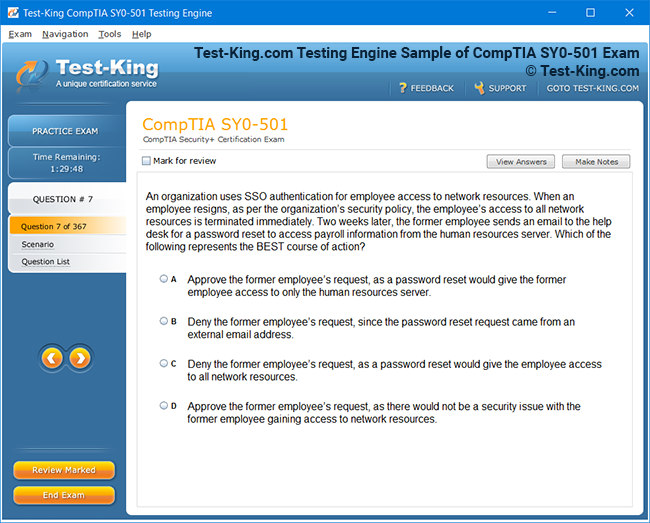
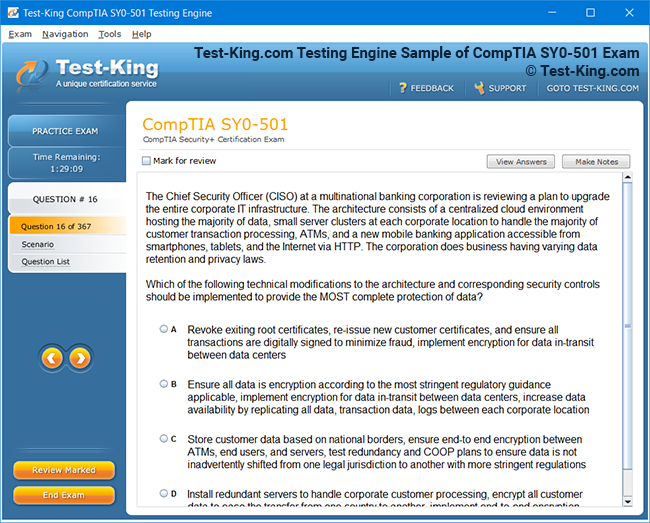
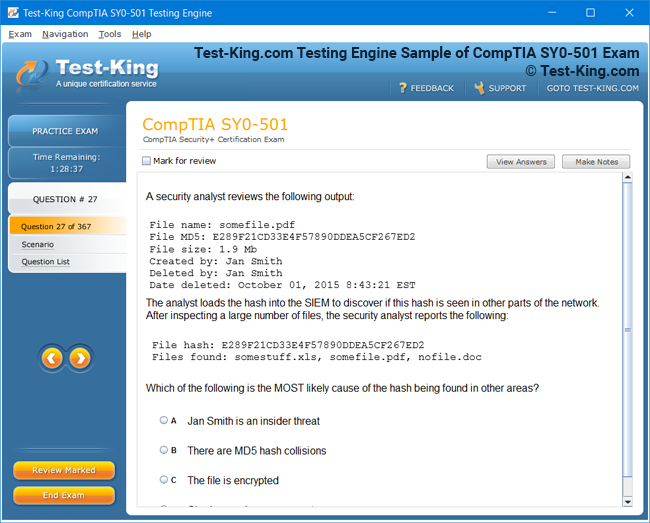
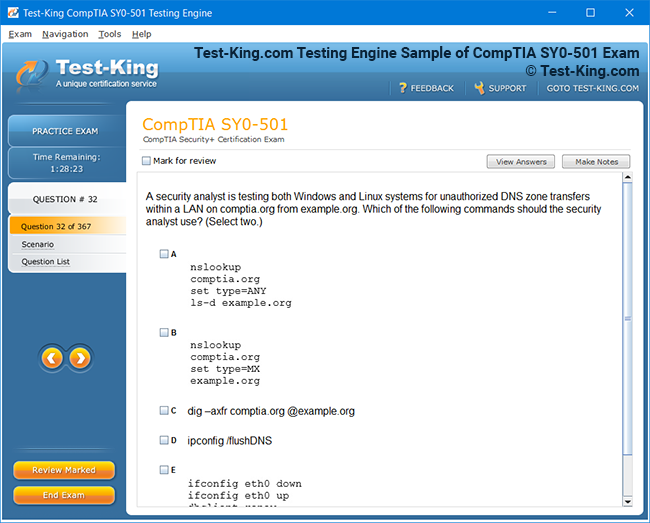
Product Screenshots
Frequently Asked Questions
How can I get the products after purchase?
All products are available for download immediately from your Member's Area. Once you have made the payment, you will be transferred to Member's Area where you can login and download the products you have purchased to your computer.
How long can I use my product? Will it be valid forever?
Test-King products have a validity of 90 days from the date of purchase. This means that any updates to the products, including but not limited to new questions, or updates and changes by our editing team, will be automatically downloaded on to computer to make sure that you get latest exam prep materials during those 90 days.
Can I renew my product if when it's expired?
Yes, when the 90 days of your product validity are over, you have the option of renewing your expired products with a 30% discount. This can be done in your Member's Area.
Please note that you will not be able to use the product after it has expired if you don't renew it.
How often are the questions updated?
We always try to provide the latest pool of questions, Updates in the questions depend on the changes in actual pool of questions by different vendors. As soon as we know about the change in the exam question pool we try our best to update the products as fast as possible.
How many computers I can download Test-King software on?
You can download the Test-King products on the maximum number of 2 (two) computers or devices. If you need to use the software on more than two machines, you can purchase this option separately. Please email support@test-king.com if you need to use more than 5 (five) computers.
What is a PDF Version?
PDF Version is a pdf document of Questions & Answers product. The document file has standart .pdf format, which can be easily read by any pdf reader application like Adobe Acrobat Reader, Foxit Reader, OpenOffice, Google Docs and many others.
Can I purchase PDF Version without the Testing Engine?
PDF Version cannot be purchased separately. It is only available as an add-on to main Question & Answer Testing Engine product.
What operating systems are supported by your Testing Engine software?
Our testing engine is supported by Windows. Andriod and IOS software is currently under development.
Comprehensive Guide to the Avaya Aura Core Components Support Certified Exam (72201X)
The Avaya Aura Core Components Support Certified Exam, identified by the code 72201X, represents a significant milestone for professionals aspiring to validate their proficiency in Avaya Aura solutions. This certification is meticulously crafted to assess a candidate’s comprehensive understanding of core components within the Avaya Aura architecture, encompassing configuration, troubleshooting, maintenance, and integration across enterprise communications networks. Those who pursue this credential demonstrate not only technical competence but also an aptitude for ensuring operational reliability in complex telecommunication environments. The exam is targeted at support engineers, system administrators, and technical professionals responsible for sustaining Avaya Aura systems, including Communication Manager, Session Manager, System Manager, and related applications.
Overview of the Avaya Aura Core Components Exam
The certification emphasizes hands-on knowledge and practical problem-solving skills. Candidates are evaluated on their ability to identify system anomalies, perform root cause analysis, and implement remedial actions efficiently. It demands an understanding of both foundational networking principles and advanced Avaya-specific solutions. Individuals preparing for this exam must develop an intricate grasp of system dependencies, intercomponent communication, and the lifecycle of core services, ranging from initial deployment to ongoing operational support. Familiarity with diagnostic tools, system logs, and troubleshooting methodologies forms a critical component of the knowledge assessed.
Exam Objectives and Key Competencies
The objectives of the Avaya Aura Core Components Support Certified Exam are designed to measure a candidate’s aptitude across multiple dimensions of system support. One of the primary areas involves understanding the architecture and interrelationship of Avaya Aura components. This includes Communication Manager, which serves as the central switching and call control platform, and Session Manager, which orchestrates call routing and session control across various endpoints. Candidates must demonstrate the ability to configure and manage these components effectively, ensuring seamless integration within enterprise networks.
Another significant domain involves troubleshooting and fault resolution. Examinees are expected to identify symptoms of system issues, interpret diagnostic output, and implement corrective procedures. This requires proficiency in analyzing event logs, recognizing patterns of failures, and isolating component-specific faults. The examination also tests knowledge of System Manager, which consolidates management across the entire Avaya Aura environment, requiring candidates to understand role-based administration, configuration propagation, and system maintenance operations.
Integration and interoperability are equally crucial. The exam evaluates the candidate’s ability to ensure that Avaya Aura components communicate efficiently with third-party systems and legacy infrastructure. This entails understanding SIP protocols, call flows, session routing, and system redundancy mechanisms. Candidates must also be conversant with security protocols, authentication mechanisms, and disaster recovery strategies to maintain system integrity under diverse operational conditions.
Preparation Strategy and Recommended Practices
To prepare effectively for the Avaya Aura Core Components Support Exam, candidates should adopt a structured approach that combines theoretical study with practical exposure. A recommended practice involves first mastering the architecture and operational principles of core components. This includes an in-depth review of system topology, component functions, and interconnectivity. Gaining familiarity with configuration guides, product documentation, and release notes is essential to understand version-specific features and limitations.
Hands-on experience forms the cornerstone of effective preparation. Setting up lab environments that mimic enterprise deployments allows candidates to practice configuration, troubleshooting, and system management in realistic scenarios. Simulating network issues, component failures, and call routing anomalies helps develop analytical skills and reinforces practical knowledge. Using diagnostic utilities and reviewing system logs improves the ability to interpret complex data patterns and make informed decisions during live operations.
Time management and exam strategy also play a pivotal role. Candidates should allocate sufficient time for each domain of knowledge, ensuring that weaker areas receive focused attention. Creating scenario-based practice exercises enhances critical thinking and prepares candidates for the situational questions commonly presented in the examination. Peer discussions, study groups, and mentoring by experienced Avaya engineers can provide additional insights, clarifying concepts that may not be immediately apparent from documentation alone.
Common Challenges and Solutions in Exam Preparation
Candidates often encounter challenges related to the breadth and complexity of the Avaya Aura environment. One recurring difficulty is mastering the interdependency among core components. For instance, changes in Communication Manager configurations may affect Session Manager routing, necessitating careful review and testing. Understanding these dependencies is crucial for both exam success and real-world system maintenance.
Another challenge lies in troubleshooting scenarios. The exam frequently presents candidates with complex problem statements requiring precise diagnosis and resolution. To overcome this, systematic approaches such as isolating faults, verifying configurations, and analyzing call logs methodically prove indispensable. Additionally, candidates may struggle with understanding advanced features, such as failover mechanisms, SIP trunking, and integration with unified messaging. Studying these areas in depth and practicing their implementation ensures readiness.
Knowledge retention is another potential obstacle. The sheer volume of protocols, configurations, and component interactions can overwhelm candidates. Using mnemonic devices, summarizing key concepts in personalized notes, and revisiting challenging topics periodically enhances memory and recall. Practice exams, scenario-based drills, and timed exercises cultivate the confidence required to manage exam pressures effectively.
Tools and Resources for Mastery
A variety of tools and resources facilitate successful preparation for the Avaya Aura Core Components Support Certified Exam. Official Avaya documentation remains the most authoritative source, including product installation guides, configuration manuals, and troubleshooting references. These documents provide detailed insights into system behavior, configuration options, and best practices for operational management.
Simulation environments and virtual labs allow candidates to experiment with configurations, test features, and diagnose faults without impacting production systems. This practical engagement reinforces conceptual understanding and develops problem-solving capabilities. Networking simulators, call routing emulators, and logging utilities further augment the learning experience, enabling candidates to observe the impact of changes in controlled environments.
Online forums, discussion groups, and knowledge-sharing platforms provide additional perspectives. Candidates can explore real-world scenarios, gain insight from experienced practitioners, and clarify ambiguities encountered during self-study. Complementing theoretical study with such community interaction ensures a well-rounded understanding of Avaya Aura systems and their operational intricacies.
Practical Scenarios and Question Insights
The examination often presents real-world scenarios requiring candidates to apply both technical knowledge and analytical reasoning. For example, a candidate may be asked to identify the cause of call routing failures between Session Manager and Communication Manager. A comprehensive approach involves reviewing routing tables, examining SIP messages, and verifying component connectivity, demonstrating the ability to resolve complex issues methodically.
Another common scenario involves system upgrade or patch deployment. Candidates must understand dependencies, perform pre-upgrade checks, and implement rollback procedures if necessary. Recognizing potential points of failure, such as misconfigured endpoints or mismatched software versions, is crucial for maintaining system stability. The exam evaluates not just the identification of issues but also the appropriate remedial actions, reflecting real-world responsibilities of support engineers.
Candidates may also encounter questions about disaster recovery and redundancy. For instance, determining the correct configuration to ensure high availability during network outages requires knowledge of failover mechanisms, component replication, and data synchronization strategies. Practicing such scenarios enhances the candidate’s ability to approach unfamiliar problems with confidence and clarity.
Performance and Time Management During the Exam
Effective performance in the Avaya Aura Core Components Support Exam is influenced by both technical knowledge and exam strategy. Time management is critical, as the test often encompasses a broad range of topics requiring careful attention. Candidates should practice pacing themselves, allocating appropriate time to more challenging questions while ensuring coverage of all domains.
Reading questions thoroughly, identifying key requirements, and eliminating unlikely options streamline the answering process. For scenario-based questions, outlining a brief approach before committing to an answer prevents oversight and errors. Confidence in practical knowledge, supported by repeated lab exercises and scenario practice, enables candidates to navigate complex questions with composure.
Stress management and mental preparedness also contribute to success. Regular breaks during study sessions, maintaining a consistent study schedule, and practicing relaxation techniques reduce anxiety and enhance focus. By combining technical mastery with strategic exam techniques, candidates can approach the Avaya Aura Core Components Support Certified Exam with assurance and clarity.
Advanced Understanding of Avaya Aura Components
The Avaya Aura Core Components Support Certified Exam demands an advanced understanding of the intricate architecture and operational dynamics of Avaya Aura systems. Central to this architecture is the Communication Manager, which acts as the nucleus for call control, session handling, and endpoint management. Candidates are expected to comprehend how Communication Manager interacts with Session Manager to route calls seamlessly across different networks. Mastery of call flows, session establishment, and failover mechanisms is essential, as these underpin the reliability and efficiency of enterprise communications.
Session Manager serves as the orchestrator of routing logic, providing centralized control of SIP sessions and interconnecting multiple endpoints and applications. A thorough knowledge of its configuration, policies, and routing domains is indispensable. Candidates should be capable of configuring SIP entities, defining routing policies, and troubleshooting session failures. Understanding how Session Manager collaborates with System Manager for centralized administration is crucial, particularly in large-scale deployments where consistency and redundancy play pivotal roles.
System Manager itself functions as the administrative hub, consolidating management tasks for various components. Knowledge of role-based access control, configuration replication, and system monitoring is essential for maintaining operational integrity. Candidates must be familiar with how updates propagate across components and how system alerts are generated and managed. Such expertise ensures that potential disruptions are preemptively identified and resolved, reflecting the real-world responsibilities expected of certified professionals.
Configuration and Operational Proficiency
A critical domain assessed in the exam revolves around the configuration and operational management of core components. Candidates should possess the capability to configure Communication Manager settings, including endpoints, trunks, and call routing parameters. Practical proficiency in establishing and modifying dial plans, managing station and hunt group configurations, and implementing call treatment policies is paramount. Each configuration change must be evaluated for potential downstream effects on dependent components, highlighting the importance of a meticulous and systematic approach.
Session Manager configuration extends beyond basic routing to include session policies, entity definitions, and domain management. Candidates should be adept at configuring SIP routes, defining entity relationships, and troubleshooting session path issues. Operational proficiency also encompasses monitoring real-time call statistics, analyzing SIP traces, and validating connectivity across the environment. Understanding the interplay between operational parameters and system performance facilitates prompt problem resolution and minimizes service interruptions.
System Manager adds another layer of complexity, with its centralized administration requiring knowledge of enterprise-wide configurations. Candidates must understand how to maintain user and device records, synchronize configurations, and implement updates without disrupting ongoing services. Practical exercises involving system backup, restoration, and validation of configuration propagation enhance the candidate’s confidence and capability, ensuring readiness for both the exam and real-world responsibilities.
Troubleshooting and Diagnostic Methodologies
The ability to diagnose and resolve system anomalies constitutes a significant portion of the examination. Candidates are expected to interpret system logs, event messages, and diagnostic outputs to pinpoint faults accurately. Troubleshooting scenarios may involve connectivity issues, call routing failures, or misconfigured endpoints. A methodical approach—starting from symptom identification, narrowing down to the affected component, and implementing corrective measures—is critical for successful resolution.
Advanced troubleshooting may include analyzing SIP signaling messages, evaluating system alarms, and verifying redundancy mechanisms. Candidates should be capable of identifying patterns indicative of recurring problems, determining whether issues originate from Communication Manager, Session Manager, or external integrations. Proficiency in using diagnostic utilities, log interpreters, and network analysis tools enhances the efficiency and accuracy of fault isolation.
In addition to reactive troubleshooting, proactive maintenance strategies are also evaluated. These include monitoring system performance, scheduling preventive audits, and implementing redundancy testing. By simulating failures and verifying failover operations, candidates demonstrate their capacity to ensure system resilience and continuity of service. The examination assesses both theoretical understanding and practical application, emphasizing the importance of analytical reasoning combined with hands-on experience.
Integration and Interoperability Scenarios
Integration and interoperability represent critical competencies for professionals undertaking the Avaya Aura Core Components Support Certified Exam. Candidates must understand how Avaya Aura components interface with third-party applications, legacy telephony systems, and unified communication platforms. Knowledge of SIP protocol standards, session routing, and inter-component communication ensures that systems operate cohesively within heterogeneous network environments.
Practical scenarios may involve configuring SIP trunks between Session Manager and external service providers, implementing failover paths, and troubleshooting session establishment failures. Candidates should be capable of assessing the impact of software version mismatches, protocol incompatibilities, and endpoint misconfigurations. They must also consider security implications, including authentication, encryption, and compliance with enterprise policies. Such scenarios mirror real-world challenges, requiring candidates to combine technical acumen with analytical problem-solving.
Integration extends to disaster recovery planning and system redundancy. Candidates are expected to design solutions that maintain service availability during network disruptions or component failures. This involves configuring redundant servers, verifying synchronization processes, and validating failover functionality. Understanding these mechanisms ensures that communication continuity is preserved, reflecting the professional responsibilities anticipated for certified support engineers.
Exam Preparation Techniques and Knowledge Reinforcement
Effective preparation for the 72201X exam requires a multidimensional approach combining theoretical study, hands-on practice, and scenario-based learning. Candidates should begin with a comprehensive review of official Avaya documentation, including installation guides, configuration manuals, and troubleshooting references. Familiarity with product updates, feature enhancements, and release-specific nuances provides a foundation for both exam questions and practical applications.
Practical lab exercises are indispensable for reinforcing knowledge. Setting up virtual or simulated environments allows candidates to practice configuration, monitor system behavior, and resolve anomalies in controlled conditions. Performing repetitive tasks, such as endpoint registration, call routing configuration, and SIP session verification, builds familiarity and confidence. Additionally, practicing fault isolation and corrective measures in lab environments cultivates analytical thinking and problem-solving agility.
Scenario-based preparation further enhances readiness. Candidates may encounter questions that simulate real-world challenges, such as call routing conflicts, misconfigured trunking, or session establishment errors. Approaching these scenarios methodically—analyzing symptoms, identifying root causes, and implementing corrective actions—mirrors the professional tasks required of certified support engineers. Peer discussions, mentorship, and knowledge-sharing within professional communities provide additional insights, helping candidates internalize complex concepts and anticipate nuanced exam questions.
Common Mistakes and Exam Readiness
Candidates often make mistakes arising from inadequate understanding of component interdependencies or over-reliance on memorized configurations. One frequent error is neglecting to evaluate the downstream effects of configuration changes, leading to unintended system disruptions. Another common pitfall is misinterpreting diagnostic outputs or SIP traces, which can result in inaccurate problem resolution. Preparing through comprehensive lab exercises and scenario simulations mitigates these risks, building both competence and confidence.
Exam readiness involves more than technical knowledge. Time management, analytical focus, and structured problem-solving play crucial roles in successful outcomes. Candidates should practice pacing themselves across diverse question types, balancing scenario-based problem-solving with factual recall. Developing a mental checklist for common troubleshooting steps, configuration validation, and verification procedures enhances efficiency and reduces errors under exam conditions.
Tools, Utilities, and Practical Resources
Candidates are expected to be proficient with a range of tools and utilities used in configuring, monitoring, and troubleshooting Avaya Aura systems. These include diagnostic utilities for analyzing logs, SIP trace analyzers for session troubleshooting, and monitoring tools for evaluating system performance. Utilizing these tools in practical exercises strengthens the candidate’s ability to apply theoretical knowledge effectively.
Official Avaya resources, combined with peer discussions and community insights, provide a comprehensive understanding of operational intricacies. Simulated labs, scenario exercises, and guided walkthroughs reinforce learning while exposing candidates to potential challenges that mirror real-world environments. Consistent practice with these resources ensures both familiarity and adaptability, essential qualities for achieving success in the examination.
Deep Dive into Avaya Aura System Architecture
The Avaya Aura Core Components Support Certified Exam emphasizes a profound comprehension of the architectural framework that underpins enterprise communications. At the heart of this environment lies the Communication Manager, which provides core call processing capabilities and manages endpoints across diverse networks. Candidates are expected to grasp the intricacies of call control, signaling, and session management, including the nuances of failover and redundancy mechanisms that ensure uninterrupted service. Understanding how Communication Manager integrates with Session Manager for intelligent routing and Session Initiation Protocol operations forms a cornerstone of the examination’s focus.
Session Manager functions as the central coordinator for SIP-based communication, orchestrating the flow of sessions between endpoints, applications, and external systems. Candidates must demonstrate mastery over session routing, entity definitions, and policy management, ensuring efficient intercomponent communication. A solid understanding of System Manager’s role in centralized administration, configuration replication, and operational oversight is essential, particularly when managing large-scale deployments where consistent policies and synchronized updates are paramount. Knowledge of these interactions is critical for both the exam and the operational responsibilities expected of certified professionals.
Practical Configuration of Core Components
The exam assesses candidates on their ability to configure and optimize the Avaya Aura environment. This involves establishing endpoints, defining trunks, and configuring call routing within Communication Manager. Candidates are required to understand the implications of each configuration change, considering its impact on interconnected components. Implementing dial plans, call forwarding policies, and hunt group structures necessitates a methodical approach to ensure seamless operations and minimize the risk of service disruption.
Configuring Session Manager extends to defining SIP entities, establishing routing policies, and troubleshooting session establishment failures. Operational knowledge includes monitoring real-time call statistics, analyzing SIP traces, and validating connectivity across the system. Candidates must also be conversant with features such as failover routing, session persistence, and load balancing, which enhance resilience and optimize system performance.
System Manager configuration involves managing users, devices, and roles, as well as synchronizing configuration changes across the enterprise network. Candidates should be proficient in deploying software updates, conducting backups, and verifying system health. Practical exercises in these areas reinforce knowledge and prepare candidates for the type of scenario-based questions commonly presented in the examination.
Troubleshooting and Analytical Reasoning
Troubleshooting forms a significant component of the Avaya Aura Core Components Support Certified Exam. Candidates are expected to interpret system logs, monitor event messages, and analyze diagnostic outputs to identify root causes of anomalies. Common scenarios include endpoint registration failures, call routing issues, and misconfigured trunks. Employing a systematic approach—observing symptoms, isolating the affected component, and implementing corrective actions—is critical for accurate problem resolution.
Advanced diagnostic skills are assessed, including the ability to evaluate SIP signaling, monitor system alarms, and verify redundancy mechanisms. Candidates must recognize patterns indicating recurring issues, distinguishing between configuration errors, component failures, and network-induced disruptions. The exam evaluates both theoretical understanding and the practical application of troubleshooting strategies, reflecting the responsibilities of professionals maintaining enterprise communications systems.
Proactive maintenance is also emphasized. Candidates are expected to anticipate potential issues through performance monitoring, regular audits, and redundancy verification. Simulating failures and testing failover operations ensures operational resilience, demonstrating the candidate’s readiness to manage complex real-world environments effectively.
Integration, Interoperability, and System Reliability
Integration and interoperability are central to the Avaya Aura examination. Candidates must demonstrate knowledge of how Avaya components interface with external systems, legacy telephony infrastructure, and unified communication platforms. This includes understanding SIP protocol standards, session routing, and cross-component communication.
Candidates may encounter scenarios requiring the configuration of SIP trunks, verification of session establishment, and resolution of interoperability issues. Understanding the impact of version differences, protocol mismatches, and misconfigured endpoints is essential. Security considerations, including authentication, encryption, and policy compliance, are also evaluated, ensuring candidates can maintain system integrity while integrating multiple communication platforms.
Disaster recovery and high availability are equally critical. Candidates should be capable of designing redundant system configurations, verifying failover procedures, and ensuring data synchronization. By understanding and implementing these strategies, candidates demonstrate their ability to maintain communication continuity during network disruptions or component failures, reflecting practical competencies demanded in operational environments.
Exam Preparation Strategies and Knowledge Reinforcement
Successful preparation requires a multifaceted approach. Candidates should start with comprehensive study of official Avaya documentation, including configuration guides, installation manuals, and troubleshooting references. Familiarity with product updates and release-specific nuances is essential to understand evolving features and operational considerations.
Hands-on experience is indispensable. Setting up lab environments that emulate real-world deployments allows candidates to practice configuration, monitor system behavior, and troubleshoot anomalies safely. Performing tasks such as endpoint registration, call routing configuration, and SIP session validation enhances familiarity and confidence. Repeated practice of fault isolation, remediation procedures, and verification of failover operations strengthens analytical reasoning and practical problem-solving capabilities.
Scenario-based preparation further consolidates learning. Candidates may face simulated issues, such as call routing conflicts, endpoint registration failures, or SIP session disruptions. A systematic approach—analyzing symptoms, identifying root causes, and applying corrective actions—reflects the type of problem-solving required in professional settings. Peer discussions, mentorship, and participation in knowledge-sharing communities provide additional perspectives, clarifying ambiguities and reinforcing comprehension.
Common Pitfalls and Exam Readiness
Candidates frequently encounter difficulties due to the complexity of intercomponent dependencies or overreliance on memorization. One common mistake involves neglecting the cascading effects of configuration changes, which can inadvertently disrupt interconnected components. Misinterpretation of logs or SIP traces can also result in ineffective troubleshooting. Comprehensive lab practice and scenario simulation mitigate these risks, fostering both competence and confidence.
Effective exam performance requires more than technical knowledge. Time management, structured problem-solving, and analytical focus are crucial. Candidates should practice pacing across diverse question types, balancing scenario-based exercises with knowledge recall. Developing mental frameworks for troubleshooting steps, configuration validation, and verification processes improves efficiency and reduces the likelihood of errors. By combining technical mastery with strategic exam techniques, candidates are better equipped to handle complex questions and scenarios under timed conditions.
Tools, Utilities, and Practical Resources
Proficiency with tools and utilities is essential for exam success. Candidates are expected to be adept at using diagnostic utilities for log analysis, SIP trace analyzers for session troubleshooting, and monitoring tools for system performance evaluation. Regular practice with these tools reinforces conceptual understanding and enhances problem-solving capabilities.
Official Avaya documentation remains an authoritative resource, providing detailed guidance on system configuration, operation, and troubleshooting. Supplementing this with simulated labs, scenario exercises, and knowledge-sharing platforms allows candidates to engage with practical challenges that mirror real-world operations. Consistent practice with these resources cultivates adaptability and operational confidence, preparing candidates to tackle the comprehensive range of topics presented in the Avaya Aura Core Components Support Certified Exam.
In-Depth Operational Knowledge of Avaya Aura Systems
The Avaya Aura Core Components Support Certified Exam requires a profound understanding of operational processes and system dynamics within enterprise communications. Candidates must demonstrate proficiency in managing Communication Manager, which serves as the foundation for call control, endpoint management, and signaling operations. Understanding the interplay between Communication Manager and Session Manager is critical, particularly in the orchestration of SIP sessions, call routing, and system failover mechanisms that ensure continuity of service in large-scale deployments.
Session Manager acts as the central controller for session routing and policy enforcement. Candidates must be able to configure routing policies, manage SIP entities, and troubleshoot session path issues. Mastery of session persistence, failover routing, and intercomponent dependencies is vital. System Manager consolidates administration, enabling centralized control over user accounts, device provisioning, and configuration replication. Proficiency in monitoring system health, managing updates, and ensuring synchronization across components is a core competency expected for certification.
Configuration Mastery and System Optimization
The examination evaluates candidates on their ability to configure and optimize Avaya Aura components for operational efficiency. Within Communication Manager, this includes defining endpoints, configuring trunks, managing call routing, and implementing dial plans. Each configuration requires consideration of downstream effects, ensuring that changes do not disrupt interconnected components or system workflows.
Session Manager configuration extends to defining routing policies, establishing SIP domains, and ensuring interoperability with other systems. Candidates are expected to analyze call flows, verify session establishment, and resolve routing anomalies. Operational excellence also involves monitoring system performance metrics, evaluating SIP trace logs, and validating redundancy mechanisms to maintain system reliability.
System Manager administration encompasses centralized management of enterprise configurations. Candidates should be adept at managing user and device records, synchronizing configuration updates, and performing system backups. Familiarity with software updates, patch deployment, and configuration propagation ensures seamless operation across the entire network. Practical lab exercises and scenario-based practice enhance the candidate’s ability to implement configurations accurately and efficiently.
Troubleshooting Complex Scenarios
Troubleshooting and problem resolution form a pivotal part of the exam. Candidates must interpret system logs, analyze event messages, and apply diagnostic outputs to identify root causes of operational issues. Common scenarios include misconfigured endpoints, call routing failures, and SIP session disruptions. Employing a systematic approach—observing symptoms, isolating affected components, and applying corrective measures—is essential for accurate and effective problem resolution.
Advanced troubleshooting includes evaluating SIP signaling messages, assessing system alarms, and verifying redundancy and failover mechanisms. Candidates must identify recurring patterns, determine whether anomalies arise from configuration errors, component failures, or network conditions, and implement suitable solutions. The examination emphasizes the practical application of these skills, reflecting the real-world responsibilities of support engineers managing enterprise communications infrastructure.
Proactive system maintenance is also assessed. Candidates are expected to anticipate potential issues through continuous monitoring, redundancy verification, and preventive audits. Simulating network failures, testing failover operations, and validating session persistence ensures operational resilience, preparing candidates for both the exam and professional responsibilities in maintaining uninterrupted communication services.
Integration, Interoperability, and Security
Integration and interoperability represent essential competencies. Candidates are evaluated on their ability to connect Avaya Aura components with external applications, legacy telephony systems, and unified communication platforms. Knowledge of SIP protocol standards, session routing, and intercomponent communication is critical for maintaining seamless operations within heterogeneous network environments.
Candidates may encounter scenarios involving SIP trunk configuration, session troubleshooting, or resolving interoperability challenges. Understanding the impact of software version differences, protocol mismatches, and endpoint misconfigurations is vital. Security considerations, including authentication protocols, encryption standards, and compliance with enterprise policies, are integral to maintaining system integrity while ensuring seamless communication across interconnected platforms.
High availability and disaster recovery are further evaluated. Candidates should design redundant configurations, verify failover procedures, and ensure synchronization of critical data. Maintaining communication continuity during network disruptions or component failures is essential, reflecting the practical expertise required for certification and professional practice.
Exam Preparation and Practical Exercises
Effective preparation involves a combination of theoretical study, hands-on practice, and scenario-based learning. Candidates should begin with official Avaya documentation, including configuration guides, installation manuals, and troubleshooting references. Familiarity with product updates and version-specific features is essential for understanding the operational environment.
Lab exercises are indispensable for reinforcing theoretical knowledge. Setting up virtual or simulated deployments allows candidates to practice configuration, monitor system behavior, and resolve anomalies in a controlled environment. Performing tasks such as endpoint registration, call routing setup, and SIP session validation builds familiarity and confidence. Repetitive practice of troubleshooting exercises, failover testing, and system validation enhances analytical reasoning and practical problem-solving skills.
Scenario-based preparation is equally important. Candidates may face simulated operational issues, including misconfigured endpoints, routing conflicts, or SIP session failures. Analyzing symptoms, identifying root causes, and applying corrective actions mirrors real-world problem-solving and strengthens readiness. Peer discussions, mentorship, and engagement with knowledge-sharing communities provide additional insights, clarifying complex concepts and reinforcing understanding.
Common Pitfalls and Exam Strategy
Candidates frequently face challenges arising from component interdependencies or over-reliance on memorization. A common error involves neglecting the cascading effects of configuration changes, which can disrupt interconnected systems. Misinterpreting logs, SIP traces, or diagnostic outputs can result in ineffective troubleshooting. Addressing these pitfalls through comprehensive lab practice, scenario simulations, and repetition fosters both competence and confidence.
Exam readiness extends beyond technical expertise. Time management, analytical focus, and structured problem-solving are critical. Candidates should practice pacing across diverse question types, balancing scenario-based exercises with recall of factual knowledge. Developing mental frameworks for troubleshooting steps, validation procedures, and configuration verification enhances efficiency and accuracy. Combining technical mastery with strategic exam techniques ensures that candidates are well-prepared to handle complex scenarios and questions under timed conditions.
Tools, Resources, and Knowledge Reinforcement
Proficiency in operational tools and utilities is essential. Candidates are expected to use diagnostic utilities for log analysis, SIP trace analyzers for session troubleshooting, and performance monitoring tools. Regular practice with these resources enhances problem-solving efficiency and reinforces conceptual understanding.
Official Avaya documentation remains an authoritative guide for configuration, operation, and troubleshooting. Complementing this with simulated labs, scenario exercises, and participation in professional forums enables candidates to engage with real-world challenges. Consistent application of these tools and resources fosters adaptability, confidence, and operational readiness, equipping candidates to successfully navigate the Avaya Aura Core Components Support Certified Exam and manage enterprise communications systems effectively.
Mastery of Avaya Aura Components and System Functions
The Avaya Aura Core Components Support Certified Exam evaluates an advanced level of expertise in managing, configuring, and maintaining enterprise communication systems. Central to this evaluation is the Communication Manager, which orchestrates call control, signaling, and endpoint management across extensive networks. Candidates must demonstrate understanding of the detailed architecture, including call processing, endpoint registration, and redundancy mechanisms designed to ensure uninterrupted service. Knowledge of how Communication Manager interacts with Session Manager to optimize SIP session routing and system performance is critical.
Session Manager serves as the controller for session routing and policy enforcement within the enterprise network. Candidates are required to configure routing policies, define SIP entities, and troubleshoot session anomalies. Understanding load balancing, failover strategies, and intercomponent dependencies is essential for system reliability. System Manager consolidates administrative operations, including centralized user management, device provisioning, and configuration replication. Candidates must exhibit the ability to monitor system health, deploy software updates, and validate configuration propagation across the network, reflecting real-world operational responsibilities.
Advanced Configuration and Operational Expertise
Exam readiness involves comprehensive proficiency in configuring and optimizing Avaya Aura components. Communication Manager configuration encompasses endpoints, trunks, dial plans, and call routing policies. Candidates must evaluate each configuration change for its potential impact on interconnected components, ensuring seamless operation and minimal disruption. Advanced features, such as hunt group structures, call forwarding, and automated call distribution, are assessed to determine operational mastery.
Session Manager configuration requires defining routing policies, managing SIP domains, and verifying intercomponent communication. Operational expertise includes monitoring call flows, analyzing SIP trace logs, and validating session continuity and failover mechanisms. Candidates must also demonstrate familiarity with session persistence, redundancy, and routing optimization, which contribute to high availability and enhanced system performance.
System Manager administration involves enterprise-wide management of users, devices, and configurations. Candidates are expected to perform configuration synchronization, conduct system backups, and implement software updates without affecting live operations. Practical exercises and scenario-based practice reinforce knowledge, allowing candidates to perform configurations accurately and efficiently, which is a critical competency evaluated in the exam.
Troubleshooting, Diagnostics, and Analytical Problem Solving
Troubleshooting forms a substantial portion of the examination. Candidates must analyze system logs, evaluate event messages, and interpret diagnostic outputs to isolate the root cause of anomalies. Common scenarios include misconfigured endpoints, call routing errors, and SIP session failures. Employing a systematic methodology—observing symptoms, identifying affected components, and applying corrective measures—is fundamental to effective problem resolution.
Advanced troubleshooting extends to evaluating SIP signaling, monitoring system alarms, and validating redundancy mechanisms. Candidates must recognize recurring patterns, differentiate between configuration errors, component failures, and network-related disruptions, and implement precise solutions. Practical exercises emphasize both theoretical knowledge and hands-on application, mirroring the responsibilities of support engineers maintaining enterprise communications networks.
Proactive maintenance is an essential competency. Candidates are expected to monitor system performance, conduct preventive audits, and test failover procedures regularly. Simulating network failures, verifying session continuity, and assessing system resilience reinforce operational preparedness and readiness for real-world environments.
Integration, Interoperability, and Security Considerations
Integration and interoperability are key areas of examination focus. Candidates must understand how Avaya Aura components connect with external telephony systems, unified communications platforms, and legacy infrastructures. Mastery of SIP protocol standards, session routing, and intercomponent communication ensures cohesive operations within diverse network ecosystems.
Candidates may encounter scenarios requiring SIP trunk configuration, verification of session establishment, or troubleshooting interoperability challenges. They must account for software version discrepancies, protocol mismatches, and endpoint misconfigurations. Security knowledge is critical, including authentication, encryption, and compliance with enterprise policies. Proper implementation of these measures ensures system integrity while enabling seamless interconnection with external systems.
High availability and disaster recovery are evaluated through scenarios requiring candidates to design redundant configurations, implement failover mechanisms, and ensure synchronization of critical data. Maintaining uninterrupted communication during component failures or network disruptions reflects the practical responsibilities expected of certified support engineers.
Preparation Techniques and Practical Exercises
Effective preparation combines theoretical understanding with hands-on experience and scenario-based practice. Candidates should start with official Avaya documentation, including installation guides, configuration manuals, and troubleshooting references. Familiarity with release-specific features and product updates is essential for a complete understanding of system behavior.
Hands-on lab exercises are indispensable. Simulated deployments allow candidates to practice configuration, monitor system performance, and troubleshoot anomalies safely. Tasks such as endpoint registration, call routing configuration, SIP session validation, and failover testing reinforce knowledge and build confidence. Repeated practice of troubleshooting procedures and operational checks strengthens analytical reasoning and practical problem-solving skills.
Scenario-based preparation enhances readiness further. Candidates may face simulated operational issues, such as endpoint failures, session disruptions, or call routing conflicts. Analyzing symptoms, identifying root causes, and applying corrective actions replicates real-world problem-solving, fostering familiarity with the types of questions presented in the examination. Engaging with peers, mentors, and professional forums provides additional insights and reinforces complex concepts, enhancing overall preparedness.
Common Errors and Exam Strategy
Candidates often encounter pitfalls due to the complexity of intercomponent dependencies or reliance on memorization. Common errors include failing to consider the cascading effects of configuration changes or misinterpreting diagnostic outputs, which can lead to inaccurate troubleshooting. Comprehensive lab practice, scenario simulations, and repetition help mitigate these challenges, building both competence and confidence.
Effective exam strategy involves more than technical knowledge. Time management, structured problem-solving, and analytical thinking are critical. Candidates should practice pacing across question types, balancing scenario-based problem-solving with knowledge recall. Establishing mental frameworks for troubleshooting, configuration validation, and verification procedures enhances efficiency and reduces errors. Integrating technical proficiency with strategic approaches prepares candidates to address complex questions effectively under exam conditions.
Tools, Utilities, and Reinforcement Resources
Proficiency with operational tools is crucial. Candidates must utilize diagnostic utilities for log analysis, SIP trace analyzers for session troubleshooting, and performance monitoring tools to evaluate system health. Regular practice with these tools enhances problem-solving efficiency and reinforces conceptual understanding.
Official Avaya documentation serves as an authoritative reference for system configuration, operation, and troubleshooting. Complementing this with lab simulations, scenario exercises, and professional community engagement provides exposure to practical challenges. Consistent use of these resources fosters adaptability, operational confidence, and readiness, equipping candidates to successfully navigate the Avaya Aura Core Components Support Certified Exam and perform effectively in enterprise communications environments.
Advanced Mastery of Avaya Aura Components and Operational Dynamics
The Avaya Aura Core Components Support Certified Exam challenges candidates to demonstrate mastery over both the architectural framework and operational intricacies of enterprise communications. At the core of the system lies Communication Manager, which manages call processing, endpoint registration, and signaling protocols across complex network environments. Candidates must understand how it interacts with Session Manager to orchestrate SIP session routing, implement failover mechanisms, and ensure high availability. Comprehensive knowledge of redundancy protocols, load balancing, and call control logic is essential for both exam success and operational proficiency.
Session Manager serves as the central orchestrator for session management and routing policies. Candidates must be able to configure SIP entities, define session routing rules, and troubleshoot anomalies in session establishment. A deep understanding of session persistence, intercomponent dependencies, and operational monitoring is required. System Manager consolidates administration, providing centralized control over users, devices, configuration replication, and system health. Candidates must demonstrate competence in managing updates, monitoring alerts, and ensuring seamless propagation of configurations throughout the enterprise network.
Configuration Proficiency and System Optimization
The exam emphasizes advanced configuration skills and the ability to optimize system operations. Communication Manager configuration involves defining endpoints, establishing trunks, and managing call routing. Candidates must consider downstream effects of configuration changes to prevent unintended disruptions. Advanced features such as hunt groups, automated call distribution, and call forwarding policies are assessed to measure operational expertise.
Session Manager configuration requires defining routing policies, managing SIP domains, and ensuring seamless intercomponent communication. Candidates are expected to monitor call flows, analyze SIP traces, and validate failover functionality. Operational knowledge includes managing load distribution, session persistence, and redundancy to maintain high performance and system reliability.
System Manager administration includes enterprise-wide management of user accounts, devices, and configurations. Candidates must perform configuration synchronization, backups, and software updates without affecting live operations. Practical exercises reinforce the ability to implement configurations accurately, troubleshoot inconsistencies, and verify system integrity, which are essential competencies evaluated in the examination.
Troubleshooting Methodologies and Analytical Reasoning
Troubleshooting constitutes a significant portion of the examination. Candidates are expected to analyze logs, interpret diagnostic outputs, and isolate root causes of operational anomalies. Common scenarios include endpoint registration failures, call routing issues, SIP session disruptions, and component misconfigurations. Applying a systematic methodology—observing symptoms, identifying affected components, and implementing corrective actions—is critical for successful problem resolution.
Advanced troubleshooting encompasses interpreting SIP signaling, evaluating system alarms, and verifying redundancy and failover mechanisms. Candidates must distinguish between configuration errors, component failures, and network-related issues, demonstrating the ability to implement precise solutions. Proactive maintenance practices, such as monitoring performance, conducting preventive audits, and testing failover operations, are integral to sustaining system reliability and ensuring operational continuity.
Scenario-based problem-solving exercises reinforce analytical reasoning. Candidates may face simulated operational issues requiring them to identify root causes and apply corrective actions. This approach mirrors real-world responsibilities and prepares candidates for the situational challenges presented in the examination.
Integration, Interoperability, and Security Measures
Integration and interoperability are pivotal competencies evaluated in the exam. Candidates must understand how Avaya Aura components interface with third-party telephony systems, unified communications platforms, and legacy infrastructure. Proficiency in SIP protocol standards, session routing, and intercomponent communication ensures cohesive operations across diverse network environments.
Candidates may encounter scenarios involving SIP trunk configuration, troubleshooting session failures, or resolving interoperability challenges. Knowledge of software version discrepancies, protocol mismatches, and endpoint misconfigurations is essential. Security considerations, including authentication protocols, encryption standards, and compliance with enterprise policies, are integral to safeguarding system integrity while ensuring seamless communication across interconnected platforms.
High availability and disaster recovery mechanisms are also tested. Candidates should be able to design redundant configurations, verify failover processes, and maintain synchronization of critical data. Ensuring continuity of communication during network disruptions or component failures is fundamental to operational excellence and reflects the responsibilities expected of certified support engineers.
Exam Preparation and Practical Exercises
Effective preparation requires a combination of theoretical study, hands-on practice, and scenario-based learning. Candidates should review official Avaya documentation, including configuration manuals, installation guides, and troubleshooting references. Familiarity with product updates, version-specific features, and operational nuances is essential to gain comprehensive knowledge of the system.
Hands-on lab exercises provide practical experience. Simulated deployments allow candidates to practice configuration, monitor system behavior, and resolve anomalies safely. Performing tasks such as endpoint registration, call routing configuration, SIP session validation, and failover testing reinforces knowledge and builds confidence. Repeated practice of troubleshooting exercises and operational checks develops analytical reasoning and practical problem-solving skills.
Scenario-based learning further enhances readiness. Candidates may face simulated operational challenges, including endpoint failures, session disruptions, or routing conflicts. Analyzing symptoms, identifying root causes, and applying corrective measures mirrors real-world problem-solving, preparing candidates to address the types of situations encountered both in the exam and in professional environments. Engaging with peers, mentors, and professional communities provides additional insights and reinforces complex concepts.
Common Mistakes and Exam Strategy
Candidates often encounter pitfalls due to intercomponent dependencies, configuration oversights, or over-reliance on memorization. Common mistakes include failing to consider the cascading effects of configuration changes, misinterpreting diagnostic outputs, or overlooking security and redundancy requirements. Addressing these challenges through comprehensive lab practice, scenario simulations, and repetition fosters competence and confidence.
Exam strategy involves more than technical expertise. Time management, structured problem-solving, and analytical focus are essential. Candidates should practice pacing themselves across various question types, balancing scenario-based problem-solving with factual knowledge recall. Establishing mental frameworks for troubleshooting, configuration validation, and verification procedures enhances efficiency and accuracy. Combining technical mastery with strategic approaches ensures candidates can handle complex questions effectively under timed conditions.
Tools, Resources, and Knowledge Reinforcement
Proficiency with diagnostic and operational tools is essential for exam success. Candidates must use utilities for log analysis, SIP trace evaluation, and system performance monitoring. Regular practice with these tools strengthens problem-solving capabilities and reinforces conceptual understanding.
Official Avaya documentation provides authoritative guidance on system configuration, operation, and troubleshooting. Complementing this with lab simulations, scenario exercises, and engagement with professional forums offers exposure to real-world challenges. Consistent use of these resources cultivates adaptability, operational confidence, and readiness, equipping candidates to navigate the Avaya Aura Core Components Support Certified Exam successfully and perform effectively in enterprise communications environments.
Conclusion
Achieving the Avaya Aura Core Components Support Certified Exam certification validates an individual’s expertise in configuring, managing, and troubleshooting complex communication systems. Candidates who master the intricacies of Communication Manager, Session Manager, and System Manager demonstrate the ability to ensure operational efficiency, system reliability, and seamless interoperability within enterprise networks. Proficiency in troubleshooting, scenario-based problem-solving, and preventive maintenance prepares professionals to handle real-world challenges effectively. By combining thorough theoretical knowledge with practical exercises, scenario simulations, and strategic preparation, candidates can confidently approach the examination and secure a credential that reflects both technical competence and operational excellence in the realm of Avaya Aura communications.