

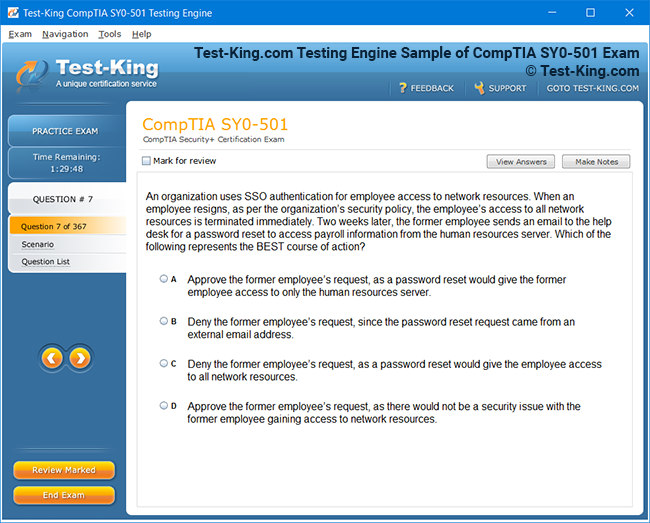
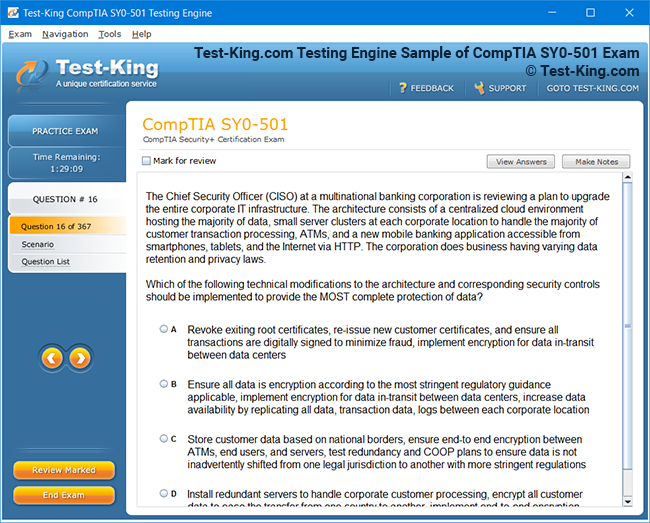
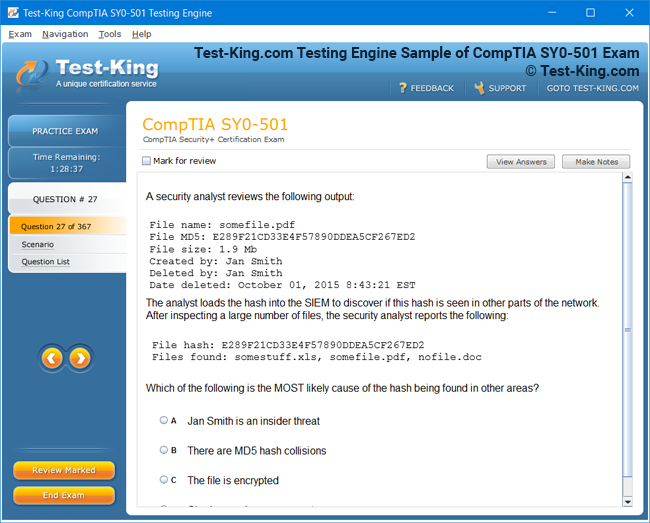
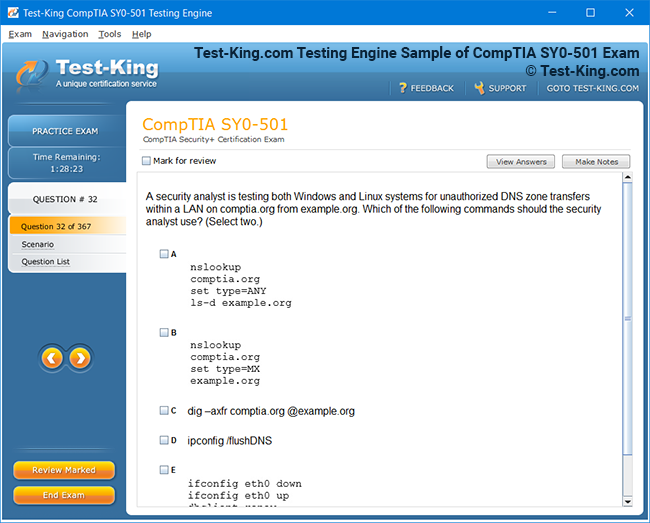
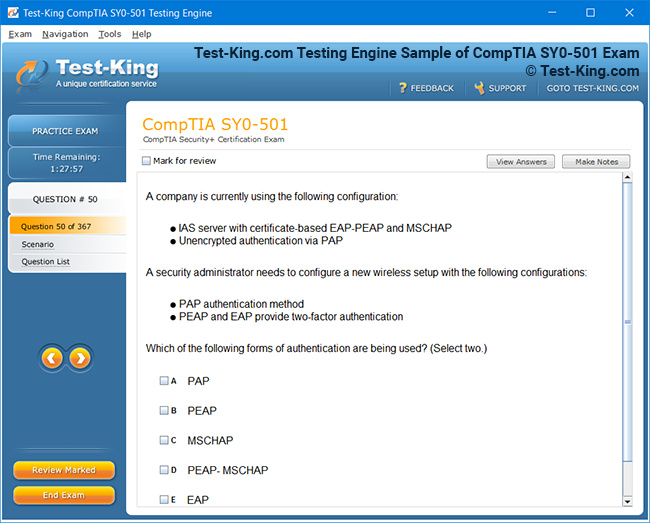
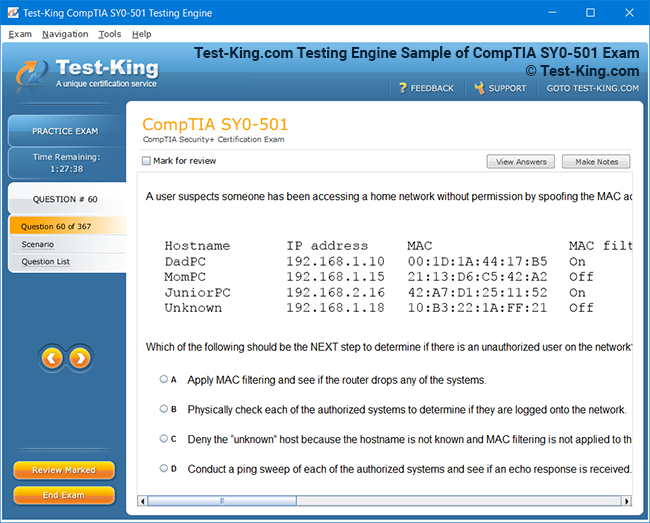
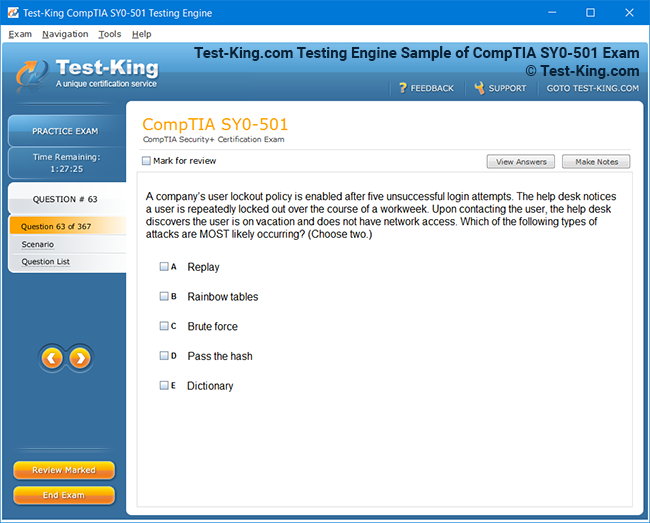
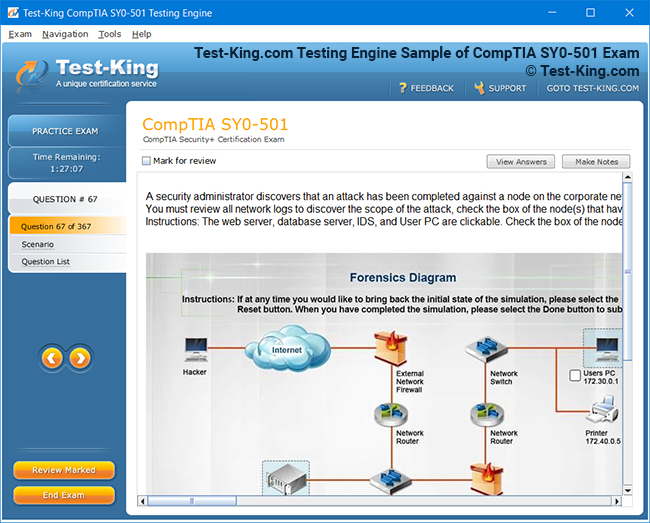
Product Screenshots
Frequently Asked Questions
How can I get the products after purchase?
All products are available for download immediately from your Member's Area. Once you have made the payment, you will be transferred to Member's Area where you can login and download the products you have purchased to your computer.
How long can I use my product? Will it be valid forever?
Test-King products have a validity of 90 days from the date of purchase. This means that any updates to the products, including but not limited to new questions, or updates and changes by our editing team, will be automatically downloaded on to computer to make sure that you get latest exam prep materials during those 90 days.
Can I renew my product if when it's expired?
Yes, when the 90 days of your product validity are over, you have the option of renewing your expired products with a 30% discount. This can be done in your Member's Area.
Please note that you will not be able to use the product after it has expired if you don't renew it.
How often are the questions updated?
We always try to provide the latest pool of questions, Updates in the questions depend on the changes in actual pool of questions by different vendors. As soon as we know about the change in the exam question pool we try our best to update the products as fast as possible.
How many computers I can download Test-King software on?
You can download the Test-King products on the maximum number of 2 (two) computers or devices. If you need to use the software on more than two machines, you can purchase this option separately. Please email support@test-king.com if you need to use more than 5 (five) computers.
What is a PDF Version?
PDF Version is a pdf document of Questions & Answers product. The document file has standart .pdf format, which can be easily read by any pdf reader application like Adobe Acrobat Reader, Foxit Reader, OpenOffice, Google Docs and many others.
Can I purchase PDF Version without the Testing Engine?
PDF Version cannot be purchased separately. It is only available as an add-on to main Question & Answer Testing Engine product.
What operating systems are supported by your Testing Engine software?
Our testing engine is supported by Windows. Andriod and IOS software is currently under development.
Top NADCA Exams
Understanding the ASCS Exam and Certification Significance
The Air Systems Cleaning Specialist credential represents a pivotal milestone for professionals aspiring to achieve mastery in the cleaning and maintenance of air distribution systems. The ASCS exam is meticulously designed to evaluate a candidate’s knowledge and practical aptitude in the intricacies of HVAC systems, air quality assessment, and the application of cleaning standards as prescribed by the National Air Duct Cleaners Association. Professionals who undertake this examination are expected not only to demonstrate familiarity with theoretical principles but also to exhibit the capacity to apply these principles in complex, real-world scenarios that demand precision, critical thinking, and adherence to stringent safety protocols.
Introduction to the ASCS Exam
The examination encompasses a comprehensive spectrum of knowledge areas that air systems cleaning specialists encounter routinely in their field. It probes understanding in airflow dynamics, pressure differentials, contamination identification, equipment handling, and the myriad of cleaning techniques essential for ensuring that air distribution systems operate efficiently and safely. Candidates are evaluated on their proficiency in both inspection and remediation, requiring them to integrate technical knowledge with practical judgment.
The certification process is not merely a test of memorization; it emphasizes the professional’s ability to synthesize information and make informed decisions that impact system performance and indoor air quality. The examination reflects the multifaceted nature of the work, where theoretical knowledge and practical expertise converge to ensure optimal functionality and hygiene of air systems.
The Role of an Air Systems Cleaning Specialist
An air systems cleaning specialist occupies a crucial niche in the realm of HVAC maintenance and indoor environmental quality. This role transcends routine cleaning tasks, demanding a sophisticated understanding of air distribution networks, including ducts, registers, diffusers, coils, fans, and associated mechanical components. Professionals in this occupation must be vigilant in detecting contaminants such as particulate matter, microbial growth, and chemical residues that compromise both system efficiency and occupant health.
The responsibilities of an air systems cleaning specialist extend beyond mere cleaning. They encompass inspection, diagnosis, planning, and execution of remediation strategies tailored to the unique configurations of individual systems. Specialists must exercise discernment in selecting appropriate cleaning methodologies, tools, and chemical agents, balancing efficacy with safety and compliance standards. Their work directly influences energy efficiency, equipment longevity, and the overall quality of indoor air, highlighting the critical nature of their role.
Furthermore, specialists serve as the linchpins of preventive maintenance programs, anticipating potential failures and mitigating risks before they escalate into significant operational disruptions. Their expertise contributes to reducing the frequency of mechanical breakdowns, optimizing airflow distribution, and maintaining regulatory compliance, thereby safeguarding both property and health.
Significance of NADCA Certification
Achieving certification from the National Air Duct Cleaners Association conveys a level of professional distinction that resonates across the HVAC and indoor air quality sectors. NADCA is internationally recognized for its rigorous standards, and certification signals that the individual has met stringent criteria in both knowledge and applied competencies. It is a testament to the professional’s dedication to excellence, ethical practice, and ongoing professional development.
Certification offers numerous practical benefits for professionals. It enhances credibility with clients, employers, and regulatory bodies, instilling confidence that the certified individual possesses validated skills and adheres to recognized industry standards. The credential also opens avenues for career advancement, including supervisory roles, consultancy opportunities, and specialized project engagements that require verified technical competence.
From a broader perspective, the certification helps standardize practices within the industry. By aligning professionals with NADCA’s established guidelines, it promotes consistency in cleaning procedures, safety adherence, and quality assurance across diverse work environments. This harmonization not only improves overall service quality but also fosters greater trust between service providers and clients, elevating the perception of the profession as a whole.
Overview of Exam Objectives and Domains
The ASCS exam is structured to assess a range of competencies essential for proficient practice in air systems cleaning. Candidates are evaluated in domains that encompass theoretical knowledge, practical application, and decision-making capabilities. A central focus is the understanding of airflow characteristics, including laminar and turbulent flow patterns, pressure loss calculations, and the impact of system design on contaminant dispersion. Mastery of these concepts allows specialists to anticipate airflow challenges and optimize cleaning interventions.
Another critical domain involves inspection and assessment. Candidates must demonstrate the ability to conduct systematic evaluations of ductwork, registers, diffusers, and associated equipment. This entails identifying signs of contamination, corrosion, physical damage, and operational inefficiencies. Proficiency in utilizing inspection tools, documenting findings accurately, and prioritizing corrective actions is paramount. The ability to translate inspection results into actionable remediation plans distinguishes competent practitioners from those who merely perform superficial cleaning.
The exam further tests knowledge of cleaning methodologies, including mechanical and chemical techniques. Candidates are expected to discern the most effective strategies for varying types of systems and contaminant profiles, considering factors such as material compatibility, environmental impact, and regulatory compliance. The evaluation also covers the safe operation of cleaning equipment, protective measures for personnel, and adherence to occupational health standards.
Additionally, the ASCS exam emphasizes problem-solving and troubleshooting abilities. Professionals must analyze scenarios where standard procedures may not suffice, applying critical thinking to devise effective solutions. This includes evaluating airflow anomalies, unexpected contamination sources, or system malfunctions and determining appropriate corrective measures. The capacity to integrate theoretical understanding with practical judgment is a hallmark of certification-level competence.
Finally, the examination addresses documentation and communication. Accurate record-keeping, clear reporting, and the ability to convey findings and recommendations to stakeholders are integral components of a specialist’s responsibilities. The ability to articulate technical observations in an intelligible and actionable manner ensures that clients, supervisors, and maintenance teams can make informed decisions based on the specialist’s expertise.
Preparing for the Examination
Preparation for the ASCS exam involves a combination of theoretical study, practical experience, and familiarity with NADCA’s procedural guidelines. Candidates benefit from immersing themselves in literature related to air systems design, contaminant identification, and cleaning methodologies, while also engaging in hands-on practice to reinforce procedural fluency. Exposure to diverse system configurations enhances adaptability and problem-solving capacity, equipping candidates to respond effectively to a broad spectrum of scenarios.
Effective preparation also requires an understanding of the underlying principles governing air movement, particulate behavior, and microbial contamination. Grasping these fundamentals allows candidates to anticipate potential issues and apply appropriate interventions. Additionally, familiarity with equipment operation, safety standards, and environmental considerations ensures that actions taken in the field align with best practices and regulatory requirements.
Candidates are encouraged to approach preparation holistically, integrating cognitive learning with practical application. This includes simulating inspections, practicing cleaning techniques under varied conditions, and reviewing case studies that exemplify complex or atypical situations. Such immersive preparation not only reinforces technical knowledge but also cultivates confidence, precision, and adaptability—qualities essential for both examination success and professional practice.
Professional Implications of Certification
Earning the ASCS credential has profound implications for a professional’s career trajectory. Certified individuals are often viewed as authorities within their domain, capable of leading projects, advising on system design modifications, and mentoring junior staff. The credential signals a commitment to quality, safety, and continuous improvement, attributes highly valued in both private and institutional contexts.
From an organizational perspective, employing certified specialists contributes to enhanced service quality, reduced liability, and compliance with industry standards. Facilities that engage certified professionals benefit from more effective maintenance programs, improved indoor air quality, and optimized system performance. This, in turn, can lead to cost savings, extended equipment lifespan, and heightened occupant satisfaction.
Certification also encourages ongoing professional development. Maintaining proficiency requires staying abreast of technological advancements, evolving standards, and emerging contaminants. Professionals are thus incentivized to engage in continuous learning, attend workshops, and participate in professional networks, fostering a culture of expertise and innovation within the field.
Introduction to Airflow Dynamics
Air systems cleaning specialists must possess an in-depth comprehension of airflow dynamics, which forms the foundation of effective system assessment and maintenance. Air does not move uniformly through ducts and ventilation pathways; it exhibits behaviors influenced by pressure differentials, duct configuration, obstructions, and the intrinsic properties of the air itself. Laminar flow, characterized by smooth and parallel streamlines, often facilitates efficient system operation, whereas turbulent flow, marked by chaotic eddies and fluctuations, can exacerbate contaminant accumulation and uneven distribution of conditioned air. Professionals are required to recognize these patterns, as the effectiveness of cleaning techniques and the efficiency of air distribution are inextricably linked to the manner in which air traverses a system.
Pressure is another critical element in understanding air movement. Static pressure, representing the force exerted by air at rest within ducts, and dynamic pressure, associated with moving air, must be balanced to ensure optimal performance. Specialists must be able to interpret gauge readings, identify anomalies, and correlate these findings with potential system inefficiencies or contamination hotspots. A thorough grasp of these principles allows professionals to predict problem areas and implement targeted interventions rather than relying solely on superficial cleaning.
Types of Air Systems and Their Applications
Air systems encompass a variety of configurations, each with unique cleaning and maintenance requirements. Common systems include centralized ducted HVAC setups, where a single air handling unit distributes conditioned air through an extensive network of ducts, and localized units such as packaged terminal air conditioners or split systems that serve discrete areas. The complexity of a system dictates the methods and frequency of inspection, the selection of cleaning equipment, and the application of remediation strategies.
Specialists must also consider the function of terminal devices, such as registers, diffusers, and grilles, which play an essential role in controlling airflow distribution and ensuring consistent environmental comfort. Understanding the interplay between these components and the overall system is crucial for identifying zones of stagnant air, areas prone to contaminant deposition, and sections where airflow is impeded by obstructions or design inefficiencies.
High-efficiency particulate air (HEPA) filtration systems, ultraviolet germicidal irradiation (UVGI) devices, and humidification or dehumidification equipment introduce additional variables that require specialized knowledge. The presence of these components influences contaminant behavior, system performance, and cleaning methodologies. An expert practitioner must assess each system holistically, recognizing how modifications or auxiliary devices impact airflow, pressure, and the accumulation of particulates or microbial growth.
Contaminant Identification and Air Quality Principles
Air systems are susceptible to a diverse array of contaminants, including dust, pollen, microbial organisms, chemical residues, and fibers. The accumulation of such materials not only impairs system efficiency but can also degrade indoor air quality, posing risks to occupants’ health. Air systems cleaning specialists must be adept at detecting, categorizing, and evaluating these contaminants, often requiring keen observational skills and familiarity with specialized diagnostic tools.
Particulate matter varies in size, shape, and density, influencing its tendency to settle or remain airborne. Understanding these physical characteristics allows professionals to anticipate contamination patterns and select appropriate remediation techniques. Microbial growth, such as mold or bacteria, requires particular attention due to its potential for rapid proliferation and its implications for both system integrity and occupant well-being. Identification often involves visual inspection, olfactory cues, and occasionally laboratory analysis, with an emphasis on preventing cross-contamination and limiting exposure during cleaning.
Chemical residues, whether from building materials, cleaning agents, or environmental pollutants, present another layer of complexity. These substances may interact with duct materials or other system components, necessitating careful evaluation before remediation. Specialists must also understand principles of ventilation and air exchange, recognizing how airflow patterns and system design influence contaminant distribution, stagnation zones, and potential recirculation of hazardous materials.
Core Concepts of Heating, Ventilation, and Air Conditioning
A robust understanding of HVAC fundamentals is essential for effective practice. Heating systems, including furnaces and heat pumps, rely on combustion or electrical resistance to elevate air temperature before distribution. Ventilation encompasses both natural and mechanical mechanisms for introducing fresh air and expelling stale air, playing a critical role in maintaining air quality and occupant comfort. Air conditioning systems regulate temperature and humidity, employing refrigeration cycles to extract heat and manage moisture levels.
Specialists must comprehend thermodynamic principles underlying these processes, including heat transfer, energy conservation, and psychrometrics, which describe the relationship between temperature, humidity, and air properties. Mastery of these concepts enables professionals to recognize deviations from expected performance, understand the root causes of system inefficiencies, and apply corrective cleaning or maintenance measures that preserve optimal operation.
Familiarity with system controls, thermostats, dampers, and variable air volume (VAV) components further enhances the ability to assess performance comprehensively. Understanding control strategies allows specialists to anticipate airflow variations, identify improper balancing, and detect zones where contaminants may accumulate due to suboptimal circulation.
Tools and Instrumentation
Air systems cleaning specialists rely on an array of instruments to monitor, measure, and evaluate system performance. Anemometers gauge airflow velocity, while manometers measure pressure differentials across duct sections or filters. Infrared thermometers and hygrometers assess temperature and humidity, offering insight into environmental conditions that may influence contaminant behavior or microbial growth. Fiber optic cameras and borescopes facilitate internal inspections of ductwork, enabling identification of debris, corrosion, or mechanical obstructions without invasive disassembly.
Selecting the appropriate tool for a given task requires knowledge of both instrument capabilities and the system’s configuration. Professionals must also understand calibration procedures, operational limitations, and safety considerations to ensure accurate measurements and prevent equipment damage or personal injury. Effective use of instrumentation transforms observational insights into actionable data, guiding cleaning strategies, prioritizing interventions, and documenting findings for clients or regulatory bodies.
Airflow Balancing and System Efficiency
Airflow balancing is a critical consideration for maintaining system efficiency and preventing contamination accumulation. Uneven distribution of air can create zones of stagnation, where particulate matter or microbial colonies may thrive. Specialists must evaluate airflow patterns, identify imbalances, and collaborate with system designers or HVAC technicians to implement corrective measures. This may involve adjusting dampers, cleaning or replacing filters, or recommending modifications to duct design.
Efficiency is influenced by numerous factors, including duct sizing, fan performance, system layout, and the presence of obstructions or leaks. Professionals must recognize the cumulative effects of these variables on overall system functionality, indoor air quality, and energy consumption. Expertise in airflow dynamics, pressure differentials, and system responsiveness allows specialists to perform targeted cleaning interventions that enhance performance while minimizing unnecessary disruption or energy expenditure.
Documentation and Regulatory Awareness
Air systems cleaning specialists are expected to maintain meticulous records of inspections, observations, cleaning procedures, and equipment usage. Documentation serves multiple purposes: it provides evidence of compliance with NADCA standards, facilitates communication with clients or facility managers, and enables evaluation of long-term system performance. Detailed reports enhance transparency, support preventive maintenance strategies, and contribute to a culture of accountability within the profession.
Awareness of regulations and industry guidelines is equally critical. Professionals must understand applicable standards related to indoor air quality, safety, chemical handling, and occupational health. Compliance with these frameworks ensures that interventions are both effective and ethically responsible, minimizing risks to personnel, occupants, and the physical integrity of the system. Navigating regulatory requirements requires both knowledge and judgment, as standards may vary by jurisdiction or system type, demanding adaptability and meticulous attention to detail.
Practical Application of HVAC Knowledge
The practical application of HVAC knowledge extends beyond theoretical comprehension. Specialists must interpret data, analyze system behavior, and anticipate potential challenges based on system design and observed performance. For example, recognizing the impact of duct shape on airflow turbulence allows professionals to prioritize cleaning efforts in areas where contaminants are likely to accumulate. Understanding humidity levels and their effect on microbial growth informs selection of cleaning agents and preventive strategies.
Hands-on experience reinforces conceptual understanding, enabling specialists to identify subtle indicators of system inefficiency or contamination. Repeated exposure to diverse system configurations cultivates intuition, allowing professionals to make rapid, informed decisions in complex scenarios. The integration of theory and practice is a defining feature of proficiency, ensuring that cleaning interventions are both scientifically grounded and operationally effective.
Introduction to System Inspection
Inspection and assessment constitute the cornerstone of an air systems cleaning specialist’s responsibilities, requiring meticulous attention to detail, analytical reasoning, and practical familiarity with diverse HVAC configurations. Conducting a thorough inspection involves more than a cursory visual evaluation; it demands an understanding of airflow dynamics, potential contaminant deposition, and the operational nuances of air distribution networks. Professionals must examine the entirety of the system, from air handling units and ductwork to terminal devices such as diffusers and registers, identifying anomalies that could compromise both air quality and system efficiency.
A comprehensive inspection encompasses both the detection of overt contamination and the identification of subtle indicators of dysfunction. Dust accumulation, microbial growth, and chemical residues must be distinguished not only by their presence but also by their potential impact on airflow, filtration efficiency, and occupant health. Professionals must synthesize observational data with theoretical knowledge to determine the severity of contamination and prioritize corrective interventions accordingly.
Pre-Cleaning Evaluation
Before initiating any cleaning procedure, a pre-cleaning evaluation is essential. This stage involves establishing baseline system conditions, assessing the extent of contamination, and identifying areas of concern that may require specialized attention. Specialists often begin with a visual walkthrough, noting dust layers, corrosion, or evidence of microbial proliferation. Odors, unusual temperature gradients, and signs of moisture intrusion also serve as indicators of underlying issues.
Instrumentation plays a pivotal role during this phase. Manometers, anemometers, and thermohygrometers provide quantitative data on airflow, pressure differentials, temperature, and humidity, complementing the qualitative observations made during the visual inspection. Fiber optic cameras or borescopes enable the examination of interior duct surfaces, revealing hidden obstructions, accumulated debris, or corrosion that may not be apparent from external inspection. The integration of visual and instrumental data allows specialists to form a holistic understanding of the system’s condition, informing the selection of cleaning strategies and equipment.
Documenting the pre-cleaning assessment is as crucial as the inspection itself. Detailed records provide a reference for post-cleaning evaluation, support regulatory compliance, and facilitate communication with facility managers or clients. These records should include descriptions of observed conditions, instrument readings, and any preliminary hypotheses regarding potential sources of contamination or inefficiency.
Evaluating Ductwork and Air Handling Units
Ductwork and air handling units are the arteries and heart of any HVAC system, and their evaluation requires a systematic approach. Ducts must be examined for physical damage, corrosion, or signs of leakage, as these defects can significantly influence airflow patterns and promote contaminant accumulation. Specialists must be adept at identifying subtle irregularities, such as sagging sections, loose joints, or improper insulation, which may not be immediately obvious but can affect overall system performance.
Air handling units demand careful scrutiny due to their central role in conditioning and distributing air. Components such as coils, fans, filters, and dampers must be inspected for cleanliness, mechanical integrity, and proper operation. Accumulation of dust or microbial matter on coils can reduce heat exchange efficiency and foster mold growth, while malfunctioning fans or improperly adjusted dampers can create uneven airflow, leading to stagnation zones within the duct network. Professionals must not only detect these issues but also assess their impact on system functionality and prioritize interventions accordingly.
Use of Tools and Technology in Assessment
Modern inspection techniques rely heavily on specialized tools and technology to augment human observation and enhance diagnostic accuracy. Anemometers measure airflow velocity, allowing specialists to identify sections with insufficient movement or abnormal turbulence. Manometers detect pressure variations, revealing obstructions or leaks that may compromise system efficiency. Hygrometers and infrared thermometers provide insight into environmental conditions that influence microbial growth and condensation, aiding in the assessment of potential contamination risks.
Fiber optic cameras and borescopes permit non-invasive inspection of interior duct surfaces, revealing hidden debris, corrosion, or mechanical irregularities that may evade visual observation. These instruments allow for targeted cleaning strategies, reducing unnecessary disruption while maximizing efficacy. Additionally, data acquisition systems and digital logging tools facilitate precise documentation of inspection findings, enabling longitudinal tracking of system performance and contaminant levels over time.
The ability to interpret data from these instruments is as critical as their proper operation. Specialists must correlate readings with visual observations, system schematics, and environmental conditions to form a comprehensive understanding of system health. Analytical reasoning allows for identification of causative factors, rather than merely addressing symptomatic issues, ensuring that corrective measures yield lasting improvements in both air quality and system efficiency.
Identifying System Deficiencies and Contamination Patterns
Detecting deficiencies within an air system requires a combination of technical knowledge, observational skill, and practical experience. Common issues include airflow obstructions caused by accumulated debris, filter bypass, or collapsed duct sections. Microbial contamination, such as mold proliferation, is often concentrated in areas with moisture intrusion or poor ventilation, while particulate accumulation can be influenced by air velocity, system layout, and the presence of internal obstacles.
Specialists must recognize the nuanced interplay between system design, operational conditions, and contaminant behavior. For instance, high-velocity sections may prevent dust from settling, while low-velocity zones create pockets of stagnation conducive to microbial growth. Similarly, changes in temperature or humidity can alter the adhesion properties of particles, influencing their deposition within ducts or on coil surfaces. Understanding these patterns enables professionals to anticipate problem areas, implement preventive measures, and design cleaning strategies that address both visible and hidden contamination.
Documentation and Reporting Techniques
Accurate and comprehensive documentation is a fundamental aspect of the assessment process. Detailed reports serve multiple purposes, including demonstrating compliance with NADCA standards, providing actionable information to facility managers, and facilitating continuous monitoring of system performance. Reports should integrate observational data, instrument readings, and photographic evidence where appropriate, presenting a clear and coherent narrative of system condition.
Effective reporting also includes interpretation of findings and recommendations for corrective action. Specialists must communicate technical information in a manner that is intelligible to non-technical stakeholders while retaining sufficient detail for operational planning. This requires clarity, precision, and an ability to prioritize information based on urgency, impact, and feasibility of interventions. Documentation not only records the current state of the system but also serves as a reference for future inspections, maintenance planning, and performance evaluation.
Practical Considerations for Effective Assessment
Successful assessment depends on both theoretical understanding and practical application. Specialists must adapt their approach to the specific characteristics of each system, accounting for factors such as system size, configuration, age, and historical maintenance practices. Flexibility and problem-solving acumen are essential, as unforeseen challenges—such as access limitations, unusual system layouts, or hidden contamination—frequently arise.
Field experience plays a critical role in developing the intuition necessary for effective assessment. Exposure to a wide range of systems and contaminant profiles cultivates the ability to recognize patterns, anticipate complications, and implement appropriate interventions. Moreover, collaboration with HVAC technicians, facility managers, and other stakeholders enhances situational awareness, ensuring that assessments are informed by operational context and practical constraints.
Specialists must also maintain a focus on safety, employing personal protective equipment, following proper handling protocols, and mitigating exposure risks during inspection activities. Understanding potential hazards, such as microbial contamination, chemical residues, or mechanical dangers, allows for informed decision-making and protects both the professional and the occupants of the building.
Integration of Assessment Findings with Cleaning Strategy
The ultimate goal of inspection and assessment is to inform and optimize cleaning strategies. Observations, measurements, and diagnostic data guide the selection of appropriate cleaning methods, equipment, and chemical agents. Areas identified as heavily contaminated or exhibiting systemic deficiencies may require intensive mechanical cleaning, targeted chemical treatment, or modification of airflow patterns. Conversely, sections with minimal accumulation may necessitate only routine maintenance, conserving resources and minimizing disruption.
Assessment findings also support the development of preventive maintenance plans, enabling specialists to anticipate future issues, schedule inspections proactively, and implement measures to reduce recurrence of contamination. This proactive approach enhances system efficiency, prolongs equipment lifespan, and maintains high indoor air quality standards.
Introduction to Air Systems Cleaning
Cleaning air systems requires a meticulous blend of technical knowledge, practical skill, and adherence to established standards. Air systems cleaning specialists engage in an intricate process that goes beyond mere dust removal; it involves the systematic elimination of particulate matter, microbial colonies, chemical residues, and other contaminants that can compromise system efficiency and indoor air quality. Achieving effective cleaning necessitates a nuanced understanding of airflow patterns, duct configurations, and the interaction between mechanical components and environmental factors.
The selection of cleaning techniques is dictated by the specific system type, level of contamination, accessibility, and operational constraints. Each method carries unique advantages, limitations, and safety considerations. Professionals must evaluate the context, anticipate potential complications, and apply techniques that optimize results while minimizing disruption to system operation and building occupants.
Mechanical Cleaning Techniques
Mechanical cleaning encompasses a spectrum of methods that physically remove debris from ductwork, coils, and other system components. One prevalent approach involves the use of rotary brushes, which dislodge particulate accumulation from duct surfaces. These brushes vary in size, flexibility, and material composition to accommodate diverse duct diameters, bends, and material types. Proper application requires careful manipulation to avoid structural damage while ensuring thorough removal of contaminants.
Another mechanical method involves the deployment of air whips or compressed air lances. These devices generate high-velocity streams of air to agitate debris, which is then captured using vacuum systems equipped with HEPA filtration. This approach is particularly effective in sections where brush access is limited or where delicate surfaces must be preserved. The velocity and pressure of the airflow must be calibrated precisely to prevent duct deformation or dispersal of contaminants into occupied spaces.
Vacuum systems are integral to mechanical cleaning, providing containment for dislodged materials and preventing their reintroduction into the environment. High-efficiency vacuums equipped with HEPA filters capture fine particulate matter, ensuring that cleaning does not inadvertently compromise air quality. The selection of vacuum equipment is influenced by duct size, contaminant type, and the desired level of cleanliness, with larger industrial vacuums employed for extensive systems and portable units suitable for localized interventions.
Chemical Cleaning Methods
Chemical cleaning is employed when mechanical techniques alone are insufficient to address microbial growth, stubborn residues, or biofilm accumulation. The selection of chemical agents requires careful consideration of efficacy, material compatibility, environmental impact, and occupational safety. Biocides, surfactants, and enzymatic cleaners are commonly utilized to neutralize microbial colonies and facilitate debris removal.
Specialists must apply chemical agents judiciously, targeting affected areas while preventing oversaturation or runoff that could damage system components or enter occupied spaces. Application methods include atomization, fogging, or direct surface treatment, each suited to specific contamination scenarios. Understanding the chemistry of the cleaning agents, their interaction with duct materials, and potential residue effects is essential to ensure both immediate remediation and long-term system integrity.
Chemical cleaning often complements mechanical methods, with the combination enhancing overall effectiveness. For instance, mechanical agitation may expose microbial colonies or biofilm layers, enabling chemical agents to penetrate and neutralize contaminants more thoroughly. The integration of both approaches requires coordination, precision, and a thorough understanding of system dynamics to achieve optimal results.
Safety Protocols and Occupational Considerations
Safety is paramount in air systems cleaning. Specialists are routinely exposed to particulate matter, microbial organisms, chemical agents, and confined spaces, necessitating comprehensive protective measures. Personal protective equipment, including respirators, gloves, and eye protection, is essential to mitigate exposure risks. Adherence to occupational safety standards, such as OSHA guidelines, ensures that professionals minimize hazards while performing complex cleaning tasks.
Confined space procedures are particularly relevant in large duct networks or inaccessible system components. Specialists must be trained in entry protocols, emergency response procedures, and environmental monitoring to prevent accidents. Ventilation, monitoring for chemical vapors, and communication systems are critical elements that support safe operation. Understanding these protocols not only protects personnel but also preserves system integrity and occupant health.
Proper handling and disposal of chemical agents, as well as containment of dislodged debris, are crucial for environmental safety. Capturing contaminants through HEPA filtration, sealing waste materials, and following regulatory guidelines for disposal reduces the risk of secondary contamination and ensures compliance with environmental standards. These considerations underscore the importance of integrating safety into every facet of cleaning methodology.
Selecting Appropriate Cleaning Equipment
The selection of cleaning equipment is influenced by multiple factors, including system size, duct material, contamination type, accessibility, and desired level of cleanliness. Rotary brushes, air whips, vacuums, and chemical application devices must be chosen with careful attention to compatibility and operational requirements. For example, flexible brush heads are ideal for navigating complex duct geometries, whereas rigid brushes may be more effective for straight sections with heavy particulate accumulation.
Vacuum systems must be appropriately sized and equipped with high-efficiency filtration to capture fine particulates and prevent their redistribution. Portable units allow targeted interventions, while industrial-scale vacuums handle extensive cleaning operations. The combination of mechanical and chemical equipment, applied in a coordinated manner, ensures comprehensive remediation of contamination throughout the system.
Additionally, equipment maintenance and calibration are critical. Proper functioning ensures that cleaning is effective, minimizes equipment wear, and safeguards system components. Specialists must be proficient in setting up, operating, and maintaining equipment, as well as troubleshooting operational issues that may arise during cleaning procedures.
Managing Residual Debris and Contaminants
Effective cleaning does not conclude with the mechanical or chemical removal of contaminants; management of residual debris is equally important. Even after thorough cleaning, fine particles, dust residues, or chemical remnants may remain within the system. Capturing and containing these materials prevents recontamination and maintains air quality. Vacuum systems, filtration units, and containment barriers are employed to isolate and remove residual matter efficiently.
Specialists must also consider the potential for secondary contamination, particularly when cleaning multiple sections of a system sequentially. Proper sequencing, negative pressure management, and controlled airflow ensure that debris from one section does not migrate to other areas. Attention to these details distinguishes proficient practitioners from those performing superficial cleaning, ensuring that interventions have lasting impact on system cleanliness and performance.
Ensuring Compliance with NADCA Standards
Adherence to NADCA standards is a fundamental aspect of professional air systems cleaning. These standards provide detailed guidance on cleaning protocols, equipment selection, safety procedures, and documentation practices. Compliance ensures that cleaning procedures meet industry-recognized benchmarks, enhancing credibility with clients, regulatory bodies, and facility managers.
Specialists must familiarize themselves with procedural requirements, inspection criteria, and performance verification measures outlined in these standards. Implementing standardized methods promotes consistency across diverse cleaning scenarios, facilitates quality assurance, and provides a framework for continuous professional development. Documentation of compliance, including pre- and post-cleaning reports, photographic evidence, and instrument readings, serves as both a professional record and a tool for client communication.
Integrating Cleaning Techniques with System Assessment
The selection and application of cleaning techniques are guided by the insights gained during system assessment. Observations of airflow anomalies, contamination hotspots, and mechanical deficiencies inform the choice of mechanical or chemical methods, the intensity of cleaning, and the sequencing of interventions. Specialists must integrate assessment data with practical cleaning strategies to achieve comprehensive remediation while preserving system integrity.
For example, areas identified with heavy particulate accumulation may require initial mechanical agitation, followed by targeted chemical treatment to address residual microbial growth. Zones with restricted access may necessitate specialized equipment or innovative approaches to ensure thorough cleaning without system disruption. By aligning cleaning methodology with assessment findings, specialists optimize both effectiveness and efficiency.
Practical Considerations for Effective Cleaning
Successful air systems cleaning is characterized by precision, adaptability, and adherence to professional standards. Specialists must tailor their approach to the specific system, contamination type, and environmental conditions. Flexibility is required to navigate challenges such as complex duct geometries, confined spaces, or unexpected contamination patterns.
Field experience enhances the ability to anticipate issues, select appropriate techniques, and implement interventions that yield measurable improvements in system performance. Continuous observation, data collection, and evaluation of cleaning efficacy allow professionals to refine methodologies, maintain high standards, and contribute to the long-term integrity and efficiency of air systems.
Introduction to Troubleshooting
Troubleshooting air systems is an intricate skill that demands both theoretical knowledge and practical acumen. Air systems cleaning specialists encounter a variety of challenges, ranging from uneven airflow and pressure irregularities to microbial contamination and mechanical failures. Effective problem-solving relies on understanding the complex interactions within the system, including duct geometry, airflow patterns, temperature and humidity variations, and the behavior of particulate and microbial contaminants. Professionals must employ analytical reasoning, observational precision, and methodical testing to identify the root causes of system inefficiencies and air quality concerns.
Troubleshooting is not merely about addressing symptoms; it requires an investigative mindset that connects observed anomalies to underlying mechanisms. Specialists must distinguish between superficial issues, such as visible dust accumulation, and systemic problems, like airflow imbalance or hidden microbial growth. By combining diagnostic skills with practical experience, professionals can implement interventions that are both effective and sustainable, enhancing system performance and indoor environmental quality.
Common System Failures and Their Indicators
Air systems may exhibit a wide array of failures, each with distinct indicators. Clogged or dirty filters often manifest as reduced airflow, uneven temperature distribution, or increased energy consumption. Dust accumulation on coils can compromise heat exchange efficiency, causing prolonged cycling of heating or cooling equipment. Stagnant zones within ductwork, resulting from imbalanced airflow or improper duct design, facilitate the buildup of particulate matter and microbial colonies, which may be detected by odor, visual inspection, or environmental monitoring.
Mechanical malfunctions, such as failing fans or improperly calibrated dampers, may produce unusual noises, vibrations, or localized airflow disruptions. Moisture intrusion or condensation within ducts can lead to corrosion, microbial proliferation, and structural degradation, often revealed through visual inspection or detection of musty odors. Professionals must develop the ability to interpret these subtle cues, correlate them with system behavior, and formulate hypotheses regarding the underlying causes.
Electrical or control system failures, including malfunctioning thermostats, sensors, or relays, can further complicate system performance. These issues may manifest as erratic temperature control, inconsistent airflow, or unexpected shutdowns. Detecting such anomalies requires an understanding of system circuitry, control logic, and the interaction between mechanical components and electronic regulation. Specialists must approach these problems holistically, considering both mechanical and electrical factors to ensure comprehensive remediation.
Diagnosing Air Quality Problems
Air quality problems often emerge as a consequence of mechanical inefficiencies, contamination accumulation, or environmental factors. Specialists must evaluate particulate levels, microbial presence, chemical residues, and airflow distribution to determine the root cause of observed issues. Instrumentation, including particle counters, hygrometers, and infrared thermometers, supports this diagnostic process, providing quantitative data to supplement visual and olfactory observations.
Understanding contaminant behavior is critical for accurate diagnosis. Particulate matter may settle in low-velocity zones, while microbial growth often thrives in areas of high humidity or stagnation. Chemical residues may result from prior maintenance activities, environmental infiltration, or reactions with system materials. By mapping contaminant patterns in conjunction with airflow and pressure data, specialists can identify problematic zones, determine the origin of contamination, and design targeted interventions that restore system integrity and air quality.
Applying Analytical Thinking to Complex Scenarios
Analytical thinking is indispensable when troubleshooting complex air systems. Professionals must integrate observational data, measurement readings, and system schematics to construct a coherent understanding of system behavior. This process involves hypothesizing potential causes, testing assumptions, and systematically ruling out factors until the root cause is isolated.
For instance, if uneven airflow is detected, the specialist may consider multiple contributing elements: duct leakage, blocked registers, fan performance, or control malfunctions. Sequential evaluation, instrument testing, and inspection of system components allow for accurate identification of the principal issue. Applying this structured approach ensures that corrective actions address the fundamental cause rather than merely mitigating superficial symptoms.
Problem-solving also requires foresight and contingency planning. Complex systems may present interdependent issues, where rectifying one problem could reveal or exacerbate another. Specialists must anticipate these interactions, adjust their strategies accordingly, and document findings to guide future interventions. This level of analytical rigor differentiates proficient practitioners from those who rely solely on routine or ad hoc methods.
Implementing Corrective Actions and Preventive Measures
Once a problem has been diagnosed, implementing corrective actions demands both precision and adaptability. Mechanical cleaning, chemical remediation, component replacement, or airflow adjustment may be necessary depending on the nature and severity of the issue. Specialists must coordinate these interventions with minimal disruption to system operation and building occupancy while ensuring thorough resolution of the problem.
Preventive measures are equally essential to sustaining system performance. These include establishing regular cleaning schedules, monitoring airflow and pressure, maintaining filters and coils, and inspecting for early signs of microbial growth or structural degradation. By integrating preventive strategies into routine maintenance, specialists reduce the likelihood of recurring issues, enhance system efficiency, and prolong the lifespan of equipment.
Specialists must also educate facility managers and occupants on operational practices that support system integrity. Proper filter replacement, responsible ventilation habits, and environmental control measures all contribute to maintaining high indoor air quality and preventing avoidable contamination. This collaborative approach ensures that corrective actions have enduring benefits beyond immediate remediation.
Continuous Improvement Practices
Continuous improvement practices are integral to professional troubleshooting. Specialists must evaluate the outcomes of interventions, review system performance data, and adjust methodologies based on empirical evidence. This iterative process promotes refinement of cleaning techniques, enhancement of diagnostic accuracy, and optimization of operational protocols.
Engaging in professional development, attending workshops, and remaining current with evolving standards and technologies further support continuous improvement. Exposure to new tools, chemical agents, or instrumentation allows specialists to expand their repertoire of solutions and adapt to increasingly complex air systems. Continuous learning ensures that problem-solving capabilities remain at the forefront of industry expectations, enhancing both professional credibility and practical effectiveness.
Advanced Problem-Solving Scenarios
Advanced problem-solving often involves multifactorial issues where multiple elements interact to produce system inefficiencies or air quality degradation. For example, an old duct system with improper insulation may exacerbate moisture accumulation, which, combined with stagnant airflow and partially clogged filters, promotes microbial proliferation. Addressing such a scenario requires a coordinated strategy that considers mechanical cleaning, humidity control, airflow optimization, and equipment calibration simultaneously.
In other cases, contamination may be linked to external factors, such as construction dust infiltration or environmental pollutants. Specialists must trace the contamination pathway, assess the extent of impact, and recommend interventions that prevent recurrence. This may involve sealing duct penetrations, upgrading filtration systems, or adjusting ventilation rates to mitigate the influence of external sources.
Complex scenarios often demand creative and adaptive thinking. Conventional methods may be insufficient, necessitating innovation, modification of standard techniques, or the application of novel instrumentation to achieve desired outcomes. Specialists must remain flexible, resourceful, and guided by a deep understanding of system behavior, contamination dynamics, and safety protocols.
Integration of Troubleshooting with System Assessment and Cleaning
Effective troubleshooting is inseparable from comprehensive assessment and cleaning practices. Observations gathered during inspection inform the identification of anomalies, while the application of cleaning methodologies addresses the root causes of inefficiencies or contamination. Integration ensures that interventions are targeted, effective, and aligned with best practices.
By linking assessment, cleaning, and troubleshooting, specialists create a cohesive approach that maximizes system performance and indoor air quality. This holistic strategy emphasizes precision, evidence-based decision-making, and proactive maintenance, resulting in sustainable improvements and measurable benefits to both occupants and equipment longevity.
Conclusion
Mastery of troubleshooting and problem-solving in air systems represents a defining attribute of an accomplished air systems cleaning specialist. The ability to identify, analyze, and remediate complex issues requires a synthesis of technical knowledge, practical skill, and analytical reasoning. From detecting airflow irregularities and diagnosing microbial contamination to implementing corrective actions and preventive strategies, specialists engage in a multifaceted process that preserves system integrity, enhances energy efficiency, and safeguards indoor air quality.
Continuous improvement and professional development further amplify problem-solving capabilities, ensuring that interventions remain effective in increasingly sophisticated environments. By integrating assessment findings, cleaning techniques, and troubleshooting expertise, professionals not only resolve immediate issues but also establish enduring frameworks for system reliability and environmental health. The combination of knowledge, skill, and foresight defines the proficiency and value of a certified air systems cleaning specialist, underscoring the critical role of expertise in maintaining optimal HVAC system performance.