

Exam Code: BCP-410
Exam Name: Maintaining a BlackBerry Enterprise Server in a Microsoft Exchange Environment
Certification Provider: BlackBerry
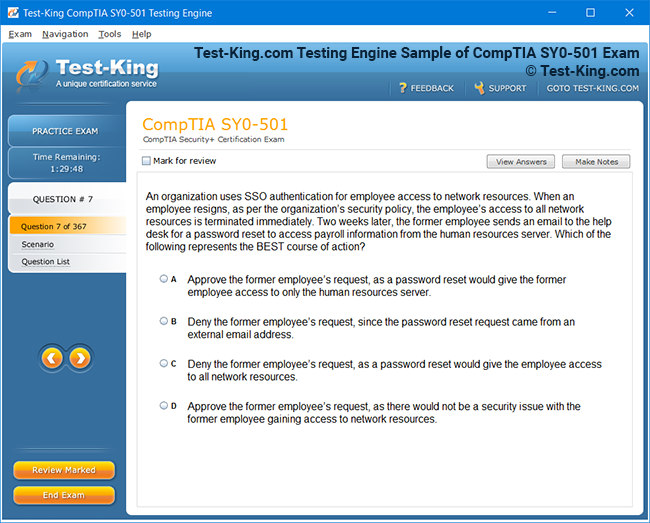
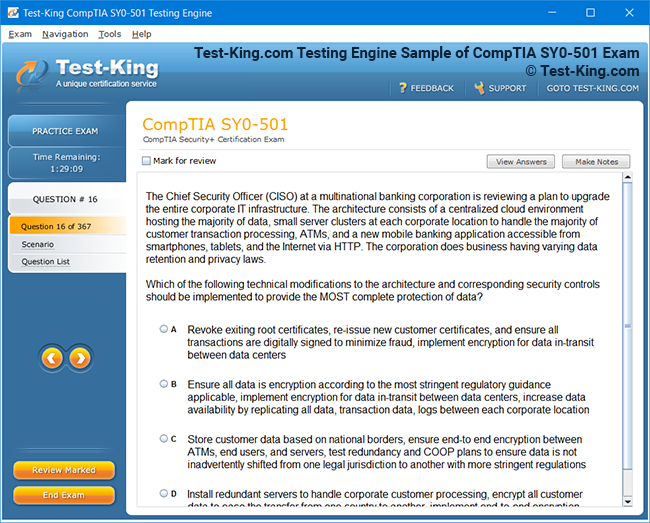
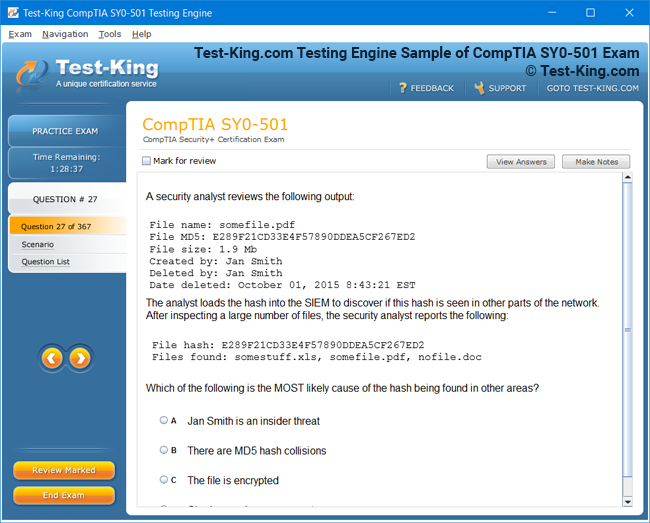
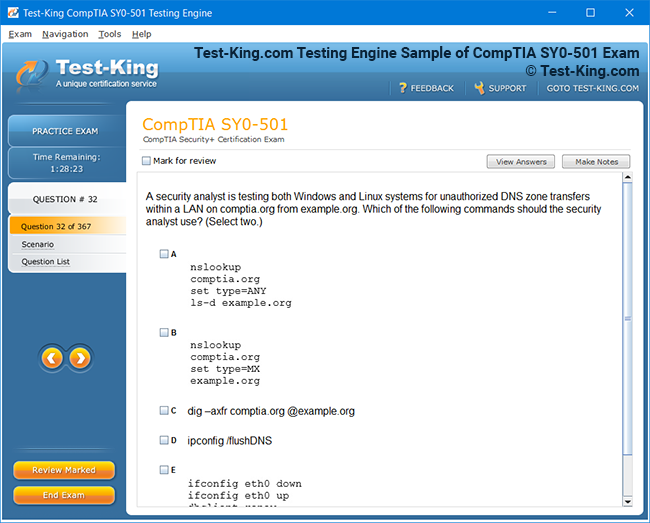
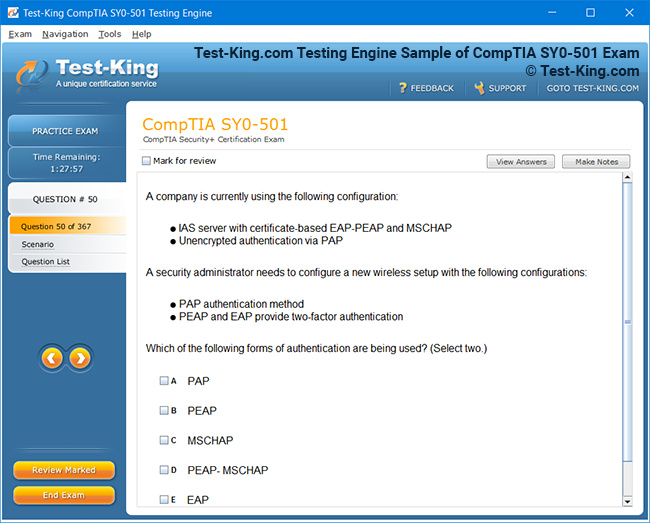
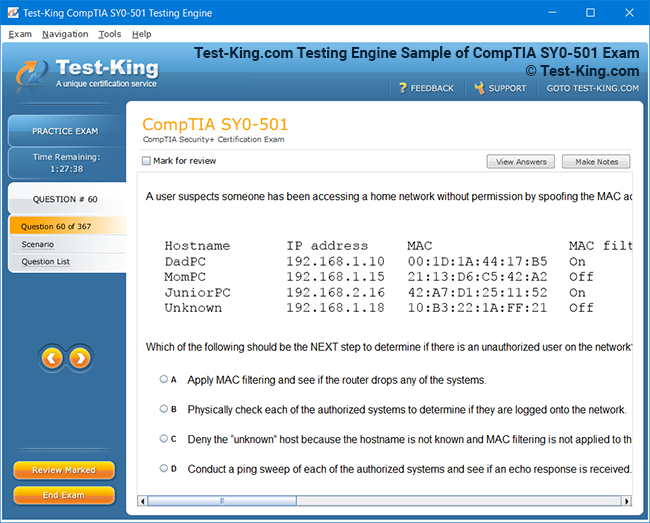
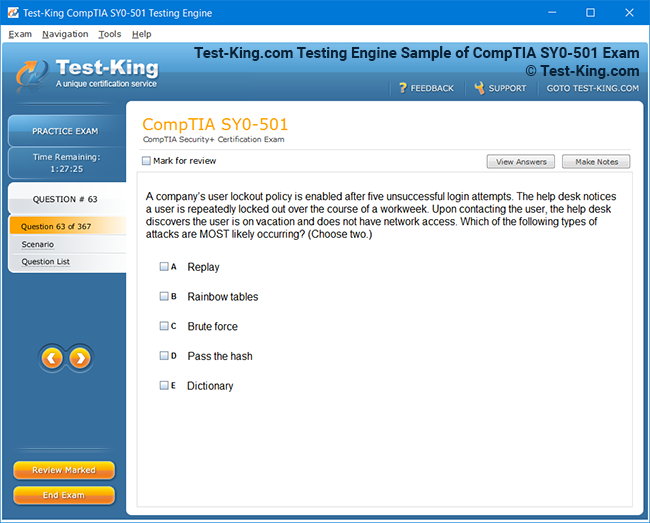
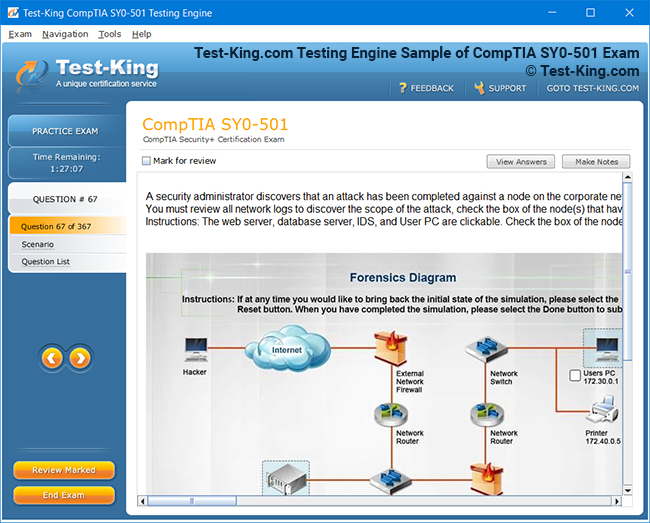
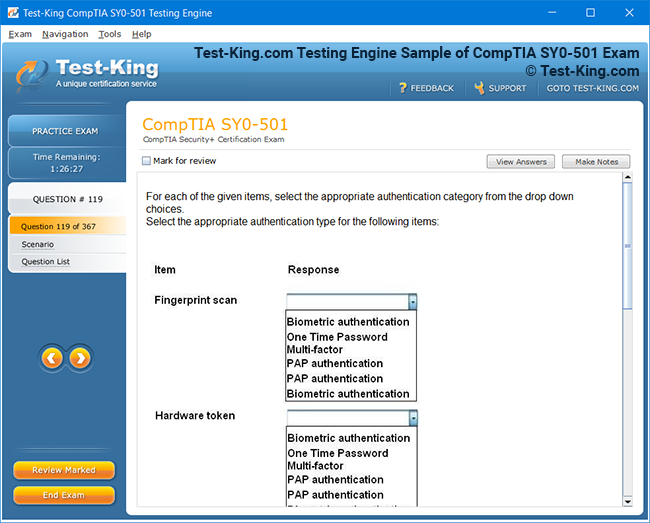
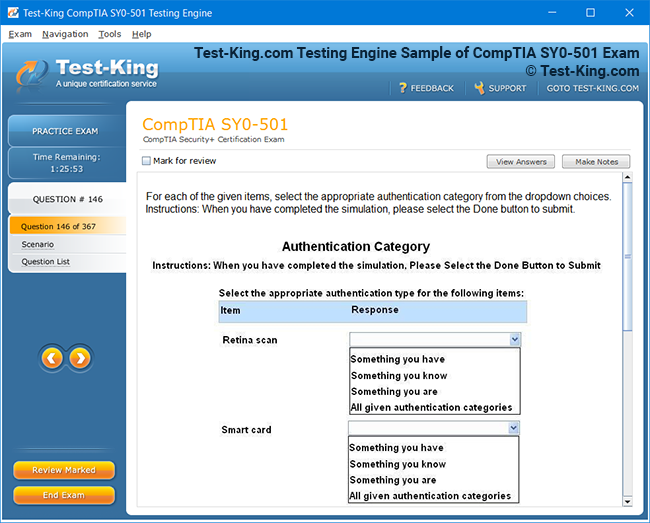
Product Screenshots
Frequently Asked Questions
How can I get the products after purchase?
All products are available for download immediately from your Member's Area. Once you have made the payment, you will be transferred to Member's Area where you can login and download the products you have purchased to your computer.
How long can I use my product? Will it be valid forever?
Test-King products have a validity of 90 days from the date of purchase. This means that any updates to the products, including but not limited to new questions, or updates and changes by our editing team, will be automatically downloaded on to computer to make sure that you get latest exam prep materials during those 90 days.
Can I renew my product if when it's expired?
Yes, when the 90 days of your product validity are over, you have the option of renewing your expired products with a 30% discount. This can be done in your Member's Area.
Please note that you will not be able to use the product after it has expired if you don't renew it.
How often are the questions updated?
We always try to provide the latest pool of questions, Updates in the questions depend on the changes in actual pool of questions by different vendors. As soon as we know about the change in the exam question pool we try our best to update the products as fast as possible.
How many computers I can download Test-King software on?
You can download the Test-King products on the maximum number of 2 (two) computers or devices. If you need to use the software on more than two machines, you can purchase this option separately. Please email support@test-king.com if you need to use more than 5 (five) computers.
What is a PDF Version?
PDF Version is a pdf document of Questions & Answers product. The document file has standart .pdf format, which can be easily read by any pdf reader application like Adobe Acrobat Reader, Foxit Reader, OpenOffice, Google Docs and many others.
Can I purchase PDF Version without the Testing Engine?
PDF Version cannot be purchased separately. It is only available as an add-on to main Question & Answer Testing Engine product.
What operating systems are supported by your Testing Engine software?
Our testing engine is supported by Windows. Andriod and IOS software is currently under development.
Overview of the BCP-410 Exam: Importance, Eligibility, and Career Benefits
The BCP-410 examination, designed for professionals who wish to maintain a BlackBerry Enterprise Server in a Microsoft Exchange environment, represents a critical milestone for individuals seeking to consolidate their expertise in enterprise mobile management. Within contemporary organizations, mobile communication has evolved beyond mere convenience to a linchpin of operational efficiency, security, and productivity. As businesses increasingly rely on mobile devices for confidential communication and rapid decision-making, the demand for certified experts capable of administering and troubleshooting enterprise mobility solutions has surged. This examination serves as a formal recognition of proficiency in navigating complex server infrastructures, managing synchronization between BlackBerry devices and Microsoft Exchange, and enforcing robust security policies that safeguard sensitive organizational data.
Understanding the BCP-410 Examination and Its Relevance in Modern IT Environments
A salient characteristic of this certification is its emphasis on practical skills combined with conceptual understanding. Professionals undertaking the examination are expected to demonstrate fluency in configuring, maintaining, and troubleshooting the BlackBerry Enterprise Server. The interplay between BES and Microsoft Exchange is particularly intricate, requiring administrators to understand messaging architectures, replication processes, and database integrity mechanisms. Mastery of these areas not only ensures seamless communication for end-users but also fortifies the enterprise against potential vulnerabilities that arise from misconfigured mobile infrastructure. By achieving this credential, candidates signal to employers that they possess the technical acumen to maintain high availability, optimize performance, and mitigate risks inherent in enterprise mobility environments.
The importance of the BCP-410 credential extends beyond technical proficiency. Organizations today place immense value on professionals who can bridge the gap between server administration and strategic IT decision-making. Maintaining a BlackBerry Enterprise Server entails more than installing software; it involves orchestrating policies that balance security requirements with user accessibility, troubleshooting synchronization anomalies without disrupting operations, and proactively identifying potential points of failure before they manifest as critical incidents. This level of responsibility underscores why certified individuals are often entrusted with pivotal roles in IT infrastructure management and enterprise communications.
Prerequisites and Foundational Knowledge
Candidates who aspire to undertake the examination typically possess a background in network administration, messaging platforms, or enterprise mobility management. While formal prerequisites may vary, familiarity with Microsoft Exchange environments, Windows Server configurations, and basic networking principles forms the foundation for successful preparation. Experience with mobile device management, user account administration, and security policy implementation significantly enhances a candidate’s readiness, providing a contextual framework for the examination’s practical scenarios. In addition to technical experience, familiarity with diagnostic tools, event logging, and performance monitoring software contributes to the ability to swiftly identify and resolve issues within the BlackBerry Enterprise Server infrastructure.
The examination assumes that candidates can navigate both server-side configurations and client-side troubleshooting. This dual competency is essential because issues encountered by end-users often originate from subtle misalignments in server settings, replication delays, or policy conflicts. Candidates are therefore encouraged to cultivate an understanding of message flow, data synchronization mechanisms, and encryption protocols, which collectively form the backbone of secure and reliable enterprise communication. A nuanced comprehension of these concepts empowers administrators to perform preventive maintenance, implement scalable solutions, and respond adeptly to incidents without compromising operational continuity.
Core Competencies Evaluated by the Examination
The examination assesses a broad spectrum of competencies, reflecting the multifaceted nature of enterprise mobility management. One critical area is the installation and configuration of BlackBerry Enterprise Server in conjunction with Microsoft Exchange. Candidates must demonstrate an ability to execute installations in accordance with best practices, configure server roles, and integrate the system seamlessly with existing infrastructure. Equally important is the capacity to administer user accounts, including the deployment of policies, assignment of access permissions, and management of device activations. Proficiency in troubleshooting is tested through scenarios requiring the identification of synchronization issues, message delivery delays, and connectivity disruptions, emphasizing both analytical skills and practical problem-solving capabilities.
Security administration forms another pillar of the evaluation. Candidates are expected to implement encryption protocols, configure authentication mechanisms, and enforce IT policies that regulate device behavior. These measures are critical in safeguarding organizational data against unauthorized access, malware infiltration, and inadvertent data leaks. Additionally, candidates must understand backup and recovery procedures, ensuring that in the event of server failure or corruption, enterprise communication can resume with minimal disruption. Monitoring performance, interpreting server logs, and optimizing system efficiency are also integral to the examination, reflecting real-world demands faced by administrators responsible for high-availability environments.
Professional Advantages of Certification
Obtaining the BCP-410 certification confers a spectrum of professional advantages that extend beyond immediate technical recognition. Certified individuals often experience enhanced career mobility, as organizations seek personnel who can assure continuity and resilience in enterprise communication networks. The credential is frequently associated with elevated roles in IT administration, enterprise mobility coordination, and infrastructure management. Furthermore, professionals with this certification are better positioned to influence policy decisions, advise on system upgrades, and contribute to strategic planning, underscoring the intersection between technical expertise and organizational leadership.
In terms of tangible benefits, certified professionals often command higher remuneration due to the specialized skill set they bring to the organization. Employers recognize the efficiency and reliability that such expertise introduces, mitigating operational risks and reducing downtime associated with communication failures. Beyond compensation, certification fosters credibility and recognition within professional communities, enhancing opportunities for collaboration, consultancy, and involvement in high-stakes projects. By demonstrating competence in maintaining complex BlackBerry Enterprise Server ecosystems, certified individuals position themselves as indispensable contributors to enterprise technology initiatives.
Strategic Value in Organizational Contexts
The strategic value of maintaining a BlackBerry Enterprise Server in a Microsoft Exchange environment extends to multiple organizational dimensions. At the operational level, it ensures uninterrupted access to email and corporate communication channels, which is critical for maintaining productivity and responsiveness. From a security perspective, effective management of the server infrastructure helps enforce policies that protect sensitive information, manage compliance requirements, and mitigate vulnerabilities associated with mobile devices. Certified administrators are therefore integral to both day-to-day operations and long-term strategic planning, bridging technical proficiency with organizational imperatives.
Furthermore, the credential supports adaptability in rapidly evolving technological landscapes. As enterprises increasingly adopt hybrid communication models, integrate cloud-based messaging solutions, and contend with complex regulatory requirements, the ability to maintain a secure and efficient BlackBerry Enterprise Server becomes a differentiator. Certified professionals are better equipped to adapt to these transformations, providing guidance on system integration, scalability, and performance optimization. Their expertise ensures that the enterprise can leverage mobile technologies effectively while minimizing risks and maximizing return on investment.
Enhancing Expertise through Practical Application
Candidates preparing for the examination are encouraged to complement theoretical knowledge with extensive hands-on experience. Practical engagement with server installations, user management, policy implementation, and troubleshooting exercises provides an intuitive understanding of real-world scenarios. Exposure to diverse organizational environments enhances adaptability, while familiarity with diagnostic tools, performance metrics, and replication mechanisms ensures readiness to address unforeseen challenges. This practical proficiency reinforces conceptual understanding, creating a robust skill set that aligns with the examination’s objectives and the demands of contemporary IT environments.
Professional growth also benefits from engagement with peer communities, discussion forums, and technical workshops. Exchanging insights with other practitioners offers exposure to unconventional problem-solving approaches, rare troubleshooting scenarios, and advanced configuration techniques. Such interactions cultivate intellectual agility and foster a deeper appreciation for the complexities of enterprise mobility management. By merging practical experience with community knowledge, candidates develop a comprehensive toolkit that enhances both examination performance and career trajectory.
Core Architecture and Functional Components
The BlackBerry Enterprise Server (BES) is a sophisticated middleware solution designed to bridge mobile devices with enterprise messaging infrastructures, specifically Microsoft Exchange. At its core, the server facilitates seamless synchronization of emails, calendar entries, contacts, and tasks between BlackBerry devices and Exchange mailboxes. Unlike conventional email clients that rely solely on simple protocols, the BlackBerry Enterprise Server establishes a persistent communication channel, ensuring near-instant delivery of information while maintaining encryption and policy enforcement. Its architecture comprises multiple interdependent components, each executing specialized functions, yet all operating harmoniously to provide reliable, secure, and efficient enterprise mobility.
The Message Routing Component orchestrates the flow of information between the mobile devices and the Microsoft Exchange server. This component ensures that emails generated or received by users are promptly delivered to the intended recipients, while also handling acknowledgments, error notifications, and synchronization conflicts. Administrators must understand the intricacies of message routing, including queue management, prioritization, and throttling mechanisms, as these directly impact the user experience and overall system performance.
The Policy Management Component allows administrators to define granular controls over mobile devices. Through policies, enterprises can regulate access to features such as camera functionality, Wi-Fi connectivity, password requirements, and corporate application installations. These policies not only safeguard sensitive information but also provide compliance with regulatory mandates in sectors such as finance, healthcare, and government. Implementing policies requires a careful balance between security enforcement and user productivity, and mastery of this component is crucial for any professional maintaining the server in a Microsoft Exchange environment.
The Synchronization Component maintains data integrity between the server and connected devices. It monitors changes in mailbox content, calendar updates, and contact modifications, ensuring that both endpoints reflect consistent information. Synchronization occurs in near real-time, and any failure in this process can result in data discrepancies, missed communications, or operational inefficiencies. Professionals need to understand not only how to configure synchronization intervals and conflict resolution rules but also how to troubleshoot anomalies when they occur.
The Security Layer of BES is integral to its value proposition. It provides encryption for messages in transit, ensures secure authentication for devices connecting to the server, and enforces policies designed to prevent unauthorized access. In addition to standard encryption protocols, the server supports advanced features such as device wipe commands, password recovery enforcement, and multi-factor authentication integration. Administrators must maintain vigilance over this layer to prevent data breaches, unauthorized device access, and potential regulatory noncompliance.
The Database Component serves as the repository for configuration settings, device registrations, policies, and historical logs. It is often backed by Microsoft SQL Server or other relational databases, which require careful maintenance to ensure integrity, performance, and recoverability. Database maintenance tasks include regular backups, indexing, performance tuning, and corruption detection. Understanding the relationship between the database and other server components is crucial, as many operational anomalies originate from database misconfigurations or resource constraints.
Integration with Microsoft Exchange
Integration with Microsoft Exchange is central to the functionality of the BlackBerry Enterprise Server. The server establishes a communication link with the Exchange mailbox store, utilizing either the Messaging Application Programming Interface (MAPI) or the Exchange Web Services (EWS) interface, depending on the version and configuration of Exchange in use. This link allows the BES to monitor mailbox events, apply policies, and deliver messages efficiently. Professionals maintaining the server must be well-versed in Exchange architecture, including store topology, mailbox databases, and transport services, as these directly influence the performance and reliability of the BES.
The integration process also involves configuring service accounts, permissions, and network connectivity. Proper service account configuration ensures that the BES can access mailboxes without granting unnecessary administrative privileges, while correct permissions maintain compliance with corporate policies and security best practices. Network connectivity considerations include firewall configurations, port access, and bandwidth management, all of which affect synchronization speed and message delivery latency. Understanding these elements allows administrators to anticipate potential bottlenecks and design solutions that preserve both performance and security.
Moreover, the server must be capable of handling multiple Exchange environments in complex enterprises. Some organizations operate with a combination of on-premises and cloud-hosted Exchange instances, requiring the BES to manage hybrid communication flows. Professionals need to understand how to configure routing, address resolution, and synchronization mechanisms across diverse environments to ensure uninterrupted mobile access. Expertise in this area enables administrators to optimize delivery paths, reduce latency, and maintain consistent user experiences regardless of infrastructure complexity.
Monitoring and Troubleshooting Server Operations
Maintaining the health of the BlackBerry Enterprise Server requires continuous monitoring and proactive troubleshooting. Administrators must regularly review server logs, event notifications, and performance metrics to identify potential issues before they escalate into service interruptions. Typical areas requiring vigilance include message queues, synchronization errors, policy application failures, and device registration anomalies. Understanding the interplay between server components and Exchange infrastructure allows for targeted interventions, minimizing downtime and operational disruptions.
When issues arise, a structured troubleshooting methodology is essential. Administrators often begin by isolating the affected component, whether it is message routing, synchronization, policy enforcement, or database integrity. Diagnostic tools provide insights into communication errors, message latency, and device connectivity, allowing administrators to pinpoint root causes. In addition, collaboration with Exchange administrators or network engineers is frequently necessary to address issues that span multiple layers of the infrastructure. This collaborative approach ensures that complex problems are resolved efficiently while maintaining compliance with security and operational standards.
Performance Optimization and Scalability
As enterprises expand, the BlackBerry Enterprise Server must scale to accommodate increasing numbers of devices and mailboxes. Performance optimization encompasses several aspects, including server resource allocation, message queue management, and synchronization scheduling. Administrators must evaluate CPU, memory, and storage utilization, adjusting configuration parameters to maximize throughput and minimize latency. Additionally, careful management of message queues, including prioritization and backlog resolution, ensures that communication flows smoothly even under peak load conditions.
Scalability also involves planning for redundancy and high availability. Many organizations implement clustered or load-balanced BES configurations to prevent service interruptions during hardware failures or maintenance activities. Understanding how to deploy multiple instances, configure failover mechanisms, and synchronize configurations across servers is essential for ensuring continuity. This strategic foresight allows enterprises to maintain seamless communication while accommodating growth and technological evolution.
Security Considerations in Enterprise Mobility
Security remains a paramount concern for professionals managing the BlackBerry Enterprise Server. Beyond standard encryption and authentication, administrators must implement advanced protective measures to counter evolving threats. This includes configuring device-level encryption, enabling remote wipe capabilities, and monitoring for unauthorized access attempts. Additionally, administrators must remain vigilant regarding regulatory compliance, ensuring that policies align with sector-specific standards such as GDPR, HIPAA, or financial services regulations.
Regular audits of server configurations, user access rights, and policy enforcement mechanisms are critical to maintaining security integrity. Administrators often develop proactive protocols for patch management, software updates, and incident response to minimize exposure to vulnerabilities. By maintaining a comprehensive understanding of both the server architecture and the evolving threat landscape, professionals ensure that enterprise communication remains secure, reliable, and resilient.
Practical Applications and Real-World Scenarios
In practice, the BlackBerry Enterprise Server supports diverse organizational needs, from facilitating secure executive communications to enabling field employees to access critical information remotely. Professionals often encounter scenarios requiring the deployment of targeted policies for specific departments, troubleshooting device synchronization in geographically dispersed offices, or managing server performance during peak usage periods. Real-world experience in these areas cultivates intuition and technical agility, allowing administrators to respond adeptly to both predictable and unforeseen challenges.
Moreover, integration with Microsoft Exchange provides opportunities to streamline workflow processes, enhance collaboration, and implement strategic IT initiatives. By leveraging the server’s capabilities, administrators can configure automated message routing, enforce retention policies, and optimize mobile access in alignment with organizational priorities. This level of expertise positions certified professionals as invaluable assets, capable of orchestrating complex enterprise mobility environments while ensuring operational efficiency and security compliance.
Understanding Eligibility Requirements and Prerequisites
The BCP-410 certification is tailored for professionals seeking to maintain a BlackBerry Enterprise Server in a Microsoft Exchange environment, and eligibility is rooted in a combination of practical experience, technical acumen, and familiarity with enterprise communication infrastructures. Candidates are expected to possess a foundational understanding of Windows Server administration, network topology, and messaging systems. While there is no rigid mandate for formal educational credentials, a background in information technology, system administration, or enterprise mobility management significantly enhances readiness and comprehension. The examination evaluates both conceptual knowledge and the ability to execute real-world administrative tasks, making prior exposure to enterprise environments an indispensable asset.
Experience with Microsoft Exchange is particularly vital, as candidates must understand mailbox structures, message flow, and database interactions. Familiarity with client access protocols, transport services, and event logging within Exchange provides the contextual framework necessary for effectively managing a BlackBerry Enterprise Server. Beyond technical experience, individuals should demonstrate proficiency in mobile device management, including account provisioning, security policy enforcement, and troubleshooting synchronization issues. This blend of knowledge ensures that candidates can approach complex scenarios with analytical precision and operational insight.
In addition to technical proficiency, a nuanced understanding of enterprise policies and regulatory frameworks is often advantageous. Organizations frequently implement stringent guidelines for data privacy, device security, and compliance with sector-specific standards. Professionals pursuing the certification are expected to integrate these considerations into their administrative strategies, ensuring that mobile communication remains both efficient and compliant. This multidimensional preparedness differentiates candidates who excel in both the examination and practical deployments from those who focus solely on theoretical knowledge.
Core Competencies Required for Successful Certification
Achieving the BCP-410 credential requires mastery of a broad range of competencies that span installation, administration, troubleshooting, and security. The installation and configuration of the BlackBerry Enterprise Server constitute one of the primary areas of assessment. Candidates must demonstrate an ability to deploy the server within a Microsoft Exchange environment, ensuring compatibility with existing infrastructure, proper service account configuration, and network connectivity optimization. This process involves careful planning and a meticulous approach, as misconfigurations can lead to synchronization delays, message delivery failures, or security vulnerabilities.
Administration of user accounts and device management is another central competency. Candidates must understand how to create and configure user profiles, assign policies, manage device activations, and implement access controls. This includes enforcing password policies, configuring remote wipe capabilities, and managing group-specific settings. These administrative tasks are critical to maintaining operational integrity, ensuring data security, and providing end-users with a consistent and reliable experience. Professionals who can balance administrative precision with strategic oversight demonstrate the type of expertise the certification seeks to validate.
Troubleshooting constitutes a significant portion of the examination, emphasizing both analytical thinking and technical dexterity. Candidates are evaluated on their ability to identify and resolve issues related to message routing, synchronization failures, device registration conflicts, and policy enforcement discrepancies. Mastery of diagnostic tools, event log interpretation, and performance metrics is essential to resolve anomalies efficiently. In practice, administrators frequently encounter scenarios where issues originate from subtle misalignments between server components and Exchange infrastructure, and the ability to pinpoint these root causes is a defining characteristic of successful candidates.
Security management is equally pivotal, encompassing encryption, authentication, and compliance considerations. Professionals are expected to implement measures that protect organizational data, regulate device behavior, and mitigate potential risks. This includes configuring secure communication channels, enabling multi-factor authentication, and enforcing policies aligned with regulatory frameworks. Knowledge of security protocols and industry best practices ensures that administrators can safeguard sensitive information while maintaining seamless user access, reinforcing the dual priorities of protection and operational efficiency.
Recommended Experience and Technical Exposure
Candidates preparing for the examination benefit from a combination of formal training, self-directed study, and hands-on experience. Practical exposure to server installations, policy configuration, and user account management allows individuals to internalize concepts and develop problem-solving intuition. Experience troubleshooting synchronization issues, managing message queues, and resolving database inconsistencies provides insight into the operational challenges commonly faced in enterprise environments. This experiential knowledge fosters confidence, reduces reliance on theoretical memorization, and enhances readiness for examination scenarios that simulate real-world complexities.
Networking experience is particularly advantageous, as administrators must understand the interplay between server components, network protocols, and Exchange communication channels. Knowledge of TCP/IP, firewall configurations, DNS resolution, and port management contributes to the ability to maintain high-performance, secure, and reliable messaging services. In hybrid or geographically dispersed environments, this understanding is crucial for designing efficient communication paths, troubleshooting connectivity issues, and ensuring consistent user experiences across locations.
Beyond technical skills, familiarity with enterprise policies and organizational workflows strengthens candidates’ effectiveness. Understanding the rationale behind mobile device policies, security mandates, and compliance requirements allows administrators to implement configurations that align with broader operational objectives. Professionals who appreciate both the technical and strategic dimensions of BlackBerry Enterprise Server management are better positioned to navigate complex environments, optimize performance, and respond to dynamic challenges.
Educational and Professional Backgrounds
While there are no strict educational prerequisites, individuals with degrees or certifications in information technology, computer science, or related disciplines often find themselves at an advantage. Foundational knowledge in system administration, database management, networking, and security concepts forms the bedrock for understanding the server’s architecture and operational dynamics. Supplementing this with practical experience, training modules, and hands-on experimentation creates a comprehensive skill set that aligns with the examination’s objectives.
Professional exposure to enterprise messaging systems, mobile device management, or IT support roles provides contextual understanding essential for success. Candidates who have managed Exchange servers, deployed mobile communication solutions, or maintained corporate IT infrastructures are better equipped to anticipate issues, apply best practices, and optimize performance. Experience in high-stakes environments, where downtime or data breaches carry significant operational consequences, instills a meticulous approach and an appreciation for preventive maintenance and proactive monitoring.
Soft Skills and Analytical Competencies
Technical proficiency alone is insufficient for candidates aspiring to excel in the BCP-410 certification. Soft skills, including analytical reasoning, problem-solving, and attention to detail, are integral to effectively managing complex server environments. Administrators must interpret diagnostic logs, analyze performance metrics, and make informed decisions under pressure. Effective communication skills also play a role, as collaboration with network engineers, Exchange administrators, and end-users is frequently required to resolve issues and implement configurations.
Time management and organizational acumen enhance a professional’s ability to prioritize tasks, maintain consistent system performance, and respond promptly to emergent issues. In dynamic enterprise environments, administrators often juggle multiple responsibilities simultaneously, including user support, policy enforcement, and server maintenance. Cultivating these competencies alongside technical expertise ensures holistic readiness for both examination challenges and real-world operational demands.
Enhancing Readiness Through Training and Resources
Preparation for the BCP-410 examination is most effective when theoretical study is combined with practical exercises and simulation of real-world scenarios. Candidates are encouraged to engage with official training materials, workshops, and practice labs to gain familiarity with installation procedures, policy configuration, and troubleshooting methodologies. Exposure to a variety of environments, including virtualized servers, hybrid Exchange deployments, and multi-site configurations, builds adaptability and deepens comprehension.
Online communities, discussion forums, and peer collaboration also provide valuable insights. Professionals often share uncommon troubleshooting cases, innovative solutions, and advanced configuration techniques, exposing candidates to scenarios they might not encounter in their immediate workplace. Engaging with these resources fosters intellectual agility, broadens understanding, and strengthens problem-solving capabilities, all of which contribute to examination success and operational competence.
Strategic Implications of Eligibility and Preparation
Understanding eligibility criteria and foundational knowledge requirements extends beyond examination readiness. It equips professionals to navigate enterprise mobility challenges strategically, optimize performance, and implement policies that align with organizational priorities. Candidates who internalize both technical and conceptual aspects of the BlackBerry Enterprise Server are positioned to anticipate potential disruptions, design resilient architectures, and ensure seamless mobile communication. This strategic perspective distinguishes certified administrators as indispensable contributors to enterprise technology management, reinforcing the value of the certification in both individual career growth and organizational efficacy.
Navigating the Examination Format and Expectations
The BCP-410 examination assesses the ability to maintain a BlackBerry Enterprise Server in a Microsoft Exchange environment, emphasizing both conceptual understanding and practical application. Candidates encounter a blend of multiple-choice questions, scenario-based inquiries, and troubleshooting exercises designed to simulate real-world conditions. The examination evaluates knowledge across server installation, administration, security enforcement, and performance optimization. Its format challenges professionals to demonstrate proficiency in configuring user accounts, implementing policies, and resolving complex synchronization issues while maintaining operational continuity.
Candidates are expected to allocate their responses thoughtfully, prioritizing analytical reasoning and procedural accuracy. While the examination does not impose rigid timing per question, effective time management ensures thorough consideration of nuanced scenarios. These scenarios often mirror the intricacies of enterprise environments, requiring familiarity with message routing, database management, and Exchange integration. Professionals who can systematically dissect each situation, anticipate potential complications, and apply appropriate interventions are positioned to excel in both the examination and subsequent real-world applications.
The examination also tests understanding of administrative tools, diagnostic utilities, and server monitoring systems. Proficiency in interpreting event logs, analyzing performance metrics, and utilizing management consoles is critical, as these skills underpin the resolution of operational anomalies. Candidates are encouraged to cultivate familiarity with these utilities, as their judicious use can expedite problem identification, optimize performance, and maintain synchronization integrity across devices and mailboxes.
Key Topics Covered in the Examination
One of the primary areas of evaluation is the installation and configuration of the BlackBerry Enterprise Server. Candidates must demonstrate the ability to deploy the server within a Microsoft Exchange environment, ensuring correct service account setup, network connectivity, and integration with messaging stores. This includes understanding the role of components such as message routing, synchronization, and policy management. Proper configuration ensures reliability, security, and efficient data flow, preventing potential bottlenecks and reducing the likelihood of synchronization delays or message loss.
Administration of user accounts and device management constitutes another critical focus. Candidates are expected to demonstrate proficiency in creating and modifying user profiles, assigning policies, activating devices, and managing access rights. They must understand how to implement group-specific configurations, enforce password policies, and manage remote wipe commands. These tasks are essential for safeguarding organizational data, maintaining compliance with corporate policies, and ensuring consistent access for end-users. Knowledge of best practices in these domains reflects an administrator’s ability to balance operational efficiency with security imperatives.
Troubleshooting forms a substantial portion of the examination. Candidates encounter scenarios involving message delivery delays, synchronization errors, device registration conflicts, and policy enforcement anomalies. Resolving these issues requires familiarity with diagnostic procedures, event log interpretation, and server monitoring techniques. Administrators must be able to identify the root cause of problems, whether they arise from misconfigured components, Exchange server interactions, network interruptions, or user-specific errors. Effective troubleshooting requires not only technical knowledge but also analytical reasoning and a systematic approach to problem-solving.
Security management is another focal topic. Candidates must demonstrate the ability to configure encryption protocols, enforce authentication mechanisms, and implement policies that prevent unauthorized access. This includes ensuring compliance with regulatory frameworks, monitoring for security breaches, and applying proactive measures to mitigate risks. Administrators must understand the interplay between server security settings, device capabilities, and organizational policies, balancing protection with usability.
Performance optimization and monitoring are also integral to the examination. Professionals are evaluated on their capacity to analyze system performance, manage message queues, configure synchronization intervals, and allocate server resources efficiently. They must understand how to detect performance bottlenecks, implement tuning measures, and maintain high availability in enterprise environments. This knowledge ensures that the BlackBerry Enterprise Server functions reliably under varied loads, supporting a growing user base without compromising speed or security.
Effective Preparation Strategies
Successful preparation for the BCP-410 examination combines theoretical study, hands-on practice, and engagement with community resources. Candidates are encouraged to review official guides and documentation to gain a comprehensive understanding of server architecture, Exchange integration, and policy management. Studying real-world case studies enhances comprehension of operational challenges, enabling candidates to anticipate potential issues and develop problem-solving strategies.
Practical experience is indispensable. Candidates should perform installations, configure user accounts, implement policies, and troubleshoot synchronization errors in controlled environments or laboratories. Simulation of diverse scenarios, including device conflicts, message routing delays, and database inconsistencies, allows candidates to internalize procedures and develop intuitive troubleshooting skills. Familiarity with diagnostic utilities, event logs, and server performance metrics ensures that practical skills align with examination expectations and real-world requirements.
Engagement with online forums, professional communities, and peer discussions provides exposure to uncommon issues and advanced solutions. These interactions often reveal rare scenarios and innovative approaches that extend beyond standard study materials, cultivating intellectual agility and deepening understanding. Candidates who incorporate these insights into their preparation gain a broader perspective on enterprise mobility challenges, enhancing both examination performance and operational competence.
Time management and structured study plans are essential. Candidates should allocate sufficient time to cover installation procedures, user management, policy enforcement, troubleshooting, and security measures. Integrating periodic self-assessments, practice exams, and scenario-based exercises helps reinforce learning, identify knowledge gaps, and build confidence. Professionals who maintain a disciplined approach to preparation are better equipped to navigate complex examination scenarios and respond adeptly to unexpected challenges.
Understanding the interplay between server components and Microsoft Exchange is crucial. Candidates should focus on message routing mechanisms, mailbox interactions, synchronization processes, and policy enforcement. This holistic comprehension enables administrators to anticipate dependencies, predict potential disruptions, and implement preventive measures. By mastering these interconnections, candidates demonstrate the analytical capacity and operational insight that the BCP-410 examination seeks to validate.
Familiarity with performance monitoring and resource optimization further strengthens preparation. Candidates should analyze CPU, memory, and storage utilization, understand queue management, and configure synchronization intervals to maintain system efficiency. Scenario-based exercises that simulate high-load conditions or device surges provide practical insight into the complexities of enterprise mobility management. Professionals who engage with these simulations cultivate the ability to maintain reliability and performance under diverse operational pressures.
Security-focused preparation is equally important. Candidates should study encryption protocols, authentication mechanisms, device security settings, and regulatory compliance requirements. Exercises involving policy configuration, remote wipe implementation, and access restriction provide hands-on experience that reinforces theoretical knowledge. Understanding security interdependencies, such as how authentication methods impact synchronization or policy enforcement, prepares candidates to address both examination questions and real-world operational scenarios.
Utilizing a combination of self-directed study, structured courses, and mentorship enhances preparation efficacy. Structured training offers guided exposure to examination content and practical exercises, while self-directed study allows candidates to focus on personal knowledge gaps and reinforce understanding. Mentorship from experienced administrators provides insight into uncommon troubleshooting scenarios, operational best practices, and strategic decision-making, bridging the gap between theory and practice.
Leveraging Analytical and Problem-Solving Skills
Analytical reasoning and problem-solving are core competencies assessed in the examination. Candidates are required to diagnose issues, implement solutions, and evaluate outcomes systematically. This involves interpreting event logs, assessing performance metrics, and applying corrective measures with precision. Developing these skills through practice scenarios, real-world experiences, and case study analysis ensures that candidates can navigate complex problems efficiently.
Scenario-based exercises often require balancing multiple considerations, such as security, performance, and user experience. Administrators must prioritize interventions, implement corrective measures without disrupting operations, and anticipate potential consequences of configuration changes. Professionals who cultivate these decision-making skills demonstrate both technical acumen and operational judgment, reflecting the comprehensive expertise that the BCP-410 certification seeks to validate.
Integration of Theoretical Knowledge with Practical Application
Successful candidates integrate theoretical understanding with practical application. This includes not only memorizing procedures but also understanding underlying principles, dependencies, and potential failure points. Practical exercises in installation, user management, policy configuration, and troubleshooting cultivate intuition and procedural fluency. Candidates who can connect abstract concepts to tangible operational scenarios are better equipped to navigate examination challenges and real-world enterprise environments.
Exposure to diverse configurations, hybrid Exchange deployments, and multi-site server installations enhances adaptability. Professionals who experience these variations develop flexible problem-solving strategies, anticipate potential complications, and implement preventive measures proactively. This experiential depth reinforces both confidence and competence, enabling candidates to excel in the examination while demonstrating operational mastery in professional contexts.
Continuous Improvement and Adaptive Learning
Preparation for the BCP-410 examination benefits from a mindset of continuous improvement. Candidates should review errors, revisit challenging scenarios, and refine techniques through iterative practice. Adaptive learning strategies, including scenario simulations, peer discussions, and reflective exercises, foster deeper comprehension and operational agility. This approach ensures that candidates internalize both procedural knowledge and analytical reasoning, enhancing performance during the examination and in practical administration.
Regular review of emerging best practices, software updates, and security developments further strengthens preparation. Understanding how the BlackBerry Enterprise Server evolves within Microsoft Exchange environments allows candidates to anticipate changes, adapt procedures, and maintain proficiency. Professionals who integrate continuous learning into their preparation cultivate resilience, versatility, and expertise, positioning themselves to navigate both examination content and dynamic enterprise requirements successfully.
Advancing Professional Opportunities through Certification
Obtaining the BCP-410 certification opens numerous professional avenues for individuals who maintain a BlackBerry Enterprise Server in a Microsoft Exchange environment. In the contemporary IT landscape, enterprise mobility and secure communication have emerged as pivotal components of operational efficiency and data protection. Organizations increasingly rely on certified professionals to manage complex messaging infrastructures, enforce security policies, and ensure seamless synchronization between mobile devices and Exchange servers. Possessing this credential signals to employers that an individual possesses both the technical acumen and practical experience necessary to navigate these challenges with precision and reliability.
Professionals who earn the certification often gain access to elevated roles within IT administration, mobile infrastructure management, and enterprise messaging coordination. These positions demand proficiency in server configuration, user account administration, policy enforcement, and troubleshooting. Certification validates a candidate's ability to handle high-stakes environments, where operational continuity and data security are paramount. As enterprises expand their reliance on mobile solutions, the demand for administrators capable of maintaining BlackBerry Enterprise Server ecosystems has grown, making certified individuals highly sought after in the technology job market.
The credential also enhances credibility within professional communities. Colleagues, employers, and clients recognize certified administrators as individuals who adhere to best practices, demonstrate meticulous attention to detail, and maintain a proactive approach to system management. This recognition extends beyond technical skills, positioning certified professionals as trusted advisors capable of guiding enterprise mobility strategies, optimizing performance, and implementing security frameworks that align with organizational objectives.
Financial and Tangible Benefits of Certification
In addition to career advancement and credibility, obtaining the BCP-410 certification often correlates with increased compensation and financial opportunities. Certified professionals are frequently offered higher salaries compared to their non-certified peers, reflecting the specialized skill set and operational value they bring to organizations. Employers acknowledge the efficiency, reliability, and risk mitigation that such expertise introduces, resulting in tangible financial rewards and career growth potential.
Beyond salary considerations, certification can lead to opportunities for consultancy, project management, and strategic planning roles within enterprise mobility domains. Professionals who demonstrate competence in maintaining secure and efficient communication infrastructures are often entrusted with high-profile projects, system upgrades, and policy development initiatives. These responsibilities not only provide exposure to complex technical scenarios but also foster leadership skills, decision-making capabilities, and strategic insight, enhancing overall career trajectory.
Furthermore, certification can serve as a gateway to global opportunities. Organizations operating across multiple geographies value professionals who can implement standardized practices, maintain compliance with international regulations, and manage hybrid messaging environments. The ability to navigate diverse infrastructures, troubleshoot complex synchronization issues, and enforce consistent policies across locations positions certified administrators as indispensable assets in multinational enterprises.
Enhancing Strategic Impact within Organizations
Certified professionals contribute to organizational success by ensuring uninterrupted communication, robust security, and operational resilience. Maintaining a BlackBerry Enterprise Server in a Microsoft Exchange environment involves more than routine administration; it requires strategic foresight, proactive monitoring, and adaptive problem-solving. Administrators play a crucial role in safeguarding sensitive data, enforcing compliance measures, and optimizing server performance, directly impacting productivity and organizational stability.
The credential equips professionals to design and implement policies that balance security requirements with user accessibility. By enforcing password policies, device encryption, and access controls, administrators protect confidential information while facilitating seamless workflow for end-users. Certified individuals are also adept at troubleshooting complex issues, mitigating operational disruptions, and ensuring high availability across the messaging infrastructure. These contributions underscore the strategic value of the certification, highlighting its importance beyond technical proficiency to encompass organizational efficiency and resilience.
Moreover, certified professionals often influence decision-making processes regarding enterprise mobility strategies. Their expertise informs system upgrades, deployment of new devices, and integration of emerging technologies. By aligning technical recommendations with organizational priorities, administrators help organizations achieve operational excellence, reduce risk exposure, and maintain a competitive advantage in rapidly evolving digital landscapes.
Expanding Knowledge and Skill Sets
The BCP-410 certification fosters continuous learning and professional development. Preparing for the examination encourages candidates to explore advanced topics, such as server architecture, message routing, synchronization mechanisms, and security protocols. This exploration enhances analytical thinking, problem-solving abilities, and operational intuition, equipping professionals with a comprehensive skill set applicable across multiple domains of IT administration.
Certification also motivates ongoing engagement with technological advancements. Professionals often remain abreast of updates to BlackBerry Enterprise Server software, Microsoft Exchange iterations, and emerging mobile communication trends. This proactive learning mindset ensures that certified administrators maintain relevance in dynamic enterprise environments, anticipate potential challenges, and implement innovative solutions that enhance efficiency and security.
Hands-on experience gained during preparation reinforces theoretical knowledge, cultivating a practical understanding of system behavior, troubleshooting methodologies, and performance optimization strategies. By combining conceptual learning with applied practice, certified professionals develop a robust toolkit that empowers them to navigate complex scenarios, resolve operational anomalies, and maintain seamless communication infrastructures in diverse organizational contexts.
Leadership and Mentorship Opportunities
Achieving BCP-410 certification positions professionals for leadership and mentorship roles within IT teams. Certified administrators often provide guidance to junior staff, facilitate knowledge transfer, and establish best practices for system management. Their expertise enables teams to adopt standardized procedures, implement effective troubleshooting protocols, and maintain high-performance server environments. By fostering a culture of technical excellence, certified individuals contribute to the overall capability, resilience, and adaptability of the IT department.
In addition to internal mentorship, certified professionals may participate in industry forums, workshops, and collaborative initiatives. Sharing insights, rare troubleshooting experiences, and strategic approaches enhances professional reputation and strengthens networks within the enterprise mobility community. This engagement cultivates intellectual growth, encourages innovative thinking, and reinforces the professional standing of individuals who maintain high standards of technical proficiency and operational insight.
Long-Term Career Sustainability and Growth
The certification provides long-term benefits by establishing a foundation for sustained career growth. Professionals who maintain proficiency in BlackBerry Enterprise Server administration remain valuable contributors to organizations that prioritize secure and efficient communication. The credential demonstrates a commitment to excellence, technical mastery, and continuous improvement, qualities that support advancement into senior technical roles, management positions, or consultancy opportunities.
As enterprises adopt hybrid messaging infrastructures, cloud integration, and mobile security enhancements, certified administrators are well-positioned to guide adaptation strategies, implement robust solutions, and maintain operational continuity. Their skill set ensures that organizations can leverage technological advancements effectively while minimizing risk and maximizing return on investment. This enduring relevance underscores the strategic and career-oriented advantages of obtaining the BCP-410 certification.
Practical Examples of Career Enhancement
Certified professionals often experience tangible career benefits through role elevation, expanded responsibilities, and recognition within their organizations. For example, administrators who successfully implement policy frameworks, optimize server performance, and resolve synchronization anomalies may be promoted to senior systems administration roles or enterprise mobility coordination positions. Others may transition into consultancy or project management opportunities, applying their expertise to guide organizational IT strategies, deployment plans, and security initiatives.
Additionally, certification fosters credibility with external stakeholders, clients, and partners. Professionals who can demonstrate mastery of BlackBerry Enterprise Server administration in Microsoft Exchange environments are viewed as trusted authorities, capable of advising on infrastructure improvements, compliance measures, and technology adoption strategies. This recognition enhances professional visibility, networking opportunities, and potential for career advancement both within and beyond the current organization.
Conclusion
The BCP-410 certification offers multifaceted career benefits, encompassing professional advancement, financial rewards, and strategic organizational impact. Certified individuals gain recognition for their technical proficiency, problem-solving capabilities, and operational judgment, establishing themselves as indispensable contributors to enterprise mobility management. The credential enhances credibility, opens opportunities for leadership and consultancy, and positions professionals to navigate complex messaging infrastructures with confidence. By fostering continuous learning, practical expertise, and strategic insight, BCP-410 certification equips individuals to excel in both examination performance and long-term career trajectories, ensuring enduring value in an evolving technological landscape.