

Exam Code: CLSSGB
Exam Name: Certified Lean Six Sigma Green Belt - GAQM
Certification Provider: GAQM
Corresponding Certification: CLSSGB
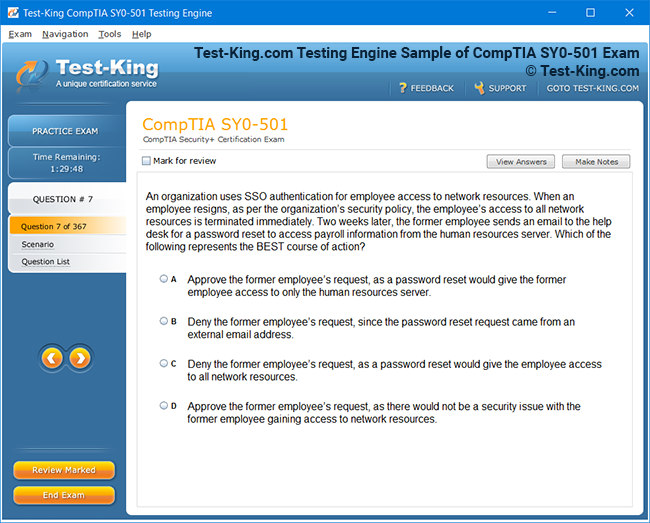
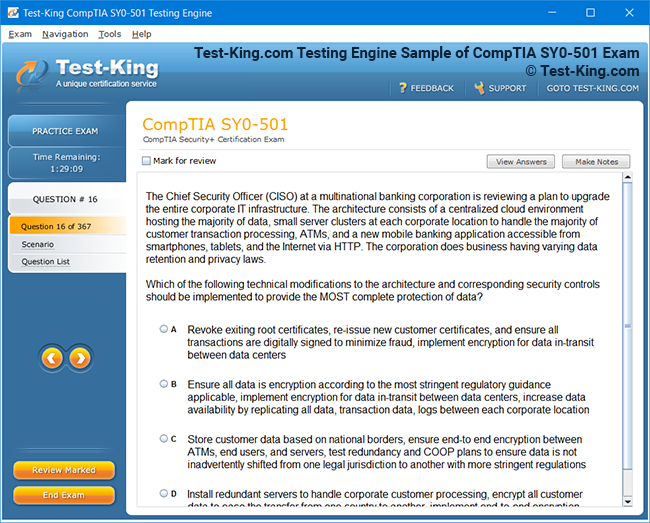
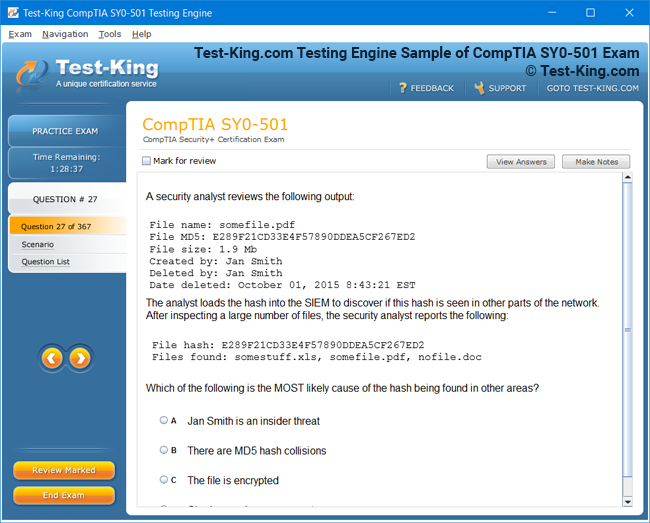
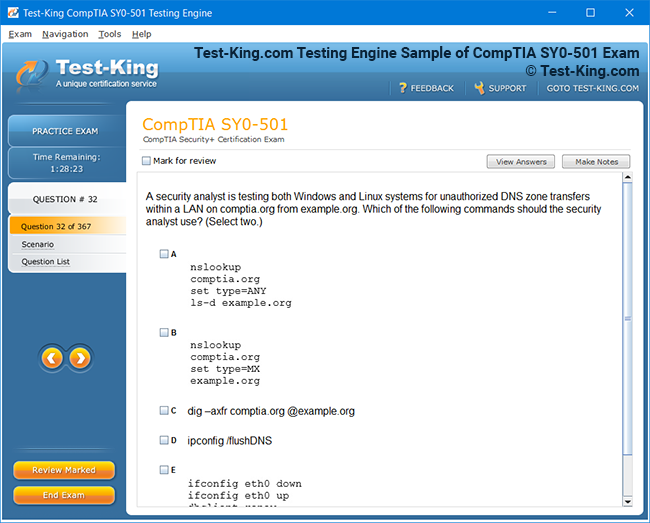
Product Screenshots
Frequently Asked Questions
How can I get the products after purchase?
All products are available for download immediately from your Member's Area. Once you have made the payment, you will be transferred to Member's Area where you can login and download the products you have purchased to your computer.
How long can I use my product? Will it be valid forever?
Test-King products have a validity of 90 days from the date of purchase. This means that any updates to the products, including but not limited to new questions, or updates and changes by our editing team, will be automatically downloaded on to computer to make sure that you get latest exam prep materials during those 90 days.
Can I renew my product if when it's expired?
Yes, when the 90 days of your product validity are over, you have the option of renewing your expired products with a 30% discount. This can be done in your Member's Area.
Please note that you will not be able to use the product after it has expired if you don't renew it.
How often are the questions updated?
We always try to provide the latest pool of questions, Updates in the questions depend on the changes in actual pool of questions by different vendors. As soon as we know about the change in the exam question pool we try our best to update the products as fast as possible.
How many computers I can download Test-King software on?
You can download the Test-King products on the maximum number of 2 (two) computers or devices. If you need to use the software on more than two machines, you can purchase this option separately. Please email support@test-king.com if you need to use more than 5 (five) computers.
What is a PDF Version?
PDF Version is a pdf document of Questions & Answers product. The document file has standart .pdf format, which can be easily read by any pdf reader application like Adobe Acrobat Reader, Foxit Reader, OpenOffice, Google Docs and many others.
Can I purchase PDF Version without the Testing Engine?
PDF Version cannot be purchased separately. It is only available as an add-on to main Question & Answer Testing Engine product.
What operating systems are supported by your Testing Engine software?
Our testing engine is supported by Windows. Andriod and IOS software is currently under development.
Top GAQM Exams
DMAIC Methodology Explained: The Core Framework of the CLSSGB Exam
The DMAIC methodology represents the quintessential framework for process improvement within the Lean Six Sigma discipline. Candidates preparing for the Certified Lean Six Sigma Green Belt examination must develop a profound comprehension of each stage, as it constitutes the backbone for driving operational excellence. DMAIC, an acronym for Define, Measure, Analyze, Improve, and Control, provides a systematic approach to problem-solving, ensuring that organizations can identify inefficiencies, quantify their impact, and implement sustainable solutions.
Understanding the Essence of DMAIC in Lean Six Sigma
In the Define stage, practitioners are tasked with delineating the scope of the project and establishing a clear problem statement. This step involves recognizing the stakeholders, understanding customer requirements, and setting tangible objectives. A meticulous definition phase prevents ambiguity and lays the foundation for the subsequent analytical work. It is essential for candidates to appreciate that without a well-structured Define stage, all ensuing efforts risk being misdirected, resulting in suboptimal improvements.
The Measure phase revolves around the collection of accurate and reliable data pertinent to the process under examination. Lean Six Sigma Green Belt aspirants should understand that measurement is not merely about gathering numbers; it encompasses identifying relevant metrics, developing data collection plans, and ensuring the veracity of the information captured. The primary objective here is to establish a baseline, providing a quantifiable representation of current performance. This baseline becomes indispensable for benchmarking progress and validating the impact of interventions in later stages.
Analyze, the third stage, demands a nuanced evaluation of the data collected to uncover root causes and correlations. In this phase, statistical tools and process mapping techniques become instrumental. A Green Belt must cultivate the capability to discern patterns, anomalies, and sources of variation within the workflow. Understanding the interplay between different variables allows teams to pinpoint inefficiencies and prioritize improvements that yield the most significant impact. The analytical rigor exercised in this stage distinguishes superficial problem-solving from transformative process enhancement.
Improvement, the penultimate stage, entails devising and implementing solutions designed to mitigate the identified inefficiencies. Candidates must recognize that this phase involves both creativity and empirical validation. Lean Six Sigma encourages the use of pilot testing, simulation, and iterative refinement to ensure that interventions are effective and scalable. Successful implementation not only rectifies current issues but also instills a culture of continuous improvement, fostering resilience and adaptability within the organization.
The Control phase ensures the longevity and sustainability of improvements by instituting monitoring mechanisms and standardized procedures. For Green Belt practitioners, the challenge lies in developing control plans that embed process stability into daily operations. This may involve establishing key performance indicators, creating dashboards, and training personnel to adhere to new standards. The overarching aim is to prevent regression and maintain gains over time, thereby solidifying the value of Lean Six Sigma initiatives.
Integration of DMAIC with Organizational Strategy
A profound understanding of DMAIC extends beyond the confines of individual projects. Candidates should appreciate how this methodology aligns with broader organizational objectives. By systematically reducing variation and enhancing efficiency, Lean Six Sigma initiatives contribute directly to cost savings, quality enhancement, and customer satisfaction. Green Belts are often positioned at the nexus of operational teams and management, translating analytical insights into actionable strategies. This strategic integration underscores the relevance of DMAIC not merely as a technical tool, but as a catalyst for organizational transformation.
The application of DMAIC requires more than procedural adherence; it demands a mindset attuned to continuous scrutiny and refinement. A Green Belt must internalize the philosophy that no process is ever perfect and that iterative improvement is a perpetual journey. By embracing this ethos, practitioners can cultivate resilience against complacency, ensuring that every project undertaken contributes to enduring operational excellence.
The Role of Data in Driving DMAIC Success
At the heart of the DMAIC methodology lies the judicious use of data. Green Belt candidates must recognize that high-quality data serves as the lifeblood of effective problem-solving. During the Measure stage, the focus is on capturing relevant metrics, but the subsequent Analyze phase emphasizes the interpretation of this data to derive meaningful insights. Employing statistical techniques, such as regression analysis, hypothesis testing, and variance analysis, equips practitioners to identify causal relationships rather than superficial symptoms.
Moreover, the improvement of processes is contingent upon data-driven decision-making. Solutions crafted without empirical validation risk being anecdotal or ineffective. By leveraging data throughout the DMAIC lifecycle, Green Belts ensure that every intervention is grounded in factual evidence, minimizing uncertainty and optimizing outcomes. The Control phase further reinforces the importance of data by providing mechanisms to monitor ongoing performance and detect deviations promptly.
Common Pitfalls and Challenges in DMAIC Application
Despite the structured nature of DMAIC, practitioners frequently encounter challenges that can impede project success. One common pitfall is insufficient stakeholder engagement during the Define phase. Without clear communication and buy-in from key personnel, initiatives may struggle to gain traction, resulting in resistance or misalignment with organizational priorities. Candidates must understand the importance of fostering collaboration and aligning project objectives with both operational needs and customer expectations.
Another frequent obstacle arises from data quality issues. Inaccurate, incomplete, or inconsistent data can undermine the analytical rigor required in the Measure and Analyze stages. Green Belts should be adept at verifying data integrity, reconciling discrepancies, and ensuring that conclusions drawn are both credible and actionable. Similarly, the implementation of improvements can falter if solutions are not adequately tested or if process owners are not trained in new methodologies. The Control phase mitigates these risks by embedding standard operating procedures and monitoring frameworks, yet it requires vigilant oversight and continuous engagement.
Lean Six Sigma Tools Aligned with DMAIC
The successful execution of DMAIC is often facilitated by a suite of Lean Six Sigma tools, each tailored to specific stages of the methodology. In the Define stage, tools such as project charters, SIPOC diagrams, and voice of the customer analysis help clarify scope and objectives. During Measure, process mapping, data collection plans, and capability analysis ensure accurate assessment of current performance. Analyze leverages root cause analysis, cause-and-effect diagrams, and statistical modeling to identify critical factors driving inefficiencies. Improvement utilizes brainstorming, pilot testing, and design of experiments to implement effective solutions, while Control incorporates control charts, standardized work instructions, and ongoing audits to maintain stability.
Mastery of these tools is crucial for Green Belt candidates, not simply for passing the examination, but for applying Lean Six Sigma principles effectively in real-world environments. The interplay between methodology and toolsets enables practitioners to navigate complex processes with precision and confidence, reinforcing the credibility and impact of their initiatives.
Deepening Understanding of Define in DMAIC
The Define step represents the inception of any Lean Six Sigma initiative, establishing the boundaries and objectives that will guide the entire project. In the context of a Certified Lean Six Sigma Green Belt, this stage necessitates an intricate understanding of organizational imperatives, customer expectations, and process intricacies. A Green Belt must cultivate the ability to formulate a lucid problem statement that encapsulates the issue without ambiguity, ensuring alignment with both operational goals and strategic vision.
Stakeholder engagement is pivotal during this stage. It is imperative to map all entities affected by the process and to incorporate their perspectives into the project charter. Often overlooked, stakeholder analysis not only clarifies roles and responsibilities but also anticipates potential sources of resistance, fostering proactive mitigation strategies. Tools such as SIPOC diagrams, though simple in appearance, provide a comprehensive overview of Suppliers, Inputs, Processes, Outputs, and Customers, translating abstract organizational concepts into actionable insights. This clarity prevents misdirection and creates a cohesive framework for subsequent measurement and analysis.
Precision in Measurement: Capturing Data with Integrity
Transitioning from defining objectives to quantifying them, the Measure stage emphasizes the capture of precise, verifiable data. The Certified Lean Six Sigma Green Belt must grasp that accurate measurement is the linchpin of process improvement. This stage demands a judicious selection of key performance indicators that truly reflect process behavior rather than superficial metrics that obscure the underlying performance.
A critical element involves the development of robust data collection plans that specify the sources, frequency, and methodology for capturing data. Missteps in this stage, such as collecting incomplete or biased information, can compromise the integrity of the entire DMAIC methodology. Data verification techniques, ranging from measurement system analysis to cross-validation with historical records, are essential in establishing credibility. The ultimate objective is to produce a reliable baseline against which the efficacy of improvements can be measured, transforming abstract goals into quantifiable benchmarks.
Analytical Rigor: Unveiling Root Causes
The Analyze stage demands both intellectual rigor and methodological discipline. Lean Six Sigma Green Belts must navigate vast datasets to uncover causative relationships and hidden inefficiencies within processes. The endeavor is not simply to describe what is happening but to discern why it occurs. This often involves statistical techniques such as regression analysis, Pareto evaluation, and hypothesis testing, each offering a lens through which variability can be interpreted.
Process mapping and cause-and-effect analysis remain indispensable tools in this stage. By visualizing the flow of activities and identifying interdependencies, practitioners can distinguish between symptomatic problems and root causes. A Green Belt must cultivate the acumen to prioritize these causes based on their impact and feasibility, ensuring that subsequent improvements yield substantial and sustainable benefits rather than superficial fixes. Analytical precision, coupled with a methodical approach, transforms data into actionable intelligence, laying the groundwork for impactful interventions.
Implementing Improvements with Strategic Foresight
Improvement embodies the transformational aspect of DMAIC, where insights derived from analysis manifest as tangible enhancements in operational processes. At this juncture, Certified Lean Six Sigma Green Belts transition from problem identification to solution deployment, balancing creativity with empirical validation. Pilot testing serves as a critical instrument, enabling practitioners to assess the effectiveness of solutions on a smaller scale before full-scale implementation. Iterative refinement ensures that interventions are both effective and resilient under varying operational conditions.
Collaboration remains essential during this stage, as successful improvements necessitate the involvement of process owners and operational teams. Integrating feedback loops ensures that modifications are not only technically feasible but also culturally acceptable, fostering buy-in and minimizing resistance. By emphasizing continuous improvement, the organization internalizes a mindset that recognizes process optimization as an ongoing pursuit rather than a singular achievement, reinforcing operational agility.
Sustaining Gains: Control and Monitoring
The Control stage represents the culmination of the DMAIC methodology, aimed at embedding improvements into the organizational fabric. Certified Lean Six Sigma Green Belts must recognize that without adequate controls, even the most effective interventions risk regression. Control mechanisms include the establishment of standard operating procedures, implementation of monitoring tools, and the creation of performance dashboards that provide real-time visibility into process behavior.
Training and knowledge transfer are indispensable elements of this stage. Personnel must internalize new practices, comprehend their significance, and consistently adhere to prescribed standards. Control charts, though conceptually straightforward, offer powerful insights into process stability, enabling rapid detection of deviations and prompt corrective action. By institutionalizing these practices, organizations transform short-term gains into enduring enhancements, ensuring that Lean Six Sigma initiatives deliver long-lasting value.
Practical Applications and Real-World Examples
Applying DMAIC in real-world contexts underscores the versatility and potency of the methodology. In manufacturing, DMAIC facilitates reduction of defect rates, streamlining production, and enhancing throughput. By systematically identifying bottlenecks and implementing improvements, organizations can achieve both cost efficiency and elevated quality standards. In service industries, the methodology proves equally effective, enabling the optimization of customer response times, reduction of service errors, and enhancement of overall client satisfaction.
Consider a scenario where a customer support center experiences prolonged resolution times. Through Define, the team establishes the problem and identifies key metrics, such as average response time and first-call resolution rate. During Measure, data collection highlights inconsistencies in workflow allocation. Analyze uncovers that disproportionate workload distribution and redundant procedures contribute to delays. Improvement introduces streamlined routing systems and workflow automation, while Control ensures that the new processes are adhered to, monitored through performance dashboards and regular audits. This example illustrates the holistic application of DMAIC, translating abstract methodology into measurable organizational benefit.
Integrating Lean Principles with Six Sigma
While DMAIC is the structural framework, its efficacy is often enhanced through the integration of Lean principles. Lean emphasizes the elimination of waste, including time, resources, and effort, complementing Six Sigma’s focus on reducing variation and defects. Certified Lean Six Sigma Green Belts must adeptly blend these philosophies, ensuring that process improvements are not only precise but also lean, maximizing value for the customer while minimizing unnecessary expenditure.
By applying Lean tools such as value stream mapping, 5S, and kaizen events within the DMAIC framework, organizations achieve a synergistic effect. Processes become more agile, errors are minimized, and operational efficiency is heightened. Green Belts act as the conduits of this integration, championing a culture that simultaneously prioritizes quality, speed, and resource optimization.
Overcoming Challenges and Driving Success
Despite the structured nature of DMAIC, challenges are inevitable. Resistance to change, limited resources, or inadequate data can impede progress. Certified Lean Six Sigma Green Belts must be equipped with strategies to overcome these obstacles, ranging from stakeholder engagement to robust training programs and meticulous project planning. Emphasizing transparency, evidence-based decision-making, and incremental progress fosters an environment where improvement initiatives are more likely to succeed.
Advanced Applications and Nuances of DMAIC
The DMAIC methodology serves as the cornerstone of Lean Six Sigma, equipping organizations with a structured approach to process enhancement. For a Certified Lean Six Sigma Green Belt, mastery of DMAIC entails a profound understanding of both conceptual underpinnings and practical implementation strategies. This understanding extends beyond mere procedural adherence, encompassing an appreciation of subtle variations in processes, contextual intricacies, and the interdependence of organizational functions.
The Define stage initiates the journey by identifying and articulating the problem, establishing the scope, and aligning objectives with organizational strategy. Practitioners must meticulously capture customer requirements, operational constraints, and potential risks. In many cases, the nuances of stakeholder expectations and tacit knowledge significantly influence project outcomes. Green Belts should develop the ability to conduct thorough stakeholder analysis, map influential parties, and preemptively address potential resistance. Effective definition transforms abstract challenges into actionable projects with clearly delineated boundaries.
Measurement is the subsequent stage where data integrity assumes paramount importance. Beyond mere collection, the Measure stage requires rigorous validation of metrics to ensure that they reflect the true performance of the process. Techniques such as measurement system analysis, sampling strategies, and error detection methods become critical tools. By establishing an accurate baseline, practitioners can quantify deviations and identify opportunities for enhancement with precision. This baseline provides the reference against which all subsequent improvements are assessed, emphasizing the importance of methodical data stewardship.
The Analyze stage demands analytical acuity, as it is the juncture at which the underlying causes of inefficiencies are uncovered. Lean Six Sigma Green Belts are expected to employ statistical analyses, process mapping, and root cause investigation to discern patterns and identify systemic bottlenecks. An important consideration in this stage is distinguishing correlation from causation; superficial associations can lead to misguided interventions. By utilizing rigorous analytical frameworks, practitioners ensure that solutions address the core issues rather than transient symptoms, reinforcing the efficacy of the DMAIC methodology.
Improvement entails the development and deployment of solutions that mitigate the identified inefficiencies. This stage is characterized by a blend of empirical assessment, creative problem-solving, and iterative testing. Pilot implementation allows practitioners to evaluate the practicality and impact of solutions under real-world conditions. Continuous feedback loops enable iterative refinement, ensuring that interventions are both effective and resilient. Green Belts are tasked with orchestrating collaboration among diverse teams, ensuring that process owners, operators, and managers contribute to and embrace improvements, fostering organizational alignment and cohesion.
Control represents the mechanism for sustaining the gains achieved through improvement. This stage incorporates the establishment of monitoring systems, standard operating procedures, and performance dashboards to maintain process stability. Green Belts must ensure that personnel are trained, accountable, and equipped with tools to monitor adherence to new standards. Control charts, audit mechanisms, and ongoing evaluation provide visibility into process behavior, enabling early detection of deviations and facilitating prompt corrective action. By institutionalizing these practices, organizations embed continuous improvement into their operational DNA.
Leveraging Lean Tools Within DMAIC
While DMAIC provides the structural framework, its potency is often augmented by Lean tools that streamline processes and eliminate waste. Lean principles complement Six Sigma’s focus on variation reduction by emphasizing speed, efficiency, and value creation. Tools such as value stream mapping, 5S methodology, and kaizen events enhance the capacity of DMAIC to deliver meaningful and sustainable results. Green Belts adept at integrating Lean techniques can simultaneously address inefficiencies, reduce delays, and optimize resource utilization, thereby magnifying the impact of process improvements.
Value stream mapping provides a holistic view of workflow, illuminating both value-adding and non-value-adding activities. By visualizing the flow of materials, information, and tasks, practitioners can identify redundancies, bottlenecks, and points of waste. This insight enables targeted interventions that streamline operations while preserving quality standards. Similarly, 5S techniques—sort, set in order, shine, standardize, and sustain—create organized work environments that reduce variability and enhance productivity. Kaizen events foster a culture of continuous improvement, encouraging teams to identify and implement incremental enhancements in a structured and time-bound manner.
Real-World Illustrations of DMAIC Efficacy
The practical application of DMAIC demonstrates its adaptability and transformative potential across diverse industries. In healthcare, for instance, hospitals often struggle with patient throughput, leading to extended wait times and diminished satisfaction. Through Define, teams identify critical process areas, such as admission, diagnostic testing, and discharge. Measurement captures relevant metrics, including average waiting times, procedural delays, and error rates. Analyze elucidates root causes, such as redundant documentation and inefficient patient flow. Improvement introduces streamlined protocols, automated tracking systems, and staff reallocation, while Control monitors adherence and performance outcomes to sustain the gains. Such applications underscore the universality of DMAIC and its capacity to address both operational and service-oriented challenges.
In manufacturing, DMAIC facilitates defect reduction, production optimization, and cost efficiency. By systematically dissecting processes, identifying sources of variation, and implementing corrective measures, organizations achieve heightened quality, reduced waste, and increased throughput. Green Belts must appreciate the criticality of cross-functional collaboration, as manufacturing processes often span multiple departments, each contributing to the overall performance. Successful DMAIC implementation ensures that improvements are harmonized across these interconnected domains, reinforcing operational excellence and reliability.
Service industries also benefit profoundly from DMAIC methodology. Consider a call center experiencing prolonged resolution times and inconsistent service quality. The Define stage captures the scope and stakeholder expectations, while Measure quantifies metrics such as average handling time, first-call resolution, and customer satisfaction scores. Analyze identifies process inefficiencies, including uneven workload distribution and inadequate knowledge resources. Improvement introduces targeted training, workflow automation, and knowledge management systems. Control mechanisms monitor adherence, track key performance indicators, and ensure continuous evaluation. Through these interventions, service delivery becomes more consistent, efficient, and customer-centric.
Overcoming Challenges in DMAIC Execution
Although DMAIC offers a structured path to process improvement, challenges frequently arise that can impede its effectiveness. Resistance to change is a pervasive obstacle, often rooted in entrenched organizational habits, fear of disruption, or misalignment with personal incentives. Green Belts must develop strategies to navigate such resistance, employing stakeholder communication, change management principles, and participatory approaches to engender support.
Data-related challenges are equally significant. Inaccurate, incomplete, or inconsistent data undermines analytical rigor and can lead to erroneous conclusions. Certified Lean Six Sigma Green Belts are expected to implement robust data validation, reconcile inconsistencies, and maintain meticulous records to preserve integrity. Moreover, resource constraints, such as limited personnel or budgetary restrictions, necessitate strategic prioritization and careful allocation to ensure that improvement initiatives remain feasible and impactful.
Cultivating a Culture of Continuous Improvement
Beyond the technical application of DMAIC, Green Belts play a pivotal role in fostering an organizational ethos of continuous improvement. This entails instilling a mindset in which all employees recognize that processes are inherently improvable and that operational excellence is an ongoing pursuit. Training programs, knowledge sharing, and recognition of incremental gains contribute to embedding this culture. By championing continuous scrutiny and proactive refinement, Green Belts ensure that Lean Six Sigma principles permeate organizational practices, leading to sustained efficiency, quality enhancement, and stakeholder satisfaction.
Strategic Exploration of DMAIC in Organizational Contexts
The DMAIC methodology serves as an instrumental framework for process optimization and operational excellence. Certified Lean Six Sigma Green Belts are expected to transcend mere procedural adherence, cultivating an intricate understanding of the methodology’s applicability in diverse organizational settings. DMAIC encompasses five integral stages: Define, Measure, Analyze, Improve, and Control, each serving a unique function yet interwoven into a cohesive process enhancement strategy. Green Belts must internalize the nuances of each stage and appreciate how systematic execution fosters both efficiency and quality.
The Define stage establishes the problem statement, delineates objectives, and aligns the project with organizational goals. This stage necessitates a meticulous analysis of customer expectations, process constraints, and potential risks. Stakeholder engagement is paramount, ensuring alignment across departments and functional units. Green Belts often employ tools to visualize the process landscape, map stakeholders, and identify critical inputs and outputs. Such preparatory work ensures clarity, prevents misalignment, and enhances the likelihood of achieving meaningful process improvements.
Measurement is the stage where the foundation for data-driven decisions is laid. Green Belts must focus on collecting accurate and relevant data that reflects true process performance. This involves defining key performance indicators, determining measurement techniques, and validating data integrity. Effective measurement captures both the current state of processes and the magnitude of deviations, providing a quantifiable baseline for subsequent analysis. The precision and reliability of this data are crucial, as they inform every downstream decision and intervention.
Analyze entails examining data to uncover underlying causes of inefficiencies and variations. Green Belts employ a variety of analytical tools, including regression analysis, cause-and-effect diagrams, Pareto analysis, and process mapping, to identify patterns and root causes. Distinguishing correlation from causation is critical in this stage, ensuring that improvements target fundamental issues rather than superficial symptoms. Analytical rigor transforms raw data into actionable insights, enabling practitioners to prioritize initiatives with the greatest potential impact on operational performance.
The Improve stage focuses on implementing solutions that address identified inefficiencies. Certified Lean Six Sigma Green Belts leverage both creative problem-solving and empirical testing to ensure that interventions are effective and sustainable. Pilot testing, simulations, and iterative adjustments validate the feasibility and efficacy of improvements. Engagement with process owners and cross-functional teams ensures that changes are practical and widely accepted. The emphasis on iterative refinement underscores the dynamic nature of improvement, highlighting that process optimization is a continual journey rather than a singular accomplishment.
Control is the stage that safeguards improvements, embedding new practices into the organizational fabric. Standard operating procedures, monitoring mechanisms, and performance dashboards provide visibility and accountability. Personnel are trained to maintain compliance, and deviations are promptly identified and rectified. Control charts, audits, and routine evaluations reinforce process stability, ensuring that gains are preserved over time. Green Belts must design control strategies that are practical, scalable, and responsive to evolving operational conditions, thereby institutionalizing continuous improvement.
Application of DMAIC Across Industries
DMAIC’s versatility allows it to be applied effectively across manufacturing, service, healthcare, and administrative environments. In manufacturing, DMAIC facilitates defect reduction, operational efficiency, and cost savings. By defining critical metrics, measuring process variability, analyzing root causes, implementing corrective actions, and controlling outcomes, organizations achieve superior quality and productivity. Green Belts must navigate complex production lines, integrating insights from multiple departments to harmonize improvements and maintain operational coherence.
In healthcare, DMAIC addresses patient care inefficiencies, treatment delays, and administrative bottlenecks. Projects may target patient admission workflows, laboratory testing turnaround, or discharge procedures. The Define stage identifies critical areas affecting patient outcomes and staff efficiency. Measurement captures quantitative indicators such as wait times, treatment errors, and resource utilization. Analytical techniques reveal systemic causes of inefficiencies, guiding the development of targeted improvements. Implementation introduces streamlined protocols, automated tracking, and optimized staff allocation, while control mechanisms monitor adherence and outcomes, ensuring lasting enhancements in patient care and operational performance.
Service industries benefit from DMAIC through improvements in response time, service consistency, and client satisfaction. For example, in a customer support center, prolonged handling times and inconsistent service quality can be addressed by defining project objectives, measuring current performance metrics, analyzing root causes, implementing optimized workflows, and maintaining controls to sustain gains. Such applications demonstrate DMAIC’s capacity to enhance customer experience, reduce inefficiencies, and align service delivery with organizational goals.
Administrative and knowledge-based environments also leverage DMAIC to optimize processes such as document management, approval workflows, and data handling. Define clarifies objectives, Measure quantifies workflow efficiency, Analyze identifies bottlenecks and redundancies, Improve introduces automation and process simplification, and Control ensures continued adherence and process stability. These interventions not only enhance operational efficiency but also foster a culture of precision and accountability across knowledge-intensive organizations.
Integration of Lean Principles with DMAIC
Lean principles augment DMAIC by emphasizing the elimination of waste, reduction of unnecessary effort, and acceleration of value delivery. Green Belts integrate Lean tools such as value stream mapping, 5S methodology, and kaizen events within the DMAIC framework to amplify the impact of improvements. Value stream mapping reveals inefficiencies in material, information, and task flows, enabling targeted interventions. The 5S methodology promotes organized and standardized work environments, reducing variability and enhancing operational efficiency. Kaizen events cultivate a continuous improvement mindset, encouraging incremental enhancements and engagement across the organization.
The combination of Lean and Six Sigma creates a synergistic approach that addresses both quality and efficiency. While Six Sigma focuses on minimizing variation and errors, Lean emphasizes speed and resource optimization. Certified Lean Six Sigma Green Belts are expected to balance these philosophies, ensuring that processes are both precise and lean. This integration strengthens organizational performance, elevates customer satisfaction, and maximizes value delivery.
Challenges in DMAIC Implementation
Despite the structured framework, DMAIC implementation presents several challenges. Resistance to change, lack of stakeholder engagement, inadequate data quality, and resource constraints can impede success. Green Belts must anticipate these obstacles and employ strategies such as stakeholder communication, participatory planning, and robust data validation to mitigate risks. Transparency, evidence-based decision-making, and incremental improvements foster trust and increase the likelihood of successful outcomes. Cultivating an organizational culture that embraces continuous improvement further enhances DMAIC effectiveness.
Role of Green Belts in Driving Continuous Improvement
Certified Lean Six Sigma Green Belts serve as catalysts for operational excellence, bridging the gap between analytical insight and practical execution. They facilitate data-driven decision-making, promote cross-functional collaboration, and instill a culture of continuous scrutiny and refinement. Green Belts are responsible for ensuring that DMAIC initiatives not only achieve measurable improvements but also embed sustainable practices within the organizational fabric. Their role extends beyond project execution to encompass coaching, mentoring, and influencing organizational behavior toward perpetual enhancement of processes and outcomes.
Strategic Implementation and Application of DMAIC
The DMAIC methodology is the pivotal framework for Certified Lean Six Sigma Green Belts, providing a structured approach to problem-solving and process optimization. Each stage—Define, Measure, Analyze, Improve, and Control—contributes to the holistic improvement of organizational operations. Understanding DMAIC requires both theoretical insight and practical acumen, as the methodology’s effectiveness is realized when applied to real-world processes with precision and adaptability.
In the Define stage, Green Belts articulate the problem statement, establish objectives, and align the project with organizational strategy. This stage necessitates careful consideration of customer expectations, business priorities, and operational constraints. Stakeholder mapping is crucial to identify individuals or teams who influence process outcomes and to anticipate potential resistance. Clear definition and scoping provide a strong foundation, ensuring that subsequent measurement and analysis activities are purposeful and directed toward meaningful outcomes.
Measurement focuses on capturing reliable, relevant, and precise data. Certified Lean Six Sigma Green Belts must ensure that the metrics chosen accurately reflect the performance of processes and that the data collected is verifiable. Measurement system analysis, validation procedures, and sampling strategies help maintain data integrity. Establishing a baseline is critical, as it provides a reference for evaluating improvement initiatives and assessing their impact. The accuracy and reliability of data collected during this stage directly influence the quality of insights generated in the Analyze stage.
Analyze involves examining collected data to uncover root causes, patterns, and sources of variation. Statistical tools, process mapping, and cause-and-effect analysis allow Green Belts to distinguish between superficial symptoms and underlying issues. It is essential to recognize correlations without prematurely attributing causation. Properly executed analysis transforms raw data into actionable knowledge, enabling practitioners to design solutions that address fundamental process deficiencies. Prioritizing root causes based on impact and feasibility ensures that improvement efforts yield maximum benefit.
The Improve stage emphasizes the implementation of targeted solutions that address identified inefficiencies. Green Belts employ creativity, empirical testing, and iterative refinement to ensure interventions are effective and sustainable. Pilot testing allows for controlled experimentation, providing insights into potential challenges and adjustment opportunities before full-scale deployment. Collaboration with process owners and cross-functional teams ensures solutions are practical, accepted, and integrated into everyday operations. Continuous feedback and adaptation foster resilience and ensure that improvements are both durable and scalable.
Control safeguards the gains achieved through improvement initiatives. Standard operating procedures, monitoring systems, and performance dashboards maintain process stability. Personnel are trained to adhere to new protocols, while control charts and audits provide mechanisms for detecting deviations and ensuring corrective action. Establishing robust control plans prevents regression, embeds best practices into daily operations, and ensures that organizational improvements persist over time. Certified Lean Six Sigma Green Belts play a pivotal role in designing and implementing control measures that are both effective and sustainable.
Application of DMAIC Across Operational Environments
DMAIC demonstrates versatility and relevance across multiple industries. In manufacturing, the methodology reduces defects, enhances productivity, and minimizes operational waste. By defining metrics, measuring process performance, analyzing root causes, implementing corrective actions, and controlling outcomes, organizations achieve higher quality standards and operational efficiency. Cross-departmental collaboration is vital, as production processes are often interconnected, and improvements in one area can influence the performance of others.
In healthcare, DMAIC addresses patient care inefficiencies, delayed treatments, and administrative bottlenecks. For example, in a hospital setting, patient admission, diagnostic testing, and discharge workflows are analyzed to identify delays and errors. Measurement captures metrics such as waiting times, error rates, and resource utilization. Analysis uncovers bottlenecks caused by redundant processes or staffing imbalances. Improvement introduces streamlined workflows, automated tracking, and optimized staffing schedules. Control ensures adherence to new protocols, ongoing monitoring, and continuous evaluation of patient outcomes and operational efficiency.
Service industries, including customer support and financial services, benefit from DMAIC by enhancing response times, service quality, and customer satisfaction. In a call center scenario, Define identifies areas affecting call resolution and customer experience, Measure captures key indicators such as handling time and satisfaction scores, Analyze pinpoints bottlenecks and inefficiencies, Improve introduces targeted training, automation, and process reorganization, and Control ensures monitoring and adherence to new practices. These steps illustrate how DMAIC translates into measurable improvements in service delivery and operational performance.
Administrative and knowledge-based environments also leverage DMAIC for process optimization. Document management, approval workflows, and information processing benefit from structured analysis and targeted improvements. Define clarifies objectives and scope, Measure quantifies performance, Analyze identifies inefficiencies and redundancies, Improve implements automation and streamlining, and Control maintains adherence and monitors outcomes. These applications highlight DMAIC’s adaptability and effectiveness across diverse operational landscapes, emphasizing its role in enhancing both efficiency and quality.
Integration of Lean Principles in DMAIC Execution
Lean methodologies enhance DMAIC by focusing on the elimination of waste, acceleration of value delivery, and reduction of unnecessary effort. Certified Lean Six Sigma Green Belts integrate Lean tools such as value stream mapping, 5S methodology, and kaizen events within the DMAIC framework to amplify impact. Value stream mapping visualizes process flows, identifies bottlenecks, and highlights inefficiencies. The 5S methodology organizes workspaces, standardizes procedures, and promotes operational discipline. Kaizen events encourage incremental improvements and team participation, fostering a culture of continuous enhancement.
By combining Lean and Six Sigma, organizations address both quality and efficiency simultaneously. While Six Sigma focuses on variation reduction and defect minimization, Lean emphasizes speed, waste elimination, and value optimization. Green Belts must harmonize these approaches to ensure that processes are both precise and lean, maximizing value creation and minimizing operational inefficiencies.
Challenges and Mitigation in DMAIC Implementation
Despite the structured framework, implementing DMAIC presents several challenges. Resistance to change, inadequate data quality, limited resources, and insufficient stakeholder engagement are common obstacles. Green Belts must proactively address these issues through stakeholder communication, participatory planning, rigorous data validation, and strategic resource allocation. Fostering transparency, emphasizing evidence-based decision-making, and celebrating incremental improvements strengthen organizational support and increase the likelihood of success.
Data integrity is especially critical, as flawed or incomplete information can compromise analysis and lead to misguided solutions. Certified Lean Six Sigma Green Belts are trained to validate data rigorously, cross-check sources, and ensure that metrics accurately represent process performance. Addressing resistance to change involves clear communication, stakeholder involvement, and demonstration of tangible benefits, creating an environment where continuous improvement is embraced rather than resisted.
Role of Green Belts in Sustaining Process Excellence
Certified Lean Six Sigma Green Belts act as catalysts for ongoing operational enhancement. Beyond executing projects, they foster a culture of continuous improvement, bridging the gap between analytical insights and practical implementation. Green Belts facilitate knowledge sharing, mentor team members, and champion the adoption of best practices. Their work ensures that DMAIC initiatives generate measurable results, remain sustainable, and contribute to long-term organizational success. By integrating analytical rigor, collaborative engagement, and strategic foresight, Green Belts solidify process improvements and embed operational excellence into organizational culture.
Comprehensive Applications, Advanced Insights, and Sustaining Operational Improvements
The DMAIC methodology remains the cornerstone of Lean Six Sigma, offering a structured and disciplined approach to process enhancement. Certified Lean Six Sigma Green Belts are required to develop deep proficiency in each stage—Define, Measure, Analyze, Improve, and Control—understanding not only procedural requirements but also strategic applications and organizational impact. Mastery of DMAIC enables Green Belts to identify inefficiencies, quantify improvements, implement sustainable solutions, and embed continuous enhancement within organizational processes.
The Define stage marks the inception of any project, where the problem statement, project objectives, and scope are carefully articulated. This stage necessitates a thorough comprehension of customer expectations, process dynamics, and operational constraints. Stakeholder engagement is essential, as misalignment or resistance can impede project success. Green Belts map stakeholders, identify influential personnel, and assess potential barriers to adoption. By delineating a precise project charter and visualizing inputs, outputs, and critical process parameters, practitioners create a roadmap that guides subsequent measurement and analysis with clarity and purpose.
Measurement is pivotal for establishing a reliable baseline and quantifying the current state of the process. Data collection must be meticulous, capturing metrics that accurately reflect operational performance. Certified Lean Six Sigma Green Belts focus on defining meaningful indicators, validating measurement systems, and ensuring data integrity. Measurement encompasses the evaluation of variation, identification of bottlenecks, and detection of inconsistencies that may obscure true process behavior. Establishing a solid baseline provides a reference point against which improvements are assessed, ensuring that interventions produce measurable and verifiable outcomes.
Analyze transforms data into actionable insights, uncovering the root causes of inefficiencies and variations. Statistical techniques, process mapping, and cause-and-effect diagrams empower Green Belts to differentiate between superficial issues and fundamental problems. Rigorous analysis highlights patterns, correlations, and sources of deviation, enabling prioritized interventions that deliver substantial operational impact. The ability to distinguish correlation from causation ensures that solutions address core process deficiencies rather than temporary or incidental anomalies. Analytical precision at this stage lays the groundwork for meaningful and sustainable improvement.
The Improve stage embodies the implementation of targeted solutions to mitigate identified inefficiencies. Green Belts employ empirical testing, iterative refinement, and collaborative engagement to ensure interventions are effective and widely accepted. Pilot testing allows solutions to be evaluated under controlled conditions, highlighting potential challenges and adjustment opportunities. Cross-functional collaboration ensures that process owners, operators, and management participate in the development and adoption of improvements. The iterative approach reinforces adaptability and resilience, ensuring that enhancements are both effective and sustainable over time.
Control safeguards the longevity of improvements by embedding new practices into organizational operations. Standard operating procedures, performance dashboards, and monitoring mechanisms maintain process stability and ensure adherence. Training and accountability frameworks are critical, ensuring personnel understand, implement, and sustain new procedures. Control charts, audits, and real-time monitoring enable rapid identification of deviations and corrective action. By institutionalizing these practices, Green Belts ensure that operational gains are maintained, and processes continue to function optimally in dynamic environments.
DMAIC’s versatility allows application across industries, including manufacturing, healthcare, service, and administrative domains. In manufacturing, it addresses defect reduction, process variability, and efficiency enhancement. Metrics such as defect rates, cycle time, and production yield are quantified, root causes of inefficiency are identified, targeted solutions are implemented, and control measures ensure sustainable quality. In healthcare, patient flow, treatment delays, and administrative bottlenecks are systematically addressed, improving outcomes and operational performance. Service industries benefit through optimized response times, enhanced client satisfaction, and standardized workflows. Administrative processes, including document management and data processing, are streamlined for efficiency, accuracy, and reliability. The methodology’s adaptability demonstrates its applicability to both tangible production processes and intangible knowledge-based operations.
Integration of Lean principles amplifies DMAIC’s effectiveness by focusing on waste elimination, process speed, and value creation. Tools such as value stream mapping, 5S methodology, and kaizen events enable identification of non-value-adding activities, organization of workspaces, and incremental process improvements. The Lean approach complements Six Sigma’s focus on variation reduction, creating a synergistic effect where processes are simultaneously precise and efficient. Green Belts harmonize Lean and Six Sigma strategies, ensuring maximum operational impact while enhancing customer value and reducing waste.
Challenges in DMAIC implementation frequently arise, including resistance to change, inadequate stakeholder engagement, poor data quality, and resource constraints. Certified Lean Six Sigma Green Belts must employ mitigation strategies, including participatory planning, rigorous data validation, transparent communication, and effective prioritization of interventions. Addressing these challenges proactively increases the likelihood of project success and fosters a culture of continuous improvement. Cultivating buy-in from stakeholders, demonstrating measurable benefits, and reinforcing incremental successes help overcome resistance and maintain momentum.
Green Belts play a pivotal role in embedding continuous improvement within organizational culture. Beyond project execution, they serve as facilitators, coaches, and champions of operational excellence. They bridge analytical insights and practical implementation, mentor team members, and foster knowledge sharing. By promoting evidence-based decision-making, monitoring adherence, and reinforcing best practices, Green Belts ensure that DMAIC initiatives yield lasting improvements and contribute to long-term organizational performance.
Practical case studies illustrate the methodology’s transformative potential. For example, in a healthcare facility facing prolonged patient discharge times, the Define stage identifies the scope and key stakeholders, Measure quantifies metrics such as discharge duration and error rates, Analyze uncovers root causes such as redundant documentation and coordination gaps, Improve implements automated workflows and standardized procedures, and Control monitors adherence and tracks performance metrics. Similarly, in a manufacturing setting plagued by high defect rates, DMAIC enables identification of critical process variables, implementation of corrective measures, and stabilization of improvements, ultimately enhancing quality, reducing waste, and improving profitability. In service-oriented environments, DMAIC optimizes client interactions, shortens resolution times, and standardizes procedures, elevating customer satisfaction and operational efficiency.
Advanced tools support DMAIC execution, including process mapping, root cause analysis, statistical modeling, and performance dashboards. These tools enhance visibility, provide structured approaches to problem-solving, and enable precise measurement and monitoring. Certified Lean Six Sigma Green Belts leverage these tools to maximize project effectiveness, ensure sustainability, and foster continuous enhancement. The strategic use of tools, combined with disciplined methodology, equips organizations to navigate complexity and achieve operational excellence.
The continuous refinement of processes and embedding of best practices reinforce an organizational culture oriented toward excellence. Green Belts ensure that improvements are measurable, sustainable, and aligned with strategic goals. By fostering collaboration, promoting Lean and Six Sigma principles, and sustaining operational gains, DMAIC practitioners cultivate environments where efficiency, quality, and adaptability coexist, driving long-term success and resilience.
Conclusion
The DMAIC methodology represents the foundational framework for Certified Lean Six Sigma Green Belts, combining structured problem-solving with strategic operational enhancement. Mastery of Define, Measure, Analyze, Improve, and Control empowers Green Belts to identify inefficiencies, implement solutions, and sustain improvements across diverse industries and operational contexts. Integration of Lean principles enhances efficiency and value creation, while rigorous data analysis ensures interventions address root causes. Green Belts not only execute projects but also foster a culture of continuous improvement, embedding operational excellence into organizational practices. By leveraging analytical rigor, practical application, and strategic foresight, DMAIC practitioners drive measurable, sustainable, and transformative results, ensuring that processes remain resilient, efficient, and aligned with organizational objectives over time.