

Exam Code: JN0-251
Exam Name: Mist AI, Associate (JNCIA-MistAI)
Certification Provider: Juniper
Corresponding Certification: JNCIA-MistAI
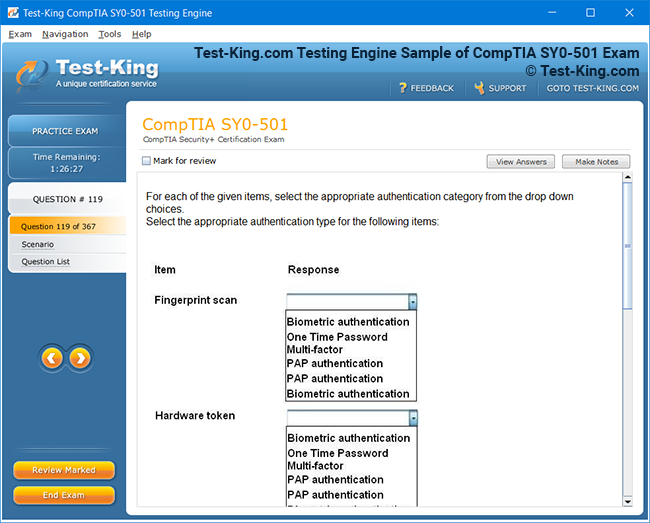
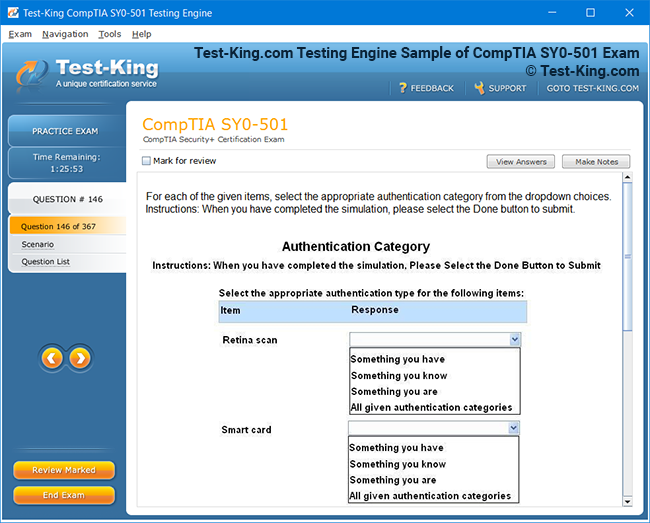
Product Screenshots
Frequently Asked Questions
How can I get the products after purchase?
All products are available for download immediately from your Member's Area. Once you have made the payment, you will be transferred to Member's Area where you can login and download the products you have purchased to your computer.
How long can I use my product? Will it be valid forever?
Test-King products have a validity of 90 days from the date of purchase. This means that any updates to the products, including but not limited to new questions, or updates and changes by our editing team, will be automatically downloaded on to computer to make sure that you get latest exam prep materials during those 90 days.
Can I renew my product if when it's expired?
Yes, when the 90 days of your product validity are over, you have the option of renewing your expired products with a 30% discount. This can be done in your Member's Area.
Please note that you will not be able to use the product after it has expired if you don't renew it.
How often are the questions updated?
We always try to provide the latest pool of questions, Updates in the questions depend on the changes in actual pool of questions by different vendors. As soon as we know about the change in the exam question pool we try our best to update the products as fast as possible.
How many computers I can download Test-King software on?
You can download the Test-King products on the maximum number of 2 (two) computers or devices. If you need to use the software on more than two machines, you can purchase this option separately. Please email support@test-king.com if you need to use more than 5 (five) computers.
What is a PDF Version?
PDF Version is a pdf document of Questions & Answers product. The document file has standart .pdf format, which can be easily read by any pdf reader application like Adobe Acrobat Reader, Foxit Reader, OpenOffice, Google Docs and many others.
Can I purchase PDF Version without the Testing Engine?
PDF Version cannot be purchased separately. It is only available as an add-on to main Question & Answer Testing Engine product.
What operating systems are supported by your Testing Engine software?
Our testing engine is supported by Windows. Andriod and IOS software is currently under development.
Top Juniper Exams
- JN0-650 - Enterprise Routing and Switching, Professional (JNCIP-ENT)
- JN0-106 - Junos, Associate (JNCIA-Junos)
- JN0-253 - Mist AI, Associate (JNCIA-MistAI)
- JN0-452 - Mist AI Wireless, Specialist (JNCIS-MistAI-Wireless)
- JN0-664 - Service Provider Routing and Switching, Professional (JNCIP-SP)
- JN0-364 - Service Provider Routing and Switching, Specialist (JNCIS-SP)
- JN0-232 - Security, Associate (JNCIA-SEC)
- JN0-683 - Data Center, Professional (JNCIP-DC)
- JN0-481 - Data Center, Specialist (JNCIS-DC)
- JN0-637 - Security, Professional (JNCIP-SEC)
- JN0-281 - Data Center, Associate (JNCIA-DC)
- JN0-336 - Security, Specialist (JNCIS-SEC)
- JN0-460 - Mist AI Wired, Specialist (JNCIS-MistAI-Wired)
- JN0-351 - Enterprise Routing and Switching, Specialist (JNCIS-ENT)
- JN0-231 - Security, Associate (JNCIA-SEC)
- JN0-1103 - Design, Associate (JNCIA-Design)
- JN0-363 - Service Provider Routing and Switching, Specialist (JNCIS-SP)
- JN0-103 - Junos, Associate (JNCIA-Junos)
- JN0-663 - Service Provider Routing and Switching, Professional (JNCIP-SP)
- JN0-451 - Mist AI, Specialist (JNCIS-MistAI)
- JN0-682 - Data Center, Professional (JNCIP-DC)
- JN0-224 - Automation and DevOps, Associate (JNCIA-DevOps)
- JN0-214 - Cloud, Associate (JNCIA-Cloud)
Common Mistakes to Avoid While Preparing for the JN0-251 Exam
The journey toward obtaining the JNCIA-MistAI certification is often filled with both exhilaration and subtle pitfalls. Candidates frequently underestimate the depth and breadth of the JN0-251 exam, assuming that a superficial understanding of Mist AI concepts will suffice. One recurring misjudgment is the tendency to memorize definitions and terminologies without grasping the underlying principles. Mist AI, being an intricate amalgamation of artificial intelligence and network automation, demands a comprehension of both theoretical constructs and practical applications. Novices might gloss over the intricate relationship between Juniper’s Mist cloud services and the access point infrastructure, which can lead to confusion when faced with scenario-based questions. A nuanced understanding of how machine learning algorithms optimize wireless network performance is pivotal, yet many candidates neglect to appreciate the subtleties of AI-driven anomaly detection, dynamic RF optimization, and client experience metrics.
Understanding Conceptual Missteps in Mist AI Preparation
Another conceptual misstep involves overemphasis on rote memorization rather than experiential learning. While it is tempting to internalize the terminologies, such as virtual BLE, Marvis AI, or Service Level Expectations, it is far more efficacious to contextualize these within real-world deployments. Candidates often fail to recognize that Mist AI is not merely a set of features but an ecosystem where analytics, automation, and cloud orchestration coalesce to enhance network intelligence. The consequence of such an oversight manifests in misinterpretation of exam scenarios that require holistic problem-solving rather than recall. Additionally, the notion that all Mist AI insights are immediately intuitive can mislead aspirants into underestimating the necessity of repeated exposure to dashboard interfaces, analytics panels, and configuration workflows.
Overconfidence in one’s prior networking knowledge also constitutes a subtle but critical error. Professionals with experience in conventional wireless networks might presume that their foundational understanding suffices for JN0-251, inadvertently ignoring the nuances introduced by AI-driven management. The transition from human-directed configuration to automated, predictive remediation is profound, and the exam expects candidates to recognize these shifts in operational paradigms. Mistaking familiar networking concepts for direct equivalents in Mist AI can result in erroneous assumptions, particularly in questions concerning anomaly detection thresholds, adaptive steering algorithms, and the orchestration of service level agreements.
Furthermore, many candidates underestimate the importance of interlinking various Mist AI components. For instance, grasping the correlation between Juniper Access Points, Mist Cloud, and AI-driven analytics is paramount. Each element does not exist in isolation; the system relies on a synergy of hardware intelligence, cloud processing, and continuous learning algorithms to deliver optimal user experience. A fragmented understanding often leads to misaligned troubleshooting approaches, misinterpretation of data-driven insights, and insufficient preparation for scenario-oriented questions that dominate the JN0-251 exam.
Another frequent oversight is underappreciating the exam’s emphasis on automation and operational efficiency. Candidates may focus exclusively on connectivity and coverage issues while neglecting the AI-driven predictive capabilities that distinguish Mist networks. Understanding how Marvis Virtual Network Assistant can proactively identify potential network anomalies, streamline ticketing workflows, and provide actionable insights is essential. Failure to appreciate these operational efficiencies can result in superficial preparation and unexpected difficulty when navigating questions that require analytical reasoning rather than simple recall.
Practical misjudgments also emerge from a lack of familiarity with Juniper’s specific terminologies and deployment philosophies. Terms such as Event Correlation, AI Engine, and Assurance Metrics possess layers of meaning that extend beyond their nominal definitions. Many candidates interpret these concepts in isolation, failing to recognize their operational interdependencies. For example, Event Correlation does not merely represent a log of occurrences but embodies a sophisticated AI mechanism for identifying patterns, predicting service disruptions, and recommending preemptive actions. Misconstruing such concepts can lead to incorrect assumptions during the exam, particularly when presented with integrated case studies.
In addition, the tendency to overlook documentation and release notes contributes to avoidable errors. Mist AI is a dynamically evolving platform, and Juniper frequently introduces new capabilities or enhancements. Candidates who rely solely on static study guides or outdated content risk encountering questions on features that have changed or expanded. Ignoring the subtle updates in Marvis AI’s capabilities, policy orchestration enhancements, or new analytics dashboards can undermine confidence and preparedness. A meticulous approach to official documentation, release notes, and technical blogs is often the differentiator between a superficial understanding and a command of the platform’s full capabilities.
Another pervasive conceptual mistake is the assumption that all AI-driven recommendations are absolute truths. Mist AI provides predictive analytics, anomaly detection, and optimization suggestions, but these insights require contextual interpretation. Candidates who fail to appreciate the nuances of probabilistic reasoning within AI outputs may over-rely on the system’s suggestions without considering environmental factors, client behavior patterns, or network topology constraints. This misalignment often becomes evident in the exam when candidates must analyze scenarios holistically and determine the most appropriate course of action.
Furthermore, aspirants frequently neglect the importance of cross-functional knowledge. Mist AI intersects with several domains including wireless architecture, cloud orchestration, network security, and analytics. Candidates who silo their learning into discrete categories often encounter difficulties when questions require synthesizing information across these domains. Understanding how policy-driven automation interacts with AI-driven assurance, or how anomaly detection influences client experience metrics, is crucial. Ignoring the holistic perspective can lead to fragmented reasoning, which is detrimental in the scenario-based sections of the JN0-251 exam.
Finally, underestimating the role of conceptual simulations and hypothetical problem-solving is a critical error. Simply reviewing theoretical content without engaging in imaginative application limits the ability to anticipate real-world scenarios. Many candidates overlook the value of mentally modeling network behavior under various conditions, predicting AI-driven responses, and evaluating multiple outcomes. Such exercises cultivate a deep cognitive map of Mist AI operations, enhancing not only retention but also the ability to navigate complex exam questions. Without this deliberate engagement, candidates risk entering the exam with superficial familiarity rather than robust understanding, which is often revealed when confronted with multi-faceted questions that require reasoning beyond memorization.
Preparation Planning and Time Management Errors
Proper preparation for the JN0-251 exam requires more than familiarity with Mist AI features; it demands strategic foresight and meticulous time management. One of the most prevalent errors candidates commit is underestimating the depth of the study workload and failing to allocate sufficient time to assimilate complex concepts. The allure of completing materials quickly often leads to a fragmented understanding of crucial topics such as Marvis AI, virtual BLE deployments, and AI-driven network analytics. Many aspirants approach their study schedule with an overoptimistic estimation of how rapidly they can grasp the nuances of Juniper’s Mist AI platform, resulting in rushed learning that seldom translates into confidence or retention.
Another frequent misjudgment involves uneven distribution of study focus. Candidates may spend excessive time on familiar subjects like wireless networking fundamentals while neglecting newer, AI-centric domains. Mist AI integrates artificial intelligence with conventional networking paradigms in ways that challenge habitual thinking, particularly in predictive analytics, anomaly detection, and adaptive steering algorithms. Ignoring these advanced topics or deferring them until the final stages of preparation creates knowledge gaps that are difficult to bridge, especially when scenario-based questions demand integrated reasoning. Effective preparation requires the deliberate sequencing of topics, where foundational knowledge is coupled with continuous exposure to AI-specific workflows and operational scenarios.
The lack of a dynamic and adaptable study plan is another insidious obstacle. Static schedules that fail to accommodate iterative learning and practice can hinder progress. Mist AI’s platform evolves continuously, and preparation must reflect both conceptual mastery and the ability to navigate practical interfaces. Candidates who adhere rigidly to a predetermined checklist without adjusting for areas of difficulty often encounter disproportionate challenges in sections that test applied understanding. Adaptive planning, where time is reallocated to reinforce weaker domains or simulate complex deployment scenarios, is essential to building the cognitive flexibility required for the JN0-251 exam.
Procrastination and intermittent study habits also pose significant barriers. Spreading learning sessions inconsistently or relying on sporadic bursts of study undermines the consolidation of neural pathways that support long-term retention. This is particularly detrimental when engaging with sophisticated AI mechanisms such as event correlation, client experience scoring, and predictive remediation. These elements require not only rote familiarity but also repetitive engagement to internalize procedural sequences and inter-component interactions. Without consistent practice, candidates risk encountering unexpected difficulty when interpreting scenario-based questions that test application rather than recollection.
An additional temporal miscalculation emerges when candidates underestimate the need for hands-on exposure. Mist AI is not solely theoretical; it demands interaction with virtual labs, dashboards, and policy orchestration tools to appreciate real-time behavior. Neglecting practical exercises under the assumption that conceptual reading suffices leads to a fragile grasp of configuration, troubleshooting, and analytics interpretation. Simulated deployments of access points, monitoring of AI-driven insights, and analysis of performance metrics cultivate an intuitive understanding of Mist AI operations. Those who bypass this immersive engagement may struggle to reconcile theoretical knowledge with practical application, a challenge reflected in the exam’s scenario-heavy design.
Many candidates also fall prey to inefficient prioritization of study materials. Relying exclusively on condensed guides or third-party summaries can provide a false sense of preparedness. While such resources can serve as supplemental reinforcement, they often omit nuanced explanations and the contextual depth necessary to navigate complex problem-solving questions. Essential concepts such as adaptive learning algorithms, assurance metrics, and anomaly detection logic must be studied in their native documentation and through interaction with the Mist AI interface to develop a robust comprehension. Failure to integrate these materials methodically into a structured schedule often results in overlooked subtleties and missed connections between concepts.
Another common error involves misjudging personal learning rhythms and cognitive endurance. Attempting to assimilate extensive content during prolonged, uninterrupted sessions can lead to cognitive fatigue, reducing retention and analytical acuity. Candidates may mistakenly equate longer study hours with greater effectiveness, overlooking the diminishing returns of mental exhaustion. Strategic intervals, distributed practice, and interleaving topics facilitate deeper understanding, particularly when grappling with AI-driven concepts that require flexible reasoning and pattern recognition. Recognizing one’s optimal learning cadence and adjusting study sessions accordingly can prevent burnout and reinforce durable knowledge acquisition.
Overreliance on passive reading rather than active engagement constitutes a further obstacle. Candidates who skim through study guides, gloss over documentation, or passively watch tutorial videos without applying the knowledge in practical exercises often fail to internalize procedural logic. Mist AI, with its cloud-based management, analytics dashboards, and AI-driven automation, necessitates hands-on familiarity to translate abstract concepts into operational competence. Engaging in mental simulations, practice labs, and scenario walkthroughs reinforces understanding, enabling candidates to predict system behavior, evaluate alternative solutions, and make informed decisions during the exam.
Neglecting to periodically assess comprehension is another frequent mistake. Self-evaluation through mock exams, timed exercises, and conceptual quizzes is vital for identifying areas of weakness and recalibrating preparation strategies. Candidates who ignore these diagnostic tools may overestimate proficiency in domains such as AI-driven troubleshooting, policy enforcement, or event correlation analysis. Regular assessment fosters metacognition, helping aspirants to recognize knowledge gaps, reinforce critical thinking, and align study efforts with the demands of the JN0-251 exam.
An additional temporal pitfall is the failure to integrate review and revision periods effectively. Continuous exposure without deliberate consolidation can result in transient knowledge that dissipates under exam pressure. Scheduling iterative review sessions, particularly for intricate topics like Marvis AI analytics, dynamic RF optimization, and virtual BLE functionality, is critical. Revisiting concepts with the intent to connect operational mechanisms to theoretical principles strengthens memory retention and facilitates rapid recall when confronted with scenario-based questions that challenge analytical depth.
Lastly, candidates frequently underestimate the unpredictability of exam questions and the necessity of adaptive reasoning under time constraints. Preparing without practicing timed exercises can create an illusion of proficiency, leaving aspirants unprepared for the cognitive demands of the test environment. Mist AI’s nuanced deployment scenarios, data-driven insights, and AI-assisted troubleshooting questions require not just knowledge but the ability to interpret, evaluate, and act within constrained temporal boundaries. Incorporating timed mock exams and scenario-based problem solving into the study plan is therefore indispensable to developing the agility and confidence necessary for success.
Misunderstanding Mist AI Architecture and Features
A common and often overlooked error among candidates preparing for the JN0-251 exam lies in the misapprehension of Mist AI architecture and its multifaceted features. Many aspirants approach the exam with fragmented knowledge, assuming that a superficial awareness of individual components is sufficient. Mist AI is an intricate ecosystem, where Juniper access points, cloud orchestration, and artificial intelligence converge to deliver adaptive networking experiences. Candidates frequently fail to appreciate that each element is interdependent; the access points collect rich telemetry data, the cloud analyzes and orchestrates actions, and the AI engine synthesizes insights to drive predictive optimizations. Overlooking these relationships can lead to flawed reasoning when confronted with scenario-based questions that require understanding of systemic interactions rather than isolated functionalities.
A significant mistake involves underestimating the complexity of the AI engine itself. Marvis AI is not merely an add-on feature but a central component that leverages machine learning to perform anomaly detection, client experience scoring, and root cause analysis. Candidates often misinterpret its outputs as static or absolute recommendations, rather than probabilistic insights that require interpretation within the context of network topology, device behavior, and environmental conditions. This misperception can lead to inaccurate assumptions about network performance issues and the efficacy of suggested remedies during practical scenarios.
Another frequent error is the failure to grasp the concept of assurance metrics and their operational significance. Mist AI continuously monitors service-level expectations, collecting data on connectivity, throughput, and latency. Candidates sometimes regard these metrics as auxiliary information rather than as integral feedback mechanisms that influence automated remediation. A thorough understanding of how the AI correlates client behavior, device performance, and environmental variables is essential. Without this comprehension, aspirants may misjudge the system’s capacity to preemptively address network degradation, leading to mistakes in exam questions focused on troubleshooting and optimization.
Misconceptions also arise from a superficial understanding of virtual BLE and location-based services. Many candidates recognize virtual BLE as a feature for asset tracking or proximity analysis but fail to perceive the underlying mechanisms that enable accurate positioning and contextual analytics. Virtual BLE leverages a combination of access point signals, AI-driven calibration, and historical data modeling to provide real-time insights. Misunderstanding these interactions can result in incorrect assumptions about deployment strategies, client navigation, and analytics interpretation. This type of misjudgment is particularly consequential in scenario-based questions that probe practical application rather than rote memorization.
Overlooking the significance of network automation is another recurrent misstep. Mist AI is designed to minimize human intervention by leveraging policy-driven automation, dynamic RF optimization, and predictive client steering. Candidates often focus exclusively on configuration tasks without appreciating the automated processes that continuously optimize network performance. Failure to internalize how the AI engine adjusts transmit power, channel assignments, or client association policies can lead to an incomplete understanding of operational workflows, which is frequently tested in the JN0-251 exam.
Many aspirants also misinterpret the purpose of event correlation within Mist AI. Event correlation is not simply a log aggregation feature; it is an intelligent mechanism that identifies patterns, anticipates disruptions, and recommends proactive interventions. Candidates who fail to understand the layered complexity of event aggregation, threshold evaluation, and anomaly prioritization may misidentify the root cause of network issues in exam scenarios. Recognizing the interplay between event data, AI analysis, and automated remediation is critical for demonstrating both conceptual mastery and applied reasoning.
A subtle but pervasive mistake involves underestimating the relevance of dashboard analytics and reporting features. While dashboards may appear as mere visualization tools, they encapsulate critical operational intelligence that guides decision-making. Candidates who ignore the nuances of data representation, trend analysis, and alert interpretation risk misjudging network health, performance anomalies, and the impact of environmental variables. Developing an intuitive understanding of how the dashboards synthesize telemetry into actionable insights is indispensable for handling real-world scenarios and exam questions alike.
Misunderstanding policy orchestration within Mist AI also leads to preparation gaps. Policies in Mist AI dictate how networks respond to varying conditions, automate corrective actions, and maintain compliance with service-level expectations. Some candidates perceive policies as static configurations rather than dynamic instructions influenced by real-time data and AI insights. This misperception can hinder their ability to predict network behavior under diverse conditions, a skill often examined in scenario-based questions. Mastery of policy orchestration involves recognizing how rules, thresholds, and AI recommendations converge to produce adaptive network responses.
Candidates frequently neglect the integration of analytics and client experience metrics in decision-making. Mist AI provides granular insights into client connectivity, application performance, and environmental interactions. Failure to link these insights with operational actions or policy enforcement limits the aspirant’s ability to diagnose complex scenarios accurately. Many preparatory errors stem from treating analytics as separate from actionable workflows rather than as the foundation upon which predictive interventions are built. Understanding the flow from data acquisition to AI-driven response is crucial for success in the exam.
Another common mistake is the insufficient exploration of AI-driven troubleshooting methods. Many aspirants rely on traditional problem-solving approaches instead of appreciating how Mist AI’s predictive capabilities alter standard methodologies. For example, root cause analysis in Mist AI is augmented by AI-generated insights, which can highlight non-obvious causal relationships between client behavior, network conditions, and environmental factors. Ignoring these AI-assisted troubleshooting mechanisms can result in incomplete or erroneous solutions during both preparation exercises and exam scenarios.
Overconfidence in conceptual familiarity without hands-on interaction with Mist AI features is another frequent pitfall. Candidates often study documentation and theoretical materials extensively but fail to translate knowledge into practical competence. Navigating dashboards, configuring access points, observing AI behavior, and analyzing network events in practice labs enhances understanding far beyond textual study. Without this immersive experience, aspirants may struggle to internalize the operational intricacies of the platform, leading to mistakes in scenarios that require practical application of AI-driven insights.
The dynamic nature of Mist AI updates is another challenge that candidates often overlook. Juniper frequently introduces enhancements, new features, and refined algorithms that influence both functionality and exam content. Candidates who study outdated materials or rely exclusively on secondary sources may encounter discrepancies between their preparation and actual exam scenarios. Staying current with official documentation, release notes, and technical blogs ensures that candidates maintain accurate understanding of the architecture, features, and operational behaviors of Mist AI.
Finally, a pervasive error involves failing to synthesize knowledge across multiple components simultaneously. Mist AI operates as an interconnected ecosystem where the performance of one component influences the behavior of others. Candidates who isolate concepts such as AI-driven analytics, policy orchestration, and access point behavior risk developing fragmented understanding. The JN0-251 exam tests integrated comprehension, requiring aspirants to analyze complex scenarios, predict AI responses, and apply cohesive reasoning. Building a mental model that captures these interdependencies is essential for navigating the exam successfully.
Ineffective Hands-On Practice and Lab Mistakes
One of the most critical errors candidates make while preparing for the JN0-251 exam is underestimating the importance of immersive, hands-on practice. Mist AI is an intricate platform that combines cloud orchestration, AI-driven analytics, and adaptive network automation, which requires more than theoretical understanding to master. Many aspirants devote extensive time to reading documentation or watching tutorials but fail to translate knowledge into applied skills through interactive exercises. This disconnect often results in a superficial comprehension of key features such as Marvis AI, virtual BLE, policy orchestration, and assurance metrics. Candidates frequently discover too late that the exam emphasizes applied problem-solving over mere memorization.
A common pitfall is approaching labs with a checklist mentality rather than a mindset of exploration and experimentation. Candidates often attempt to complete lab exercises mechanically, following step-by-step instructions without probing the underlying logic. Mist AI is not simply a series of configurations; it is a dynamic ecosystem where access points, AI engines, and analytics dashboards interact continuously. Understanding these interactions requires iterative experimentation, testing variations in network topology, client load, and environmental factors to observe real-time AI responses. Those who bypass this deliberate engagement risk failing to internalize operational patterns, leaving them unprepared for scenario-based questions that require adaptive reasoning.
Another frequent mistake involves ignoring the nuances of troubleshooting within hands-on labs. Many candidates treat labs as a configuration exercise rather than an opportunity to simulate real-world anomalies. Mist AI’s predictive analytics and event correlation capabilities are best understood by deliberately introducing controlled disruptions and observing the system’s responses. For instance, adjusting channel allocations, creating artificial client load, or simulating interference allows candidates to witness Marvis AI’s diagnostic suggestions and automated remediation in action. Without this practical exposure, aspirants may misinterpret AI outputs or fail to anticipate system behavior under varying conditions during the exam.
Some candidates also fail to explore the AI-driven assurance features in sufficient depth. Mist AI continuously monitors client experience, network performance, and environmental metrics, generating predictive insights and anomaly alerts. Engaging only superficially with these features reduces understanding to a passive overview, rather than cultivating the ability to analyze trends, identify patterns, and apply corrective actions. Effective lab practice involves interpreting dashboards, correlating metrics with operational events, and testing policy responses to confirm predicted outcomes. Skipping these exercises can leave significant gaps in practical knowledge, which are critical for success on the JN0-251 exam.
Overconfidence in initial lab experiences is another common error. Candidates may complete a few guided exercises and assume that their familiarity is sufficient, overlooking the depth and variability inherent in Mist AI operations. Each lab scenario can yield unique insights depending on variables such as client density, access point placement, and environmental interference. Repeating exercises under different conditions strengthens the mental model of system behavior and reinforces understanding of AI-driven adjustments. Failing to appreciate this variability can lead to brittle knowledge that falters when confronted with unfamiliar exam scenarios.
Inadequate documentation of lab experiments also contributes to ineffective practice. Many candidates complete exercises without recording observations, hypotheses, and outcomes, thereby missing opportunities to reflect on learned behaviors. Mist AI’s complexity requires careful tracking of cause-and-effect relationships between network configurations, AI recommendations, and client experience outcomes. Maintaining detailed notes not only solidifies learning but also allows for comparative analysis across multiple experiments, deepening comprehension of dynamic AI-driven operations. Neglecting this reflective process diminishes the value of hands-on practice and leaves candidates underprepared for analytical questions.
Time management during lab sessions is another frequently overlooked aspect. Some candidates either rush through exercises or spend disproportionate time on specific tasks without addressing the broader scope of the platform. Mist AI’s features are interrelated, and spending time exclusively on one element, such as access point setup, while neglecting policy orchestration or analytics interpretation, creates imbalanced proficiency. Structured lab sessions, which allocate time across configuration, monitoring, analysis, and troubleshooting, ensure comprehensive exposure to platform capabilities. Without this structured approach, candidates may develop gaps in understanding that become apparent in integrative exam questions.
Another subtle error is the assumption that all AI outputs are self-explanatory. While Mist AI provides actionable insights, the rationale behind recommendations is grounded in telemetry, historical patterns, and algorithmic reasoning. Candidates who accept AI suggestions without investigating underlying causes may develop a shallow understanding of system behavior. Effective lab practice involves analyzing AI recommendations, tracing them to observed metrics, and predicting potential alternative outcomes. This analytical approach fosters deeper cognitive integration and prepares candidates to navigate complex exam scenarios with confidence.
Neglecting cross-functional scenarios within lab exercises is another common oversight. Mist AI integrates wireless networking, cloud orchestration, client experience monitoring, and AI-driven automation. Many candidates practice each domain in isolation, failing to simulate environments where multiple variables interact. Incorporating combined scenarios, such as assessing client performance under varied environmental interference while monitoring policy-driven automation responses, strengthens the ability to anticipate AI adjustments and interpret multi-faceted analytics. Isolated practice, in contrast, risks fragmented understanding that may not translate effectively to the holistic problem-solving demanded by the JN0-251 exam.
A related mistake is underutilizing virtual BLE features and location-based services during lab exercises. Candidates may be familiar with the conceptual purpose of these tools but fail to engage with them actively in simulated deployments. Virtual BLE provides real-time location insights, asset tracking, and contextual analytics, which are influenced by access point density, calibration accuracy, and AI predictions. Hands-on experimentation with virtual BLE scenarios enhances comprehension of both operational mechanics and analytical interpretation. Candidates who overlook these exercises may misjudge system behavior in exam scenarios that involve client location, mobility, and performance metrics.
Some candidates also avoid repetitive experimentation, believing that completing a lab once is sufficient. Mist AI’s AI-driven adaptation and predictive capabilities require multiple iterations to understand fully. Repetition under varied conditions, such as different client densities, interference levels, and policy configurations, cultivates intuition regarding system behavior. Observing how the AI engine dynamically adjusts parameters, recommends remediation, and optimizes client experience across diverse conditions reinforces both procedural knowledge and analytical skills. Avoiding such iterative practice reduces preparedness and may result in uncertainty when tackling complex exam questions.
Failure to integrate lab insights with theoretical study is another prevalent error. Hands-on practice without connecting observed behaviors to underlying principles limits comprehension. Mist AI’s automation, analytics, and policy orchestration are deeply intertwined with concepts such as AI learning mechanisms, anomaly detection, and network telemetry. Candidates who fail to map lab observations to theoretical constructs may struggle to explain or predict AI behavior in unfamiliar scenarios. Integrating theory with practice strengthens the mental framework, enabling candidates to reason systematically through exam challenges.
Another critical mistake involves ignoring documentation updates and feature changes within Mist AI during lab practice. The platform evolves regularly, and functionality may shift, affecting telemetry interpretation, AI recommendations, and dashboard outputs. Candidates who rely solely on previously completed exercises without verifying current behavior risk misalignment with exam scenarios. Continuous engagement with updated documentation ensures that hands-on practice reflects the latest system capabilities, reinforcing accuracy and confidence in analytical problem-solving.
Lastly, candidates often fail to simulate failure conditions intentionally. Mist AI excels at predictive remediation and automated adjustments, and understanding how the system responds under degraded conditions is crucial. Introducing controlled failures such as simulated AP outages, policy conflicts, or anomalous client behaviors allows candidates to witness AI intervention, validate system predictions, and anticipate real-world behavior. Neglecting these exercises limits experiential knowledge and reduces readiness for scenario-driven questions that evaluate adaptive problem-solving.
Misinterpreting Exam Objectives and Question Patterns
A critical mistake many candidates make while preparing for the JN0-251 exam is misinterpreting the exam objectives and the nature of question patterns. Mist AI, as administered by Juniper, requires more than theoretical knowledge; it demands applied reasoning, synthesis of information, and an understanding of real-world operational behaviors. Aspirants often approach the exam assuming that memorizing definitions or isolated functions is sufficient, underestimating the depth of integration between AI-driven analytics, policy orchestration, and access point functionality. This misconception can lead to fragmented study approaches that fail to address scenario-based questions requiring holistic evaluation of client experiences, network telemetry, and AI recommendations.
One prevalent error involves misunderstanding the scope of the exam objectives. Candidates may assume the test focuses predominantly on configuration tasks or connectivity troubleshooting, whereas the JN0-251 exam evaluates the candidate’s ability to interpret analytics, predict outcomes, and apply AI insights in dynamic environments. Ignoring the full breadth of topics, such as anomaly detection mechanisms, virtual BLE deployments, and event correlation workflows, can result in knowledge gaps. These gaps often manifest during questions that require candidates to identify root causes, recommend corrective measures, or optimize network performance based on AI-driven data.
Another frequent misjudgment is the assumption that all questions are direct or recall-based. The exam frequently employs scenario-oriented questions, where candidates must analyze complex situations, correlate multiple data points, and apply reasoning to select the best course of action. Mist AI provides rich telemetry data, predictive insights, and operational recommendations, and the exam tests the candidate’s ability to interpret this information rather than simply memorize feature sets. Approaching preparation without practicing these integrative reasoning exercises can lead to surprises during the test, where intuitive but uninformed choices often fail.
A common misinterpretation involves the weighting of topics. Many candidates devote disproportionate time to familiar networking concepts while underpreparing for AI-centric capabilities, such as Marvis AI predictive analysis, dynamic RF optimization, or client experience scoring. These AI-driven functionalities often form the backbone of scenario-based questions, and overlooking them can severely impair performance. A balanced preparation strategy, which allocates effort according to both foundational knowledge and AI-specific competencies, is essential to navigate the multifaceted question patterns of the JN0-251 exam successfully.
Misreading the question stems and context is another subtle but critical error. Mist AI questions often present operational scenarios with multiple variables, including client density, environmental interference, policy settings, and AI recommendations. Candidates who focus solely on one aspect or misinterpret the implications of telemetry data may select solutions that are technically accurate but contextually inappropriate. Understanding the interplay between various components, including access points, AI engines, policy orchestration, and cloud analytics, is vital for selecting the optimal response in complex scenarios.
Many aspirants also fail to appreciate the temporal aspect embedded in exam questions. Mist AI operates dynamically, adapting to network conditions over time. Questions may reference trends, past events, or predictive outcomes, requiring candidates to consider sequences of actions rather than static states. Overlooking these temporal elements can result in flawed reasoning, particularly when determining the cause of anomalies, evaluating client experience patterns, or predicting AI-driven interventions. Effective preparation includes practicing questions that simulate real-time network dynamics and AI adjustments.
Another frequent mistake is relying on partial knowledge of AI outputs without understanding underlying logic. Marvis AI generates recommendations based on probabilistic analysis of telemetry, historical data, and environmental factors. Candidates who accept these outputs at face value, without considering context, often misjudge their applicability in the scenarios presented on the exam. Understanding how predictive analytics, anomaly detection, and client behavior modeling interact to produce actionable insights is essential for accurate decision-making and for avoiding errors during interpretive questions.
Overconfidence in past networking experience can also hinder comprehension of exam patterns. Professionals with conventional wireless or routing expertise may assume that familiar concepts are sufficient, overlooking the unique paradigm shifts introduced by AI-driven automation. Mist AI integrates machine learning to anticipate network issues, optimize performance, and enforce policies autonomously. Candidates who fail to appreciate these innovations may misread questions, overemphasize manual troubleshooting methods, and underutilize AI-based recommendations in their reasoning process.
Many candidates also mismanage practice exams or question banks. Using these tools without strategic review often results in rote responses rather than analytical thinking. Mist AI scenario questions require candidates to connect multiple concepts, interpret analytics, and predict system behavior. Simply completing mock exams without analyzing mistakes, understanding rationale, and exploring alternative solutions undermines the learning process. Effective use of practice questions involves reflection, error analysis, and reinforcement of principles to ensure conceptual clarity and application skills.
A further error involves neglecting the variability in question phrasing and subtle traps embedded in exam items. JN0-251 questions may include qualifiers, conditional statements, or references to specific operational scenarios that significantly influence the correct answer. Candidates who skim content or misread instructions risk selecting plausible but incorrect responses. Cultivating careful reading habits, combined with analytical reasoning and attention to contextual cues, is vital to accurately interpret complex question patterns.
Some aspirants also overlook the importance of scenario simulation in preparation. Beyond reviewing concepts or completing isolated questions, candidates benefit from mentally simulating AI responses, client behavior, and network interactions in diverse situations. This cognitive rehearsal strengthens intuition regarding expected outcomes, improves pattern recognition, and enhances the ability to predict the AI engine’s actions. Ignoring this practice often results in hesitation or misjudgment under timed exam conditions.
Another frequent mistake is failure to interconnect multiple topics when analyzing questions. Mist AI components, such as access points, cloud orchestration, Marvis AI, and analytics dashboards, are inherently interdependent. Candidates who analyze each element in isolation risk overlooking cause-and-effect relationships, leading to incomplete reasoning. Effective preparation requires integrating knowledge across architecture, automation, analytics, and operational policies to approach scenario-based questions holistically.
Candidates also often misinterpret metrics presented in questions, such as client experience scores, throughput variations, or anomaly alerts. These metrics are context-sensitive and require interpretation within operational conditions. Misreading trends, ignoring environmental influences, or failing to correlate telemetry with AI recommendations can lead to erroneous conclusions. Practicing metric analysis and understanding its implications on network performance and policy enforcement is crucial to avoid mistakes during the exam.
Time mismanagement during the exam is another contributing factor. Scenario-based questions may be lengthy, presenting extensive data and multiple variables. Candidates who rush through reading, fail to identify critical information, or neglect to analyze interdependencies may provide incomplete or incorrect responses. Developing strategies for parsing complex scenarios efficiently while maintaining analytical rigor is essential for optimal performance.
Finally, candidates frequently underestimate the cumulative complexity of questions. While individual concepts may appear straightforward, the JN0-251 exam often combines multiple elements, requiring synthesis and cross-domain reasoning. Overlooking interconnections, misinterpreting AI insights, or failing to anticipate dynamic network responses can compromise the accuracy of answers. Preparing to handle integrated, multi-variable questions strengthens cognitive agility and ensures that candidates can navigate the sophisticated scenario-based patterns characteristic of the exam.
Mental Preparation, Stress Management, and Exam Day Pitfalls
The JN0-251 exam, recognized for its emphasis on Mist AI and the intelligent orchestration of wireless networks, demands not only technical proficiency but also a well-calibrated mental state. Many candidates invest months mastering the intricacies of Mist AI, exploring cloud management, Marvis AI analytics, and adaptive automation, yet falter due to psychological unpreparedness and exam-day mismanagement. A recurring oversight is underestimating the impact of cognitive composure on performance. Knowledge alone does not guarantee success when the mind is burdened by anxiety, fatigue, or disorganization. Effective preparation requires balancing intellectual study with mental conditioning to ensure that clarity and confidence remain steadfast under pressure.
One of the most prevalent mental errors involves associating exam difficulty with personal inadequacy. Candidates frequently encounter challenging topics such as event correlation, predictive insights, and assurance metrics and begin to doubt their competence. This self-doubt often spirals into performance anxiety, which impairs recall and critical reasoning. Mist AI demands analytical thought, and under stress, candidates tend to rely on instinct rather than logic, leading to impulsive decisions. Understanding that difficulty signifies complexity rather than incapacity is vital. The JNCIA-MistAI certification is structured to evaluate reasoning and adaptability, not to intimidate. By reframing challenges as intellectual puzzles rather than threats, candidates cultivate resilience and mental equilibrium.
Another significant mistake stems from neglecting the importance of rest and cognitive restoration. Many aspirants pursue intensive study marathons during the days leading to the exam, believing that constant engagement will enhance retention. In reality, overexertion disrupts memory consolidation and diminishes focus. The brain requires intervals of relaxation to integrate complex ideas such as AI-driven optimization, policy orchestration, and client experience metrics. Sleep deprivation and mental fatigue reduce analytical acuity, impair decision-making, and distort perception of familiar concepts. Establishing a balanced schedule that includes rest, physical movement, and deliberate disengagement from study material fortifies mental stamina and improves cognitive clarity on exam day.
Another psychological pitfall arises from overreliance on memorization rather than conceptual reasoning. The JN0-251 exam evaluates one’s ability to synthesize knowledge across multiple domains, including AI analytics, network assurance, and adaptive automation. Candidates who focus excessively on rote recall often struggle to apply principles in context, especially when facing scenario-based questions that require nuanced interpretation. Mental preparation involves developing flexible thinking—an ability to infer, correlate, and hypothesize under uncertain conditions. Practicing mindfulness during study sessions can enhance concentration and deepen comprehension by anchoring the mind in the present moment. Through this method, candidates not only absorb knowledge but also learn to deploy it fluidly when confronted with complex, situational problems.
Panic during the initial moments of the exam is another common impediment. Many candidates begin the test with heightened adrenaline, scanning questions too quickly and misinterpreting subtle qualifiers that alter meaning. Mist AI’s conceptual depth means that question phrasing often includes multiple variables and conditional statements that must be parsed carefully. When under duress, the human brain tends to overlook contextual cues, jumping to conclusions based on surface familiarity. Managing this impulse requires deliberate breathing techniques and controlled pacing. Taking a few moments before beginning to center the mind and establish a rhythm of calm attentiveness can dramatically improve comprehension and accuracy throughout the test.
Candidates also often mismanage time during the exam. Anxiety and excitement can distort perception of time, causing individuals to linger excessively on complex questions or rush prematurely through simpler ones. The JN0-251 exam necessitates both precision and efficiency; some questions require detailed reasoning while others test immediate recognition of system behaviors. Developing a personal pacing strategy through timed mock exams enables candidates to calibrate their internal clock. Allocating proportional time based on question complexity, while reserving a buffer for review, ensures balanced progress. The disciplined application of time management transforms stress into structured momentum.
Another cognitive trap is the fixation on past errors during the exam. Many candidates, upon encountering a difficult question, become preoccupied with uncertainty and carry that anxiety into subsequent questions. This lingering self-criticism consumes cognitive bandwidth that could otherwise be directed toward problem-solving. The key lies in compartmentalization—the ability to acknowledge uncertainty, mark the question for review, and move forward without emotional residue. Practicing this mental discipline during preparation not only improves concentration but also cultivates detachment, allowing clearer thinking when encountering ambiguous scenarios.
Environmental distractions on exam day can also compromise performance. Candidates often underestimate the importance of creating an optimal testing environment. Factors such as lighting, seating comfort, and ambient noise subtly influence focus and endurance. In remote proctored settings, disruptions from notifications, unstable internet connectivity, or background interruptions can trigger stress and disorientation. Preparing an organized, quiet, and familiar workspace contributes to psychological stability. The environment should mirror the calmness one intends to maintain internally, reinforcing a sense of control and readiness.
A less discussed but equally significant psychological mistake involves unrealistic self-comparisons. Many candidates measure their progress against peers or online testimonials, leading to feelings of inadequacy or undue pressure. Each individual assimilates complex material at a different rhythm, and comparisons distort self-assessment. The JN0-251 exam rewards depth of understanding, not speed of completion. Internalizing this perspective allows candidates to focus on personal growth rather than external benchmarks, nurturing confidence rooted in authentic mastery.
Nutrition and physical well-being are often neglected in the final stages of preparation. Long study hours combined with erratic meals or excessive caffeine can lead to physiological imbalance, which directly affects cognitive performance. A well-nourished and hydrated mind processes information more effectively and maintains composure under examination stress. Moderate physical activity, such as stretching or brief walks, stimulates circulation and enhances alertness. Treating the body as an integral component of preparation rather than a passive vessel contributes to sustained concentration and mental clarity.
Overconsumption of study material near exam day is another prevalent mistake. In an attempt to cover every possible topic, candidates inundate their minds with excessive data, causing cognitive overload. The brain, overwhelmed by disorganized fragments of information, struggles to retrieve relevant concepts during the test. Instead, the final days before the exam should prioritize review and reflection. Revisiting key concepts such as AI-based troubleshooting, Marvis insights, and event correlation with calm deliberation strengthens conceptual networks without straining mental capacity. Clarity, not quantity, is the hallmark of effective final preparation.
Fear of uncertainty often leads to over-dependence on external validation. Candidates scour forums, online groups, or unofficial question sets seeking reassurance or shortcuts, which may introduce misinformation. This reliance on unverified sources erodes confidence and diverts attention from authentic comprehension. Trusting authoritative documentation, verified resources, and personal reasoning cultivates self-assuredness. The JN0-251 exam, rooted in Mist AI’s evolving framework, rewards those who understand principles rather than those who chase patterns. Developing intellectual independence ensures adaptability even when confronted with unfamiliar question structures.
The emotional aftermath of preparation can also influence exam performance. Candidates sometimes carry fatigue, frustration, or monotony from prolonged study sessions into the testing environment. These emotional residues cloud judgment and impede focus. Refreshing the mind through relaxation techniques, meditation, or even a brief digital detox can reset mental equilibrium. A tranquil state fosters sharper perception and facilitates analytical thinking, which is particularly beneficial in interpreting AI-driven scenarios where multiple solutions may appear plausible.
Moreover, some candidates underestimate the need for mental rehearsal of success. Visualizing oneself navigating the exam calmly, interpreting data accurately, and completing the test with confidence reinforces psychological readiness. This cognitive priming technique conditions the mind to associate the exam environment with composure and capability rather than stress. Visualization, combined with affirmations of preparedness, enhances emotional regulation and boosts self-efficacy during the actual test.
Finally, a common and often unnoticed pitfall is the lack of post-exam reflection planning. Many candidates view the completion of the exam as an endpoint rather than an experience to learn from. Reflecting on emotional responses, decision-making patterns, and time management after the test contributes to long-term growth and prepares the individual for future professional certifications. The ability to analyze one’s own performance with objectivity transforms the exam from a mere test of knowledge into a catalyst for intellectual maturity.
Conclusion
Preparing for the JN0-251 Mist AI Associate exam transcends technical mastery; it demands a harmony of mind, body, and intellect. The most intricate knowledge of Mist AI architecture, automation, and analytics holds little value if the mind is clouded by tension or distraction. Effective preparation requires cultivating equilibrium—balancing intense study with rest, determination with composure, and precision with adaptability. Understanding how to manage stress, interpret challenges with calm reasoning, and maintain focus amid uncertainty is as critical as understanding AI-driven troubleshooting or policy orchestration. By integrating psychological fortitude with disciplined study, candidates can transform anxiety into focus and uncertainty into confidence. Ultimately, success in the JN0-251 exam reflects not only intellectual capability but also the serenity and resilience with which one approaches the pursuit of mastery.