
Exam Code: PEGACPDC88V1
Exam Name: Certified Pega Decisioning Consultant
Certification Provider: Pegasystems
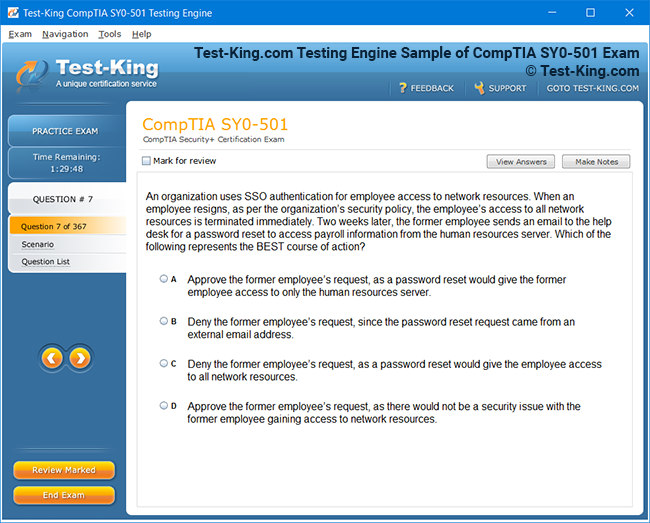
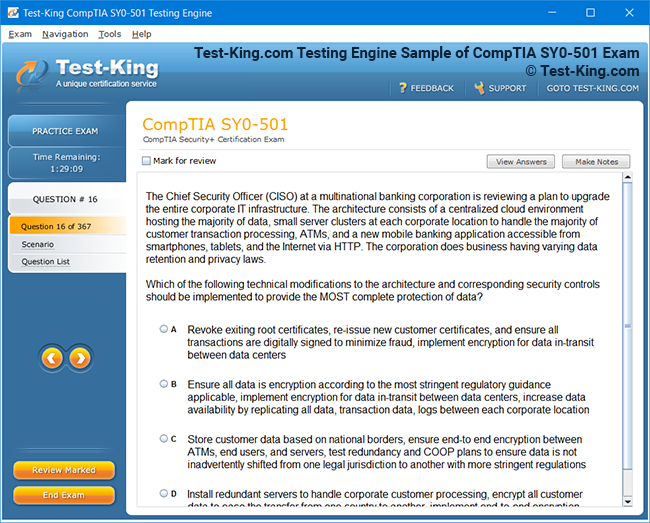
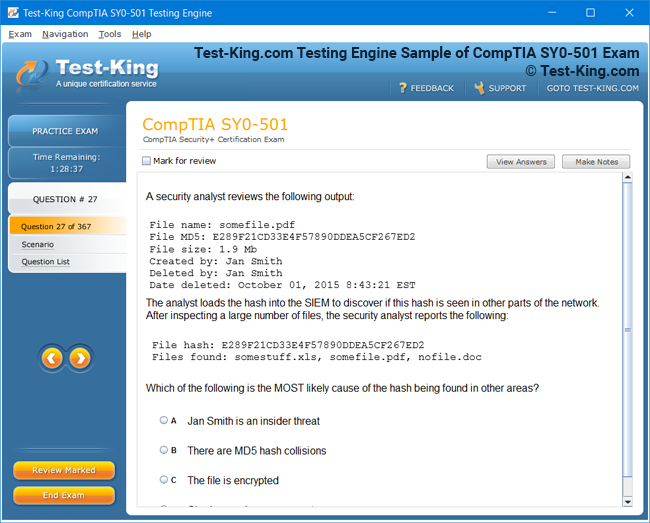
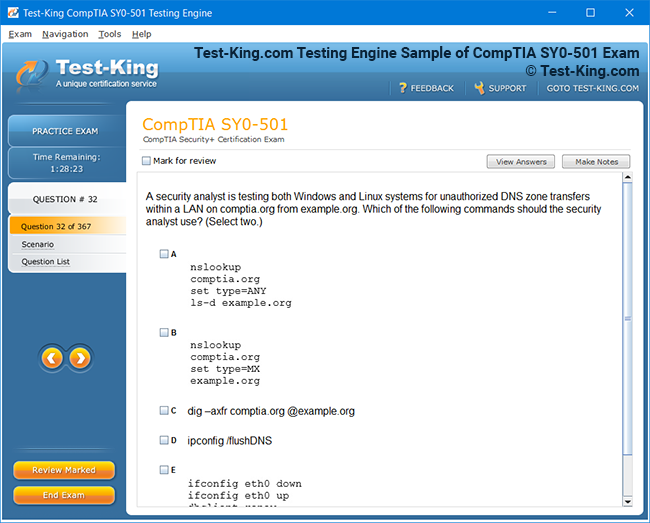
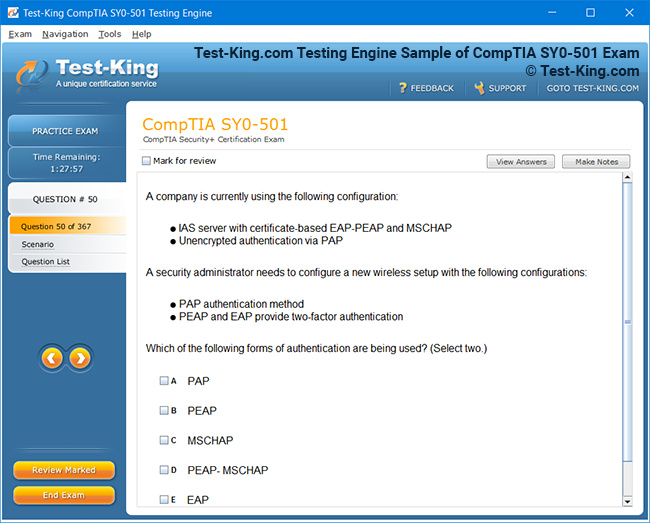
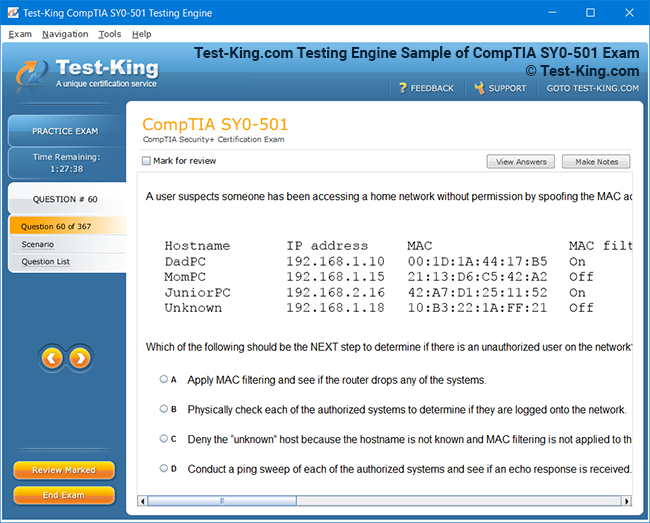
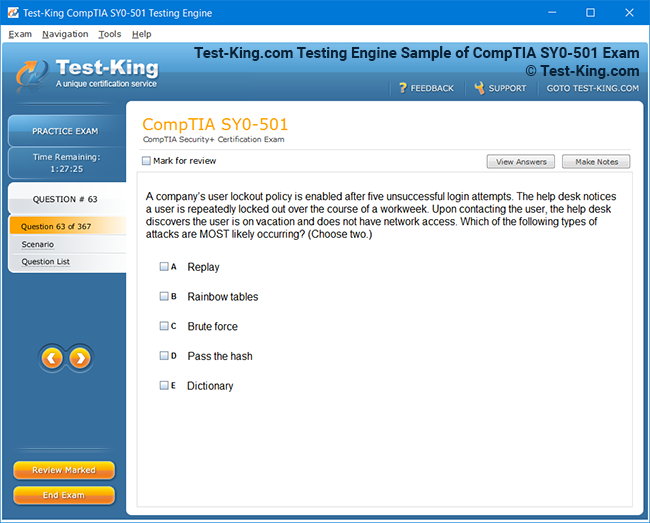
Product Screenshots
Frequently Asked Questions
How can I get the products after purchase?
All products are available for download immediately from your Member's Area. Once you have made the payment, you will be transferred to Member's Area where you can login and download the products you have purchased to your computer.
How long can I use my product? Will it be valid forever?
Test-King products have a validity of 90 days from the date of purchase. This means that any updates to the products, including but not limited to new questions, or updates and changes by our editing team, will be automatically downloaded on to computer to make sure that you get latest exam prep materials during those 90 days.
Can I renew my product if when it's expired?
Yes, when the 90 days of your product validity are over, you have the option of renewing your expired products with a 30% discount. This can be done in your Member's Area.
Please note that you will not be able to use the product after it has expired if you don't renew it.
How often are the questions updated?
We always try to provide the latest pool of questions, Updates in the questions depend on the changes in actual pool of questions by different vendors. As soon as we know about the change in the exam question pool we try our best to update the products as fast as possible.
How many computers I can download Test-King software on?
You can download the Test-King products on the maximum number of 2 (two) computers or devices. If you need to use the software on more than two machines, you can purchase this option separately. Please email support@test-king.com if you need to use more than 5 (five) computers.
What is a PDF Version?
PDF Version is a pdf document of Questions & Answers product. The document file has standart .pdf format, which can be easily read by any pdf reader application like Adobe Acrobat Reader, Foxit Reader, OpenOffice, Google Docs and many others.
Can I purchase PDF Version without the Testing Engine?
PDF Version cannot be purchased separately. It is only available as an add-on to main Question & Answer Testing Engine product.
What operating systems are supported by your Testing Engine software?
Our testing engine is supported by Windows. Andriod and IOS software is currently under development.
Top Pegasystems Exams
Key Skills and Knowledge Areas to Pass the PEGACPDC88V1 Certification Exam
A Pega Decisioning Consultant is entrusted with the responsibility of designing and implementing intelligent decisioning strategies that optimize customer engagement and business outcomes. This role demands a blend of analytical aptitude, problem-solving skills, and a deep understanding of Pega Decisioning frameworks. To successfully navigate the PEGACPDC88V1 certification exam, candidates must be proficient in applying Pega’s Decisioning tools to construct adaptive models, predictive analytics, and next-best-action strategies. The consultant must not only possess technical knowledge but also the capability to translate complex data insights into actionable business decisions.
Core Knowledge Areas for the Exam
One of the fundamental areas of knowledge for the exam is understanding the Pega Customer Decision Hub. This platform is central to orchestrating personalized customer experiences and enabling real-time decision-making. A consultant must comprehend how data flows through the system, how decision strategies are formulated, and how adaptive analytics refine outcomes based on customer interactions. Knowledge of the Customer Decision Hub involves grasping data aggregation, decision strategy mapping, and the orchestration of marketing and operational interactions.
Adaptive models form another crucial knowledge pillar. These models allow systems to learn from each interaction and adjust recommendations dynamically. Understanding how to configure, monitor, and refine these models is vital. Predictive analytics also plays a significant role, requiring consultants to understand how to leverage historical data, define predictive outcomes, and assess the accuracy of predictions in practical scenarios. A keen understanding of these processes ensures the consultant can design solutions that maximize customer engagement while meeting business objectives.
Decision strategies within Pega combine various elements such as business rules, predictive models, and Next-Best-Action logic. Candidates must be able to design, test, and optimize these strategies to ensure they deliver intended outcomes. This involves knowledge of strategy components, assignment rules, eligibility criteria, and how to balance competing objectives. Understanding how to prioritize actions and allocate resources effectively is an essential skill that directly impacts the quality of recommendations delivered to customers.
Data Management and Analytical Skills
Data forms the backbone of Pega Decisioning. A consultant must be adept at identifying relevant data sources, cleaning and preparing datasets, and integrating data into the Customer Decision Hub. Knowledge of data types, structures, and relationships is necessary to ensure models and strategies are accurate and reliable. Consultants also need to understand how data transformations, aggregations, and enrichments influence decision outcomes. Proficiency in analyzing trends, identifying anomalies, and deriving insights from large datasets is critical for achieving certification success.
Analytical thinking extends beyond data manipulation; it encompasses the ability to interpret model outputs, evaluate strategy performance, and make informed adjustments. Consultants must be able to examine historical and real-time data to uncover patterns that inform decisioning logic. They should be familiar with key metrics, such as conversion rates, engagement scores, and customer lifetime value, and understand how to leverage these indicators to improve decisioning strategies. The ability to synthesize complex information into actionable recommendations distinguishes a proficient consultant from a novice.
Understanding Next-Best-Action Concepts
The Next-Best-Action principle is central to Pega’s decisioning philosophy. It involves determining the most suitable action for a customer at any given moment based on contextual data, preferences, and predicted behavior. A certified consultant must comprehend how to configure decision strategies that dynamically evaluate available options, prioritize actions, and deliver relevant interactions. This includes understanding decision tree structures, eligibility rules, constraint management, and scoring mechanisms. Mastery of these concepts ensures that consultants can design strategies that maximize both customer satisfaction and business performance.
In practice, implementing Next-Best-Action strategies requires balancing short-term objectives with long-term customer relationships. Consultants need to consider factors such as propensity modeling, risk assessment, and opportunity identification. Understanding how to incorporate real-time feedback into strategies enhances adaptability and ensures that recommendations remain relevant as customer behaviors evolve. This skill is pivotal for both certification success and practical application in organizational settings.
Technical and Functional Skills
Technical proficiency is indispensable for Pega Decisioning Consultants. Candidates must be familiar with Pega’s development environment, rulesets, and application structure. They should understand how to create, test, and deploy decision strategies using Pega’s Decisioning tools. Knowledge of application architecture, data pages, properties, and integration mechanisms is crucial for ensuring that decisioning solutions are scalable and maintainable.
Functional skills complement technical expertise. Consultants must possess the ability to translate business requirements into decisioning solutions, define performance objectives, and validate strategy outcomes. They should understand industry best practices for decisioning, including compliance, governance, and ethical considerations in automated decision-making. Being able to bridge the gap between business needs and technical execution is a defining characteristic of a successful consultant.
Testing and Optimizing Decisioning Strategies
Effective testing and optimization are essential to ensure that decision strategies perform as intended. Candidates must understand how to conduct strategy simulations, evaluate performance metrics, and identify areas for refinement. This includes analyzing engagement outcomes, conversion rates, and predictive accuracy to make informed adjustments. Knowledge of testing frameworks, reporting tools, and debugging techniques is critical for ensuring that strategies meet both business objectives and customer expectations.
Optimization also involves continuous learning from outcomes. Consultants should be skilled in interpreting model performance, adjusting eligibility rules, and refining next-best-action recommendations. Understanding the interplay between multiple strategies, managing constraints, and balancing competing objectives enhances the effectiveness of decisioning solutions. Mastery of these skills demonstrates a consultant’s ability to deliver high-quality, actionable recommendations.
Real-World Application and Scenario-Based Understanding
Exam preparation extends beyond theoretical knowledge; it requires the ability to apply concepts to real-world scenarios. Candidates must be able to interpret business cases, identify appropriate decisioning approaches, and implement strategies using Pega tools. Scenario-based questions test the ability to integrate analytical thinking, technical skills, and functional knowledge to produce optimal outcomes.
A consultant should be familiar with various industry applications of Pega Decisioning, including marketing campaigns, customer service optimization, risk management, and operational decisioning. Understanding how to tailor strategies to specific contexts, account for unique customer behaviors, and balance organizational priorities is critical for both certification success and practical effectiveness.
Continuous Learning and Professional Growth
The landscape of decisioning technology is constantly evolving. Candidates preparing for the PEGACPDC88V1 exam should cultivate a mindset of continuous learning. Staying abreast of updates to Pega platforms, emerging analytics techniques, and best practices in customer engagement enhances both exam readiness and professional competence. Leveraging official documentation, community forums, and practical exercises provides a robust foundation for mastering Pega Decisioning concepts.
In addition, developing soft skills such as communication, stakeholder management, and collaborative problem-solving supports the effective implementation of decision strategies. Consultants must be able to articulate complex concepts to business leaders, justify decisioning approaches, and lead initiatives that drive measurable business results. These capabilities are integral to achieving distinction as a Pega Decisioning professional.
Exam Preparation Strategies
Preparation for the PEGACPDC88V1 exam requires a structured approach. Candidates should focus on mastering decisioning fundamentals, understanding adaptive and predictive models, and gaining hands-on experience with the Customer Decision Hub. Regular practice using sample scenarios, reviewing case studies, and simulating decisioning exercises enhances familiarity with exam-style questions and reinforces applied knowledge.
Time management and strategic study planning are essential. Breaking down the exam syllabus into manageable topics, dedicating focused study periods to challenging areas, and continuously revisiting complex concepts ensures comprehensive coverage. Incorporating practical exercises alongside theoretical study helps cement understanding and prepares candidates to respond confidently to scenario-based questions.
The Interplay of Strategy, Data, and Technology
Success as a Pega Decisioning Consultant requires recognizing the interdependent nature of strategy, data, and technology. A decisioning strategy is only as effective as the quality of data feeding it and the technology executing it. Candidates must understand how to harmonize these elements to produce intelligent, real-time decisions. This includes designing scalable decisioning frameworks, ensuring data integrity, and leveraging advanced analytical models.
Furthermore, the consultant must anticipate evolving customer behaviors and business requirements. Implementing flexible strategies that adapt to changing conditions demonstrates both technical acumen and strategic foresight. This holistic understanding is critical for mastering the exam content and excelling in professional practice.
Designing Effective Decision Strategies
A critical skill for a Pega Decisioning Consultant is the ability to design decision strategies that are both effective and adaptable to dynamic business environments. Decision strategies in Pega integrate predictive models, business rules, eligibility criteria, and Next-Best-Action logic to create coherent pathways for customer interactions. Candidates must comprehend how to structure these strategies so that they respond accurately to real-time data inputs while maintaining alignment with overarching business objectives. A thorough understanding of strategy components allows the consultant to anticipate potential conflicts, balance competing priorities, and optimize customer engagement outcomes.
Decision strategy design begins with clearly defining objectives and mapping business rules to actionable outcomes. Each element of a strategy, from eligibility rules to scoring logic, contributes to how actions are prioritized and executed. Consultants should be capable of evaluating multiple strategies simultaneously, understanding how they interact, and ensuring that the integration of various elements produces a unified decisioning framework. Expertise in aligning predictive insights with operational constraints is fundamental to achieving a successful design.
Leveraging Predictive Models and Adaptive Analytics
Predictive models serve as the analytical engine behind decision strategies, allowing consultants to forecast customer behaviors and outcomes with increasing accuracy. Understanding how to configure these models, interpret results, and refine algorithms is essential for passing the PEGACPDC88V1 exam. Candidates must recognize the importance of historical data, model variables, and validation techniques in producing reliable predictions. Adaptive analytics complement predictive models by enabling continuous learning from each interaction, refining recommendations based on observed outcomes, and adjusting future decisions in real time.
Effective application of predictive and adaptive analytics requires an in-depth understanding of scoring systems, propensity models, and behavior analysis. Consultants should be adept at measuring model performance, identifying biases, and ensuring that adaptive learning mechanisms enhance decision relevance. Mastery of these analytical tools allows for the creation of decision strategies that are dynamic, responsive, and consistently aligned with business objectives.
Implementing Next-Best-Action Strategies
The Next-Best-Action concept lies at the heart of Pega’s decisioning philosophy. Consultants must understand how to design strategies that evaluate multiple options in real time and select the action most likely to generate positive outcomes. This involves integrating scoring mechanisms, business rules, and predictive insights into a coherent decisioning framework. Knowledge of decision tree logic, constraints, and eligibility criteria ensures that recommendations are both feasible and effective.
In practice, Next-Best-Action strategies require a balance between immediate opportunities and long-term customer value. Consultants should consider factors such as engagement history, risk levels, and personalized preferences when constructing strategies. Real-time adaptation is crucial, as customer behavior and external conditions may shift unexpectedly. Designing strategies that are flexible and resilient under these conditions demonstrates advanced expertise and prepares candidates to handle complex exam scenarios.
Data Integration and Management
Successful decision strategies rely on accurate and comprehensive data. Consultants must be proficient in identifying data sources, integrating datasets into the Customer Decision Hub, and ensuring data quality. Understanding data relationships, structures, and transformations is vital for creating reliable predictive models and adaptive systems. Data must be cleansed, enriched, and harmonized to provide a consistent foundation for decisioning activities.
Beyond technical integration, consultants need the ability to interpret data strategically. This includes recognizing trends, anomalies, and patterns that may influence decision outcomes. Applying these insights allows for continuous refinement of strategies, enhancing relevance and effectiveness. Candidates should be able to manage large volumes of information, prioritize critical variables, and ensure that data-driven decisions align with organizational goals.
Testing, Monitoring, and Refining Strategies
Testing and monitoring are essential to ensure that decision strategies perform as intended. Consultants should be capable of simulating strategy outcomes, evaluating key performance indicators, and adjusting components to optimize effectiveness. This involves analyzing metrics such as engagement rates, conversion rates, and predictive accuracy, and identifying areas for improvement. Continuous monitoring ensures that strategies remain responsive to evolving customer behavior and business priorities.
Refinement processes may include adjusting scoring rules, modifying eligibility criteria, or recalibrating predictive models. Consultants must understand how to interpret simulation results, apply insights to real-world scenarios, and ensure that changes improve overall strategy performance. This iterative approach to optimization highlights a consultant’s ability to balance analytical rigor with practical application, a key skill assessed by the PEGACPDC88V1 exam.
Scenario-Based Problem Solving
The exam frequently tests the ability to apply decisioning knowledge to real-world scenarios. Candidates must be able to analyze business cases, interpret data inputs, and design strategies that yield optimal outcomes. Scenario-based questions evaluate the integration of predictive analytics, adaptive models, Next-Best-Action logic, and operational constraints into cohesive solutions. Consultants should be prepared to demonstrate analytical thinking, technical proficiency, and functional understanding in addressing these challenges.
Effective problem-solving involves considering multiple perspectives, anticipating potential outcomes, and evaluating trade-offs. Consultants must balance business objectives with customer needs, ensuring that strategies are both effective and ethically sound. This holistic approach enables candidates to apply their knowledge in practical contexts, reinforcing skills that are essential for both certification success and professional practice.
Enhancing Strategy Efficiency and Impact
Maximizing the efficiency and impact of decision strategies requires a nuanced understanding of resource allocation, constraint management, and prioritization. Consultants must be able to identify high-impact actions, optimize allocation of opportunities, and ensure that strategies operate within defined operational limits. This involves careful consideration of system performance, customer experience, and business objectives. By focusing on efficiency, consultants enhance both the responsiveness and scalability of decisioning solutions.
In addition, understanding how to leverage advanced Pega tools and features, such as automated model updates, scenario simulations, and real-time monitoring dashboards, further enhances strategy effectiveness. Consultants should be skilled in integrating these capabilities to create robust, adaptive, and responsive strategies. This level of proficiency reflects an advanced understanding of Pega Decisioning systems and prepares candidates to excel in complex certification scenarios.
Integration of Business and Technical Knowledge
Advanced decision strategy design requires the seamless integration of business acumen and technical expertise. Consultants must translate organizational goals into actionable decisioning frameworks, ensuring that technology serves strategic objectives. This includes understanding market trends, customer behavior, and operational constraints while leveraging technical tools to implement effective solutions. Mastery of this integration allows for the creation of strategies that are both technically sound and commercially impactful.
Understanding the interplay between strategy design, data analysis, and operational execution is critical. Consultants must ensure that predictive insights inform decision logic, that adaptive models learn from ongoing interactions, and that Next-Best-Action recommendations align with both customer needs and organizational priorities. This holistic perspective underpins successful performance in both exam and real-world contexts.
Continuous Improvement and Learning Mindset
The realm of decisioning technology is dynamic, requiring consultants to maintain a mindset of continuous learning and adaptation. Staying current with platform enhancements, emerging analytics methodologies, and evolving business practices ensures ongoing competence and relevance. Candidates should actively engage with official resources, community forums, and practical exercises to reinforce knowledge and develop new skills.
Professional growth also involves refining soft skills such as communication, collaboration, and analytical reasoning. Consultants must be able to convey complex concepts to stakeholders, justify strategic decisions, and lead initiatives that drive tangible business results. This combination of technical, analytical, and interpersonal expertise distinguishes a proficient Pega Decisioning Consultant and ensures long-term success.
Leveraging Predictive Models for Intelligent Decisioning
Predictive models form the cornerstone of advanced decisioning within the Pega platform. These models enable consultants to anticipate customer behaviors and preferences by analyzing historical data and identifying meaningful patterns. Understanding how to design, configure, and deploy predictive models is crucial for a Pega Decisioning Consultant, as it directly impacts the accuracy and effectiveness of decision strategies. Candidates preparing for the PEGACPDC88V1 exam must be adept at interpreting model outputs, selecting appropriate predictive algorithms, and ensuring that the models are aligned with business objectives.
A consultant must be able to recognize the significance of variables within a dataset, understand their relationships, and determine their influence on customer outcomes. The ability to evaluate model performance, identify overfitting or bias, and refine predictive logic is essential. Additionally, predictive models are not static; they require continuous monitoring and adaptation to remain effective in the face of changing customer behaviors, market trends, and operational conditions.
Adaptive Analytics and Dynamic Learning
Adaptive analytics complements predictive modeling by allowing decision strategies to learn and evolve based on real-time interactions. Consultants need to understand how adaptive models function, how they adjust recommendations based on customer responses, and how to configure them for optimal performance. The system continuously refines its predictions, incorporating feedback from each interaction to improve future outcomes. Mastery of adaptive analytics is vital for ensuring that decisioning strategies remain relevant, personalized, and effective over time.
Consultants must also comprehend the technical and analytical intricacies of adaptive learning, such as weight adjustment, rule refinement, and response scoring. These mechanisms ensure that models not only reflect past behavior but also anticipate emerging trends. Understanding the interplay between predictive accuracy and adaptive responsiveness allows the consultant to design strategies that are both proactive and reactive, delivering maximum value to the organization and its customers.
Integrating Predictive and Adaptive Models into Decision Strategies
The integration of predictive and adaptive models into Pega decision strategies requires a nuanced understanding of decision logic, business rules, and operational constraints. Consultants must be skilled at embedding model outputs within Next-Best-Action frameworks, ensuring that the recommendations generated are actionable, relevant, and timely. Each decision point should consider model scores, eligibility criteria, business objectives, and customer context to create a cohesive strategy that drives engagement and performance.
Designing strategies with integrated models involves balancing multiple objectives, such as short-term conversions and long-term customer loyalty. Consultants should be capable of evaluating trade-offs, prioritizing actions, and managing constraints to optimize outcomes. Scenario-based simulations help in assessing the effectiveness of combined predictive and adaptive models, providing insights into how strategies perform under various conditions and customer behaviors.
Data Quality and Model Accuracy
High-quality data is the foundation of accurate predictive and adaptive models. Consultants must ensure that data sources are reliable, consistent, and properly structured. This includes identifying and correcting errors, managing missing values, and standardizing data formats. The integrity of the data directly affects model performance, influencing the relevance and precision of decision recommendations. A consultant’s ability to maintain data quality while integrating multiple sources enhances both model accuracy and strategic effectiveness.
In addition to data integrity, consultants should be proficient in evaluating model accuracy through techniques such as cross-validation, testing against historical datasets, and analyzing prediction errors. Understanding key performance metrics, such as precision, recall, and lift, allows the consultant to assess the reliability of models and make informed adjustments. Continuous assessment and refinement ensure that decision strategies remain responsive and aligned with organizational goals.
Scenario-Based Model Application
Applying predictive and adaptive models to practical scenarios is a critical skill for the PEGACPDC88V1 exam. Consultants must be able to interpret complex business cases, identify relevant variables, and implement models that deliver meaningful insights. Scenario-based exercises test the candidate’s ability to integrate analytical, technical, and functional knowledge into coherent solutions that optimize customer engagement and business outcomes.
Effective scenario analysis requires an understanding of both the operational context and the underlying model mechanics. Consultants should anticipate potential challenges, such as data sparsity, conflicting objectives, or changing customer behaviors, and design strategies that are resilient under these conditions. This ability to translate theoretical knowledge into practical, real-world application distinguishes proficient consultants from less experienced practitioners.
Continuous Monitoring and Model Refinement
Predictive and adaptive models are dynamic by nature, necessitating ongoing monitoring and refinement. Consultants must track model performance, identify deviations from expected outcomes, and implement adjustments to maintain effectiveness. This may involve recalibrating scoring rules, updating input variables, or reconfiguring adaptive learning parameters. The objective is to ensure that models continue to deliver accurate, relevant, and actionable recommendations.
Monitoring also extends to the operational impact of decision strategies. Consultants should evaluate how model-driven actions influence customer engagement, conversion rates, and overall business performance. Understanding the broader implications of model adjustments allows for strategic refinement that enhances both efficiency and effectiveness, ensuring that decision strategies evolve in alignment with organizational priorities.
Optimization Techniques for Maximum Impact
Advanced optimization techniques are essential for maximizing the impact of predictive and adaptive models. Consultants must understand how to prioritize actions, allocate resources, and manage constraints to achieve the best possible outcomes. Optimization involves analyzing model outputs, identifying high-impact decisions, and adjusting strategy parameters to improve overall performance. This process requires a deep understanding of both analytical methods and practical implementation considerations.
Optimizing model-driven strategies also involves balancing short-term gains with long-term customer value. Consultants should consider factors such as engagement propensity, risk tolerance, and historical behavior patterns when making adjustments. By applying these principles, decision strategies can achieve sustained effectiveness, enhancing both customer satisfaction and business results.
Integration with Business Objectives
Successful application of predictive and adaptive models requires alignment with organizational goals. Consultants must ensure that decision strategies support broader business objectives, such as revenue growth, customer retention, or operational efficiency. This involves translating model insights into actionable recommendations that are feasible, ethical, and strategically relevant. A comprehensive understanding of business priorities allows the consultant to design strategies that are both analytically sound and commercially impactful.
Integrating models with business objectives also entails understanding the regulatory, ethical, and operational constraints that may influence decisioning. Consultants should be adept at navigating these considerations, ensuring that model-driven strategies comply with organizational policies while delivering measurable value. This holistic perspective is essential for achieving certification success and professional excellence.
Advanced Analytical Skills for Consultants
A Pega Decisioning Consultant must possess advanced analytical skills to interpret model outputs, assess strategy performance, and refine decision logic. This includes the ability to identify patterns, detect anomalies, and derive actionable insights from complex datasets. Analytical expertise allows consultants to evaluate the effectiveness of predictive and adaptive models, adjust strategies in response to evolving conditions, and ensure that decision recommendations are accurate, relevant, and timely.
Beyond technical analysis, consultants should be capable of synthesizing insights into practical recommendations for business leaders. This requires clear communication, logical reasoning, and a strategic mindset. The ability to translate analytical findings into actionable strategies enhances both certification readiness and professional competency, demonstrating mastery of the Pega Decisioning framework.
Designing and Implementing Next-Best-Action Strategies
Next-Best-Action strategies form the backbone of intelligent customer interactions within the Pega Decisioning framework. These strategies allow consultants to deliver timely, relevant, and contextually appropriate recommendations to customers. Successful implementation requires an understanding of decision logic, eligibility rules, constraints, and scoring mechanisms. A consultant must be able to design strategies that evaluate multiple options simultaneously and select actions most likely to achieve business objectives while enhancing customer experience.
Designing a robust Next-Best-Action framework involves clearly defining objectives, mapping potential actions, and assigning priority based on business goals and customer preferences. Each interaction is evaluated against predictive scores, historical data, and adaptive learning outcomes to ensure the most suitable action is chosen. Consultants must balance operational feasibility, resource allocation, and customer-centric criteria to optimize strategy effectiveness. A precise configuration ensures that strategies are responsive, scalable, and capable of delivering measurable impact.
Real-Time Decisioning and Dynamic Adaptation
Real-time decisioning enhances the responsiveness of Next-Best-Action strategies by enabling decisions to be made instantaneously based on current data. Consultants must understand how to configure systems for real-time evaluation, integrating live customer interactions, transaction data, and behavioral signals. The ability to process and act upon data dynamically is essential for delivering highly personalized experiences that maximize engagement and conversion potential.
Dynamic adaptation ensures that decision strategies remain effective even as conditions evolve. This involves leveraging adaptive models, continuously refining predictive scores, and adjusting business rules based on real-time outcomes. Consultants must monitor performance, identify deviations from expected patterns, and implement adjustments promptly. Real-time adaptation enhances the relevance of recommendations, strengthens customer relationships, and drives improved business results.
Integrating Data into Decision Frameworks
The effectiveness of Next-Best-Action strategies relies heavily on accurate and comprehensive data. Consultants must identify, integrate, and validate data sources to ensure reliable inputs for decisioning. This includes structured data, unstructured inputs, historical interactions, and external datasets. Proper integration allows predictive and adaptive models to function accurately, enhancing the quality of recommendations.
Data management also involves maintaining consistency, resolving discrepancies, and transforming inputs for optimal model utilization. Consultants should understand the impact of each data element on decision outcomes, ensuring that high-quality information informs every interaction. This ability to harmonize data within the decision framework is crucial for both exam preparation and practical implementation.
Scenario-Based Strategy Execution
Applying Next-Best-Action principles to real-world scenarios requires a blend of analytical thinking, technical skills, and business understanding. Consultants must evaluate business cases, identify appropriate decisioning approaches, and implement strategies that deliver desired outcomes. Scenario-based exercises test the ability to balance multiple objectives, manage constraints, and optimize recommendations in complex environments.
Effective scenario analysis involves anticipating potential customer behaviors, assessing operational feasibility, and ensuring alignment with strategic priorities. Consultants must navigate competing goals, evaluate trade-offs, and design strategies that maximize both customer satisfaction and business impact. Mastery of scenario-based execution demonstrates a deep understanding of Next-Best-Action principles and prepares candidates for complex exam questions.
Monitoring and Optimizing Strategy Performance
Monitoring strategy performance is critical for maintaining the effectiveness of Next-Best-Action initiatives. Consultants must track key metrics such as engagement rates, conversion effectiveness, and recommendation relevance. Regular evaluation allows for timely identification of issues, enabling corrective adjustments and refinement of strategy components.
Optimization techniques include adjusting scoring rules, modifying eligibility criteria, and recalibrating predictive or adaptive models. Consultants must ensure that changes are aligned with overall business objectives and enhance the efficiency of decisioning processes. Continuous refinement strengthens the adaptability and responsiveness of strategies, ensuring that recommendations remain accurate, relevant, and impactful.
Balancing Customer Experience and Business Objectives
A Pega Decisioning Consultant must balance the twin priorities of customer experience and business goals when implementing Next-Best-Action strategies. This involves considering both immediate operational outcomes and long-term customer value. Actions must be relevant, timely, and personalized, enhancing engagement while supporting revenue, retention, and strategic targets.
Understanding customer context, preferences, and behavioral history is essential for crafting interactions that feel personalized and meaningful. Consultants should also consider operational constraints and resource limitations when designing recommendations. The ability to harmonize these factors ensures that strategies are sustainable, effective, and aligned with organizational priorities.
Leveraging Advanced Tools and Features
The Pega platform offers advanced tools to enhance Next-Best-Action strategy implementation. Consultants should be familiar with features such as automated scoring, predictive model integration, adaptive learning mechanisms, and real-time monitoring dashboards. Utilizing these capabilities allows for the creation of dynamic, responsive, and highly effective decisioning solutions.
Advanced tools support testing, simulation, and refinement of strategies, providing insights into potential outcomes and performance under various conditions. Consultants should leverage these resources to optimize strategy design, evaluate impact, and ensure continuous improvement. Mastery of these tools demonstrates technical proficiency and strategic acumen, key qualities for achieving certification success.
Continuous Improvement and Professional Competence
Effective Next-Best-Action strategy implementation requires a commitment to continuous improvement. Consultants must remain attentive to emerging trends, platform updates, and evolving customer behaviors. By continually refining models, monitoring performance, and incorporating new insights, strategies remain effective, relevant, and capable of delivering superior results.
Professional competence also entails the ability to communicate strategy rationale, justify recommendations, and collaborate with stakeholders to achieve alignment. Consultants should be able to translate analytical insights into actionable plans that resonate with business leaders. This combination of technical expertise, analytical capability, and strategic communication forms the foundation for both exam success and long-term professional excellence.
Integrating Data for Comprehensive Decisioning
Data integration forms the foundation of advanced decisioning within the Pega platform. Consultants must be adept at identifying relevant sources of data, whether they originate internally from CRM systems, transaction records, or externally from market feeds and behavioral insights. Properly structured integration ensures that the predictive and adaptive models driving decision strategies receive accurate, consistent, and actionable inputs. A consultant must not only combine multiple datasets but also maintain integrity and alignment with business objectives to maximize strategy performance.
The process of integration requires careful consideration of data relationships, hierarchies, and dependencies. Each data element must be assessed for relevance and reliability, ensuring that only high-quality inputs influence decision-making. In practice, this involves cleansing raw data, resolving inconsistencies, and transforming information into formats suitable for model consumption. Consultants must also monitor the ongoing flow of data, ensuring that updates and changes do not compromise strategy effectiveness or model accuracy.
Refining Predictive and Adaptive Models
Model refinement is an ongoing task that ensures predictive and adaptive systems remain responsive to evolving customer behavior and market conditions. Consultants must understand how to interpret model outputs, identify discrepancies, and adjust algorithms or rules accordingly. Refinement involves adjusting variable weights, recalibrating scores, and enhancing learning mechanisms to maintain predictive accuracy.
Adaptive models require additional attention, as they incorporate feedback from live interactions to continuously evolve. Consultants should evaluate the performance of these models against key performance indicators, ensuring that adjustments enhance rather than compromise decision quality. Iterative refinement allows for the creation of strategies that dynamically respond to new insights, maintaining relevance and effectiveness over time.
Real-Time Execution of Decision Strategies
The ability to execute decision strategies in real time is critical for achieving maximum impact in customer interactions. Real-time execution involves evaluating multiple data points instantaneously, applying predictive and adaptive model outputs, and delivering appropriate recommendations at the moment of engagement. Consultants must be skilled at configuring systems for low-latency decisioning while maintaining accuracy and reliability.
Real-time execution also requires the integration of Next-Best-Action logic, business rules, and operational constraints. Consultants must ensure that all components of the decisioning framework function harmoniously, allowing rapid evaluation and selection of the most appropriate action. This dynamic capability enables organizations to deliver personalized experiences that respond to customer behavior in the moment, enhancing engagement and satisfaction.
Scenario-Based Application of Models and Data
Applying integrated data and refined models to real-world scenarios is essential for mastering both practical implementation and exam preparation. Consultants must analyze complex business cases, determine which data elements and model outputs are most relevant, and implement strategies that yield measurable outcomes. Scenario-based exercises test the ability to apply technical, analytical, and functional knowledge to create cohesive, actionable solutions.
Effective scenario-based decisioning requires the consultant to anticipate potential outcomes, identify trade-offs, and adjust strategies to meet multiple objectives simultaneously. Understanding how various data sources interact, how models respond to evolving inputs, and how operational constraints influence recommendations is critical for success. This ability to synthesize information into practical strategies is a hallmark of a proficient Pega Decisioning Consultant.
Continuous Monitoring and Iterative Improvement
Monitoring strategy performance is essential to ensure that data integration, model refinement, and real-time execution deliver intended results. Consultants must track key metrics, including engagement effectiveness, predictive accuracy, and recommendation relevance. Regular monitoring allows for timely identification of issues and ensures that decision strategies remain aligned with organizational priorities.
Iterative improvement involves applying insights gained from monitoring to refine models, adjust data inputs, and enhance real-time decision processes. Consultants must understand how changes in one component can influence overall strategy performance, ensuring that refinements improve efficiency and effectiveness without introducing unintended consequences. This iterative approach supports continuous evolution of decision strategies, maintaining high levels of customer engagement and business impact.
Balancing Technical Precision and Strategic Insight
A successful consultant balances technical precision in data management and model refinement with strategic insight into business objectives and customer needs. This involves understanding how data flows through the decisioning framework, interpreting model outputs accurately, and applying findings to optimize Next-Best-Action recommendations. By harmonizing analytical rigor with strategic foresight, consultants create decision strategies that are both technically robust and commercially valuable.
Strategic insight also includes considering long-term outcomes, customer lifetime value, and operational feasibility when implementing recommendations. Consultants must ensure that every decision aligns with organizational goals, meets ethical standards, and enhances the overall customer experience. This holistic perspective distinguishes expert practitioners and ensures that decision strategies deliver sustained value.
Leveraging Advanced Pega Capabilities
The Pega platform provides advanced capabilities to support data integration, model refinement, and real-time execution. Consultants should be familiar with features such as automated model updates, scenario simulations, adaptive scoring, and monitoring dashboards. Leveraging these tools enhances strategy responsiveness, optimizes resource allocation, and improves decision quality.
By utilizing these capabilities, consultants can test hypotheses, evaluate potential outcomes, and implement refinements efficiently. Understanding how to deploy advanced functionalities within the decisioning framework ensures that strategies remain agile, effective, and aligned with business objectives. Proficiency in these tools reflects deep technical expertise and reinforces a consultant’s ability to deliver sophisticated decision solutions.
Analytical and Problem-Solving Competence
Advanced analytical skills are crucial for managing integrated data, refining models, and executing strategies in real time. Consultants must be capable of detecting patterns, interpreting anomalies, and deriving actionable insights from complex datasets. Analytical competence supports decision optimization, ensuring that predictive and adaptive models contribute effectively to strategy outcomes.
Problem-solving extends beyond technical analysis to include operational and strategic considerations. Consultants must navigate competing priorities, adjust for constraints, and resolve conflicts between predictive recommendations and business objectives. Mastery of these skills allows for seamless execution of decision strategies, maximizing the impact of Next-Best-Action initiatives and enhancing organizational performance.
Ensuring Adaptability and Continuous Learning
The dynamic nature of decisioning technology necessitates adaptability and a commitment to continuous learning. Consultants must stay abreast of platform updates, emerging analytics methods, and evolving business trends to maintain effectiveness. Applying new insights to model refinement, data integration, and real-time execution ensures that strategies remain relevant and competitive.
Continuous learning also involves engaging with practical exercises, case studies, and community knowledge to deepen expertise. Consultants should cultivate a mindset that embraces experimentation, iterative improvement, and proactive adaptation. This approach fosters both professional growth and sustained success in the application of Pega Decisioning techniques.
Simulating Exam Scenarios and Strategy Application
Preparing for the PEGACPDC88V1 exam requires more than theoretical knowledge; it demands practical familiarity with real-world decisioning scenarios. Candidates should engage in simulated exercises that replicate the complexity of the exam environment. This involves analyzing business cases, evaluating decision frameworks, and applying predictive and adaptive models within controlled scenarios. Simulation allows consultants to refine their problem-solving approach, improve decision accuracy, and gain confidence in navigating complex, dynamic situations.
During simulation, the consultant must integrate multiple elements of the Pega Decisioning framework, including predictive scores, adaptive learning outcomes, Next-Best-Action recommendations, and operational constraints. Each scenario tests the ability to balance competing objectives, prioritize actions, and evaluate the impact of decisions on both customer experience and business performance. By repeatedly practicing these simulations, candidates develop an intuitive understanding of the interconnections between data, models, and strategy logic.
Evaluating Performance Metrics and Decision Quality
Effective preparation also requires a comprehensive understanding of performance metrics and evaluation techniques. Consultants must be capable of assessing the quality of decision strategies by measuring key indicators such as engagement rates, conversion outcomes, and the accuracy of predictive and adaptive models. Interpreting these metrics enables candidates to identify strengths, weaknesses, and areas requiring refinement in both simulated exercises and real-world implementations.
Understanding performance evaluation involves more than numeric analysis; it requires interpreting the underlying causes of outcomes and determining how model outputs influence strategy effectiveness. Consultants should focus on identifying patterns, detecting anomalies, and deriving actionable insights that inform the continuous improvement of decision strategies. This analytical rigor ensures that recommendations are both precise and aligned with organizational goals.
Managing Complex Business Scenarios
Complex scenarios often involve multiple, competing objectives, variable constraints, and diverse customer behaviors. Consultants must demonstrate the ability to navigate such environments by integrating analytical, technical, and functional knowledge. Handling complexity requires prioritization, evaluation of trade-offs, and the ability to anticipate potential outcomes of decision strategies.
In practical application, managing complexity may include reconciling conflicting business rules, balancing short-term and long-term objectives, or adjusting strategies based on real-time customer interactions. Candidates must be able to design and implement robust solutions that maintain flexibility, responsiveness, and relevance despite changing circumstances. This skill reflects a deep understanding of decisioning principles and prepares consultants for high-level professional challenges.
Refining Predictive and Adaptive Models Under Dynamic Conditions
A crucial aspect of mastering complex scenarios is the ability to refine predictive and adaptive models in response to changing conditions. Consultants must analyze model performance, recalibrate scoring mechanisms, and adjust learning algorithms to maintain accuracy and relevance. Dynamic refinement ensures that decision strategies continue to deliver actionable, reliable recommendations regardless of environmental shifts or evolving customer behaviors.
This process also involves interpreting feedback from model outputs, identifying areas for optimization, and implementing adjustments that enhance both decision quality and operational efficiency. Mastery of model refinement under dynamic conditions is essential for exam success and demonstrates advanced competence in Pega Decisioning principles.
Integrating Data and Operational Insights
High-quality decision strategies depend on the seamless integration of data and operational insights. Consultants must manage complex data flows, harmonize diverse information sources, and ensure that predictive and adaptive models receive accurate, timely inputs. Integrating operational insights, such as business rules, resource constraints, and customer interaction patterns, enhances the relevance and feasibility of decision recommendations.
Candidates should also understand the interdependencies between different data types and their impact on model performance. Ensuring that models respond appropriately to varying inputs allows consultants to create decision strategies that are both robust and adaptable. This integration of data and operational understanding is critical for excelling in complex scenario-based questions.
Continuous Monitoring and Iterative Strategy Enhancement
Continuous monitoring supports the ongoing optimization of decision strategies. Consultants must track the effectiveness of recommendations, analyze performance metrics, and implement iterative enhancements to improve outcomes. This includes adjusting eligibility rules, refining predictive scores, and recalibrating adaptive learning mechanisms to maintain alignment with business objectives.
Iterative enhancement requires careful assessment of the interrelated components of decision strategies. Consultants must ensure that refinements improve both efficiency and accuracy without introducing unintended consequences. By applying a methodical approach to monitoring and enhancement, candidates develop the ability to sustain high-quality decisioning practices over time.
Advanced Problem-Solving and Critical Thinking
Excellence in the PEGACPDC88V1 exam demands advanced problem-solving skills and critical thinking. Consultants must analyze multifaceted situations, identify optimal solutions, and make informed decisions under constraints. This includes anticipating potential challenges, evaluating multiple courses of action, and integrating predictive insights into practical recommendations.
Critical thinking also involves assessing the broader implications of decisions, such as customer satisfaction, operational impact, and strategic alignment. Candidates must demonstrate the ability to make judgments that are both analytically sound and operationally feasible. This capability underpins success in complex scenario evaluation and reflects mastery of the Pega Decisioning framework.
Leveraging Tools for Performance Simulation and Evaluation
The Pega platform offers tools that facilitate the simulation, testing, and evaluation of decision strategies. Consultants should be proficient in utilizing these resources to conduct scenario analyses, monitor model performance, and optimize strategy outcomes. Tools such as simulation dashboards, performance analytics, and adaptive monitoring mechanisms provide insights into potential outcomes and areas for refinement.
Effective use of these tools allows consultants to explore alternative strategies, anticipate challenges, and fine-tune decisioning frameworks for maximum impact. Familiarity with platform capabilities enhances both exam readiness and practical competence, ensuring that decision strategies are precise, agile, and outcome-driven.
Professional Competence and Continuous Learning
Mastery of the PEGACPDC88V1 exam content requires a commitment to continuous learning and professional competence. Consultants must remain current with updates to Pega platforms, emerging analytics methodologies, and evolving best practices in customer engagement. Applying new knowledge to refine models, optimize strategies, and enhance real-time execution ensures sustained effectiveness and relevance.
Professional competence also involves soft skills such as communication, stakeholder management, and collaborative problem-solving. Consultants must articulate complex decisioning concepts clearly, justify strategy choices, and lead initiatives that deliver measurable business value. This combination of technical proficiency, analytical skill, and strategic insight defines expert performance.
Conclusion
Achieving certification as a Pega Decisioning Consultant demands an integrated understanding of predictive and adaptive models, Next-Best-Action strategies, data integration, and real-time execution. Success in the exam requires the ability to analyze complex scenarios, refine models dynamically, and implement strategies that are both effective and aligned with business objectives. Mastery of simulation techniques, performance evaluation, and advanced problem-solving ensures that consultants can navigate challenging decisioning environments with confidence and precision.
Continuous learning, professional competence, and the ability to integrate technical knowledge with strategic insight are essential for both exam success and long-term career growth. By developing these skills, candidates become proficient in designing and executing high-quality decision strategies that deliver measurable value to organizations and customers alike. This holistic expertise underpins the effectiveness of a Pega Decisioning Consultant and supports ongoing excellence in the field.