

Exam Code: PEGACPSA23V1
Exam Name: Certified Pega System Architect 23
Certification Provider: Pegasystems
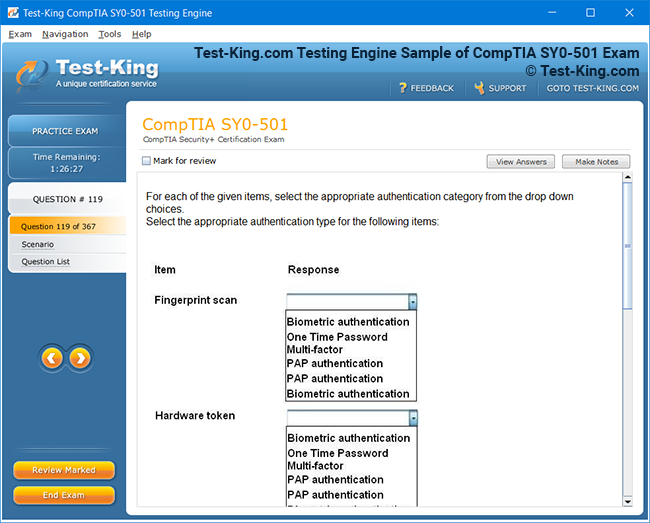
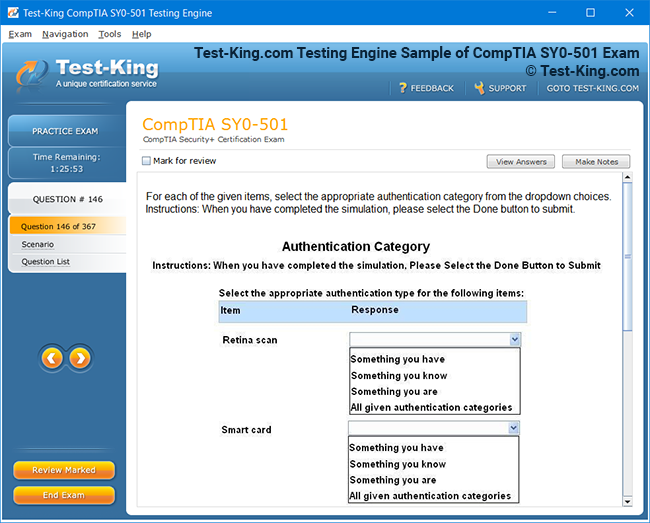
Product Screenshots
Frequently Asked Questions
How can I get the products after purchase?
All products are available for download immediately from your Member's Area. Once you have made the payment, you will be transferred to Member's Area where you can login and download the products you have purchased to your computer.
How long can I use my product? Will it be valid forever?
Test-King products have a validity of 90 days from the date of purchase. This means that any updates to the products, including but not limited to new questions, or updates and changes by our editing team, will be automatically downloaded on to computer to make sure that you get latest exam prep materials during those 90 days.
Can I renew my product if when it's expired?
Yes, when the 90 days of your product validity are over, you have the option of renewing your expired products with a 30% discount. This can be done in your Member's Area.
Please note that you will not be able to use the product after it has expired if you don't renew it.
How often are the questions updated?
We always try to provide the latest pool of questions, Updates in the questions depend on the changes in actual pool of questions by different vendors. As soon as we know about the change in the exam question pool we try our best to update the products as fast as possible.
How many computers I can download Test-King software on?
You can download the Test-King products on the maximum number of 2 (two) computers or devices. If you need to use the software on more than two machines, you can purchase this option separately. Please email support@test-king.com if you need to use more than 5 (five) computers.
What is a PDF Version?
PDF Version is a pdf document of Questions & Answers product. The document file has standart .pdf format, which can be easily read by any pdf reader application like Adobe Acrobat Reader, Foxit Reader, OpenOffice, Google Docs and many others.
Can I purchase PDF Version without the Testing Engine?
PDF Version cannot be purchased separately. It is only available as an add-on to main Question & Answer Testing Engine product.
What operating systems are supported by your Testing Engine software?
Our testing engine is supported by Windows. Andriod and IOS software is currently under development.
Top Pegasystems Exams
A Complete Guide to the Certified Pega System Architect (PEGACPSA23V1) Exam: Structure, Objectives, and Benefits
The Certified Pega System Architect 23 credential, officially denoted as PEGACPSA23V1, represents a pivotal milestone for individuals seeking to establish themselves as proficient architects within the Pega ecosystem. As Pegasystems continues to innovate in the realm of low-code application development, this certification embodies the convergence of technical acumen, design proficiency, and an analytical approach to business process automation. The credential is designed not merely as an assessment tool but as a comprehensive validation of a professional's capability to orchestrate solutions that are both scalable and sustainable within dynamic enterprise environments.
Understanding the Essence of the Pega System Architect Credential
The Pega System Architect examination emphasizes the understanding of the platform’s core architecture, process modeling, and application deployment principles. It evaluates candidates on their ability to translate business requirements into functional solutions, harnessing Pega’s low-code features to expedite development cycles while preserving robustness and maintainability. By undertaking this certification, aspirants affirm their capacity to design, implement, and optimize complex business processes, a skill set increasingly coveted by organizations leveraging digital transformation strategies.
Structure and Format of the PEGACPSA23V1 Examination
The examination is meticulously structured to balance theoretical knowledge with applied proficiency. It typically encompasses a diverse set of question types, ranging from multiple-choice queries to scenario-based problem-solving challenges that mimic real-world business scenarios. Candidates are expected to demonstrate their familiarity with Pega’s development environment, the creation and configuration of case types, data integration practices, and user interface design principles.
The duration of the examination allows for a comprehensive evaluation of the candidate’s understanding, often encompassing up to several hours, ensuring that time pressure does not overshadow analytical clarity. Passing the exam necessitates not only memorization of platform features but also the ability to contextualize these features in solving intricate business process issues. Pega’s emphasis on low-code agility requires that candidates think critically about design choices, automation logic, and optimal use of the platform’s reusable components.
Core Syllabus Areas and Exam Objectives
The PEGACPSA23V1 examination is centered around multiple domains that collectively define the competencies of a proficient Pega System Architect. One of the foremost areas involves the understanding of case management, which requires the candidate to model business workflows effectively. A thorough comprehension of stages, steps, and processes, as well as the ability to implement conditional logic, is paramount. Candidates must also be adept at utilizing Pega’s data types, properties, and declarative rules to ensure that applications remain both dynamic and consistent across diverse scenarios.
Another critical focus area is user interface construction. The platform offers a suite of tools to create responsive and intuitive user experiences, and exam candidates are expected to demonstrate proficiency in form layouts, section configuration, harness structures, and the application of styling conventions. The examination also evaluates integration capabilities, requiring familiarity with REST, SOAP, and other connectors, ensuring that architects can link Pega applications seamlessly with external systems.
Rules management and reusability form an additional cornerstone of the syllabus. Understanding how to implement rule inheritance, versioning, and rule delegation not only enhances efficiency but also reduces the likelihood of errors during iterative development cycles. This aspect is closely tied to Pega’s guardrails, a set of design best practices that guide developers to maintain high-quality, maintainable applications. Candidates are expected to apply these guardrails in scenario-based questions, demonstrating a nuanced understanding of how theoretical principles translate into practical implementation.
Navigating Pega Platform Tools and Design Methodologies
Proficiency in the Pega platform extends beyond understanding its components; it involves a methodological approach to application construction. Pega System Architects must be adept at leveraging Application Express, App Studio, and Dev Studio to manage application lifecycles. Knowledge of creating and managing case types, setting up flows, configuring service-level agreements, and implementing data transformations forms the backbone of architectural competence.
The examination also probes the candidate’s grasp of decision strategies, including the configuration of decision tables, trees, and scorecards. These elements empower architects to embed business rules directly into the application, enabling automated decision-making and reducing reliance on manual interventions. Additionally, Pega’s ability to handle reporting and analytics is crucial, as architects must configure reports, dashboards, and metrics to provide stakeholders with actionable insights.
Integration of agile principles within the Pega development paradigm is another pivotal area. Candidates are evaluated on their understanding of iterative development, version control, and deployment practices. The exam often presents real-world scenarios requiring architects to balance stakeholder requirements, technical constraints, and business priorities, reflecting the complex environment in which certified professionals operate.
Benefits of Attaining the Pega System Architect Certification
Achieving the PEGACPSA23V1 certification confers multiple advantages that extend beyond personal career growth. From an organizational perspective, certified architects bring a standardized methodology to solution development, ensuring that applications adhere to best practices and guardrails. This reduces technical debt, enhances system maintainability, and accelerates deployment cycles. For enterprises undertaking large-scale digital transformation initiatives, the presence of certified system architects is instrumental in achieving consistency and reliability across distributed teams and projects.
On a professional level, the credential serves as an emblem of expertise and credibility. It signals to potential employers and clients that the individual possesses a deep understanding of Pega’s platform, can navigate complex business processes, and is equipped to design scalable solutions. Certified architects often find themselves in high-demand roles, ranging from solution design and project leadership to consulting engagements that require both technical proficiency and business acumen.
The certification also encourages a mindset of continuous learning. As Pega evolves with new features, frameworks, and integrations, certified professionals are expected to stay abreast of these developments, fostering adaptability and thought leadership within the organization. Moreover, the skills validated by the exam—process modeling, rule configuration, data integration, and user interface optimization—are transferable, allowing certified architects to engage in varied projects across industries.
Preparing for Success in the PEGACPSA23V1 Exam
Preparation for the Pega System Architect examination demands a structured approach that combines study, practical application, and conceptual mastery. Candidates benefit from an immersive experience within the Pega platform, working on projects or exercises that simulate real-world business challenges. Understanding case life cycles, data structures, and integration scenarios through hands-on experience is indispensable, as the exam emphasizes applied knowledge over rote memorization.
Complementing practical exposure with a review of official documentation, study guides, and practice questions enhances familiarity with the exam’s breadth and complexity. It is crucial to internalize not only how to configure the platform but why specific design choices are preferred according to Pega guardrails. Scenario-based exercises allow aspirants to explore trade-offs, troubleshoot potential pitfalls, and cultivate decision-making acumen under conditions analogous to actual business environments.
Time management during preparation is equally vital. Structured schedules that allocate periods for hands-on experimentation, theoretical review, and mock assessments enable candidates to build confidence gradually. Identifying weaker domains early and reinforcing knowledge in these areas ensures comprehensive coverage and mitigates the risk of unexpected surprises during the examination. Additionally, networking with other Pega professionals, participating in discussion forums, and attending webinars provides insights into contemporary trends, practical tips, and subtle nuances of platform functionality that are often absent from textbooks.
Real-World Implications of Pega Certification
The implications of the Pega System Architect credential extend far beyond examination success. Certified professionals often assume pivotal roles in organizations, tasked with designing solutions that align business objectives with technological capabilities. They serve as bridges between functional teams and technical developers, interpreting requirements, recommending optimal approaches, and ensuring that solutions remain agile and maintainable.
Organizations benefit from the increased predictability and quality assurance that certified architects introduce. Applications designed by individuals holding the PEGACPSA23V1 credential typically demonstrate higher reliability, more efficient process flows, and enhanced user experience. Moreover, these architects contribute to the creation of reusable components and standardized practices that reduce redundancy and foster collaboration across development teams.
The evolving landscape of low-code and automation technologies further amplifies the value of certification. As businesses seek to accelerate digital initiatives while managing costs, the demand for professionals capable of leveraging platforms like Pega effectively continues to grow. In this context, the credential functions not only as a professional milestone but also as a strategic asset, enabling organizations to harness technology for competitive advantage.
Deep Immersion in Pega Platform for Exam Readiness
Achieving mastery over the Certified Pega System Architect 23 exam necessitates an immersive engagement with the platform’s diverse capabilities. The PEGACPSA23V1 credential is not merely a reflection of theoretical knowledge but an affirmation of the ability to translate business requirements into functional, maintainable solutions. A candidate’s journey begins with an exhaustive exploration of case management, which constitutes the core of Pega applications. Understanding case life cycles, including stages, processes, and subcases, enables architects to construct efficient and resilient workflows. The intricacies of conditional routing, exception handling, and automated escalations require a nuanced understanding of Pega’s declarative rules and their optimal application to ensure data integrity and process reliability.
An effective preparation strategy emphasizes hands-on experience within App Studio and Dev Studio environments. Candidates should meticulously practice designing case types, configuring stages, and implementing assignments that mirror real-world scenarios. App Studio allows aspirants to conceptualize processes visually, fostering clarity in case design and flow organization. Dev Studio, in contrast, demands a more granular approach, emphasizing rule configuration, data transforms, and integration setup. Mastery of both environments ensures the candidate is adept at not only conceptualizing processes but also executing them with precision and adherence to best practices.
Navigating Data Integration and External Connectivity
The PEGACPSA23V1 examination evaluates the candidate’s competence in linking Pega applications with external systems, a skill crucial for creating interoperable and scalable solutions. Understanding REST and SOAP integrations, connector rules, and service activities allows architects to enable seamless communication between disparate platforms. Candidates are expected to comprehend how to map external data structures into Pega’s internal data types, ensuring consistency, accuracy, and security.
Advanced preparation involves simulating real-life scenarios where data from external sources must be validated, transformed, and stored efficiently. Knowledge of integration troubleshooting techniques, such as monitoring requests, analyzing logs, and implementing error handling, enhances problem-solving capacity. Moreover, understanding the security implications of external interactions, including authentication mechanisms and data privacy considerations, is essential for both exam success and real-world application reliability.
Building User Interfaces and Optimizing User Experiences
A significant focus of the Certified Pega System Architect credential lies in the creation of intuitive, responsive, and functional user interfaces. Candidates must demonstrate proficiency in constructing sections, harnesses, and layouts that facilitate seamless user interaction. Designing forms with proper alignment, field visibility, and dynamic behavior requires a balance of technical knowledge and user-centric design thinking.
Scenario-based questions on the PEGACPSA23V1 exam often challenge candidates to optimize user experience by implementing conditional visibility, read-only states, and validation rules. Hands-on practice with user interface elements ensures that candidates can craft applications that not only meet functional requirements but also enhance operational efficiency. Familiarity with responsive design principles and mobile interface adaptation further augments an architect’s capacity to deliver solutions across varied devices and platforms.
Decision Management and Rule Configuration
Decision strategies are another crucial area tested in the examination. Architects must be adept at configuring decision tables, trees, and scorecards, integrating business logic directly into the application to enable automated decision-making. The ability to evaluate multiple conditions, assign outcomes, and implement fallback strategies reflects the candidate’s understanding of operational complexity and risk mitigation.
Candidates preparing for the PEGACPSA23V1 exam are encouraged to experiment with decision rules in practical exercises, analyzing how changes in input parameters affect outcomes. Additionally, mastering rule delegation, inheritance, and versioning ensures that architects can design reusable components that maintain consistency across applications. Applying guardrails during rule configuration is essential, as the exam often presents scenarios that require adherence to best practices while achieving specific business objectives.
Performance Optimization and Advanced Problem-Solving
Beyond functional proficiency, the exam evaluates an aspirant’s capacity to optimize application performance. Knowledge of indexing strategies, efficient use of declarative expressions, and prudent configuration of data pages contributes to responsive and scalable applications. Candidates are often presented with scenarios involving large datasets or complex case hierarchies, demanding judicious application of performance optimization techniques.
Problem-solving scenarios in the PEGACPSA23V1 examination challenge candidates to identify bottlenecks, suggest improvements, and implement corrective measures without compromising process integrity. Developing these analytical skills during preparation fosters the ability to anticipate potential issues, deploy proactive solutions, and maintain application stability under evolving requirements.
Study Techniques and Practical Preparation Approaches
Successful preparation for the Certified Pega System Architect exam combines structured study with experiential learning. Candidates benefit from a blend of theoretical review, guided exercises, and scenario-based problem-solving. Time management during study sessions allows aspirants to allocate attention proportionately to challenging domains while reinforcing previously mastered topics.
Engagement with practice exercises, simulation projects, and mock scenarios enhances retention and application skills. Candidates are advised to replicate real-world business requirements, configuring case types, integration rules, decision strategies, and user interfaces within the Pega platform. Such exercises cultivate both confidence and agility, allowing candidates to approach examination questions with clarity and precision.
Peer discussions, online forums, and professional networks serve as additional resources, providing insights into nuanced platform features, examination patterns, and common pitfalls. Candidates who actively engage with the broader Pega community often gain strategic perspectives, practical shortcuts, and tips that complement formal study materials.
Addressing Scenario-Based Questions in the Exam
The PEGACPSA23V1 examination emphasizes practical application through scenario-based questions. These questions simulate real-world business challenges, requiring candidates to analyze requirements, select optimal solutions, and configure the platform accordingly. For instance, a scenario might involve designing a multi-stage case type with conditional routing, integration with an external customer database, and automated escalation rules. Candidates must navigate these requirements while adhering to guardrails and best practices, reflecting both their technical expertise and strategic thinking.
Preparation for such questions involves deliberate practice, where candidates attempt to solve complex scenarios using the platform, document their approach, and review outcomes. Understanding the rationale behind each solution enhances problem-solving agility, allowing aspirants to apply similar strategies under examination conditions.
Time Management and Exam-Day Strategies
Effective time management is critical for success in the PEGACPSA23V1 exam. Candidates must balance speed with accuracy, ensuring that each question is approached thoughtfully while avoiding unnecessary delays. Practicing under timed conditions during preparation helps develop a rhythm, reducing anxiety and increasing familiarity with the examination pace.
Strategic prioritization is also important. Candidates should identify questions that can be answered swiftly and accurately, tackling them first to secure foundational marks. More complex or scenario-based questions can then be approached with focused attention, leveraging analytical skills and platform knowledge. This approach minimizes the risk of incomplete responses and maximizes overall performance.
Leveraging Official Resources and Training Opportunities
Pegasystems provides a wealth of resources to support candidates preparing for the Certified Pega System Architect exam. Official documentation, online courses, and practice exercises offer structured guidance on platform functionality, rule configuration, and process management. Engaging with these materials ensures familiarity with platform terminology, best practices, and common scenarios presented in the examination.
Training sessions, whether instructor-led or self-paced, offer an additional layer of preparation, enabling candidates to clarify doubts, observe demonstrations, and apply learned concepts in controlled exercises. The combination of formal training, hands-on practice, and community engagement equips candidates with the comprehensive expertise required to excel in the PEGACPSA23V1 examination.
Advancing Analytical and Decision-Making Acumen
Beyond technical proficiency, the examination evaluates a candidate’s analytical and decision-making capabilities. Architects must interpret requirements, weigh alternative solutions, and implement rules that align with both business objectives and technical constraints. Scenario-based questions often challenge candidates to navigate ambiguity, make justified choices, and anticipate potential consequences.
Developing these skills during preparation involves reflective practice, where candidates analyze their decisions, consider trade-offs, and identify areas for improvement. By cultivating a strategic mindset alongside technical knowledge, aspirants enhance their capacity to deliver solutions that are not only functional but also resilient, scalable, and aligned with organizational goals.
Continuous Learning and Adaptive Expertise
Preparation for the PEGACPSA23V1 examination is also an opportunity to cultivate a mindset of continuous learning. The Pega platform evolves rapidly, introducing new features, integrations, and best practices. Candidates who embrace adaptive expertise—combining foundational knowledge with the ability to learn and apply new concepts—position themselves as future-ready professionals.
Experiential learning, scenario analysis, and engagement with community knowledge repositories reinforce this adaptive capability. Candidates develop the agility to apply principles in novel contexts, troubleshoot unexpected issues, and maintain adherence to guardrails and quality standards. Such preparedness ensures not only examination success but also long-term professional competence in Pega system architecture.
Mastery of Case Management and Process Design
The PEGACPSA23V1 examination emphasizes an intricate understanding of case management and process orchestration, which form the nucleus of Pega system architecture. Candidates are expected to demonstrate proficiency in designing multi-layered case structures that reflect complex business operations. A case type may involve multiple stages and subprocesses, each requiring precise configuration of assignments, conditional paths, and automated escalations. The ability to anticipate exceptions and implement robust error-handling mechanisms distinguishes proficient architects from novices.
Understanding the life cycle of cases, including creation, progression through stages, and resolution, is critical. Candidates should be adept at configuring dependencies between case types, establishing parent-child relationships, and ensuring that process flows remain coherent even under dynamic conditions. Real-world scenarios often present conflicting requirements, and architects must navigate these with strategic foresight, balancing automation with flexibility to accommodate business variability.
Declarative rules, when employed judiciously, enhance process efficiency by automating calculations, validations, and updates across related cases. Candidates preparing for the exam must be proficient in configuring these rules, understanding how their execution impacts system performance, and leveraging them to reduce manual interventions. Mastery in this domain enables the architect to craft resilient applications capable of adapting to evolving business requirements without extensive redevelopment.
User Interface Design and Optimization
Another critical competency assessed in the PEGACPSA23V1 examination is the creation of sophisticated and user-centric interfaces. Pega applications rely on harnesses, sections, and layouts to facilitate interaction between end users and underlying processes. Architects must design forms and screens that are intuitive, responsive, and contextually aware. Conditional visibility, dynamic layouts, and validation rules are tools that ensure interfaces are not only functional but also minimize user error and enhance productivity.
Candidates are encouraged to practice constructing interfaces that adapt gracefully to various devices and screen sizes. Mobile responsiveness and accessibility considerations are increasingly evaluated, reflecting the contemporary requirement for applications to serve diverse user populations. Understanding how to implement reusable sections and leverage style conventions contributes to both efficiency in development and consistency across the application landscape.
Data Modeling and Integration Techniques
Proficiency in data management is indispensable for the Pega System Architect credential. The examination evaluates candidates on their ability to design robust data structures, configure properties, and manage relationships between entities. Accurate data modeling ensures that case processing is coherent and that integrations with external systems operate seamlessly.
Candidates must demonstrate competence in configuring connectors, mapping external data into internal structures, and validating input from disparate sources. Experience with RESTful services, SOAP interfaces, and database interactions is essential, as real-world applications frequently rely on these connections for operational continuity. Advanced preparation involves simulating integration scenarios, managing error handling, and understanding performance implications of repeated or large-volume data interactions.
Decision Management and Business Rules Implementation
Decision strategies form an integral part of the PEGACPSA23V1 examination. Architects are evaluated on their ability to translate complex business rules into executable decision tables, decision trees, and scorecards. Effective implementation ensures that applications can automate decisions accurately, consistently, and in alignment with organizational policies.
Candidates must also understand how to manage rule reusability and versioning, applying inheritance where appropriate to minimize redundancy and maximize maintainability. Practical exercises in constructing decision rules, testing outcomes against multiple scenarios, and fine-tuning logic are essential for developing both confidence and proficiency. Mastery of this domain allows architects to create solutions that are resilient to changes in business logic and regulatory requirements.
Performance Optimization and System Efficiency
The examination assesses not only functional knowledge but also the ability to optimize applications for performance. Architects must consider the implications of rule execution, data retrieval methods, and process complexity on system responsiveness. Utilizing indexing, efficient data pages, and prudent configuration of declarative expressions ensures that applications remain performant even under heavy workloads.
Candidates should practice analyzing existing applications to identify potential bottlenecks and implement improvements. Techniques such as minimizing redundant rule calls, optimizing case routing logic, and balancing asynchronous and synchronous processing enhance both speed and reliability. Preparing for the PEGACPSA23V1 examination requires an understanding of these performance principles and the ability to apply them in complex, real-world scenarios.
Troubleshooting and Advanced Problem-Solving
Effective architects are distinguished by their ability to troubleshoot and resolve complex issues within Pega applications. The examination tests candidates on problem-solving skills, including diagnosing failures in case processing, integration errors, and user interface anomalies. Understanding log analysis, tracer tools, and system monitoring is crucial for identifying root causes and implementing corrective actions.
Scenario-based questions challenge candidates to consider multiple factors, evaluate possible solutions, and implement configurations that maintain both functional accuracy and system stability. Regular practice with real or simulated problems enhances analytical agility and builds confidence in approaching unexpected challenges within the examination and professional practice.
Application Lifecycle Management and Agile Practices
The PEGACPSA23V1 examination evaluates candidates’ understanding of application lifecycle management within the Pega ecosystem. Architects must demonstrate familiarity with deploying applications, managing versions, and coordinating with multiple stakeholders during iterative development. Agile principles are integral, requiring adaptability, rapid feedback incorporation, and meticulous attention to requirement changes.
Candidates should be comfortable with processes for testing, quality assurance, and deployment management. The ability to plan sprints, organize iterations, and prioritize requirements ensures that solutions are delivered efficiently while maintaining alignment with business objectives. Mastery in this domain underscores the architect’s capacity to bridge technical execution and strategic planning.
Exam Preparation Techniques and Cognitive Strategies
Preparing for the Pega System Architect examination involves a deliberate combination of cognitive and experiential strategies. Candidates benefit from structured study schedules that alternate between theoretical review, hands-on platform exercises, and scenario-based problem-solving. Practicing with realistic case studies, configuring complex workflows, and applying guardrails instills both competence and confidence.
Engaging with peers, discussion forums, and professional networks enhances exposure to nuanced challenges and alternative problem-solving approaches. Reflective practice, where candidates review outcomes and refine methodologies, fosters a deeper understanding of platform intricacies. Time management during preparation is critical, enabling focused attention on areas of weakness while reinforcing strengths to ensure comprehensive readiness.
Realistic Scenario Simulations
A key aspect of preparation for the PEGACPSA23V1 examination is simulating real-world business scenarios. These exercises require architects to integrate multiple domains simultaneously—case management, user interface design, decision rules, data integration, and performance optimization. Simulated scenarios often involve ambiguous requirements, demanding careful analysis, judicious application of rules, and alignment with best practices.
Practicing such scenarios strengthens problem-solving agility, reinforces the application of guardrails, and cultivates the ability to make decisions under constraints. Candidates develop a holistic view of the platform, understanding how individual components interact and affect overall application behavior. This experiential preparation is invaluable for achieving both examination success and professional competency.
Leveraging Advanced Resources and Continuous Engagement
Pegasystems offers a comprehensive suite of resources to support examination preparation. Official documentation, tutorials, and guided exercises provide foundational knowledge and detailed insights into platform capabilities. Engaging with these materials, combined with hands-on experimentation, ensures familiarity with both core functionalities and advanced features.
Participating in webinars, virtual workshops, and peer discussions fosters exposure to contemporary trends, innovative solutions, and subtle nuances often overlooked in formal study guides. Continuous engagement cultivates adaptability and readiness for complex scenarios, enabling candidates to approach the PEGACPSA23V1 examination with confidence and strategic foresight.
Analytical Rigor and Strategic Thinking
The examination places significant emphasis on the candidate’s analytical and strategic thinking abilities. Architects must interpret requirements, assess potential design alternatives, and implement solutions that are robust, scalable, and maintainable. Scenario-based questions challenge candidates to anticipate consequences, balance competing priorities, and optimize rule configurations in alignment with organizational objectives.
Developing these skills during preparation entails reflective practice, iterative problem-solving, and critical evaluation of outcomes. By fostering a mindset of analytical rigor, candidates enhance their capacity to navigate the complexities of both examination scenarios and professional responsibilities, reinforcing the value of the Pega System Architect credential.
Advanced Integration Techniques and External Connectivity
Mastery of the PEGACPSA23V1 examination requires architects to demonstrate nuanced competence in integrating Pega applications with external systems. Integration is not merely a technical requirement; it reflects the capacity to design cohesive, interconnected solutions capable of responding to dynamic business environments. Candidates must be adept at configuring connectors for RESTful services, SOAP endpoints, and database interfaces. Understanding how to map external data into internal structures, transform datasets, and manage transactional consistency is central to exam success.
Simulated exercises that replicate real-world integration scenarios are invaluable for preparation. Candidates should practice orchestrating multi-step service calls, handling exceptions, and implementing fallback mechanisms. Knowledge of authentication protocols, secure data transfer, and error logging ensures that integrations are not only functional but also resilient and compliant with enterprise security policies. Advanced integration skills allow architects to construct solutions that maintain operational continuity, even when external systems experience variability or downtime.
Comprehensive Rules Management and Decision Strategies
The Pega System Architect examination places significant emphasis on decision-making and rules configuration. Decision tables, decision trees, and scorecards are core instruments through which business logic is automated. Candidates must understand how to configure these elements accurately, considering potential input variations, conditional dependencies, and fallback procedures.
Rules management extends beyond creation. Architects are expected to implement inheritance, version control, and reusability. Properly structured rules reduce redundancy, enhance maintainability, and ensure consistency across applications. Scenario-based exercises often require candidates to apply guardrails while solving complex problems, striking a balance between flexibility and adherence to best practices. Mastery of rules management enables architects to deliver applications that are both reliable and adaptable to changing business logic.
Reporting, Analytics, and Operational Insights
Another focal point for the PEGACPSA23V1 exam is the ability to configure reporting and analytics capabilities. Architects must design reports, dashboards, and metrics that provide actionable insights to stakeholders. This entails configuring queries, aggregating data, and presenting it in a manner that facilitates decision-making.
Scenario exercises often challenge candidates to create reports that draw from multiple case types, integrate external data, and dynamically adjust to changing inputs. Understanding the implications of reporting design on system performance is critical, as inefficient queries or poorly structured reports can lead to slow response times and degraded user experiences. Advanced knowledge of reporting mechanisms empowers architects to generate operational intelligence, enhancing organizational agility and informed decision-making.
Deployment Practices and Application Lifecycle Management
A crucial component of preparation for the Certified Pega System Architect credential is understanding deployment and lifecycle management. Architects are evaluated on their ability to manage application versions, coordinate with stakeholders, and ensure smooth transitions from development to production. Knowledge of deployment strategies, including staged rollout, parallel deployment, and rollback procedures, ensures applications are delivered reliably and maintain system integrity.
Candidates should be comfortable with testing and quality assurance practices, ensuring that changes adhere to functional requirements and performance standards. Agile principles guide much of the development process, emphasizing iterative delivery, rapid feedback incorporation, and adaptability to evolving requirements. Practical exercises in managing the full lifecycle of applications, from initial configuration to deployment and monitoring, cultivate confidence and competence for the examination.
Advanced Problem-Solving and Troubleshooting
Exam scenarios often involve complex problem-solving requirements. Candidates must demonstrate the ability to diagnose and resolve issues across multiple domains, including case processing, integration, user interface behavior, and rule execution. Proficiency in tools such as tracers, logs, and monitoring utilities is essential for identifying root causes and implementing effective solutions.
Preparation should include deliberate practice with simulated problems, encouraging candidates to consider multiple potential causes, evaluate alternative solutions, and implement configurations that ensure both functional correctness and operational stability. Developing this analytical acumen ensures that architects can navigate ambiguities and address challenges in both examination scenarios and professional practice.
Optimization of Performance and Scalability
Performance optimization is a critical area of the Pega System Architect examination. Architects must understand the impact of rule execution, case structure complexity, and data retrieval strategies on system responsiveness. Techniques such as indexing, judicious use of declarative rules, and configuration of data pages enhance the performance and scalability of applications.
Candidates are expected to recognize and mitigate bottlenecks, optimize case routing, and balance synchronous and asynchronous processing to maintain system efficiency. Practical exercises in evaluating application performance, identifying potential areas of delay, and implementing corrective measures are central to exam preparation and real-world expertise.
Scenario-Based Application of Knowledge
The PEGACPSA23V1 examination heavily emphasizes scenario-based application. Candidates may be presented with multi-dimensional challenges that require integration of case management, user interface design, decision rules, data modeling, and performance considerations. A typical scenario might involve designing a complex workflow that incorporates external system data, automated decision-making, and responsive reporting for stakeholders.
Preparation involves practicing such scenarios, documenting solution strategies, and reviewing outcomes. Reflective practice helps candidates refine their approach, understand the implications of design choices, and ensure alignment with best practices. Engaging in these exercises develops both confidence and problem-solving agility, enabling architects to approach examination questions methodically and strategically.
Cognitive Approaches and Strategic Thinking
Success in the Pega System Architect exam is as much about cognitive strategy as technical expertise. Candidates must interpret requirements accurately, weigh design alternatives, and implement solutions that are robust, maintainable, and scalable. Exam scenarios test the ability to balance competing priorities, anticipate downstream effects, and make informed decisions under constraints.
Developing this strategic mindset requires reflective practice, iterative problem-solving, and analysis of potential trade-offs. Candidates who cultivate analytical rigor are better equipped to navigate complex scenarios, optimize system behavior, and deliver solutions that align with both organizational objectives and platform guardrails.
Continuous Learning and Mastery of Evolving Features
The Pega platform evolves rapidly, introducing new tools, frameworks, and methodologies. Preparing for the PEGACPSA23V1 examination involves cultivating a mindset of continuous learning and adaptability. Candidates are encouraged to explore advanced features, emerging integrations, and novel design strategies to maintain relevance and expertise.
Engagement with professional networks, webinars, and community discussions enhances exposure to practical insights and unconventional approaches. Candidates who integrate continuous learning into their preparation develop the agility to apply foundational principles in novel contexts, troubleshoot unforeseen issues, and adhere to evolving best practices.
Exam Preparation Strategies and Effective Study Practices
Effective preparation combines structured study, hands-on practice, and scenario simulation. Candidates benefit from creating a dedicated study schedule that alternates between theoretical review, practical exercises, and reflective analysis of complex scenarios. Exposure to realistic challenges within the platform strengthens confidence, reinforces knowledge, and cultivates the ability to apply concepts under examination conditions.
Time management during preparation is critical, allowing candidates to allocate sufficient attention to challenging domains while reinforcing areas of strength. Mock exercises, simulated problems, and peer discussion foster a holistic understanding of platform functionalities, integration techniques, and decision management. These strategies collectively enable candidates to approach the examination with clarity, efficiency, and strategic foresight.
Leveraging Resources for Enhanced Competence
Pegasystems provides a wealth of resources for aspirants preparing for the Certified Pega System Architect credential. Official documentation, practice exercises, and guided tutorials offer comprehensive guidance on platform features, rules configuration, and workflow orchestration. Candidates are encouraged to integrate these resources with experiential learning to cultivate both theoretical knowledge and applied proficiency.
Supplementing formal materials with engagement in community forums, professional groups, and peer networks offers nuanced insights, practical tips, and exposure to complex problem-solving approaches. Active participation ensures aspirants develop a comprehensive understanding of platform capabilities, emerging trends, and advanced architectural strategies, enhancing preparedness for examination challenges.
Integration of Analytical Skills with Platform Expertise
The PEGACPSA23V1 examination assesses the integration of analytical thinking with technical proficiency. Candidates must evaluate multifaceted requirements, anticipate potential conflicts, and implement solutions that maintain operational consistency. Practical exercises that combine decision strategies, integration, rule configuration, and performance optimization reinforce this skill, ensuring that architects can navigate real-world complexities with confidence and precision.
Candidates are advised to document their solutions, reflect on outcomes, and iterate on approaches, cultivating both intellectual agility and platform mastery. This methodology prepares aspirants to approach complex examination scenarios with strategic insight and operational competence, reinforcing the holistic value of the Pega System Architect credential.
Governance, Guardrails, and Best Practices
The PEGACPSA23V1 examination emphasizes the importance of governance and adherence to platform guardrails in creating sustainable and maintainable Pega applications. Candidates are expected to demonstrate proficiency in designing solutions that align with best practices, ensuring that applications are robust, scalable, and compliant with organizational standards. Understanding guardrails involves recognizing potential design pitfalls, applying recommended patterns, and evaluating the impact of configuration choices on long-term performance and maintainability.
Practical exercises in applying guardrails include identifying inefficiencies in case processing, optimizing rule structures, and ensuring proper use of declarative expressions. Candidates must also understand how to enforce consistency across applications, particularly when multiple architects collaborate on complex projects. This governance knowledge ensures that applications maintain coherence, adhere to established standards, and minimize technical debt.
Advanced Decision Management and Rule Orchestration
Candidates are tested on their ability to implement complex decision strategies that automate business logic accurately and efficiently. Decision tables, decision trees, and scorecards must be configured to handle multiple conditions, exceptions, and fallback scenarios. Architects must evaluate dependencies between rules and consider the implications of changes on case processing, system performance, and business outcomes.
Mastery of rule orchestration also involves applying inheritance, version control, and rule delegation to ensure reusability and maintainability. Scenario-based exercises require candidates to design rules that accommodate evolving business requirements while adhering to guardrails. Developing this expertise allows architects to construct applications that are adaptable, resilient, and aligned with organizational priorities, a skill highly valued in examination and professional practice alike.
Testing, Quality Assurance, and Validation
Proficiency in testing and quality assurance is a critical aspect of the Pega System Architect credential. Candidates must understand how to design and execute test cases, validate rule execution, and ensure that applications meet functional requirements. Scenario-based questions often involve identifying potential errors, evaluating system behavior under varying conditions, and implementing corrective measures.
Advanced preparation includes configuring automated testing frameworks, analyzing test coverage, and employing tools to trace rule execution and identify anomalies. Candidates must demonstrate the ability to validate integration points, user interface behavior, and decision strategies, ensuring that applications operate reliably and efficiently in production environments. This rigorous approach to quality assurance reinforces confidence in both examination performance and professional competence.
Advanced Integration Strategies and External System Interactions
Integration remains a cornerstone of preparation for the PEGACPSA23V1 examination. Architects must demonstrate advanced knowledge in connecting Pega applications to external systems, handling complex data transformations, and ensuring secure communication. Candidates are expected to configure connectors for REST and SOAP services, manage authentication and authorization, and troubleshoot integration errors effectively.
Scenario-based exercises challenge candidates to orchestrate multi-step integrations, synchronize data across systems, and implement error-handling strategies that maintain business continuity. Understanding performance implications, such as latency, concurrency, and transactional integrity, is essential for delivering applications that operate reliably under diverse operational conditions. Mastery of integration techniques ensures that architects can design solutions that are both functional and resilient.
Performance Tuning and Optimization Techniques
The examination evaluates candidates’ ability to optimize application performance, an essential skill for managing complex workflows and large data volumes. Architects must understand the impact of rule execution, data page configuration, and case structure complexity on system responsiveness. Techniques such as indexing, efficient use of declarative rules, and optimization of data retrieval processes enhance scalability and reduce latency.
Candidates are encouraged to practice evaluating application performance, identifying potential bottlenecks, and implementing corrective measures. Scenario-based exercises may involve optimizing a workflow with multiple stages, minimizing redundant processing, and ensuring that decisions and integrations execute efficiently. Mastery of performance tuning contributes to the development of applications that are both reliable and responsive, reinforcing the value of the Pega System Architect credential.
Advanced Troubleshooting and Problem Resolution
The PEGACPSA23V1 examination tests candidates’ ability to troubleshoot complex issues across multiple domains. Architects must diagnose errors in case processing, rule execution, integrations, and user interfaces. Proficiency with tools such as tracers, logs, and monitoring utilities is essential for identifying root causes and implementing solutions that restore functionality while maintaining system integrity.
Preparation should include practicing with complex problem scenarios, evaluating alternative solutions, and applying corrective actions that preserve both performance and compliance with guardrails. Developing analytical rigor and strategic thinking in troubleshooting ensures that candidates are equipped to handle unexpected challenges during the examination and in professional practice.
Reporting, Analytics, and Stakeholder Communication
Candidates must demonstrate the ability to configure reporting and analytics capabilities that provide actionable insights to stakeholders. This involves designing reports, dashboards, and metrics that integrate data from multiple case types and external systems. Scenario-based questions often test candidates’ ability to create dynamic reporting solutions that respond to evolving business requirements and operational conditions.
Advanced reporting skills require understanding how report configurations impact performance and user experience. Candidates should practice designing efficient queries, aggregating data effectively, and presenting insights in a clear, actionable manner. This capability enhances decision-making at the organizational level and demonstrates the architect’s strategic value.
Scenario-Based Problem Solving and Applied Knowledge
A distinguishing feature of the PEGACPSA23V1 examination is the focus on scenario-based problem solving. Candidates may encounter challenges that require simultaneous application of case management, integration, rules configuration, decision strategies, user interface design, and performance optimization. Successful navigation of these scenarios requires analytical thinking, strategic planning, and practical knowledge of the Pega platform.
Preparation involves extensive practice with multi-faceted exercises that replicate real-world business environments. Candidates should simulate workflows, configure rules, integrate systems, and analyze outcomes to develop comprehensive solutions. Reflective practice enhances understanding of platform capabilities, reinforces best practices, and fosters confidence in tackling complex examination questions.
Cognitive Approaches and Strategic Thinking
Candidates are expected to employ cognitive strategies and strategic thinking to solve complex problems effectively. The examination assesses the ability to interpret requirements, weigh alternative solutions, anticipate consequences, and implement solutions that align with organizational objectives. Scenario-based questions often challenge candidates to consider multiple dimensions simultaneously, requiring careful analysis and reasoned decision-making.
Developing this capability involves iterative problem-solving, reflective evaluation of outcomes, and application of best practices in diverse scenarios. By cultivating a strategic mindset alongside technical proficiency, candidates enhance their ability to deliver robust, scalable, and maintainable applications. This integration of analytical thinking with platform expertise is central to both examination success and professional excellence.
Continuous Learning and Professional Adaptability
The Pega platform evolves continuously, introducing new tools, functionalities, and best practices. Successful candidates cultivate an attitude of continuous learning, staying abreast of platform updates and emerging trends. Familiarity with advanced features, innovative integrations, and evolving design methodologies ensures that architects maintain relevance and adaptability in professional practice.
Engagement with the Pega community, participation in webinars, and exploration of case studies enrich preparation and provide insights into real-world applications. Adaptive expertise allows candidates to apply foundational knowledge in novel contexts, troubleshoot unforeseen issues, and maintain adherence to guardrails and quality standards. This approach ensures long-term professional competence and reinforces the strategic value of the Pega System Architect credential.
Exam Preparation Techniques and Methodical Study
Effective preparation for the PEGACPSA23V1 examination combines methodical study, hands-on experimentation, and scenario simulation. Candidates benefit from structured study schedules that alternate between theoretical review, practical exercises, and reflective analysis. Simulation of complex workflows, integration challenges, and rule configurations strengthens both confidence and competence.
Time management during preparation is critical. Allocating attention to areas of complexity, reinforcing mastered topics, and reviewing scenario outcomes ensures comprehensive readiness. Peer engagement, community discussion, and reflective practice enhance understanding of nuanced platform behaviors, common pitfalls, and optimal approaches. These techniques collectively equip candidates to approach the examination with clarity, efficiency, and strategic insight.
Integration of Analytical Skills with Platform Mastery
Success in the PEGACPSA23V1 examination requires the integration of analytical thinking with platform expertise. Candidates must interpret multi-dimensional requirements, assess potential solutions, and implement configurations that maintain operational consistency. Practical exercises combining decision management, integration, rules orchestration, performance optimization, and user interface configuration reinforce this capability.
Reflective practice, iterative problem-solving, and analysis of alternative approaches cultivate both intellectual agility and applied expertise. Candidates develop the ability to navigate complex scenarios with confidence, optimize system behavior, and deliver robust, maintainable solutions that reflect the full value of the Pega System Architect credential.
Exam Mastery, Advanced Troubleshooting, and Professional Application
The Certified Pega System Architect 23 credential demands a deep, holistic understanding of the Pega platform and its myriad capabilities. Candidates preparing for the PEGACPSA23V1 examination are required to integrate knowledge of case management, rules configuration, decision strategies, integrations, reporting, performance optimization, and user interface design into a seamless approach to application design. The examination is scenario-driven, assessing not only theoretical knowledge but also the practical aptitude to apply concepts under real-world conditions.
Advanced troubleshooting forms a critical element of the examination. Candidates must demonstrate proficiency in diagnosing and resolving issues that span multiple domains, including case workflows, decision rules, integration endpoints, user interface anomalies, and system performance. Practical experience with tracing tools, logs, monitoring utilities, and error diagnostics enhances the ability to identify root causes efficiently. The capacity to implement solutions that maintain functionality, adhere to guardrails, and preserve system integrity distinguishes proficient architects.
Scenario-based questions often simulate complex business processes with multiple interdependent components. Candidates are challenged to analyze requirements, consider alternative design strategies, and implement configurations that balance performance, maintainability, and compliance with organizational standards. For example, a scenario may require constructing a multi-stage case with dynamic decision rules, external data integrations, and responsive reporting dashboards, necessitating precise orchestration of multiple Pega capabilities.
Preparation involves deliberate practice with realistic exercises that mirror these examination challenges. Architects refine analytical thinking, apply best practices, and develop an agile approach to problem-solving. Reflective evaluation of outcomes and iterative adjustments enhance proficiency and cultivate a mindset attuned to continuous improvement. Candidates who immerse themselves in such exercises are better equipped to approach examination questions with confidence and strategic foresight.
Optimization of Performance and Scalability
A major competency tested in the PEGACPSA23V1 exam is the optimization of application performance. Architects must understand the implications of case complexity, rule execution, data page usage, and integration patterns on system responsiveness. Techniques such as indexing, judicious use of declarative expressions, and efficient configuration of case types enhance scalability and minimize latency.
Candidates are encouraged to analyze existing applications for bottlenecks, optimize workflows, and implement asynchronous processing where appropriate. Scenario exercises may involve optimizing decision strategies for rapid execution or designing reporting solutions that aggregate large volumes of data efficiently. Mastery of performance tuning ensures applications are responsive, reliable, and capable of supporting business operations under varying conditions.
Governance, Guardrails, and Sustainable Design
Understanding and applying governance principles is central to examination success and professional excellence. Candidates are evaluated on their ability to design applications that adhere to guardrails, align with best practices, and maintain structural integrity over time. Governance involves identifying design risks, implementing reusable rules, maintaining version control, and ensuring compliance with organizational standards.
Practicing with complex case scenarios helps candidates internalize guardrails and cultivate the ability to make design decisions that optimize functionality while minimizing long-term maintenance challenges. Integrating governance into workflow design, decision strategy configuration, and user interface construction ensures that applications are sustainable, consistent, and adaptable to future requirements.
Decision Management and Business Rule Mastery
Decision management is a critical domain of the Pega System Architect examination. Architects must configure decision tables, decision trees, and scorecards to automate business logic with precision. Mastery involves understanding conditional dependencies, fallback strategies, and cascading effects of rule execution. Candidates must also demonstrate proficiency in rule reuse, inheritance, and versioning, creating modular components that maintain integrity across applications.
Scenario-based exercises require architects to evaluate multiple conditions, assess outcomes, and apply rules in ways that reflect organizational priorities. By practicing decision strategy configuration in conjunction with case workflows and integration logic, candidates develop a holistic understanding of how business rules influence overall application behavior. This capability ensures solutions are both accurate and adaptable to evolving requirements.
Integration Expertise and External Connectivity
Integration with external systems is indispensable for a robust Pega solution. Candidates must demonstrate knowledge of connectors, service APIs, authentication mechanisms, and data mapping. Scenario exercises often require synchronizing data from multiple external sources, transforming datasets for internal use, and ensuring transactional consistency.
Architects must also understand error-handling strategies, performance implications of repeated service calls, and the impact of external system variability on application stability. Practical experience with integrations allows candidates to anticipate issues, implement resilient solutions, and maintain seamless operations across distributed systems. Mastery of integration techniques enhances both examination readiness and professional competence.
User Interface Design and Operational Efficiency
The PEGACPSA23V1 examination evaluates proficiency in designing intuitive and efficient user interfaces. Architects must configure sections, harnesses, and layouts that facilitate seamless interaction, minimize errors, and enhance productivity. Conditional visibility, dynamic forms, and responsive layouts are tools to improve usability while ensuring alignment with underlying business processes.
Candidates should practice constructing interfaces that are consistent, maintainable, and optimized for various devices. Scenario exercises may involve balancing complexity with user experience, integrating reporting dashboards, and providing actionable insights within the application interface. Mastery in user interface design ensures applications are functional, accessible, and aligned with end-user needs.
Reporting, Analytics, and Operational Insights
Candidates must demonstrate expertise in configuring reporting solutions that provide actionable insights. This involves designing reports and dashboards that draw from multiple case types, integrate external data, and dynamically adjust to evolving conditions. Scenario-based exercises test the ability to present metrics clearly, ensure data accuracy, and optimize query performance to avoid latency.
Advanced reporting skills enable architects to support decision-making processes, monitor operational performance, and deliver meaningful analytics to stakeholders. By integrating reporting with case workflows and decision strategies, candidates develop a comprehensive understanding of how data-driven insights inform business operations.
Advanced Troubleshooting and Problem-Solving
Effective problem-solving is integral to the PEGACPSA23V1 examination. Architects must navigate complex issues across workflows, integrations, rules, interfaces, and performance. Proficiency with tracing tools, logs, and monitoring utilities enhances diagnostic accuracy. Candidates must also demonstrate the ability to implement corrective measures that maintain system integrity and adhere to guardrails.
Practice with multi-domain troubleshooting scenarios cultivates analytical agility and strategic decision-making. Candidates refine approaches to identify root causes, consider alternative solutions, and implement sustainable fixes. This expertise ensures readiness for examination challenges and professional responsibilities in managing complex Pega applications.
Exam Preparation and Cognitive Strategies
Success in the PEGACPSA23V1 examination requires strategic preparation, combining theoretical study, practical exercises, and scenario simulations. Candidates benefit from structured study schedules that address core competencies, complex scenarios, and integration challenges. Reflective practice, where solutions are evaluated and iteratively improved, enhances problem-solving acumen and reinforces mastery.
Time management, both in preparation and during the examination, is essential. Candidates should prioritize questions based on complexity, ensure thorough review of scenario-based problems, and maintain a balanced pace to maximize accuracy. Engaging with peers, participating in community discussions, and leveraging professional networks provide insights into nuanced platform behaviors, alternative approaches, and real-world challenges.
Continuous Learning and Professional Growth
The Pega platform evolves continually, necessitating an ongoing commitment to learning and professional development. Candidates who embrace adaptive expertise, keeping abreast of new features, integrations, and methodologies, strengthen both examination performance and professional competence. Engagement with official resources, webinars, and community forums enhances familiarity with emerging practices and complex problem-solving techniques.
By integrating continuous learning with hands-on experience, candidates cultivate resilience, agility, and the ability to navigate unforeseen challenges. This ongoing professional development ensures the Pega System Architect credential retains strategic value, enabling architects to design solutions that are innovative, reliable, and aligned with organizational objectives.
Strategic Application of Knowledge
The PEGACPSA23V1 examination requires the integration of analytical thinking, technical proficiency, and strategic foresight. Candidates must interpret multi-dimensional requirements, design solutions that optimize performance and usability, and implement configurations that ensure reliability and compliance with best practices. Scenario exercises simulate real-world complexities, reinforcing the application of knowledge across case management, decision strategies, integrations, user interfaces, and reporting.
Reflective practice and iterative problem-solving cultivate confidence, sharpen analytical skills, and strengthen the capacity to deliver robust, maintainable applications. Candidates who approach preparation strategically develop the cognitive flexibility and technical competence necessary to excel in the examination and in professional practice.
Conclusion
The Certified Pega System Architect PEGACPSA23V1 examination demands a comprehensive mastery of the Pega platform, integrating case management, decision strategies, rules configuration, integration, reporting, user interface design, and performance optimization. Candidates who engage in structured preparation, scenario-based practice, reflective evaluation, and continuous learning develop the analytical, technical, and strategic capabilities required for success.
Mastery of governance, adherence to guardrails, and proficiency in troubleshooting enhance both examination readiness and professional competence. By applying knowledge in practical scenarios, optimizing system performance, and leveraging reporting and integration capabilities, architects demonstrate the capacity to deliver innovative, sustainable, and efficient solutions. The credential represents not only technical proficiency but also strategic acumen, positioning architects to contribute meaningfully to organizational objectives and to navigate complex real-world challenges with confidence and expertise.