

Exam Code: PEGACPSA88V1
Exam Name: Certified Pega System Architect 8.8
Certification Provider: Pegasystems
Corresponding Certification: Pega CSA
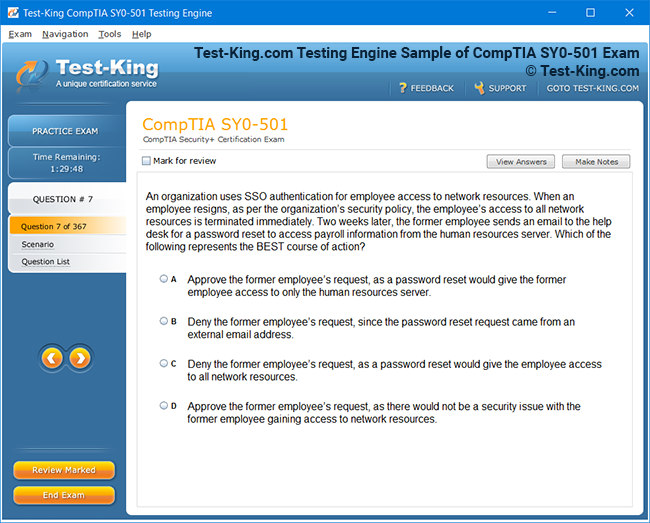
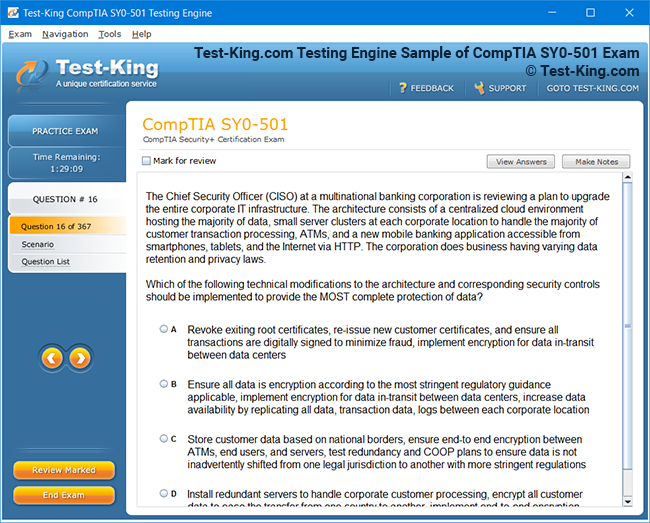
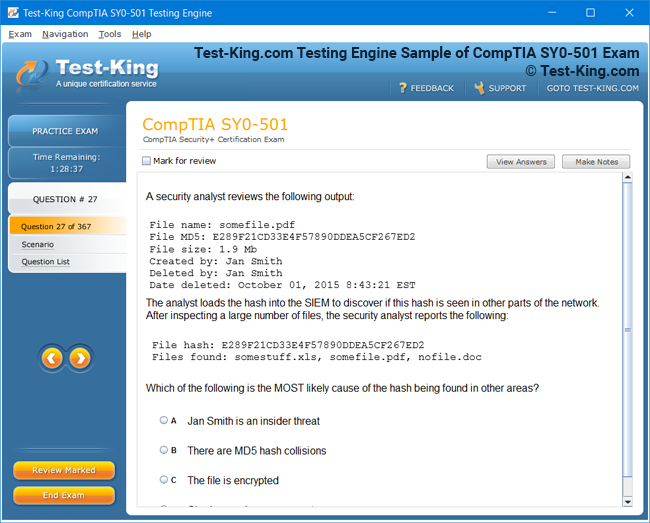
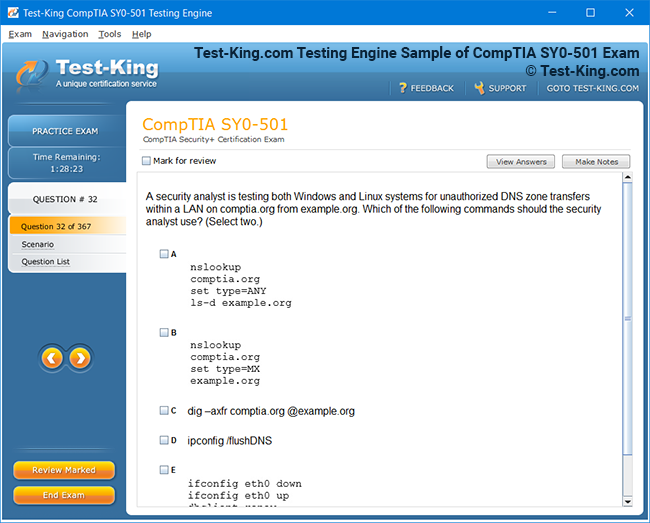
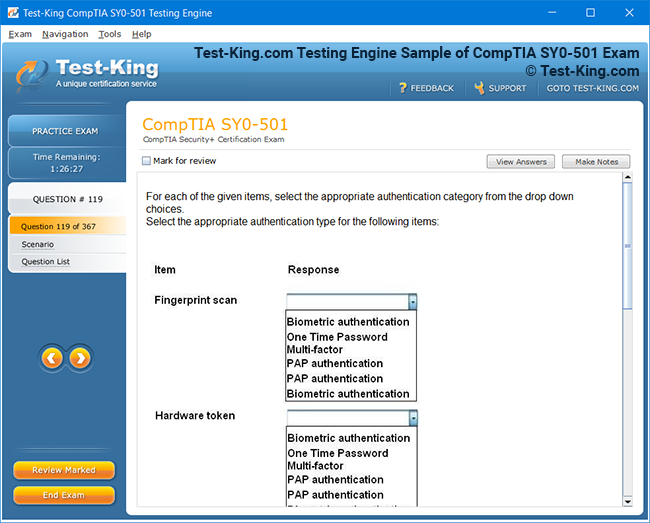
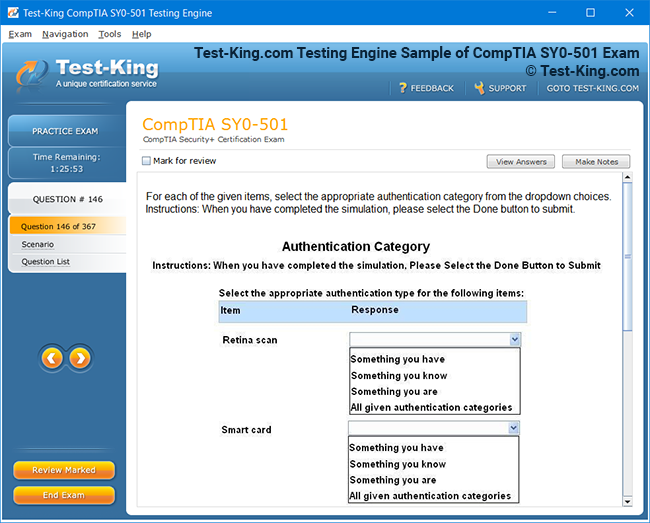
Product Screenshots
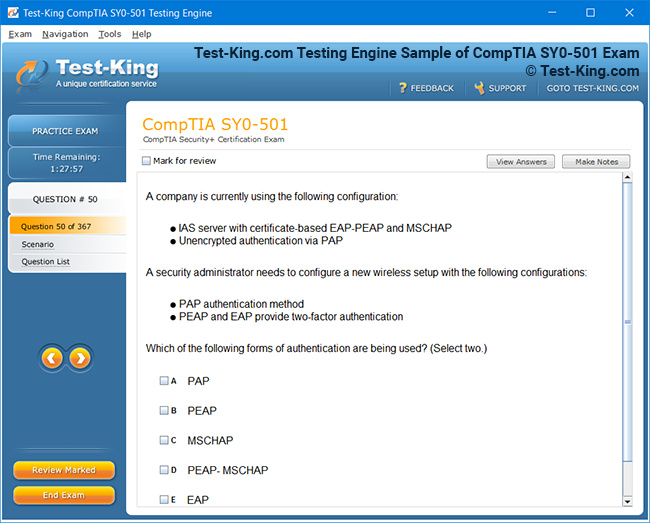
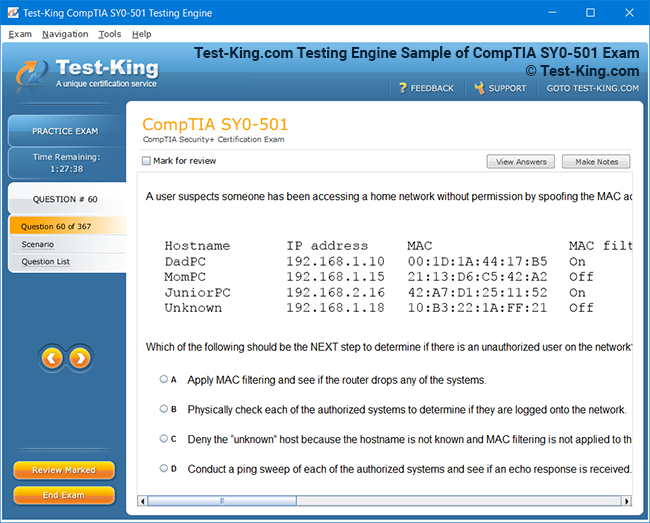
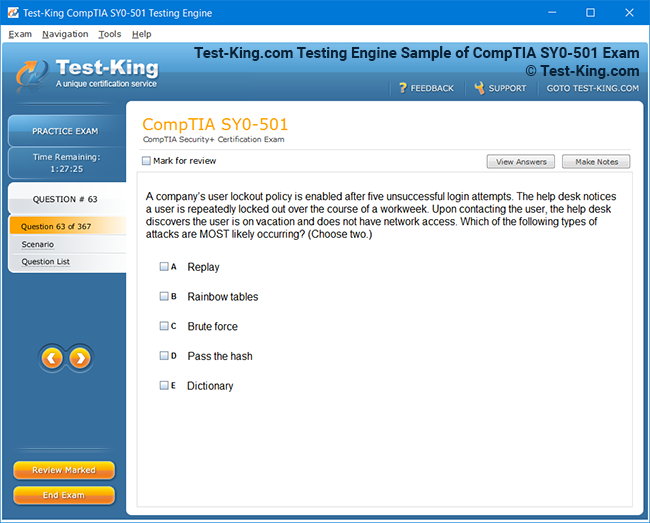
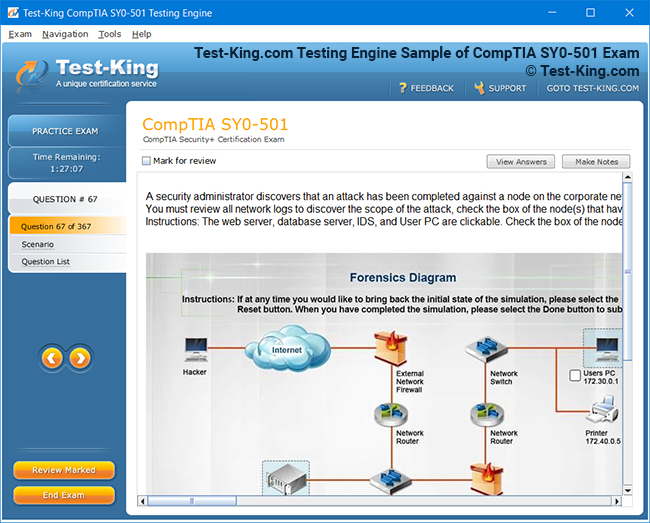
Frequently Asked Questions
How can I get the products after purchase?
All products are available for download immediately from your Member's Area. Once you have made the payment, you will be transferred to Member's Area where you can login and download the products you have purchased to your computer.
How long can I use my product? Will it be valid forever?
Test-King products have a validity of 90 days from the date of purchase. This means that any updates to the products, including but not limited to new questions, or updates and changes by our editing team, will be automatically downloaded on to computer to make sure that you get latest exam prep materials during those 90 days.
Can I renew my product if when it's expired?
Yes, when the 90 days of your product validity are over, you have the option of renewing your expired products with a 30% discount. This can be done in your Member's Area.
Please note that you will not be able to use the product after it has expired if you don't renew it.
How often are the questions updated?
We always try to provide the latest pool of questions, Updates in the questions depend on the changes in actual pool of questions by different vendors. As soon as we know about the change in the exam question pool we try our best to update the products as fast as possible.
How many computers I can download Test-King software on?
You can download the Test-King products on the maximum number of 2 (two) computers or devices. If you need to use the software on more than two machines, you can purchase this option separately. Please email support@test-king.com if you need to use more than 5 (five) computers.
What is a PDF Version?
PDF Version is a pdf document of Questions & Answers product. The document file has standart .pdf format, which can be easily read by any pdf reader application like Adobe Acrobat Reader, Foxit Reader, OpenOffice, Google Docs and many others.
Can I purchase PDF Version without the Testing Engine?
PDF Version cannot be purchased separately. It is only available as an add-on to main Question & Answer Testing Engine product.
What operating systems are supported by your Testing Engine software?
Our testing engine is supported by Windows. Andriod and IOS software is currently under development.
Top Pegasystems Exams
PEGACPSA88V1 : Top Preparation Strategies to Excel in the Certified Pega System Architect 8.8 Exam
The Certified Pega System Architect 8.8 exam, identified by the code PEGACPSA88V1, is a critical credential for individuals seeking mastery in Pega 8.8 platform development. This certification validates an individual’s proficiency in designing, developing, and implementing applications on the Pega platform, emphasizing efficiency, accuracy, and adherence to best practices. Success in this exam requires not only theoretical comprehension but also practical experience with the platform's tools, frameworks, and case management processes. Understanding the layout of the exam and the types of questions expected can significantly enhance preparation efforts. The exam evaluates candidates across multiple domains, including application development, process automation, user interface design, data management, and business rules implementation.
Understanding the Certified Pega System Architect 8.8 Exam Framework
Familiarity with Pega’s architecture is vital for candidates. The platform operates on a model-driven approach, where applications are built using reusable components rather than traditional coding methods. Candidates must understand how Pega leverages case life cycles, data objects, and decision rules to streamline application development. The knowledge of core concepts such as declarative rules, control flows, service integration, and data modeling forms the foundation for exam readiness. Moreover, awareness of the platform’s recent updates in version 8.8, including enhancements in user experience, DevOps support, and advanced automation capabilities, gives candidates an edge in both the exam and practical application scenarios.
Building a Strong Knowledge Base in Pega 8.8
Preparation begins with constructing a robust knowledge base that encompasses both the theoretical and practical aspects of Pega 8.8. Candidates should begin by exploring Pega Academy’s learning paths tailored to system architects, which provide structured modules covering core topics. Understanding the hierarchy of rules, the function of case types, and the interrelation of data classes allows for efficient navigation and problem-solving during the exam. Delving into practical exercises in App Studio and Dev Studio ensures familiarity with the platform’s visual design environment and rule configuration tools.
A meticulous approach to learning involves reviewing Pega’s implementation guides, best practices documents, and reference materials. This ensures a grasp of how real-world applications are architected within Pega, how user interfaces are optimized, and how integrations with external systems are achieved. Candidates benefit from creating their own mini-projects within the platform, as hands-on experience reinforces theoretical knowledge and enhances recall under exam conditions. Practicing rule creation, workflow configuration, and data manipulation provides an immersive understanding of how abstract concepts translate into practical solutions.
Effective Study Techniques and Time Management
Time management is a pivotal factor in preparation for the Certified Pega System Architect 8.8 exam. Candidates must allocate study periods strategically, dedicating focused intervals to each core domain while leaving sufficient time for revision and practice assessments. Active learning techniques, such as summarizing concepts in one’s own words, creating mental maps of rule hierarchies, and simulating case processing scenarios, promote long-term retention. Incorporating periodic self-assessment ensures that gaps in understanding are identified early and addressed efficiently.
Engaging in peer discussions or joining study groups can provide additional perspectives and insights, especially when exploring complex topics such as decision strategies or advanced case management. Explaining concepts to others reinforces understanding and highlights areas that may require further review. Maintaining a disciplined schedule, combining study sessions with hands-on practice, and setting incremental goals helps sustain motivation and prevents burnout. Consistency in study routines ensures a gradual build-up of competence, culminating in a thorough readiness for the exam.
Mastering Core Pega Skills
The essence of excelling in the exam lies in mastery of core Pega skills. Key areas include case life cycle management, user interface design, data modeling, service integration, and rules configuration. Case life cycles form the backbone of Pega applications, dictating the flow of work and the conditions under which tasks progress. Candidates must understand the lifecycle stages, from creation and processing to resolution, and how these stages interact with rules, data, and automated processes.
Data modeling is another indispensable skill. Pega’s approach to data emphasizes reusable data classes, properties, and relational mappings. Mastery of data pages, data transforms, and property referencing ensures that candidates can design efficient and maintainable applications. Similarly, understanding user interface components, including sections, harnesses, and dynamic layouts, is essential for creating intuitive and responsive applications. Practical exercises in designing forms, flows, and interactive dashboards prepare candidates to address scenario-based questions in the exam.
Service integration knowledge is critical, particularly for real-world applications. Pega facilitates integration with external systems through connectors, services, and APIs. Candidates should be comfortable configuring REST and SOAP connectors, managing service responses, and handling exceptions within processes. Decisioning skills, including rule delegation, decision tables, and strategies, also play a central role in demonstrating the ability to implement intelligent automation. Consistent practice in creating and testing these components fosters a deep understanding that supports both exam performance and professional application.
Leveraging Practice Exams and Sample Questions
Utilizing practice exams and sample questions is an invaluable strategy for exam readiness. These resources familiarize candidates with the exam format, question styles, and complexity levels. Regular practice under timed conditions enhances speed, accuracy, and confidence. Reviewing explanations for both correct and incorrect answers provides insights into rule logic, best practices, and common pitfalls. It also reinforces the connection between theory and practical implementation, highlighting areas requiring further study or clarification.
Candidates should approach practice questions analytically, treating each scenario as a miniature case study. Identifying the underlying rules, evaluating the correct sequence of steps, and considering alternative solutions mirrors the real-life application of Pega skills. Over time, this method sharpens critical thinking and problem-solving abilities, ensuring that candidates can navigate the exam with strategic precision rather than relying on rote memorization.
Understanding Exam Objectives and Focus Areas
Success in the Certified Pega System Architect 8.8 exam is influenced heavily by a clear understanding of exam objectives. The exam evaluates multiple domains, including designing user interfaces, implementing case management, configuring business rules, integrating data services, and optimizing application performance. Candidates should pay particular attention to areas where Pega has introduced enhancements in version 8.8, such as improved reporting tools, advanced automation features, and streamlined DevOps integration.
Prioritizing study based on weightage of topics ensures efficient use of preparation time. For example, understanding case life cycles and decision strategies often carries more significance in scenario-based questions, while detailed syntax knowledge may be less critical. Reviewing exam guides and official outlines provides clarity on what is expected and minimizes the risk of focusing disproportionately on peripheral topics. This approach allows candidates to channel their efforts toward areas that yield maximum impact on their performance.
Developing Real-World Application Insights
The exam is not purely theoretical; it emphasizes the ability to apply Pega knowledge in practical scenarios. Candidates should seek opportunities to work on real-world applications or simulate projects that mimic business processes. This hands-on exposure cultivates familiarity with problem-solving, debugging, and optimization techniques. Observing how different components interact, how rules affect case progression, and how integrations are implemented reinforces comprehension and builds confidence.
Understanding business requirements and translating them into Pega applications is a skill that bridges the gap between theoretical knowledge and professional competence. Candidates benefit from documenting their learning journey, noting challenges encountered and solutions devised. This reflective practice strengthens memory retention, provides a repository of reference material for quick revision, and instills the ability to tackle complex scenarios efficiently.
Maintaining Mental Acuity and Exam Readiness
Preparation extends beyond studying Pega concepts; maintaining mental acuity and exam readiness is crucial. Candidates should cultivate habits that enhance focus, stamina, and problem-solving under pressure. Techniques such as scheduled breaks, mindfulness exercises, and simulated exam conditions contribute to sustained concentration. Sleep, nutrition, and stress management also influence cognitive performance, enabling candidates to approach the exam with clarity and composure.
Strategically reviewing material in the days leading up to the exam consolidates knowledge while minimizing anxiety. Revisiting key concepts, refreshing rule hierarchies, and mentally simulating case flows ensures that candidates enter the exam environment confident and equipped. Developing a systematic approach to answering questions, prioritizing high-weightage topics, and managing time efficiently during the exam are the final steps in translating preparation into successful outcomes.
Deep Dive into Case Management and Life Cycles
An intricate understanding of case management is paramount for mastering the Certified Pega System Architect 8.8 exam. Pega’s case-centric methodology is designed to encapsulate complex business processes into manageable, automated workflows. Each case progresses through a defined life cycle, beginning from creation, proceeding through multiple stages and assignments, and culminating in resolution. Candidates must comprehend how to configure stages, steps, and assignments to align with business requirements. Rules, service integrations, and decision logic are intricately woven into case processing, necessitating an in-depth grasp of how each component influences overall application behavior.
Declarative rules, when applied effectively, ensure that cases respond dynamically to changing conditions. This requires familiarity with expressions, constraints, and conditions that control case progression. Candidates should practice building sample cases, exploring different scenarios, and examining the impact of rule configurations on workflow outcomes. Understanding parent-child case relationships, subcases, and case orchestration enhances the ability to model multifaceted business processes efficiently. Practical exposure to these configurations allows candidates to visualize real-world applications and anticipate potential challenges during the exam.
Optimizing User Interfaces for Functional Efficiency
User interface design in Pega 8.8 transcends mere aesthetics; it is an essential element of functional efficiency. Candidates must understand the role of harnesses, sections, layouts, and controls in presenting intuitive and responsive interfaces. The ability to configure dynamic layouts, conditional visibility, and interactive elements ensures that end users can navigate applications with ease. Familiarity with App Studio and Dev Studio environments enables rapid prototyping, testing, and refinement of UI components.
Attention to accessibility and user experience principles is crucial. This includes ensuring proper alignment, consistency across screens, and logical flow of information. Candidates benefit from experimenting with different design patterns, understanding how components interact with underlying case data, and observing how UI choices influence process execution. Practical exercises in creating dashboards, forms, and responsive layouts reinforce theoretical knowledge and provide tangible examples for exam scenarios.
Data Management and Integration Mastery
Data serves as the backbone of all Pega applications, and proficiency in managing and integrating data is a critical differentiator for exam success. Candidates must understand how to define properties, data types, and data pages to store and manipulate information efficiently. Data pages facilitate reuse, minimize redundancy, and ensure accurate retrieval of information across multiple cases. Practice in creating and referencing data pages, applying conditions, and implementing refresh strategies strengthens understanding of these concepts.
Integration with external systems through connectors and services adds another layer of complexity. REST and SOAP integrations allow applications to interact seamlessly with databases, web services, and third-party applications. Candidates should be adept at configuring connectors, mapping data between systems, and handling exceptions gracefully. Knowledge of authentication mechanisms, response handling, and performance considerations ensures that integrations are robust, reliable, and scalable. Engaging in mock integration projects enhances confidence and prepares candidates to tackle scenario-based questions with precision.
Applying Business Rules and Decision Strategies
Decisioning capabilities in Pega 8.8 are integral to implementing intelligent automation. Candidates must understand how to configure decision tables, decision trees, and decision strategies to drive case outcomes. The ability to model business logic, apply conditions, and orchestrate complex decision flows is essential. Exam preparation should include exercises in creating decision rules, simulating scenarios, and analyzing the impact of rule changes on case progression.
Rule delegation enables business users to modify certain rules without altering core application logic, promoting agility and reducing dependency on developers. Candidates must grasp the balance between empowering users and maintaining system integrity. Practicing scenarios where decision strategies interact with data pages, service responses, and case flows enhances comprehension and equips candidates with the skills to handle multifaceted questions in the exam.
Hands-On Practice and Scenario-Based Learning
Practical experience remains one of the most effective strategies for excelling in the Certified Pega System Architect 8.8 exam. Engaging in scenario-based learning allows candidates to apply theoretical knowledge to realistic business situations. For example, designing a case that handles customer requests, automates approvals, and integrates with an external CRM system illustrates the interplay of multiple Pega components. Working on diverse scenarios, from simple workflows to complex orchestration, reinforces understanding of rule hierarchies, data structures, and integration techniques.
Simulated projects encourage critical thinking, problem-solving, and adaptive learning. Candidates learn to anticipate potential errors, optimize flows, and implement efficient rule configurations. This hands-on approach also cultivates familiarity with Dev Studio functionalities, including rule resolution, tracing, and debugging, which are often emphasized in exam questions. Documenting these exercises provides a reference for rapid revision and enhances retention of intricate details.
Leveraging Study Resources and Collaborative Learning
A strategic combination of official and supplementary study resources accelerates exam readiness. Pega Academy offers structured modules that cover foundational and advanced topics, but candidates can supplement these with blogs, community forums, and practical guides. Engaging with a community of practitioners provides exposure to diverse perspectives, troubleshooting approaches, and real-world insights. Collaborative learning enables discussion of complex topics such as case routing, service integration, and performance optimization, enriching understanding beyond textbook knowledge.
Peer-to-peer interactions, workshops, and study circles foster active learning. Explaining concepts to others reinforces retention and highlights gaps in comprehension. Additionally, analyzing case studies shared by the community enhances familiarity with uncommon scenarios and intricate problem-solving techniques. Candidates benefit from balancing self-study with collaborative exploration, ensuring a comprehensive grasp of the platform and its practical applications.
Advanced Rule Configuration and Reusability
An advanced understanding of rule configuration is essential for optimizing applications and reducing maintenance complexity. Candidates must be proficient in creating reusable rules, understanding rule resolution, and managing rule sets. Proper utilization of inheritance, circumstancing, and specialization enhances efficiency while ensuring flexibility to accommodate evolving business requirements. Exam questions often test the ability to select the most appropriate rule type and apply it within a scenario, emphasizing the importance of rule hierarchy knowledge.
Practice in building modular, reusable components cultivates an appreciation for maintainable design. Candidates should explore strategies for minimizing redundancy, configuring fallback rules, and leveraging guardrails to enforce best practices. Understanding how rules interact with case life cycles, data pages, and decision strategies equips candidates with the analytical skills required to address scenario-based questions effectively.
Simulation of Exam Conditions and Time Management
Adopting exam simulation techniques is crucial to building confidence and ensuring optimal performance. Candidates should practice timed mock exams to develop speed, accuracy, and strategic thinking. Simulating the exam environment familiarizes candidates with question pacing, multi-step scenarios, and the cognitive demands of transitioning between diverse topics. This process reduces anxiety and instills a disciplined approach to tackling complex questions efficiently.
Time management strategies extend beyond the exam environment into preparation routines. Allocating dedicated intervals to specific domains, reviewing high-priority topics, and maintaining balanced study schedules promote sustained engagement and deep understanding. Candidates benefit from combining structured study with adaptive learning, adjusting focus based on practice outcomes, and concentrating efforts where improvement is most needed.
Integrating Feedback and Continuous Improvement
Feedback loops play a vital role in solidifying preparation for the Certified Pega System Architect 8.8 exam. Reviewing performance in practice exercises, analyzing errors, and understanding the rationale behind correct solutions fosters continuous improvement. Candidates should maintain a learning journal documenting mistakes, insights, and strategies for refinement. Revisiting these notes periodically reinforces knowledge and ensures that lessons learned are retained for both the exam and real-world application.
Continuous improvement also involves exploring emerging trends within the Pega ecosystem, such as advancements in robotic automation, AI-assisted decisioning, and enhanced reporting capabilities. Staying abreast of platform updates allows candidates to contextualize their knowledge within the evolving technological landscape. Integrating these insights into practice exercises and scenario simulations ensures that preparation remains current, comprehensive, and aligned with industry standards.
Strategic Use of Reference Materials and Learning Paths
Candidates should leverage reference materials strategically to maximize efficiency. Instead of merely reading guides, structured learning paths encourage incremental mastery of concepts. Starting with foundational topics, progressing to advanced case management, and finally integrating decisioning and data modeling creates a coherent understanding. Interactive tutorials, video demonstrations, and hands-on exercises reinforce retention and facilitate application of concepts.
Organizing study materials to reflect real-world workflows enhances comprehension. Mapping rules, case types, and integration points into conceptual diagrams helps candidates visualize application architecture and interdependencies. This approach allows for rapid recall during the exam and cultivates a problem-solving mindset essential for both theoretical and practical questions.
Cultivating Cognitive Flexibility and Problem-Solving Skills
Excellence in the Certified Pega System Architect 8.8 exam extends beyond memorization; it requires cognitive flexibility and adaptive problem-solving. Candidates should practice analyzing scenarios from multiple perspectives, considering alternative solutions, and anticipating edge cases. This approach enables handling of unexpected questions and complex multi-step problems efficiently.
Engaging in reflective practice, where candidates evaluate their reasoning and approach to problem-solving, sharpens analytical skills. Incorporating pattern recognition, logical deduction, and process optimization into exercises prepares candidates to navigate challenging questions with strategic insight. Such preparation fosters not only exam success but also professional competence in architecting resilient, scalable, and efficient Pega applications.
Enhancing Proficiency in Application Design
Achieving mastery in the Certified Pega System Architect 8.8 exam requires a sophisticated understanding of application design principles within the Pega platform. Candidates must be adept at translating business requirements into scalable, maintainable applications using a model-driven approach. Central to this proficiency is the ability to define case types, stages, and steps that accurately reflect business workflows. Designing applications requires consideration of rule orchestration, user interface components, and data integration points, ensuring that each element aligns seamlessly with overarching business logic.
Candidates benefit from practicing with sample applications that incorporate diverse case types, decision rules, and service integrations. This hands-on approach reinforces the understanding of how individual components interact and influence process flow. Exploring advanced design techniques, such as creating modular and reusable components, allows for the construction of applications that are both efficient and adaptable. This depth of practical experience is essential, as the exam frequently tests the candidate’s ability to implement complex designs under scenario-based conditions.
Mastery of Declarative Rules and Automated Processes
Declarative rules in Pega 8.8 facilitate dynamic, responsive application behavior, allowing cases to adapt automatically to changing conditions. Candidates must understand how to configure property references, constraints, and expressions to drive these automated processes. Proficiency in managing declare expressions, when rules, and constraints ensures that cases progress efficiently and accurately, even in complex scenarios involving multiple interacting rules.
Hands-on exercises in configuring automated updates, calculating derived values, and triggering actions based on system events cultivate a deep understanding of declarative rules. Candidates should simulate workflows where multiple rules intersect, observing the effects on case progression and system performance. This approach enhances critical thinking and problem-solving skills, preparing candidates to navigate nuanced exam questions that assess the interplay between rules, data, and case life cycles.
Advanced User Interface Development
User interface development is a critical dimension of exam preparation, as it directly impacts the usability and efficiency of applications. Pega 8.8 offers a variety of tools for creating responsive and intuitive interfaces, including sections, layouts, and controls. Candidates must understand how to leverage dynamic layouts, conditional visibility, and reusable sections to construct interfaces that enhance user experience while maintaining alignment with process requirements.
Practical exercises involve designing forms, dashboards, and interactive elements that respond to user inputs and system events. Attention to accessibility, consistency, and logical flow ensures that applications are both functional and user-friendly. By experimenting with different interface patterns and observing how UI components interact with case data and decision rules, candidates cultivate the ability to implement sophisticated, scenario-based solutions. This depth of expertise is invaluable for addressing complex questions in the exam environment.
Integrating External Systems and Data Sources
Data integration is a cornerstone of Pega applications, enabling interaction with external systems, databases, and services. Candidates must develop competence in configuring connectors, mapping data between systems, and handling responses effectively. REST and SOAP services are commonly used for integration, and familiarity with authentication methods, error handling, and performance considerations is essential.
Hands-on practice with data integration projects provides insight into the challenges of synchronizing information, ensuring consistency, and maintaining system integrity. Candidates should simulate scenarios where multiple systems interact with Pega applications, observing the impact on case flow and decision-making. Understanding the principles of data reusability, caching, and refresh strategies ensures that applications are both efficient and reliable. Mastery of these integration techniques prepares candidates to answer scenario-driven questions that emphasize real-world application and problem-solving skills.
Implementing Decision Strategies and Business Rules
Decision strategies and business rules are fundamental to intelligent process automation. Candidates must understand how to create decision tables, decision trees, and strategies that evaluate conditions, apply business logic, and influence case outcomes. Effective decision rule configuration requires comprehension of rule hierarchy, delegation, and context sensitivity, ensuring that decisions are accurate, consistent, and aligned with business objectives.
Simulated exercises in configuring complex decision strategies, analyzing the effects of rule changes, and integrating decisions with case flows provide practical insight. Candidates should practice balancing the autonomy of business users through rule delegation while maintaining overall system governance. Mastery of decisioning enhances the ability to design applications that are flexible, intelligent, and responsive, which is critical for both exam success and real-world application.
Practical Experience with Case Life Cycles
A sophisticated understanding of case life cycles is imperative for exam readiness. Candidates must be able to define stages, steps, and assignments that reflect business workflows, incorporating rules, data, and integrations. Advanced proficiency involves managing subcases, parent-child relationships, and case orchestration to model complex processes effectively.
Engaging in hands-on exercises that simulate diverse case scenarios enables candidates to anticipate challenges, optimize flows, and implement robust solutions. Observing how cases progress through multiple stages, how rules influence decision points, and how exceptions are handled strengthens the ability to design resilient and efficient applications. This practical experience equips candidates to approach scenario-based questions with confidence and strategic insight.
Optimizing Performance and Scalability
Candidates must also focus on application performance and scalability. Pega 8.8 provides mechanisms to optimize processing, reduce redundancy, and enhance system efficiency. Techniques such as leveraging data pages, applying efficient rule resolution, and minimizing unnecessary computations are essential for maintaining application responsiveness. Understanding the implications of design choices on performance is critical, particularly when handling high-volume or complex workflows.
Practical exercises in optimizing applications involve analyzing case execution, identifying bottlenecks, and implementing solutions to improve processing times. Candidates should also explore strategies for scaling applications, ensuring that performance remains consistent under increased load. Mastery of these principles demonstrates the ability to design applications that are both robust and efficient, which is often evaluated in the exam through scenario-based problem-solving.
Simulation of Real-World Scenarios
Preparation for the Certified Pega System Architect 8.8 exam is greatly enhanced by simulating real-world scenarios. Candidates should construct comprehensive application models that incorporate case management, decisioning, data integration, and user interface components. By working on projects that mirror practical business processes, candidates develop an intuitive understanding of system behavior and interdependencies.
Simulated scenarios allow candidates to experiment with various configurations, test assumptions, and evaluate outcomes. Observing how rule changes, data updates, or integration modifications affect case flow cultivates adaptive thinking. This hands-on approach reinforces theoretical knowledge, develops problem-solving skills, and prepares candidates to address complex, multi-faceted questions under exam conditions.
Leveraging Mock Exams and Practice Exercises
Regular engagement with mock exams and practice exercises is crucial for consolidating preparation. Candidates benefit from timed exercises that replicate the format and cognitive demands of the actual exam. Analyzing performance in these exercises highlights strengths and identifies areas requiring further attention, enabling targeted study.
Practice questions often incorporate scenario-based challenges that test the application of multiple concepts simultaneously. Candidates should review explanations for both correct and incorrect responses, extracting lessons about rule interactions, case flow, and decision strategy implications. Integrating insights from these exercises into ongoing practice reinforces retention, enhances analytical skills, and boosts confidence for the exam environment.
Continuous Review and Knowledge Reinforcement
Maintaining a continuous cycle of review ensures that knowledge is retained and readily accessible during the exam. Candidates should periodically revisit core concepts, re-examine practical exercises, and refine their understanding of complex rule interactions. Creating mental models, visualizing workflows, and mapping rule hierarchies reinforce comprehension and enable rapid recall.
Supplementary reading, engagement with community discussions, and exploration of advanced use cases further enrich understanding. Candidates who integrate review with practical application develop a resilient knowledge base, capable of addressing diverse and unforeseen challenges within the exam. This iterative approach strengthens mastery, consolidates practical skills, and prepares candidates for both theoretical and scenario-driven questions.
Cultivating Strategic Thinking and Problem Solving
Beyond technical skills, strategic thinking and problem-solving are essential for success. Candidates must develop the ability to analyze complex scenarios, evaluate alternatives, and implement effective solutions within the constraints of Pega’s architecture. This cognitive agility enables the handling of unexpected challenges and multi-step problems that frequently appear in the exam.
Practicing scenario-based exercises that combine multiple domains, such as integrating decision strategies with data pages while managing case flow, fosters this strategic mindset. Candidates refine their ability to anticipate system behavior, troubleshoot issues, and optimize processes. Cultivating these higher-order skills ensures that preparation transcends rote learning, equipping candidates with both the confidence and competence to excel in the exam.
Enhancing Adaptability to Pega 8.8 Updates
Staying current with updates in Pega 8.8 is vital for maintaining exam readiness. Candidates should explore enhancements in automation capabilities, reporting, user interface features, and integration options. Understanding the impact of these updates on application behavior and rule configuration allows candidates to respond effectively to novel exam scenarios.
Practical experimentation with new features fosters adaptability, ensuring that candidates are prepared for questions reflecting the latest platform functionalities. Integrating insights from updated documentation, learning paths, and real-world application experiences strengthens both theoretical knowledge and applied skills, reinforcing overall readiness for the exam.
Strengthening Application Architecture Knowledge
Success in the Certified Pega System Architect 8.8 exam requires a profound understanding of application architecture within the Pega platform. Candidates must develop expertise in designing modular and scalable applications that effectively translate business requirements into automated workflows. The ability to structure case types, stages, and assignments in alignment with organizational processes is essential. Knowledge of how rules, data integration, and decision strategies interconnect enables candidates to construct cohesive applications that perform efficiently under diverse scenarios.
Hands-on practice with creating layered applications, defining reusable components, and configuring interdependent rules enhances comprehension. Candidates should explore real-world examples, analyzing how architecture decisions influence case performance, user interactions, and system maintainability. This experience allows for a refined understanding of architectural best practices, preparing candidates to address scenario-based questions with strategic insight.
Mastery of Case Flow Optimization
Case management in Pega 8.8 is central to application functionality, and mastery of case flow optimization distinguishes proficient candidates. Understanding the orchestration of stages, steps, and assignments, as well as the application of conditional logic and automated rules, is critical. Candidates should be able to anticipate how variations in case configuration impact workflow efficiency and outcomes.
Practical exercises include simulating complex case flows with multiple interrelated cases, observing how rule execution, data retrieval, and decisioning affect overall process progression. Optimizing case flow requires careful planning of assignments, minimizing redundancy, and ensuring seamless transitions between stages. This level of proficiency equips candidates to handle multi-step questions and scenario-based problems encountered during the exam.
Advanced User Interface Configuration
User interface configuration extends beyond design aesthetics to include functional efficiency and usability. Candidates must understand how to create interactive sections, harnesses, layouts, and controls that respond to user input and system events. Effective use of dynamic layouts, conditional visibility, and reusable components enhances the end-user experience and streamlines process execution.
Practical exercises involve constructing forms, dashboards, and interactive elements that integrate with underlying data and rules. Observing how UI changes influence case flow and decision outcomes reinforces comprehension. Candidates should also focus on accessibility, logical structure, and consistency across interfaces. Mastery of user interface principles ensures the ability to implement sophisticated solutions that satisfy both functional and exam requirements.
Integrating Data and External Systems
Proficiency in integrating external systems and managing data is crucial for exam success. Candidates must be capable of configuring connectors, mapping data structures, and handling service responses with precision. REST and SOAP services are commonly used, and understanding authentication, exception handling, and performance optimization is essential.
Practical exposure to data integration projects enables candidates to anticipate challenges, ensure data consistency, and optimize system interactions. Strategies such as using data pages effectively, caching frequently accessed data, and implementing robust error-handling mechanisms contribute to efficient application performance. Real-world practice with integrations fosters confidence in applying these skills to scenario-based exam questions.
Implementing Decision Strategies and Business Rules
Decision strategies and business rules are central to intelligent automation within Pega 8.8. Candidates must understand how to configure decision tables, decision trees, and strategies that drive accurate and efficient case outcomes. Mastery of rule hierarchy, delegation, and context-specific execution ensures consistent application behavior across diverse scenarios.
Engaging in practical exercises, such as simulating business decisions within case workflows and evaluating the impact of different rule configurations, strengthens understanding. Candidates learn to balance the autonomy of business users with system governance through rule delegation, ensuring both flexibility and integrity. Proficiency in decision strategies enables candidates to approach complex scenario questions with analytical clarity.
Practical Exercises with Case Life Cycles
Deep familiarity with case life cycles is imperative for mastering the exam. Candidates must configure stages, steps, and assignments that reflect complex business processes, incorporating rules, data, and decision strategies seamlessly. Handling parent-child case relationships, subcases, and case orchestration demonstrates the ability to model multifaceted workflows effectively.
Simulated projects involving diverse case scenarios provide insight into optimal case design, troubleshooting, and performance enhancement. Observing how rule interactions and data dependencies influence case progression equips candidates to anticipate challenges and apply best practices. This hands-on experience ensures a strong foundation for both exam questions and real-world application development.
Performance Optimization and Scalability
Optimizing application performance and ensuring scalability are critical components of preparation. Candidates must understand how design choices, rule configurations, and data management strategies affect processing efficiency. Techniques such as efficient rule resolution, minimizing redundant computations, and leveraging reusable components contribute to high-performing applications.
Practical exercises in analyzing case execution, identifying bottlenecks, and implementing optimizations develop problem-solving skills and technical insight. Candidates should also explore strategies for scaling applications to accommodate increasing workload while maintaining performance. Mastery of performance principles ensures readiness for scenario-based questions that assess the ability to design resilient and efficient solutions.
Simulation of Exam Scenarios
Simulating exam scenarios is an effective strategy for consolidating knowledge and building confidence. Candidates should practice complex exercises that integrate multiple domains, such as case management, decisioning, data integration, and user interface configuration. Observing system behavior under different conditions and adjusting configurations accordingly reinforces understanding and prepares candidates for real exam challenges.
These simulations encourage critical thinking, adaptive problem-solving, and strategic decision-making. Candidates develop the ability to navigate unexpected scenarios, optimize workflows, and resolve issues efficiently. Practical engagement with such simulations enhances both theoretical knowledge and applied skills, ensuring readiness for the comprehensive nature of the exam.
Leveraging Practice Questions and Mock Exams
Regular use of practice questions and mock exams strengthens preparation by providing exposure to the exam format, complexity, and pacing. Candidates should engage with timed exercises to improve speed, accuracy, and analytical thinking. Evaluating answers and understanding the rationale behind correct and incorrect responses reinforces comprehension and highlights areas requiring further focus.
Practice exercises that combine multiple domains, such as integrating decision rules with data pages while managing case flow, cultivate problem-solving abilities. Candidates benefit from analyzing mistakes, refining strategies, and consolidating knowledge through repeated application. This iterative approach enhances confidence, sharpens skills, and ensures preparedness for scenario-driven questions.
Continuous Knowledge Enhancement
Maintaining an ongoing review cycle is essential for long-term retention and exam readiness. Candidates should revisit core concepts, explore advanced use cases, and reflect on practical exercises regularly. Visualizing workflows, mapping rule hierarchies, and mentally simulating scenarios support rapid recall and analytical thinking.
Engaging with community discussions, exploring updates in Pega 8.8, and studying real-world applications provide additional perspectives and enrich understanding. Continuous enhancement of knowledge ensures that candidates remain agile, adaptable, and capable of addressing both expected and unforeseen challenges within the exam.
Strategic Thinking and Adaptive Problem Solving
Excellence in the Certified Pega System Architect 8.8 exam requires strategic thinking and adaptive problem-solving capabilities. Candidates must analyze complex scenarios, evaluate multiple approaches, and implement optimal solutions within the constraints of the Pega platform. This cognitive flexibility enables effective navigation of multi-step and scenario-based questions.
Practicing exercises that combine case design, decisioning, integration, and user interface configuration fosters higher-order thinking. Candidates develop the ability to anticipate system responses, troubleshoot issues, and optimize processes for efficiency and accuracy. Cultivating these skills ensures that preparation extends beyond rote memorization, equipping candidates to handle the intellectual demands of the exam and excel in practical application.
Adapting to Pega 8.8 Advancements
Remaining current with the latest features and enhancements in Pega 8.8 is essential for both exam performance and practical competence. Candidates should explore improvements in automation, reporting, user interface, and integration capabilities. Understanding the impact of these updates on application behavior allows candidates to respond effectively to innovative exam scenarios.
Practical experimentation with new features reinforces adaptability, ensuring readiness for questions reflecting contemporary platform functionalities. Integrating updated practices into hands-on exercises and simulated projects strengthens knowledge retention, enhances problem-solving skills, and prepares candidates for the evolving landscape of Pega application development.
Mastering Decision Strategies and Rule Configuration
Success in the Certified Pega System Architect 8.8 exam depends heavily on mastering decision strategies and rule configurations. Candidates must develop the ability to design, implement, and optimize complex decisioning processes that guide case outcomes accurately. Decision tables, decision trees, and strategy rules are integral to this mastery, and understanding how each interacts with case flow, data, and external systems is essential. Practical exercises in configuring these decision rules, analyzing their effect on different scenarios, and integrating them with business logic cultivate analytical skills and technical agility.
Declarative rules enhance system responsiveness and automate repetitive processes. Candidates should practice building rules that automatically update properties, trigger actions, and enforce constraints based on dynamic conditions. Understanding rule resolution, inheritance, and circumstancing ensures that decisions are consistently applied across multiple cases while maintaining flexibility for future modifications. Engaging in hands-on exercises that simulate complex workflows allows candidates to experience the real-world implications of rule interactions and strengthens the ability to troubleshoot unforeseen scenarios effectively.
Optimizing Case Life Cycles
Case life cycles form the backbone of Pega applications and are crucial for efficient workflow management. Candidates must be proficient in designing stages, steps, and assignments that reflect business requirements while enabling flexibility for exception handling and dynamic decisioning. Advanced understanding includes managing parent-child cases, subcases, and case orchestration to ensure seamless flow across interconnected processes.
Hands-on practice in simulating diverse case scenarios strengthens candidates’ ability to anticipate workflow outcomes, identify bottlenecks, and implement optimal configurations. Monitoring how rules, data pages, and decision strategies interact within the case life cycle enhances comprehension and prepares candidates for scenario-driven questions. By experimenting with complex workflows and adjusting configurations, candidates build a practical intuition for maintaining consistency, accuracy, and efficiency in real-world applications.
Enhancing Data Management and Integration Skills
Proficiency in data management and integration is fundamental for exam readiness. Candidates should master the creation and configuration of data pages, properties, and data types to ensure accurate retrieval, reuse, and consistency. Understanding how data pages interact with service integrations and case workflows enables the design of efficient and reliable applications.
Integration with external systems, using REST and SOAP connectors, requires careful mapping, authentication handling, and error management. Candidates benefit from practicing the configuration of complex integrations, testing responses, and simulating scenarios that involve multiple data sources. Emphasis on scalability, performance optimization, and exception handling ensures that applications function seamlessly under diverse conditions. Practical experience in integrating data and services reinforces theoretical knowledge and prepares candidates to address scenario-based questions with confidence.
User Interface Optimization for Enhanced Usability
User interface design in Pega 8.8 is a pivotal element that affects application usability and efficiency. Candidates must be able to create responsive, intuitive, and interactive interfaces using harnesses, sections, layouts, and controls. Dynamic layouts, conditional visibility, and reusable components are critical for constructing interfaces that align with user expectations while supporting complex workflows.
Practical exercises include designing forms, dashboards, and navigational elements that integrate with underlying data and decision rules. Attention to accessibility, consistency, and logical flow ensures applications are user-friendly and efficient. Experimenting with various interface patterns and evaluating their impact on case processing strengthens the candidate’s ability to implement advanced solutions that fulfill both functional and exam requirements.
Simulating Real-World Application Scenarios
Simulated projects that mirror real-world business processes are essential for deep comprehension and practical readiness. Candidates should construct applications that incorporate case management, decision strategies, data integration, and user interface components. Working on these exercises allows candidates to observe system interactions, troubleshoot issues, and optimize workflows for performance and accuracy.
By engaging in complex scenario simulations, candidates develop problem-solving skills, critical thinking, and adaptive decision-making abilities. Understanding how changes in rules, data, or interface elements affect case progression reinforces knowledge retention and prepares candidates for the multi-faceted challenges presented in the exam. This practical exposure bridges the gap between theoretical understanding and real-world application, cultivating a confident, strategic mindset.
Performance Tuning and Scalability
Optimizing application performance and ensuring scalability is a critical aspect of mastering Pega 8.8. Candidates should focus on efficient rule execution, minimizing redundancy, and leveraging reusable components to enhance processing speed and system responsiveness. Understanding the implications of design decisions on application behavior under high-volume scenarios enables candidates to develop robust and scalable solutions.
Practical exercises in analyzing workflow execution, identifying performance bottlenecks, and implementing optimizations improve analytical and technical skills. Candidates should explore strategies for scaling applications while maintaining efficiency, accuracy, and user experience. Mastery of performance tuning and scalability ensures that candidates are prepared to address scenario-based questions that test the ability to design resilient and efficient applications.
Leveraging Mock Exams and Practice Exercises
Regular practice using mock exams and scenario-based exercises is essential for consolidating knowledge and enhancing confidence. Timed exercises provide familiarity with the exam format, pacing, and complexity. Analyzing performance on these exercises allows candidates to identify strengths, recognize areas for improvement, and refine strategies for answering complex questions.
Practice questions often integrate multiple domains, requiring candidates to synthesize knowledge of case management, decisioning, data integration, and user interface configuration. Reviewing both correct and incorrect answers fosters analytical thinking and reinforces understanding of how components interact in real-world scenarios. This approach ensures that preparation is comprehensive, targeted, and aligned with the cognitive demands of the exam.
Developing Adaptive Problem-Solving Skills
Strategic problem-solving is crucial for excelling in the Certified Pega System Architect 8.8 exam. Candidates should cultivate the ability to analyze multifaceted scenarios, evaluate multiple solutions, and implement the most effective approach within Pega’s architecture. Exercises that integrate case life cycles, decision strategies, and data integration develop adaptive thinking and cognitive flexibility.
Engaging in reflective practice, where candidates assess the effectiveness of their solutions and adjust approaches accordingly, enhances problem-solving skills. By simulating complex scenarios, candidates learn to anticipate system behavior, troubleshoot potential issues, and optimize application design. This cognitive agility is invaluable for navigating the exam’s scenario-based questions and achieving practical proficiency in Pega applications.
Continuous Knowledge Reinforcement
Maintaining an ongoing review process strengthens knowledge retention and readiness for the exam. Candidates should revisit core concepts, explore advanced use cases, and analyze hands-on exercises regularly. Visualizing workflows, mapping rule interactions, and mentally simulating case flows support rapid recall and analytical thinking.
Supplementary study materials, engagement with community discussions, and exploration of emerging Pega 8.8 features enrich understanding and provide exposure to uncommon scenarios. Continuous reinforcement ensures that candidates remain adaptable, confident, and capable of addressing both standard and complex challenges in the exam environment.
Strategic Time Management and Exam Readiness
Effective time management during both preparation and the exam is critical for success. Candidates should allocate focused study intervals for each domain, prioritizing high-weightage topics and scenario-based exercises. Simulating timed exams enhances pacing, reduces anxiety, and fosters familiarity with complex, multi-step questions.
In addition to structured study, maintaining balance, managing stress, and cultivating mental acuity contribute to optimal performance. Candidates should integrate hands-on practice, review, and reflection into their preparation routines to ensure sustained engagement and mastery. This disciplined approach equips candidates to approach the Certified Pega System Architect 8.8 exam with confidence, strategic focus, and practical readiness.
Exploring Advanced Integration and Automation Features
Pega 8.8 offers advanced integration and automation capabilities that are critical for comprehensive preparation. Candidates should explore robotic process automation, AI-assisted decisioning, and enhanced reporting features to understand their impact on application design and workflow optimization. Familiarity with these features allows candidates to leverage them effectively in scenario-based exercises and exam questions.
Practical experimentation with automation tools, predictive analytics, and integration enhancements fosters an intuitive understanding of system capabilities. Candidates gain insight into optimizing case flow, decision strategies, and user experience while ensuring robust performance. Mastery of these advanced features enhances both theoretical comprehension and practical competence, contributing to holistic exam readiness.
Cultivating Analytical Thinking and Applied Knowledge
Analytical thinking and applied knowledge are essential for navigating the Certified Pega System Architect 8.8 exam. Candidates should develop the ability to deconstruct complex scenarios, synthesize information, and implement practical solutions. Exercises that combine multiple Pega domains—case management, decisioning, integration, and interface design—reinforce this skill set.
Reflective practice, evaluation of outcomes, and iterative refinement of solutions strengthen cognitive agility and practical application skills. Candidates who cultivate analytical thinking alongside technical mastery are well-positioned to address both conventional and unconventional questions, ensuring comprehensive preparedness and confidence in the exam environment.
Advanced Case Management Techniques
Mastering case management is essential for success in the Certified Pega System Architect 8.8 exam. Candidates must develop proficiency in defining complex case types, stages, and steps that reflect real-world business processes. Understanding how assignments are routed, how stages are orchestrated, and how exceptions are handled ensures that cases progress efficiently and accurately. Advanced scenarios often involve parent-child cases, subcases, and intricate workflow dependencies, requiring careful configuration of rules, decision strategies, and data interactions.
Hands-on practice in creating complex case models helps candidates anticipate system behavior, troubleshoot issues, and optimize workflows. By simulating scenarios where multiple cases interact or where rules and integrations affect case progression, candidates develop an intuitive understanding of system dynamics. This practical experience is invaluable for both scenario-based questions and real-world application development, fostering a strategic mindset that balances efficiency with maintainability.
Optimization of User Interface and Experience
Effective user interface design enhances application usability and drives user engagement. Candidates should focus on creating dynamic, intuitive interfaces using harnesses, sections, layouts, and controls. Conditional visibility, interactive elements, and reusable components ensure that users can navigate applications efficiently while interacting seamlessly with case data and decision logic.
Practical exercises in designing forms, dashboards, and navigation elements allow candidates to observe the impact of interface choices on case flow and decision outcomes. Emphasis on accessibility, consistency, and logical sequencing ensures that applications meet user needs while adhering to best practices. Developing this expertise equips candidates to implement sophisticated solutions that combine functionality with an enhanced user experience, a recurring focus in the exam.
Mastery of Data Management and Integration
Data management underpins all Pega applications, and candidates must be adept at creating and configuring properties, data types, and data pages for efficient storage, retrieval, and reuse. Integration with external systems using REST and SOAP connectors requires precise mapping, authentication handling, error management, and performance optimization.
Engaging in practical exercises that simulate real-world integrations enables candidates to anticipate challenges, ensure data consistency, and design efficient, reliable applications. Understanding the interactions between data pages, case workflows, and decision strategies strengthens problem-solving skills and prepares candidates to answer scenario-driven exam questions with accuracy and confidence.
Decision Strategies and Business Rule Configuration
Decision strategies are central to Pega’s intelligent automation capabilities. Candidates must understand how to configure decision tables, decision trees, and strategy rules to ensure accurate and consistent case outcomes. Proficiency in rule resolution, inheritance, and circumstancing allows candidates to implement solutions that are both flexible and robust.
Hands-on practice in modeling complex decision scenarios, analyzing the effects of rule changes, and integrating decisions with case life cycles is essential. Candidates should also consider the balance between empowering business users through rule delegation and maintaining system governance. Mastery of these principles enables candidates to approach scenario-based questions with analytical clarity and strategic insight.
Simulation of Real-World Scenarios
Simulated real-world projects enhance comprehension and exam readiness. Candidates should design applications that integrate case management, decision strategies, data integration, and user interface elements. By testing these applications under various conditions, candidates gain insight into system behavior, optimize workflows, and refine rule configurations.
Engaging in complex scenario simulations develops critical thinking, adaptive problem-solving, and strategic decision-making skills. Observing the interplay between rules, data, and user actions reinforces theoretical knowledge and prepares candidates to navigate multi-faceted exam questions confidently. Practical exposure also builds the intuition necessary to resolve unforeseen challenges in real-world Pega environments.
Performance Tuning and Scalability Techniques
Optimizing application performance and ensuring scalability are vital for effective Pega solutions. Candidates should focus on efficient rule execution, minimizing redundant computations, and leveraging reusable components. Understanding how design choices impact processing speed and system responsiveness under high-volume scenarios is essential for robust application development.
Practical exercises that analyze workflow execution, identify performance bottlenecks, and implement optimizations help candidates develop technical acumen. Exploring strategies for scaling applications while maintaining reliability and user experience ensures that candidates can handle scenario-based questions that test efficiency and system resilience.
Practice Exams and Targeted Review
Engaging with practice exams and targeted exercises strengthens preparation by providing familiarity with question formats, pacing, and complexity. Timed exercises allow candidates to develop effective time management, enhance accuracy, and refine problem-solving strategies. Reviewing performance in these exercises helps identify knowledge gaps and allows for focused study on high-priority topics.
Practice questions often combine multiple Pega domains, requiring candidates to synthesize knowledge of case management, decision strategies, data integration, and user interface configuration. Analyzing both correct and incorrect responses reinforces understanding, cultivates analytical thinking, and enhances confidence when tackling complex, scenario-driven questions.
Continuous Learning and Knowledge Reinforcement
Maintaining a cycle of continuous learning is essential for retention and exam success. Candidates should revisit foundational concepts, explore advanced use cases, and review hands-on exercises periodically. Visualizing workflows, mapping rule hierarchies, and simulating scenario outcomes strengthens comprehension and rapid recall.
Supplementary resources such as community discussions, documentation, and case studies provide diverse perspectives and enrich understanding. Staying updated with platform enhancements and emerging best practices ensures that candidates remain agile and well-prepared for both conventional and novel exam scenarios.
Cultivating Strategic Thinking and Analytical Skills
Strategic thinking and analytical problem-solving are critical for navigating complex exam questions. Candidates should develop the ability to deconstruct multifaceted scenarios, evaluate alternative solutions, and implement effective strategies within Pega’s architecture. Exercises combining multiple Pega domains reinforce this skill set and cultivate cognitive flexibility.
Reflective practice, analysis of scenario outcomes, and iterative refinement of solutions enhance both strategic insight and applied knowledge. Candidates who cultivate these higher-order thinking skills are equipped to address unexpected challenges and optimize solutions for efficiency, accuracy, and maintainability.
Leveraging Advanced Automation Features
Pega 8.8 includes advanced automation features, including robotic process automation and AI-assisted decisioning, which can be leveraged to optimize case workflows and enhance efficiency. Candidates should explore these capabilities through practical experimentation, observing how they influence case progression, decision-making, and user interactions.
Integrating automation into application design allows candidates to develop solutions that are both intelligent and efficient. Understanding the impact of automation on performance, scalability, and user experience ensures readiness for exam questions that assess knowledge of advanced platform functionalities.
Exam Simulation and Time Management
Simulating exam conditions is a powerful preparation strategy. Candidates should engage with timed exercises that mimic the structure, complexity, and pacing of the actual exam. Practicing under these conditions helps develop focus, manage cognitive load, and improve decision-making under time constraints.
Effective time management during preparation and the exam ensures balanced coverage of all domains. Candidates should allocate focused study intervals for high-priority topics, incorporate practical exercises, and review challenging scenarios to consolidate learning. This disciplined approach maximizes performance and confidence on exam day.
Continuous Adaptation to Platform Updates
Staying current with updates in Pega 8.8 is essential for exam readiness and practical proficiency. Candidates should explore enhancements in decisioning, user interface, reporting, and integration capabilities. Understanding how new features influence application behavior enables candidates to address contemporary exam scenarios effectively.
Practical experimentation with updated functionalities enhances adaptability and deepens comprehension. Integrating these insights into hands-on exercises ensures that candidates can navigate both traditional and emerging challenges with expertise and confidence.
Conclusion
Preparation for the Certified Pega System Architect 8.8 exam demands a comprehensive approach that integrates theoretical understanding, hands-on practice, and strategic thinking. Mastery of case management, decision strategies, data integration, user interface design, and performance optimization equips candidates to design efficient, scalable, and intelligent applications. Engaging in scenario-based exercises, mock exams, and practical simulations fosters problem-solving, analytical skills, and adaptive thinking. Continuous learning, review, and adaptation to platform advancements ensure that candidates remain proficient and confident in tackling both conventional and complex exam challenges. By combining structured study, practical experience, and strategic insight, candidates can achieve excellence in the Certified Pega System Architect 8.8 exam and apply their expertise effectively in real-world Pega environments.