

Exam Code: PEGAPCSA87V1
Exam Name: Pega Certified System Architect (PCSA) 87V1
Certification Provider: Pegasystems
Corresponding Certification: Pega PCSA
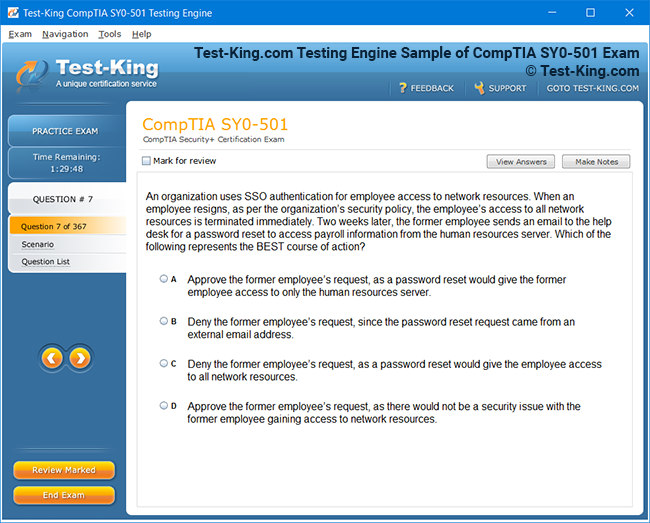
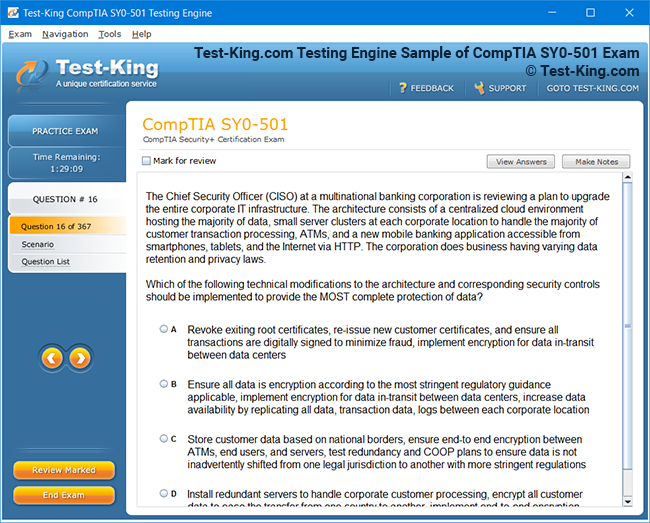
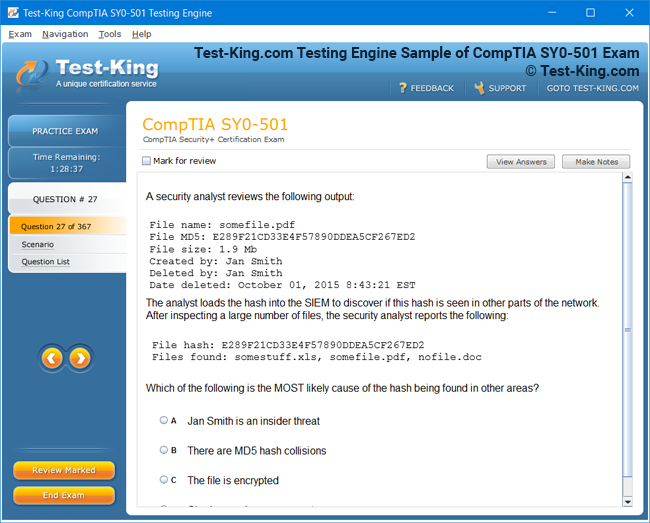
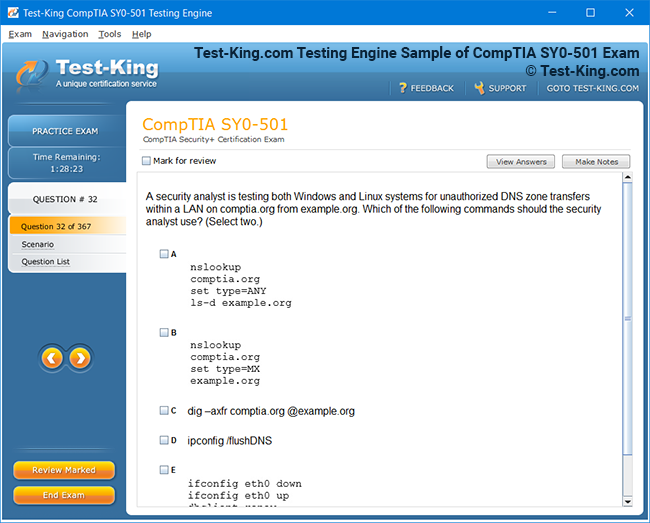
Product Screenshots
Frequently Asked Questions
How can I get the products after purchase?
All products are available for download immediately from your Member's Area. Once you have made the payment, you will be transferred to Member's Area where you can login and download the products you have purchased to your computer.
How long can I use my product? Will it be valid forever?
Test-King products have a validity of 90 days from the date of purchase. This means that any updates to the products, including but not limited to new questions, or updates and changes by our editing team, will be automatically downloaded on to computer to make sure that you get latest exam prep materials during those 90 days.
Can I renew my product if when it's expired?
Yes, when the 90 days of your product validity are over, you have the option of renewing your expired products with a 30% discount. This can be done in your Member's Area.
Please note that you will not be able to use the product after it has expired if you don't renew it.
How often are the questions updated?
We always try to provide the latest pool of questions, Updates in the questions depend on the changes in actual pool of questions by different vendors. As soon as we know about the change in the exam question pool we try our best to update the products as fast as possible.
How many computers I can download Test-King software on?
You can download the Test-King products on the maximum number of 2 (two) computers or devices. If you need to use the software on more than two machines, you can purchase this option separately. Please email support@test-king.com if you need to use more than 5 (five) computers.
What is a PDF Version?
PDF Version is a pdf document of Questions & Answers product. The document file has standart .pdf format, which can be easily read by any pdf reader application like Adobe Acrobat Reader, Foxit Reader, OpenOffice, Google Docs and many others.
Can I purchase PDF Version without the Testing Engine?
PDF Version cannot be purchased separately. It is only available as an add-on to main Question & Answer Testing Engine product.
What operating systems are supported by your Testing Engine software?
Our testing engine is supported by Windows. Andriod and IOS software is currently under development.
Top Pegasystems Exams
Common Mistakes to Avoid in the PEGAPCSA87V1 Exam
The Pega Certified System Architect 87V1 examination is a pivotal milestone for aspiring professionals seeking to establish a robust foundation in Pega applications. Many candidates approach the test with a superficial understanding of the platform, underestimating the depth and breadth of its practical and theoretical aspects. One frequent mistake involves inadequate familiarity with the exam structure, which encompasses multiple-choice questions designed to assess comprehension of Pega’s rule-based architecture, case management, user interface design, and integration patterns. Candidates often assume that cursory reading of manuals or brief online tutorials suffices, but the exam evaluates not just rote knowledge but also the ability to synthesize concepts and apply them in realistic scenarios.
Understanding the Exam and Its Intricacies
Another frequent pitfall is overlooking the importance of Pega’s declarative processing mechanisms, decision rules, and data modeling intricacies. These areas often contain subtle nuances that, if ignored, can lead to errors that are not immediately intuitive. For instance, understanding when to employ a Declare Expression versus a Decision Table can influence performance in scenario-based questions. Overconfidence in superficial familiarity can cause candidates to misinterpret the question’s intent, leading to avoidable mistakes.
Many aspirants also fail to internalize the recommended preparation materials suggested by Pegasystems. The official Pega documentation and the Pega Academy’s structured learning path offer comprehensive coverage, yet some candidates rely solely on third-party notes or unofficial forums. While these resources can supplement learning, they rarely encompass the full gamut of the exam objectives, leaving gaps in knowledge that may prove critical.
Time management emerges as another recurring problem. The PCSA 87V1 exam is structured to test not only accuracy but also the efficiency with which candidates can navigate complex questions under pressure. Some test-takers spend excessive time deliberating on questions involving intricacies like service levels or process flows, neglecting simpler questions that could accumulate points. A misalignment between pacing and comprehension can result in incomplete sections or rushed answers, a mistake that could be easily avoided with prior practice using timed mock exams.
Understanding terminology is equally vital. The exam frequently utilizes nomenclature that, while familiar to seasoned Pega developers, can confuse newcomers. Misinterpreting terms such as “case type,” “work object,” or “service-level agreement” can lead to misapplication of concepts. Candidates sometimes assume that familiar words hold the same meaning in Pega’s lexicon as in general software parlance, which is not always the case. Cultivating an appreciation for the platform’s lexicon is crucial to avoid missteps.
Another subtle but impactful mistake involves underestimating the role of practical exercises in the preparation phase. Many candidates focus almost entirely on theoretical knowledge, neglecting hands-on practice within Pega environments. Without experience configuring rules, designing case lifecycles, or implementing UI elements, aspirants may struggle with scenario-driven questions. Real-world application of theoretical constructs not only reinforces comprehension but also enhances intuitive decision-making during the exam.
A common source of confusion arises from Pega’s rule resolution and inheritance hierarchy. Candidates often fail to grasp the precedence of rules in different circumstances, leading to incorrect assumptions about system behavior. Misunderstanding how rules propagate across class structures or how specialized rules override general ones can result in flawed reasoning in exam responses. Developing a mental model of rule hierarchy and practicing with examples can mitigate this risk substantially.
Candidates sometimes over-rely on memorization instead of conceptual understanding. For instance, remembering the steps to create a data transform without understanding why each step is required can be detrimental. The exam frequently presents variations of familiar patterns, requiring not just recall but adaptation to novel scenarios. A mechanistic approach may succeed in very basic questions but falters when faced with contextual complexities.
Inadequate attention to case design principles is another frequent mistake. Many candidates overlook best practices such as the judicious use of stages, processes, and assignments. Misapplying these constructs can lead to inefficient workflows and logic errors, and these missteps are reflected in scenario-based questions that test optimal design strategies. It is imperative to understand both the functional and systemic implications of design choices.
Some aspirants exhibit a tendency to skip review of prerequisite knowledge. Basic principles of object-oriented concepts, database relationships, and decision logic underpin much of the Pega architecture. Neglecting these fundamentals can create cognitive dissonance when encountering more advanced topics such as data pages, integration connectors, or declarative rules. Ensuring a firm grasp of foundational concepts can prevent avoidable errors and enhance confidence during the exam.
Another subtle but recurrent error lies in misjudging the significance of user interface design questions. The exam evaluates not only functional correctness but also adherence to usability standards, accessibility, and best practices for case management interfaces. Candidates who focus narrowly on backend logic while ignoring UI considerations may falter in questions that require holistic design thinking.
Candidates frequently mismanage notes or reference materials during practice sessions. Attempting to over-document every detail can lead to information overload, reducing retention rather than enhancing it. A more strategic approach involves synthesizing critical concepts, creating mental maps, and practicing scenario-based problem-solving. Memorizing minutiae without contextual understanding often leads to errors in real exam conditions.
A lack of engagement with community forums and discussion groups can also be a missed opportunity. While self-study is essential, exposure to peer experiences often illuminates pitfalls and recurring problem types. Candidates who neglect this collaborative learning dimension may encounter unexpected challenges that could have been anticipated through shared insights.
Exam anxiety is another contributing factor to mistakes. Overemphasis on minor details, dwelling excessively on challenging questions, or succumbing to pressure can compromise performance. Candidates who cultivate mindfulness, structured pacing strategies, and periodic practice under exam conditions tend to navigate these psychological hurdles more successfully. Recognizing the cognitive load imposed by time constraints can help candidates allocate mental resources more judiciously.
Finally, insufficient emphasis on scenario interpretation can undermine efforts. Many aspirants focus on isolated rules or technical constructs without considering the broader business context of questions. The PCSA 87V1 exam often frames queries around realistic operational workflows, requiring candidates to integrate technical knowledge with business logic. Neglecting this synthesis results in responses that may be technically correct in isolation but incorrect within the intended context.
Overall, the errors described here often stem from underestimating the multidimensional nature of the exam. The PCSA 87V1 evaluates technical knowledge, practical skills, design reasoning, and time management. Recognizing common pitfalls, cultivating a deep understanding of concepts, engaging in deliberate practice, and maintaining strategic mental discipline can significantly reduce the likelihood of mistakes. Awareness of these recurrent missteps provides a solid foundation upon which candidates can build confidence and proficiency.
Overlooking Practical Application and Scenario Analysis
A frequent misstep in preparation for the Pega Certified System Architect 87V1 exam arises from focusing excessively on theoretical concepts while neglecting the practical application of those concepts within the Pega platform. Candidates often immerse themselves in memorizing definitions of case types, decision rules, data pages, and declarative rules, believing that familiarity with terminology will suffice. However, the exam frequently presents scenario-driven questions that require nuanced understanding of when and how to implement these rules effectively. For instance, a candidate may know the steps to configure a case lifecycle but might falter when required to modify it in a situation involving concurrent processing or dynamic assignments. Understanding the rationale behind each configuration and the potential implications in a live application is crucial, as superficial knowledge cannot substitute for experiential comprehension.
Many aspirants underestimate the cognitive load imposed by scenario-based questions. The PCSA 87V1 often challenges test-takers with multi-layered situations that combine case management, decision logic, and integration processes. A candidate may correctly identify a data transform or service level but fail to integrate that knowledge within the overarching case lifecycle. This oversight can result in answers that are technically correct in isolation yet incorrect when applied to the broader scenario. Cultivating the ability to holistically analyze questions and synthesize multiple concepts simultaneously is an essential skill often overlooked during preparation.
Neglecting hands-on exercises is another recurrent error. Some candidates believe that completing tutorials or watching video demonstrations is sufficient preparation. While these methods are beneficial, they do not replicate the cognitive experience of configuring rules, designing flows, or resolving errors within the Pega environment. Candidates who skip practical exercises may struggle with questions that test their ability to manipulate real-time data, implement business logic, or debug rule conflicts. Engaging deeply with the platform fosters intuitive understanding, reduces the likelihood of misinterpretation, and strengthens problem-solving agility.
Another subtle mistake involves misunderstanding the precedence and inheritance of rules. Many candidates fail to internalize how Pega determines which rule applies in a given context, leading to flawed reasoning during the exam. For example, a scenario may involve multiple data transforms with different scopes, and choosing the correct one requires awareness of class hierarchy and rule resolution order. Overlooking these subtleties often results in selecting the technically correct rule without recognizing its applicability within the context, which is a common source of lost points.
Time allocation during preparation and the exam itself is frequently mismanaged. Some aspirants concentrate on complex topics at the expense of simpler, high-yield areas. For example, they might spend excessive hours exploring advanced integrations or rare configuration options, while neglecting basic principles of assignment handling or work object properties. The imbalance between high-difficulty and foundational questions can lead to rushed responses, unattempted questions, or errors in simpler areas. Developing a structured preparation schedule that balances theory, practice, and review is essential for optimal performance.
Misinterpreting exam questions due to unfamiliar terminology or subtle linguistic cues is another pervasive issue. The PCSA 87V1 exam often uses terms that are deceptively straightforward but carry specific technical meaning within Pega. Words like “work object,” “assignment shape,” or “service level” may seem self-explanatory but require precise contextual understanding. Candidates who assume general software knowledge suffices can misapply concepts, leading to avoidable mistakes. Investing time in internalizing Pega-specific nomenclature and its operational implications can significantly enhance accuracy.
A frequent error occurs in the area of user interface configuration. Many candidates focus exclusively on backend logic, overlooking the importance of designing intuitive, efficient, and accessible interfaces. The exam often presents questions where proper layout, visibility conditions, or harness usage influences the optimal solution. Candidates who disregard these principles may provide technically functional but suboptimal solutions, which are marked incorrect in scenario-based assessments. Developing awareness of Pega’s user interface best practices is essential for avoiding these misjudgments.
Some test-takers rely too heavily on rote memorization instead of developing adaptive thinking. Memorizing step-by-step procedures without understanding underlying principles limits a candidate’s ability to respond to variations in questions. For example, a memorized approach to configuring a data transform may not translate when a scenario introduces conditional logic or data sourced from an external integration. Conceptual understanding, combined with repeated practice in varied contexts, strengthens adaptability and reduces the risk of mistakes caused by rigid memorization.
A lack of attention to process optimization is another recurrent pitfall. Candidates may correctly implement a workflow but fail to consider efficiency, reuse of rules, or maintainability. The exam evaluates the ability to design elegant and sustainable solutions, and answers that neglect these considerations are often penalized. Understanding Pega’s recommendation for reusable rules, streamlined flows, and maintainable architecture is critical for success. Candidates should practice designing solutions that are not only functional but also adhere to best practices in scalability and maintainability.
Neglecting foundational concepts such as data modeling, object-oriented principles, and decision logic can compound errors. Pega’s architecture builds upon these fundamentals, and gaps in understanding can manifest in misconfigured rules, inefficient data handling, or incorrect assignment of work objects. Candidates who bypass reviewing foundational knowledge may encounter cognitive dissonance when faced with complex integration or declarative processing scenarios. Ensuring mastery of these basics provides a robust scaffold for more advanced problem-solving.
Some aspirants misjudge the importance of testing and debugging skills. Scenario questions often involve unexpected behavior in case processing or rule evaluation. Candidates who are unfamiliar with debugging tools, tracer functionality, or log interpretation may struggle to identify the correct solution. Hands-on exposure to testing and troubleshooting workflows significantly reduces errors and fosters confidence when interpreting exam scenarios.
Another subtle mistake involves insufficient exposure to real-world examples of case management. The exam frequently simulates business processes that require candidates to integrate multiple rules, user interactions, and decision criteria. Without practical exposure to these scenarios, candidates may fail to appreciate the interplay of different Pega components, leading to suboptimal solutions. Engaging with sample applications, community projects, or guided exercises provides insights into practical applications and common pitfalls.
Overlooking the influence of declarative rules is another common error. Some candidates fail to understand when to use declare expressions, declare constraints, or declarative pages, resulting in misapplication of rules. Declarative logic can dramatically simplify workflows, but improper use can lead to cascading errors or inefficiencies. Recognizing when and how to implement declarative rules enhances accuracy and demonstrates comprehensive understanding of the platform.
Mismanaging documentation and note-taking during preparation can also hinder performance. Attempting to memorize excessive detail without synthesizing key principles often leads to cognitive overload. Candidates should focus on developing mental schemas, flow diagrams, and conceptual associations rather than exhaustive memorization. This approach promotes retention, enhances analytical reasoning, and mitigates errors arising from fragmented knowledge.
Exam-day stress and cognitive fatigue contribute to mistakes as well. Overanalyzing questions, dwelling on complex scenarios, or succumbing to time pressure can degrade decision-making quality. Candidates who develop strategies to manage stress, such as pacing techniques, scheduled breaks, and mental rehearsal, perform more consistently. Awareness of personal cognitive limits and deliberate practice under timed conditions reduces the likelihood of errors induced by fatigue.
Finally, a pervasive misstep involves underestimating the integrative nature of the exam. Candidates may approach each question as an isolated task, neglecting the broader context of case lifecycles, data interactions, and user experience. The PCSA 87V1 rewards candidates who synthesize knowledge across multiple domains, demonstrating not only technical proficiency but also holistic understanding of Pega application architecture. Developing the ability to view problems comprehensively and anticipate the implications of each choice is crucial for minimizing mistakes.
Misjudging Workflow Design and Rule Implementation
One of the most frequent mistakes made by candidates preparing for the Pega Certified System Architect 87V1 exam is underestimating the complexity of workflow design and the strategic implementation of rules. Aspirants often attempt to memorize isolated steps for creating case lifecycles or configuring decision tables without fully comprehending the interconnected nature of these elements. The exam emphasizes not only the mechanical execution of rules but also the rationale behind each configuration, the implications on system efficiency, and the cascading effect on case management processes. Misjudging the integration of stages, assignments, and flows can lead to flawed solutions, even when individual rules appear correct.
Many candidates fail to appreciate the subtleties of conditional processing within workflows. Questions often present scenarios where multiple decision points, parallel processes, and exception handling paths must be coordinated. A common error occurs when a test-taker applies a generic rule without considering conditional criteria or prioritization, resulting in an answer that fails to satisfy the scenario requirements. Cultivating the ability to anticipate branching logic and to reason through complex flows is essential for reducing mistakes.
Neglecting the proper use of Pega’s declarative features is another pervasive error. Declarative rules such as declare expressions, constraints, and pages are designed to maintain data consistency and enforce business logic automatically. Candidates sometimes overlook the strategic advantage of these rules, preferring manual updates or procedural approaches. This oversight not only diminishes efficiency but can also result in incorrect responses in scenario-based questions that assume declarative logic is applied. Familiarity with when and how to deploy these constructs is vital to demonstrating a comprehensive understanding of the platform.
Time management during practice and on the exam is frequently mishandled. Some aspirants dedicate disproportionate attention to intricate scenarios involving integrations or rarely encountered features while neglecting core topics such as assignment handling, case routing, and data transforms. This imbalance often leads to incomplete sections or rushed decisions on simpler questions, which can erode scores. Developing a disciplined approach to preparation that allocates time according to topic weight and familiarity enhances accuracy and confidence.
Misinterpretation of terminology is another common source of errors. Pega’s lexicon, though seemingly straightforward, carries precise technical meanings that differ from general software vocabulary. Words like “work object,” “case type,” “service level,” and “connector” are frequently misunderstood. Candidates who assume a superficial understanding of these terms may misapply rules or select incorrect solutions. Investing time in learning Pega-specific nomenclature and contextual usage is crucial for avoiding missteps.
Another subtle but impactful mistake involves over-reliance on memorization rather than conceptual mastery. Memorizing steps for configuring rules or building interfaces without understanding underlying principles limits flexibility when faced with variations in exam scenarios. For instance, knowing the steps to configure a flow does not guarantee success if the question introduces exceptions, parallel assignments, or integration with external services. Conceptual understanding coupled with hands-on practice ensures that candidates can adapt to unexpected situations, reducing the likelihood of errors.
Neglecting foundational knowledge is a frequent oversight. Pega’s architecture is built upon object-oriented principles, relational data concepts, and decision logic. Candidates who bypass these fundamentals often encounter difficulties when implementing complex integrations, managing data pages, or resolving rule conflicts. A solid grasp of core principles enables candidates to approach scenarios with analytical precision and reduces reliance on trial-and-error methods during the exam.
Failure to apply best practices in case design is another recurring error. Aspirants may correctly implement workflow steps but ignore principles such as modularity, reuse of rules, and maintainability. Questions often evaluate not only functional correctness but also adherence to recommended practices for efficient, scalable, and maintainable applications. Ignoring these considerations can result in technically correct answers being marked incomplete or suboptimal.
Candidates frequently mismanage the evaluation of assignments and responsibilities. Understanding how work objects are routed, how assignments are prioritized, and how service levels influence processing is critical. Errors often arise when a test-taker assumes default behavior applies universally, without considering conditions, escalation paths, or exception handling. Familiarity with real-world case management practices enhances comprehension and prevents mistakes.
Underestimating the importance of integration rules is another common pitfall. The exam includes questions that require knowledge of connectors, service integrations, and external data interactions. Candidates who have not practiced designing or troubleshooting integrations may misinterpret the expected behavior of the system. This can lead to selecting technically plausible answers that do not fulfill the scenario’s business requirements.
A frequent misstep involves inadequate exposure to user interface configuration. The exam evaluates not only backend logic but also the efficiency, usability, and accessibility of interfaces. Candidates who focus exclusively on rule configuration may overlook layout principles, harness design, visibility conditions, and dynamic UI elements. Providing answers that neglect these aspects can result in lost points, as practical application and user experience are integral to the evaluation.
Another subtle error is misjudging the role of declarative processing in complex workflows. Declarative rules automate updates and enforce constraints but require careful placement and scope consideration. Candidates often fail to evaluate the implications of declare expressions or constraints on related rules, leading to cascading errors or unexpected behaviors in scenario questions. Mastery of declarative concepts is essential for demonstrating nuanced understanding.
Some aspirants over-document their preparation without synthesizing knowledge. Excessive note-taking on minute details can lead to cognitive overload and fragmented understanding. A more effective approach is to create conceptual maps, flow diagrams, and relational frameworks that integrate multiple rules and workflows. This strategy enhances retention, reinforces relationships between concepts, and reduces mistakes arising from disjointed knowledge.
Mismanaging exam stress is another factor contributing to mistakes. Overanalyzing questions, dwelling on challenging scenarios, or succumbing to time pressure can compromise decision-making. Candidates who cultivate mental discipline, pacing strategies, and practice under timed conditions perform more consistently. Awareness of personal cognitive limits and strategies to mitigate stress reduce errors and improve performance.
A pervasive error involves treating questions as isolated tasks rather than recognizing the interconnections between rules, workflows, and business logic. The exam often frames scenarios that require holistic thinking and integration of multiple Pega components. Candidates who fail to perceive these relationships may provide technically accurate but contextually inappropriate answers. Developing a mindset that anticipates the implications of each choice and integrates knowledge across multiple domains is essential.
Inadequate attention to testing and troubleshooting is another frequent mistake. Scenario questions often involve unexpected behavior in workflows, assignments, or rule evaluation. Candidates unfamiliar with tracer tools, logs, and debugging techniques may struggle to identify the correct solution. Hands-on experience in identifying and resolving issues strengthens analytical thinking and prevents misinterpretation during the exam.
Another common misjudgment is neglecting the impact of service levels on case processing. Understanding how deadlines, escalations, and SLA configurations influence assignments and outcomes is crucial. Candidates may assume linear processing or default behavior, leading to incorrect answers in scenarios requiring careful timing or prioritization. Familiarity with service level configuration and monitoring is necessary for accurate responses.
Finally, underestimating the breadth of the exam content is a recurrent problem. Candidates may focus on certain familiar areas such as data transforms or flow rules while neglecting integrations, UI design, or declarative rules. The PCSA 87V1 examines the candidate’s ability to synthesize knowledge across multiple domains. A holistic approach to preparation that balances technical skills, conceptual understanding, and practical application reduces errors and enhances performance.
Missteps in Data Management and Decision Logic
Candidates preparing for the Pega Certified System Architect 87V1 exam frequently encounter challenges with data management and decision logic, areas that are fundamental yet prone to nuanced mistakes. One of the most common errors involves misunderstanding the purpose and configuration of data pages. Aspirants often treat data pages as static repositories rather than dynamic constructs that can source, cache, and refresh information based on context. Questions in the exam often present scenarios where data pages must be designed to accommodate concurrent access, conditional loading, or integration with external systems. Candidates who overlook these subtleties may configure data pages incorrectly or fail to recognize their strategic role in optimizing application performance.
Another frequent misjudgment concerns the use of decision rules. Many candidates understand decision tables or decision trees in isolation but struggle to integrate them effectively within case lifecycles. The PCSA 87V1 exam emphasizes the application of decision rules in context, requiring candidates to determine when a decision table should supersede a decision tree, or when a combination of rules is necessary to address complex business logic. Misapplying these rules often results from an incomplete grasp of the decision hierarchy or the interplay between rules and data structures. Developing a mental model of how decisions propagate and interact across different stages of a case is crucial for accurate responses.
Candidates also tend to underestimate the importance of conditional processing. The exam frequently presents scenarios where specific actions must occur only when predefined conditions are met. Failing to evaluate conditions accurately or assuming default behavior can lead to answers that appear technically plausible but are contextually incorrect. Understanding the nuances of conditional logic and practicing scenario-based applications of decision rules significantly reduces these errors.
A recurrent error occurs when candidates mismanage data transformations. Data transforms are essential for mapping, modifying, and propagating information between objects and rules. Some aspirants memorize the steps to configure data transforms without appreciating their functional implications within workflows. For example, improperly sequenced transforms can result in incomplete data propagation or unintended overwriting of values, which is particularly relevant in complex scenarios involving multiple stages and parallel processes. Hands-on experience with real-world data handling enhances intuition and prevents misconfiguration during the exam.
Misunderstanding the lifecycle and scope of work objects is another common mistake. Many candidates assume that work objects behave linearly or that assignments proceed in a predictable, sequential manner. However, Pega workflows often involve concurrent processing, dynamic routing, and escalation paths that influence the flow of work objects. Failure to account for these dynamics can result in selecting solutions that are technically correct in isolation but fail within the operational context. Familiarity with the nuances of work object handling and lifecycle intricacies is essential for accurate problem-solving.
Integration rules also present frequent challenges. Candidates often neglect to fully understand connectors, service integrations, and external data interactions. The exam may simulate scenarios requiring multiple integrations with varied protocols or data formats. Misjudging the behavior of connectors or the order of data retrieval can result in incorrect assumptions about workflow outcomes. Practicing the design and testing of integration rules ensures candidates can accurately anticipate system behavior and apply decision logic effectively.
Another pervasive mistake involves underestimating the importance of performance considerations. The exam often evaluates solutions not only for correctness but also for efficiency and scalability. Candidates may configure data pages, decision rules, or flows without regard for caching, parallel processing, or reuse of rules, leading to suboptimal designs. Recognizing the balance between functionality and performance, and understanding how Pega’s declarative and procedural constructs can be leveraged for efficiency, is essential for avoiding errors.
Some aspirants struggle with the intricacies of declarative rules. While these rules automate data consistency and business logic, improper implementation can have cascading effects across case lifecycles. Candidates sometimes fail to determine the appropriate scope, triggers, or dependencies for declarative rules, resulting in scenarios where expected updates do not occur or where unintended side effects emerge. Practicing with varied declarative constructs and reviewing the propagation of changes across related objects enhances precision and reduces mistakes.
A recurring pitfall involves overconfidence in memorized procedures without applying critical thinking. For instance, a candidate may recall the steps to configure a decision table or service integration but fail to consider edge cases presented in the exam scenario. The PCSA 87V1 evaluates adaptive reasoning, requiring candidates to reconcile multiple data sources, conditional logic, and rule interactions. Rigid adherence to memorized sequences often leads to incomplete or incorrect solutions.
Another subtle but impactful mistake arises in user interface considerations. Many candidates focus exclusively on backend logic, overlooking the influence of UI configurations on workflow efficiency. The exam includes scenarios where visibility conditions, layout optimization, and harness design affect the correctness of a solution. Providing answers that ignore the impact of user interface elements can lead to incomplete or contextually flawed responses. Understanding the interplay between UI and backend processes ensures holistic problem-solving.
Candidates also frequently mismanage rule resolution in hierarchical structures. Pega’s inheritance model allows specialized rules to override general ones depending on context. Misunderstanding the precedence of rules, class inheritance, or specialization leads to selecting rules that do not execute as intended. Developing a clear conceptual map of rule resolution pathways and practicing with examples of nested hierarchies enhances accuracy in decision-making.
Time allocation is another common source of errors. Candidates may devote excessive focus to advanced integrations, conditional processing, or rarely tested features while neglecting fundamental concepts such as case routing, assignments, or data propagation. This imbalance can lead to rushed answers in essential areas. Structured preparation that mirrors the distribution of exam topics ensures a balanced approach, mitigating mistakes caused by disproportionate focus.
Stress and cognitive fatigue frequently contribute to errors. Overanalyzing complex scenarios, dwelling on ambiguous questions, or succumbing to pressure can impair judgment. Candidates who practice mindfulness, pacing strategies, and timed exercises perform more reliably. Recognizing personal cognitive limits and employing deliberate mental rehearsal under exam-like conditions reduces errors and improves confidence.
A common oversight involves failing to synthesize knowledge across multiple domains. Candidates may approach each question in isolation, missing interdependencies between workflows, decision logic, data management, and user interface elements. The PCSA 87V1 exam often rewards integrated reasoning, where understanding the interplay of components is as important as individual rule execution. Developing a holistic perspective and practicing scenario-based integration enhances problem-solving accuracy.
Insufficient practice with error handling and exception scenarios is another recurring mistake. The exam frequently introduces anomalies in case lifecycles, decision outcomes, or data propagation. Candidates unfamiliar with troubleshooting, logging, and diagnostic tools may struggle to identify optimal solutions. Engaging with realistic exceptions and understanding their resolution pathways improves readiness and minimizes errors.
Neglecting foundational concepts such as relational data structures, object-oriented principles, and conditional logic also leads to missteps. Complex scenarios often build upon these fundamentals, requiring candidates to apply core knowledge adaptively. Gaps in understanding create compounding errors that manifest in misapplied rules, inefficient workflows, or incorrect assignments. Ensuring mastery of foundational principles provides a stable framework for tackling advanced scenarios.
Finally, underestimating the importance of holistic scenario analysis is a pervasive mistake. Candidates may provide technically correct solutions that fail to account for broader operational context, user experience, or data consistency. Practicing the evaluation of multi-layered scenarios that incorporate workflow, decision logic, integrations, and UI considerations fosters comprehensive problem-solving skills and reduces the likelihood of mistakes.
Errors in Integration, Exception Handling, and System Optimization
One of the most frequent mistakes made by candidates preparing for the Pega Certified System Architect 87V1 exam is underestimating the intricacies of integration rules and exception handling. Aspirants often focus on basic flow design or case management, neglecting the complex interactions between Pega applications and external systems. Integration questions frequently involve connectors, services, and data transformation, requiring candidates to anticipate not only the flow of information but also potential anomalies in data exchange. Misjudging the behavior of a connector or the order of execution in a service call can lead to responses that are superficially plausible yet operationally flawed.
Another common error occurs in handling exceptions within workflows. Candidates may implement standard processing rules correctly but fail to account for exceptional scenarios such as data discrepancies, missing information, or concurrency conflicts. The exam often presents cases where unexpected events require fallback mechanisms, escalations, or alternate processing paths. Candidates who have not practiced exception handling or studied error propagation in Pega are prone to selecting answers that overlook these contingencies, which compromises accuracy.
A frequent misstep arises from misunderstanding the role of service levels in managing assignments. Aspirants may assume that deadlines or escalations apply uniformly across all cases without recognizing nuanced configurations that depend on case type, priority, or stage. Misinterpretation of service level expectations can result in incorrectly routed work objects or failed compliance with time-based constraints. Developing a deep understanding of service level configuration, SLA evaluation, and escalation paths is crucial for answering scenario-based questions correctly.
Candidates often neglect the strategic deployment of declarative rules, which automate consistency checks, data updates, and business logic enforcement. Improper use or misunderstanding of declare expressions, constraints, or pages can create cascading effects, particularly in multi-stage workflows. Some aspirants attempt to circumvent declarative constructs in favor of procedural updates, underestimating their efficiency and the exam’s focus on best practices. Familiarity with the scope, triggers, and dependencies of declarative rules reduces errors and enhances the candidate’s ability to design elegant solutions.
Another pervasive mistake involves the management of assignments and routing. Candidates may implement flows correctly but fail to appreciate the implications of work queues, assignment prioritization, and dynamic routing conditions. The exam often presents scenarios where multiple users or roles are involved, requiring judicious allocation of tasks based on business rules. Misjudging these interactions leads to answers that appear technically correct but fail to satisfy workflow requirements in realistic contexts.
Many aspirants over-rely on memorization rather than cultivating adaptive reasoning. While it is possible to recall steps for configuring connectors, flows, or decision rules, the exam often introduces variations that require conceptual understanding and situational application. For example, a candidate may remember how to implement a decision table but might struggle when a scenario involves conditional dependencies, data propagation, or concurrent updates. Adaptive thinking, reinforced by hands-on practice, is critical to navigating these complexities without error.
Mismanagement of data structures and propagation is another frequent pitfall. Candidates often assume that changes in one object or data page propagate automatically throughout the system, overlooking scope, refresh strategies, or dependencies. This oversight can result in incomplete or inconsistent data within a scenario. Understanding how Pega propagates changes, maintains object consistency, and handles dynamic data is essential for accuracy and efficiency.
A common error involves underestimating the importance of user interface design and usability. The PCSA 87V1 exam evaluates solutions that integrate backend logic with user interactions. Candidates who ignore visibility conditions, harness configurations, or accessibility considerations risk submitting technically correct but contextually incomplete answers. Practical exercises with UI elements, coupled with an understanding of interaction patterns, foster holistic problem-solving and prevent misjudgments.
Some candidates fail to grasp the intricacies of rule resolution within hierarchical structures. Pega allows specialized rules to override general ones depending on class inheritance and context. Misinterpreting which rule executes in a given scenario is a frequent cause of errors. Candidates must develop mental frameworks for understanding rule precedence, class hierarchies, and specialization to ensure accurate selection of applicable rules during the exam.
Time management is another challenge that can precipitate mistakes. Aspirants may spend disproportionate effort on complex integrations, advanced decision logic, or rare features, while neglecting core concepts such as case routing, work object handling, or data transforms. This imbalance often results in rushed answers or incomplete evaluation of fundamental questions. Structuring preparation around a balanced review of topics reduces these risks and enhances confidence under time constraints.
Exam-day anxiety and cognitive fatigue also contribute to errors. Overanalyzing intricate scenarios, dwelling excessively on ambiguous questions, or succumbing to stress can impair judgment and decision-making. Candidates who cultivate structured pacing strategies, mental rehearsal, and mindfulness techniques perform more consistently. Awareness of personal cognitive limits and proactive stress management reduce mistakes and enhance clarity during the examination.
Another common misstep involves insufficient synthesis of knowledge across multiple domains. The PCSA 87V1 often tests candidates on integrated scenarios that require coordination of workflows, decision logic, UI configurations, and data management. Candidates who approach questions in isolation, without considering the interdependence of rules and processes, may provide answers that are correct in isolation but incomplete in context. Practicing holistic analysis and scenario synthesis enhances accuracy and adaptability.
Neglecting foundational concepts such as object-oriented principles, relational data management, and conditional logic is also frequent. Complex scenarios rely on these fundamentals, and gaps in understanding can manifest in misapplied rules, inefficient workflows, or erroneous data handling. Candidates should reinforce core principles through repeated application in realistic exercises to minimize errors in advanced scenarios.
A subtle but significant error arises when candidates overlook testing and debugging skills. The exam often introduces workflows or decision rules with hidden issues, requiring analysis using tracer tools, logs, or step-through debugging. Aspirants unfamiliar with these diagnostic techniques may misinterpret system behavior, selecting incorrect answers or failing to anticipate exceptions. Practical exposure to testing workflows and analyzing anomalies enhances precision and reduces mistakes.
Some candidates misjudge the importance of scalability and performance in workflow design. The exam evaluates not only correctness but also efficiency, maintainability, and adherence to best practices. Designing rules, flows, and integrations without considering caching strategies, parallel processing, or reusable rules can lead to suboptimal solutions. Understanding how Pega optimizes processing and applying these principles in scenario analysis improves performance and reduces errors.
A recurring oversight is misinterpretation of scenario requirements. Candidates may focus narrowly on technical implementation, ignoring business objectives, operational constraints, or user experience considerations. The PCSA 87V1 exam often frames questions in a realistic business context, requiring solutions that reconcile multiple objectives. Developing the ability to read scenarios comprehensively, anticipate implications, and balance competing priorities is essential to avoiding mistakes.
Finally, some aspirants underestimate the breadth and depth of exam content. Focusing exclusively on familiar topics while neglecting areas such as service levels, declarative rules, integrations, UI configurations, or decision logic can leave gaps in knowledge. A comprehensive approach to preparation that emphasizes both core and advanced topics, coupled with deliberate practice in realistic scenarios, minimizes errors and maximizes the likelihood of success.
Challenges in Advanced Workflow Management, Decision Logic, and Optimization
A prevalent challenge for candidates preparing for the Pega Certified System Architect 87V1 exam is misjudging the complexities inherent in advanced workflow management and decision logic. Many aspirants focus disproportionately on simple case creation and routine rule configuration, overlooking the subtle intricacies of multi-stage workflows, parallel processing, and exception handling. The exam frequently presents scenarios that combine numerous layers of assignments, conditional routing, and automated decision-making. Candidates who fail to integrate these concepts holistically often select answers that appear superficially correct yet falter when evaluated against operational logic.
An additional common misstep is the underutilization of declarative rules, which provide automatic propagation of data and enforce business constraints without manual intervention. Candidates sometimes default to procedural methods, attempting to replicate functionality that Pega can handle declaratively. This not only diminishes efficiency but also increases the likelihood of mistakes in exam scenarios that expect optimal use of platform features. Familiarity with the nuances of declare expressions, constraints, and declarative pages, including their scope and dependency management, is essential for accurate solutions.
A recurrent error is mismanagement of decision rules, particularly when multiple decision tables, decision trees, or strategy rules intersect. Candidates may understand the mechanics of each rule type but struggle to apply them cohesively in dynamic contexts. The PCSA 87V1 emphasizes integrated reasoning, requiring candidates to determine when to combine rules, prioritize conditions, and sequence evaluations. Failure to appreciate these interdependencies frequently results in solutions that are logically inconsistent or operationally ineffective.
Data page configuration and lifecycle management constitute another area rife with mistakes. Candidates may assume that all data pages behave similarly or refresh automatically without considering sourcing, scope, or caching strategies. Exam scenarios often challenge test-takers with conditional data loading, paginated responses, or integration-dependent data propagation. Misapplying these concepts can compromise the functionality of flows and decision rules, making it imperative to master data page behavior, including concurrent access, dynamic refresh, and optimized caching techniques.
A significant yet subtle source of errors arises from misunderstanding work object handling and assignment routing. Candidates often assume that assignments follow a linear trajectory or that default configurations suffice for all scenarios. In reality, Pega workflows frequently incorporate concurrent tasks, escalations, and conditional routing based on service levels or role-based responsibilities. Misjudging these pathways can lead to incorrect routing, missed escalation conditions, or incomplete processing within simulated scenarios. Practical exercises that simulate real-world assignment routing foster intuition and minimize mistakes.
Integration rules and service interactions also pose challenges. Aspirants may correctly configure connectors or services in isolation but fail to anticipate the timing, sequencing, or error-handling requirements inherent in complex integrations. The exam often presents scenarios that require simultaneous evaluation of multiple integrations, dependent services, and exception handling strategies. Misunderstanding these interactions can result in technically plausible yet contextually inaccurate solutions.
Time allocation is a further area where mistakes accumulate. Candidates frequently overinvest effort in advanced or less frequently tested topics while neglecting foundational areas such as case routing, flow logic, or assignment management. This imbalance can lead to rushed answers, incomplete evaluations, and preventable errors in critical sections. Establishing a structured approach to preparation that mirrors exam weightings helps maintain a consistent focus and ensures thorough coverage of essential concepts.
Another subtle yet impactful misstep involves insufficient attention to user interface design. The PCSA 87V1 evaluates solutions not only for backend correctness but also for efficiency, clarity, and usability. Candidates who ignore harness design, visibility conditions, or layout optimization risk providing answers that fail to meet holistic solution requirements. Integrating practical UI design experience with backend logic practice reduces this type of error and enhances overall exam performance.
Overconfidence in memorized procedures rather than conceptual understanding is a recurrent mistake. Candidates may recall the steps to configure flows, decision rules, or data transforms but struggle when scenarios introduce novel conditions or require adaptive reasoning. The exam rewards candidates who can synthesize multiple concepts, troubleshoot unexpected behaviors, and anticipate implications across workflows. Building adaptive reasoning through scenario-based exercises and hands-on application ensures readiness for varied question types.
Stress and cognitive fatigue exacerbate errors, particularly in scenarios demanding multi-step reasoning or conditional evaluation. Candidates who dwell excessively on complex questions may lose focus on simpler, high-yield problems. Developing pacing strategies, employing mental rehearsal techniques, and practicing under timed conditions help manage stress and maintain accuracy throughout the exam.
A frequent source of mistakes arises from misinterpreting scenario requirements. Candidates may focus narrowly on technical execution without considering broader operational objectives, compliance constraints, or user experience implications. The PCSA 87V1 presents integrated scenarios that test both technical proficiency and strategic reasoning. Developing a comprehensive approach to scenario analysis, which considers all interdependent factors, enhances the likelihood of selecting correct and efficient solutions.
Neglecting foundational knowledge such as object-oriented principles, relational data structures, and conditional logic contributes to errors in advanced workflows. Complex scenarios build on these basics, and gaps in understanding often lead to cascading mistakes in data propagation, rule application, and assignment management. Reinforcing core principles and practicing their application in varied contexts reduces mistakes and strengthens problem-solving capability.
Testing, debugging, and error analysis are critical skills often overlooked. The exam frequently introduces workflows or rules with subtle anomalies, requiring diagnostic evaluation through tracing, logging, or simulated testing. Candidates unfamiliar with these techniques may misinterpret system behavior, resulting in incorrect responses. Hands-on experience with testing and troubleshooting workflows cultivates analytical precision and reduces the likelihood of misjudgment.
Service level management is another area prone to errors. Misinterpreting SLA requirements, escalation conditions, or priority rules can compromise case flow correctness. Candidates who fail to integrate these factors into workflow design or assignment evaluation often select solutions that do not align with scenario expectations. Understanding SLA configuration, monitoring, and enforcement is essential for achieving accurate outcomes.
Holistic scenario synthesis is a recurring area of difficulty. Candidates who approach questions in isolation without considering the interplay between workflow, decision logic, data management, and UI interactions are likely to make mistakes. The exam emphasizes integrative thinking, rewarding candidates who anticipate downstream consequences, interdependencies, and operational implications of their choices. Developing this capacity through simulation exercises and comprehensive practice enhances accuracy and readiness.
Overlooking optimization and performance considerations contributes to mistakes in complex scenarios. Candidates may design functional workflows that are technically correct but inefficient, resource-intensive, or difficult to maintain. The PCSA 87V1 values solutions that balance correctness with efficiency, reuse, and scalability. Awareness of performance impacts, caching strategies, and rule reuse principles is essential for delivering optimal answers.
Adaptive thinking is critical to navigating scenarios that deviate from familiar templates. Candidates who rely solely on memorized procedures may struggle when presented with novel conditions, conditional branching, or multiple interdependent rules. Practicing scenario-based exercises that challenge assumptions and require strategic reasoning develops flexibility, reducing errors during the exam.
Error handling, exception management, and troubleshooting remain frequent sources of mistakes. Candidates who do not practice diagnosing issues, interpreting logs, or understanding error propagation often fail to recognize the most effective resolution strategies. Engaging with practical exercises that include anomalies, unexpected behaviors, and recovery pathways reinforces analytical skill and confidence in problem-solving.
Finally, a comprehensive approach that integrates conceptual understanding, practical application, adaptive reasoning, and scenario synthesis is essential to minimizing mistakes. Candidates who neglect any of these dimensions risk incomplete comprehension, misapplied rules, or suboptimal solutions. Effective preparation involves continuous practice, exposure to varied scenarios, and reflection on common pitfalls.
Conclusion
Success in the Pega Certified System Architect 87V1 exam requires more than memorization or superficial familiarity with workflows, decision rules, and system configurations. Candidates frequently make mistakes by underestimating the interconnected nature of workflows, misapplying declarative and procedural rules, mismanaging data pages, or neglecting integration, exception handling, and performance considerations. Holistic scenario analysis, adaptive reasoning, and practical experience are critical to navigating the exam’s challenges. Awareness of common pitfalls, combined with disciplined preparation and deliberate practice, equips aspirants to approach the exam with confidence, precision, and efficiency, ultimately maximizing the likelihood of achieving certification.