Exam Code: PEGAPCSSA87V1
Exam Name: Certified Pega Senior System Architect (PCSSA) 87V1
Certification Provider: Pegasystems
Corresponding Certification: Pega CSSA
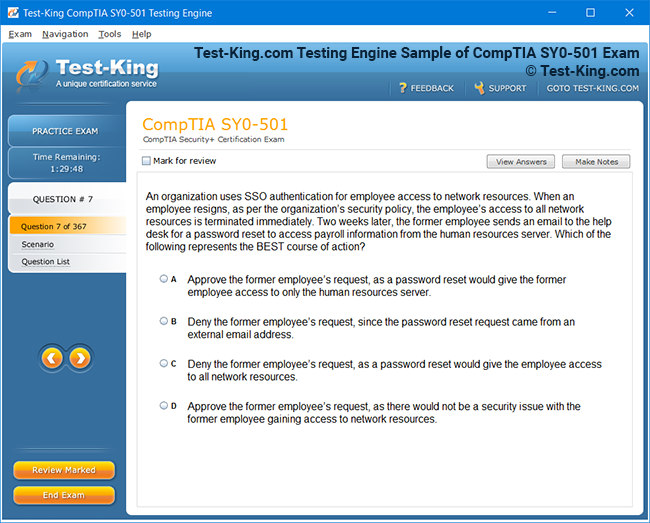
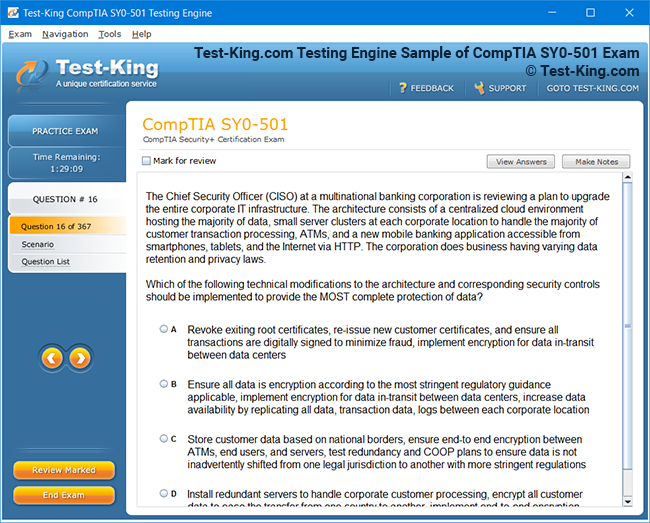
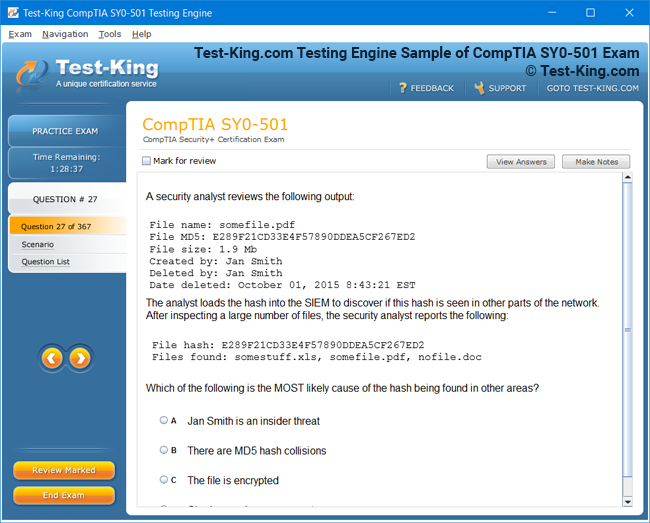
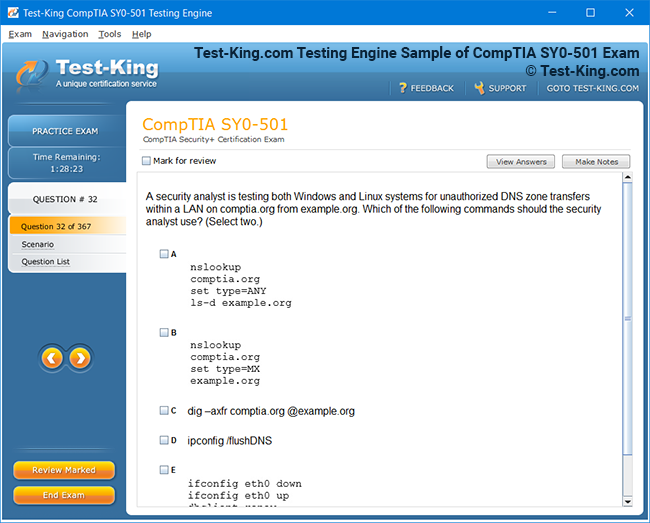
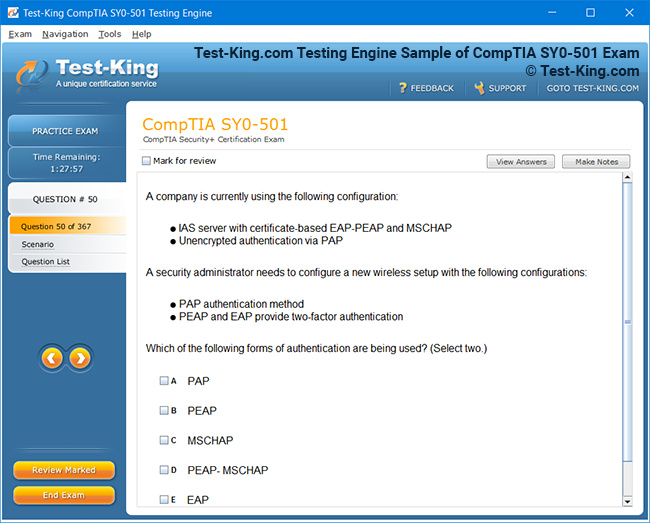
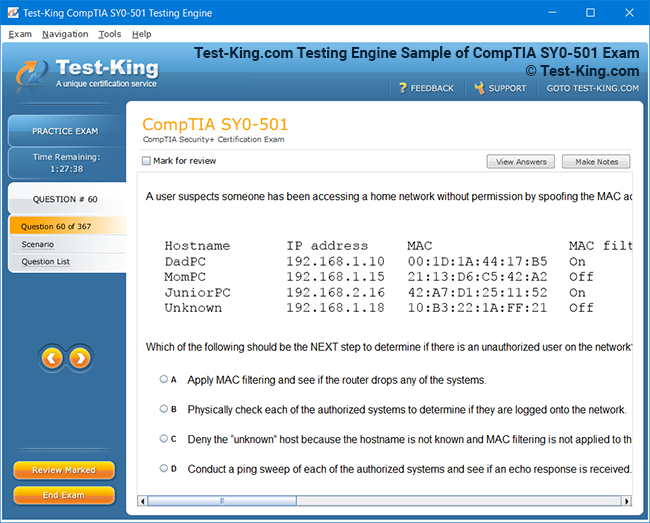
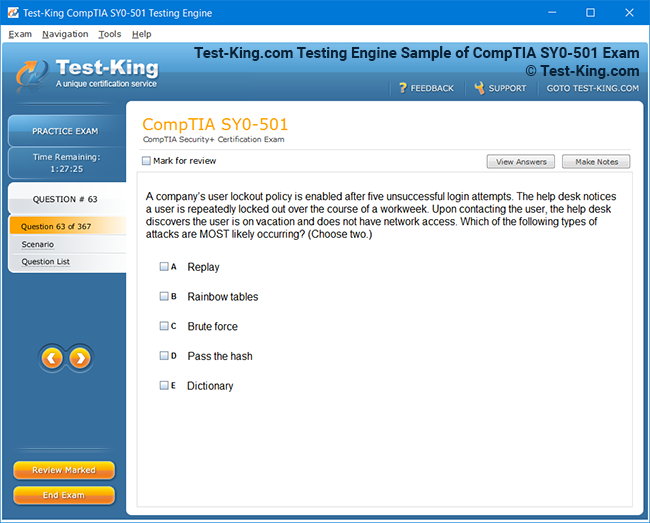
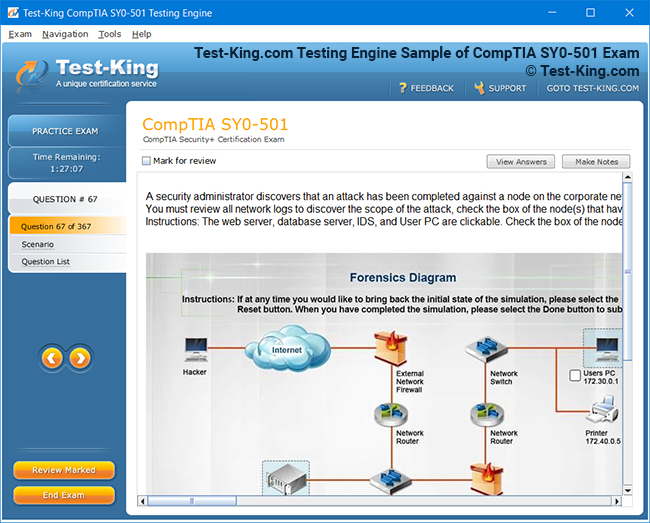
Product Screenshots
Frequently Asked Questions
How can I get the products after purchase?
All products are available for download immediately from your Member's Area. Once you have made the payment, you will be transferred to Member's Area where you can login and download the products you have purchased to your computer.
How long can I use my product? Will it be valid forever?
Test-King products have a validity of 90 days from the date of purchase. This means that any updates to the products, including but not limited to new questions, or updates and changes by our editing team, will be automatically downloaded on to computer to make sure that you get latest exam prep materials during those 90 days.
Can I renew my product if when it's expired?
Yes, when the 90 days of your product validity are over, you have the option of renewing your expired products with a 30% discount. This can be done in your Member's Area.
Please note that you will not be able to use the product after it has expired if you don't renew it.
How often are the questions updated?
We always try to provide the latest pool of questions, Updates in the questions depend on the changes in actual pool of questions by different vendors. As soon as we know about the change in the exam question pool we try our best to update the products as fast as possible.
How many computers I can download Test-King software on?
You can download the Test-King products on the maximum number of 2 (two) computers or devices. If you need to use the software on more than two machines, you can purchase this option separately. Please email support@test-king.com if you need to use more than 5 (five) computers.
What is a PDF Version?
PDF Version is a pdf document of Questions & Answers product. The document file has standart .pdf format, which can be easily read by any pdf reader application like Adobe Acrobat Reader, Foxit Reader, OpenOffice, Google Docs and many others.
Can I purchase PDF Version without the Testing Engine?
PDF Version cannot be purchased separately. It is only available as an add-on to main Question & Answer Testing Engine product.
What operating systems are supported by your Testing Engine software?
Our testing engine is supported by Windows. Andriod and IOS software is currently under development.
Top Pegasystems Exams
Top Study Strategies to Pass the PEGAPCSSA87V1 Exam on the First Attempt
Embarking on the journey to earn the Pega Senior System Architect certification requires a meticulous comprehension of the exam landscape. The PCSSA 87V1 exam is not merely an assessment of rote memorization but an evaluation of applied knowledge, analytical thinking, and practical acumen in the Pega environment. Aspirants must immerse themselves in the underlying principles of case management, process automation, user interface design, and business logic orchestration. Recognizing the weightage of different domains in the exam blueprint allows candidates to prioritize study efforts effectively. Each section of the exam demands nuanced understanding, from designing robust data models to configuring case lifecycles that respond dynamically to business requirements.
The exam encompasses multiple topics such as application development, case management, data integration, and user interface implementation. To navigate these domains successfully, aspirants should cultivate familiarity with Pega’s best practices and design patterns. Understanding how Pega leverages declarative rules, decision strategies, and work object routing is paramount. Candidates often benefit from mapping the exam content to real-world scenarios, thereby translating theoretical knowledge into practical insight. This approach enables a deeper comprehension of system architecture principles and prepares candidates for situational questions that require both logic and innovation.
Effective Study Planning and Time Allocation
A coherent study plan is indispensable for passing the PCSSA 87V1 exam on the first attempt. The initial step involves assessing one’s existing knowledge and identifying areas that require focused attention. This introspection helps in creating a personalized roadmap that balances theory, practice, and review. Allocating time judiciously across different topics is crucial, as some areas may demand more immersive exploration due to their complexity or conceptual density. Time allocation should not be linear but adaptive, allowing for intensive study sessions in challenging domains and lighter reviews in familiar territories.
Structuring the study routine around consistent daily intervals enhances retention and reduces cognitive fatigue. Integrating micro-study sessions of fifty to seventy minutes with interspersed breaks has been shown to strengthen memory consolidation. Additionally, leveraging spaced repetition techniques for rules, design patterns, and case management configurations can significantly improve recall under exam conditions. Tracking progress through self-assessment quizzes and scenario-based exercises reinforces learning while identifying knowledge gaps that need reinforcement.
Leveraging Official Resources and Documentation
The importance of official Pega documentation cannot be overstated. These resources offer authoritative guidance on platform functionalities, rulesets, and system architecture patterns. Thoroughly studying the documentation allows candidates to internalize the intended usage of features, understand nuanced configurations, and anticipate exam scenarios that test practical application. Reading case studies and exploring Pega Academy modules provide clarity on complex topics such as decision strategies, service integrations, and advanced case types.
Official documentation also provides insights into exception handling, system performance considerations, and debugging methodologies, all of which are commonly evaluated in the PCSSA 87V1 exam. Candidates are encouraged to cross-reference documentation with hands-on exercises to solidify their understanding. Engaging with knowledge articles, release notes, and community forums can further illuminate less obvious concepts that are occasionally included in exam questions. This combination of formal documentation and experiential learning cultivates a holistic understanding of the Pega environment.
Hands-On Practice and Real-World Application
Practical experience is indispensable for mastering the skills tested in the PCSSA 87V1 exam. Creating and configuring sample applications in a Pega environment allows aspirants to experiment with case types, workflows, and data integrations. Engaging directly with the platform develops intuitive comprehension of rule hierarchy, process automation, and user interface customization. Regularly simulating real-world business scenarios helps in internalizing design principles and preparing for situational questions that require problem-solving under constraints.
During hands-on practice, it is beneficial to explore advanced functionalities such as declarative expressions, validation rules, and automated assignments. Candidates should also practice debugging and tracing case flows, as these skills are often assessed implicitly through scenario-based questions. Documenting these exercises and reflecting on challenges encountered strengthens memory retention and enhances the ability to reason through unfamiliar problems. Integrating hands-on experimentation with theoretical study fosters a multidimensional approach, ensuring readiness for both knowledge-based and practical questions.
Understanding Decision Strategies and Rule Resolution
Decision strategies form the backbone of dynamic business logic within Pega applications. Mastering these strategies is essential for the PCSSA 87V1 exam, as candidates are often evaluated on their ability to configure, execute, and troubleshoot decision tables, trees, and scorecards. Understanding rule resolution mechanisms, including the order of rule execution and inheritance patterns, is equally important. This knowledge ensures that candidates can predict system behavior and design applications that adhere to best practices.
To excel in this domain, candidates should analyze sample cases that involve multiple decision paths, applying different strategies to observe the resulting outcomes. Reflection on these exercises helps internalize how Pega resolves conflicts between overlapping rulesets and how to implement effective delegation and exception handling. Memorizing the underlying principles is insufficient; it is the applied understanding, coupled with iterative practice, that enables candidates to navigate complex decision scenarios successfully during the exam.
Effective Revision Techniques
Revision is not merely repetition but strategic reinforcement of concepts and practices. Candidates should employ a combination of mind mapping, flashcards, and scenario-based reviews to consolidate knowledge. Mind mapping allows visualization of interrelated concepts such as case management, integration strategies, and user interface rules, facilitating quicker recall. Flashcards can be used for memorizing key configurations, rule types, and best practice principles, while scenario-based reviews enable the application of theoretical knowledge to practical challenges.
Additionally, creating summary notes that distill lengthy documentation into concise, easily digestible points is invaluable. Revisiting these notes periodically ensures that memory traces remain robust. Practicing mock exams under timed conditions cultivates endurance and simulates the pressures of the actual test, enabling candidates to manage time efficiently and reduce anxiety. During revision, it is helpful to focus on topics that are historically challenging, such as declarative processing, report definitions, and service integrations, while periodically reinforcing more familiar areas.
Leveraging Peer Learning and Community Insights
Interaction with peers and engagement with the Pega community can provide perspectives that individual study often misses. Study groups, online forums, and discussion boards offer exposure to diverse problem-solving approaches and innovative application designs. Candidates can benefit from peer-generated study material, real-life case examples, and explanations of complex concepts in simplified language. Mentorship from experienced Pega professionals provides guidance on strategic exam preparation, prioritization of topics, and pitfalls to avoid.
Engaging in community challenges and collaborative projects also strengthens practical skills while fostering analytical thinking. Exposure to alternative approaches for common problems encourages flexibility in design and enhances adaptability during the exam. Insights gathered from community experiences often highlight nuances in the exam that are not explicitly mentioned in official resources, providing an edge to candidates who integrate this knowledge into their preparation.
Building Cognitive Endurance and Exam Readiness
The PCSSA 87V1 exam demands sustained cognitive focus and problem-solving stamina. Developing mental endurance is as crucial as mastering technical knowledge. Regular study routines interspersed with mindfulness practices, brief meditative sessions, and physical activity can improve concentration and reduce mental fatigue. Simulating full-length practice exams in realistic conditions helps candidates acclimate to the time constraints and intensity of the test.
Exam readiness also entails familiarity with question formats, scenario interpretation, and analytical reasoning under pressure. Candidates should focus on cultivating a calm, methodical approach to each question, reading scenarios thoroughly, and applying knowledge systematically. Reflecting on practice test performance and iteratively improving weak areas fosters confidence and readiness. By combining cognitive training with technical mastery, aspirants position themselves to approach the exam with clarity, precision, and resilience.
Deep Dive into Case Management Principles
A profound understanding of case management is pivotal for excelling in the PCSSA 87V1 exam. Pega applications are inherently case-centric, and candidates are evaluated on their ability to design, configure, and optimize case lifecycles. The essence of case management lies in orchestrating stages, steps, and subprocesses to ensure smooth execution and business agility. Each case type embodies a sequence of work items, decision points, and integrations, and a nuanced comprehension of how these elements interact determines the effectiveness of the application design.
Aspiring architects must explore case hierarchies and the delegation of work objects, emphasizing rules that influence assignments, routing, and resolution. Understanding how to implement conditional stages, milestone dependencies, and alternative flows equips candidates to tackle scenario-based questions that demand analytical foresight. Moreover, knowledge of case templates, reusable subprocesses, and configuration best practices allows for streamlined development and efficient maintenance of applications. Practical exposure to case creation and lifecycle monitoring builds the cognitive dexterity necessary for rapid problem-solving during the exam.
Mastering Data Integration and Manipulation
Data is the lifeblood of Pega applications, and mastering data integration is crucial for the PCSSA 87V1 examination. Pega supports a diverse range of data sources and service types, including REST, SOAP, and database connectors. Understanding how to configure data pages, integrate external services, and manipulate property values dynamically is a core competency evaluated in the exam. Candidates must not only recognize the syntax and configuration steps but also appreciate the underlying principles that govern data retrieval, caching, and scope resolution.
Effective study involves simulating real-world integrations by connecting sample Pega applications to mock services or databases. Observing the behavior of declarative expressions, data transforms, and connector rules enhances practical knowledge. Aspiring senior architects should pay attention to error handling, service retries, and integration performance considerations, as these are often subtly assessed in scenario-based questions. Emphasizing a blend of theoretical comprehension and applied experimentation ensures candidates are prepared to handle complex data orchestration challenges within the exam context.
Navigating User Interface Configuration
User interface design in Pega is an amalgamation of aesthetic sense, usability principles, and technical precision. The PCSSA 87V1 exam evaluates the ability to configure portals, harness dynamic layouts, and implement responsive sections that adapt seamlessly to various devices. Candidates are expected to demonstrate knowledge of harness structures, repeat grids, section visibility conditions, and control properties. A refined understanding of UI composition allows architects to design intuitive workflows that guide end users efficiently through cases.
Effective preparation requires iterative exercises in building forms, embedding sections, and utilizing layouts creatively to manage complexity. Experimenting with dynamic visibility rules, enabling or disabling controls conditionally, and employing responsive techniques ensures readiness for practical application scenarios. Candidates should also explore accessibility standards, validation rules, and custom control integrations, as these topics frequently appear in nuanced exam questions. Integrating UI design practice with case management exercises strengthens the ability to harmonize user experience with functional correctness.
Advanced Rule Types and Declarative Processing
The nuanced utilization of advanced rule types is a hallmark of proficient Pega architects. Declarative rules, when used judiciously, facilitate automation, ensure data consistency, and optimize application behavior. Candidates should become conversant with declare expressions, decision tables, decision trees, and when rules, comprehending how each interacts within the ruleset hierarchy. The PCSSA 87V1 exam emphasizes the practical application of these rules in real-time problem-solving, rather than mere theoretical definitions.
Aspiring architects are encouraged to construct exercises that involve multiple interdependent rules, observing how changes propagate across cases. Mastery involves not only creating rules but also understanding performance implications, such as when to use declare expressions versus data transforms for property calculations. The ability to anticipate rule resolution, inheritance conflicts, and override scenarios strengthens problem-solving agility. By combining analytical study with iterative experimentation, candidates cultivate the expertise necessary to handle declarative challenges confidently during the exam.
Integrating Process Automation and Flow Design
Flow design is central to effective Pega applications, encompassing the orchestration of stages, assignments, subprocesses, and decision points. Candidates must understand flow shapes, connectors, assignments, and advanced routing techniques to ensure seamless process automation. The PCSSA 87V1 exam often evaluates the ability to design flows that are both robust and adaptable, incorporating exception handling, conditional branching, and automated approvals.
Preparation involves constructing sample flows, experimenting with parallel and sequential paths, and configuring assignments with varying urgency and availability conditions. Observing the interplay between flow actions, case states, and integration points deepens understanding of process orchestration. Additionally, candidates should explore flow execution monitoring, error resolution, and process optimization techniques, as these are frequently tested in scenario-based questions. Combining practical exercises with reflective analysis enhances comprehension of complex process automation scenarios, reinforcing readiness for exam challenges.
Testing and Debugging Methodologies
Proficiency in testing and debugging is indispensable for Pega Senior System Architect aspirants. The PCSSA 87V1 exam evaluates the ability to identify, diagnose, and resolve errors within applications. Candidates should explore tools such as the Tracer, Clipboard, and Logs to trace case execution, inspect property values, and pinpoint rule execution order. Effective debugging requires a methodical approach, integrating observation, hypothesis formulation, and systematic testing of alternative solutions.
Preparation involves constructing error-prone scenarios, intentionally introducing misconfigurations, and practicing resolution techniques. Understanding the behavior of advanced rules under different conditions, such as when multiple data pages or declare expressions interact, enables candidates to anticipate potential issues. Incorporating test-driven design and unit testing methodologies ensures that applications function correctly under various scenarios. This hands-on practice builds the analytical dexterity necessary to resolve unfamiliar problems efficiently during the exam.
Leveraging Decision Strategies for Complex Scenarios
Decision strategies in Pega allow architects to encode complex business logic, optimize outcomes, and maintain agility in dynamic environments. The PCSSA 87V1 exam often presents situations requiring the implementation of decision tables, trees, and scorecards to meet nuanced business objectives. Candidates must understand how to configure strategies, interpret expected outcomes, and troubleshoot unexpected results effectively.
Effective study requires creating practice scenarios with multiple decision points, analyzing the cascading effects of different rules, and optimizing strategies for efficiency and accuracy. Observing the interactions between strategy rules and case data, and understanding the resolution precedence, builds a robust comprehension that translates into exam performance. Mastery of decision strategies involves both analytical insight and experiential practice, ensuring candidates can navigate complex scenarios confidently.
Performance Optimization and Best Practices
Performance optimization is a subtle yet critical aspect evaluated in the PCSSA 87V1 exam. Candidates must be able to design applications that are not only functionally correct but also efficient, scalable, and maintainable. Understanding how to optimize data pages, reduce redundant processing, and streamline flows contributes to enhanced performance. Best practices, such as reusing rules, leveraging declarative processing judiciously, and minimizing unnecessary integrations, are essential for achieving efficient applications.
Preparation entails reviewing common performance pitfalls, experimenting with optimization techniques, and analyzing case execution efficiency. Candidates should focus on maintaining a balance between functionality and responsiveness, ensuring that applications perform consistently under varying workloads. Incorporating reflective learning and iterative enhancement strengthens the ability to design applications that are robust, efficient, and aligned with Pega standards, which is subtly assessed in the exam.
Integrating Peer Insights and Continuous Learning
Learning from peers and experts enriches the preparation journey. Engaging with Pega communities, discussion forums, and collaborative exercises exposes candidates to diverse problem-solving methodologies and innovative design patterns. Mentorship from experienced architects provides guidance on prioritizing study topics, understanding complex concepts, and avoiding common pitfalls. Peer learning allows candidates to validate their understanding, clarify doubts, and assimilate nuanced insights that may not be explicit in official resources.
Continuous learning, coupled with reflection on practical exercises, ensures that knowledge remains current and adaptable. Candidates benefit from participating in workshops, webinars, and community challenges, where exposure to real-world scenarios enhances analytical agility. By integrating peer insights with structured study and hands-on practice, aspirants cultivate the depth and breadth of understanding required for the PCSSA 87V1 exam, building confidence and resilience.
Strengthening Application Development Skills
Success in the PCSSA 87V1 exam requires a robust grasp of application development principles within the Pega platform. Candidates are expected to design applications that are not only functionally complete but also resilient, adaptable, and aligned with best practices. Developing this proficiency involves a thorough understanding of case types, stages, steps, and subprocesses, along with the relationships between them. The intricacies of property structures, ruleset management, and application layer configuration form the backbone of effective application design.
Aspirants should engage in deliberate practice by building sample applications from scratch, focusing on creating reusable components, optimizing flows, and integrating business logic efficiently. This hands-on approach cultivates intuition for the platform and fosters an understanding of how seemingly minor configuration choices can impact overall application performance. Candidates are encouraged to explore complex scenarios such as multi-level approvals, dynamic assignments, and conditional stages to simulate the challenges encountered in real-world projects.
Navigating Data Management and Property Utilization
Mastering data management is central to excelling in the PCSSA 87V1 exam. Pega applications depend heavily on accurate, accessible, and well-structured data. Candidates must comprehend how to configure properties, leverage data pages, and integrate external data sources through connectors. Equally important is understanding the scope and persistence of properties, as these factors influence application behavior and decision outcomes. Declarative properties, when used judiciously, allow automatic calculation and synchronization, which streamlines workflows and reduces manual intervention.
Effective study entails practical exercises such as creating data pages with varying scope levels, experimenting with property references across classes, and testing integrations with mock services. Understanding the nuances of data transforms, property referencing, and data propagation ensures that candidates can design reliable applications. Additionally, exploring error handling, fallback mechanisms, and property validation techniques provides a deeper comprehension of data integrity, which is often evaluated implicitly in scenario-based exam questions.
Orchestrating Flows and Case Lifecycles
The orchestration of flows and case lifecycles is a cornerstone of Pega application design and a critical focus of the PCSSA 87V1 exam. Candidates must demonstrate proficiency in configuring flows, managing assignments, and designing robust lifecycle transitions. Each flow shape, connector, and assignment carries significance, influencing the efficiency and clarity of case progression. Understanding parallel and sequential flows, routing rules, and exception handling is crucial for managing complex business processes.
Hands-on practice involves constructing multifaceted flows with conditional branching, subprocess integration, and milestone tracking. Observing the behavior of cases as they navigate various stages and steps enhances understanding of Pega’s underlying engine. Candidates should focus on creating flows that are both modular and reusable, which not only simplifies maintenance but also aligns with platform best practices. Reflective practice in flow design equips candidates with the analytical agility to approach dynamic scenarios with confidence.
Harnessing Declarative Processing and Advanced Rules
Declarative processing forms the intelligence layer of Pega applications, automating property calculations and ensuring data consistency. Candidates preparing for the PCSSA 87V1 exam must develop fluency in declare expressions, decision tables, decision trees, and when rules. Understanding the precedence, inheritance, and conflict resolution among rules allows architects to design applications that are predictable and maintainable.
Practical exercises, such as creating interdependent declarative rules and testing how changes propagate across cases, reinforce theoretical understanding. Candidates should also explore the implications of rule execution order, caching, and performance optimization when using declarative logic extensively. By integrating analytical reasoning with iterative practice, aspirants can anticipate potential challenges and design solutions that adhere to platform conventions, which is a crucial competency evaluated in the exam.
User Interface Design and Dynamic Layouts
Designing intuitive, responsive user interfaces is integral to the PCSSA 87V1 exam. Candidates must understand how to configure portals, sections, harnesses, and layouts to create applications that are user-friendly and operationally efficient. Knowledge of dynamic layouts, visibility conditions, repeat grids, and control properties enables architects to build adaptive interfaces that respond to real-time data and user interactions.
Effective preparation includes iterative exercises in designing complex forms, embedding sections strategically, and employing responsive techniques for various devices. Candidates should experiment with conditional visibility rules, dynamic styling, and validation configurations to simulate realistic scenarios. Understanding how user interface choices impact workflow efficiency, accessibility, and user satisfaction ensures that architects can create cohesive applications, a competency often tested through situational questions.
Integrating Decision Strategies into Applications
Decision strategies are central to encoding complex business logic within Pega applications. The PCSSA 87V1 exam evaluates candidates’ ability to configure decision tables, decision trees, and scorecards that optimize outcomes in diverse scenarios. Understanding how to apply rules contextually and analyze the cascading effects of decisions is essential for successful application design.
Candidates are advised to create exercises involving multiple decision points and examine the influence of each rule on case progression. Observing the interaction between decision strategies, data sources, and property values provides insights into optimizing efficiency and accuracy. Developing this analytical and experimental approach strengthens the ability to respond to nuanced, scenario-based exam questions that require both creativity and precision.
Testing, Debugging, and Error Resolution
Adeptness in testing and debugging is a hallmark of Pega Senior System Architects. The PCSSA 87V1 exam evaluates candidates on their ability to identify, diagnose, and resolve issues effectively. Familiarity with tools such as Tracer, Clipboard, and Logs is crucial for tracing execution, inspecting property values, and understanding rule interactions. Candidates must develop a systematic approach to isolating errors and validating solutions.
Practical preparation involves constructing complex applications with intentionally induced errors, analyzing system behavior, and testing resolution strategies. Emphasis should be placed on understanding interactions between flows, data pages, declarative rules, and integrations. Developing this analytical approach enhances problem-solving skills and builds confidence to address unexpected scenarios efficiently during the exam.
Performance Optimization and Scalability
Ensuring performance optimization and scalability is a subtle yet significant aspect evaluated in the PCSSA 87V1 exam. Candidates must be able to design applications that function efficiently under varying loads while maintaining correctness and responsiveness. Techniques such as minimizing redundant processing, optimizing data page usage, and designing efficient flows contribute to scalable application architecture.
Preparation includes experimenting with optimization strategies, monitoring case performance, and analyzing system behavior under different conditions. Understanding how to balance functionality, user experience, and system responsiveness is essential. Candidates who integrate best practices for performance optimization and scalability into their hands-on exercises are better equipped to answer scenario-based questions that test applied knowledge and foresight.
Leveraging Community Knowledge and Collaborative Learning
Engaging with peers and participating in Pega communities enriches the learning process. Online forums, discussion boards, and collaborative exercises provide exposure to diverse perspectives, unconventional problem-solving techniques, and real-world use cases. Mentorship from experienced Pega professionals guides aspirants on prioritizing study areas, understanding complex topics, and avoiding common pitfalls.
Participating in workshops, webinars, and collaborative projects enhances analytical flexibility and exposes candidates to practical challenges not explicitly covered in documentation. Continuous learning through community interaction helps solidify concepts, reinforces practical knowledge, and cultivates a broader understanding of Pega applications, which subtly contributes to exam success. By combining peer insights with personal study, candidates develop both confidence and a sophisticated approach to problem-solving.
Strategic Time Management and Exam Simulation
Effective time management during preparation and the actual exam is critical for PCSSA 87V1 success. Candidates should structure study schedules to balance theory, hands-on exercises, and revision while incorporating breaks to avoid cognitive fatigue. Timed practice tests simulate real exam conditions, allowing candidates to refine pacing, enhance focus, and identify areas requiring additional attention.
Simulating complete exam scenarios helps aspirants build endurance and reduces anxiety. Analytical reflection on practice test performance enables targeted improvements, particularly in complex domains like decision strategies, declarative rules, and case management. Developing strategic approaches to reading scenarios, analyzing flows, and prioritizing responses enhances efficiency and readiness. By integrating cognitive training with methodical practice, candidates cultivate resilience and precision necessary for achieving first-attempt success.
Enhancing Case Lifecycle Management Skills
A deep understanding of case lifecycle management is indispensable for excelling in the PCSSA 87V1 exam. Candidates must grasp the nuanced orchestration of stages, steps, subprocesses, and milestones to design applications that are resilient and adaptive. Each case type requires careful configuration to ensure proper routing, assignment delegation, and resolution tracking. Mastery of case hierarchies, parent-child relationships, and reusable templates enables architects to construct efficient and maintainable applications.
Practical engagement with case creation is crucial. Designing sample cases with varying levels of complexity, including conditional stages and alternative paths, develops an intuitive comprehension of Pega’s processing engine. Observing the interaction between assignments, milestones, and user actions allows candidates to anticipate how cases evolve in real-world applications. This immersive approach not only strengthens problem-solving skills but also provides a framework to tackle scenario-based questions that are a hallmark of the exam.
Data Page Management and Integration Techniques
Data integration and property management are central to achieving success in the PCSSA 87V1 examination. Pega’s architecture relies on the efficient utilization of data pages, connectors, and declarative properties to maintain data integrity and ensure seamless workflow execution. Candidates must understand data scopes, caching strategies, and the implications of data page refresh strategies on performance. Mastery of property referencing, transforms, and dynamic population of values underpins the ability to design responsive applications.
Effective preparation includes creating hands-on exercises with data pages connected to mock services, manipulating properties, and testing various data integration scenarios. Candidates should also explore error handling mechanisms, fallback strategies, and validation rules to ensure robustness. By synthesizing theoretical understanding with practical experimentation, aspirants develop the analytical acuity to address complex data-driven questions in the exam.
Advanced Flow Design and Automation
Flow design is a pivotal component of Pega applications, and proficiency in this domain is essential for the PCSSA 87V1 exam. Candidates must understand the orchestration of work objects through stages, assignments, connectors, and subprocesses to implement efficient process automation. Knowledge of sequential and parallel paths, conditional routing, and exception handling ensures cases progress smoothly under varying conditions.
Hands-on practice involves constructing elaborate flows that simulate real business processes, including multi-level approvals, parallel work assignments, and event-driven triggers. Observing the consequences of configuration changes on case behavior develops an intuitive sense of process dynamics. Candidates are encouraged to refine flows for modularity and reusability, which not only aligns with best practices but also improves scalability. Iterative experimentation equips aspirants to navigate scenario-based questions that test applied knowledge and analytical reasoning.
Declarative Rules and Decision Logic
Declarative processing and advanced rule configuration are fundamental skills evaluated in the PCSSA 87V1 exam. Candidates should master declare expressions, decision tables, decision trees, and when rules, understanding their execution precedence, conflict resolution, and impact on application behavior. The ability to design rules that maintain consistency, automate calculations, and support complex decision-making distinguishes proficient architects.
Practical exercises in declarative processing help candidates visualize interactions among rules and predict system responses under varying conditions. Candidates should simulate scenarios where multiple rules interact, observe propagation effects, and refine configurations to optimize performance. Analytical reflection on these exercises reinforces conceptual understanding and builds the cognitive dexterity required to respond effectively to scenario-driven exam questions.
User Interface and Experience Optimization
The design of intuitive and adaptive user interfaces is a critical aspect of Pega applications and a focus of the PCSSA 87V1 exam. Candidates must understand how to configure portals, harnesses, sections, and dynamic layouts to create seamless user experiences. Knowledge of repeat grids, visibility conditions, control properties, and responsive design principles is essential for building interfaces that guide users efficiently through cases.
Effective preparation involves iterative practice in form design, section embedding, and dynamic content adaptation. Candidates should experiment with conditional visibility rules, field validation, and styling adjustments to simulate real-world applications. Observing how UI choices affect workflow efficiency, accessibility, and end-user satisfaction ensures architects can design coherent applications, which is frequently tested through scenario-based exam questions.
Decision Strategies and Business Logic Implementation
Decision strategies form the intellectual core of business logic within Pega applications. The PCSSA 87V1 exam assesses the ability to implement decision tables, decision trees, and scorecards effectively to address complex business requirements. Candidates must understand how strategy rules interact with data pages, properties, and case states to optimize outcomes.
Practical exercises should include scenarios with multiple interdependent decision points, allowing candidates to observe the effects of various rules and refine strategies for accuracy and efficiency. Analytical reflection on outcomes and iterative testing builds the skill to anticipate unexpected results. Developing this experiential understanding equips aspirants to answer nuanced questions requiring both analytical reasoning and applied knowledge.
Testing, Debugging, and Diagnostic Skills
Proficiency in testing and debugging is indispensable for Pega Senior System Architect candidates. The PCSSA 87V1 exam evaluates the ability to identify, diagnose, and resolve application issues systematically. Candidates should become adept at using Tracer, Clipboard, and Logs to trace execution, inspect property values, and understand rule behavior.
Hands-on practice involves constructing test cases with intentional misconfigurations, observing system responses, and implementing corrective measures. Understanding interactions among flows, declarative rules, integrations, and assignments is essential. Methodical testing and reflective problem-solving strengthen analytical skills and ensure candidates are prepared to tackle unexpected or complex scenarios during the exam.
Performance Optimization and Rule Efficiency
Ensuring efficient application performance is a subtle yet critical element of the PCSSA 87V1 exam. Candidates must design systems that balance functionality, responsiveness, and scalability. Techniques such as optimizing data page usage, reducing redundant processing, and employing efficient rule execution strategies enhance overall performance.
Preparation includes monitoring application behavior under different conditions, testing optimization techniques, and analyzing the impact of rule configurations on execution time. Candidates should focus on achieving modular, reusable designs that align with Pega best practices. This analytical approach not only ensures operational efficiency but also prepares aspirants for scenario-based questions assessing practical judgment and foresight.
Leveraging Collaborative Learning and Community Insights
Peer learning and community engagement offer valuable perspectives for exam preparation. Online forums, discussion boards, and collaborative projects expose candidates to alternative problem-solving approaches and real-world applications of Pega features. Mentorship from experienced architects provides guidance on topic prioritization, advanced configurations, and common pitfalls to avoid.
Engaging with the Pega community fosters analytical flexibility and practical awareness. Candidates can validate their understanding, refine design approaches, and assimilate subtle insights that may not be apparent in official documentation. This integration of collaborative learning with personal practice strengthens both conceptual understanding and confidence, indirectly enhancing exam readiness.
Cognitive Endurance and Exam Strategy
The PCSSA 87V1 exam demands sustained concentration, analytical reasoning, and problem-solving agility. Developing cognitive endurance through structured study schedules, realistic practice sessions, and timed mock exams is crucial. Aspirants should simulate full-length exam scenarios to build stamina, refine time management, and reduce anxiety.
Analytical reflection on practice outcomes helps identify weak areas, prioritize revisions, and develop effective strategies for approaching scenario-based questions. Candidates benefit from methodical approaches to reading case descriptions, interpreting flows, and applying rules logically. Combining mental resilience with technical mastery ensures readiness for first-attempt success, allowing candidates to navigate complex questions with clarity and precision.
Mastering Advanced Case Management Concepts
Achieving proficiency in advanced case management is indispensable for success in the PCSSA 87V1 exam. Candidates must understand not only the configuration of stages, steps, and subprocesses but also the intricate relationships between parent and child cases. Efficient case design involves ensuring that milestones, assignments, and conditional flows are synchronized to reflect real-world business processes. Mastery of reusable case templates and modular design principles enables architects to construct applications that are both scalable and maintainable.
Hands-on practice is critical for developing this expertise. Candidates should simulate complex business scenarios by designing cases with multiple branching paths, parallel assignments, and exception handling mechanisms. Observing how case data propagates through various stages and how rules interact with lifecycle events fosters an intuitive understanding of system behavior. This approach prepares candidates to address scenario-based questions that require analytical reasoning and applied knowledge.
Data Page Utilization and Property Management
Effective utilization of data pages and properties is a cornerstone of Pega application development and a focal point of the PCSSA 87V1 exam. Candidates must understand the nuances of data page scopes, caching strategies, and refresh options to ensure applications perform efficiently while maintaining data accuracy. Mastery of property referencing, transformations, and dynamic value propagation is essential for designing responsive, data-driven workflows.
Preparation involves practical exercises such as creating data pages with different scopes, simulating integrations with external services, and testing property behaviors under varying conditions. Candidates should also explore error handling, fallback mechanisms, and validation strategies to ensure data integrity. This combination of theoretical comprehension and applied practice equips aspirants to handle complex data orchestration questions effectively during the exam.
Optimizing Flow Design and Process Automation
Flow design is a critical aspect of Pega applications, requiring candidates to orchestrate assignments, connectors, and subprocesses efficiently. The PCSSA 87V1 exam evaluates the ability to design flows that are robust, adaptable, and aligned with best practices. Candidates must understand sequential and parallel flow structures, conditional routing, and exception handling to ensure smooth case progression.
Practical preparation involves constructing complex flows that replicate real-world business processes, including multi-level approvals, parallel work assignments, and event-driven triggers. Observing the impact of configuration changes on flow execution enhances understanding of Pega’s internal mechanics. Iteratively refining flows for modularity and reusability reinforces the ability to design scalable applications, a skill frequently tested through scenario-based questions in the exam.
Advanced Rule Configuration and Declarative Processing
Mastery of advanced rules and declarative processing is essential for the PCSSA 87V1 exam. Candidates should be proficient in declare expressions, decision tables, decision trees, and when rules, understanding how these elements interact within ruleset hierarchies. Knowledge of rule resolution, inheritance conflicts, and precedence ensures that applications behave predictably and maintain integrity under complex scenarios.
Hands-on exercises involving interdependent declarative rules and simulations of cascading property updates help candidates internalize system behavior. Analytical reflection on the effects of rule configurations strengthens problem-solving skills and enables architects to anticipate challenges. This experiential learning approach ensures readiness for scenario-driven exam questions that test both conceptual understanding and applied knowledge.
User Interface Design and Adaptive Layouts
Designing adaptive user interfaces is a crucial competency for the PCSSA 87V1 exam. Candidates must configure portals, harnesses, sections, and dynamic layouts to create applications that are intuitive and efficient for end users. Understanding repeat grids, visibility conditions, control properties, and responsive design principles ensures that workflows are visually coherent and operationally effective.
Effective preparation involves iterative exercises in form creation, section embedding, and dynamic content adaptation. Candidates should experiment with conditional visibility rules, validation configurations, and styling to reflect realistic application scenarios. Observing how user interface choices influence workflow efficiency, accessibility, and user satisfaction enhances the ability to design cohesive applications, which is frequently evaluated through situational questions in the exam.
Decision Strategy Implementation and Optimization
Decision strategies are central to encoding business logic within Pega applications. Candidates for the PCSSA 87V1 exam must demonstrate proficiency in configuring decision tables, decision trees, and scorecards to address complex operational requirements. Understanding the interaction between decision strategies, case data, and property values allows architects to optimize outcomes and ensure consistent execution.
Preparation should involve creating scenarios with multiple interdependent decision points, analyzing the impact of different configurations, and refining strategies for efficiency and accuracy. Practical exercises that test edge cases and explore alternative rule interactions deepen comprehension. Developing this experiential insight enables candidates to respond confidently to nuanced, scenario-based questions that require both analytical reasoning and applied expertise.
Testing and Debugging Methodologies
Proficiency in testing and debugging is essential for Pega Senior System Architect aspirants. The PCSSA 87V1 exam assesses the ability to systematically identify, diagnose, and resolve errors within applications. Candidates must be adept at using Tracer, Clipboard, and Logs to trace execution, inspect property values, and understand rule interactions.
Practical preparation involves creating test scenarios with intentional misconfigurations, analyzing outcomes, and implementing corrective measures. Candidates should focus on understanding how different rules, flows, and integrations interact to produce expected or unexpected results. Methodical testing and reflective practice reinforce analytical skills and ensure readiness for handling complex or unfamiliar scenarios during the exam.
Performance Optimization and Application Scalability
Ensuring efficient application performance and scalability is a subtle yet vital aspect of the PCSSA 87V1 exam. Candidates must design systems that balance functionality, responsiveness, and maintainability. Techniques such as optimizing data page usage, minimizing redundant processing, and structuring rules for efficiency contribute to high-performing applications.
Preparation involves testing system behavior under different loads, experimenting with optimization techniques, and monitoring execution efficiency. Candidates should focus on modular and reusable designs that align with Pega best practices, ensuring that applications remain robust and adaptable. Analytical evaluation of performance and strategic design choices strengthen readiness for scenario-based questions that assess applied judgment and foresight.
Leveraging Collaborative Learning and Mentorship
Engagement with peers and the Pega community enhances the depth of understanding required for exam success. Discussion forums, collaborative exercises, and mentorship provide exposure to alternative approaches, innovative solutions, and practical insights not always evident in documentation. Experienced architects can guide candidates in prioritizing study areas, understanding advanced configurations, and avoiding common pitfalls.
Participating in workshops, webinars, and real-world simulations allows aspirants to integrate community knowledge with personal practice. This collaborative learning approach fosters analytical agility, reinforces theoretical concepts, and builds confidence in practical application. By assimilating these insights, candidates strengthen both cognitive and technical readiness for the PCSSA 87V1 exam.
Cognitive Preparedness and Exam Simulation
The PCSSA 87V1 exam requires sustained concentration, analytical reasoning, and methodical problem-solving. Developing cognitive endurance through structured study routines, immersive practice sessions, and timed mock exams is essential. Simulating full-length exam scenarios helps candidates refine time management, build focus, and reduce anxiety.
Reflection on practice outcomes enables targeted improvement in complex areas such as decision strategies, declarative rules, and case management. Candidates benefit from developing systematic approaches to interpreting scenarios, analyzing flows, and applying rules logically. Combining mental stamina with technical mastery ensures aspirants are equipped to tackle first-attempt exam challenges confidently and efficiently.
Advanced Application Design and Architecture
Excellence in the PCSSA 87V1 exam is anchored in a profound understanding of advanced application design and architecture. Candidates must cultivate the ability to create applications that are robust, scalable, and adaptable to evolving business requirements. This involves configuring case types, orchestrating stages and steps, and managing reusable subprocesses efficiently. An advanced architect appreciates how milestones, conditional flows, and assignments interconnect to form a coherent lifecycle, ensuring operational accuracy and process transparency.
Practical engagement is essential. Building complex sample applications, experimenting with modular designs, and observing how rules and flows interact allows candidates to internalize the principles of system architecture. Recognizing patterns, anticipating edge cases, and reflecting on the impact of design decisions equips aspirants with the analytical dexterity required to navigate scenario-driven questions effectively.
Data Integration and Property Dynamics
Mastering data integration and property dynamics is a critical aspect of Pega application proficiency. The PCSSA 87V1 exam evaluates the ability to manage data pages, integrate external services, and implement declarative properties effectively. Candidates should understand caching strategies, data scopes, and refresh mechanisms to ensure reliability and performance. Properly designed property structures enable dynamic value propagation, reduce redundancy, and maintain consistency across case lifecycles.
Effective preparation involves hands-on exercises with mock services and sample data sets, exploring error handling and validation mechanisms, and testing the behavior of properties in complex scenarios. Candidates gain insight into the subtle interactions between properties, declarative rules, and data pages, allowing them to anticipate potential issues and design solutions that align with best practices.
Flow Management and Process Optimization
Flow management is central to process automation and operational efficiency. Candidates must understand the orchestration of assignments, connectors, subprocesses, and conditional paths. The PCSSA 87V1 exam emphasizes the creation of flows that are not only functionally accurate but also maintainable and adaptable to changing requirements. Knowledge of sequential and parallel processing, exception handling, and milestone monitoring ensures that cases progress smoothly.
Preparation entails constructing multifaceted flows that simulate realistic business processes, including multi-level approvals, dynamic routing, and event-driven triggers. Candidates are encouraged to refine flows iteratively, balancing modularity, reusability, and performance. Observing the consequences of configuration adjustments fosters analytical insight, enabling aspirants to navigate complex, scenario-based exam questions with confidence.
Declarative Rules and Decision Logic
The implementation of declarative rules and decision logic is a defining skill for Pega Senior System Architects. Candidates must be proficient in declare expressions, decision tables, decision trees, and when rules. Understanding the interplay between these rules, including execution precedence, inheritance conflicts, and resolution strategies, allows architects to design predictable and maintainable applications.
Practical exercises, such as creating interdependent rules and testing their interactions, reinforce conceptual understanding. Candidates should analyze propagation effects, evaluate performance implications, and refine rules to optimize outcomes. This hands-on approach ensures readiness for scenario-based questions, where applied knowledge and analytical reasoning are tested extensively.
User Interface and Adaptive Design
Designing adaptive, intuitive user interfaces is integral to exam success. Candidates must be adept at configuring portals, harnesses, sections, and dynamic layouts. Knowledge of repeat grids, control properties, visibility conditions, and responsive design principles enables the creation of applications that are visually coherent, efficient, and user-friendly.
Effective preparation includes iterative exercises in section embedding, dynamic layout adjustments, and conditional visibility configurations. Candidates should observe how UI choices influence workflow efficiency, accessibility, and user satisfaction. This comprehensive understanding ensures readiness for scenario-based questions evaluating both functional implementation and user experience considerations.
Decision Strategy Mastery
Decision strategies provide the intellectual framework for complex business logic within Pega applications. Candidates for the PCSSA 87V1 exam are required to implement decision tables, decision trees, and scorecards to optimize case outcomes. Understanding how decision strategies interact with case data, properties, and declarative rules enables architects to design accurate and efficient solutions.
Hands-on exercises involving multiple decision points and alternative outcomes help candidates refine their analytical skills. Testing different configurations and observing cascading effects enhances comprehension of real-world applications. This iterative practice ensures aspirants are well-prepared for nuanced, scenario-driven questions that test applied knowledge and critical reasoning.
Testing, Debugging, and Diagnostic Skills
Adeptness in testing and debugging is essential for ensuring the reliability of Pega applications. The PCSSA 87V1 exam evaluates candidates on their ability to systematically diagnose and resolve errors. Mastery of tools such as Tracer, Clipboard, and Logs allows candidates to track case execution, analyze property values, and understand rule interactions comprehensively.
Practical exercises with intentional misconfigurations enable aspirants to test their diagnostic skills, anticipate potential conflicts, and implement corrective measures. Understanding the interplay between flows, declarative rules, and integrations fosters a systematic problem-solving approach. This hands-on proficiency ensures candidates can respond effectively to unforeseen challenges during the exam.
Performance Optimization and Scalability
Optimizing application performance and ensuring scalability are subtle yet critical skills evaluated in the PCSSA 87V1 exam. Candidates must design solutions that balance functionality, responsiveness, and maintainability. Techniques such as efficient data page utilization, minimizing redundant processing, and modular rule structuring enhance system performance.
Preparation includes testing application behavior under varying conditions, monitoring execution efficiency, and implementing performance improvements. Candidates who integrate best practices for scalability and maintainability into their exercises gain the analytical acumen necessary to handle scenario-based questions that assess applied judgment and foresight.
Collaborative Learning and Community Engagement
Engaging with peers and the Pega community enriches preparation by offering diverse perspectives and practical insights. Discussion forums, collaborative exercises, and mentorship from experienced architects expose candidates to alternative problem-solving approaches and advanced configurations. Learning from community experiences helps candidates understand subtle nuances not always explicit in official documentation.
Participating in workshops, webinars, and real-world simulations fosters analytical flexibility and practical expertise. Integrating collaborative insights with personal study builds confidence, enhances comprehension, and reinforces applied skills critical for first-attempt success.
Cognitive Endurance and Exam Strategy
The PCSSA 87V1 exam demands sustained mental focus, analytical reasoning, and problem-solving agility. Developing cognitive endurance through structured study routines, immersive practice sessions, and timed mock exams is essential. Simulating full-length exam conditions helps candidates refine time management, enhance concentration, and reduce stress.
Reflective analysis of practice outcomes allows for targeted improvement in complex domains such as declarative rules, decision strategies, and case management. Developing systematic approaches to interpreting scenarios, analyzing flows, and applying rules logically prepares candidates to respond efficiently and accurately under exam conditions.
Conclusion
Successfully passing the PCSSA 87V1 exam on the first attempt requires a comprehensive strategy that integrates theoretical knowledge, hands-on practice, and reflective learning. Mastery of advanced application design, data integration, flow orchestration, declarative processing, decision strategies, and user interface optimization forms the foundation of a proficient Pega Senior System Architect. Equally important is the cultivation of testing and debugging expertise, performance optimization skills, and the ability to apply analytical reasoning under pressure.
Engaging with peers, leveraging community knowledge, and simulating realistic exam scenarios strengthen both conceptual understanding and cognitive endurance. By combining disciplined study routines, practical experimentation, and strategic reflection, candidates can approach the exam with confidence, precision, and resilience, positioning themselves for first-attempt success and long-term professional growth within the Pega ecosystem.