
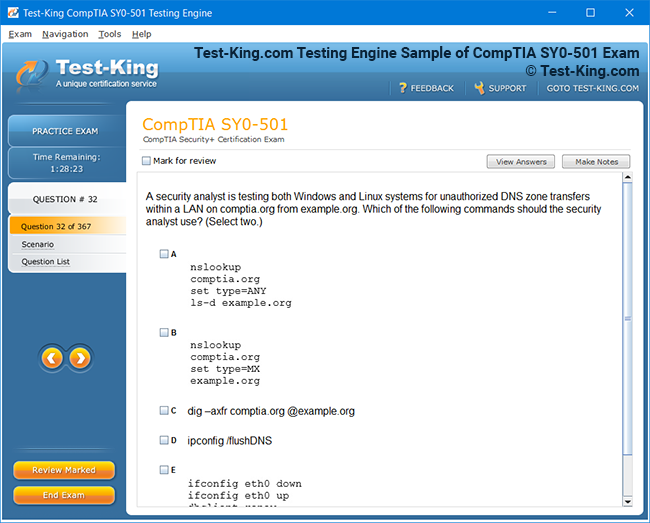
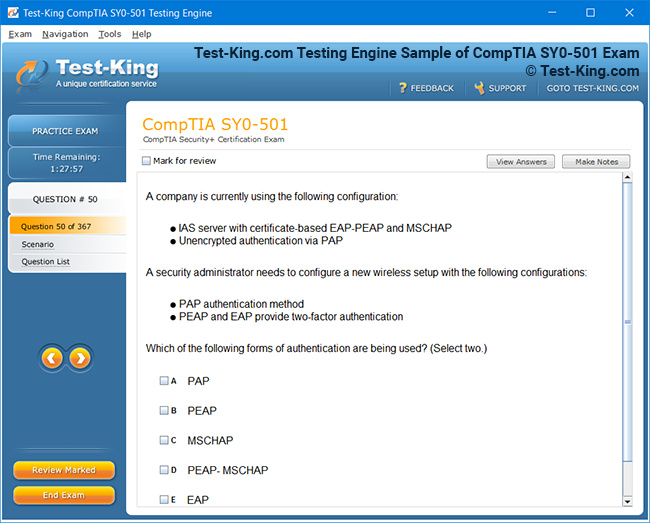
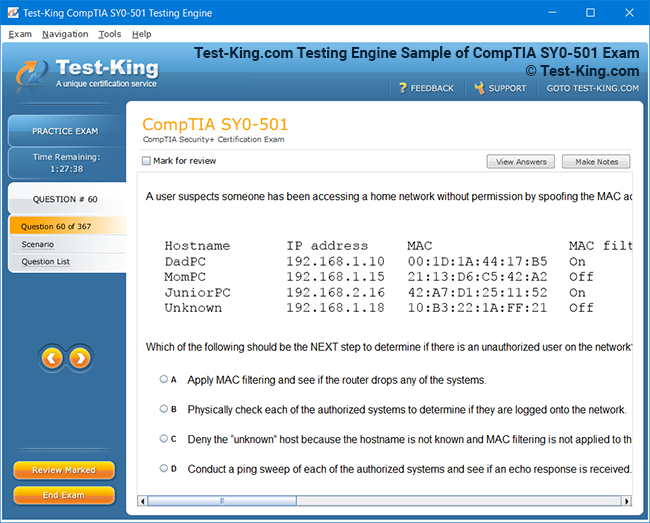
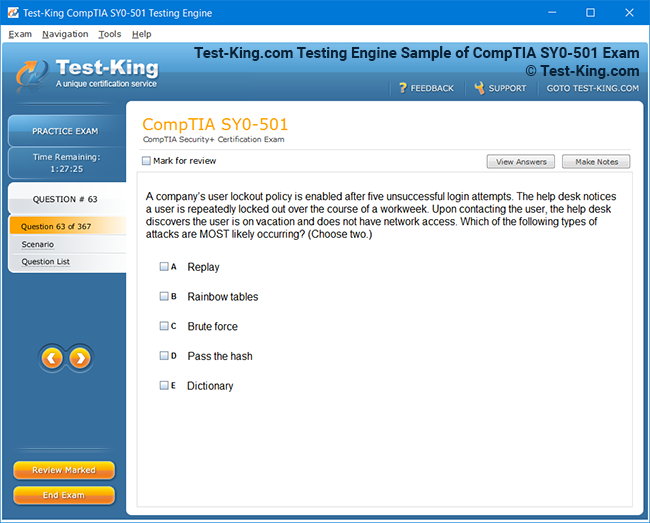
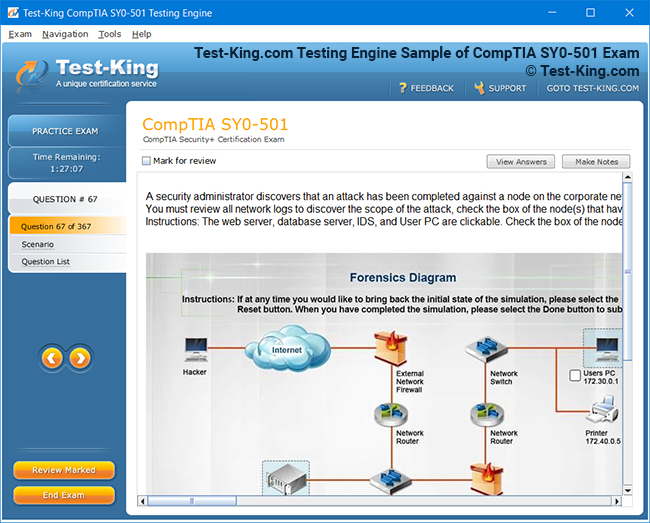
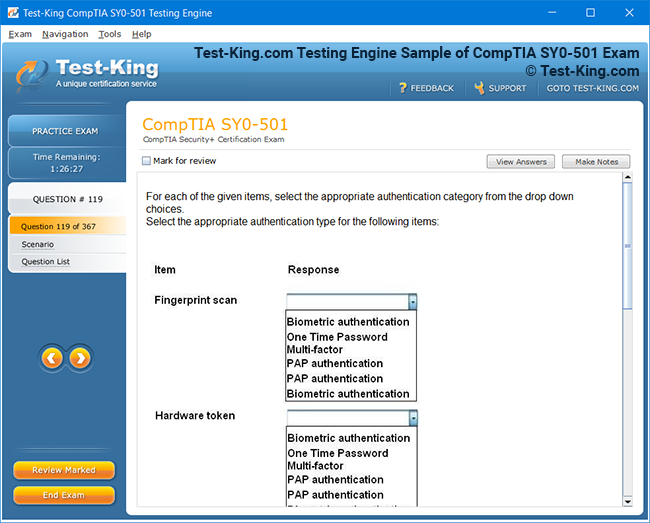
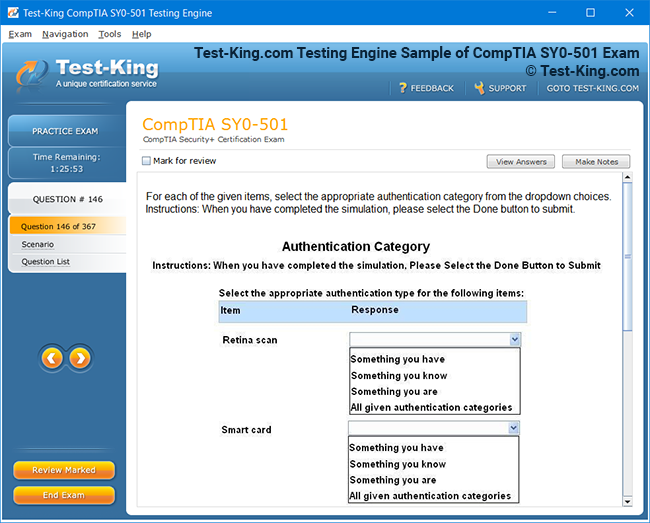
Product Screenshots
Frequently Asked Questions
How can I get the products after purchase?
All products are available for download immediately from your Member's Area. Once you have made the payment, you will be transferred to Member's Area where you can login and download the products you have purchased to your computer.
How long can I use my product? Will it be valid forever?
Test-King products have a validity of 90 days from the date of purchase. This means that any updates to the products, including but not limited to new questions, or updates and changes by our editing team, will be automatically downloaded on to computer to make sure that you get latest exam prep materials during those 90 days.
Can I renew my product if when it's expired?
Yes, when the 90 days of your product validity are over, you have the option of renewing your expired products with a 30% discount. This can be done in your Member's Area.
Please note that you will not be able to use the product after it has expired if you don't renew it.
How often are the questions updated?
We always try to provide the latest pool of questions, Updates in the questions depend on the changes in actual pool of questions by different vendors. As soon as we know about the change in the exam question pool we try our best to update the products as fast as possible.
How many computers I can download Test-King software on?
You can download the Test-King products on the maximum number of 2 (two) computers or devices. If you need to use the software on more than two machines, you can purchase this option separately. Please email support@test-king.com if you need to use more than 5 (five) computers.
What is a PDF Version?
PDF Version is a pdf document of Questions & Answers product. The document file has standart .pdf format, which can be easily read by any pdf reader application like Adobe Acrobat Reader, Foxit Reader, OpenOffice, Google Docs and many others.
Can I purchase PDF Version without the Testing Engine?
PDF Version cannot be purchased separately. It is only available as an add-on to main Question & Answer Testing Engine product.
What operating systems are supported by your Testing Engine software?
Our testing engine is supported by Windows. Andriod and IOS software is currently under development.
Top QlikView Exams
QSBA2024 Qlik Sense Business Analyst Certification Exam – Comprehensive Guide
The QSBA2024 Qlik Sense Business Analyst Certification Exam represents a pivotal milestone for professionals aiming to validate their expertise in data analytics and business intelligence. The Qlik Sense platform, renowned for its associative data modeling capabilities and interactive visualizations, has become a cornerstone for enterprises seeking actionable insights from complex datasets. The certification is not merely a credential but a testament to one’s ability to harness Qlik Sense for strategic decision-making and operational efficiency.
Understanding the Significance of the QSBA2024 Exam
In an increasingly data-driven world, organizations rely heavily on analytics professionals who can interpret intricate data patterns and translate them into meaningful recommendations. Earning the QSBA2024 certification demonstrates mastery of both the theoretical and practical aspects of Qlik Sense. It signals to employers that the candidate possesses the proficiency to develop dashboards, perform advanced calculations, and implement business logic through scripting and expressions. Moreover, the exam assesses the candidate’s capability to connect data from disparate sources, cleanse and transform datasets, and present the results in a coherent and actionable manner.
The examination encompasses a comprehensive spectrum of topics, from foundational data analysis principles to advanced application design. It evaluates not only technical aptitude but also analytical thinking, problem-solving skills, and the ability to apply Qlik Sense functionalities in real-world scenarios. Successful candidates often report that understanding the holistic view of the data ecosystem, rather than focusing solely on individual functions, is crucial for achieving a high score. Therefore, preparation strategies that integrate conceptual understanding with practical application are highly recommended.
Core Structure and Components of the Exam
The QSBA2024 exam comprises various question formats designed to test multiple dimensions of competency. While the precise number of questions and time allocations may vary, the exam typically blends scenario-based questions, multiple-choice items, and simulation exercises. These elements collectively measure the candidate’s ability to analyze, interpret, and manipulate data efficiently. Each question is crafted to reflect realistic business problems, thereby evaluating not only theoretical knowledge but also practical decision-making skills.
One distinguishing feature of the exam is its emphasis on real-world applicability. Candidates are expected to demonstrate proficiency in connecting datasets from multiple sources, performing associative analysis, and creating dynamic dashboards that communicate insights effectively. The ability to design user-centric visualizations that convey complex information clearly is as crucial as technical accuracy. Consequently, understanding how end-users interact with dashboards, the principles of effective data storytelling, and the nuances of color, layout, and interactivity become critical components of preparation.
The assessment also evaluates scripting knowledge, particularly the use of Qlik’s proprietary scripting language to manipulate data structures, automate tasks, and implement calculations. While beginners might be daunted by scripting, candidates who approach it with systematic learning strategies and regular practice often achieve mastery. Regular engagement with script exercises, coupled with analyzing previously successful candidate feedback, enhances familiarity with potential question formats and reduces uncertainty during the actual exam.
Effective Preparation Strategies
A meticulous preparation strategy forms the bedrock of success for the QSBA2024 certification. One of the most effective approaches is a structured study plan that allocates time to different topics based on their complexity and weight in the exam. Candidates are encouraged to combine theoretical study with extensive practice exercises. Web-based and desktop practice tests are invaluable tools in this regard, as they simulate the actual exam environment and provide instant feedback on performance. These simulations allow candidates to experience time constraints, question variability, and the pressure of exam conditions, thereby enhancing both confidence and competence.
These resources enable candidates to identify weak areas, focus on them intensively, and eliminate mistakes before the actual assessment. Repeated attempts at practice tests contribute not only to familiarity with question patterns but also to enhanced speed and accuracy. The ability to interpret complex data scenarios quickly and select the correct approach under time pressure is a skill honed through consistent practice and self-assessment.
In addition to practice tests, engaging with comprehensive study material that integrates recent candidate feedback ensures alignment with current exam content. The QSBA2024 exam evolves over time, with topics being revised or expanded to reflect emerging trends in data analytics. Staying abreast of these changes through regularly updated study material significantly improves preparedness. Furthermore, candidates benefit from resources that offer multiple formats, including PDFs for portable study, web-based practice for convenience, and desktop software for in-depth simulation, allowing flexibility in learning environments.
Key Skills and Concepts for Mastery
Proficiency in Qlik Sense encompasses several domains, each of which is essential for successful performance in the QSBA2024 exam. A thorough understanding of data visualization principles is paramount, as it enables the creation of intuitive dashboards that facilitate decision-making. Candidates must comprehend the interplay between charts, tables, filters, and interactive elements to present data in a manner that is both insightful and user-friendly. Mastery of associative data modeling, a distinctive feature of Qlik Sense, allows analysts to uncover hidden relationships within datasets, offering a competitive edge in interpreting complex information.
Scripting and advanced calculations constitute another critical domain. The ability to write precise scripts to transform and cleanse data, implement conditional logic, and generate calculated fields is often tested through scenario-based questions. Developing these skills requires both theoretical knowledge and extensive hands-on practice, including experimenting with sample datasets and creating personalized dashboards. By engaging in iterative exercises, candidates internalize common patterns and solutions, thereby improving speed and accuracy during the exam.
Moreover, practical application of Qlik Sense in business contexts is emphasized. Candidates should be adept at translating organizational requirements into functional dashboards, applying KPIs appropriately, and ensuring that data visualizations support strategic objectives. Scenario-based preparation, where hypothetical business problems are solved using Qlik Sense, cultivates analytical thinking and prepares candidates for real-life challenges. Understanding business logic, data governance, and user experience considerations enhances the ability to design impactful solutions.
Leveraging Practice Tests and Self-Assessment
Self-assessment is a cornerstone of effective preparation. Practice exams not only evaluate knowledge but also expose areas that require additional attention. Web-based and desktop practice tests, designed to emulate the QSBA2024 exam environment, provide an invaluable mechanism for gauging readiness. Candidates can customize tests to focus on specific topics, adjust timing, and attempt questions multiple times to reinforce learning. Immediate feedback allows for iterative improvement, ensuring that weak areas are systematically addressed.
Repeated engagement with practice material fosters familiarity with question phrasing, common distractors, and nuanced concepts that might appear on the exam. Candidates often find that the experience reduces anxiety and improves time management, as they gain confidence in navigating complex questions under timed conditions. The use of updated practice questions ensures alignment with the most current exam content, reinforcing the reliability of preparation efforts and increasing the likelihood of success on the first attempt.
Creating a Structured Study Plan
The foundation of success in the QSBA2024 Qlik Sense Business Analyst Certification Exam lies in a well-organized and deliberate study plan. Candidates must approach preparation with both strategy and discipline, considering the breadth and depth of the exam content. A structured plan begins with understanding the full scope of the syllabus, identifying high-weighted topics, and allocating sufficient time for practice and review. It is imperative to balance time between theoretical concepts and practical exercises, ensuring a comprehensive grasp of both the analytical techniques and the Qlik Sense platform functionalities.
Effective planning often involves dividing study material into manageable modules that can be revisited periodically. This cyclical approach not only reinforces memory retention but also allows for deeper assimilation of complex concepts over time. Integrating short, intensive review sessions alongside longer practice intervals enhances cognitive retention, while periodic self-assessment helps to recalibrate focus based on performance feedback. Candidates benefit from maintaining a daily schedule that includes dedicated hours for reading, hands-on exercises, and timed mock tests, creating a rhythm that gradually builds confidence and competence.
Leveraging Practice Tests for Exam Simulation
Practice tests are an indispensable component of preparation for the QSBA2024 exam. By simulating real exam conditions, web-based and desktop practice tests immerse candidates in a realistic environment where timing, pressure, and question diversity mirror the official assessment. These practice exams allow candidates to develop familiarity with the types of questions they will encounter, ranging from multiple-choice items to scenario-driven problem-solving tasks. Engaging with practice tests repeatedly helps to improve speed, accuracy, and analytical agility, key attributes for navigating complex datasets under time constraints.
In addition to familiarity, practice exams serve as diagnostic tools, highlighting areas of strength and revealing weaknesses that require further attention. Candidates can strategically focus their efforts on topics where performance is lower, thereby optimizing study time. The iterative nature of practice tests, combined with instant feedback, encourages continuous improvement and reinforces conceptual understanding. By adjusting parameters such as time limits or question types, learners can simulate a range of testing scenarios, enhancing adaptability and minimizing surprises on the day of the official exam.
Understanding High-Priority Topics
A thorough understanding of high-priority topics is critical for achieving success in the QSBA2024 Qlik Sense Business Analyst Certification Exam. Candidates should devote particular attention to data visualization techniques, associative data modeling, and scripting capabilities, which constitute the core of practical competency. Mastery of data visualization requires not only technical skill in configuring charts, tables, and filters but also an appreciation of design principles that enhance interpretability and decision-making. The ability to communicate complex information through intuitive dashboards is a hallmark of a proficient business analyst.
Associative data modeling is another cornerstone of Qlik Sense expertise. This methodology allows for exploration of relationships within datasets, uncovering patterns that may remain hidden with conventional querying techniques. Candidates must become adept at constructing efficient data models, linking disparate tables, and optimizing calculations to ensure both accuracy and performance. Advanced users also employ scripting techniques to transform raw data, automate processes, and implement conditional logic, enhancing the versatility of the platform in solving multifaceted business problems.
Integrating Conceptual Learning with Hands-On Practice
While theoretical knowledge forms the base for certification, hands-on practice is essential for cementing understanding and developing practical skills. Candidates are encouraged to engage with real-world datasets, constructing dashboards and applying analytical functions to simulate business scenarios. This experiential learning deepens comprehension of abstract concepts, such as the implications of associative data connections or the significance of KPI selection. Through iterative experimentation, learners gain insight into the nuances of Qlik Sense operations and refine their approach to complex tasks.
Incorporating practical exercises into a structured study regimen also improves retention and boosts confidence. Candidates can develop custom exercises that mimic likely exam questions or explore advanced functionalities of Qlik Sense beyond the core syllabus. This proactive engagement nurtures critical thinking, allowing learners to approach unfamiliar problems with a methodical and informed strategy. The synergy between conceptual understanding and experiential application fosters both mastery and adaptability, qualities essential for excelling in the QSBA2024 exam.
Utilizing Candidate Feedback and Updated Resources
Staying aligned with the evolving Qlik Sense ecosystem is vital for successful exam preparation. Candidates benefit from study materials and practice questions informed by feedback from individuals who have recently taken the QSBA2024 exam. These insights provide guidance on high-yield topics, commonly tested scenarios, and nuances in question phrasing, enabling learners to target their efforts effectively. Resources that are periodically updated to reflect syllabus changes ensure that preparation remains relevant, reducing the risk of encountering unfamiliar content during the exam.
In addition to feedback-based updates, leveraging multiple learning formats enhances flexibility and accessibility. Web-based practice tests allow for on-the-go engagement, desktop applications provide immersive simulations, and portable PDF resources enable focused study during travel or between professional commitments. By integrating these diverse formats, candidates can maintain consistent progress, reinforce learning through repetition, and develop confidence in navigating the exam’s varied content and question structures.
Enhancing Retention Through Active Learning
Active learning strategies are particularly effective in preparing for the QSBA2024 certification. Techniques such as summarizing concepts in one’s own words, creating mental or visual maps of data relationships, and explaining analytical processes aloud enhance comprehension and memory retention. Rewriting complex procedures, such as data transformation scripts or dashboard configurations, in simplified terms allows learners to internalize underlying principles. Engaging with peers in discussion or collaborative problem-solving further solidifies understanding, as teaching concepts to others reinforces mastery and uncovers gaps in knowledge.
Memory retention is also strengthened by deliberate practice schedules that incorporate spaced repetition. Revisiting challenging topics at intervals over time ensures that knowledge is retained in long-term memory rather than temporarily memorized. Combining this approach with scenario-based exercises enables learners to apply theory to practical situations, bridging the gap between academic understanding and real-world application. Candidates who adopt these methods often find themselves more agile in analyzing novel problems during the exam.
Time Management and Exam Readiness
Time management is a critical factor in the QSBA2024 exam, where complex questions require both precision and expedience. During preparation, candidates should practice completing exercises under timed conditions, gradually improving their speed without compromising accuracy. Allocating specific durations for reviewing, scripting, and analyzing dashboards during practice tests mirrors the constraints of the official assessment and reduces the likelihood of time-related stress. Developing a systematic approach to tackling questions, such as prioritizing familiar topics before addressing challenging scenarios, enhances efficiency and confidence.
In addition to pacing, familiarity with the exam interface, question format, and navigation mechanics contributes to readiness. Practice tests that replicate the visual layout and interaction flow of the official exam cultivate comfort and reduce cognitive load on test day. Candidates who are well-acquainted with the interface can devote their attention to analytical reasoning rather than procedural navigation, improving overall performance. Regular self-assessment combined with realistic simulations ensures that learners enter the QSBA2024 exam with both skill and assurance.
Integrating Analytical Thinking and Decision-Making
Beyond technical proficiency, the QSBA2024 exam evaluates the candidate’s ability to apply analytical thinking and make informed decisions. Candidates must interpret data patterns, identify trends, and draw actionable conclusions that align with business objectives. This requires not only mastery of Qlik Sense tools but also an understanding of organizational context, strategic goals, and the implications of analytical outcomes. Practicing scenario-driven questions, where learners must simulate business decision-making based on data insights, cultivates this critical dimension of competency.
Analytical thinking is enhanced by approaching problems methodically, breaking complex scenarios into manageable components, and systematically applying Qlik Sense functionalities. Candidates benefit from reflecting on alternative approaches, assessing potential outcomes, and considering efficiency, accuracy, and clarity in data presentation. By integrating technical skills with strategic reasoning, learners prepare themselves to tackle the multidimensional challenges posed by the QSBA2024 certification exam, reinforcing both competence and confidence.
Data Visualization and Dashboard Design
A profound understanding of data visualization forms the backbone of success in the QSBA2024 Qlik Sense Business Analyst Certification Exam. The ability to transform raw data into compelling visual narratives allows analysts to uncover patterns and communicate insights effectively. Candidates must be adept at creating interactive dashboards, leveraging a variety of charts, tables, and filters to convey complex information succinctly. The design of these dashboards should not only present data accurately but also enhance interpretability for diverse audiences, enabling strategic decisions to be made with clarity and confidence.
Crafting meaningful dashboards involves a nuanced comprehension of user experience principles, color theory, and visual hierarchy. Analysts should ensure that every element serves a purpose, guiding viewers intuitively through data stories. This requires attention to detail in chart selection, axis scaling, labeling, and the use of filters or drill-down capabilities. A well-structured dashboard reduces cognitive load and facilitates rapid understanding of trends, anomalies, and key performance indicators, making analytical insights actionable and impactful.
Associative Data Modeling
The associative data modeling paradigm is a distinctive feature of Qlik Sense, enabling dynamic exploration of interrelated datasets. Mastery of this methodology is critical for QSBA2024 exam candidates, as it underpins much of the platform’s analytical power. By establishing logical relationships between tables, analysts can navigate large volumes of data with agility, uncovering hidden patterns that traditional queries might overlook. Understanding the nuances of associative connections, including synthetic keys and circular references, ensures that data models are efficient, accurate, and scalable.
Candidates are expected to construct robust data models that optimize both performance and usability. This involves identifying key dimensions, linking tables appropriately, and eliminating redundancies or inconsistencies. Practical exercises in building associative models using sample datasets enhance familiarity with common challenges and cultivate problem-solving skills essential for real-world applications. Effective data modeling not only improves analytical accuracy but also streamlines dashboard performance, reducing loading times and enhancing interactivity.
Scripting and Advanced Calculations
Proficiency in scripting and advanced calculations constitutes a vital competency for QSBA2024 exam success. Qlik Sense’s scripting language allows analysts to manipulate data, automate tasks, and implement conditional logic, transforming raw datasets into structured and insightful analyses. Candidates should practice writing scripts that perform data cleansing, aggregation, and transformation, as well as calculated measures that drive decision-making processes.
Understanding the principles of script execution order, variable usage, and functions enables candidates to craft efficient and maintainable scripts. Regular hands-on practice, including scenario-based exercises that mimic real business requirements, reinforces these skills. By integrating scripting expertise with visualization and modeling capabilities, analysts can design comprehensive solutions that address complex organizational questions and provide actionable insights, a core expectation of the QSBA2024 certification exam.
Practical Application in Business Contexts
Technical proficiency alone is insufficient for achieving mastery; candidates must also demonstrate the ability to apply Qlik Sense capabilities in practical business contexts. This entails translating organizational requirements into functional dashboards, defining relevant key performance indicators, and ensuring that analytical outputs support strategic objectives. Real-world problem-solving exercises, such as optimizing sales performance, tracking operational efficiency, or analyzing customer behavior, cultivate the analytical acumen required for certification.
Scenario-based practice allows candidates to simulate decision-making processes, evaluating alternative approaches and outcomes. By addressing multifaceted business questions using Qlik Sense, learners develop critical thinking skills and the ability to adapt analytical techniques to varying contexts. This applied perspective is crucial for the QSBA2024 exam, where questions often test not only technical knowledge but also the capacity to make informed, data-driven decisions that reflect practical business considerations.
Dashboard Optimization and Performance Tuning
Efficiency and performance are key considerations when designing dashboards for the QSBA2024 exam. Candidates should be proficient in optimizing dashboard load times, managing data volumes, and ensuring seamless interactivity. Techniques such as data aggregation, selective extraction, and minimizing redundant calculations contribute to enhanced performance. Attention to performance tuning not only improves user experience but also demonstrates a sophisticated understanding of data management principles, a criterion often assessed in the exam.
Practice exercises that focus on optimizing existing dashboards help candidates identify potential bottlenecks and implement corrective measures. This process involves analyzing script efficiency, evaluating chart rendering times, and streamlining data model design. Candidates who integrate performance considerations into their workflow develop a more holistic understanding of Qlik Sense functionalities, reinforcing both practical skills and exam readiness.
Analytical Thinking and Problem-Solving
The QSBA2024 certification emphasizes analytical thinking as much as technical proficiency. Candidates must interpret data trends, identify anomalies, and draw conclusions that inform actionable decisions. Developing analytical acumen involves systematic exploration of datasets, hypothesis testing, and scenario analysis. By practicing complex, scenario-driven questions, learners cultivate the ability to dissect problems, evaluate alternative solutions, and select approaches that balance accuracy, efficiency, and clarity.
Analytical thinking is augmented by a deep understanding of business logic, data governance, and performance metrics. Candidates should consider not only the data itself but also the organizational context and strategic implications of their analyses. Exercises that simulate real-world business challenges, such as predicting market trends, optimizing operational workflows, or evaluating financial performance, reinforce the integration of analytical skills with Qlik Sense functionalities, preparing candidates to address multifaceted exam questions effectively.
Continuous Practice and Iterative Learning
Mastery of Qlik Sense skills is achieved through continuous practice and iterative learning. Candidates are encouraged to engage with both web-based and desktop practice tests, leveraging repeated attempts to refine techniques, reinforce concepts, and gain familiarity with exam patterns. Iterative learning involves reviewing mistakes, analyzing alternative solutions, and integrating feedback into subsequent practice sessions. This cyclical process enhances retention, improves problem-solving agility, and builds confidence for the actual assessment.
Repeated practice across diverse question types, including multiple-choice, scenario-based, and simulation exercises, ensures comprehensive coverage of the QSBA2024 syllabus. Candidates develop the ability to navigate complex questions efficiently, apply appropriate analytical techniques, and interpret results accurately under timed conditions. The combination of structured study, practical exercises, and iterative refinement establishes a robust foundation for both exam success and professional proficiency.
Leveraging Updated Resources and Feedback
Preparation for the QSBA2024 exam is most effective when informed by recent feedback and updated study resources. Candidates benefit from materials that reflect the latest syllabus changes, incorporate insights from successful examinees, and address common challenges encountered during prior assessments. Access to updated practice questions and scenario exercises ensures alignment with current exam content, reducing uncertainty and increasing preparedness.
Utilizing multiple learning formats, including web-based simulations, desktop software, and portable PDFs, enhances flexibility and accommodates varying study environments. These resources allow candidates to practice on different devices, engage in intensive study sessions, and revisit challenging topics as needed. Integrating feedback from practice tests and peer experiences fosters continuous improvement, enabling learners to refine techniques and approach the QSBA2024 exam with confidence and competence.
Integrating Theory and Practical Insights
A key differentiator in QSBA2024 exam preparation is the ability to integrate theoretical knowledge with practical insights. Candidates should not only understand concepts such as associative modeling, scripting, and visualization principles but also be able to apply them in real-world scenarios. Practical exercises that simulate business challenges, including data-driven decision-making and dashboard design, reinforce the connection between theory and application. This integration cultivates both mastery and adaptability, equipping candidates to tackle diverse and complex exam questions with poise.
Importance of Simulated Exam Environments
The QSBA2024 Qlik Sense Business Analyst Certification Exam demands both technical mastery and analytical acuity, and simulated practice exams play a crucial role in preparing candidates. Engaging with web-based or desktop practice tests allows learners to experience an environment that mirrors the pressures and timing of the actual assessment. By confronting realistic scenarios and question structures, candidates become acclimated to the pacing required to navigate multiple-choice, scenario-based, and problem-solving questions. These practice sessions also help in refining decision-making speed and accuracy, which are indispensable for achieving a high score.
Simulated exams cultivate familiarity with the exam interface, question format, and timing constraints, reducing the cognitive load during the real assessment. Candidates who regularly practice in conditions that closely replicate the official environment report higher confidence levels, improved focus, and a notable decrease in exam anxiety. The iterative engagement with these practice tests transforms theoretical knowledge into actionable skills, preparing candidates for multifaceted challenges they will encounter during the QSBA2024 assessment.
Customizing Practice to Individual Needs
One of the most effective strategies in preparation is customizing practice tests to address individual learning requirements. Candidates can focus on topics where performance is weaker, experiment with different types of questions, and adjust the duration of practice sessions to reflect their personal pacing. This tailored approach ensures that every minute spent in preparation targets areas that yield the most substantial improvement. Repeated attempts at challenging sections build proficiency, while familiarity with recurring question patterns enhances predictive capability and analytical dexterity.
By prioritizing weak areas, candidates can achieve incremental gains that cumulatively enhance overall competence. Personalized practice also fosters a deeper understanding of complex concepts, such as advanced scripting, associative modeling, and dynamic dashboard optimization. The ability to iteratively refine skills and strategies according to individual needs is a hallmark of successful preparation and significantly increases the likelihood of first-attempt success.
Analyzing Performance and Identifying Gaps
A critical component of self-assessment is the systematic analysis of practice test performance. Detailed feedback from web-based or desktop tests allows candidates to identify recurring errors, conceptual misunderstandings, and inefficiencies in problem-solving approaches. By examining patterns in incorrect responses, learners gain insight into areas requiring reinforcement, enabling them to focus study efforts more effectively. This analytical reflection fosters a methodical approach to learning, ensuring that preparation is comprehensive and targeted.
Understanding performance trends also informs strategic adjustments in study plans. For example, repeated mistakes in scripting questions may indicate the need for additional hands-on exercises, while errors in visualization tasks might signal insufficient attention to design principles or KPI integration. By converting diagnostic insights into actionable study strategies, candidates can systematically address knowledge gaps, refine analytical methods, and enhance overall readiness for the QSBA2024 exam.
Reducing Exam Anxiety Through Practice
Examination stress is a common challenge that can impede performance, and practice tests serve as a powerful tool for mitigating anxiety. By repeatedly experiencing simulated exam conditions, candidates acclimate to the pressure of time constraints, complex scenarios, and high-stakes decision-making. This repeated exposure reduces psychological stress and fosters a sense of familiarity and control, allowing learners to focus on problem-solving rather than worrying about procedural or environmental factors.
In addition to simulation, strategic use of practice tests can enhance mental endurance and concentration. Candidates who engage in timed exercises learn to manage pacing, maintain focus during challenging questions, and allocate effort efficiently across different types of tasks. Over time, this practice cultivates resilience, enabling candidates to approach the QSBA2024 exam with composure and confidence, ready to tackle both routine and unexpected challenges with analytical precision.
Building Analytical Agility
The QSBA2024 exam evaluates not only technical knowledge but also the candidate’s ability to think critically and respond to complex scenarios. Practice tests provide an invaluable opportunity to cultivate analytical agility by presenting multifaceted problems that require both logical reasoning and applied knowledge. Candidates must navigate interrelated data points, identify trends, and make informed decisions that mirror real-world business contexts. Engaging with scenario-based questions enhances problem-solving flexibility and strengthens the ability to apply Qlik Sense tools effectively under pressure.
Repeated exposure to diverse question formats sharpens analytical thinking, enabling candidates to approach unfamiliar problems methodically. By simulating decision-making processes, learners develop confidence in evaluating alternatives, prioritizing relevant metrics, and interpreting outcomes accurately. This cultivated agility is essential for success in the QSBA2024 exam, where the ability to synthesize information quickly and draw actionable conclusions is a primary measure of competency.
Tracking Progress Over Time
Monitoring improvement is an integral aspect of effective preparation. Web-based and desktop practice tests offer mechanisms for tracking performance metrics, including accuracy rates, timing efficiency, and topic-specific proficiency. By maintaining a consistent record of progress, candidates can visualize learning trajectories, identify persistent challenges, and adjust study approaches accordingly. This continuous feedback loop reinforces accountability, encourages disciplined study habits, and fosters incremental mastery of critical concepts.
Tracking progress also allows for strategic review sessions, where attention is concentrated on areas that demonstrate slower improvement. By focusing efforts where they yield the most substantial gains, candidates maximize the efficiency of their preparation. Over time, this methodical approach cultivates both competence and confidence, providing a solid foundation for navigating the breadth and depth of the QSBA2024 Qlik Sense Business Analyst Certification Exam.
Integrating Scenario-Based Learning
Scenario-based practice is particularly effective in preparing for the QSBA2024 exam, as it mirrors the real-world application of Qlik Sense skills. Candidates are challenged to solve complex problems, integrate multiple data sources, and produce actionable insights through dashboards and visualizations. By engaging with realistic scenarios, learners develop the capacity to apply theoretical knowledge to practical contexts, a skill highly valued in the assessment.
Scenario-based learning also enhances critical thinking and decision-making abilities. Candidates learn to prioritize relevant information, evaluate competing solutions, and implement analytical methods efficiently. This experiential approach reinforces understanding of associative modeling, scripting, and dashboard design while cultivating the agility needed to tackle unexpected challenges during the exam. Repeated engagement with scenario-driven exercises ensures that candidates are not only technically proficient but also strategically adept.
Time Management in Practice
Effective time management is essential for navigating the QSBA2024 exam successfully, and practice tests provide the ideal platform to develop this skill. Candidates can simulate full-length assessments, allocate time to different question types, and practice balancing accuracy with speed. By experiencing the pressure of timed conditions, learners develop strategies for pacing themselves, prioritizing familiar questions, and efficiently tackling complex scenarios.
Time management skills acquired through practice also contribute to enhanced focus and reduced stress during the actual exam. Candidates who are accustomed to completing questions within allocated time frames exhibit greater confidence and resilience, enabling them to address both straightforward and challenging problems with composure. Developing these skills through repeated simulation ensures readiness for the multifaceted demands of the QSBA2024 certification assessment.
Reinforcing Knowledge Through Iteration
Iterative learning is a hallmark of effective preparation for the QSBA2024 Qlik Sense Business Analyst Certification Exam. Candidates should approach practice tests as opportunities to refine understanding, correct mistakes, and reinforce concepts. By repeatedly engaging with questions, analyzing errors, and revisiting challenging topics, learners cultivate deeper comprehension and long-term retention. This iterative process transforms knowledge into practical skill, equipping candidates to apply analytical techniques fluidly during the exam.
Iteration also promotes adaptability. As candidates encounter new scenarios or modified question formats in successive practice tests, they learn to adjust strategies, evaluate alternative approaches, and maintain accuracy under pressure. This adaptability is essential for navigating the dynamic and multidimensional nature of the QSBA2024 exam, ensuring that candidates are prepared for both routine and unexpected challenges.
Unlocking Career Opportunities
Attaining the QSBA2024 Qlik Sense Business Analyst Certification opens a multitude of career avenues across diverse industries. Organizations increasingly rely on data-driven decision-making, and professionals with validated expertise in Qlik Sense are highly sought after. The certification signifies proficiency in building interactive dashboards, performing advanced data analysis, and translating complex datasets into actionable business insights. Candidates equipped with this credential often gain access to roles such as business analyst, data analyst, analytics consultant, and intelligence manager. Beyond titles, certification enhances credibility, signaling to employers a combination of technical acumen and analytical discernment.
The evolving data landscape requires professionals to adapt quickly to new tools, techniques, and business demands. Individuals holding the QSBA2024 certification are uniquely positioned to provide strategic insights, optimize operational processes, and contribute meaningfully to organizational growth. The recognition associated with the certification can facilitate promotions, salary enhancements, and invitations to participate in high-impact projects. By aligning technical competence with business strategy, certified candidates become integral to decision-making processes, bridging the gap between data complexity and actionable outcomes.
Combining Certification with Practical Experience
While certification validates knowledge, practical experience amplifies its impact. Candidates are encouraged to complement theoretical understanding and practice exercises with hands-on projects that reflect real-world scenarios. Working with live datasets, designing operational dashboards, and analyzing business trends reinforces comprehension and enhances problem-solving skills. Practical application cultivates adaptability, enabling candidates to approach unforeseen challenges with confidence, a quality that the QSBA2024 exam also evaluates indirectly through scenario-based questions.
Integrating certification with practical exposure creates a feedback loop that deepens learning. When candidates implement insights from dashboards in actual business contexts, they develop a nuanced understanding of organizational objectives, key performance indicators, and data interpretation techniques. This synergy between theory and practice not only strengthens exam preparation but also equips professionals to leverage Qlik Sense capabilities effectively in their careers. Consequently, success in the certification exam is often a precursor to tangible performance achievements within professional environments.
Staying Updated with Qlik Sense Enhancements
The technological landscape of data analytics is dynamic, with platforms such as Qlik Sense continuously evolving. Mastery of current functionalities is essential, but awareness of emerging features ensures sustained relevance. Candidates preparing for the QSBA2024 certification should engage with official updates, webinars, and professional communities to remain informed about new visualization tools, scripting techniques, and analytical methods. Incorporating recent advancements into practice exercises and dashboards helps learners anticipate exam questions that reflect the latest software iterations.
Remaining abreast of updates also fosters innovation in professional practice. By exploring advanced features, such as enhanced associative modeling, novel visualization components, or automated data integration workflows, candidates develop the ability to design sophisticated analytical solutions. This proactive approach demonstrates not only technical agility but also an intrinsic motivation to leverage Qlik Sense optimally, traits that are highly valued in both certification assessments and workplace scenarios.
Leveraging Reliable Study Materials
Success in the QSBA2024 exam is closely tied to the quality and reliability of study materials. Utilizing resources that are syllabus-aligned, frequently updated, and informed by recent candidate feedback enhances preparedness significantly. Web-based practice tests, desktop simulations, and portable PDF resources collectively provide a multifaceted approach to learning. These tools allow learners to experience the breadth and depth of the exam, rehearse practical tasks, and refine analytical methods, fostering comprehensive readiness.
The strategic use of study materials extends beyond mere repetition of questions. Candidates are encouraged to analyze explanations, understand underlying principles, and explore alternative solutions to challenging problems. By engaging critically with study resources, learners transform memorized procedures into adaptable skills applicable to a variety of scenarios. This approach cultivates a holistic understanding of Qlik Sense functionalities, ensuring that candidates are not only technically proficient but also capable of applying insights effectively under exam conditions.
Developing Analytical Thinking and Decision-Making
Analytical thinking is a cornerstone of the QSBA2024 certification. Candidates must interpret complex datasets, identify meaningful trends, and derive conclusions that inform business decisions. Practice exercises that simulate real-world scenarios cultivate critical reasoning skills, requiring learners to evaluate multiple pathways, anticipate outcomes, and implement optimal solutions. By repeatedly engaging with such scenarios, candidates develop a structured approach to problem-solving, enhancing both accuracy and efficiency.
Decision-making skills are reinforced when candidates consider the broader implications of their analyses. Understanding the organizational context, aligning insights with strategic objectives, and presenting findings in a clear, actionable format are crucial. This capacity to integrate technical proficiency with business acumen distinguishes highly successful candidates, enabling them to navigate both the QSBA2024 exam and professional challenges with agility and insight.
Mastering Advanced Features and Optimization
To excel in the QSBA2024 exam, candidates must also master advanced features of Qlik Sense. Scripting, data transformation, associative modeling, and dashboard optimization constitute essential skills. Scripting enables efficient data manipulation and automation, associative modeling allows exploration of complex relationships within datasets, and optimized dashboards facilitate rapid comprehension and decision-making. Candidates who practice these advanced functionalities within simulated exercises gain a significant advantage, as proficiency demonstrates both technical expertise and practical application capability.
Optimization extends beyond performance considerations. Candidates should also focus on the clarity and usability of dashboards, ensuring that visualizations communicate insights effectively. Iterative refinement, scenario-based exercises, and integration of feedback from practice tests enhance proficiency in constructing dashboards that are both efficient and informative. Mastery of these advanced techniques is essential for achieving high scores on the QSBA2024 exam and for professional excellence in data-driven roles.
Maintaining Motivation and Consistency
Sustained motivation is a critical factor in successful preparation. The QSBA2024 certification requires consistent engagement with both study material and practice exercises. Candidates benefit from structured schedules, incremental goal-setting, and regular self-assessment to maintain momentum. Celebrating small milestones, analyzing progress, and adjusting strategies based on performance feedback foster persistence and resilience. This disciplined approach ensures comprehensive coverage of the syllabus while reinforcing confidence and analytical agility.
Consistency also enhances retention and skill development. Regular interaction with Qlik Sense, repeated exposure to scenario-based problems, and iterative practice of scripting and visualization techniques strengthen both cognitive and practical capabilities. Candidates who cultivate a habit of continuous engagement are more likely to internalize complex concepts, develop strategic problem-solving abilities, and approach the QSBA2024 exam with a balanced blend of competence and assurance.
Cultivating a Holistic Preparation Approach
The integration of multiple preparation methods enhances readiness for the QSBA2024 exam. Candidates should combine theoretical study with hands-on practice, simulated exams, scenario-based exercises, and updated resources. This multifaceted approach ensures that learning is not only comprehensive but also adaptive, equipping candidates to tackle diverse question types and unforeseen challenges. By synthesizing technical proficiency, analytical thinking, and strategic decision-making, learners cultivate a holistic skillset that extends beyond exam performance into professional applicability.
A holistic preparation strategy also emphasizes reflection and iterative improvement. Candidates are encouraged to review past performance, analyze errors, and refine methods continuously. This process fosters self-awareness, adaptability, and a deeper understanding of Qlik Sense functionalities. By embedding these practices into preparation routines, learners not only enhance exam readiness but also develop capabilities that translate into sustained professional growth and contribution.
Ensuring First-Attempt Success
Achieving success on the first attempt of the QSBA2024 certification exam requires strategic planning, rigorous practice, and mastery of core competencies. Candidates who integrate scenario-based learning, advanced feature mastery, and iterative practice tests build confidence and analytical agility. Emphasis on weak areas, combined with repeated exposure to challenging question types, ensures preparedness across all domains of the syllabus. The integration of practical experience and theoretical knowledge reinforces problem-solving capabilities, enabling candidates to navigate complex questions with composure.
First-attempt success is further supported by leveraging updated, reliable study resources and maintaining consistent preparation schedules. Candidates who monitor progress, refine strategies, and engage in immersive practice sessions cultivate both competence and assurance. This combination of preparation, skill refinement, and strategic engagement positions learners to achieve their goals efficiently, minimizing stress and maximizing performance on the QSBA2024 Qlik Sense Business Analyst Certification Exam.
Conclusion
The QSBA2024 Qlik Sense Business Analyst Certification is a gateway to advanced analytical roles and enhanced professional recognition. Success in this exam signifies mastery of Qlik Sense functionalities, analytical thinking, and the ability to apply insights in practical business contexts. By combining structured study plans, hands-on practice, scenario-based exercises, and continuous engagement with updated resources, candidates can achieve first-attempt success while cultivating long-term professional competencies. The integration of technical proficiency, strategic reasoning, and disciplined preparation ensures not only exam readiness but also the ability to leverage certification achievements for sustained career growth and meaningful contribution in data-driven organizations.