

Exam Code: VCS-413
Exam Name: Administration of Veritas eDiscovery Platform 8.2 for Administrators
Certification Provider: Veritas
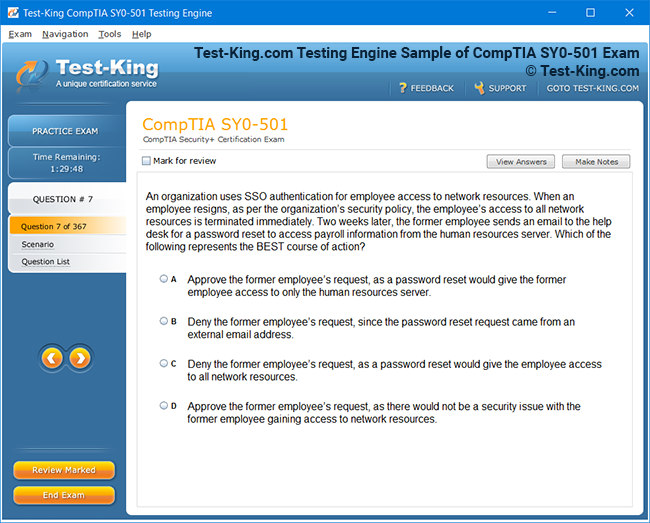
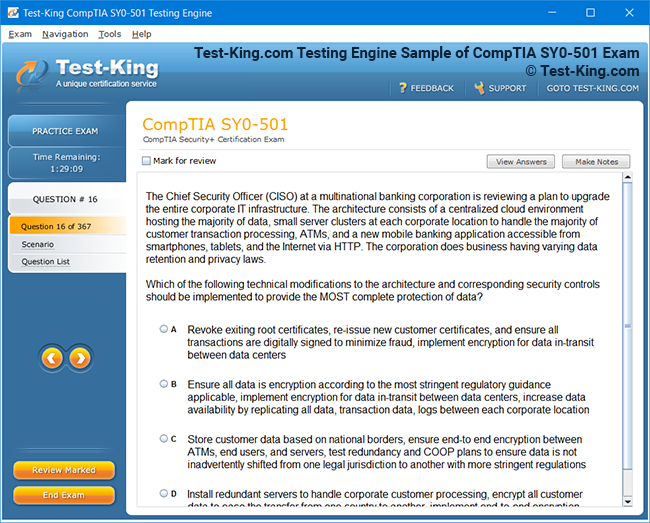
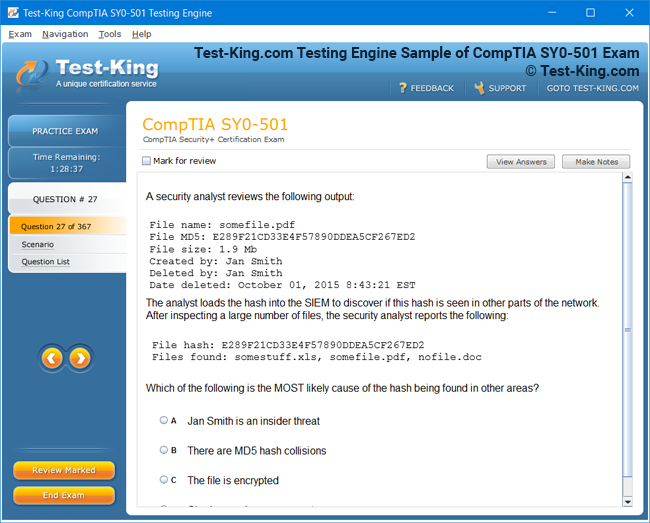
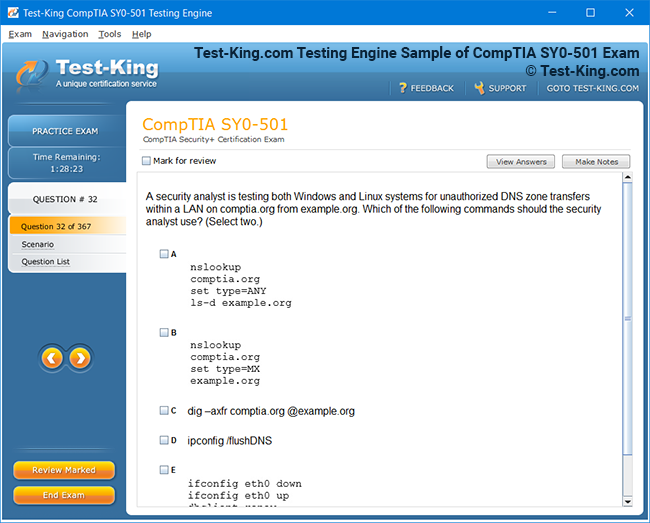
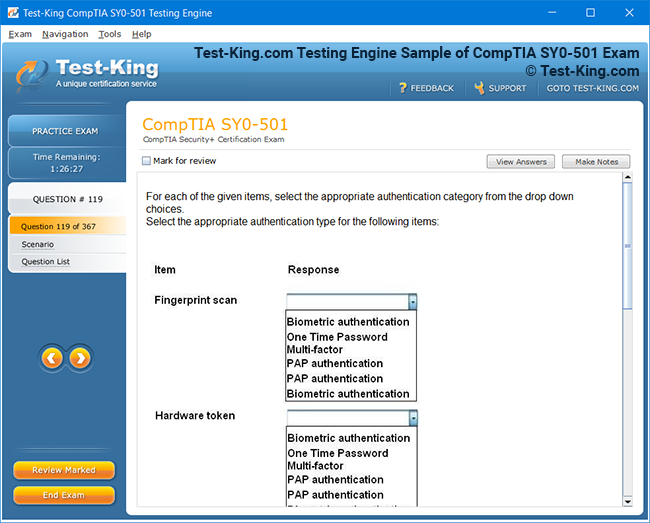
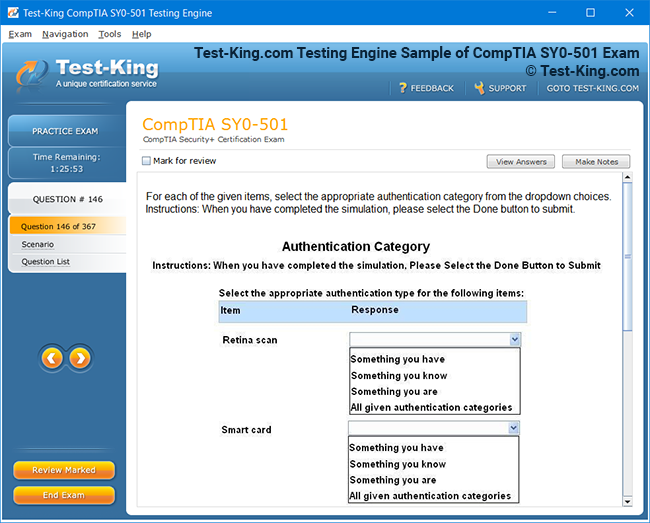
Product Screenshots
Frequently Asked Questions
How can I get the products after purchase?
All products are available for download immediately from your Member's Area. Once you have made the payment, you will be transferred to Member's Area where you can login and download the products you have purchased to your computer.
How long can I use my product? Will it be valid forever?
Test-King products have a validity of 90 days from the date of purchase. This means that any updates to the products, including but not limited to new questions, or updates and changes by our editing team, will be automatically downloaded on to computer to make sure that you get latest exam prep materials during those 90 days.
Can I renew my product if when it's expired?
Yes, when the 90 days of your product validity are over, you have the option of renewing your expired products with a 30% discount. This can be done in your Member's Area.
Please note that you will not be able to use the product after it has expired if you don't renew it.
How often are the questions updated?
We always try to provide the latest pool of questions, Updates in the questions depend on the changes in actual pool of questions by different vendors. As soon as we know about the change in the exam question pool we try our best to update the products as fast as possible.
How many computers I can download Test-King software on?
You can download the Test-King products on the maximum number of 2 (two) computers or devices. If you need to use the software on more than two machines, you can purchase this option separately. Please email support@test-king.com if you need to use more than 5 (five) computers.
What is a PDF Version?
PDF Version is a pdf document of Questions & Answers product. The document file has standart .pdf format, which can be easily read by any pdf reader application like Adobe Acrobat Reader, Foxit Reader, OpenOffice, Google Docs and many others.
Can I purchase PDF Version without the Testing Engine?
PDF Version cannot be purchased separately. It is only available as an add-on to main Question & Answer Testing Engine product.
What operating systems are supported by your Testing Engine software?
Our testing engine is supported by Windows. Andriod and IOS software is currently under development.
Top Veritas Exams
Exam Preparation Guide: VCS-413 – Tips and Strategies for Success
The VCS-413 exam, designed for administrators, requires a comprehensive understanding of the Veritas eDiscovery Platform 8.2. Success in this assessment demands more than rote memorization; it necessitates a nuanced comprehension of the platform's architecture, data management capabilities, and security protocols. Administrators are expected to navigate the complex workflows of the system, from indexing large volumes of data to configuring preservation policies, ensuring both compliance and operational efficiency. To excel, candidates should internalize the subtleties of data ingestion, case management, and legal hold execution, which are cornerstones of the platform. It is essential to appreciate that the platform not only serves as a tool for discovery but also as a critical instrument for regulatory adherence, risk mitigation, and meticulous documentation.
Understanding the Veritas eDiscovery Platform 8.2 and Exam Requirements
The first step in preparing for the VCS-413 exam is familiarizing oneself with the administrative interface, which may appear labyrinthine to those uninitiated. Understanding the interconnectivity of modules, such as the collection engine, processing workflows, and analytics dashboards, is crucial. Administrators must be capable of orchestrating tasks that span from initial case creation to final export of data for legal review. Moreover, the exam emphasizes practical knowledge of role-based permissions, user access management, and audit trails, which are vital for maintaining system integrity. Candidates who immerse themselves in the operational cadence of the platform will develop an intuitive grasp of its functionalities, making scenario-based questions considerably less daunting.
Key Strategies for Efficient Exam Preparation
A robust preparation strategy begins with mapping the exam blueprint meticulously. The VCS-413 exam tests knowledge areas including platform configuration, data lifecycle management, search optimization, and troubleshooting. To assimilate these concepts effectively, aspirants should approach the material in a structured yet flexible manner, dedicating time to each domain while allowing for iterative review. Active engagement with practical exercises, such as simulating legal holds or testing indexing methods, cultivates procedural fluency that can be indispensable during the exam. Repetitive exposure to real-world tasks diminishes cognitive friction and strengthens recall under timed conditions.
Understanding the typology of questions presented in the exam can also significantly enhance performance. The assessment often presents scenario-driven queries requiring administrators to apply conceptual knowledge to practical situations. For instance, one might encounter a situation where multiple custodians’ data needs to be preserved while ensuring minimal disruption to ongoing operations. The optimal response involves leveraging retention policies, scheduling ingestion jobs strategically, and configuring alerts for exceptions. Familiarity with such scenarios, along with the ability to rationalize choices succinctly, enhances both accuracy and efficiency.
Another essential strategy involves consolidating knowledge from multiple sources. Veritas provides official documentation, which, though comprehensive, can be intricate and occasionally esoteric. Supplementing this with independent study materials, webinars, and community forums allows aspirants to encounter diverse perspectives and uncommon use cases. Engaging in discussions with peers or seasoned administrators can reveal subtle operational intricacies that standard guides may not emphasize. This eclectic approach not only solidifies understanding but also cultivates analytical agility, which is invaluable for addressing unpredictable exam questions.
Mastering Platform Configuration and Administration
One of the pivotal competencies evaluated in VCS-413 is the ability to configure and administer the eDiscovery platform efficiently. Administrators must be adept at establishing user accounts, configuring roles, and defining access permissions in accordance with organizational policies. Equally important is the ability to optimize system performance through judicious resource allocation, managing indexing jobs, and monitoring storage utilization. Familiarity with these operations ensures that candidates can respond adeptly to questions related to system optimization, load balancing, and performance troubleshooting.
Security management represents another cornerstone of effective administration. The platform enforces multiple layers of access control, ensuring that sensitive data remains protected while permitting authorized users to perform essential functions. Understanding encryption protocols, audit log analysis, and the configuration of secure connections is essential for maintaining compliance and defending against inadvertent breaches. In practical terms, candidates should be able to describe, in simple language, the process of enabling secure data transmission between collection nodes and the central repository, as well as the mechanisms used to monitor and log administrative activity.
Data Lifecycle Management and Legal Hold Processes
Effective administration of the Veritas eDiscovery Platform relies heavily on mastering data lifecycle management. From ingestion to archival, each phase must be executed with precision to maintain data integrity. Administrators are expected to handle large volumes of electronic information, implementing policies that dictate how data is retained, indexed, and ultimately disposed of when legally permissible. The exam often explores scenarios where mismanagement of these processes could lead to compliance failures, making it imperative for aspirants to internalize best practices.
Legal hold processes constitute a significant portion of the exam content. Administrators must know how to issue holds, monitor custodian compliance, and ensure that no data is inadvertently altered or deleted. For example, when a new litigation matter arises, the administrator is responsible for identifying relevant custodians, initiating preservation actions, and validating that all critical data is retained. Comprehending the sequence and rationale of these steps allows candidates to answer scenario-based questions with confidence, demonstrating both procedural knowledge and ethical diligence.
Troubleshooting and Optimization Techniques
Proficiency in troubleshooting and optimization is indispensable for candidates seeking success in VCS-413. Administrators must be able to identify and resolve common issues such as incomplete data ingestion, indexing errors, or system bottlenecks. An effective troubleshooting approach begins with a methodical assessment of logs, error messages, and system metrics to isolate the root cause. For instance, if a data source fails to ingest correctly, the administrator should examine network connectivity, source configuration, and repository allocation to determine the appropriate corrective action.
Optimization involves ensuring that the platform operates at peak efficiency, even under substantial data loads. Techniques such as incremental indexing, load distribution across processing nodes, and strategic scheduling of resource-intensive tasks can dramatically enhance performance. Mastery of these methods not only prepares candidates for the exam but also equips them with practical skills applicable in real-world administrative scenarios, where operational efficiency is closely tied to organizational effectiveness.
Practice Scenarios and Critical Thinking Exercises
Engaging with practice scenarios is one of the most effective ways to consolidate knowledge for the VCS-413 exam. Candidates should simulate common administrative challenges, such as coordinating multi-custodian legal holds, troubleshooting ingestion failures, or managing retention policy conflicts. By articulating solutions in paragraph form and reflecting on the rationale behind each decision, aspirants develop the analytical acuity necessary for scenario-based questions.
Critical thinking exercises can further strengthen exam readiness. Administrators may be presented with situations where they must balance competing priorities, such as maintaining system performance while ensuring regulatory compliance. Evaluating the consequences of each potential action and selecting the most prudent path demonstrates not only technical proficiency but also strategic judgment, a skill highly valued both in the exam and in professional practice.
Enhancing Skills and Operational Knowledge for Veritas eDiscovery Platform 8.2
Achieving mastery of the Veritas eDiscovery Platform 8.2 requires a multifaceted approach that extends beyond basic familiarity with administrative interfaces. The VCS-413 exam tests candidates on their ability to perform complex operational tasks with precision, manage extensive datasets efficiently, and ensure strict adherence to compliance requirements. Administrators must cultivate a profound understanding of the platform’s architecture, including its ingestion pipelines, processing engines, and case management framework. This knowledge allows them to orchestrate workflows that optimize performance while safeguarding data integrity and accessibility.
Candidates should invest considerable effort in internalizing the mechanisms of data collection and indexing. The ingestion process is more than a mere transfer of information; it involves meticulous verification, metadata analysis, and classification to ensure that every document is retrievable and legally defensible. Administrators are expected to configure data sources, monitor collection jobs, and validate the accuracy of indexed content. By practicing these tasks in a controlled environment, aspirants develop the procedural fluency necessary to respond to complex exam scenarios where multiple systems and data types intersect.
Developing Expertise in User and Access Management
One of the critical areas emphasized in the VCS-413 exam is user and access management. Administrators must design and enforce role-based permissions that prevent unauthorized access while enabling authorized personnel to execute their responsibilities seamlessly. This entails creating granular access profiles, monitoring user activity, and auditing historical actions to ensure compliance with organizational policies and regulatory mandates. Candidates should practice configuring these controls in varied contexts, such as during active litigation or when integrating new custodians into an existing case, to understand how changes in access permissions affect workflow continuity and data security.
A sophisticated grasp of security protocols is indispensable. Administrators must comprehend encryption methodologies, secure communication channels, and system authentication mechanisms. Understanding these technical subtleties ensures that sensitive information remains protected throughout its lifecycle. During the exam, scenarios may test a candidate’s ability to mitigate potential security breaches, configure alerts for unauthorized activity, or reconcile conflicts between access restrictions and operational requirements. Such questions evaluate not only technical proficiency but also the capacity to balance security with operational efficiency.
Advanced Data Lifecycle Management and Retention Policies
Effective preparation for the exam necessitates a deep comprehension of data lifecycle management. Administrators are expected to oversee every stage of information handling, from ingestion and indexing to archival and disposal. Mismanagement at any stage can have significant legal or operational repercussions, which underscores the importance of mastering retention policies, data preservation techniques, and systematic monitoring of repository health. Candidates should familiarize themselves with best practices for scheduling retention actions, verifying compliance with regulatory requirements, and ensuring the integrity of archived data.
Legal hold administration forms a central component of lifecycle management. When a legal matter arises, administrators must identify relevant custodians, initiate preservation workflows, and monitor adherence to retention requirements. Practical exercises, such as simulating the application of a legal hold across multiple departments, reinforce understanding of sequential processes and decision-making criteria. By converting procedural knowledge into scenario-based thinking, candidates are better equipped to answer exam questions that demand both conceptual clarity and operational insight.
Troubleshooting Complex Workflows and Optimizing System Performance
Administrators frequently encounter challenges in the platform’s workflows, from incomplete data ingestion to intermittent indexing errors. Successful candidates should cultivate a methodical approach to troubleshooting, beginning with the analysis of system logs, reviewing error messages, and isolating the source of discrepancies. For example, if a batch of emails fails to process correctly, an administrator must assess factors such as mailbox configuration, processing node allocation, and network connectivity before implementing corrective measures. This diagnostic acumen is critical for the exam, where questions often present multifaceted problems requiring both technical knowledge and logical reasoning.
Optimization techniques are equally crucial. Candidates should understand strategies such as load balancing, incremental indexing, and prioritization of resource-intensive tasks. Effective system optimization ensures that large datasets are processed efficiently without compromising accuracy or accessibility. Familiarity with these practices prepares candidates for questions that simulate high-volume data scenarios, demanding both rapid decision-making and precision. The ability to articulate the rationale behind each optimization strategy in simple, coherent language demonstrates mastery and operational competence.
Scenario-Based Exercises and Analytical Thinking
Engaging with realistic scenarios enhances readiness for the VCS-413 exam. Candidates should practice resolving complex administrative challenges, such as coordinating multiple custodians under overlapping legal holds, reconciling retention conflicts, or managing system alerts triggered by data anomalies. By converting these exercises into narrative explanations, candidates develop the ability to communicate procedural reasoning effectively. For instance, describing the steps taken to remediate a failed ingestion job not only tests technical knowledge but also demonstrates methodical problem-solving skills.
Analytical thinking exercises further prepare aspirants for nuanced exam questions. Administrators may encounter scenarios that require balancing system performance with legal obligations, such as prioritizing urgent data processing while ensuring compliance with retention policies. Evaluating the potential consequences of different approaches and selecting the most effective course of action reinforces cognitive flexibility and strategic judgment. These skills are invaluable during the exam, where hypothetical situations often present competing demands that must be resolved with both efficiency and precision.
Integrating Knowledge Through Practice and Review
Consistent practice is fundamental to cementing understanding of the Veritas eDiscovery Platform 8.2. Candidates should engage in repeated exercises that simulate real-world administrative tasks, including configuring user permissions, monitoring data ingestion, applying retention policies, and troubleshooting errors. Reviewing previous exercises, documenting lessons learned, and reflecting on procedural improvements contribute to the development of a robust knowledge base. Such iterative learning ensures that aspirants are well-prepared to navigate the complexities of the VCS-413 exam, transforming theoretical comprehension into operational expertise.
In addition, integrating knowledge from diverse sources enhances readiness. Candidates benefit from consulting official documentation, attending training sessions, and participating in forums where experienced administrators share uncommon use cases and best practices. Exposure to these insights reveals subtle nuances in platform operations and reinforces understanding of complex workflows. This multidisciplinary approach equips candidates with both breadth and depth of knowledge, increasing confidence and proficiency when tackling scenario-based questions in the exam.
Mastering Administrative Operations in Veritas eDiscovery Platform 8.2
Excelling in the VCS-413 exam requires an immersive understanding of administrative operations within the Veritas eDiscovery Platform 8.2. This involves more than the ability to navigate the interface; it demands a meticulous grasp of how data flows through the system, how collections are executed, and how legal obligations are enforced across multiple custodians and repositories. Administrators must appreciate the intricate interplay between ingestion, processing, indexing, and reporting functions, as these interconnected elements determine the platform’s overall efficacy. Practicing these operations under simulated conditions helps candidates develop an intuitive understanding of procedural sequences and operational nuances, which is critical for responding accurately to scenario-driven exam questions.
Data collection forms the bedrock of the eDiscovery process, and administrators must handle it with precision and care. The task requires configuring data sources, verifying metadata integrity, and ensuring that all pertinent information is captured for subsequent review. Missteps in collection can compromise legal defensibility, making the mastery of these procedures a central concern for exam preparation. For example, candidates should understand how to manage multiple data repositories simultaneously, how to apply incremental collection methods to reduce system load, and how to validate that collected data matches custodial expectations. By approaching these tasks systematically, aspirants can ensure both operational efficiency and compliance with stringent retention requirements.
Optimizing System Performance and Resource Allocation
A profound comprehension of system performance is essential for administrators preparing for the VCS-413 exam. Large-scale eDiscovery environments often contend with high volumes of electronic information, requiring careful resource management to prevent bottlenecks. Administrators must monitor processing nodes, allocate memory and CPU resources judiciously, and schedule indexing and collection tasks to minimize operational conflicts. These optimization strategies ensure that workflows run smoothly and that data remains accessible and verifiable. Candidates should familiarize themselves with scenarios where competing tasks might affect throughput and learn how to prioritize actions based on urgency and legal relevance.
Understanding the principles of load balancing and incremental processing enhances a candidate’s ability to maintain system stability. Incremental processing allows for the addition of new data without reprocessing the entire repository, conserving computational resources while ensuring that updates are captured accurately. Administrators must also be adept at evaluating system logs and performance metrics, identifying potential inefficiencies, and implementing corrective measures proactively. These capabilities are frequently tested in the exam through situational questions that simulate high-volume environments and require candidates to apply operational judgment to maintain optimal system functionality.
Configuring Access Controls and Security Protocols
Security and access management constitute a significant focus in the VCS-413 examination. Administrators must establish role-based permissions that allow users to execute necessary tasks while preventing unauthorized access to sensitive information. The creation of hierarchical access models, monitoring of user activity, and auditing of historical actions are essential practices for maintaining both security and compliance. Candidates should practice implementing these controls in diverse scenarios, including multi-departmental cases and collaborative investigations, to develop a nuanced understanding of how permissions influence operational workflows.
Encryption and secure communication protocols are integral to safeguarding data throughout the eDiscovery process. Administrators must comprehend the mechanics of secure data transmission between collection nodes and central repositories, as well as the methods used to monitor and log administrative activity. During exam simulations, aspirants may encounter questions that test their ability to balance operational efficiency with robust security measures, requiring both technical knowledge and strategic reasoning. Understanding these subtleties ensures that candidates can respond accurately and demonstrate comprehensive administrative competence.
Handling Legal Holds and Retention Policies
A central responsibility of the administrator within the Veritas eDiscovery Platform is the management of legal holds and retention policies. When litigation arises, administrators must identify custodians, initiate preservation actions, and monitor compliance to ensure that no relevant data is deleted or altered. Effective retention management involves establishing clear policies, scheduling automated preservation routines, and validating that all relevant content is retained across multiple repositories. Candidates should engage in exercises simulating these tasks, converting procedural steps into narrative descriptions to internalize the rationale behind each decision.
Legal holds require meticulous attention to detail, as errors can have significant consequences for organizational compliance and legal defensibility. Administrators must balance the operational needs of the organization with the legal requirements imposed by regulatory bodies, ensuring that critical data remains intact while minimizing disruption to ongoing activities. Practicing these procedures in a structured manner enables candidates to navigate scenario-based questions with clarity, demonstrating both operational proficiency and ethical awareness. Understanding the sequencing and interdependencies of legal hold processes is vital for answering questions that assess both judgment and technical expertise.
Troubleshooting Common Issues and Anomalies
Troubleshooting is an indispensable skill for candidates preparing for the VCS-413 exam. Administrators often encounter issues such as incomplete ingestion, indexing errors, or discrepancies in data collection. An effective troubleshooting approach begins with a methodical assessment of logs, error messages, and system notifications to isolate the root cause. For instance, if a repository fails to index new content, an administrator must consider variables such as node allocation, data source configuration, and network connectivity before implementing corrective actions. Developing a disciplined approach to problem-solving enhances accuracy and efficiency during both operational tasks and exam simulations.
Analytical reasoning is required when resolving anomalies that arise in complex workflows. Candidates should be able to evaluate multiple potential causes, weigh the implications of each, and implement the most appropriate solution while maintaining data integrity. This type of thinking is frequently assessed through scenario-driven questions, where applicants must demonstrate the ability to troubleshoot effectively under time constraints. Practicing these exercises reinforces both technical knowledge and decision-making capabilities, ensuring that candidates are well-prepared to handle unexpected challenges within the platform.
Enhancing Knowledge Through Practical Exercises
Practical exercises are among the most effective methods for consolidating understanding of the Veritas eDiscovery Platform 8.2. Candidates should simulate real-world administrative challenges, including configuring multiple custodians, applying retention policies, initiating legal holds, and troubleshooting ingestion errors. By articulating the steps taken and reasoning behind each action, aspirants develop a narrative approach to problem-solving, which is especially useful for scenario-based exam questions. For example, describing the remediation of a failed ingestion job in paragraph form demonstrates both procedural knowledge and operational clarity.
Repetition and reflection strengthen cognitive retention. Reviewing completed exercises, documenting insights, and adjusting workflows based on lessons learned ensures that knowledge is deeply embedded. Additionally, integrating insights from official documentation, peer discussions, and community forums provides exposure to uncommon use cases and nuanced operational scenarios. This multidimensional approach not only reinforces technical skills but also cultivates strategic thinking, which is essential for navigating the complex, scenario-driven questions that characterize the VCS-413 exam. Candidates who combine hands-on practice with analytical reflection are better equipped to demonstrate proficiency and adaptability under test conditions.
Advanced Administration and Operational Mastery in Veritas eDiscovery Platform 8.2
The VCS-413 exam assesses an administrator’s proficiency in managing the multifaceted operations of the Veritas eDiscovery Platform 8.2. Success demands not only familiarity with system interfaces but also a sophisticated understanding of data workflows, resource allocation, and regulatory compliance measures. Administrators must be able to orchestrate collections, processing, and indexing across multiple repositories while maintaining operational efficiency and legal defensibility. Candidates should develop an intuitive sense of how interconnected modules operate, from ingestion engines to case management tools, ensuring they can navigate complex scenarios and make decisions that optimize system performance and adherence to retention policies.
Understanding the data ingestion process is fundamental for effective administration. Administrators must configure data sources, monitor the success of collection jobs, and validate metadata integrity to ensure that all relevant information is accurately captured. In high-volume environments, incremental collection strategies can prevent system overload while preserving completeness and accuracy. Practicing these tasks equips candidates to address exam scenarios that involve simultaneous data sources, complex custodial requirements, and varying compliance standards. Mastery of these workflows enables administrators to maintain data integrity and demonstrate operational competence under challenging circumstances.
Configuring Roles, Permissions, and Security Controls
User and access management constitute a critical element of exam readiness. Administrators are expected to establish granular, role-based permissions that prevent unauthorized access while enabling operational flexibility for legitimate users. Effective configuration involves creating hierarchies of access, monitoring user activity, and auditing historical records to maintain compliance. Candidates should engage in exercises simulating the integration of new custodians, modifications of existing roles, and coordination between multiple departments, thereby gaining insight into how permissions impact workflow continuity and data security.
Security measures extend beyond access controls. Administrators must comprehend encryption protocols, secure data transmission, and authentication mechanisms that protect sensitive information throughout the eDiscovery lifecycle. In exam scenarios, candidates may be asked to evaluate a situation where operational efficiency is challenged by security requirements, requiring a delicate balance between performance and compliance. Understanding these concepts allows candidates to respond accurately and demonstrate proficiency in implementing protective measures that safeguard organizational data while supporting legal and operational obligations.
Managing Legal Holds and Retention Policies
An essential responsibility of the administrator is the management of legal holds and retention schedules. When legal matters arise, administrators must identify relevant custodians, initiate preservation actions, and continuously monitor adherence to legal requirements. Effective retention management requires designing clear policies, automating preservation routines where feasible, and validating the completeness of retained content. Candidates should practice these activities by simulating scenarios where multiple custodians are involved, explaining in paragraph form the steps taken to maintain compliance and operational efficiency.
Legal hold administration demands attention to procedural detail and ethical responsibility. Administrators must ensure that no relevant data is altered or deleted, while also minimizing disruption to regular business operations. Practicing these workflows in narrative form allows candidates to internalize the sequence and rationale behind each action, which is crucial for responding to scenario-based questions that require both conceptual understanding and practical insight. Mastery of these processes demonstrates a balance between operational proficiency and legal accountability, which is central to the expectations of the VCS-413 examination.
Troubleshooting Workflows and Resolving Anomalies
Troubleshooting constitutes a substantial portion of exam preparedness. Administrators often encounter challenges such as failed ingestion jobs, incomplete indexing, or unexpected repository errors. A methodical approach begins with analyzing system logs, error messages, and performance metrics to isolate the root cause. For example, if a collection job fails to complete for certain custodians, the administrator must examine source configurations, node performance, and network connectivity to determine the appropriate corrective action. Practicing these exercises builds the analytical acumen necessary to address complex exam scenarios efficiently.
Resolving anomalies requires both technical knowledge and logical reasoning. Candidates should be able to assess multiple potential causes, evaluate the consequences of each approach, and implement solutions that maintain data integrity. Scenario-based exercises often present conflicts between operational priorities and legal requirements, challenging candidates to balance efficiency with compliance. Mastery of troubleshooting procedures allows administrators to address unexpected issues with confidence and accuracy, demonstrating readiness for real-world operational demands as well as the VCS-413 exam.
Optimizing System Efficiency and Performance
Maintaining optimal system performance is critical for administrators managing large-scale eDiscovery environments. Candidates must understand resource allocation strategies, such as balancing processing nodes, scheduling indexing tasks, and prioritizing high-urgency workloads. Incremental processing techniques allow the addition of new data without reprocessing entire repositories, reducing computational load and ensuring accurate indexing. Practicing these optimization strategies ensures that candidates can handle high-volume scenarios efficiently, a skill frequently assessed in exam questions.
Monitoring system health and performance metrics is equally important. Administrators must identify trends that could indicate bottlenecks, proactively adjust workflows, and implement preventive measures to avoid delays. By simulating operational scenarios where multiple collections and processing tasks compete for resources, candidates gain insight into strategic prioritization and load balancing. Understanding these practices enhances the ability to articulate procedural reasoning during the exam and demonstrates operational competence in maintaining a responsive, high-performance platform.
Integrating Knowledge Through Scenario-Based Exercises
Scenario-based exercises are an essential tool for reinforcing knowledge and enhancing exam readiness. Candidates should simulate real-world administrative challenges, including configuring multi-custodian legal holds, troubleshooting ingestion failures, and applying retention policies in complex workflows. Articulating the steps taken in narrative form strengthens procedural understanding and prepares candidates for scenario-driven questions. For example, describing the resolution of a failed collection across multiple repositories illustrates both operational competence and analytical reasoning.
Continuous practice, reflection, and integration of diverse learning resources strengthen overall proficiency. Candidates benefit from consulting official documentation, participating in training webinars, and engaging with community forums to explore uncommon use cases and nuanced operational scenarios. Repetition and reflective exercises ensure that knowledge becomes deeply embedded, allowing candidates to respond confidently to complex exam questions that require both conceptual understanding and practical expertise. By combining hands-on practice with analytical reflection, aspirants develop the critical thinking skills necessary for success in the VCS-413 examination and effective administration of the Veritas eDiscovery Platform 8.2.
Enhancing Expertise and Operational Command in Veritas eDiscovery Platform 8.2
Success in the VCS-413 exam requires a comprehensive grasp of the administrative and operational capabilities of the Veritas eDiscovery Platform 8.2. Candidates must go beyond surface-level familiarity and cultivate a deep understanding of data collection, processing, indexing, and case management. Administrators are expected to orchestrate complex workflows that encompass multiple repositories, custodians, and compliance requirements, ensuring that every stage of the data lifecycle is meticulously managed. Mastery of these tasks equips candidates with the practical knowledge needed to navigate scenario-driven exam questions and to maintain operational integrity in real-world environments.
Understanding data ingestion is paramount for efficient administration. Administrators must configure data sources accurately, monitor collection jobs for success or failure, and verify metadata integrity to ensure that all relevant information is captured for subsequent review. Incremental collection strategies can be employed to handle large datasets, reducing system load and ensuring timely processing. Candidates should practice these operations in a simulated environment to internalize the nuances of collection workflows and develop procedural fluency that will serve them during the examination.
Managing Users, Roles, and Access Control
User and access management is a core area of focus for exam preparation. Administrators must implement granular role-based permissions that prevent unauthorized access while enabling legitimate operational activity. Configuring hierarchical access structures, auditing user activity, and monitoring historical logs are critical responsibilities. Candidates should simulate scenarios where permissions are adjusted for multiple custodians or departments, explaining in narrative form the steps taken to ensure workflow continuity and security. Understanding how access configurations affect operational tasks is essential for responding accurately to exam questions that evaluate both conceptual understanding and practical competence.
Security extends beyond permissions. Administrators must understand encryption protocols, secure transmission methods, and authentication mechanisms that protect sensitive data throughout the eDiscovery lifecycle. During exam scenarios, candidates may be asked to mitigate risks while ensuring that system operations remain efficient. Mastery of these security concepts allows administrators to make informed decisions that safeguard organizational information and uphold legal and regulatory obligations. Engaging with simulated security challenges helps candidates internalize operational protocols and prepares them for scenario-based evaluations.
Legal Holds and Retention Management
Administrators are responsible for implementing legal holds and retention policies in a manner that ensures compliance and data integrity. When litigation arises, they must identify relevant custodians, initiate preservation actions, and monitor adherence to retention requirements. Effective management includes designing retention schedules, automating preservation routines, and validating the completeness of preserved content. Candidates should practice these tasks by simulating multi-custodian scenarios and explaining in paragraph form the steps undertaken to maintain compliance while minimizing operational disruption. Mastery of these procedures ensures readiness for scenario-driven questions and reinforces operational competence.
Legal holds require precise attention to detail and adherence to ethical standards. Administrators must ensure that no relevant data is altered or deleted while balancing organizational operational needs. Practicing these workflows in a narrative format enables candidates to internalize procedural sequences and rationale, preparing them for complex exam questions that test both conceptual understanding and practical application. Knowledge of how retention policies interact with legal holds and data lifecycle processes is fundamental to demonstrating administrative proficiency.
Troubleshooting Workflows and Resolving Complex Errors
Troubleshooting is an indispensable skill for the VCS-413 exam. Administrators must address challenges such as incomplete ingestion, indexing failures, and anomalies within repositories. A structured troubleshooting approach begins with analyzing logs, evaluating error messages, and isolating the root cause. For example, if a collection job fails for a specific data source, the administrator must examine connectivity, node performance, and source configuration before implementing corrective measures. Practicing these tasks in narrative form develops analytical thinking and procedural accuracy, both critical for scenario-based exam questions.
Resolving operational anomalies requires logical reasoning and technical knowledge. Candidates should evaluate multiple potential causes, assess implications, and implement solutions that maintain data integrity and compliance. Scenario-based exercises often present conflicts between operational priorities and legal obligations, requiring administrators to balance efficiency with regulatory adherence. Mastery of troubleshooting methodologies ensures that candidates can respond confidently to complex situations both in the exam and in real-world operational contexts.
Optimizing Performance and Resource Allocation
Maintaining high system performance is essential for administrators managing extensive datasets and multi-node environments. Candidates must understand strategies for resource allocation, scheduling indexing and processing tasks, and prioritizing critical workloads. Incremental processing and load balancing techniques are vital for ensuring that new data is added efficiently without reprocessing entire repositories. Practicing these optimization techniques equips candidates to handle high-volume scenarios, which are commonly simulated in exam questions, and to maintain operational continuity in dynamic environments.
Monitoring system metrics and performance indicators is equally critical. Administrators should identify patterns that may signal bottlenecks or inefficiencies, adjust workflows proactively, and implement preventive strategies to maintain optimal functionality. Scenario exercises that involve simultaneous collection, processing, and reporting tasks help candidates develop decision-making skills and operational foresight. Understanding how to articulate these processes in narrative form reinforces both conceptual and practical knowledge, enhancing exam readiness.
Scenario-Based Exercises and Integrative Practice
Engaging in scenario-based exercises is one of the most effective strategies for reinforcing knowledge and enhancing exam preparedness. Candidates should simulate complex administrative tasks, such as managing multi-custodian legal holds, applying retention policies across diverse repositories, troubleshooting ingestion errors, and optimizing processing schedules. By converting these exercises into descriptive narratives, candidates develop a clear understanding of the procedural logic behind each task. For example, describing the resolution of a failed ingestion workflow illustrates both operational proficiency and analytical reasoning, skills that are frequently assessed in the exam.
Integrating knowledge from multiple sources strengthens comprehension and readiness. Candidates benefit from official documentation, training webinars, peer discussions, and community forums, which offer insights into uncommon use cases and nuanced operational challenges. Repetitive practice, reflection on lessons learned, and adjustment of workflows based on experience solidify cognitive retention. This multidimensional approach ensures that aspirants are equipped to handle the complex, scenario-driven questions that characterize the VCS-413 exam, combining conceptual understanding with practical competence and strategic decision-making.
Advanced Administrative Practices and Exam Mastery for Veritas eDiscovery Platform 8.2
The VCS-413 exam challenges candidates to demonstrate comprehensive mastery of the Veritas eDiscovery Platform 8.2, focusing on administrative efficiency, operational precision, and regulatory compliance. To succeed, administrators must possess an intricate understanding of data ingestion, processing, indexing, and case management, along with the capability to orchestrate complex workflows spanning multiple repositories and custodians. Developing fluency in these operations requires a combination of theoretical knowledge, practical exercises, and scenario-based reasoning that enables administrators to navigate the nuanced demands of real-world eDiscovery environments while answering examination questions with confidence and accuracy.
Data ingestion is a foundational aspect of platform administration, and administrators must handle this process with exactitude. Configuring multiple data sources, monitoring the success of collection jobs, and verifying metadata integrity are central responsibilities. Effective management of data flows ensures that all relevant content is captured accurately and is readily retrievable for legal review. Incremental collection methods are invaluable in high-volume environments, allowing administrators to manage additional data without reprocessing entire repositories. Practicing these tasks helps candidates internalize procedural sequences and prepares them to respond to complex exam scenarios involving simultaneous data sources or conflicting custodian requirements.
User Management and Access Control
A critical competency evaluated in the VCS-413 exam is the configuration of users, roles, and access permissions. Administrators must design hierarchical role-based structures that allow authorized personnel to execute necessary functions while preventing unauthorized access. Monitoring user activity, auditing historical logs, and managing changes in access permissions are essential practices for ensuring compliance and operational continuity. Candidates should engage in exercises simulating the integration of new custodians, modification of permissions for ongoing investigations, and coordination between multiple departments. Explaining these processes in paragraph form strengthens understanding and equips candidates to respond to exam questions that assess both conceptual and practical knowledge.
Security extends beyond role management to encompass encryption protocols, secure communication channels, and authentication mechanisms. Administrators must ensure that sensitive information remains protected throughout the eDiscovery lifecycle. In exam scenarios, candidates may need to balance operational efficiency with security requirements, determining the best approach to maintain both system performance and compliance. Mastery of these security practices enables administrators to make informed decisions, mitigate potential risks, and demonstrate proficiency in protecting organizational data while performing critical administrative tasks.
Legal Holds and Retention Policy Implementation
Administering legal holds and retention policies is a core responsibility for administrators and a key focus of the VCS-413 exam. When litigation arises, administrators must identify relevant custodians, initiate preservation actions, and monitor compliance to ensure that no critical data is deleted or altered. Retention policies must be clearly defined, automated where possible, and validated for completeness. Candidates should practice applying legal holds in multi-custodian scenarios, describing the procedural steps and rationale in paragraph form. Understanding the interplay between legal holds and data lifecycle management is essential for answering scenario-driven exam questions accurately.
Precision and ethical diligence are required in legal hold administration. Administrators must balance the organization’s operational needs with legal obligations, ensuring that critical data is preserved without disrupting ongoing business activities. Practicing these workflows in narrative form allows candidates to internalize sequences, anticipate potential conflicts, and develop strategies for maintaining compliance. Proficiency in legal hold and retention management reflects both operational competence and adherence to regulatory standards, which are central to the VCS-413 examination.
Troubleshooting Complex Workflows
Troubleshooting represents a significant aspect of administrative competence and is heavily emphasized in the exam. Administrators frequently encounter issues such as incomplete ingestion, indexing errors, and repository anomalies. An effective troubleshooting approach involves analyzing system logs, reviewing error messages, and isolating root causes. For instance, if a collection job fails for specific custodians, administrators must investigate source configurations, node performance, and network connectivity before implementing corrective measures. Practicing these exercises in paragraph form develops analytical reasoning, methodical problem-solving skills, and operational precision, all of which are crucial for scenario-based exam questions.
Resolving anomalies requires logical evaluation and technical proficiency. Candidates must assess multiple potential causes, weigh consequences, and apply corrective measures that preserve data integrity. Exam scenarios may simulate conflicts between operational priorities and compliance requirements, requiring administrators to make judicious decisions that maintain both efficiency and regulatory adherence. Mastering troubleshooting workflows enhances both confidence and performance under exam conditions while reinforcing real-world administrative capabilities.
Optimizing System Performance
Maintaining optimal system performance is essential for administrators managing large datasets and multiple repositories. Candidates must understand techniques for resource allocation, scheduling indexing and processing tasks, and prioritizing critical workloads. Incremental processing and load balancing ensure that additional data can be ingested efficiently without reprocessing entire repositories, preserving both accuracy and system performance. Engaging with practical optimization exercises allows candidates to anticipate challenges in high-volume environments and apply strategies that maximize operational efficiency.
Monitoring system health through performance metrics and trend analysis is equally critical. Administrators must identify bottlenecks, implement preventive measures, and adjust workflows proactively to maintain seamless operations. Scenario exercises involving simultaneous processing, collection, and reporting tasks enhance decision-making skills and operational foresight. Understanding how to articulate these processes in descriptive form strengthens candidates’ ability to communicate procedural reasoning during the exam while demonstrating practical expertise in maintaining a responsive, high-performance environment.
Scenario-Based Exercises and Integrated Practice
Scenario-based exercises consolidate knowledge and prepare candidates for the complex, situational questions presented in the VCS-413 exam. Candidates should simulate administrative challenges such as managing multi-custodian legal holds, applying retention policies across diverse repositories, troubleshooting ingestion and indexing failures, and optimizing system performance under heavy workloads. By converting these exercises into descriptive narratives, aspirants develop clarity in procedural reasoning and operational decision-making. For example, describing the remediation of a failed ingestion process across multiple repositories highlights both technical proficiency and analytical skill, which are frequently evaluated in the examination.
Integrating knowledge from multiple sources further enhances exam preparedness. Candidates benefit from official documentation, training webinars, community forums, and peer discussions, all of which provide exposure to uncommon use cases and nuanced operational scenarios. Reflective practice, iterative review, and adaptation of workflows based on lessons learned help solidify knowledge and develop a well-rounded approach to administration. This multidimensional preparation ensures that candidates are ready to respond accurately to scenario-driven questions, combining conceptual understanding with practical competence and strategic decision-making.
Conclusion
Achieving success in the VCS-413 exam requires a holistic approach to learning and practice. Candidates must combine theoretical comprehension, hands-on exercises, and scenario-based reasoning to master the administrative, operational, and security aspects of the Veritas eDiscovery Platform 8.2. Mastery of data ingestion, user management, legal holds, retention policies, troubleshooting, and system optimization equips administrators to navigate complex workflows, ensure regulatory compliance, and respond accurately to examination scenarios. Integrating practice with reflection, reviewing lessons learned, and engaging with diverse learning resources enhances preparedness and builds the confidence necessary to excel. Ultimately, candidates who cultivate both conceptual depth and practical proficiency are best positioned to achieve success in the VCS-413 exam and to perform effectively as skilled administrators of the Veritas eDiscovery Platform 8.2.