

Exam Code: 3I0-012
Exam Name: ACI Dealing Certificate
Certification Provider: ACI
Corresponding Certification: ACI Dealing Certificate
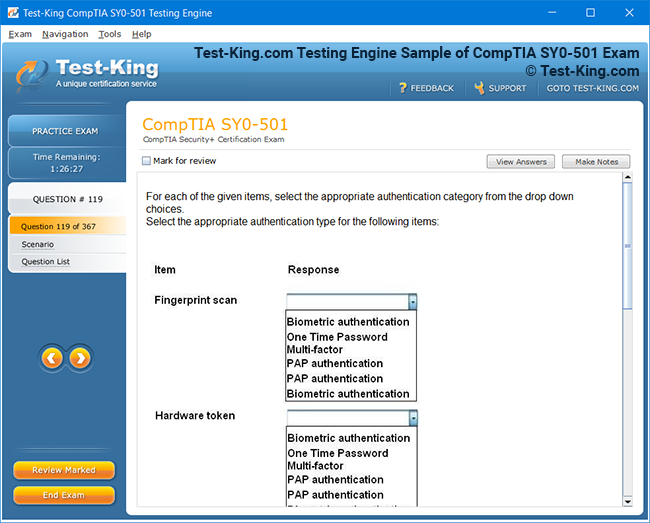
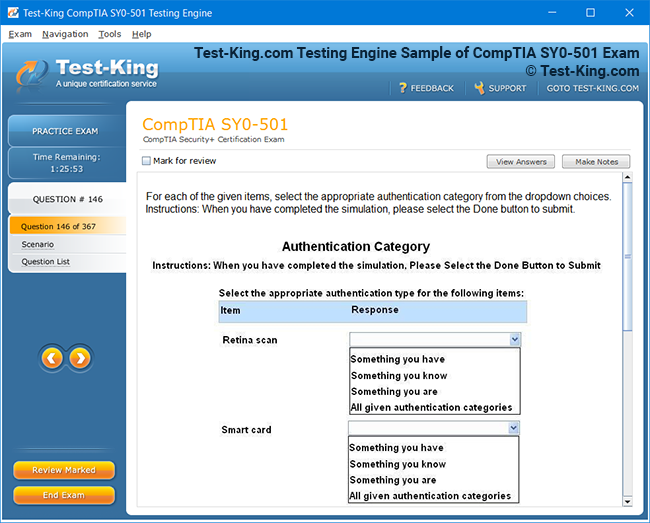
Product Screenshots
Frequently Asked Questions
How can I get the products after purchase?
All products are available for download immediately from your Member's Area. Once you have made the payment, you will be transferred to Member's Area where you can login and download the products you have purchased to your computer.
How long can I use my product? Will it be valid forever?
Test-King products have a validity of 90 days from the date of purchase. This means that any updates to the products, including but not limited to new questions, or updates and changes by our editing team, will be automatically downloaded on to computer to make sure that you get latest exam prep materials during those 90 days.
Can I renew my product if when it's expired?
Yes, when the 90 days of your product validity are over, you have the option of renewing your expired products with a 30% discount. This can be done in your Member's Area.
Please note that you will not be able to use the product after it has expired if you don't renew it.
How often are the questions updated?
We always try to provide the latest pool of questions, Updates in the questions depend on the changes in actual pool of questions by different vendors. As soon as we know about the change in the exam question pool we try our best to update the products as fast as possible.
How many computers I can download Test-King software on?
You can download the Test-King products on the maximum number of 2 (two) computers or devices. If you need to use the software on more than two machines, you can purchase this option separately. Please email support@test-king.com if you need to use more than 5 (five) computers.
What is a PDF Version?
PDF Version is a pdf document of Questions & Answers product. The document file has standart .pdf format, which can be easily read by any pdf reader application like Adobe Acrobat Reader, Foxit Reader, OpenOffice, Google Docs and many others.
Can I purchase PDF Version without the Testing Engine?
PDF Version cannot be purchased separately. It is only available as an add-on to main Question & Answer Testing Engine product.
What operating systems are supported by your Testing Engine software?
Our testing engine is supported by Windows. Andriod and IOS software is currently under development.
Step-by-Step Preparation Strategy for Passing Exam 3I0-012 on Your First Attempt
The ACI Dealing Certificate, identified by Exam Code 3I0-012, is a prestigious credential in the world of financial markets. It is designed to validate the practical knowledge and operational acumen of individuals involved in trading, treasury operations, and dealing rooms. Aspiring candidates often find themselves daunted by the breadth of topics encompassed by the examination. This certificate not only demonstrates competence in understanding financial instruments but also ensures a candidate’s familiarity with market conventions, risk management, and regulatory frameworks. Attaining the ACI Dealing Certificate opens avenues for roles that require precision, strategic thinking, and in-depth comprehension of global financial operations.
Understanding the ACI Dealing Certificate and Its Significance
The exam demands a thorough grasp of money markets, foreign exchange transactions, and derivatives, along with the ability to navigate complex financial instruments and processes. Candidates are tested on their conceptual understanding, numerical aptitude, and ability to apply theoretical knowledge in practical scenarios. The examination assesses the nuanced understanding of interest rate calculations, yield curves, forward contracts, options, and swaps. Success in this exam is indicative of a professional who can operate confidently within high-pressure financial environments, demonstrating both technical knowledge and analytical dexterity.
Establishing a Robust Foundation of Knowledge
Preparation for Exam 3I0-012 begins with building a robust foundation across core financial topics. It is crucial to understand the mechanics of foreign exchange trading, including spot, forward, and swap transactions. Knowledge of currency pairs, their quoting conventions, and the factors influencing exchange rate movements forms the bedrock of dealing proficiency. Candidates should immerse themselves in the understanding of bid-offer spreads, settlement mechanisms, and counterparty risks.
Equally important is a deep comprehension of money markets, encompassing instruments such as treasury bills, certificates of deposit, and commercial papers. Each instrument has unique characteristics, yield calculations, and conventions for pricing. Mastery of these concepts enables candidates to handle practical problems and calculation-based questions in the exam efficiently. The nuances of interest rate quotations, day count conventions, and compounding methods are essential to develop precision in analytical work. A meticulous approach to learning these elements enhances confidence and reduces errors during examination scenarios.
The derivatives domain introduces complexity through options, forwards, futures, and swaps. Candidates must understand payoff structures, hedging strategies, and the implications of market movements on derivative positions. The relationship between spot and forward rates, interest rate parity, and the mechanics of pricing derivative instruments are pivotal in the examination. Incorporating examples of real-market situations while studying aids in solidifying these concepts, making theoretical knowledge applicable and memorable.
Crafting a Study Plan with Temporal Discipline
A meticulously designed study plan is indispensable for success in Exam 3I0-012. Temporal discipline, the practice of adhering to a structured timeline for studying, ensures systematic coverage of all syllabus topics. Candidates should allocate time according to the weightage of subjects, focusing on areas that require greater analytical attention. For instance, derivatives and foreign exchange calculations often demand more time for problem-solving practice, whereas theoretical concepts can be reinforced through consistent reading.
Setting milestones for daily, weekly, and monthly learning targets prevents procrastination and enables steady progress. Integrating short review sessions at the end of each week reinforces memory retention and highlights areas requiring further attention. Candidates are advised to begin with conceptual clarity, followed by numerical practice, and finally, timed mock exercises that simulate the examination environment. The use of varied resources, including textbooks, market reports, online tutorials, and discussion forums, enriches understanding and exposes learners to different perspectives and problem-solving techniques.
In addition to structured study hours, integrating short interludes for reflection and mental rehearsal can enhance cognitive absorption of complex topics. Visualization of market scenarios, calculating interest rates mentally, and conceptualizing risk mitigation strategies develop a keen intuition that proves beneficial during the examination. Candidates often underestimate the value of temporal management, yet disciplined adherence to a study plan significantly increases the probability of success on the first attempt.
Mastering Calculation Techniques and Analytical Skills
Numerical aptitude is a critical component of the ACI Dealing Certificate examination. Candidates are frequently required to compute forward rates, interest accruals, and bond yields with precision. Mastery of these calculation techniques is achieved through repetitive practice and the understanding of underlying principles. For example, calculating the forward rate between two currencies necessitates a clear comprehension of spot rates, interest rate differentials, and day count conventions.
Analytical skills extend beyond simple calculations. Candidates must interpret market information, understand the implications of central bank policies, and anticipate the effects of geopolitical events on currency and money markets. This requires integrating theoretical knowledge with practical reasoning. Learning to dissect a problem methodically, identify relevant data, and apply formulas accurately is vital. Candidates are encouraged to solve past examination questions in sequence to develop pattern recognition and gain familiarity with question phrasing and the expected level of precision.
Additionally, time management during the numerical section is essential. Practicing under timed conditions fosters speed and accuracy while reducing anxiety during the actual examination. Attention to detail is paramount; minor miscalculations can cascade into significant errors. Developing a habit of double-checking work, using cross-verification methods, and keeping track of decimal precision enhances reliability and builds confidence.
Leveraging Real-World Market Insights
An effective preparation strategy incorporates real-world market insights alongside theoretical knowledge. Understanding current financial trends, currency volatility, interest rate movements, and global economic indicators equips candidates with practical wisdom. Reading financial news, analyzing market reports, and observing trading patterns provide context for examination questions that simulate real-life scenarios.
Candidates should familiarize themselves with central bank operations, including monetary policy decisions, open market activities, and their influence on liquidity and interest rates. Observing the interplay between macroeconomic indicators and market behavior sharpens analytical faculties. For instance, recognizing how inflation data influences interest rates and currency valuations enhances a candidate’s ability to tackle scenario-based questions with clarity.
Historical case studies of market events, such as financial crises, currency interventions, or derivative mispricing incidents, offer invaluable learning opportunities. These instances illustrate risk management failures and successes, providing lessons that transcend theoretical knowledge. By internalizing these lessons, candidates develop a pragmatic mindset that is advantageous for both examination and professional application.
Reinforcing Knowledge Through Revision and Mock Exercises
Revision and consistent practice are the cornerstones of examination readiness. Repetition consolidates learning, ensuring that conceptual clarity and numerical proficiency remain sharp. Candidates are encouraged to revisit core concepts, formulas, and market conventions periodically. Creating summary notes or mnemonic devices facilitates quick recall during intensive review periods.
Mock exercises replicate the examination environment and are instrumental in enhancing time management, accuracy, and confidence. By attempting questions under timed conditions, candidates acclimate themselves to the pressure and pacing of the actual exam. Reviewing mock results to identify weak areas allows targeted reinforcement, ensuring comprehensive coverage of all topics. Additionally, analyzing common mistakes from mock exercises aids in refining strategy and preventing repeated errors.
Engaging in group discussions or study forums can also enrich understanding. Explaining complex concepts to peers reinforces learning, while exposure to alternative problem-solving approaches broadens analytical perspectives. Collaborative learning complements solitary study by encouraging critical thinking and the application of knowledge in diverse contexts.
Developing Psychological Preparedness and Resilience
Examination success is not solely dependent on intellectual ability but also on psychological preparedness. Candidates often encounter stress, time pressure, and mental fatigue during the preparation journey. Cultivating resilience, focus, and a positive mindset is essential. Techniques such as mental rehearsal, visualization, and mindfulness exercises enhance concentration and reduce anxiety.
Balancing study hours with relaxation and adequate rest prevents burnout and maintains cognitive efficiency. Candidates should embrace a steady and sustainable study rhythm, avoiding last-minute cramming that may lead to confusion and errors. Confidence in one’s preparation stems from consistent effort, comprehensive coverage, and practical application of knowledge. Psychological readiness ensures that candidates approach the examination with composure, clarity, and determination.
Enhancing Conceptual Clarity and Advanced Financial Knowledge
Success in the ACI Dealing Certificate examination demands a profound understanding of financial instruments, market conventions, and global trading practices. Beyond basic familiarity, candidates must immerse themselves in the intricate mechanics of money markets, foreign exchange operations, and derivative products. Grasping the subtleties of spot and forward transactions, along with their settlement intricacies, creates a sturdy foundation for more complex problem-solving. Understanding the influence of interest rate differentials on forward rates and the dynamics of currency pairs allows candidates to anticipate market behavior with precision.
Money market instruments such as treasury bills, certificates of deposit, and commercial papers possess nuanced characteristics that influence their pricing, liquidity, and risk profiles. Candidates should internalize the conventions for quoting, discounting, and yield calculations, as these frequently form the basis for examination questions. Analytical comprehension of day count conventions, compounding methods, and accrued interest calculations reinforces a candidate’s ability to tackle numerical problems efficiently. Awareness of regulatory frameworks governing these instruments enhances contextual knowledge and ensures alignment with professional practices.
Derivatives, including forwards, futures, swaps, and options, present a layer of complexity that requires methodical attention. The ability to analyze payoff structures, interpret hedging strategies, and evaluate market implications distinguishes a proficient candidate. Understanding the relationship between spot and forward rates, the valuation of options, and the construction of interest rate swaps provides a tactical advantage. Real-world examples, such as the use of swaps for hedging currency exposure or options for managing interest rate risk, enrich comprehension and make theoretical knowledge practically relevant.
Structured Study Techniques and Cognitive Optimization
A meticulous approach to study is essential for navigating the breadth of the 3I0-012 syllabus. Cognitive optimization involves not only the absorption of information but also the application of memory retention strategies and analytical rehearsal. Breaking down complex topics into smaller, interrelated concepts facilitates deeper understanding and reduces cognitive overload. Candidates are encouraged to map connections between different instruments, market behaviors, and regulatory guidelines, creating a mental lattice that aids long-term retention.
Daily study routines should combine conceptual learning with numerical practice. For example, after reviewing the mechanics of forward contracts, candidates can immediately solve calculation problems involving forward rates, discount factors, and accrued interest. This immediate application reinforces learning and creates neural pathways that enhance recall under examination pressure. Integrating review cycles at regular intervals, along with brief reflection periods, consolidates knowledge and identifies areas needing reinforcement.
Visualization techniques also serve as powerful cognitive tools. Imagining a trading room scenario, executing spot transactions mentally, or simulating risk assessments cultivates an intuitive grasp of market mechanics. These exercises bridge the gap between theory and practice, preparing candidates for scenario-based questions that are increasingly common in the examination. Regular exposure to such mental simulations fosters confidence, sharpens analytical acuity, and reduces hesitation during problem-solving.
Mastering Numerical Precision and Problem-Solving Agility
Numerical proficiency is a defining characteristic of a successful candidate. Exam questions often involve calculations related to forward rates, interest accruals, bond yields, and derivative valuations. To achieve accuracy, candidates must develop systematic approaches, such as step-by-step breakdowns, cross-verification methods, and meticulous attention to decimal precision. For instance, computing a forward rate requires not only knowledge of spot rates but also an understanding of interest rate differentials, day count conventions, and market expectations.
Analytical agility involves interpreting the problem context, identifying relevant formulas, and selecting the appropriate calculation method. Candidates benefit from solving diverse problem sets that incorporate multiple layers, such as combined foreign exchange and interest rate calculations. Timed practice sessions cultivate efficiency and reduce the likelihood of errors caused by hasty calculations. Exposure to progressively complex problems gradually builds confidence, ensuring candidates are equipped to handle the full spectrum of examination challenges.
Market intuition complements numerical skills. Understanding how macroeconomic indicators, central bank policies, and geopolitical events influence currency and money markets provides context for calculations. Candidates who can link numerical results to practical market implications demonstrate a higher level of comprehension and strategic thinking. This ability to integrate analytical precision with market insight distinguishes top-performing candidates from those who rely solely on formulaic approaches.
Leveraging Study Resources and Uncommon Learning Tools
A diversified set of study resources enhances preparation by providing multiple perspectives and learning modalities. Textbooks, online tutorials, financial publications, and practice question banks offer structured knowledge, while market reports and trading simulations introduce practical nuance. Candidates should seek materials that provide both conceptual explanations and applied problem-solving exercises to ensure comprehensive understanding.
Uncommon learning tools, such as mnemonic devices, visualization maps, and scenario-based simulations, can accelerate comprehension of complex topics. Creating mental diagrams of currency flows, interest rate relationships, or derivative structures facilitates rapid recall during examinations. Collaborative learning, through discussion forums or study groups, exposes candidates to alternative approaches and reasoning strategies. Explaining concepts to peers strengthens retention and encourages the development of critical thinking, essential for tackling challenging or unfamiliar questions.
Past examination questions provide insight into recurring themes, typical question structures, and the level of detail required. Candidates should analyze patterns, categorize question types, and identify areas that historically pose challenges. By simulating examination conditions with these questions, candidates acclimate to timing pressures, question sequencing, and the cognitive stamina required to complete the exam efficiently. Incorporating a feedback loop of reviewing errors and revisiting concepts ensures continuous improvement and confidence building.
Developing Analytical Interpretation Skills for Scenario-Based Questions
The examination increasingly emphasizes scenario-based questions that assess the candidate’s ability to apply knowledge in realistic situations. Candidates may be presented with hypothetical market conditions, currency fluctuations, or derivative positions and asked to analyze outcomes, calculate exposures, or recommend strategies. Developing strong analytical interpretation skills is crucial for navigating these complex scenarios effectively.
Breaking down each scenario systematically involves identifying key variables, understanding underlying market mechanisms, and assessing the implications of each action. For example, evaluating the impact of a central bank rate change on forward contracts requires knowledge of interest rate parity, forward rate calculations, and market sentiment. Practicing with case studies from historical financial events can enhance this analytical capacity. Understanding the lessons learned from past crises or market anomalies allows candidates to approach hypothetical situations with a nuanced perspective.
Candidates should also cultivate the ability to synthesize quantitative data and qualitative insights. For instance, combining numerical results with observations about liquidity, counterparty risk, or regulatory constraints strengthens decision-making. This integrated approach ensures that responses are not only technically correct but also demonstrate practical understanding and strategic judgment.
Time Management and Examination Strategy
Effective time management is essential for completing the 3I0-012 examination efficiently. Candidates should develop strategies to allocate time proportionally to question complexity and personal strengths. Numerical problems, particularly those involving multiple steps or layered calculations, may require more time, whereas theoretical or scenario-based questions may be addressed more quickly with prepared conceptual frameworks.
A recommended approach involves an initial scan of the examination paper to identify questions with higher familiarity and confidence levels. Tackling these first secures quick marks and boosts morale, creating a positive momentum for addressing more challenging questions. Candidates should monitor pacing rigorously, avoiding the trap of over-investing time in any single problem at the expense of other questions. Maintaining clarity and focus throughout the examination is crucial; mental fatigue can result in preventable errors if pacing is neglected.
Practicing under simulated examination conditions builds endurance, reduces anxiety, and fosters adaptability to unexpected question formats. Incorporating breaks and brief mental resets during practice sessions helps sustain concentration and ensures that numerical and analytical precision is maintained throughout the examination duration. Over time, these strategies cultivate confidence, resilience, and the ability to perform consistently under pressure.
Integrating Market Awareness and Current Developments
An advanced preparation strategy involves linking examination knowledge with real-time market developments. Candidates who stay informed about global currency trends, interest rate adjustments, geopolitical events, and central bank communications develop an intuitive understanding of market movements. This awareness enhances performance in scenario-based questions that replicate realistic trading environments.
Regularly reviewing financial publications, market bulletins, and central bank reports provides context for theoretical knowledge and reinforces learning. Understanding the implications of liquidity shifts, credit risk variations, and macroeconomic indicators equips candidates to answer examination questions with practical reasoning. Additionally, reflecting on historical market events, such as currency interventions, financial crises, or derivative mispricing episodes, provides case-based insights that strengthen analytical interpretation skills.
Advanced Strategies for Mastering ACI Dealing Certificate Concepts
Preparation for the ACI Dealing Certificate examination requires more than rote memorization; it demands analytical acuity, strategic thinking, and the ability to synthesize diverse concepts. Candidates should focus on deepening their comprehension of money markets, foreign exchange mechanisms, and derivatives by exploring the interconnections between instruments, pricing conventions, and market behavior. Understanding the subtleties of interest rate calculations, forward contracts, and yield curves is essential for answering both numerical and scenario-based questions with precision.
A key element is becoming conversant with market conventions and operational procedures that govern daily trading activities. This includes settlement instructions, trade confirmations, and the impact of market holidays on transactions. The candidate must internalize not only the mechanics of the transactions but also the underlying rationale, such as liquidity management, counterparty risk mitigation, and regulatory compliance. Mastery of these nuanced concepts enables candidates to approach complex questions with confidence and accuracy, reflecting both practical competence and theoretical understanding.
In addition, candidates should explore derivative instruments in greater depth, particularly options, swaps, and structured products. Understanding payoff diagrams, hedging strategies, and the sensitivity of these instruments to underlying variables is crucial. For instance, the effect of volatility on option pricing or interest rate changes on swap valuation can present multifaceted challenges in examination questions. Engaging with real-world case studies enhances the practical applicability of theoretical knowledge, reinforcing cognitive retention and developing intuitive market judgment.
Developing a Meticulous Study Routine
A structured, disciplined approach to studying is paramount for success. Candidates should allocate sufficient time for each topic according to its complexity and weight in the syllabus. Foundational concepts such as currency pairs, spot and forward transactions, and money market instruments require early attention, establishing a robust base on which to build more advanced understanding. Daily study sessions should integrate reading, problem-solving, and reflection, ensuring concepts are actively processed rather than passively absorbed.
Repetition and incremental learning are valuable techniques for internalizing complex material. Revisiting concepts periodically, practicing calculation exercises, and reviewing previous mistakes helps solidify knowledge and identify gaps. Candidates are encouraged to create mind maps and schematic representations of instrument relationships, market flows, and calculation processes. These visual tools facilitate quick recall and conceptual interlinking, which is particularly beneficial for scenario-based questions that require simultaneous consideration of multiple variables.
Cognitive optimization also involves balancing intensity with mental recovery. Brief pauses during study sessions, reflective thinking, and strategic breaks prevent burnout and sustain focus. Candidates should cultivate habits of sustained attention, ensuring that high-concentration tasks, such as derivative valuation or complex forward calculations, are performed during peak mental alertness. This approach enhances both speed and accuracy, crucial elements for excelling in the time-constrained examination environment.
Mastering Numerical and Analytical Proficiency
Examination success is heavily dependent on numerical precision and analytical skill. Candidates must be adept at computing forward rates, interest accruals, bond yields, and derivative payoffs. Each calculation should be approached methodically, with careful attention to conventions, formulas, and decimal accuracy. For example, understanding day count conventions, compounding methodologies, and interest rate differentials is essential when calculating forward exchange rates or accrued interest on money market instruments.
Analytical proficiency extends beyond calculation. Candidates must interpret data, assess market implications, and apply theoretical principles to practical scenarios. Evaluating the effect of central bank policies on currency pairs or determining the optimal hedging strategy for an exposure requires synthesis of multiple elements. Regular practice with past examination questions, particularly those with layered complexity, develops problem-solving agility and reinforces conceptual understanding. This practice ensures candidates can adapt analytical methods to diverse question formats encountered during the examination.
Time efficiency is critical during examination. Candidates should practice solving problems under timed conditions, fostering both speed and confidence. Techniques such as prioritizing familiar questions, estimating intermediate results, and double-checking calculations help manage examination pressure. Developing the ability to identify traps or misleading data within numerical questions enhances reliability and reduces preventable errors.
Integrating Real-World Market Intelligence
Practical market awareness complements theoretical preparation. Candidates who stay attuned to currency fluctuations, interest rate changes, and macroeconomic trends cultivate an intuitive understanding of financial markets. Reading financial bulletins, analyzing central bank communications, and observing real-time trading patterns enhances comprehension of market mechanics. Integrating this intelligence with exam preparation enriches scenario-based problem-solving and strengthens judgment in complex questions.
Historical market events serve as instructive references for understanding risk management and instrument behavior. Events such as currency crises, sudden shifts in interest rates, or derivative mispricing illuminate the consequences of market dynamics and regulatory lapses. Candidates should reflect on these cases to develop strategic thinking skills, learning to anticipate market responses and apply mitigation strategies. By connecting past events to examination scenarios, learners internalize lessons in a memorable and contextually relevant manner.
Additionally, candidates should familiarize themselves with regulatory frameworks governing trading operations. Knowledge of reporting requirements, compliance protocols, and risk limits ensures a holistic understanding of the market environment. Regulatory awareness not only aids in answering examination questions accurately but also reflects professional competence, an attribute valued in real-world financial operations.
Utilizing Practice Exercises and Mock Scenarios
Consistent practice through exercises and mock scenarios is essential for exam readiness. Numerical questions, conceptual exercises, and scenario-based simulations provide a comprehensive platform for applying learned concepts. Candidates should focus on solving a variety of problems that incorporate multiple variables, reflecting the integrated nature of real-world financial decisions. Repetition and review of errors from these exercises reinforce learning and cultivate precision.
Mock examinations, conducted under timed conditions, simulate the actual exam environment, allowing candidates to refine pacing, manage stress, and develop endurance. Reviewing the results to identify recurring weaknesses enables targeted improvement. Candidates can categorize mistakes into conceptual misunderstandings, numerical errors, or misinterpretation of questions, addressing each systematically. This iterative process strengthens both competence and confidence, critical factors for achieving success on the first attempt.
Scenario-based questions demand analytical reasoning and practical judgment. Candidates may be presented with hypothetical market situations, such as interest rate fluctuations affecting forward contracts or swaps, and asked to determine exposure, calculate valuations, or propose hedging strategies. Developing a stepwise approach to analyze these scenarios, incorporating relevant calculations and qualitative insights, ensures coherent and accurate responses.
Cultivating Psychological Resilience and Focus
Examination preparation requires not only intellectual mastery but also psychological fortitude. Candidates must navigate extended study hours, intensive problem-solving sessions, and the pressures of performance expectations. Maintaining focus and emotional equilibrium is crucial for sustaining effective learning and performing optimally during the examination. Techniques such as mindfulness, visualization, and structured breathing exercises enhance concentration and reduce anxiety.
Building resilience involves developing confidence in preparation through repeated practice, reflection, and gradual exposure to challenging questions. Candidates should cultivate a mindset that treats mistakes as learning opportunities rather than setbacks, fostering adaptive thinking. Maintaining a balanced lifestyle, including adequate rest, nutrition, and physical activity, supports cognitive function and mental alertness. Psychological preparedness is particularly important for complex scenario-based questions, where clarity of thought and composure significantly influence accuracy.
Regular reflection on progress also reinforces self-awareness. Candidates can maintain a journal to track strengths, identify persistent weaknesses, and note improvements over time. This practice encourages disciplined preparation, self-motivation, and strategic focus, ensuring that learning remains purposeful and targeted.
Strategic Integration of Concepts
A holistic preparation strategy emphasizes the integration of all studied concepts. Candidates must develop the ability to connect knowledge of money markets, foreign exchange, derivatives, and regulatory frameworks into coherent analytical reasoning. For example, understanding the interplay between interest rate movements, currency valuations, and derivative hedging strategies enables candidates to approach complex examination questions with confidence and insight.
Practice exercises should reflect this integrative approach, combining multiple aspects of the syllabus into single problems. Analyzing combined scenarios, calculating multi-instrument exposures, and evaluating the impact of regulatory constraints cultivates comprehensive understanding. Candidates who can synthesize theoretical knowledge, numerical precision, and practical awareness demonstrate higher-order thinking skills, a quality reflected in top examination performance.
Refining Practical Skills for the ACI Dealing Certificate Examination
Achieving success in the ACI Dealing Certificate examination demands not only theoretical understanding but also refined practical skills that enable seamless application of knowledge in simulated and real-world contexts. Candidates must cultivate familiarity with the nuances of money markets, foreign exchange operations, and derivative instruments, as these are central to examination content. Mastering the mechanics of spot transactions, forward contracts, swaps, and options allows a candidate to approach questions with confidence and analytical clarity.
The intricate world of money markets necessitates comprehension of various instruments, including treasury bills, certificates of deposit, and commercial papers. Each instrument possesses unique yield calculations, settlement procedures, and risk profiles. Candidates must internalize these characteristics to accurately calculate accrued interest, discount rates, and maturity values. The interplay of liquidity, counterparty exposure, and regulatory compliance further enriches the understanding of these instruments and enhances the ability to answer scenario-based questions that integrate multiple factors.
Derivatives introduce a layer of sophistication, requiring candidates to analyze payoff structures, evaluate hedging techniques, and understand the sensitivity of positions to underlying market variables. Options, for instance, involve volatility, time decay, and intrinsic value considerations, while swaps require comprehension of interest rate differentials and periodic cash flows. Applying theoretical knowledge to calculate and interpret these instruments strengthens both cognitive retention and practical judgment, which are indispensable for examination success.
Structured Learning and Cognitive Consolidation
A methodical approach to learning is essential to navigate the breadth of material encompassed by Exam 3I0-012. Candidates should develop a structured study timetable that allocates sufficient attention to foundational topics, such as interest rate calculations, currency conventions, and basic derivative mechanics, before progressing to advanced analytical exercises. Consistent repetition and review consolidate understanding and reduce the likelihood of errors under examination pressure.
Cognitive consolidation is enhanced by integrating conceptual understanding with hands-on problem solving. For instance, after studying forward rate mechanisms, candidates should immediately practice calculation exercises, analyzing the impact of interest rate differentials, spot rates, and day count conventions. By linking theoretical comprehension with practical application, the candidate develops a holistic understanding that aids both numerical accuracy and scenario-based interpretation.
Visualization techniques and mental rehearsal further augment cognitive consolidation. Imagining trading scenarios, simulating hedging strategies, or mentally executing a series of transactions sharpens analytical intuition and facilitates rapid recall during examinations. Candidates are encouraged to employ schematic diagrams and conceptual flowcharts to map relationships between instruments, market conditions, and regulatory constraints, creating a mental lattice that supports integrated reasoning.
Advanced Numerical Proficiency and Problem-Solving
Numerical competence is a central pillar for excelling in the ACI Dealing Certificate examination. Candidates must accurately compute forward exchange rates, accrued interest, bond yields, and derivative valuations. These calculations require meticulous attention to formulas, conventions, and decimal precision. For example, computing forward rates involves integrating spot rates, interest rate differentials, and time adjustments using day count conventions specific to the relevant currency pair.
Analytical problem-solving goes beyond mechanical calculation. Candidates must interpret contextual information, assess the implications of macroeconomic variables, and synthesize multiple data points to provide accurate and coherent answers. Questions may present scenarios where currency fluctuations, interest rate changes, and derivative positions interact, demanding a multidimensional approach. Regular exposure to progressively complex problems strengthens adaptability and enhances speed and precision in numerical execution.
Time management plays a critical role in maintaining accuracy under examination conditions. Candidates should practice solving problems within prescribed time limits, developing strategies for prioritizing questions based on complexity and familiarity. Techniques such as initial scanning of the paper, identifying high-confidence areas, and allocating remaining time strategically enhance efficiency and reduce the risk of incomplete responses.
Practical Market Awareness and Scenario Analysis
Integrating real-world market awareness into preparation enhances analytical reasoning and scenario-based performance. Candidates should monitor global financial trends, central bank policy decisions, and macroeconomic indicators to develop an intuitive understanding of market movements. Such awareness allows candidates to connect theoretical knowledge with plausible market behaviors, an essential skill for scenario-based questions.
Historical case studies provide valuable insights into market dynamics, risk management strategies, and instrument behavior under stress conditions. For example, analyzing currency crises, interest rate shocks, or derivative mispricing events illustrates how theoretical principles manifest in practice. Candidates can extract lessons from these events, applying them to examination scenarios that require evaluating exposures, proposing hedging strategies, or interpreting market implications. This contextual integration strengthens both analytical capacity and cognitive agility.
Regulatory frameworks also influence practical decision-making. Understanding compliance requirements, reporting obligations, and operational limits is critical for addressing examination questions that simulate trading environments. Candidates who integrate regulatory knowledge with analytical reasoning can produce responses that are both technically correct and professionally informed, reflecting a holistic approach to market understanding.
Intensive Practice and Mock Examination Strategies
Repetitive practice is indispensable for mastering the examination syllabus. Candidates should engage in exercises covering all major topics, including money markets, foreign exchange mechanics, derivative valuations, and scenario-based problems. Diverse problem sets, ranging from straightforward calculations to complex integrated scenarios, facilitate cognitive flexibility and reinforce understanding of interrelated concepts.
Mock examinations simulate real exam conditions, enabling candidates to refine pacing, assess time management, and develop stamina for prolonged analytical work. Reviewing mock results identifies recurring errors, highlighting areas that require additional reinforcement. Candidates should categorize mistakes by type, such as calculation errors, conceptual misunderstandings, or misinterpretation of scenario data, and implement targeted improvement strategies. This iterative approach ensures continuous enhancement of both knowledge and confidence.
Scenario-based exercises should focus on multi-variable problems, requiring the integration of numerical proficiency, conceptual clarity, and market awareness. For instance, evaluating the impact of an interest rate change on both currency forwards and derivative positions demands coordinated application of multiple concepts. Regular practice with such integrated scenarios fosters the ability to dissect problems methodically, prioritize analytical steps, and produce coherent, accurate answers under examination pressure.
Psychological Preparedness and Performance Optimization
Examination success hinges not only on intellectual mastery but also on psychological readiness. Candidates must cultivate resilience, focus, and composure to navigate the pressures of extensive study and time-constrained examination conditions. Techniques such as mindfulness, controlled breathing, and visualization exercises enhance concentration, reduce anxiety, and improve cognitive performance.
Building confidence through iterative practice and reflective learning is essential for maintaining mental fortitude. Candidates should adopt a growth-oriented mindset, treating mistakes as opportunities to refine understanding and develop adaptive strategies. Maintaining balance through proper rest, nutrition, and exercise supports mental acuity and sustains attention during long examination sessions. Psychological preparedness enables candidates to approach complex questions methodically and respond effectively to scenario-based challenges.
Maintaining a record of progress, such as tracking strengths, weaknesses, and improvements, fosters self-awareness and accountability. This practice encourages disciplined preparation, provides measurable feedback, and reinforces motivation. Candidates who actively monitor their development are better equipped to adjust strategies, optimize learning, and approach the examination with clarity and confidence.
Integration of Knowledge and Analytical Synthesis
The ability to integrate knowledge across multiple domains is a hallmark of a successful candidate. Exam questions often require simultaneous consideration of money market instruments, foreign exchange conventions, derivatives, and regulatory frameworks. Candidates must synthesize these elements to analyze scenarios, calculate exposures, and propose solutions accurately.
Developing integrative analytical skills involves practicing combined scenarios, where multiple instruments and market variables interact. For example, understanding how a change in central bank rates affects forward contracts, swaps, and liquidity management demonstrates mastery of interconnected concepts. By cultivating the ability to synthesize numerical calculations with theoretical insight and practical awareness, candidates enhance both efficiency and accuracy, positioning themselves for success in the examination.
Mastering Complex Calculations and Numerical Precision
Success in the ACI Dealing Certificate examination requires mastery of complex calculations and numerical accuracy. Candidates must develop fluency in computing forward exchange rates, interest accruals, bond yields, and derivative valuations. These calculations necessitate attention to detail, awareness of day count conventions, and careful application of formulas. For example, when determining the forward rate between two currencies, the candidate must consider spot rates, the interest rate differential, and the relevant time periods to achieve precise results. Repeated practice of such calculations strengthens cognitive retention and enhances speed and confidence under examination conditions.
Accurate numerical proficiency is complemented by analytical thinking. Candidates must evaluate the impact of variables such as interest rate fluctuations, market volatility, and liquidity constraints on instrument pricing. Integrating these elements requires both conceptual clarity and mathematical rigor. For instance, assessing the effect of an unexpected central bank rate decision on a forward contract demands understanding both the calculation mechanics and the underlying market rationale. Such multi-layered reasoning is essential for handling the more sophisticated questions frequently posed in the examination.
To cultivate numerical agility, candidates should solve a diverse array of problems, gradually increasing in complexity. Exercises should include integrated scenarios, combining multiple instruments, and considering macroeconomic implications. This approach not only reinforces foundational knowledge but also develops the analytical dexterity necessary for real-world trading scenarios. Mental calculation exercises, alongside written practice, can further enhance speed and accuracy, particularly under time constraints.
Developing Analytical Interpretation for Scenario-Based Questions
Scenario-based questions challenge candidates to synthesize knowledge of money markets, foreign exchange, derivatives, and regulatory considerations. Candidates are presented with hypothetical market conditions and asked to interpret outcomes, calculate exposures, or recommend strategies. Developing a structured analytical approach is crucial for success. The first step involves identifying key variables, followed by recognizing the relationships between them and determining which principles or formulas are applicable. This methodical approach reduces errors and ensures coherent, logically justified responses.
A crucial aspect of scenario analysis is understanding market causality. For example, evaluating how a change in interest rates influences both currency forwards and derivative positions requires an integrated perspective, linking numerical calculations to practical market implications. Candidates should also consider counterparty risk, liquidity constraints, and settlement conventions, as these factors often appear subtly within scenario questions. Developing proficiency in interpreting such embedded details enhances both accuracy and analytical depth.
Historical market events provide a practical lens for understanding scenario dynamics. For instance, studying past currency crises, derivative mispricing incidents, or rapid liquidity shifts illustrates the consequences of market behavior under stress. Candidates can apply insights from these events to hypothetical examination scenarios, enhancing their ability to anticipate potential outcomes and devise appropriate strategies. Integrating real-world awareness with analytical reasoning cultivates a nuanced understanding that is highly advantageous in examination performance.
Refining Time Management Strategies for Examination Efficiency
Efficient time management is critical for completing the ACI Dealing Certificate examination successfully. Candidates must allocate time based on the complexity of questions, ensuring that numerical calculations, scenario-based interpretations, and theoretical questions are approached with appropriate pacing. An initial scan of the examination paper allows candidates to identify areas of strength and strategically prioritize their responses, securing early marks and building confidence.
Timed practice exercises are invaluable for developing pacing strategies. Candidates should simulate examination conditions, attempting questions within prescribed time limits. This practice cultivates familiarity with time allocation, reduces anxiety, and enhances stamina for prolonged analytical work. Techniques such as dividing the examination into manageable segments, monitoring progress periodically, and adjusting pacing based on question difficulty ensure that candidates can complete the paper efficiently while maintaining accuracy.
Time management also involves balancing speed with precision. Candidates must develop the ability to quickly recognize the most effective approach to a problem while minimizing calculation errors. For instance, estimating intermediate results before finalizing a calculation can prevent missteps, particularly in multi-step numerical questions. Regular timed practice reinforces these strategies and builds confidence in executing complex calculations under pressure.
Integrating Market Awareness with Examination Preparation
A sophisticated understanding of market dynamics enhances the candidate’s ability to answer scenario-based questions and interpret examination data accurately. Candidates should monitor global currency trends, interest rate adjustments, central bank announcements, and macroeconomic indicators. This awareness allows for contextual interpretation of numerical results and scenario outcomes, bridging the gap between theoretical knowledge and practical application.
Historical case studies offer valuable lessons for examination preparation. Analyzing past market volatility, liquidity disruptions, and derivative mispricing provides insights into the interplay of risk, pricing, and regulatory constraints. Candidates can draw on these examples to inform scenario-based responses, applying lessons learned to anticipate potential market outcomes. Understanding the practical consequences of regulatory changes, market interventions, and global economic events strengthens analytical reasoning and reinforces examination readiness.
Regulatory knowledge complements market awareness. Candidates must understand compliance protocols, reporting obligations, and operational limits, as these often form implicit components of scenario-based questions. Integrating regulatory awareness with practical market insights ensures responses are both technically accurate and professionally informed, reflecting a comprehensive understanding of trading environments.
Utilizing Diverse Study Resources and Learning Techniques
An effective preparation strategy incorporates a wide array of study resources, including textbooks, online tutorials, financial publications, market reports, and question banks. Each resource offers unique perspectives and reinforces different aspects of the syllabus. Candidates should prioritize materials that combine conceptual explanations with applied problem-solving exercises, ensuring a balance of theory and practice.
Innovative learning techniques, such as mnemonic devices, visualization maps, and schematic diagrams, aid in memory retention and conceptual integration. Mapping relationships between currency pairs, money market instruments, and derivative structures facilitates rapid recall during examination scenarios. Collaborative learning through discussion forums or study groups encourages exposure to diverse problem-solving strategies, reinforcing critical thinking and adaptability.
Regular engagement with past examination questions is crucial. Candidates should analyze patterns, question types, and recurring challenges, using insights to guide targeted study. Attempting questions under timed conditions simulates the examination environment and builds familiarity with pacing, pressure, and question sequencing. Reviewing mistakes systematically allows candidates to address weaknesses, refine strategies, and consolidate knowledge.
Enhancing Psychological Preparedness and Focus
Psychological readiness is as vital as intellectual preparation for examination success. Candidates must develop resilience, focus, and composure to navigate extensive study hours, challenging problem sets, and time-limited examination conditions. Techniques such as mindfulness exercises, mental visualization, and controlled breathing enhance concentration and reduce anxiety, fostering optimal cognitive performance.
Confidence is strengthened through iterative practice, reflective learning, and progressive exposure to challenging questions. Candidates should adopt a mindset that views mistakes as opportunities for growth and refinement, cultivating adaptive thinking. Maintaining balance with adequate rest, nutrition, and physical activity supports sustained attention and cognitive function during intensive preparation periods and examination performance.
Keeping a record of progress aids self-awareness and accountability. Candidates can track strengths, weaknesses, and improvement trends, adjusting study strategies accordingly. This practice encourages disciplined preparation, reinforces motivation, and ensures that learning remains purposeful and targeted. Psychological resilience and strategic self-monitoring together provide a competitive edge in successfully navigating complex examination challenges.
Integrating Knowledge Across Concepts
Successful candidates demonstrate the ability to integrate knowledge across multiple domains, synthesizing money market mechanics, foreign exchange conventions, derivative valuation, and regulatory understanding. Examination questions frequently require consideration of interrelated factors, demanding coherent, comprehensive responses. Developing the skill to connect calculations, scenario analysis, and practical market insights allows candidates to approach complex questions methodically.
Integrated practice exercises are particularly beneficial. For example, evaluating how an interest rate change impacts both forward contracts and swap positions requires combined numerical calculation, market interpretation, and scenario evaluation. Regular engagement with such exercises strengthens analytical agility and promotes a holistic understanding of financial market operations, positioning candidates for optimal performance in the examination.
Final Preparation Strategies for the ACI Dealing Certificate Examination
Approaching the ACI Dealing Certificate examination requires a synthesis of knowledge, practical skills, and psychological readiness. Candidates must refine their understanding of money markets, foreign exchange operations, derivatives, and regulatory frameworks, while simultaneously ensuring their numerical precision and analytical interpretation are honed. The culmination of preparation focuses on consolidating knowledge through intensive revision, targeted practice, and strategic application of learned concepts.
One crucial element in the final stages of preparation is the refinement of calculation techniques. Candidates must ensure fluency in computing forward exchange rates, interest accruals, bond yields, and derivative valuations. These exercises should be performed with meticulous attention to detail, including correct application of day count conventions, compounding methods, and decimal precision. Developing an instinctive understanding of the interplay between spot rates, interest rate differentials, and time periods enhances both speed and accuracy. Repeated practice in this stage allows candidates to approach numerical questions with confidence, reducing the likelihood of errors under examination pressure.
Intensified Scenario-Based Practice
Scenario-based questions increasingly dominate the ACI Dealing Certificate examination. Candidates are presented with hypothetical market conditions that require integration of multiple concepts, including money market instruments, foreign exchange mechanics, derivative strategies, and regulatory implications. Mastering this skill demands an analytical approach where key variables are identified, relationships between them are mapped, and the appropriate principles and calculations are applied systematically.
Historical market events provide invaluable learning opportunities for scenario interpretation. By analyzing past currency fluctuations, derivative mispricing incidents, and liquidity crises, candidates develop an intuition for potential outcomes and effective risk management strategies. This practical lens allows for a nuanced understanding of how theoretical principles manifest in real-world scenarios. Incorporating such case studies into final preparation ensures that candidates are equipped to navigate complex, multi-variable questions effectively.
Candidates should also practice the integration of regulatory knowledge with scenario analysis. Understanding compliance requirements, reporting obligations, and operational limits ensures that responses are both technically accurate and professionally sound. This synthesis of market insight, calculation proficiency, and regulatory awareness is a hallmark of top-performing candidates.
Optimizing Time Management and Examination Strategy
Effective time management is a decisive factor for examination success. Candidates must strategically allocate time to different types of questions, balancing numerical calculations, scenario analysis, and theoretical responses. An initial overview of the examination allows for prioritization based on familiarity and confidence, securing early marks and establishing momentum.
Timed mock exercises replicate the pressure of the examination environment, fostering familiarity with pacing and endurance. Candidates should practice solving complex, multi-step questions within set durations, monitoring the accuracy of results and identifying areas for improvement. Developing techniques such as preliminary estimation, stepwise calculation, and double-checking intermediate results enhances both efficiency and reliability. This stage of preparation ensures that candidates can complete the examination within allocated timeframes while maintaining precision and clarity.
Reinforcing Market Awareness and Practical Application
In the final stage of preparation, candidates should deepen their engagement with real-world market dynamics. Monitoring currency trends, interest rate movements, central bank announcements, and macroeconomic indicators allows candidates to contextualize theoretical knowledge and numerical results. This awareness aids in interpreting scenario-based questions and applying practical reasoning to problem-solving exercises.
Candidates should also revisit historical financial events to reinforce understanding of market behavior under stress conditions. Case studies involving currency crises, derivative exposure mismanagement, and interest rate shocks provide valuable insights into risk mitigation and decision-making processes. Integrating these insights into practice exercises enhances analytical sophistication, preparing candidates to handle multifaceted examination questions with composure and precision.
Intensive Revision Techniques
Revision in the final stages should focus on consolidating knowledge, correcting misconceptions, and reinforcing memory retention. Candidates are encouraged to review key concepts in money markets, foreign exchange operations, derivatives, and regulatory practices systematically. Creating condensed notes or conceptual flowcharts facilitates quick recall during last-minute revision, ensuring that critical information is easily accessible.
Practice exercises should be revisited with a focus on identifying persistent errors and refining problem-solving approaches. Candidates can categorize mistakes into conceptual misunderstandings, calculation inaccuracies, or scenario interpretation challenges. Targeted review of these areas strengthens weak points and builds confidence. Integrating mock questions under timed conditions further consolidates learning, preparing candidates for the pace and pressure of the actual examination.
Visualization and mental rehearsal techniques also play a significant role in final preparation. Candidates can simulate trading scenarios, execute hypothetical transactions mentally, and visualize market movements to enhance intuition and analytical readiness. These techniques bridge the gap between theory and application, fostering a confident and proactive mindset.
Psychological Readiness and Performance Optimization
Examination readiness encompasses both intellectual preparation and psychological resilience. Candidates must cultivate focus, composure, and adaptability to manage the demands of intensive study and time-limited examination conditions. Mindfulness practices, structured breathing exercises, and short cognitive resets enhance concentration and reduce anxiety, enabling candidates to maintain clarity throughout the examination.
Confidence emerges from consistent practice, reflection, and reinforcement of knowledge. Candidates should adopt a positive mindset that views challenges as opportunities to demonstrate competence and apply learned strategies. Maintaining balance through adequate rest, proper nutrition, and physical activity supports cognitive function, mental endurance, and sustained attention. Psychological readiness ensures that candidates can approach complex calculations, scenario analyses, and integrated questions with clarity and composure.
Keeping a record of progress, including strengths, weaknesses, and improvements, encourages disciplined preparation and strategic focus. This self-monitoring approach allows candidates to make informed adjustments to their revision, prioritize critical areas, and optimize performance in the days leading up to the examination.
Integration of Knowledge and Strategic Application
The final preparation stage emphasizes the integration of all learned concepts. Candidates must synthesize understanding of money markets, foreign exchange, derivatives, and regulatory frameworks into coherent analytical reasoning. Examination questions frequently require simultaneous application of multiple knowledge domains, demanding precision, judgment, and strategic thinking.
Integrated practice exercises are particularly effective at this stage. Candidates can work on scenarios combining interest rate calculations, forward contracts, derivative exposures, and market risk assessments. Analyzing these complex problems cultivates holistic thinking, ensuring that candidates can approach examination questions methodically and produce accurate, well-reasoned responses. Developing the ability to connect numerical precision with practical market insight and regulatory awareness enhances overall performance and positions candidates for success.
Conclusion
Achieving success in the ACI Dealing Certificate examination is the culmination of disciplined study, practical skill development, and psychological readiness. Candidates who meticulously refine their numerical proficiency, analytical interpretation, and scenario-based problem-solving abilities are well-equipped to navigate the examination with confidence. Integrating market awareness, regulatory knowledge, and historical insights strengthens comprehension and prepares candidates to handle complex, multi-variable questions effectively.
Intensive revision, strategic time management, and visualization techniques ensure that knowledge is consolidated and accessible under examination conditions. Psychological preparedness, including focus, composure, and resilience, supports sustained performance and facilitates the application of learned strategies. The synthesis of these elements—numerical accuracy, analytical reasoning, practical market insight, and psychological readiness—provides a comprehensive framework for passing Exam 3I0-012 on the first attempt.
Candidates who follow this structured and holistic approach are positioned not only to achieve certification but also to apply their skills proficiently in real-world financial markets, demonstrating competence, confidence, and professional acumen.