

Exam Code: EX0-115
Exam Name: IT Service Management Foundation based on ISO / IEC 20000
Certification Provider: Exin
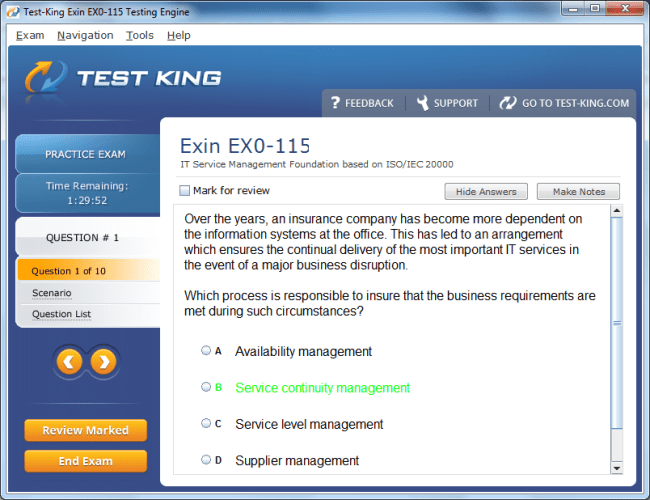
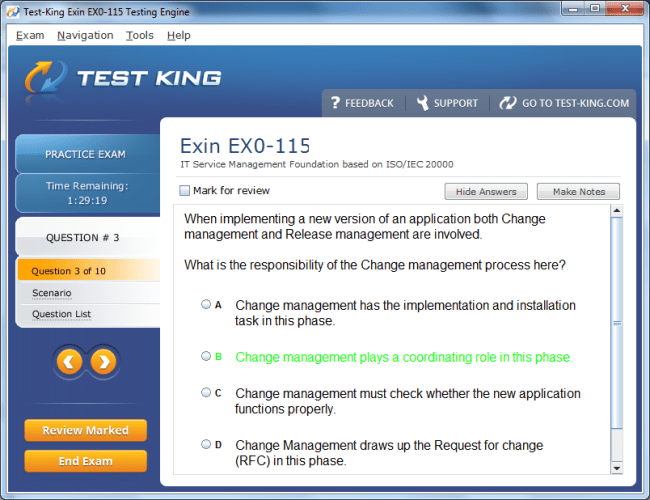
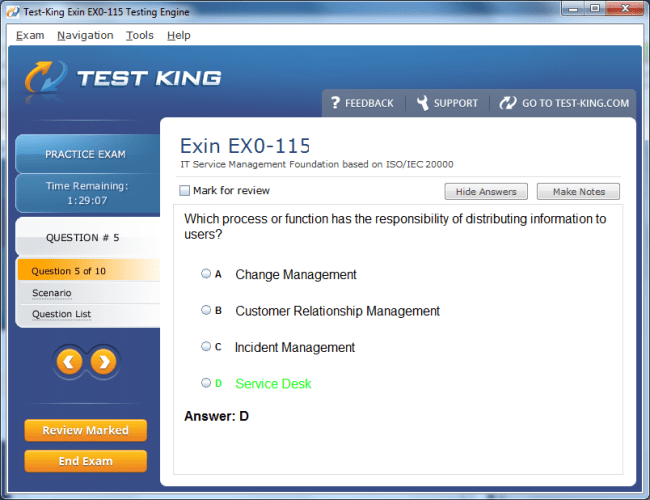
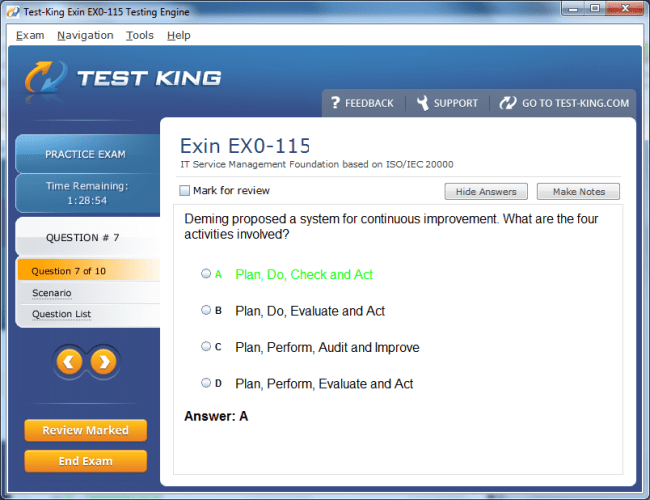
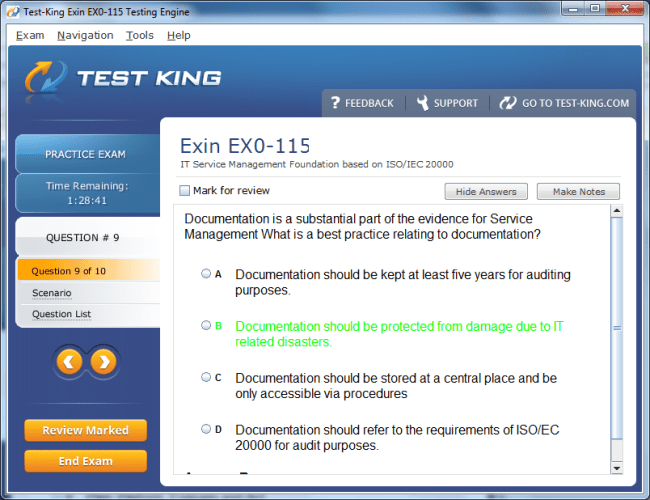
EX0-115 Exam Product Screenshots
Frequently Asked Questions
How can I get the products after purchase?
All products are available for download immediately from your Member's Area. Once you have made the payment, you will be transferred to Member's Area where you can login and download the products you have purchased to your computer.
How long can I use my product? Will it be valid forever?
Test-King products have a validity of 90 days from the date of purchase. This means that any updates to the products, including but not limited to new questions, or updates and changes by our editing team, will be automatically downloaded on to computer to make sure that you get latest exam prep materials during those 90 days.
Can I renew my product if when it's expired?
Yes, when the 90 days of your product validity are over, you have the option of renewing your expired products with a 30% discount. This can be done in your Member's Area.
Please note that you will not be able to use the product after it has expired if you don't renew it.
How often are the questions updated?
We always try to provide the latest pool of questions, Updates in the questions depend on the changes in actual pool of questions by different vendors. As soon as we know about the change in the exam question pool we try our best to update the products as fast as possible.
How many computers I can download Test-King software on?
You can download the Test-King products on the maximum number of 2 (two) computers or devices. If you need to use the software on more than two machines, you can purchase this option separately. Please email support@test-king.com if you need to use more than 5 (five) computers.
What is a PDF Version?
PDF Version is a pdf document of Questions & Answers product. The document file has standart .pdf format, which can be easily read by any pdf reader application like Adobe Acrobat Reader, Foxit Reader, OpenOffice, Google Docs and many others.
Can I purchase PDF Version without the Testing Engine?
PDF Version cannot be purchased separately. It is only available as an add-on to main Question & Answer Testing Engine product.
What operating systems are supported by your Testing Engine software?
Our testing engine is supported by Windows. Andriod and IOS software is currently under development.
Top Exin Exams
Top Tips to Pass the EX0-115 Certification Exam
The EX0-115 certification, known formally as the IT Service Management Foundation based on ISO/IEC 20000, represents a crucial milestone for professionals seeking to validate their comprehension of structured service management principles. Navigating this exam requires more than rote memorization; it demands a profound understanding of the ISO/IEC 20000 standard, its implications on organizational IT service delivery, and the nuanced interplay between processes, roles, and continual improvement mechanisms. Candidates frequently underestimate the depth of the exam, which tests not only theoretical knowledge but also practical insight into aligning IT services with business objectives. Recognizing this complexity, a systematic approach to study, grounded in both strategic planning and cognitive retention techniques, is indispensable.
Understanding the EX0-115 Exam and Effective Study Strategies
A fundamental aspect of preparing for the EX0-115 certification is developing a meticulous study schedule that balances comprehension, practice, and reflection. While many aspirants rush through materials, a deliberate pace ensures that the conceptual frameworks and process interactions are internalized. One effective strategy involves segmenting the study content into thematic clusters, such as service delivery, service management system planning, and continual service improvement. This approach allows learners to cultivate associative memory, wherein the relationships between different processes, such as incident management, problem management, and change control, become more intuitive. Incorporating rare mnemonic devices, such as vivid imagery or allegorical representations of service scenarios, can further enhance retention and facilitate rapid recall during the examination.
Time management during preparation plays a critical role in optimizing both learning and performance. Candidates are encouraged to adopt a tri-phasic approach: initial familiarization with the ISO/IEC 20000 framework, intermediate consolidation through iterative review and practice, and final refinement with timed mock assessments. Allocating study blocks that range from sixty to ninety minutes, interspersed with brief cognitive rests, leverages the brain’s natural encoding cycles and prevents fatigue. It is also advantageous to integrate varied study modalities. Reading official standards, watching explanatory videos, and engaging in discussion forums each stimulate different cognitive pathways, thereby strengthening comprehension.
Exam Structure and Question Patterns
The EX0-115 exam is designed to evaluate understanding across a spectrum of service management domains. It comprises multiple-choice questions that probe conceptual clarity, process comprehension, and situational reasoning. A common question might present a hypothetical organizational challenge, such as an unexpected surge in incident tickets or the implementation of a new service, and require candidates to select the most appropriate course of action consistent with ISO/IEC 20000 principles. Understanding these question types is essential for crafting precise responses under time constraints.
One frequent query encountered by candidates pertains to the differentiation between service-level management and capacity management. In such cases, the optimal strategy is to contextualize the question within an organizational scenario. Service-level management emphasizes negotiating, documenting, and monitoring agreed-upon service levels, ensuring that deliverables meet predefined expectations. Capacity management, in contrast, focuses on analyzing service performance trends and projecting future resource requirements to sustain agreed service levels. By internalizing these distinctions, learners can swiftly and accurately answer scenario-based questions without second-guessing.
Another commonly posed scenario involves the assessment of continual improvement initiatives. Candidates may be asked to evaluate the effectiveness of a recently implemented process improvement or service optimization strategy. The recommended approach is to consider the complete lifecycle of the improvement initiative, from initial identification of gaps, through planning, implementation, and measurement of outcomes, culminating in corrective actions where necessary. Understanding this holistic perspective aligns with the ISO/IEC 20000 ethos and equips candidates to answer situational questions with precision.
Maximizing Retention Through Active Learning
Active learning techniques form the cornerstone of effective exam preparation. Rather than passively reading, candidates benefit from engaging in exercises that challenge their comprehension and analytical capabilities. For example, summarizing each process in one’s own lexicon reinforces understanding and highlights areas that require further attention. Similarly, teaching key concepts to a peer or even articulating them aloud to oneself fosters deeper cognitive connections and uncovers latent misunderstandings. A particularly efficacious method is to simulate service management scenarios in a hypothetical organizational context, mapping out process interactions, identifying potential risks, and determining appropriate mitigation strategies. This form of experiential learning bridges the gap between theoretical knowledge and applied acumen.
In addition to scenario simulation, the deliberate practice of recall under time constraints sharpens cognitive agility. Candidates should periodically attempt full-length mock exams, emulating the exact conditions of the EX0-115 test. Tracking performance metrics, such as response accuracy and time per question, provides actionable insights into strengths and weaknesses. It is advisable to review incorrectly answered questions meticulously, not merely noting the correct answer but understanding the underlying rationale, which solidifies knowledge and prevents repetition of errors. Integrating these insights into subsequent study cycles ensures progressive refinement and enduring mastery of the material.
Handling Exam Anxiety and Cognitive Load
Exam anxiety is a formidable yet often underestimated obstacle to success. The high stakes associated with certification, coupled with the perceived complexity of the ISO/IEC 20000 framework, can induce stress that impairs memory retrieval and decision-making. Techniques to mitigate anxiety include structured breathing exercises, visualization of successful performance, and incremental exposure to practice questions to build confidence. Cognitive load management is equally vital. Candidates should avoid overloading their study sessions with excessive new information, opting instead for iterative reinforcement of concepts, which consolidates neural pathways and enhances long-term retention.
Mindfulness and focus-enhancing practices also contribute significantly to performance. Allocating brief intervals for reflection between study blocks allows the brain to assimilate and reorganize information, resulting in more robust encoding. Furthermore, maintaining a disciplined approach to nutrition, hydration, and sleep underpins cognitive performance, particularly in the final days preceding the exam. The interplay of mental preparation, physical well-being, and structured revision creates a synergistic effect that enhances both confidence and recall ability during the EX0-115 test.
Integrating Real-world Applications
Bridging the theoretical constructs of ISO/IEC 20000 with practical applications solidifies comprehension and prepares candidates for scenario-based questions. For instance, understanding how change management mitigates operational risks can be reinforced by reflecting on real organizational incidents, such as service outages due to uncoordinated updates. Similarly, analyzing the effectiveness of incident management frameworks in case studies allows candidates to recognize patterns, anticipate challenges, and recommend solutions aligned with standard practices. These exercises cultivate an applied intelligence that transcends rote learning and positions candidates to navigate complex exam questions adeptly.
A nuanced understanding of continual improvement also emerges through practical application. By examining iterative enhancements within a service delivery framework, candidates appreciate how metrics, feedback loops, and corrective actions interrelate. For example, tracking incident trends, identifying recurrent issues, and implementing preventative measures exemplifies the continual service improvement cycle in action. Incorporating these insights into preparation enables candidates to approach both conceptual and situational questions with clarity and sophistication.
Leveraging Peer Discussions and Expert Insights
Engaging in discourse with fellow aspirants and certified professionals provides an invaluable dimension to exam preparation. Discussions often reveal alternative interpretations of processes, subtle distinctions in terminology, and practical nuances that textbooks may overlook. Participating in forums or study groups allows for the exploration of complex topics, such as the integration of service management systems across multi-vendor environments or the alignment of IT services with strategic business objectives. Expert insights, drawn from seasoned practitioners, illuminate potential pitfalls and highlight best practices, offering aspirants a competitive edge.
Collaborative learning also fosters accountability and motivation. Setting shared milestones, exchanging scenario analyses, and providing mutual feedback encourage disciplined study habits and sustained engagement. Candidates frequently discover that articulating their understanding to others exposes knowledge gaps, prompting targeted review and reinforcement. This iterative cycle of explanation, reflection, and refinement enhances both comprehension and confidence, which are critical for successful navigation of the EX0-115 examination.
Practice, Review, and Iterative Refinement
The final layer of preparation emphasizes iterative practice and methodical review. Candidates are encouraged to develop a structured plan that cycles through content mastery, scenario simulations, and timed assessments. Each iteration should not merely focus on repetition but also on deepening understanding, connecting disparate concepts, and identifying latent weaknesses. This iterative refinement process embodies the very principles of continual improvement central to ISO/IEC 20000, reinforcing both subject mastery and procedural discipline.
An effective strategy involves integrating diverse question formats, including conceptual, situational, and application-based prompts. Candidates should strive to explain the reasoning behind each answer in narrative form, linking process objectives, responsibilities, and expected outcomes. This approach mirrors real-world problem-solving and ensures that knowledge is not compartmentalized but interconnected, facilitating swift, accurate responses during the examination.
Mastering Time Management and Study Scheduling for Exam Success
Time management is an indispensable element in the preparation for the EX0-115 certification exam. Candidates often struggle not with understanding the material but with organizing their study periods efficiently. Establishing a comprehensive timetable that balances reading, practice, and reflection is crucial to internalizing the IT Service Management principles based on ISO/IEC 20000. The objective is to transform chaotic preparation into a methodical regimen where each day contributes meaningfully to knowledge retention and practical understanding. Optimal schedules integrate intensive study blocks, periodic breaks, and iterative review sessions that consolidate comprehension and facilitate retrieval during the examination.
Many candidates underestimate the cognitive load imposed by prolonged study sessions. Dividing study periods into manageable intervals of sixty to ninety minutes, punctuated by restorative interludes, aligns with natural attention spans and enhances neural encoding of complex concepts. It is beneficial to allocate initial periods to foundational topics such as service management system requirements, incident and problem management, and service-level agreements, before progressing to more intricate subjects like continual improvement cycles and integrated process evaluation. This stratification ensures that each concept is understood in context, preventing superficial memorization and promoting long-term retention.
In addition to structured timing, adopting a flexible approach that accommodates fluctuating cognitive performance is advantageous. Some learners exhibit peak alertness in early mornings, while others excel during late-night sessions. Recognizing personal circadian rhythms and aligning study blocks accordingly maximizes absorption and engagement. Moreover, candidates should integrate multiple study modalities, including textual analysis, auditory lectures, and interactive discussions, to stimulate diverse neural pathways and reinforce understanding. These strategies collectively create a resilient preparation framework capable of withstanding the complexities of the EX0-115 examination.
Prioritizing Study Content Based on Exam Relevance
Efficient preparation requires discerning which topics carry greater weight in the examination. The EX0-115 evaluates knowledge across a spectrum of IT service management domains, emphasizing practical application alongside conceptual comprehension. Therefore, prioritizing study materials that focus on the interplay between processes, roles, and service outcomes is prudent. Service-level management, change control, capacity management, and continual improvement are recurrent focal points in the examination, necessitating meticulous attention. Candidates are advised to approach these domains through both theoretical understanding and applied scenario analysis, which deepens insight and enables rapid identification of correct responses during testing.
A common query arises regarding how to balance attention across high-priority and supplementary topics. The recommended approach is to dedicate the majority of preparation to processes and practices that are most frequently tested while integrating supplementary areas through intermittent review sessions. This ensures that candidates are not only proficient in core concepts but also capable of addressing less common questions without undue uncertainty. Furthermore, reinforcing understanding through scenario-based exercises, where theoretical principles are mapped to hypothetical organizational challenges, facilitates both retention and application, which are essential for achieving optimal performance.
Techniques for Memorization and Conceptual Reinforcement
Memorization, when approached strategically, enhances the ability to recall critical information under examination pressure. For the EX0-115, memorization extends beyond simple definitions, encompassing the relationships between processes, roles, and service objectives. One effective method involves the use of elaborative rehearsal, where candidates create meaningful associations between new information and pre-existing knowledge. For instance, linking incident management procedures to real-life IT service disruptions creates cognitive anchors that strengthen retention and facilitate rapid recall during the test.
Visualization is another potent tool in reinforcing complex processes. Candidates can mentally simulate workflows, such as the lifecycle of a change request or the steps involved in continual improvement, converting abstract sequences into vivid narratives. These mental constructs serve as mnemonic scaffolds, allowing for quick retrieval of procedural steps and rationale during examination scenarios. Additionally, summarizing content in one’s own lexicon, rather than relying solely on verbatim reading, promotes active engagement with the material and reveals latent gaps in comprehension, which can then be addressed through targeted revision.
Spaced repetition is equally valuable, involving periodic review of previously studied topics at expanding intervals. This technique capitalizes on the spacing effect, a cognitive phenomenon whereby information revisited after increasing intervals is retained more robustly than content reviewed in rapid succession. Candidates can integrate spaced repetition into their study schedules by revisiting key concepts, practice scenarios, and process interactions over successive days and weeks, reinforcing memory consolidation and enhancing preparedness for the examination.
Handling Complex Questions with Analytical Strategies
The EX0-115 examination frequently presents questions that require analytical reasoning rather than simple factual recall. Candidates may encounter scenarios involving conflicting priorities, resource limitations, or unanticipated service disruptions. In these instances, the most effective approach is to systematically dissect the scenario, identifying the underlying processes, roles, and objectives at play. For example, a question involving a sudden surge in incident tickets necessitates evaluation of the incident management protocol, escalation procedures, and communication channels. By methodically mapping the scenario to established ISO/IEC 20000 practices, candidates can determine the most appropriate and compliant course of action.
A common type of question challenges candidates to differentiate between closely related processes, such as capacity management and availability management. In such cases, it is useful to anchor understanding in practical examples: capacity management ensures that resources meet service demands, while availability management guarantees that services remain accessible and functional according to agreed levels. By conceptualizing these processes in tangible organizational contexts, aspirants can navigate subtle distinctions and select answers with confidence. The emphasis is on developing an intuitive grasp of principles rather than relying solely on memorized definitions, which enhances both speed and accuracy under timed conditions.
Utilizing Practice Exams and Feedback Loops
Practice examinations constitute an essential element of preparation. These assessments expose candidates to the structure, phrasing, and difficulty of the actual EX0-115 questions, fostering familiarity and reducing anxiety. A strategic approach involves completing full-length timed exams, followed by comprehensive review sessions that analyze both correct and incorrect responses. Beyond identifying knowledge gaps, this process cultivates reflective learning, enabling candidates to discern patterns in their errors, recognize recurring challenges, and refine problem-solving strategies.
Feedback loops are integral to this process. When a candidate answers a question incorrectly, it is insufficient to merely note the correct choice. Instead, understanding the rationale behind the correct answer, including the relevant processes, objectives, and compliance requirements, solidifies knowledge and prevents repetition of the same mistake. Engaging in discussions with peers or mentors about ambiguous or complex questions further enhances understanding, providing alternative perspectives and clarifying nuances that might otherwise be overlooked. This iterative practice, grounded in reflection and analysis, strengthens both confidence and competence.
Techniques for Stress Management During Preparation
Examination preparation can be accompanied by considerable psychological pressure. Candidates often experience heightened stress due to the perceived stakes of the EX0-115 certification. Effective stress management strategies are therefore critical. Techniques such as structured breathing exercises, progressive muscle relaxation, and brief mindfulness meditation can mitigate anxiety and enhance focus. Visualization of successful performance, coupled with self-affirmation of preparedness, reinforces confidence and reduces the likelihood of panic during the actual exam.
Cognitive load management is another essential consideration. Attempting to assimilate excessive new information in a single session can overwhelm working memory, leading to diminished retention. Instead, candidates should adopt a deliberate pace, alternating between intensive study, review of familiar material, and practical scenario exercises. By distributing cognitive effort and integrating restorative breaks, aspirants maintain mental acuity, improve retention, and sustain engagement throughout the preparation period. Maintaining consistent sleep patterns, proper nutrition, and physical activity further supports cognitive performance, creating a holistic approach that nurtures both mental and physical readiness.
Applying Practical Scenarios to Strengthen Understanding
The integration of real-world scenarios into preparation bridges the gap between theoretical knowledge and practical application. Candidates benefit from mapping ISO/IEC 20000 processes onto hypothetical organizational contexts, such as service outages, resource shortages, or implementation of new IT services. This approach cultivates analytical thinking, enabling aspirants to anticipate challenges, evaluate alternative actions, and select solutions that adhere to best practices. Scenario-based exercises also enhance memory retention by associating abstract concepts with tangible, narrative-driven experiences.
For example, examining a situation in which service-level agreements are not being met encourages candidates to consider root causes, process inefficiencies, and corrective measures. Reflecting on the outcomes of continual improvement initiatives, such as modifications to incident management procedures, reinforces comprehension of iterative enhancement principles. By regularly practicing the application of theoretical constructs to dynamic scenarios, candidates develop adaptive expertise that extends beyond rote memorization, equipping them to address the nuanced questions encountered in the EX0-115 examination.
Leveraging Collaborative Learning and Mentorship
Interaction with peers and mentors amplifies understanding and offers exposure to diverse perspectives. Study groups facilitate discussion of complex topics, clarify ambiguities, and introduce alternative approaches to problem-solving. Mentorship from certified professionals provides insights into practical challenges, exam expectations, and effective preparation techniques. Candidates who actively engage in collaborative learning often uncover subtle distinctions in terminology, process implementation, and compliance considerations that may not be apparent in individual study.
Sharing and explaining concepts to others reinforces comprehension and identifies gaps in knowledge. Teaching requires articulation of rationale, logical sequencing, and contextual understanding, all of which strengthen mastery. Peer discussions also foster accountability, motivation, and resilience, ensuring that preparation remains consistent and thorough. By integrating collaborative learning into study routines, candidates enhance both confidence and cognitive agility, which are indispensable for success in the EX0-115 certification examination.
Iterative Review and Progressive Mastery
Progressive mastery is achieved through an iterative cycle of study, practice, review, and refinement. Candidates should regularly revisit previously covered topics, synthesize knowledge across domains, and practice applying principles to increasingly complex scenarios. This method mirrors the continual improvement ethos embedded in ISO/IEC 20000, emphasizing gradual, deliberate enhancement of both understanding and performance. Iterative review ensures that knowledge is interconnected, readily retrievable, and adaptable to varied question types.
Candidates may also adopt reflective journaling to track insights, challenges, and patterns in performance. Recording observations about common pitfalls, misconceptions, and strategies that yield success creates a personalized roadmap for efficient preparation. By systematically analyzing progress and adjusting study techniques accordingly, aspirants cultivate a resilient, well-structured approach that maximizes preparedness for the EX0-115 examination, fostering both competence and confidence.
Enhancing Exam Performance Through Scenario-Based Practice and Applied Learning
The EX0-115 certification, which validates comprehension of IT Service Management based on ISO/IEC 20000, challenges candidates to translate theoretical understanding into practical decision-making. While many aspirants focus solely on memorization, true mastery arises from the ability to apply principles in realistic scenarios. Scenario-based practice offers a fertile ground for cultivating analytical acuity, as it requires identification of critical processes, recognition of potential pitfalls, and selection of responses that align with established service management standards.
A frequent question posed in exam preparation contexts involves evaluating the effectiveness of incident management procedures during a sudden increase in service disruptions. Candidates often ask how to prioritize actions in such a situation. The optimal approach begins with assessing the severity and impact of incidents, classifying them according to established priority levels, and implementing escalation procedures. Simultaneously, it is essential to maintain clear communication with stakeholders, documenting all actions and resolutions. By rehearsing these steps in hypothetical scenarios, candidates internalize the sequential logic and procedural nuances required to respond efficiently and in compliance with ISO/IEC 20000 guidelines.
Applied learning also reinforces understanding of continual service improvement. Candidates may encounter queries regarding the evaluation of recently implemented process enhancements. Effective preparation involves examining the complete lifecycle of the improvement initiative, from identification of deficiencies through planning, execution, measurement, and corrective action. Simulating this cycle in practice exercises strengthens comprehension of how service objectives, metrics, and feedback loops interconnect, allowing candidates to approach situational questions with confidence and precision.
Leveraging Realistic Scenarios for Process Integration
Many candidates struggle to integrate multiple IT service management processes into coherent solutions. For instance, a scenario may describe a planned service upgrade that could potentially impact availability, capacity, and security. Candidates are often uncertain how to approach such complex situations. The recommended strategy is to dissect the scenario into component processes, evaluating each against ISO/IEC 20000 standards. Availability management ensures that services remain accessible, capacity management confirms adequate resources are provisioned, and security management mitigates risks associated with data protection. By mentally mapping these interdependencies, candidates cultivate a holistic understanding that enables rapid and accurate decision-making during the examination.
Another common scenario involves resolving conflicts between service-level objectives and resource constraints. Candidates may wonder how to determine which processes take precedence. A structured approach begins with examining contractual service obligations, assessing the impact on business operations, and determining feasible adjustments within process boundaries. The exercise of balancing competing priorities enhances problem-solving skills and reinforces the practical application of service management principles, which is precisely the type of reasoning tested by the EX0-115 examination.
Developing Analytical Thinking Through Mock Simulations
Mock simulations are a cornerstone of applied learning for the EX0-115 exam. Unlike traditional practice questions, these exercises immerse candidates in multifaceted scenarios that mirror real organizational challenges. A typical simulation may involve simultaneous incidents across multiple departments, requiring evaluation of escalation protocols, resource allocation, and communication strategies. Candidates are prompted to prioritize actions, identify potential bottlenecks, and anticipate consequences of decisions. By engaging repeatedly in such exercises, learners sharpen analytical thinking, cultivate adaptive responses, and gain fluency in navigating complex, dynamic service management environments.
A frequent inquiry relates to the effectiveness of simulating rare but high-impact incidents. Candidates often question whether investing time in unusual scenarios is worthwhile. The answer lies in the cognitive benefits of exposure to diverse situations. Practicing with uncommon but plausible events enhances critical thinking, improves pattern recognition, and fosters confidence when encountering unexpected questions on the exam. Moreover, these exercises reinforce core principles, such as adherence to service-level agreements, proper incident documentation, and escalation protocols, ensuring that candidates can apply foundational concepts across a spectrum of contexts.
Integrating Peer Feedback and Collaborative Exercises
Collaborative learning amplifies the benefits of scenario-based practice. Engaging with peers in discussion groups allows candidates to explore alternative solutions, debate procedural choices, and uncover subtleties that might be overlooked during solitary study. For example, a peer may suggest a different approach to prioritizing incidents based on resource availability, prompting reflection and refinement of one’s understanding. Mentorship from certified professionals further enriches preparation by providing insights into practical challenges, exam expectations, and strategies for translating theoretical knowledge into actionable solutions.
Candidates frequently ask how to balance individual practice with collaborative exercises. The recommended method is to alternate between solitary scenario simulations and group discussions. Individual practice develops autonomous analytical skills, while collaboration introduces diverse perspectives and encourages critical evaluation of one’s approach. This interplay fosters a deeper, more nuanced understanding of IT service management processes, ensuring that candidates are equipped to tackle both straightforward and complex questions with clarity.
Applying Metrics and Measurement in Practice Scenarios
An often overlooked aspect of preparation is the role of metrics and measurement in applied scenarios. Candidates may encounter questions asking them to evaluate the effectiveness of a service management process. In such cases, the recommended approach involves identifying relevant performance indicators, analyzing historical trends, and assessing outcomes relative to agreed service levels. For instance, evaluating incident management performance requires consideration of resolution times, recurrence rates, and stakeholder satisfaction. Integrating these metrics into practice exercises familiarizes candidates with quantitative assessment techniques and reinforces the connection between process implementation and measurable results.
Another common query involves understanding the implications of non-compliance with service objectives. Candidates may wonder how to simulate corrective actions in practice scenarios. The solution entails analyzing the root cause of the deficiency, devising process modifications, and monitoring subsequent performance to ensure alignment with standards. This iterative, metric-driven approach mirrors real-world service management, fostering both practical competence and cognitive agility that are directly transferable to the EX0-115 examination context.
Cognitive Strategies for Complex Scenario Interpretation
Candidates often encounter questions that require interpretation of intricate service management scenarios. A typical concern involves differentiating between similar processes, such as service continuity management and availability management, when both appear relevant. The recommended cognitive strategy involves deconstructing the scenario to identify primary objectives, dependencies, and constraints. Service continuity management focuses on maintaining essential services during disruptions, while availability management ensures that services are consistently accessible under normal operating conditions. By mentally mapping these distinctions and associating them with scenario-specific triggers, candidates can navigate nuanced questions with precision.
Visualization techniques enhance scenario interpretation further. Mentally simulating workflows, resource allocation, and process interactions transforms abstract sequences into vivid, narrative-driven constructs. This cognitive scaffolding facilitates rapid retrieval of procedural steps and rationale, allowing candidates to respond confidently under the time constraints of the examination. Additionally, rehearsing alternative solutions to potential obstacles cultivates adaptive expertise, a skill highly valued in both certification and professional practice.
Reinforcing Knowledge Through Iterative Scenario Practice
Repeated engagement with scenario-based exercises consolidates learning and enhances long-term retention. Candidates should structure practice sessions to progressively increase complexity, beginning with straightforward situations and advancing to multifaceted, interdependent challenges. Each simulation should be followed by reflective analysis, examining decision-making processes, identifying areas for improvement, and integrating lessons into subsequent exercises. This iterative approach mirrors the continual improvement ethos of ISO/IEC 20000, reinforcing both knowledge and practical competence.
A common question involves determining the optimal frequency for scenario practice. Candidates are encouraged to incorporate scenario exercises into every study session, with alternating focus on individual and collaborative simulations. This consistent exposure ensures familiarity with diverse question types, reinforces process interrelationships, and cultivates confidence in applying principles under examination conditions. Furthermore, reflective practice encourages metacognition, enabling learners to monitor their understanding and adjust strategies dynamically, which is critical for excelling in the EX0-115 exam.
Utilizing Documentation and Case Studies for Applied Learning
Analyzing case studies and official documentation enhances scenario-based preparation. Candidates often encounter questions inspired by organizational audits, service failures, or improvement initiatives. Studying these materials allows aspirants to observe real-world application of ISO/IEC 20000 principles, including process integration, performance measurement, and stakeholder engagement. By examining successes and failures in documented cases, learners develop an intuitive understanding of best practices, potential risks, and corrective strategies.
Questions may arise about the depth of analysis required when studying case studies. The recommended approach is to focus on process objectives, implementation strategies, outcomes, and lessons learned. For example, reviewing a case where change management was inadequately executed provides insight into escalation protocols, risk assessment, and stakeholder communication. Extracting these lessons and mapping them to hypothetical scenarios strengthens both analytical reasoning and practical understanding, enabling candidates to respond effectively to complex exam questions.
Enhancing Retention Through Multisensory Practice
Incorporating multisensory learning techniques into scenario practice reinforces memory and cognitive agility. Candidates benefit from combining reading, auditory review, and kinesthetic simulation, such as mapping processes on whiteboards or discussing scenarios aloud. This multimodal approach engages diverse neural pathways, improving retention and facilitating rapid recall during the examination. For instance, verbalizing incident escalation procedures while visually tracing workflows consolidates understanding and promotes deep comprehension.
A common concern involves managing cognitive overload during multisensory exercises. The solution lies in balancing complexity and engagement. Candidates should focus on discrete processes initially, gradually integrating them into broader scenarios. This scaffolding ensures that learners assimilate information without becoming overwhelmed, fostering both confidence and mastery. Regular rotation between individual practice, collaborative discussion, and reflective analysis further enhances retention and prepares candidates for the dynamic nature of the EX0-115 examination.
Adaptive Learning and Scenario Customization
Tailoring scenario-based exercises to one’s strengths and weaknesses enhances preparation efficiency. Candidates often wonder how to optimize practice to address specific knowledge gaps. The recommended method involves identifying areas of difficulty through diagnostic assessments or mock exams and designing customized scenarios that target these weaknesses. For example, if understanding of service-level management is limited, exercises may involve simulating SLA negotiations, monitoring, and compliance evaluation. Adaptive practice ensures that preparation remains focused, reinforcing competencies while addressing vulnerabilities.
Another frequent query concerns integrating unforeseen variables into scenario exercises. Candidates should intentionally introduce complexity, such as resource shortages, conflicting priorities, or unexpected service demands, to simulate realistic organizational environments. This approach cultivates resilience, enhances problem-solving agility, and strengthens the ability to navigate the nuanced, multifactorial questions characteristic of the EX0-115 examination.
Optimizing Preparation Through Practice Exams, Review Strategies, and Exam Readiness
Preparing for the EX0-115 certification requires not only a thorough understanding of IT Service Management based on ISO/IEC 20000 but also strategic implementation of practice exams and iterative review techniques. These methods enable candidates to consolidate theoretical knowledge, assess performance, and develop cognitive agility necessary for navigating the nuanced questions of the examination. Effective preparation transcends memorization, focusing instead on active engagement, analytical reasoning, and applied comprehension of service management principles.
Practice exams serve as a crucible in which theoretical learning is tested under conditions that simulate the actual test environment. Many candidates wonder how to derive maximal benefit from these exercises. The most effective approach is to complete full-length, timed assessments that replicate the structure and pacing of the EX0-115 examination. During these simulations, aspirants should meticulously track response times, identify recurrent areas of difficulty, and evaluate accuracy relative to the full breadth of topics, from service-level management to continual improvement practices. The reflective analysis that follows each simulation is paramount, as it converts raw performance data into actionable insights for targeted study.
A frequent query involves the optimal frequency for practice exams. Candidates often question whether repeated attempts risk rote familiarity rather than conceptual comprehension. The recommended strategy is to intersperse these exercises throughout the preparation period, alternating between full-length timed exams and focused topical assessments. This approach prevents cognitive stagnation, reinforces memory through spaced repetition, and cultivates adaptive problem-solving skills. By evaluating performance iteratively, candidates gradually build both confidence and competence, aligning their preparation with the dynamic challenges presented by the EX0-115 certification.
Identifying Knowledge Gaps Through Diagnostic Review
An integral aspect of preparation involves discerning gaps in understanding. Candidates frequently ask how to pinpoint these weaknesses effectively. Diagnostic review, conducted after practice exercises, offers a structured mechanism for identifying areas where conceptual clarity or applied reasoning is insufficient. For instance, if questions regarding capacity management or incident escalation are consistently answered incorrectly, these domains warrant additional study. By categorizing errors according to process, objective, or scenario type, aspirants gain a granular understanding of deficiencies, enabling precise allocation of study effort.
Another common inquiry involves addressing conceptual confusion that arises from overlapping processes. For example, candidates may struggle to distinguish between availability management and service continuity management within hypothetical scenarios. The solution involves constructing mental maps of each process, linking objectives, procedural steps, and expected outcomes. By contextualizing these distinctions within realistic organizational scenarios, aspirants can achieve clarity, enhancing both retention and the ability to apply principles under examination conditions. This cognitive scaffolding not only prepares candidates for specific questions but also fosters long-term expertise in service management practices.
Iterative Review for Reinforcement and Retention
Review is not merely repetition; it is a deliberate, reflective process that reinforces comprehension and promotes durable memory. Many candidates inquire about effective methods for integrating review into preparation. The recommended approach involves a cyclical strategy, revisiting previously studied topics at progressively expanding intervals. This technique, grounded in the spacing effect, leverages the brain’s natural memory consolidation processes, ensuring that information is retained and readily retrievable during the examination.
A practical method entails synthesizing study materials into condensed narratives or conceptual diagrams, then using these resources as prompts for active recall. For example, a candidate might summarize the lifecycle of a change management process, including identification, assessment, approval, implementation, and post-implementation review. Repeatedly recalling these steps without referencing notes strengthens cognitive pathways and enhances the speed and accuracy of responses during the EX0-115 exam. Furthermore, incorporating reflective questioning during review sessions encourages deeper processing, enabling aspirants to internalize not only the mechanics of processes but also their rationale and interdependencies.
Handling Complex Multiple-Choice Questions
The EX0-115 exam presents multiple-choice questions that often integrate several service management principles within a single scenario. Candidates frequently ask how to navigate questions where options appear equally plausible. The most effective strategy involves systematic deconstruction of the scenario, identifying the primary process, associated roles, and intended outcomes. For instance, a question may describe a sudden service disruption with potential impacts on availability, capacity, and security. Candidates should first ascertain the critical objective, such as restoring essential service continuity, before evaluating each option against the principles of ISO/IEC 20000. This analytical approach minimizes guesswork and improves precision.
Another common concern involves interpreting questions with nuanced wording, where subtle distinctions in terminology determine the correct answer. Candidates benefit from reading each option carefully, considering both explicit directives and implicit implications. By mentally simulating the scenario and applying process logic step by step, aspirants can discern the option that best aligns with service management objectives. This method, though requiring deliberation during practice, cultivates cognitive agility that becomes invaluable under timed examination conditions.
Time Allocation and Exam Pacing Strategies
Effective time management during the EX0-115 examination is as critical as conceptual mastery. Candidates often ask how to allocate time optimally across questions to maximize performance. A recommended approach involves an initial assessment pass, quickly identifying straightforward questions and answering them immediately. This ensures that low-hanging opportunities for points are secured early, reducing stress and freeing cognitive resources for more complex scenarios.
For intricate questions, candidates should employ a structured evaluation method, mentally tracing process sequences, evaluating dependencies, and simulating outcomes. Allocating appropriate time for each step ensures thorough analysis without exceeding overall time constraints. Periodic pacing checks are advisable, allowing candidates to adjust the speed of responses dynamically. Incorporating timed practice exams into preparation reinforces these strategies, habituating candidates to the rhythm and intensity of the actual test environment.
Enhancing Recall Through Conceptual Connections
Memory retrieval is significantly improved when candidates establish conceptual connections among processes and principles. A frequent question involves remembering multiple interconnected procedures under examination pressure. The solution lies in integrating knowledge hierarchically and associatively. For example, incident management, problem management, and change management form a triad of interrelated processes. Understanding their interactions, escalation paths, and feedback loops allows candidates to recall specific steps intuitively, as each concept triggers related knowledge nodes.
Visualization techniques further strengthen recall. Candidates may mentally simulate workflows, resource allocations, and process interdependencies, transforming abstract concepts into vivid cognitive constructs. These mental representations facilitate rapid retrieval, particularly under the time-constrained and high-pressure conditions of the EX0-115 exam. By repeatedly rehearsing these connections, aspirants cultivate both procedural fluency and adaptive reasoning capabilities.
Stress Mitigation and Cognitive Preparedness
Exam anxiety can compromise performance, even among well-prepared candidates. Many ask how to maintain composure and cognitive clarity during testing. Effective strategies involve pre-exam preparation routines, including deep-breathing exercises, mindfulness practices, and brief mental visualization of successful performance. These methods stabilize physiological responses, reduce stress-induced cognitive interference, and enhance concentration.
Candidates should also manage cognitive load by pacing question engagement. Approaching complex scenarios incrementally, dissecting each component, and systematically evaluating implications prevents overwhelm. Additionally, maintaining hydration, nutrition, and rest in the days leading up to the exam supports optimal neural function, ensuring that both memory retrieval and analytical reasoning operate at peak efficiency.
Leveraging Reflective Practice and Feedback Integration
Reflective practice is a powerful tool for refining performance. Candidates may wonder how to integrate feedback effectively from practice exams or peer review. The recommended method involves detailed analysis of errors, examining not only the correct answers but also the underlying rationale and process principles. This approach transforms mistakes into learning opportunities, reinforcing knowledge, and preventing recurrence.
Incorporating peer discussions or mentorship further enriches reflective practice. Engaging in dialogue about ambiguous scenarios, alternative strategies, and procedural nuances exposes candidates to perspectives that may differ from their own, uncovering latent misunderstandings and enhancing analytical depth. By systematically integrating feedback into iterative practice, aspirants strengthen both confidence and mastery, ensuring readiness for the EX0-115 certification examination.
Simulating Exam Conditions for Peak Performance
Creating an authentic examination environment during practice sessions is invaluable. Candidates often ask how to replicate the intensity and constraints of the actual EX0-115 test. Effective simulation involves timed full-length assessments, adherence to question sequencing, and restriction of reference materials. This practice fosters familiarity with pacing, reinforces procedural recall under pressure, and conditions aspirants to maintain focus despite potential distractions.
A common inquiry concerns managing mental fatigue during these simulations. The recommended approach is to incorporate short restorative intervals between timed exercises, maintaining alertness and cognitive sharpness. Repeated exposure to authentic exam conditions habituates candidates to both time pressure and cognitive demands, enhancing performance reliability on the actual test day.
Integrating Multimodal Study Techniques for Comprehensive Mastery
Optimal preparation involves multimodal study methods, combining reading, discussion, visualization, and applied exercises. Candidates may question the necessity of diverse techniques. The answer lies in the principle of cognitive redundancy, which posits that engagement of multiple neural pathways enhances retention and recall. For instance, reading theoretical material, discussing scenarios with peers, visualizing workflows, and practicing situational questions ensures that knowledge is robustly encoded and readily accessible during the examination.
A nuanced approach involves aligning study techniques with content complexity. Abstract or procedural concepts benefit from visualization and applied exercises, whereas conceptual principles may be reinforced through discussion and summarization. Integrating these approaches fosters deep understanding, cognitive flexibility, and preparedness for both conceptual and scenario-based questions characteristic of the EX0-115 certification exam.
Continuous Reflection and Adaptive Study Adjustments
Adaptive study is critical for sustained performance improvement. Candidates often inquire how to adjust preparation strategies dynamically. Monitoring progress through performance metrics from practice exams, scenario exercises, and peer evaluations allows for real-time adjustment of study focus. For example, if repeated errors occur in evaluating service-level objectives, targeted review and additional scenario practice in this area reinforce comprehension and reduce vulnerability.
Reflective journaling enhances this adaptive approach. Recording insights, challenges, and strategies provides a personalized roadmap for preparation, highlighting trends in performance and facilitating informed decision-making about subsequent study priorities. This iterative, reflective method cultivates both mastery and resilience, ensuring that candidates approach the EX0-115 examination with confidence, precision, and adaptability.
Advanced Strategies for Tackling Scenario-Based Questions and Integrating Knowledge
The EX0-115 certification, which examines IT Service Management foundations based on ISO/IEC 20000, demands a refined ability to synthesize concepts and apply them to intricate scenarios. While foundational knowledge forms the bedrock of preparation, advanced strategies elevate a candidate’s proficiency, enabling them to navigate complex, multifactorial questions that interlace multiple service management processes. Developing such strategies requires deliberate practice, cognitive flexibility, and a deep appreciation of the interdependencies among processes, roles, and outcomes.
Candidates frequently encounter questions where multiple processes appear simultaneously relevant, creating potential confusion. For instance, a scenario may describe an unexpected surge in incidents alongside planned service upgrades, challenging candidates to prioritize interventions. The optimal approach involves dissecting the scenario into distinct process objectives, such as incident resolution, change control, and capacity management, and evaluating the immediate and long-term impact of potential actions. Mentally simulating the outcomes of various options allows candidates to identify the solution that aligns most closely with ISO/IEC 20000 principles, balancing compliance, service continuity, and resource allocation.
Developing Analytical Precision Through Layered Scenario Practice
Many aspirants inquire about techniques to enhance analytical precision for scenario-based questions. Layered scenario practice is particularly effective. This method involves starting with a straightforward scenario and progressively introducing additional variables, such as resource constraints, conflicting priorities, or stakeholder demands. For example, an initial scenario may involve a single high-priority incident, which later evolves into a multi-departmental disruption requiring coordination across incident management, problem management, and availability management processes. Engaging with progressively complex scenarios sharpens cognitive agility, enabling candidates to respond confidently under examination pressure.
Another frequent concern involves integrating rarely tested but conceptually significant processes, such as supplier management or configuration management, into scenario analysis. Candidates often overlook these processes because they appear peripheral, yet they influence service delivery outcomes significantly. The recommended strategy involves consciously embedding these processes into simulated scenarios, considering their role in resource availability, contractual obligations, and compliance. This holistic approach strengthens conceptual integration and ensures that candidates are prepared for both expected and nuanced questions on the EX0-115 examination.
Utilizing Conceptual Mapping for Knowledge Integration
A persistent challenge for candidates is consolidating disparate concepts into an interconnected understanding. Conceptual mapping offers a powerful solution. By visually or mentally mapping processes, objectives, and interrelationships, aspirants can transform abstract principles into structured cognitive frameworks. For instance, linking incident management to problem management and change management reveals the flow from immediate resolution to root cause analysis and preventative improvement. This integrative view enhances memory retention and facilitates rapid retrieval of related processes during complex scenario evaluation.
Candidates often ask how to effectively create conceptual maps without becoming overwhelmed. The key is to focus on functional relationships rather than exhaustive detail. Emphasizing process objectives, dependencies, and outcomes allows for concise yet meaningful representation. Iterative refinement, where maps are continuously updated to reflect new insights and corrections, ensures progressive mastery and enhances both analytical precision and strategic understanding.
Enhancing Cognitive Flexibility Through Alternative Scenario Approaches
Cognitive flexibility is essential for interpreting multifaceted questions. Many candidates struggle when scenarios include ambiguous or conflicting information. To address this, aspirants should practice evaluating scenarios from multiple perspectives, considering alternative outcomes, and anticipating consequences. For example, a scenario describing simultaneous service outages may be analyzed from the standpoint of user impact, resource availability, and contractual obligations. Assessing each dimension individually and then synthesizing findings into a coherent response fosters adaptive reasoning, ensuring accurate and efficient decision-making under exam conditions.
A common question involves handling scenarios with incomplete or evolving information. Candidates should adopt a probabilistic approach, prioritizing actions that maximize service continuity and align with ISO/IEC 20000 principles, while remaining adaptable to new developments. Mentally rehearsing multiple contingencies during practice reinforces this approach, enhancing resilience and cognitive agility in real examination situations.
Integrating Performance Metrics Into Scenario Analysis
Understanding and applying performance metrics is critical in scenario-based questions. Many aspirants inquire how to incorporate quantitative analysis without being overwhelmed. Metrics such as incident resolution time, service availability, capacity utilization, and compliance rates provide objective anchors for decision-making. For instance, evaluating the effectiveness of an incident response requires considering resolution speed, recurrence frequency, and stakeholder satisfaction. Integrating these metrics into scenario analysis enables candidates to justify their choices, ensuring alignment with service management objectives and ISO/IEC 20000 standards.
Candidates often ask how to balance qualitative and quantitative considerations. The solution lies in mapping metrics to process objectives. Quantitative data informs decisions about efficiency and compliance, while qualitative insights, such as user experience or organizational impact, guide prioritization and contextual judgment. Practicing this integration during scenario exercises enhances analytical rigor, ensuring comprehensive responses under the time constraints of the EX0-115 examination.
Leveraging Pattern Recognition for Scenario Anticipation
Pattern recognition is an advanced cognitive strategy that enables candidates to anticipate scenario outcomes and likely question formats. Many exam questions are variations of recurrent service management challenges, such as handling simultaneous incidents, evaluating process improvements, or reconciling SLA deviations. Candidates benefit from identifying these patterns during practice, noting the interplay of processes, decision points, and expected outcomes. Over time, recognition of recurring structures reduces cognitive load and allows for rapid, confident responses.
A common concern is how to apply pattern recognition without oversimplifying scenarios. The key is to recognize underlying structural similarities while remaining sensitive to contextual nuances. For example, two scenarios involving service disruptions may share a process flow, yet differ in stakeholder priorities or resource constraints. Candidates who integrate both the pattern and context achieve precision, ensuring solutions are both efficient and compliant with ISO/IEC 20000 principles.
Reinforcing Knowledge Through Scenario Debriefing
Debriefing after scenario practice solidifies learning. Candidates frequently ask how to extract maximum value from post-practice reflection. The recommended approach involves reviewing decisions, analyzing outcomes, and identifying alternative solutions. For example, if an applied scenario exercise resulted in delayed incident resolution, aspirants should dissect the sequence of actions, evaluate process adherence, and consider how adjustments could optimize results. Debriefing cultivates metacognitive awareness, enabling candidates to monitor their reasoning, refine strategies, and internalize best practices.
Another inquiry involves incorporating peer or mentor feedback during debriefing. Engaging in discussion about alternative approaches, procedural nuances, and risk mitigation strategies enhances perspective, uncovers hidden assumptions, and reinforces both conceptual understanding and applied competence. This iterative reflection ensures that knowledge is robust, adaptable, and ready for complex examination scenarios.
Combining Scenario-Based Learning With Timed Assessments
Timed scenario exercises simulate the pressures of the EX0-115 examination. Many candidates struggle with pacing, particularly when questions involve multiple interdependent processes. The recommended strategy is to allocate time proportionally to complexity, quickly addressing straightforward questions while reserving sufficient time for multifactorial scenarios. By combining scenario practice with timed conditions, aspirants develop both speed and accuracy, reducing anxiety and enhancing cognitive efficiency during the actual exam.
A frequent question involves determining the balance between thorough analysis and timely completion. Candidates should practice structured approaches, such as initial identification of critical objectives, followed by evaluation of alternative actions and final selection based on compliance and impact. Repeated exposure to this methodology during practice develops an intuitive sense of pacing, ensuring comprehensive responses without exceeding allotted time.
Integrating Knowledge Across Domains for Holistic Understanding
Holistic understanding is the hallmark of advanced EX0-115 preparation. Candidates often inquire how to integrate knowledge from multiple domains into coherent responses. The recommended method involves cross-referencing processes, roles, and objectives, ensuring that solutions account for interdependencies. For example, addressing a service disruption may require incident management, problem management, change control, and capacity management considerations simultaneously. Mentally synthesizing these processes into a unified strategy enhances both conceptual integration and applied competence.
Another common challenge involves anticipating cascading effects of decisions. Candidates should practice tracing the impact of a single action across related processes, considering how adjustments in one area influence outcomes elsewhere. This approach reinforces systems thinking, ensuring that responses are not only correct in isolation but also aligned with overarching service management objectives and ISO/IEC 20000 standards.
Cognitive Conditioning Through Repetitive Application
Repetition of scenario-based exercises consolidates advanced skills. Candidates frequently ask how to maximize retention without falling into rote memorization. The solution lies in variation and reflection. Practicing similar scenarios with subtle differences in process emphasis, stakeholder priorities, or environmental constraints enhances adaptability while reinforcing foundational principles. Each exercise should be followed by reflective analysis, examining decisions, outcomes, and alternative strategies, thereby transforming repetition into meaningful, adaptive learning.
A common question concerns the risk of over-familiarity with repeated scenarios. Candidates should intentionally vary parameters, introduce unexpected constraints, and simulate realistic complexity. This ensures that learning remains dynamic, cognitive engagement is sustained, and applied expertise continues to develop, providing a competitive advantage during the EX0-115 examination.
Integrating Soft Skills and Decision-Making Judgment
Beyond procedural knowledge, the EX0-115 examination evaluates judgment in decision-making. Candidates often ask how to cultivate these capabilities. Scenario practice should incorporate elements that require prioritization, risk assessment, and communication considerations. For instance, deciding how to escalate a high-impact incident involves evaluating severity, resource availability, stakeholder expectations, and potential business impact. Practicing such decisions enhances situational awareness, ethical reasoning, and judgment under pressure.
Another frequent question involves integrating soft skills with technical knowledge. Candidates should consider not only procedural correctness but also clarity of documentation, stakeholder communication, and adherence to organizational policies. Scenario exercises that embed these factors develop comprehensive competencies, ensuring that responses are both technically accurate and professionally sound.
Final Readiness, Confidence Building, and Performance Optimization
Achieving success in the EX0-115 certification requires more than mastery of IT Service Management principles based on ISO/IEC 20000; it demands meticulous final preparation, mental resilience, and refined strategies to optimize performance under examination conditions. Candidates often face challenges during the concluding stages of preparation, including anxiety, cognitive fatigue, and over-reliance on rote knowledge. Addressing these factors systematically ensures that knowledge, analytical skills, and applied judgment are fully integrated and readily accessible on test day.
Many candidates ask how to optimize the final days leading up to the exam. The recommended approach involves consolidating learning through selective review, scenario rehearsal, and performance analysis. Instead of attempting to absorb new material, aspirants should focus on reinforcing weak areas identified through practice exams and prior exercises. This targeted reinforcement strengthens memory pathways, enhances confidence, and ensures that critical principles, such as incident management, service-level monitoring, and continual improvement cycles, are immediately retrievable during examination scenarios.
Fine-Tuning Knowledge Through Focused Review
Focused review in the final preparation period entails revisiting high-priority domains while connecting them to practical application. Candidates frequently encounter questions regarding the efficacy of incident escalation procedures or the integration of change management with service continuity. The optimal method is to mentally simulate these processes, tracing steps from initial identification to resolution while considering interdependencies, compliance requirements, and business impact. Rehearsing these sequences solidifies understanding and enhances cognitive readiness for complex, multifaceted questions.
Another common concern involves balancing conceptual clarity with practical application. Candidates often struggle to recall both procedural steps and their rationale. The recommended strategy involves summarizing each process in concise narratives, emphasizing objectives, responsibilities, and expected outcomes. For instance, documenting the flow of problem management from root cause analysis to preventive measures provides a framework for rapid retrieval, ensuring that candidates can apply principles accurately under time pressure.
Scenario Rehearsal and Applied Problem-Solving
Scenario rehearsal is indispensable in the final stages of preparation. Candidates frequently ask how to maximize the benefits of this technique. Effective rehearsal involves selecting realistic, high-complexity scenarios that encompass multiple processes, stakeholders, and potential conflicts. For example, a scenario describing simultaneous service disruptions across several departments requires evaluation of incident management, capacity allocation, availability management, and communication protocols. By practicing response strategies in such scenarios, aspirants develop analytical agility, procedural fluency, and confidence in decision-making.
Many aspirants also inquire about handling unexpected variables during scenario practice. The solution lies in deliberately introducing complications, such as resource shortages or conflicting service-level obligations, into exercises. These controlled challenges cultivate adaptability, enhance problem-solving skills, and mirror the unpredictability of actual examination questions. Repeated exposure to such scenarios ensures that candidates can navigate complexity without hesitation, maintaining both accuracy and speed.
Confidence Building and Mental Resilience
Confidence and mental resilience are pivotal determinants of performance. Candidates often ask how to cultivate these attributes in the final preparation days. Techniques such as visualization, positive self-affirmation, and reflective review of past successes are highly effective. Visualizing successful completion of complex scenarios, including accurate application of ISO/IEC 20000 principles, reinforces belief in one’s capability and reduces anxiety.
A common question involves managing stress during high-stakes examination conditions. The recommended strategy integrates mindfulness, structured breathing, and brief cognitive resets between questions. This approach stabilizes physiological responses, maintains focus, and mitigates the cognitive interference induced by stress. Additionally, regular rest, hydration, and balanced nutrition contribute to optimal neural function, ensuring that memory recall, analytical reasoning, and judgment operate at peak capacity during the exam.
Optimizing Time Management and Exam Pacing
Effective time management is critical for performance optimization. Candidates frequently inquire about strategies for pacing responses to maximize accuracy. A recommended approach involves an initial rapid assessment to identify straightforward questions, securing quick points and reducing mental load. Subsequent focus on complex, scenario-based questions allows for deliberate analysis without compromising time allocation.
Many aspirants wonder how to balance thoroughness with speed. The optimal method entails structured evaluation: identify key objectives, consider process interdependencies, simulate potential outcomes, and select the solution that aligns with ISO/IEC 20000 standards. Practicing timed mock examinations reinforces this methodology, habituating candidates to both the cognitive and temporal demands of the EX0-115 certification exam.
Integrating Metrics and Analytical Assessment
Performance optimization also involves integrating metrics and analytical assessment into final review exercises. Candidates often ask how to use performance data effectively during scenario rehearsal. Metrics such as incident resolution time, service availability, capacity utilization, and SLA compliance provide objective criteria for evaluating process effectiveness. Applying these metrics in practice scenarios allows aspirants to justify decisions, assess risk, and align actions with organizational objectives and service management standards.
Another common inquiry involves combining quantitative and qualitative evaluation. Candidates should link measurable data, such as performance trends, to contextual judgments, including stakeholder impact and process dependencies. This dual approach ensures that responses are both accurate and strategically sound, reflecting a sophisticated understanding of service management principles in practice.
Fine-Tuning Analytical Reasoning
Analytical reasoning is frequently tested through multifaceted questions. Candidates often ask how to refine this skill in the final preparation stage. Techniques include deconstructing scenarios into component processes, tracing cause-and-effect relationships, and anticipating potential complications. For instance, a service outage scenario may involve evaluating incident, problem, and change management simultaneously. Mapping the interactions and potential outcomes develops cognitive flexibility and ensures that candidates can navigate complex questions with precision.
Many aspirants are concerned with maintaining clarity under cognitive pressure. The recommended approach involves structured mental rehearsal, wherein each step of a scenario is visualized and rationalized. This process reinforces connections between processes, objectives, and expected outcomes, enhancing both accuracy and efficiency during the exam.
Leveraging Pattern Recognition and Repetitive Reinforcement
Pattern recognition is a powerful cognitive strategy for final readiness. Candidates often encounter recurring themes in scenario-based questions, such as simultaneous incidents, SLA breaches, or service improvement initiatives. Recognizing these patterns allows aspirants to anticipate question structure, identify critical decision points, and apply principles efficiently.
Repetitive reinforcement consolidates learning. Candidates may ask how to avoid rote memorization while practicing repetition. The solution lies in varying scenarios, introducing subtle differences in processes, priorities, and constraints. This approach maintains cognitive engagement, reinforces adaptive problem-solving, and strengthens memory retrieval under pressure, ensuring preparedness for diverse question types.
Stress Management and Cognitive Endurance
Sustaining cognitive performance throughout the EX0-115 exam requires stress management and endurance. Candidates often ask how to maintain focus during prolonged testing. Techniques include pacing oneself, periodically pausing for mental resets, and employing brief mindfulness exercises. These methods reduce cognitive fatigue, maintain alertness, and prevent lapses in judgment.
Another common concern involves the impact of high-stakes pressure on memory recall. Candidates are encouraged to employ anchoring techniques, associating key processes with vivid mental images or mnemonics. This strategy enhances recall, reduces anxiety, and ensures that procedural knowledge is accessible even under stressful conditions.
Last-Minute Review and Strategic Focus
The final hours of preparation are critical for reinforcing readiness. Candidates often ask how to prioritize review without introducing confusion. The recommended strategy involves focusing on high-yield topics, such as incident management, continual improvement, service-level monitoring, and change control, while avoiding extensive introduction of new material. Targeted review of prior practice exams, scenario exercises, and conceptual maps consolidates understanding and reinforces confidence.
A frequent question involves managing uncertainty when encountering unfamiliar questions. Candidates should employ structured reasoning: identify the underlying process, apply principles systematically, evaluate potential outcomes, and select the solution that aligns with ISO/IEC 20000 objectives. Practicing this approach in final review exercises builds intuition, ensuring that responses are accurate, logical, and defensible.
Simulation of Full Exam Conditions
Simulating full exam conditions in the final preparation stage enhances readiness. Candidates often ask how to replicate the cognitive and temporal pressures of the EX0-115 examination. Techniques include completing full-length timed exercises without access to reference materials, adhering to strict pacing, and minimizing interruptions. This practice acclimatizes aspirants to the rhythm, intensity, and stress of the actual examination environment.
Many candidates are concerned about fatigue during simulation exercises. The recommended method involves incorporating restorative intervals, maintaining hydration and nutrition, and balancing intensity with cognitive rest. Repeated exposure to these conditions develops endurance, focus, and confidence, ensuring that aspirants perform optimally during the actual test.
Cognitive Integration and Applied Mastery
The culmination of preparation involves cognitive integration, whereby knowledge, analytical reasoning, scenario application, and metrics-based evaluation converge. Candidates often ask how to achieve seamless integration. The solution is iterative practice combining scenario rehearsal, timed assessments, reflective analysis, and peer discussion. For instance, a simulated incident may require evaluation of SLA adherence, escalation procedures, resource allocation, and continual improvement recommendations simultaneously. Practicing such exercises consolidates applied mastery, ensuring readiness for multifaceted examination challenges.
Conclusion
Success in the EX0-115 certification is the result of disciplined preparation, analytical acuity, and strategic application of IT Service Management principles based on ISO/IEC 20000. The final stage of readiness emphasizes consolidation of knowledge, scenario-based rehearsal, cognitive flexibility, and performance optimization under realistic examination conditions. By integrating focused review, advanced problem-solving techniques, stress management, and timed simulations, candidates cultivate both confidence and competence. Ultimately, those who approach preparation with structured methodology, reflective practice, and adaptive reasoning are best positioned to excel in the EX0-115 examination, demonstrating mastery of service management principles and applied expertise in real-world organizational contexts.