

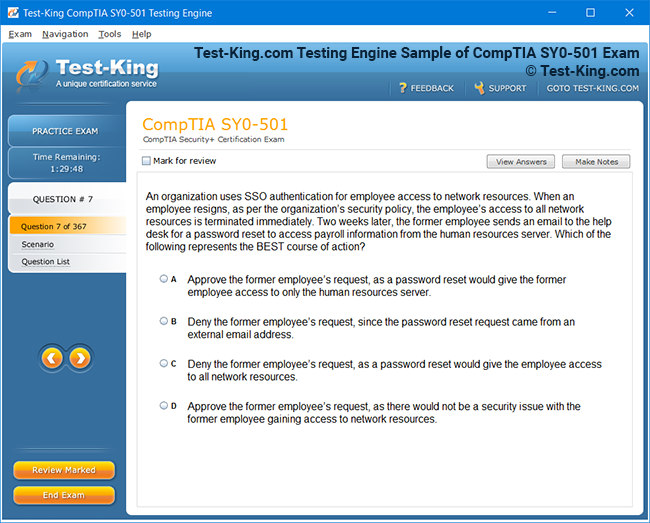
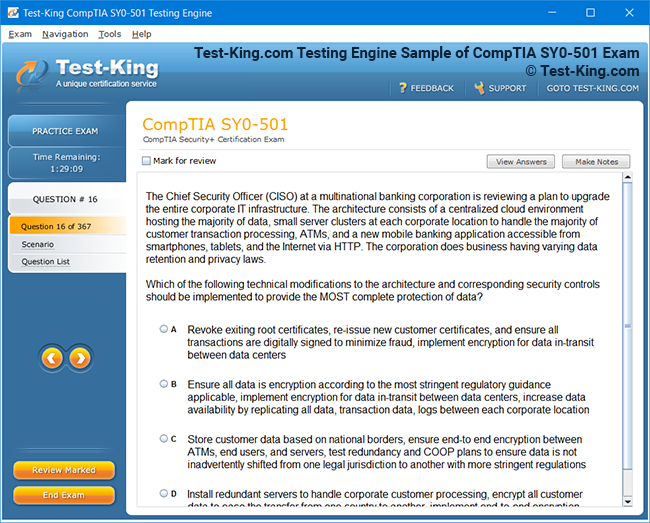
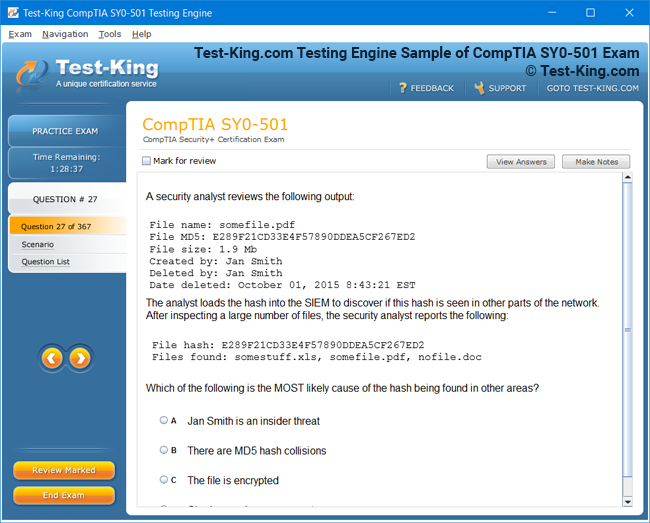
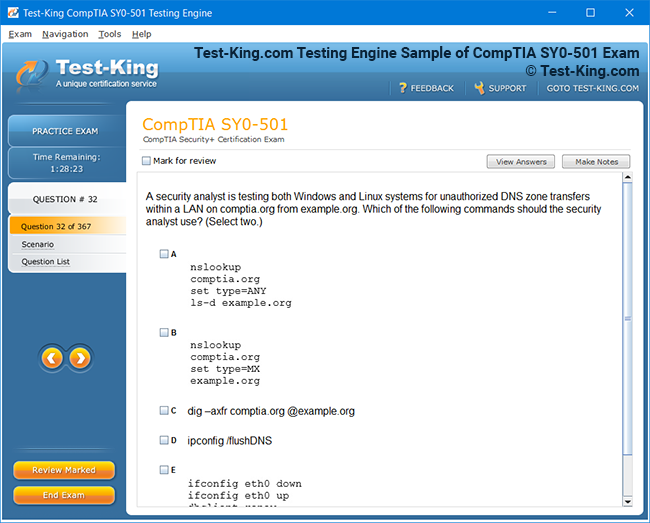
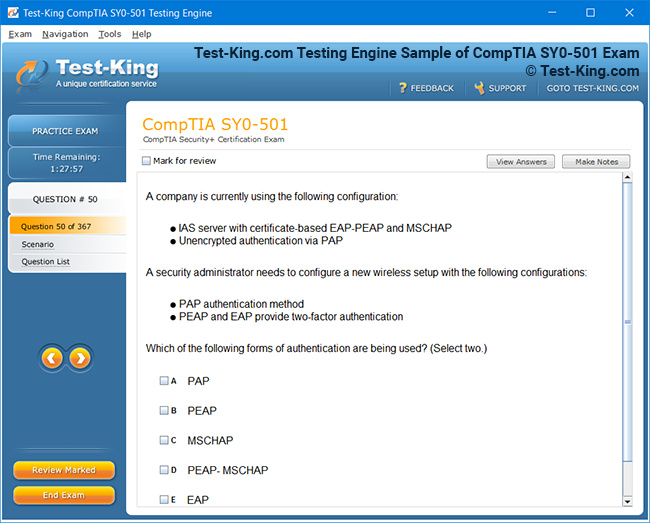
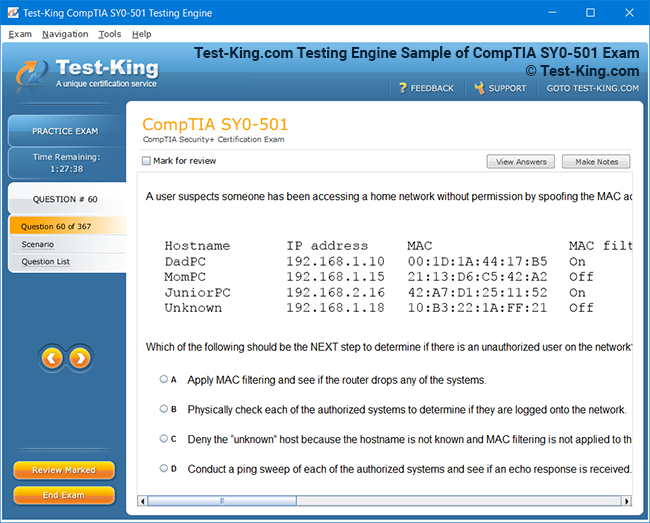
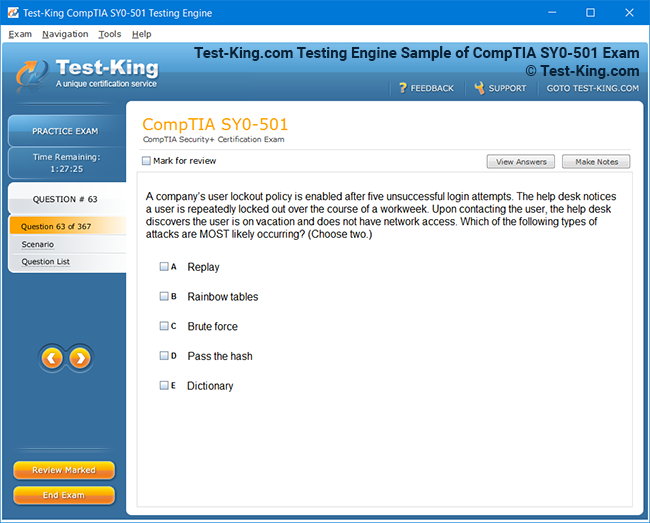
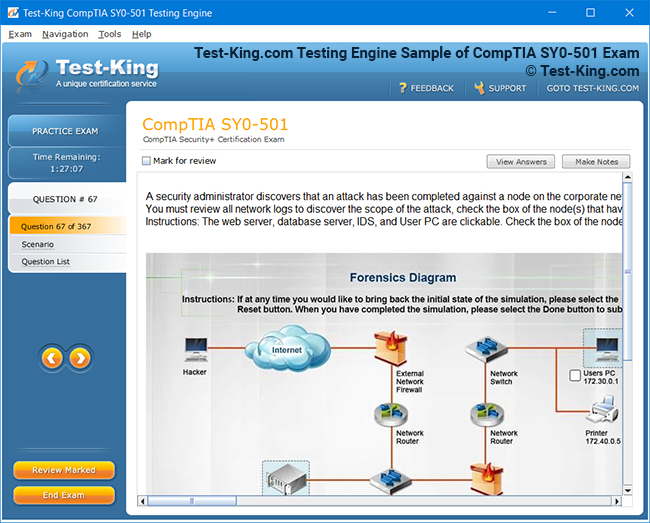
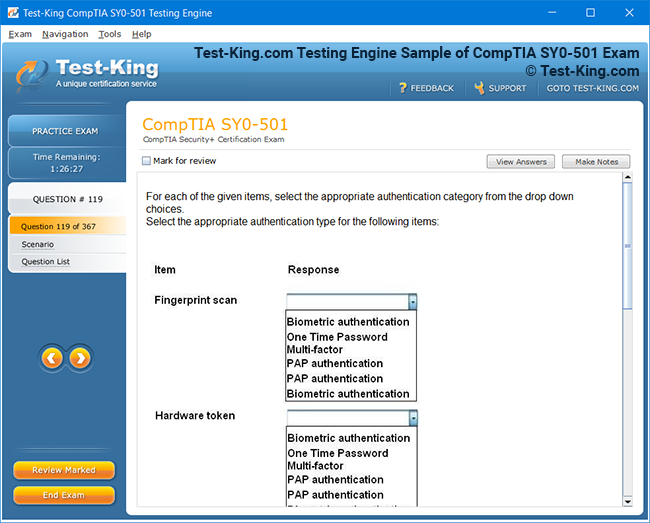
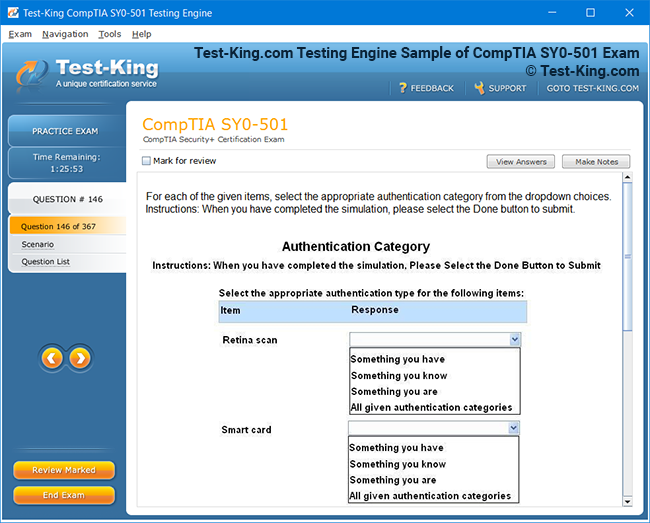
Product Screenshots
Frequently Asked Questions
How can I get the products after purchase?
All products are available for download immediately from your Member's Area. Once you have made the payment, you will be transferred to Member's Area where you can login and download the products you have purchased to your computer.
How long can I use my product? Will it be valid forever?
Test-King products have a validity of 90 days from the date of purchase. This means that any updates to the products, including but not limited to new questions, or updates and changes by our editing team, will be automatically downloaded on to computer to make sure that you get latest exam prep materials during those 90 days.
Can I renew my product if when it's expired?
Yes, when the 90 days of your product validity are over, you have the option of renewing your expired products with a 30% discount. This can be done in your Member's Area.
Please note that you will not be able to use the product after it has expired if you don't renew it.
How often are the questions updated?
We always try to provide the latest pool of questions, Updates in the questions depend on the changes in actual pool of questions by different vendors. As soon as we know about the change in the exam question pool we try our best to update the products as fast as possible.
How many computers I can download Test-King software on?
You can download the Test-King products on the maximum number of 2 (two) computers or devices. If you need to use the software on more than two machines, you can purchase this option separately. Please email support@test-king.com if you need to use more than 5 (five) computers.
What is a PDF Version?
PDF Version is a pdf document of Questions & Answers product. The document file has standart .pdf format, which can be easily read by any pdf reader application like Adobe Acrobat Reader, Foxit Reader, OpenOffice, Google Docs and many others.
Can I purchase PDF Version without the Testing Engine?
PDF Version cannot be purchased separately. It is only available as an add-on to main Question & Answer Testing Engine product.
What operating systems are supported by your Testing Engine software?
Our testing engine is supported by Windows. Andriod and IOS software is currently under development.
Top NVIDIA Exams
Common Challenges and How to Overcome Them in the NCP-AIO Exam
Embarking on the journey of preparing for the NCP-AIO exam can be both exhilarating and daunting for aspiring AI professionals. The examination, administered by NVIDIA, delves deeply into AI operations, demanding not only theoretical understanding but also practical acumen in managing AI infrastructure efficiently. One of the foremost challenges candidates encounter is the intricate nature of the exam syllabus. Unlike standard IT certifications, NCP-AIO emphasizes operational workflows, deployment strategies, and real-world application scenarios, which can be overwhelming for individuals who have primarily studied conceptual materials without hands-on exposure. Candidates often find themselves grappling with topics such as AI workload orchestration, resource optimization, and the nuances of GPU-accelerated operations. The breadth of content requires a methodical approach to study, where passive reading is insufficient, and engagement through simulations and practical exercises becomes indispensable.
Navigating the Complexities of AI Operations Certification
Another pervasive challenge lies in the practical application of learned concepts. The NCP-AIO exam is designed to assess the candidate’s ability to implement AI operations in dynamic environments. This involves understanding deployment architectures, configuring GPU clusters, and troubleshooting operational anomalies. Many aspirants struggle to bridge the gap between theoretical knowledge and practical execution, as the exam questions often simulate real-world complexities rather than straightforward textbook scenarios. Overcoming this obstacle necessitates immersive practice through lab environments and exposure to diverse operational contexts. Candidates are encouraged to replicate scenarios where AI models interact with heterogeneous computing resources, thereby cultivating a level of familiarity that can only be achieved through experiential learning.
Time management during the preparation phase presents another significant hurdle. Given the extensive syllabus, balancing in-depth study with practical exercises can be challenging. A common misstep is underestimating the time required for mastering hands-on components. Aspirants who allocate disproportionate time to memorization often find themselves ill-equipped for operational tasks during the examination. Effective strategies involve creating a structured schedule that emphasizes incremental learning and iterative practice. Breaking down complex topics into digestible modules allows for consistent progression without overwhelming cognitive load. Additionally, utilizing simulation platforms to mimic exam conditions can sharpen both speed and accuracy in problem-solving, enabling candidates to navigate the exam efficiently.
The technical vocabulary and unique operational paradigms in AI operations can also be intimidating. The NCP-AIO exam incorporates terms that are not commonly encountered outside specialized NVIDIA documentation or advanced AI operation manuals. Words related to distributed AI training, inference optimization, and performance profiling may appear cryptic to those unfamiliar with the ecosystem. To overcome this linguistic barrier, candidates should engage with official documentation, community discussions, and peer-led study sessions where terminologies are dissected and contextualized. Building a robust glossary of terms alongside practical illustrations of their application can transform initially daunting jargon into an intuitive language that guides problem-solving during the exam.
Cognitive overload due to the convergence of multiple technical domains is another challenge that candidates frequently report. The NCP-AIO certification requires proficiency in aspects of cloud infrastructure, containerization, GPU management, and AI deployment strategies simultaneously. Managing this cognitive load demands strategic learning techniques, such as spaced repetition, active recall, and integrative practice. By connecting concepts across domains rather than treating them as isolated units, aspirants can develop a holistic understanding that supports both analytical reasoning and practical execution. Visualization tools and workflow diagrams can further assist in internalizing complex operational sequences, reducing the likelihood of confusion during exam scenarios.
Stress and performance anxiety are intangible yet formidable challenges in the context of high-stakes certifications. The NCP-AIO exam, with its emphasis on applied skills and precision, can provoke apprehension even among well-prepared candidates. Such psychological barriers can impair memory retrieval and decision-making under timed conditions. To mitigate this, aspirants can incorporate mindfulness practices, simulation-based practice under timed constraints, and reflective self-assessment into their preparation routine. These approaches cultivate resilience, allowing candidates to approach the examination with a measured and confident mindset. Additionally, forming study cohorts or mentorship arrangements with certified professionals can provide both practical insights and emotional support, reinforcing confidence and strategic clarity.
Resource availability is another aspect that can impede progress. Accessing appropriate AI infrastructure for practice can be challenging, especially when candidates aim to simulate real-world GPU-intensive workflows. Cloud-based platforms and NVIDIA’s own learning resources provide opportunities for hands-on experimentation, but navigating these environments efficiently requires foresight and planning. It is crucial to prioritize exercises that closely mirror exam objectives, such as model deployment, GPU resource allocation, and operational troubleshooting. This targeted approach ensures that limited practice time is utilized optimally, maximizing familiarity with tasks that are most likely to appear in the examination.
Understanding the evaluation methodology of the NCP-AIO exam is often overlooked but represents a critical factor in overcoming preparation challenges. The assessment evaluates both knowledge comprehension and the ability to execute AI operations under practical constraints. Candidates who fail to appreciate the balance between conceptual understanding and practical proficiency may misalign their preparation strategies, focusing excessively on one dimension at the expense of the other. Reviewing sample questions, analyzing previous exam patterns, and participating in mock assessments are effective ways to calibrate preparation efforts. By simulating the exam’s evaluative logic, candidates can align their study practices with the competencies that the exam prioritizes.
Technical troubleshooting is another frequent obstacle. The NCP-AIO exam scenarios often require candidates to identify and resolve issues that arise in real-time AI operational contexts. This may involve diagnosing performance bottlenecks, rectifying deployment errors, or optimizing resource allocation under constrained conditions. Developing an analytical mindset that systematically dissects problems and explores alternative solutions is crucial. Candidates can enhance these skills by documenting recurring issues encountered during practice and experimenting with multiple resolution strategies. This iterative approach builds a repertoire of solutions that can be rapidly deployed during examination conditions.
Lastly, integrating updates from the evolving AI operations landscape presents a subtle but persistent challenge. AI infrastructure technologies, frameworks, and NVIDIA’s own operational guidelines evolve continuously, and the exam may incorporate recent developments. Staying abreast of such advancements requires proactive engagement with official release notes, technical blogs, and AI operations communities. By cultivating a habit of continuous learning, candidates ensure that their knowledge remains current, enhancing both confidence and competence when approaching complex exam questions.
In essence, overcoming the myriad challenges of the NCP-AIO exam involves a combination of strategic planning, immersive practice, cognitive management, and continuous learning. From mastering complex operational workflows to building psychological resilience and technical fluency, the path to certification is rigorous yet achievable. Candidates who systematically address these obstacles through deliberate practice, reflective learning, and resource optimization position themselves not only for exam success but also for long-term proficiency in AI operations management.
Mastering Practical Skills and Strategic Preparation
Preparing for the NCP-AIO exam demands more than theoretical comprehension; it requires the cultivation of practical skills that allow candidates to navigate AI operational environments with agility. A prevailing challenge is the transition from conceptual understanding to hands-on execution. Many aspirants possess a solid grasp of AI principles, GPU utilization, and infrastructure management, yet encounter difficulties when translating this knowledge into real-world deployment scenarios. The exam emphasizes not only the ability to configure and optimize AI workloads but also to troubleshoot anomalies that arise in dynamic environments. Candidates often find that what appears straightforward in textbooks becomes multifaceted when applied to heterogeneous systems, emphasizing the necessity of immersive practice and iterative experimentation.
One of the central obstacles in practical preparation lies in simulating complex operational workflows. The NCP-AIO exam frequently presents scenarios involving the orchestration of multiple AI models across distributed computing nodes, each with unique resource requirements. Candidates are required to evaluate resource allocation, balance computational loads, and ensure system efficiency under constrained conditions. This multifarious nature of tasks can overwhelm aspirants who have limited exposure to large-scale AI operations. Overcoming this challenge involves designing comprehensive practice routines that mimic real-world conditions, such as deploying AI models on GPU clusters, monitoring system performance, and diagnosing bottlenecks. Engaging in such exercises develops an intuitive understanding of operational interdependencies, fostering confidence during exam conditions.
Time allocation and study pacing constitute another intricate challenge. The NCP-AIO exam encompasses a vast array of competencies, from AI infrastructure management to workflow optimization and performance analysis. Many candidates struggle to balance time between theoretical study and practical exercises, inadvertently prioritizing one at the expense of the other. Effective preparation requires a meticulous schedule that integrates incremental learning, iterative practice, and frequent self-assessment. By segmenting the study plan into manageable intervals that focus alternately on conceptual understanding and applied practice, candidates can cultivate a more holistic competence. Additionally, timed simulations of exam scenarios sharpen decision-making speed and enhance familiarity with task sequences, mitigating the risk of cognitive overload during the actual examination.
The complexity of AI deployment tools and NVIDIA-specific frameworks introduces another significant challenge. The NCP-AIO certification necessitates proficiency in environments such as GPU-accelerated clusters, containerized AI workloads, and orchestration platforms that manage parallel computational tasks. Aspirants often encounter technical friction while navigating these platforms for the first time. The plethora of configuration options, monitoring tools, and performance metrics can create confusion and impede progress. Candidates can overcome this barrier by systematically documenting workflow procedures, experimenting with diverse configurations, and cross-referencing official NVIDIA documentation to ensure accuracy. This methodical approach transforms initially bewildering operations into reproducible, intuitive sequences that can be executed confidently under exam conditions.
Cognitive integration of multiple domains remains a subtle yet persistent obstacle. The NCP-AIO exam evaluates the simultaneous application of knowledge in distributed computing, AI model optimization, resource management, and real-time troubleshooting. Candidates must synthesize these diverse competencies seamlessly, which can be challenging if each area is studied in isolation. Developing a holistic cognitive framework is essential, where connections between concepts are reinforced through practical application and iterative reflection. Visualizing workflows, tracing operational dependencies, and mapping resource interconnections foster a mental schema that supports rapid problem-solving. This integrative mindset not only enhances performance during the exam but also builds enduring proficiency in AI operations management.
The unpredictability of scenario-based questions introduces another layer of difficulty. The NCP-AIO exam frequently presents candidates with operational dilemmas that require diagnostic reasoning, adaptation to evolving constraints, and strategic prioritization. Unlike conventional assessments that test rote knowledge, these scenarios assess analytical acuity and the ability to anticipate system behaviors under varying conditions. Candidates often find themselves paralyzed by the multitude of potential approaches. Cultivating flexibility and decision-making confidence is key. Practicing with diverse case studies, simulating unexpected system behaviors, and reviewing alternative resolution strategies trains candidates to respond effectively when confronted with novel challenges, transforming uncertainty into a controlled analytical process.
Technical troubleshooting and error resolution form an essential component of the NCP-AIO examination, yet they pose a recurrent challenge for aspirants. Questions often require identifying the root cause of system inefficiencies, correcting deployment errors, or optimizing model inference across heterogeneous resources. Developing proficiency in these areas demands a methodical approach: diagnosing symptoms, hypothesizing potential causes, implementing corrective actions, and evaluating outcomes. Documenting recurring problems encountered during practice, along with successful resolution methods, builds a repertoire of reliable strategies. Over time, this practice cultivates an intuitive problem-solving rhythm that can be deployed swiftly and accurately in the exam environment.
Another nuanced challenge is the assimilation of evolving AI technologies and updates in operational best practices. The AI operations landscape is dynamic, with new frameworks, deployment methodologies, and NVIDIA-specific guidelines continuously emerging. Candidates who rely solely on outdated study materials risk misalignment with exam expectations. Staying abreast of these developments requires consistent engagement with official documentation, technical briefings, and practitioner forums. By integrating contemporary insights into study routines, candidates ensure that their preparation reflects the current state of AI operations, enhancing both confidence and effectiveness in addressing scenario-based questions.
Psychological resilience represents an often-overlooked dimension of preparation. The NCP-AIO exam is demanding, and aspirants frequently encounter performance anxiety, which can impede analytical clarity and operational judgment. Sustained focus, composure under timed conditions, and adaptive problem-solving are crucial. Candidates can cultivate these traits through mindfulness practices, simulation-based rehearsals, and reflective evaluation of practice exercises. Building a support network of peers, mentors, or study groups provides additional reinforcement, offering both technical guidance and emotional encouragement. This multidimensional preparation not only mitigates stress but also reinforces strategic thinking and adaptive response during examination scenarios.
A further challenge lies in understanding the nuanced evaluation criteria of the NCP-AIO exam. The assessment does not merely test knowledge retention but emphasizes applied proficiency in AI operations. Misjudging this balance may lead candidates to concentrate excessively on theoretical concepts while neglecting practical execution skills. Engaging in mock examinations, analyzing past question patterns, and receiving feedback from peers or mentors enables aspirants to calibrate their preparation effectively. This alignment ensures that study efforts are directed towards the competencies most critical for success, optimizing performance and reinforcing the operational mindset required for certification.
Resource constraints during preparation often present a tangible barrier. Simulating GPU-intensive AI workloads, deploying containerized applications, and orchestrating multi-node operations can be resource-demanding. Candidates with limited access to hardware may feel disadvantaged. Leveraging cloud-based environments, trial access platforms, and NVIDIA’s own educational resources provides opportunities to practice in controlled settings without compromising exposure to realistic operational scenarios. Prioritizing exercises that align closely with exam objectives ensures that limited resources are employed efficiently, allowing aspirants to focus on developing essential skills and troubleshooting capabilities.
The interrelation of performance optimization and operational monitoring is another domain where candidates frequently encounter difficulty. The NCP-AIO exam requires proficiency in analyzing system metrics, adjusting workloads, and maintaining efficiency in dynamic AI operations. Candidates must interpret telemetry, diagnose suboptimal performance, and implement corrective strategies in real-time. Developing this capability requires consistent practice in observing performance indicators, experimenting with resource allocation adjustments, and documenting the impact of changes on AI model outcomes. Over time, these practices cultivate an intuitive grasp of system behavior, enabling candidates to respond decisively and effectively during examination challenges.
Finally, maintaining motivation and focus throughout preparation is a subtle but crucial challenge. The breadth and depth of topics, combined with the rigor of hands-on exercises, can lead to fatigue or disengagement. Sustaining momentum requires a structured yet flexible preparation approach that balances intensive study with restorative intervals, peer interactions, and achievement milestones. By celebrating incremental progress, reflecting on learning experiences, and adapting strategies in response to observed difficulties, candidates maintain cognitive vitality and enthusiasm, ensuring that their preparation remains both rigorous and sustainable.
Enhancing Conceptual Clarity and Advanced Problem-Solving Skills
One of the most intricate challenges candidates face in preparing for the NCP-AIO exam is attaining conceptual clarity while simultaneously developing advanced problem-solving capabilities. The exam demands a deep understanding of AI operations, including GPU orchestration, containerized deployment, model inference optimization, and workflow automation. Many aspirants encounter difficulties in internalizing these concepts because they exist at the intersection of multiple technical domains. Concepts such as distributed AI training, parallel computing dependencies, and real-time inference bottlenecks require not only memorization but also the ability to analyze and adapt in diverse operational contexts. Candidates often find that theoretical knowledge alone provides an incomplete framework for tackling practical examination scenarios.
A critical obstacle in conceptual comprehension is the abstraction of operational workflows. AI operations inherently involve dynamic interactions between hardware resources, software frameworks, and model behavior. For instance, understanding how GPU clusters allocate resources across concurrent AI workloads involves multiple layers of abstraction, from low-level processing units to high-level orchestration frameworks. Aspirants frequently struggle to translate these abstractions into actionable strategies that can be applied during the exam. Overcoming this challenge necessitates hands-on experimentation, where candidates simulate workload distribution, observe system responses, and iteratively refine deployment strategies. This practical reinforcement bridges the gap between abstract concepts and tangible operational skills.
Time-sensitive decision-making is another recurring challenge. The NCP-AIO exam evaluates candidates’ ability to respond efficiently under constraints, such as limited computational resources, time-bound deployment tasks, and complex troubleshooting scenarios. Many candidates experience cognitive pressure when attempting to balance rapid decision-making with accuracy. Developing proficiency requires deliberate practice in managing timed exercises that replicate the pressure of real-world operational environments. Techniques such as scenario simulation, stepwise task analysis, and incremental complexity exposure help candidates cultivate an intuitive sense of prioritization, ensuring that critical tasks receive appropriate attention even under duress.
The integration of diverse AI frameworks introduces additional complexity. The NCP-AIO exam assesses familiarity with containerized environments, orchestration tools, and NVIDIA-specific operational platforms. Each framework has unique operational semantics, configuration parameters, and performance characteristics, which candidates must understand and manipulate effectively. For example, managing AI workloads across heterogeneous GPU nodes may involve nuanced adjustments in memory allocation, parallelization strategies, and performance tuning. Candidates often find this integration challenging because minor misconfigurations can cascade into significant operational inefficiencies. Systematic exploration of these frameworks, combined with detailed documentation of experiential insights, empowers aspirants to navigate these environments confidently and efficiently.
Analyzing performance metrics presents a subtle yet profound challenge. Candidates must evaluate telemetry data, identify inefficiencies, and implement corrective measures to optimize AI operations. Metrics such as GPU utilization, memory bandwidth, and latency indicators require careful interpretation within the context of model behavior and operational objectives. Many aspirants struggle to discern the interdependencies between these metrics, which can result in suboptimal interventions. Effective strategies include constructing mental models of operational workflows, correlating performance data with system behaviors, and iteratively refining optimization techniques. This analytical rigor cultivates an adaptive mindset that enhances both problem-solving capabilities and examination readiness.
Cognitive resilience is another dimension that influences exam performance. The NCP-AIO exam places aspirants in scenarios that require sustained attention, rapid diagnosis of anomalies, and adaptive execution of solutions. Maintaining cognitive agility under prolonged examination conditions can be taxing, particularly when encountering unfamiliar operational challenges. Candidates benefit from structured mental conditioning, including incremental exposure to complex problem scenarios, reflection on error patterns, and reinforcement of successful strategies. Mindfulness exercises, coupled with simulation-based practice, strengthen focus, reduce performance anxiety, and support efficient decision-making during high-pressure situations.
Strategic prioritization of study resources represents an ongoing challenge for aspirants. The breadth of the NCP-AIO syllabus, spanning infrastructure management, workload orchestration, performance optimization, and troubleshooting, necessitates judicious allocation of preparation time. Many candidates attempt to study all topics with equal intensity, resulting in cognitive overload and diminished retention. Developing a hierarchy of learning, where foundational concepts are mastered before tackling advanced operational nuances, enhances both comprehension and application. Candidates are encouraged to align study priorities with the frequency and weight of practical scenarios observed in official guidance and mock examinations, ensuring optimal preparation efficacy.
Understanding the subtleties of operational dependencies further complicates preparation. In AI operations, tasks are rarely isolated; rather, they interact in intricate sequences where one misstep can cascade into widespread inefficiencies. For instance, improper orchestration of containerized AI workloads may lead to GPU contention, latency spikes, or model inference delays. Candidates often underestimate the cascading effects of operational decisions, which can impede effective problem-solving. Addressing this challenge involves developing mental models that map interdependencies, anticipating potential pitfalls, and testing alternative strategies through iterative practice. Over time, this approach cultivates a sophisticated operational intuition that enhances both examination performance and real-world competency.
Error diagnosis in dynamic environments constitutes another complex challenge. The NCP-AIO exam presents scenarios where candidates must identify the root causes of system inefficiencies, resource misallocations, or model performance degradation. Many aspirants struggle to isolate contributing factors when multiple variables interact simultaneously. Systematic troubleshooting techniques, such as progressive elimination, hypothesis testing, and cross-referencing telemetry data, are essential for developing reliable diagnostic skills. Practicing these methodologies within simulated environments enables candidates to approach exam problems with structured reasoning, reducing uncertainty and improving response accuracy.
The assimilation of evolving AI operational paradigms adds an additional layer of difficulty. AI frameworks, NVIDIA tools, and deployment best practices continuously advance, requiring candidates to integrate new knowledge into existing mental frameworks. Reliance on outdated practices or incomplete understanding may lead to misinterpretation of examination scenarios. Effective candidates actively engage with official documentation, community discussions, and technical updates, ensuring that their operational knowledge remains current. Continuous learning not only supports examination readiness but also cultivates professional adaptability, a critical asset in AI operations careers.
Communication of operational reasoning, while subtle, also influences performance. The NCP-AIO exam often evaluates not only the correctness of actions but also the clarity of rationale behind decisions. Candidates may implement correct interventions yet fail to articulate the reasoning connecting actions to outcomes. Developing the ability to mentally narrate operational processes, justify decisions based on observed data, and anticipate potential consequences enhances both analytical clarity and exam performance. This practice reinforces structured thinking and facilitates adaptive responses when encountering unanticipated challenges.
Resource optimization in constrained environments represents another recurring difficulty. Candidates must allocate computational resources efficiently, balance concurrent workloads, and maximize model throughput without compromising performance. Many aspirants struggle to identify the optimal trade-offs between speed, accuracy, and resource utilization. Engaging in iterative experimentation, documenting performance outcomes, and analyzing efficiency patterns builds the intuition necessary for effective resource management. This approach ensures that candidates are capable of handling both the operational intricacies and time-sensitive demands of the examination.
Finally, sustaining motivation and intellectual curiosity throughout preparation is an underappreciated challenge. The complexity and density of the NCP-AIO syllabus can induce fatigue and cognitive stagnation. Maintaining engagement requires a combination of structured learning, incremental goal-setting, reflective practice, and exploration of innovative problem-solving techniques. By fostering intrinsic motivation, embracing experiential learning, and celebrating progress, candidates maintain the cognitive stamina necessary to navigate the exam’s multifaceted challenges, ultimately developing both competence and confidence in AI operations.
Optimizing Operational Workflows and Advanced Troubleshooting Strategies
Preparing for the NCP-AIO exam demands a sophisticated understanding of operational workflows, system optimization, and the ability to resolve complex technical anomalies. One of the most significant challenges candidates face is achieving efficiency in AI operations while managing the interplay between hardware resources, software frameworks, and model deployment requirements. The exam evaluates both conceptual knowledge and practical skills, emphasizing the candidate’s ability to execute AI operations in dynamic, real-world environments. Candidates frequently find that achieving this balance is daunting, particularly when dealing with multi-node GPU deployments, containerized workloads, and orchestration platforms. Understanding the subtleties of operational efficiency requires not only familiarity with technical procedures but also the ability to anticipate system behavior under variable conditions.
A recurring challenge is optimizing resource allocation across distributed environments. AI workloads can be highly variable, consuming different levels of memory, compute, and bandwidth depending on model architecture and input data. Candidates often struggle to balance concurrent workloads across multiple GPU nodes, as improper allocation may lead to performance bottlenecks, increased latency, or inefficient energy consumption. Overcoming this obstacle necessitates hands-on experimentation with workload scheduling, real-time monitoring, and iterative performance tuning. By observing the effects of different allocation strategies and adjusting resource distribution accordingly, aspirants develop an intuitive understanding of operational balance that directly contributes to exam readiness and practical proficiency.
The orchestration of containerized AI workloads presents another layer of complexity. Candidates must understand how to deploy, scale, and maintain AI applications within containerized environments, often using orchestration frameworks to manage dependencies and parallel processes. Many aspirants find that the challenge lies not in the individual components but in the coordination of multiple containers and nodes to function cohesively. Achieving proficiency in this area requires extensive practice with container orchestration, including managing inter-container communication, monitoring system health, and mitigating resource conflicts. Mastery of these skills enables candidates to execute efficient workflows while ensuring system stability, a core competency evaluated by the NCP-AIO exam.
Troubleshooting complex operational anomalies is an additional hurdle. The NCP-AIO exam often presents scenarios where candidates must identify performance bottlenecks, diagnose hardware or software errors, and implement corrective measures under time constraints. The difficulty arises from the interplay of multiple variables, where a single misconfigured parameter can propagate errors throughout the system. Candidates are encouraged to adopt a structured troubleshooting approach, starting with symptom identification, progressing through root cause analysis, and implementing targeted solutions. Documenting these experiences during practice builds a repertoire of problem-solving strategies that enhance both confidence and accuracy in the examination environment.
Latency and throughput optimization represents another common challenge. AI models deployed in production environments require careful balancing of inference speed and computational efficiency. Candidates often encounter difficulties in identifying the optimal trade-offs between model performance, resource consumption, and operational stability. Practical exercises that involve profiling model performance, adjusting computational parameters, and observing systemic effects provide essential insights into these dynamics. By iteratively refining deployment strategies based on empirical observations, aspirants cultivate the analytical skills necessary to optimize AI operations effectively, a critical aspect of the NCP-AIO evaluation.
Monitoring and interpreting system telemetry can also pose difficulties. Candidates must analyze metrics such as GPU utilization, memory bandwidth, latency patterns, and process concurrency to make informed operational decisions. Many aspirants find that raw data alone is insufficient; understanding the relationships between metrics and predicting how adjustments will affect system performance is essential. Developing this skill involves constructing mental models of AI workflows, visualizing interdependencies, and conducting controlled experiments to observe the outcomes of operational changes. This systematic approach allows candidates to act decisively and accurately under examination conditions.
The management of complex deployment pipelines is another challenge that requires attention. AI operations often involve sequential processes, from data ingestion and preprocessing to model training, deployment, and monitoring. Each stage has dependencies that, if mismanaged, can propagate errors downstream. Candidates frequently underestimate the intricacies of these pipelines, focusing narrowly on isolated tasks rather than the holistic process. Overcoming this requires practice in end-to-end deployment, understanding the critical touchpoints where failures are likely to occur, and implementing proactive measures to maintain system integrity. This comprehensive perspective is vital for achieving operational excellence and performing effectively on the NCP-AIO exam.
Performance tuning under constrained resources adds yet another layer of difficulty. Candidates must learn to optimize AI operations when computational capacity, memory, or bandwidth is limited. This often involves strategic compromises, such as adjusting batch sizes, parallelization techniques, or resource scheduling policies. Aspirants who engage in controlled experimentation, recording the impact of each modification on system performance, develop the acumen to make informed decisions efficiently. This skill is particularly important for scenarios in the exam where resource constraints mimic real-world limitations and require adaptive, data-driven responses.
Error propagation and system stability present subtle but significant challenges. In AI operations, a minor misconfiguration in one node can have cascading effects, impacting model inference, resource utilization, and overall system reliability. Candidates must learn to anticipate potential failure points, monitor system health continuously, and implement corrective actions proactively. Practical exposure to multi-node simulations, iterative troubleshooting, and performance assessment fosters resilience and operational intuition. By internalizing these practices, aspirants enhance their ability to maintain stable, high-performing AI environments under the pressures of the examination.
Workflow automation is another area that candidates often find challenging. Efficient AI operations rely on automating repetitive tasks such as model retraining, resource provisioning, and performance monitoring. Many aspirants struggle to design and implement automation pipelines that are both reliable and adaptable. Developing proficiency in workflow automation requires hands-on experimentation with orchestration scripts, monitoring routines, and dynamic scheduling mechanisms. Iterative refinement and scenario testing reinforce understanding of automation principles, enabling candidates to implement scalable, resilient workflows in both practice environments and examination scenarios.
Advanced deployment strategies are a further challenge. Candidates must understand how to implement AI operations across heterogeneous infrastructure, integrating GPUs, CPUs, and storage systems seamlessly. Decisions regarding task allocation, model replication, and parallelization strategies can significantly impact operational efficiency. Aspirants often need to experiment with diverse deployment architectures, analyzing performance trade-offs, and adjusting configurations to achieve optimal outcomes. This iterative practice cultivates strategic thinking, enabling candidates to approach deployment challenges with confidence and precision during the NCP-AIO exam.
Managing operational complexity in dynamic environments also presents difficulties. The examination tests the candidate’s ability to respond to real-time changes, such as variable workloads, hardware failures, or software updates. Candidates must develop an anticipatory mindset, identifying potential points of disruption and implementing preventive measures. Practical exercises that simulate fluctuating operational conditions, coupled with reflective analysis of outcomes, enhance adaptive problem-solving capabilities. This preparation ensures that aspirants are equipped to maintain stability, efficiency, and responsiveness under diverse examination scenarios.
Finally, sustaining cognitive endurance throughout preparation and during the examination is an understated challenge. The depth and breadth of the NCP-AIO exam can induce fatigue, impacting focus, accuracy, and decision-making. Candidates benefit from structured study schedules, periodic rest intervals, and reflective practice, allowing mental energy to be conserved and effectively deployed. Maintaining motivation, tracking progress, and celebrating incremental achievements support sustained engagement, ensuring that candidates can navigate complex operational scenarios with clarity and precision.
Optimizing Resources and Adapting to Dynamic AI Operations
Candidates preparing for the NCP-AIO exam often confront the formidable challenge of optimizing computational resources while managing the fluid dynamics of AI operations. The certification evaluates both technical knowledge and the ability to execute operations under complex, real-world conditions. One of the primary hurdles is understanding how to allocate GPU, CPU, and memory resources efficiently to maximize model throughput without compromising system stability. Many aspirants struggle to strike a balance between high performance and operational reliability, especially when managing multiple concurrent AI workloads. Developing practical strategies through iterative experimentation, workload profiling, and real-time monitoring cultivates the intuition required to make informed decisions during examination scenarios.
A persistent challenge arises from the necessity to troubleshoot dynamically evolving systems. AI operations involve multiple interdependent components where a minor anomaly can cascade into significant performance degradation. Candidates often encounter scenarios where latency spikes, memory bottlenecks, or container failures occur unpredictably. Effective adaptive troubleshooting requires a structured methodology, starting with the identification of observable symptoms, progressing to hypothesis formation, and concluding with targeted remediation. Practicing this cycle in controlled environments helps aspirants develop a systematic approach that can be deployed confidently under the time constraints and pressure of the NCP-AIO exam.
The optimization of AI workloads across distributed environments adds another layer of complexity. Candidates must learn to orchestrate tasks across heterogeneous hardware nodes while maintaining load balance and minimizing idle resources. Achieving this level of operational efficiency requires a nuanced understanding of resource dependencies, concurrency issues, and scheduling algorithms. Many aspirants initially underestimate the subtle trade-offs between maximizing throughput and avoiding resource contention. By simulating multi-node deployments and systematically adjusting workload parameters, candidates acquire the experience needed to anticipate operational challenges and implement effective solutions during the exam.
Understanding the interaction between containerized AI applications and underlying hardware infrastructure presents another significant challenge. Containers provide flexibility and portability but introduce operational intricacies that can affect performance, resource allocation, and reliability. Candidates must become proficient in configuring containerized workloads, managing inter-container communication, and troubleshooting unexpected failures that arise from system or network constraints. Hands-on practice, combined with reflective analysis of performance outcomes, enables aspirants to develop a mental model of container behavior and its impact on system efficiency, which is critical for success in both practical examination scenarios and real-world operations.
Dynamic system monitoring is a subtle yet essential challenge. Candidates are required to interpret telemetry data, identify anomalies, and predict potential bottlenecks before they escalate into operational failures. Understanding the relationships between metrics such as GPU utilization, inference latency, memory usage, and throughput is crucial. Many aspirants initially struggle to correlate observed patterns with underlying operational causes. Developing proficiency in this area involves repeated practice in monitoring AI systems, analyzing trends, and experimenting with interventions to observe outcomes. Over time, this cultivates an intuitive ability to detect issues early and implement corrective measures effectively during high-pressure examination conditions.
The management of high-concurrency environments introduces additional difficulties. When multiple AI models operate simultaneously, candidates must ensure equitable resource distribution while maintaining optimal performance for each model. Mismanagement can result in resource starvation, increased latency, and uneven model throughput. To navigate these complexities, aspirants benefit from systematically experimenting with concurrency limits, prioritization strategies, and scheduling policies. Documenting the impact of various configurations on performance outcomes provides a reference framework that can be drawn upon during the exam, enhancing confidence and operational agility.
Latency reduction and throughput maximization are persistent operational concerns. The NCP-AIO exam tests candidates’ ability to fine-tune performance by adjusting parameters such as batch sizes, parallelization strategies, and resource allocation. Many candidates find that minor adjustments can have disproportionate effects, making precise tuning essential. Iterative practice, combined with careful observation and documentation of outcomes, fosters the skill of making informed adjustments rapidly. This expertise enables aspirants to optimize system performance efficiently, ensuring both speed and stability under the examination’s time constraints.
Predictive troubleshooting is another challenge that demands anticipatory thinking. Candidates are often faced with scenarios where proactive measures can prevent system degradation. Developing predictive skills involves understanding system interdependencies, recognizing patterns indicative of impending issues, and implementing preventative adjustments. Regular exposure to diverse operational simulations enhances the ability to anticipate potential failures, enabling candidates to maintain operational stability even in unpredictable conditions. This forward-looking mindset is essential for both exam performance and real-world AI operations management.
The integration of updated AI frameworks and operational methodologies further complicates preparation. Candidates must remain current with evolving NVIDIA platforms, deployment strategies, and resource optimization techniques. Many aspirants initially face difficulty reconciling new practices with previously learned procedures. Continuous engagement with official documentation, technical briefings, and practitioner discussions supports the assimilation of novel operational paradigms. By actively integrating these updates into practice exercises, candidates develop adaptability, ensuring that their operational knowledge remains relevant and effective during the examination.
Managing cascading errors in multi-component systems represents another nuanced challenge. In complex AI deployments, a fault in one component can propagate through the system, affecting model inference, memory usage, and overall performance. Candidates must cultivate a systematic mindset for error isolation, testing hypotheses incrementally, and applying corrective measures without inducing additional disruptions. Practicing these methodologies in simulated multi-node environments reinforces the ability to maintain operational continuity and minimize the impact of unforeseen issues during the exam.
Adaptive deployment strategies pose an additional challenge. Candidates must understand how to scale workloads dynamically, shift computational tasks between nodes, and reallocate resources in response to evolving system demands. This requires a combination of strategic foresight, real-time analysis, and practical experimentation. Engaging with diverse deployment scenarios, observing system behavior under variable conditions, and iteratively refining strategies builds the capacity for responsive and efficient AI operations management. Mastery of adaptive deployment is critical for navigating complex examination tasks that simulate unpredictable operational environments.
Maintaining operational stability under stress is a further obstacle. The NCP-AIO exam tests the candidate’s ability to sustain system efficiency during high workloads, unexpected failures, or rapid workload fluctuations. Many aspirants struggle to maintain focus and effective decision-making under these conditions. Strategies to mitigate this include timed practice exercises, simulation of high-stress scenarios, and reflective analysis of errors and corrective actions. These practices enhance resilience, ensuring that candidates can respond effectively to operational disruptions while maintaining optimal performance.
Resource contention management is an additional concern that requires deliberate practice. When multiple processes compete for limited computational or memory resources, candidates must make informed decisions to prevent system degradation. Techniques such as prioritization, load balancing, and dynamic reallocation are essential. Practicing these methods in controlled environments develops the analytical ability to recognize contention points and implement solutions efficiently, an indispensable skill for successful exam performance.
Finally, sustaining cognitive focus and motivation during extensive preparation is a subtle but significant challenge. The intricate interplay of AI resource management, adaptive troubleshooting, and system optimization demands prolonged attention and analytical engagement. Candidates benefit from structured schedules, alternating between intensive practice and reflective rest intervals, while tracking progress to reinforce achievement. This approach ensures sustained mental acuity, operational insight, and confidence during complex examination scenarios.
Advanced Deployment, Scenario-Based Problem Solving, and Performance Optimization
Candidates preparing for the NCP-AIO exam often face the intricate challenge of mastering advanced deployment strategies while simultaneously enhancing problem-solving skills for complex, scenario-based tasks. The examination evaluates not only conceptual understanding but also the ability to execute AI operations efficiently in dynamic environments. One of the foremost challenges lies in orchestrating AI deployments across heterogeneous infrastructures that include multiple GPUs, CPUs, and storage systems. Each component has unique performance characteristics and operational dependencies, and misalignment can lead to system inefficiencies, latency spikes, or bottlenecked inference pipelines. Aspirants must develop an intuitive understanding of the interplay between hardware and software layers, enabling them to configure environments that balance throughput, latency, and resource utilization optimally.
Scenario-based problem solving represents a distinct difficulty for many candidates. The NCP-AIO exam frequently presents operational dilemmas that mirror real-world AI deployment complexities. These scenarios often require simultaneous consideration of multiple variables, such as resource allocation, container orchestration, workload scheduling, and performance monitoring. Candidates often find themselves overwhelmed when faced with the need to identify the root cause of performance degradation while implementing corrective measures that do not introduce further instability. To overcome this, aspirants benefit from iterative simulations that mimic high-stakes operational conditions, allowing them to practice evaluating system behavior, testing potential solutions, and implementing adjustments efficiently. This immersive approach enhances analytical reasoning, operational intuition, and the ability to respond effectively under exam constraints.
Optimizing model deployment and execution pipelines poses another sophisticated challenge. Candidates must ensure that AI models are deployed with minimal latency, maximum throughput, and stable resource consumption. This includes tuning batch sizes, adjusting parallel execution strategies, and implementing dynamic resource reallocation as workloads fluctuate. Many aspirants initially struggle to understand the subtle trade-offs between computational efficiency and operational reliability. Engaging in repeated practice with diverse deployment configurations, monitoring the effects of modifications on system performance, and reflecting on outcomes fosters the capacity for adaptive optimization. By internalizing these strategies, candidates become capable of maintaining efficient and resilient operations under complex, time-sensitive examination conditions.
Performance optimization extends beyond mere resource allocation. Candidates are required to evaluate system metrics continuously, including GPU utilization, memory bandwidth, inference latency, and throughput consistency. These metrics are interdependent, and subtle misinterpretations can lead to suboptimal interventions. Aspirants must cultivate the ability to correlate observed data with system behavior, anticipate potential bottlenecks, and implement targeted adjustments that maximize operational efficiency. Developing this expertise involves extensive hands-on practice, where repeated experimentation with resource configurations and workload adjustments allows candidates to internalize cause-and-effect relationships that are critical for both the NCP-AIO exam and real-world AI operations.
Adaptive troubleshooting in dynamic environments is another challenge that candidates often encounter. The NCP-AIO exam scenarios frequently involve unanticipated system behavior, requiring candidates to diagnose and resolve anomalies quickly and accurately. Many aspirants struggle to maintain a structured approach when multiple concurrent issues arise, such as GPU contention, container misconfiguration, or workflow synchronization problems. Systematic troubleshooting practices, including symptom identification, hypothesis formulation, and iterative testing of solutions, are essential for developing confidence and proficiency. Documenting these exercises reinforces analytical thinking and builds a repertoire of effective interventions that can be executed efficiently under examination conditions.
Multi-node orchestration and workflow management introduce further complexity. Candidates must ensure that tasks are distributed efficiently across nodes, workloads are balanced, and resource contention is minimized. Mismanagement can lead to cascading operational inefficiencies, reduced model performance, and increased latency. Developing proficiency in orchestration requires hands-on engagement with simulated multi-node environments, experimentation with scheduling policies, and real-time performance monitoring. Over time, this experience enables aspirants to anticipate operational challenges, implement corrective measures proactively, and maintain system stability under the rigorous demands of the NCP-AIO exam.
Latency reduction and throughput maximization continue to be nuanced challenges. Candidates must learn to balance computational efficiency with operational reliability, adjusting factors such as task prioritization, parallel execution, and batch processing to achieve optimal performance. Many aspirants initially struggle to recognize the interplay between these variables, resulting in uneven throughput or resource underutilization. Iterative experimentation and reflective practice help candidates internalize these relationships, fostering the ability to make informed, rapid adjustments during high-pressure examination scenarios.
Maintaining operational stability during unpredictable workload fluctuations represents another persistent challenge. The NCP-AIO exam often simulates sudden changes in computational demand or hardware availability, requiring candidates to adapt deployment strategies in real time. Aspirants must develop the foresight to anticipate potential points of failure, implement preventive measures, and adjust resource allocation dynamically to sustain performance. Exposure to simulated fluctuating workloads, combined with post-practice analysis of outcomes, enhances the ability to respond effectively and maintain system efficiency under diverse operational conditions.
Understanding and applying advanced performance profiling techniques is a subtle but critical skill. Candidates must analyze telemetry data, identify underperforming components, and implement targeted optimizations without causing additional instability. Many aspirants initially find the interpretation of complex metrics challenging, particularly when multiple system layers interact simultaneously. Developing proficiency in profiling requires consistent practice, experimentation with parameter adjustments, and reflective evaluation of the effects on overall system performance. This capability ensures that candidates can optimize operations with precision and confidence during the examination.
Resource contention management and dynamic scaling strategies also represent significant obstacles. In AI operations, simultaneous processes often compete for limited computational or memory resources, and candidates must make informed decisions to prevent degradation. Strategies such as prioritization, adaptive load balancing, and dynamic reallocation are essential to maintaining system performance. Practicing these approaches in controlled simulations enables candidates to develop an operational intuition that supports rapid, effective responses to resource-related challenges during the exam.
Workflow automation in advanced deployment contexts is another area of focus. Candidates must design robust pipelines that handle tasks such as model retraining, automated monitoring, and dynamic resource adjustment without manual intervention. Many aspirants find this challenging due to the interdependencies between automation scripts, system processes, and operational metrics. Iterative experimentation, monitoring, and adjustment of automation workflows build proficiency and ensure that AI operations remain consistent, scalable, and resilient under both practice and examination conditions.
Scenario-based problem solving extends to anomaly prediction and preemptive mitigation. Candidates are expected to anticipate potential issues before they escalate, integrating monitoring insights, performance metrics, and operational experience. Developing this skill involves repeated exposure to diverse simulated anomalies, analyzing system responses, and iteratively refining mitigation strategies. This proactive mindset enhances both examination performance and real-world operational competence, allowing candidates to maintain stability and efficiency even in unpredictable conditions.
Cognitive endurance and sustained focus represent additional, often overlooked challenges. The depth and complexity of the NCP-AIO exam require prolonged analytical engagement and mental agility. Candidates benefit from structured study routines, periodic reflection, and incremental achievement tracking to maintain focus and motivation. Sustained cognitive effort supports accurate problem solving, rapid decision-making, and the effective execution of complex operational tasks, all of which are essential for success in the exam.
Finally, integrating all these competencies into a cohesive operational strategy is the ultimate challenge. Candidates must synthesize knowledge of deployment strategies, resource optimization, scenario-based troubleshooting, and performance monitoring to achieve efficient, stable, and adaptive AI operations. Developing a holistic understanding through practice, reflection, and iterative learning ensures that aspirants can approach the NCP-AIO exam with confidence, skill, and resilience.
Conclusion
In the NCP-AIO exam presents a multifaceted set of challenges that test both conceptual knowledge and practical expertise in AI operations. From advanced deployment strategies to scenario-based problem solving and performance optimization, candidates must cultivate a comprehensive skill set that encompasses resource management, troubleshooting, and dynamic operational adaptation. Systematic practice, immersive simulations, reflective analysis, and continuous engagement with evolving AI paradigms empower aspirants to overcome these challenges. By internalizing these strategies, candidates not only enhance their prospects of examination success but also develop the proficiency and confidence required for real-world AI operations management, positioning themselves as capable and adaptable professionals in a rapidly evolving technological landscape.