

Exam Code: PEGACPDC74V1
Exam Name: Certified Pega Decisioning Consultant (CPDC) 74V1
Certification Provider: Pegasystems
Corresponding Certification: Pega CPDC
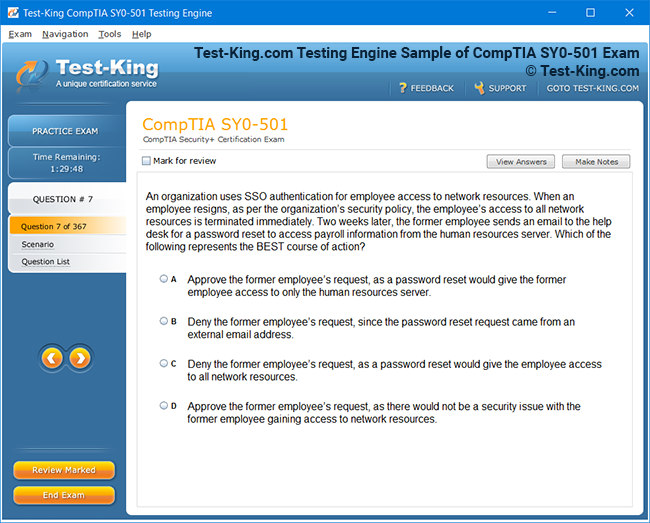
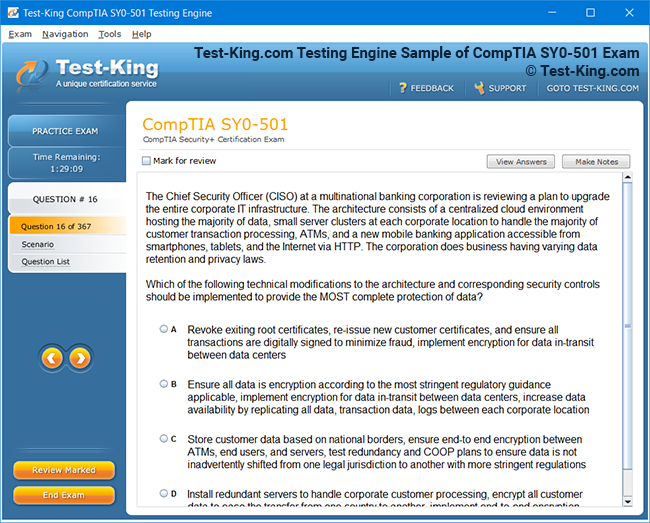
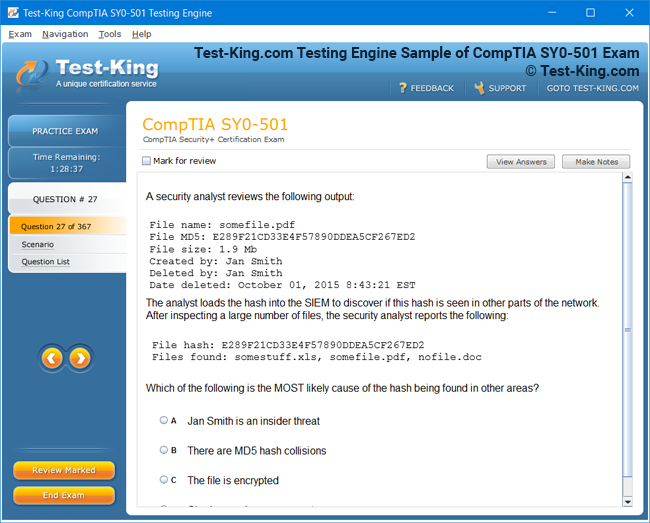
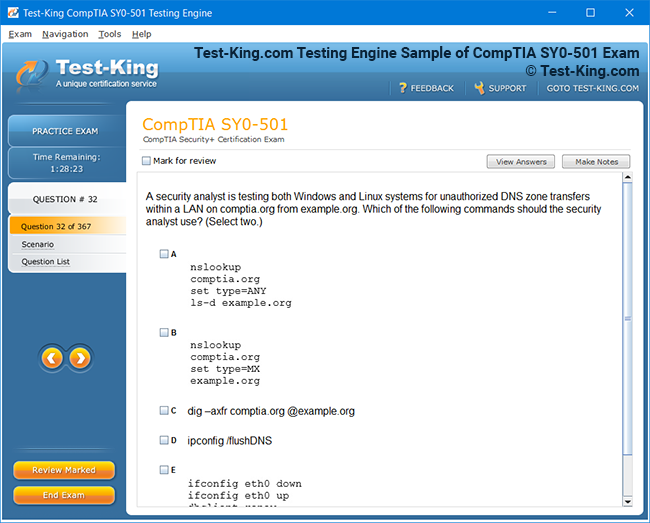
Product Screenshots
Frequently Asked Questions
How can I get the products after purchase?
All products are available for download immediately from your Member's Area. Once you have made the payment, you will be transferred to Member's Area where you can login and download the products you have purchased to your computer.
How long can I use my product? Will it be valid forever?
Test-King products have a validity of 90 days from the date of purchase. This means that any updates to the products, including but not limited to new questions, or updates and changes by our editing team, will be automatically downloaded on to computer to make sure that you get latest exam prep materials during those 90 days.
Can I renew my product if when it's expired?
Yes, when the 90 days of your product validity are over, you have the option of renewing your expired products with a 30% discount. This can be done in your Member's Area.
Please note that you will not be able to use the product after it has expired if you don't renew it.
How often are the questions updated?
We always try to provide the latest pool of questions, Updates in the questions depend on the changes in actual pool of questions by different vendors. As soon as we know about the change in the exam question pool we try our best to update the products as fast as possible.
How many computers I can download Test-King software on?
You can download the Test-King products on the maximum number of 2 (two) computers or devices. If you need to use the software on more than two machines, you can purchase this option separately. Please email support@test-king.com if you need to use more than 5 (five) computers.
What is a PDF Version?
PDF Version is a pdf document of Questions & Answers product. The document file has standart .pdf format, which can be easily read by any pdf reader application like Adobe Acrobat Reader, Foxit Reader, OpenOffice, Google Docs and many others.
Can I purchase PDF Version without the Testing Engine?
PDF Version cannot be purchased separately. It is only available as an add-on to main Question & Answer Testing Engine product.
What operating systems are supported by your Testing Engine software?
Our testing engine is supported by Windows. Andriod and IOS software is currently under development.
Top Pegasystems Exams
PEGACPDC74V1 : Understanding the Role of a Pega Decisioning Consultant Exam
A Pega Decisioning Consultant occupies a pivotal position at the intersection of technology and business strategy, orchestrating sophisticated decisioning processes to enhance organizational outcomes. This role transcends conventional system administration or business analysis; it demands the ability to translate intricate business objectives into actionable decision strategies using Pega Decision Management. Candidates aspiring for certification must cultivate a robust understanding of decision frameworks, adaptive analytics, and predictive models. The professional in this domain functions not merely as a technical executor but as a strategic partner, aligning decisioning initiatives with corporate vision and customer-centric goals.
Introduction to the Pega Decisioning Consultant Role
The essence of this role revolves around leveraging data to drive intelligent business decisions. A consultant interprets transactional and behavioral data to forecast customer needs and recommends next-best actions that improve engagement, loyalty, and operational efficiency. Decision strategies often integrate multiple data sources, encompassing historical interactions, demographic insights, and real-time behavioral patterns. Mastery of these concepts ensures that the decisions executed by the Pega system are accurate, timely, and contextually relevant.
Decisioning Concepts and Core Responsibilities
At the heart of the Pega Decisioning Consultant’s responsibilities is the creation and refinement of decision strategies. These strategies rely on a combination of business rules, predictive analytics, and adaptive models to determine the optimal course of action for each customer interaction. Consultants must understand how rulesets function within the Pega ecosystem, including the sequence of execution, prioritization, and integration with other system components. The ability to configure and modify these rules without compromising system stability is an indispensable skill for certification.
A consultant must also exhibit proficiency in adaptive models, which are designed to learn from customer interactions and continuously refine decision-making criteria. Predictive models, on the other hand, leverage historical data to anticipate outcomes and inform strategy. The integration of these models requires careful calibration to balance accuracy and performance, ensuring that recommendations are not only precise but also computationally efficient. A keen analytical mind is necessary to assess model outputs, identify anomalies, and implement corrective adjustments when needed.
In addition to technical expertise, the role demands an appreciation of business context. Consultants must align decision strategies with organizational objectives, regulatory requirements, and industry standards. This necessitates collaboration with stakeholders across various departments, including marketing, operations, and compliance. The consultant acts as a bridge, translating business language into executable decision logic that delivers measurable outcomes.
Analytical Acumen and Strategic Thinking
Analytical aptitude is a cornerstone of the Pega Decisioning Consultant’s skill set. Professionals must sift through vast amounts of data to uncover patterns, trends, and correlations that inform decision strategies. This involves not only the application of statistical techniques but also the ability to interpret results in a meaningful way for business stakeholders. Analytical insights guide the formulation of rules, the selection of predictive variables, and the optimization of decision flows.
Strategic thinking complements analytical skills by allowing the consultant to anticipate business and market dynamics. By understanding both current operational realities and emerging trends, the consultant can design decisioning approaches that are proactive rather than reactive. For instance, a consultant in the banking sector may identify shifts in customer payment behavior and adjust credit offers or personalized recommendations accordingly. The ability to synthesize analytical findings into strategic action plans is what distinguishes an effective consultant from one who merely implements predefined rules.
Consultants also employ scenario analysis to evaluate potential outcomes of different strategies. This iterative process involves modeling various business scenarios, testing rules and models against simulated data, and assessing the impact on key performance indicators. Scenario analysis enhances decision robustness, reduces risk, and ensures that customer interactions remain consistent and optimized.
Industry Knowledge and Domain Expertise
The application of Pega Decisioning extends across multiple industries, including financial services, healthcare, insurance, telecommunications, and retail. Each domain presents unique challenges and regulatory considerations that influence decision strategy design. A consultant with domain expertise can tailor decisioning frameworks to meet industry-specific requirements while maintaining flexibility to adapt to evolving business needs.
In healthcare, for example, decisioning may involve predicting patient engagement, recommending preventative care interventions, and ensuring compliance with privacy regulations. In retail, adaptive models might optimize product recommendations or promotional offers based on shopping behavior. Understanding the nuances of each sector enables consultants to construct strategies that are both compliant and customer-centric, thereby enhancing the value delivered by Pega Decisioning solutions.
Domain knowledge also facilitates effective communication with stakeholders. A consultant familiar with industry terminology, workflows, and pain points can more effectively gather requirements, present strategy options, and demonstrate the business impact of decisioning initiatives. This credibility strengthens stakeholder confidence and fosters collaboration, which is essential for successful implementation.
Decision Strategy Design and Implementation
A core function of the consultant is designing comprehensive decision strategies that integrate predictive and adaptive models, business rules, and real-time data streams. The design process begins with a thorough analysis of business objectives, customer segments, and operational constraints. Consultants then identify the decision points where intervention is most valuable and define rules that govern the recommended actions.
The implementation phase involves configuring decision strategies within the Pega platform, ensuring proper integration with customer relationship management systems, data warehouses, and external analytics tools. Consultants must validate that each component functions as intended, test for edge cases, and optimize for performance. This includes monitoring strategy execution, evaluating the effectiveness of recommendations, and making iterative improvements based on observed results.
A distinctive aspect of Pega Decisioning is the ability to personalize customer interactions dynamically. Consultants leverage decision strategies to provide contextual recommendations, offers, or interventions that respond to the unique preferences and behaviors of each individual. This level of personalization requires careful calibration of models, thoughtful rule design, and ongoing analysis to ensure relevance and accuracy.
Collaboration and Stakeholder Engagement
Successful deployment of Pega Decisioning solutions requires collaboration with a diverse set of stakeholders. Consultants engage with business analysts, data scientists, marketing teams, and executive leadership to align strategy objectives and operational requirements. Effective communication skills are crucial, as the consultant must translate technical details into business insights that stakeholders can understand and act upon.
Stakeholder engagement also involves negotiating priorities, managing expectations, and facilitating training for end users who interact with decisioning tools. Consultants often lead workshops or strategy sessions to ensure that all participants understand the intended outcomes, the logic behind decisions, and the benefits of the implemented strategies. By fostering a collaborative environment, consultants enhance the adoption and effectiveness of Pega Decisioning solutions.
Data-Driven Decision Making
Data-driven decision making is at the heart of Pega Decisioning. Consultants must ensure that decisions are informed by accurate, comprehensive, and timely data. This includes understanding data sources, performing data cleansing and transformation, and identifying relevant features for predictive and adaptive models. The ability to interpret complex datasets and derive actionable insights is a critical differentiator for certified consultants.
Data analysis also extends to measuring the impact of decision strategies. Consultants monitor key performance indicators, evaluate customer response patterns, and refine rules and models to improve outcomes. This continuous feedback loop enables organizations to adapt to changing market conditions, customer behaviors, and business priorities.
Continuous Learning and Professional Development
The domain of decision management is dynamic, with emerging technologies, evolving best practices, and new analytical techniques continually reshaping the landscape. Pega Decisioning Consultants must cultivate a mindset of continuous learning, exploring innovations in machine learning, artificial intelligence, and real-time analytics. Staying abreast of platform updates, attending community forums, and engaging with industry literature ensures that consultants maintain cutting-edge expertise.
Professional development also encompasses honing soft skills, such as communication, problem-solving, and strategic thinking. These competencies complement technical proficiency, enabling consultants to navigate complex business environments, influence decision-making processes, and contribute meaningfully to organizational success.
Impact on Organizational Outcomes
The work of a Pega Decisioning Consultant directly influences organizational performance. Effective decision strategies enhance customer satisfaction, drive revenue growth, optimize operational efficiency, and reduce risk. By leveraging predictive insights and adaptive models, consultants enable organizations to anticipate needs, personalize interactions, and respond proactively to emerging opportunities. The ripple effect of well-designed decisioning initiatives extends across departments, fostering data-driven culture and strategic alignment throughout the enterprise.
Introduction to Pega Decisioning Principles
Pega Decisioning is built on a foundation of principles that combine business logic, predictive analytics, and adaptive models to deliver precise, context-aware recommendations. A consultant navigating this domain must internalize these principles to create decision strategies that not only respond to immediate business needs but also evolve with emerging patterns in customer behavior. The underlying philosophy of decisioning emphasizes leveraging data and insights to influence outcomes in a timely, efficient, and measurable manner.
At the core of Pega Decisioning is the orchestration of decision flows. These flows guide actions for individual customers, informed by rules, predictive scores, and adaptive learning. Understanding the interdependence of these components is essential for designing strategies that are both agile and robust. Consultants must appreciate how real-time data interacts with historical insights, ensuring that decisions remain relevant across varying contexts and channels.
Decisioning principles also emphasize personalization. Each interaction with a customer presents an opportunity to optimize engagement. By combining predictive models with adaptive learning mechanisms, consultants can ensure that recommendations align with the unique preferences, behaviors, and anticipated needs of each individual. This personalization requires a deep understanding of strategy design, model tuning, and the dynamic application of business rules.
Decision Strategies and Rule Sets
Creating effective decision strategies requires both analytical acumen and practical experience. Decision strategies are structured sequences of actions designed to achieve specific objectives, such as increasing conversion rates, improving retention, or optimizing operational efficiency. Consultants design these strategies by translating business requirements into executable rules that guide the system in real-time.
Rulesets form the backbone of these strategies. Each ruleset defines the conditions, priorities, and logic that dictate decision outcomes. Consultants must comprehend how rules interact within the broader decision framework, including conflict resolution, inheritance, and execution order. Properly configured rulesets ensure consistent and predictable behavior while allowing flexibility for iterative refinement.
Decision strategies are not static constructs. They require continuous monitoring and adjustment based on observed outcomes, system feedback, and evolving business goals. Consultants employ testing, validation, and iterative optimization to enhance the effectiveness of strategies. The integration of adaptive models further strengthens strategies by allowing the system to learn from real-time interactions and refine recommendations autonomously.
Predictive Models and Adaptive Learning
Predictive models anticipate future behavior using historical data, statistical algorithms, and machine learning techniques. Consultants must be proficient in selecting appropriate predictors, tuning model parameters, and evaluating performance metrics. These models provide a probabilistic foundation for decisioning, allowing the system to prioritize actions based on anticipated outcomes.
Adaptive models, in contrast, learn continuously from ongoing interactions. They adjust recommendations based on real-time feedback, refining probabilities and optimizing the relevance of decisions. Consultants must configure these models carefully to balance responsiveness with stability, ensuring that recommendations remain accurate without overfitting to transient patterns.
The synergy between predictive and adaptive models underpins the power of Pega Decisioning. Predictive models provide a forward-looking perspective grounded in historical data, while adaptive models ensure that the system remains agile, responding to changing customer behavior and environmental conditions. Consultants orchestrate this interplay to deliver seamless, intelligent decision-making.
Tools and Interfaces in Pega Decisioning
Proficiency in Pega Decisioning tools is a critical competency for consultants. The Customer Decision Hub serves as the central platform for strategy design, model management, and decision orchestration. Consultants navigate this environment to create, test, and deploy strategies that align with business objectives.
The Next-Best-Action Designer is a primary interface for constructing decision strategies. It allows consultants to define actions, assign conditions, and prioritize recommendations. Mastery of this tool enables the creation of highly personalized, contextually aware interactions that drive measurable outcomes.
Predictive analytics dashboards provide insight into model performance, decision execution, and customer responses. Consultants use these dashboards to monitor strategy effectiveness, identify anomalies, and refine decision logic. These interfaces facilitate a feedback-driven approach, ensuring continuous improvement and alignment with business goals.
In addition to these core tools, consultants often interact with data integration modules, connectors, and analytics extensions. These components enable the incorporation of external datasets, the execution of complex calculations, and the seamless integration of decisioning outcomes into broader enterprise systems. Competence in these tools allows consultants to design strategies that are comprehensive, adaptive, and technically robust.
Strategy Testing and Optimization
Ensuring that decision strategies perform as intended requires rigorous testing and validation. Consultants simulate various scenarios, analyze decision outcomes, and adjust rules and model parameters accordingly. Testing evaluates the accuracy of recommendations, the alignment with business objectives, and the efficiency of execution within operational constraints.
Optimization is an ongoing process. Consultants leverage metrics such as conversion rates, response likelihood, and engagement levels to refine strategies iteratively. The goal is to maximize impact while minimizing unintended consequences, such as irrelevant recommendations or overuse of resources. By applying a data-driven optimization approach, consultants enhance both the performance and reliability of Pega Decisioning strategies.
The iterative nature of testing and optimization underscores the dynamic character of decisioning. Unlike static systems, decision strategies in Pega evolve with data, feedback, and business changes. Consultants must maintain vigilance and adaptability, continuously monitoring results and refining models to sustain relevance and effectiveness.
Personalization and Customer Engagement
Personalization is a hallmark of effective decisioning. Consultants design strategies that consider individual preferences, behaviors, and anticipated needs, delivering tailored recommendations that resonate with customers. This level of customization enhances engagement, fosters loyalty, and drives measurable business outcomes.
Achieving effective personalization requires integrating multiple data sources, including demographic information, transactional history, and behavioral signals. Consultants translate these inputs into decision logic, defining conditions, priorities, and scoring mechanisms that guide the system in selecting the most relevant actions. Adaptive models further enhance personalization by learning from ongoing interactions and continuously refining recommendations.
Consultants also consider the broader customer journey, ensuring that decisioning strategies align with various touchpoints and channels. By orchestrating interactions holistically, they deliver consistent, meaningful, and context-aware experiences that strengthen brand perception and drive desired behaviors.
Integration with Business Processes
A Pega Decisioning Consultant must ensure that decision strategies are embedded seamlessly into organizational workflows. This involves aligning decision points with business processes, operational constraints, and system architecture. Consultants collaborate with business analysts, IT teams, and operational managers to integrate strategies effectively, ensuring smooth execution and maximum impact.
Integration requires understanding how decisioning outcomes influence downstream processes. For instance, a recommendation generated by the system may trigger marketing communications, adjust resource allocation, or update customer records. Consultants must ensure that these actions are executed reliably, without disrupting existing workflows or compromising system performance.
Effective integration also involves monitoring and feedback mechanisms. Consultants track the execution of decision strategies, analyze results, and provide insights to stakeholders. This continuous feedback loop enables iterative refinement, ensuring that decisioning remains aligned with evolving business goals and operational realities.
Continuous Learning and Adaptability
Pega Decisioning is a dynamic field, characterized by evolving technologies, emerging best practices, and new analytical techniques. Consultants must cultivate a mindset of continuous learning, exploring innovations in predictive modeling, adaptive algorithms, and real-time analytics. Staying current with platform updates, industry trends, and emerging methodologies ensures that consultants maintain cutting-edge expertise.
Adaptability is equally critical. Consultants must respond to changing business conditions, customer behaviors, and regulatory requirements. The ability to pivot strategies, refine models, and adjust decision flows is essential for sustaining effectiveness and relevance. Those who combine technical mastery with intellectual agility excel in delivering value and driving business outcomes through Pega Decisioning.
Practical Application and Real-World Scenarios
The application of Pega Decisioning principles extends beyond theory into tangible business impact. Consultants deploy strategies to improve customer engagement, optimize marketing campaigns, and enhance operational efficiency. By leveraging predictive insights and adaptive learning, they anticipate needs, personalize interactions, and influence behaviors in ways that create measurable results.
Real-world scenarios illustrate the value of mastery in this domain. For example, in retail, decision strategies may optimize product recommendations based on purchasing history and browsing patterns, while in financial services, adaptive models may guide personalized credit offers. In each case, the consultant’s ability to apply principles and tools effectively determines the success of decisioning initiatives.
By integrating predictive models, adaptive learning, and strategic rulesets, consultants create a cohesive decisioning ecosystem. This ecosystem supports continuous improvement, enables dynamic responsiveness, and drives sustainable business advantage. Mastery of principles and tools is therefore not merely an academic exercise but a practical requirement for shaping intelligent, data-driven interactions across the enterprise.
Importance of Data in Decisioning
Data forms the very foundation of Pega Decisioning, serving as the fuel that drives intelligent and context-aware decisions. Consultants must cultivate a comprehensive understanding of data sources, structures, and quality to ensure that decision strategies produce meaningful outcomes. Accurate and reliable data allows the system to evaluate customer behaviors, predict future actions, and recommend interventions that enhance engagement and business performance.
A Pega Decisioning Consultant examines datasets not merely for completeness but for contextual relevance. This involves identifying which attributes are meaningful predictors, recognizing inconsistencies, and transforming raw information into structured inputs suitable for decision models. Consultants also consider the temporal aspects of data, understanding that recency, frequency, and historical patterns influence predictive accuracy and adaptive learning. By ensuring data integrity and relevance, consultants lay the groundwork for high-performing decision strategies.
Analytical Techniques and Insight Extraction
Analytical prowess is a distinguishing characteristic of effective Pega Decisioning Consultants. Professionals employ statistical methods, trend analysis, and pattern recognition to interpret complex datasets. They convert raw numerical and categorical information into actionable insights, enabling the creation of decision strategies that anticipate customer needs and optimize outcomes.
Insight extraction involves more than traditional analysis; it requires the application of cognitive reasoning and situational awareness. Consultants evaluate correlations, identify causal relationships, and quantify the potential impact of various actions. By integrating these insights into decision strategies, they improve the precision of recommendations and ensure alignment with overarching business objectives.
Data visualization also plays a critical role in analytical interpretation. Consultants present findings using intuitive representations that facilitate understanding among stakeholders. Graphical depictions of trends, anomalies, and customer segments help decision-makers comprehend complex patterns and support evidence-based strategic choices.
Customer Segmentation and Targeting
Segmentation is a core principle of effective decisioning. Consultants classify customers into distinct groups based on demographics, transactional history, behavior, and predictive scores. Proper segmentation enables the design of tailored strategies that resonate with specific audiences, enhancing engagement and optimizing resource allocation.
Segmentation techniques extend beyond conventional grouping methods. Consultants may apply advanced clustering algorithms, propensity scoring, and behavioral mapping to identify meaningful segments that reveal latent patterns. These insights allow the system to deliver personalized recommendations that anticipate customer preferences, encourage desired behaviors, and maximize the effectiveness of each interaction.
Targeting within these segments requires careful calibration of rules, prioritization of actions, and strategic allocation of resources. Consultants evaluate which offers, interventions, or communications are likely to yield the highest impact for each segment. By harmonizing segmentation and targeting, Pega Decisioning becomes a precision instrument that drives measurable business value.
Data Governance and Quality Assurance
Maintaining high-quality data is a critical responsibility for consultants. Data governance encompasses the policies, procedures, and standards that ensure accuracy, consistency, and compliance. Consultants enforce validation rules, monitor data flows, and implement corrective measures when discrepancies arise. They also address the challenges of integrating disparate data sources, reconciling differences in format, structure, and semantics to produce a unified dataset for decisioning.
Quality assurance extends to predictive and adaptive models as well. Consultants verify that inputs are correctly mapped, processed, and weighted within models, preventing biases and inaccuracies from undermining strategy performance. By prioritizing data integrity and governance, consultants create a reliable foundation for all decisioning activities, reinforcing trust in the system’s recommendations.
Continuous Monitoring and Feedback Loops
Decisioning is inherently dynamic, and data management requires continuous oversight. Consultants establish monitoring mechanisms that track system performance, data flow integrity, and model accuracy. They analyze deviations, identify root causes of errors, and implement adjustments to maintain optimal operation.
Feedback loops enhance the learning capability of Pega Decisioning. Adaptive models rely on real-time feedback from customer interactions to refine recommendations. Consultants facilitate these loops by ensuring timely and accurate capture of interaction outcomes, updating model parameters, and reassessing predictive accuracy. This cyclical process supports iterative improvement, allowing strategies to evolve alongside customer behavior and business requirements.
Predictive Analytics in Practice
Predictive analytics transforms historical data into foresight, enabling consultants to anticipate customer behavior and optimize decision strategies. Consultants identify relevant variables, evaluate relationships, and construct models that estimate the likelihood of various outcomes. These predictions inform rules, scoring mechanisms, and next-best-action recommendations, making the decisioning process proactive rather than reactive.
In practice, predictive analytics may influence marketing campaigns, customer retention strategies, or operational prioritization. Consultants apply models to evaluate probabilities, simulate scenarios, and forecast potential impacts. The insights gained empower organizations to make informed choices, allocate resources efficiently, and enhance customer satisfaction.
Adaptive Modeling and Learning
Adaptive modeling complements predictive analytics by allowing the system to learn continuously from real-time interactions. Consultants configure models to capture behavioral changes, adjust probabilities, and refine recommendations without manual intervention. This adaptive capability ensures that strategies remain relevant even as customer preferences shift or external conditions fluctuate.
The implementation of adaptive models demands vigilance and discernment. Consultants monitor performance metrics, assess convergence rates, and calibrate thresholds to prevent overfitting or oscillation. Properly tuned adaptive models enable Pega Decisioning to respond dynamically, optimizing outcomes and enhancing the personalization of customer interactions.
Integration of Data and Decisioning Systems
Effective decisioning relies on seamless integration of data sources and decisioning platforms. Consultants coordinate with IT teams, business analysts, and operational managers to align data pipelines with strategy execution. This integration ensures that predictive scores, segmentation insights, and interaction outcomes are consistently applied across channels.
Integration also involves addressing challenges such as latency, synchronization, and data transformation. Consultants ensure that incoming data is processed in real time, mapped correctly to models and rulesets, and utilized efficiently within decision flows. By achieving cohesive integration, consultants enable a responsive, accurate, and scalable decisioning environment.
Scenario Analysis and Simulation
Scenario analysis is a powerful technique for testing and refining decision strategies. Consultants simulate various conditions, evaluate the impact of different actions, and identify potential risks or opportunities. This analytical approach allows decision strategies to be stress-tested before deployment, ensuring robustness under diverse circumstances.
Simulation also supports resource optimization. By modeling multiple decision paths and their projected outcomes, consultants can allocate efforts and interventions where they are likely to have the greatest effect. This predictive foresight enhances efficiency, minimizes waste, and strengthens the reliability of Pega Decisioning solutions.
Data-Driven Decision Strategy Optimization
Optimizing decision strategies relies on the continuous application of analytical insights. Consultants monitor key performance indicators, assess model accuracy, and refine rulesets based on observed outcomes. By combining predictive insights, adaptive learning, and stakeholder feedback, consultants ensure that strategies achieve maximum effectiveness.
Optimization is not a one-time task but an ongoing endeavor. Consultants iterate strategies to respond to evolving customer behavior, market trends, and operational requirements. The data-driven nature of this process ensures that decisioning remains both precise and adaptive, enhancing organizational performance and customer satisfaction.
Enhancing Business Impact through Analytics
The ultimate purpose of data management and analytical skills in Pega Decisioning is to drive measurable business impact. Consultants transform data into intelligence, enabling organizations to make proactive decisions, personalize customer experiences, and optimize operational efficiency. Their expertise ensures that every interaction is informed, purposeful, and aligned with strategic objectives.
Through sophisticated analysis, segmentation, predictive modeling, and adaptive learning, consultants contribute to revenue growth, risk mitigation, and enhanced customer loyalty. By mastering the intricate interplay between data and decisioning, they elevate the capability of Pega Decisioning from a technological tool to a strategic enabler, shaping the trajectory of the enterprise in a measurable and meaningful way.
Understanding System Architecture and Integration
A Pega Decisioning Consultant must possess a thorough understanding of system architecture to ensure the seamless execution of decision strategies. Pega Decisioning relies on a sophisticated framework that integrates predictive and adaptive models with business rules, workflows, and external data sources. Consultants must comprehend how these components interact, including the flow of data, processing sequences, and dependencies between decisioning elements.
Integration extends beyond internal systems to include CRM platforms, databases, analytics engines, and third-party services. Consultants design strategies with interoperability in mind, ensuring that each decision output is effectively communicated to downstream applications. They also anticipate potential bottlenecks, latency issues, or conflicts that could compromise real-time execution. By maintaining a holistic view of system architecture, consultants ensure that decisioning initiatives are both reliable and scalable.
Understanding architecture also encompasses knowledge of execution contexts, processing rules, and storage mechanisms. Consultants must evaluate how real-time events interact with historical data and models, and ensure that the system can respond dynamically without performance degradation. This requires both analytical rigor and practical experience navigating complex enterprise environments.
Rules Management and Automation
Central to Pega Decisioning is the management and optimization of rulesets that govern decisions. Consultants craft rules that dictate conditions, priorities, and actions, ensuring that decision outcomes align with business objectives. Effective rules management requires a careful balance between precision and flexibility, as overly rigid rules may hinder adaptability while excessively loose rules can produce inconsistent results.
Automation plays a critical role in scaling decision-making processes. By automating repetitive or predictable decisions, consultants free human resources for more strategic activities and reduce operational errors. Automation also ensures timely execution, which is essential in contexts where customer interactions occur in real time or under tight temporal constraints.
Consultants must continuously monitor automated processes to validate accuracy, detect anomalies, and implement adjustments. They also consider exception handling, ensuring that the system responds appropriately when conditions fall outside predefined parameters. Through meticulous rules management and automation, decision strategies achieve consistency, efficiency, and reliability.
Testing, Validation, and Performance Optimization
Testing and validation are indispensable aspects of technical competency for Pega Decisioning Consultants. Decision strategies must undergo rigorous evaluation to ensure that models, rulesets, and integrations function correctly under various conditions. Consultants simulate scenarios, analyze outcomes, and adjust configurations to address deficiencies or inefficiencies.
Performance optimization is closely tied to testing, as consultants must ensure that decision strategies execute swiftly and accurately within operational constraints. This involves evaluating processing times, resource utilization, and system responsiveness. Optimization also requires balancing predictive accuracy, model complexity, and computational efficiency to deliver actionable recommendations without overburdening infrastructure.
Consultants utilize iterative testing methodologies, incorporating real-world data and diverse scenarios to uncover edge cases. This approach mitigates the risk of unexpected outcomes, enhances system reliability, and improves the overall effectiveness of decisioning strategies. Continuous monitoring of performance metrics ensures that optimizations remain aligned with evolving business needs.
Security and Compliance Awareness
Technical competence in Pega Decisioning extends to the safeguarding of sensitive data and adherence to regulatory standards. Consultants must design decision strategies that comply with privacy regulations, data protection laws, and organizational policies. Security considerations include data encryption, access controls, audit trails, and secure integration with external systems.
Compliance awareness also encompasses ethical decisioning practices. Consultants evaluate the potential consequences of automated recommendations, ensuring that outcomes do not inadvertently disadvantage certain customer groups or violate ethical norms. By embedding security and compliance into technical design, consultants uphold trust, safeguard organizational reputation, and minimize regulatory risk.
Consultants continually update their knowledge of emerging standards, platform capabilities, and industry regulations. They integrate these requirements into decision strategies proactively, ensuring that systems remain both legally compliant and operationally robust. Security-conscious design also improves customer confidence and reinforces the credibility of Pega Decisioning solutions.
Monitoring and Troubleshooting Technical Issues
Technical issues are inevitable in complex decisioning environments, making monitoring and troubleshooting essential competencies. Consultants implement mechanisms to detect anomalies, track errors, and identify performance bottlenecks in real time. This proactive approach enables swift resolution before issues impact business outcomes or customer experiences.
Troubleshooting requires analytical skill and familiarity with system logs, execution traces, and model outputs. Consultants must diagnose root causes, whether arising from misconfigured rules, integration failures, or data inconsistencies. They then implement corrective measures, validate results, and document solutions to prevent recurrence.
Effective monitoring also includes the evaluation of decision outcomes against predefined performance metrics. Consultants assess the quality, relevance, and impact of recommendations, adjusting strategies as necessary. Through systematic observation and problem resolution, they maintain the integrity and efficiency of the Pega Decisioning ecosystem.
Technical Documentation and Knowledge Sharing
A critical yet often understated competency is the creation of clear technical documentation. Consultants produce detailed records of decision strategies, rulesets, model configurations, and integration processes. This documentation ensures that knowledge is preserved, shared, and accessible to team members, stakeholders, and future consultants.
Knowledge sharing extends beyond documentation to include training, workshops, and mentorship. Consultants convey technical concepts to business users, analysts, and IT personnel, bridging the gap between strategy design and operational execution. This collaborative approach fosters alignment, enhances adoption, and strengthens the organization’s overall decisioning capability.
Well-maintained documentation also facilitates audits, compliance checks, and system upgrades. By systematically capturing configurations, dependencies, and assumptions, consultants enable efficient troubleshooting, seamless transitions, and continuity in the deployment of decision strategies.
Technical Scalability and System Optimization
As decisioning initiatives expand, technical scalability becomes crucial. Consultants design strategies and models to handle increasing volumes of transactions, real-time interactions, and data inputs without sacrificing performance or accuracy. They anticipate growth in customer engagement, system load, and model complexity, implementing solutions that scale efficiently.
Optimization involves fine-tuning models, rulesets, and integration workflows to minimize latency, maximize throughput, and ensure resource efficiency. Consultants analyze execution paths, refine processing sequences, and streamline interactions between components. By combining scalability planning with continuous optimization, they create robust and adaptable decisioning systems capable of supporting enterprise-level operations.
Leveraging Advanced Technical Features
Pega Decisioning offers a range of advanced technical features that consultants must master. These include event handling, predictive scoring, adaptive learning, real-time decisioning, and scenario simulation. Consultants apply these capabilities to enhance the sophistication, accuracy, and responsiveness of decision strategies.
Mastery of advanced features also involves configuring parameters, interpreting outputs, and integrating insights into broader business processes. Consultants balance technical complexity with practical applicability, ensuring that sophisticated tools produce tangible business value. By harnessing these features effectively, they elevate the performance and strategic impact of Pega Decisioning initiatives.
Collaboration with Technical Teams
Consultants work closely with development, operations, and IT teams to ensure seamless implementation of decision strategies. Collaboration involves aligning technical requirements, integrating system components, and resolving operational challenges. Consultants communicate clearly about configurations, dependencies, and expected outcomes, enabling cohesive execution.
Technical collaboration also includes joint problem-solving and innovation. By leveraging the expertise of cross-functional teams, consultants enhance the scalability, reliability, and efficiency of decisioning systems. This cooperative approach ensures that strategies are technically sound, operationally viable, and aligned with business priorities.
Continuous Technical Learning
The technological landscape of Pega Decisioning evolves rapidly, necessitating continuous learning. Consultants stay current with platform updates, emerging tools, and new architectural paradigms. They explore innovations in predictive analytics, machine learning, integration frameworks, and automation capabilities.
Continuous learning also encompasses experimental application of new techniques and performance evaluation. Consultants test novel approaches in controlled environments, measure effectiveness, and incorporate successful innovations into decision strategies. By embracing technical curiosity and ongoing education, they maintain cutting-edge proficiency and deliver sustained organizational value.
Impact of Technical Competency on Decisioning Success
Technical mastery directly influences the success of decisioning strategies. Consultants with strong competencies in architecture, rules management, integration, testing, and security produce systems that are reliable, efficient, and responsive. High-quality technical execution ensures that predictive models and adaptive strategies operate effectively, delivering precise, context-aware recommendations.
Beyond functional performance, technical competence enhances organizational confidence. Stakeholders trust that strategies are well-designed, compliant, and capable of handling real-world complexity. This trust facilitates adoption, supports expansion of decisioning initiatives, and maximizes the strategic value of Pega Decisioning across the enterprise.
Effective Communication and Stakeholder Engagement
A Pega Decisioning Consultant excels not only through technical mastery but also through the ability to communicate complex concepts clearly and persuasively. Consultants frequently bridge the gap between business leaders, analysts, and technical teams, translating intricate decisioning logic into actionable insights that stakeholders can understand and act upon. This involves the articulation of predictive model outputs, adaptive learning behaviors, and decision strategy outcomes in a manner that aligns with organizational priorities.
Stakeholder engagement extends beyond mere explanation; it encompasses active listening, negotiation, and collaboration. Consultants must discern the implicit objectives of business units, reconcile competing interests, and foster consensus around decisioning strategies. They facilitate workshops, strategy sessions, and review meetings, ensuring that all participants grasp the implications of proposed actions. Through effective communication, consultants cultivate trust, encourage adoption, and reinforce alignment between technical solutions and strategic goals.
Analytical Reasoning and Problem-Solving
Problem-solving lies at the heart of a Pega Decisioning Consultant’s professional capability. Each business challenge demands a careful examination of data, predictive models, and decision outcomes to identify optimal courses of action. Analytical reasoning allows consultants to dissect complex scenarios, evaluate multiple pathways, and select interventions that maximize organizational benefit while minimizing risk.
Consultants employ structured thinking to navigate ambiguity, employing both quantitative and qualitative analysis. For example, they might analyze transactional patterns to identify customer segments at risk of churn, assess the efficacy of alternative decision strategies, and recommend the most effective interventions. Problem-solving also requires creativity and innovation, as consultants often encounter scenarios that lack precedent or demand novel applications of predictive and adaptive technologies.
Strategic Thinking and Business Acumen
Strategic thinking distinguishes effective consultants from those who merely execute predefined rules. By understanding organizational objectives, market dynamics, and operational constraints, consultants design decisioning strategies that contribute meaningfully to business success. They anticipate trends, foresee potential challenges, and position decision strategies to exploit opportunities while mitigating risk.
Business acumen enhances this strategic capability. Consultants interpret decision outcomes in terms of financial impact, customer satisfaction, and operational efficiency. They consider trade-offs between competing initiatives, assess return on investment, and align decision strategies with broader corporate objectives. This strategic lens ensures that technical solutions are both practical and impactful, reinforcing the consultant’s value as a trusted advisor.
Project Management and Collaborative Skills
Deploying Pega Decisioning initiatives often involves multifaceted projects that span multiple departments and timelines. Consultants must coordinate activities, manage deliverables, and ensure adherence to project milestones. This requires familiarity with project management principles, resource allocation, and timeline optimization.
Collaboration is intrinsic to project success. Consultants work closely with developers, analysts, business users, and operational managers to ensure that decision strategies are implemented effectively. They navigate dependencies, negotiate priorities, and resolve conflicts to maintain cohesion and progress. By combining project management proficiency with collaborative skill, consultants facilitate seamless execution and sustained performance.
Adaptability and Resilience
The landscape of decision management is dynamic, influenced by technological advancements, shifting customer behavior, and evolving business priorities. Consultants must demonstrate adaptability, embracing change and responding effectively to unforeseen challenges. This resilience enables them to maintain strategy effectiveness under conditions of uncertainty, ensuring that decisioning systems continue to deliver value.
Adaptability also manifests in continuous improvement. Consultants iterate decision strategies, refine predictive and adaptive models, and adjust business rules to respond to emerging insights. Their ability to pivot, reconfigure, and optimize strategies ensures that decisioning remains relevant, agile, and aligned with organizational objectives.
Influence and Persuasion
Pega Decisioning Consultants frequently engage with stakeholders who may be unfamiliar with predictive or adaptive systems. Influence and persuasion are essential skills for conveying the rationale behind recommended actions, demonstrating the potential impact, and securing buy-in for implementation. Consultants use data-driven narratives, compelling visualizations, and contextual examples to illustrate how decision strategies contribute to business goals.
Persuasive communication is also critical when advocating for strategic changes or resource allocations. Consultants present evidence, outline benefits and risks, and articulate the long-term value of decisioning initiatives. This capacity to influence decisions fosters alignment, supports adoption, and strengthens the consultant’s role as a strategic partner within the organization.
Emotional Intelligence and Relationship Management
Emotional intelligence underpins successful interpersonal interactions. Consultants with high emotional intelligence can recognize and respond to the motivations, concerns, and perspectives of stakeholders. This enables effective negotiation, conflict resolution, and consensus-building in complex environments where multiple priorities intersect.
Relationship management extends to fostering collaboration across technical, operational, and business teams. Consultants build rapport, cultivate trust, and maintain professional networks that facilitate the exchange of knowledge and support for decisioning initiatives. By nurturing strong relationships, consultants enhance the sustainability and impact of their work within the enterprise.
Decision-Making Under Uncertainty
Decisioning consultants often operate in environments where complete information is unavailable or outcomes are probabilistic. The ability to make informed decisions under uncertainty is critical. Consultants assess risks, weigh probabilities, and apply analytical frameworks to choose actions that optimize expected outcomes while mitigating potential downsides.
This competency requires both quantitative skill and judgment. Consultants evaluate model predictions, adaptive behaviors, and historical patterns, then integrate these insights with business considerations to guide strategy decisions. Effective decision-making under uncertainty ensures that recommendations remain relevant, actionable, and aligned with organizational priorities.
Continuous Learning and Professional Growth
The domain of decision management evolves rapidly, demanding that consultants pursue ongoing professional growth. Continuous learning encompasses technical skills, such as mastery of new Pega functionalities, predictive modeling techniques, and integration capabilities, as well as soft skills, including communication, collaboration, and strategic thinking.
Professional growth also involves engagement with industry developments, participation in knowledge-sharing forums, and exploration of emerging methodologies. Consultants refine their expertise through experiential learning, experimentation, and reflection, ensuring that their competencies remain current and robust.
Ethical Awareness and Responsibility
Ethical considerations are integral to the consultant’s professional responsibilities. Decisioning strategies influence customer experiences, operational outcomes, and organizational reputation. Consultants must ensure that recommendations are equitable, transparent, and compliant with legal and regulatory standards. They assess potential unintended consequences, address biases in predictive models, and maintain accountability for the outcomes of automated decisions.
Ethical awareness also involves safeguarding customer data, respecting privacy, and adhering to organizational policies. By integrating ethical judgment into professional practice, consultants reinforce trust, uphold standards, and contribute to sustainable, responsible decision management.
Training and Knowledge Transfer
An important competency for consultants is the ability to train and mentor others. This involves conveying complex concepts, demonstrating tools and methodologies, and supporting colleagues in the application of decision strategies. Effective knowledge transfer strengthens organizational capability, promotes adoption of best practices, and ensures continuity of expertise.
Consultants may conduct workshops, develop training materials, or provide one-on-one coaching. By sharing knowledge, they foster a culture of learning, enhance team proficiency, and empower others to leverage Pega Decisioning effectively. This mentorship contributes to both individual and organizational success.
Impact on Organizational Effectiveness
The amalgamation of soft skills and professional competencies directly influences the success of Pega Decisioning initiatives. Consultants who combine communication, strategic thinking, analytical reasoning, and adaptability enhance the relevance, adoption, and performance of decision strategies. Their influence shapes stakeholder perceptions, drives alignment, and ensures that technical solutions translate into tangible business value.
Through effective interpersonal engagement, project management, ethical practice, and continuous professional growth, consultants position themselves as indispensable contributors to organizational performance. Their ability to blend technical acumen with human insight enables decisioning initiatives to achieve lasting impact, fostering innovation, efficiency, and customer-centric outcomes.
Systematic Preparation for Certification
Preparing for the Certified Pega Decisioning Consultant exam requires a structured and comprehensive approach. The candidate must familiarize themselves with the exam objectives, which encompass decision strategy design, predictive and adaptive modeling, rules management, data analysis, and stakeholder engagement. Understanding these topics ensures a solid foundation for navigating both theoretical and practical scenarios presented in the examination.
Successful preparation begins with reviewing Pega documentation, platform guides, and learning modules that detail decisioning principles, model configurations, and rule orchestration. Candidates benefit from hands-on practice within the Pega environment, exploring features such as Next-Best-Action Designer, Customer Decision Hub, and predictive analytics dashboards. Experiential learning allows candidates to internalize workflows, understand system behavior, and develop confidence in configuring decision strategies.
Practice exams and scenario-based exercises are particularly valuable. These simulations present real-world challenges that require integration of multiple competencies, such as defining rules, adjusting adaptive models, and evaluating predicted outcomes. By engaging with these exercises, candidates develop problem-solving agility, analytical precision, and the ability to respond under time constraints.
Integration of Skills in Practical Scenarios
Real-world application of Pega Decisioning knowledge reinforces exam preparation and enhances professional competence. Consultants leverage predictive models to anticipate customer behavior, adaptive learning to refine recommendations, and rules management to automate decision flows. Each decision strategy is crafted to align with business objectives while remaining responsive to evolving conditions.
In practical deployment, consultants must ensure that data inputs are accurate, comprehensive, and relevant. Data quality directly impacts model performance and the reliability of decision outcomes. Consultants perform validation, cleansing, and transformation of data to optimize predictive accuracy and adaptive responsiveness. This meticulous attention to data underpins the effectiveness of real-world decision strategies.
Personalization is a critical aspect of applied decisioning. Consultants configure strategies to consider individual preferences, transaction histories, and behavioral patterns. Adaptive models continuously learn from interactions, adjusting recommendations to maintain relevance and enhance customer engagement. This dynamic approach ensures that each interaction maximizes value for both the organization and the customer.
Scenario Planning and Testing
Scenario planning allows consultants to evaluate decision strategies under diverse conditions. By simulating varying customer behaviors, market dynamics, and operational constraints, consultants identify potential risks and opportunities. This exercise strengthens decision robustness, prepares candidates for complex real-world situations, and enhances strategic foresight.
Testing is an integral component of scenario planning. Consultants execute controlled experiments to assess model accuracy, rule effectiveness, and system responsiveness. They monitor outcomes, analyze deviations, and refine configurations accordingly. This iterative testing process ensures that decision strategies perform reliably, remain aligned with business goals, and adapt effectively to changing circumstances.
Monitoring and Continuous Optimization
In applied environments, continuous monitoring is essential to maintain the effectiveness of decision strategies. Consultants track key performance indicators, such as response rates, conversion metrics, and customer satisfaction scores. This monitoring provides actionable insights into the efficacy of predictive and adaptive models, rule execution, and overall decisioning processes.
Continuous optimization involves leveraging these insights to refine strategies. Consultants adjust rules, recalibrate models, and re-prioritize actions to enhance performance. This feedback-driven approach ensures that strategies remain dynamic, effective, and aligned with evolving organizational objectives. Optimization also requires balancing computational efficiency with predictive accuracy to deliver timely, actionable recommendations.
Collaboration and Stakeholder Engagement
Effective application of Pega Decisioning extends beyond technical execution to include collaboration with stakeholders. Consultants engage with marketing teams, operations managers, and executive leadership to align decision strategies with organizational priorities. Clear communication of insights, outcomes, and strategy rationale fosters stakeholder trust, facilitates adoption, and ensures cohesive implementation.
Consultants also contribute to cross-functional knowledge sharing, providing guidance on decision strategy design, predictive modeling, and adaptive learning. By mentoring colleagues and facilitating workshops, consultants enhance organizational capability, promote best practices, and encourage a culture of data-driven decision-making.
Realizing Business Impact
The ultimate objective of applying Pega Decisioning skills is to achieve measurable business impact. Consultants use predictive insights and adaptive learning to anticipate customer needs, personalize interactions, and optimize operational efficiency. Well-designed decision strategies influence revenue growth, customer retention, engagement levels, and risk mitigation.
By integrating data-driven insights with business objectives, consultants ensure that every decision contributes to organizational performance. Personalized recommendations improve customer satisfaction and loyalty, while automated decision flows reduce operational errors and increase efficiency. The cumulative effect of these strategies positions Pega Decisioning as a critical enabler of strategic advantage.
Continuous Professional Development
Certification is a milestone, not the culmination of learning. Pega Decisioning consultants must engage in continuous professional development to maintain expertise and remain current with platform enhancements, analytical methodologies, and industry trends. Participation in Pega community forums, attending workshops, exploring emerging predictive techniques, and reviewing updated platform features are all essential for sustained competence.
Continuous learning also encompasses refining soft skills, such as communication, problem-solving, and strategic thinking. These competencies enhance a consultant’s ability to influence stakeholders, navigate complex projects, and apply technical knowledge effectively. By committing to ongoing professional growth, consultants reinforce their value to organizations and remain capable of driving innovation.
Ethical Considerations in Decisioning
Applied Pega Decisioning involves responsibility for ethical use of data and predictive models. Consultants must ensure that recommendations are equitable, unbiased, and transparent. They address potential ethical risks, assess the fairness of automated decisions, and safeguard customer privacy in accordance with regulatory standards.
Ethical awareness extends to strategic decision-making. Consultants weigh the implications of actions on customers, operational processes, and organizational reputation. Integrating ethical principles into daily practice fosters trust, mitigates reputational risk, and reinforces the credibility of both the consultant and the Pega Decisioning platform.
Exam Preparation Strategies and Time Management
Efficient exam preparation requires both mastery of content and disciplined time management. Consultants allocate time to review theoretical concepts, practice model configuration, and simulate real-world scenarios. Structured study schedules allow for iterative learning, reinforcement of weak areas, and progressive skill consolidation.
Time management also includes pacing practice exams, balancing hands-on exercises with conceptual review, and ensuring adequate rest and reflection periods. This approach maximizes retention, enhances problem-solving agility, and builds confidence for the certification environment.
Integrating Analytical and Technical Knowledge
Exam success and real-world application demand the integration of analytical and technical knowledge. Consultants combine data interpretation, predictive modeling, adaptive learning, and rules management to create cohesive decision strategies. Understanding how these components interact within the Pega ecosystem enables both accurate predictions and efficient operational execution.
Analytical insight informs model selection, parameter configuration, and scenario evaluation. Technical expertise ensures that models, rules, and decision flows are implemented correctly, optimized for performance, and integrated seamlessly with enterprise systems. The interplay of these competencies distinguishes highly effective consultants from those who rely solely on procedural knowledge.
Personalization and Customer Experience
Consultants leverage Pega Decisioning to deliver highly personalized customer experiences. By interpreting data, anticipating behavior, and adapting recommendations in real time, they optimize engagement and satisfaction. Personalization is achieved through a combination of predictive scores, adaptive learning, and strategic prioritization of actions.
Enhanced customer experiences translate directly into business outcomes. Tailored offers, timely interventions, and context-aware interactions foster loyalty, encourage repeat engagement, and increase conversion rates. Consultants play a pivotal role in designing and implementing these experiences, ensuring that technology serves both organizational goals and customer expectations.
Strategic Application and Career Impact
Mastery of Pega Decisioning principles, technical tools, and analytical methodologies positions consultants to make a strategic impact within their organizations. Certified professionals influence operational decisions, optimize customer engagement, and contribute to measurable business outcomes. Their expertise in predictive analytics, adaptive models, and rule orchestration enables them to design solutions that align with both immediate and long-term objectives.
Certification also enhances career opportunities. Professionals gain recognition as trusted advisors, capable of navigating complex decision environments and applying sophisticated tools effectively. Their proficiency opens avenues for leadership roles, specialized decision management projects, and strategic initiatives that drive innovation and efficiency across enterprises.
Conclusion
The journey toward becoming a proficient Pega Decisioning Consultant encompasses rigorous preparation, practical application, and continuous professional development. Candidates must integrate technical knowledge, analytical skills, strategic thinking, and soft competencies to excel both in certification and real-world deployment. Mastery of predictive models, adaptive learning, rules management, and decision strategy design ensures that consultants can deliver impactful, personalized, and ethical decisioning solutions.
Real-world application reinforces the value of certification, demonstrating how data-driven insights can optimize customer engagement, enhance operational efficiency, and contribute to measurable business outcomes. By continuously refining skills, embracing emerging techniques, and maintaining ethical standards, Pega Decisioning Consultants sustain professional excellence and provide organizations with a competitive advantage in the rapidly evolving landscape of intelligent decision management.