

Exam Code: PEGACSSA74V1
Exam Name: Certified Senior System Architect (CSSA) 74V1
Certification Provider: Pegasystems
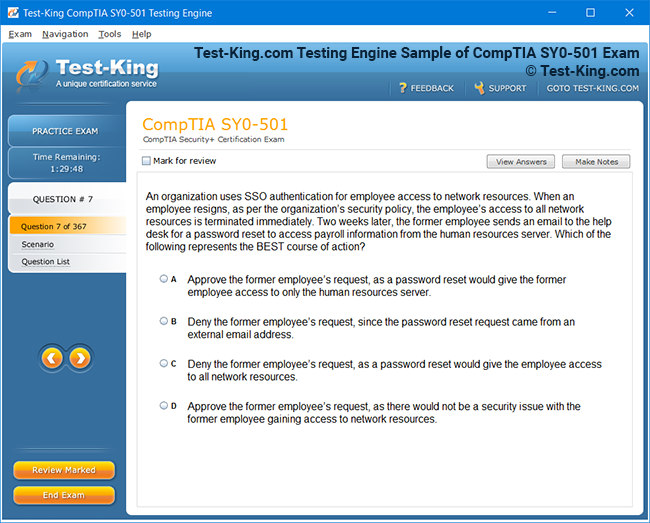
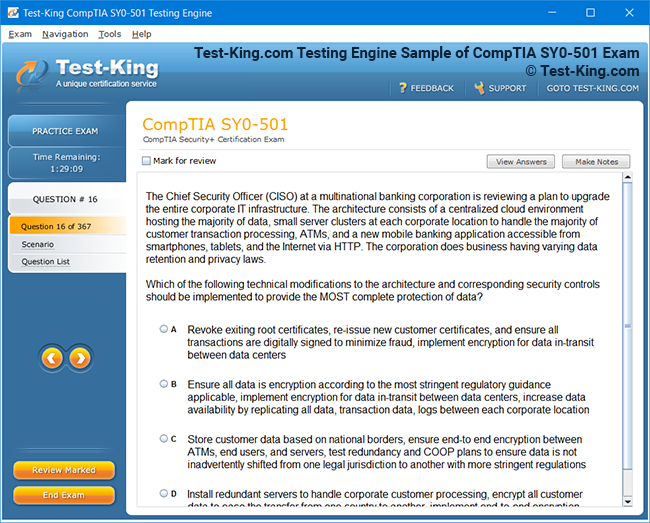
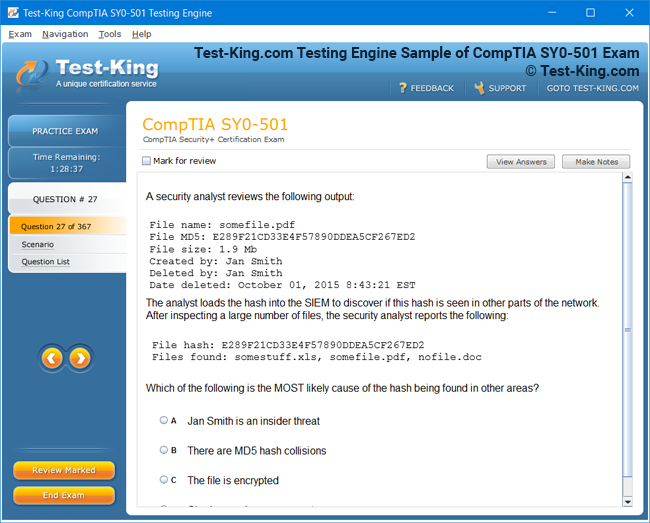
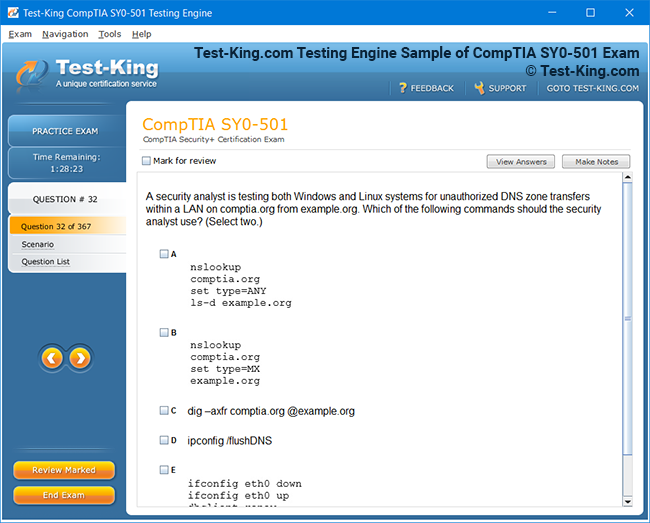
Product Screenshots
Frequently Asked Questions
How can I get the products after purchase?
All products are available for download immediately from your Member's Area. Once you have made the payment, you will be transferred to Member's Area where you can login and download the products you have purchased to your computer.
How long can I use my product? Will it be valid forever?
Test-King products have a validity of 90 days from the date of purchase. This means that any updates to the products, including but not limited to new questions, or updates and changes by our editing team, will be automatically downloaded on to computer to make sure that you get latest exam prep materials during those 90 days.
Can I renew my product if when it's expired?
Yes, when the 90 days of your product validity are over, you have the option of renewing your expired products with a 30% discount. This can be done in your Member's Area.
Please note that you will not be able to use the product after it has expired if you don't renew it.
How often are the questions updated?
We always try to provide the latest pool of questions, Updates in the questions depend on the changes in actual pool of questions by different vendors. As soon as we know about the change in the exam question pool we try our best to update the products as fast as possible.
How many computers I can download Test-King software on?
You can download the Test-King products on the maximum number of 2 (two) computers or devices. If you need to use the software on more than two machines, you can purchase this option separately. Please email support@test-king.com if you need to use more than 5 (five) computers.
What is a PDF Version?
PDF Version is a pdf document of Questions & Answers product. The document file has standart .pdf format, which can be easily read by any pdf reader application like Adobe Acrobat Reader, Foxit Reader, OpenOffice, Google Docs and many others.
Can I purchase PDF Version without the Testing Engine?
PDF Version cannot be purchased separately. It is only available as an add-on to main Question & Answer Testing Engine product.
What operating systems are supported by your Testing Engine software?
Our testing engine is supported by Windows. Andriod and IOS software is currently under development.
Top Pegasystems Exams
Comprehensive Guide to PEGACSSA74V1 Certification: Exam Overview and Career Benefits
The Certified Senior System Architect exam, recognized under the code PEGACSSA74V1, is a distinguished credential offered by Pegasystems. It is meticulously designed to evaluate the aptitude and practical capabilities of professionals working with Pega applications. This certification emphasizes proficiency in designing, implementing, and managing sophisticated business solutions within the Pega platform. Candidates who pursue this credential demonstrate not only technical competence but also a deep understanding of strategic decision-making within enterprise environments.
Understanding the Certified Senior System Architect Exam
The examination assesses a range of skills, including advanced application development, data modeling, user interface design, integration strategies, and adherence to best practices in Pega development. Unlike foundational certifications, the CSSA exam expects candidates to synthesize multiple concepts and apply them in complex scenarios, reflecting the real-world challenges encountered in enterprise-grade applications.
A significant portion of the assessment revolves around case management, application structure, and implementing reusable components effectively. Professionals preparing for this certification must possess hands-on experience with the Pega platform, an understanding of its rules-based architecture, and the ability to design solutions that balance performance, maintainability, and scalability. The exam is comprehensive, evaluating both theoretical knowledge and practical application, requiring candidates to demonstrate insight into troubleshooting, optimization, and advanced configuration techniques.
Key Knowledge Areas and Competencies
The CSSA certification encompasses a broad spectrum of knowledge areas, each critical for demonstrating mastery over enterprise application development. One of the foremost competencies assessed is the ability to structure applications efficiently. Candidates must comprehend how to decompose complex business processes into manageable components while ensuring consistency and adherence to Pega’s framework standards. This includes designing rulesets, creating reusable components, and implementing robust data models that facilitate effective decision-making.
Integration is another essential domain. The modern enterprise environment often involves multiple systems, each with its protocols and data structures. CSSA candidates are expected to understand various integration techniques, including web services, RESTful APIs, connectors, and data transformation rules. The ability to design seamless interactions between Pega applications and external systems ensures that processes remain uninterrupted and that data integrity is maintained.
User interface design forms a substantial portion of the competencies assessed. Senior system architects must create intuitive, responsive, and visually coherent interfaces that enhance user experience while adhering to organizational standards. This involves configuring dynamic layouts, leveraging sections and harnesses efficiently, and ensuring that the application behavior aligns with business objectives.
Performance optimization and troubleshooting are pivotal in real-world Pega environments. The certification requires candidates to demonstrate an ability to identify bottlenecks, optimize database interactions, and fine-tune application components to ensure efficient execution. Knowledge of logging, tracer tools, and performance metrics enables certified architects to maintain the robustness of enterprise applications under high demand.
Security and access control are equally critical. CSSA aspirants must understand authentication, authorization, and role-based access configurations. They should be capable of implementing secure rules and data access strategies that protect sensitive information while supporting business processes.
Preparation Strategies and Study Methodologies
Achieving success in the CSSA exam demands a structured and disciplined preparation approach. Candidates benefit from a blend of theoretical study, practical exercises, and mock assessments that replicate real exam conditions. It is essential to develop familiarity with the Pega platform’s advanced features, explore case management scenarios, and understand the lifecycle of application design and deployment.
A productive strategy includes mapping each knowledge domain to practical exercises within a Pega environment. For instance, constructing a complex case type, designing decision strategies, or integrating external services can reinforce understanding of critical concepts. Supplementing hands-on practice with study guides, video tutorials, and community forums can provide additional insights into problem-solving techniques and exam-focused tips.
Time management is an often-overlooked element of preparation. Given the breadth of topics, candidates should allocate dedicated study sessions for each competency area, gradually increasing the complexity of exercises. Regular reviews of previously studied topics ensure retention and improve the ability to apply concepts under exam conditions.
Another effective methodology involves scenario-based learning. Candidates are encouraged to simulate real enterprise challenges and attempt multiple approaches to solution design. This not only enhances technical skills but also develops critical thinking, a trait highly valued in senior system architects. Reflection on these scenarios and evaluating alternative solutions deepens understanding and prepares candidates for questions requiring nuanced judgment rather than rote memorization.
Career Advantages and Professional Growth
Obtaining the CSSA credential confers substantial career advantages. Certified professionals are often recognized as highly skilled practitioners capable of designing and implementing complex Pega applications with minimal oversight. This recognition translates into greater professional credibility, opportunities for leadership roles, and enhanced earning potential. Organizations increasingly seek certified senior system architects to lead project teams, provide strategic guidance, and ensure the quality of enterprise applications.
The certification also broadens professional mobility. Since Pegasystems is widely adopted across industries such as finance, healthcare, insurance, and telecommunications, CSSA-certified professionals can pursue opportunities globally. The credential signals a robust mastery of the Pega platform, giving candidates a competitive edge in recruitment and promotion processes.
Moreover, the CSSA designation demonstrates a commitment to excellence and continuous learning. Organizations value professionals who pursue advanced certifications, as this reflects an inclination toward staying abreast of evolving technologies and best practices. In practical terms, certified architects are entrusted with overseeing critical projects, mentoring junior developers, and contributing to architectural standards within their teams.
Networking opportunities are another significant advantage. Certified professionals gain access to Pegasystems’ community, where they can share insights, seek guidance, and collaborate with peers who possess similar expertise. This interaction fosters the exchange of advanced techniques, exposure to innovative solutions, and awareness of emerging trends in enterprise application development.
Exam Format and Assessment Approach
The CSSA exam is structured to evaluate both breadth and depth of knowledge. It typically comprises scenario-based multiple-choice questions, where candidates are required to analyze complex business situations and select optimal solutions. These scenarios test not only technical knowledge but also the ability to apply principles in practical contexts.
Examiners often design questions to simulate real-world challenges, requiring the integration of multiple competencies. For example, a single scenario may involve case management, decision rules, data transformation, and security configuration. Candidates must navigate these interconnected aspects efficiently, demonstrating comprehensive understanding.
Time allocation is critical during the exam. Candidates must balance careful reading of scenarios with prompt analysis and solution selection. Effective preparation includes practicing under timed conditions, enhancing both speed and accuracy. Understanding the exam’s scoring methodology, identifying high-weighted topics, and focusing on areas that historically challenge candidates can further improve performance.
The assessment also evaluates strategic thinking. Candidates are expected to propose solutions that are scalable, maintainable, and aligned with business objectives. This emphasizes the importance of architecture principles, adherence to Pega’s best practices, and awareness of long-term implications of design choices.
Common Challenges and How to Overcome Them
Preparing for the CSSA exam is demanding, and aspirants often encounter several challenges. One common difficulty is mastering the breadth of knowledge required. The exam covers multiple domains, each with intricate details, which can overwhelm even experienced developers. Overcoming this challenge requires systematic study, prioritization of critical competencies, and consistent hands-on practice.
Another challenge is scenario analysis. Candidates must interpret complex business problems accurately, identify dependencies, and select the most effective solutions. Developing analytical skills through repeated exposure to case scenarios, mock exams, and reflective learning is essential. Engaging with community discussions or peer study groups can provide alternative perspectives that enhance problem-solving ability.
Time management during preparation and the actual exam is another significant hurdle. Candidates should develop a disciplined schedule that balances learning, practice, and review. Breaking study material into digestible portions and tracking progress ensures steady advancement without burnout.
Finally, staying updated with platform enhancements is crucial. The Pega platform evolves continually, introducing new features, rules, and frameworks. Aspirants must integrate these updates into their preparation to ensure their knowledge aligns with current best practices, enabling them to address exam questions accurately and confidently.
Advanced Preparation Strategies for the CSSA Exam
Achieving success in the CSSA 74V1 exam demands more than superficial familiarity with Pega’s platform. Aspirants must cultivate a profound understanding of advanced concepts, ranging from case design to decision management, while honing their capacity to apply knowledge in intricate scenarios. A deliberate preparation strategy begins with assessing one’s current skill level, identifying strengths and weaknesses, and creating a tailored plan that encompasses both theoretical study and extensive hands-on practice.
One highly effective approach involves simulating enterprise environments within the Pega platform. Candidates can construct case types that mirror real-world business processes, experiment with data models, and implement integration techniques to gain a practical perspective on system behavior. Each exercise should challenge problem-solving skills and encourage exploration of alternative solutions, reinforcing both technical competence and analytical reasoning.
In addition to practical exercises, aspirants benefit from scenario-based learning. By reviewing complex case studies and analyzing the underlying business logic, candidates develop the ability to make strategic architectural decisions. Scenarios often involve multiple interdependent components, such as workflow orchestration, business rules, integrations, and UI considerations. Navigating these interconnected elements cultivates a mindset attuned to scalability, maintainability, and optimal performance.
Time management is another critical factor in preparation. The breadth of knowledge required for CSSA necessitates structured study schedules, alternating between intensive hands-on sessions and reflective review periods. Frequent self-assessment through mock examinations and problem-solving exercises helps candidates monitor progress, identify persistent gaps, and adjust learning strategies accordingly.
Deep Dive into Key Competencies
The CSSA exam evaluates a multifaceted set of competencies, emphasizing both technical mastery and architectural insight. One essential area is the creation and management of reusable components. Senior system architects must design applications that are modular and maintainable, enabling the efficient reuse of rules, sections, flows, and data models across multiple applications. This competency requires a nuanced understanding of Pega’s rules hierarchy and the implications of ruleset structuring on application behavior.
Decision management is another central domain. Candidates are expected to design and implement decision strategies that optimize business outcomes. This involves leveraging decision tables, trees, and scorecards, while integrating predictive analytics where appropriate. Mastery of decision management entails understanding not only the mechanics of configuration but also the strategic impact on case processing, user experience, and business efficiency.
Integration expertise is increasingly indispensable in enterprise contexts. CSSA aspirants must demonstrate the ability to connect Pega applications with external systems, employing connectors, REST services, SOAP services, and data transformations. Proficiency in integration extends beyond technical execution, encompassing considerations of data consistency, error handling, and performance optimization to ensure seamless operations across organizational systems.
Performance optimization and troubleshooting are integral to a senior architect’s responsibilities. The certification examines the ability to identify potential bottlenecks, enhance database interactions, and configure rules and processes for optimal efficiency. Candidates must also be adept at using diagnostic tools, analyzing logs, and evaluating system metrics to preempt issues before they escalate, thereby ensuring application resilience and reliability.
Leveraging Advanced Design Principles
Senior system architects must adopt design principles that transcend basic development tasks. These principles include modularity, maintainability, and adherence to Pega’s recommended best practices. Modularity ensures that components can be updated, replaced, or extended without disrupting the overall system, while maintainability reduces long-term operational overhead and simplifies troubleshooting.
An essential aspect of design is creating scalable solutions that can accommodate evolving business needs. This requires careful consideration of case types, process flows, and ruleset structures, as well as anticipating potential growth in data volume and user interactions. By implementing scalable architectures, certified professionals ensure that applications remain responsive and functional even under increased demand.
Another critical principle involves balancing complexity with usability. Complex business rules must be implemented in a manner that preserves clarity and simplifies maintenance. Architects must consider both end-user experience and developer manageability, creating solutions that are intuitive for operators while remaining efficient for system administrators.
Real-World Applications of CSSA Skills
The practical value of CSSA certification is evident in the enhanced capability to tackle enterprise challenges. Certified professionals are equipped to lead application development projects, manage cross-functional teams, and implement innovative solutions that align with organizational objectives. Their expertise spans multiple domains, including case management, decision strategy, UI design, and system integration.
In real-world scenarios, CSSA-certified architects frequently design applications that handle complex workflows, integrating disparate data sources while maintaining data integrity and security. They optimize processes to reduce latency, improve accuracy, and support critical business decisions. The ability to translate business requirements into functional applications underscores the strategic importance of the certification, positioning professionals as indispensable assets to their organizations.
Mentorship is another significant application of CSSA skills. Certified architects often guide junior developers, imparting best practices, reviewing design patterns, and fostering adherence to standards. This mentorship ensures consistent application quality, reduces errors, and cultivates a culture of excellence within development teams.
Furthermore, CSSA certification empowers professionals to influence organizational strategy. Senior architects contribute to discussions regarding system architecture, technology adoption, and process optimization. Their insights, grounded in both technical expertise and practical experience, support informed decision-making and drive business transformation.
Common Pitfalls and Mitigation Strategies
Even experienced practitioners face challenges when preparing for the CSSA exam. One prevalent pitfall is underestimating the complexity of scenario-based questions. Such questions often require integrating multiple competencies, and candidates who focus solely on individual topics may struggle to provide holistic solutions. To mitigate this, aspirants should practice synthesizing diverse knowledge areas in cohesive, scenario-driven exercises.
Another frequent challenge involves maintaining up-to-date knowledge of the Pega platform. With continuous platform enhancements, features, and best practices evolving over time, relying on outdated resources can lead to gaps in understanding. Regular engagement with official documentation, community forums, and updated training materials ensures candidates remain aligned with current standards.
Time constraints during exam preparation and execution can also present difficulties. Candidates must cultivate disciplined study habits, create realistic timelines, and practice time-bound exercises to enhance speed and accuracy. Developing efficient problem-solving techniques and prioritizing high-impact areas further supports success under timed conditions.
Overreliance on rote memorization is another obstacle. The CSSA exam prioritizes practical application and strategic decision-making over memorized rules. Candidates are encouraged to internalize concepts, understand the rationale behind design choices, and practice applying knowledge in varied scenarios. This approach fosters adaptability, critical thinking, and confidence in tackling complex questions.
Strategic Use of Resources
A comprehensive preparation plan includes leveraging a variety of resources. Hands-on practice within the Pega environment is paramount, enabling candidates to explore advanced features, test integrations, and refine architectural designs. Supplementary materials such as study guides, video tutorials, and practice exams provide structured learning pathways, clarify complex concepts, and expose candidates to typical exam scenarios.
Collaboration with peers and mentors enhances preparation by introducing diverse perspectives and problem-solving approaches. Participating in discussion forums, study groups, or mentorship programs allows candidates to exchange insights, clarify doubts, and gain exposure to real-world challenges. Such interactions cultivate deeper understanding and reinforce learning through practical application.
Reflective learning is another powerful strategy. After completing exercises or mock scenarios, candidates should analyze their decisions, evaluate alternative approaches, and identify areas for improvement. This iterative process not only strengthens technical skills but also develops analytical acumen, a key trait for senior system architects.
Career Impact and Professional Recognition
Earning the CSSA 74V1 credential signifies a high level of proficiency, strategic thinking, and technical mastery. Certified professionals are often entrusted with leading complex projects, designing enterprise solutions, and mentoring development teams. Their expertise positions them as influential contributors within organizations, capable of guiding technological decisions and driving process improvements.
The certification also enhances career mobility and marketability. Organizations across industries value the rigorous training and demonstrated capabilities associated with CSSA certification. Professionals with this credential often access higher-level positions, increased responsibilities, and competitive compensation, reflecting recognition of their specialized skills and strategic insights.
Additionally, CSSA-certified architects gain access to a network of peers, forums, and resources that support ongoing professional development. Engagement within this community fosters continuous learning, awareness of emerging trends, and opportunities to share expertise, reinforcing both personal and organizational growth.
Elevating Preparation Through Analytical Learning
Achieving excellence in the CSSA 74V1 exam requires more than technical familiarity; it demands analytical acumen, strategic foresight, and the capacity to synthesize complex information. Candidates preparing for this certification benefit from an immersive approach that blends hands-on experimentation, scenario-based exercises, and reflective evaluation. Understanding how different components interact within the Pega environment is essential, as the exam evaluates not only individual skills but also the candidate’s ability to construct coherent, efficient, and scalable solutions.
An effective preparation strategy begins with dissecting enterprise applications into their constituent elements. Candidates analyze workflows, data structures, and decision logic to identify patterns and optimize design choices. By creating analogous scenarios within a controlled environment, aspirants can test assumptions, explore alternative solutions, and understand the implications of their architectural decisions. Such exercises cultivate adaptability, enabling candidates to tackle multifaceted questions with confidence.
Scenario-based learning is especially critical. The CSSA exam frequently presents complex business challenges that require candidates to integrate multiple competencies simultaneously. These scenarios may involve designing case lifecycles, implementing dynamic decision rules, and ensuring seamless integration with external systems. Practicing such composite exercises enhances critical thinking, reinforces knowledge application, and prepares candidates for real-world problem-solving.
Time allocation and disciplined study habits further augment preparation. Structured schedules, alternating between intensive technical exercises and reflective review, ensure steady progress while preventing cognitive fatigue. Regular self-assessment through mock examinations allows candidates to evaluate their proficiency, identify recurring errors, and refine problem-solving strategies, ultimately enhancing both efficiency and accuracy.
Mastery of Reusable Components and Rule Design
A core competency assessed in the CSSA 74V1 exam is the ability to design and manage reusable components effectively. Modular application design is a hallmark of professional excellence, allowing architects to create flexible, maintainable, and scalable systems. Candidates must understand the intricacies of Pega rulesets, inheritance structures, and best practices for rule reuse. Implementing reusable components requires foresight, as decisions made during design impact future enhancements, integrations, and overall system performance.
Rule design extends beyond mere technical execution. Senior architects must ensure that rules are logically structured, consistent across applications, and optimized for performance. This entails careful consideration of naming conventions, decision logic, and rule resolution precedence. By adhering to robust rule design principles, professionals can minimize errors, enhance maintainability, and facilitate collaborative development within teams.
Decision management is intrinsically linked to rule design. CSSA candidates must demonstrate proficiency in constructing decision strategies that optimize business outcomes. This involves the integration of decision tables, decision trees, and scorecards, as well as the application of predictive analytics where appropriate. Understanding the interplay between rules and business objectives is essential, enabling candidates to craft strategies that are both effective and sustainable.
Integration Techniques and System Interoperability
Integration expertise constitutes a significant portion of the CSSA assessment. In contemporary enterprise ecosystems, applications rarely operate in isolation, necessitating seamless interoperability with external systems, databases, and services. Candidates must be adept at utilizing connectors, RESTful services, SOAP services, and data transformation techniques to ensure smooth communication across platforms.
Effective integration requires more than technical knowledge; it demands an appreciation of data consistency, error handling, and performance optimization. Architects must anticipate potential bottlenecks, design robust error recovery mechanisms, and implement monitoring tools to safeguard system reliability. Mastery of integration not only ensures operational continuity but also enhances the value of enterprise applications by facilitating comprehensive, interconnected solutions.
Security considerations are integral to integration and overall application design. CSSA-certified architects must implement authentication, authorization, and role-based access control to protect sensitive data and maintain regulatory compliance. A nuanced understanding of security principles allows professionals to balance accessibility with protection, ensuring that business processes remain secure without compromising efficiency or user experience.
Performance Optimization and Troubleshooting
Performance optimization is a critical competency in the CSSA 74V1 exam, reflecting the demands of enterprise-grade applications. Certified architects are expected to identify potential performance bottlenecks, streamline data access, and configure rules to maximize execution efficiency. This requires both analytical and practical skills, as well as familiarity with Pega’s diagnostic tools, logging mechanisms, and performance metrics.
Troubleshooting is an essential counterpart to optimization. Candidates must demonstrate the ability to investigate anomalies, interpret system logs, and isolate issues that may affect application behavior. Effective troubleshooting combines technical expertise with methodical reasoning, allowing architects to resolve problems rapidly while minimizing disruption to business processes. The capacity to anticipate and mitigate issues before they escalate is a distinguishing attribute of senior system architects, reflecting both proficiency and professional foresight.
User Interface Design and User Experience
While technical competence is fundamental, CSSA-certified professionals must also prioritize user experience. Designing intuitive, responsive, and visually coherent interfaces enhances operational efficiency and supports business objectives. Candidates are expected to configure dynamic layouts, leverage harnesses and sections judiciously, and ensure that user interactions are consistent with organizational standards.
Effective UI design involves more than aesthetic considerations; it requires understanding how users interact with processes, identifying potential friction points, and optimizing workflows to facilitate seamless operations. Architects must balance functionality with clarity, ensuring that applications are accessible and efficient for both end-users and system administrators. By integrating usability principles into application design, professionals create solutions that are not only functional but also engaging and effective.
Advanced Troubleshooting and Scenario Analysis
The CSSA exam frequently presents scenarios requiring complex analysis and solution design. Candidates must evaluate multiple interrelated components, identify dependencies, and propose solutions that optimize both functionality and performance. Scenario analysis exercises enhance critical thinking, encouraging candidates to consider alternative approaches and assess the broader implications of design decisions.
Common challenges include interpreting ambiguous requirements, integrating diverse system components, and balancing competing priorities such as performance, security, and maintainability. Developing expertise in scenario analysis requires repeated practice, reflective evaluation, and engagement with real-world examples. By simulating enterprise challenges, candidates cultivate the ability to respond effectively to novel situations, a skill highly prized in professional environments.
Career Growth and Strategic Impact
CSSA certification significantly enhances professional trajectory, positioning individuals as authoritative figures in enterprise application development. Certified architects are often entrusted with leading projects, mentoring teams, and shaping architectural standards within organizations. Their expertise encompasses not only technical execution but also strategic decision-making, enabling them to influence business processes and drive operational efficiency.
The credential also facilitates career mobility, offering opportunities across industries and geographies. Organizations recognize the rigorous training and practical proficiency associated with CSSA certification, valuing professionals who demonstrate the capacity to manage complex projects, optimize processes, and ensure the integrity of enterprise applications.
In addition to personal advancement, CSSA-certified professionals contribute to organizational knowledge. They introduce best practices, optimize workflows, and mentor junior staff, fostering a culture of excellence and continuous improvement. The ability to synthesize technical and strategic insight underscores the value of this certification, establishing certified individuals as indispensable assets to their teams and organizations.
Mitigating Challenges in Preparation
Candidates often encounter obstacles when preparing for the CSSA 74V1 exam, including the complexity of integrated scenarios, the breadth of required knowledge, and time management pressures. Overcoming these challenges involves structured planning, disciplined study routines, and extensive hands-on practice. Scenario simulations, reflective evaluation, and engagement with peer networks can provide alternative perspectives and reinforce learning.
Staying current with platform updates is another essential practice. Pega evolves continually, and professionals must incorporate new features, best practices, and architectural recommendations into their preparation. Accessing official documentation, participating in community forums, and reviewing updated training materials ensures alignment with current standards, enhancing readiness for both the exam and practical application.
Finally, cultivating critical thinking and problem-solving skills is indispensable. The exam prioritizes application and strategy over rote memorization, requiring candidates to interpret complex requirements, design optimized solutions, and anticipate potential issues. By internalizing these approaches, aspirants develop the analytical capacity to excel in both the certification assessment and real-world professional contexts.
Enhancing Mastery Through Practical Experience
Achieving mastery in the CSSA 74V1 exam entails a deep comprehension of Pega’s platform combined with sustained practical experience. Candidates are expected to understand the full spectrum of enterprise application design, from initial requirements gathering to the implementation of sophisticated solutions. Hands-on practice is essential for internalizing concepts, exploring complex scenarios, and developing an intuitive grasp of system behavior. Working within realistic simulations allows aspirants to anticipate challenges, refine architectural decisions, and understand the broader implications of their choices on business operations.
Scenario-driven exercises are particularly beneficial for consolidating expertise. Candidates can construct comprehensive case types, configure dynamic workflows, and implement decision strategies that mirror enterprise requirements. These exercises cultivate analytical thinking, allowing aspirants to navigate multifaceted questions by synthesizing technical knowledge with business acumen. The iterative practice reinforces problem-solving skills and enhances adaptability when confronted with novel scenarios.
Time management is integral to preparation. A structured schedule alternating between intensive application exercises and reflective analysis ensures steady progress while maintaining cognitive balance. Frequent self-assessment through mock scenarios allows candidates to track improvement, identify gaps, and calibrate learning strategies for optimal efficiency.
Advanced Application Architecture and Reusable Components
A core focus of CSSA certification is the design of scalable, maintainable, and modular applications. Senior system architects must create reusable components that enhance system efficiency and reduce redundancy. This requires a thorough understanding of rulesets, inheritance structures, and best practices for rule reuse. Implementing components with foresight ensures that future enhancements, integrations, and system modifications occur seamlessly without disrupting the existing architecture.
Rule design extends beyond technical mechanics. Architects must ensure that rules are logically consistent, maintainable, and optimized for performance. Strategic rule structuring reduces errors, facilitates collaborative development, and supports long-term system sustainability. Designing rules that integrate smoothly with business processes enhances both operational efficiency and organizational agility.
Decision management represents another critical domain. CSSA-certified professionals are expected to construct decision strategies that optimize outcomes while ensuring compliance with business objectives. This includes implementing decision tables, decision trees, and scorecards, as well as integrating predictive analytics where appropriate. Effective decision management requires both technical proficiency and strategic insight, enabling architects to balance system capabilities with business priorities.
Seamless Integration and System Interoperability
In modern enterprise environments, applications operate in interconnected ecosystems. Integration expertise is therefore essential for CSSA candidates. Professionals must demonstrate the ability to connect Pega applications with external systems, utilizing connectors, REST services, SOAP services, and data transformation techniques. Successful integration ensures uninterrupted operations, accurate data flow, and consistent system behavior.
Beyond technical execution, integration demands attention to performance, error handling, and data consistency. Architects must design resilient solutions capable of recovering gracefully from failures, monitoring system health, and optimizing interactions for efficiency. Secure integration practices, including authentication and role-based access control, safeguard sensitive information while maintaining operational flexibility. Mastery of these techniques positions CSSA-certified professionals as invaluable assets in complex enterprise environments.
Performance Enhancement and Troubleshooting Expertise
Performance optimization is fundamental to senior architectural responsibilities. Certified professionals are expected to identify potential bottlenecks, optimize database access, and configure rules for peak efficiency. Utilizing diagnostic tools, analyzing system logs, and monitoring performance metrics enable architects to preemptively address inefficiencies and ensure applications meet operational demands.
Troubleshooting is an equally critical competency. Candidates must demonstrate the ability to diagnose complex issues, interpret system behavior, and implement corrective measures promptly. Methodical problem-solving, informed by experience and analytical reasoning, minimizes disruption and maintains application reliability. The capacity to anticipate challenges and implement preventative solutions underscores the strategic role of senior system architects in enterprise environments.
User Interface Design and Experience Optimization
While technical proficiency forms the foundation of CSSA certification, user experience considerations are paramount. Architects must design intuitive, responsive interfaces that enhance workflow efficiency and meet organizational standards. Effective design encompasses dynamic layouts, thoughtful configuration of sections and harnesses, and alignment with user expectations and business objectives.
User interface excellence requires balancing clarity and functionality. Architects must consider how users interact with complex processes, anticipate friction points, and optimize workflows for seamless operation. By integrating usability principles, CSSA-certified professionals ensure that applications are not only functional but also engaging and practical for end-users, supporting efficient execution of business processes.
Scenario-Based Problem Solving and Strategic Thinking
The CSSA exam emphasizes the ability to apply knowledge in complex, scenario-based contexts. Candidates must analyze multifaceted business problems, evaluate dependencies, and design solutions that optimize functionality, performance, and maintainability. Scenario-based exercises cultivate strategic thinking, encouraging candidates to consider alternative approaches, assess long-term implications, and balance competing priorities.
Common challenges include interpreting ambiguous requirements, integrating diverse system components, and ensuring compliance with best practices. Practicing these scenarios develops resilience, critical thinking, and decision-making capabilities, equipping candidates to handle unpredictable real-world challenges with precision and confidence.
Professional Advantages and Career Impact
CSSA certification significantly enhances professional credibility, positioning individuals as experts in Pega application development and strategic architecture. Certified professionals are often entrusted with high-impact projects, leading development teams, and establishing standards for architectural excellence. Their expertise bridges technical proficiency and strategic insight, enabling informed decision-making that drives organizational success.
Career opportunities expand across industries and geographies for CSSA-certified individuals. Organizations value the rigorous training, practical proficiency, and strategic competence associated with this credential. Professionals frequently access higher-level roles, increased responsibilities, and competitive compensation, reflecting the recognition of their specialized skills and contributions.
Mentorship and knowledge dissemination constitute additional professional advantages. Certified architects guide junior developers, share best practices, and cultivate a culture of excellence within teams. Their influence extends beyond technical execution to organizational strategy, optimizing workflows, improving decision-making processes, and fostering continuous improvement.
Addressing Challenges and Optimizing Preparation
Preparing for the CSSA 74V1 exam presents challenges such as complex scenario analysis, breadth of required knowledge, and time management pressures. Overcoming these challenges requires structured study, disciplined routines, and immersive hands-on experience. Practicing scenario simulations, engaging with peer networks, and reflecting on problem-solving approaches reinforces learning and develops practical competence.
Remaining current with platform advancements is essential. The Pega environment evolves continually, with new features, frameworks, and best practices introduced regularly. Candidates must integrate these updates into preparation, ensuring that knowledge remains relevant and aligned with current standards. This proactive approach enhances exam readiness and equips professionals for practical application in dynamic enterprise environments.
Finally, cultivating analytical thinking and strategic problem-solving is indispensable. The CSSA exam prioritizes application and judgment over rote memorization, challenging candidates to synthesize technical expertise with business insight. By internalizing these approaches, aspirants develop the capacity to address complex requirements, implement optimized solutions, and anticipate potential issues, reinforcing both certification success and long-term professional growth.
Strategic Preparation for Advanced Mastery
Excelling in the CSSA 74V1 exam demands more than superficial knowledge; it requires a comprehensive understanding of advanced Pega capabilities, strategic problem-solving skills, and the ability to synthesize multiple concepts. Candidates must engage in deliberate, structured preparation that combines practical experimentation, scenario-based learning, and reflective evaluation. By simulating real-world enterprise applications, aspirants develop an intuitive sense of system behavior, uncover latent complexities, and refine their architectural decisions.
Immersive exercises play a pivotal role in preparation. Candidates can construct comprehensive case types, implement intricate workflows, and apply decision strategies that emulate organizational requirements. These simulations reinforce analytical reasoning, allowing professionals to approach multifaceted questions with a systematic methodology. Iterative practice ensures that problem-solving skills are sharpened and adaptability is enhanced, preparing candidates to tackle novel challenges efficiently.
Time management remains a fundamental aspect of preparation. A disciplined schedule that balances hands-on exercises, theoretical study, and reflective assessment ensures consistent progress while minimizing cognitive fatigue. Regular self-evaluation through mock scenarios and timed exercises allows candidates to identify weaknesses, adjust strategies, and improve both speed and accuracy under exam conditions.
Mastery of Complex Case Design and Workflow Architecture
A central competency evaluated in the CSSA exam is the ability to design sophisticated case types and orchestrate efficient workflows. Candidates must understand the nuances of case lifecycle management, identifying how tasks interconnect and how rules interact across the application. By structuring cases logically and ensuring seamless task progression, architects create solutions that are both maintainable and scalable, meeting the operational demands of complex enterprises.
Workflow architecture requires more than technical execution; it demands foresight and strategic judgment. Candidates must consider dependencies, exception handling, and system performance while designing flows. Optimized workflows reduce redundancy, minimize errors, and improve process efficiency. Integrating automated decision points, dynamic routing, and adaptive processes ensures that applications are resilient, flexible, and responsive to changing business needs.
The ability to design reusable components within case structures is equally essential. Modular design facilitates maintenance, supports collaborative development, and reduces the time required for implementing enhancements. Candidates must understand the implications of ruleset structures, inheritance hierarchies, and best practices for rule reuse, ensuring that solutions are robust and future-proof.
Decision Management and Predictive Strategy Implementation
Decision management is a critical area of expertise for CSSA-certified professionals. Candidates are expected to design strategies that optimize business outcomes while maintaining system efficiency. This includes implementing decision tables, trees, and scorecards, as well as integrating predictive analytics where appropriate. Mastery of decision management entails understanding both the technical mechanisms of rule execution and the strategic impact on case processing, user experience, and overall business objectives.
Predictive strategy implementation allows architects to anticipate outcomes, streamline processes, and enhance operational decision-making. By leveraging historical data and predictive models, candidates can configure rules that dynamically respond to evolving conditions. This capability underscores the strategic value of CSSA certification, demonstrating a capacity to align technical solutions with broader organizational goals.
Decision strategies often intersect with workflow design and integration components. Architects must ensure that decisions are executed in the correct sequence, that data integrity is preserved, and that system interactions remain efficient. Effective decision management combines analytical precision, technical proficiency, and strategic insight, enabling certified professionals to deliver optimal solutions in complex enterprise environments.
Integration Excellence and System Cohesion
Seamless integration is essential in today’s interconnected enterprise landscapes. CSSA candidates must demonstrate the ability to connect Pega applications with external systems, including databases, web services, and third-party applications. Utilizing RESTful services, SOAP connectors, and data transformation techniques, architects ensure uninterrupted workflows, consistent data exchange, and reliable system interactions.
Integration requires attention to detail and strategic foresight. Architects must anticipate potential bottlenecks, implement error handling mechanisms, and maintain performance under high-demand conditions. Security considerations are paramount, including authentication, authorization, and role-based access control, ensuring that sensitive information remains protected while business processes continue unhindered. Mastery of integration elevates the value of enterprise applications, allowing organizations to operate cohesively and efficiently across multiple systems.
The interdependence of integration, workflow, and decision management underscores the complexity of CSSA-level architecture. Certified professionals must coordinate these elements to achieve optimal system performance, maintainability, and scalability. This holistic understanding distinguishes senior system architects from less experienced developers, demonstrating both technical skill and strategic acumen.
Performance Optimization and Diagnostic Expertise
Performance optimization is a fundamental competency for CSSA-certified professionals. Candidates must identify potential inefficiencies, optimize database interactions, and configure rules to enhance application responsiveness. Utilizing Pega’s diagnostic tools, reviewing logs, and monitoring performance metrics enables architects to proactively address issues before they impact business operations.
Troubleshooting complements optimization, requiring methodical analysis and systematic problem resolution. Candidates must isolate issues, interpret system behavior, and implement corrective measures efficiently. The ability to preempt problems, mitigate risks, and maintain system integrity is a hallmark of senior architectural competence. Performance optimization and troubleshooting are intertwined with design choices, emphasizing the importance of strategic thinking in both preventive and reactive measures.
Advanced architects also focus on continuous improvement. By analyzing historical performance data, monitoring system trends, and refining workflows, they ensure that applications remain resilient, efficient, and aligned with evolving business requirements. This proactive approach fosters sustainable system architecture and reinforces the strategic impact of CSSA-certified professionals.
User Experience and Interface Design Excellence
While technical mastery forms the backbone of CSSA certification, effective user interface design is equally critical. Architects must create intuitive, responsive interfaces that facilitate efficient workflow execution and enhance user satisfaction. Dynamic layouts, appropriate harness utilization, and well-configured sections contribute to cohesive user experiences that support operational efficiency.
Designing for usability requires understanding end-user interactions, identifying potential friction points, and optimizing navigation and functionality. Architects must balance clarity with complexity, ensuring that interfaces are both functional and aesthetically coherent. Thoughtful interface design improves task execution, reduces errors, and enhances adoption rates, reflecting the holistic approach expected of CSSA-certified professionals.
User experience considerations extend to mobile and multi-platform applications. Architects must ensure consistent behavior, responsive design, and seamless performance across devices, supporting organizational objectives and modern business practices. Integrating these principles into application design exemplifies the strategic and practical capabilities of senior system architects.
Scenario Analysis and Advanced Problem-Solving
Scenario-based problem solving is integral to the CSSA exam. Candidates must evaluate complex, multifaceted situations, integrate knowledge from multiple domains, and propose solutions that balance performance, maintainability, and strategic alignment. Scenario analysis develops critical thinking, allowing architects to consider alternative solutions, anticipate challenges, and assess long-term impacts of design decisions.
Common obstacles include interpreting ambiguous requirements, managing interdependencies, and reconciling competing priorities. Through repeated exposure to such scenarios, candidates cultivate resilience, analytical reasoning, and effective decision-making skills. This approach reinforces the capacity to translate technical expertise into actionable, high-quality solutions in dynamic enterprise contexts.
Career Advancement and Organizational Influence
CSSA 74V1 certification confers significant professional advantages. Certified architects are recognized as experts capable of leading projects, mentoring teams, and establishing standards for enterprise application development. Their influence extends beyond technical implementation to strategic decision-making, shaping business processes, and enhancing organizational performance.
The credential supports career mobility and progression, providing access to senior roles across industries and geographies. Organizations value the demonstrated ability to manage complex applications, optimize workflows, and deliver reliable solutions. Certified professionals often receive competitive compensation, greater responsibilities, and opportunities to lead high-impact initiatives.
Additionally, CSSA-certified individuals contribute to organizational knowledge and capability. By mentoring junior developers, sharing best practices, and fostering a culture of excellence, they enhance overall team performance and support sustainable organizational growth. The strategic insight, technical mastery, and leadership skills developed through CSSA certification reinforce its value in both personal and organizational contexts.
Overcoming Preparation Challenges and Optimizing Performance
Preparing for the CSSA exam involves navigating complex scenario analysis, mastering a broad range of competencies, and managing time effectively. Structured study routines, disciplined practice, and scenario simulations mitigate these challenges, reinforcing technical skills and analytical reasoning. Engagement with peer communities, mentors, and official resources enhances preparation by providing insights, alternative approaches, and real-world context.
Remaining current with platform developments is essential. Pega introduces new features, frameworks, and best practices regularly, and candidates must integrate these updates into preparation. This ensures alignment with contemporary standards, exam relevance, and practical applicability in enterprise environments.
Critical thinking, strategic problem-solving, and adaptability are indispensable for success. The CSSA exam evaluates not only knowledge but also judgment and application. Candidates who cultivate these abilities are well-positioned to excel, demonstrating proficiency in both certification requirements and professional practice.
Optimizing Preparation for Complex Enterprise Challenges
Excelling in the CSSA 74V1 exam requires not only technical competence but also strategic foresight, analytical reasoning, and hands-on experience with complex enterprise scenarios. Candidates must engage in meticulous preparation that balances theoretical study with practical exercises to internalize concepts effectively. Simulating real-world business processes within the Pega environment allows aspirants to encounter nuanced challenges, explore diverse solutions, and refine decision-making abilities.
Immersive scenario-based exercises reinforce understanding of advanced concepts, including case management, decisioning strategies, and integration with external systems. Constructing elaborate case types, implementing dynamic workflows, and integrating predictive analytics provides candidates with a comprehensive view of system interactions. This approach strengthens analytical reasoning, enhances adaptability, and prepares candidates to respond to unforeseen challenges both in the exam and in practical enterprise environments.
Time management and structured study routines are critical for success. Alternating between intensive practice, reflective evaluation, and focused theoretical review ensures consistent progress without cognitive fatigue. Frequent self-assessment through mock scenarios allows candidates to identify gaps, refine strategies, and develop confidence in applying knowledge efficiently under time constraints.
Advanced Application Design and Modular Architecture
A fundamental competency in CSSA certification is the design of scalable, maintainable, and modular applications. Senior system architects must create reusable components that reduce redundancy, enhance system efficiency, and facilitate long-term maintainability. Understanding the nuances of ruleset structures, inheritance hierarchies, and best practices for component reuse is essential to implementing robust enterprise solutions.
Rule design extends beyond technical mechanics; it involves logical consistency, performance optimization, and strategic alignment with business objectives. Architects must ensure that rules are clearly structured, efficient, and capable of adapting to future changes. By emphasizing maintainability and scalability, certified professionals reduce operational risks and enable seamless enhancements, integrations, and system extensions.
Case design and workflow orchestration are critical elements of application architecture. Architects must understand the flow of tasks, dependencies, exception handling, and dynamic decision points to construct workflows that are both efficient and resilient. Integrating reusable components and optimizing rule execution ensures that applications meet both operational requirements and strategic goals.
Decisioning Expertise and Predictive Analytics
Decision management is a central domain in CSSA certification. Candidates are expected to develop strategies that optimize business outcomes, incorporating decision tables, trees, and scorecards, as well as predictive analytics where appropriate. Mastery of decisioning entails understanding not only the configuration of rules but also their broader impact on case processing, user experience, and organizational efficiency.
Predictive strategies enable architects to anticipate outcomes, streamline processes, and enhance decision-making in dynamic business contexts. By leveraging historical data and predictive models, certified professionals create rules that adapt to evolving conditions, demonstrating the strategic value of advanced Pega expertise.
Integration of decisioning with workflow design and system architecture is essential. Candidates must ensure that decisions execute in the correct sequence, that data integrity is preserved, and that system performance is optimized. Combining analytical precision, technical knowledge, and strategic insight enables architects to design sophisticated, efficient, and reliable enterprise applications.
Seamless Integration and System Cohesion
In contemporary enterprises, applications operate in highly interconnected environments. CSSA-certified professionals must demonstrate expertise in integrating Pega applications with external systems, including databases, web services, and third-party applications. Mastery of RESTful services, SOAP connectors, and data transformation ensures uninterrupted workflows, accurate data exchange, and reliable system interactions.
Integration requires attention to detail and strategic foresight. Architects must design error handling mechanisms, maintain performance under high loads, and implement secure authentication and authorization protocols. These capabilities safeguard sensitive information while supporting operational flexibility. Certified professionals who excel in integration strengthen organizational cohesion, enabling seamless interoperability across complex enterprise ecosystems.
The interplay between integration, decisioning, and workflow architecture highlights the sophistication expected at the CSSA level. Candidates must coordinate these elements effectively, balancing efficiency, maintainability, and scalability. This comprehensive perspective distinguishes senior system architects and underscores the strategic value of certification.
Performance Optimization and Diagnostic Proficiency
Performance optimization is critical in senior architectural roles. CSSA-certified professionals identify potential inefficiencies, optimize database access, and configure rules for peak performance. Utilizing diagnostic tools, analyzing logs, and monitoring system metrics allows architects to detect and address issues proactively, ensuring applications remain resilient and efficient under varying loads.
Troubleshooting is equally essential. Candidates must isolate complex issues, interpret system behavior accurately, and implement corrective actions effectively. The ability to preempt problems, maintain system integrity, and execute rapid resolutions demonstrates advanced analytical and technical skills, reinforcing the strategic impact of certified professionals within enterprise environments.
Continuous improvement further enhances performance. By reviewing historical trends, optimizing workflows, and refining application components, architects maintain high levels of operational efficiency while anticipating future requirements. This proactive approach ensures sustainable, reliable, and scalable enterprise applications.
User Interface Design and Experience Optimization
While technical expertise is foundational, CSSA-certified professionals also prioritize user experience. Architects must design intuitive, responsive interfaces that support efficient workflows and align with organizational standards. Dynamic layouts, thoughtful harness utilization, and coherent section configuration contribute to seamless user interaction.
Effective interface design balances clarity and complexity. Architects must consider user interactions, anticipate friction points, and optimize functionality to enhance adoption and operational efficiency. Multi-platform responsiveness, including mobile accessibility, ensures consistent user experience, reflecting the comprehensive and strategic approach expected of CSSA-certified architects.
Scenario-Based Problem Solving and Strategic Insight
Scenario analysis is a hallmark of the CSSA exam, emphasizing the application of knowledge in complex, interdependent situations. Candidates must evaluate multifaceted business problems, assess dependencies, and propose solutions that optimize performance, maintainability, and strategic alignment. This process cultivates critical thinking, adaptability, and informed decision-making.
Challenges often include ambiguous requirements, complex interdependencies, and balancing competing priorities. Exposure to diverse scenarios and reflective evaluation develops resilience, strategic foresight, and problem-solving acuity. These capabilities equip certified professionals to handle real-world enterprise challenges with precision and efficiency.
Career Advancement and Professional Recognition
CSSA 74V1 certification provides profound career benefits. Certified architects are recognized as experts capable of leading projects, mentoring teams, and establishing architectural standards. Their influence extends beyond technical execution to strategic decision-making, shaping business processes, and enhancing organizational performance.
The credential enhances professional mobility and career trajectory, providing access to senior roles across industries and geographies. Organizations value the rigorous preparation, practical expertise, and strategic insight associated with CSSA certification. Certified professionals frequently gain leadership responsibilities, higher compensation, and opportunities to spearhead critical initiatives.
Mentorship and organizational impact are additional advantages. CSSA-certified individuals guide junior developers, disseminate best practices, and foster cultures of excellence. By combining technical mastery with strategic foresight, these professionals contribute to sustainable organizational growth and long-term success.
Overcoming Challenges and Optimizing Exam Readiness
Preparation for the CSSA exam involves navigating complex scenarios, mastering broad competencies, and managing time effectively. Structured study routines, disciplined practice, and immersive exercises mitigate challenges, reinforcing technical expertise and analytical reasoning. Peer engagement, mentorship, and official resources provide additional insights, alternative approaches, and exposure to real-world examples.
Staying current with Pega platform developments is vital. Frequent updates, new features, and evolving best practices necessitate ongoing learning. Integrating these updates into preparation ensures alignment with contemporary standards and practical applicability in enterprise contexts.
Developing critical thinking, strategic problem-solving, and adaptability is essential for success. The CSSA exam prioritizes judgment, application, and decision-making over rote memorization. Candidates who cultivate these skills are well-positioned to excel, demonstrating proficiency both in certification assessment and in real-world enterprise environments.
Conclusion
Achieving CSSA 74V1 certification signifies mastery over Pega’s platform, advanced architectural knowledge, and strategic problem-solving ability. Certified professionals are distinguished by their capacity to design scalable, maintainable applications, implement complex decision strategies, integrate systems seamlessly, and optimize performance while enhancing user experience. The certification represents both technical proficiency and strategic insight, equipping individuals to lead projects, mentor teams, and influence organizational decision-making.
Beyond career advancement, CSSA certification fosters professional recognition, global mobility, and access to a community of experts. It prepares candidates to navigate complex enterprise challenges, drive innovation, and implement solutions that align with evolving business objectives. By synthesizing knowledge, practical skill, and strategic vision, CSSA-certified professionals embody the pinnacle of Pega system architecture expertise, reinforcing their value to organizations and contributing to sustained professional growth and organizational excellence.