

Exam Code: Professional Chrome Enterprise Administrator
Exam Name: Professional Chrome Enterprise Administrator
Certification Provider: Google
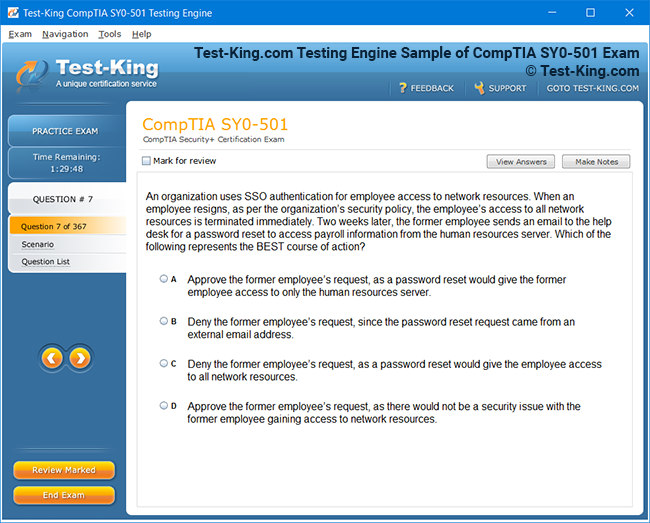
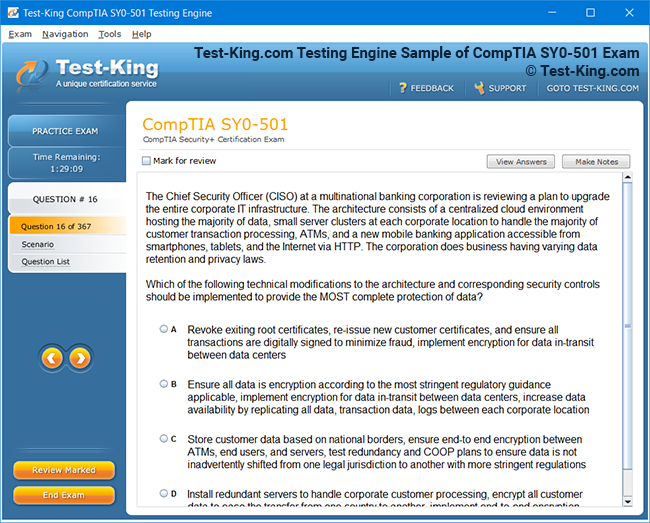
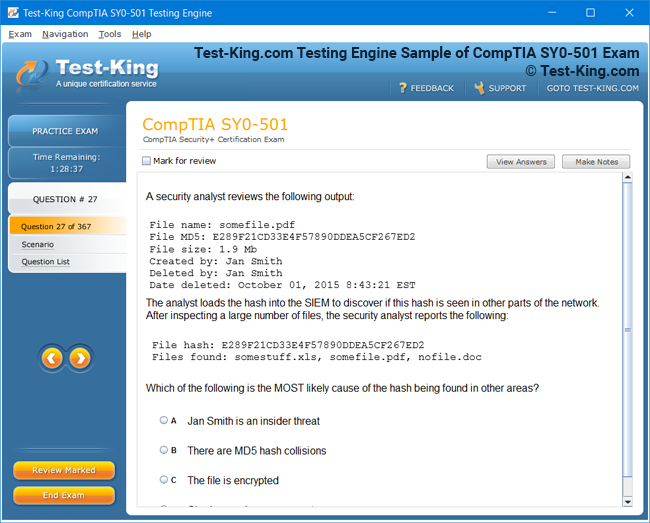
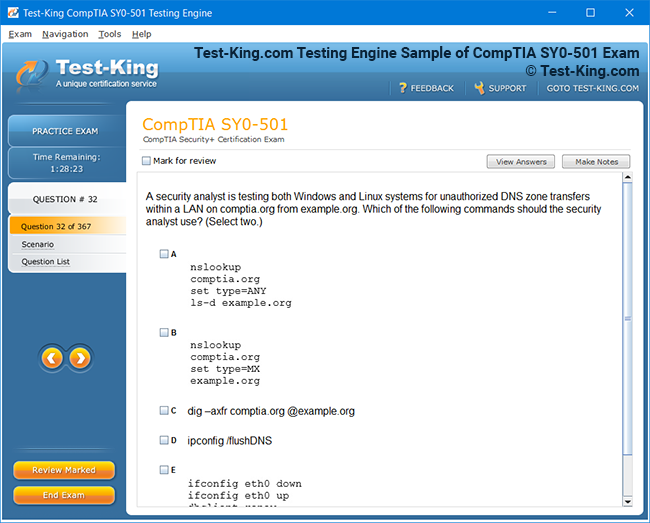
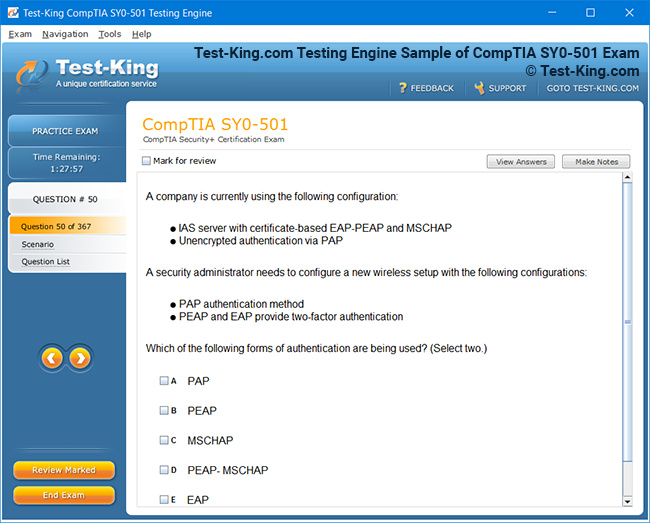
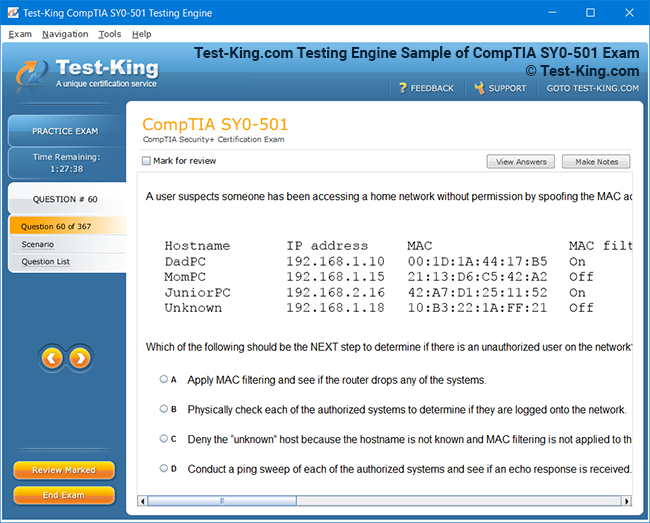
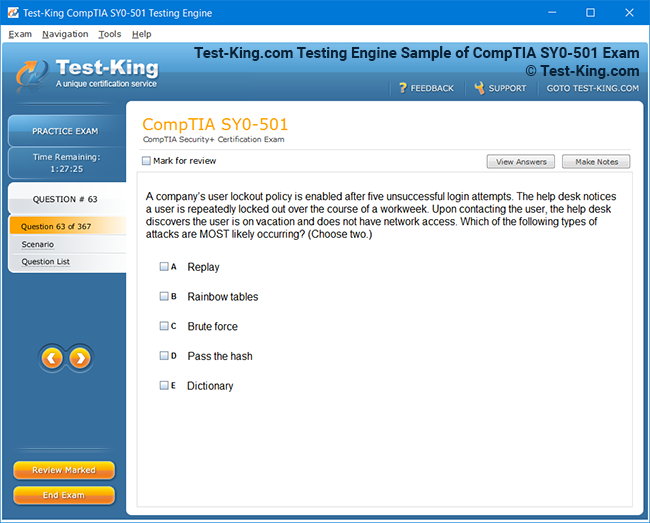
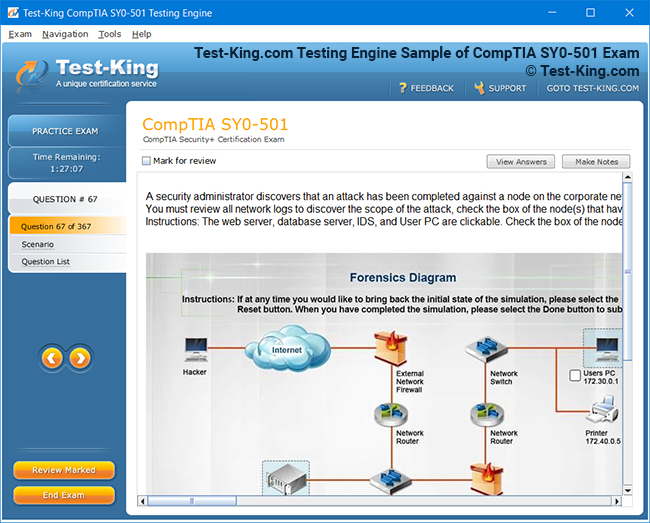
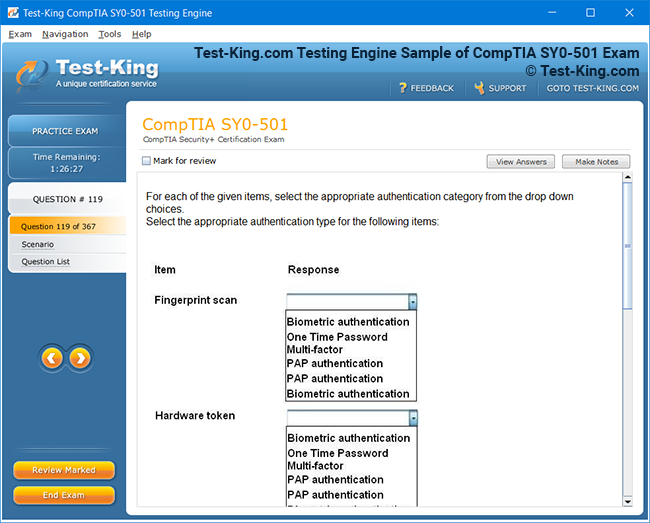
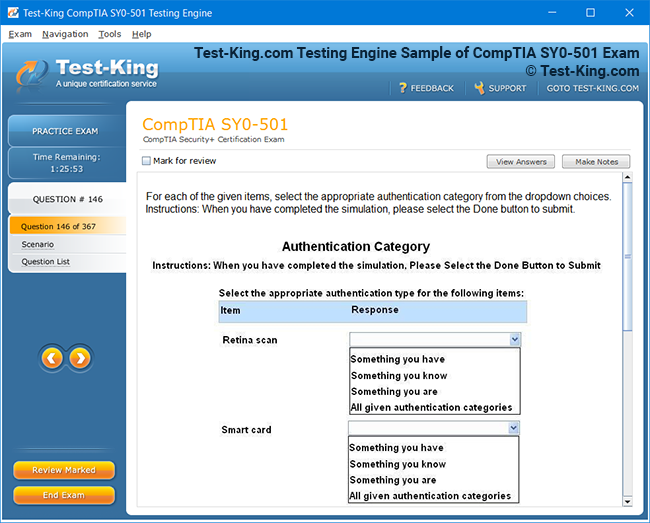
Product Screenshots
Frequently Asked Questions
How can I get the products after purchase?
All products are available for download immediately from your Member's Area. Once you have made the payment, you will be transferred to Member's Area where you can login and download the products you have purchased to your computer.
How long can I use my product? Will it be valid forever?
Test-King products have a validity of 90 days from the date of purchase. This means that any updates to the products, including but not limited to new questions, or updates and changes by our editing team, will be automatically downloaded on to computer to make sure that you get latest exam prep materials during those 90 days.
Can I renew my product if when it's expired?
Yes, when the 90 days of your product validity are over, you have the option of renewing your expired products with a 30% discount. This can be done in your Member's Area.
Please note that you will not be able to use the product after it has expired if you don't renew it.
How often are the questions updated?
We always try to provide the latest pool of questions, Updates in the questions depend on the changes in actual pool of questions by different vendors. As soon as we know about the change in the exam question pool we try our best to update the products as fast as possible.
How many computers I can download Test-King software on?
You can download the Test-King products on the maximum number of 2 (two) computers or devices. If you need to use the software on more than two machines, you can purchase this option separately. Please email support@test-king.com if you need to use more than 5 (five) computers.
What is a PDF Version?
PDF Version is a pdf document of Questions & Answers product. The document file has standart .pdf format, which can be easily read by any pdf reader application like Adobe Acrobat Reader, Foxit Reader, OpenOffice, Google Docs and many others.
Can I purchase PDF Version without the Testing Engine?
PDF Version cannot be purchased separately. It is only available as an add-on to main Question & Answer Testing Engine product.
What operating systems are supported by your Testing Engine software?
Our testing engine is supported by Windows. Andriod and IOS software is currently under development.
Top Google Exams
- Professional Cloud Architect - Google Cloud Certified - Professional Cloud Architect
- Professional Data Engineer - Professional Data Engineer on Google Cloud Platform
- Generative AI Leader
- Professional Machine Learning Engineer
- Associate Cloud Engineer
- Professional Security Operations Engineer
- Professional Cloud Security Engineer
- Professional Cloud Network Engineer
- Professional Cloud DevOps Engineer
- Associate Google Workspace Administrator
- Professional Cloud Database Engineer
- Cloud Digital Leader
- Professional Cloud Developer
- Associate Data Practitioner - Google Cloud Certified - Associate Data Practitioner
- Professional ChromeOS Administrator
Top Skills You Need for the Google Professional Chrome Enterprise Administrator Exam
Embarking on the journey to becoming a proficient Chrome Enterprise administrator requires more than mere familiarity with the Chrome ecosystem; it demands a meticulous comprehension of both theoretical frameworks and practical execution. A successful administrator must navigate a labyrinth of configuration nuances, policy orchestration, and endpoint management techniques that ensure seamless integration across varied organizational structures. The foundational layer of knowledge encompasses an intricate understanding of Chrome OS deployment strategies, identity management protocols, and cloud-based administrative paradigms. Grasping the underlying principles of device enrollment, configuration, and maintenance forms the bedrock upon which advanced skills are built, and it is imperative to cultivate an aptitude for meticulous configuration documentation and analytical troubleshooting.
Understanding the Foundations of Chrome Enterprise Administration
Chrome Enterprise administration mandates an adept understanding of user and device management. Administrators are expected to proficiently navigate the Google Admin console, orchestrating the deployment of Chrome devices across diverse operational environments. The console is not merely a control panel but an elaborate matrix that permits the delineation of organizational units, the enforcement of granular policies, and the customization of device behavior to align with enterprise requisites. Within this sphere, it is critical to internalize the mechanisms of policy inheritance and conflict resolution, recognizing that misconfigured settings can cascade across organizational units, yielding unintended operational discrepancies. Mastery of these aspects ensures administrators can sculpt a digital environment that is both secure and conducive to productivity.
A central skill involves understanding identity and access management intricacies, especially the synchronization between Chrome devices and Google Workspace accounts. Administrators must cultivate proficiency in Single Sign-On configurations, two-factor authentication policies, and user lifecycle management. These competencies are vital in maintaining both security integrity and operational continuity, as they prevent unauthorized access while ensuring seamless user experiences. Moreover, an appreciation for ephemeral data management, including the proper handling of cached credentials and device-local accounts, fortifies the administrator’s capacity to safeguard sensitive organizational data against inadvertent exposure or malicious exploitation.
Deployment strategies form another pivotal component of the administrator’s toolkit. Effective rollout of Chrome devices necessitates judicious planning and preemptive consideration of network architectures, bandwidth limitations, and device compatibility. A seasoned administrator understands the importance of staging devices in test environments, evaluating the behavior of pre-configured policies, and identifying latent conflicts that may surface during mass deployment. Knowledge of zero-touch enrollment protocols and automated provisioning methods not only expedites deployment but also reduces the margin of error, enabling administrators to deliver a frictionless onboarding experience to end users. The art of deployment extends to the orchestration of software and extension management, ensuring that essential applications are available while extraneous or potentially harmful extensions are restricted or monitored.
Operational continuity in Chrome Enterprise ecosystems hinges upon comprehensive monitoring and reporting practices. Administrators are required to cultivate acumen in interpreting device logs, usage metrics, and policy compliance reports. This analytical capability empowers proactive detection of anomalies, identification of non-compliant devices, and facilitation of remedial interventions. A nuanced appreciation for event correlation, incident pattern recognition, and telemetry analysis transforms mundane operational data into actionable insights. In practice, this skill enables administrators to anticipate issues before they escalate, thereby maintaining a resilient and stable environment that supports organizational objectives without disruption.
Security administration constitutes an inextricable facet of the Chrome Enterprise administrator’s skill set. Beyond conventional password management and encryption protocols, administrators must delve into the subtleties of network security policies, threat mitigation strategies, and incident response frameworks. Understanding the interplay between device policies, browser restrictions, and safe browsing settings allows for a layered defense architecture that fortifies endpoints against malware, phishing attempts, and unauthorized data exfiltration. Furthermore, administrators should develop expertise in contextual access management, enforcing policies that dynamically adapt based on user behavior, device posture, and geographic location. This proactive, intelligence-driven approach enhances both security efficacy and user compliance.
Equally important is the proficiency in troubleshooting and remediation processes. Chrome Enterprise administrators often encounter a kaleidoscope of operational anomalies, ranging from device enrollment failures to policy conflicts and network connectivity disruptions. The ability to systematically diagnose these issues requires a blend of analytical reasoning, experiential knowledge, and familiarity with diagnostic utilities provided within the Chrome ecosystem. Administrators must cultivate an iterative problem-solving methodology that encompasses hypothesis formulation, diagnostic testing, and implementation of corrective measures. Effective documentation of these processes not only ensures continuity in knowledge transfer but also streamlines future troubleshooting efforts, reducing resolution times and minimizing operational downtime.
Integration with third-party applications and cloud services further exemplifies the multidimensional skill set required for proficient administration. Administrators must comprehend the nuances of API interactions, OAuth configurations, and cross-service synchronization to maintain seamless interoperability across the enterprise ecosystem. This includes orchestrating extension policies, controlling data flow between Chrome devices and external services, and ensuring compliance with organizational security standards. A meticulous approach to integration ensures that enterprise productivity is augmented without compromising security or operational stability.
Proficiency in policy management is indispensable for Chrome Enterprise administrators. Policies extend beyond rudimentary device restrictions and encompass intricate configurations related to network proxies, printing preferences, content filtering, and update scheduling. Administrators must develop an intuition for policy precedence, inheritance hierarchies, and conflict resolution, recognizing that improper configurations can inadvertently hinder productivity or introduce security vulnerabilities. Mastery in this domain also involves leveraging advanced policy templates and scripts to automate repetitive tasks, thereby enhancing efficiency and reducing the likelihood of human error.
An often-overlooked yet critical skill is the cultivation of user experience awareness. Administrators must strike a delicate balance between enforcing organizational controls and preserving intuitive, fluid user interactions. Excessively restrictive policies may impede productivity, while overly permissive settings can jeopardize security. The seasoned administrator engages in continuous assessment of user workflows, solicits feedback, and iteratively refines device configurations to align operational constraints with end-user convenience. This human-centric perspective ensures that the technical environment supports, rather than obstructs, organizational objectives.
Finally, continuous learning and adaptability are paramount. The Chrome Enterprise landscape is characterized by rapid evolution, with frequent updates to policies, device capabilities, and administrative tools. Administrators must remain abreast of these developments through official documentation, community forums, and professional networks. Cultivating a mindset of perpetual learning enables administrators to anticipate changes, adapt strategies, and leverage new features to enhance enterprise efficiency. Moreover, familiarity with emerging trends in endpoint management, cloud integration, and cybersecurity equips administrators with a foresight that positions them as indispensable assets within their organizations.
Advanced Techniques for Chrome Enterprise Administration
Becoming an accomplished Chrome Enterprise administrator requires more than foundational knowledge; it demands mastery over advanced techniques that allow for granular control, seamless integration, and proactive operational oversight. In this realm, administrators must cultivate an intricate understanding of device policies, organizational unit hierarchies, and cloud-based management practices. Such sophistication ensures that devices operate efficiently, securely, and in alignment with enterprise objectives. Beyond routine configuration, administrators must anticipate potential conflicts, adapt to rapidly evolving environments, and implement strategies that optimize both productivity and security.
A crucial skill involves orchestrating complex policy management across diverse organizational units. Administrators need to understand the nuances of policy precedence, the interplay of inherited configurations, and the implications of conflicting directives. This requires a meticulous approach to evaluating the impact of each policy, ensuring that restrictions or allowances do not inadvertently disrupt workflows or compromise device security. The proficiency to navigate these complexities allows for a seamless operational environment where devices adhere to organizational requirements while providing flexibility for individual user needs.
Identity management remains an essential pillar of advanced administration. Administrators must be adept at configuring single sign-on, federated authentication, and multi-factor verification to safeguard organizational assets. These configurations extend beyond simple account setup, encompassing user lifecycle management, role-based access controls, and dynamic group memberships that adapt to changes in workforce composition. A comprehensive understanding of these mechanisms enables administrators to maintain secure access while minimizing friction for legitimate users, fostering an environment where productivity and security coexist harmoniously.
Deployment methodologies constitute another critical facet of Chrome Enterprise expertise. Administrators must navigate diverse deployment models, ranging from zero-touch enrollment to manual provisioning, ensuring devices are operational with minimal disruption. Staging environments become indispensable in testing policies and applications before enterprise-wide deployment, identifying potential incompatibilities and preventing systemic issues. The orchestration of software updates, extension management, and automated configuration scripts ensures devices remain current and compliant, reducing administrative overhead while enhancing end-user experience.
Monitoring and reporting are paramount in sustaining operational efficiency. Administrators must develop an analytical lens to interpret device telemetry, compliance logs, and usage statistics. This skill enables proactive detection of anomalies, identification of devices that deviate from established policies, and implementation of corrective measures before issues escalate. The ability to transform raw data into actionable intelligence elevates the administrator’s role from reactive problem solver to strategic overseer, ensuring continuous operational resilience and supporting informed decision-making across the enterprise.
Security administration extends into advanced threat mitigation strategies. Beyond basic password policies and encryption, administrators must be conversant with endpoint protection, secure network configuration, and incident response procedures. Configuring safe browsing rules, managing content filters, and enforcing secure update protocols fortifies devices against malware, phishing attempts, and unauthorized data access. Furthermore, contextual access controls that adjust based on device health, location, and user behavior provide an additional layer of protection, demonstrating a sophisticated approach to maintaining a secure enterprise ecosystem.
Troubleshooting in advanced administration requires an investigative mindset and structured methodology. Administrators often confront complex issues such as policy conflicts, enrollment errors, and network disruptions. Effective troubleshooting entails analyzing patterns, correlating events, and applying diagnostic techniques to isolate root causes. Documenting solutions and maintaining an institutional knowledge repository ensures recurring issues are resolved efficiently and prevents operational bottlenecks. Mastery of these analytical processes underpins an administrator’s ability to sustain high availability and user satisfaction within the Chrome Enterprise environment.
Integration with third-party applications and cloud platforms adds another layer of complexity. Administrators must ensure seamless interoperability with productivity tools, collaboration platforms, and security services, balancing operational efficiency with compliance requirements. Understanding OAuth configurations, API interactions, and data synchronization protocols is essential to prevent disruptions and maintain continuity of service. Advanced integration skills enable administrators to create a cohesive ecosystem where devices, applications, and cloud services function in harmony, supporting enterprise workflows without compromising security.
Extension and application management represents a nuanced area of expertise. Administrators must identify which applications are essential, determine which extensions could introduce vulnerabilities, and enforce policies that maintain both functionality and security. This involves not only restricting unauthorized extensions but also automating deployment of approved tools and monitoring usage to ensure compliance. By combining policy enforcement with strategic application oversight, administrators enhance productivity while minimizing the risk of exposure to malware or unapproved software.
Network management is a fundamental competency for advanced administrators. Devices must operate across multiple network environments with reliability and security. Administrators need to understand proxy settings, Wi-Fi configurations, VPN deployment, and bandwidth optimization techniques. Proper network configuration ensures devices maintain connectivity, access critical resources, and adhere to security protocols, all while avoiding performance bottlenecks. Knowledge of network diagnostics, troubleshooting connectivity issues, and implementing failover strategies further strengthens the administrator’s capacity to maintain seamless operations in dynamic network landscapes.
Data protection and compliance are intertwined with every aspect of advanced administration. Administrators must implement policies that safeguard sensitive information while adhering to regulatory mandates. This includes encryption strategies, data retention policies, audit logging, and monitoring of data access patterns. A comprehensive approach ensures that both device-level and user-level data are protected, fostering organizational trust and reducing the risk of compliance violations. Administrators who excel in these areas cultivate an environment where operational efficiency coexists with rigorous security standards.
Continuous optimization is a hallmark of proficient Chrome Enterprise administration. Administrators must evaluate existing policies, device configurations, and operational workflows to identify areas for improvement. This iterative process involves leveraging telemetry data, soliciting user feedback, and staying informed about new features and best practices. The ability to refine and adapt administrative strategies ensures that the enterprise ecosystem evolves in alignment with technological advances, organizational growth, and emerging security threats.
Finally, advanced administrators cultivate an ethos of proactive foresight. Anticipating potential challenges, preparing mitigation strategies, and designing scalable administrative processes distinguish exceptional practitioners from those who merely maintain operations. The capacity to synthesize complex information, balance competing priorities, and implement forward-thinking solutions ensures that Chrome Enterprise devices operate efficiently, securely, and harmoniously within the broader organizational infrastructure.
Mastering Device Management and Enterprise Configurations
Achieving expertise as a Chrome Enterprise administrator necessitates a sophisticated understanding of device management and enterprise-wide configurations. Administrators are required to navigate an intricate ecosystem where every device must adhere to organizational policies while simultaneously supporting user productivity. This entails a comprehensive grasp of enrollment procedures, device provisioning, and the orchestration of policies that govern both security and functionality. Proficiency in these areas ensures that administrators can maintain a controlled, consistent, and resilient environment across a diverse fleet of Chrome devices.
A critical aspect of device management involves understanding enrollment strategies and lifecycle management. Administrators must implement zero-touch enrollment protocols to facilitate seamless onboarding of new devices, ensuring they are automatically configured according to organizational policies. This process reduces the likelihood of human error and accelerates deployment timelines. Additionally, effective lifecycle management requires monitoring devices throughout their operational tenure, from initial configuration to decommissioning, maintaining compliance with security protocols, software updates, and performance standards. Such meticulous attention ensures devices remain reliable, secure, and aligned with enterprise requirements.
Administrators must also excel in configuring device settings to balance security, usability, and compliance. Chrome Enterprise offers a comprehensive suite of policy configurations, ranging from network access controls to user experience optimizations. A nuanced understanding of these policies allows administrators to implement rules that restrict unauthorized activities, enforce encryption standards, and regulate data sharing. Beyond basic configurations, advanced administrators consider scenarios such as remote work environments, multi-location operations, and devices with varying hardware capabilities, ensuring policies remain effective and adaptive to diverse operational contexts.
The orchestration of organizational units is another cornerstone of effective administration. Devices and users are grouped into hierarchical structures that define policy application and inheritance. Administrators must navigate these hierarchies to ensure consistent enforcement while accommodating exceptions where necessary. Understanding the interplay between parent and child organizational units prevents policy conflicts and guarantees that critical configurations are applied without unintended consequences. Mastery of these structures enables administrators to design flexible, scalable, and secure device management frameworks that support both centralized control and local autonomy.
Monitoring device performance and compliance is an indispensable skill. Administrators must interpret telemetry data, analyze compliance reports, and identify patterns indicative of policy violations or operational anomalies. This analytical capability empowers proactive interventions, such as adjusting configurations or initiating remedial measures to address non-compliant devices. Additionally, administrators should develop mechanisms for continuous feedback, incorporating insights from usage metrics to refine policies and optimize device performance. By transforming data into actionable intelligence, administrators sustain operational stability and uphold security standards across the enterprise.
Security considerations permeate every facet of device management. Beyond basic encryption and access controls, administrators must implement layered security measures to safeguard organizational assets. This includes configuring safe browsing, managing extension policies, enforcing update schedules, and deploying contextual access controls. Advanced administrators anticipate potential threats by analyzing device behavior, network interactions, and user patterns, thereby mitigating risks before they escalate. The ability to integrate security policies seamlessly with operational workflows ensures devices remain both functional and resilient against malicious activity.
Application and extension management are essential skills for maintaining an efficient and secure environment. Administrators must evaluate applications for compatibility, necessity, and security risk, ensuring essential tools are accessible while restricting unauthorized software. Extension management requires vigilance to prevent malicious or redundant extensions from compromising security or performance. Through meticulous oversight, administrators maintain a balance between empowering users with productivity tools and safeguarding the enterprise against potential threats. Automation of application deployment further enhances efficiency and reduces administrative overhead, providing a streamlined experience for end users.
Network configuration forms a critical component of device management. Administrators must ensure that devices can reliably connect to both internal and external networks while enforcing security protocols. This encompasses Wi-Fi configurations, VPN access, proxy settings, and bandwidth optimization. A deep understanding of network principles enables administrators to anticipate and mitigate connectivity issues, ensuring devices maintain uninterrupted access to resources. By integrating network management with broader policy frameworks, administrators provide a cohesive environment where devices operate securely, efficiently, and reliably across varied network topologies.
Troubleshooting complex issues demands analytical reasoning and methodical approaches. Chrome Enterprise administrators encounter a myriad of operational challenges, including enrollment failures, policy conflicts, and connectivity disruptions. Effective troubleshooting involves isolating root causes, testing hypotheses, and implementing corrective actions systematically. Maintaining comprehensive documentation of these procedures facilitates knowledge transfer and accelerates resolution of recurring issues. Advanced troubleshooting not only restores operational stability but also strengthens the administrator’s ability to preemptively address potential problems, enhancing overall system resilience.
Integration with cloud-based tools and third-party applications further exemplifies the breadth of skills required. Administrators must ensure seamless interoperability with collaboration platforms, productivity suites, and security services. This involves configuring authentication protocols, managing API interactions, and monitoring data flow to maintain compliance and operational continuity. By mastering integration strategies, administrators create a unified ecosystem where devices, applications, and cloud services operate harmoniously, supporting organizational objectives without compromising security or performance.
Administrators must also be proficient in reporting and audit practices. Accurate reporting provides insights into device usage, policy adherence, and potential vulnerabilities. Administrators generate and interpret detailed audit logs to track changes, identify anomalies, and ensure accountability. This information is vital for strategic planning, regulatory compliance, and continuous improvement of device management practices. Advanced administrators leverage reporting tools to predict trends, optimize configurations, and implement evidence-based enhancements that reinforce both security and productivity.
A subtle yet vital competency lies in cultivating an understanding of user experience within managed environments. Administrators must design configurations that impose necessary restrictions without impeding workflow or user satisfaction. By soliciting feedback, observing usage patterns, and refining policies iteratively, administrators maintain an equilibrium between control and usability. This human-centric approach ensures that technical measures support, rather than hinder, organizational productivity, fostering engagement and adherence to policies among end users.
Continuous adaptation to technological evolution is imperative. Chrome Enterprise is an ecosystem characterized by rapid innovation, with frequent updates to device capabilities, policy frameworks, and administrative tools. Administrators must remain informed of new features, emerging security threats, and best practices, integrating this knowledge into operational strategies. Cultivating a mindset of continuous learning enables administrators to implement forward-thinking solutions, anticipate challenges, and maintain environments that are secure, efficient, and aligned with enterprise goals.
Advanced Security and Compliance Strategies in Chrome Enterprise Administration
Excelling as a Chrome Enterprise administrator requires a profound understanding of security protocols, compliance mandates, and risk mitigation strategies. Administrators are tasked with safeguarding organizational data while ensuring that Chrome devices operate seamlessly within complex enterprise environments. The skill set necessary for effective administration extends beyond basic device configuration, encompassing the implementation of layered defenses, continuous monitoring, and proactive incident management. Mastery in these domains enables administrators to maintain both operational continuity and regulatory adherence, positioning them as indispensable custodians of enterprise information integrity.
A primary responsibility in advanced administration involves configuring and enforcing robust security policies. Chrome Enterprise provides a comprehensive array of configurable options, allowing administrators to regulate device behavior, control user access, and protect sensitive data. These include mechanisms for safe browsing, content filtering, application restrictions, and encryption enforcement. Administrators must develop an analytical mindset to anticipate potential security risks, assess policy implications, and implement configurations that balance organizational control with user productivity. This proactive approach reduces exposure to malware, phishing attempts, and other cyber threats while ensuring compliance with internal and external standards.
Identity and access management constitutes a core pillar of enterprise security. Administrators are responsible for orchestrating authentication frameworks that include single sign-on, multi-factor verification, and federated identity integration. These mechanisms safeguard organizational resources while facilitating seamless user experiences. Effective management extends to the dynamic assignment of roles and permissions, ensuring that access privileges reflect user responsibilities and adhere to the principle of least privilege. By maintaining meticulous oversight of user accounts, administrators mitigate risks associated with unauthorized access and enhance overall system security.
Endpoint protection requires a nuanced understanding of device-level defenses and threat mitigation strategies. Chrome Enterprise administrators implement policies that govern extension usage, control software installations, and monitor device health. This includes configuring automated updates to ensure that devices receive the latest security patches, reducing vulnerabilities that could be exploited by malicious actors. Administrators also utilize telemetry data to detect unusual behavior, identify non-compliant devices, and respond to potential threats before they escalate. This vigilance transforms reactive security management into a proactive framework that maintains the integrity of enterprise resources.
Compliance management is intricately intertwined with security practices. Organizations often operate under regulatory frameworks that mandate specific data handling procedures, auditing practices, and reporting obligations. Administrators must ensure that Chrome devices adhere to these requirements by implementing policies that govern data encryption, access logging, retention schedules, and audit trails. By maintaining rigorous compliance oversight, administrators mitigate legal and operational risks while demonstrating accountability and due diligence. Continuous monitoring and periodic review of policies ensure that the enterprise environment remains aligned with evolving regulations and internal standards.
Advanced administrators cultivate the ability to integrate security practices seamlessly with operational workflows. This involves coordinating device policies with network configurations, application deployment strategies, and user access controls. For instance, administrators may configure contextual access policies that adjust restrictions based on device location, user behavior, or compliance status. Such dynamic frameworks enhance security without impeding productivity, allowing users to operate efficiently while adhering to organizational safeguards. The interplay between operational convenience and security vigilance exemplifies the nuanced expertise required of seasoned Chrome Enterprise administrators.
Monitoring and incident response constitute vital elements of advanced administration. Administrators must establish mechanisms to detect anomalies, interpret device telemetry, and analyze usage patterns to identify potential threats. Upon detecting irregularities, administrators implement structured response procedures that include isolating compromised devices, remediating vulnerabilities, and documenting corrective actions. This iterative process ensures that security incidents are addressed swiftly, reducing the likelihood of escalation and minimizing operational disruption. The capacity to synthesize telemetry data, recognize emerging patterns, and respond decisively underscores the administrator’s role as a proactive guardian of enterprise integrity.
Integration with external security tools enhances the robustness of Chrome Enterprise environments. Administrators may configure centralized logging systems, security information and event management platforms, and cloud-based monitoring services to consolidate visibility across devices. By leveraging these integrations, administrators gain comprehensive insights into device activity, policy compliance, and potential vulnerabilities. Such holistic oversight facilitates informed decision-making, enables predictive threat management, and supports strategic planning for enterprise security initiatives. Proficiency in integrating these tools requires both technical acumen and a strategic perspective on security operations.
Application and extension management intersect with security and compliance objectives. Administrators must evaluate applications for potential risks, enforce policies that restrict unauthorized software, and manage extensions to prevent security breaches. Automated deployment of approved applications ensures consistency and reduces administrative overhead, while monitoring for anomalous behaviors maintains operational integrity. This careful stewardship balances productivity enhancements with stringent security controls, fostering an environment where devices remain both functional and secure. Administrators develop sophisticated workflows that harmonize user needs with organizational policies, demonstrating advanced operational foresight.
Data protection strategies are central to effective enterprise administration. Chrome Enterprise administrators implement encryption policies for both data at rest and in transit, ensuring that sensitive information remains confidential and resistant to unauthorized access. Policies governing local storage, cloud synchronization, and network transmission are meticulously configured to align with security and compliance requirements. Administrators also establish protocols for backup, recovery, and data integrity verification, providing resilience against accidental loss or malicious tampering. Mastery in these areas ensures that organizational data is safeguarded without compromising operational efficiency or user convenience.
Advanced troubleshooting in security and compliance contexts demands a methodical approach. Administrators encounter complex challenges, such as policy conflicts, authentication failures, and irregular device behavior. Effective resolution involves isolating root causes, evaluating system logs, and applying corrective measures systematically. Maintaining detailed documentation of incidents, resolutions, and preventive strategies supports institutional knowledge and facilitates rapid response to recurring issues. This analytical and structured methodology enhances the administrator’s capacity to maintain a secure, compliant, and highly available Chrome Enterprise ecosystem.
Continuous learning and adaptation are indispensable for maintaining security excellence. The Chrome Enterprise environment evolves rapidly, with frequent updates to device capabilities, administrative tools, and policy frameworks. Administrators must remain vigilant in tracking these changes, understanding their implications, and integrating new practices into operational workflows. Engaging with professional networks, official documentation, and community forums enables administrators to anticipate emerging threats, adopt best practices, and refine strategies proactively. This commitment to continuous improvement ensures that the enterprise remains resilient, secure, and compliant in the face of evolving technological landscapes.
An often-overlooked competency involves cultivating user awareness and fostering a culture of compliance. Administrators implement educational initiatives, guidance documentation, and user training programs to ensure employees understand security policies and best practices. By promoting responsible behavior, administrators reduce the likelihood of human error compromising security, enhance adherence to policies, and support organizational objectives. This human-centric approach complements technical measures, creating a holistic security framework that integrates both technological and behavioral safeguards.
Finally, advanced administrators leverage analytics to refine security and compliance strategies continuously. By interpreting trends in device usage, policy adherence, and incident reports, administrators identify opportunities for optimization, preemptively address vulnerabilities, and align configurations with enterprise goals. This analytical foresight transforms security administration from a reactive task into a proactive, strategic endeavor, ensuring that Chrome devices operate efficiently, securely, and in alignment with organizational imperatives.
Optimizing Performance and Scalability in Chrome Enterprise Administration
Achieving mastery as a Chrome Enterprise administrator necessitates a comprehensive understanding of performance optimization, scalability strategies, and efficient operational management. Administrators are expected to ensure that every device operates with optimal responsiveness while adhering to organizational policies and security protocols. The skill set extends beyond basic device configuration, encompassing proactive monitoring, resource allocation, and strategic planning to maintain a resilient, high-performance environment. Mastery in these domains allows administrators to sustain organizational productivity, reduce operational friction, and enhance user satisfaction across diverse enterprise contexts.
A fundamental aspect of performance optimization involves the meticulous configuration of device settings to balance efficiency and security. Administrators must evaluate processing loads, memory utilization, and network bandwidth to ensure devices perform consistently under varying operational demands. Policy configurations, including update schedules, extension management, and resource allocation rules, are orchestrated to reduce latency and prevent bottlenecks. This attention to detail allows devices to deliver smooth user experiences while maintaining compliance with enterprise standards. An advanced administrator considers not only immediate performance metrics but also anticipates how cumulative changes in device usage and software updates may influence long-term efficiency.
Scalability planning is equally vital, particularly in enterprises that manage large fleets of Chrome devices. Administrators must design deployment frameworks that accommodate growth, incorporating strategies for automated provisioning, zero-touch enrollment, and dynamic policy application. Organizational units are structured to support hierarchical management, ensuring that new devices inherit necessary configurations without manual intervention. This forward-looking approach minimizes administrative overhead, reduces the likelihood of configuration errors, and ensures that the enterprise can adapt seamlessly to evolving operational requirements. Scalability is further enhanced through integration with cloud-based management tools, which provide centralized oversight, real-time updates, and analytical insights into device performance.
Monitoring device health and resource utilization is a cornerstone of effective administration. Administrators analyze telemetry data, usage metrics, and compliance logs to identify trends, detect anomalies, and preemptively address potential issues. Proactive monitoring enables the timely resolution of performance degradation, policy conflicts, and non-compliant behavior before they escalate into systemic problems. Administrators cultivate an analytical mindset, interpreting patterns in device behavior to optimize configurations, refine policies, and enhance operational stability. This ongoing assessment transforms routine management into a strategic function that safeguards both performance and compliance.
Application and extension management plays a crucial role in optimizing device efficiency. Administrators must evaluate applications for necessity, compatibility, and impact on system resources. Excessive or redundant software can impede performance, create security vulnerabilities, and increase administrative complexity. Through careful curation, administrators ensure that only essential applications are deployed, while extensions are monitored and restricted according to organizational policies. Automation tools facilitate the deployment of approved applications, reducing manual intervention and ensuring consistent performance across the device fleet. By aligning application management with performance objectives, administrators create an environment that is both productive and secure.
Network optimization is another key competency. Administrators configure Wi-Fi settings, proxy servers, VPN connections, and bandwidth management policies to ensure devices maintain consistent connectivity. Effective network configurations reduce latency, prevent congestion, and enhance the reliability of cloud-based services and collaboration platforms. Administrators must also anticipate variations in network conditions across locations, designing adaptive policies that maintain optimal performance for remote users or those operating in bandwidth-constrained environments. Integrating network monitoring with device telemetry allows administrators to identify potential connectivity issues proactively, ensuring uninterrupted access to critical resources.
Security configurations intersect with performance management in complex ways. Administrators must balance the implementation of robust security measures with the need for responsive and efficient devices. For example, frequent security scans, real-time monitoring, and encryption protocols can introduce processing overhead if not carefully configured. Advanced administrators employ strategies to optimize security without compromising performance, such as scheduling intensive operations during low-usage periods or leveraging cloud-based threat detection to offload local processing. This nuanced approach demonstrates an understanding of the interplay between operational efficiency and protective measures, ensuring that devices remain both secure and performant.
Policy orchestration is essential for maintaining consistency across large-scale deployments. Administrators define rules that govern device behavior, update cycles, content access, and application usage, ensuring uniformity while allowing for necessary exceptions. Policies are tested in controlled environments before enterprise-wide deployment, minimizing the risk of conflicts or disruptions. Understanding the precedence of organizational units, the inheritance of policies, and the implications of conflicting directives allows administrators to maintain a coherent management framework. This strategic policy management underpins the scalability and stability of the enterprise ecosystem, ensuring that operational demands are met without compromising security or usability.
Troubleshooting complex performance issues requires methodical approaches and analytical reasoning. Administrators frequently encounter challenges such as slow device response, policy misconfigurations, or network bottlenecks. Effective troubleshooting involves isolating root causes, examining telemetry data, and systematically applying corrective measures. Documentation of resolution processes ensures knowledge retention and facilitates rapid response to similar issues in the future. By combining technical proficiency with structured problem-solving methodologies, administrators maintain high availability, reduce downtime, and enhance user satisfaction across the enterprise.
Integration with cloud-based management platforms enhances performance and scalability by centralizing oversight and automating routine tasks. Administrators leverage these platforms to monitor device status, enforce policies, deploy updates, and analyze usage patterns from a single interface. This integration reduces administrative effort, increases responsiveness to operational issues, and supports data-driven decision-making. Advanced administrators exploit analytical insights from cloud tools to refine configurations, optimize resource utilization, and anticipate future performance requirements, ensuring the enterprise environment remains agile and robust.
Data management strategies are integral to performance optimization. Administrators configure storage policies, synchronize cloud and local resources, and implement data retention schedules that balance accessibility with efficiency. Effective data management reduces system overhead, prevents unnecessary duplication, and maintains compliance with organizational standards. By integrating storage practices with broader operational policies, administrators ensure devices remain responsive while safeguarding the integrity and availability of critical information. This comprehensive approach demonstrates the interconnection between data governance, performance, and operational reliability.
User experience considerations are intertwined with optimization efforts. Administrators design configurations that provide responsiveness, minimize latency, and streamline workflows, ensuring that end users can perform tasks efficiently. By gathering feedback, monitoring device interactions, and iteratively refining policies, administrators maintain a user-centric environment that balances control with flexibility. This focus on usability enhances adoption of enterprise tools, reduces resistance to policy enforcement, and fosters a productive, secure operational ecosystem. The ability to harmonize technical optimization with human factors distinguishes highly effective Chrome Enterprise administrators.
Continuous adaptation to technological advancements is essential for sustaining performance and scalability. Chrome Enterprise environments evolve rapidly, introducing new features, management tools, and policy capabilities. Administrators must remain informed of these changes, integrating them into operational strategies to enhance device efficiency and enterprise responsiveness. Engaging with professional communities, tracking updates, and experimenting with emerging functionalities enables administrators to anticipate future demands and implement innovative solutions that sustain both performance and scalability over time.
Finally, proactive foresight underpins effective enterprise administration. Anticipating operational challenges, planning for growth, and designing scalable processes ensures that devices continue to function optimally under varying conditions. Administrators who combine analytical insight, strategic planning, and hands-on expertise create resilient environments where performance, security, and user satisfaction coexist harmoniously. Mastery of these competencies positions Chrome Enterprise administrators as strategic enablers of organizational efficiency and productivity, capable of navigating complex, evolving technological landscapes with precision and confidence.
Strategic Management and Optimization for Chrome Enterprise Environments
Becoming a proficient Chrome Enterprise administrator demands more than technical knowledge; it requires strategic management capabilities, operational foresight, and a holistic understanding of enterprise-wide device ecosystems. Administrators are expected to orchestrate complex configurations, ensure compliance with organizational policies, and maintain operational efficiency across a diverse range of devices and user profiles. This entails a deep comprehension of deployment strategies, policy enforcement, security management, and the subtleties of cloud-based administration. Mastery in these areas enables administrators to maintain a cohesive, resilient, and high-performing enterprise environment that aligns with organizational goals while supporting seamless user experiences.
A foundational skill in advanced administration involves orchestrating enterprise-wide deployment strategies that accommodate diverse operational requirements. Administrators must implement zero-touch enrollment protocols to expedite device onboarding while minimizing human error. Strategic deployment planning involves staging devices in controlled environments to validate configurations, test policies, and ensure compatibility with existing infrastructure. This process allows administrators to identify potential conflicts before they impact operational performance, ensuring a smooth transition from initial enrollment to full integration. By integrating deployment strategies with automated provisioning tools, administrators maintain efficiency while ensuring that devices adhere to organizational standards from the outset.
Policy management remains a central competency for administrators overseeing Chrome Enterprise ecosystems. Policies govern device behavior, user access, application usage, and network configurations. Advanced administrators understand the nuances of policy precedence, inheritance hierarchies, and conflict resolution to ensure that configurations are applied consistently across the enterprise. They also implement dynamic policies that adapt to contextual factors such as device location, user role, and security posture. Mastery of policy orchestration ensures that organizational objectives are enforced without unduly restricting user productivity, balancing control with operational flexibility in a sophisticated and effective manner.
Identity and access management constitutes a critical pillar of strategic administration. Administrators are tasked with configuring authentication frameworks, including single sign-on, multi-factor verification, and federated identity integration. These mechanisms safeguard organizational assets while facilitating seamless access for legitimate users. Effective administration also involves the dynamic assignment of roles and permissions, ensuring that access privileges align with user responsibilities and adhere to the principle of least privilege. By managing identity and access with precision, administrators mitigate the risks of unauthorized access, reduce the potential for internal security breaches, and maintain operational integrity across the enterprise.
Security management extends beyond conventional measures to encompass proactive threat detection, layered defenses, and continuous monitoring. Administrators implement policies that govern application usage, extension restrictions, safe browsing, encryption protocols, and update schedules. The integration of security measures with performance optimization strategies ensures that devices remain resilient without compromising operational efficiency. Advanced administrators leverage telemetry and analytics to detect anomalies, identify vulnerabilities, and respond proactively to emerging threats. This vigilance transforms security administration from a reactive task into a strategic endeavor that maintains enterprise integrity and mitigates potential disruptions.
Monitoring, reporting, and incident response are indispensable elements of strategic administration. Administrators collect and analyze telemetry data, usage metrics, and compliance logs to detect deviations from established standards. Incident response processes involve isolating affected devices, remediating vulnerabilities, and documenting corrective actions for knowledge retention and institutional learning. By synthesizing data into actionable insights, administrators anticipate potential challenges, streamline troubleshooting, and enhance overall system resilience. This analytical approach ensures that operational continuity is maintained and that enterprise objectives are consistently met across diverse device landscapes.
Application and extension management is a critical dimension of maintaining a secure and efficient environment. Administrators evaluate software for necessity, compatibility, and potential security risks. Policies governing application deployment, updates, and extension usage are carefully configured to balance operational productivity with stringent security controls. Automation tools facilitate consistent deployment of essential applications, reducing administrative workload while ensuring that devices remain functional and secure. Advanced administrators continually refine application management strategies, integrating user feedback, system performance metrics, and evolving security standards into a dynamic framework that supports enterprise objectives.
Network configuration and optimization are essential for sustaining operational efficiency. Administrators configure Wi-Fi settings, VPN connections, proxy servers, and bandwidth allocation to ensure devices maintain reliable connectivity. By anticipating fluctuations in network conditions, administrators implement adaptive strategies that maintain performance across diverse locations and usage scenarios. Network monitoring is integrated with device telemetry to detect potential issues before they impact productivity, allowing for timely interventions that maintain uninterrupted access to critical enterprise resources. This holistic approach to network management supports both operational continuity and user satisfaction.
Data management and compliance strategies form an integral component of Chrome Enterprise administration. Administrators implement encryption policies, data retention schedules, access controls, and audit logging to safeguard sensitive information and ensure regulatory adherence. Effective data governance prevents unauthorized access, mitigates risk, and maintains the integrity and availability of organizational assets. Advanced administrators integrate these practices with broader operational and security strategies, balancing accessibility with protection and ensuring that data management supports both compliance obligations and enterprise efficiency.
Troubleshooting and performance optimization require analytical reasoning, structured methodologies, and strategic foresight. Administrators encounter complex challenges such as enrollment failures, policy conflicts, application incompatibilities, and network disruptions. Effective problem-solving involves isolating root causes, evaluating potential solutions, and implementing corrective actions while documenting processes for future reference. This systematic approach ensures rapid resolution of operational issues, reduces downtime, and enhances user satisfaction. By integrating troubleshooting with performance metrics and analytical insights, administrators maintain high availability and reliability across the enterprise ecosystem.
Continuous learning and adaptation are crucial for sustaining expertise. Chrome Enterprise environments evolve rapidly, introducing new device capabilities, policy frameworks, and administrative tools. Administrators must remain informed of emerging trends, best practices, and potential threats, integrating this knowledge into ongoing operational strategies. Engaging with professional networks, community forums, and official documentation enables administrators to anticipate challenges, adopt innovative solutions, and refine administrative practices proactively. This commitment to lifelong learning ensures that enterprise environments remain secure, efficient, and aligned with organizational objectives.
User experience awareness is equally vital. Administrators must design configurations that impose necessary controls without impeding usability. By observing workflows, collecting feedback, and iteratively refining policies, administrators maintain an environment where technical measures support productivity rather than hinder it. This human-centric approach ensures compliance, encourages adoption of enterprise tools, and fosters engagement among users. Balancing security, performance, and usability is a hallmark of proficient administration, demonstrating a nuanced understanding of both technological and organizational dynamics.
Proactive strategic planning elevates administration from a reactive function to a core enabler of enterprise efficiency. Administrators anticipate operational growth, resource demands, and potential risks, designing scalable processes and adaptive policies that ensure devices operate optimally under evolving conditions. This foresight allows enterprises to expand device fleets, integrate new technologies, and adjust to shifting organizational priorities without compromising security, performance, or compliance. Strategic administration transforms device management into a dynamic, forward-looking practice that supports organizational resilience and competitive advantage.
The orchestration of integrated systems and cloud services exemplifies advanced administrative expertise. Administrators must ensure seamless interoperability between Chrome devices, productivity applications, collaboration platforms, and security tools. By managing authentication protocols, data flows, and cross-service configurations, administrators create a cohesive ecosystem that supports enterprise objectives. Integration strategies not only enhance operational efficiency but also reinforce security and compliance, demonstrating a sophisticated understanding of the interplay between technological infrastructure and organizational requirements.
Finally, Chrome Enterprise administrators cultivate an ethos of continuous refinement, aligning operational strategies with enterprise goals, user expectations, and evolving technological landscapes. By integrating deployment strategies, policy orchestration, security management, network optimization, data governance, and user experience considerations into a cohesive framework, administrators ensure that enterprise devices operate efficiently, securely, and harmoniously. This holistic approach positions administrators as strategic leaders who facilitate productivity, resilience, and innovation across the organization.
Conclusion
Chrome Enterprise administration is a multifaceted discipline that combines technical expertise, strategic thinking, and operational foresight. The most successful administrators possess an intricate understanding of deployment processes, policy management, security frameworks, performance optimization, and user engagement. By continuously refining their skills, staying abreast of emerging technologies, and implementing forward-thinking strategies, administrators create robust, scalable, and secure environments that empower organizations to achieve their objectives with confidence. Mastery of these competencies not only ensures operational excellence but also establishes administrators as indispensable architects of enterprise success, capable of navigating complex technological landscapes with skill and precision.