

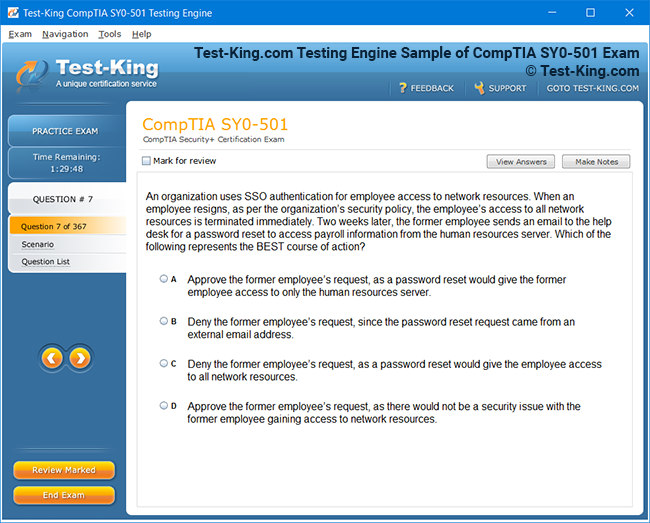
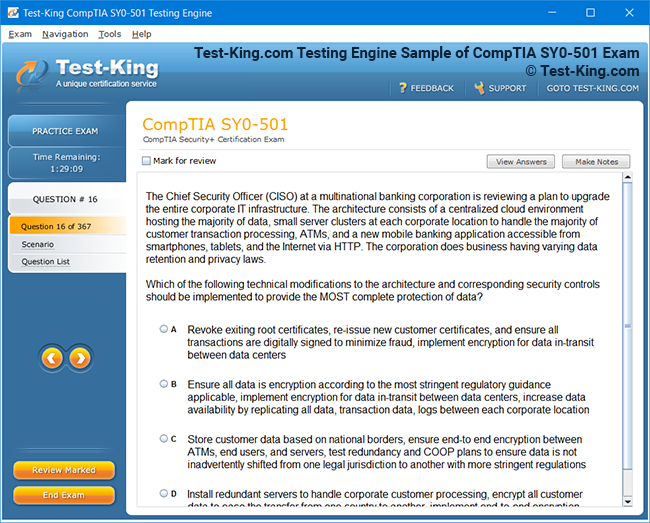
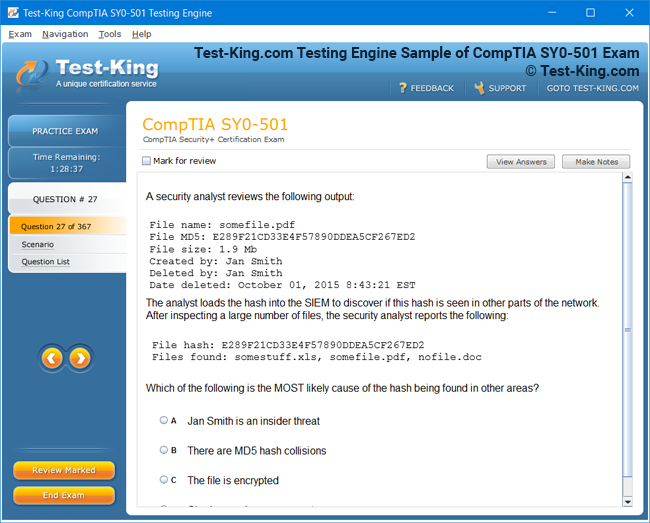
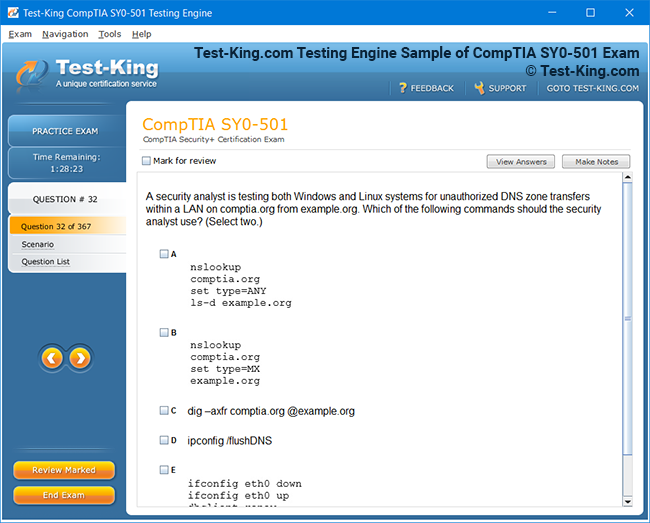
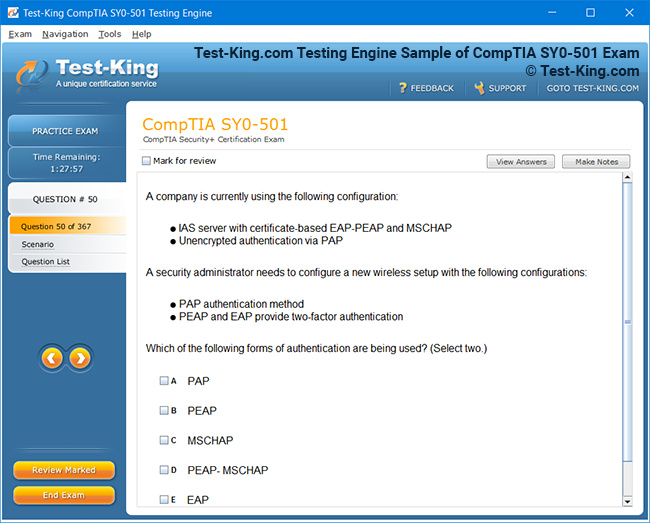
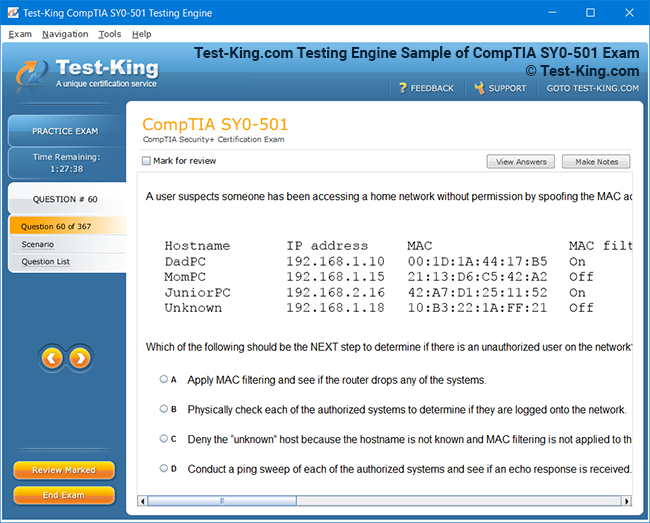
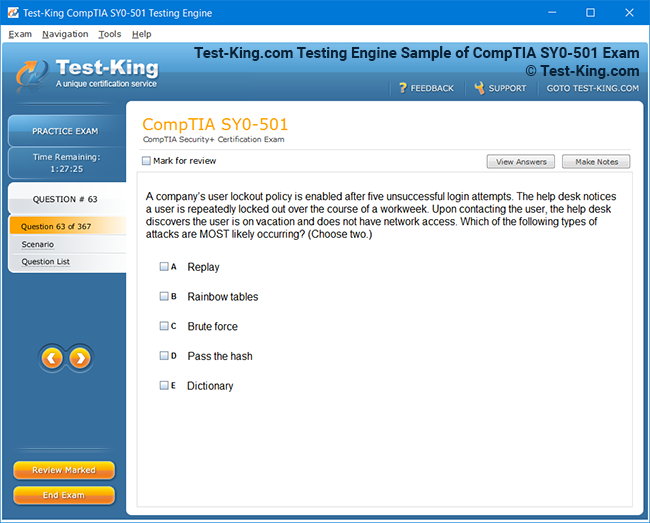
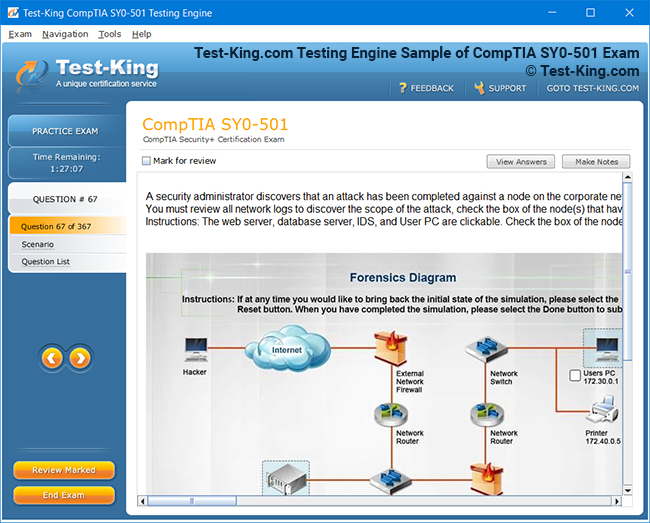
Product Screenshots
Frequently Asked Questions
How can I get the products after purchase?
All products are available for download immediately from your Member's Area. Once you have made the payment, you will be transferred to Member's Area where you can login and download the products you have purchased to your computer.
How long can I use my product? Will it be valid forever?
Test-King products have a validity of 90 days from the date of purchase. This means that any updates to the products, including but not limited to new questions, or updates and changes by our editing team, will be automatically downloaded on to computer to make sure that you get latest exam prep materials during those 90 days.
Can I renew my product if when it's expired?
Yes, when the 90 days of your product validity are over, you have the option of renewing your expired products with a 30% discount. This can be done in your Member's Area.
Please note that you will not be able to use the product after it has expired if you don't renew it.
How often are the questions updated?
We always try to provide the latest pool of questions, Updates in the questions depend on the changes in actual pool of questions by different vendors. As soon as we know about the change in the exam question pool we try our best to update the products as fast as possible.
How many computers I can download Test-King software on?
You can download the Test-King products on the maximum number of 2 (two) computers or devices. If you need to use the software on more than two machines, you can purchase this option separately. Please email support@test-king.com if you need to use more than 5 (five) computers.
What is a PDF Version?
PDF Version is a pdf document of Questions & Answers product. The document file has standart .pdf format, which can be easily read by any pdf reader application like Adobe Acrobat Reader, Foxit Reader, OpenOffice, Google Docs and many others.
Can I purchase PDF Version without the Testing Engine?
PDF Version cannot be purchased separately. It is only available as an add-on to main Question & Answer Testing Engine product.
What operating systems are supported by your Testing Engine software?
Our testing engine is supported by Windows. Andriod and IOS software is currently under development.
Top UiPath Exams
- UiADPv1 - UiPath Automation Developer Professional v1.0
- UiADAv1 - UiPath Automation Developer Associate v1.0
- UiAAAv1 - UiPath Agentic Automation Associate
- UiABAv1 - Automation Business Analyst Professional
- UiASAPv1 - UiPath Automation Solution Architect Professional v1.0
- UiTAEPv1 - UiPath Test Automation Engineer Professional v1.0
- UiSTEPv1 - UiPath Software Testing Engineer Professional
- UiARD - UiPath Advanced RPA Developer v1.0
UiABAAv1 : Step-by-Step Study Plan for Passing the UiPath Automation Business Analyst Associate Exam
The UiPath Automation Business Analyst Associate exam, officially referred to as UiABAAv1, represents a pivotal milestone for individuals aiming to establish their credibility in the robotic process automation ecosystem. This certification is meticulously designed to evaluate the knowledge and practical insight of aspirants who intend to bridge the gap between business requirements and automation solutions. Unlike many conventional assessments, this exam emphasizes analytical thinking, process assessment capabilities, and the ability to communicate automation strategies to both technical and non-technical stakeholders. Mastery of these competencies not only facilitates passing the exam but also strengthens one’s position in the burgeoning field of intelligent automation.
Understanding the Exam and Its Significance
The exam is structured around several key domains that collectively assess the aspirant’s aptitude. These include analyzing business processes, understanding automation opportunities, documenting requirements in a manner conducive to development, evaluating existing process efficiency, and ensuring that automation solutions align with organizational goals. Each domain encapsulates an array of concepts ranging from basic process mapping to the more nuanced comprehension of exception handling and process optimization in a digital environment. The questions in the exam frequently probe the ability to apply these concepts in realistic scenarios, thereby assessing both theoretical understanding and pragmatic decision-making.
Crafting a Study Roadmap
Creating an effective study roadmap is instrumental in ensuring a systematic approach to exam preparation. The first step involves familiarizing oneself with the official exam guide provided by UiPath, which outlines the knowledge areas and percentage weightage of each domain. While some aspirants might be tempted to rely solely on practice questions, a more holistic approach involves delving into conceptual materials, documentation, webinars, and community forums. The synthesis of these diverse sources contributes to a multifaceted understanding that extends beyond rote memorization.
A crucial element in this study roadmap is the segmentation of learning objectives into achievable milestones. For instance, an aspirant might dedicate the initial days to understanding the fundamental principles of business process automation, encompassing workflow analysis, data collection methods, and identification of automation potential. Following this, focus can shift toward requirement elicitation techniques, process documentation standards, and the utilization of business analysis frameworks that facilitate clear communication between stakeholders. Integrating reflective practices such as summarizing learnings and teaching concepts to peers can reinforce retention and deepen comprehension.
Understanding Business Processes in Automation
Business processes form the bedrock of any automation initiative. To excel in the UiABAAv1 exam, one must cultivate the ability to analyze processes with a critical and discerning perspective. A business process can be described as a sequence of interrelated tasks that collectively achieve a defined objective within an organization. An effective automation business analyst must identify inefficiencies, redundancies, and bottlenecks within these processes while simultaneously considering regulatory compliance, data sensitivity, and operational scalability.
Process mapping techniques such as flowcharts, swimlane diagrams, and process flow narratives are invaluable tools for visualizing complex sequences of tasks. Aspirants should familiarize themselves with both high-level conceptual maps and granular task-level details. This dual approach enables the identification of potential automation points while ensuring that essential human interventions remain intact. In addition to conventional mapping, understanding process variation and exception handling becomes imperative. Many scenarios require nuanced judgment to determine which processes can be fully automated, which require partial automation, and which should remain entirely manual due to inherent complexity or risk factors.
Capturing and Documenting Requirements
Requirement elicitation is an indispensable facet of the exam and of real-world business analysis. A successful automation business analyst must be adept at gathering detailed requirements from stakeholders, comprehending underlying business needs, and documenting these requirements in a format that developers can readily interpret. This entails more than simply noting functional specifications; it involves capturing process logic, business rules, decision points, input-output dependencies, and exception conditions.
Techniques for requirement gathering include interviews, workshops, observation sessions, and review of existing documentation. Each technique offers unique insights, and often a hybrid approach yields the most comprehensive understanding. Once captured, these requirements should be documented in a manner that is structured, precise, and intelligible. Documentation may include process flow descriptions, stepwise task definitions, input and output matrices, and risk assessments. Additionally, considering the end-user experience and potential change management requirements adds a strategic dimension to the documentation process. Effective documentation not only aids developers but also ensures that the resultant automation aligns with business objectives and stakeholder expectations.
Analyzing Automation Opportunities
Identifying processes suitable for automation requires an analytical lens and familiarity with the principles of robotic process automation. Automation opportunities typically exhibit characteristics such as high-volume repetitive tasks, rule-based decision-making, and minimal requirement for subjective judgment. An astute analyst evaluates potential automation candidates by weighing factors such as complexity, frequency, exception rates, and dependency on multiple systems. The UiPath Automation Business Analyst Associate exam often presents scenario-based questions where aspirants must discern which processes are most conducive to automation and justify their selections based on operational, financial, and strategic considerations.
Moreover, process prioritization plays a pivotal role in maximizing the impact of automation initiatives. Candidates must understand how to rank opportunities based on criteria such as return on investment, time savings, error reduction, and compliance improvement. This analysis often incorporates both qualitative and quantitative assessments. For instance, calculating potential time savings per task or projecting error reduction can provide concrete justification for automation initiatives. A nuanced comprehension of these principles equips aspirants with the ability to make recommendations that resonate with both business leadership and technical teams.
Evaluating and Optimizing Processes
Evaluation and optimization extend beyond mere identification of automation candidates. Aspirants must develop an aptitude for assessing the efficacy of existing processes, identifying areas of improvement, and proposing enhancements that may or may not involve automation. Process evaluation encompasses analyzing current workflows, documenting pain points, measuring key performance indicators, and understanding interdependencies across business functions. Optimization involves redesigning processes to eliminate inefficiencies, simplify task sequences, and reduce the cognitive load on human operators.
Tools such as process mining and workflow analytics can provide empirical insights into process performance. By analyzing data on task duration, frequency, exception rates, and bottleneck occurrences, analysts can make informed recommendations. For the exam, questions may simulate real-world scenarios requiring aspirants to suggest enhancements, identify risks, and ensure that the proposed changes maintain regulatory compliance. Mastery of these evaluation techniques demonstrates not only technical understanding but also strategic acumen, reinforcing the aspirant’s capability to deliver high-value automation solutions.
Bridging Communication Between Stakeholders
Effective communication constitutes a cornerstone of success for automation business analysts. The exam emphasizes the candidate’s ability to translate business requirements into actionable insights for technical teams while also articulating technical constraints and opportunities to non-technical stakeholders. This bidirectional communication necessitates clarity, conciseness, and empathy, as the analyst must navigate diverse perspectives and align objectives.
Techniques for enhancing communication include crafting process narratives, visual aids, workflow illustrations, and clear documentation that balances technical detail with readability. Scenario-based questions in the exam often evaluate whether the candidate can identify misalignments in stakeholder expectations, mediate between conflicting requirements, and propose solutions that harmonize business needs with technological feasibility. Developing these skills involves practice, active listening, and iterative refinement of documentation to ensure that it remains accessible and actionable.
Preparing with Practice and Real-World Scenarios
Exam readiness extends beyond theoretical knowledge. Practicing with sample questions, simulation tests, and scenario-based exercises provides a tangible sense of the types of challenges that may appear on the UiABAAv1 assessment. These exercises help aspirants refine their analytical thinking, decision-making, and prioritization skills under time constraints, mirroring the pressures of real-world project environments.
Real-world scenarios further enhance preparation by offering contextual understanding of process intricacies and stakeholder dynamics. Engaging with case studies, process documentation from active RPA projects, and discussions in professional forums can expose aspirants to uncommon but plausible challenges. These experiences not only increase confidence but also foster the agility needed to navigate the nuanced questions that characterize the exam.
Enhancing Retention Through Active Learning
Cognitive reinforcement techniques such as active recall, spaced repetition, and concept mapping are invaluable for long-term retention of knowledge. Rather than passive reading, aspirants benefit from summarizing concepts in their own words, teaching learned material to peers, and creating mental models of process flows. Combining these techniques with hands-on exposure to UiPath tools strengthens comprehension and accelerates the ability to apply concepts practically. Incorporating reflective exercises at regular intervals allows aspirants to identify knowledge gaps, recalibrate their study approach, and consolidate understanding in a meaningful and enduring manner.
Deep Dive into the Exam Domains
The UiPath Automation Business Analyst Associate exam, denoted as UiABAAv1, evaluates aspirants on multiple dimensions of business analysis, process evaluation, and automation strategy. Success requires not only understanding fundamental principles but also integrating advanced analytical techniques with practical insights derived from real-world scenarios. The domains examined encompass process identification, requirement gathering, stakeholder communication, and strategic automation planning. Within these areas, candidates must demonstrate the ability to discern nuanced process variations, evaluate automation feasibility, and recommend optimizations that enhance efficiency while preserving compliance and operational stability.
The exam frequently presents scenario-driven questions where candidates must analyze intricate process details, identify automation candidates, and articulate their reasoning clearly. Understanding each domain in depth is crucial, as questions often blend concepts from multiple domains, requiring a holistic perspective rather than rote memorization. This multidimensional evaluation underscores the importance of connecting theoretical knowledge with practical application, ensuring that aspirants can navigate both exam questions and real-world automation challenges with equal proficiency.
Advanced Techniques for Process Assessment
A core competency tested in the exam is the ability to assess business processes critically. While basic process mapping provides a foundational understanding, advanced assessment techniques involve scrutinizing workflows for latent inefficiencies, interdependencies, and exception patterns. Processes suitable for automation often exhibit high-volume repetitive tasks, consistent decision rules, and minimal requirement for subjective judgment. However, a comprehensive assessment must also consider contextual factors such as seasonal variations, regulatory constraints, and multi-system dependencies.
To achieve precision in evaluation, aspirants should leverage techniques such as process decomposition, where complex workflows are broken into discrete task units for detailed examination. This method allows analysts to detect subtle inefficiencies and identify opportunities for consolidation or automation. Additionally, evaluating process resilience, error rates, and exception handling mechanisms provides insights into potential risks that automation might encounter. Questions in the UiABAAv1 exam may challenge candidates to apply these techniques in simulated business scenarios, requiring a balance of analytical rigor and practical foresight.
Gathering and Prioritizing Requirements
Requirement elicitation forms the bridge between business needs and automation solutions. Beyond merely documenting existing workflows, a proficient analyst must extract implicit business rules, decision criteria, and operational nuances that may not be readily apparent. Techniques for elicitation include interactive workshops, structured interviews, shadowing of operational personnel, and examination of historical process data. Integrating these approaches allows analysts to capture a comprehensive view of both functional and non-functional requirements.
Prioritization of requirements is equally critical. Not all process elements carry equal weight or urgency, and the UiABAAv1 exam often presents scenarios where candidates must determine which automation opportunities deliver the highest value. Evaluating potential benefits in terms of time savings, error reduction, compliance adherence, and operational scalability informs these prioritization decisions. Effective prioritization also requires balancing short-term gains with long-term sustainability, ensuring that automation initiatives remain impactful without introducing unintended complexities or vulnerabilities.
Optimizing Workflow Design
Designing optimized workflows is an essential skill for automation business analysts. Once a process has been assessed and requirements captured, candidates must envision an improved workflow that streamlines operations, reduces redundancy, and aligns with strategic objectives. This involves considering both task-level efficiency and overarching process integration. For instance, optimizing a process may involve consolidating repeated approval steps, automating data transfer between systems, or introducing decision rules that reduce human intervention without compromising oversight.
Advanced workflow optimization also considers process scalability and adaptability. Business processes evolve over time due to changing organizational goals, market dynamics, or regulatory updates. Candidates preparing for the exam should anticipate potential variations and design workflows that can accommodate future modifications with minimal disruption. Scenario-based questions often challenge aspirants to propose enhancements that account for such contingencies, testing their ability to think beyond immediate solutions and adopt a forward-looking, strategic mindset.
Analyzing Automation Feasibility
Determining whether a process is suitable for automation requires a nuanced evaluation of complexity, frequency, exception handling, and interdependencies. A process may appear simple at first glance, but hidden complexities such as data inconsistencies, reliance on manual judgment, or integration with legacy systems can complicate automation efforts. Candidates must develop the ability to dissect processes thoroughly, identify automation constraints, and propose solutions that balance feasibility with business value.
The UiABAAv1 exam often presents candidates with scenarios requiring them to justify why certain processes should or should not be automated. A thorough understanding of automation feasibility includes recognizing high-risk processes where automation may introduce errors, identifying repetitive tasks with high ROI potential, and anticipating scenarios where partial automation is more effective than full automation. Cultivating this evaluative skill ensures that candidates are equipped to make informed recommendations, both in the exam and in professional practice.
Bridging Technical and Business Perspectives
A distinguishing feature of the UiPath Automation Business Analyst Associate role is the ability to act as a liaison between technical developers and business stakeholders. Candidates must translate complex business requirements into actionable automation strategies while also interpreting technical limitations and capabilities for non-technical audiences. This requires clarity in communication, empathy for diverse perspectives, and the skill to reconcile conflicting objectives.
Developing proficiency in this area involves creating process narratives, visual representations of workflows, and documentation that balances technical detail with readability. Candidates must also practice articulating trade-offs, explaining the rationale behind automation decisions, and anticipating stakeholder concerns. Scenario-based questions often test whether aspirants can mediate discussions, address ambiguity, and propose solutions that align technical possibilities with strategic business goals.
Applying Analytical Frameworks
The exam emphasizes the application of analytical frameworks to guide decision-making. Frameworks such as process scoring matrices, effort-impact analyses, and risk assessments provide structured approaches to evaluating automation opportunities. Candidates must not only understand these frameworks but also apply them effectively in realistic scenarios, considering variables such as task complexity, frequency, compliance requirements, and operational impact.
In addition, the integration of qualitative insights with quantitative metrics enhances the robustness of analysis. For example, calculating potential time savings or error reduction for a specific process can provide concrete justification for automation initiatives. The ability to combine empirical data with nuanced understanding of business context distinguishes top-performing candidates, enabling them to deliver recommendations that are both actionable and strategically sound.
Simulating Real-World Scenarios
Preparation for the UiABAAv1 exam is strengthened by exposure to real-world scenarios. Engaging with case studies, process documentation from live projects, and community discussions allows candidates to encounter uncommon but plausible challenges. These exercises foster adaptability, sharpen analytical reasoning, and enhance problem-solving capabilities. Candidates can practice identifying process inefficiencies, proposing optimization strategies, and justifying automation recommendations in contexts that mirror professional environments.
Scenario simulations also reinforce time management and prioritization skills. The exam presents multiple complex questions under strict time constraints, requiring candidates to analyze, evaluate, and respond efficiently. Practicing with realistic simulations ensures that aspirants can navigate these pressures effectively, maintaining accuracy and clarity in their responses while demonstrating comprehensive mastery of exam domains.
Enhancing Cognitive Retention
Long-term retention of knowledge is critical for both exam success and professional competence. Techniques such as active recall, spaced repetition, and mind mapping facilitate deeper understanding and reinforce memory. Rather than passively reviewing materials, aspirants benefit from summarizing concepts in their own words, creating visual representations of workflows, and engaging in peer discussions. Teaching learned concepts to others can also solidify comprehension, uncover gaps in knowledge, and enhance the ability to articulate insights clearly.
Integrating reflective exercises into the study routine allows candidates to continuously evaluate progress, identify areas requiring further focus, and adjust study strategies accordingly. This iterative approach ensures that learning is dynamic, cumulative, and aligned with both exam requirements and practical application. By combining active learning with scenario-based practice and analytical evaluation, candidates develop a holistic understanding that prepares them to excel in the UiABAAv1 exam.
Leveraging Professional Resources
UiPath offers a wealth of resources that are instrumental in exam preparation. Official documentation, online courses, webinars, and community forums provide detailed insights into process automation, requirement gathering, and stakeholder engagement. Engaging with these resources allows aspirants to access the latest best practices, explore advanced concepts, and participate in discussions with experienced professionals.
Supplementary resources such as blogs, case studies, and professional networks provide additional context and exposure to uncommon scenarios. Candidates can gain unique perspectives on process challenges, automation opportunities, and strategic considerations that may not be fully covered in standard study materials. Incorporating these diverse resources into a structured study plan enhances depth of understanding, strengthens analytical reasoning, and fosters adaptability in dynamic exam scenarios.
Cultivating Strategic Thinking
Success in the UiABAAv1 exam extends beyond technical proficiency; it requires strategic thinking. Candidates must understand not only how to automate tasks but also why certain processes should be prioritized, how to mitigate risks, and how to align automation initiatives with broader organizational objectives. Strategic thinking involves evaluating potential impacts, considering long-term sustainability, and anticipating changes in business context or regulatory requirements.
Scenario-based questions often test this ability by presenting complex situations where candidates must propose automation solutions that balance efficiency, compliance, and strategic benefit. Cultivating strategic thinking involves consistent practice with multifaceted scenarios, critical reflection on decisions, and the integration of analytical frameworks with practical insights. This approach ensures that candidates are not only prepared to pass the exam but are also equipped to deliver meaningful contributions in professional automation projects.
Developing a Systematic Study Approach
Preparing for the UiPath Automation Business Analyst Associate exam, officially known as UiABAAv1, requires a disciplined, systematic study approach that harmonizes theoretical understanding with practical application. The exam evaluates aspirants on their ability to analyze business processes, identify automation opportunities, gather requirements, communicate effectively with stakeholders, and optimize workflows in alignment with organizational objectives. Achieving success necessitates a comprehensive study plan, thoughtful time allocation, and the integration of advanced analytical techniques into daily preparation.
An effective study approach begins with a detailed analysis of the exam guide, which outlines the primary domains and their respective weightage. By understanding the emphasis placed on process assessment, requirement elicitation, stakeholder communication, and process optimization, aspirants can prioritize their study focus strategically. Additionally, creating a timeline with milestones for each domain ensures that learning is progressive, cumulative, and reinforced through iterative review. This method minimizes cognitive overload while fostering deep comprehension and retention of essential concepts.
Mastering Process Analysis
A core competency for the UiABAAv1 exam is process analysis. Business processes form the foundation of automation initiatives, and a keen analytical perspective is essential for identifying inefficiencies, redundancies, and bottlenecks. Effective process analysis entails more than observing sequences of tasks; it involves understanding underlying objectives, interdependencies between subprocesses, exception patterns, and potential points of friction that impede performance.
Techniques such as process decomposition allow candidates to break complex workflows into discrete tasks, facilitating a granular understanding of task dependencies, resource allocation, and potential automation candidates. Additionally, evaluating processes against key performance indicators such as cycle time, error rate, and compliance adherence provides empirical insights that guide decision-making. Scenario-based questions in the exam often require candidates to apply these techniques to realistic process flows, identifying areas for improvement and proposing rational automation strategies.
Capturing and Documenting Business Requirements
Requirement gathering represents a bridge between business objectives and automation solutions. Aspiring automation business analysts must excel in eliciting, analyzing, and documenting requirements that are comprehensive, precise, and actionable. Techniques for gathering requirements include conducting structured interviews, facilitating workshops with stakeholders, observing operational tasks, and reviewing historical process documentation. Each approach offers unique perspectives, ensuring that both explicit and implicit requirements are captured effectively.
Once requirements are gathered, clear documentation is essential. Effective documentation includes detailing process steps, input-output dependencies, decision points, exception handling, and any rules that govern task execution. The UiABAAv1 exam often presents candidates with scenarios where they must interpret or create requirement documentation and justify how it supports the proposed automation solution. Developing this competency involves practicing the conversion of raw business information into structured, coherent documentation that is easily interpretable by both technical teams and business stakeholders.
Evaluating Automation Opportunities Strategically
Identifying processes suitable for automation requires strategic evaluation. Not every repetitive task warrants automation, and discerning high-impact candidates involves analyzing task complexity, frequency, error susceptibility, and dependencies on multiple systems. Candidates must develop the ability to evaluate potential automation opportunities through both qualitative and quantitative lenses, considering time savings, error reduction, compliance adherence, and operational scalability.
Scenario-based questions frequently challenge aspirants to justify their selections of automation candidates. For instance, an ideal candidate might be a repetitive, high-volume process with predictable decision points, minimal exception handling, and measurable efficiency gains. Conversely, processes involving significant subjective judgment or highly variable outcomes may be unsuitable for full automation. Developing this evaluative skill ensures that automation recommendations are practical, impactful, and aligned with strategic organizational objectives.
Optimizing Workflow Efficiency
Workflow optimization is an integral competency for the UiABAAv1 exam. Once processes are assessed and automation opportunities identified, candidates must envision and design workflows that enhance efficiency, reduce redundancy, and streamline task execution. Optimized workflows minimize unnecessary steps, consolidate repetitive tasks, and implement automation in a manner that maximizes value while preserving essential human oversight.
Advanced optimization involves considering factors such as scalability, adaptability, and process resilience. Business processes are dynamic and evolve over time, so workflows should be designed with flexibility to accommodate future modifications or expansion. Exam scenarios often simulate complex organizational environments, requiring candidates to propose workflow improvements that account for evolving business conditions, regulatory changes, and interdepartmental dependencies. Mastery in this area demonstrates strategic insight and an ability to align operational efficiency with long-term organizational goals.
Bridging the Gap Between Business and Technical Teams
A defining attribute of the automation business analyst role is the capacity to bridge communication between business and technical teams. Candidates must translate business requirements into actionable automation strategies while simultaneously conveying technical limitations and possibilities to non-technical stakeholders. This bidirectional communication requires clarity, conciseness, and an appreciation of diverse perspectives.
Developing proficiency in this domain involves crafting workflow narratives, visual aids, and documentation that balance technical accuracy with readability. Candidates must also be adept at mediating conflicts, reconciling differing objectives, and proposing solutions that meet both business and technical requirements. The exam tests this skill through scenario-based questions, assessing whether candidates can navigate ambiguous or conflicting stakeholder demands while maintaining alignment with automation goals.
Applying Analytical Frameworks and Evaluation Tools
Analytical frameworks are central to structured decision-making in automation initiatives. Frameworks such as risk assessments, process scoring matrices, and effort-impact analyses allow candidates to evaluate automation opportunities systematically. For example, evaluating processes based on complexity, volume, and potential impact facilitates prioritization and resource allocation. Similarly, analyzing risk factors such as data sensitivity, regulatory compliance, and exception rates ensures that automation is implemented safely and effectively.
The UiABAAv1 exam frequently presents scenarios requiring the application of these frameworks. Candidates must interpret process data, identify constraints, and make evidence-based recommendations. Integrating qualitative insights with quantitative measurements enhances the rigor of analysis, enabling candidates to provide recommendations that are both practical and strategically sound. Exposure to multiple analytical frameworks prepares aspirants to handle diverse questions, develop critical thinking skills, and make robust automation decisions under exam conditions.
Engaging with Real-World Scenarios
Practical exposure is invaluable in preparing for the UiABAAv1 exam. Engaging with real-world case studies, process documentation from live projects, and professional forums provides exposure to uncommon challenges and complex scenarios. Candidates can analyze processes, evaluate automation feasibility, and propose solutions in contexts that mirror professional environments, enhancing both confidence and competence.
Scenario simulations also improve problem-solving speed and accuracy. The exam presents multiple complex questions under time constraints, requiring candidates to analyze, evaluate, and respond efficiently. Regular practice with real-world-inspired scenarios ensures that aspirants can navigate these pressures effectively, demonstrating both depth of knowledge and agility in decision-making.
Cognitive Reinforcement Techniques
To ensure long-term retention, aspirants should employ cognitive reinforcement techniques such as active recall, spaced repetition, and conceptual mapping. Passive reading is insufficient for mastery; summarizing material in one’s own words, creating visual representations of workflows, and discussing concepts with peers enhance comprehension and memory retention.
Additionally, teaching learned concepts to others serves as an effective method to consolidate understanding, uncover gaps, and strengthen articulation skills. Reflective exercises allow candidates to continuously evaluate progress, identify areas needing improvement, and adjust study methods dynamically. Combining these approaches with scenario-based practice fosters deep, durable understanding, equipping candidates to tackle complex exam questions with confidence.
Leveraging UiPath Resources and Community Knowledge
UiPath provides a variety of resources essential for exam preparation. Official documentation, online courses, webinars, and active community forums offer detailed insights into process automation, requirement elicitation, and workflow optimization. Engaging with these materials allows candidates to stay current with best practices, explore nuanced concepts, and connect with professionals who have practical experience.
Beyond official resources, supplementary materials such as professional blogs, case studies, and peer discussions expose candidates to unique challenges and uncommon scenarios. These experiences broaden understanding, foster innovative thinking, and equip aspirants to handle unconventional exam questions effectively. By integrating diverse resources into a structured study routine, candidates develop a comprehensive, well-rounded perspective on automation business analysis.
Strategic Thinking for Exam Success
Success in the UiABAAv1 exam is not solely dependent on technical knowledge; it also requires strategic thinking. Candidates must understand why certain processes are prioritized for automation, how to mitigate potential risks, and how proposed automation solutions align with organizational objectives. Strategic thinking involves evaluating potential outcomes, considering long-term sustainability, and anticipating evolving business contexts.
Scenario-based questions often test candidates’ strategic judgment by presenting multifaceted situations that require balancing operational efficiency, compliance, and business value. Developing this skill involves practicing with realistic scenarios, critically reflecting on decisions, and integrating analytical frameworks with practical insights. Cultivating strategic thinking ensures that candidates are prepared to deliver both accurate exam responses and meaningful contributions in professional automation initiatives.
Continuous Learning and Skill Refinement
The field of automation is dynamic, with evolving technologies, methodologies, and best practices. Candidates preparing for the UiABAAv1 exam benefit from adopting a mindset of continuous learning, regularly updating knowledge, and refining skills. Engaging with the latest trends in robotic process automation, attending webinars, participating in professional communities, and experimenting with practical exercises enhances adaptability and proficiency.
Continuous learning also reinforces confidence, allowing candidates to approach the exam with familiarity and assurance. Exposure to diverse processes, unique business scenarios, and emerging automation strategies ensures that aspirants are not only exam-ready but also prepared to excel in practical, professional contexts.
Comprehensive Understanding of Exam Domains
The UiPath Automation Business Analyst Associate exam, formally known as UiABAAv1, is designed to measure a candidate's expertise in analyzing business processes, identifying automation opportunities, documenting requirements, and optimizing workflows. Mastery of these domains requires not only familiarity with theoretical concepts but also the ability to apply them practically to complex organizational scenarios. Aspirants are expected to demonstrate analytical acuity, strategic thinking, and the capacity to synthesize information across multiple domains simultaneously.
The exam evaluates the candidate’s ability to translate business needs into actionable insights that developers can implement efficiently while ensuring alignment with overarching organizational objectives. Questions often blend multiple concepts, testing whether the candidate can navigate process evaluation, requirement prioritization, workflow optimization, and stakeholder communication cohesively. Developing a holistic perspective is therefore crucial, as success depends on integrating analytical skills with pragmatic problem-solving.
Refining Process Assessment Skills
A fundamental competency tested in the UiABAAv1 exam is process assessment. Business processes, composed of interconnected tasks, must be analyzed with precision to identify inefficiencies, redundancies, and potential automation points. Aspirants should cultivate the ability to observe both the macro-level workflow and the micro-level task details, assessing dependencies, exception handling mechanisms, and decision logic.
Advanced assessment techniques include process decomposition, where complex workflows are dissected into individual tasks for detailed examination, and bottleneck analysis, which identifies stages that delay or impede process completion. The examination often presents scenario-based questions requiring candidates to evaluate a process’s suitability for automation, assess potential risks, and propose modifications to enhance efficiency. Developing these skills ensures that recommendations are both practical and strategically valuable.
Capturing and Structuring Requirements
Effective requirement elicitation forms the bridge between business objectives and technical solutions. Candidates must excel at gathering comprehensive, precise, and actionable requirements from stakeholders. Techniques such as conducting structured interviews, facilitating collaborative workshops, observing operational tasks, and reviewing existing documentation allow analysts to capture both explicit and implicit business needs.
Structuring requirements effectively involves documenting process flows, decision points, input-output dependencies, and exception conditions in a coherent, interpretable format. The UiABAAv1 exam often includes questions that simulate real-world requirement documentation scenarios, challenging candidates to demonstrate clarity, precision, and logical sequencing. Mastery of this skill ensures that developers receive unambiguous specifications, reducing miscommunication and enabling successful automation outcomes.
Identifying and Prioritizing Automation Opportunities
Identifying processes suitable for automation requires a strategic and evaluative mindset. Not all repetitive tasks are viable candidates for automation; determining which processes offer the highest value demands careful consideration of factors such as complexity, volume, error propensity, and interdependencies with other systems. Candidates must also weigh operational, financial, and strategic benefits to ensure that automation initiatives deliver tangible outcomes.
The exam frequently includes scenario-based questions requiring aspirants to prioritize processes for automation. High-priority candidates typically exhibit repetitive tasks with predictable outcomes, measurable efficiency gains, and minimal exceptions. Conversely, processes with high variability, reliance on subjective judgment, or critical compliance constraints may be less suitable. Developing this evaluative capability allows candidates to justify their recommendations convincingly, both in the exam and in practical business environments.
Enhancing Workflow Design and Optimization
Optimizing workflows is a core skill tested in the UiABAAv1 exam. Once automation candidates are identified, designing efficient workflows that reduce redundancy, streamline operations, and maintain human oversight is essential. Workflow optimization encompasses consolidating repetitive steps, automating data transfer, and implementing decision logic to minimize errors while maximizing productivity.
Advanced workflow design requires considering scalability and adaptability. Business processes evolve over time due to organizational growth, regulatory changes, or market dynamics, and workflows must accommodate such transformations. Scenario-based questions often challenge candidates to redesign processes that are flexible, resilient, and aligned with strategic objectives. Mastery in this area demonstrates the ability to enhance operational efficiency while ensuring long-term sustainability.
Bridging Communication Between Stakeholders and Developers
A distinguishing feature of the automation business analyst role is the capacity to communicate effectively across technical and non-technical audiences. Candidates must translate complex business requirements into actionable strategies while conveying technical limitations and possibilities to stakeholders. This bidirectional communication necessitates clarity, conciseness, and the ability to reconcile divergent perspectives.
Developing proficiency in this domain involves creating workflow narratives, visual aids, and documentation that balance technical accuracy with readability. Candidates must also practice addressing stakeholder concerns, mediating conflicts, and proposing solutions that satisfy both business objectives and technical feasibility. Exam scenarios often test whether aspirants can navigate ambiguous or conflicting requirements while maintaining alignment with overall automation goals.
Applying Analytical Frameworks and Metrics
Structured analytical frameworks are indispensable for evaluating automation opportunities and guiding decision-making. Frameworks such as effort-impact analysis, process scoring matrices, and risk assessments provide systematic methods to assess potential automation candidates. Candidates must evaluate processes based on complexity, frequency, potential benefit, and associated risks, integrating qualitative and quantitative considerations to prioritize initiatives effectively.
The exam frequently presents scenario-based questions that require the application of these frameworks. Candidates must interpret process data, identify constraints, and make evidence-based recommendations that align with organizational strategy. Incorporating both empirical metrics and contextual insights strengthens decision-making, ensuring that proposed automation solutions are practical, efficient, and sustainable.
Engaging with Real-World Scenarios and Case Studies
Practical exposure enhances preparation for the UiABAAv1 exam. Engaging with case studies, process documentation from live projects, and professional discussions provides insights into complex and uncommon challenges. Candidates can analyze workflows, evaluate automation feasibility, and propose solutions in contexts that mirror professional environments, enhancing both skill and confidence.
Scenario simulations also develop problem-solving speed and accuracy. The exam presents complex questions under time constraints, requiring candidates to analyze, evaluate, and respond efficiently. Practicing with real-world inspired scenarios ensures aspirants can navigate these pressures effectively, demonstrating both knowledge depth and adaptability in decision-making.
Cognitive Reinforcement and Knowledge Retention
Retention of knowledge is vital for exam success. Techniques such as active recall, spaced repetition, and conceptual mapping reinforce understanding and ensure long-term retention. Passive review is insufficient; aspirants benefit from summarizing material in their own words, creating visual representations of workflows, and discussing concepts with peers to solidify comprehension.
Teaching learned concepts to others is another effective method for reinforcing knowledge. Reflective exercises allow candidates to evaluate progress, identify knowledge gaps, and adjust study strategies. Combining cognitive reinforcement techniques with scenario-based practice fosters deep, durable understanding and equips aspirants to tackle complex exam questions confidently.
Leveraging UiPath Resources and Industry Insights
UiPath provides a wealth of resources essential for exam preparation, including official documentation, online courses, webinars, and active community forums. Engaging with these resources offers detailed insights into process automation, requirement elicitation, workflow optimization, and stakeholder engagement. Accessing professional blogs, case studies, and peer discussions further exposes candidates to unique challenges and uncommon scenarios, broadening understanding and enhancing problem-solving capabilities.
Integrating these resources into a structured study routine allows aspirants to gain a well-rounded perspective on automation business analysis. Exposure to diverse experiences and advanced concepts ensures that candidates are prepared to handle unconventional exam questions while developing practical skills applicable to professional automation initiatives.
Developing Strategic and Analytical Thinking
Strategic and analytical thinking are critical competencies for excelling in the UiABAAv1 exam. Candidates must evaluate the implications of automation initiatives, consider long-term sustainability, and align recommendations with organizational objectives. Scenario-based questions often require balancing operational efficiency, compliance adherence, and business value, testing the ability to make informed, strategic decisions.
Cultivating strategic thinking involves analyzing multifaceted scenarios, applying analytical frameworks, and reflecting critically on decisions. This approach ensures that candidates can justify recommendations convincingly and implement automation initiatives that deliver measurable value. Developing these capabilities equips aspirants to excel both in the exam and in practical, professional contexts.
Continuous Learning and Skill Enhancement
The dynamic nature of automation technology necessitates continuous learning. Candidates benefit from staying informed about evolving methodologies, tools, and industry best practices. Attending webinars, participating in professional communities, exploring advanced documentation, and engaging in practical exercises enhances adaptability and proficiency.
Continuous skill enhancement reinforces confidence, allowing candidates to approach the UiABAAv1 exam with assurance. Exposure to diverse processes, complex scenarios, and emerging automation strategies ensures that aspirants are not only exam-ready but also prepared to contribute effectively in professional roles, driving meaningful automation outcomes.
Developing a Holistic Understanding of Exam Objectives
The UiPath Automation Business Analyst Associate exam, denoted as UiABAAv1, is structured to assess a candidate's proficiency in analyzing business processes, identifying automation opportunities, documenting requirements, and optimizing workflows to achieve strategic objectives. Aspirants must cultivate not only a strong theoretical foundation but also the ability to apply analytical thinking, problem-solving, and stakeholder communication in real-world scenarios. Success in the exam reflects a candidate’s capability to integrate these competencies into coherent, actionable strategies.
Understanding the holistic objectives of the exam involves recognizing the interconnections between its domains. Process analysis informs requirement gathering, which in turn guides workflow optimization and automation prioritization. The exam often presents scenarios that span multiple domains simultaneously, necessitating an integrated approach rather than compartmentalized knowledge. Developing this holistic perspective ensures that aspirants are prepared to navigate complex scenarios with clarity, precision, and strategic insight.
Enhancing Process Analysis and Evaluation
A fundamental skill tested in the UiABAAv1 exam is the ability to evaluate business processes critically. Processes are composed of interrelated tasks, each with dependencies, decision points, and potential inefficiencies. Advanced process evaluation requires more than superficial observation; it involves identifying bottlenecks, redundancy, variability, and exception patterns while considering operational, regulatory, and strategic implications.
Techniques such as process decomposition, value stream analysis, and exception mapping provide a structured approach to examining workflows. Candidates must assess task interdependencies, analyze throughput, and identify potential automation candidates. Scenario-based questions in the exam often simulate real organizational workflows, requiring aspirants to evaluate processes comprehensively and propose modifications that enhance efficiency, accuracy, and compliance.
Capturing Requirements with Precision
Effective requirement elicitation is pivotal in bridging business needs and technical solutions. Candidates must gather requirements that encompass both functional and non-functional aspects, ensuring that they are comprehensive, precise, and actionable. Techniques include structured interviews, collaborative workshops, observational studies, and historical data analysis, each offering unique insights into stakeholder objectives and operational intricacies.
Documenting requirements involves detailing workflow steps, decision logic, input-output dependencies, exception handling, and business rules in a clear and interpretable format. The UiABAAv1 exam frequently presents scenarios requiring candidates to create or interpret requirement documentation, demonstrating clarity, logical sequencing, and alignment with business goals. Mastery of this skill reduces ambiguity, facilitates developer understanding, and ensures successful implementation of automation solutions.
Identifying and Prioritizing Automation Opportunities
Determining suitable candidates for automation necessitates analytical discernment. Not every repetitive or rule-based task is ideal for automation, and aspirants must evaluate potential candidates based on complexity, frequency, exception rates, and integration with other processes. The strategic prioritization of automation opportunities ensures that initiatives deliver the greatest operational, financial, and strategic impact.
Scenario-based questions often challenge candidates to justify the selection and prioritization of processes. High-priority candidates typically exhibit high-volume repetition, predictable outcomes, and measurable efficiency gains, while tasks with high variability, complex decision-making, or regulatory sensitivity may be less suitable. Developing evaluative acumen ensures that recommendations are evidence-based, practical, and strategically sound, reflecting the candidate’s ability to optimize resources and deliver tangible results.
Optimizing Workflow Design and Execution
Workflow optimization is a core competency for automation business analysts. After identifying automation candidates, designing workflows that enhance efficiency, minimize redundancy, and maintain human oversight is essential. Optimization may involve consolidating repetitive steps, automating data transfers, implementing decision rules, and enhancing process visibility to ensure accuracy and compliance.
Advanced workflow optimization also considers scalability, adaptability, and resilience. Organizational processes are dynamic and subject to change, necessitating workflows that can accommodate growth, regulatory updates, and shifting operational conditions. Exam scenarios often simulate complex environments, requiring candidates to propose flexible, resilient workflows that align with strategic objectives. Mastery in workflow optimization demonstrates both analytical precision and strategic foresight.
Bridging Communication Between Stakeholders and Technical Teams
Effective communication is a hallmark of successful automation business analysts. Candidates must convey complex business requirements in a manner that technical teams can implement while translating technical constraints and possibilities for business stakeholders. This bidirectional communication demands clarity, conciseness, and the ability to reconcile divergent perspectives.
Developing proficiency involves crafting workflow narratives, visual aids, and documentation that balance technical detail with accessibility. Candidates should also practice addressing stakeholder concerns, mediating conflicting requirements, and proposing solutions that satisfy both business and technical needs. Scenario-based questions often assess whether aspirants can navigate ambiguity and ensure alignment between stakeholders and developers, highlighting their capacity to act as an effective liaison.
Applying Analytical Frameworks and Metrics
Structured analytical frameworks are integral to evaluating automation opportunities and guiding decision-making. Frameworks such as risk assessment, effort-impact matrices, and process scoring enable systematic prioritization of automation initiatives. Candidates must evaluate processes based on complexity, frequency, expected impact, and associated risks, integrating quantitative metrics with qualitative insights to inform strategic decisions.
The exam often presents scenarios requiring the application of these frameworks, challenging candidates to interpret process data, assess constraints, and make evidence-based recommendations. Combining empirical analysis with contextual understanding strengthens decision-making and ensures that automation solutions are both effective and sustainable. Developing proficiency in analytical frameworks also enhances the ability to justify recommendations convincingly in professional contexts.
Engaging with Real-World Scenarios
Practical exposure to real-world scenarios is invaluable for exam preparation. Analyzing case studies, reviewing live process documentation, and participating in professional discussions enable candidates to encounter complex and uncommon challenges. Such exercises provide opportunities to evaluate workflows, assess automation feasibility, and propose solutions in environments that mimic professional practice.
Scenario-based practice also develops problem-solving speed and accuracy under time constraints. The exam presents multiple complex questions that require quick, evidence-based decision-making. By engaging with real-world scenarios regularly, aspirants cultivate analytical agility, develop confidence, and enhance the ability to apply theoretical knowledge to practical situations.
Reinforcing Cognitive Retention
Long-term retention of knowledge is crucial for success in the UiABAAv1 exam. Techniques such as active recall, spaced repetition, and conceptual mapping reinforce understanding and ensure that key concepts are internalized. Passive study methods are insufficient; summarizing concepts in one’s own words, creating visual process representations, and discussing ideas with peers enhances comprehension and memory.
Teaching learned material to others serves as an additional method to solidify understanding and reveal gaps in knowledge. Reflective exercises allow candidates to evaluate progress continuously, adjust study strategies, and reinforce critical concepts. Integrating cognitive reinforcement with scenario-based practice ensures that knowledge is both retained and readily applicable in exam situations.
Leveraging UiPath Resources and Professional Networks
UiPath provides extensive resources that are indispensable for exam preparation, including official documentation, training modules, webinars, and active community forums. Engaging with these materials allows candidates to deepen understanding of process automation, requirement gathering, workflow optimization, and stakeholder engagement. Professional blogs, case studies, and discussions further expose aspirants to uncommon scenarios and advanced problem-solving techniques.
Incorporating these resources into a structured study plan provides a well-rounded perspective on automation business analysis. Exposure to diverse processes, unique challenges, and advanced concepts equips candidates to tackle unconventional exam questions confidently while enhancing practical professional skills.
Cultivating Strategic and Analytical Thinking
Strategic and analytical thinking are essential for navigating the UiABAAv1 exam successfully. Candidates must evaluate the broader implications of automation initiatives, consider long-term sustainability, and align recommendations with organizational objectives. Scenario-based questions often test the ability to balance efficiency, compliance, and business value, requiring informed, evidence-based decisions.
Developing these skills involves practicing with complex scenarios, applying analytical frameworks, and reflecting critically on decision-making processes. Strategic thinking enables candidates to justify their recommendations convincingly and to propose automation initiatives that deliver measurable value. This capability ensures preparedness not only for the exam but also for practical, professional implementation of automation solutions.
Continuous Learning and Adaptation
The dynamic nature of automation technology necessitates continuous learning and skill refinement. Staying informed about emerging methodologies, tools, and industry best practices enhances adaptability and proficiency. Engaging with webinars, professional communities, and practical exercises ensures candidates remain current with evolving standards and expectations.
Continuous adaptation reinforces confidence and prepares aspirants to approach the UiABAAv1 exam with clarity and assurance. Exposure to diverse processes, complex challenges, and emerging automation strategies ensures readiness to handle unconventional exam questions while equipping candidates to contribute meaningfully in professional automation roles.
Understanding the Strategic Scope of the Exam
The UiPath Automation Business Analyst Associate exam, known as UiABAAv1, is a benchmark for professionals seeking to establish credibility in robotic process automation by demonstrating proficiency in analyzing processes, documenting requirements, identifying automation opportunities, and optimizing workflows. The exam evaluates both theoretical understanding and practical application, with a focus on scenario-driven problem solving that reflects real-world business challenges. Success requires a deep comprehension of the strategic scope of automation, as well as the ability to bridge the gap between business objectives and technical execution.
Aspirants must grasp that the exam is not merely a test of memorization but a measure of applied intelligence. Questions frequently combine multiple domains, requiring candidates to synthesize information from process evaluation, stakeholder communication, and workflow optimization to propose coherent and actionable solutions. Developing a strategic mindset ensures that candidates can navigate complex scenarios with clarity, prioritize tasks effectively, and make informed decisions that align with organizational objectives.
Advanced Process Analysis Techniques
Process analysis is central to the UiABAAv1 exam. Candidates must assess workflows at both macro and micro levels, identifying inefficiencies, bottlenecks, and repetitive tasks suitable for automation. Advanced techniques include process decomposition, which involves breaking workflows into discrete tasks to examine dependencies, resource utilization, and decision logic. This allows aspirants to identify not only redundant steps but also subtle points where automation can provide significant impact.
Additional techniques include value stream analysis, which evaluates the flow of tasks and information through a process, highlighting areas where delays or errors occur. Exception mapping identifies points in the workflow where variations or anomalies are most likely, enabling targeted interventions. Scenario-based questions often require aspirants to evaluate complex processes using these methods and propose modifications that enhance efficiency, compliance, and overall effectiveness.
Capturing and Documenting Comprehensive Requirements
Requirement elicitation is pivotal in translating business needs into actionable automation strategies. Candidates must collect requirements that cover both functional and non-functional aspects, ensuring clarity and completeness. Techniques include conducting interviews, facilitating workshops, observing operational processes, and analyzing historical process documentation to capture both explicit and implicit requirements.
Effective documentation involves detailing workflows, decision points, input-output dependencies, exception handling, and governing business rules. The UiABAAv1 exam often presents scenarios requiring candidates to create or interpret requirement documentation, assessing their ability to convey complex information clearly and logically. Mastery in this domain reduces ambiguity, enhances developer understanding, and ensures that automation initiatives are implemented successfully and aligned with business objectives.
Identifying High-Impact Automation Opportunities
Not all tasks are ideal candidates for automation, and discerning high-impact opportunities requires analytical judgment. Candidates must assess process complexity, task frequency, error susceptibility, and integration with other workflows to determine suitability. Prioritizing automation based on operational, financial, and strategic value ensures that resources are allocated effectively and initiatives yield measurable benefits.
Scenario-based questions in the exam frequently require justification for the selection of automation candidates. High-value candidates often include repetitive, predictable tasks with measurable efficiency gains, whereas complex, subjective, or high-risk tasks may require partial automation or remain manual. Developing this evaluative skill ensures that candidates can make informed recommendations that maximize organizational benefit while mitigating potential risks.
Workflow Optimization and Enhancement
Optimizing workflows is critical for maximizing the impact of automation initiatives. Candidates must design processes that reduce redundancy, streamline operations, and maintain essential human oversight. Optimization may involve consolidating repetitive steps, implementing automated decision rules, and enhancing visibility into workflow execution to minimize errors and improve compliance.
Advanced workflow design also considers scalability, adaptability, and resilience. Business processes are dynamic, influenced by regulatory changes, operational shifts, and market dynamics. Workflows must be flexible enough to accommodate future modifications without disruption. Exam scenarios often challenge candidates to propose workflow enhancements that balance efficiency, scalability, and sustainability, demonstrating the ability to think strategically while maintaining operational excellence.
Bridging Communication Between Technical and Business Teams
A key competency for the UiABAAv1 exam is the ability to facilitate communication between business stakeholders and technical teams. Candidates must translate complex business requirements into actionable automation strategies while also interpreting technical limitations and possibilities for non-technical audiences. This bidirectional communication requires clarity, empathy, and the skill to reconcile conflicting perspectives.
Developing proficiency in this area involves creating visual aids, workflow narratives, and documentation that balance technical detail with readability. Candidates must practice mediating stakeholder conflicts, addressing ambiguities, and proposing solutions that satisfy both technical feasibility and business objectives. Scenario-based questions often assess this capability, testing whether aspirants can navigate diverse perspectives and maintain alignment with organizational goals.
Leveraging Analytical Frameworks and Metrics
Structured analytical frameworks provide systematic approaches to evaluating processes and guiding decision-making. Techniques such as risk assessment, process scoring matrices, and effort-impact analyses allow candidates to evaluate automation opportunities with precision. By combining quantitative metrics, such as time savings and error reduction, with qualitative insights, aspirants can prioritize initiatives that offer the highest organizational value.
The exam frequently presents scenarios requiring the application of these frameworks, challenging candidates to interpret process data, identify constraints, and make evidence-based recommendations. Developing proficiency in analytical evaluation enhances the ability to propose automation strategies that are effective, sustainable, and aligned with organizational priorities.
Engaging with Real-World Case Studies
Exposure to real-world scenarios strengthens preparation for the UiABAAv1 exam. Analyzing case studies, reviewing live process documentation, and participating in professional discussions provides practical insight into complex workflows and unique challenges. Candidates learn to evaluate processes, determine automation feasibility, and propose solutions in contexts that mirror professional environments.
Scenario-based practice improves problem-solving speed and accuracy under time constraints. The exam presents multiple complex questions requiring quick, evidence-based decisions. Regular engagement with realistic scenarios cultivates analytical agility, builds confidence, and enhances the ability to apply theoretical knowledge to practical challenges.
Cognitive Reinforcement and Knowledge Retention
Long-term retention of key concepts is essential for exam success. Techniques such as active recall, spaced repetition, and conceptual mapping reinforce understanding and ensure that information is internalized. Passive reading or rote memorization is insufficient; aspirants benefit from summarizing concepts in their own words, creating workflow visualizations, and engaging in discussions to solidify comprehension.
Teaching learned material to others further strengthens retention and reveals gaps in understanding. Reflective exercises allow candidates to evaluate progress, adjust strategies, and reinforce critical concepts. Integrating cognitive reinforcement with scenario-based practice ensures that aspirants can approach complex exam questions with confidence and clarity.
Leveraging UiPath Resources and Professional Networks
UiPath provides a wealth of resources essential for preparation, including official documentation, training modules, webinars, and active community forums. Engaging with these materials deepens understanding of process automation, workflow optimization, requirement gathering, and stakeholder management. Professional blogs, case studies, and discussions expose candidates to uncommon scenarios, advanced techniques, and nuanced problem-solving strategies.
Integrating these resources into a structured study routine provides a comprehensive perspective on automation business analysis. Exposure to diverse workflows, unique challenges, and innovative approaches equips aspirants to address unconventional exam questions effectively while building practical, professional skills.
Cultivating Strategic Thinking for Exam and Career Success
Strategic thinking is critical for excelling in the UiABAAv1 exam and in professional practice. Candidates must evaluate the broader impact of automation initiatives, align recommendations with organizational goals, and anticipate potential challenges. Scenario-based questions test the ability to balance efficiency, compliance, and business value, requiring informed, evidence-based decision-making.
Developing strategic thinking involves practicing with multifaceted scenarios, applying analytical frameworks, and critically reflecting on decision-making processes. This competency allows candidates to propose automation solutions that are practical, sustainable, and impactful. Cultivating this skill ensures preparedness for both the exam and professional roles, enabling meaningful contributions to automation initiatives.
Continuous Learning and Adaptation
The field of automation is dynamic, with evolving technologies, methodologies, and best practices. Continuous learning is essential for maintaining proficiency and adaptability. Engaging with webinars, professional communities, and advanced documentation allows candidates to remain current with industry developments. Practical exercises and real-world exposure reinforce these insights and provide opportunities to refine skills.
Continuous learning also strengthens confidence, enabling candidates to approach the UiABAAv1 exam with clarity and assurance. Exposure to complex scenarios, emerging tools, and innovative strategies ensures readiness for unconventional questions while preparing aspirants to excel in professional automation roles.
Conclusion
Mastering the UiPath Automation Business Analyst Associate exam requires a multifaceted approach that integrates analytical skills, strategic thinking, practical exposure, and effective communication. Success is achieved through a deep understanding of process analysis, requirement gathering, workflow optimization, automation prioritization, and stakeholder management. Scenario-based practice, cognitive reinforcement, and engagement with professional resources further enhance preparedness, ensuring that aspirants can navigate complex exam challenges with confidence.
Beyond exam success, these skills translate directly into professional competence, equipping certified individuals to lead meaningful automation initiatives, drive operational efficiency, and contribute strategically to organizational goals. By adopting a disciplined, structured, and strategic approach, candidates can achieve certification and position themselves as proficient automation business analysts capable of delivering tangible value in a dynamic, evolving field.