

Exam Code: UiTAEPv1
Exam Name: UiPath Test Automation Engineer Professional v1.0
Certification Provider: UiPath
Product Screenshots
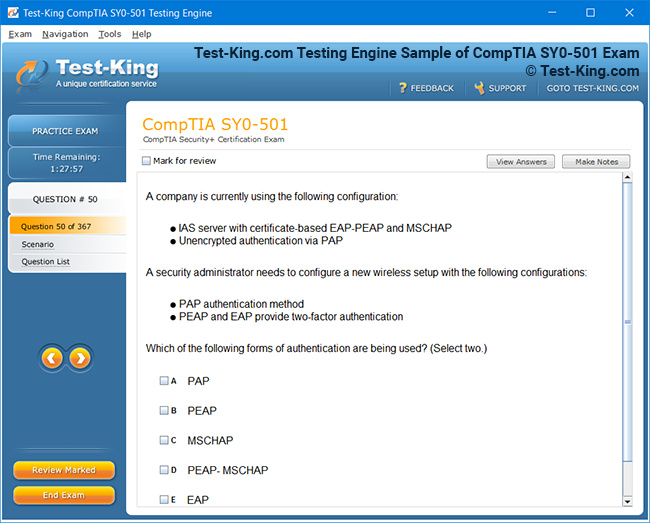
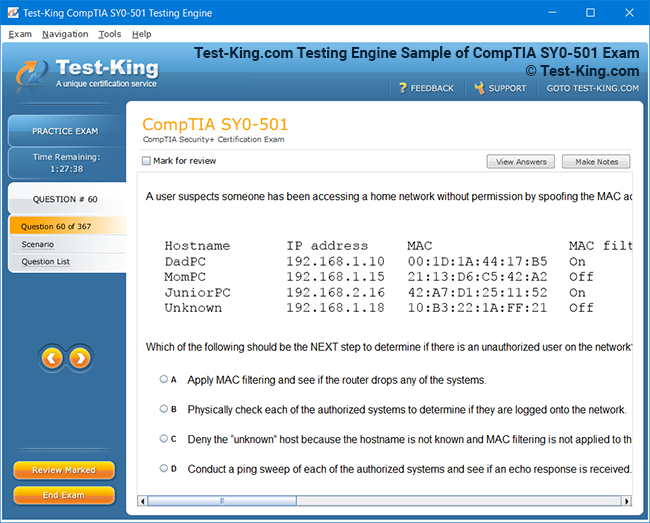
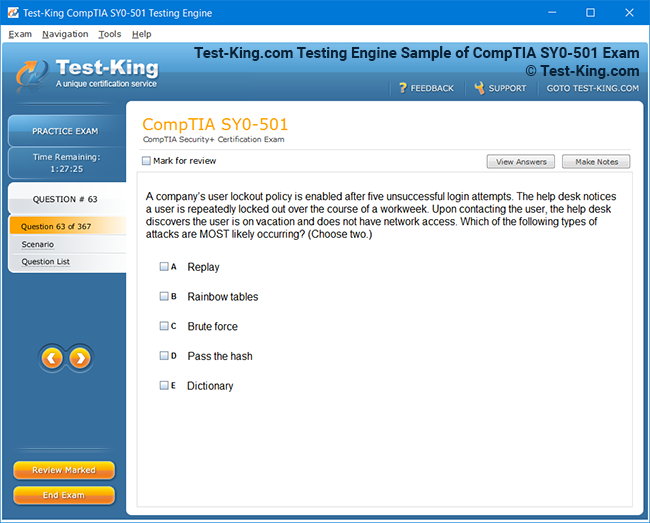
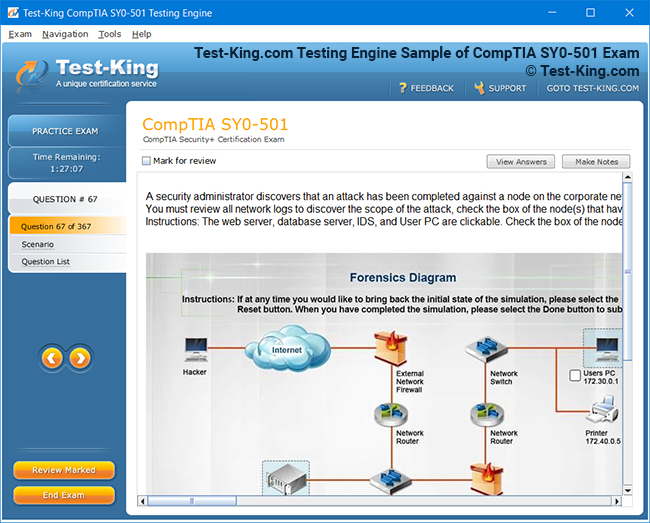
Frequently Asked Questions
How can I get the products after purchase?
All products are available for download immediately from your Member's Area. Once you have made the payment, you will be transferred to Member's Area where you can login and download the products you have purchased to your computer.
How long can I use my product? Will it be valid forever?
Test-King products have a validity of 90 days from the date of purchase. This means that any updates to the products, including but not limited to new questions, or updates and changes by our editing team, will be automatically downloaded on to computer to make sure that you get latest exam prep materials during those 90 days.
Can I renew my product if when it's expired?
Yes, when the 90 days of your product validity are over, you have the option of renewing your expired products with a 30% discount. This can be done in your Member's Area.
Please note that you will not be able to use the product after it has expired if you don't renew it.
How often are the questions updated?
We always try to provide the latest pool of questions, Updates in the questions depend on the changes in actual pool of questions by different vendors. As soon as we know about the change in the exam question pool we try our best to update the products as fast as possible.
How many computers I can download Test-King software on?
You can download the Test-King products on the maximum number of 2 (two) computers or devices. If you need to use the software on more than two machines, you can purchase this option separately. Please email support@test-king.com if you need to use more than 5 (five) computers.
What is a PDF Version?
PDF Version is a pdf document of Questions & Answers product. The document file has standart .pdf format, which can be easily read by any pdf reader application like Adobe Acrobat Reader, Foxit Reader, OpenOffice, Google Docs and many others.
Can I purchase PDF Version without the Testing Engine?
PDF Version cannot be purchased separately. It is only available as an add-on to main Question & Answer Testing Engine product.
What operating systems are supported by your Testing Engine software?
Our testing engine is supported by Windows. Andriod and IOS software is currently under development.
Top UiPath Exams
- UiADPv1 - UiPath Automation Developer Professional v1.0
- UiADAv1 - UiPath Automation Developer Associate v1.0
- UiAAAv1 - UiPath Agentic Automation Associate
- UiABAv1 - Automation Business Analyst Professional
- UiARD - UiPath Advanced RPA Developer v1.0
- UiASAPv1 - UiPath Automation Solution Architect Professional v1.0
- UiTAEPv1 - UiPath Test Automation Engineer Professional v1.0
- UiSTEPv1 - UiPath Software Testing Engineer Professional
UiTAEPv1 : Understanding the UiPath Test Automation Engineer Professional Exam
The UiPath Test Automation Engineer Professional Exam, identified by the exam code UiTAEPv1, represents a rigorous assessment designed for professionals seeking to demonstrate mastery in robotic process automation with a particular focus on test automation. This examination is tailored for individuals who possess foundational knowledge of automation principles and aspire to validate their ability to design, implement, and maintain automated testing workflows within the UiPath ecosystem. The exam evaluates not only technical prowess but also a candidate's capability to approach testing with analytical precision and strategic insight, ensuring that automation solutions are both effective and sustainable in dynamic operational environments.
Exam Overview and Purpose
The purpose of the UiPath Test Automation Engineer Professional certification extends beyond mere credentialing. It signifies a professional's ability to leverage UiPath Studio and Orchestrator to construct workflows that are both resilient and adaptive. Through this credential, candidates signal to employers and clients that they are proficient in orchestrating automated testing initiatives, capable of troubleshooting complex scenarios, and adept at ensuring the integrity of software processes. This examination is therefore an essential milestone for individuals pursuing careers in robotic process automation, quality assurance, and process optimization.
Scope and Skills Assessed
The scope of the UiPath Test Automation Engineer Professional Exam encompasses multiple facets of test automation and the UiPath platform. Candidates are evaluated on their understanding of fundamental automation concepts, the ability to design efficient workflows, and proficiency in handling complex integrations. Key areas include the orchestration of test cases, management of assets and configurations in Orchestrator, utilization of data manipulation techniques, and effective handling of exceptions to maintain workflow reliability. Beyond technical skills, the examination assesses critical thinking, problem-solving acumen, and the capacity to analyze processes to identify potential bottlenecks or inefficiencies.
Fundamental skills such as designing sequences and workflows, employing control activities, and creating modular components are central to the assessment. Candidates must demonstrate an understanding of selectors, dynamic elements, and the mechanisms by which UiPath interacts with diverse applications and interfaces. Additionally, the examination tests the ability to integrate external data sources, manage test data effectively, and apply verification techniques that ensure automation workflows meet both functional and performance requirements. Mastery of these skills indicates that a professional can approach test automation with precision, anticipate challenges, and deliver solutions that align with organizational objectives.
Importance of Certification
Achieving the UiPath Test Automation Engineer Professional certification offers tangible benefits for career progression and professional recognition. This credential serves as an endorsement of a candidate's competence in leveraging UiPath's test automation capabilities, which can be instrumental in securing roles that demand both technical acumen and strategic insight. Employers often seek professionals who can streamline repetitive tasks, enhance testing efficiency, and maintain high standards of software quality. Certified professionals are therefore positioned as valuable assets capable of contributing to organizational productivity and innovation.
Moreover, the certification provides a structured framework for learning and development, guiding candidates through a comprehensive understanding of UiPath tools and test automation methodologies. This process not only reinforces existing knowledge but also cultivates advanced skills that are applicable in real-world projects. The examination encourages professionals to internalize best practices, develop methodological rigor, and adopt an analytical mindset, all of which are essential for success in contemporary automation roles. Consequently, certification reflects a commitment to professional excellence and a capacity to navigate the evolving landscape of robotic process automation.
Exam Structure and Evaluation
The UiPath Test Automation Engineer Professional Exam is structured to evaluate both theoretical knowledge and practical competence. Questions are designed to assess understanding of UiPath Studio, Orchestrator, and other integral components of the automation ecosystem. Candidates encounter scenarios that require the application of logical reasoning, workflow design, and problem-solving to achieve specific automation objectives. The examination emphasizes not just the ability to recall information but the capacity to apply concepts in contextually relevant situations, simulating the challenges faced in real operational environments.
Evaluation criteria extend to the candidate's ability to maintain workflow resilience, manage exceptions gracefully, and implement verification procedures that ensure automated processes function as intended. Test scenarios may include multi-application integrations, dynamic user interfaces, and complex data manipulations, necessitating a comprehensive understanding of UiPath functionalities. The examination rewards not only technical accuracy but also efficiency, maintainability, and adherence to best practices, reflecting the holistic approach required for professional test automation.
Core Competencies Tested
A central focus of the UiPath Test Automation Engineer Professional Exam is the demonstration of core competencies that underpin effective automation. Among these is the design and implementation of robust workflows capable of handling varied operational conditions. Candidates must show proficiency in modular design, enabling workflows to be reused and adapted with minimal effort. This includes the use of reusable components, structured error handling, and well-organized sequences that contribute to readability and maintainability.
Another critical competency involves the management of test data and validation procedures. Professionals must demonstrate the ability to create and manipulate data tables, utilize collections, and design verification activities that confirm expected outcomes. Handling exceptions is equally important, requiring candidates to anticipate potential failures and implement contingencies that maintain workflow continuity. The ability to debug, monitor, and optimize workflows reflects the examination's emphasis on practical, real-world problem-solving skills.
Integration and interaction with external applications form a significant portion of the skills evaluated. Candidates are expected to navigate complex UI elements, employ selectors that adjust dynamically, and orchestrate workflows that interact seamlessly with applications such as SAP, Excel, and web-based platforms. This capability ensures that test automation is not confined to isolated processes but extends across the broader technological ecosystem, enhancing the value and applicability of automated solutions.
Analytical and Strategic Thinking
Beyond technical skills, the examination assesses a candidate's analytical and strategic thinking. Professionals must exhibit the ability to deconstruct processes, identify inefficiencies, and propose solutions that enhance reliability and efficiency. This entails understanding the flow of operations, recognizing potential bottlenecks, and applying systematic approaches to optimize workflow performance. Analytical thinking also encompasses the ability to interpret results from automated tests, identify anomalies, and implement corrective measures to improve accuracy and consistency.
Strategic thinking is demonstrated through the capacity to plan and prioritize automation initiatives, aligning them with organizational objectives. Candidates are expected to balance resource utilization, execution time, and error handling to create workflows that are both effective and sustainable. This aspect of the examination highlights the importance of a holistic approach, where automation is not merely about technical execution but also about contributing to broader operational excellence.
Preparing for the Exam
Successful preparation for the UiPath Test Automation Engineer Professional Exam requires a multifaceted approach. Candidates benefit from hands-on experience with UiPath Studio and Orchestrator, exploring real-world scenarios that encompass both simple and complex workflows. Practical engagement with automation projects fosters familiarity with the nuances of workflow design, exception handling, and integration techniques. In addition to experiential learning, theoretical study of core concepts, best practices, and platform features is essential to reinforce knowledge and develop a comprehensive understanding.
A structured study plan often includes reviewing documentation, exploring case studies, and analyzing examples of optimized workflows. Professionals may also benefit from simulation exercises that replicate exam conditions, allowing them to practice time management, problem-solving, and critical thinking under realistic constraints. Utilizing community forums, study groups, and official UiPath learning resources further enhances preparation, providing access to insights, clarifications, and alternative approaches to common challenges.
Real-World Relevance of Exam Skills
The skills assessed in the UiPath Test Automation Engineer Professional Exam have direct applicability in professional environments. Mastery of workflow design, data handling, exception management, and integration enables candidates to contribute effectively to automation projects across diverse industries. These capabilities support the implementation of scalable and maintainable automated solutions, enhancing efficiency, accuracy, and operational consistency. Organizations benefit from professionals who can anticipate challenges, streamline processes, and ensure the reliability of software systems.
Moreover, the analytical and strategic competencies fostered through preparation and assessment equip professionals to identify opportunities for continuous improvement. By applying principles learned during the examination, candidates can optimize workflows, reduce redundancy, and enhance process intelligence. This demonstrates the intrinsic value of the certification, as it cultivates not only technical expertise but also a mindset geared toward innovation and operational excellence.
Career Advantages of Certification
Achieving the UiPath Test Automation Engineer Professional credential positions candidates favorably in the competitive landscape of robotic process automation. Certified professionals are recognized for their ability to design, implement, and sustain automated testing initiatives that meet organizational standards. This recognition often translates into enhanced career prospects, higher remuneration, and access to specialized roles in automation, quality assurance, and process optimization. Employers view certified individuals as assets capable of advancing automation maturity and contributing to digital transformation initiatives.
The certification also opens pathways for further specialization, such as advanced automation architect roles, process analysis, and leadership positions in testing and quality assurance. The knowledge and skills validated by the examination provide a foundation for continuous professional growth, enabling individuals to stay abreast of emerging technologies, methodologies, and industry best practices. Consequently, the UiPath Test Automation Engineer Professional Exam serves as both a milestone and a catalyst for sustained career development in the automation domain.
Understanding Robotic Process Automation and Its Relevance
Robotic Process Automation has emerged as a transformative force in modern enterprise operations, enabling organizations to automate repetitive, rule-based tasks that were traditionally reliant on human intervention. The UiPath Test Automation Engineer Professional Exam evaluates a candidate's proficiency in these processes, emphasizing the practical application of automation principles within the UiPath ecosystem. Understanding the foundational concepts of RPA is therefore crucial for candidates seeking to navigate complex workflows and deliver effective automated solutions.
At its core, RPA involves the creation of software robots capable of interacting with digital systems to execute tasks in a manner akin to human behavior. These bots can interpret information, manipulate data, trigger responses, and communicate with other systems to accomplish a wide array of business processes. Mastery of these fundamental principles is essential for designing workflows that are not only functional but resilient, scalable, and adaptable to varying operational demands. The examination focuses on evaluating the candidate’s capacity to harness these concepts effectively within UiPath Studio and Orchestrator, ensuring that automation initiatives align with organizational goals.
Core Elements of UiPath Studio
UiPath Studio is the primary tool for designing and developing automation workflows, and proficiency in its use is a critical skill assessed in the examination. The platform offers a versatile environment where developers can construct sequences, flowcharts, and state machines, allowing for the orchestration of complex processes with clarity and precision. Understanding how to leverage activities, variables, arguments, and control flow mechanisms is fundamental for creating workflows that are both readable and maintainable.
Sequences provide a linear and structured approach to task execution, ideal for straightforward processes where steps must occur in a defined order. Flowcharts offer a more visual representation of processes, accommodating conditional logic and branching paths to manage complexity. State machines allow for sophisticated workflow management by enabling transitions between states based on triggers and conditions. Mastery of these constructs equips candidates with the ability to design robust automation solutions capable of handling diverse scenarios and exceptions with finesse.
Activities within UiPath Studio are the building blocks of automation. Each activity represents a discrete operation, such as clicking a button, extracting data from a webpage, or performing arithmetic calculations. Candidates must demonstrate the ability to select appropriate activities, configure their properties, and sequence them effectively to achieve the desired outcome. Additionally, understanding variable scope and argument passing is critical for maintaining data integrity across workflows and facilitating modular design that can be reused in multiple contexts.
Variables, Data Types, and Collections
A thorough grasp of variables, data types, and collections is essential for creating dynamic and adaptive workflows. Variables act as containers for storing data during workflow execution, and understanding the distinctions between data types, such as strings, integers, booleans, and arrays, enables precise manipulation and transformation of information. Collections, including arrays, lists, and dictionaries, allow for the storage of multiple elements, providing the flexibility to handle complex datasets efficiently.
Effective use of variables and collections is assessed in scenarios where workflows must process dynamic information or integrate with external systems. Candidates are expected to demonstrate the ability to iterate over collections, perform filtering operations, and manage data transformations seamlessly. This capability ensures that workflows are not static but can adapt to changing inputs, maintain accuracy, and support automation strategies that extend across multiple applications and environments.
Control Flow and Decision Making
Control flow activities constitute a significant aspect of workflow design, enabling conditional execution, repetition, and decision-making within automation processes. Activities such as If, Switch, While, and Do While allow developers to dictate the path of execution based on defined conditions, enhancing the flexibility and intelligence of automation solutions. The examination evaluates a candidate’s ability to implement these constructs effectively, ensuring that workflows can respond to variable inputs and unexpected scenarios without failure.
Decision-making within workflows involves not only logical evaluation but also an understanding of the broader process context. Candidates must be able to anticipate potential exceptions, define fallback mechanisms, and ensure that the workflow can continue operation smoothly under varying conditions. Mastery of control flow activities reflects a professional’s capacity to construct automation that is resilient, efficient, and aligned with business objectives.
Reusability and Modular Design
Reusability and modularity are central tenets of professional automation development. The examination emphasizes the candidate’s ability to design workflows as modular components that can be invoked across multiple projects or processes. This approach promotes maintainability, reduces redundancy, and enhances the efficiency of automation development by allowing developers to leverage pre-existing components in new contexts.
Creating reusable components involves defining clear input and output parameters, encapsulating specific functionality, and ensuring that the component operates independently of the calling workflow. Candidates are also assessed on their ability to implement libraries and templates within UiPath Studio, facilitating standardized practices and accelerating the development of consistent, high-quality automation solutions. Modular design not only optimizes resource utilization but also contributes to the long-term sustainability of automation initiatives.
Orchestrator and Asset Management
UiPath Orchestrator is a pivotal platform for managing, monitoring, and deploying automation workflows across enterprise environments. Candidates are expected to demonstrate competence in scheduling processes, managing queues, and configuring assets that enable workflows to operate reliably in production settings. Orchestrator serves as the central hub for controlling robots, ensuring that automation tasks are executed according to business requirements and within defined operational parameters.
Asset management is a critical function within Orchestrator, allowing the secure storage and retrieval of configuration data, credentials, and other essential information. Candidates must exhibit the ability to create, update, and utilize assets effectively, ensuring that workflows remain dynamic, adaptable, and secure. Additionally, understanding the integration between Studio and Orchestrator is essential for orchestrating end-to-end automation, providing visibility into workflow execution, and facilitating exception handling and reporting.
Data Manipulation and Advanced Activities
Advanced data manipulation skills are assessed to ensure that candidates can handle complex workflows that require transformation, aggregation, and analysis of information. Activities related to data tables, collections, and string manipulation enable developers to create workflows that process inputs efficiently and generate outputs that meet precise specifications. The ability to perform joins, filters, and grouping operations within automation workflows reflects a deep understanding of data management principles and practical application in real-world scenarios.
Candidates are also evaluated on their proficiency with advanced activities such as invoking workflows, managing transactions, and interacting with multiple applications simultaneously. These capabilities are essential for constructing comprehensive automation solutions that extend beyond simple tasks, demonstrating the professional’s ability to orchestrate intricate processes with accuracy and reliability.
Exception Handling and Debugging
Exception handling and debugging are critical skills for ensuring the robustness of automation workflows. The examination assesses the candidate’s ability to anticipate potential points of failure, implement structured error handling, and maintain continuity of execution under exceptional conditions. Activities such as Try Catch, Throw, and Finally are central to this aspect, allowing workflows to manage errors gracefully and provide meaningful feedback for troubleshooting and optimization.
Debugging requires a systematic approach to identifying, analyzing, and resolving issues within workflows. Candidates must demonstrate proficiency in using UiPath Studio’s debugging tools, breakpoints, and logging capabilities to trace execution, detect anomalies, and implement corrective measures. This skill set ensures that automation solutions are reliable, maintainable, and capable of delivering consistent performance across diverse operational contexts.
Integration with External Applications
A significant focus of the examination is the candidate’s ability to integrate automation workflows with external applications, including web platforms, databases, and enterprise software such as SAP and Excel. Proficiency in interacting with these systems requires understanding selectors, dynamic element identification, and secure data handling practices. The capacity to automate tasks across multiple applications demonstrates the professional’s ability to create comprehensive solutions that enhance organizational efficiency and streamline complex processes.
Integration skills also encompass the ability to manipulate data retrieved from external sources, transform it according to business rules, and feed it into subsequent workflow activities. Candidates are expected to handle diverse data formats, implement validation procedures, and ensure that the automation operates seamlessly, regardless of variations in input or system behavior. This competency reflects the practical applicability of the UiPath platform in real-world enterprise environments.
Analytical Mindset and Workflow Optimization
The examination evaluates not only technical proficiency but also the candidate’s analytical mindset and approach to workflow optimization. Professionals must be able to assess process efficiency, identify redundancies, and implement improvements that enhance performance and scalability. This includes evaluating execution time, resource utilization, and error rates to ensure that automation workflows deliver maximum value.
Optimization strategies involve refining workflow design, implementing reusable components, and leveraging advanced features of UiPath Studio and Orchestrator to reduce complexity and improve maintainability. Candidates are expected to demonstrate an understanding of how to balance automation efficiency with reliability, ensuring that workflows meet both technical and business objectives. This analytical approach underscores the importance of strategic thinking in professional test automation.
Preparing Workflows for Production
Preparing workflows for production deployment requires meticulous attention to detail, rigorous testing, and adherence to best practices. Candidates must exhibit the ability to validate workflows, implement logging and monitoring mechanisms, and ensure that automation can operate in dynamic and unpredictable environments. Production-ready workflows are designed to handle exceptions gracefully, maintain data integrity, and provide clear insights into operational performance.
The examination assesses the candidate’s competence in transitioning from development to production, emphasizing the importance of documentation, standardization, and compliance with organizational protocols. Professionals are expected to anticipate operational challenges, establish safeguards, and create workflows that are robust, adaptable, and capable of supporting enterprise-scale automation initiatives.
Strategic Approach to Test Automation
Test automation within the realm of UiPath demands a strategic approach that extends beyond the mechanical execution of tasks. The UiPath Test Automation Engineer Professional Exam evaluates the candidate’s ability to conceptualize, plan, and implement workflows that are both efficient and resilient. Successful professionals understand that automation is not simply about replicating manual processes; it requires a deliberate design that maximizes reliability, minimizes errors, and aligns with organizational objectives. This mindset ensures that automated solutions are sustainable and capable of adapting to evolving operational requirements.
The strategic approach begins with a comprehensive understanding of the processes to be automated. Candidates are expected to identify repetitive, rule-based tasks that can benefit from automation while assessing the complexity, frequency, and variability of inputs. Process mapping and analysis allow professionals to pinpoint potential bottlenecks, redundancies, and areas where automation will deliver the highest value. By approaching automation strategically, candidates can prioritize tasks, allocate resources efficiently, and design workflows that are not only functional but optimized for performance.
Planning and Designing Automation Workflows
Effective planning is central to test automation success. The examination assesses the candidate’s ability to translate business requirements into actionable workflows using UiPath Studio. Planning involves breaking down processes into discrete steps, defining input and output parameters, and anticipating potential exceptions or variances. Candidates must demonstrate the capacity to design modular workflows that facilitate reuse, maintainability, and clarity, ensuring that automation initiatives are both scalable and comprehensible.
Designing automation workflows also requires a keen understanding of control flow structures, such as sequences, flowcharts, and state machines. Candidates are evaluated on their ability to select appropriate structures based on the complexity of the process and the need for conditional execution. Incorporating decision-making logic, error handling, and verification activities during the design phase ensures that workflows can operate autonomously while maintaining accuracy and resilience.
Implementing Best Practices in Workflow Development
The UiPath Test Automation Engineer Professional Exam emphasizes adherence to best practices that enhance workflow quality and maintainability. Professionals must demonstrate proficiency in naming conventions, documentation, and organization of activities, ensuring that workflows are readable and accessible to collaborators. Structuring workflows with modularity in mind, encapsulating reusable components, and maintaining consistent standards across projects reflects a commitment to professional excellence.
Best practices also encompass the judicious use of variables, arguments, and data structures. Candidates are expected to manage data efficiently, employing collections, arrays, and dictionaries to handle complex datasets. Proper scoping of variables and thoughtful argument passing are essential for maintaining data integrity and avoiding unintended consequences during execution. These practices contribute to workflows that are robust, scalable, and easily adaptable to new requirements.
Robustness and Reliability in Automation
The examination evaluates a candidate’s ability to design workflows that are resilient under diverse operational conditions. Robustness involves anticipating potential points of failure, implementing exception handling mechanisms, and ensuring continuity of execution. Activities such as Try Catch, Retry Scope, and logging are central to maintaining reliability, allowing workflows to recover gracefully from errors and provide meaningful diagnostic information.
Reliability also extends to performance considerations, including execution time, resource utilization, and responsiveness. Candidates must demonstrate an understanding of how to optimize workflows to minimize latency, reduce unnecessary resource consumption, and maintain consistency under varying loads. By prioritizing robustness and reliability, professionals ensure that automation delivers consistent value and supports organizational objectives effectively.
Verification and Validation of Automated Processes
A key aspect of test automation is the verification and validation of workflows to ensure that they meet functional and performance requirements. The examination assesses the candidate’s ability to design verification activities that confirm expected outcomes and detect anomalies. This includes validating data transformations, checking for compliance with business rules, and monitoring workflow execution to identify deviations from intended behavior.
Validation activities are integrated into workflows as checkpoints that provide confidence in the accuracy and completeness of automation. Candidates are expected to implement logging, reporting, and monitoring mechanisms that offer visibility into process performance. By systematically verifying outcomes, professionals can identify errors early, refine workflows, and maintain the integrity of automated processes across multiple iterations.
Exception Handling and Contingency Planning
Effective exception handling is a hallmark of professional automation development. The examination evaluates the candidate’s ability to anticipate potential errors, define fallback mechanisms, and implement structured handling to maintain operational continuity. Candidates must demonstrate competence in configuring Try Catch blocks, specifying error types, and ensuring that exceptions are logged for analysis and resolution.
Contingency planning extends beyond immediate error handling to encompass broader operational resilience. Professionals are expected to design workflows that can adapt to unexpected inputs, system changes, or environmental variations without failure. This proactive approach ensures that automation remains reliable under dynamic conditions, reducing downtime and enhancing the credibility of automated solutions.
Optimizing Workflow Performance
Optimization of workflow performance is a critical skill assessed in the examination. Candidates are expected to analyze workflows for efficiency, identify redundant or resource-intensive activities, and implement strategies to streamline execution. This may include minimizing unnecessary UI interactions, leveraging data manipulation techniques, and structuring workflows to execute in parallel where appropriate.
Performance optimization also involves balancing speed with accuracy, ensuring that workflows operate effectively without compromising the integrity of results. Candidates must demonstrate an ability to measure and evaluate workflow performance, using metrics and monitoring tools to inform improvements. This analytical approach to optimization ensures that automation contributes meaningfully to organizational productivity and operational excellence.
Managing Test Data and Configurations
Test data management is a significant aspect of professional test automation. The examination evaluates the candidate’s ability to design workflows that handle data efficiently, including creating, updating, and validating data sets. Professionals must demonstrate proficiency in managing dynamic inputs, performing transformations, and ensuring that data integrity is maintained throughout the workflow.
Configuration management is equally important, involving the use of assets, parameters, and settings within UiPath Orchestrator to maintain flexibility and adaptability. Candidates are expected to implement workflows that can accommodate changes in input data, application behavior, or operational conditions without requiring extensive modifications. Effective management of data and configurations enhances the resilience, scalability, and maintainability of automation solutions.
Continuous Improvement and Workflow Refinement
The examination emphasizes the importance of continuous improvement in test automation. Candidates are expected to evaluate workflows post-deployment, analyze performance metrics, and identify opportunities for refinement. This iterative approach fosters ongoing optimization, enabling workflows to evolve in response to changing requirements and operational insights.
Continuous improvement also involves adopting new methodologies, tools, and best practices to enhance automation capabilities. Professionals are encouraged to remain current with developments in the UiPath platform, exploring advanced features, integrating emerging technologies, and refining processes to maintain competitive advantage. This commitment to evolution underscores the value of professional expertise in sustaining high-quality automation initiatives.
Integrating Automation with Organizational Objectives
Test automation is most effective when aligned with organizational objectives. The examination assesses the candidate’s ability to design workflows that support strategic goals, improve operational efficiency, and enhance quality assurance. Professionals must demonstrate an understanding of how automation impacts broader business processes, including the reduction of manual effort, acceleration of testing cycles, and improvement of accuracy and compliance.
Integration with organizational objectives also involves collaboration with stakeholders, including business analysts, quality assurance teams, and IT personnel. Candidates must show proficiency in translating business requirements into functional workflows, communicating insights, and ensuring that automation solutions meet both technical and strategic expectations. This holistic approach reflects the professional’s capacity to deliver value beyond individual tasks, contributing to the overall success of automation initiatives.
Leveraging Reusable Components and Libraries
Reusable components and libraries are essential tools for achieving efficiency and consistency in automation projects. Candidates are expected to design workflows with modularity in mind, encapsulating common tasks into reusable elements that can be invoked across multiple processes. This practice reduces development time, enhances maintainability, and ensures that workflows adhere to standardized practices.
Libraries within UiPath Studio enable professionals to store and manage reusable components systematically, facilitating collaboration and promoting uniformity across projects. The examination evaluates the candidate’s ability to create, organize, and deploy libraries effectively, demonstrating a commitment to professional development and process optimization.
Monitoring, Reporting, and Feedback Loops
Monitoring and reporting are integral to maintaining the quality and effectiveness of automated workflows. Candidates are expected to implement logging, error reporting, and performance tracking mechanisms that provide insights into workflow execution. These feedback loops allow professionals to identify issues promptly, evaluate workflow performance, and implement improvements that enhance reliability and efficiency.
Effective monitoring also supports accountability, compliance, and operational transparency. By designing workflows that provide comprehensive reporting, professionals ensure that stakeholders are informed of automation outcomes, exceptions, and performance metrics. This capability reflects a mature approach to test automation, emphasizing the importance of visibility, governance, and continuous refinement.
Preparing for Complex Automation Scenarios
The examination challenges candidates to demonstrate proficiency in managing complex automation scenarios that involve multiple applications, dynamic inputs, and intricate workflows. Professionals must show the ability to analyze processes, design adaptive workflows, and implement strategies that maintain reliability and efficiency under diverse conditions. This includes integrating advanced control structures, managing data flows, and orchestrating interactions across heterogeneous systems.
Preparation for complex scenarios also requires an understanding of potential risks, dependencies, and operational constraints. Candidates must anticipate challenges, implement safeguards, and ensure that workflows remain robust and maintainable. Mastery of these capabilities indicates a high level of professional expertise and readiness to handle real-world automation challenges.
Mastering Complex Workflows and Dynamic Automation
Automation in modern enterprises often extends beyond simple, linear processes and requires mastery of complex workflows and dynamic automation strategies. The UiPath Test Automation Engineer Professional Exam evaluates a candidate’s ability to implement these sophisticated techniques, ensuring that automation is both versatile and resilient. Advanced workflows involve conditional logic, parallel processing, state management, and intricate data handling, all of which require a deep understanding of UiPath’s capabilities. Candidates must demonstrate proficiency in designing adaptive processes that can respond to dynamic inputs, varying user interfaces, and unpredictable operational conditions, maintaining reliability and accuracy throughout execution.
Dynamic automation also demands the ability to anticipate exceptions and operational anomalies. Professionals are expected to integrate exception handling mechanisms seamlessly into workflows, using constructs such as Try Catch, Retry Scope, and global error handlers. These mechanisms not only safeguard against failures but also provide diagnostic insights that support continuous workflow improvement. The examination assesses the capacity to design robust automation that maintains operational continuity under diverse conditions, reflecting real-world demands in enterprise environments.
Selector Management and UI Automation
Selectors are a critical component of UiPath automation, particularly when interacting with user interfaces of varying complexity. The examination emphasizes the candidate’s ability to manage selectors effectively, ensuring that workflows can locate, identify, and interact with UI elements consistently. Professionals must demonstrate proficiency in creating dynamic selectors that adjust to changing interface attributes, minimizing errors caused by fluctuations in application layouts or data presentation.
UI automation requires careful handling of clicks, text entry, data extraction, and navigation across multiple windows and applications. Candidates are expected to apply advanced techniques for reliable element identification, including anchor-based referencing, fuzzy selectors, and hierarchical structures. Mastery of these techniques ensures that workflows can operate accurately across multiple platforms, enhancing the reliability and scalability of automated solutions.
Data Manipulation and Transformation
Advanced automation frequently involves complex data manipulation and transformation. Candidates are assessed on their ability to process data from diverse sources, including spreadsheets, databases, web applications, and APIs. Skills in extracting, transforming, and loading data efficiently are essential for ensuring that workflows can handle varied inputs and produce accurate, actionable results.
Professionals must demonstrate the ability to perform operations such as filtering, aggregation, joins, and conditional transformations on datasets. Advanced string manipulation, pattern recognition, and regular expression usage are often required to parse unstructured data and convert it into usable formats. The examination evaluates the capacity to implement these operations seamlessly within workflows, highlighting the professional’s ability to create intelligent, data-driven automation solutions.
Integration with Enterprise Applications
Integration with enterprise applications is a cornerstone of advanced UiPath automation. Candidates must demonstrate proficiency in interacting with applications such as SAP, Oracle, Salesforce, and other ERP or CRM systems. This includes navigating application-specific interfaces, handling complex data structures, and performing transactional operations reliably and securely.
Professionals are expected to design workflows that maintain data integrity while performing multi-step operations across interconnected systems. Integration also involves managing credentials, assets, and configuration settings securely, ensuring that automation adheres to organizational policies and compliance requirements. Mastery of enterprise integrations reflects the candidate’s ability to extend automation beyond isolated tasks and create cohesive, end-to-end solutions.
Orchestrator Queues and Transaction Management
UiPath Orchestrator plays a critical role in managing advanced automation scenarios, particularly those involving high-volume transactions and multi-robot deployments. The examination evaluates the candidate’s ability to utilize queues effectively for processing large datasets, distributing work across robots, and handling transaction states. Transaction management ensures that workflows can resume gracefully after interruptions, maintain consistency, and log outcomes for auditing and analysis.
Professionals must demonstrate competence in configuring queue items, managing priorities, handling retries, and processing exceptions systematically. Effective queue and transaction management not only enhances operational efficiency but also contributes to the reliability, scalability, and auditability of automation initiatives.
Exception Handling and Error Recovery
Advanced workflows often encounter unpredictable scenarios that require sophisticated exception handling and error recovery strategies. Candidates are expected to implement global exception handlers, define fallback procedures, and ensure that errors are logged and communicated effectively. Structured error handling provides resilience, allowing workflows to recover from failures without compromising the integrity of ongoing processes.
Error recovery also involves analyzing root causes and implementing preventive measures to reduce recurrence. Professionals must show the ability to monitor workflows, diagnose issues using logs and analytics, and adjust automation strategies to improve reliability. The examination assesses the candidate’s proficiency in creating workflows that are robust, self-correcting, and capable of maintaining continuity in complex operational environments.
Orchestrator Assets and Configurations
Managing assets and configurations within UiPath Orchestrator is a vital skill for advanced automation. Assets allow workflows to access centralized configuration data, credentials, and parameters, ensuring that automation remains adaptable and secure. Candidates are expected to demonstrate the ability to create, update, and retrieve assets programmatically, integrating them seamlessly into workflows for dynamic operation.
Configuration management supports scalability and maintainability, enabling workflows to adapt to changing environments without requiring modifications to the core logic. Professionals must understand best practices for organizing assets, managing sensitive data securely, and coordinating configurations across multiple robots and environments. This competency ensures that advanced automation solutions are both flexible and compliant with organizational standards.
Workflow Orchestration and Parallel Execution
Complex automation scenarios often require orchestrating multiple workflows or executing tasks in parallel to optimize performance. Candidates are evaluated on their ability to design workflows that coordinate multiple processes, handle dependencies, and maintain synchronization. Parallel execution can enhance efficiency, reduce processing time, and improve responsiveness, but it requires careful management of shared resources, exceptions, and data consistency.
Professionals must demonstrate knowledge of activities and strategies that enable parallel processing, including Invoke Workflow, Parallel, and Monitor Events. Proper orchestration ensures that workflows operate cohesively, maintain accuracy, and deliver expected results even under concurrent execution conditions. This skill is critical for managing enterprise-scale automation where multiple processes interact and interdependencies are complex.
API Integration and Web Services
Integration with APIs and web services expands the capabilities of UiPath automation, enabling workflows to interact with external systems, retrieve real-time data, and trigger processes programmatically. Candidates must demonstrate proficiency in configuring API requests, handling authentication, parsing responses, and managing error conditions. Knowledge of RESTful and SOAP services, JSON and XML formats, and dynamic endpoint handling is often required to implement seamless integrations.
API integration allows automation to extend beyond desktop applications, supporting cloud-based services, third-party platforms, and enterprise ecosystems. Professionals are expected to create workflows that utilize API responses effectively, transform data appropriately, and feed results into subsequent automation steps. This capability reflects advanced technical proficiency and strategic thinking in designing interconnected automation solutions.
Secure Automation Practices
Security is a paramount concern in advanced automation, particularly when workflows interact with sensitive data or critical systems. Candidates are expected to demonstrate knowledge of secure automation practices, including credential management, encrypted storage, and access controls. Implementing workflows that handle sensitive information responsibly is essential for compliance with organizational policies, regulatory requirements, and industry standards.
Professionals must also consider operational security, ensuring that automation does not inadvertently expose vulnerabilities or disrupt other systems. Best practices include role-based access, audit trails, logging, and monitoring for anomalous behavior. The examination evaluates the candidate’s ability to balance functionality with security, creating workflows that are robust, reliable, and compliant.
Performance Monitoring and Optimization
Advanced automation demands continuous monitoring and optimization to ensure that workflows remain efficient and effective. Candidates are expected to implement logging, analytics, and performance tracking mechanisms that provide visibility into workflow execution. This allows professionals to identify bottlenecks, optimize resource usage, and refine processes to maintain optimal performance.
Optimization strategies may include reducing unnecessary UI interactions, optimizing data processing, leveraging parallel execution, and refining error handling. By monitoring performance metrics and implementing targeted improvements, professionals ensure that automation remains responsive, scalable, and capable of meeting organizational objectives consistently.
Real-World Application of Advanced Functionalities
The UiPath Test Automation Engineer Professional Exam emphasizes the practical application of advanced functionalities in real-world scenarios. Candidates must demonstrate the ability to design automation solutions that integrate multiple systems, handle complex data, and operate reliably under dynamic conditions. This includes combining workflow design, exception handling, orchestration, API integration, and secure practices into cohesive solutions that address business needs effectively.
Professionals are expected to adapt workflows to diverse environments, troubleshoot issues, and maintain high standards of quality, reliability, and efficiency. Mastery of these capabilities indicates readiness to manage enterprise-scale automation initiatives and deliver tangible value through intelligent, adaptable, and resilient automated processes.
Developing an Analytical Mindset
Analytical thinking is a cornerstone skill for professionals preparing for the UiPath Test Automation Engineer Professional Exam, as well as for those applying automation in real-world environments. This skill entails breaking down complex processes into manageable components, identifying patterns, and understanding relationships between system elements. Professionals must demonstrate the capacity to examine workflows critically, anticipate potential bottlenecks, and devise solutions that enhance reliability and efficiency. Analytical thinking is not merely about observation; it involves synthesizing information, weighing alternatives, and making informed decisions that improve overall automation performance.
A candidate’s analytical capabilities are often tested through scenarios that require evaluating multiple workflows, understanding dependencies, and identifying where inefficiencies may arise. By examining each step of a process, professionals can recognize redundancies, unnecessary complexity, or opportunities to streamline operations. This analytical approach enables automation to deliver tangible business benefits by reducing execution time, improving accuracy, and enhancing operational consistency.
Problem Identification and Root Cause Analysis
Problem-solving begins with the ability to identify issues accurately. In the context of UiPath automation, candidates are expected to detect workflow errors, performance bottlenecks, and deviations from expected outcomes. Root cause analysis is a critical component of this process, requiring professionals to investigate the underlying causes of failures rather than addressing superficial symptoms. This approach ensures that corrective measures are effective, sustainable, and prevent recurrence of similar issues in future workflows.
Professionals employ structured methodologies to dissect problems systematically. This includes analyzing logs, reviewing workflow structures, examining data flows, and assessing interaction with external systems. Through meticulous investigation, candidates can pinpoint the source of errors, whether related to misconfigured selectors, data inconsistencies, integration challenges, or logic flaws within the workflow. Root cause analysis not only resolves immediate issues but also contributes to the continuous improvement of automation processes.
Debugging Techniques and Workflow Examination
Debugging is a fundamental skill for ensuring the integrity and reliability of automated workflows. The examination evaluates a candidate’s proficiency in identifying, isolating, and correcting issues within UiPath Studio. Professionals must demonstrate the ability to use debugging tools effectively, including breakpoints, step execution, and variable monitoring, to trace workflow execution and identify anomalies. This skill is critical for diagnosing complex problems and ensuring that automation operates as intended.
Workflow examination involves reviewing sequences, control flow structures, and activity configurations to detect logical inconsistencies, inefficiencies, or potential points of failure. Candidates are expected to analyze the interplay between different workflow components, assess data dependencies, and ensure that each activity contributes effectively to the overall process. Debugging is both a technical and analytical exercise, combining systematic observation with problem-solving acumen.
Handling Exceptions and Error Recovery
Effective exception management is essential for resilient automation workflows. The examination emphasizes the candidate’s ability to implement structured error handling mechanisms, anticipate potential failures, and maintain operational continuity under adverse conditions. Activities such as Try Catch, Finally, and Retry Scope are utilized to ensure that errors are captured, logged, and addressed without disrupting the overall process.
Error recovery extends beyond immediate correction to include the design of workflows that can adapt to unexpected inputs, dynamic environments, and system anomalies. Candidates must demonstrate the capacity to create contingencies, manage retries, and implement fallback procedures that ensure processes continue to operate reliably. This proactive approach to exception handling underscores the professional’s ability to maintain robust, self-sustaining automation solutions.
Optimizing Workflows Through Analysis
Optimization is closely linked to analytical thinking, requiring professionals to evaluate workflows for efficiency, reliability, and maintainability. Candidates are expected to identify areas where execution time can be reduced, redundant activities can be eliminated, and data handling can be improved. Workflow optimization involves balancing speed with accuracy, ensuring that automation delivers results without compromising quality.
Analytical evaluation of workflows also includes examining resource utilization, system dependencies, and interaction with external applications. By assessing these factors, professionals can implement strategies that enhance performance, reduce operational costs, and improve scalability. Optimization is not a one-time activity; it is an ongoing process of refinement and enhancement guided by data-driven insights and practical experience.
Monitoring Workflow Execution
Monitoring is an essential practice for maintaining the health and effectiveness of automated processes. The examination assesses the candidate’s ability to implement monitoring mechanisms that track execution, detect anomalies, and provide actionable insights. Logging, alerts, and performance metrics enable professionals to observe workflow behavior, evaluate outcomes, and respond promptly to issues.
Effective monitoring requires the integration of diagnostic tools and real-time reporting, allowing professionals to identify trends, recurring errors, and areas for improvement. By continuously observing workflow performance, candidates can ensure that automation remains aligned with operational goals, responsive to environmental changes, and capable of delivering consistent value over time.
Decision-Making Under Uncertainty
Automation professionals must often make decisions under conditions of uncertainty, particularly when workflows interact with dynamic data or unpredictable systems. The examination evaluates a candidate’s ability to analyze incomplete information, assess risks, and implement strategies that maintain reliability and continuity. Decision-making under uncertainty requires both analytical reasoning and practical judgment, ensuring that workflows can adapt to variable conditions without compromising performance.
Professionals demonstrate this capability by designing workflows that incorporate conditional logic, fallback mechanisms, and dynamic decision structures. By preparing for a range of scenarios, candidates ensure that automation can handle unexpected inputs, system changes, and operational variability with minimal disruption. This ability to navigate uncertainty reflects a high level of professional competence and strategic foresight.
Data Analysis and Validation
Data analysis is a central component of problem-solving and debugging within automation workflows. Candidates must demonstrate proficiency in examining input data, validating outputs, and ensuring that transformations are accurate and consistent. This includes verifying calculations, checking data integrity, and confirming that workflow results align with business requirements and operational objectives.
Validation techniques involve systematic comparison of expected versus actual outcomes, identification of anomalies, and correction of discrepancies. Professionals are expected to implement automated checks, monitoring routines, and reporting mechanisms that provide visibility into data quality. By combining analytical rigor with practical validation, candidates ensure that workflows produce reliable, actionable results in diverse operational contexts.
Advanced Diagnostic Techniques
Advanced diagnostic techniques are crucial for resolving complex workflow issues. The examination assesses a candidate’s ability to perform comprehensive investigations, integrating logs, performance metrics, and execution traces to uncover subtle problems. Professionals utilize analytical tools and methodologies to identify root causes, assess workflow dependencies, and implement corrective actions that enhance reliability and efficiency.
These techniques extend beyond individual workflows to encompass system interactions, data flows, and integration points with external applications. By applying advanced diagnostics, candidates can anticipate potential failures, optimize workflow performance, and maintain operational continuity in complex automation environments.
Problem-Solving Methodologies
Structured problem-solving methodologies are integral to professional automation practice. Candidates are expected to apply frameworks that guide systematic analysis, identification of issues, and implementation of solutions. This includes evaluating alternatives, considering risk factors, and prioritizing corrective actions based on impact and feasibility.
Problem-solving in the context of UiPath automation involves both technical and analytical competencies. Professionals must be capable of addressing errors in workflow logic, handling integration challenges, optimizing data handling, and enhancing performance through iterative refinement. Mastery of these methodologies demonstrates readiness to manage complex automation initiatives effectively.
Continuous Improvement and Iterative Refinement
Continuous improvement is closely linked to analytical thinking and problem-solving. Candidates are evaluated on their ability to iterate workflows based on feedback, performance data, and operational insights. This iterative approach enables professionals to refine automation solutions, enhance reliability, and maximize efficiency over time.
Iterative refinement involves monitoring workflow execution, analyzing results, implementing enhancements, and validating improvements. By adopting this cyclical process, candidates ensure that automation remains responsive to evolving requirements, adaptable to new conditions, and capable of sustaining high-quality performance.
Collaboration and Knowledge Sharing
Problem-solving and debugging are often enhanced through collaboration and knowledge sharing. The examination emphasizes the professional’s ability to work with peers, share insights, and leverage collective expertise to resolve complex issues. Candidates are expected to contribute to best practices, document lessons learned, and disseminate solutions that improve workflow design and operational efficiency.
Collaboration also supports the identification of innovative approaches, fosters consistency across projects, and enhances the overall quality of automation initiatives. By integrating analytical thinking with cooperative problem-solving, professionals demonstrate a holistic approach to workflow management and continuous improvement.
Leveraging Analytical Tools within UiPath
UiPath provides a suite of analytical and diagnostic tools that support problem-solving and workflow optimization. Candidates must demonstrate proficiency in using these tools to monitor performance, trace execution, and evaluate data integrity. This includes leveraging logs, activity trackers, and workflow analyzers to identify issues and implement corrective measures efficiently.
Proficiency with analytical tools enables professionals to gain insights into workflow behavior, predict potential failures, and optimize automation processes proactively. By integrating these capabilities into routine practice, candidates ensure that automation remains reliable, efficient, and aligned with organizational objectives.
Understanding the Examination Landscape and Professional Expectations
The UiPath Test Automation Engineer Professional v1.0 examination is not simply a certification test; it represents a culmination of technical mastery, analytical insight, and strategic understanding of automation principles. Candidates preparing for this examination must cultivate a deep awareness of the UiPath ecosystem, including UiPath Studio, Orchestrator, Test Manager, and the various interconnected components that shape end-to-end automation solutions. The exam is designed to measure not only technical proficiency but also problem-solving acuity, precision in workflow design, and the ability to apply automation logic across complex, real-world scenarios. It is therefore essential to approach preparation holistically, blending theoretical study with practical experimentation and introspective reflection on process efficiency.
Preparation begins with developing an intimate familiarity with the UiPath platform. Candidates should immerse themselves in the various functionalities that define automation excellence, including workflow creation, activity configuration, selector management, and data handling. Understanding these foundations ensures that professionals can construct resilient, dynamic, and adaptive automation processes capable of handling multifaceted enterprise demands. The examination also places considerable emphasis on automation testing frameworks, evaluating how well a candidate can implement structured, maintainable, and reusable test cases that validate automation outcomes effectively.
Beyond technical expertise, the examination evaluates one’s cognitive agility. The capacity to analyze a problem, identify its root cause, and articulate an elegant solution distinguishes competent automation practitioners from exceptional ones. Hence, preparation must incorporate not only rote learning but the cultivation of diagnostic thinking, error interpretation, and creative adaptation. Every workflow, test case, and integration serves as a reflection of one’s analytical precision and technical craftsmanship.
Building a Strategic Study Framework
An effective preparation journey demands a disciplined, structured approach that balances theoretical comprehension with applied practice. Candidates are encouraged to begin with a detailed review of UiPath documentation, focusing on essential concepts such as project architecture, test automation methodologies, and the lifecycle of automation development. Each topic should be studied with a critical eye toward understanding both its purpose and practical implications within an enterprise environment.
Practical experience serves as the most vital component of preparation. Engaging in hands-on projects allows candidates to explore workflow configurations, manage exceptions, and optimize processes iteratively. By simulating realistic business scenarios, professionals can internalize how different UiPath components interact and gain the dexterity required to handle unpredictable operational conditions. This approach reinforces understanding through direct engagement and nurtures intuitive problem-solving abilities.
Consistent practice also builds familiarity with the nuances of UiPath Studio and its debugging mechanisms. Candidates who spend time examining variable scopes, configuring selectors, and analyzing logs develop an instinct for identifying and resolving workflow issues. Such insight cannot be acquired solely through reading; it emerges from deliberate experimentation and continuous refinement.
Time management plays a crucial role in preparation. Candidates should establish a systematic schedule that allocates sufficient intervals for study, experimentation, and revision. Each study session should target a specific competency—workflow design, data manipulation, test management, or integration—ensuring that every concept receives thorough attention. Regular self-assessment through quizzes, scenario-based practice, and mock examinations can help track progress, identify weak areas, and reinforce confidence ahead of the certification test.
Mastering Core UiPath Capabilities
Success in the UiPath Test Automation Engineer Professional exam hinges upon mastery of the platform’s core functionalities. Candidates must demonstrate an understanding of how to construct efficient workflows that balance functionality with readability and maintainability. The ability to structure projects logically—dividing processes into reusable components, modular workflows, and cohesive sequences—reflects both technical skill and architectural foresight.
UiPath Orchestrator, an integral component of the ecosystem, demands equal attention. It enables centralized management of automation assets, credential storage, job scheduling, and robot allocation. Candidates must know how to configure queues, manage transactions, and leverage Orchestrator assets to maintain operational scalability and reliability. Understanding the interaction between UiPath Studio and Orchestrator not only supports exam performance but also ensures readiness for real-world automation deployments.
Test automation within UiPath encompasses validation of both business processes and technical outcomes. The ability to design automated test cases that validate workflows, data accuracy, and system responsiveness is indispensable. Candidates must recognize how testing fits within the broader automation development lifecycle, ensuring that every workflow operates predictably and meets defined quality benchmarks. The examination evaluates how well one can integrate test automation into existing projects, manage dependencies, and generate reports that provide actionable insights into process performance.
Applying Analytical Reasoning to Automation Scenarios
Beyond technical competence, the examination measures analytical reasoning and diagnostic thinking. Candidates must demonstrate the ability to analyze automation requirements, evaluate design choices, and resolve performance issues efficiently. Analytical reasoning involves dissecting workflows to identify inefficiencies, redundancies, or potential failure points. Through systematic examination of process logic and execution flow, professionals can optimize automation for greater stability and scalability.
Analytical reasoning also extends to interpreting system logs and debugging information. Candidates must understand how to diagnose errors, interpret exception messages, and modify workflows accordingly. This process requires patience, meticulous observation, and a strong grasp of cause-and-effect relationships within the automation environment. The more deeply one comprehends workflow interactions, the more effectively one can predict potential malfunctions before they occur.
Problem-solving in UiPath automation relies on the iterative application of logic. Candidates must develop the ability to reimagine workflows creatively, incorporating alternate strategies or methodologies to achieve optimal outcomes. This often means exploring different activity configurations, using conditional logic, or reengineering sequences for improved reliability. The examination challenges candidates to demonstrate versatility in thinking and adaptability in execution—traits that define excellence in automation engineering.
Bridging Certification Knowledge with Professional Practice
While the examination serves as an academic benchmark, its ultimate value lies in its translation to professional practice. UiPath-certified professionals are expected to apply their knowledge within complex enterprise ecosystems, developing automation that enhances operational productivity and business agility. The transition from exam preparation to professional application requires not only technical proficiency but also strategic awareness of business objectives.
In professional environments, automation engineers must design solutions that align with organizational goals, comply with security policies, and integrate seamlessly into existing infrastructures. This involves collaborating with stakeholders, gathering requirements, and ensuring that automation initiatives deliver measurable value. Certification knowledge provides the foundation, but experience and contextual understanding transform theoretical expertise into practical competence.
Professionals must also develop an appreciation for the lifecycle of automation—from conception and design through testing, deployment, and maintenance. Effective collaboration with business analysts, developers, and quality assurance teams ensures that automation projects progress smoothly. Certified engineers who can communicate technical details in a manner that resonates with non-technical stakeholders possess a decisive advantage, as they bridge the gap between business vision and technological implementation.
Real-world automation often involves challenges that extend beyond the scope of exam content. These may include managing evolving application interfaces, adapting to shifting business rules, or addressing system incompatibilities. A certified professional must therefore cultivate resilience, adaptability, and a willingness to learn continuously. By combining certification knowledge with professional experience, automation engineers can navigate these complexities with confidence and precision.
Continuous Learning and Professional Evolution
Automation technology evolves at an astonishing pace, and UiPath remains at the forefront of this transformation. Certification marks the beginning of a professional journey rather than its culmination. Candidates who achieve the UiPath Test Automation Engineer Professional credential must commit to continuous learning, exploring new tools, methodologies, and frameworks as they emerge. The capacity for perpetual adaptation is vital for maintaining relevance and expertise in the automation domain.
Professionals should engage with community forums, webinars, and official UiPath learning resources to stay informed about advancements in the platform. Participation in professional networks fosters the exchange of ideas, exposure to diverse problem-solving approaches, and the discovery of emerging best practices. Continuous education enhances both technical proficiency and strategic insight, ensuring that certified professionals remain valuable contributors to their organizations and the broader automation landscape.
Self-reflection also plays a crucial role in ongoing development. Periodic evaluation of one’s skills, performance, and understanding enables professionals to identify areas for growth and refinement. This introspective approach nurtures maturity and foresight, both of which are essential for sustaining long-term excellence in automation engineering.
Translating Certification into Career Advancement
Earning the UiPath Test Automation Engineer Professional certification opens a pathway to career advancement and professional recognition. Employers value certified professionals for their verified expertise and demonstrated commitment to excellence. Certification signifies not only technical competence but also a disciplined approach to learning, attention to detail, and adherence to industry standards. In an increasingly competitive marketplace, these attributes distinguish candidates and create opportunities for progression into senior technical, managerial, or strategic roles.
Automation professionals can leverage certification to assume roles such as automation architect, RPA lead, or process optimization consultant. Each of these positions demands a combination of technical mastery and strategic vision. Certified engineers possess the foundation to design scalable automation frameworks, oversee deployment initiatives, and contribute to digital transformation agendas within their organizations. The credential serves as a testament to one’s capability and as a catalyst for continued career growth.
Furthermore, certification enhances professional credibility when engaging with clients or stakeholders. It validates expertise and instills confidence in one’s ability to deliver solutions that are efficient, secure, and reliable. The knowledge gained during exam preparation equips professionals to tackle diverse challenges, ranging from technical troubleshooting to workflow optimization, making them indispensable assets in multidisciplinary teams.
Integrating UiPath Automation into Enterprise Ecosystems
Real-world application of UiPath automation requires understanding how to integrate automation seamlessly into broader enterprise systems. Professionals must demonstrate the ability to coordinate workflows across applications, databases, and web services, ensuring that data flows consistently and securely throughout the organization. Integration extends beyond technical implementation to encompass governance, compliance, and performance monitoring, all of which sustain long-term success.
Certified automation engineers play a pivotal role in guiding organizations through digital transformation. They ensure that automation initiatives align with strategic priorities, deliver measurable outcomes, and support sustainable scalability. The practical application of UiPath capabilities—ranging from process orchestration to analytics—transforms operational efficiency and positions organizations at the forefront of innovation.
Professionals who understand both the technical intricacies and strategic implications of automation can articulate its value to stakeholders, bridging the gap between business ambition and technological reality. By translating certification skills into tangible organizational benefits, UiPath professionals elevate their impact beyond individual projects, contributing meaningfully to enterprise evolution.
Conclusion
The UiPath Test Automation Engineer Professional examination represents a significant milestone in an automation professional’s journey, encapsulating technical knowledge, analytical dexterity, and strategic foresight. Preparation for this certification demands a deliberate, comprehensive approach—one that balances theory with practice, analysis with creativity, and discipline with adaptability. Through systematic study, immersive experimentation, and continuous reflection, candidates can cultivate the competencies required to excel both in the examination and in professional practice.
Mastering the intricacies of UiPath automation equips professionals to navigate complex systems, solve multifaceted problems, and design workflows that embody precision, reliability, and innovation. Yet, the true essence of certification lies not in the credential itself but in the ability to apply learned skills to real-world challenges, driving measurable improvements in efficiency and productivity. The certified automation engineer emerges as both a technologist and a strategist, capable of envisioning and implementing intelligent solutions that shape the future of work.
By embracing continuous learning, fostering analytical rigor, and maintaining an unwavering commitment to excellence, UiPath professionals position themselves as leaders in an ever-evolving digital landscape. The certification thus becomes more than a professional achievement—it becomes a declaration of mastery, a symbol of innovation, and a testament to the enduring pursuit of perfection in automation engineering.