
Exam Code: C_CPI_14
Exam Name: SAP Certified Development Associate - SAP Integration Suite
Certification Provider: SAP
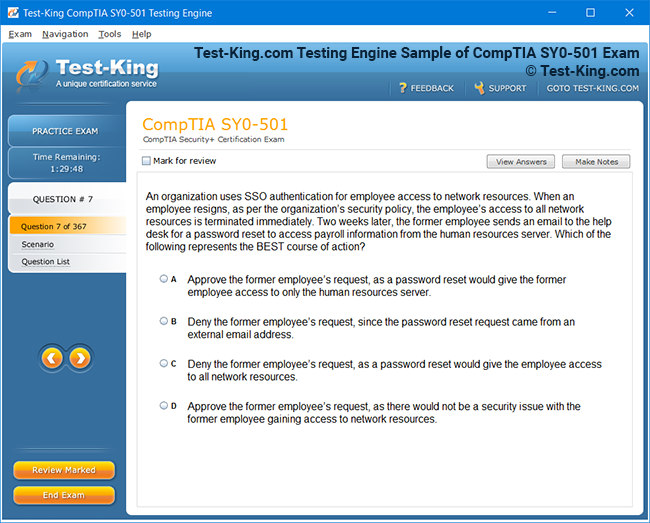
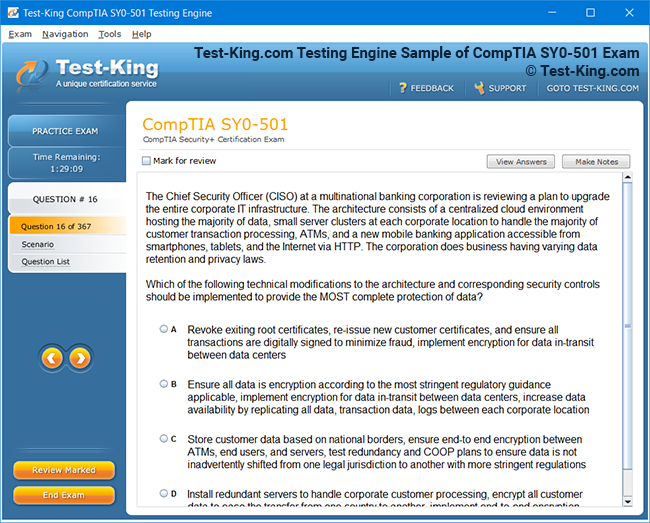
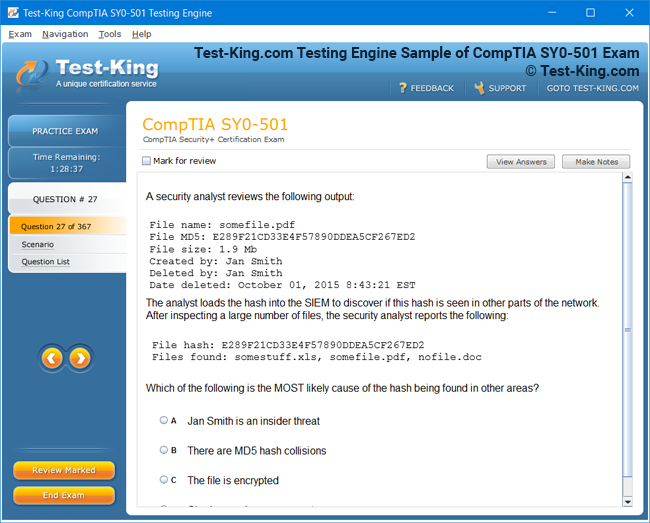
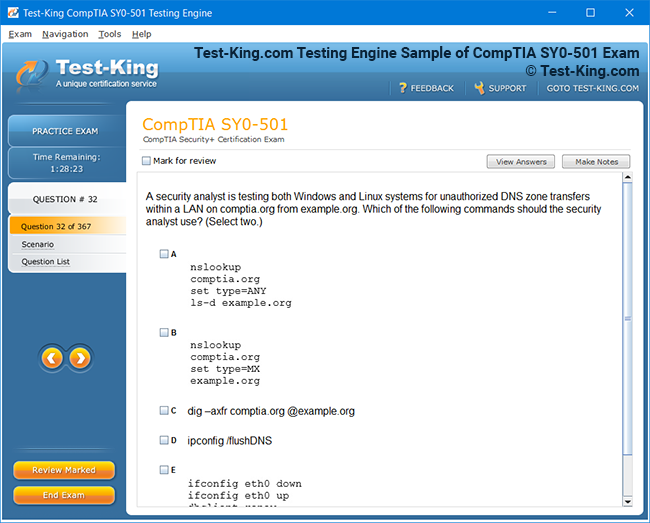
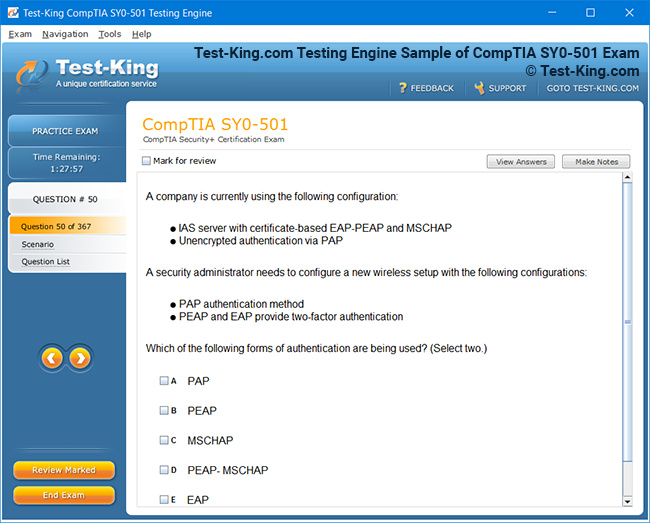
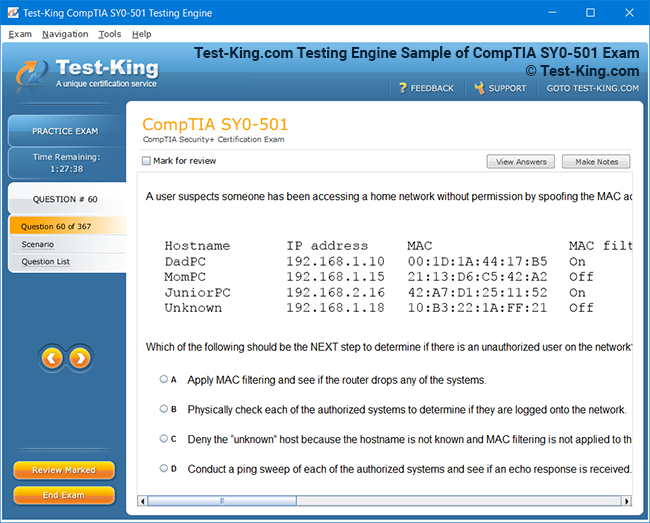
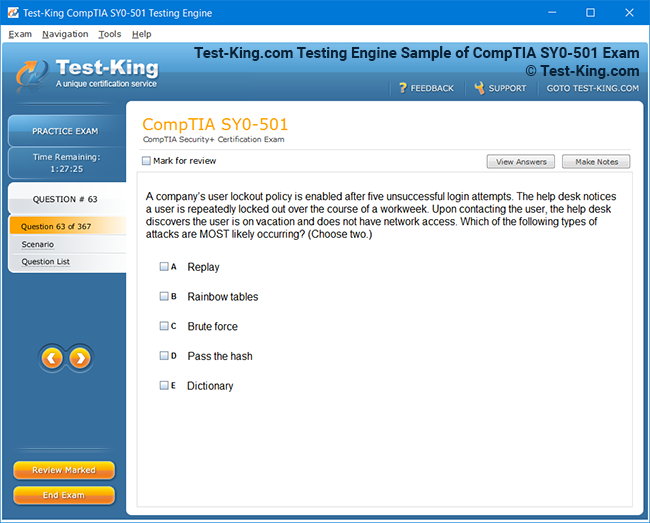
Product Screenshots
Frequently Asked Questions
How can I get the products after purchase?
All products are available for download immediately from your Member's Area. Once you have made the payment, you will be transferred to Member's Area where you can login and download the products you have purchased to your computer.
How long can I use my product? Will it be valid forever?
Test-King products have a validity of 90 days from the date of purchase. This means that any updates to the products, including but not limited to new questions, or updates and changes by our editing team, will be automatically downloaded on to computer to make sure that you get latest exam prep materials during those 90 days.
Can I renew my product if when it's expired?
Yes, when the 90 days of your product validity are over, you have the option of renewing your expired products with a 30% discount. This can be done in your Member's Area.
Please note that you will not be able to use the product after it has expired if you don't renew it.
How often are the questions updated?
We always try to provide the latest pool of questions, Updates in the questions depend on the changes in actual pool of questions by different vendors. As soon as we know about the change in the exam question pool we try our best to update the products as fast as possible.
How many computers I can download Test-King software on?
You can download the Test-King products on the maximum number of 2 (two) computers or devices. If you need to use the software on more than two machines, you can purchase this option separately. Please email support@test-king.com if you need to use more than 5 (five) computers.
What is a PDF Version?
PDF Version is a pdf document of Questions & Answers product. The document file has standart .pdf format, which can be easily read by any pdf reader application like Adobe Acrobat Reader, Foxit Reader, OpenOffice, Google Docs and many others.
Can I purchase PDF Version without the Testing Engine?
PDF Version cannot be purchased separately. It is only available as an add-on to main Question & Answer Testing Engine product.
What operating systems are supported by your Testing Engine software?
Our testing engine is supported by Windows. Andriod and IOS software is currently under development.
Top SAP Exams
Real-World Scenarios and Use Cases for SAP C_CPI_14 Exam Preparation
The SAP Integration Suite is a versatile platform designed to seamlessly connect disparate systems, enabling the synchronization of data and processes across a vast enterprise landscape. Many candidates preparing for the C_CPI_14 certification encounter questions about how to apply theoretical concepts in real-world situations. Understanding these scenarios is paramount, as the exam evaluates not only knowledge of tools but also the ability to execute integrations effectively. The platform provides a comprehensive array of capabilities, including process orchestration, API management, and data transformation, which collectively empower businesses to streamline operations and enhance efficiency. One of the most intricate aspects is designing end-to-end integration flows that accommodate complex enterprise architectures while maintaining resilience and performance. Candidates often benefit from imagining scenarios where multiple cloud and on-premise systems must communicate flawlessly, a situation common in multinational organizations where legacy systems coexist with modern applications.
Building End-to-End Integration Flows
An essential task in real-world integration is constructing end-to-end flows that bridge different applications while maintaining data integrity and ensuring process reliability. For instance, imagine a scenario where an organization needs to synchronize customer information between its SAP S/4HANA system and a third-party CRM application. The integration must account for discrepancies in data formats, asynchronous updates, and error handling mechanisms. Candidates preparing for the exam should familiarize themselves with patterns such as request-reply, publish-subscribe, and batch processing, as these patterns frequently arise in professional practice. The challenge is not merely connecting systems but ensuring that messages are correctly transformed and routed, and that exception handling is robust enough to recover from transient failures. Practical exercises simulating these scenarios can provide an invaluable understanding of message mappings, content modifiers, and the orchestration of multiple integration steps.
API Management and Security Considerations
In today’s interconnected business environment, APIs are the linchpin of communication between services. A typical real-world scenario involves exposing enterprise services to external partners while ensuring data confidentiality and secure access. Exam candidates often encounter questions about securing endpoints, implementing OAuth 2.0 authentication, and configuring throttling to prevent service abuse. Beyond security, API versioning and lifecycle management are critical considerations; organizations must evolve APIs without disrupting existing integrations. A hypothetical scenario might involve an e-commerce company needing to expose inventory levels through APIs to multiple sales channels. Here, the integration suite facilitates secure, scalable, and maintainable API management, ensuring consistency and minimizing downtime. Preparing for such scenarios requires not only technical proficiency but also an appreciation of architectural strategies that balance accessibility and security.
Data Transformation and Mapping Complexities
Data transformation lies at the heart of integration scenarios. Different systems often represent the same information in diverse structures, necessitating accurate mappings to preserve semantic meaning. A common challenge is harmonizing customer records from various departments, each with unique fields, formats, and validation rules. Candidates should practice constructing complex mappings that handle nested structures, conditional transformations, and multi-step processes. For example, an organization may need to consolidate financial data from multiple subsidiaries into a centralized reporting system. In this context, transformation logic must consider currency conversion, date formatting, and aggregation rules. Real-world experience emphasizes the importance of meticulous planning, testing, and validation to prevent data inconsistencies that could propagate across interconnected systems, potentially disrupting critical business functions.
Error Handling and Monitoring Strategies
A sophisticated integration is not complete without comprehensive error handling and monitoring strategies. Real-world scenarios often involve unforeseen exceptions such as connectivity failures, message format errors, or service unavailability. A candidate must understand how to implement alerting mechanisms, automated retries, and fallback procedures to ensure continuity. For instance, in a logistics company, delayed message delivery could result in inaccurate shipment tracking, necessitating proactive monitoring and remediation processes. The Integration Suite offers extensive logging, dashboards, and audit trails that allow administrators to trace messages, analyze failures, and implement corrective measures swiftly. Developing an intuitive understanding of these mechanisms helps candidates envision scenarios where real-time intervention can prevent minor issues from escalating into significant operational disruptions.
Orchestration Across Hybrid Landscapes
Modern enterprises frequently operate in hybrid environments where cloud services coexist with on-premise systems. Exam preparation benefits from exploring scenarios where integration flows traverse these diverse landscapes. Consider a multinational corporation requiring seamless synchronization between cloud-based procurement platforms and on-premise enterprise resource planning systems. Integration architects must design flows that respect latency constraints, comply with security policies, and manage disparate protocols such as HTTP, SOAP, and IDoc. Candidates are encouraged to simulate hybrid integration scenarios to appreciate the subtleties of network configurations, firewall rules, and secure tunneling mechanisms. Understanding these challenges enhances problem-solving skills, preparing candidates to tackle questions that test the application of integration suite features in realistic, intricate environments.
Performance Optimization and Scalability
Scalability and performance are crucial considerations in enterprise integration. Real-world use cases often demand handling high volumes of data without degrading system responsiveness. Candidates should be familiar with optimization strategies such as parallel processing, message batching, and asynchronous execution. Imagine a scenario where a retail company experiences seasonal spikes in order volumes, requiring the integration suite to process tens of thousands of transactions per hour. Efficient design ensures that integration flows remain resilient under load, minimizing processing time and resource consumption. The exam may explore scenarios where candidates must identify bottlenecks, recommend optimization strategies, and apply monitoring tools to verify performance improvements. Developing an appreciation for these subtleties allows candidates to demonstrate not only theoretical knowledge but also practical insight into designing robust and scalable integration solutions.
Leveraging Pre-Built Integration Content
SAP Integration Suite offers pre-built content packages and templates that accelerate development and reduce complexity. Real-world scenarios often involve customizing these artifacts to meet specific organizational requirements. For example, a manufacturing company might utilize a pre-configured integration flow for supplier invoicing but needs to adapt it to comply with local taxation rules. Candidates should practice identifying reusable components, adjusting mappings, and integrating additional steps to create tailored solutions. This exercise reinforces the understanding of modular design principles and illustrates the efficiency gains achievable by leveraging out-of-the-box integration content. Preparing for the C_CPI_14 exam requires familiarity with these resources and the ability to adapt them effectively in dynamic business contexts.
Scenario-Based Troubleshooting
Exam preparation is enhanced by simulating troubleshooting scenarios that mimic real-world challenges. Candidates often encounter situations where message flows fail unexpectedly, transformations produce incorrect outputs, or performance deteriorates. For instance, a retail chain integrating multiple sales channels may face intermittent failures due to network latency or inconsistent data formats. Understanding root cause analysis, log interpretation, and corrective measures is essential. Engaging in scenario-based exercises strengthens problem-solving acumen, ensuring that candidates can respond effectively to integration anomalies. The ability to articulate these processes in a practical context demonstrates readiness for both certification and real-world responsibilities, bridging the gap between theoretical knowledge and applied proficiency.
Integrating Emerging Technologies
The evolution of enterprise technology introduces new integration paradigms. Candidates preparing for the exam benefit from exploring scenarios involving IoT devices, machine learning pipelines, and event-driven architectures. Imagine a logistics company tracking shipments with IoT sensors that generate continuous streams of telemetry data. The integration suite must capture, process, and route these events to enterprise systems for analysis and reporting. This requires understanding event-based integration, streaming data handling, and real-time analytics. Preparing for such scenarios ensures that candidates are not only ready for current exam requirements but are also equipped to handle future challenges in dynamic enterprise landscapes.
Strategic Considerations for Enterprise Integration
Beyond technical proficiency, successful integration requires strategic insight. Real-world scenarios often involve aligning integration architecture with organizational goals, regulatory compliance, and business continuity plans. Candidates should understand the implications of design decisions on long-term maintainability, operational costs, and system resilience. For example, a financial institution implementing cross-border integrations must account for data privacy regulations, latency requirements, and auditability. Exam scenarios frequently probe understanding of these broader considerations, challenging candidates to balance technical execution with strategic foresight. Developing this perspective fosters a holistic approach to integration, ensuring that solutions are not only functional but also sustainable and aligned with enterprise objectives.
Enhancing Integration Through Advanced Connectivity Options
In complex enterprise ecosystems, the ability to establish advanced connectivity between heterogeneous systems is crucial. SAP Integration Suite enables seamless interaction across cloud applications, on-premise software, and hybrid environments. Consider a global logistics company that needs to synchronize warehouse management systems with a cloud-based order processing platform. Integration architects must configure secure connections using diverse protocols such as HTTP, SOAP, SFTP, and IDoc, ensuring that data flows reliably even under heavy transaction loads. The exam often tests knowledge of these connectivity paradigms, emphasizing the ability to design flows that handle authentication, encryption, and data validation simultaneously. Understanding the nuances of connectivity options, including VPN tunnels, secure agents, and protocol-specific adapters, empowers candidates to devise robust solutions for intricate enterprise scenarios.
Advanced Transformation and Mapping Techniques
In real-world environments, data transformation extends far beyond simple field mapping. Enterprises frequently face situations where data from multiple sources must be harmonized, enriched, and normalized before processing. For instance, a multinational retail chain consolidating sales data from regional stores may need to convert various date formats, currency representations, and product hierarchies into a standardized schema for analytics. Candidates preparing for the exam should familiarize themselves with multi-step mappings, conditional logic, and iterative transformations, as these capabilities are critical for handling complex enterprise data landscapes. Applying these techniques in practice helps ensure that integration flows not only move data but also preserve semantic integrity and business logic across systems.
Orchestrating Complex Business Processes
Integration is rarely a linear process; enterprises often require the orchestration of multi-step business processes involving several applications. A typical scenario involves automating order-to-cash cycles that span ERP systems, CRM platforms, and third-party logistics providers. Integration architects must design flows that handle branching conditions, parallel processing, and exception handling while maintaining end-to-end visibility. Preparing for the exam involves understanding patterns such as sequential processing, split-join operations, and event-based triggers. Real-world orchestration emphasizes not only the correctness of process execution but also resilience, error recovery, and auditability, enabling organizations to maintain operational continuity even in the face of unforeseen disruptions.
Monitoring and Observability in Enterprise Integrations
Effective monitoring and observability are essential for maintaining operational excellence in complex integrations. Consider a financial institution processing thousands of transactions daily, where even minor delays can have significant consequences. SAP Integration Suite offers monitoring tools that provide real-time insights into message flows, error occurrences, and system performance metrics. Exam candidates should understand how to configure alerts, analyze logs, and employ dashboards to detect anomalies promptly. In practice, this means not only recognizing when a failure occurs but also tracing the root cause, implementing automated remediation, and documenting the resolution process. Developing expertise in monitoring equips candidates to anticipate issues before they escalate and reinforces the practical applicability of the integration suite.
Securing Enterprise Integrations
Security is a paramount concern in all real-world integration scenarios. Organizations often need to protect sensitive information while enabling seamless communication between internal and external systems. A typical case might involve exposing APIs to partner organizations, requiring robust authentication, authorization, and encryption mechanisms. Candidates preparing for the exam should be comfortable with strategies such as OAuth 2.0, SAML-based single sign-on, and mutual certificate authentication. Security considerations also extend to data at rest, message integrity, and auditability. In practical scenarios, implementing these measures ensures compliance with regulatory requirements, safeguards enterprise data, and maintains trust with partners and customers alike.
Exception Handling and Resiliency Patterns
Integrations are prone to unpredictable conditions that can disrupt data flow, such as temporary network outages, malformed messages, or downstream system failures. To mitigate these risks, integration architects implement exception handling and resiliency patterns. Imagine a healthcare organization transmitting patient records between hospitals and insurance providers; any failure could delay critical services. Candidates must understand mechanisms for retrying failed messages, routing erroneous data to alternative flows, and notifying administrators proactively. Applying these principles in realistic exercises demonstrates the ability to design integrations that are fault-tolerant, maintain continuity, and minimize operational impact, which is a core competency assessed by the exam.
Leveraging Pre-Built Content for Efficiency
SAP Integration Suite provides pre-built integration content that accelerates development while adhering to best practices. Enterprises often adapt these artifacts to suit unique business requirements. For example, a company integrating supplier invoices may use a pre-configured flow but modify it to comply with local tax regulations and reporting standards. Exam candidates benefit from practicing with these reusable components, learning how to adjust mappings, introduce additional steps, and incorporate custom logic without compromising maintainability. Understanding how to balance the use of pre-built content with custom adaptations ensures efficiency and agility in real-world integration projects.
Event-Driven Integration Scenarios
Modern enterprises increasingly rely on event-driven architectures to achieve real-time responsiveness. A practical example is a transportation network using IoT sensors to monitor vehicle conditions and trigger alerts for maintenance or route adjustments. Integration flows must capture, process, and route these events efficiently to downstream systems, analytics platforms, or dashboards. Candidates should become familiar with concepts such as event queues, publish-subscribe mechanisms, and asynchronous processing. Mastering these approaches allows exam takers to conceptualize and implement integrations that handle continuous data streams with minimal latency, reflecting the demands of dynamic business environments.
Scaling Integrations for High Throughput
Performance and scalability are critical when integrations must support high-volume operations. Consider a global e-commerce platform processing millions of orders daily, where integration delays can directly affect customer satisfaction. Integration architects must design flows capable of parallel processing, message batching, and asynchronous execution, ensuring that throughput requirements are met without overwhelming system resources. Exam scenarios may explore how to optimize performance through efficient design, resource allocation, and monitoring. Understanding these principles helps candidates anticipate bottlenecks, ensure consistent service levels, and maintain operational reliability even during peak periods.
Cross-Application Data Governance
Maintaining data consistency and governance across integrated systems is a frequent challenge in enterprise environments. A typical use case involves harmonizing master data across multiple business units, each using distinct ERP or CRM systems. Integration flows must enforce data quality rules, perform deduplication, and maintain audit trails. Exam preparation benefits from exploring scenarios where candidates must implement governance measures within integration processes, ensuring that organizational standards are upheld while enabling seamless data exchange. Mastery of these concepts reinforces the practical ability to deliver integrations that are reliable, compliant, and aligned with enterprise policies.
Real-World Troubleshooting Exercises
Scenario-based troubleshooting is an effective way to bridge theoretical knowledge with practical application. Candidates often encounter situations where message flows fail unexpectedly due to misconfigurations, schema mismatches, or system unavailability. For instance, a retail company synchronizing inventory across multiple locations may face intermittent errors during high-demand periods. Practicing troubleshooting in such contexts develops analytical skills, teaches systematic root cause analysis, and enhances familiarity with diagnostic tools. By simulating real-world anomalies, candidates gain confidence in managing unexpected issues and demonstrating their proficiency with SAP Integration Suite in both exam and professional environments.
Integrating Emerging Technologies
As enterprises adopt new technological paradigms, integration scenarios become more intricate. Emerging use cases involve connecting machine learning pipelines, robotic process automation tools, or blockchain systems with traditional enterprise applications. For example, a supply chain management system may integrate predictive analytics to optimize inventory levels, requiring seamless data exchange between analytical models and operational platforms. Preparing for these scenarios requires understanding the interplay between cutting-edge technologies and established integration patterns. Candidates who can conceptualize and implement these integrations demonstrate both adaptability and forward-looking expertise, traits highly valued in contemporary enterprise environments.
Strategic Decision-Making in Integration Design
Effective integration extends beyond technical implementation to include strategic considerations. Enterprises often require solutions that balance operational efficiency, regulatory compliance, and long-term maintainability. For instance, a multinational corporation integrating financial reporting systems must consider local tax laws, data residency requirements, and auditability. Exam scenarios frequently challenge candidates to reason through design choices that optimize both performance and governance. Developing this strategic perspective equips candidates to approach integration problems holistically, designing flows that not only function correctly but also contribute to sustainable and resilient enterprise architecture.
Optimizing Hybrid Integration Landscapes
In contemporary enterprises, hybrid landscapes comprising both cloud and on-premise systems present unique challenges for integration architects. SAP Integration Suite enables organizations to seamlessly synchronize data and processes across heterogeneous systems. Consider a global manufacturing company that needs to integrate its legacy ERP system with a cloud-based supplier collaboration platform. The orchestration of message flows requires careful configuration of adapters, secure agents, and network channels to ensure reliable data exchange. Candidates preparing for the exam benefit from envisioning scenarios where latency, data consistency, and protocol mismatches must be addressed simultaneously. By simulating these conditions, candidates develop practical insights into constructing flows that maintain resilience and operational continuity across hybrid environments.
Sophisticated Transformation Scenarios
Data transformation in real-world contexts extends beyond simple field mappings. Enterprises often deal with multi-source, multi-format data requiring enrichment, validation, and normalization before consumption. For example, a financial institution consolidating transaction records from regional branches may encounter diverse date formats, currency types, and account structures. Integration architects must employ advanced mapping strategies, including conditional logic, iterative transformations, and nested structure handling. Preparing for the C_CPI_14 exam necessitates hands-on experience with such transformations, ensuring candidates can reconcile disparate data sources while maintaining semantic integrity and compliance with business rules.
Implementing End-to-End Process Orchestration
Business processes in enterprises are rarely linear and often span multiple applications, requiring careful orchestration. A typical scenario involves automating procurement cycles that connect ERP systems, supplier portals, and logistics management tools. Integration flows must manage sequential and parallel steps, incorporate branching conditions, and handle exceptions efficiently. Candidates are expected to understand patterns such as split-join, request-reply, and asynchronous processing. Practical exercises simulating these processes help candidates visualize and implement orchestrations that ensure data consistency, operational efficiency, and robustness against transient failures, which is a critical skill evaluated by the exam.
Ensuring Security and Compliance in Integrations
Security is paramount when integrating enterprise systems. Organizations frequently expose services to partners or external applications, necessitating stringent authentication, authorization, and encryption mechanisms. A real-world example might include an insurance company exposing customer policy information to authorized agents through APIs. Integration architects must implement OAuth 2.0, certificate-based authentication, and transport layer encryption while ensuring regulatory compliance. Exam preparation benefits from exploring these scenarios, as candidates are required to design secure flows that protect sensitive data, enforce access controls, and maintain audit trails, all while supporting seamless business operations.
Monitoring, Logging, and Observability
Operational excellence in enterprise integration depends on comprehensive monitoring and observability. Consider a retail organization processing thousands of inventory updates per hour. Any delay or failure in message flows can result in stock discrepancies and lost sales. The SAP Integration Suite provides monitoring dashboards, logs, and alerts that help administrators detect anomalies in real time. Candidates should understand how to interpret logs, configure alerting rules, and analyze trends to preemptively address issues. Practicing these monitoring tasks in realistic scenarios enhances problem-solving capabilities and ensures that integration flows maintain high reliability and transparency across the organization.
Exception Handling and Fault Tolerance
Integrations are susceptible to a variety of unexpected conditions, including network outages, malformed messages, and downstream system failures. To mitigate these risks, integration flows must incorporate robust exception handling and fault tolerance strategies. For instance, a healthcare provider transmitting patient records between clinics and insurers may encounter intermittent system unavailability. Integration architects must configure retry mechanisms, dead-letter channels, and notification workflows to ensure data integrity and continuity. Exam candidates should practice simulating these failures, learning to analyze root causes and implement automated recovery strategies that minimize operational impact while maintaining compliance and security standards.
Leveraging Pre-Built Content and Templates
SAP Integration Suite provides pre-built integration content that can be adapted to specific business requirements. Enterprises often use these artifacts to accelerate deployment and adhere to best practices. A logistics company, for example, might utilize a pre-configured flow for shipping notifications but must customize it to include local compliance checks and additional validation steps. Candidates preparing for the exam benefit from exploring these scenarios, learning how to adjust mappings, incorporate conditional logic, and extend content without compromising maintainability. This practical understanding ensures that candidates can apply reusable components efficiently while meeting unique organizational needs.
Event-Driven Integration Use Cases
Event-driven integration enables enterprises to respond to real-time changes and triggers across systems. Consider a manufacturing plant equipped with IoT sensors monitoring equipment health. Integration flows must capture these events, process the data, and route actionable insights to predictive maintenance systems. Candidates should be familiar with asynchronous processing, message queuing, and publish-subscribe patterns to implement responsive, scalable solutions. Practicing event-driven scenarios enhances the ability to design integrations that support dynamic business processes, minimize latency, and ensure timely decision-making in fast-paced operational environments.
Scaling Integration for High Volume Operations
Performance and scalability are vital for enterprises processing large volumes of transactions. An e-commerce platform, for example, may need to synchronize orders from multiple regions in real time, demanding integration flows capable of parallel execution, batching, and load balancing. Candidates must understand strategies for optimizing throughput, managing resource consumption, and monitoring performance under varying load conditions. Real-world practice allows candidates to identify potential bottlenecks, implement corrective measures, and design flows that maintain reliability and responsiveness even during peak operational periods, reflecting challenges encountered in high-demand industries.
Data Governance Across Integrated Systems
Maintaining consistent and high-quality data is a challenge when multiple systems interact. Enterprises must enforce data governance policies to ensure accuracy, completeness, and compliance. A global organization integrating supplier records from multiple subsidiaries must harmonize fields, enforce validation rules, and maintain audit trails. Exam candidates should practice implementing governance within integration flows, learning to automate data quality checks, prevent duplicates, and log modifications for traceability. Mastery of these scenarios ensures that integrations support organizational policies and regulatory requirements while facilitating seamless business operations.
Troubleshooting Complex Integration Failures
Scenario-based troubleshooting exercises help candidates bridge theoretical knowledge with real-world application. Consider a retail chain synchronizing inventory across regional warehouses, where errors occur due to inconsistent product codes or intermittent network disruptions. Integration architects must analyze logs, trace message paths, and apply corrective actions to resolve failures efficiently. Practicing these exercises develops analytical skills, strengthens understanding of flow behavior, and builds confidence in resolving operational issues. The exam evaluates the ability to reason through such challenges, highlighting the importance of practical troubleshooting proficiency in real enterprise environments.
Emerging Integration Technologies
As organizations adopt advanced technologies, integration scenarios evolve in complexity. Machine learning pipelines, robotic process automation tools, and blockchain systems introduce new patterns and requirements. For instance, a supply chain company might integrate predictive analytics models with operational systems to optimize inventory levels and reduce waste. Integration architects must ensure smooth data transfer, process orchestration, and exception handling across these modern ecosystems. Preparing for such scenarios equips candidates to anticipate technological evolution, design forward-looking solutions, and demonstrate adaptability, a quality highly valued in professional and exam contexts.
Strategic Integration Planning
Effective enterprise integration requires a strategic approach that balances technical implementation with organizational objectives. Decisions regarding flow design, error handling, scalability, and governance must align with business goals, regulatory requirements, and long-term maintainability. A multinational corporation integrating global payroll and human resource systems must consider local labor laws, currency differences, and compliance mandates while ensuring seamless employee experiences. Candidates preparing for the exam benefit from understanding these considerations, as they illustrate the intersection of technical proficiency and strategic foresight, reinforcing the ability to deliver resilient, compliant, and sustainable integration solutions.
Advanced Connectivity and Integration Patterns
In large-scale enterprises, the ability to connect heterogeneous systems efficiently is paramount. SAP Integration Suite enables seamless communication across cloud, on-premise, and hybrid environments, facilitating business processes without disruption. Imagine a multinational company that needs to synchronize procurement, finance, and logistics systems across continents. Integration architects must leverage multiple protocols including SOAP, REST, SFTP, and IDoc while ensuring secure connections and minimal latency. Candidates preparing for the exam should practice designing flows that incorporate various connectivity patterns, balancing performance with reliability. Understanding these scenarios equips candidates to handle complex integrations where multiple systems interact simultaneously, a situation commonly faced in dynamic corporate ecosystems.
Complex Data Transformation and Mapping
Real-world integrations often require sophisticated data transformation to reconcile discrepancies between source and target systems. A typical scenario might involve consolidating sales and inventory data from multiple regions, where each system uses distinct data formats, currencies, and hierarchies. Integration architects must employ multi-step mappings, conditional logic, and nested structure transformations to ensure consistency and accuracy. Candidates benefit from hands-on exercises that simulate these challenges, as the exam emphasizes the practical application of mapping techniques to real-world data flows. Mastering this enables integration flows to deliver reliable results while maintaining data integrity across diverse enterprise landscapes.
End-to-End Orchestration of Business Processes
Business processes are rarely linear, often spanning multiple systems and requiring intricate orchestration. For example, an organization might automate the order-to-cash process, integrating ERP, CRM, and logistics platforms. Integration flows must accommodate sequential and parallel steps, branching conditions, and exception handling mechanisms. Understanding patterns such as request-reply, publish-subscribe, and asynchronous processing is essential. Candidates should visualize how each component contributes to the overall process, ensuring end-to-end reliability, performance, and traceability. Practical scenarios reinforce knowledge of how orchestration maintains continuity and operational efficiency even in complex enterprise environments.
Security and Compliance in Integration Flows
Securing integrations is critical in real-world scenarios, especially when sensitive data is exchanged across systems and partners. A healthcare organization, for example, may transmit patient data between hospitals and insurers, requiring encrypted communication, secure authentication, and audit trails. Candidates preparing for the exam must understand OAuth 2.0, SAML-based authentication, and certificate management, as well as compliance considerations such as GDPR and HIPAA. Effective integration design ensures that sensitive information remains protected while maintaining seamless communication between applications. Simulating these scenarios in practice helps candidates anticipate security challenges and implement robust solutions in alignment with regulatory requirements.
Monitoring, Observability, and Incident Management
Operational excellence depends on effective monitoring and observability. Consider a retail company processing thousands of transactions per hour, where delays or errors in integration flows can disrupt customer experiences. SAP Integration Suite provides dashboards, logging, and alerting mechanisms to track message flow, system health, and error occurrences. Candidates should understand how to analyze logs, configure alerts, and investigate anomalies to prevent operational impact. Practical exercises in monitoring enhance troubleshooting skills and reinforce the ability to maintain reliability and transparency in enterprise integrations, a key competency evaluated in the exam.
Fault Tolerance and Exception Handling
Enterprise integrations must handle unpredictable failures such as network interruptions, malformed messages, or downstream system outages. A banking institution transferring financial data across regions exemplifies a scenario where fault tolerance is critical. Integration flows should include mechanisms for retries, dead-letter channels, error routing, and notifications. Exam candidates benefit from practicing these scenarios to develop a systematic approach for identifying root causes and implementing corrective measures. Robust exception handling ensures data integrity, minimizes downtime, and sustains business operations even under adverse conditions, demonstrating practical proficiency in SAP Integration Suite.
Leveraging Reusable Content and Templates
Pre-built integration content accelerates development and enforces best practices. For instance, a logistics company might use a pre-configured flow for shipment notifications but customize it to meet regional regulatory requirements. Candidates should practice adapting reusable templates, adding additional steps, and modifying mappings while maintaining maintainability and performance. Understanding how to balance customization with efficiency enables integration architects to deliver solutions that are both rapid and robust. Exam scenarios often test the ability to utilize pre-built content effectively, reflecting real-world practices where reusable components enhance agility and reduce deployment time.
Event-Driven Integration Scenarios
Event-driven architectures are increasingly prevalent in modern enterprises. A manufacturing plant equipped with IoT sensors monitoring equipment performance generates continuous streams of data requiring real-time processing. Integration flows must capture these events, filter and transform the data, and route actionable insights to maintenance and analytics systems. Candidates should familiarize themselves with asynchronous processing, message queuing, and publish-subscribe patterns to ensure timely, scalable, and reliable event-driven integration. Practicing these scenarios reinforces understanding of responsive integration strategies suitable for dynamic and time-sensitive environments.
High-Volume and Scalable Integration Designs
Performance and scalability are crucial when enterprise integrations process large transaction volumes. An e-commerce platform processing millions of orders during peak seasons requires parallel processing, message batching, and optimized routing to maintain responsiveness. Candidates should explore scenarios where performance tuning, resource management, and monitoring are essential to sustain high throughput. By understanding the interplay between scalability and system reliability, candidates can design integration flows capable of supporting growth and operational fluctuations, a frequent focus in exam scenarios reflecting real-world business demands.
Cross-System Data Governance
Data governance across integrated systems ensures accuracy, completeness, and compliance. Consider a global corporation consolidating supplier, employee, and customer records from multiple ERP and CRM systems. Integration flows must enforce validation rules, standardize data formats, deduplicate entries, and maintain audit trails. Candidates preparing for the exam benefit from hands-on exercises that implement governance measures within integration flows, ensuring consistency and compliance across the enterprise. Mastery of these concepts ensures that integration not only transfers data but also enforces organizational policies and regulatory standards.
Advanced Troubleshooting Techniques
Scenario-based troubleshooting bridges theory and practical application. For example, a retailer synchronizing inventory across regional warehouses may encounter intermittent message failures due to network instability or schema mismatches. Integration architects must trace messages, analyze logs, and apply corrective actions efficiently. Practicing these exercises enhances problem-solving capabilities, familiarizes candidates with diagnostic tools, and develops confidence in resolving complex operational issues. Exam scenarios frequently test these skills, emphasizing the importance of practical proficiency in maintaining integration reliability and continuity.
Integration with Emerging Technologies
Modern enterprises increasingly adopt innovative technologies that necessitate sophisticated integration strategies. Machine learning models, robotic process automation, and blockchain networks introduce new data flows and orchestration requirements. A logistics provider, for example, might integrate predictive analytics to optimize fleet management, requiring seamless interaction between predictive systems and operational platforms. Candidates should explore such scenarios to understand how emerging technologies influence integration patterns, ensuring they are prepared to design forward-looking solutions that combine legacy systems with cutting-edge innovations.
Strategic Planning and Decision-Making
Integration design is not solely technical; strategic planning plays a pivotal role in aligning integrations with business objectives. Decisions regarding scalability, fault tolerance, security, and governance must consider organizational priorities, regulatory requirements, and long-term maintainability. A multinational enterprise integrating global finance, payroll, and human resources systems must navigate local compliance, currency conversions, and operational constraints while ensuring seamless functionality. Candidates benefit from exploring these scenarios, developing the ability to make informed decisions that optimize both operational performance and strategic alignment, a key aspect evaluated in professional environments and certification exams.
Designing Hybrid Integration Architectures
In contemporary enterprises, hybrid integration landscapes present multifaceted challenges that require strategic and technical acumen. SAP Integration Suite provides the capabilities to seamlessly connect cloud applications, on-premise systems, and third-party solutions. Imagine a multinational corporation needing to synchronize finance, procurement, and logistics systems across disparate geographies. Integration architects must configure adapters, secure agents, and message routing to ensure reliable and timely data exchange. Candidates preparing for the exam benefit from exploring scenarios where network latency, security constraints, and heterogeneous protocols converge. By simulating these situations, candidates gain insights into constructing resilient flows that maintain operational continuity and satisfy complex enterprise requirements.
Advanced Data Transformation Scenarios
Enterprise integrations often demand sophisticated data transformation strategies to reconcile information from multiple sources. Consider a retail conglomerate consolidating customer order data from various regional systems, each using distinct formats, tax rules, and currencies. Integration architects must implement multi-step mappings, conditional transformations, and nested data processing to ensure accurate and harmonized outputs. Hands-on experience with these scenarios is critical for exam preparation, as candidates must demonstrate the ability to manage intricate data structures while preserving business logic and semantic integrity. Mastery of these techniques ensures that integration flows produce reliable results across diverse enterprise landscapes.
Orchestrating Complex Business Processes
Business processes in large organizations are rarely linear, often spanning several applications with intricate dependencies. An example scenario involves automating the order-to-cash cycle that integrates ERP systems, CRM platforms, and logistics management tools. Integration flows must accommodate sequential steps, parallel execution, and exception handling mechanisms while ensuring end-to-end visibility. Understanding patterns such as asynchronous processing, request-reply, and split-join operations is essential for designing effective orchestrations. Practical exercises that mimic these scenarios help candidates visualize process flows, ensuring operational efficiency, data consistency, and fault tolerance, which are core skills tested in the exam.
Securing Enterprise Integrations
Security is a fundamental aspect of real-world integration. Organizations frequently exchange sensitive information with internal departments, partners, and external applications. For instance, a healthcare provider transmitting patient records must ensure encrypted communication, secure authentication, and audit compliance. Candidates preparing for the exam should be familiar with OAuth 2.0, SAML-based authentication, certificate management, and data encryption strategies. Simulating these scenarios in practice allows candidates to design flows that protect sensitive data, prevent unauthorized access, and comply with regulatory requirements, all while maintaining seamless communication between interconnected systems.
Monitoring and Observability in Integration Flows
Maintaining operational excellence requires robust monitoring and observability capabilities. Consider a financial institution processing high volumes of transactions, where minor delays or errors can have significant consequences. SAP Integration Suite offers dashboards, logging, and alerting mechanisms to monitor message flow, system performance, and error occurrences. Candidates should learn to analyze logs, configure alerts, and identify anomalies proactively. Practical exercises enhance problem-solving capabilities and enable candidates to maintain reliable and transparent integration processes, which is a critical skill assessed during the certification exam.
Fault Tolerance and Exception Management
Integrations often encounter unexpected failures such as network outages, message corruption, or downstream system unavailability. A real-world example is a retail chain synchronizing inventory data across multiple warehouses, where intermittent failures could disrupt operations. Integration flows should include retry mechanisms, dead-letter channels, and notification workflows to handle errors efficiently. Exam candidates benefit from practicing these scenarios to develop systematic approaches for root cause analysis and corrective action. Implementing robust exception handling ensures continuity, preserves data integrity, and reduces operational risk, demonstrating practical expertise in SAP Integration Suite.
Leveraging Reusable Content and Templates
Pre-built integration content accelerates development and reduces complexity while adhering to best practices. For example, a logistics provider may use a pre-configured flow for shipment notifications but customize it to comply with local regulatory requirements and business logic. Candidates should practice adapting reusable components, introducing additional mapping steps, and integrating conditional logic while maintaining maintainability. Understanding the balance between customization and reuse equips candidates to deliver efficient, scalable solutions. Exam scenarios often evaluate the ability to leverage these artifacts effectively, reflecting real-world practices where reusable content enhances productivity.
Event-Driven Integration Scenarios
Event-driven architectures have become increasingly relevant in modern enterprises, enabling real-time responsiveness to business events. A manufacturing plant equipped with IoT sensors monitoring equipment performance illustrates a scenario where integration flows must capture, filter, transform, and route continuous data streams. Candidates should understand asynchronous processing, message queuing, and publish-subscribe patterns to ensure responsiveness, scalability, and reliability. Practicing event-driven scenarios helps candidates conceptualize dynamic integrations that respond instantly to operational changes, an important aspect of real-world integration and exam evaluation.
High-Volume Processing and Scalability
Enterprise integrations must accommodate high transaction volumes without compromising performance or reliability. An e-commerce platform processing millions of orders during peak seasons exemplifies a scenario where parallel processing, message batching, and optimized routing are critical. Candidates should explore performance tuning strategies, resource allocation, and monitoring to ensure smooth flow execution under heavy loads. Understanding scalability considerations allows candidates to design flows capable of maintaining operational efficiency, meeting service-level agreements, and supporting enterprise growth, aligning with scenarios frequently assessed in the exam.
Cross-System Data Governance
Data governance is vital for ensuring consistency, quality, and compliance across integrated systems. For instance, a global corporation consolidating supplier, employee, and customer records from multiple ERP and CRM systems requires validation, deduplication, and audit logging. Candidates should practice implementing governance rules within integration flows to maintain accuracy and regulatory compliance. Mastery of these scenarios ensures that data flows not only move information but also uphold organizational standards, a critical competency evaluated during the certification exam.
Advanced Troubleshooting Scenarios
Scenario-based troubleshooting is essential for bridging theoretical knowledge with practical application. Consider a retailer synchronizing product catalogs across regional warehouses where intermittent failures occur due to schema mismatches or network instability. Integration architects must trace messages, analyze logs, and implement corrective actions promptly. Practicing these scenarios enhances analytical skills, familiarizes candidates with diagnostic tools, and builds confidence in resolving complex operational issues. Exam questions often test these skills, emphasizing the practical application of integration knowledge.
Emerging Technologies and Integration
Enterprises increasingly integrate emerging technologies, such as machine learning, robotic process automation, and blockchain networks, into traditional landscapes. For example, a supply chain organization may use predictive analytics to optimize inventory and automate workflows. Integration architects must ensure seamless orchestration, error handling, and data exchange between new and existing systems. Exam preparation benefits from exploring these scenarios, as candidates demonstrate adaptability, technical foresight, and the ability to integrate cutting-edge technologies with conventional enterprise architectures effectively.
Strategic Integration Planning
Successful enterprise integration requires strategic planning, balancing operational efficiency, regulatory compliance, and long-term sustainability. Decisions regarding fault tolerance, scalability, security, and governance must align with organizational objectives. For example, a multinational organization integrating payroll, finance, and human resource systems must consider local regulations, currency variations, and business continuity requirements. Candidates benefit from exploring these strategic scenarios, gaining insight into the interplay between technical execution and enterprise objectives. This knowledge reinforces the ability to deliver robust, compliant, and future-ready integration solutions, a skill critical for certification and professional practice.
Advanced Integration Strategies for Complex Enterprises
In large and multifaceted organizations, designing integrations that seamlessly connect cloud applications, on-premise systems, and third-party solutions requires both strategic foresight and technical mastery. SAP Integration Suite enables robust orchestration, secure data exchange, and reliable process execution across diverse environments. A multinational enterprise managing procurement, finance, and logistics across several continents presents a scenario where integration architects must consider latency, security, and protocol compatibility simultaneously. Integration flows must incorporate sophisticated adapters, secure agents, and efficient routing to ensure that data traverses multiple systems accurately and without delay. Exam candidates benefit from simulating these situations to develop a nuanced understanding of hybrid landscapes, ensuring that flows remain resilient, maintainable, and aligned with organizational objectives.
Sophisticated Data Transformation and Mapping
Real-world integrations frequently involve reconciling data from disparate sources with heterogeneous structures, formats, and business logic. For instance, a global retailer consolidating sales orders from multiple regional systems may encounter variations in currency, date formats, and product classifications. Integration architects must implement multi-step transformations, conditional logic, and nested mappings to ensure semantic accuracy and operational consistency. Hands-on experience with such scenarios is critical for exam preparation, as candidates must demonstrate proficiency in handling complex datasets while preserving business rules. Mastery of these techniques ensures that integration flows deliver precise, standardized, and actionable data across the enterprise landscape.
Orchestrating Multi-System Business Processes
End-to-end process orchestration is a critical requirement in enterprise environments. A typical scenario involves automating the order-to-cash cycle, which spans ERP, CRM, and logistics systems. Integration flows must support sequential and parallel execution, branching, and exception handling while maintaining end-to-end visibility and traceability. Candidates should understand orchestration patterns such as request-reply, split-join, and asynchronous processing. Practical exercises help visualize how multiple components interact, ensuring operational efficiency and resilience. This level of orchestration prepares candidates to tackle exam scenarios and real-world situations where business processes demand sophisticated integration strategies.
Security and Regulatory Compliance
Security considerations are fundamental when exchanging sensitive data between systems and external partners. For example, a healthcare provider transmitting patient records must maintain confidentiality, ensure encrypted communications, and comply with regulatory standards such as GDPR or HIPAA. Integration architects must implement OAuth 2.0, SAML-based authentication, certificate management, and transport-level encryption while maintaining seamless operations. Exam candidates benefit from hands-on scenarios where security, compliance, and operational efficiency intersect, demonstrating the ability to design flows that are secure, auditable, and resilient against potential breaches or unauthorized access.
Monitoring and Observability in Complex Integrations
Maintaining operational continuity requires robust monitoring and observability mechanisms. A financial institution processing high volumes of transactions is particularly sensitive to delays or failures in integration flows, which can result in severe operational and financial consequences. SAP Integration Suite provides tools for logging, alerting, and dashboard visualization that allow administrators to monitor message flow, detect anomalies, and respond proactively. Candidates should practice analyzing logs, configuring alerts, and troubleshooting irregularities to ensure reliable performance. Realistic monitoring exercises help develop critical skills in maintaining transparency and operational reliability, both of which are essential for the certification exam and professional practice.
Fault Tolerance and Exception Handling
Enterprise integration environments are susceptible to network interruptions, data format errors, and downstream system unavailability. A logistics company synchronizing warehouse and delivery data may experience intermittent failures, requiring robust exception handling mechanisms. Integration flows must include retries, dead-letter channels, and notification workflows to maintain continuity and preserve data integrity. Exam preparation involves simulating these scenarios to develop systematic approaches to root cause analysis and corrective action. Implementing fault-tolerant designs ensures minimal disruption, operational resilience, and compliance with organizational standards, reinforcing the practical expertise of candidates.
Utilizing Reusable Integration Content
Pre-built integration templates and content accelerate development while maintaining adherence to best practices. For example, a company integrating supplier invoices may use a standard flow but need to customize it to meet local compliance or unique business logic. Candidates benefit from learning how to adapt reusable artifacts, modify mappings, and incorporate additional processing steps without compromising maintainability. Understanding this balance between reuse and customization ensures efficient, scalable solutions that align with enterprise objectives. Exam scenarios often evaluate the ability to leverage pre-built content effectively, reflecting real-world practices that emphasize agility and efficiency.
Event-Driven and Real-Time Integration Scenarios
Modern enterprises increasingly rely on event-driven architectures to process real-time data from IoT devices, sensors, and operational systems. A manufacturing plant monitoring machine performance illustrates a scenario where integration flows must capture events, transform data, and route actionable insights to analytics or maintenance platforms. Candidates should be familiar with asynchronous processing, message queuing, and publish-subscribe patterns to ensure responsiveness, scalability, and reliability. Practicing these scenarios helps candidates conceptualize dynamic integrations capable of supporting rapid decision-making, a competency that reflects both exam requirements and real-world enterprise demands.
Scalability and High-Volume Processing
High-volume operations demand integrations capable of processing thousands or millions of transactions with minimal latency. An e-commerce platform handling global orders during peak seasons exemplifies a scenario requiring parallel execution, batching, and optimized routing to maintain performance and reliability. Candidates should explore performance tuning, resource management, and monitoring strategies to ensure flows operate efficiently under load. Understanding these requirements enables the design of robust integration flows capable of supporting operational growth, maintaining service levels, and delivering consistent performance in high-demand environments.
Cross-System Data Governance and Quality
Data governance ensures consistency, accuracy, and compliance across integrated systems. A multinational enterprise consolidating supplier, employee, and customer data across multiple ERP and CRM systems must enforce validation rules, standardize formats, deduplicate records, and maintain audit trails. Candidates should practice implementing governance policies within integration flows, ensuring data quality and regulatory compliance. Mastery of these practices ensures that integrations not only move data but also uphold enterprise standards and contribute to operational integrity.
Advanced Troubleshooting Techniques
Scenario-based troubleshooting strengthens the bridge between theoretical knowledge and practical application. For example, a retailer integrating multiple regional warehouses may encounter intermittent message failures due to schema mismatches or network instability. Integration architects must analyze logs, trace message paths, and implement corrective actions efficiently. Practicing these exercises enhances analytical skills, familiarizes candidates with diagnostic tools, and builds confidence in resolving complex operational issues. Exam scenarios frequently test these capabilities, emphasizing the importance of practical expertise in maintaining operational reliability and business continuity.
Emerging Technology Integration
Enterprises increasingly incorporate emerging technologies such as machine learning, robotic process automation, and blockchain networks into their ecosystems. For example, a supply chain organization may integrate predictive analytics to optimize inventory and automate decision-making processes. Integration architects must ensure smooth data transfer, orchestration, and error handling across both legacy and modern systems. Candidates benefit from exploring these scenarios to develop adaptability, technical foresight, and the ability to integrate cutting-edge technologies with traditional enterprise landscapes, reflecting contemporary integration challenges.
Strategic Planning and Enterprise Alignment
Successful enterprise integration requires strategic decision-making that balances technical execution with organizational objectives. Decisions regarding fault tolerance, scalability, security, and governance must align with long-term enterprise goals, regulatory compliance, and operational efficiency. A multinational company integrating global payroll, finance, and human resource systems must consider regional regulations, currency differences, and business continuity while ensuring seamless functionality. Exam candidates benefit from understanding these strategic considerations, which highlight the intersection of technical proficiency and enterprise-level planning, ensuring that integration solutions are robust, compliant, and sustainable.
Conclusion
In preparing for the SAP C_CPI_14 certification, mastering real-world scenarios and use cases is essential. The practical application of integration concepts, including hybrid connectivity, advanced data transformations, orchestration, security, monitoring, fault tolerance, and emerging technologies, equips candidates with the skills necessary to design and implement enterprise-grade integration solutions. By exploring detailed scenarios, candidates not only reinforce their technical knowledge but also develop the strategic insight required to align integrations with organizational goals and regulatory requirements. This holistic understanding ensures readiness for both certification and professional practice, enabling candidates to tackle complex integration challenges with confidence, precision, and foresight.