

Exam Code: C_ABAPD_2309
Exam Name: SAP Certified Associate - Back-End Developer - ABAP Cloud
Certification Provider: SAP
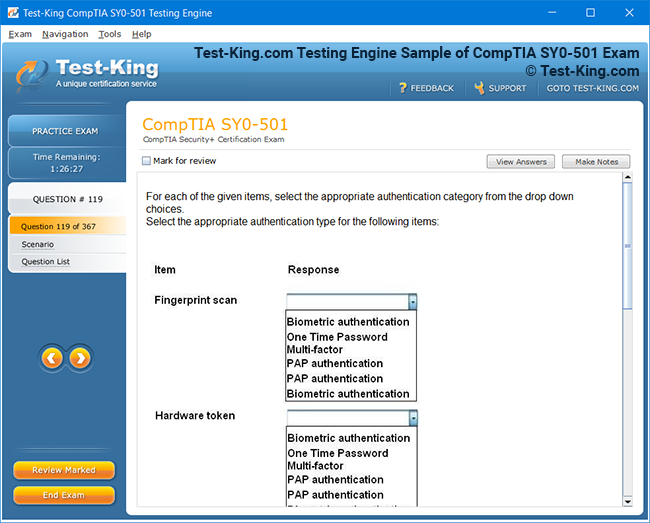
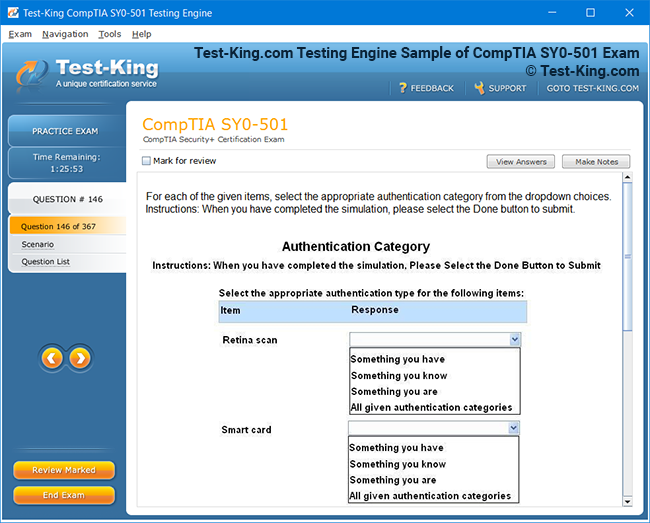
Product Screenshots
Frequently Asked Questions
How can I get the products after purchase?
All products are available for download immediately from your Member's Area. Once you have made the payment, you will be transferred to Member's Area where you can login and download the products you have purchased to your computer.
How long can I use my product? Will it be valid forever?
Test-King products have a validity of 90 days from the date of purchase. This means that any updates to the products, including but not limited to new questions, or updates and changes by our editing team, will be automatically downloaded on to computer to make sure that you get latest exam prep materials during those 90 days.
Can I renew my product if when it's expired?
Yes, when the 90 days of your product validity are over, you have the option of renewing your expired products with a 30% discount. This can be done in your Member's Area.
Please note that you will not be able to use the product after it has expired if you don't renew it.
How often are the questions updated?
We always try to provide the latest pool of questions, Updates in the questions depend on the changes in actual pool of questions by different vendors. As soon as we know about the change in the exam question pool we try our best to update the products as fast as possible.
How many computers I can download Test-King software on?
You can download the Test-King products on the maximum number of 2 (two) computers or devices. If you need to use the software on more than two machines, you can purchase this option separately. Please email support@test-king.com if you need to use more than 5 (five) computers.
What is a PDF Version?
PDF Version is a pdf document of Questions & Answers product. The document file has standart .pdf format, which can be easily read by any pdf reader application like Adobe Acrobat Reader, Foxit Reader, OpenOffice, Google Docs and many others.
Can I purchase PDF Version without the Testing Engine?
PDF Version cannot be purchased separately. It is only available as an add-on to main Question & Answer Testing Engine product.
What operating systems are supported by your Testing Engine software?
Our testing engine is supported by Windows. Andriod and IOS software is currently under development.
Top SAP Exams
C_ABAPD_2309 Exam: A Complete Guide to Achieving the SAP Certified Associate
The C_ABAPD_2309 exam represents a pivotal milestone for professionals aiming to establish themselves as proficient SAP back-end developers with specialized expertise in ABAP within cloud environments. This certification attests to a candidate’s capability to design, develop, and extend applications using the ABAP programming language in the intricate ecosystem of SAP Business Technology Platform. The growing adoption of cloud technologies in enterprises worldwide has amplified the demand for developers who can navigate these complex systems with dexterity, making the SAP Certified Associate – Back-End Developer – ABAP Cloud credential a highly coveted accolade.
Understanding the C_ABAPD_2309 Exam and Its Significance
The examination evaluates a spectrum of technical and conceptual competencies, starting with a comprehensive understanding of ABAP development tools optimized for cloud deployment. Candidates are expected to be familiar with the latest IDEs, runtime environments, and debugging utilities specific to cloud-based ABAP development. Furthermore, the ability to integrate backend services efficiently forms a crucial element of the assessment. This entails understanding protocols, APIs, and data orchestration mechanisms that ensure seamless communication between various system components in distributed cloud architectures.
In addition to technical aptitude, the exam scrutinizes a candidate’s grasp of core ABAP programming constructs, object-oriented principles, and performance optimization techniques. Developers must demonstrate the capacity to write clean, maintainable code while adhering to best practices that enhance scalability and security. SAP’s cloud ecosystem emphasizes security, and candidates are expected to implement authentication mechanisms, manage access controls, and follow secure coding guidelines to prevent vulnerabilities.
A significant portion of the C_ABAPD_2309 exam revolves around integrating applications with SAP Business Technology Platform. This involves orchestrating data models, leveraging SAP Fiori elements, and using cloud-native services to augment application functionality. The examination tests whether candidates can navigate the platform efficiently, deploy applications, and troubleshoot potential inconsistencies without compromising operational integrity. Understanding development security and governance in a cloud context further reinforces a candidate’s readiness to operate in enterprise-grade environments.
The benefits of achieving this certification extend beyond mere validation of technical skills. It signals to employers that the candidate possesses a refined understanding of contemporary cloud-based ABAP development practices and can deliver value in projects requiring cloud integration and backend development expertise. Professionals with this credential often find themselves in advantageous positions, gaining access to higher responsibilities, leadership opportunities in technical teams, and the potential for enhanced remuneration.
Preparing for the C_ABAPD_2309 exam necessitates a structured approach and strategic utilization of resources. High-quality study materials, including comprehensive exam question collections and detailed answer explanations, provide insight into the types of challenges candidates might encounter. These resources often incorporate real-world scenarios, encouraging developers to apply their knowledge in practical contexts. For example, a candidate might be presented with a scenario requiring the integration of a backend service into a cloud application, where they must identify the most efficient method to handle data transformation, error logging, and authentication. Studying such scenarios helps bridge the gap between theoretical understanding and practical application.
Familiarity with the exam format also plays a crucial role in reducing anxiety and improving time management. Understanding the distribution of topics, the nature of scenario-based questions, and the expected depth of answers allows candidates to approach the exam with confidence. Repeated exposure to similar question patterns enhances cognitive recall and aids in formulating structured responses during the test.
Efficiency in learning is another key consideration. Rather than attempting to memorize an exhaustive body of knowledge indiscriminately, candidates benefit from focusing on the most pertinent areas identified through careful study of previous exam materials. This targeted approach ensures that preparation time is invested judiciously, resulting in a more profound and lasting understanding of essential topics. Studying organized compilations of real exam questions provides the dual advantage of exposure to relevant problems and familiarity with the reasoning required to solve them effectively.
The value of portable study resources cannot be overstated. Candidates who utilize digital collections of questions and detailed explanations gain the flexibility to study during travel, short breaks, or periods between work commitments. This adaptability contributes to sustained learning, reinforcing concepts through frequent review and practice. In particular, examining questions in a narrative format allows learners to comprehend the logic behind correct solutions, understand alternative approaches, and internalize best practices.
Within the realm of ABAP cloud development, certain thematic areas recur across examinations. Developing applications using cloud-optimized tools demands knowledge of integrated development environments and version control systems, as well as proficiency in debugging and performance monitoring. Backend service integration frequently tests a candidate’s capacity to establish robust connections, manage data flows, and maintain transactional integrity. Understanding object-oriented ABAP principles, modularization techniques, and efficient coding practices enables developers to create applications that are both maintainable and scalable.
Integration with SAP Business Technology Platform involves designing data models, utilizing platform services, and ensuring interoperability between various components. Candidates must anticipate challenges such as data inconsistency, latency issues, and authorization conflicts, and apply solutions that uphold best practices in cloud development. Security considerations encompass encryption, user authentication, and adherence to governance protocols, all of which are critical to maintaining the integrity and confidentiality of enterprise data.
The preparation process is further enhanced by simulating real exam conditions. Engaging with realistic scenarios, timed exercises, and comprehensive question sets allows candidates to experience the pressures of the actual examination while identifying areas requiring additional focus. By repeatedly practicing in conditions that mimic the exam environment, developers develop the resilience and analytical agility needed to navigate complex questions confidently.
Effective study strategies emphasize iterative learning. Beginning with foundational concepts and gradually progressing to advanced integration and optimization tasks fosters a deep comprehension of both theory and practice. Revisiting challenging scenarios reinforces understanding and highlights nuances that may otherwise be overlooked. Incorporating regular self-assessment through practice questions provides immediate feedback and enables learners to recalibrate their approach as necessary.
A distinctive aspect of mastering cloud-based ABAP development lies in the ability to anticipate future trends. Cloud technologies evolve rapidly, and a proficient developer must remain aware of emerging frameworks, platform updates, and innovative practices. Study materials that include current examples, recent changes in cloud services, and evolving best practices equip candidates with the knowledge required to meet both the exam’s expectations and the practical demands of enterprise projects.
Application of knowledge is often tested through scenario-based questions rather than purely theoretical queries. For instance, a candidate may be asked to enhance a backend service to handle a high volume of transactional requests efficiently, requiring the integration of error handling, logging, and data validation. Understanding how to approach such problems necessitates both technical expertise and a practical mindset, reflecting the skills required in real-world SAP projects.
Comprehensive study resources typically present questions in a structured narrative format. Each problem is accompanied by an explanation detailing the rationale for the correct solution, potential pitfalls, and alternative approaches. This methodology facilitates deeper learning by elucidating not only what the correct answer is but also why other options may be suboptimal. Such nuanced understanding is essential for success in the C_ABAPD_2309 exam.
An additional benefit of pursuing the SAP Certified Associate – Back-End Developer – ABAP Cloud credential is the recognition it confers within the professional community. Peers, managers, and potential employers view certified developers as having validated expertise, reliability, and the capacity to tackle complex development challenges in cloud environments. This recognition can lead to collaborative opportunities, leadership roles in development teams, and involvement in high-impact projects that shape enterprise cloud strategies.
Effective preparation also involves cultivating problem-solving skills alongside technical proficiency. Exam questions often require candidates to navigate ambiguous scenarios, identify root causes of potential failures, and implement solutions that align with industry best practices. Developing the ability to analyze such scenarios holistically is as crucial as mastering specific ABAP functions or platform services.
Furthermore, the integration of cloud services demands attention to data integrity, transactional consistency, and secure communication protocols. Candidates must understand how to design workflows that prevent data loss, ensure fault tolerance, and maintain compliance with organizational and regulatory standards. Practicing these scenarios using detailed study materials enhances both confidence and competence.
In addition to technical mastery, the examination assesses a candidate’s capacity to apply logical reasoning in complex situations. A question may describe a situation in which a backend service must be modified to accommodate new business rules while ensuring that existing functionalities remain unaffected. The candidate must analyze the scenario, evaluate potential approaches, and select the most efficient and secure solution. By studying similar problems in preparation materials, candidates internalize problem-solving patterns that translate directly to real exam success.
The strategic use of comprehensive study PDFs allows candidates to immerse themselves in a broad spectrum of potential questions, explore detailed explanations, and repeatedly review critical concepts. This repetition enhances memory retention and strengthens the ability to recall information under exam conditions. Studying in a narrative format, where questions are contextualized within realistic scenarios, helps bridge the gap between rote learning and applied knowledge.
Ultimately, achieving success in the C_ABAPD_2309 exam requires a multifaceted approach that combines technical understanding, practical application, scenario analysis, and strategic preparation. Engaging with high-quality study resources, practicing extensively, and iteratively reviewing challenging concepts are essential components of a preparation plan that positions candidates for certification success.
Crafting an Effective Study Plan and Developing Mastery
Preparing for the C_ABAPD_2309 exam requires more than rote memorization or cursory familiarity with ABAP cloud concepts; it demands a methodical, disciplined approach that harmonizes conceptual understanding, practical application, and scenario-based reasoning. The SAP Certified Associate – Back-End Developer – ABAP Cloud credential is designed to evaluate a candidate’s aptitude in developing and extending applications within SAP Business Technology Platform using the ABAP language, and preparation must therefore reflect the depth and breadth of topics the exam encompasses.
A successful study regimen begins with establishing a structured schedule that balances the review of fundamental ABAP constructs, the exploration of cloud development tools, and the integration of backend services with cloud-native applications. Devoting dedicated time to each topic ensures that foundational concepts are firmly understood before tackling more complex, integrated scenarios. For instance, understanding the nuances of object-oriented programming in ABAP lays the groundwork for managing intricate service integrations in the cloud. Similarly, grasping data modeling and workflow orchestration enables candidates to anticipate challenges and implement solutions efficiently in practical contexts.
A crucial aspect of preparation involves engaging with authentic exam materials. Collections of previously administered questions offer insight into the exam’s format, common problem types, and the reasoning required to arrive at correct solutions. By reviewing these materials in a narrative format rather than as isolated question-answer pairs, learners develop the capacity to contextualize problems, analyze scenarios, and apply ABAP knowledge proficiently. For example, a candidate may encounter a scenario requiring optimization of a backend service to handle high-volume transactional requests while maintaining data integrity. Studying similar questions with detailed explanations helps internalize the methodologies necessary to solve such challenges effectively.
Regular practice is essential for solidifying understanding and enhancing recall. The repetitive engagement with realistic scenarios fosters the development of problem-solving instincts, which are crucial for navigating the multifaceted tasks posed by the C_ABAPD_2309 exam. Candidates are encouraged to simulate exam conditions by timing their responses, evaluating their solutions critically, and reflecting on areas that need improvement. This iterative practice cultivates resilience and analytical agility, enabling candidates to approach complex problems with confidence and precision.
Identifying areas of weakness early in the preparation journey is another indispensable strategy. By maintaining a self-assessment log or tracking performance in practice exercises, learners can pinpoint concepts or skills that require additional focus. This targeted approach maximizes the efficiency of study efforts and ensures that preparation is comprehensive rather than superficial. For instance, if a candidate consistently struggles with integrating backend services with cloud applications, dedicating focused sessions to exploring API protocols, error handling, and data transformation processes will yield substantial improvement.
The integration of SAP Business Technology Platform services represents a significant component of the examination, and mastery of this domain necessitates an understanding of platform-specific tools, application lifecycle management, and best practices for deployment. Candidates should familiarize themselves with workflow orchestration, cloud-native service utilization, and monitoring strategies to ensure optimal performance and reliability of ABAP applications in a cloud environment. Exploring practical examples, such as designing a service that aggregates data from multiple cloud sources while maintaining transactional consistency, reinforces theoretical understanding with tangible skills.
Effective preparation also includes cultivating the ability to translate theoretical knowledge into applied solutions. Scenario-based questions often present ambiguous conditions, requiring candidates to make judicious decisions that balance performance, security, and functionality. A typical scenario might involve modifying an existing backend service to comply with newly introduced business rules without disrupting existing processes. Preparing for such questions involves understanding modularization techniques, designing flexible workflows, and applying secure coding practices. Detailed explanations accompanying practice materials elucidate the rationale behind correct solutions and highlight alternative approaches, reinforcing critical thinking skills.
Developing proficiency in ABAP programming in cloud environments extends beyond syntactical knowledge to encompass architectural awareness and system integration skills. Candidates must understand how various cloud services interact, how to manage data flow between modules, and how to ensure robust error handling mechanisms. Preparing with authentic scenario-based questions helps internalize these processes, allowing candidates to anticipate potential pitfalls and devise efficient solutions. For example, integrating a reporting service with a transactional backend may require careful orchestration to prevent data inconsistencies, which can be learned effectively through guided practice exercises.
Time management during preparation is equally vital. Allocating study intervals for review, practice, and consolidation enables learners to sustain momentum without succumbing to cognitive fatigue. Short, focused study sessions interspersed with periods of reflection allow for the assimilation of complex concepts, while longer sessions devoted to solving integrative scenarios encourage the development of analytical endurance. By balancing these approaches, candidates build both the knowledge base and the cognitive stamina required for success in the C_ABAPD_2309 exam.
An often-overlooked element of preparation is the cultivation of mental resilience. The examination tests not only technical skills but also the ability to perform under pressure, make decisions with incomplete information, and manage time effectively. Engaging with practice exercises that simulate real-world pressures, such as handling multiple simultaneous tasks or troubleshooting service integration issues under timed conditions, equips candidates with the psychological fortitude to navigate the exam environment calmly and efficiently.
The use of portable study resources enhances flexibility and consistency in preparation. Digital collections of exam questions, accompanied by explanatory narratives, provide opportunities for learning during commutes, short breaks, or other transitional periods. The portability of these resources ensures that review can occur continuously, reinforcing concepts and problem-solving strategies without disruption. Narrative-style explanations help learners understand the underlying logic of solutions, allowing them to internalize principles that are applicable across a wide array of exam scenarios.
Scenario-based questions often explore intricate situations that combine multiple areas of knowledge. For instance, a candidate may be required to integrate a backend service with an SAP Fiori application while ensuring compliance with security protocols, data validation rules, and performance benchmarks. Understanding the interplay of these elements is critical, and guided practice with similar scenarios fosters the ability to navigate complex problem spaces with confidence and precision.
Mastery of ABAP programming constructs remains a core requirement, encompassing object-oriented programming, modularization, and performance optimization. Candidates should be able to design reusable code, implement efficient algorithms, and apply debugging techniques that uncover and rectify errors effectively. Exam preparation materials that weave these elements into narrative scenarios provide learners with a holistic understanding of how these constructs are applied in practical contexts.
Security considerations permeate all aspects of cloud-based development. Candidates must be proficient in authentication and authorization mechanisms, encryption protocols, and secure handling of sensitive data. Exam scenarios often test the ability to integrate these considerations seamlessly into application workflows. By engaging with practice questions that emphasize secure design, learners internalize best practices that extend beyond the examination to real-world development tasks.
Another critical dimension of preparation involves understanding data modeling and workflow orchestration within the SAP Business Technology Platform. Candidates are expected to design models that support efficient data processing, implement workflows that maintain transactional integrity, and leverage platform services to enhance application functionality. Practice exercises often present challenges such as optimizing a workflow to handle high-volume transactions or integrating data from disparate sources, reinforcing the application of theoretical knowledge in practical scenarios.
The iterative nature of preparation is reinforced through frequent review and self-assessment. Revisiting challenging concepts, analyzing mistakes, and reflecting on alternative solutions cultivates a deep understanding of both the theoretical and practical dimensions of ABAP cloud development. Each iteration strengthens cognitive recall, enhances analytical reasoning, and builds confidence in handling novel problems.
Candidates are also encouraged to explore advanced topics that reflect emerging trends in cloud development. Innovations in service orchestration, new platform functionalities, and evolving best practices may appear in exam scenarios, requiring a proactive approach to learning. By incorporating these elements into study routines, candidates remain agile and well-prepared for any question the C_ABAPD_2309 exam may present.
Integration exercises, such as linking multiple backend services to a single cloud application or ensuring secure communication between modules, exemplify the types of challenges candidates may encounter. These exercises reinforce the importance of modular design, efficient error handling, and proactive performance optimization. Preparing with such scenarios ensures that learners develop not only technical proficiency but also strategic thinking skills essential for success in real-world SAP projects.
The development of critical thinking and analytical acumen is further augmented by exploring alternative approaches to solving the same problem. Practice materials often present multiple potential solutions, detailing the advantages and disadvantages of each approach. Analyzing these explanations enhances the ability to discern the most effective solution under specific conditions, a skill that proves invaluable during the examination.
Consistent engagement with authentic materials cultivates familiarity with the nuances of exam phrasing, scenario complexity, and expected reasoning. Over time, this exposure reduces uncertainty, minimizes cognitive overload, and allows candidates to approach even unfamiliar problems with methodical confidence. The combination of iterative practice, scenario analysis, and reflective learning creates a robust foundation for success in the C_ABAPD_2309 examination.
Maximizing Preparation Efficiency Through Targeted Resources
Achieving success in the C_ABAPD_2309 exam requires more than general familiarity with ABAP cloud development; it necessitates an immersive engagement with high-quality study materials that not only present factual information but also cultivate analytical thinking, practical application, and scenario-based problem-solving skills. The SAP Certified Associate – Back-End Developer – ABAP Cloud credential evaluates a developer’s ability to navigate complex cloud environments, integrate backend services, and implement robust solutions using the ABAP programming language. Consequently, a strategic approach to leveraging study resources can transform preparation from a routine exercise into a focused journey toward mastery.
An effective study strategy begins with identifying resources that mirror the complexity and scope of the actual examination. Collections of previous exam questions, often embedded in narrative formats, allow candidates to explore realistic scenarios that demand both technical acumen and logical reasoning. For instance, a scenario may describe a backend service experiencing performance bottlenecks due to inefficient data retrieval processes. By examining such examples, candidates learn to diagnose potential issues, restructure service calls, and implement optimized data-handling routines, thereby internalizing solutions that are applicable both in the exam and in real-world development.
Detailed explanations accompanying practice questions serve as critical instruments for deep learning. Each question is contextualized within a scenario, and the rationale behind the correct solution is articulated, highlighting underlying principles, potential pitfalls, and alternative strategies. For example, a candidate might be presented with a scenario requiring integration of multiple SAP Fiori applications with a single backend module. The explanation would guide the learner through considerations such as data consistency, error handling, modular design, and secure access control, offering insights into the reasoning necessary to achieve an effective solution. Such exposure develops not only technical proficiency but also strategic thinking capabilities.
Portable digital resources enhance preparation flexibility, allowing candidates to engage with study materials during periods that would otherwise be unproductive. Accessing exam questions and explanatory narratives on a mobile device or laptop during commutes or short breaks reinforces retention through repeated exposure. The iterative review of scenarios fosters long-term memory of core concepts, application strategies, and problem-solving techniques, creating an adaptable knowledge base that can be applied under the pressure of timed examinations.
Familiarity with typical scenario structures is a critical advantage in preparation. Many practice questions simulate conditions in which a developer must integrate backend services, manage data flows, and maintain system security simultaneously. For instance, a candidate may need to implement a service that consolidates information from multiple sources, ensuring transactional consistency while adhering to performance constraints. Working through such scenarios repeatedly allows learners to anticipate common challenges and internalize methodologies for addressing them efficiently.
The narrative-style format of high-quality resources transforms abstract knowledge into actionable insights. Rather than merely memorizing syntax or procedural steps, candidates engage with situations that mirror enterprise-grade cloud development challenges. A common example may involve extending an existing ABAP module to accommodate new business requirements while ensuring legacy functionality remains intact. The explanatory narrative guides learners through the decision-making process, including considerations for modularization, performance optimization, and error handling. This immersive approach strengthens cognitive agility and analytical reasoning, skills that are indispensable during the C_ABAPD_2309 exam.
In addition to scenario practice, comprehensive study materials often emphasize the importance of architectural awareness. Understanding how various cloud services interconnect, how backend components communicate, and how data is orchestrated across modules enables candidates to design solutions that are both efficient and scalable. For instance, a study scenario might describe a situation where multiple backend services need to interact seamlessly to generate a consolidated report. Candidates learn to plan service calls, handle potential latency, and ensure transactional integrity, reinforcing a holistic understanding of system interactions.
Time management strategies are embedded naturally within effective study routines. While revisiting foundational concepts and technical constructs, candidates should also simulate exam conditions by allocating specific intervals for scenario-solving exercises. This practice cultivates the ability to prioritize tasks, manage cognitive load, and respond to unexpected challenges efficiently. A candidate may, for example, be asked to troubleshoot an integration error under a time constraint, prompting the development of systematic approaches to problem diagnosis, corrective action, and validation of solutions.
Security remains an omnipresent theme throughout preparation. Scenarios in which candidates must implement authentication, manage access controls, and ensure data confidentiality are commonplace. For example, a practice scenario might involve designing a cloud-based ABAP service where sensitive financial data must be protected during transmission between modules. Engaging with such questions teaches candidates to integrate encryption protocols, establish secure connections, and apply best practices in coding, fostering both confidence and competence in handling security-related exam content.
An important dimension of preparation involves iterative reflection on completed exercises. Reviewing prior attempts, analyzing mistakes, and exploring alternative solution strategies reinforce understanding and illuminate nuances that may be overlooked during initial practice. For instance, a scenario requiring the optimization of a backend service for high-volume data processing may have multiple viable approaches. By critically evaluating each method, candidates learn to discern the most effective and sustainable solution, a skill that directly translates to exam success.
Integration exercises often combine multiple topics, requiring a multifaceted approach. A candidate may encounter a problem that demands both architectural knowledge and advanced ABAP programming skills to optimize a service endpoint for responsiveness while maintaining compliance with organizational security policies. Working through these complex scenarios in preparation materials develops the capacity to synthesize information, apply analytical reasoning, and produce reliable solutions under realistic conditions.
Developing proficiency also entails exploring advanced aspects of cloud development, such as leveraging SAP Business Technology Platform services for workflow orchestration, real-time data processing, and performance monitoring. Candidates should understand the implications of each service, anticipate potential points of failure, and implement measures to ensure system reliability. Practice scenarios reflecting these elements provide an opportunity to experience integrated challenges before encountering them in the examination.
A comprehensive understanding of backend service integration encompasses the handling of APIs, data transformation routines, and error logging mechanisms. Practice materials often present scenarios in which a developer must extend or troubleshoot service functionality to maintain performance and reliability. Engaging with these examples allows learners to explore various approaches, evaluate their effectiveness, and internalize best practices for application in both the exam and real-world contexts.
Effective utilization of study resources also includes exploring alternative workflows and solution strategies. For instance, a scenario might present a challenge where multiple cloud-native services need to be orchestrated to fulfill a business requirement efficiently. By reviewing multiple methods of integration, understanding trade-offs, and examining the reasoning behind recommended approaches, candidates develop the flexibility to adapt to unfamiliar or novel exam scenarios.
Frequent exposure to realistic problem scenarios enhances not only technical capability but also confidence. The repetitive practice of service integration, workflow orchestration, and error resolution prepares candidates to navigate the C_ABAPD_2309 exam with a methodical and assured approach. Narrative explanations accompanying each exercise illuminate the thought processes and logical sequences that yield successful outcomes, bridging the gap between theoretical knowledge and practical execution.
Mastery of ABAP programming constructs remains central to preparation. Candidates must develop proficiency in object-oriented programming, modular design, and efficient coding practices, ensuring that solutions are maintainable, scalable, and aligned with enterprise best practices. Scenario-based exercises that integrate these constructs demonstrate how to apply theoretical knowledge in realistic contexts, reinforcing understanding and promoting the development of high-level problem-solving capabilities.
Preparation materials also address performance optimization, a recurring theme in the examination. Candidates may be presented with scenarios where an application experiences latency or inefficiencies due to suboptimal code or architectural choices. Through guided practice, learners explore methods for improving execution speed, optimizing data handling, and refining workflows, all while maintaining system security and reliability.
Scenario-based questions often simulate real-world pressures, such as meeting project deadlines, managing high-volume transactions, or handling unexpected service failures. Practicing under these conditions fosters cognitive resilience, time management skills, and adaptability, equipping candidates to perform effectively under the temporal and analytical demands of the examination.
Security and compliance remain integral throughout all scenarios. Candidates must integrate authentication, data encryption, and access control mechanisms while ensuring adherence to governance standards. Study materials frequently present scenarios in which failure to implement these measures leads to data inconsistencies or vulnerabilities, emphasizing the importance of proactive security practices.
By combining exposure to realistic scenarios, iterative review, analytical reflection, and advanced topic exploration, candidates develop a comprehensive skill set that positions them for success in the C_ABAPD_2309 exam. The strategic engagement with high-quality study resources transforms preparation from a theoretical exercise into a practical and immersive learning experience, fostering both technical proficiency and confidence.
Developing Advanced Skills and Practical Proficiency
Navigating the C_ABAPD_2309 exam demands not only an understanding of ABAP programming fundamentals but also the ability to apply advanced concepts in cloud environments, integrating backend services and ensuring optimal performance across SAP Business Technology Platform applications. The SAP Certified Associate – Back-End Developer – ABAP Cloud credential evaluates a candidate’s aptitude in developing, extending, and maintaining applications that operate efficiently within a cloud context, requiring both theoretical knowledge and practical proficiency. Mastery of these skills entails an immersive engagement with development tools, service orchestration, security protocols, and performance optimization strategies.
A critical component of preparation involves becoming intimately familiar with cloud-based ABAP development tools. These environments provide integrated development interfaces, debugging utilities, and real-time monitoring features that support rapid application development and iterative testing. Candidates must understand how to leverage these tools to create robust backend services, ensuring that applications maintain both functional and operational integrity. For example, a scenario may involve debugging a service that intermittently fails during high-volume transactions, requiring the developer to diagnose performance bottlenecks and implement corrective measures without disrupting ongoing operations.
Backend service integration forms the core of cloud development competency. Candidates are often presented with scenarios in which multiple services must interact seamlessly to fulfill business requirements. For instance, a practice scenario might describe an application that aggregates customer data from disparate modules, transforms it according to business logic, and exposes it through an API for frontend consumption. The candidate must understand service invocation protocols, data serialization, error handling mechanisms, and transactional integrity considerations to construct a solution that is both reliable and scalable. Working through such examples develops both technical agility and analytical reasoning.
Understanding ABAP programming constructs in the cloud context is essential for crafting efficient and maintainable solutions. Candidates are expected to employ object-oriented principles, modularization techniques, and performance-conscious coding practices. For example, a developer might be asked to refactor a monolithic backend service into discrete modules that can be reused across multiple applications while minimizing execution time and resource consumption. Engaging with scenarios that emphasize code optimization fosters the ability to write applications that are resilient, adaptable, and aligned with enterprise best practices.
Integration with SAP Business Technology Platform requires proficiency in orchestrating workflows, leveraging platform services, and ensuring that applications adhere to both functional and security requirements. Candidates may encounter scenarios involving real-time data synchronization between modules, automated processing of transactional events, or the implementation of cloud-native monitoring and logging tools. Practicing such scenarios enables learners to understand platform-specific nuances, anticipate potential failure points, and apply corrective strategies to maintain seamless application operations.
Security considerations are paramount in cloud development. Candidates must integrate authentication mechanisms, access control policies, and encryption protocols into their applications to safeguard sensitive information and comply with organizational standards. A scenario might involve designing a service that processes financial transactions while ensuring that data is encrypted during transmission and access is restricted to authorized users. Engaging with these exercises cultivates an awareness of potential vulnerabilities and reinforces the application of secure coding practices.
Performance optimization is another recurring theme in preparation. Cloud-based applications often encounter high-volume data processing or concurrent user requests, and candidates must design solutions that maintain responsiveness under such conditions. For example, a scenario may require enhancing a backend service to handle peak workloads efficiently while minimizing latency and resource consumption. Through repeated practice, candidates learn to identify performance bottlenecks, restructure code for efficiency, and implement scalable workflows, thereby enhancing both exam readiness and practical skill sets.
The practical application of knowledge is reinforced through iterative engagement with scenario-based exercises. Candidates might be asked to implement a new feature in an existing cloud application, ensuring compatibility with current modules, adherence to security protocols, and minimal disruption to ongoing processes. The explanatory narrative accompanying such exercises guides learners through the decision-making process, illustrating why certain approaches are more effective, highlighting potential pitfalls, and offering alternative strategies for achieving the desired outcome.
Data modeling and workflow orchestration within SAP Business Technology Platform are integral to advanced cloud development. Candidates are expected to design data structures that support efficient retrieval, update, and aggregation of information, as well as workflows that manage transactional events reliably. Practice scenarios often present challenges such as integrating multiple data sources, maintaining data integrity during concurrent operations, and handling exceptions gracefully. By engaging with these scenarios, learners internalize best practices for constructing resilient and adaptable applications.
Debugging and monitoring are essential skills for cloud-based ABAP development. Candidates may encounter exercises in which a backend service intermittently fails or produces inconsistent results. Understanding how to analyze logs, trace execution paths, and isolate errors enables developers to identify root causes and implement sustainable solutions. These skills are crucial not only for exam success but also for real-world application maintenance and enhancement.
Candidates must also be proficient in deploying applications and managing version control in cloud environments. A scenario might involve deploying a newly developed module to a live environment while ensuring backward compatibility and minimal downtime. Practicing such tasks cultivates an understanding of deployment strategies, rollback procedures, and the importance of rigorous testing prior to production release. These experiences enhance readiness for exam scenarios that assess both technical knowledge and practical execution.
Advanced scenarios frequently combine multiple competencies. For example, a candidate may be tasked with integrating a backend service with SAP Fiori applications, implementing security measures, optimizing performance, and ensuring seamless data synchronization across modules. Engaging with such comprehensive exercises fosters holistic thinking, enabling candidates to manage complexity effectively and deliver solutions that are both technically sound and operationally robust.
The iterative process of refining solutions reinforces learning and enhances problem-solving agility. Candidates are encouraged to revisit completed exercises, analyze alternative approaches, and explore nuances that may not have been immediately apparent. A scenario might offer multiple potential solutions for integrating backend services, each with trade-offs related to performance, maintainability, and security. Evaluating these alternatives cultivates discernment and strategic thinking, essential attributes for success in the C_ABAPD_2309 exam.
Exposure to evolving cloud development practices and emerging platform capabilities is another critical element of preparation. SAP Business Technology Platform frequently introduces new services, enhancements, and optimization tools, and candidates must remain informed to apply the most effective solutions in practice scenarios. Exercises that incorporate the latest features challenge learners to adapt quickly, integrate novel functionalities, and anticipate future requirements, fostering adaptability and forward-thinking capabilities.
Workflow orchestration often intersects with data handling, performance optimization, and error management. Candidates may encounter scenarios in which an automated workflow must process high-volume transactions while ensuring data integrity, logging errors, and triggering corrective actions as needed. Working through such scenarios cultivates an integrated approach to problem-solving, combining technical knowledge, analytical reasoning, and operational foresight.
Security-focused exercises reinforce the necessity of vigilance and adherence to best practices. A candidate might need to implement role-based access control for a service that interacts with multiple modules, ensuring that only authorized personnel can execute critical operations. Practicing these scenarios develops an understanding of potential vulnerabilities and the strategies necessary to mitigate risk, which is essential for both the examination and real-world applications.
Performance monitoring and optimization remain central to cloud development mastery. Candidates may be asked to analyze a service experiencing latency during peak usage and determine the root cause while recommending corrective measures. Scenarios often involve balancing trade-offs between resource consumption, processing speed, and system reliability. Engaging with such exercises builds analytical acumen and equips candidates to make informed decisions under constraints.
The integration of multiple backend services with frontend applications, particularly SAP Fiori, frequently forms the basis of complex examination scenarios. Candidates must understand communication protocols, data mapping, error handling, and security integration. Practice exercises guide learners through these challenges, illustrating how to design modular, maintainable, and efficient services while meeting operational requirements.
Debugging, optimization, and monitoring exercises often intersect with real-time performance considerations. A scenario may describe a service that intermittently fails under specific conditions, prompting the candidate to identify patterns, implement logging mechanisms, and optimize code for reliability. These exercises foster both technical proficiency and critical thinking, equipping learners to address multifaceted problems methodically.
The holistic approach to preparation emphasizes integration, adaptability, and resilience. Candidates are encouraged to tackle exercises that require synthesizing multiple competencies, including ABAP programming, cloud service orchestration, security implementation, performance optimization, and workflow design. By engaging deeply with such scenarios, learners cultivate the skills necessary to navigate the complexities of the C_ABAPD_2309 exam with confidence and precision.
Repeated engagement with narrative-based exercises strengthens both understanding and retention. Each scenario provides context, rationale, and practical strategies, allowing candidates to internalize lessons and apply them in subsequent exercises. Over time, this iterative process fosters mastery, ensuring that candidates are not only familiar with individual concepts but also adept at combining them to solve integrated, real-world challenges.
Exam-Day Readiness, Advanced Practices, and Career Advancement
Success in the C_ABAPD_2309 exam hinges not only on comprehensive understanding of ABAP programming and cloud-based development but also on strategic preparation, scenario-based problem-solving, and the ability to integrate multiple technical competencies under examination conditions. The SAP Certified Associate – Back-End Developer – ABAP Cloud credential assesses a developer’s aptitude for designing, deploying, and maintaining applications within SAP Business Technology Platform while ensuring security, scalability, and operational efficiency. Candidates who approach preparation with both analytical rigor and practical foresight cultivate the skills necessary to excel in high-pressure testing environments.
A foundational element of readiness involves the integration of advanced ABAP constructs with cloud-native development principles. Candidates are often presented with scenarios requiring the refactoring of existing modules to enhance performance, maintain modularity, and ensure compatibility with newly introduced platform services. For instance, a scenario may describe a backend service experiencing inconsistent data synchronization across cloud modules. Candidates are expected to diagnose the issue, optimize the logic, and implement robust error-handling mechanisms to prevent recurrence. Engaging with such exercises strengthens technical acumen and problem-solving agility while reinforcing operational best practices.
Backend service integration remains a focal area of assessment. Candidates must demonstrate proficiency in linking multiple services, ensuring seamless data flow, and maintaining transactional integrity. A scenario could involve orchestrating several services to generate comprehensive reports from heterogeneous data sources. The challenge lies in balancing performance, security, and reliability while implementing workflows that accommodate real-time data processing. By practicing these complex scenarios, candidates develop an intuitive understanding of service interdependencies and learn to anticipate potential failure points.
Security considerations permeate all aspects of cloud-based ABAP development. Candidates frequently encounter exercises that require the implementation of authentication protocols, encryption strategies, and role-based access control. For example, a practice scenario may present a service that handles sensitive financial information across multiple modules. Candidates must design mechanisms to restrict access, secure data in transit, and ensure compliance with organizational standards. Engaging with such tasks reinforces the practical application of secure coding practices, a critical competency both for the exam and for professional cloud development.
Performance optimization is a recurrent theme in scenario-based exercises. Cloud applications must handle high-volume transactions efficiently while minimizing latency. A candidate may be asked to optimize a service that intermittently slows under peak loads, requiring examination of query efficiency, code execution paths, and memory utilization. Practicing such scenarios enhances analytical reasoning, enabling developers to identify bottlenecks, restructure code, and implement scalable solutions that maintain operational integrity.
Workflow orchestration and data modeling are essential competencies for candidates aspiring to mastery. A typical scenario might involve designing a workflow that consolidates data from multiple sources, triggers automated processing events, and ensures transactional integrity under high-load conditions. Candidates must consider factors such as concurrency, exception handling, and performance monitoring while implementing solutions. Regular practice with these integrated scenarios cultivates a holistic understanding of system interactions and the skills necessary to manage complex cloud applications effectively.
Debugging and monitoring exercises provide candidates with opportunities to identify and resolve issues that arise during application execution. A scenario may involve a service that fails sporadically during data aggregation. Candidates are expected to trace the execution path, analyze logs, isolate errors, and implement corrective measures. Repeated engagement with such exercises develops critical thinking and systematic troubleshooting skills, reinforcing the candidate’s ability to respond to unforeseen challenges under exam conditions.
Candidates also benefit from understanding platform-specific capabilities and emerging trends. SAP Business Technology Platform evolves continuously, introducing new tools, services, and performance enhancements. Scenarios that incorporate these elements challenge candidates to apply up-to-date knowledge, adapt strategies to novel situations, and anticipate future requirements. By engaging with these exercises, learners cultivate flexibility, maintain relevance, and gain an edge in both exam performance and professional application.
Practical exercises often require candidates to integrate backend services with SAP Fiori applications. A scenario may involve exposing consolidated data through user interfaces while ensuring security, consistency, and responsiveness. Candidates must implement communication protocols, error-handling strategies, and efficient data mapping to achieve seamless integration. These exercises teach not only technical skills but also operational foresight, preparing candidates to deliver end-to-end solutions in real-world enterprise environments.
Iterative review and reflection are essential to mastering complex scenarios. Candidates are encouraged to revisit previous exercises, analyze alternative approaches, and explore nuances in solutions. For instance, a scenario addressing high-volume data processing may have multiple viable implementation strategies, each with trade-offs in performance, maintainability, or security. Evaluating these options develops discernment and strategic thinking, enhancing the candidate’s ability to select optimal solutions during the examination.
Time management is an integral component of preparation. Candidates must balance the need to review foundational concepts with the requirement to practice integrative scenarios under timed conditions. Exercises that simulate the exam environment, including time constraints and complex problem statements, help candidates develop efficiency, reduce stress, and foster confidence. By rehearsing under realistic conditions, learners become adept at allocating cognitive resources effectively, ensuring thorough yet timely responses to challenging questions.
Advanced practices in cloud-based ABAP development include optimizing transaction management, ensuring data consistency across distributed modules, and implementing automated error recovery mechanisms. Scenarios designed around these themes challenge candidates to think critically and design resilient systems. For example, a scenario might describe a multi-step transaction workflow where an error in one module could cascade to others. Candidates must design safeguards, rollback procedures, and monitoring routines that preserve data integrity and maintain service reliability. Engaging with such scenarios enhances both practical expertise and conceptual understanding.
Security-oriented exercises often emphasize proactive risk mitigation and compliance adherence. Candidates might encounter scenarios in which sensitive data flows through multiple services and user interfaces. Designing a solution requires implementing encryption, logging unauthorized access attempts, and validating user permissions. These exercises instill a mindset that prioritizes preventative measures, cultivating the ability to anticipate vulnerabilities and integrate security seamlessly into operational workflows.
Performance monitoring and optimization scenarios encourage candidates to develop analytical frameworks for assessing system health. For example, a scenario may involve identifying performance degradation caused by inefficient query structures or excessive service calls. Candidates must analyze execution metrics, restructure logic, and implement solutions that improve responsiveness while preserving data integrity. Repeated exposure to such exercises builds proficiency in evaluating system performance and applying corrective measures effectively.
Integration exercises often combine multiple competencies, requiring simultaneous application of ABAP programming, cloud service orchestration, security implementation, and performance optimization. A scenario might task the candidate with designing a backend service that interacts with multiple cloud-native modules, handles high-volume transactions, and complies with security policies. Practicing such integrated exercises prepares learners to manage complex, multifaceted challenges, developing both technical mastery and cognitive flexibility.
Scenario-based exercises also foster adaptability. Candidates may encounter situations in which standard procedures fail or unexpected constraints arise, necessitating improvisation within the bounds of best practices. For instance, a scenario could require modifying a workflow to accommodate an unforeseen business requirement while maintaining compliance and performance standards. Engaging with such exercises enhances problem-solving agility, ensuring readiness for both the examination and real-world application.
Iterative engagement with study resources strengthens retention and comprehension. Narrative explanations accompanying exercises provide context, rationale, and methodological insight, allowing candidates to internalize principles and apply them flexibly. Each scenario reinforces interconnected concepts, linking ABAP programming, workflow orchestration, performance optimization, and security practices into a cohesive understanding that underpins both exam success and professional competence.
Candidates are encouraged to approach preparation holistically, integrating foundational knowledge, practical application, and scenario analysis into a cohesive study routine. This strategy ensures that learning is comprehensive, adaptable, and reflective of real-world development environments. Engaging with authentic exercises, exploring alternative strategies, and refining solutions iteratively cultivates the depth of understanding and problem-solving capability necessary for mastery.
Exam-day strategies further enhance readiness. Candidates should allocate time efficiently, approach scenarios methodically, and rely on practiced analytical frameworks. For example, breaking down complex scenarios into constituent elements—such as identifying services involved, security requirements, and performance considerations—enables systematic problem-solving and reduces the risk of oversight. By applying strategies honed through preparation, candidates can navigate the C_ABAPD_2309 examination with confidence and precision.
Continuous reflection and adaptive learning are critical. Candidates benefit from reviewing performance in practice exercises, identifying recurring challenges, and refining approaches accordingly. For instance, repeated difficulties in service integration exercises may indicate the need to strengthen understanding of API protocols or data orchestration principles. Addressing these gaps proactively enhances both examination readiness and practical proficiency.
Preparation should also incorporate emerging trends and evolving practices within the SAP cloud ecosystem. New platform services, optimization tools, and integration methodologies may be reflected in exam scenarios, and familiarity with these developments equips candidates to approach questions with both competence and agility. By engaging with updated study materials and practical exercises, learners remain current and competitive.
Career advancement is an inherent benefit of achieving the SAP Certified Associate – Back-End Developer – ABAP Cloud credential. Professionals who succeed in the C_ABAPD_2309 exam demonstrate validated expertise in cloud-based ABAP development, positioning themselves for roles that demand technical leadership, complex problem-solving, and operational excellence. Mastery of advanced practices, security considerations, performance optimization, and workflow orchestration equips candidates to deliver high-value solutions in enterprise environments.
In summary, preparing for the C_ABAPD_2309 exam requires a holistic, disciplined approach that integrates advanced ABAP development knowledge, scenario-based problem-solving, cloud service orchestration, security implementation, and performance optimization. Engaging with high-quality study materials, practicing iteratively, and applying analytical reasoning in realistic scenarios cultivates both technical proficiency and exam-day confidence.
Conclusion
Success in this examination not only validates professional expertise but also opens pathways for career advancement within the SAP ecosystem. Candidates who master the skills required to design, deploy, and maintain robust cloud applications demonstrate the capability to contribute effectively to complex projects, assume leadership in technical teams, and adapt to evolving enterprise technology landscapes. By committing to strategic preparation, focused practice, and continuous reflection, candidates position themselves to achieve the SAP Certified Associate – Back-End Developer – ABAP Cloud credential and capitalize on the career opportunities it affords.