

Exam Code: C_TS462_2020
Exam Name: SAP Certified Application Associate - SAP S/4HANA Sales 2020
Certification Provider: SAP
Corresponding Certification: SAP Application Associate
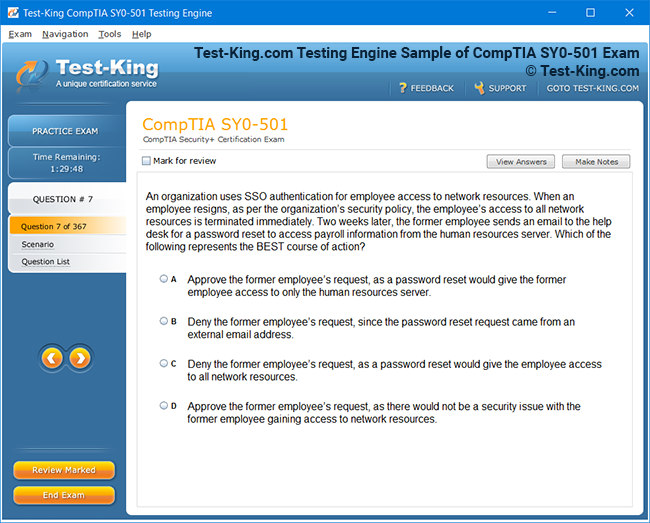
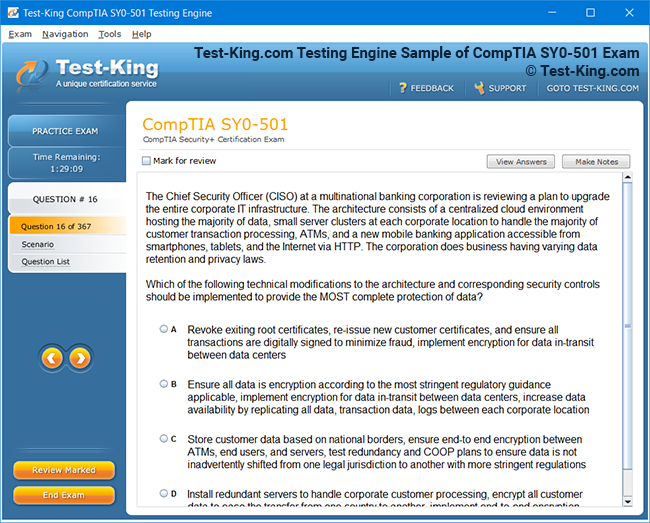
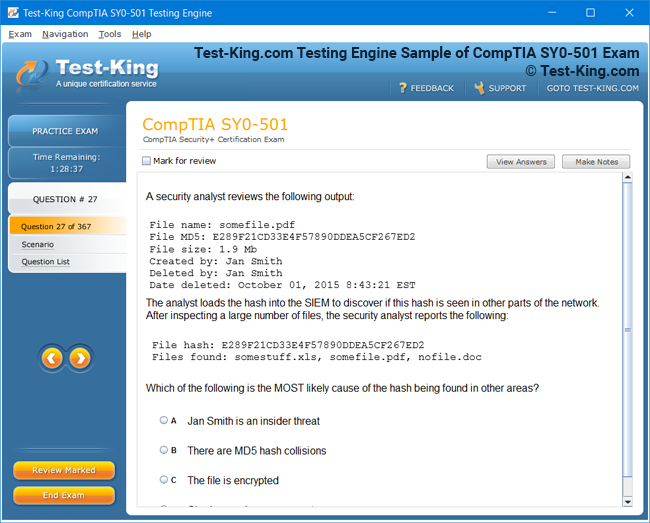
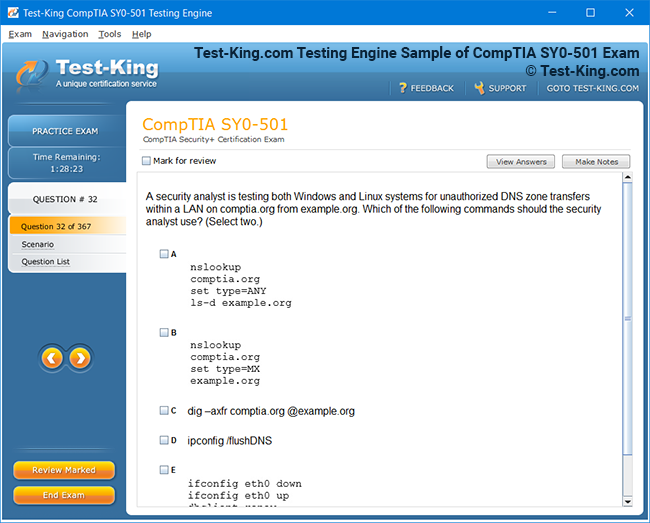
Product Screenshots
Frequently Asked Questions
How can I get the products after purchase?
All products are available for download immediately from your Member's Area. Once you have made the payment, you will be transferred to Member's Area where you can login and download the products you have purchased to your computer.
How long can I use my product? Will it be valid forever?
Test-King products have a validity of 90 days from the date of purchase. This means that any updates to the products, including but not limited to new questions, or updates and changes by our editing team, will be automatically downloaded on to computer to make sure that you get latest exam prep materials during those 90 days.
Can I renew my product if when it's expired?
Yes, when the 90 days of your product validity are over, you have the option of renewing your expired products with a 30% discount. This can be done in your Member's Area.
Please note that you will not be able to use the product after it has expired if you don't renew it.
How often are the questions updated?
We always try to provide the latest pool of questions, Updates in the questions depend on the changes in actual pool of questions by different vendors. As soon as we know about the change in the exam question pool we try our best to update the products as fast as possible.
How many computers I can download Test-King software on?
You can download the Test-King products on the maximum number of 2 (two) computers or devices. If you need to use the software on more than two machines, you can purchase this option separately. Please email support@test-king.com if you need to use more than 5 (five) computers.
What is a PDF Version?
PDF Version is a pdf document of Questions & Answers product. The document file has standart .pdf format, which can be easily read by any pdf reader application like Adobe Acrobat Reader, Foxit Reader, OpenOffice, Google Docs and many others.
Can I purchase PDF Version without the Testing Engine?
PDF Version cannot be purchased separately. It is only available as an add-on to main Question & Answer Testing Engine product.
What operating systems are supported by your Testing Engine software?
Our testing engine is supported by Windows. Andriod and IOS software is currently under development.
Top SAP Exams
Expand End-to-End Sales Management Knowledge Through SAP C_TS462_2020 Workflow and Transaction Optimization
The C_TS462_2020 certification represents a pivotal milestone for professionals seeking to demonstrate their proficiency in SAP S/4HANA Sales processes and functionalities. This globally recognized credential validates an individual's comprehensive knowledge of sales order management, pricing procedures, billing operations, and various other critical components within the SAP ecosystem. As organizations worldwide continue their digital transformation journeys, the demand for skilled SAP professionals has reached unprecedented heights, making this certification an invaluable asset for career advancement.
In the contemporary business landscape, enterprises require specialists who can navigate the complexities of integrated business systems with finesse and expertise. The C_TS462_2020 examination encompasses a wide spectrum of topics that mirror real-world scenarios, ensuring that certified professionals possess practical capabilities rather than merely theoretical understanding. This certification serves as a testament to one's ability to configure, implement, and optimize sales processes within the SAP S/4HANA environment, thereby contributing significantly to organizational efficiency and revenue generation.
The journey toward achieving C_TS462_2020 certification demands dedication, strategic preparation, and a thorough comprehension of sales operations within enterprise resource planning systems. Candidates must familiarize themselves with numerous interconnected modules, understand business process flows, and develop problem-solving acumen that addresses complex organizational requirements. This credential distinguishes professionals in a competitive marketplace, opening doors to lucrative opportunities across various industries and geographical locations.
Core Competencies Covered in C_TS462_2020 Examination
The C_TS462_2020 certification examination evaluates candidates across multiple dimensions of SAP S/4HANA Sales functionality. One of the fundamental areas assessed involves organizational structures, which form the backbone of any sales operation. Understanding how to configure sales organizations, distribution channels, divisions, and their relationships is crucial for establishing a robust foundation. These organizational elements determine how business transactions flow through the system and affect everything from pricing to delivery scheduling.
Sales document processing constitutes another significant component of the C_TS462_2020 syllabus. Professionals must demonstrate proficiency in creating, modifying, and managing various types of sales documents including quotations, contracts, scheduling agreements, and standard orders. Each document type serves distinct business purposes and follows specific processing rules that candidates need to master. The examination tests knowledge of document flow, from initial customer inquiry through order fulfillment and subsequent billing operations.
Pricing configuration represents one of the most intricate aspects covered in the C_TS462_2020 certification. The SAP pricing procedure involves condition techniques, pricing elements, calculation schemas, and determination rules that collectively establish how product prices are calculated. Candidates must understand how to implement discounts, surcharges, taxes, freight charges, and other pricing components. Mastery of access sequences, condition tables, and condition records enables professionals to create flexible pricing strategies that accommodate diverse business requirements.
Material determination and product proposal functionalities are examined to ensure candidates can implement intelligent suggestion mechanisms that enhance sales efficiency. These features allow systems to automatically propose alternative or substitute materials based on predefined business rules. Understanding material listing and exclusion lists, along with their application in various sales scenarios, proves essential for optimizing inventory management and customer satisfaction.
Availability checking mechanisms within C_TS462_2020 ensure that sales commitments align with actual inventory levels and production capacities. Professionals must comprehend how the system performs availability checks at different stages of the sales process, considering factors such as safety stock, reservations, and planned production quantities. Knowledge of checking groups, checking rules, and scope of check configurations enables practitioners to implement realistic commitment strategies that balance customer expectations with operational constraints.
Shipping and transportation management features extensively in the C_TS462_2020 curriculum. Candidates need to understand delivery document processing, picking operations, packing procedures, and goods issue transactions. The integration between sales order management and logistics execution requires comprehensive knowledge of delivery scheduling, route determination, and transportation planning. Proficiency in configuring shipping points, loading points, and transportation zones ensures efficient physical distribution of goods.
Billing processes and invoice generation form critical components evaluated in the C_TS462_2020 examination. Professionals must demonstrate their ability to configure billing document types, billing plans, and invoicing schedules. Understanding how to handle various billing scenarios including order-related billing, delivery-related billing, periodic billing, and credit memo processing is essential. Knowledge of billing blocks, cancellation procedures, and rebate processing rounds out this competency area.
Credit management functionality within SAP S/4HANA represents an important risk mitigation mechanism covered in C_TS462_2020. Candidates must understand how to configure credit limit checks, credit exposure calculations, and credit control areas. Implementing automatic credit blocks based on customer credit status helps organizations minimize financial risk while maintaining business relationships. Integration between sales order processing and credit management ensures that financial considerations inform sales decisions appropriately.
Customer master data management appears throughout the C_TS462_2020 examination as it underpins all sales transactions. Professionals need expertise in configuring customer account groups, number ranges, and partner functions. Understanding how customer hierarchies enable consolidated reporting and pricing agreements proves valuable for managing complex business relationships. Knowledge of customer-specific pricing agreements, payment terms, and delivery preferences ensures personalized service delivery.
Material master data configuration represents another foundational element tested in C_TS462_2020. Candidates must understand how to maintain material master records with sales-relevant views including sales organization data, general plant data, and sales text information. Proper material classification, material group assignments, and tax classification ensure accurate transaction processing and regulatory compliance.
Output determination procedures allow automated communication with customers and internal stakeholders. The C_TS462_2020 syllabus includes output types, determination procedures, transmission media, and timing specifications. Professionals must know how to configure automatic generation of order confirmations, delivery notes, invoices, and other business documents. Understanding output conditions and partner-specific output requirements enables tailored communication strategies.
Text determination functionality enables contextual information to be attached to various business documents. The C_TS462_2020 certification covers text types, text determination procedures, and text sources. Knowledge of how to implement standard texts, text modules, and customer-specific text elements enhances document clarity and reduces manual effort in transaction processing.
Account determination procedures ensure proper integration between sales operations and financial accounting. Candidates preparing for C_TS462_2020 must understand revenue account determination, tax account assignment, and special general ledger indicators. Proper configuration of account keys, condition types, and account determination procedures ensures accurate financial postings and facilitates financial reporting.
Foreign trade processing capabilities within SAP S/4HANA enable compliance with international trade regulations. The C_TS462_2020 examination includes foreign trade data maintenance, export controls, preference determination, and customs documentation. Understanding how to configure commodity codes, country-specific regulations, and export licenses helps organizations navigate the complexities of global commerce.
Strategic Preparation Methods for C_TS462_2020 Success
Achieving success in the C_TS462_2020 certification examination requires a multifaceted preparation strategy that combines theoretical study with practical application. Candidates should begin by thoroughly reviewing the official examination blueprint, which outlines the specific topics covered and their relative weightings. This document serves as a roadmap for directing study efforts toward the most critical subject areas. Understanding the examination structure, question formats, and time constraints allows candidates to develop appropriate test-taking strategies.
Hands-on experience with SAP S/4HANA systems proves invaluable for C_TS462_2020 preparation. Theoretical knowledge alone rarely suffices for addressing the scenario-based questions that characterize this examination. Candidates should seek opportunities to work with actual system configurations, executing transactions, and observing system behavior under various conditions. Access to practice environments, whether through employer-provided systems or cloud-based trial instances, enables experiential learning that reinforces conceptual understanding.
Comprehensive study materials specifically designed for C_TS462_2020 preparation provide structured learning pathways. These resources typically include detailed explanations of configuration steps, transaction codes, business process flows, and best practices. Candidates should select high-quality materials that align with the current examination version, as SAP periodically updates certification content to reflect evolving product capabilities. Supplementing primary study materials with reference documentation, configuration guides, and technical whitepapers broadens understanding and provides alternative perspectives on complex topics.
Practice examinations serve as essential preparation tools for C_TS462_2020 candidates. These simulated assessments familiarize individuals with question styles, difficulty levels, and time management requirements. Regular practice testing helps identify knowledge gaps, allowing candidates to focus additional study efforts on weak areas. Analyzing incorrect responses and understanding the reasoning behind correct answers deepens comprehension and improves retention. Many successful candidates incorporate practice examinations throughout their preparation journey rather than reserving them solely for final readiness assessment.
Study groups and professional networks offer collaborative learning opportunities that enhance C_TS462_2020 preparation. Engaging with peers who are pursuing the same certification enables knowledge sharing, problem-solving discussions, and mutual encouragement. Online forums, social media groups, and professional association chapters provide platforms for connecting with fellow learners and experienced practitioners. These communities often share insights about examination experiences, challenging topics, and effective preparation techniques.
Structured training courses delivered by authorized education partners provide comprehensive coverage of C_TS462_2020 topics under expert guidance. These programs typically combine instructor-led sessions with hands-on exercises, allowing participants to develop practical skills alongside theoretical knowledge. Training courses offer the advantage of immediate access to knowledgeable instructors who can clarify doubts, provide real-world examples, and offer personalized feedback. While self-study remains viable for motivated individuals, structured training accelerates learning and reduces the risk of knowledge gaps.
Time management strategies significantly impact C_TS462_2020 preparation effectiveness. Candidates should establish realistic study schedules that accommodate professional responsibilities, personal commitments, and learning pace requirements. Consistent, focused study sessions typically prove more effective than sporadic, intensive cramming. Breaking the syllabus into manageable segments and setting incremental milestones creates a sense of progress and maintains motivation throughout the preparation journey.
Note-taking and knowledge organization techniques help consolidate learning during C_TS462_2020 preparation. Creating summaries of key concepts, maintaining transaction code references, and documenting configuration sequences facilitate quick review and long-term retention. Visual learning aids such as process flow diagrams, organizational structure charts, and integration maps help conceptualize complex relationships within the SAP system. Regularly reviewing and refining these materials reinforces understanding and identifies areas requiring additional attention.
Practical application exercises that simulate real business scenarios enhance C_TS462_2020 readiness. Candidates should practice configuring complete business processes from end to end, experiencing how different components interact and influence one another. Working through case studies that present business requirements and challenge individuals to design appropriate solutions develops critical thinking skills essential for both examination success and professional practice.
Business Process Integration in SAP S/4HANA Sales
The C_TS462_2020 certification emphasizes understanding how sales processes integrate with other business functions within the SAP S/4HANA ecosystem. This integration philosophy reflects the reality that modern enterprises operate as interconnected systems where decisions and actions in one area ripple through others. Sales operations interact extensively with materials management, production planning, financial accounting, controlling, and customer relationship management modules, creating a comprehensive business management environment.
Order-to-cash represents the fundamental business process cycle that C_TS462_2020 candidates must master. This end-to-end workflow begins with customer inquiry and progresses through quotation, order placement, delivery execution, and invoice settlement. Each stage involves multiple functional areas and requires careful coordination to ensure smooth transaction flow. Understanding how sales documents trigger subsequent activities in warehouse management, how delivery completion enables billing, and how invoice postings update financial accounts demonstrates the integrated nature of SAP S/4HANA.
Materials management integration with sales processes ensures inventory availability and procurement coordination. When sales orders are created, the system checks material availability and may trigger procurement activities if stock levels prove insufficient. Understanding how sales order commitments consume available quantities, how delivery scheduling considers lead times, and how backorder processing manages supply-demand imbalances proves essential for C_TS462_2020 candidates. The relationship between sales forecasts and materials requirement planning creates a forward-looking dimension that connects customer demand with supply chain operations.
Production planning integration becomes relevant when organizations manufacture products to order rather than maintaining finished goods inventory. Sales orders can trigger production orders, and the C_TS462_2020 syllabus covers make-to-order scenarios where customer-specific requirements drive manufacturing activities. Understanding resource availability checking, production scheduling, and capacity planning integration helps candidates appreciate how sales commitments align with manufacturing capabilities. Knowledge of assembly processing, variant configuration, and engineering change management extends this integration into complex manufacturing environments.
Financial accounting integration ensures that sales transactions create appropriate general ledger postings. The C_TS462_2020 certification covers how revenue recognition, accounts receivable entries, and tax postings result from billing activities. Understanding account determination logic, document posting procedures, and reconciliation mechanisms between sales documents and financial postings proves critical. Knowledge of special general ledger transactions, down payment processing, and credit memo accounting rounds out financial integration competencies.
Controlling module integration enables profitability analysis and cost accounting for sales transactions. C_TS462_2020 candidates must understand how sales documents pass information to profitability analysis, allowing organizations to assess profit contribution by customer, product, or market segment. Understanding cost element assignment, profitability segments, and contribution margin analysis helps professionals configure systems that support strategic decision-making. Integration with cost centers and profit centers enables organizational performance measurement aligned with sales activities.
Customer relationship management functionality extends beyond transactional sales processing to encompass broader customer engagement strategies. While C_TS462_2020 focuses primarily on operational sales processes, understanding how customer master data, contact management, and opportunity tracking integrate with order processing provides valuable context. Knowledge of how sales activities generate data that informs marketing campaigns, customer service operations, and business intelligence reporting demonstrates the strategic value of integrated systems.
Quality management integration ensures that products meet specified standards before delivery to customers. Although quality management represents a separate functional area, C_TS462_2020 candidates should understand how quality inspection processes can be triggered by goods receipt, production completion, or delivery processing. Understanding quality certificates, inspection lots, and quality notifications helps professionals implement systems that maintain product quality standards while supporting efficient sales operations.
Advanced Configuration Techniques for Sales Processes
The C_TS462_2020 certification requires candidates to demonstrate advanced configuration capabilities that address complex business requirements. Copy control configurations determine how data flows between related document types, such as from sales orders to deliveries or from deliveries to invoices. Understanding copying requirements, data transfer routines, and item category determination enables professionals to customize document flow behavior to match organizational processes. Sophisticated copy control configurations can implement business rules, perform calculations, or trigger custom logic during document creation.
Incompletion procedures represent a powerful configuration tool covered in C_TS462_2020 that enforces data quality standards. These mechanisms prevent document processing from advancing until required information has been provided. Configuring incompletion logs, defining mandatory fields, and establishing status groups allows organizations to maintain data integrity throughout sales processes. Understanding how incompletion procedures vary by document type and processing stage enables implementation of appropriate controls without creating unnecessary obstacles to efficient transaction processing.
Partner determination procedures ensure that appropriate parties are assigned roles in business transactions. The C_TS462_2020 syllabus includes partner functions such as sold-to party, ship-to party, bill-to party, and payer. Configuring partner determination procedures, partner function authorizations, and partner hierarchies enables flexible business relationship modeling. Understanding how partner determination can copy from preceding documents, derive from customer master data, or be manually specified provides practitioners with tools for implementing complex business scenarios.
Item category determination represents a sophisticated configuration mechanism that controls document item behavior. The C_TS462_2020 examination tests knowledge of how item categories are determined based on sales document type, item category group from material master, usage, and higher-level item category. Each item category controls numerous processing parameters including pricing relevance, delivery relevance, billing relevance, and inventory management behavior. Mastery of item category configuration enables professionals to implement specialized business processes such as text items, value items, or free goods.
Schedule line category determination extends item-level control to individual schedule lines within document items. These configurations determine movement types, availability checking parameters, and delivery scheduling behavior. C_TS462_2020 candidates must understand how schedule line categories interact with materials requirement planning, how they control committed quantities, and how they influence production planning. Configuring appropriate schedule line categories enables precise control over supply source determination and logistics execution.
Requirements routines provide programming interfaces for implementing custom business logic within standard configuration frameworks. While C_TS462_2020 does not require programming expertise, understanding the conceptual role of requirements routines in pricing procedures, copy control, and determination logic proves valuable. These routines enable conditional execution of configuration elements based on data attributes, allowing sophisticated business rule implementation without modifying core system functionality.
User exit implementations extend standard SAP functionality to accommodate unique business requirements that cannot be addressed through configuration alone. The C_TS462_2020 syllabus acknowledges the existence of user exits and their role in enabling customer-specific enhancements. Understanding where user exits are available in sales processing, their general purpose, and how they complement configuration capabilities helps professionals distinguish between configuration solutions and development requirements.
Batch management considerations affect sales processing when dealing with materials tracked by batch numbers. C_TS462_2020 candidates should understand how batch determination procedures identify appropriate batches for allocation to sales orders or deliveries. Configuring batch search strategies, batch determination conditions, and batch status management enables organizations to implement first-expired-first-out strategies, customer-specific batch agreements, or quality-based batch selection.
Serial number management extends traceability to individual item level, which proves essential for high-value products or regulatory compliance scenarios. The C_TS462_2020 certification covers serial number profile configuration, serial number assignment methods, and serial number tracking throughout the document flow. Understanding how serial numbers are captured during goods receipt, assigned during picking, and recorded during delivery completion ensures comprehensive traceability for serialized materials.
Optimizing Performance in Sales Operations
Performance optimization represents an important consideration for SAP S/4HANA Sales implementations, and C_TS462_2020 candidates should understand factors affecting system performance. Transaction volume, document complexity, and integration touchpoints all influence processing speed and system responsiveness. Configuring appropriate number range intervals, optimizing determination procedures, and streamlining data structures contribute to efficient system operation.
The C_TS462_2020 syllabus addresses performance considerations in pricing procedure design. Complex pricing with numerous condition types, extensive access sequences, and deep condition table structures can impact transaction processing speed. Candidates should understand how to balance pricing flexibility with performance requirements, perhaps consolidating condition types where appropriate or simplifying access sequence logic. Implementing appropriate indices on condition tables and managing the volume of condition records helps maintain responsive pricing determination.
Master data quality significantly impacts operational performance, a topic relevant to C_TS462_2020 preparation. Duplicate customer records, inconsistent material master data, and incomplete pricing agreements create processing exceptions that require manual intervention. Understanding data governance practices, data validation rules, and data cleansing procedures helps professionals maintain high-quality master data that supports efficient automated processing. Implementing appropriate authorization controls ensures that only qualified personnel can modify critical master data elements.
Batch processing capabilities enable high-volume operations to execute during periods of lower system demand. While C_TS462_2020 focuses primarily on interactive transaction processing, understanding when batch processing proves appropriate for activities like mass billing, pricing agreement updates, or output transmission helps professionals design scalable solutions. Knowledge of job scheduling, performance monitoring, and error handling in batch processing rounds out operational competencies.
Archive strategies help manage data volumes over time, ensuring that operational systems remain performant as transaction volumes accumulate. The C_TS462_2020 curriculum touches on data retention considerations and archiving capabilities for completed sales documents. Understanding archiving policies, retrieval procedures, and legal retention requirements helps professionals implement appropriate data lifecycle management practices.
Monitoring tools available within SAP S/4HANA enable proactive identification of performance issues and processing exceptions. C_TS462_2020 candidates benefit from familiarity with transaction codes for monitoring incomplete documents, blocked documents, and processing errors. Understanding how to leverage reporting capabilities for identifying bottlenecks, analyzing processing trends, and measuring key performance indicators supports continuous process improvement.
Industry-Specific Applications of C_TS462_2020 Knowledge
The versatility of SAP S/4HANA Sales functionality enables its application across diverse industries, each with unique requirements and business processes. C_TS462_2020 certification provides foundational knowledge applicable to multiple industry contexts, though specialized industry solutions may extend basic capabilities. Understanding industry-specific considerations enhances the practical value of certification for professionals targeting particular sectors.
Consumer products industries leverage SAP S/4HANA Sales for managing complex distribution networks involving multiple tiers of intermediaries. C_TS462_2020 knowledge applies to configuring customer hierarchies representing distributor networks, implementing trade promotion management, and handling various pricing agreements. Understanding rebate processing, customer-specific assortments, and promotional pricing proves particularly relevant in consumer products contexts.
Manufacturing industries require sophisticated order-to-production integration where sales orders drive manufacturing activities. C_TS462_2020 competencies in make-to-order processing, variant configuration, and production planning integration prove essential. Understanding how customer-specific requirements translate into production specifications, how engineering changes affect open orders, and how capacity constraints influence sales commitments reflects manufacturing industry priorities.
Pharmaceutical and life sciences industries face stringent regulatory requirements affecting sales processes. While C_TS462_2020 provides core sales functionality knowledge, professionals in these industries must also consider batch traceability, serialization for track-and-trace compliance, and specialized pricing for different customer channels. Understanding how standard SAP functionality accommodates regulatory requirements through appropriate configuration proves valuable.
High-tech and electronics industries deal with rapid product innovation cycles, complex product configurations, and sophisticated service arrangements. C_TS462_2020 knowledge applies to configuring product proposals, managing product transitions, and implementing subscription-based business models. Understanding how to handle warranties, maintenance contracts, and equipment-linked service agreements extends core sales functionality to support outcome-based business models.
Wholesale and retail distribution businesses require efficient order processing supporting high transaction volumes and diverse product assortments. C_TS462_2020 competencies in availability checking, delivery scheduling, and automated billing prove particularly relevant. Understanding how to configure efficient picking processes, optimize delivery consolidation, and implement customer self-service capabilities supports distribution industry requirements.
Chemical industries face unique challenges related to handling hazardous materials, managing complex packaging requirements, and complying with environmental regulations. C_TS462_2020 knowledge provides the foundation for implementing safety data sheet management, dangerous goods processing, and environmental compliance tracking. Understanding material handling restrictions, transportation regulations, and disposal documentation requirements applies core sales functionality to chemical industry contexts.
Service industries leverage SAP S/4HANA for managing service contracts, scheduling service delivery, and billing based on time and materials or fixed-price agreements. While C_TS462_2020 focuses on product-centric sales processes, understanding how to adapt standard functionality for service scenarios proves valuable. Knowledge of milestone billing, periodic service contracts, and resource scheduling extends core competencies into service environments.
Career Advancement Through C_TS462_2020 Certification
Obtaining C_TS462_2020 certification significantly enhances career prospects for SAP professionals. This credential demonstrates verified competency in a widely-used enterprise system, distinguishing certified individuals from those with unverified skills claims. Employers seeking SAP talent often prioritize certified candidates because certification provides objective evidence of knowledge and commitment to professional development.
Salary implications of C_TS462_2020 certification can be substantial, with certified professionals typically commanding higher compensation than their non-certified counterparts. Market research consistently shows that SAP certifications correlate with increased earning potential across various experience levels and geographic regions. The investment in certification preparation and examination fees typically yields positive return through enhanced compensation and expanded opportunities.
Career path diversity increases with C_TS462_2020 certification as professionals become qualified for various roles. Implementation consultant positions involve deploying SAP S/4HANA Sales solutions for client organizations, requiring deep technical knowledge combined with business process understanding. Solution architects design comprehensive system landscapes and integration strategies, leveraging sales module expertise as part of broader enterprise architecture. Functional specialists provide ongoing support for operational systems, troubleshoot issues, and implement enhancements based on evolving business requirements.
Independent consulting opportunities become more accessible with C_TS462_2020 certification providing credibility for professionals establishing their own practices. Certified consultants can pursue project-based engagements, offering specialized expertise to organizations lacking internal capabilities. The flexibility and income potential of independent consulting attracts many experienced professionals who have established strong reputations in the SAP community.
Geographic mobility increases with C_TS462_2020 certification as the credential enjoys global recognition. SAP implementations occur worldwide, and certified professionals find opportunities across continents. Understanding cultural differences in business practices and developing language skills can further enhance international career prospects for certified individuals.
Continuous learning becomes increasingly important as SAP evolves its technology platforms and functionality. C_TS462_2020 certification represents a point-in-time validation of knowledge, but maintaining relevance requires ongoing professional development. Staying current with new SAP releases, emerging technologies like artificial intelligence and machine learning, and evolving business practices ensures long-term career viability.
Professional networking benefits from C_TS462_2020 certification as it provides common ground for connecting with other certified professionals. Industry conferences, user group meetings, and online communities offer platforms for relationship building, knowledge sharing, and opportunity discovery. Active participation in professional networks amplifies the career benefits of certification by increasing visibility and establishing reputation within the SAP community.
Technical Evolution and Future Directions
The SAP technology landscape continues evolving, and C_TS462_2020 certification represents knowledge of current-generation capabilities. Understanding the historical evolution from SAP R/3 through ECC to S/4HANA provides context for appreciating architectural improvements and functional enhancements. The migration from traditional on-premise installations toward cloud-based deployments reflects broader industry trends toward infrastructure flexibility and reduced capital investment.
SAP Fiori user experience represents a significant departure from traditional SAP GUI interfaces. C_TS462_2020 candidates benefit from understanding how Fiori applications provide role-based, intuitive interfaces for common business tasks. The responsive design principles underlying Fiori enable access from various devices, supporting mobile workforce requirements. Knowledge of how transactional Fiori apps relate to underlying backend configuration enhances the ability to support users across different interface paradigms.
Embedded analytics capabilities within SAP S/4HANA eliminate traditional distinctions between operational and analytical systems. The C_TS462_2020 syllabus may touch on reporting capabilities and key performance indicators relevant to sales processes. Understanding how embedded analytics leverage in-memory computing for real-time insights positions professionals to support data-driven decision making within their organizations.
Machine learning and artificial intelligence applications within SAP S/4HANA represent emerging capabilities that extend beyond traditional C_TS462_2020 scope but merit awareness. Predictive analytics for demand forecasting, intelligent product recommendations, and automated processing exception resolution illustrate how cognitive technologies enhance business processes. Professionals who combine foundational knowledge from certifications like C_TS462_2020 with understanding of emerging technologies position themselves for future-oriented roles.
Application programming interface strategies enable SAP S/4HANA integration with external systems and support development of custom applications. While C_TS462_2020 focuses on configuration rather than development, awareness of API availability and integration patterns proves valuable. Understanding how external e-commerce platforms, customer portals, or mobile applications can interact with SAP S/4HANA sales functionality through standard interfaces demonstrates appreciation for extended enterprise architectures.
Cloud deployment models including public cloud, private cloud, and hybrid cloud present organizations with various implementation options. C_TS462_2020 certification focuses on functional capabilities rather than deployment infrastructure, but awareness of how deployment models affect system access, customization capabilities, and operational responsibilities helps professionals provide informed guidance to their organizations.
Sustainability considerations increasingly influence business operations, and SAP provides capabilities for tracking environmental impacts of business activities. While not explicitly covered in C_TS462_2020, understanding how sales processes can capture sustainability-related data and how product carbon footprints might influence customer decisions represents forward-thinking perspective alignment with societal priorities.
Examination Logistics and Practical Considerations
The C_TS462_2020 certification examination follows standardized procedures designed to ensure fair and consistent evaluation of all candidates. Understanding examination logistics reduces anxiety and enables candidates to focus mental energy on demonstrating their knowledge. Examination registration occurs through official channels, requiring account creation and fee payment. Candidates should verify identification requirements, technical prerequisites for online proctoring if applicable, and scheduling availability well in advance of their desired examination date.
Examination format typically includes multiple-choice questions with single or multiple correct answers. C_TS462_2020 questions may present scenarios requiring application of knowledge rather than simple recall of facts. Understanding that multiple-select questions require selecting all correct options to receive credit helps candidates approach these questions strategically. The examination duration and passing score are established parameters that candidates should review as part of their preparation.
Test-taking strategies significantly impact examination performance beyond raw knowledge. Time management during the examination ensures that candidates have opportunity to address all questions rather than spending excessive time on particularly challenging items. Many successful candidates make initial passes through the examination, answering questions where they feel confident before returning to more difficult items. Flagging uncertain questions for review if time permits represents prudent strategy.
Examination environment considerations differ between proctored testing center experiences and remote online proctoring. Testing center examinations provide dedicated, distraction-free environments but require travel to specific locations. Remote proctoring offers convenience but requires candidates to ensure appropriate testing spaces, reliable internet connectivity, and compatible computer equipment. Understanding specific requirements for the chosen testing modality prevents logistical complications on examination day.
Result delivery typically occurs immediately upon examination completion for computer-based assessments. Candidates receive pass/fail notification and may receive performance feedback by topic area. Understanding that examinations undergo periodic review and adjustment helps explain why specific score reporting may be limited. Successful candidates receive digital certificates and badges that can be shared through professional networking platforms to publicize their achievement.
Retake policies provide opportunities for candidates who do not pass on their first attempt. Understanding waiting periods between examination attempts, fee requirements for retakes, and any limitations on number of attempts helps candidates develop contingency plans. Many successful professionals have required multiple attempts to achieve certification, and persistence represents an admirable quality in professional development.
Continuing education requirements vary depending on certification policies at the time of achievement. Some certifications require periodic renewal through examination retake, while others remain valid indefinitely. Staying informed about maintenance requirements ensures that professionals preserve the value of their certification investment over time.
Organizational Benefits of Employing Certified Professionals
Organizations employing C_TS462_2020 certified professionals gain numerous advantages beyond the individual career benefits to employees. Certified staff possess verified knowledge that reduces the risk of implementation errors, suboptimal configurations, or misapplication of system capabilities. This expertise translates into more successful SAP deployments, faster time-to-value for technology investments, and reduced dependence on external consultants for routine activities.
System optimization becomes more achievable when internal staff possess deep understanding of available capabilities. C_TS462_2020 certified professionals can identify opportunities to leverage underutilized features, streamline inefficient processes, and implement best practices aligned with system capabilities. Their knowledge enables critical evaluation of current-state configurations and reasoned recommendations for improvements that enhance operational efficiency.
Troubleshooting speed improves when certified professionals address system issues or processing exceptions. Their comprehensive understanding of configuration relationships, data dependencies, and integration touchpoints enables rapid identification of root causes. This reduces system downtime, minimizes business disruption, and maintains user confidence in technology systems supporting critical business processes.
Change management capabilities strengthen when certified professionals lead or support organizational transformation initiatives. Their credibility, derived from verified expertise, helps overcome resistance to new processes or technologies. Ability to clearly explain system behavior, demonstrate benefits, and address concerns improves stakeholder buy-in for change initiatives related to sales process automation or optimization.
Knowledge transfer occurs more effectively when certified professionals provide training to end users or mentor junior team members. Their structured understanding of concepts, awareness of common pitfalls, and ability to explain complex topics in accessible terms accelerates capability development across the organization. This multiplier effect amplifies the value of certification beyond individual performance to organizational capacity building.
Vendor relationships benefit when organizations employ certified professionals who can engage technically with SAP support resources and partner ecosystems. The common language and shared understanding of system architecture facilitate more productive problem resolution and more effective collaboration on enhancement projects. Certified professionals can better evaluate vendor proposals, challenge assumptions, and ensure that external resources deliver value commensurate with their fees.
Strategic planning benefits from insights that certified professionals provide regarding system capabilities and emerging trends. Their awareness of how SAP functionality can enable new business models, support market expansion, or improve competitive positioning informs strategic discussions. Understanding technical feasibility of business strategies helps organizations make realistic commitments and appropriate resource allocation decisions.
Integration with Complementary SAP Modules
The C_TS462_2020 certification, while focused on sales processes, exists within a broader ecosystem of integrated SAP modules. Understanding how sales functionality relates to materials management enables appreciation for inventory planning, procurement processes, and warehouse operations. Sales forecasts inform materials requirement planning, while procurement lead times influence sales delivery commitments. This bidirectional relationship requires coordination between sales and supply chain professionals to optimize overall business performance.
Financial accounting integration ensures that revenue recognition, accounts receivable management, and cash application processes align with sales operations. C_TS462_2020 knowledge includes understanding how billing documents create financial postings, how payment terms affect cash flow, and how credit management mitigates financial risk. Collaboration between sales and finance functions ensures accurate financial reporting and effective working capital management.
Controlling module relationships enable profitability analysis that informs strategic decisions about customer relationships, product portfolios, and market investments. Sales data flowing into profitability analysis supports calculation of contribution margins, identification of unprofitable business segments, and evaluation of pricing strategy effectiveness. Understanding these analytical capabilities helps sales professionals appreciate how their operational activities support strategic management objectives.
Production planning integration becomes critical in make-to-order environments where customer specifications drive manufacturing activities. Sales order data triggers material resource planning, capacity requirements planning, and production order creation. Understanding these integration points helps sales professionals make realistic commitments to customers based on manufacturing capabilities and constraints. Collaboration between sales and production planning ensures customer satisfaction while maintaining efficient manufacturing operations.
Quality management integration ensures that products meet specified standards before delivery to customers. Quality inspection processes may be triggered at various points in the order-to-cash cycle, from incoming goods receipt through final delivery preparation. Understanding how quality holds can block deliveries and how quality certificates accompany shipments helps sales professionals manage customer expectations and respond to quality-related inquiries.
Customer relationship management functionality extends beyond transactional processing to encompass opportunity management, marketing campaign execution, and customer service operations. While C_TS462_2020 focuses on operational sales transactions, awareness of upstream CRM processes that identify and qualify opportunities provides context for order capture activities. Understanding downstream service processes that support installed products creates appreciation for complete customer lifecycle management.
Warehouse management functionality controls physical handling of materials from receipt through storage to picking and shipment. Sales processes trigger warehouse activities, and efficient warehouse operations enable timely order fulfillment. Understanding warehouse management concepts such as storage type determination, picking strategies, and packing procedures helps sales professionals appreciate logistical complexities and set appropriate customer expectations for delivery timing.
Transportation management capabilities optimize shipment planning, carrier selection, and freight cost management. Sales orders generate transportation requirements, and effective transportation planning minimizes logistics costs while meeting customer delivery expectations. Understanding concepts such as route determination, shipment consolidation, and freight calculation helps sales professionals communicate delivery options and costs to customers accurately.
Addressing Common Challenges in Sales Process Implementation
Organizations implementing SAP S/4HANA Sales functionality encounter various challenges that C_TS462_2020 certified professionals help navigate. Change resistance from end users comfortable with legacy systems or manual processes represents a persistent obstacle. Overcoming this resistance requires clear communication about benefits, comprehensive training programs, and patient support during transition periods. Certified professionals bring credibility to change initiatives and can demonstrate how new processes improve efficiency, reduce errors, and enhance customer service.
Data migration complexity challenges organizations transitioning from legacy systems to SAP S/4HANA. Customer master data, material master data, open orders, and pricing agreements must be accurately transferred while maintaining business continuity. C_TS462_2020 certified professionals understand data structures, mandatory fields, and validation rules that govern successful data migration. Their involvement in data migration planning, execution, and validation reduces the risk of disruption during go-live activities.
Process standardization tensions arise when organizations attempt to leverage SAP standard functionality while accommodating unique business practices. Some organizations resist changing established processes to align with system capabilities, preferring instead to customize systems extensively. C_TS462_2020 certified professionals can facilitate productive discussions about the appropriate balance between process standardization and system customization. Their knowledge of configuration capabilities helps identify when legitimate business requirements can be met through standard functionality, reserving custom development for truly unique needs.
Integration complexity increases as organizations connect SAP S/4HANA with numerous peripheral systems including e-commerce platforms, third-party logistics providers, electronic data interchange partners, and legacy applications. Each integration point introduces potential failure modes and requires careful design, testing, and monitoring. Certified professionals with C_TS462_2020 knowledge understand sales process touchpoints and can articulate integration requirements to technical specialists responsible for implementing connectivity solutions.
Performance issues may emerge when configurations prove suboptimal or data volumes exceed anticipated levels. Complex pricing procedures, inefficient availability checking configurations, or excessive customization can degrade system responsiveness. C_TS462_2020 certified professionals possess the diagnostic skills to identify performance bottlenecks and recommend remediation strategies. Their understanding of system architecture and configuration impacts enables proactive performance optimization.
User training challenges persist as organizations struggle to develop workforce capabilities commensurate with system complexity. Generic training programs may not address role-specific requirements or reflect organizational process variations. C_TS462_2020 certified professionals can develop targeted training content, deliver role-based instruction, and provide ongoing mentorship to end users. Their practical experience with system behavior enables them to anticipate common user questions and proactively address potential confusion points.
Testing comprehensiveness often falls short of requirements for validating complex business scenarios. Organizations may conduct cursory testing focused on happy path scenarios while neglecting exception conditions, integration failures, or high-volume situations. Certified professionals understand the breadth of testing required to validate sales configurations and can develop comprehensive test scripts covering diverse scenarios. Their knowledge of potential failure modes informs risk-based testing strategies that prioritize critical functionality.
Documentation quality varies widely across implementations, with some organizations producing minimal documentation while others create extensive but poorly maintained materials. Effective documentation balances comprehensiveness with maintainability, focusing on configuration decisions, business rules, and operational procedures. C_TS462_2020 certified professionals appreciate the long-term value of quality documentation for supporting system operations, training new staff, and facilitating future enhancements.
Governance frameworks become essential as organizations mature their SAP capabilities and seek to manage configuration changes, authorization profiles, and customization inventory. Without appropriate governance, systems accumulate technical debt through undocumented changes, redundant configurations, and inconsistent practices. Certified professionals can establish governance processes that balance agility with control, ensuring that system modifications support business objectives while maintaining stability.
Continuous improvement initiatives require ongoing attention to evolving business requirements, emerging system capabilities, and operational performance metrics. Organizations may struggle to prioritize enhancement requests, allocate resources for optimization activities, or measure improvement outcomes. C_TS462_2020 certified professionals bring structured approaches to continuous improvement, leveraging performance analytics, user feedback, and industry benchmarks to identify and implement valuable enhancements.
Real-World Application Scenarios for C_TS462_2020 Skills
Practical application scenarios illustrate how C_TS462_2020 knowledge translates into business value. Consider a manufacturing organization struggling with inaccurate delivery commitments due to inadequate availability checking. A certified professional can analyze the checking group configuration, scope of check settings, and integration with production planning to identify gaps. Implementing appropriate availability checking rules that consider work-in-process inventory, planned production, and quality inspection holds enables realistic commitment dates that improve customer satisfaction and reduce expediting costs.
Pricing complexity challenges confront organizations with diverse customer segments, promotional programs, and competitive pressures. A distribution company might require customer-specific pricing, volume-based discounts, promotional allowances, and freight calculations. C_TS462_2020 certified professionals can design pricing procedures that accommodate these requirements while remaining maintainable and performant. Careful condition type selection, access sequence design, and condition table structure enable flexible pricing that supports business strategy without creating administrative burden.
Credit management scenarios require balancing revenue objectives with financial risk mitigation. A wholesale distributor extending credit to numerous customers needs systematic credit limit checking, exposure monitoring, and exception management. Certified professionals can configure credit control areas, define checking rules, and implement automatic blocking for customers exceeding credit limits. Integration between sales order processing and credit management ensures that credit decisions occur at appropriate points in the order-to-cash cycle.
Delivery scheduling optimization becomes critical when managing complex distribution networks with multiple shipping points, transportation modes, and service level commitments. A consumer products company might require different delivery processes for direct store delivery versus distribution center shipments. C_TS462_2020 knowledge enables configuration of shipping point determination, route assignment, and delivery scheduling that matches operational capabilities to customer requirements.
Billing complexity arises in service industries, subscription businesses, or project-oriented organizations where straightforward order-related billing proves inadequate. A telecommunications provider might require periodic billing for subscription services, milestone billing for implementation projects, and usage-based billing for consumption charges. Certified professionals can configure billing plans, periodic billing arrangements, and resource-related billing that accommodate diverse revenue recognition patterns.
Output management scenarios involve automating customer communications while accommodating partner-specific requirements and transmission preferences. An industrial distributor might need to generate order confirmations via email for some customers while transmitting electronic data interchange messages to others. C_TS462_2020 certified professionals can configure output determination procedures, partner-specific output settings, and transmission media that automate communications while respecting recipient preferences.
Material determination applications enable intelligent product substitution based on availability, customer preferences, or strategic objectives. A pharmaceutical distributor might need to propose alternative package sizes when preferred configurations are unavailable or suggest generic alternatives to brand-name products. Certified professionals can configure material determination conditions, listing and exclusion logic, and proposal mechanisms that enhance sales effectiveness while respecting business rules.
Returns processing scenarios require configurations that streamline customer returns while maintaining appropriate controls and accounting accuracy. A retail organization needs efficient returns acceptance, inventory disposition decisions, and credit memo generation. C_TS462_2020 knowledge enables configuration of returns order types, scheduling agreement releases for returns, and credit memo procedures that balance customer service with operational efficiency.
Cross-company sales scenarios arise in organizations with multiple legal entities serving shared customer bases. A multinational corporation might need to process orders through a centralized sales organization while executing deliveries from local distribution centers and generating invoices from country-specific legal entities. Certified professionals can configure intercompany processing, stock transport orders, and cross-company billing that support complex organizational structures while maintaining appropriate financial segregation.
Export compliance scenarios require capabilities for managing export licenses, restricted party screening, and preference determination. An aerospace manufacturer exporting controlled products must verify customer eligibility, obtain appropriate licenses, and maintain audit trails demonstrating compliance. C_TS462_2020 certified professionals can configure foreign trade data maintenance, legal control checks, and documentation generation that support regulatory compliance objectives.
Professional Development Beyond C_TS462_2020 Certification
While C_TS462_2020 certification represents a significant achievement, professional development should continue beyond this milestone. Additional SAP certifications in complementary areas expand expertise and increase professional versatility. Certifications in materials management, production planning, or warehouse management complement sales knowledge and enable professionals to support broader supply chain operations. Financial accounting or controlling certifications enhance understanding of financial integration and support roles bridging operational and financial functions.
Technical skills development enables certified professionals to extend their capabilities into solution architecture and custom development domains. Learning ABAP programming language, understanding SAP development tools, and gaining experience with integration technologies increases professional value. While functional consultants need not become expert programmers, technical literacy enables more effective collaboration with development teams and better appreciation for solution feasibility.
Cloud platform familiarity becomes increasingly important as organizations migrate toward cloud-based deployments and leverage cloud-native services. Understanding SAP Business Technology Platform capabilities, integration services, and extension development approaches positions professionals for cloud-centric implementations. Familiarity with cloud deployment models, service-level agreements, and operational differences from on-premise systems proves valuable.
Project management competencies enhance the ability of C_TS462_2020 certified professionals to lead implementation initiatives, coordinate cross-functional teams, and deliver projects successfully. Formal project management training, whether through PMI certification or other methodologies, provides structured approaches to scope management, schedule development, resource allocation, and risk mitigation. Combining technical expertise with project management capabilities creates opportunities for program leadership roles.
Business analysis skills enable certified professionals to elicit requirements, document processes, and facilitate stakeholder alignment. Understanding requirements gathering techniques, process modeling approaches, and gap analysis methodologies strengthens the ability to translate business needs into system configurations. Business analysis capabilities prove particularly valuable during implementation projects where understanding current-state operations and designing future-state processes determine success.
Industry domain expertise differentiates professionals in competitive markets. Deep understanding of specific industry operations, regulatory requirements, and business challenges enhances the ability to provide relevant guidance beyond generic system knowledge. Developing industry expertise through professional associations, industry publications, and focused experience creates career differentiation.
Communication skills enable certified professionals to articulate complex concepts to diverse audiences, facilitate productive discussions, and build stakeholder consensus. Both written and verbal communication capabilities prove essential for creating documentation, delivering presentations, and conducting training sessions. Investing in communication skill development amplifies the impact of technical expertise.
Change management capabilities help certified professionals support organizational transformation accompanying system implementations. Understanding change psychology, stakeholder engagement strategies, and adoption measurement approaches strengthens the ability to drive successful outcomes. Formal change management training through methodologies like Prosci or similar frameworks provides structured approaches to organizational change.
Emerging technology awareness ensures that professionals remain relevant as technology landscapes evolve. Understanding artificial intelligence applications, blockchain potential, internet of things implications, and other emerging technologies positions professionals to evaluate their applicability to business challenges. While deep expertise in emerging technologies may not be necessary, awareness of capabilities and potential applications proves valuable.
Thought leadership development through writing, speaking, and community participation increases professional visibility and establishes reputation. Contributing articles to professional publications, presenting at industry conferences, or participating in user groups demonstrates expertise and builds professional networks. Thought leadership activities often lead to career opportunities and establish individuals as sought-after experts in their domains.
Ethical Considerations and Professional Responsibility
Professionals holding C_TS462_2020 certification bear responsibility for ethical conduct in their professional activities. Maintaining confidentiality of client information, proprietary business processes, and sensitive data represents a fundamental obligation. Exposure to internal business operations during implementation projects or support activities creates ethical duties to protect information from unauthorized disclosure. Professionals must establish appropriate information handling practices and decline requests that would compromise confidentiality obligations.
Honest representation of capabilities and experience maintains professional integrity and protects clients from unrealistic expectations. Exaggerating qualifications, misrepresenting experience, or claiming expertise beyond actual capabilities damages professional reputation and potentially harms clients. Certified professionals should accurately describe their skills, acknowledge knowledge limitations, and seek assistance when facing unfamiliar challenges rather than attempting to conceal gaps.
Conflict of interest management becomes important when professionals have relationships or financial interests that could compromise objectivity. Recommending specific vendors, products, or services from which the professional derives benefit creates potential conflicts. Transparency about relationships and declining engagements where conflicts cannot be managed appropriately maintains professional integrity.
Quality workmanship represents an ethical obligation to clients and employers who rely on professional expertise. Cutting corners, implementing suboptimal solutions, or ignoring known issues to expedite project completion violates professional responsibility. C_TS462_2020 certified professionals should maintain high standards for configuration quality, testing thoroughness, and documentation completeness regardless of schedule pressures or budget constraints.
Continuing competence requires ongoing learning to maintain current knowledge in an evolving technology landscape. Allowing skills to atrophy or failing to remain current with system changes diminishes professional value and potentially leads to flawed recommendations. Certified professionals bear responsibility for investing in continuous learning to preserve the relevance of their expertise.
Respect for intellectual property extends to software licensing, training materials, and proprietary methodologies. Using unlicensed software, sharing copyrighted materials, or misappropriating proprietary approaches violates legal and ethical standards. Professionals should ensure compliance with licensing terms and respect intellectual property rights of software vendors, training providers, and previous employers.
Professional courtesy toward colleagues, clients, and vendors maintains productive working relationships and reflects positively on the broader professional community. Treating others with respect, honoring commitments, and communicating professionally contribute to positive work environments and successful project outcomes. Avoiding disparagement of competitors or previous service providers maintains professional standards.
Regulatory compliance awareness ensures that system configurations support legal and regulatory requirements applicable to client operations. While certified professionals may not be legal experts, awareness of compliance considerations such as data privacy, tax reporting, export controls, and industry-specific regulations informs configuration decisions. Recommending configurations that violate regulatory requirements exposes clients to legal risk and reflects poorly on professional judgment.
Economic Value and Return on Investment
The economic value generated by C_TS462_2020 certified professionals manifests through multiple channels. Process efficiency improvements resulting from optimized system configurations reduce operational costs by eliminating manual interventions, reducing error rates, and accelerating transaction processing. Organizations may experience measurable reductions in order processing time, invoice generation cycles, or customer inquiry resolution duration attributable to expert system configuration.
Revenue enhancement opportunities emerge when certified professionals implement capabilities that support expanded business activities. Enabling new sales channels, supporting additional product lines, or facilitating entry into new geographic markets creates revenue growth that system capabilities make possible. While sales growth depends on numerous factors, system enablement represents a necessary precursor that certified professionals provide.
Customer satisfaction improvements result from more reliable order fulfillment, accurate delivery commitments, and timely invoicing. System configurations that provide real-time availability information, automated order confirmations, and proactive exception notifications enhance customer experience. Improved customer satisfaction translates into retention, repeat business, and referral revenue that contribute to long-term business success.
Risk mitigation value stems from credit management capabilities, audit trail generation, and regulatory compliance support that certified professionals implement. Avoiding bad debt losses through effective credit limit enforcement, preventing regulatory penalties through compliant processes, and reducing fraud exposure through appropriate controls deliver measurable economic value. While these benefits may be less visible than revenue increases, they significantly impact profitability.
Implementation efficiency gains occur when certified professionals lead projects, reducing implementation duration, minimizing scope creep, and avoiding rework. Faster implementations reduce project costs, accelerate benefit realization, and minimize business disruption. Organizations employing certified internal staff may reduce dependence on external consultants, capturing additional cost savings while building internal capabilities.
System stability improvements attributable to proper configuration reduce unplanned downtime, minimize support incidents, and decrease emergency maintenance requirements. Stable systems require less operational support, generate fewer user frustration, and maintain business continuity. The economic value of stability may be difficult to quantify but significantly impacts operational effectiveness.
Strategic flexibility enabled by robust system configurations allows organizations to adapt to changing market conditions, competitive pressures, or strategic priorities. Systems designed with appropriate flexibility accommodate business model evolution without requiring extensive reconfiguration. This adaptability represents option value that becomes particularly important during periods of rapid change or strategic uncertainty.
Knowledge retention benefits accrue when organizations employ certified professionals who can document configurations, train colleagues, and transfer knowledge throughout the organization. Reducing dependency on specific individuals or external consultants through knowledge distribution enhances organizational resilience and reduces operational risk. Knowledge retention proves particularly valuable during personnel transitions or organizational restructuring.
Navigating Organizational Politics and Stakeholder Management
Success as a C_TS462_2020 certified professional extends beyond technical competence to encompass organizational navigation and stakeholder management. Understanding organizational power structures, decision-making processes, and political dynamics enables effective influence without formal authority. Certified professionals often occupy advisory roles where persuasion and consensus-building determine success more than hierarchical position.
Stakeholder identification and analysis represent initial steps in effective stakeholder management. Sales process implementations affect numerous parties including sales representatives, customer service personnel, credit managers, warehouse staff, and finance teams. Understanding each stakeholder group's concerns, priorities, and influence levels enables targeted engagement strategies. C_TS462_2020 certified professionals should invest time mapping stakeholder landscapes and developing engagement approaches appropriate to each group.
Executive sponsorship cultivation proves essential for securing resources, overcoming resistance, and maintaining momentum during challenging implementation phases. Certified professionals should communicate regularly with executive sponsors, framing updates in business terms emphasizing outcomes rather than technical details. Demonstrating how system capabilities support strategic objectives maintains executive engagement and ensures continued support.
Conflict resolution skills become necessary when stakeholder groups have competing priorities or incompatible requirements. Sales teams may prioritize flexibility and speed while finance teams emphasize controls and compliance. C_TS462_2020 certified professionals must facilitate discussions that surface underlying interests, identify creative solutions, and build consensus around balanced approaches. Conflict resolution requires patience, empathy, and willingness to explore alternatives beyond initial positions.
Change champion development amplifies the impact of certified professionals by creating advocates throughout the organization. Identifying influential individuals within stakeholder groups and investing in their development creates distributed change leadership. Change champions can address peer concerns, demonstrate system benefits, and reinforce desired behaviors more effectively than external consultants or central project teams.
Communication strategy development ensures consistent, accurate messaging to diverse audiences. Different stakeholder groups require tailored communication emphasizing aspects most relevant to their concerns. Sales representatives need information about how new processes affect daily activities, while executives require updates on strategic benefits and risk mitigation. C_TS462_2020 certified professionals should develop communication plans specifying messages, channels, timing, and responsible parties.
Resistance management requires understanding root causes of opposition and addressing concerns constructively. Resistance may stem from fear of job loss, discomfort with change, skepticism about benefits, or practical concerns about implementation feasibility. Certified professionals should listen empathetically to resistance, acknowledge legitimate concerns, and address them through configuration adjustments, additional training, or modified implementation approaches where appropriate.
Success celebration and recognition reinforce positive behaviors and maintain momentum through long implementation journeys. Acknowledging milestones, recognizing individual contributions, and celebrating achievements create positive emotional connections to change initiatives. C_TS462_2020 certified professionals should recommend celebration activities and ensure that recognition reaches contributors at all organizational levels.
Political capital management involves understanding that influence derives from successful outcomes and satisfied stakeholders. Certified professionals build political capital through delivering commitments, supporting colleagues, and demonstrating consistent competence. This capital can be expended to advocate for necessary but unpopular decisions, push back against unrealistic demands, or secure resources for critical activities. Managing political capital requires careful judgment about when to expend influence and when to conserve it for future needs.
Global Implementation Considerations
Organizations implementing SAP S/4HANA Sales across multiple countries encounter complexities beyond single-country deployments. C_TS462_2020 certified professionals supporting global implementations must understand localization requirements, cultural differences, and coordination challenges inherent in multinational projects. Country-specific legal requirements affect document formats, tax calculations, and information retention policies. Each jurisdiction may impose unique requirements that necessitate configuration variations or additional functionality.
Language support capabilities within SAP S/4HANA enable multi-language implementations where users interact with systems in their preferred languages. Master data descriptions, transaction texts, and system messages can be maintained in multiple languages. C_TS462_2020 certified professionals should understand language-dependent text maintenance, translation management processes, and testing approaches that validate multi-language functionality.
Currency handling becomes complex in global implementations involving multiple transactional currencies, reporting currencies, and exchange rate management. Sales transactions may occur in local currencies while financial reporting requires consolidation into corporate currencies. Understanding currency type configuration, exchange rate maintenance, and currency translation approaches enables proper financial integration for multinational organizations.
Time zone considerations affect global implementations where users across multiple time zones interact with shared systems. Delivery scheduling, availability checking, and reporting must account for time zone differences to provide consistent experiences. C_TS462_2020 certified professionals should understand how SAP handles time zone conversion and ensure configurations accommodate distributed user populations.
Organizational structure complexity increases in global implementations with multiple legal entities, sales organizations, and distribution channels. Understanding how to configure corporate structures, define relationships between entities, and manage intercompany transactions proves essential. Country-specific operating companies may require unique process variations while benefiting from global process standards where appropriate.
Data privacy regulations such as General Data Protection Regulation in Europe or California Consumer Privacy Act in the United States impose requirements affecting customer data handling. C_TS462_2020 certified professionals should understand data privacy implications of customer master data, transaction records, and system logging. While detailed legal compliance may require specialist expertise, awareness of privacy requirements informs configuration and data retention decisions.
Implementation coordination across time zones and cultures challenges global project teams. Scheduling meetings accommodating participants across distant time zones, managing cultural communication differences, and maintaining project cohesion despite physical distance requires deliberate attention. C_TS462_2020 certified professionals participating in global implementations should develop cross-cultural competencies and leverage collaboration technologies effectively.
Standardization versus localization tensions arise when organizations seek to balance global process consistency with local market requirements. Complete standardization may prove impractical when local business practices, competitive dynamics, or regulatory requirements differ significantly. C_TS462_2020 certified professionals can facilitate discussions defining appropriate standardization scope, identifying areas requiring localization, and establishing governance for managing variations.
Testing complexity increases in global implementations requiring validation across multiple country configurations, languages, and integration scenarios. Comprehensive test coverage must address country-specific functionality while validating global process consistency. C_TS462_2020 certified professionals should contribute to test planning, ensuring adequate coverage of localization requirements and cross-border transactions.
Support model design must accommodate global user populations operating in different time zones with varying language capabilities. Organizations must decide whether to provide centralized support, regional support centers, or hybrid models. C_TS462_2020 certified professionals can inform support model design based on understanding of system complexity, common issue patterns, and resolution requirements.
Conclusion
The C_TS462_2020 certification represents far more than a mere credential on a resume; it embodies a comprehensive mastery of SAP S/4HANA Sales processes that drives tangible business value across organizations worldwide. Throughout this extensive exploration, we have traversed the multifaceted landscape of sales order management, pricing sophistication, delivery coordination, billing operations, and the myriad integration points that transform discrete transactions into cohesive business processes. The knowledge domains encompassed by this certification extend from granular configuration details to strategic business process design, reflecting the complexity of modern enterprise systems and the skilled professionals required to implement them effectively.
Professionals who invest in achieving C_TS462_2020 certification position themselves at the intersection of technology capability and business process optimization. This positioning creates opportunities to influence organizational effectiveness, contribute to revenue generation, and support strategic initiatives that extend far beyond routine transaction processing. The certification validates not merely the ability to execute system transactions but the deeper understanding required to design configurations that align technology capabilities with business objectives. This alignment represents the essence of value creation in enterprise systems, distinguishing exceptional practitioners from those possessing superficial familiarity with system screens and menus.
The journey toward certification, while demanding, develops professional capabilities that transcend the specific examination objectives. Preparation cultivates analytical thinking, problem-solving methodologies, and systematic approaches to complex challenges that serve professionals throughout their careers. The discipline required to master extensive subject matter, synthesize relationships between system components, and apply knowledge to practical scenarios builds intellectual capabilities applicable to continuous learning and professional adaptation. These meta-skills ensure that certified professionals remain relevant even as specific technologies evolve and business requirements shift over time.
Organizations benefit immensely from employing C_TS462_2020 certified professionals who bring verified expertise to implementation projects, support operations, and continuous improvement initiatives. The reduced risk of configuration errors, accelerated problem resolution, and enhanced ability to optimize system capabilities translate directly into improved operational efficiency and competitive advantage. Beyond immediate technical contributions, certified professionals often serve as change agents who help organizations navigate the cultural and process transformations accompanying technology implementations. Their credibility, derived from demonstrated expertise, enables effective stakeholder engagement and facilitates the consensus-building essential for successful organizational change.
The SAP ecosystem continues evolving with emerging technologies, shifting deployment models, and expanding functional capabilities that extend beyond traditional enterprise resource planning boundaries. C_TS462_2020 certification provides a foundation upon which professionals can build additional expertise in artificial intelligence applications, cloud architectures, industry-specific solutions, and adjacent functional domains. This certification should be viewed as a platform for continuous professional development rather than a terminal achievement. The most successful practitioners leverage their certification as a springboard for broader learning, remaining curious about technological innovations and business model evolution that may influence future implementation approaches.
Career trajectories for certified professionals span diverse roles including implementation consultant, solution architect, functional specialist, project manager, and independent practitioner. The versatility of C_TS462_2020 knowledge enables professionals to pursue paths aligned with their interests, strengths, and values. Some may gravitate toward technical depth, becoming recognized experts in specific aspects of sales process configuration. Others may develop breadth, integrating sales knowledge with adjacent functional areas to support comprehensive solution delivery. Still others may transition toward leadership roles, leveraging technical expertise as a foundation for managing teams, programs, or practices. The certification opens doors; individual choices determine which paths to pursue.