

Exam Code: E_S4HCON2023
Exam Name: SAP Certified Specialist - SAP S/4HANA Conversion and SAP System Upgrade
Certification Provider: SAP
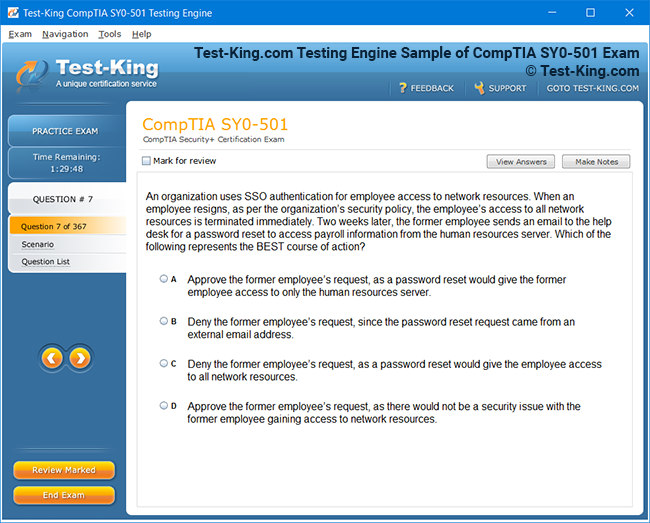
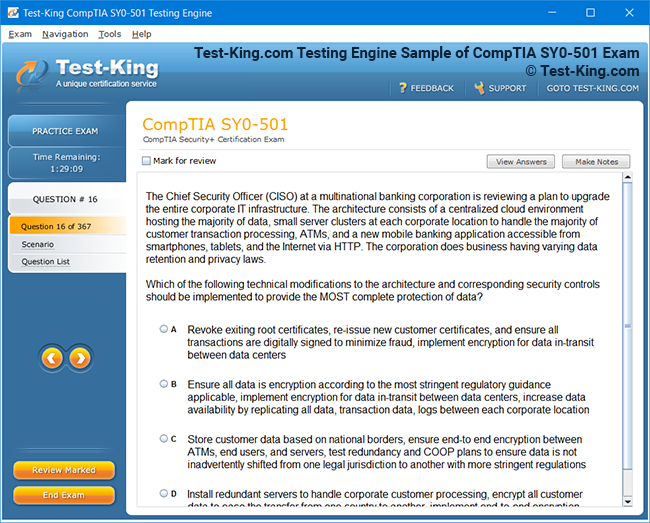
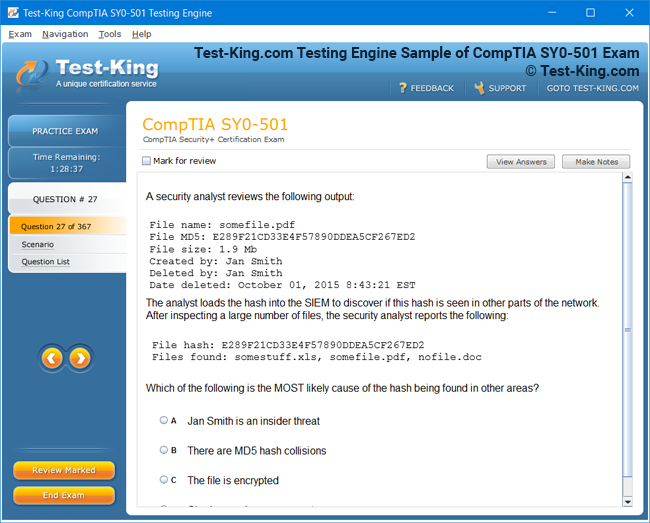
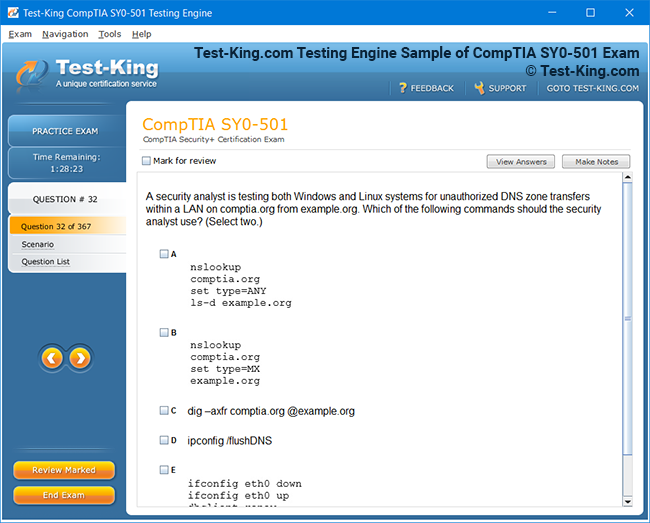
Product Screenshots
Frequently Asked Questions
How can I get the products after purchase?
All products are available for download immediately from your Member's Area. Once you have made the payment, you will be transferred to Member's Area where you can login and download the products you have purchased to your computer.
How long can I use my product? Will it be valid forever?
Test-King products have a validity of 90 days from the date of purchase. This means that any updates to the products, including but not limited to new questions, or updates and changes by our editing team, will be automatically downloaded on to computer to make sure that you get latest exam prep materials during those 90 days.
Can I renew my product if when it's expired?
Yes, when the 90 days of your product validity are over, you have the option of renewing your expired products with a 30% discount. This can be done in your Member's Area.
Please note that you will not be able to use the product after it has expired if you don't renew it.
How often are the questions updated?
We always try to provide the latest pool of questions, Updates in the questions depend on the changes in actual pool of questions by different vendors. As soon as we know about the change in the exam question pool we try our best to update the products as fast as possible.
How many computers I can download Test-King software on?
You can download the Test-King products on the maximum number of 2 (two) computers or devices. If you need to use the software on more than two machines, you can purchase this option separately. Please email support@test-king.com if you need to use more than 5 (five) computers.
What is a PDF Version?
PDF Version is a pdf document of Questions & Answers product. The document file has standart .pdf format, which can be easily read by any pdf reader application like Adobe Acrobat Reader, Foxit Reader, OpenOffice, Google Docs and many others.
Can I purchase PDF Version without the Testing Engine?
PDF Version cannot be purchased separately. It is only available as an add-on to main Question & Answer Testing Engine product.
What operating systems are supported by your Testing Engine software?
Our testing engine is supported by Windows. Andriod and IOS software is currently under development.
Top SAP Exams
E_S4HCON2023 : Step-by-Step Guide to Preparing for the SAP S/4HANA Conversion Exam
The SAP S/4HANA Conversion Exam is a meticulous evaluation designed for professionals who aspire to master the complexities of transitioning from legacy SAP systems to SAP S/4HANA. This examination is not merely a test of memorized facts but a nuanced assessment of practical knowledge, problem-solving capability, and strategic insight into system conversion and upgrades. Candidates are expected to demonstrate proficiency in navigating the intricacies of SAP landscapes, understanding the transformation of data, and implementing upgrades with minimal disruption to enterprise operations.
Understanding the SAP S/4HANA Conversion Exam
This credential validates a specialist's ability to conduct conversions and upgrades efficiently while ensuring business continuity. It emphasizes understanding the underlying architecture of SAP S/4HANA, the functional nuances of its modules, and the technical strategies necessary to execute successful migrations. Professionals undertaking this examination must exhibit an amalgamation of theoretical knowledge and hands-on experience, reflecting a deep comprehension of both technical processes and business implications.
The exam evaluates several core competencies. It measures the candidate’s ability to perform system assessments, evaluate the prerequisites for a successful conversion, and identify potential pitfalls that could compromise the integrity of the migration. Understanding dependencies between modules and the implications of new functionalities on existing processes is paramount. Additionally, the exam probes a candidate's skill in leveraging SAP tools to streamline the conversion process, optimize system performance, and maintain data consistency.
Exam Structure and Focus Areas
The assessment encompasses multiple areas that collectively ascertain a candidate’s mastery over SAP S/4HANA conversions. It includes detailed questions on the upgrade paths, highlighting distinctions between greenfield, brownfield, and hybrid approaches. Candidates are expected to demonstrate comprehension of technical aspects such as system requirements, software components, and database considerations. They must also understand functional ramifications across finance, logistics, procurement, and other core business processes.
Another critical focus of the examination is data transformation and migration. Professionals must be adept at executing data consistency checks, validating legacy data, and employing strategies that mitigate risks during migration. The examination tests not only the theoretical understanding of these processes but also the capability to troubleshoot real-world scenarios that could arise during conversion or upgrade projects.
The exam also emphasizes project preparation and planning. Candidates are required to showcase their ability to design conversion strategies tailored to organizational requirements, assess system readiness, and establish timelines that minimize operational disruption. Understanding the SAP solution manager and other essential tools forms a substantial part of the preparation, as these resources are integral to ensuring a smooth conversion process.
Skills and Competencies Required
To excel in the SAP S/4HANA Conversion Exam, a candidate must possess a robust blend of technical acumen and business insight. Key skills include the ability to evaluate system landscapes, identify components requiring upgrades, and anticipate technical challenges before they manifest. Professionals are also expected to understand the implications of software updates on integrated modules, ensuring that all business-critical functionalities continue to operate seamlessly.
Another pivotal competency is proficiency in data migration techniques. Candidates must understand how to cleanse, map, and transform data while preserving its integrity. Knowledge of SAP tools designed for conversion, including readiness check tools, migration object models, and sandbox environments, is essential. The exam also assesses the ability to interpret logs, analyze errors, and implement corrective measures effectively.
Equally important is an understanding of change management principles within the context of SAP projects. Professionals must be capable of guiding stakeholders through the conversion process, articulating the benefits of new functionalities, and addressing resistance to change. This combination of technical skill and organizational insight distinguishes a certified specialist as a resource capable of delivering comprehensive, end-to-end conversion solutions.
Challenges in SAP S/4HANA Conversion
Converting to SAP S/4HANA is a complex undertaking that presents numerous challenges. Legacy systems often contain customized code, outdated configurations, and fragmented data structures that complicate the migration process. Identifying these challenges early and devising strategies to mitigate them is critical for success. The examination assesses the candidate’s ability to foresee these obstacles and apply proven methodologies to overcome them.
Data quality issues represent one of the most formidable hurdles. Inconsistent, incomplete, or redundant data can impede conversion efforts and lead to operational disruptions. Candidates must demonstrate proficiency in executing data validation, reconciliation, and cleansing processes. Additionally, understanding the nuances of different data models within SAP S/4HANA compared to legacy systems is essential for ensuring accurate migration.
Integration complexities are another common challenge. SAP landscapes often involve numerous interconnected systems, each with its own dependencies and business rules. Ensuring that these integrations function seamlessly post-conversion requires both foresight and technical dexterity. The exam tests candidates on their ability to plan, execute, and monitor integrations, highlighting potential conflicts and providing resolutions that maintain system harmony.
Managing organizational expectations and change management is equally important. Conversions can trigger operational anxiety, especially when end-users must adapt to new interfaces, processes, and workflows. Professionals must be capable of communicating the rationale behind conversion decisions, providing adequate training, and maintaining user engagement throughout the transition. The exam evaluates both the technical strategy and the ability to navigate organizational dynamics effectively.
Preparing for the Examination
Successful preparation begins with a thorough understanding of the exam syllabus and objectives. Candidates should familiarize themselves with the various conversion methodologies, the technical architecture of SAP S/4HANA, and the functional implications across different modules. Study plans must integrate theoretical learning with practical exercises to reinforce understanding. Engaging with sandbox environments, performing mock conversions, and experimenting with upgrade tools are vital steps that bridge knowledge with application.
Comprehensive study resources include official SAP training, e-learning modules, and reference guides. Engaging with SAP communities, forums, and case studies enhances exposure to diverse scenarios that professionals might encounter. Practice questions and scenario-based exercises help develop critical thinking, analytical skills, and familiarity with the types of queries presented in the examination.
Equally crucial is time management during preparation. Allocating sufficient time to review core topics, troubleshoot mock exercises, and revisit challenging areas ensures balanced readiness. Candidates should simulate real-world conversion projects, documenting each step, noting errors, and applying corrective measures. This iterative process not only consolidates knowledge but also fosters confidence in handling unforeseen complications during the actual conversion.
Strategic Insights and Expert Recommendations
Experts often emphasize a strategic approach to SAP S/4HANA conversion preparation. Rather than focusing solely on memorization, professionals are advised to cultivate an understanding of systemic relationships, process interdependencies, and technical workflows. Appreciating the rationale behind system configurations, upgrade sequences, and data transformations empowers candidates to respond adeptly to complex exam scenarios.
In addition, networking with certified specialists and participating in knowledge-sharing forums can provide unique insights that standard training may not cover. Learning from the experiences of professionals who have executed real conversions helps contextualize theoretical knowledge, offering practical strategies for avoiding common pitfalls. These insights can prove invaluable for both exam success and future project implementation.
Fostering analytical reasoning is another cornerstone of preparation. The examination often presents scenarios that require logical deduction, risk assessment, and solution optimization. Professionals must practice evaluating the impact of potential changes, predicting system behavior post-conversion, and proposing viable remediation steps. This skill set reflects the multifaceted nature of SAP S/4HANA conversions, where technical precision and strategic foresight converge.
Finally, cultivating a mindset attuned to continuous learning is essential. SAP landscapes evolve rapidly, introducing new features, tools, and methodologies. Certified specialists are expected not only to excel in the examination but also to maintain relevance in the field. Staying abreast of updates, participating in workshops, and exploring advanced functionalities ensure sustained proficiency and credibility as a conversion expert.
Creating an Effective Study Plan for SAP S/4HANA Conversion Exam
Preparing for the SAP S/4HANA Conversion Exam requires more than rote memorization or surface-level familiarity with the system. It demands a meticulously structured approach that balances theoretical comprehension with practical experience. A deliberate study plan provides the scaffolding for focused learning, allowing candidates to traverse the expansive landscape of SAP S/4HANA system upgrades and conversions without succumbing to overwhelm. Crafting such a plan begins with introspection, assessing current skills, and identifying gaps that need attention. Professionals should evaluate their familiarity with SAP modules, system architectures, data migration processes, and upgrade methodologies. By conducting a candid appraisal of strengths and weaknesses, candidates can allocate effort strategically, ensuring that critical areas receive adequate attention while reinforcing existing knowledge.
The study plan should outline a clear timeline, encompassing daily, weekly, and monthly milestones. Segmenting preparation into manageable increments fosters consistency and prevents burnout. Each milestone must focus on specific competencies, such as understanding technical prerequisites, mastering data transformation techniques, or performing mock system conversions. Incorporating checkpoints allows candidates to measure progress, adjust the pace, and refine focus areas. This iterative process is instrumental in internalizing complex concepts and ensuring readiness for both conceptual and practical questions that appear on the exam.
Balancing Theoretical Knowledge with Hands-On Practice
While understanding theoretical principles is crucial, the SAP S/4HANA Conversion Exam emphasizes applied knowledge. Therefore, a study plan must integrate hands-on exercises, laboratory simulations, and sandbox environments. Engaging directly with system landscapes enhances comprehension of abstract concepts, allowing candidates to witness firsthand how configuration changes affect operations, how data migrates across modules, and how upgrade tools function under real conditions. Practicing conversion scenarios cultivates problem-solving skills and provides a safe space to experiment with different strategies, explore potential pitfalls, and learn corrective measures without jeopardizing live systems.
Candidates should allocate dedicated sessions for scenario-based exercises, simulating challenges that might arise during actual system upgrades. This approach enables learners to apply theoretical understanding, analyze outcomes, and refine techniques iteratively. For instance, experimenting with data cleansing and transformation techniques reinforces the nuances of maintaining data integrity during conversion, while performing mock upgrades hones proficiency in navigating system dependencies and inter-module interactions.
Utilizing Resources Effectively
A robust study plan relies on judicious selection of resources. Official SAP training materials and e-learning modules form the backbone of preparation, offering structured content aligned with exam objectives. Reference guides, technical manuals, and white papers supplement these resources, providing in-depth explanations of intricate concepts and best practices. Community forums, blogs, and discussion groups present opportunities to explore real-world experiences, uncover common pitfalls, and assimilate practical strategies from certified specialists.
Leveraging a combination of resources ensures a comprehensive understanding of both technical and functional aspects of the SAP S/4HANA conversion process. Candidates should engage with tutorials that demonstrate tool usage, case studies that illustrate system upgrade challenges, and articles that detail lessons learned from previous migrations. Integrating diverse learning modalities, including reading, watching instructional videos, and interactive exercises, enhances retention and accommodates different learning preferences.
Establishing a Consistent Study Routine
Consistency is a critical determinant of successful preparation. Developing a daily routine that allocates focused time for study, practice, and review reinforces discipline and mitigates knowledge attrition. Candidates should strive to balance intensive study sessions with adequate breaks, allowing the mind to assimilate complex information without cognitive fatigue. Time management techniques, such as the Pomodoro method, can be employed to maintain concentration and productivity, ensuring that each study session yields tangible progress.
Structured routines should also account for iterative review of previously covered material. Revisiting challenging topics periodically consolidates understanding and promotes long-term retention. For example, revisiting concepts of system readiness checks, conversion methodologies, and module dependencies after practical exercises enhances the ability to recall and apply knowledge during the exam. Integrating reflection into the routine, where candidates critically evaluate their learning strategies, fosters adaptability and continual improvement.
Prioritizing Core Topics and High-Impact Areas
Given the extensive scope of the SAP S/4HANA Conversion Exam, prioritization is essential. Candidates must identify core topics that carry significant weight in the assessment, such as conversion strategies, data migration, system architecture, and functional implications. These high-impact areas demand concentrated focus, as proficiency in these domains directly influences performance. Complementing core topics with supplementary knowledge of integration nuances, troubleshooting techniques, and project planning ensures comprehensive coverage without diluting effort.
Exam preparation should also emphasize understanding the interdependencies between technical and functional components. Mastery of the interplay between finance, logistics, procurement, and other business modules enhances the candidate’s ability to anticipate challenges, troubleshoot complex scenarios, and propose effective solutions. Prioritizing topics in this manner ensures a balanced approach, where effort is directed toward areas that maximize readiness while reinforcing holistic comprehension.
Incorporating Revision and Assessment Techniques
Periodic assessment is crucial for evaluating preparedness and reinforcing learning. Candidates should integrate self-assessment tools, quizzes, and scenario-based evaluations into their study plan. These assessments not only identify knowledge gaps but also familiarize candidates with the types of questions encountered during the exam. Practicing under timed conditions simulates the examination environment, enhancing familiarity with pacing and decision-making under pressure.
Active revision techniques, such as summarizing complex processes in one’s own words, creating mind maps, or teaching concepts to peers, strengthen cognitive retention. Engaging with practical examples, documenting lessons learned from mock exercises, and reviewing error patterns provide insight into recurring challenges and areas requiring additional attention. This reflective approach cultivates analytical thinking, enabling candidates to approach both straightforward and intricate exam questions with confidence.
Integrating Real-World Experience
The SAP S/4HANA Conversion Exam assesses applied understanding as much as theoretical knowledge. Therefore, candidates benefit greatly from exposure to real-world conversion projects. Participation in sandbox exercises, simulated migrations, or collaborative exercises with peers provides invaluable experience in navigating practical challenges. Encountering scenarios that mirror enterprise-level complexities—such as data inconsistencies, module interdependencies, and integration conflicts—enhances readiness for the nuanced questions that often appear on the exam.
Documenting these experiences, reflecting on problem-solving approaches, and analyzing outcomes further strengthens comprehension. Candidates develop a repository of practical knowledge that reinforces conceptual understanding, enabling them to respond adeptly to unfamiliar scenarios during the examination. Moreover, this experience cultivates a proactive mindset, where candidates anticipate potential obstacles and devise contingency strategies, reflecting the real-world demands of SAP system conversions.
Leveraging Analytical and Strategic Thinking
A successful study plan goes beyond memorization, fostering analytical and strategic thinking. Candidates are encouraged to approach each topic with a problem-solving lens, evaluating potential consequences, identifying dependencies, and considering multiple solutions. Strategic thinking encompasses planning conversion sequences, anticipating system behavior post-migration, and optimizing workflows to minimize disruption. Developing these cognitive skills enhances performance not only during the exam but also in practical application within professional environments.
Candidates can cultivate these abilities by engaging with complex scenario exercises, exploring alternative solutions, and reflecting on outcomes. This approach nurtures intellectual flexibility, enabling learners to navigate ambiguous or multifaceted questions with clarity. Over time, analytical rigor and strategic foresight become ingrained, forming a foundation for effective decision-making during both preparation and real-world SAP S/4HANA conversion projects.
Addressing Potential Challenges During Preparation
Even with a structured plan, candidates may encounter obstacles during preparation. Common challenges include information overload, difficulty grasping complex concepts, and balancing preparation with professional obligations. Addressing these challenges requires adaptability, resourcefulness, and resilience. Breaking down complex topics into smaller, digestible components, seeking guidance from mentors or community experts, and utilizing diverse learning formats can mitigate comprehension difficulties.
Time management challenges can be alleviated through disciplined scheduling, realistic milestone setting, and prioritization of high-impact topics. Additionally, cultivating a growth-oriented mindset, where mistakes are viewed as opportunities for learning, enhances perseverance and motivation. By anticipating and proactively addressing potential hurdles, candidates maintain momentum and ensure steady progress toward comprehensive exam readiness.
Optimizing Mental and Physical Preparedness
Effective preparation extends beyond intellectual engagement. Maintaining mental clarity, focus, and energy is essential for sustained study sessions and retention of intricate details. Candidates should integrate regular physical activity, adequate rest, and mindfulness practices into their routine to enhance cognitive performance. Balanced nutrition and hydration further support concentration and mental endurance, ensuring that candidates approach study sessions with optimal acuity.
Mindset and emotional resilience also play pivotal roles in preparation. Cultivating confidence, managing stress, and maintaining motivation throughout the study journey empower candidates to approach challenging topics and complex scenarios with equanimity. Mental and physical preparedness synergizes with strategic study efforts, creating a holistic approach that maximizes learning efficiency and readiness for the examination.
Deep Dive into SAP System Conversion Concepts
Embarking on SAP S/4HANA system conversion requires a profound understanding of the architecture, methodologies, and functional interdependencies that define enterprise landscapes. Unlike routine upgrades, conversion involves a meticulous reconfiguration of systems, harmonizing legacy environments with the sophisticated architecture of S/4HANA. The process demands more than technical proficiency; it requires strategic cognition to anticipate ramifications across finance, logistics, procurement, and other interconnected business processes. This examination evaluates the candidate’s ability to synthesize theoretical knowledge with practical insights, demonstrating not only familiarity with conversion tools but also the capacity to orchestrate seamless transitions.
Understanding SAP S/4HANA architecture forms the foundation of conversion expertise. The system is designed to unify transactional and analytical processes within a single in-memory database, which accelerates data retrieval and optimizes performance. Candidates must grasp the distinctions between the classical SAP ERP architecture and the modernized HANA environment. Awareness of data models, database structures, and the elimination of redundancy is essential for predicting how legacy data will integrate with new systems. The nuances of the Universal Journal, central finance, and advanced data modeling constitute critical focal points, as they impact both functional and technical conversion strategies.
System conversion methodologies are another core aspect of examination preparation. Professionals must distinguish between greenfield, brownfield, and hybrid approaches, each with unique implications. Greenfield conversion involves building an entirely new system landscape, offering a clean slate but requiring substantial data migration and process redesign. Brownfield conversion modifies existing systems, preserving historical configurations while adapting to S/4HANA standards. Hybrid approaches combine elements of both, allowing selective migration of modules or processes to optimize efficiency. Mastery of these methodologies entails not only understanding procedural steps but also recognizing situational advantages and limitations, tailoring the approach to organizational priorities.
The preparation also emphasizes pre-conversion assessments. Candidates are expected to evaluate system readiness by examining technical prerequisites, compatibility of add-ons, custom code adjustments, and hardware requirements. This stage involves meticulous auditing of legacy environments, identifying obsolete configurations, and determining the extent of customization that can be retained or transformed. Readiness checks, conducted through SAP-provided tools, simulate potential conversion scenarios, highlighting discrepancies and risk areas. Proficiency in interpreting these results and implementing corrective strategies is crucial, as unresolved issues can cascade into functional disruptions or data inconsistencies.
Data migration represents a significant component of SAP S/4HANA conversion, demanding scrupulous attention. Candidates must understand processes for extracting, cleansing, transforming, and loading data, ensuring integrity and accuracy throughout. Migration strategies must account for diverse data types, including master data, transactional data, and configuration records. Validation mechanisms are employed to detect anomalies, duplicates, or inconsistencies, safeguarding against operational disruption. The examination assesses familiarity with migration object models, data reconciliation techniques, and tools for automated transformation, as well as the ability to handle exceptions and edge cases during complex transitions.
Custom code adaptation is another pivotal area. Legacy systems often contain bespoke programs, enhancements, and reports tailored to specific business needs. Candidates must analyze existing code for compatibility with S/4HANA, identify deprecated functions, and refactor or redesign where necessary. This process ensures that functional integrity is maintained post-conversion while leveraging the performance benefits and streamlined capabilities of HANA. The ability to evaluate code efficiently, prioritize modifications, and apply systematic testing reflects both technical acumen and strategic foresight, qualities essential for certification success.
Integration considerations further compound the complexity of conversion. SAP landscapes are rarely isolated; they interface with numerous external systems, third-party applications, and internal modules. Effective conversion demands that these integrations function harmoniously post-migration, maintaining data flow consistency, transactional accuracy, and system responsiveness. Candidates are assessed on their understanding of interface mapping, middleware utilization, and testing methodologies. Anticipating integration challenges, implementing mitigation strategies, and validating outcomes are critical skills, demonstrating the candidate’s capacity to oversee holistic system transitions.
Functional implications permeate every stage of conversion, requiring comprehension of how technical changes affect operational processes. For instance, the transformation of financial modules may alter reporting structures, while logistics adjustments could impact supply chain workflows. Candidates must analyze functional dependencies, predict consequences of configuration modifications, and devise plans to maintain business continuity. This interplay between technical execution and business understanding distinguishes proficient specialists, reflecting their ability to deliver conversions that are both technically sound and operationally viable.
Project planning and execution strategies are embedded in the certification expectations. Candidates are expected to design comprehensive conversion roadmaps, detailing preparatory activities, milestone achievements, testing cycles, and cutover strategies. Knowledge of risk assessment, resource allocation, and contingency planning is essential. Effective scheduling minimizes downtime, prevents data loss, and ensures alignment with organizational objectives. The examination assesses the candidate’s capacity to synthesize these elements into coherent plans, demonstrating readiness to manage end-to-end conversion projects in real enterprise contexts.
Testing strategies occupy a central role in system conversion preparation. Rigorous testing validates functional integrity, system performance, and data accuracy. Candidates must understand unit testing, integration testing, regression testing, and user acceptance testing, ensuring that each process component operates seamlessly. Defects identified during testing must be systematically documented, analyzed, and rectified. Proficiency in orchestrating testing sequences, interpreting results, and applying corrective measures underscores the candidate’s practical competence and readiness for complex, high-stakes conversion scenarios.
Change management principles intersect with technical considerations during conversion. Candidates are evaluated on their ability to guide stakeholders, facilitate training, and communicate the rationale behind system modifications. Conversion projects inevitably generate disruption and uncertainty; successful specialists anticipate resistance, foster engagement, and implement strategies to maintain productivity throughout the transition. This dimension of preparation emphasizes soft skills, highlighting the candidate’s holistic understanding of organizational dynamics in parallel with technical expertise.
Optimization and post-conversion performance tuning constitute additional focus areas. SAP S/4HANA introduces advanced functionalities, such as predictive analytics, embedded reporting, and enhanced workflow automation. Candidates must demonstrate awareness of how to leverage these features post-migration, ensuring that business processes operate efficiently and insights are readily accessible. Techniques for performance monitoring, system parameter adjustments, and database optimization are integral to the skill set evaluated, reflecting a commitment to continuous improvement and operational excellence.
Candidates must also appreciate regulatory and compliance considerations inherent in conversion projects. Data integrity, audit readiness, and adherence to financial and operational regulations are imperative. The examination probes knowledge of these aspects, assessing the candidate’s ability to maintain compliance while executing technical transformations. This underscores the broader responsibility of a certified specialist to balance innovation with governance, ensuring that conversions align with organizational, legal, and industry standards.
Practical application of these concepts is reinforced through simulated projects and case studies. Candidates are encouraged to replicate conversion scenarios in controlled environments, encountering data anomalies, module conflicts, and integration challenges. Reflection on these exercises, documentation of problem-solving approaches, and iterative refinement of strategies consolidate both conceptual understanding and practical expertise. This experiential learning complements theoretical study, producing a well-rounded, resilient practitioner capable of managing real-world SAP S/4HANA conversions.
Conclusion
Analytical thinking and adaptive problem-solving remain central throughout preparation. Candidates are assessed on their ability to dissect complex conversion scenarios, evaluate competing solutions, and determine optimal courses of action. This cognitive agility enables professionals to navigate unanticipated challenges, implement contingency strategies, and maintain operational stability. Cultivating these skills is essential not only for exam success but also for professional efficacy in dynamic enterprise environments where conversions are multifaceted and high stakes.
Continued exposure to evolving SAP functionalities is another dimension of readiness. S/4HANA undergoes regular updates, introducing new tools, improved interfaces, and enhanced capabilities. Candidates are expected to engage with these developments, understanding how innovations affect conversion strategies and functional integrations. Staying current with system enhancements, participating in knowledge exchanges, and exploring advanced features ensures that certified specialists remain competent and adaptable, ready to implement cutting-edge solutions.