

Exam Code: C_TSCM62_67
Exam Name: SAP Certified Application Associate - Sales and Distribution, ERP 6.0 EhP7
Certification Provider: SAP
Corresponding Certification: SAP Application Associate
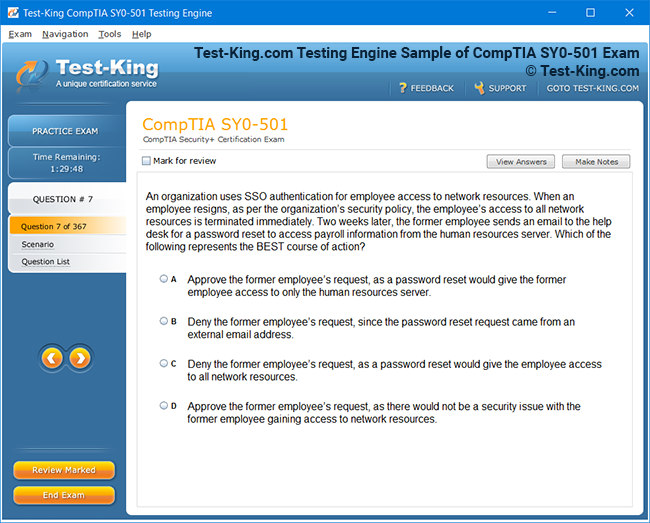
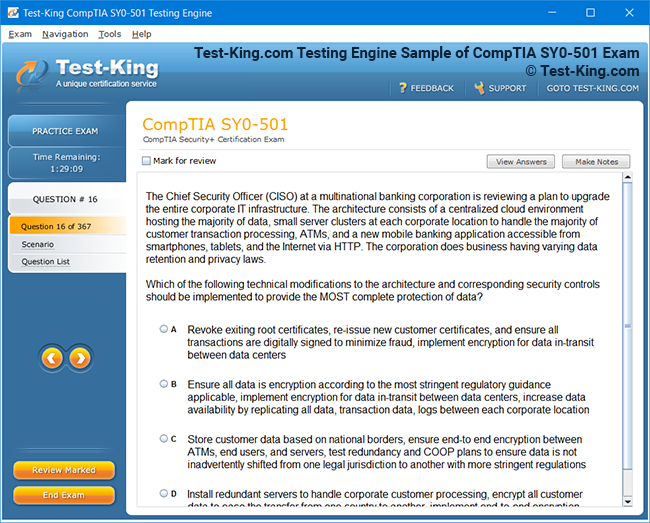
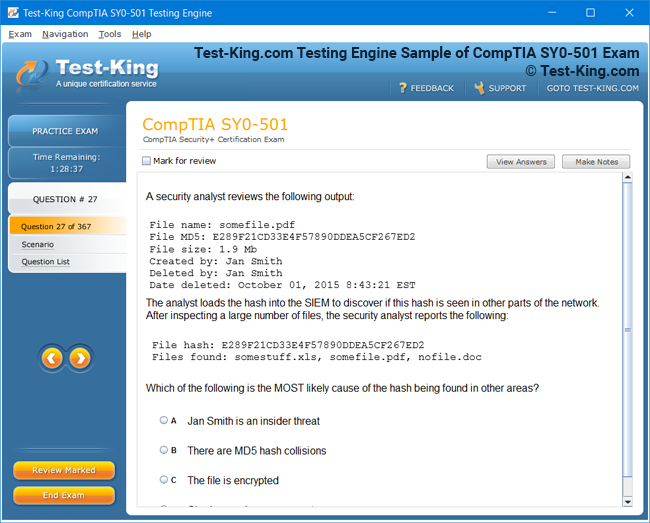
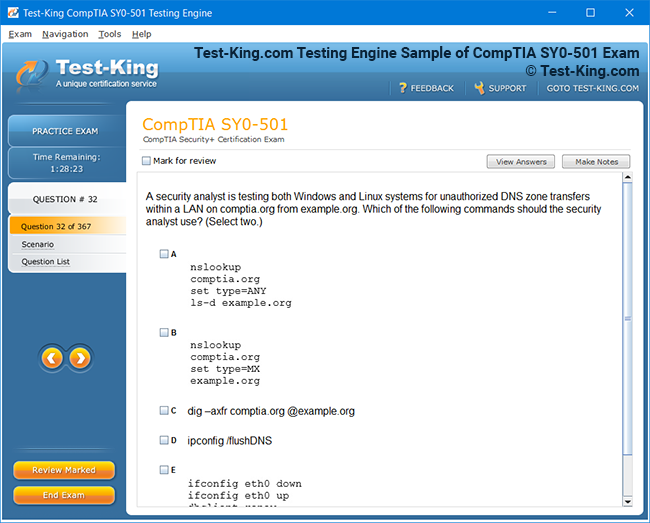
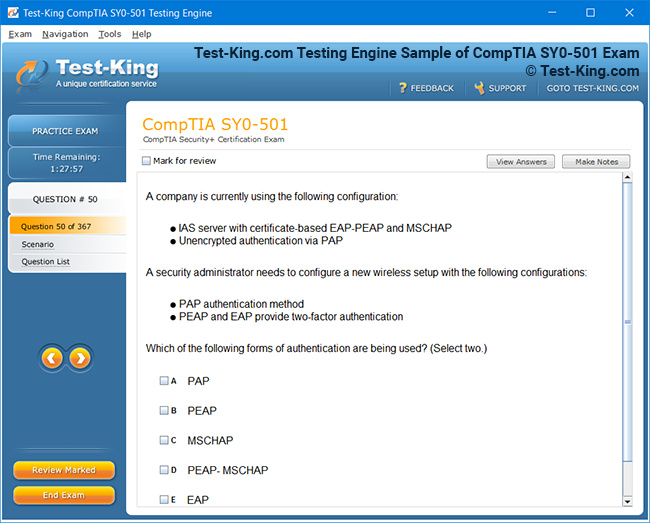
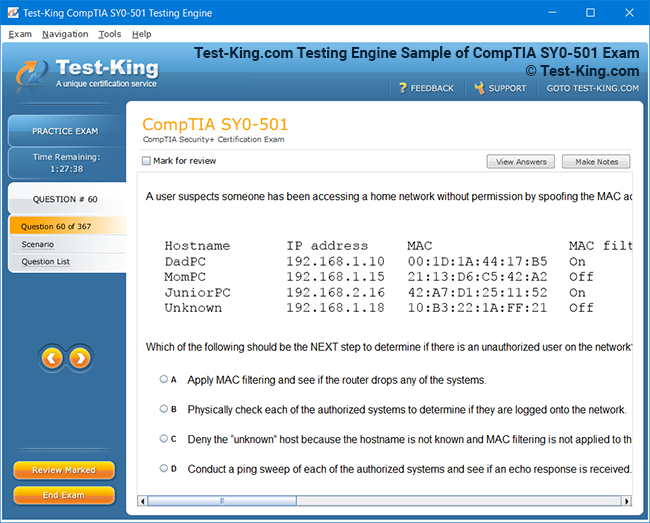
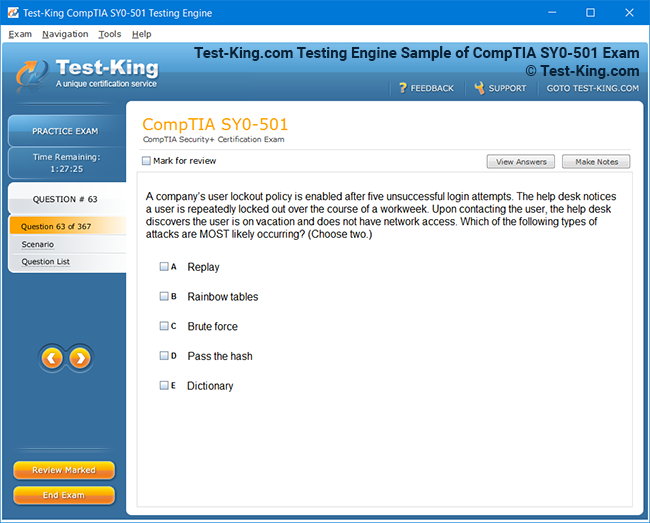
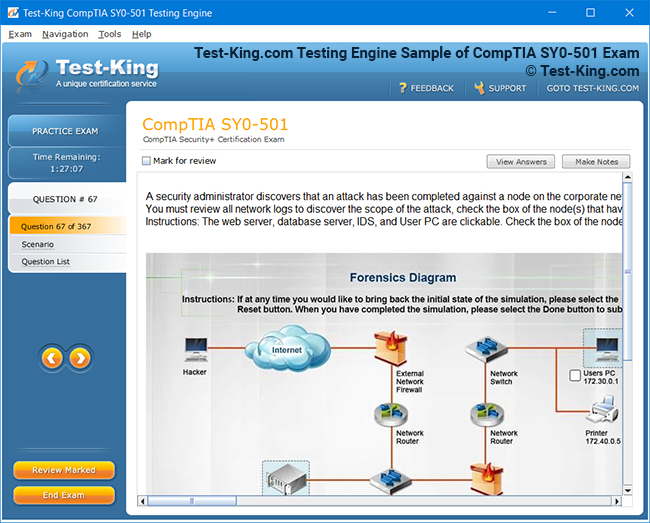
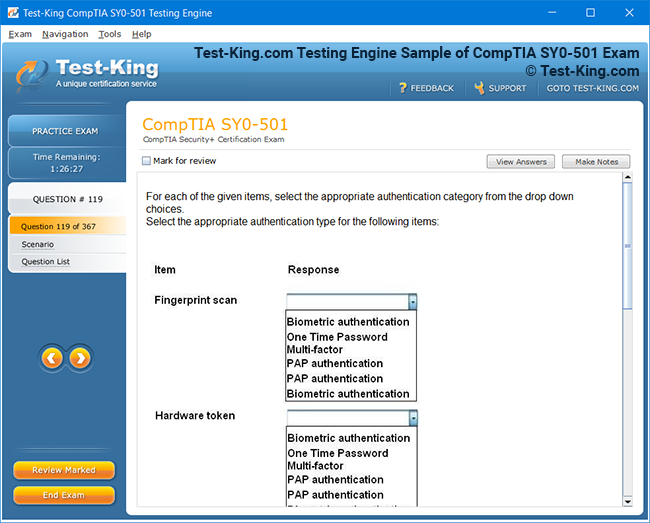
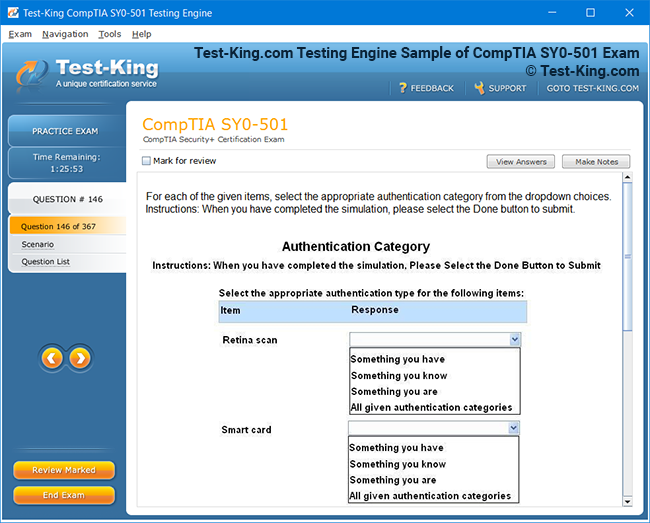
Product Screenshots
Frequently Asked Questions
How can I get the products after purchase?
All products are available for download immediately from your Member's Area. Once you have made the payment, you will be transferred to Member's Area where you can login and download the products you have purchased to your computer.
How long can I use my product? Will it be valid forever?
Test-King products have a validity of 90 days from the date of purchase. This means that any updates to the products, including but not limited to new questions, or updates and changes by our editing team, will be automatically downloaded on to computer to make sure that you get latest exam prep materials during those 90 days.
Can I renew my product if when it's expired?
Yes, when the 90 days of your product validity are over, you have the option of renewing your expired products with a 30% discount. This can be done in your Member's Area.
Please note that you will not be able to use the product after it has expired if you don't renew it.
How often are the questions updated?
We always try to provide the latest pool of questions, Updates in the questions depend on the changes in actual pool of questions by different vendors. As soon as we know about the change in the exam question pool we try our best to update the products as fast as possible.
How many computers I can download Test-King software on?
You can download the Test-King products on the maximum number of 2 (two) computers or devices. If you need to use the software on more than two machines, you can purchase this option separately. Please email support@test-king.com if you need to use more than 5 (five) computers.
What is a PDF Version?
PDF Version is a pdf document of Questions & Answers product. The document file has standart .pdf format, which can be easily read by any pdf reader application like Adobe Acrobat Reader, Foxit Reader, OpenOffice, Google Docs and many others.
Can I purchase PDF Version without the Testing Engine?
PDF Version cannot be purchased separately. It is only available as an add-on to main Question & Answer Testing Engine product.
What operating systems are supported by your Testing Engine software?
Our testing engine is supported by Windows. Andriod and IOS software is currently under development.
Top SAP Exams
Comprehensive Guide to SAP C_TSCM62_67: Exam Structure and Key Concepts
The SAP Certified Application Associate in Sales and Distribution for ERP 6.0 EhP7 is a distinguished certification that demonstrates a professional’s capability to efficiently manage sales and distribution processes within the SAP ecosystem. This certification validates a candidate's knowledge in core sales and distribution modules, such as order management, delivery processing, billing, and integration with other ERP components. It is designed for individuals seeking to enhance their career in SAP consulting, business process management, or IT project implementation with a focus on sales and distribution operations. Attaining this credential signifies that the candidate has a thorough understanding of SAP SD functionalities, configuration settings, and business process integration, which are pivotal for organizations implementing ERP solutions.
Understanding SAP Certified Application Associate - Sales and Distribution
The exam itself evaluates not only theoretical knowledge but also practical expertise. Candidates are expected to have hands-on experience with sales order processing, pricing mechanisms, and the overall flow of data from sales orders to financial accounting integration. SAP emphasizes a comprehensive approach, requiring professionals to understand both system configuration and operational execution. The C_TSCM62_67 exam measures proficiency in handling complex business scenarios, including order-to-cash processes, handling returns, and managing intercompany sales, which are essential for global enterprises.
Exam Structure and Question Types
The certification assessment for SAP Sales and Distribution ERP 6.0 EhP7 consists of multiple-choice questions that encompass scenario-based questions, requiring candidates to analyze and resolve realistic business situations. These questions are crafted to test the understanding of core processes and configuration knowledge, including the management of master data, pricing strategies, and order fulfillment procedures. Each question is meticulously designed to gauge a candidate’s ability to apply concepts in a practical environment rather than solely memorizing facts.
Scenario-based questions may present a situation where a customer places a complex order involving multiple delivery dates, varied pricing conditions, and special discounts. Candidates are expected to determine the correct sequence of steps to process the order, configure the pricing elements accurately, and ensure seamless integration with financial and inventory modules. Other questions may test knowledge of organizational structure, such as sales organizations, distribution channels, and divisions, and how these elements impact sales and distribution operations. Understanding the interplay between master data, including customer, material, and condition records, is crucial for successfully answering these questions.
The exam duration is designed to accommodate comprehensive assessment, allowing candidates to read, analyze, and respond thoughtfully to each question. While it is not explicitly timed to rush participants, it is essential to practice time management and develop strategies for tackling questions efficiently. Professionals who are adept at mapping business requirements to SAP system functionalities tend to perform exceptionally well in this evaluation. This approach ensures that certified individuals can translate business needs into effective SAP SD solutions.
Core Topics and Functionalities
Sales and distribution processes in SAP ERP 6.0 EhP7 cover a broad spectrum of functionalities. Key areas include pre-sales activities, order processing, shipping, billing, and credit management. Pre-sales activities involve managing inquiries, quotations, and contracts, which are essential for initiating business transactions. SAP provides tools to streamline these processes, ensuring that all relevant data is captured and available for subsequent order processing. A candidate must understand the lifecycle of a sales document, the dependencies between documents, and the conditions under which certain processes are triggered.
Order processing involves the creation, modification, and management of sales orders. This includes entering customer requirements, selecting appropriate materials, applying pricing conditions, and scheduling delivery dates. Delivery processing encompasses picking, packing, and shipping goods to customers, while ensuring accurate updates to inventory records. Billing functionality ensures that invoices are generated correctly and integrated with financial accounting. Candidates must also comprehend intercompany sales processes, consignment stocks, third-party orders, and return order handling, which are integral to multinational business operations.
Pricing and condition techniques are critical for efficient sales operations. The exam evaluates understanding of how pricing procedures are defined, including the sequence of condition types, access sequences, and determination rules. Pricing conditions may include discounts, surcharges, taxes, and freight costs. Configuring these correctly requires a detailed understanding of business scenarios and the impact on financial outcomes. SAP provides mechanisms to automate pricing, but the professional must ensure that conditions align with company policies and regulatory requirements.
Master data forms the backbone of sales and distribution processes. Customer master records contain information about payment terms, shipping preferences, and sales area assignments. Material master records store data about products, including descriptions, units of measure, and sales-related attributes. Condition records determine pricing for materials and customers, forming the basis for automated calculations during order processing. Understanding the creation, maintenance, and interrelation of master data is crucial for operational efficiency and accurate reporting.
Integration with Other ERP Modules
A fundamental aspect of the certification is the integration of sales and distribution processes with other SAP ERP components. For instance, order-to-cash procedures are closely linked with financial accounting, material management, and production planning. A sales order triggers updates to inventory, generates delivery documents, and eventually leads to invoice creation in financial accounting. This seamless integration ensures that organizational processes are synchronized, reducing errors and enhancing efficiency.
Credit management is another vital area evaluated in the certification. It involves assessing customer creditworthiness, monitoring outstanding receivables, and managing payment risks. SAP provides tools for automatic credit checks during order creation, which helps prevent financial exposure and supports informed decision-making. Professionals must understand credit limit definitions, risk categories, and automatic blockage rules to ensure smooth sales operations.
Shipping and transportation management are also integral to SAP SD. Candidates are expected to comprehend how delivery documents are generated, how picking and packing are managed, and how goods movements are recorded. Transportation planning, route determination, and shipment costing are important topics, especially for enterprises that manage logistics across multiple locations. A certified professional must be able to analyze shipment requirements, optimize routes, and ensure timely delivery, reflecting real-world business scenarios.
Exam Preparation and Study Recommendations
Effective preparation for the SAP C_TSCM62_67 certification involves a combination of theoretical study, practical exercises, and scenario analysis. Understanding the exam blueprint and the weightage of each topic helps candidates prioritize their efforts. Training courses offered by SAP or authorized partners provide comprehensive coverage of functional areas, system navigation, and configuration settings. These courses often include hands-on exercises that simulate real business scenarios, which are invaluable for developing practical expertise.
Self-study resources such as SAP Learning Hub, e-books, and practice questions are highly recommended. Candidates should focus on mastering sales order processing, pricing procedures, delivery and billing management, and integration with financial modules. Scenario-based exercises help develop problem-solving skills and reinforce understanding of dependencies between different processes. Time management during practice sessions is crucial, allowing candidates to familiarize themselves with question formats and improve efficiency in responding to complex scenarios.
A methodical approach involves reviewing each functional area, identifying potential weaknesses, and creating a study schedule that allocates sufficient time for revision. Peer discussions, online forums, and SAP community networks provide additional insights and real-world perspectives. Engaging with professionals who have already attained the certification can reveal common pitfalls, effective strategies, and nuanced details that may not be covered in standard study materials.
Common Business Scenarios and Practical Knowledge
The exam often tests the ability to handle complex business requirements, such as processing urgent orders, applying multiple pricing conditions, managing backorders, and executing intercompany transactions. Candidates should be adept at interpreting business rules and translating them into system configurations and process flows. Understanding document flow, including how sales orders trigger deliveries and invoices, is critical for maintaining operational accuracy.
Handling returns and cancellations is another practical aspect assessed in the certification. Professionals must know how to process return orders, manage credit memos, and ensure that inventory levels are adjusted correctly. These processes require a deep understanding of both system functionality and business implications, including financial reconciliations and customer relationship management.
Knowledge of reporting and analytics is also essential. SAP SD provides standard reports to monitor sales performance, delivery status, and billing accuracy. Professionals must understand how to generate, interpret, and act upon these reports to support decision-making. Analytical skills complement functional knowledge, enabling certified individuals to provide actionable insights to business stakeholders.
Advanced Sales and Distribution Functionalities and Configuration Insights
The SAP Certified Application Associate in Sales and Distribution for ERP 6.0 EhP7 demands not only comprehension of basic processes but also mastery of advanced functionalities and configuration nuances. Professionals must understand how the system orchestrates complex workflows, ensuring accurate data flow between sales, logistics, and finance. Advanced configuration in SAP SD includes managing pricing hierarchies, defining condition techniques, setting up output determination, and creating intricate sales document types tailored to unique business requirements. Mastery of these concepts ensures that business processes are executed efficiently, errors are minimized, and operational agility is maintained.
Understanding the architecture of SAP Sales and Distribution requires attention to its integration with material management and financial accounting. Sales orders serve as pivotal documents linking multiple modules. When a customer places an order, the system validates material availability, triggers inventory updates, and subsequently generates delivery schedules. Knowledge of item categories, schedule line categories, and copy control mechanisms is crucial to manage the lifecycle of sales documents. Professionals must be adept at customizing these elements to reflect organizational policies and industry standards.
Sales Document Configuration and Lifecycle
Sales document management begins with understanding document types, their numbering, and sequence control. Different document types cater to inquiries, quotations, standard orders, and credit or debit memos. Each type has predefined behavior influencing processing steps, output formats, and integration with billing. Professionals are expected to configure item categories to determine how materials behave within orders. Schedule line categories control delivery quantities and dates, ensuring alignment with production and warehouse capabilities. Copy control defines how information transfers between documents, maintaining consistency while allowing flexibility for modifications.
Pricing and conditions are central to sales document processing. The configuration of pricing procedures involves assigning access sequences to condition types, defining calculation schemas, and determining subtotals. SAP allows for automatic determination of pricing based on customer, material, and sales area combinations. Discounts, surcharges, taxes, and freight costs must be applied correctly to ensure profitability and compliance. Professionals must understand how to adjust pricing procedures for different scenarios, such as promotional campaigns, seasonal adjustments, or multi-currency transactions. Scenario-based questions in the certification frequently test the ability to handle complex pricing requirements accurately.
Output determination in SAP SD controls how documents such as invoices, delivery notes, and order confirmations are generated and communicated to customers. Configuration requires setting conditions based on document type, sales area, customer, or delivery. Professionals must know how to define output types, assign mediums for transmission such as email, print, or electronic data interchange, and ensure timely communication with stakeholders. Misconfigurations in output determination can lead to operational inefficiencies, delayed shipments, or billing discrepancies.
Delivery Processing and Logistics Integration
Delivery processing is a critical step in the sales and distribution cycle. SAP SD integrates seamlessly with warehouse management and transportation systems to track goods movement. Professionals must understand how to create and process outbound deliveries, including picking, packing, and posting goods issues. Delivery types are configured to reflect standard shipments, urgent deliveries, or returns. Item and schedule line categories within deliveries ensure that quantities and dates correspond with customer requirements.
Transportation management extends delivery functionality by enabling route determination, shipment planning, and cost calculation. SAP allows defining transportation zones, route types, and shipping conditions to optimize delivery operations. Professionals must be capable of configuring these elements to reduce logistical bottlenecks, minimize transportation costs, and enhance customer satisfaction. Integration with material management ensures that inventory levels are updated accurately, preventing stock discrepancies and facilitating timely order fulfillment.
Handling returns and credit memos is another important aspect of delivery and billing integration. Return orders require careful attention to ensure that returned goods are properly inspected, restocked, or scrapped, and that financial transactions reflect accurate credits. SAP SD provides tools for processing return deliveries, posting goods receipts, and generating corresponding credit memos. Professionals must understand the workflow for returns, including reference documents, item categories, and integration with financial accounting for accurate reconciliation.
Billing, Invoicing, and Financial Integration
Billing processes transform delivered goods into receivables, linking sales and financial accounting. SAP SD offers flexible billing types, including invoice, credit, debit, and collective billing. Configuration involves determining billing relevance of sales documents, defining billing cycles, and setting up account determination. Professionals must ensure that all relevant taxes, discounts, and surcharges are correctly reflected in invoices. Integration with accounts receivable guarantees that revenue is posted accurately, facilitating smooth financial reporting and audit compliance.
Account determination in SAP SD involves linking billing items to appropriate general ledger accounts. This process ensures that revenue, discounts, and taxes are reflected in financial statements accurately. Configuration requires understanding of account keys, posting rules, and integration with pricing procedures. Professionals must analyze how changes in billing documents impact financial postings, ensuring that revenue recognition aligns with accounting standards. Scenario-based exam questions often test the candidate’s ability to resolve discrepancies between billing and financial postings while maintaining compliance with corporate policies.
Master Data Management and Organizational Structures
Master data in SAP SD underpins every transaction, including customer, material, and condition records. Customer master records store critical information such as payment terms, shipping instructions, and sales area assignments. Material master records define attributes like descriptions, units of measure, and sales-related data. Condition records capture pricing information for materials and customers. Professionals must know how to maintain, validate, and relate these master data elements to ensure accuracy in order processing. Mismanagement of master data can lead to errors in pricing, delivery, and invoicing, disrupting business operations.
Organizational structures define the framework within which sales and distribution processes operate. Sales organizations, distribution channels, divisions, and plants must be configured accurately to reflect the company’s operational hierarchy. Assignment of customers and materials to these structures determines how orders are processed, deliveries executed, and invoices generated. Professionals must understand the interrelationships between organizational elements, ensuring seamless integration and accurate reporting.
Credit Management and Risk Mitigation
Credit management is a vital component of SAP SD that safeguards organizations from financial exposure. It involves evaluating customer credit limits, monitoring outstanding receivables, and enforcing credit checks during order processing. Professionals must know how to configure credit control areas, define risk categories, and implement automatic credit blocks. Integration with sales orders ensures that only customers with sufficient creditworthiness can place orders, minimizing bad debt risks. Exam scenarios often present situations where multiple orders exceed credit limits, requiring the candidate to determine the correct course of action to maintain operational continuity while mitigating financial risk.
Advanced credit management includes defining scoring rules, automatic credit limit adjustments, and exception handling. Professionals are expected to monitor credit exposure, generate alerts for overdue payments, and coordinate with accounts receivable for collections. Effective credit management enhances cash flow, reduces defaults, and supports sustainable business growth.
Reporting, Analytics, and Decision Support
SAP SD provides robust reporting capabilities that allow professionals to monitor sales performance, delivery status, and billing accuracy. Standard reports include sales order reports, delivery analysis, billing statistics, and credit exposure summaries. Professionals must understand how to generate, interpret, and act upon these reports to optimize business decisions. Analytical skills complement functional expertise, enabling certified individuals to provide insights into sales trends, operational bottlenecks, and revenue forecasts.
Advanced reporting involves customizing output to meet organizational needs, integrating data from multiple sources, and creating dashboards for executive decision-making. Professionals may also leverage SAP Query and InfoSets to extract complex data sets and perform multidimensional analysis. Understanding how to interpret key performance indicators, such as order-to-cash cycle time or billing accuracy, helps professionals identify process improvements and align operations with strategic objectives.
Configuration, Scenario-Based Exercises, and Advanced Process Management
Achieving proficiency in the SAP Certified Application Associate for Sales and Distribution ERP 6.0 EhP7 requires not only familiarity with basic functionalities but also a deep understanding of configuration intricacies and the ability to navigate complex scenarios. The exam assesses a professional’s capability to manage real-world business operations within the SAP ecosystem, including order-to-cash workflows, advanced pricing strategies, and integration with financial and logistics modules. Candidates must develop both technical acumen and analytical reasoning to handle multifaceted processes and ensure seamless system performance.
Sales Order Configuration and Complex Pricing Scenarios
Sales orders are the backbone of SAP SD processes. Configuring sales document types, item categories, and schedule line categories forms the foundation for handling various order scenarios. Item categories determine the behavior of materials within an order, influencing pricing, delivery, and billing. Schedule line categories control delivery quantities, dates, and availability checks, ensuring that orders align with inventory and production capabilities. Professionals are expected to master the nuances of copy control, which governs how information flows from one document to another, preserving consistency while allowing necessary modifications for specific business requirements.
Pricing in SAP SD is intricate and often scenario-dependent. Condition techniques involve access sequences, condition types, and calculation schemas. Professionals must be able to define pricing procedures that accommodate discounts, surcharges, freight costs, and taxes while maintaining compliance with company policies. Exam scenarios frequently require the determination of correct pricing when multiple conditions apply simultaneously, such as promotional discounts, customer-specific agreements, or seasonal surcharges. Understanding subtotals, pricing scales, and cumulative conditions is essential for accurate and profitable order management.
Delivery Processing and Logistics Execution
Delivery documents represent the transition from order to physical fulfillment. Professionals must understand outbound delivery creation, picking, packing, and goods issue posting. Delivery types are configured to reflect standard shipments, urgent orders, returns, and intercompany deliveries. Item and schedule line categories within deliveries ensure accurate quantities, dates, and inventory updates. Integration with warehouse management and transportation modules allows for precise tracking of goods movements, route determination, and cost optimization.
Handling returns and cancellations is an essential skill evaluated in the certification. SAP provides tools to process return deliveries, generate credit memos, and manage inventory adjustments. Professionals must know how to configure return order types, item categories, and workflow dependencies to ensure that returned goods are inspected, restocked, or scrapped appropriately, while financial postings accurately reflect the reversal. Scenario-based questions often present situations where customers return multiple items with varying conditions, testing the candidate’s ability to apply rules correctly.
Transportation planning involves defining routes, shipping conditions, and transportation zones. Professionals must configure transportation schedules to optimize delivery times, reduce costs, and ensure timely customer service. Advanced scenarios may require the coordination of shipments across multiple plants or distribution centers, demanding a comprehensive understanding of logistical integration and material flow within the SAP system.
Billing, Invoicing, and Financial Reconciliation
Billing processes in SAP SD link delivered goods to financial accounting, creating receivables and updating general ledger accounts. Billing types include invoice, credit memo, debit memo, and collective billing. Professionals must understand how to configure billing relevance, billing cycles, and account determination. Integration with financial accounting ensures that revenue, discounts, and taxes are posted correctly, maintaining accurate financial records.
Account determination is critical for mapping SD transactions to general ledger accounts. Configuration involves defining account keys, posting rules, and integration with pricing procedures. Professionals must analyze the impact of billing documents on financial postings, ensuring compliance with accounting standards and organizational policies. Scenario-based exercises often include discrepancies between billing and payments, requiring professionals to identify root causes and implement corrective actions within the system.
Master Data Management and Organizational Hierarchies
Master data is the foundation of all sales and distribution processes. Customer master records contain essential information such as payment terms, shipping instructions, and sales area assignments. Material master records define product attributes, units of measure, and sales-specific data. Condition records store pricing information for customer and material combinations. Maintaining accurate and consistent master data is critical, as errors can propagate through order processing, delivery, and billing, causing operational inefficiencies.
Organizational hierarchies define the structure in which sales processes operate. Sales organizations, distribution channels, divisions, and plants must be configured to reflect the company’s operational model. Professionals must understand how customers and materials are assigned to these structures and how these assignments impact order processing, pricing, and reporting. Complex scenarios may involve multiple sales organizations serving the same customer or materials being sold through different distribution channels, requiring careful configuration and analysis to ensure correct system behavior.
Credit Management and Risk Assessment
Credit management safeguards companies from financial exposure. SAP SD integrates credit checks during sales order creation to ensure that customers have sufficient credit limits. Professionals must configure credit control areas, risk categories, and automatic credit blocks. They must also manage exceptions and overrides in scenarios where orders exceed limits temporarily or require managerial approval. Advanced credit management includes monitoring customer exposure, generating alerts for overdue payments, and coordinating with accounts receivable for collections. Scenario-based exam questions often simulate high-risk orders, requiring candidates to make decisions that balance operational needs and financial prudence.
Scenario-Based Problem Solving and Exam Strategies
The SAP C_TSCM62_67 certification emphasizes practical problem-solving through scenario-based questions. Candidates may be presented with situations involving urgent orders, pricing conflicts, returns, or intercompany transactions. Each scenario tests the candidate’s ability to analyze business requirements, configure the system appropriately, and ensure accurate process execution. Professionals must be adept at identifying dependencies between documents, understanding the impact on master data, and ensuring integration across sales, logistics, and finance modules.
Effective exam strategies include thoroughly reading each scenario, identifying key requirements, and mapping them to SAP functionalities. Practicing scenario-based exercises helps develop analytical skills and familiarity with complex workflows. Candidates should focus on understanding the rationale behind configuration choices, the interaction of master data with process execution, and the implications of system settings on operational outcomes.
Reporting and Analytics in Sales and Distribution
SAP SD offers robust reporting and analytical tools that support decision-making. Reports cover sales performance, delivery status, billing accuracy, and credit exposure. Professionals must know how to generate, interpret, and act upon these reports. Analytical skills allow professionals to identify trends, anticipate operational bottlenecks, and provide insights for strategic planning.
Advanced reporting may involve customizing output to meet organizational needs, extracting complex datasets, and integrating information from multiple modules. Professionals may use queries to analyze multidimensional data, focusing on key performance indicators such as order-to-cash cycle time, delivery fulfillment rates, and billing efficiency. Scenario-based questions often test the ability to interpret data accurately, providing actionable recommendations based on insights derived from SAP reports.
Configuration Best Practices, Testing Methodologies, and Advanced Scenario Handling
Achieving mastery in SAP Certified Application Associate for Sales and Distribution ERP 6.0 EhP7 requires a sophisticated understanding of configuration best practices, rigorous testing methodologies, and the ability to navigate advanced business scenarios. The certification evaluates not only functional knowledge but also practical acumen, demanding that professionals can manage complex workflows while ensuring seamless integration with financial, logistics, and production modules. Configuring SAP SD effectively requires meticulous attention to detail, comprehensive awareness of business rules, and an ability to anticipate operational contingencies.
Optimizing Sales Document Configuration
Sales document configuration is a critical component for accurate order processing and operational efficiency. Professionals must configure sales document types, item categories, schedule line categories, and copy control mechanisms with precision. Item categories influence the behavior of materials, determining whether they are relevant for pricing, delivery, or billing. Schedule line categories ensure alignment between requested quantities and available stock, facilitating seamless order fulfillment. Copy control mechanisms govern the flow of data between sales documents, preserving critical information while allowing necessary adjustments to reflect evolving business requirements.
Advanced configuration requires understanding dependencies between various sales documents. For example, a quotation may lead to a standard order, which then triggers a delivery and billing document. Professionals must ensure that item and schedule line categories propagate correctly through this sequence, maintaining data integrity and operational consistency. Scenario-based exercises in the exam often test the candidate’s ability to configure documents to handle urgent orders, partial deliveries, or intercompany transactions.
Pricing Configuration and Complex Condition Techniques
Pricing remains one of the most intricate areas in SAP SD. Professionals must master the configuration of condition types, access sequences, and pricing procedures. Each pricing procedure defines how individual conditions, such as discounts, surcharges, taxes, and freight costs, are applied to a sales order. Subtotals and calculation rules must be defined accurately to ensure compliance with organizational policies and profitability targets.
Exam scenarios frequently require handling multiple overlapping conditions, such as customer-specific agreements combined with seasonal promotions or special discounts. Professionals must understand how condition records interact, the sequence in which they are applied, and the impact on overall pricing. Advanced configuration may also involve multiple currencies, taxation schemes, and intercompany pricing, necessitating a sophisticated understanding of how SAP calculates and posts amounts during order processing.
Output determination is another critical configuration aspect. Professionals must define output types, assign transmission mediums, and configure conditions to ensure accurate and timely communication with customers. This includes invoices, order confirmations, delivery notes, and credit memos. Misconfigured outputs can disrupt operations, delay shipments, or generate incorrect financial postings. The exam evaluates the candidate’s ability to set up output determination for complex scenarios, ensuring documents are correctly transmitted and reconciled.
Delivery and Logistics Configuration
Delivery processing represents the operational execution of sales orders. Professionals must configure delivery types, item categories, schedule line categories, and route determination rules. Accurate delivery configuration ensures that goods are picked, packed, and shipped efficiently, while inventory updates are reflected in real-time. Integration with warehouse management and transportation modules is essential for precise logistical execution.
Handling returns and cancellations is an important aspect of delivery management. Professionals must configure return order types, item categories, and workflow dependencies to manage returned goods accurately. This includes inspecting items, updating inventory, and generating corresponding credit memos. Exam scenarios often present situations with multiple return items, partial returns, or cross-company returns, requiring careful application of system rules and process logic.
Transportation planning involves defining shipping conditions, routes, and zones. Professionals must configure transportation schedules to optimize delivery times, minimize costs, and ensure timely service. Advanced scenarios may involve multi-plant deliveries, cross-docking operations, or complex intercompany logistics, testing the candidate’s ability to orchestrate shipments efficiently across the organization.
Billing Configuration and Financial Integration
Billing transforms delivered goods into financial transactions, linking SAP SD with financial accounting. Professionals must configure billing relevance for sales documents, determine billing types, set up account determination, and define billing cycles. Accurate configuration ensures that revenue, taxes, discounts, and surcharges are posted correctly to general ledger accounts, facilitating accurate financial reporting.
Account determination maps SD transactions to appropriate accounts in financial accounting. Professionals must configure account keys, posting rules, and integration with pricing procedures. Advanced exercises may involve resolving discrepancies between billing documents and payments, requiring analytical skills and a detailed understanding of system postings. Scenario-based questions often include multi-currency transactions, adjustments for partial deliveries, or credit memos, testing the candidate’s ability to maintain financial accuracy under complex circumstances.
Master Data and Organizational Hierarchy Management
Master data underpins all SAP SD operations. Customer master records store payment terms, shipping instructions, and sales area assignments. Material master records define product characteristics, sales-specific attributes, and units of measure. Condition records capture pricing information for combinations of customers and materials. Professionals must ensure master data consistency, as inaccuracies can propagate through orders, deliveries, and billing, causing operational disruptions.
Organizational hierarchies define the structure for sales and distribution processes. Sales organizations, distribution channels, divisions, and plants must be configured to reflect operational realities. Professionals must understand the interrelationships between organizational elements, ensuring that customers and materials are correctly assigned. Complex scenarios may involve multiple sales organizations serving a single customer, requiring careful configuration and validation to maintain accurate reporting and process execution.
Credit Management and Risk Assessment Practices
Credit management safeguards organizations from financial exposure during sales operations. SAP SD integrates credit checks during order creation, ensuring customers have sufficient credit limits. Professionals must configure credit control areas, risk categories, automatic credit blocks, and exception handling procedures. Advanced exercises involve managing orders that exceed credit limits, determining whether to allow overrides, and coordinating with accounts receivable for collections.
Monitoring credit exposure and generating alerts for overdue payments are vital for operational and financial stability. Professionals must apply scoring rules, risk categories, and exposure limits to maintain balance between operational needs and financial prudence. Scenario-based questions often simulate high-risk orders or delayed payments, evaluating the candidate’s ability to make informed decisions while adhering to organizational policies.
Testing Methodologies and Scenario Analysis
Effective SAP SD configuration requires rigorous testing and scenario analysis. Professionals must create test cases that replicate real-world business situations, validating sales orders, deliveries, returns, pricing, and billing processes. Testing ensures that configuration aligns with business requirements and that integration with financial, logistics, and production modules functions correctly.
Scenario analysis involves evaluating complex workflows, such as urgent orders, partial deliveries, multiple pricing conditions, and intercompany transactions. Professionals must anticipate potential bottlenecks, data inconsistencies, and integration issues, applying corrective measures within the system. The certification evaluates the candidate’s ability to simulate scenarios, analyze outcomes, and implement solutions that maintain operational efficiency and accuracy.
Reporting, Analytics, and Decision-Making Support
SAP SD offers comprehensive reporting and analytical capabilities. Reports include sales performance, delivery status, billing accuracy, and credit exposure. Professionals must know how to generate, interpret, and act upon these reports. Analytical skills enable proactive decision-making, allowing professionals to identify operational bottlenecks, anticipate trends, and optimize sales processes.
Advanced reporting may involve customizing output to meet organizational requirements, integrating data from multiple modules, and creating dashboards for executive insights. Professionals may also utilize query tools to extract complex data sets, perform multidimensional analysis, and interpret key performance indicators such as order-to-cash cycle time, billing accuracy, and delivery fulfillment rates. Scenario-based questions in the certification often test the candidate’s ability to interpret reporting data accurately and provide actionable recommendations.
Integration with Other Modules, Advanced Customization, and Real-World Applications
The SAP Certified Application Associate in Sales and Distribution ERP 6.0 EhP7 requires professionals to not only master sales and distribution processes but also understand how these processes integrate seamlessly with other modules. This knowledge is critical for ensuring operational efficiency, accurate data flow, and real-time reporting. Integration with modules such as Financial Accounting, Material Management, Production Planning, and Warehouse Management enables organizations to streamline their order-to-cash cycles, optimize inventory, and enhance customer satisfaction.
Intermodule Integration and Process Flow
Sales orders in SAP SD initiate a cascade of processes that span multiple modules. When a customer places an order, the system validates material availability through Material Management, updates inventory quantities, and triggers delivery processing. The subsequent billing process generates financial postings in Financial Accounting. Professionals must understand the interdependencies between these modules, ensuring that configuration and master data are consistent across all areas.
Scenario-based questions often present complex intermodule transactions, such as orders involving multiple plants or distribution centers. Professionals must know how to configure intercompany sales processes, ensuring that stock transfers, delivery scheduling, and billing are executed accurately. Integration with Production Planning allows the system to check production availability and schedule manufacturing orders when stock is insufficient, preventing delays and ensuring that customer commitments are met.
Advanced Customization in Sales and Distribution
Advanced customization in SAP SD enables organizations to tailor processes to specific business needs. This includes creating custom sales document types, item categories, schedule line categories, and pricing procedures. Professionals must understand how to design and configure these elements to accommodate unique scenarios, such as promotional campaigns, bulk orders, or consignment stocks. Copy control configurations ensure that relevant data flows correctly between sales documents, maintaining consistency while allowing modifications where necessary.
Pricing customization involves defining condition types, access sequences, and calculation schemas that accurately reflect organizational pricing policies. Professionals must be able to configure complex pricing scenarios, including multiple condition types applied simultaneously, discounts based on quantity or value, seasonal pricing, and customer-specific agreements. Understanding subtotals, cumulative calculations, and multi-currency transactions is crucial for maintaining profitability and compliance with corporate policies.
Output determination is also a key area of customization. Professionals configure output types, transmission mediums, and conditions to ensure accurate communication with customers. This includes automated invoice generation, order confirmations, delivery notes, and credit memos. Misconfigured outputs can lead to delays, discrepancies, and operational inefficiencies, making mastery of output determination essential for professional competence.
Advanced Delivery and Logistics Management
Delivery and logistics are central to fulfilling sales orders accurately and efficiently. Professionals must configure delivery types, item categories, schedule line categories, and route determination rules. These configurations ensure that goods are picked, packed, shipped, and recorded correctly in inventory. Integration with warehouse management allows precise tracking of stock movements, while transportation management enables optimized routing and cost control.
Return and cancellation processes require special attention. Professionals must configure return order types, item categories, and workflow dependencies to manage returned goods effectively. This includes inspecting returned items, updating inventory records, and generating credit memos. Exam scenarios often simulate partial returns, multi-item returns, or cross-company returns, testing the candidate’s ability to apply rules consistently and accurately.
Transportation planning and shipment execution involve defining shipping conditions, route types, and transportation zones. Professionals must configure these elements to minimize costs, ensure timely delivery, and coordinate multi-plant or cross-border shipments. Advanced scenarios may include consolidated shipments, third-party deliveries, or special handling requirements, requiring professionals to demonstrate practical understanding and problem-solving skills.
Integration with Financial Accounting and Risk Management
Billing in SAP SD generates financial postings that impact accounts receivable, revenue recognition, and tax calculations. Professionals must configure billing relevance for sales documents, define billing types, set up account determination, and establish billing cycles. Accurate configuration ensures that revenue, taxes, and discounts are posted correctly, supporting organizational financial accuracy and audit compliance.
Account determination links SD transactions to the general ledger, allowing automated posting of revenue, taxes, and discounts. Professionals must configure account keys, posting rules, and integration with pricing procedures. Advanced exercises may involve resolving discrepancies between billing and payments, multi-currency transactions, or adjustments for partial deliveries, requiring analytical acumen and a thorough understanding of system behavior.
Credit management safeguards the organization from financial exposure. SAP SD enables credit checks during order creation to verify that customers have sufficient credit limits. Professionals must configure credit control areas, risk categories, automatic blocks, and exception handling. Scenario-based exercises often involve high-risk orders or overdue payments, testing the candidate’s ability to balance operational needs with financial prudence. Monitoring credit exposure, generating alerts, and coordinating with accounts receivable ensures sustainable cash flow and minimizes risk.
Master Data, Organizational Structures, and Process Accuracy
Master data is the foundation of all SAP SD processes. Customer master records store payment terms, shipping preferences, and sales area assignments. Material master records define product characteristics, units of measure, and sales-relevant attributes. Condition records capture pricing information for specific combinations of customers and materials. Maintaining accurate master data ensures operational accuracy, prevents errors in order processing, and supports efficient reporting.
Organizational hierarchies define the operational framework for sales processes. Sales organizations, distribution channels, divisions, and plants must be configured correctly to reflect the company’s structure. Professionals must understand interrelationships between these elements, ensuring that customers and materials are assigned appropriately. Complex scenarios may involve multiple sales organizations serving a single customer or overlapping distribution channels, requiring precise configuration and validation to maintain process integrity and reporting accuracy.
Reporting, Analytics, and Decision-Making Support
SAP SD provides extensive reporting and analytical capabilities that support operational and strategic decision-making. Reports cover sales performance, delivery efficiency, billing accuracy, and credit exposure. Professionals must know how to generate, interpret, and act upon these reports to optimize processes. Analytical skills are essential for identifying trends, anticipating operational bottlenecks, and providing insights that improve sales effectiveness.
Advanced reporting includes customizing output for organizational needs, integrating data from multiple modules, and creating executive dashboards. Professionals may leverage query tools to extract multidimensional datasets, perform detailed analysis, and interpret key performance indicators such as order-to-cash cycle time, billing accuracy, delivery fulfillment rates, and revenue trends. Scenario-based exam questions often test the candidate’s ability to interpret reporting data and recommend actionable measures for process optimization.
Practical Scenario Exercises and Exam Readiness
Effective preparation for SAP C_TSCM62_67 requires engaging with scenario-based exercises that mimic real-world business challenges. Candidates may encounter situations involving urgent orders, partial deliveries, multiple pricing conditions, returns, intercompany transactions, and multi-currency billing. Each scenario tests analytical thinking, configuration knowledge, and understanding of intermodule integration.
Exam strategies include carefully analyzing each scenario, identifying key requirements, and mapping them to SAP functionalities. Practicing real-life exercises develops problem-solving skills and familiarity with complex workflows. Candidates should focus on understanding dependencies between documents, the impact of master data on transactions, and the integration of sales, logistics, and financial processes. Scenario-based practice ensures that candidates can confidently apply theoretical knowledge in a practical, operational environment.
Exam Preparation Strategies, Troubleshooting, and Advanced Operational Scenarios
Successfully achieving the SAP Certified Application Associate in Sales and Distribution ERP 6.0 EhP7 requires more than familiarity with system functionalities. Professionals must combine operational expertise, configuration knowledge, scenario analysis, and practical problem-solving skills to excel in both the exam and real-world applications. Preparation involves a detailed understanding of sales and distribution processes, integration with financial and logistical modules, and the ability to navigate complex workflows efficiently.
Exam Preparation and Study Techniques
Effective preparation for the SAP C_TSCM62_67 exam involves a structured approach. Candidates should begin by reviewing the official exam syllabus, identifying core areas such as sales order management, pricing procedures, delivery and billing processes, credit management, and reporting. Understanding the weightage of each topic helps allocate time effectively, ensuring that no area is neglected.
Scenario-based practice is crucial for reinforcing conceptual knowledge. Candidates should simulate real-life business situations where multiple variables interact, such as urgent orders combined with special pricing or intercompany deliveries involving multiple plants. These exercises enhance analytical thinking and prepare candidates to apply theoretical knowledge in practical contexts. Studying official SAP training materials, e-books, and practice exams provides a strong foundation, while online communities and peer discussions offer insights into exam patterns, common pitfalls, and nuanced system behaviors.
Time management during the exam is essential. Candidates must balance accuracy with efficiency, analyzing scenarios carefully while avoiding unnecessary delays. Practicing under timed conditions can build confidence, reduce stress, and improve decision-making speed. Professionals should also develop a checklist for scenario analysis, ensuring they evaluate all relevant aspects such as master data, document dependencies, pricing conditions, and integration points.
Troubleshooting Common Sales and Distribution Issues
SAP SD professionals often encounter operational challenges that require analytical and configuration expertise. Common issues include discrepancies in pricing, incorrect billing amounts, delivery delays, and credit limit violations. Understanding root causes and corrective measures is essential for maintaining operational integrity.
Pricing discrepancies may arise from overlapping condition types, incorrect access sequences, or errors in pricing procedures. Professionals must systematically analyze configuration settings, evaluate master data accuracy, and verify calculation schemas to resolve such issues. Delivery delays can result from incorrect schedule line categories, stock shortages, or transportation planning errors. Exam scenarios often simulate these issues, requiring candidates to determine appropriate resolutions within the system.
Billing problems can include misposting of revenue, incorrect tax calculation, or inconsistencies between delivery and invoice data. Professionals must understand account determination, billing relevance, and integration with financial accounting to troubleshoot and correct errors. Credit management issues, such as blocked orders or exceeded credit limits, require careful evaluation of credit control areas, risk categories, and exception handling procedures. Effective troubleshooting combines analytical thinking, configuration knowledge, and familiarity with SAP workflows.
Advanced Operational Scenarios
Advanced operational scenarios test a candidate’s ability to manage complex business requirements and ensure seamless system performance. Examples include handling urgent orders that require partial deliveries, configuring pricing for promotional campaigns, managing intercompany transactions across multiple plants, and processing multi-item returns. Professionals must understand how document flows propagate through sales, delivery, billing, and financial accounting modules, ensuring data consistency and operational accuracy.
Intercompany sales scenarios require careful coordination between sales organizations, distribution channels, and plants. Professionals must configure order types, delivery processes, and billing integration to ensure accurate stock transfers, revenue postings, and intercompany reconciliation. Scenario-based questions often simulate issues such as delayed deliveries, incorrect pricing, or credit exposure violations, testing a candidate’s ability to apply configuration knowledge pragmatically.
Returns and cancellations add complexity to operational management. Professionals must configure return orders, credit memos, and workflow dependencies to manage returned goods effectively. Scenarios may involve partial returns, multiple line items, or cross-company returns, requiring a nuanced understanding of system rules and document dependencies. Accurate configuration ensures that inventory is updated, financial postings are correct, and customer satisfaction is maintained.
Integration and Reporting in Complex Scenarios
Integration with financial accounting, material management, production planning, and warehouse management is crucial in advanced operational scenarios. Professionals must understand how sales orders trigger inventory checks, delivery scheduling, production availability, and financial postings. Exam scenarios frequently test the candidate’s ability to trace the flow of data across modules and identify points of failure or inefficiency.
Reporting and analytics play an essential role in monitoring complex operations. Professionals must know how to generate, interpret, and act upon reports related to sales performance, delivery status, billing accuracy, and credit exposure. Advanced reporting includes creating dashboards, customizing output, and extracting multidimensional datasets. Analytical skills enable professionals to identify trends, anticipate operational bottlenecks, and provide insights that optimize processes and support strategic decision-making.
Scenario-based exercises often integrate reporting with operational tasks. For example, a delayed order may require reviewing stock availability, transportation schedules, and billing postings to identify and resolve the issue. Professionals must be able to correlate data from multiple sources and modules, ensuring that corrective actions are informed, accurate, and timely.
Master Data Accuracy and Organizational Hierarchies in Complex Workflows
Master data and organizational structures underpin advanced SAP SD operations. Accurate customer master records, material master records, and condition records ensure operational consistency. Mismanaged master data can propagate errors through sales orders, deliveries, and billing, impacting customer satisfaction and financial accuracy. Professionals must validate and maintain master data regularly, understanding how each element interacts with processes and integration points.
Organizational hierarchies, including sales organizations, distribution channels, divisions, and plants, define the framework for operations. Professionals must configure these structures to reflect real-world business models accurately. Complex scenarios may involve multiple sales organizations serving the same customer, overlapping distribution channels, or intercompany operations. Mastery of organizational hierarchy configuration ensures accurate process execution, reporting, and revenue recognition.
Exam Readiness and Practical Tips
To excel in the SAP C_TSCM62_67 exam, candidates should adopt a multi-pronged preparation strategy. Reviewing all core functionalities, practicing scenario-based exercises, and understanding intermodule integration are foundational steps. Time management, analytical thinking, and familiarity with SAP workflows enhance exam performance.
Focusing on areas prone to complexity, such as pricing, returns, intercompany transactions, and credit management, allows candidates to anticipate challenging scenarios. Engaging with practical exercises, mock exams, and SAP community discussions builds confidence, exposes candidates to varied business situations, and reinforces the ability to apply theoretical knowledge in real-world contexts.
Developing a structured approach to scenario analysis—assessing master data, document flows, configuration settings, and integration points—ensures thorough evaluation and accurate responses. Professionals who combine functional expertise with analytical skills demonstrate both operational competence and strategic insight, increasing their likelihood of success in the certification exam and in practical applications.
Conclusion
Attaining the SAP Certified Application Associate in Sales and Distribution ERP 6.0 EhP7 signifies a professional’s capability to manage complex sales and distribution processes with accuracy, efficiency, and strategic insight. Mastery of sales order management, pricing procedures, delivery and billing processes, credit management, and reporting is essential for both exam success and operational excellence. Integration with financial accounting, material management, production planning, and warehouse management ensures that business operations are streamlined and data flows seamlessly across modules.
Advanced configuration, scenario-based problem-solving, troubleshooting skills, and practical application of knowledge equip professionals to handle multifaceted business challenges. Maintaining accurate master data, optimizing organizational hierarchies, and leveraging reporting tools further enhance operational efficiency and decision-making.
Through dedicated preparation, scenario practice, and analytical reasoning, candidates not only secure certification but also develop the expertise necessary to contribute meaningfully to enterprise operations, ensuring customer satisfaction, financial accuracy, and sustained business success.